‘Several Others’ marks Whispering Sons’ first full-length release
since their 2018 debut ‘Image’, which has notched up over
20,000 sales locally in Belgium as well as tallying up millions of
streams for their dark and unique blend of experimental and
frenetic post-punk.
Similarly, prior to lockdown, their ferocious live shows had also
seen them begin to firmly cement themselves as a must-see
live band, playing alongside the likes of The Murder Capital,
Patti Smith, The Soft Moon and Croatian Amor, as well as
touring across the UK and Europe with Editors in 2019 and
2020.
The new album sees the band distil the ferocious post-punk
aesthetics from which their sound first emerged and pushes
them to the absolute limit. The tracks toy with the delicate
balance between moments of fragility and their capability for
relentless and driving intensity, experimenting at the point in
which no wave, industrial and avant-punk converge.
The anxious and propulsive instrumentation is eerily abstracted,
whilst Fenne Kuppens’ words, sung in a dramatic and utterly
distinctive low register, inject that extra central tension and
darkness.
What the critics said about first single ‘Surface’:
“The first sign that they're fast outstripping the genre-trappings
of their post-punk roots, and an ample showcase for Fenne
Kuppens’ magnetic presence on lead vocals.” - The Quietus
“Bold, dark, and immersive” - CLASH
“A confounding, confusing and continually climaxing song of
dead-ends, narrowing avenues and night-time awareness” - The
Line Of Best Fit
Buscar:soft fit
VEYL is pleased to welcome Harlem to the label for a new seven track album titled ‘Bait’. The Stockholm-based duo of Martin Thomasson and Johan Skugge bring a vast history of production behind them, operating since the early aughts and known for their work in dub and minimal techno. ‚Bait’ ventures into new territory for the project, delivering infectious strains of body music, new beat, industrial and beyond coupled with soul-stirring vocals which quickly dig beneath the skin. The release is about everyday manipulation, soft power and persuasion. We exist in a world in which corporate management techniques are deployed in our everyday lives, nudging each other for short-term gain, slowly hallowing out any lasting trust while ultimately all being crushed by a hyper-capitalist system. From the opening synths of the title track to the ominous ending notes of ‘Night Vision’, we also uncover funky grooves and diabolical floor shakers which remind us of something from the past but exist perfectly in this corrupted new world. As is customary, the striking cover art was photographed by Tomaso Lisca, and it’s a fitting piece for the record, depicting a tantalizing well-oiled machine, all while something menacing lurks under the hood.
Tibor Szemző is not only a skillful and experienced Hungarian musician but also a media artist with a vast imagination. His last LP, ARBO X – Csoma Grooves, refers to his full-length film A Guest of Life released in 2006, for which he not only directed but also composed all the music. The film is inspired by the life of Alexander Csoma de Körös, a remarkable polyglot from the 19th century who set out from his native Transylvania to central Asia on foot to look for the roots of the Hungarian language. He reached Tibet, dedicated the rest of his life to study of Tibetan manuscripts and finally became the founder of tibetology. After 14 years Tibor Szemző decided to explore the theme further and composed the cinematic performance, Silverbird and the Cyclist, where he as narrator presented the story of Csoma from a different perspective.
ARBO X is the music from this performance and it is based on the soundtrack of the original movie but the material has been restructured and enhanced by new layers. There are fourteen relatively short tracks on the album and each of them has a very specific character, sometimes mysterious as the titles of the tracks themselves. Their arrangement is ingeniously composed. Szemző’s typical bass flute and voice with percussion accompaniment on the first track Axis is a very impressive introduction to the whole album. The following tracks build up a series of colorful sound parables, which are in no way descriptive. Every element, whether it’s a double bass, viola, soprano voice, vocal trio or electronics, fits perfectly within the overall sound fabric with effective timing. Listening to ARBO X one unwittingly concentrates on interweaving details without loosing the sense of the whole. It’s certainly a great benefit, as in previous recordings, that most of the musicians participating in the recording of ARBO X are very familiar with Szemző’s music and his collaboration with some of them goes back to Group 180, a new music ensemble he founded in 1978 and soon earned international acclaim. This most recent album belongs among a long line of recordings that Tibor Szemző has released during his musical career and displays great compositional complexity and a keen sense of a perfectly balanced sound spectrum.
Alexandr Krestovský
La Musica is a dreamy track for the perfect Balearic experience. Written by the "Balearicos" it comes with 2 great remixes, one from the chillout legend Cris Coco and another one from Rudy's Midnight Machine .
The original version comes with a long and chill intro of over 2 minutes where echoes and synthetic pads build up the atmosphere to a heavenly happy place until the beloved classic combo of tr 909 and Korg M1 Pianos send all us back to 90s open air dance floor in Ibiza.
There is where the journey starts, accompanied by the piano chords and Brazilian sounding voices, saying: "La Musica".
After the Hype we go back to a chill place, and a soft ending of the track.
Perfect for a set on the beach or as a warm up record, will fit perfectly in your Balearic session.
Rudy's Midnight Machine takes the elements written by R.B. and shakes everything into a Disco dimension.
All the elements for the perfect track are in place: Funky Bassline, Open Hi Hats and muted guitar plus an exploding chorus with a great melodic hook.
You can't miss this tune if you are into Disco with a classy and modern feeling.
Chris Coco's remix is a classic take made with great taste.
He keeps the harmonic elements as well as the bass line almost intact, plays around with the vocals and adds melodic bits that almost give a tropical feeling.
Don't be fooled by a soft intro because the rhythm is soon coming in and taking the listener to the dancing zone. It may generate good moods and generally happiness.
- A1: Way Star - Rubba
- A2: Pony - Annette Peacock
- A3: Tommy - Focus
- A4: A Morning Excuse - Amon Düül Ii
- A5: Epsilon In Malaysian Pale - Edgar Froese
- B1: Octave Doctors - Steve Hillage
- B2: Jennifer - Faust
- B3: Feuerland - Michael Rother
- B4: Eileen - Streetmark
- C1: L’eroe Di Plastica - Toni Esposito
- C2: No One Receiving - Brian Eno
- C3: Hüter Der Schwelle - Popol Vuh
- C4: Penny Hitch - Soft Machine
- D1: Don’t You Know - Jan Hammer Group
- D2: Canoe - Piero Umiliani
- D3: Troupeau Bleu - Cortex
- D4: Sowiesoso - Cluster
• When David Bowie and Iggy Pop relocated from LA to continental Europe, taking trains to Berlin, Paris and Warsaw, they would have come across new music that was very different to the burgeoning disco scene they left behind. “Cafe Exil” – named after one of Bowie’s favourite Berlin haunts – imagines the soundtrack that would have informed “Low”, “Heroes” and “Lodger”. It’s an awesome mix of electronica, Krautrock and experimental treats.
• There are key tracks from members of Can and Tangerine Dream, fascinating obscurities by German act Streetmark and Italian library maestro Piero Umiliani, the Herzog-soundtracking Popul Vuh, and highly collectible avant-strangeness by Annette Peacock. Czech-born Jan Hammer’s beautiful, light, atmospheric groove is among myriad surprises.
• “Cafe Exil” has been put together by Saint Etienne’s Bob Stanley and Jason Wood, author of multiple books on cinema and programmer at Home in Manchester. It fits in with other recent Ace compilations such as “English Weather” and “76 In The Shade” – it creates a mood, a time and a place. You’re right there, sat next to Bowie, drinking his Pernod and black, in a darkly lit Berlin bar.
• This 2LP set features a bonus track from Edgar Froese.
It’s hard not to notice such an unforgettable sleeve, and if the music it protects is half as memorable as the artwork, you know you just have to hear it. We don’t think you’ll be disappointed because yes, this is the majestic 1971 album Un Muñeco De Madera, courtesy of the shadowy Sola, and it sounds exactly as you’d want it to. Originally released on RCA in Mexico, it’s kaleidoscopic Acapulcan-funk.
The album’s endless grooves are propelled by softly rocking, quasi-library funk breaks. Vocally, Sola is in step with the 60s French pop-chanteuse style, but of course her lyrics are delivered in sensuous Spanish. Her voice is beautiful. Pillowy soft and tender, it can suddenly explode in mystical anger. These are ten tracks of moody, mysterious vibes that stir the spirit and sooth the soul.
The LP was written, arranged and directed by prolific Spanish composer Manuel Alejandro, the man behind an incredible number of now classic Latin love songs from the 60s, 70s and 80s. As for Sola herself, next to nothing is known about the Mexican singer except the occasional whisper heard in only the darkest corners of the annals of music history. It’s said that upon growing disillusioned with the music industry she ended up in a convent of Carmelite Sisters. Fitting perhaps, given that Un Muñeco De Madera is a spiritual wonder of a record.
Much-loved single and title-track “Un Muñeco De Madera” opens the album. It introduces us to Sola’s sparkling Latin-funk, bursting with swaggering grooves sewn by tight drums, sweeping strings and lush keys. It’s followed by the serene but melancholic bossa groove of “Oye Mamá, Oye Papá” and the strings and guitar of “He Bajado Al Infierno” that hold up vocals reaching for an eternal truth. With full-on soundtracky feels, the rolling keys underpinning the Morricone-esque soundscape of “En Ellos Creo” will give you goosebumps. The gorgeous “Soy Rebelde” (“I’m Rebellious”), sets its gentle, piano-led delivery in delicate contrast to the lyrical sentiment.
Perhaps Sola’s most well-known track, the exotic bossa of “Tabu, Tabu”, is a formidable groove. Elegant bongos, prominent bass, delicate acoustics and a persistent flute blend with Sola’s unique voice; sinuous, sassy and forceful at the same time. The stunning “La Última Palabra”, while not literally the album’s last word, is nevertheless a stirring statement of strutting Latin soul, with more musical ideas packed into this one song than the entirety of most long-players.
If you hadn’t decided already, the final two tracks that are the funk-fuelled “Bada-Bada-Ba” and the horn-heavy percussive masterclass “Únete A Mi” will leave you in no doubt that this is one very special record.
Mastered with great respect by Simon Francis, cut by the master Pete Norman and with that sleeve lovingly restored by the Be With team, this re-issue ensures that Un Muñeco De Madera now sounds, looks and feels as beautiful as it deserves to.
: Un Muñeco De Madera (LP)
Alan Fitzpatrick returns to Radio Slave’s Rekids with the ‘Immortal Daydream’ in January.
Following 2020’s ‘Step Away’ on Rekids, as well as multiple releases on heavy-duty labels such as Drumcode, Hotflush, and of course his own We Are The Brave, Alan Fitzpatrick returns in full techno mode for his second appearance on the imprint in 2021 with an EP of crushing, hypnotic, and uncompromising techno.
Classic 909 kits and spacey reverberations take front and centre across the record, neatly displayed on lead track ‘Everlasting’, which kicks off proceedings by rumbling through a series of sizzling effects and dubbed-out chords. ‘Titan Silence’ follows with reserved synths built delicately around thunderous and attention- grabbing drums; a track built for dark cavernous rooms.
On the flip, ‘Droid Disco’ sees the Southampton powerhouse look to the twilight hours, as off-kilter synths wriggle and evolve throughout, leading into the closing track ‘The Underdog’, which sees Fitzpatrick delve further into the night, combining crunchy drums with soft, elegant synthesis to close off a memorable 12” on a quintessential label.
‘Del Rio’ is the third album from the Austin triumvirate of guitarist Craig Clouse (Shit and Shine), bassist Nate Cross (Marriage, Expensive Shit) and drummer King Coffey (Butthole Surfers) and the band’s first release to feature vocals from Colby Brinkman (Taverner). While their two prior albums (2017’s ‘Laredo’ and 2019’s ‘Matamoros’) were somewhere on the periphery of rock music , ‘Del Rio’ is a step or several beyond and a real testament to human imagination (maybe you’re impressed by Tesla Powerwall batteries but that’s because you’ve not heard “Soft Taco”, yet)
Coming off a pair of records their respective labels could barely keep in stock and critical assessments that put reviewers’ own chops to the test (see below), USA/Mexico have delivered their most fully realized statement to date.
Prior praise for ‘Matamoros’ :
“Laredo was a bent-out sunstroke of processed vocals and noise-laden riffs, and its follow up Matamoros is slower, freakier, and somehow louder…too defiantly weird and alien for pigeonholing, that’s how they fit inside Austin’s storied noise rock and experimental music scenes: by refusing to fit exactly in anywhere.” Andy O’Connor, Pitchfork
“Monolithic without being monotone: dirty sounds and gritty textures sliding over each other like sandpaper wiped across a chalkboard.” Marc Masters, Bandcamp
“The amplifiers sound broken, the vocals suggest someone's got their leg caught in a mantrap while deep in the woods trying to poach fat brown hares, and the mixing desk squeals as if it is undergoing physical tort
Terry Gross is an engrossing trio composed of guitarist Phil Manley (Trans Am), bassist Donny Newenhouse, and drummer Phil Becker. The trio are also connected as owners and engineers at Bay Area recording spot El Studio, where they began improvising together as a way to test the boundaries and gear of the studio. Their loose, organic chemistry burgeoned into a deep camaraderie and a sound both expansive and exacting. The three experienced musicians crafted their first fulllength album through the pure joy of playing together with no expectations. With the tapes rolling on their rehearsals, the band captures the exuberance of live performance and elevates those recordings through a deft use of the studio as their collective instrument. On their debut LP Soft Opening, Terry Gross channels their cosmic powers and considerable chops into a gleefully mesmerizing odyssey fit for an arena. Soft Opening took shape over the course of 2016-2019, with Terry Gross writing and refining their songs. "Space Voyage Mission" and "Worm Gear" parallel one another as sinuous jams that pulse with adamantine fervor. Each mountainous epic churns spellbinding repetition and simplicity into dizzying gallops that take hairpin turns into sinewy riffing and elysian vocal melodies. Phil Manley's guitar takes on a constellation of tones across "Space Voyage Mission" with drifting delays soaring over the Newenhouse and Becker's driving rhythm section which all succumb to frothing overdrives that spin the song into entirely new pastures. The hypnotic throb of "Worm Gear" grows all the more enchanting as Newenhouse and Becker add subtle shifts to the single-chord barrage. "Specificity (Or What Have You)" contrasts these two in its more traditionally pop-oriented structure while retaining its predecessors wide-eyed energy and delves further into the album's lightheartedyet-earnest take on sci-fi tropes from space and time travel to the singularity. As Terry Gross, Phil Manley, Donny Newenhouse, and Phil Becker are sonic scientists traversing the borderlands of rock. Soft Opening captures the simple joy of a no-holds-barred trio in stunning detail, transporting the listener into the splendor and freedom of rock.
Legendary Turkish psych innovators Moğollar grace the Artone Studios in Haarlem for a masterclass in the original Anadolu psych roots, cutting a compendium of their rawest hits and most-wanted psychedelic rock classics – including the J.Dilla-sampled ‘Haliç’te Güneşin Batışı’ – for the latest edition of Night Dreamer’s essential Direct-to-Disc series.
In the beginning, there was Moğollar.
Formed at the end of 1967 with five young musicians, Moğollar were the original Anadolu psych originators. They were the first Turkish pop band who tried to blend the microtonal folklore and traditional instruments of rural Anatolia with Western pop and rock; they were the first Turkish psychedelic band to achieve overseas recognition, winning the prestigious French Grand Prix Du Disque in 1971 after a period in Paris; and they coined the very phrase ‘Anadolu Pop’ with their first album release. They were radical, innovative, and hugely popular, and when the great artists of the Turkish rock revolution appeared on the scene, Moğollar were already there – stars including Barış Manço, Selda, Cem Karaca and Ersen all recorded with them or briefly joined the line-up. Moğollar were and are the undisputed pioneers of the style.
More than fifty years after first forming, Moğollar materialised in the Artone Studios to give a masterclass in fuzzed-out folklore and Turkish psychedelic roots for Night Dreamer’s Direct-to-Disc series – a fitting follow-up to Night Dreamer’s BaBa ZuLa set, coming straight from the group who laid the foundations of the genre.
In 1971, having already released numerous singles, they secured an album deal with French label Guild International du Disques. Travelling to Paris that year, they recorded their first major statement, Danses Et Rythmes de la Turquie d’Hier à Aujourd’hui, a set later released in Turkey as Anadolu Pop. The album won a prestigious French award – the Grand Prix du Disque from the L’Académie Charles Cros, an honour that had been won in the past by Jimi Hendrix, Pink Floyd and Soft Machine. Moğollar, and Anadolu psychedelic pop, had arrived on the international scene.
In 1976, after many more releases and line-up changes, and pressured by an increasingly difficult political situation in Turkey, the group dissolved for seventeen years, and various members dispersing to exile in Paris and Berlin. However, after a petition from their fanbase asked them to reform, they agreed to play a comeback concert in 1993. It was a huge success, and reunited, they went on to record some of their greatest work. Led today by original member Cahit Berkay alongside original bass player Taner Öngür, and joined by Cem Karaca’s son Emrah, Moğollar continue to push their uniquely original brand of fuzz-scorched folk-rock and crackling Anadolu psychedelia forward into a new millennium.
For this Night Dreamer session, Moğollar spent two days in the Artone studios, recording sides A and B on the first day, and C and D on day two. With BaBa ZuLa’s Murat Ertel adding contemporary sonic punch behind the boards, the band revisited their most renowned hits to lay down energised new versions, and dusted off some of the most sought-after cuts from their enormous catalogue. The result is a showcase set by a band that are one of true pioneers in global psychedelic rock, and a masterclass in the true roots of the Anadolu psych sound: fuzzed-out, committed, and straight from the source.
Highlights of the set include:
-‘Haliç’te Güneşin Batışı’, an Anadolu psych classic which was first issued as the b-side to the ‘Ternek’ single in 1970, before being recorded again for the Danses Et Rythmes de la Turquie d’Hier à Aujourd’hui LP in 1971. A tense slab of roughneck psychedelia, the final breakdown of the original recording was sampled by none other than J. Dilla for the ‘Intro’ cut on Welcome To Detroit.
-‘Gel Gel’, a 1974 song with head-nodding tempo change, originally featuring Cem Karaca. It is here voiced by his son Emrah Karaca, now a permanent member of Moğollar.
-‘Çığrık’, a 1972 cut which originally appeared on one of Moğollar’s most coveted singles, is a funky psych-rock workout with an unforgettably riff, a ringing guitar motif, and twist of Led Zeppelin.
-‘Düm Tek’, the title track of the bands second full LP (Düm Tek, 1975), a raw psych screamer, laced with hardcore davul drum patterns.
-‘Bi’Sey Yapmali’, first recorded for the 1996 Dört Renk album, became the anthem of huge street protests that took place in Turkey that year after an investigation uncovered a huge network of state, police and mafia corruption.
-‘Dinleyiverin Gari’, a hit from the 1994 come-back album Moğollar 94, addresses a notorious corruption scandal of the era.
Barang Bang Records Archive Series vol. 1
Previously unreleased recordings
Compiled by Gianmarco Liguori
Bernie McGann - alto sax
Kim Paterson - trumpet
Bobby Gebert - piano (side A)
Andy Brown – bass
George Neidorf – drums
Recorded by Trevor Graham in Sydney, Australia (copyright 1966)
There is no more engaging nor distinctive alto saxophone sound on the planet than McGann’s.
Sydney Morning Herald
McGann takes the language of Bebop then bends and stretches it to fit the contours of his own remarkable im-agination.
The Wire
Bernie McGann’s sound is exciting and physical, as heated as any post-coltrane modernist.
Downbeat
A lost treasure of Antipodean jazz
This compilation documents part of an exciting period in Australasian jazz. Recorded in Sydney, 1966, we can hear Bernie McGann was already one of the great Australian jazz stylists. At the time, the only publicly available recording he made was two tracks on the Jazz Australia compilation (1967) (CBS BP 233450).
Two years earlier, McGann was living in Auckland, New Zealand (1963-64). It was here that he worked regular-ly with Kim Paterson, Andy Brown and pianist Dave MacRae, and the basis of this band came into being.
‘Lazy Days’, ‘Chuggin’, and ‘Sky’ were salvaged from a cassette in Kim Paterson’s collection, one of the few remaining copies. Originally intended for a radio broadcast, the master tapes were reportedly destroyed after the session.
‘Rhythm-a-Ning’ and ‘When Will The Blues Leave?’ were taped by Trevor Graham at the Wayside Chapel in King’s Cross. Graham was a Sydney music journalist and ally of the avant garde, with the foresight to capture some of what was happening at the time.
This album is also notable for a rare appearance by the mysterious American drummer George Neidorf (mis-spelt as ‘Neidori’ in the liner notes on the first Soft Machine album), an early influence on drummer Robert Wyatt.
Field recordings of a major artist in strong company – a lost treasure of Antipodean modern jazz.
Karaba is the new signing on Kryptox. The Berlin label founded to show what's happening in the German Jazz crossover scene. One of these bands is Karaba from Munich. The band was already featured on the Kryptox Kraut Jazz Futurism Compilation in 2019. Now they deliver their first mini album for Kryptox. Five young guys from Munich. Skilled and tight on their instruments and deeply rooted in the heritage of all kind of wild forms of jazz, krautrock and psychedelic music. The kids began to jam together when starting to study music in 2012. Being from Munich, a town where legendary Krautrock bands like Amon Düül, Guru Guru and Embryo came from, the Karaba guys are obviously influenced by these german kraut and psychedelic sounds. You can hear that in many shades of this album: the complexity of the unusual rhythmical fundaments and percussive patterns. The Prog-Rock parts, with these partly abstract unisono lines and strange melodic figures or unexpected chord changes. Karaba’s album starts with an slightly arabic feel. The repetitive groove of „Der Inder“ gets the listener immediately into a different south-eastern space. Later the music gets more animated, more structured and more uplifting. A whole universe of little influences. Shades of certain Jazz and prog-rock bands: you might think about the canterbury scene of the 1960ies and 70ies. There are textures reminding of Soft Machine, Frank Zappa, Mats and Morgan, Kraan and maybe some Passport influences. (Another band from Munich that left a huge footmark in the worldwide jazz fusion history). The whole Karaba sound has a certain 1970es feel. But not in a pure retro way. The EP sounds more like a modern psychedelic 2020 Lofi Indie Jazz thing - a sound that fits well in these wild times and finds it’s place in the actual scenario of new jazz bands worldwide.
- A1: China Crisis - Jean Walks In Fresh Fields
- A2: Turquoise Days - Grey Skies
- A3: Simple Minds - Real To Real
- A4: Illustration - Tidal Flow
- A5: Care - An Evening In The Ray
- A6: Soft Cell - Youth
- A7: John Foxx - Europe After The Rain
- A8: Patrik Fitzgerald - Personal Loss (Mono)
- A9: Eyeless In Gaza - Lights Of April
- A10: Orchestral Manoeuvres In The Dark - Sealand
- A11: Thomas Leer - Private Plane
- A12: The Electronic Circus - Direct Lines
- A13: The Pale Fountains - Unless
- A14: Chris & Cosey - October (Love Song) (Love Song)
- A15: New Musik - A Map Of You
- A16: The Human League - Wxjl Tonight
- A17: Paul Haig - Christiana
- A18: The Teardrop Explodes - Tiny Children
- A19: Oppenheimer Analysis - Behind The Shades
- A20: Trevor Bastow - Feather Bed
At the turn of the 80's, a new generation of musicians appeared who saw synthesisers not as dehumanizing machines but as musical instruments that could be coaxed into creating modern, beautiful and decidedly emotional music. It was almost as if the musicians were intentionally creating this music to prove the doubters wrong.
Compiled by Saint Etienne’s Bob Stanley and Pete Wiggs, “The Tears Of Technology” celebrates this brief period when scruffy synth duos from the provinces broke through and took over British pop. Like mellotrons before them, synths could project a strange and deep emotion; listen to OMD’s ‘Sealand’, or the Human League’s ‘WXJL Tonight’, and it was clear that something in the wiring had an inherent melancholy.
In the 60's and 70's, the synthesiser had mostly been regarded as either a novelty or a threat. Tomorrow’s World warned us that the cold, heartless synth would soon make orchestras redundant. But by 1980, Korgs, Moogs and Rolands were becoming affordable for all, and post-punk had created a safe place for new groups to experiment with these new toys.
The influence of Kraftwerk – who had made a landmark appearance on Tomorrow’s World in 1975 – is all over this collection. Big names rub shoulders with obscurities by Turquoise Days, Electronic Circus and Illustration, all highly prized recordings among ‘cold wave’ and ‘minimal synth’ afficionados. There are pioneers like John Foxx and Thomas Leer, alongside unexpected synth sadness from Simple Minds and the Teardrop Explodes.
“The Tears Of Technology” celebrates an era of electronic melancholia, synthesized intimacies and insights – even Tomorrow’s World didn’t see that coming.
London-based folk-psych-country band The Hanging Stars return with their eclectic third studio album, A New Kind Of Sky, due out on 21 February 2019. Carrying on their exploration of transatlantic psychedelic folk and cosmic country, the new album blends twelve-string, harmony-laden lullabies with soft rock anthems to create a guilded box of bucolic folk-rock. As well as the band’s signature wistful pastoral escapism, there are lyrical concerns about the recent past; the systematic division of people, values, facts and humanity in The West in general - and the UK in particular. The band weave the same thread they have always woven but this time with a more unified vision, creating a kaleidoscopic poncho for these times.
The Hanging Stars comprise songwriter, singer and guitarist Richard Olson, Sam Ferman on bass, Paulie Cobra on drums, Patrick Ralla on guitars, keys and vocals, and renowned pedal steel player Joe Harvey-Whyte. Returning guest Collin Hegna from Brian Jonestown Massacre plays an instrument called a Marxophone on “Choir of Criers”. They also welcome Sean Read of The Rockingbirds and Dexy's Midnight Runners, who adds horns to “Three Rolling Hills” and “I Was A Stone”.
The main bulk of the recording for the new album was done live in the studio at Echozoo in Eastbourne with Dave Lynch. For the first time, the band decided to dive straight in to the recording studio following their German tour in 2018. Having lived in each other’s pockets and playing their new songs every night, the band were as tight and primed as they could possibly be. There ensued a few, very long, days of recording, capturing the essence of the band in their element.
The songwriting process was even more collaborative for this album, with the usual co-writes between Richard Olson, Sam Ferman and Patrick Ralla enhanced by Joe Harvey-White’s arrangements and Paulie Cobra’s harmonies. The biggest difference is that Sam Ferman sings lead on the first single “‘(I’ve Seen) The Summer in Her Eyes”, a song about lost love and self doubt channeled through two and a half minutes of garage pastoralism.
The album’s title track “A New Kind of Sky” tells a story from the point of view of somebody who idealises a past that never existed. The band go glam-rock on the stand-out track “I Will Please You”, a tale of a cult leader/world leader and his irresistible (for some) charm from the point-of-view of his most recent victim and “Heavy Blue” is a country music tale of drunken debauchery seen through the eyes of an inexperienced young man. The triumphant trumpet-driven song “These Rolling Hills” is a minor-key tale of a journey into the hills of Marin County, California undertaken by Paulie and Richard to visit friends Asteroid No. 4, with a most interesting outcome.
The Hanging Stars released their debut album Over the Silvery Lake in 2016, which received plaudits from broadsheets such as The Times, who described it as; "An album with enough of a hazy, sun-dappled charm to make the capital's dreariest weather bearable”, as well as The Guardian, who said; “Mersey-laced harmonies and just a whiff of the Gun Club.” They picked up a good amount of support at 6 Music and “The House on the Hill” scored a much-coveted 10/10 by John Robb on Steve Lamacq’s Roundtable.
Their second album Songs For Somewhere Else in 2017 received critical acclaim from the likes of Uncut (Revelations article), Shindig (several features and 4* review) as well as The Quietus and The Line Of Best Fit, plus radio support from Gideon Coe and Bob Harris (they performed an Under the Apple Tree Session for Bob Harris in January 2019).
Whilst playing their own successful sold-out headline dates, the band were invited to share the stage with Teenage Fanclub, The Clientele, Wolf People, The Long Ryders and GospelbeacH, as well as playing festivals such as Liverpool’s International Festival of Psychedelia, Red Rooster, Ramblin' Roots, UK Americana Festival and The Long Road.
Canyons are places of mystery and beauty. The interesting thing is, while they are one of the great wonders in the history of planet earth and attract scientists of all kinds of disciplines, they have also been a popular retreat for artists and musicians. You will have heard of Topanga Canyon, Rickie Lee Jones and Chicago recorded here. Laurel Canyon is even more well known, a mythical place where Crosby, Stills & Nash developed their unique vocal sound while hanging around Mama Cass' place. Or was it in Joni Mitchell's house on Lookout Mountain? Ok, you get the picture. There is something unexplainable, almost magical going on in canyons.
Maybe that's why Andy Platts and Shawn Lee were thinking of "Canyons" when they wrote and recorded their third album as Young Gun Silver Fox. With "West End Coast" and "AM Waves" these two very talented musicians, singers, songwriters, arrangers and producers already explored all things Westcoast, AOR, Softrock and Boogie. But - especially if you are a into the golden age of this sound running from circa 1976 to 1984 - you will be aware that there is no return once you started digging these unconditional musical delights with their timeless compositions, untouchable musicianship and refined arrangements. The great albums from that era appeared when punk broke and the musical establishment was shaken to the ground. Today they sound more up to date than ever. Who would have thought back then?
On "Canyons" Young Gun Silver Fox turned it up to eleven. They are nothing but "Kids" cruising in the fast lane, totally over the top searching for the "Dream Woman", touching down in Tokyo caught in a "Long Distance Love Affair", imagining the theme for a lost 70s TV series starring "Danny Jamaica", being on the winning side in a "Private Paradise", getting deep and soulful in "Things We Left Unsaid" and wondering how to spread "All This Love". Their bass lines, sound layers, brass arrangements and harmony vocals are immaculate. Everything fits perfectly. Just like this. "Who Needs Words" when everything is crystal clear? Exactly!
"Canyons", after all, are magical places of rare beauty. (Mr. Mellow - Porcaroc Club/Mr. Mellow's Sunday Scene/Soho Radio).
Elkka - the London based DJ, producer and founder of record label and DIY art collective femme culture - has announced her latest EP ‘Every Body Is Welcome’ on her imprint, following a very strong year constallated of live perfromances and DJ sets throughout Europe, and a growing radio presence in London and beyond.
‘Every Body Is Welcome’ will be released on 22nd of November. Smudging the boundaries between eras and styles, Elkka’s free-wheeling dance tracks float between club beats, earthy sounds, full of warmth, soft edges and lovely instrumentation which all lead to a completely captivating and blissful listen. The infectious new five-track EP looks set to further solidify her status as one of the artists changing the shape of dance music in 2019.
The EP kicks off with an acid-sounding dance thumper that elegantly moves along the piano melody, for a beautiful house start to the whole project. In typical Elkka style, the EP moves from the atmospheric, sun-soaked rhythms of ‘Compromise for What’ and ‘LVURSLF’ Interlude, to the more club-oriented, 4am nightscapes of ‘Avant Garde’ - ending with ‘Breathe’, the perfect union to these two different sides of her artistry in one elegant, thumping, soulful track.
‘Every Body Is Welcome’ was informed by Elkka’s own deeper understanding of who she is as an artist and what the dance floor means to her, claiming that “Arriving in London in my early 20s I was a completely different person in every possible way and discovering club culture, the rave scene and queer spaces allowed me to explore myself fully as a woman and as queer person. For me, the dance floor has been a place where I have felt the most liberated, the most myself, unified with friends and strangers by the music and moment we are sharing. This EP is a celebration of those moments, of the dance floor, of dance music that has inspired me creatively and personally. Every Body Is Welcome symbolises what I hope the dance floor to be - a music utopia or haven, somewhere for everyone to feel safe to express themselves, to find themselves, to be whoever they want to be and feel part of a community of acceptance and tolerance. Idealistic? Yes but I think art should be a space to express idealism and where we hope to be.”
Her previous EP ‘Full Circle’, released via femme culture, received acclaim and support from Annie Mac, Pete Tong, Tom Ravenscroft and Elkka was also named as one of the artists to watch in 2019 by Mixmag. In addition, Elkka has garnered playlist and radio plays from acclaimed producers Four Tet, Floating Point’s and George Fitzgerald.
Elkka founded the femme culture label and collective in 2016 in response to the lack of support for womxn DJs, producer and artists, later teaming up with fellow DJ and creative Ludo who she now co-runs the platform with. Since then, the progressively minded collective have been swiftly gaining recognition with their boundary-free ethos that champions women, women-identifying, artists and the LGBTQ+ community whilst pushing forward-thinking music through their carefully, curated club nights and events.
Earlier this year they released their second label compilation ‘HeForShe x femme culture.’ Compiled in aid of the UN Women, the compilation featured fresh new sounds from the likes of Lone, Elkka herself, Martin Bootyspoon, India Jordan, Ouri, Nightwave and more - and earlier this summer they hosted their annual alternative Pride after-party ‘PROUD’, in which all the proceeds went to The Albert Kennedy Trust (a charity for homeless LGBTQ youthsworthy causes).
Two years ago, Ferdi Schuster was a young multi-instrumentalist and producer
daydreaming of releasing his music on Claremont 56, one of his favourite labels.
Now he’s set to release his stunning debut album, “All One”, on Paul Murphy’s
long-running imprint.
It’s been a long time between drinks for the German producer, who last graced
C56 with his superb double A-side single, “Little River/Befreit”, in the autumn of
2017. Fittingly, it’s “Little River” – a babbling brook of audio bliss rich in samba
influenced drums, soothing acoustic guitars and spacey synthesizer licks – that
kicks off “All One”, a seductive set in which every drumbeat, piano note, guitar
riff, synthesizer flourish and freside-warm bassline was played by the man
himself.
Throughout, it’s easy to see why Murphy decided to snap up Schuster and
push the producer to record a debut album. Check, for example, the dubbed
out shuffle of “Thinking of You”, where ghostly chords, soft-focus guitar solos
and ethereal vocals drift across the soundscape, and the slowly unfurling bliss
of “The Good Fight”, an effortlessly Balearic workout rich in sun-kissed guitars,
bubbly synth lines and chords so snugly they could probably be used as a
comfort blanket.
Schuster’s greatest strength is undoubtedly the evocative and enveloping nature
of his instrumental music, which draws on a variety of complimentary influences
but never sounds anything less than original and fresh. Some listeners may be
enchanted by the loose and languid pulse of “Fading Away” or the lo-f reggae
jazz of dusty closing cut “Night Talk”, though others may prefer the stoned funk
shuffle of “Interaction” or the spacey vibrations of “Pulsa”, where intergalactic
synthesizer lines wind their way around heady bass guitar and sparse, off-kilter
deep electro drums.
“All One” is that kind of set; an atmospheric and musically accomplished
collection of cuts capable of muting the mundane and distracting from the stress
of 21st century life. As debut albums go, it’s something of a stunner
For the second release on the Galaxiid imprint, a label of electronic music archeology and quality, we are transported to the strange sonic world of an elusive 90s pioneer. Solar X's 1997 album X-Rated will be released for the first time on vinyl, as well as reissued digitally, with new artwork by the Japanese artist Keiichi Tanaami. Two worlds connecting sonically, visually and culturally.
Solar X enjoyed a burgeoning career in post-Perestroika Moscow making playful, low-tech electronica from Soviet analogue instruments, which he masterfully configured to forge animated compositions and dancefloor rarities. Fascinated by chaos and complexity, his music explores the ways in which our minds can be manipulated by structure - an endeavour quite plausibly linked to his other career as a lecturer and researcher of AI, information theory and cognitive science, his interest in which was in turn triggered by his young experiments in computer music.
Solar X gained international attention at a time when Russia was (quite unfairly) seen as a vacuum for electronic music, but was exploding in the period of piracy, poverty and freedom following the collapse of the USSR. Young Russians had benefited from the soviet education system and there was a strong DIY computer programming and music scene, fuelled by hackers, gear freaks and party animals. Viewed from today, the album is reborn at a time of further political and social strife, which many see as fuelling the huge creativity and radical thinking of modern Russia's young creatives.
X-Rated treats tempo and form as fluid concepts, administering sudden changes to its sonic landscape with disorienting effect, underlain with a subtle dose of humour and experimentation. Downtempo trip-hop sits alongside frenetic IDM and blistering electro, all bound together by peculiar melodic inflections and lively distortions. Warm, trippy harmonies and robotic synths are offset with angular drums, shifting erratically through moods and genres with cunning intent. Much like his contemporaries from the era, it's his ability to breathe life into a humble production setup that makes his music so compelling some twenty one years later.
The track titles are from a book of call girl cards in London phone booths, that reached the artist in Moscow in 1995. "I liked the titles from these cards, which were self-promoting and offering pleasure (e.g. "Mistress awaits you"). So, I thought since my tracks also offered some kind of pleasure, they might as well advertise this through their titles.'
Label head Nina Kraviz was introduced to the work of the 83 year old sensei Keiichi Tanaami by Ukawa Naoshiro, founder of Dommune in Tokyo, one of the brightest figureheads for the arts in Japan, responsible for the graphic design of the cover. In September 2017 Nina played for the opening of Tanaami-san's first exhibition in Moscow at Gary Tatintsian Gallery. Nina performed a live sound palette, to accompany the looping 7 minute animation, of experimental music from the Soviet Union, Russian pioneers of electronic music like Species Of Fishes and SolarX, Soviet-time pioneer Lev Termen, Kuryochin, avant-guard rock mixed with some Stockhausen and just pure abstract sounds, as well as treasured artists like Biogen.
Tanaami's illustrative work has strong sexual elements, so out of the five art pieces Nina selected and commissioned for Galaxiid, the first fits perfectly for 'X-rated'. The vertical line of text on the left is the traditional form for Japanese covers of foreign releases. The cover, together with the accompanying poster and sticker, are printed in Japan to ensure the highest print quality and purity of the colours.
Since Danielle Mana's 2017 debut EP for Hyperdub, 'Creature', which was a taut, evocative suite of beatless, almost neo-classical electronics, we now find his music has caught an alien virus and started hallucinating. On 'Seven Steps Behind', the borders between reality and the weird have collapsed on each other, and with each listen through its zigzagging course, you're rewarded by its strange twists and turns. 'Seven Steps Behind' is an electronic album that doesn't always sound electronic; a great deal of the record has been created to sound like prepared pianos, harpsichords, cellos and flutes. At other times, sampled acoustic instruments and specially recorded sessions have been processed through software and careful editing. It's this sophisticated layering of contrasting versions of the same sources that help give this record its uncanny balance. The album also plays with your sense of time in its mostly drum-free hall of mirrors, pulling from minimalism, chamber music, dark jazz, and synthesiser experiments. Mana's singing voice also makes it's debut here, albeit adorned by abrasive FXs. His lyrics are encrypted in noise, in fitting with the music's chimeric character, casting images for the listener to decipher. His heavily manipulated voice enters on second track 'Myopia For The Future', sounding something like a singing motorbike pitched over bouncing ostinatos, or on 'No Body's inhuman, word-less range, where it's impossible to tell where the human finishes and the machine starts. Or in the case of 'Leverage For Survival' it's animal and machine. Here, as with the album's eponymous final track, a sensory assault subsides to reveal a heart-wrenching melancholy that anchors the record. Listening to 'Seven Steps Behind' is like stepping into a dream, with all the curious emotions and buried meaning that involves. Yet for all its restless, shifting energy it manages to hold both dissonance and melody in sweet proportion.
One thing The Vryll Society aren't short of is admirers, Lauded at just about every turn by press and public alike, the release of their debut LP for Deltasonic Records is hotly anticipated thanks to the promise this band have shown through their live sets and recent single releases.
Discovered and nurtured by the late and much missed Deltasonic founder Alan Wills, they fitted the type for him perfectly. He instantly saw in them similar attributes he'd previously found in the early days of The Coral and The Zutons. The confident swagger, the solid union formed by their band-of-brothers gang mentality, their willingness to stand outside the conventional and often stifling jangly Liverpool scene, and the work ethic. Always the work ethic.
Wills instilled in The Vryll Society something which has become over the ensuing years a key element of what they are, what they've become, and of the music they produce. He gave them belief. A belief that hard work and determination will bring them to the place they wanted to reach.
'Alan taught us that all you need to conquer the world is a rehearsal room, your instruments, a good work ethic and a positive attitude and you'll get there. He kind of taught us the rules and the attributes that you need to have to be successful so we've just continued on that path' says frontman Mike Ellis.
Ellis has stated that it was that attitude and that work ethic which got them through the subsequent tragic loss of their friend and manager in 2014, driving them forward through those times, propelling them to harder work, and bonding them even closer together as a unit.
That unit have spent the intervening time creating and honing their own brand new-psych sound, and building up a fanbase with their superlative live shows. Drawing from an eclectic palette of influence from deep funk to Krautrock, electronica and prog, they've created a heady, intoxicating, pin sharp, and tightly wound mellifluous groove, washed over with cyclical motifs, acres of effects laden guitar hooks, and shimmering, textural technicolour soundscapes. It is at once blissful, dizzying and madly infectious. It's that eclecticism, that kaleidoscopic swirl of influences which brings together hip hop flavours, with the prog stylings of names such as Aphrodite's Child and The Verve - pre Urban Hymns - when the drugs were still working. The dynamic leaps and folds through all these influences is where you find The Vryll Society's own brand perfect pop. Its all there in the loops, in the hooks, the drive and the vibe of this unique band. But this isn't frippery, these aren't throwaway cheap thrills for our disposable times. No, this is heavier. This is music too feed your head.
Live too, The Vryll Society are a formidable force. That gang mentality binds them together over the ideas formed by spending long hours together in the rehearsal every day. Hotwiring these ideas into the heads of the crowd through extended psych jams and deep solid grooves gives a different show every time, and with each and every set, the offer gets better. Recent travels have seen them take SXSW 2017 by storm as guests of BBC Introducing as well as major festivals such as Glastonbury and Leeds/Reading.
The songs that fill the delicious grooves of Course Of The Satellite weren't so much written as devised or developed, brought together organically over months in the band's underground lair, or over weeks in Liverpool's Parr Street Studios. Working closely with producers, Wills' right hand man and Deltasonic brother-in-arms Joe Fearon and Tom Longworth, the album took shape organically, biding its time and finding its way. The result is a work of impressive confidence and stature. It's a record that believes in itself, and for all the right reasons. This is an effortlessly cool album, the sort of record that makes friends easily. The world is ready, willing and more than able to take The Vryll Society even deeper to their heart. The path Alan Wills showed them awaits. It's a path that leads to greatness.
a1 | Course Of The Satellite
a2 | A Perfect Rhythm
a3 | Andrei Rublev
a4 | Glows And Spheres
a5 | Tears We Cry
a6 | When The Air Is Hot
b1 | The Light At The Edge Of The World
b2 | Shadow Of A Wave
b3 | Soft Glue
b4 | Inner Life
b5 | Give In To Me
Do you like Love songs After spending a lifetime spent avoiding this subject in song, Joel Sarakula finally admits that he does. On his new album "Love Club" Sarakula relives the golden age of Soulful and Romantic Pop music and connects it with a modern aesthetic. While a deeper message of love and peace flows through the record, Joel Sarakula is no old fashioned hippie: ",Love Club' is about connecting to reality and re-framing the idea of romantic love and loss in the present, loveless age ". Featuring eleven songs touching all genres from disco to blues, from soul to soft-rock, Joel Sarakula's "Love Club" is a profound pop statement.
Joel Sarakula has travelled the world in search of his muse, experiencing everything from being a victim of Caribbean carjackings to performing in the remote fishing villages of Norway, via the dive bars of Europe and the US. It was the hodge-podge musical tapestry of England's capital that finally drew him to a settling point, in the wake of seemingly never ending run of shows. With personal tastes that span from the more avant-garde to soul and pop greats like Sly Stone, Todd Rundgren and Hall & Oates, there are clear nods to contemporaries like Unkown Mortal Orchestra, Erlend Oye and Toro Y Moi in terms of ambition and style.
With his last two albums "The Golden Age" and "The Imposter" collecting strong radio plays at BBC Radio 2, BBC 6, BBC London, XFM Joel Sarakula has been play-listed nationally in Europe including Flux FM, WDR 5, Radioeins, Bayern 2, Deutschlandfunk and Deutschland Kultur Radio in Germany as well as in Benelux and Italy and Spain. He is a regular fixture on the live festival and club circuit in the UK, Europe and internationally including appearances at SXSW, Primavera Sound, Glastonbury, The Great Escape, Liverpool Sound City, Scala London, Tallinn Music Week, V-ROX (Vladivostok) and Reeperbahnfestival Hamburg.
"Love Club" is Sarakula's bold and unashamedly emotional next step. In essence the album is a homage to the soulful singer & songwriter artistry of the Seventies filtered through a darker contemporary lens - fitting for these uncertain times. "I always shied away from generic love songs," the Sydney, Australia born songwriter admits, "but on this record I embraced the subject wholeheartedly... and intellectually, looking at themes of love, lust, loneliness and everything in-between." Take the first single "In Trouble", co-written with Michele Stodart of The Magic Numbers, as the best example for Joel Sarakula's unique, and honest approach to making music. "We Used To Connect" questions the changing nature of relationships in our social-media addicted world: 'We used to connect in the real world too, now the touch of your hand is a digital cue'.
"Coldharbour Man", on the other hand, examines the identity of the song's narrator and the artist vs. fan dynamic all wrapped up in a disco love song: "There's a lot going on in this particular track. I feel my writing has grown emotionally...", explains Joel Sarakula. "Just best to listen yourself and make up your own interpretation!: 'We met in a song come to life like some fantasy cliché, though I'm known for my moves in the dark you flooded sunshine on my day'. Then there's "Baltic Jam", capturing romantic love and loss in authentic 70s confessional singer & songwriter style and of course "Dead Heat", a song about how there is struggle in the most perfect relationship pairings as the match is so even: "I recall an ex-girlfriend of mine... when we first met, we thought we hated each other but we eventually flipped that emotion and realised we had a deep passion and love for each other, there just was a lot of underlying sexual tension!" : 'It's a battle we could only win, if we lose. We'd be stronger if these lonely ones became two'.
More than a year in the making, Joel Sarakula recorded "Love Club" in various studios around London and Berlin capturing soulful performances from his many musical comrades on vintage analogue equipment. "This record has truly been a labour of love. Recording and privately sharing these performances amongst my collaborators started to feel like a bit like a club - I guess that lead to the album title! I was surprised how much I actually enjoyed the 'love-making process' and I look so much forward to playing these new songs on stage with my band." We can't wait, Joel Sarakula.
Deep Club resident dj and head strobe controller Lone Dancer marks our label's 4th entry with his
first solo 12' on vinyl. After finishing two quality tape albums in 2017 already for Jacktone and Always
Human Tapes, 'House is a Tunnel' arrives packed with 4 club-ready jagged tekno bangers and one cut
for the chillout room. Side A - Communication: The title track is a sure-fire party starter centered around
a thick kickdrum and a repeating synth rhythm laced with weird percussion and synth stabs trickling
through the texture. Next, 'PO12-3' combines crisp claps, hats, and a central synth theme that calls
for an intergalactic rave. 'Colony Dwelling' kicks off the Transportation side, taking our extraterrestrial
dancers to a new dimension steeped in fog juice and flangers. 'Floor' has a chill intro until it launches
into a gritty track that throws broken kickdrums and distorted synths in every direction. Finally, 'Night
Rain' puts the party to rest utilizng soft pads while hinting at moments from the night before.
Overall, 'House is a Tunnel' is a fitting dance-centric conglomeration of Lone Dancer's unique style of
jacking techno, broken beats, and spaced out tracks that has set him apart in 2017.
—Ryan Scannura
Support by:
Jackie House
Derek Plaslaiko
Noncompliant aka DJ Shiva
Heidi Sabertooth
Bil Todd
Dee Washington
LP There's been an air of hypnagogic mystery surrounding Acid Test's sublabel Avenue 66 from the start. Joey Anderson's oblique, Prince-inspired incantation "Above The Cherry Moon" set the tone for a label that's sound that has found beauty in the furthest recesses of the dance floor, in the murkiest decay of kick drums and rave stabs. Fitting then, that the first album on the imprint comes from Trux, an artist who has chosen to reveal nearly nothing about themselves. Following a cult classic mini-LP for Office Recordings, "Orbiter" bears out the anonymous producer as a master of liminal, conceptual dance music. "Orbiter's" ten tracks have a vaporous, shape-shifting quality, threatening to topple over into full-on kick drum bliss or vanish into ambience. Opener, "With It," moves from heady ambient rush to skeletal piano, while "Blinko" and "Roy's Garage" spell out a hazy memoriam for the UK continuum. Forlorn pianos ring out amongst the field recordings, excitable toms and jungle bass all softened in the enveloping gauze. "Orbiter" positions Trux as an unknown auteur who puts evocative world of tone and echo into dizzying motion, content to watch from the wings.
Techno meets progressive atmospherics on this haunting, enchanting voyage into the deep. An adventurous solo project from an already accomplished musician, this record explores texture and rhythm in an aqueous, introspective atmosphere. There's a directness, casualness, and vulnerability to the music that sets apart a distinctive voice. It fits easily into the Kimochi catalog.
The free will of Struments has led them to concentrate in one 12inch the encyclopedic knowledge of Marc Pinol, a duo of kids that present themselves as T.A.L., and the responsible for all that, Spastor, that appears in a remix signed by Florian Kupfer. Lliure Albir sounds as if Pinol was dazzled by the light of a lantern in a chill out while Paranoid London resound in the next room. In his remix, Palms Trax bet on tom toms and certain tribal groove, adding soft eighties keyboards, deep atmosphere, speeches and dub deliriums that perfectly fit in the freak universe of Pinol. Florian Kupfer remix made of Spastor's Death In La Paz: a hit made in the German musician style whose groove is created by a fold in the sound and the apparent imbalance it has with the bass drum. If after this dawn breaks, it will not be small thing. T.A.L. are guided by a retro-spatial pulse to open a fan of sounds that expands and contracts threateningly, and delicately form what looks like an EBM hit stripped of the hammers.
Orbis X is a sublabel of Orbis Records and will be mainly focusing on softer yet often usable as DJ material for the broader mass interested in Electronic music. This sublabel is an extension of Orbis Records softer, more melodical and experimental side.
Music will be ranging from house, dub, chicago over melodic acid and even breaks. Not any track makes it to this sublabel if it can't stand on its own and stand the test of time! We warmly welcome the Dutch duo Dennis Pors & Stephan de Bruijn to OrbisX. New fresh talent, ready to conquer the world. We feel obliged to support these
fine gentlemen to get their music spread across the globe. Dennis & Stephan know each other through their musical perspectives.
They share a similar taste for music, Detroit techno. Before they worked together, Dennis experimented with deep house through digital synths and learned the ins and outs of programming music in Logic.
Stephan was well known with the detroit techno scene. His passion goes out to well balanced electronic music with hypnotizing emotional feeling to it. Add a layer of atmospheric grooves on top of that and you have the perfect blend to potential timeless music.
Soon enough they made the switch to analog gear to be able to create a cleaner and better sound. After three years of hard work, they have reached the sound they were looking for. And this is it!
Their debut on vinyl. D&S servers a full EP called Thoughts EP. A great cocktail of dreamy and diverse electronic tunes. This EP fits well in the back of any DJ bag to warm up the place or fix the atmosphere on roof-top bar in NYC. Smooth cruising, roof down car music or background music on a spring night with a summery breeze This EP is amazing and works best on a big sounds systems and major festivals! Childs play , what s in a name. Nothing like that melody. Creating a generously opening atmosphere, but actually brilliantly mixed creating the perception of simplicity. Groovy, acid touches and funky. Can t keep still when being played. A-track for sure! Thoughts might have a dark feel to it but evolves in a very uplifting track in just a few moments, making
it very bright and fun to play. Shed light to the place, should have been a great title as well, but thoughts is the best name for this track. The story in this track is definitely there to be told and listened to. Edge Of Insanity kicks of the B-side. Goosebumps, as from the start. Building up slowly to a very melodic and yet simply track, it s the perfect translation for a sunrise at the beach. Potential
Ibiza hit if you ask us. Submission is a track straight out of a movie. Clever, nice build up, dreamy, spacey and above all so amazingly subtle. This is what falling in love should sound like. We re humble. We re amazed. We re honoured to host D&S. We hope this duo gets the attention
children are laughing and playing in the back, a baby screams happily: handsome field recordings welcome the listener to the final chapter of fred p's fp-oner trilogy for mule musiq.
the opening tune is called smiles, so children's laughter fit the mode. the idea is that smiles and cries are natural for children and as they grow to adulthood the reality becomes more, therefore the duality of life itself is obvious in the mood of the song.
the new york city native that is working on his very own music for almost 20 years explains about the beginning of his new album that features eleven tunes for deep meditative club use and beyond.
it brings the listener house music full of cosmic realities, odd jazzing moments, japanese spoken word pop, synth spheres for ambient use and an overall outer-national atmosphere, that handsomely dances between roughness and subtle tuned in deepness.
i chose to base this project on numbers in order to impart a bit of depth and substance. 5, 6 and 7 have a meaning in both the literal and esoteric sense. we as a species are a combination of matter and energy, so it is a matter of relating the two in harmony.
my experience as an artist expresses this. it's like a testimony to the human condition and how we relate to treat and mistreat one another. this view is the base of a philosophy that is close to me, be-cause art imitates life.
so rather than doing a project that highlights ego posture, my intent is more about what can i give to the listener. as a human being, as an artist, what can i share it's a part of a philosophical tug of war that goes a lot deeper than the expectation of what one might think a dance album or rather an elec-tronic music album should be.
it's food for thought, not candy and a soft drink, but real substance that stays with you.he reveals about the profundity of his trilogy. at large it is a journey inward, compelling, mesmerising and en-chanting.
for the final chapter fred p mostly produced in his studio in berlin on various synths and with a bunch of mysterious samples, all later organized and programmed in ableton. this project has a beginning mid-dle and end. the record 5 was intended to introduce a meditative energy within a rhythmic construct as the number 5 represents the dynamic and unpredictable.
the whole album carries the energy of that ilk. the album 6 is of an earthly and more harmonious dis-cord. i attempt to bring the inner conflict in the form of natural unnaturalness. the raw energy of the search in this project i think is self explanatory, which is the point i believe to show how flawed one can be but express very specific themes honestly.
finally, with 7 my goal is to merge the two into balance, as one focused state of mind as 7 is the thinker beyond understanding or beyond the illusion. this is my hope people take away from this: a feeling of growth, optimism and positive energy. we are dealing with vibrations every person resonates with, so the idea is where do you want to take that
what do you want to do with that as an artist you can do some good or some harm. for me i choose to give the best that i can and i hope that the people that participate get a sense of that.' true words by a kind and gentle soul that loves to speak in music.
they explain much and then leave things in the dark too, as he basically says: let the music play. so listen deeply, open your doors of perception, dance the atomic mess around, stay small, be true and don't forget: fp oner's music is a traveling zone with a universal meaning. it can mean many things to different people. but thus is the purpose of art.
Taapion returns with a fine deep techno by PVNV who takes us on a interstellar deep space journey with this third chapter of Taapion records. Down to the A side, PVNV introduce the EP with Consortium. A kind of ambient layers, soft pads, woody reverbed elements give a feeling of hope in a dark context. A travel in a timeless air course. The overlayed but slightly merged pads, give a feeling of a group of persons like a community, wich is leading to an hopefull goal on a gloomy way. Then comes Intrasolaar on A2, the track is deffinitly more fitted for a dance floor, a mental loop wich holds you on this spatial field. The deep pads give a feeling of wide space graven on the speed of the rythm section and the bells patterns. Looking at the B side, STERAC aka Steve Rachmad is reshaping Consortium. The remix is definitly keeping the main idea of the track. It gives a rythm accent by using 808's elments and transforms the ambient side into a beautyfull and powerfull club track. Then comes Shlomo's remix of Intrasolaar on B2. Straight, effective, the second label's owner is showing is techno side by withholding pads more than often, focus on this very well crafted rythm part.
You Can't Defeat Her, When You Meet Her You'll Get What I Said B2 Marlon Hoffstadt - 2000MG Floating Info: Retrograde returns late September with 'In Reverse Pt.1', a various artist package featuring Matteo Luis, Natureboy Gold, Terron and Marlon Hoffstadt. Berlin based imprint Retrograde marks its fith release here and once again welcomes back a selection of the collective recording artists already featured on the label such as label head-honcho Natureboy Gold, FFRR/Play It Down artist Marlon Hoffstatd, also co-founder of the label and tipped as a Future Star by Pete Tong on Radio 1. Matteo Luis also makes a return following appearances on two EP's for the label prior to this, while an exciting addition to the catalogue comes in the shape of Terron, most notably known for their work with Young Turks sub-label WHITIES. Up first on the release is Matteo Luis' 'Out Here' setting the tone with ethereal pad swells, organic rhythms and choppy bass hits while a soft and brooding melodic tension subtly unwinds throughout the composition. Natureboy Gold's 'Eternal' follows and employs a similarly airy synth feel while introducing a robust tom- driven rhythmic approach to create an understated dance-floor focused contribution. Opening the flip is Terron's cryptically named 'No.57, You Can't Defeat Her, When You Meet Her You'll Get What I Said' which drops the tempo to a low slung feel with dubbed out bass licks, bumpy percussion and spiraling bass drones to create something idiosyncratic and psychedelic. Marlon Hoffstadt steps up to round off the package next with '2000MG Floating' delivering a raw energetic workout with soaring 80's tinged leads, snaking bass grooves and frenetic percussion.
Manchester based producer Sameed delivers us a very nice EP for the Skylax n°141. After his first weapon "Spend EP" on the swedish label Local Talk, he confirms here his taste for house music with "Ma'Thang". This new release is perfect to bring a dark and sensual amosphere to a warm up set.The first side begins with "Bad You", a perfect mix between a deep bassline, a mysterious background and soulfull vocals. The only element that kept you stuck on the floor is the raw clap. "No one else" is more focused on the beat and the repetition of the funky voice sample through the patterns. By using flanger effects, Sameed gives even more energy to this track, moving away from the keyboard softness. The third one, "Blue", could be the expression of what you hear while dreaming. We find again a mystic musical background but it is added to a very light melody, the sound of the sea and what seems to be whoops of joy."Hustle", the first track of the second side, is definitely darker and more nostalgic. Remebering us some Rick Wade sounds, the melody seems to confuse itself but keeps a clever coherence. The hi-hats manage to provide the sensation of speed and continuity all along the musical trip. "Watching U", is really about rythm and bass : the raw beat and heavy bassline deliver to this title all its identity. The jazzy notes and asexual vocals fit very well with this body oriented track. "Grg-Jam" is certainly the most particular element of this EP. Even if we can find the same kind of melodies as in the other titles, the beat is really different, remembering drum'n bass but in a very soft way. During this imaginative jam session, Sameed alternates the textures of the hats, bringing a frenetic rhythm to the conclusion of Ma'Thang.Sameed proves us that he is definitely a safe bet of the "Madchester" house scene. To be continued.
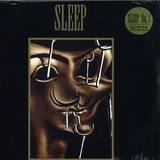
BACK IN STOCK NOW!! "Volume One is the debut album. It was the only album recorded with original guitarist Justin Marler, before he became an Orthodox monk. Volume One showcases a darker sound and stronger doom metal influence than Sleep's later work. The image featured on the cover is taken from the Salvador Dali painting "Soft Self-Portrait with Fried Bacon".
Their only album as a four piece of Al Cisneros, Matt Pike, Justin Marler and Chris Haikus
LP repressed for first time in many years.
allmusic
"For all their budding, precocious talent, Sleep's 1991 debut, Volume One, quickly betrays their still quite heavy debt to doom metal forefathers like Black Sabbath, Witchfinder, and Saint Vitus. Driven by Matt Pike and Justin Marler's lumbering mass of low-tuned guitar riffs, Al Cisneros' (still going as Luke here) serpentine bass and ragged screams, and drummer Chris Haikus' cyclopean kit pummeling, occasional highlights such as "The Suffering," "Nebuchadnezzar's Dream," and "The Wall of Yawn" prove less memorable than they are sensorially overwhelming. And yet, ironically, Sleep's rhythm guitars would never again be kept as under control, nor would their leads sound quite as refined as they do here (see the cleaner harmonies employed to good use on "Numb" and "Catatonic," for example). This was probably due to the onetime involvement of the significantly less stoned Marler, who would soon exchange the group for a monastery where he would study to become a monk. Fittingly enough, however, losing the versatility of a second guitarist was exactly what Sleep needed to focus their singular power into a crushing force, and the remaining trio would flourish immediately behind the sheer physicality of Pike's six-string style, as proven by 1993's superlative sophomore LP, Sleep's Holy Mountain."
Lopasura again delves into picturesque soundscapes drenched in emotion and melancholy, illustrating a typically dystopian setting for its latest offering. The A-sides opening track by Mark Forshaw is lean and mechanical in its make-up with an off-kilter combination of thick, stuttering bass stabs and percussion; creating a rather menacing undertone.
As a stark contrast, 'In the Smoke' by The Acid Mercenaries is a nine-minute tracky, steam train of clean and crisp scuttling hi-hats and razor-sharp percussion that dance around the relentless 303 acid line and beautifully soft 808 kick to devastating effect. On the flip side, a thunderous bass drum and freakish electronics stalk the discordant and arpeggiated synth that opens 'Hierarchy of Heritage', evolving it into some kind of hellish themed marching tune for the underworld. Frey then rounds off the EP with a typically rugged yet deliciously intricate piece with Gdn, effortlessly maintaining an intelligent groove throughout.
'Connect Four' is a rather fitting title for this EP, given the undeniable chemistry between all the tracks in how a story is told and tension is created; as Frey has done with the two previous Lopasura releases. The introduction of three debut artists on this release has paid off however, nestling comfortably into the label's aesthetic without compromising on the quality.
Back in stock!
Some friends think that Shihab the man owes the balance of his soul to his beautiful Danish wife. They may be right; for Eros is the very essence of what Shihab plays.Yet Eros is a god with many a face. A tale of tender mournings Shihab's flute is telling in MAUVE - a piece that translates its title into delicately changing colors of sound. In UMA FITA DE TRES CORES he has his instrument wooing with the proud self-reliance of Latin grandezza. Calmly, softly, almost blandishly Shihab blows the solo flute in the Jimmy Woode composition MY KINDA WORLD. Serene and somewhat playful his own title ANOTHER SAMBA comes along - a most uncommon composition by the way: lasting for sixty bars as if growing independent out of itself, with solos that appear to be additional spinnings rather than improvised choruses; and yet; a perfect, self sustaining melody no element of which is superfluous. In the last of the pieces for flute, in Klook Clarke's THE WILD MAN, which is based on a flourish of trumpets, Shihab for the first time reminds of the sombre, the demon-like face of God Eros. He contrasts flawlessly intoned passages with challenging phrases, phrases raucously sung into the flute - really, he is a 'wild man' who is playing like that. This raucous challenging sound prevails throughout the four baritone-titles ('Shihab never withholds long to caress', Campi says). Shihab blows the instrument the same way he speaks: without any delay, directly coming to the point. And he treats it like a voice, not aiming at an artificially homogeneous sound in all the registers, but at their different modes of expression. In the high pitches the horn gains a brilliant tenor-like quality - for instance in PETER'S WALTZ, dedicated to Shihab's son Peter, and in Kenny Clarke's simple drum fills comprising theme JAY-JAY. In the deep register Shihab produces snotty sounds filling lady's ears with horrors like Pan - thus in JAY-JAY and in the boppy blues SET UP . Shihab's sense of a scurrilous humor breaks through in SEEDS (which reminds of the West-African heritage of jazz with its multiple rhythms and its renunciation of harmonious development - only the eight bars of the bridge base on a progression of chords): not only does he omit the notorious bombastic chord by the ensemble after his own final cadenza, he even ends with a minor second above the keynote. Seems as if Shihab now unrestrictedly conveys to his music all the experiences and emotions he formerly did not deal with in a musical way. Shihab the man need not be disturbed so that Shihab the musician may improvise passionate choruses. It would be unjust, however, to forget the choruses of the four other musicians for those by the 'born leader'. Francy Boland, taciturn and always introverted: he plays an extrovert, a masculine piano. Even with spare single note lines he produces a piercing and ringing sound that hitherto nobody except him has discovered, a bluesy sound bespeaking the very element of frustration that lies within the title of the trio number WHO'LL BUY MY DREAM. The unfailing feeling for rhythm the musicians of the CBBB praise with the arranger Boland, becomes manifest in the piano solo on SET UP. Francy's improvisation is rhythmically styled in a Monk-like manner, and yet no accent could be set differently. Maybe this is the secret of the Shihab-Combo. 'Rhythm is our business', this credo of Jimmy Lunceford could be the one of the five musicians as well. Sadi hits his vibes as dryly as if wanting to bring its ancestors to memory, the wooden chimes of West Africa's coastal tribes. To reach the fullest poignancy possible, he intentionally calms down even the resonance in MY KINDA WORLD. In UMA FITA DE TRES CORES Jimmy Woode bears out the crispy jazz beat against Sadi's Bongos and Klook's Latin-American percussion all by himself. Moreover - and that, too, is connected with the school of the Duke who was the first in the history of jazz to discover the instrument's potential as a melody instrument - Woode rips a marvelous counterpoint to the inventions of the other melody instruments, take for example PETER'S WALTZ. And then there is Kenny Clarke. Klook. On the entire record he only uses his brushes. Means by which different drummers only know to bring forward impressionistically blending noises: He drums a vigorous beat with them, fanciful fills, a solo, melodious and at once skillfully playing with cross rhythms in JAY-JAY. The 'born leader', the 'outstanding baritone saxophonist of modern jazz' (Joachim-Ernst Berendt), he could not wish himself different sidemen for this record overdue since some years.