The Brussels based trio Don Kapot released their first EP on Mr. Nakayasi Records in 2018. They recently teamed up with the Belgian jazz / not jazz label W.E.R.F. records, with whom they released a limited edition cassette "Don Kaset" in October 2020. On March 26th they proudly present the release of a new full album: Hooligan. The album contains seven collectively written songs and takes the listener on an adventurous instrumental journey full of steaming grooves, unbridled joy in the game and humour. The album can be heard as a completely unhinged and idiosyncratic mix of punk, jazz, afrobeat and all this with a hint of spirituality.
After playing and touring together in Oghene Kologbo's band for a while, drummer Jacob Warmenbol and bassist Giotis Damianidis decided to join forces with baritone saxophonist Viktor Perdieus and Don Kapot was born in 2016. From joint improvisations, own compositions quickly emerged which blended the different musical backgrounds of each band member. It soon became clear that this musical cocktail would effortlessly break through all genre walls and that Don Kapot has as much in common with experimental rock bands like Deerhoof or King Gizzard & The Lizard Wizard as with adventurous jazz trios like those of Ornette Coleman. Influences from afrobeat, punk and krautrock are some of the main ingredients of this adventurous trio.
Search:soft rock
Nino Lepore hails from South Italy, and is best known for his self-titled LP from 1986, as well as for his uncredited work on Dancer Record. The 'Chok Musik' 12" from Best Record Italy focuses on two productions from his sole LP, and in the titular track, sexualized funk basslines join a disco drum strut, as guitar riffs shimmer and brass and string orchestrations swirl deliriously between filmic romance and symphonic madness. And after a breakdown into percussive chaos, smooth piano solos alternate with passages of sizzling sax. As for "Bad Time," an introduction of decaying gongs leads to a broken beat groove, with strings evoking atmospheres of exotic noir and horns soloing softly over subdued funk bass motions and distant flashes of guitar. There are jazz rock breakdowns into liquid riffing and flamboyant brass, and during handclap climaxes, horns swell towards the sky.
It’s hard not to notice such an unforgettable sleeve, and if the music it protects is half as memorable as the artwork, you know you just have to hear it. We don’t think you’ll be disappointed because yes, this is the majestic 1971 album Un Muñeco De Madera, courtesy of the shadowy Sola, and it sounds exactly as you’d want it to. Originally released on RCA in Mexico, it’s kaleidoscopic Acapulcan-funk.
The album’s endless grooves are propelled by softly rocking, quasi-library funk breaks. Vocally, Sola is in step with the 60s French pop-chanteuse style, but of course her lyrics are delivered in sensuous Spanish. Her voice is beautiful. Pillowy soft and tender, it can suddenly explode in mystical anger. These are ten tracks of moody, mysterious vibes that stir the spirit and sooth the soul.
The LP was written, arranged and directed by prolific Spanish composer Manuel Alejandro, the man behind an incredible number of now classic Latin love songs from the 60s, 70s and 80s. As for Sola herself, next to nothing is known about the Mexican singer except the occasional whisper heard in only the darkest corners of the annals of music history. It’s said that upon growing disillusioned with the music industry she ended up in a convent of Carmelite Sisters. Fitting perhaps, given that Un Muñeco De Madera is a spiritual wonder of a record.
Much-loved single and title-track “Un Muñeco De Madera” opens the album. It introduces us to Sola’s sparkling Latin-funk, bursting with swaggering grooves sewn by tight drums, sweeping strings and lush keys. It’s followed by the serene but melancholic bossa groove of “Oye Mamá, Oye Papá” and the strings and guitar of “He Bajado Al Infierno” that hold up vocals reaching for an eternal truth. With full-on soundtracky feels, the rolling keys underpinning the Morricone-esque soundscape of “En Ellos Creo” will give you goosebumps. The gorgeous “Soy Rebelde” (“I’m Rebellious”), sets its gentle, piano-led delivery in delicate contrast to the lyrical sentiment.
Perhaps Sola’s most well-known track, the exotic bossa of “Tabu, Tabu”, is a formidable groove. Elegant bongos, prominent bass, delicate acoustics and a persistent flute blend with Sola’s unique voice; sinuous, sassy and forceful at the same time. The stunning “La Última Palabra”, while not literally the album’s last word, is nevertheless a stirring statement of strutting Latin soul, with more musical ideas packed into this one song than the entirety of most long-players.
If you hadn’t decided already, the final two tracks that are the funk-fuelled “Bada-Bada-Ba” and the horn-heavy percussive masterclass “Únete A Mi” will leave you in no doubt that this is one very special record.
Mastered with great respect by Simon Francis, cut by the master Pete Norman and with that sleeve lovingly restored by the Be With team, this re-issue ensures that Un Muñeco De Madera now sounds, looks and feels as beautiful as it deserves to.
: Un Muñeco De Madera (LP)
Digging deep through old and new, Basso captures arcane woodland fusion, serene electronic suites and wide eyed Balearic bliss on this first Growing Bin compilation.
This collection celebrates those precious records which land in your life on their own terms. Even the most advanced digger will admit that chance is the secret ingredient in any successful haul. Sure, it helps if you know where to look, but if you arrive a day early at that secluded second hand shop, or an hour late at the convention, you might miss out on a rare sight of sound. But there are still ways to skew the odds in your favour. Even in the most crowded urban environment, a solitary tree soon becomes a nest, and Basso's fostered an abundant garden in his Hamburg hometown. A decade on and the Growing Bin is a safe haven for those exquisite sounds crowded out of the mainstream, the rare birds with the most striking song.
'Coffee' comes right after cocoa in the bin's headquarter, though start your morning with One Tongue and be prepared for a different kind of day. A witch's brew spiced with a hint of Durian and the early bird, this 1990 composition could be the blueprint for the Teutonic trance dancers beloved by the Salon set. A more meditative magic flows through the A2, a smooth blend of fusion guitar, softly syncopated drums and counterpoint keys from one time art-rockers Inandout. This Growing Bin favourite from their '93-95' LP sounds right at home beside the majestic melodies and spheric bass of Matthias Raue's 'Brücke am schwarzen Fluss 2'. Taken from the soundtrack to a TV drama filmed in Mali, this digital homage to African rhythm shimmies in step with New Age dancers from Mkwaju Ensemble and Louis Crelier. The A-side ends with the unbridled optimism of Kosmische maverick Hardy Kukuk. The synthesist hit the studio with friends Karsten Raecke and Andreas Schneider in 86, coalescing crystalline electronics and gentle guitar into tender chord progressions suited for sun bathing beside the Sea of Tranquility.
The second side slinks into motion with the deep beauty and sincere spoken word of Frank Suchland's 'Schnee', a subtle body in a cocoon of reverb which takes Sade's 'I Never Thought I'd See The Day' to another level of placidness. Melancholic Germans Die Fische met in Cairo for the first time, and 'Conversation Of Everyday Lovers' could be the theme for that great city. Underpinned by primal percussion and a restrained groove, the track twists and turns between a trio of ineffable motifs, eternal combinations to the catacombs of Abusir. From there we go sublime, soaring skywards with a ten minute triumph from Hugh Mane. Balancing concentric sequences and space age synth riffs atop an irresistible breakbeat and bubbling bassline, the British producer finds a sensuous sweet-spot between fellow Growing Bin affiliates Krakatau and Singu.
Lucky are we who hear the Bin's sounds.
Patrick Ryder
When Claud Mintz's mother finally heard the 13 songs on her kid's magnetic first album, Super Monster, she asked a concerned question: Just how many people had her 21-year-old dated? From beginning to end, these sparkling pop tunes capture the assorted stages of a relationship's delight and dejection_the giddy sensation of a first kiss during the beaming "Overnight," the heartsick longing of a pending rejection during the yearning "Jordan," the reluctant call for a requisite breakup during the smoldering "Ana." Claud, though, replied that these songs detailed the phases of only two or three relationships, simply written during them or at various points after they were over. The debut release on Phoebe Bridgers' Saddest Factory Records, Super Monster is a vertiginous but joyous coming-of-age reckoning with such young love. Claud sees relationships as games of endless wonder, intrigue, and second-guesses, a roller-coaster thrilling you even when it's terrifying. If "Gold" turns the tension and indecision of a bad match into an undeniable bit of lithe disco, "That's Mr. Bitch To You" uses a spurt of righteous indignation to fuse a little soul and emo into one breathless hook. Super Monster is like a compulsive compilation that Claud culled from a lifetime of musical enthusiasms_the arcing alt-rock of '90s airwaves, the rapturous pop of '00s chart-toppers, the diligent genre-hopping of modern online life. Claud emerges as the chameleonic mastermind of this mélange, channeling all of love's emotions into songs so sharp they make even the hardest times feel fun. Perhaps you are in the throes of one of these romantic moments yourself right now, resentful of a frustrating paramour like Claud during "Pepsi" or indulging in lust like "In or In Between." Or maybe these songs recall those wild days and tough situations. Incisive, instant, and addictive Super Monster works on either level_to remind us of love's wild ups and downs or to help us deal with them in real time. In that way, Mom, these songs are about dating, well, everyone.
Recorded in Chicago, Manhattan and Toronto, After Dark by Forest
Management is a collection of re-contextualized turntable audio sourced from an old vinyl copy of Claude Debussy’s La Mer.
The album shows composer John Daniel continuing to explore the territory he gestured at in 2018’s 21st Century Man, and is his biggest statement yet, clocking in at over an hour. Endlessly remixed in a software environment, the music of La Mer is transformed into new color. After Dark was inspired by events twenty years ago near the time Daniel first encountered Debussy
‘Del Rio’ is the third album from the Austin triumvirate of guitarist Craig Clouse (Shit and Shine), bassist Nate Cross (Marriage, Expensive Shit) and drummer King Coffey (Butthole Surfers) and the band’s first release to feature vocals from Colby Brinkman (Taverner). While their two prior albums (2017’s ‘Laredo’ and 2019’s ‘Matamoros’) were somewhere on the periphery of rock music , ‘Del Rio’ is a step or several beyond and a real testament to human imagination (maybe you’re impressed by Tesla Powerwall batteries but that’s because you’ve not heard “Soft Taco”, yet)
Coming off a pair of records their respective labels could barely keep in stock and critical assessments that put reviewers’ own chops to the test (see below), USA/Mexico have delivered their most fully realized statement to date.
Prior praise for ‘Matamoros’ :
“Laredo was a bent-out sunstroke of processed vocals and noise-laden riffs, and its follow up Matamoros is slower, freakier, and somehow louder…too defiantly weird and alien for pigeonholing, that’s how they fit inside Austin’s storied noise rock and experimental music scenes: by refusing to fit exactly in anywhere.” Andy O’Connor, Pitchfork
“Monolithic without being monotone: dirty sounds and gritty textures sliding over each other like sandpaper wiped across a chalkboard.” Marc Masters, Bandcamp
“The amplifiers sound broken, the vocals suggest someone's got their leg caught in a mantrap while deep in the woods trying to poach fat brown hares, and the mixing desk squeals as if it is undergoing physical tort
Terry Gross is an engrossing trio composed of guitarist Phil Manley (Trans Am), bassist Donny Newenhouse, and drummer Phil Becker. The trio are also connected as owners and engineers at Bay Area recording spot El Studio, where they began improvising together as a way to test the boundaries and gear of the studio. Their loose, organic chemistry burgeoned into a deep camaraderie and a sound both expansive and exacting. The three experienced musicians crafted their first fulllength album through the pure joy of playing together with no expectations. With the tapes rolling on their rehearsals, the band captures the exuberance of live performance and elevates those recordings through a deft use of the studio as their collective instrument. On their debut LP Soft Opening, Terry Gross channels their cosmic powers and considerable chops into a gleefully mesmerizing odyssey fit for an arena. Soft Opening took shape over the course of 2016-2019, with Terry Gross writing and refining their songs. "Space Voyage Mission" and "Worm Gear" parallel one another as sinuous jams that pulse with adamantine fervor. Each mountainous epic churns spellbinding repetition and simplicity into dizzying gallops that take hairpin turns into sinewy riffing and elysian vocal melodies. Phil Manley's guitar takes on a constellation of tones across "Space Voyage Mission" with drifting delays soaring over the Newenhouse and Becker's driving rhythm section which all succumb to frothing overdrives that spin the song into entirely new pastures. The hypnotic throb of "Worm Gear" grows all the more enchanting as Newenhouse and Becker add subtle shifts to the single-chord barrage. "Specificity (Or What Have You)" contrasts these two in its more traditionally pop-oriented structure while retaining its predecessors wide-eyed energy and delves further into the album's lightheartedyet-earnest take on sci-fi tropes from space and time travel to the singularity. As Terry Gross, Phil Manley, Donny Newenhouse, and Phil Becker are sonic scientists traversing the borderlands of rock. Soft Opening captures the simple joy of a no-holds-barred trio in stunning detail, transporting the listener into the splendor and freedom of rock.
68 SOFT ROCK MASTERPIECE - UBER RARE MONO MIX!
Take A Picture blends Margo’s infectious and highly intelligent songcraft with her absolutely unique voice - equal parts girl group innocence and seductive torch. One of the most endearing and delicious soft rock records from its era, this unique mono mix was previously only available as a radio station promo!
Legendary Turkish psych innovators Moğollar grace the Artone Studios in Haarlem for a masterclass in the original Anadolu psych roots, cutting a compendium of their rawest hits and most-wanted psychedelic rock classics – including the J.Dilla-sampled ‘Haliç’te Güneşin Batışı’ – for the latest edition of Night Dreamer’s essential Direct-to-Disc series.
In the beginning, there was Moğollar.
Formed at the end of 1967 with five young musicians, Moğollar were the original Anadolu psych originators. They were the first Turkish pop band who tried to blend the microtonal folklore and traditional instruments of rural Anatolia with Western pop and rock; they were the first Turkish psychedelic band to achieve overseas recognition, winning the prestigious French Grand Prix Du Disque in 1971 after a period in Paris; and they coined the very phrase ‘Anadolu Pop’ with their first album release. They were radical, innovative, and hugely popular, and when the great artists of the Turkish rock revolution appeared on the scene, Moğollar were already there – stars including Barış Manço, Selda, Cem Karaca and Ersen all recorded with them or briefly joined the line-up. Moğollar were and are the undisputed pioneers of the style.
More than fifty years after first forming, Moğollar materialised in the Artone Studios to give a masterclass in fuzzed-out folklore and Turkish psychedelic roots for Night Dreamer’s Direct-to-Disc series – a fitting follow-up to Night Dreamer’s BaBa ZuLa set, coming straight from the group who laid the foundations of the genre.
In 1971, having already released numerous singles, they secured an album deal with French label Guild International du Disques. Travelling to Paris that year, they recorded their first major statement, Danses Et Rythmes de la Turquie d’Hier à Aujourd’hui, a set later released in Turkey as Anadolu Pop. The album won a prestigious French award – the Grand Prix du Disque from the L’Académie Charles Cros, an honour that had been won in the past by Jimi Hendrix, Pink Floyd and Soft Machine. Moğollar, and Anadolu psychedelic pop, had arrived on the international scene.
In 1976, after many more releases and line-up changes, and pressured by an increasingly difficult political situation in Turkey, the group dissolved for seventeen years, and various members dispersing to exile in Paris and Berlin. However, after a petition from their fanbase asked them to reform, they agreed to play a comeback concert in 1993. It was a huge success, and reunited, they went on to record some of their greatest work. Led today by original member Cahit Berkay alongside original bass player Taner Öngür, and joined by Cem Karaca’s son Emrah, Moğollar continue to push their uniquely original brand of fuzz-scorched folk-rock and crackling Anadolu psychedelia forward into a new millennium.
For this Night Dreamer session, Moğollar spent two days in the Artone studios, recording sides A and B on the first day, and C and D on day two. With BaBa ZuLa’s Murat Ertel adding contemporary sonic punch behind the boards, the band revisited their most renowned hits to lay down energised new versions, and dusted off some of the most sought-after cuts from their enormous catalogue. The result is a showcase set by a band that are one of true pioneers in global psychedelic rock, and a masterclass in the true roots of the Anadolu psych sound: fuzzed-out, committed, and straight from the source.
Highlights of the set include:
-‘Haliç’te Güneşin Batışı’, an Anadolu psych classic which was first issued as the b-side to the ‘Ternek’ single in 1970, before being recorded again for the Danses Et Rythmes de la Turquie d’Hier à Aujourd’hui LP in 1971. A tense slab of roughneck psychedelia, the final breakdown of the original recording was sampled by none other than J. Dilla for the ‘Intro’ cut on Welcome To Detroit.
-‘Gel Gel’, a 1974 song with head-nodding tempo change, originally featuring Cem Karaca. It is here voiced by his son Emrah Karaca, now a permanent member of Moğollar.
-‘Çığrık’, a 1972 cut which originally appeared on one of Moğollar’s most coveted singles, is a funky psych-rock workout with an unforgettably riff, a ringing guitar motif, and twist of Led Zeppelin.
-‘Düm Tek’, the title track of the bands second full LP (Düm Tek, 1975), a raw psych screamer, laced with hardcore davul drum patterns.
-‘Bi’Sey Yapmali’, first recorded for the 1996 Dört Renk album, became the anthem of huge street protests that took place in Turkey that year after an investigation uncovered a huge network of state, police and mafia corruption.
-‘Dinleyiverin Gari’, a hit from the 1994 come-back album Moğollar 94, addresses a notorious corruption scandal of the era.
Karaba is the new signing on Kryptox. The Berlin label founded to show what's happening in the German Jazz crossover scene. One of these bands is Karaba from Munich. The band was already featured on the Kryptox Kraut Jazz Futurism Compilation in 2019. Now they deliver their first mini album for Kryptox. Five young guys from Munich. Skilled and tight on their instruments and deeply rooted in the heritage of all kind of wild forms of jazz, krautrock and psychedelic music. The kids began to jam together when starting to study music in 2012. Being from Munich, a town where legendary Krautrock bands like Amon Düül, Guru Guru and Embryo came from, the Karaba guys are obviously influenced by these german kraut and psychedelic sounds. You can hear that in many shades of this album: the complexity of the unusual rhythmical fundaments and percussive patterns. The Prog-Rock parts, with these partly abstract unisono lines and strange melodic figures or unexpected chord changes. Karaba’s album starts with an slightly arabic feel. The repetitive groove of „Der Inder“ gets the listener immediately into a different south-eastern space. Later the music gets more animated, more structured and more uplifting. A whole universe of little influences. Shades of certain Jazz and prog-rock bands: you might think about the canterbury scene of the 1960ies and 70ies. There are textures reminding of Soft Machine, Frank Zappa, Mats and Morgan, Kraan and maybe some Passport influences. (Another band from Munich that left a huge footmark in the worldwide jazz fusion history). The whole Karaba sound has a certain 1970es feel. But not in a pure retro way. The EP sounds more like a modern psychedelic 2020 Lofi Indie Jazz thing - a sound that fits well in these wild times and finds it’s place in the actual scenario of new jazz bands worldwide.
The Amorphous Androgynous return with the symphonic, 40-minute prog/space-rock concept album ‘We Persuade Ourselves We Are Immortal’. The album contains 5 epic parts, featuring the legendary Peter Hammill (the Van Der Graaf Generator) on vocals alongside a host of musicians including: Paul Weller (piano and guitar), Ray Fenwick (Spencer Davis Group/Ian Gillan) onlead guitar, Brian Hopper (Caravan/Soft Machine) on sax.The Chesterfield Philharmonic Choir and a 25-piece live orchestral string section round out this sumptuously-recorded album.
‘We Persuade Ourselves We Are Immortal’ opens with the 13-minute epic of the title track (written with Peter Hammill and Paul Weller).The themes of mortality/immortality are then musically and conceptually catapulted to the far-flung corners of the AA sonic multiverse over 40+ minutes. Channelling A Space Odyssey,the dystopian choirs and moog of ‘Hymortality’ crash full-force into the John-Bonham-like drums of ‘The Immortality Break.’Meanwhile, ‘Synthony On A Theme of Mortality’ lives up to its name, utilizing the classic 70s Yamaha CS80 synth before progressing to a female wailing aria against classic vintage guitar rock. The whole cosmic trip cascades finally into the harp daydream reverie,choir and romantic strings of ‘Physically I’m Here, Mentally Far, Far Away.’
Gitkin's music exists somewhere between primal, rootsy memory and distant exotic yearning — A dusty bordertown where the familiar blends imperceptibly into the enchantingly foreign.
After a long and fruitful run as a bandleader with relentlessly touring party-rockers Pimps Of Joytime and a Grammy-nominated country blues collaboration with Cedric Burnside, multi-instrumentalist Brian J set out to "explore tonalities I'd never messed with," as he puts it. It was a release from "having to write lyrics or involve my voice," he notes, and so the (mostly) instrumental sound of Gitkin came into being.
Reviews of Gitkin's first LP grappled with descriptors, tagging it vaguely as "cinematic" and comparing it favorably with Khruangbin. True, the music is largely wordless, emotionally evocative, and guitar driven. But it possesses an alluring alchemy all its own.
Gitkin's first release, 2018's well-received Five Star Motel, amply demonstrated his ease with earthy funk and comfortably-cut rhythm. On his new full-length release Safe Passage, the itinerant guitar slinger broadens his already rich palette with melodies informed by Greek and Middle Eastern modalities, Peruvian Chicha and Tuareg Saharan guitar styles. No gimmick, this juxtaposition of gut-bucket blues and funk low-end with unexpectedly twisting lead phrases highlights the intense flavors found in each savory ingredient.
Recorded at his home studio in New Orleans, Safe Passage showcases a new batch of immediately engaging, repeatedly satisfying cuts, ranging from surf exotica ("Cat Nip") to raunchy roadhouse stompers ("Fools Gold" and "The Drive") to dreamy vocal cuts "Foot Steps" and "Hold On" to the floating finale of "Safe Passage."
Gitkin's production radiates character and warmth, leaning on soft-focus vintage mics, dubby spring reverbs and the quirks of a tape console. Further enhancing the intimate vibe are guests like veteran Chauncey Yearwood (congas) and New Orleans local "Spug" Smith, who provides a sousaphone low-end on the cumbia-not-cumbia "Spug Life." Carol C lends her striking voice to three tracks, including the strutting single "De La."
Safe Passage will be released by Wonderwheel on September 18th, 2020 and will be available on vinyl, CD and digitally.
Following up on their debut LP Kick Drunk Love for Marcel Vogel’s Intimate Friends imprint a few years back, we are proud to present the next installment in the sporadic KAMM legacy: Cookie Policies.
Far more sonically rich and musically adventurous than its predecessor, Cookie Policies sees the band make bold strides into new territories where classically hardwired categories such as jazz, indie rock, and electronica melt into one another with immaculate, timeless ease.
The band members’ positions are more clear cut as well this round, with Marc David Barrite (aka Dave Aju, who also did one of his coveted mix engineering jobs on the LP) on prominent lead vocals in many of the pieces, Alland Byallo on trumpet, Kenneth Scott on synth bass, and Marc Smith adding guitar sections while the others shared the arranging and programming duties. This makes for a deeper continuation of the otherworldly combination of their known individual production styles, as well as a musical whole truly greater than the sum of its parts.
The set starts off with “Bird Call”, whose opening ode to Morricone ok corral-meets-samurai showdown riffs flow into a loose and drifting psychedelic boom bap blip, building until a glorious change-up of key and energy brings the track to its peak and deconstructed back down. “Rachel, the Largest Bullfrog” then takes things in a sweeter, slightly more traditionally-structured direction where dusty indie-folk ballad vibes intersect with an array of twisted cosmic tones, bits of computer keyboard percussion, and deep rolling sub bass. “Buckle Down” then moves things back away from acoustic restraints into a beautiful synth-laden musing on potential regret, with an ultra-potent horn section from Byallo vs a nasty stacked Roland SH-101 finish.
“CCBPGC” cools things off for a few minutes with an ambient field recording slice-and-dice motif, which slowly but surely evolves into a slinking jazz noir groove from another dimension. The more traditional song structures return on the lovely “La Luna”, where Barrite’s pen and soulful voice take to nautical longing themes over apropos waves of sonic textures. The ebb and flow of the verse/chorus sections eventually rise and give way to an absolutely gorgeous denouement. “Shleem” then takes us into pure unadulterated soaring sci-fi soundtrack ambient blast-off bliss, while the epic closing track “The Soft Glow of Electric Sex” gives a hearty nod to early masters of sprawling psychedelic jam sessions, from Pink Floyd and Can to In A Silent Way-era Miles and Liquid Liquid, while bringing it clearly into futurist millennia. The gradual evolution of the piece into its grand finale is the stuff we true music-lovers live and die for. We hope you enjoy the ride as much as we do.
Two years in the making, Future Ruins, TOM And His Computer’s debut album, will be released on Trentemøller’s In My Room label in October 20th. As a 20 year veteran of the Copenhagen music scene, Thomas Bertelsen has been releasing music under the sobriquet of TOM And His Computer for five years, merging the newest technologies with the old, while squeezing fresh sounds out of equipment that’s not only obsolete, sometimes it’s barely functioning at all. “I switch back and forth between the digital and the analog worlds. I’ll utilize old guitar pedals as well as the newest software,” says Thomas Bertelsen, producer behind TOM And His Computer. “It’s never about the gear, though, but rather finding that one little sound that can trigger an idea for an entire track.” Future Ruins was also co-produced and mixed by Trentemøller. While previous offerings have taken listeners to the outer boundaries of what can be considered “electronic music,” including nods to dark wave, dream pop, krautrock and modern psych rock, Future Ruins presents those influences in a new way and represents a great leap forward for the Copenhagen based producer.
The result is a genre-less collection of songs showcasing TOM’s obsession with propelling sounds of the past into the present, and future, combining noise and edginess with his “commitment to fresh ideas with a clear sense of melodies,” according to Clash Magazine. “My tastes are eclectic and I like to flirt with many different sub genres,” says TOM. “The aim was to combine various styles while trying to maintain a common denominator,” which committing to a full-length offered as an opportunity.
Tape / Cassette
Maatsethe’s solo output is all about ambient and sound collage. Loads of processed guitars & samples meander between walls of sound, intimate harmonies and a kind of melancholic cinematic landscape. Stoic basslines are surrounded by soft and gentle spheres. A bit of post-rock feel every now and then, always wrapped up in a meditative monotony, slightly interrupted by small epic narratives to gaze up.
Maatsethe (Matthias Neuefeind, Berlin) curates the KeplarRev series with vinyl reissues of essential electronic albums from the 90’s and 00’s, he plays in the band Fonoda and is part of the project Washer, Zimmer & the Guitar People.
Tracks 1, 2, 3, 4, 6 composed by Maatsethe
Tracks 5, 7 composed by Fonoda
All tracks recorded by Maatsethe
Mastering by Edgar Medina
Artwork by Daniel Castrejón
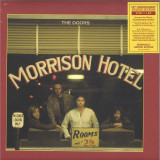
The Doors returned to their roots and were reborn a rock ’n’ roll band on Morrison Hotel, the group’s fifth studio album. Completed in only a few weeks and released in February 1970, the hard-charging album took its name from the Skid Row hotel in downtown Los Angeles that’s featured in the iconic cover photo taken by Henry Diltz.
Morrison Hotel: 50th Anniversary Deluxe Edition includes the original album newly remastered by The Doors’ longtime engineer and mixer Bruce Botnick, plus a bonus disc of unreleased studio outtakes, and the original album on 180-gram virgin vinyl. The music will also be available from digital and streaming services the same day.
For this new collection, the original album has been expanded with more than an hour of unreleased recordings taken from the sessions for Morrison Hotel. These 19 outtakes transport listeners into the studio with Jim Morrison, John Densmore, Robby Krieger, and Ray Manzarek for an unprecedented perspective on the making of the album. Botnick says: “There are many takes, different arrangements, false starts, and insightful studio conversations between the band – who were in the studio – and producer Paul Rothchild – who was in the control room. It’s like being a fly on the wall.”
Several of these unheard recordings spotlight how Queen Of The Highway and Roadhouse Blues evolved across multiple sessions. It’s especially interesting to hear how the band played with different bass players on Roadhouse Blues. Early versions include Harvey Brooks, who played on the band’s previous album, The Soft Parade. Later takes feature guitar legend Lonnie Mack on bass along with The Lovin’ Spoonful’s John Sebastian on harmonica who, due to contractual restrictions at the time, had to be credited as G. Puglese.
Among the treasure trove of unreleased outtakes are also rough versions of Morrison Hotel tracks Peace Frog and Blue Sunday, as well as The Doors rarity I Will Never Be Untrue. The collection also captures some incredible session outtakes of the band jamming on cover versions of the Motown classic Money (That’s What I Want) and B.B. King’s Rock Me.
Long-time friend of the label Parris debuts on Wisdom Teeth with a unique set of steppy house mutations, including a collaboration with AD93 star Minor Science. The record begins in downtempo mode. ‘Soft Rocks With Socks’ rolls out majestically on a slo-mo drum break and a two-tone bass loop, with shimmering pads and bleeping melodies counterbalancing a deceptively punishing low end. ‘Terrapin’ - a link-up with Minor Science - is a pristinely produced 100 bpm stepper, featuring razor sharp drum synths and crystalline MIDI melodies. To close, ‘Sabor a Ceniza’ pushes the tempo up towards peak time. What begins as a broken rhythm settles into a 4x4 groove, finding the exact midpoint between Roska’s UK Funky and Margaret Dygas’s work on Perlon.
Walter ‘Junie’ Morrison released his third solo LP, Suzie Super Groupie, in 1976. A slick, smooth and soulful record, it’s a genre-melting tour de force with rich elements of proto-boogie, funk and jazz. In short, this is yet another essential album reissue from Be With.
The sublime “Suzie Thundertussy”, is a favourite of Harvey and Theo, and was brilliantly sampled by Madlib for Kanye West’s “No More Parties In LA”. The track opens with a sinuous synth and combines Junie’s storytelling abilities with an emphatic vocal style and funky arrangements. The powerful bass and sinister chords create an undeniable groove, and the explosive chorus is full of ambition and joy.
“If You Love Him” is a great, mid-tempo soul song. With a swinging jazz-infused middle-eight, it demonstrates Junie was much more than a mercurial funkateer. The laconic groove of “What Am I Gonna Do” recalls “Fresh”-era Sly Stone, whilst the frantic “Super Groupie” showcases his sharp imagination and sense of fun. The lyrics range from humorous to dirty, all fuelled by an infectious groove and tight horn arrangements.
The P-Funk of B-side opener “Surrender” bounces and sparkles, with a strutting Junie backed by great harmony vocals and joyous horns. “Suzie” is a sleek, softer affair albeit with a disco pulse; a beautiful combination of bright, funky horns, fluid basslines and vigorous rhythms. “Stone Face Joe” is another character song, this time one that chugs along on a sweet boogie rhythm.
The winner for us, however, is the closing piece. An extended funk-rock jam, “Spirit” has a heart-rending spoken-word intro and, as a nod to Jimi Hendrix, creates a live concert sound, complete with screaming crowd and fuzzy vocals.
Junie made his name as the lead singer and keyboardist of the Ohio Players. As the mastermind behind “Pain”, “Pleasure”, “Ecstasy”, and the oft-sampled “Funky Worm”, he was beloved by countless musicians, not least Prince. As co-writer of some of Funkadelic’s seminal works - “One Nation Under A Groove”, “(Not Just) Knee Deep” – his standing as one of the structural fathers of funk is undisputed.
In late 2016, Solange’s “A Seat At The Table” featured a track called “Junie”, a tribute to the freedom he created in music. His work continues to be as relavent and inspiring as it was when it was first recorded.
In February 2017, Junie died, aged just 62. With records as mighty as Suzie Super Groupie, his legacy will live forever and Be With is proud to be able to do our bit to make this LP accessible again on vinyl.
A memorable name with an outstanding cover, Fuzzy Duck is a classic slice of underground London art rock and melodic psychedelia. Originally released on MAM in 1971, it’s truly a musical force of infectious riffs and fiery solos, sharp tempo changes, a tight rhythm section and heavy, Hammond-drenched grooves. With echoes of Spencer Davis Group, early Grand Funk and Vanilla Fudge, it comes on like a heavier Soft Machine or Caravan. No wonder Fuzzy Duck’s cult appeal has endured.
The album features Mick Hawksworth (Five Day Week Straw People, Andromeda) on bass, acoustic 12-string, electric cello and some of the vocal duties, and also Roy “Daze” Sharland (Crazy World of Arthur Brown, Spice) on organ and electric piano. Accompanying those two were Paul Francis on drums and percussion, and Grahame White on guitars and the rest of the vocals.
Originally released in an edition of 500, Fuzzy Duck became legendary all over the world through a holy trinity of scarcity, personnel and its sheer brilliance.
The album kicks off with a heavy, bass-fuelled, Hammond rocker titled “Time Will Be Your Doctor”. This is pure hard-edged blues rock, brilliantly played. Its drum break intro was sampled by DJ Premier for Gang Starr’s “Mostly Tha Voice” on 1994’s legendary Hard To Earn. And we can hear its personality all over Harvey and Thomas Bullock’s Map Of Africa.
Rollicking highlight “Mrs. Prout” follows. At nearly 7 minutes long, it incorporates more psych-leaning guitar and drawn-out keyboards à la Ray Manzarek with the band effortlessly switching from jazzy rhythm section to a progressive one. That magnificent instrumental jam that starts half-way and continues through to the end is a true wonder.
“Just Look Around You” is propulsive folk-rock with a soaring, proto power-pop chorus, backed by frenetic organ and heavy bass high in the rich, intoxicating mix. Back comes the heavy, strung-out psych to both close out side one with “Afternoon Out” and kick off side two with “More Than I Am”. Both tracks are improvisational winners that stylistically nod to the late sixties and “More Than I Am”’s guitar hook, catchy organ and memorable chorus would’ve surely made it a great single.
“Country Boy” quenches the thirst for rhythm and melody, only the lyrics and vibe are wonderfully creepy. The sudden cut of the groove and the drop into a more sinister tempo will make you stumble, before the band pick up speed and toss you back again into the opening jam, this time with a badass organ to ride you home. The final, fully fleshed out track is the majestic “In Our Time”, which oscillates between endless organ-driven boogie and heavenly, genuinely moving vocals. Just stunning.
Infamous instrumental cut “A Word from Big D” rounds out the album. Yes, that’s the band jamming with duck quack sound effects accompanying the music. “Ducking vocals” as the sleeve says. You know, just in case the whole “duck” theme had passed you by. It’s an appropriate closer for what sounds like an album that must have been *a lot* of fun to record. It’s definitely fun to listen to.
Mastered by Be With’s chief sound duck Simon Francis and cut with glee by the veteran Pete Norman, this reissue of Fuzzy Duck’s one-and-only LP sounds as mighty as it should. That unforgettable sleeve artwork has been carefully restored and the records pressed by the wonderful Record Industry in the Netherlands. Essential.