The Junkyard 2 came into fruition when it was released in May of last year, as an intimate collection of what she considered her best material. Scott has been taking piano lessons since she was eight years old growing up in California, and that instrumental talent is one of the most striking elements on the record. The songs reckoned with touchy subjects -- emotional labor, insecurity, healthcare -- with razor-sharp wit and care. Even if it was recorded poorly, the brilliance of the writing and performance still resonated. After that, she realized she had to do better, and so she unveiled Public Void in September. She ditched the piano, played with software, and gave her music a texture that was bolder, weirder, and catchier. Together, the two projects and Scott’s other singles have combined to amass 150 million on-demand U.S. streams, according to MRC data. The landscape of TikTok is cluttered, and hits are ephemeral, but Scott’s strike a unique chord and her image is constantly growing. When asked if she considers that music will be her full time job, she pauses, reluctant to think too far ahead. “I think, for the near future, yes,” she ultimately answers. “I’m definitely not leaving college for it. But the next couple of years are locked in.”
Поиск:softwar
Все
Glitching through pop music, cruising around the borders of the avant garde, passing by the edge of coldwave and tumbling into dance and club vibes: after her debut Bad Woman Céline Gillain is back with her second album: 'Mind is Mud'.
On Mind is Mud' Gillain let herself sink in the swamp of emotional confusion, the perpetual brain fog caused by a post Covid-world asking herself: do we have to get used to paradox as a way of life from now on?*
A musical dissection in nine songs of the mudflow, a flow which reveals its rich complexity the more Gillain dived into it: from the demanding intro 'Together' Céline opens up her highly personal and unique vision, shifting between high definition lost dimensions and emotionsthe mud slowly transfers in a crackling and sparkling stream of consciousness.
The mud is well alive in all its weirdness and unclarity. At times, it even glows in the dark.
The answer to that question is yes. The story of Mind is Mud by Céline Gillain: "Music is a place where intuiting is a work in itself. For me, it's the one place where I'm in charge, free to think and do what I want. Mind is Mud is the fruit of a collaborative practice with a DAW, a research around the palliative power of rhythm and the dancefloor, music as a space where emotions and ideas merge, storytelling, the comic potential and imaginative nature of sound. I don't really write, I copy paste and then I arrange and rearrange. Every sound I use comes from software, field recording, Instagram, movies and midi scores I collect here and there. In the hierarchy of sounds, you might call them cheap sounds. The lyrics are collages as well, made of pieces of texts from various contradictory sources. In addition to using the voice as a vehicle for ideas, I investigate its percussive and polyphonic potentialities, the possibility to have more than one voice/mouth."
Gladstone Deluxe is a New York based artist, producer and percussionist whose work takes form in recorded music, installations and live performances. Stone has performed as a soloist at the Kennedy Center, worked as a technical audio engineer, a software engineer and as an installation artist addressing concepts of rhythm, geometry, the black body and technology. “Spherical Intelligence” is Stone’s first appearance on vinyl. The crux of the record is three live performances recorded at his studio in West Harlem. These sprawling improvisations wove acoustic and electronic percussion, ambience and melody into forms that span the chasm from soundscape to advanced and intelligent club music. The stems were captured and then arranged into club-oriented tracks aimed directly at DJ and dancer. The result is an EP of cerebral, percussion-intensive music for the mind and body that reclaims and re-envisions the term “Intelligent Dance Music” from the Afrofuturist’s perspective.
»Tabulatura« is a 2008 indeterminate composition for sixteen pre-recorded guitar parts and computer with custom software. It is conceived as a system to generate different acoustic patterns.
The »Volume 2« documents eight pieces recorded live at Palazzo Castagna, Città Sant'Angelo, Italy, in November 2020. The album was recorded on two-track, directly on hard drive, without DSP and overdubs.
Emiliano Romanelli (b. 1979) is an Italian musician with a background in visual art. His work includes sound installation, live performance and composition. His recordings are published by Terziruolo, Cassauna and Senufo Editions. Romanelli has been co-founder of the duo Tu m' (1998–2011).
Markus Popp is endlessly curious and his music as Oval is delightfully inventive. Since pioneering albums in the 90s systemisch and 94diskont., Oval has continually excavated new spaces in electronic music, leaving an indelible mark on the landscape. New album Romantiq finds Popp delivering his most light and delicate tones to date. Like the plucking of harp strings, Popp"s organic and playful approach to sound is warm and bright. Oval continually, confounds with his ability to conjure such lithe, evocative sonics from software. Romantiq evolved from an audio-visual collaboration with digital artist Robert Seidel for the grand opening of the German Romantic Museum, where a huge outdoor projection covered the museum building. Popp sought a more expansive definition of the romantic, conjuring flickering images that glitch, evolve and collapse in on one another - opulent neo-chamber music lit by the paradoxically heartwarming screen glow of social media flirtations. Popp crafted dozens of short vignettes that each sought to evoke a specific mood or emotion. Processed period instruments trace luxuriant spaces that shift from low-lit chambers to glistening palatial grandeur, glitching through past, present and future. Swelling atmospheres emerge like perfume, rich scents flooding the senses before evaporating on the breeze. Romantiq"s musical oxytocin is made from ancient instruments processed and edited by a modern electronic master with the utmost deftness and delicacy.
Unreleased but perfectly formed "hidden" album, recorded in 1989-90 by Nuno Rebelo on the wake of his "Sagração Do Mês De Maio" double LP (composed in 1988 as soundtrack to the third Manobras de Maio fashion event in Lisbon). The tracks convey a sense of investigative curiosity regarding computer composition and they sound wonderfully artificial. Titles as "Moon OK", "Tiny Space Ships" or "Dança Das Creaturas Elásticas" ("Elastic Creatures Dance") embody this idea of otherworldness, a kind of music actually coming from another place, composed and played by elastic creatures. It displays the functional qualities of Library Music, illustrating playful as much as moody and dense moments. In this way the album comes across as a soundtrack for moving images, sure, but with unusual framing and sharp angles. A unique object in the Portuguese avantgarde, keeping its distance from Academia but also from contemporary independent releases ("Plux Quba" by Nuno Canavarro comes to mind). António Duarte's 2019 mastering enhances this collection of music liberated from the archives of one of the most brilliant, active and challenging musicians of his generation.
Nuno Rebelo was born in 1960, graduated in Architecture, founded Street Kids and Mler Ife Dada, played in the "transitional" line up of GNR in 1982. His creativity expanded into improvised music. Performances and recordings with other musicians multiplied. He composed music for theatre, dance, jingles and, on an almost contradictory scale to his underground credentials, soundtracks for the Expo 98 and Porto 2001 mega events.
“Improvisações Cristalizadas” by Nuno Rebelo:
Short electronic pieces composed in 1989-90 using the Atari 1040ST computer with Steinberg Pro24 Software, Two Yamaha Sound Modules (TX81ZX and TG55) and Ensoniq Mirage Sampler with keyboard. The composition method for each piece evolved from a short improvisation on the Mirage keyboard, recorded in MIDI to the computer. Counterpoint permutations (inversion, reversion, inverted reversion, transpositions) were then applied through the software, distributing the variations of the initial improvisation by other timbres. No other musical material was used.
- A1: The Water Seems Changed To Mist And Vapor
- A2: Ropes Sing In The Air
- A3: Waiting And Watching (Version
- A4: Warm Murmur In The Room
- A5: It Moves Swiftly Forward, Throwing Up Great Waves
- B1: On The Quay Now, Waiting And Watching
- B2: Someone Squeezes A Concertina, Sailors Begin To Sing
- B3: Drawn Toward The Whirlpool's Center
- B4: It Moves Swiftly Forward (Version)
- B5: On The Quay (Version)
One of the most notorious hatemongers in movie history is Captain Ahab from John Huston’s 1956 classic Moby Dick. His manic monologues cast a spell on generations of viewers. Berlin based musician and sound artist Jan Jelinek has now turned the voice of Ahab into a musical instrument.
Faitiche presents Jan Jelinek's soundtrack for SEASCAPE – polyptych, an audio-visual software developed in collaboration with Canadian new media artist Clive Holden in 2022.
SEASCAPE – polyptych is based on image and acoustic source material from Moby Dick. While Holden works on manipulating film sequences, the voice of Ahab plays a central role in Jan Jelinek’s soundtrack. The dynamic volume and tone of the captain's speech control a synthesizer system that turns Ahabs voice into ten abstract soundscapes.
In this production the voice gives the impulse and controls things but is not the sound of spoken word itself that we hear. Only occasionally can snippets of speech be heard so that syllables or sounds are recognisable. Instead we hear compositions made of hissing, soundscapes and eruptive sounds. The atmosphere is dark and sinister. Still every piece has a clear sonic structure and follows an understandable dramatic composition. This music is abstract but not overwhelming. Quite the opposite, SEASCAPE – polyptych is an invitation to listeners to let themselves be carried by the stream of sonic events. Although part of a media art work, the soundtrack can be enjoyed without any of this connecting superstructure. It works with no previous knowledge. But what happens when one does know that it’s the sonic waves of a human voice that is controlling a network of synthesizers?
If you want to hear Ahab, you will hear a choir of Ahabs in every piece of sound. The subliminal threatening as well as the conjuring Ahab. Finally the Ahab who whips up his crew and tears them with him into their downfall. The majestic „on the quay now, waiting and watching“, the oppressive “drawn towards the whirlpools center” - they are all music as well as sonic discourse.
- A1: #1
- A2: Get You Back Ft Maassai
- A3: War Ft Hprizm X Funkstörung
- A4: Stop Wars
- A5: Lost My House In France (N Yama Type Beat)
- A6: Rosenheim Cops Arriving (N Yama Type Beat)
- B1: I Went Left Ft Hprizm
- B2: 247 Turmoil Interlude
- B3: Majesty Ft Coppe
- B4: There Were Times Ft Anothr
- B5: Flâner Ft Her Tree
- C1: Consume Land Flea Market
- C2: 83128 Halfing (N Yama Type Beat)
- C3: Crime Drift (N Yama Type Beat)
- C4: Ingozi Ft Silo Inf3Rnx
- C5: Someone Killed Indiana Jones Rip (N Yama Type Beat)
- D1: Neon Soul Ft Taprikk Sweezee
- D2: Unpopular Nostalgia
- D3: At 7Am (N Yama Type Beat)
- D4: Countryside
Welcome to the "Consume Land Flea Market". This is the atmospheric setting and at the same time the luminous title of the debut album of young producer Noayama. "It centers on the contradiction between turbo-capitalist consumerism and the desire for vintage stuff in all kinds of shapes and colors to escape reality for a bit. I think it's quite a nice and suitable metaphor for the position my generation is in right now" says the 21-year-old producer, musician and interdisciplinary artist.
On about 40 minutes, Noah Berger, who grew up near Munich, spans a wide musical arc with his alter ego Noayama. He combines Hip Hop aesthetics with playful Electronica and acts skillfully in the interstices of Pop. Hints of 70s Funk hedonism, Old-School House vibes and modern J-pop sensibilities can also be found on "Consume Land Flea Market." The binding agent of the album is Noayama's "Punk Attitude" which comes through clearly on his tracks and beats and is an elementary part of his producer DNA. "I just like to drift, it's very central to the way I work" adds Noah.
Just as important for him are intergenerational collaborations, which adorn his debut work in numerous ways. An illustrious round of artists is therefore represented on CLFM. It starts with young female rap artist Maassai from the New York underground scene who can be heard on the pulsating opener "Get You Back". Also from N.Y.C is Hprizm, a member of the legendary avant-garde rap group Anti-Pop Consortium, who is featured on the dark and gritty "I Went Left" and the bouncer "War." Funkstörung is also involved here. Not too much of a coincidence as Noah has been encouraged since his teenage days by his father Michael Fakesch, one half of the Glitch-hop pioneers who became famous in the late 90s. With "The Legendary Godmother of Japanese Electronica" Coppe' on "Majesty" and the German singer-songwriter her tree on the song "Flâner", introverted pieces have also found their place on CLFM. In addition multilingual verses with Silo Inf3rnx from the townships in Gugulethu on "Ingozi" and on top "the homies from the neighborhood" Anothr and Taprikk Sweezee who give the album further facets through their contribution.
Noayama combines elements and working methods of the last five decades in a relaxed manner and bundles them into a genuine piece of work. Emblematic of this approach is the choice of features. So is the gear he uses. He incorporates old synths (Roland Jupiter 8, Nordlead) and drum machines (Roland 808, Roland 909) with playful ease with common software tools. It's also pretty convenient that he's currently studying Digital Arts at the Kunstuni Linz. In fact, his semester project is the visualization of his own album which means that every single track and every interlude gets its own video. Well, Noayama is just a gambler.
Purple Vinyl 2023 Repress
For the inaugural vinyl release of Psycho Bummer, we bring an EP from one of our label founders, DJ Scam (Brandon Ivers). Jungle and drum'n bass was the starting point for us as DJs, friends, and collaborators, so it seemed fitting to begin the story here.
The EP's opener, "Darkside Geezer", is a tribute to the transition point right before hardcore morphed into jungle in 1993. Although producers worked with a small palette of sounds back then, the emotion and freshness they were able to pull out of their limitations remains unrivaled. "Darkside Geezer" imagines an alternate reality of that period, drawing parallels between it and the transitions that 2020 brought us.
"Sodium Pentothal" is the roughest tune on this release, adopting the sonics of modern drum'n bass production, but channeled through the tropes of the music in its early stages. DJs like Sherelle, Tim Reaper, and Coco Bryce played a tremendous role in inspiring us (and keeping us sane) over the last year, so we wanted to stick to the tempo they helped rekindle.
The closer, "Black Swan", focuses on the simplicity of early hardcore and jungle, but breaks away with glassy chimes and a folding, geometric structure. Made with old samplers and tracker software, "Black Swan" was the first track Scam did for this release and it helped set the tone for what followed.
Psycho Bummer loves the feel of weighty vinyl, so we've opted for 180 gram pressings with a brilliant purple color. The album art, created by Canadian artist Ben O'Neil, is printed on a higloss laminant sleeve, which retains the striking colors of the original digital art.
In partnership with Ebb Software and Kepler Interactive, we’re happy to present the haunting soundtrack to Scorn on vinyl.
14 tracks mastered specially for vinyl will be pressed to heavyweight black discs, and housed in a deluxe gatefold sleeve. Artwork is by Ebb Software.
To complement the visceral, nightmarish Giger- and Beksiński-inspired art design, Scorn’s composers created an ambient soundtrack that blurs the line between sound design and music. Brian Williams, aka Lustmord, is often credited for creating the dark ambient genre, and has arranged two whole-side suites of his cues for Scorn. His pieces slowly unfurl in a broodily meditative way, emanating with emptiness and loss. AdisKutkut contributed under the alias Aethek, delivering oppressive, sci-fi-industrial tracks filled with deep synth pads, twisted harmonics, and metallic sounds triggering cavernous reverbs.
Sintering or frittage is the process of compacting and forming a solid mass of material by heat or pressure without melting it to the point of liquefaction. The material produced by sintering is called sinter. The word sinter comes from the Middle High German sinter, a cognate of English cinder.
Born in the mid-60s, German musician and sound designer Uwe Zahn came on the scene of electronic music with his debut full-length album for DIN, titled “Atol Scrap.” In the very same year of 2000, the influential City Centre Offices label has signed Arovane for his majestic “Tides,” which has withstood the test of time for over two decades now. Back then, electronic music was split between the dance floors and the bedroom listening, with the latter carrying the now-famous acronym for Intelligent Dance Music. And Zahn’s compositions were indeed just that – more than a gimmicky, knob-twisting, stuttering randomization of experimental rhythms and tone, Arovane’s music evoked real emotion which has assembled his followers from around the globe. But his arrival on the scene was more than a predictable trajectory. Zahn’s sound began to take shape in the late 80s when the cut-up hip-hop beats were layered with synthesizer pads and looped samples. This experimentation progressed into what the 90s coined as breakbeat and glitch.
As the 2000s rolled over, and the monumental imprints, such as Skam and Warp, honed their staple repertoire defining the future of electronic music, City Centre Offices had a staple of their own. Often referenced alongside Boards of Canada and Autechre, Arovane’s sound quickly gained a discerning audience, tuning into his melancholic melodies, advanced textures, and complex polyrhythms. The pinnacle of his production was released in 2004, when suddenly, on “Lilies,” Zahn signed off with the final track, which he has titled “Good Bye Forever.” And then there was silence. For nearly nine years, the scene and yours truly mourned the loss of Arovane, assuming that he’s given up. That is until, in 2013, Zahn came out with a brand new album, “Ve Palor,” on the surviving post-IDM imprint, n5MD.
While on hiatus, Uwe spent his time researching, reconnecting, and reflecting on all he’s built. The sound experiments went on, and so did the music scene, morphing, dissolving, re-shaping itself into a new form for new followers. During that time, Zahn spent some time with sound design, creating patches for Access Virus TI, as well as sample packs for various sound developers. After “Ve Palor,” Zahn began collaborating with various musicians from around the world, exploring, directing, and fusing their distinguished sound with his own. On his subsequent releases, he shared credits with ambient artists Porya Hatami, Hior Chronik, Darren McClure, and even yours truly. During our collaboration, Zahn often described the process of building a new vocabulary for our very own defined language, with which my piano spoke through sound.
With nearly two dozen studio releases under his belt, numerous EPs and singles, and just as many appearances on various compilations, Zahn continues to split his time between his fascination with sound design, sonic programming, and musical composition, which sees the light via his ongoing projects, releases, and contributions towards audio plug-ins, software synths, and sound sets for advanced hardware. It’s effortless to slot Zahn’s sound between the genres, scenes, and names, but very difficult to peel apart, define, and then express the essence using words. However, what is simple and essential for the ones who understand, is recognizing, admiring, and subsequently falling in love with all that is encompassing of Arovane. (by Mike Lazarev)
- A1: Teno Afrika & Diego Don - Ambassadors (Feat Stylo Musiq & Flame Darula)
- A2: Teno Afrika & Diego Don - Storytellers
- A3: Teno Afrika & Diego Don - 8 Ubers
- A4: Teno Afrika & Silvadropz - Conka (Feat Stylo Musiq & Flame Darula)
- B1: Teno Afrika & Silvadropz - Smooth Criminal (Main Mix)
- B2: Lerato La Bass
- B3: Trip To Vlakas (Main Mix)
- B4: Chants Of Africa
South Africa's reputation for expanding dance music again with Amapiano.
The past five years have seen amapiano, South Africa’s electronic music movement born in the townships of the country’s Gauteng province, evolve from an underground sound to a nationwide mainstream staple. Even with its commercial success though, amapiano’s DIY ethos has continued to disrupt music creation and distribution in the country. Most amapiano commercial successes today began their careers on cracked versions of production software like FL Studio, distributed their work through file sharing platforms like datafilehost and marketed it using social media pages they controlled and influenced. Amapiano Selections, the debut album by DJ and producer Teno Afrika, gives listeners outside the movement’s online release economy an insight into the high-burn nature of amapiano that has spawned a distinct typology under its larger umbrella. Twenty-one-year-old Lutendo Raduvha has spent the bulk of his life moving between different townships on the outskirts of Johannesburg and Pretoria in the Gauteng province. The palette of amapiano styles on the album reflect these influences.
But at first, South Africa’s youngest electronic music movement lived underground with a small, loyal following. “Amapiano is a genre that I chose because I have a passion for it,” says Teno “I started following amapiano in 2016 because I wanted to explore how it’s produced. It was not taken seriously in our country.” Interestingly, Teno Africa only gives vocals prominence on the closing track “Chants of Africa.” As a way of making their music recognizable and relatable for broadcast, amapiano producers have sometimes overly relied on vocals in the form of singing, catch-phrases and party refrains for the purpose. “It was my decision not to use vocals on this project,” says Teno “The reason is I wanted people to feel my instrumentals and style because this is my first album.” On his closing track the young producer gives a glimpse of the considered approach to music which buoys anticipation for greater things from his future releases.
- 01: Morose Vandal The White-Out Memorial
- 02: Saint Advantage
- 03: A Cast Of Gray On The Arm Lights The Stovetop Pilot
- 04: Loose Jaw
- 05: Ash Wednesday, The Triage
- 06: Sky Blue Above The Gang Violent Motion
- 07: Anxiety Interlude (Feat. Andre Altrez)
- 08: Feral Pet The Ankh The Ticker Wears
- 09: Tomorrow On The Installment Plan, A Debt Unpayable
Emotion Hospice is the debut LP by New York-based sound artist and writer Chaperone on Bedouin Records. Combining layers of doom electronics, dystopian ambient, and manipulated tape loops, Emotion Hospice reflects both the artist's suffering and recovery from addiction, as well as Philadelphia's history of socio-economic decay and misanthropy.
Emotion Hospice was recorded from 2016 to 2019, when Chaperone's David Coccagna lived and worked in his hometown of Philadelphia, a city notoriously known for its poverty, redlined city divisions, and fascist policing tactics. While exploring the sound of the city and the effects of its political and social climate, Coccagna also struggled with and managed to overcome a severe addiction to alcohol, tying further the misaligned nature of the self to the maladjusted world he grew up in that is reflected in the record itself.
Sonic thrills and their destruction is present throughout the record, as Coccagna experiments with the brutal manipulation of bossa nova, varying styles of jazz, hip hop, and rap, using 4-Track tape loops, shortwave radio frequencies, various apps on his iPad, and open source audio editing software. With Emotion Hospice, Chaperone liberates the inherent darkness of the cheerful and poppy music that he samples and transforms it into an extensive, doomy sound of a future that is dystopian, maladroit, suffering, but hopeful about human beings. The album was written and recorded entirely by Coccagna aside from the track featuring New York rapper and producer Andre Altrez, whose establishment of Girard Hall in Philadelphia was a beacon of DIY ethos that became legendary in the city in its own right.
Chaperone's Emotion Hospice is his first release on Bedouin Records. His cassette release Dead Pitbulls Slung On Tired Shoulders was his first outing for Bedouin's now defunct sub-label Bastakiya Tapes in 2017. This initial tape was the catalyst to a working relationship between Coccagna and label operator Salem Rashid as collaborators and colleagues.
German project founded in 1984 by Peter Mergener and Michael Weisser. This release features two cheery picked exemplary moments in downtempo contemplative cosmic travels. A side sends the listener well out of orbit with a 10 min long gradient of Krauty arpeggiated showers that grows elegantly, a concerto to the astros of the mind. Flip it and it gets better as your space capsule gets sucked into some distant planet's gravitational pull, feelings of other-worldly sounds, slowed down beautifully almost eerie nuances one won't forget so easily. Sunrise on a Balearic island from another solar system. Berlin-School by trade but also heard on mixes by Jose Padilla. Heftily remastered.
- A1: Jb Banfi - Gang (For Rock Industry) (For Rock Industry)
- A2: Michael Garrison - To The Other Side Of The Sky
- B1: Iasos - Lueena Coast
- B2: Carl Matthews - As Above, So Below
- B3: Tim Blake - Midnight
- C1: Stratis - By Water
- C2: Steven Halpern - Starborn Suite (Part 1)
- C3: Laurie Spiegel - Improvisation On A 'Concerto Generator
- D1: Mother Mallard's Portable Masterpiece Company - Ceres Motion
- E1: Michael Stearns - In The Beginning
- E2: Beverly Glenn-Copeland - Ever New
- F1: Richard Pinhas - Variations Vii Sur Le Theme Des Bene Gesserit
- F2: Tod Dockstader - Piece #1
- F3: Kevin Braheny - Ancient Stars
New edition of this Soul Jazz Records out-of-print classic album available now as a new limited-edition one-off pressing triple yellow vinyl album (plus download code), and limited-edition one-off pressing special yellow CD edition.
Soul Jazz Records’ Space, Energy and Light is a collection of music by early electronic and synthesizer pioneers (from the 1960s through the 1970s), mid-1970s proto-new age gurus and 1980s guerrilla D-I-Y cassette-era electronic artists, spanning in total over a near 30-year time frame. All of these artists used electronic advancements in music technology as a means of exploring not only space and the idea of the future, but also of looking inwards to the soul and of creating music in harmony with the natural world.
From computer software and hardware experimentalists and sound pioneers such as Laurie Spiegel and Kevin Braheny, as well as Mother Mallard’s Portable Masterpiece Company – the first synthesizer ensemble created in collaboration with Robert Moog – through to musique concrète experimentation, the album shows how technological advancements and creative artistic expression often went hand in hand.
In the mid-1970s artists Steven Halpern and Iaxos were instrumental in creating proto-new age music, experimenting in both the healing properties of sound and its relationship with the natural world. These artists also pioneered a new self-contained and underground D-I-Y approach to music, creating their own record labels, forming new distribution networks (with albums sold in meditation centres, health food stores and ashrams) far away from the commercialism of the mainstream music industry. In the early 1980s after the revolution of punk, these D-I-Y attitudes and ideas appeared once more in the growth of the distinctly anti-commercial and underground cassette-only careers of artists such as Germany’s Stratis and Carl Matthews in Britain.
Artwork includes some of the earliest photography of the Plieades star cluster dating from the 1880s.
"Listening to Space, Energy & Light in one sitting is a bit like experiencing constellations exploding within constellations inside your brain." Record Collector
"Incredible collection of spacey electronics and meditative soundscapes dating from the early 60s to the late 80s here, lovingly assembled by the Soul Jazz team. This compilation has it all if you like your music deep. Big names such as Iasos and Laurie Spiegel feature, but even if you think yourself a bit of a nerd in this field, there are some lesser known pearls to be found." Bleep
"Quite simply an amazing mix of some quite bizarre and interesting pieces of music, no way to describe it other than to buy it, put on some headphones and drift off to inner space.” Amazon
"New compilation charting almost three decades of experimental
electronic and synthesizer music from the most influential and often
unsung composers of their generation. Beginning and 1961 and
following the story until 1988, Space, Energy and Light connects
proto-new age gurus and DIY tape vigilantes who were equally
inspired by the advancements of new technology and its potential to
unlock utopian futures in both the music and the soul." Vinyl Factory
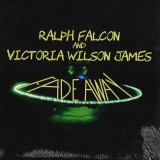
Ralph Falcon last collaborated with Victoria Wilson James on the Number 1 Billboard charting tune “I Need Someone.”
With its distinctively hypnotic, dark pulsating beat and haunting vocal, “I Need Someone” went from being a Club Space Miami anthem to a worldwide club hit. Now Ralph is back with Victoria Wilson James on a new song that is destined for greatness but with even more potential given the unending worldwide demand for fresh house sounds.
“Fade Away” has all the unique sonic elements that Ralph Falcon fans have come to expect over the years. Heavy Kick drums combined with synth sounds that you wont find in any software program. Ralph’s sounds are creations that only he could produce. This vinyl release gets a uniquely international remix treatment. Included are a remix from Ralph’s Murk partner Oscar G, rising Dutch producer star Dennis Quin, and emerging French producer star Ténéré.
Hot release alert!!! For the next release on Best Record, the storied Italo institution delivers its first original artist album in over 40 years, as Raffaele "Whodamanny" Arcella joins forces with Cosimo "Cosmo" Mandorino for a suite of dancefloor dreamspells called 'Fantasy'. Working under the name CHOP - short for Channel Operators - the duo craft colorized confections of magical motion and ecstatic energy, with atmospheres of infectious disco, future-gazing funk, wavey pop balearica, and booty boppin' boogie beat intermingling, and further enhanced by layers of dub sorcery and saxophonic sunshine. It's a celebratory and soaring adventure of warmth, whimsy, and wonderment, one that pays brilliant homage to the deep history of Neapolitan dance music, while ever forging new paths into the uncharted beyond. Limited edition vinyl release!! Future classic.
- 1: Where Is Jeremy?
- 2: Halloween Ends (Main Title)
- 3: Laurie's Theme Ends
- 4: The Cave
- 5: Cool Kid
- 6: Drags To The Cave
- 7: Evil Eyes
- 8: Transformation
- 9: Because Of You
- 10: Requiem For Jeremy
- 11: Kill The Cop
- 12: Corey And Michael
- 13: Corey's Requiem
- 14: The Junk Yard
- 15: Where Are You?
- 16: Bye Bye Corey
- 17: The Fight
- 18: Before Her Eyes
- 19: The Procession
- 20: Cherry Blossoms
- 21: Halloween Ends
BLUE MOON PHASE VINYL
After 45 years, the most acclaimed, revered horror franchise in film history reaches its epic, terrifying conclusion as Laurie Strode faces off for the last time against the embodiment of evil, Michael Myers, in a final confrontation unlike any captured on-screen before, one where only one of them will survive. As Halloween Ends marks the last chapter of the David Gordon Green trilogy, so it ushers the essential return of original director and composer John Carpenter to score the iconically hair-raising soundtrack alongside Cody Carpenter and Daniel Davies. Recorded in its entirety at Carpenter's home studio and Davies' studio, the unmistakable mix of software synths, vintage analogue equipment, and live instrumentation once again provides the signature sound of Halloween, one of the most distinctive aspects of the movie franchise to date. The soundtrack was tracked scene by scene but the album itself plays like a standalone piece of music. The general atmosphere is one of dread yet the record includes some groove laden moments reminiscent of Escape From New York or some of Carpenter's other more dance-able scores. Exquisite and delicate ambient pieces weave their way between some of the score's more arresting moments and yet maintain a subtle pop sensibility. The overall achievement showcases three master musicians, one of whom invented the entire horror-synth genre, crafting an evocative, playful and deeply listenable score that honors a legacy and expands on the decades of work that have been leading to this triumphant climax. Halloween Ends is the soundtrack of the final battle against evil. Watch your back this Halloween, Michael may be near you.