Continuing his inspired path into fractalised micro-dub-techno, John Howes lands his Paperclip Minimiser project amongst kindred spirits on Blank Mind. Crooked rhythms and tender machine hums hang in crisply defined virtual space — a gallery of science and soul that follows a natural lineage from the breakthrough years of the clicks n' cuts era by way of UK bass permutations.
Operating out of the UK's North West, Howes has been incubating a singular sound through his ongoing development of intuitive production and performance tools under the Cong Burn banner. The sometime record label and software stamp has a long-standing friendship with Blank Mind—the affinity is easy to hear in their shared exploration of modernist broken techno. Having just released a second album under his Paperclip Minimiser alias for similarly spirited West Coast US lodestar Peak Oil, Topology Transform extends the project's sound world with three tracks carved from the same period of studio orienteering. Free of the constraints of the LP format, these three tracks open up broader possibilities from Howes' customised systems, navigating the outer edges of the Paperclip paradox.
The A side opens on a 150BPM cascade of crunchy percussion and pin-prick ripples, driven by twitchy kinesis while maintaining a light-footed dexterity. If the first track finds its locomotion through double-time intensity, the second track celebrates the space that opens up around half-time pacing — two sides of the same tempo that radiate distinct energies. Conversely, the B side stretches out into an extended ambient repose. The consistency between this beatless excursion and the more propulsive A side speaks to the clarity of Howes' craft—a shimmering, blue-hued pool of advanced sonic treatment from a producer in command of a truly personal studio practice.
Search:softwar
Analog Fingerprints Vol. 0 is a compilation bringing together the early 2000s works of Marco Passarani under his Analog Fingerprints alias, collecting key tracks originally released on Rome’s Plasmek and Pigna labels.
For Numbers, the story starts long before the label itself. In their formative years, digging in Glasgow’s Rubadub, Passarani’s records felt like dispatches from a future city. Releases on his own Nature Records and on labels such as Generator and Interr-Ference Communications were mind blowing: rooted in Detroit techno, Chicago house and electro, yet pushing somewhere new. Much like fellow travellers Autechre, who would remix him in 2001, Passarani’s music balanced machine funk with restless experimentation.
Information was scarce, and you would hear these records first on the dancefloor or at listening stations in shops like Rubadub. Print fanzines like Ear and early web outposts such as Forcefield offered only fragments. But there was a palpable axis forming between Detroit techno and a new European wave of record labels including Skam, Rephlex, Clone, Viewlexx and Nature itself. It was the sound that defined Saturday nights at Rubadub’s ‘69’ parties in Paisley, just outside of Glasgow.
Passarani’s records, in particular, were instrumental in bringing together the future Numbers co-founders. Richard had already booked him pre-Numbers; meanwhile Calum (Spencer) and Jack (Jackmaster), then 16/17 year olds working alternate Saturdays in Rubadub, were so enamoured with the Roman sound that they travelled to Rome for the Bitz Festival in 2003 to seek out Passarani and Lory D at their source.
The first Analog Fingerprints release landed as a 12” on Plasmek in 2001, following the fractured, IDM-leaning 6 Katun material. For Passarani, the project marked a recalibration. A DJ first and foremost, he had moved into production via early computer setups, from a Commodore Amiga through primitive PC audio, Cubase and Logic, later experimenting with Ableton. The IDM scene had offered a playground for trial and error, but there was always a tension between abstraction and the dancefloor. Analog Fingerprints became the bridge: still intelligent, but with more dance than distance. After years of broken beats and complex arrangements, he wanted directness without surrendering identity.
Working closely with Francesco de Bellis and Mario Pierro in the Pigneto district, the trio formed Pigna as a vehicle for reclaiming a more accessible dance sound, deliberately steering away from the minimal wave beginning to dominate Europe. Sessions were fast, instinctive, often stretching late into the night with friends dropping by. It was a studio as social space, production as collective energy.
“In that constant search for balance, Analog Fingerprints was my way of expressing something closer to the classic dance floor. The track 'Tribute' - a tribute to my favourite early Detroit techno track of all time, 'First Bass' by Separate Minds - came after I realised I had almost lost my connection with the dance floor. The simplest step was to take inspiration from early Chicago and Detroit and twist it in our Roman ‘Pigna’ way. My goal was to create more accessible dancefloor tracks by mixing my unconscious Italo roots with my teenage love for that early US sound, ensuring the result was as far as possible from the minimal sound that was starting to dominate everywhere.” - Marco Passarani
Technically, the Analog Fingerprints tracks span a transitional era: Roland TR-909, SH-101 and Alpha Juno hardware met early software experiments. A Novation Drumstation rack stood in for the unattainable TR-808, syncing with TB-303 and TR-606. Yet the true secret weapon was Jeskola Buzz, a tracker-style modular environment that allowed step-by-step parameter control and strange melodic constructions, later exported into the audio sequencer. Even the lead on ‘Tribute’ came from an early PPG Wave-style plugin. It was hybrid thinking at a moment when digital tools still felt unstable but full of possibility for technologists like Passarani.
Behind the music sat Finalfrontier, a loose Roman collective orbiting Nature and Plasmek. Distribution and production were intertwined; importing obscure records into Italy built connections with like-minded outsiders across Europe and the US. Expensive phone bills and fax machines forged an “electronix network” that linked Rome to Clone, Viewlexx, Skam, Rephlex, Rubadub and Detroit’s Underground Resistance. There was a shared sense of survival and resistance, of operating against commercial systems.
Passarani recalls “The first time I found a sheet of paper inside an Underground Resistance 12” with info about upcoming releases... and a huge picture of Spock on the back. Imagine that: you love the music, you love Star Trek, and there’s someone on the other side of the ocean sharing those same values and sounds. It was the perfect match. We even gave our original company the suffix ‘Finalfrontier’: that says it all.”
Feedback in that era arrived physically: distributor faxes, conversations with visiting DJs, the experience of playing abroad and meeting kids who had connected with the records. Glasgow became a key node in a scattered outlier network. Passarani personally brought the first two Nature releases to Fat Cat in London, playing them in-store. Shortly after, a fax arrived from Rubadub in Glasgow requesting copies.
“I still remember that phone buzz and the fax paper slowly sliding out, with someone I didn’t know saying they wanted 75 copies of Nature 001. Or like the time we got a fax from the Rephlex crew just saying, “Hello Nature Records, Keep up the good work.” That was how we knew the message was getting through. It was a fantastic feeling; just one piece of thermal fax paper as an analog notification - the mood for the entire week would change.” - Passarani
The connection to Glasgow has since stretched across generations. As Passarani reflects, links often fracture as scenes renew themselves, but in Glasgow something different happened. New and old mixed seamlessly. There was a visible trust in what came before, and a willingness to carry it forward rather than discard it. Observed from Rome, it was deeply encouraging.
Analog Fingerprints Vol. 0 captures that moment of exchange: Rome to Glasgow, Detroit to Europe, experiment to dancefloor. It documents an artist recalibrating his sound and a network of scenes discovering one another in real time, connected by vinyl, faxes and shared intent.
As Nathan Fake rises from the nocturnal subterranea and rave catharsis of his previous records, on Evaporator, he resurfaces into the domain of daylight, bringing a tangible sense of air rushing against your face, of big skies, and endless landscapes. The idea of pop accessibility that trickled into 2023’s Crystal Vision is refracted here through the prism of sweeping ambient, deep electronica, and trance uplift. Evaporator is Fake’s idea of “airy daytime music”, with each track a different barometer reading across the album’s varying atmospheres, which range from vibrant sunbursts, bracing rainscapes, and fine mists of clement melodics. “It’s not overtly confrontational electronic club music,” states Fake. “It’s quite pleasant, it’s accessible. As I was progressing through making the tracklist, I called it a daytime album. It doesn’t feel like an afterparty album.” For the past decade Fake has been gingerly introducing collaborations with heroes and friends alike into his lone, idiosyncratic working process. Border Community alumni Dextro AKA Ewan Mackenzie transmutes his ferocious drumming for Pigs Pigs Pigs Pigs Pigs Pigs Pigs into the blurred choral thump of ‘Baltasound’. ‘Orbiting Meadows’, meanwhile, is his second collaboration with Clark, an eerily idyllic duet where microtonal 18EDO piano clangs slowly twirl around wailing pads. Evaporator marks the junction point of old technology and ever fresh creativity for Nathan. The trusty “dinosaur” age software, particularly Cubase VST5, that has powered two decades of music is rarely updated. “I used to sort of feel a bit ashamed of using such old software, and then I kind of had an epiphany – that’s just how I work”, comments Fake. “That’s just how I play. I’m very fond of these old tools, and I get the most joy out of them, but now I’ve incorporated new technology too.” When an artist accumulates so much synergy with their instrument, music making becomes instinctual. By Fake’s account, much of Evaporator just fell into place. The album title arrived randomly in his head (“it felt completely perfect. Airy.”), ideas looped and developed until things locked into place and just felt right. ‘The Ice House’ is a fleeting glimpse of the sonic world he taps into in this creative state, its glassy FM synths built around a counterpoint between rough-hewn crystalline arpeggios and sparse yet gravitas-bearing bass. “That riff I just wrote out on the keyboard, I just played it forever and ever and ever. The original track ended up being really short. Here you go, and it’s gone!” These unplanned channellings of sound call forth records from Fake’s past while he looks ahead, perhaps getting at the very essence of his musicianship. The opener ‘Aiwa’ (“the breeziest,” he muses) reminds of the introspection that characterised Providence, excited by the fire and grit of Steam Days’ textural experiments, its chunky slams and clatters surging into a flood of harmonic buzzing as they reach out for old wisdom. ‘Hypercube’ stampedes in a similar chronological confluence, infusing an incessant synth line reminiscent of the golden age of rave with the crackling, ecstatic energy of modern festival anthems. Like the vaporisation of liquid to particles, everything that Evaporator presents has a mutant desire to be amorphous. Sounds rarely settle; the irradiated garage beat of ‘Bialystok’ is pitched downwards to driving, rebounding effect, while ‘You’ll Find a Way’ warps static into shivering energy, cinematic synth strings building anticipation into a gradual gush of chords. This translates into a more expansive stereo field than Fake has explored before. ‘Slow Yamaha’ saves the wildest, most kinetic transformations for last with a cornucopia of crispy melodies and fried drums; a sibilance of cymbals on the left, a susurrus of shakers on the right, and kaleidoscopic lasers pulsing and fizzing all around. Evaporation culminating in pure excited atoms. In a world where music has increasingly become background content, making albums remains lifeblood for Fake: “It makes me realise how long; twenty years is ages! It’s weird to see how much the world has changed. Release day back then you did fuck all, now you spend all day on socials. When I grew up the people who made the electronic music I was into were quite mysterious, and the artwork was very abstract. There was a massive distance between you and that music, and that was a key part of it, really. Now it helps to be an extrovert, and I'm just not, but the album marks the first time my face has graced the cover art. I’ve never wanted to do this before, I'm very shy, and generally I don’t like being seen,” he professes. “But, twenty years in, I supposed I could try something new. I'm very lucky that I'm somehow surviving in this world, where the media world favours extroverts and interesting looking people. It’s not my world but somehow I’m still in it.” Evaporator continues to prove Nathan’s necessary presence, with some of his most engaging, varied, and magical music yet.
- 1: Apsis
- 2: Skylight
- 3: Disque (Ft. Motion Graphics)
- 4: Balloon
- 5: Slippage
- 6: Zinna
- 7: Telescoping (Lockgroove Version)
- 8: Shapes (Ft. Yoshio Ojima And Satsuki Shibano)
- 9: Thinking (Ft. Félicia Atkinson, Yoshio Ojima And Satsuki Shibano)
- 10: Swirl
- 11: Steel
- 12: Intarsia (Ft. Ioana Elaru)
- 13: System (Ft. Componium Ensemble)
SILVER VINYL[23,49 €]
,Paradessence", das dritte Album von Visible Cloaks, ist ein Werk der Entstehung und Illusion. Die vierzehn Songs des Albums verschieben, heben und schimmern vor einem schwach leuchtenden Hintergrund der Nacht, einem höhlenartigen Raum, der durch spärliche hyperreale Darstellungen der natürlichen Welt geformt wird. Die Arrangements sind gleichzeitig grandios und zerbrechlich, sowohl eine Umkehrung als auch eine Kulmination dessen, was zuvor kam, und so abenteuerlich wie alles, was sie bisher produziert haben. Seit ihrer Umwandlung von Cloaks zu Visible Cloaks im Jahr 2014 haben Spencer Doran und Ryan Carlile eine komplexe Matrix gegensätzlicher Konzepte entworfen: organisch und künstlich, zufällig und bewusst, authentisch und repliziert. Der Albumtitel, der aus dem satirischen Portmanteau des Autors Alex Shakar aus ,paradox" und ,essence" stammt, spiegelt diese Spannungen direkt wider: Die Paradessence von Konsumgütern ist der ,schismatische Kern", der ihre Attraktivität ausmacht (in Shakars Beispiel ist Kaffee begehrt, weil er gleichzeitig entspannend und anregend wirkt). Der Balanceakt von Paradessence verleiht diesen Spannungen eine größere Dringlichkeit, da das Leben im 21. Jahrhundert durch eben diese Spannungen neu geordnet wird. Stille ist ein wichtiger Charakter in Paradessence, der nicht nur in der Gestaltung des Klangs zu spüren ist, sondern auch in dem Druck, den er auf alles und alles, was entsteht, ausübt. Die Gruppe ließ sich vom Konzept des ,positiven Raums" des Architekturtheoretikers Christopher Alexander beeinflussen, einer Idee, dass der Form der Leere um ein Objekt herum die gleiche Aufmerksamkeit geschenkt werden kann wie der Konstruktion des Objekts selbst. Wir hören, wie Klänge ihre eigene Stille in sich tragen, zwischen Existenz und Nicht-Existenz oszillieren und wie Mikroorganismen Lebenszyklen durchlaufen. Die Instrumente, die Paradessence untermauern, haben etwas Kollektives an sich. Sie bewegen sich wie eine Herde, so wie wenn der Wind über ein Feld voller Blätter weht und die Luft in der Abwesenheit von Bewegung sichtbar wird; mehrere Arten leben in derselben Melodie zusammen, treten hervor, ziehen sich zurück und verwandeln sich im Laufe von mehreren Minuten. ,Anstatt Stücke zu schaffen, die horizontal als Umgebungen funktionieren", sagt Doran, ,wollten wir sie als lebendes Material konzipieren, das sich im Raum verändert und ständig im Fluss ist." Die Songformen entfernen sich von der Atmosphäre und tendieren zur reinen Abstraktion. Utopismus schwebt am Rande; eine Beziehung zu imaginären Zukünften, die weder naiv, zynisch noch nostalgisch ist. Die Welt, die Visible Cloaks im Laufe der Zeit aufgebaut haben, wird oft von Mitwirkenden physisch umgesetzt, von denen eine vertraute Besetzung für Paradessence zurückkehrt. Motion Graphics (Joe Williams) ist auf ,synthetic woodwinds" zu hören und hat das Album mitgemischt, wobei er ihm mit seinem charakteristischen Glanz Kontur verliehen hat. Die miteinander verbundenen Stücke ,Shapes" und ,Thinking" wurden zusammen mit den Innovatoren der Umweltmusik Yoshio Ojima und Satsuki Shibano entwickelt, die auch mit dem Duo an der generationsübergreifenden FRKWYS-Kollaboration serenitatem gearbeitet haben. Das letztere Stück enthält einen von Ojima verfassten gesprochenen Text, der von Shibano auf Japanisch und von der Komponistin und langjährigen Freundin Félicia Atkinson auf Französisch gelesen wird. Das Componium Ensemble, Dorans Projekt für ,unbestimmte Kammermusik" mit selbstspielenden Software-Instrumenten, bildet die Grundlage für ,System" in einem Moment von Pessoa-scher Heteronymie. Auf dem Album ist auch Ioana Selaru zu hören, eine rumänische Komponistin und Violinistin, die ,Intarsia" mit ihrer Stimme und ihrem Streicherspiel bereichert. Doran beschreibt ihre Zusammenarbeit als ,eine Übung in illusorischer Präsenz", die sie gemeinsam aus ,der Idee entwickelt haben, ihr reales Instrumentenspiel virtuellen Instrumenten gegenüberzustellen, um die Grenzen zwischen synthetischen Streichinstrumenten und denen, die in der Realität existieren, zu verwischen". Selarus energiegeladene Darbietung in ,Intarsia" ist ein deutlicher Beweis für den dramatischen Kern von Paradessence: ein dringliches skulpturales Unterfangen, ein Instrument und eine menschliche Stimme, moduliert von einem Meer synthetischen Wachstums. Doran beschreibt, wie für ihn ,dieses Verschieben zwischen dem Realen und dem Virtuellen etwas ganz anderes einfängt, etwas Seltsames und Unbeschreibliches, das ein fester Bestandteil des Lebens in der digitalen Moderne ist, sowohl online als auch im realen Leben". Es ist elektronische Musik, die nicht nur durch ihre wechselnden Formen eine abstrakte Darstellung unserer aktuellen Traumrealität heraufbeschwört, sondern auch imaginäre Räume schafft, die emotional nuanciert sind und zu Momenten der Anmut führen.
- 1: Apsis
- 2: Skylight
- 3: Disque (Ft. Motion Graphics)
- 4: Balloon
- 5: Slippage
- 6: Zinna
- 7: Telescoping (Lockgroove Version)
- 8: Shapes (Ft. Yoshio Ojima And Satsuki Shibano)
- 9: Thinking (Ft. Félicia Atkinson, Yoshio Ojima And Satsuki Shibano)
- 10: Swirl
- 11: Steel
- 12: Intarsia (Ft. Ioana Elaru)
- 13: System (Ft. Componium Ensemble)
Black Vinyl[22,27 €]
,Paradessence", das dritte Album von Visible Cloaks, ist ein Werk der Entstehung und Illusion. Die vierzehn Songs des Albums verschieben, heben und schimmern vor einem schwach leuchtenden Hintergrund der Nacht, einem höhlenartigen Raum, der durch spärliche hyperreale Darstellungen der natürlichen Welt geformt wird. Die Arrangements sind gleichzeitig grandios und zerbrechlich, sowohl eine Umkehrung als auch eine Kulmination dessen, was zuvor kam, und so abenteuerlich wie alles, was sie bisher produziert haben. Seit ihrer Umwandlung von Cloaks zu Visible Cloaks im Jahr 2014 haben Spencer Doran und Ryan Carlile eine komplexe Matrix gegensätzlicher Konzepte entworfen: organisch und künstlich, zufällig und bewusst, authentisch und repliziert. Der Albumtitel, der aus dem satirischen Portmanteau des Autors Alex Shakar aus ,paradox" und ,essence" stammt, spiegelt diese Spannungen direkt wider: Die Paradessence von Konsumgütern ist der ,schismatische Kern", der ihre Attraktivität ausmacht (in Shakars Beispiel ist Kaffee begehrt, weil er gleichzeitig entspannend und anregend wirkt). Der Balanceakt von Paradessence verleiht diesen Spannungen eine größere Dringlichkeit, da das Leben im 21. Jahrhundert durch eben diese Spannungen neu geordnet wird. Stille ist ein wichtiger Charakter in Paradessence, der nicht nur in der Gestaltung des Klangs zu spüren ist, sondern auch in dem Druck, den er auf alles und alles, was entsteht, ausübt. Die Gruppe ließ sich vom Konzept des ,positiven Raums" des Architekturtheoretikers Christopher Alexander beeinflussen, einer Idee, dass der Form der Leere um ein Objekt herum die gleiche Aufmerksamkeit geschenkt werden kann wie der Konstruktion des Objekts selbst. Wir hören, wie Klänge ihre eigene Stille in sich tragen, zwischen Existenz und Nicht-Existenz oszillieren und wie Mikroorganismen Lebenszyklen durchlaufen. Die Instrumente, die Paradessence untermauern, haben etwas Kollektives an sich. Sie bewegen sich wie eine Herde, so wie wenn der Wind über ein Feld voller Blätter weht und die Luft in der Abwesenheit von Bewegung sichtbar wird; mehrere Arten leben in derselben Melodie zusammen, treten hervor, ziehen sich zurück und verwandeln sich im Laufe von mehreren Minuten. ,Anstatt Stücke zu schaffen, die horizontal als Umgebungen funktionieren", sagt Doran, ,wollten wir sie als lebendes Material konzipieren, das sich im Raum verändert und ständig im Fluss ist." Die Songformen entfernen sich von der Atmosphäre und tendieren zur reinen Abstraktion. Utopismus schwebt am Rande; eine Beziehung zu imaginären Zukünften, die weder naiv, zynisch noch nostalgisch ist. Die Welt, die Visible Cloaks im Laufe der Zeit aufgebaut haben, wird oft von Mitwirkenden physisch umgesetzt, von denen eine vertraute Besetzung für Paradessence zurückkehrt. Motion Graphics (Joe Williams) ist auf ,synthetic woodwinds" zu hören und hat das Album mitgemischt, wobei er ihm mit seinem charakteristischen Glanz Kontur verliehen hat. Die miteinander verbundenen Stücke ,Shapes" und ,Thinking" wurden zusammen mit den Innovatoren der Umweltmusik Yoshio Ojima und Satsuki Shibano entwickelt, die auch mit dem Duo an der generationsübergreifenden FRKWYS-Kollaboration serenitatem gearbeitet haben. Das letztere Stück enthält einen von Ojima verfassten gesprochenen Text, der von Shibano auf Japanisch und von der Komponistin und langjährigen Freundin Félicia Atkinson auf Französisch gelesen wird. Das Componium Ensemble, Dorans Projekt für ,unbestimmte Kammermusik" mit selbstspielenden Software-Instrumenten, bildet die Grundlage für ,System" in einem Moment von Pessoa-scher Heteronymie. Auf dem Album ist auch Ioana Selaru zu hören, eine rumänische Komponistin und Violinistin, die ,Intarsia" mit ihrer Stimme und ihrem Streicherspiel bereichert. Doran beschreibt ihre Zusammenarbeit als ,eine Übung in illusorischer Präsenz", die sie gemeinsam aus ,der Idee entwickelt haben, ihr reales Instrumentenspiel virtuellen Instrumenten gegenüberzustellen, um die Grenzen zwischen synthetischen Streichinstrumenten und denen, die in der Realität existieren, zu verwischen". Selarus energiegeladene Darbietung in ,Intarsia" ist ein deutlicher Beweis für den dramatischen Kern von Paradessence: ein dringliches skulpturales Unterfangen, ein Instrument und eine menschliche Stimme, moduliert von einem Meer synthetischen Wachstums. Doran beschreibt, wie für ihn ,dieses Verschieben zwischen dem Realen und dem Virtuellen etwas ganz anderes einfängt, etwas Seltsames und Unbeschreibliches, das ein fester Bestandteil des Lebens in der digitalen Moderne ist, sowohl online als auch im realen Leben". Es ist elektronische Musik, die nicht nur durch ihre wechselnden Formen eine abstrakte Darstellung unserer aktuellen Traumrealität heraufbeschwört, sondern auch imaginäre Räume schafft, die emotional nuanciert sind und zu Momenten der Anmut führen.
- A1: Big Mama
- A2: Captain Kernel
- A3: Antelope Onigiri
- A4: In The Forest - Day
- A5: Brobobasher
- A6: Horse Nuke
- A7: Pink Dream
Limitiertes blaues 12“ Vinyl mit Siebdruck auf B-Seite inklusive 12“ Stickerbogen.
Artwork von Christopher Ian Macfarlane
Flying Lotus, der Produzent – auch bekannt als Steve Ellison – veröffentlicht Anfang März seine neue ‘BIG MAMA’ EP auf Brainfeeder: dem Plattenlabel aus Los Angeles, das er vor fast zwei Jahrzehnten gegründet hat und das seitdem Alben von renommierten Künstlern wie Thundercat, Hiatus Kaiyote, Kamasi Washington und vielen anderen veröffentlicht hat.
BIG MAMA fängt Ellison in einem Moment spontaner, ungezügelter Dynamik ein. Die EP ist dicht gepackt mit unterschiedlichen Sounds, Rhythmen und Effekten und liefert, wie er es selbst beschreibt, „experimentelle, maximalistische, hyperschnelle, elektronische Energie“, wobei sieben dynamische Tracks zu einer einzigen durchgehenden Komposition zusammengefasst sind, in der jeder Takt einzigartig ist und es keine Loops gibt.
Die EP, die innerhalb von zwei Monaten fertiggestellt wurde, zeigt Ellison mit einem deutlich anderen Ansatz bei seiner Produktion. Anstatt sich hinzusetzen und an einzelnen Tracks zu arbeiten, stattete er sein Studio mit einer Vielzahl neuer Tricks und Spielzeuge aus, nutzte Software-Synthesizer, um FM-, Wavetable- und Granularsynthese zu erforschen, sowie Second-Hand Drum Machines und verbrachte den ersten Monat damit, ein Skizzenbuch mit einzelnen Sounds für die nächste Phase des Prozesses zu erstellen. Von dort aus begann er, die akribischen Details der BIG MAMA-Welt aufzubauen, wobei er täglich nur 10 bis 15 Sekunden Musik fertigstellte, bevor er die Fragmente zu ihrer endgültigen Form zusammenfügte: ein mehr als dreizehnminütiger Strom des Bewusstseins, der weder durch Tempo noch Stil eingeschränkt ist.
- 1: Weight Of Words
- 2: Shadow Purposes I. Patterns Of Goodbye
- 3: Shadow Purposes Ii. Path To An Unlit Horizon
- 4: Shadow Purposes Iii. New Tectonics
- 5: Shadow Purposes Iv. The Blue Cascades
- 6: Shadow Purposes V. A Sea Lit By Stars To Swallow Us
- 7: Blood And Black Ink
- 8: Decision Tree
Christopher Tignors ,Bleeding Past the Edges" ist ein bewusster Kontrapunkt zur heutigen, von KI geprägten Musiklandschaft und stellt die menschliche Hand fest in den Mittelpunkt des Schaffensprozesses. In einem kleinen Studio voller Geigen, Stimmgabeln, Pedalen und maßgeschneiderter Software hat Tignor ein Performance-System entwickelt, das sich weniger wie eine Maschine, sondern eher wie ein lebendiges Instrument verhält. Anstatt sich auf Loops oder Backing-Tracks zu verlassen, generiert er jedes Stück in Echtzeit und fängt Klänge ein und formt sie um, während er spielt. Geigenstreichmelodien erweitern sich zu vielschichtigen Mustern, perkussive Schläge lösen sich entwickelnde Strukturen aus, und selbst eine einzelne Stimmgabel kann sich zu einem ganzen harmonischen Feld entfalten. Das Ergebnis ist ein immersiver, orchestraler Klang, der live von einem einzigen Interpreten erzeugt wird, der sich durch ein eng verwobenes System aus Gestik, Timing und Code bewegt. Jedes Element beginnt als physische Handlung und bleibt damit verbunden, was der Musik ein Gefühl von Unmittelbarkeit, Risiko und Präsenz verleiht, das sich durch das gesamte Album zieht. Auf dem Album bewegt sich Tignor fließend zwischen rhythmisch geprägten Kompositionen, die das Instrument als perkussiven Motor behandeln, und melodischeren Werken, die im expressiven Kern der Violine verwurzelt sind. Die Lead-Single ,Weight of Words" unterstreicht diese Balance und entfaltet sich mit einer narrativen Klarheit, die Tignors Kompositionsansatz widerspiegelt. Er beschreibt diese Stücke oft als ,Kurzgeschichten", in denen Melodien als roter Faden dienen und jedes Werk durch wechselnde Strukturen und emotionale Bögen führen. Der Titel ,Bleeding Past the Edges" verweist auf Momente, in denen die Musik über ihr ursprüngliches Konzept hinausgeht, in denen sich die Struktur lockert und der Klang nach außen fließt. Tignor vergleicht den Prozess mit ,einem Seiltänzer", bei dem sorgfältige Vorbereitung auf die Möglichkeit einer Transformation in Echtzeit trifft. Obwohl die Systeme streng ausgearbeitet sind, behält jede Aufführung ein Element der Unvorhersehbarkeit, wodurch sich die Musik ständig weiterentwickeln kann. Im Laufe von zehn LPs, die über Western Vinyl und New Albion erschienen sind, hat sich Tignor in klassischen und experimentellen Kreisen breite Anerkennung erworben. The Guardian bezeichnete ihn als ,absurd talentiert", während Bandcamp seine ,schiere technische Meisterschaft" hervorhob und The New York Times seine seltene Fähigkeit lobte, Computer bei Live-Auftritten nahtlos mit akustischen Instrumenten zu verbinden. The Wire lobte seine Kompositionen zudem für ihre fließenden, sich entwickelnden Strukturen. Über seine Soloarbeit hinaus hat Tignor mit Künstlern wie Rachel Grimes, Helios, Jefre Cantu-Ledesma, John Congleton und This Will Destroy You zusammengearbeitet. Sein Hintergrund verbindet verschiedene Disziplinen: Er hat einen Doktortitel in Komposition von der Princeton University, einen Master in Informatik vom NYU Courant Institute und einen Bachelor vom Bard College, wo er bei dem Dichter John Ashbery studierte. Mit ,Bleeding Past the Edges" führt Tignor diese Stränge zu einem Werk zusammen, das sich sowohl streng konstruiert als auch lebendig anfühlt - ein Album, das Performance, Körperlichkeit und die anhaltende Ausdruckskraft menschengemachter Klänge in den Vordergrund stellt.
„SUMMER 1987 - DATA BITS RACING THROUGH YOUR PROCESSOR. BREAKING INTO THE CYBER WORLD AND TURNING THE WORLD UP SIDE DOWN. THE DAWN OF THE DIGITAL ERA HAS JUST BEGUN AND ITS CORE BRAIN EXPANDZ A HACKING COMMUNITY THAT CHANGES THE C64 WORLD. THE SOFT PIONEER, A LIL TEENAGE HACKING DUDE BLOWS UP THE COMPLETE SCENE BY USING THEIR OWN HACKING WEAPONS AND POINTING THEM AGAINST THEMSELVES. THE RESULT IS AN ANGRY FREAKED OUT CONSPIRACY TO KILL THE SOFT PIONEER. THE HUNT HAS JUST STARTED...“
X-IMG presents “SEARCHING HELL” the new album by industrial body music producer SARIN, this 12” full-length LP marks his first release in six years.
SARIN (aka Emad Dabiri) has spent the last years sharpening his teeth on numerous collaborations and dozens of remixes. His evolution and development is displayed in the Gesamtkunstwerk that is “SEARCHING HELL” a nine track cybernetic joyride into oblivion; featuring his distinct militant drumwork, heat-seeking bass lines and surgically interlaced sampling, augmented by deceptively serene atmospheric pads & bloodied vocals. All this composed and assembled with an array of analog, digital and software based weaponry. “SEARCHING HELL” seeks to find meaning in an increasingly meaningless & subjugated world while maintaining a subversive & defiant autonomy.
Comes with download code.
- A1: Scratch Pad 1
- A2: Messij Received
- A3: God's Gift
- A4: Tentative
- B1: Canada 2048
- B2: Wiped Out
- B3: Body In Motion (Body Plus Mix)
- B4: Onyx (Dark Side Of The Moon)
- C1: Messij Received (Wstwgbe Mix)
- C2: Canada (Drunken Auslander Mix)
- C3: Tentative (Woffenfum Mix)
- D1: Messij (Bobbing Boat Mix)
- D2: Body In Motion (Timeless Techno Mix)
- D3: Doh-T (Am / Fm Mix)
- E1: 95 Future Echoes
- E2: Turbine
- E3: Pencil Neck
- E4: Messij 2005 (New Science Mix)
- F1: Canada (Tim Reaper Remix)
- F2: Messij (Sherelle's Messij In A Bottle Hardcore Remix)
- F3: Doh-T (Mantra Remix)
- F4: Canada (Niknak Remix)
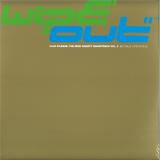
The legacy of wipE′out′′ has transcended time and cemented itself as a true transgenerational phenomenon. Launched in 1995, it didn’t just revolutionise the gaming industry, it created a bridge between the gaming ecosystem and the raver community. Its futuristic aesthetics and forward-thinking sound left a mark not only on mainstream audiences but also on the most demanding corners of the underground.
Decades later, the game’s impact is still alive. The release in 2023 of The Zero Gravity Soundtrack on Lapsus Records proved once again that wipE′out′′’s accompanying audio will go down in history as much more than just an anti-gravity racing game soundtrack.
This is why we decided to go deeper into the slipstream and build the second volume you’re now holding in your hands. Drawn from the original archives of Tim Wright, aka CoLD SToRAGE, this new collection surfaces unreleased cuts, pieces that couldn’t fit on the first edition, and a suite of self-authored ambient reworks that translate pure velocity into wide-screen atmospherics engineered for the long straights, the drone of airbrakes, the blue hour between checkpoints. It also reconnects the circuit, gathering selections and variants tied to later chapters of the saga — wipE′out′′ HD and wipE′out′′ Pure — plus alternative mixes that, until now, only existed in the Sega Saturn dimension of the franchise.
Finally, the material takes a leap into the future in the hands of four remixers especially chosen for this release: Tim Reaper, SHERELLE, Mantra, and NikNak, who collectively forge links between CoLD SToRAGE’s pioneering musical vision, the sound world of the game, and the contemporary breakbeats and drum & bass vanguard.
Expect the DNA you remember — accelerated breaks, trance-vector synths, jungle influences, sub-bass rumbling neatly beneath the craft’s hull, and at times even echoes of classic hardstyle — now revealed with new angles and air. The previously unheard material carries the same aerodynamic design sense that made these tracks feel faster than the track map itself, while the ambient versions open the field of view with melodies hovering at the lip of overdrive. Without a doubt, here you’ll find a strong sense of nostalgia. But this isn’t just nostalgia; it’s also proof that this sound world continues to evolve when you ease off the throttle.
For the faithful — crate-digging ravers, speed-run obsessives, and design nerds — this is an essential expansion pack: compiling rarities, restoring context, and reframing the emotional core of wipE′out′′ for late nights and early mornings alike. Bridging memory and momentum, club and console, rush and afterglow. Strap in.
Detailed tracklist, with annotations by Tim Wright aka CoLD SToRAGE
· Scratch Pad 1: “This track was composed using incomplete tracks that were developed around the time of the first wipE′out′′. It’s so long because it was used for a marathon-length Psygnosis promotional video.”
· Messij Received: “Messij was a firm favourite with wipE′out′′ fans, so it made sense that there’d be more where that came from — this was one of those re-workings.”
· God’s Gift: “I was always very fond of Erasure’s track Love to Hate You with the canned crowd FX sounds. God’s Gift was a tongue-in-cheek reference to how some musicians think they are just that. This was way before I even played live as CoLD SToRAGE.”
· Tentative: “I wasn’t sure about introducing some wacky beats and distorted sounds into one of the tracks, because it was kinda heading away from the other tracks, hence Tentative — but it turned out OK.”
· Canada 2048: “When wipE′out′′ 2048 was launched I decided to re-make Canada as a kind of tribute, but in a slightly new-tech, laid-back way, using Propellerhead Reason and all software synths.”
· Wiped Out: “Based on a few riffs from a MIDI file unused at the time of the original wipE′out′′ game compositions, this featured on my debut album MELT.”
· Body in Motion (Body Plus Mix): “A more trippy interpretation of Body in Motion that featured on non PlayStation versions of the game e.g. Sega Saturn.”
· Onyx (“Dark Side of the Moon”): “Onyx was my sole contribution to wipE′out′′ Pure on the Sony PSP handheld gaming console. This version was something I developed in a darker style, that eventually erupts into a crescendo.”
· Messij Received (WSTWGBE Mix): “Like I say, Messij was a hit with most wipE′out′′ fans, so when I was asked to compose more music for non-PlayStation versions, I adapted this tune into a parallel-universe version for PC and Sega Saturn. By the way, WSTWGBE refers to Who Said This Was Going To Be Easy?”
· Canada (Drunken Ausländer Mix): “In early 2018 I released a fresh album called Ch'illout′′, a re-working of many of my wipE′out′′ tracks in an ambient, Sunday-morning vibe style — it was a few years’ work, here and there.”
· Tentative (Woffenfum Mix): “Another chilled re-working of one of my wipE′out′′ tracks, the mix named with a nod to a good friend of mine, Carl Woffenden — someone who I've worked with for many years in the games industry.”
· Messij (Bobbing Boat Mix): “A nice cheesy computer blip-blop start belies its deep and upbeat chilled-out melodic finale.”
· Body in Motion (Timeless Techno Mix): “Another classic track given the chilled-out vibe mix, as featured originally on my Ch'illout′′ album. This one’s a really trippy, deep-space take on the original.”
· DOH-T (AM / FM Mix): “The idea with this chilled-out mix was to imagine all the melodic parts of this varied track being broadcast on terrestrial radio, so each theme drifts in and out through the radio static.”
· ’95 Future Echoes: “Originally developed as a companion album for wipE′out′′ HD, this track actually has its roots in a tiny loop of a song that never progressed to anything special back in the mid-’90s when I was composing for the original game.”
· Turbine: “Also from my wipE′out′′ HD album, it leans heavily into the upbeat, uplifting tunes from the original game, but also steals a bit of vibe and energy from The Prodigy, with those distorted flute sounds.”
· Pencil Neck: “This excerpt from my wipE′out′′ HD album features lots of sounds centre-stage and forward from Propellerhead Reason’s Subtractor virtual synth. I learned to love this more than my JD-800!”
· Messij 2005 (New Science Mix): “Yet another take on the track that still raises a smile, this time through a mix of samples from the original and Propellerhead Reason — the ‘new science’ when compared to an Amiga 1200 running Bars and Pipes.”
Welcome to the first release on Acid Lamour
A sub label for Lamour Records started in 2018 with a focus on techno and acid dedicated DJs. Releases are limited to 303 vinyls, no re-press.
Anders Ilar and John H are no newcomers to the electronic music scene.
Born in 1973, Anders Ilar began his explorations of electronic music in the mid 80s. Growing up in the small town of Ludvika in Sweden, Ilar spent all of his spare time playing with synthesizers, drum machines, keyboards and sequencers, learning the ins and outs of analogue and digital sound and music creation. Inspired by the early industrial and EBM wave he formed several bands with friends, started playing live shows
at smaller local parties, and released several demo tapes in very limited quantities. In the 90's he gradually shifted his creative influences towards ambient techno and acid and also started to DJ. He started using computer software to produce his music around 1999 and his first vinyl EP was released in 2001 on the german label Plong!, soon to be followed by
many more releases on labels such as Shitkatapult, Audio.nl and Echocord.
Developing his own flavor of deep minimal dub techno and ambient he gained critical acclaim with his album Nightwidth (2006) for Narita Records in the USA. Followed by highly appraised album Sworn on the german label Level Records in 2008. Ilar has also made remixes for celebrated artists such as Apparat, Mikkel Metal and Ripperton and has
appeared on numerous compilations and DJ-mixes. He's performed live on stage through-out most European countries and Japan, as well as doing a small tour with Notch Festival in China in 2008.
Up to 2018 Anders Ilar has produced 13 albums and 25 vinyl EP's and performed in over 15 countries.
Born in 1984 and based in Gothenburg. John H has been DJing, as well as producing tracks, since the late 90s, with Anders as his mentor and teacher, giving John early musical influences spanning across a wide range of genres, from Swedish techno to IDM, Cologne acid craziness and
the sound of Chicago house tracks. The musical output of his DJ-sets usually varies between techno, house, acid, electro and everything in between, depending on the time and location. John has performed on several locations all around Sweden, but also done appreciated gigs in other European countries at clubs like Tresor and Culture Box, and his music has been featured in sets by DJs such as Sven Väth, Adam Beyer,
Joris Voorn, Dense & Pika, Cari Lekebusch, Alan Fitzpatrick, Karotte,
Gregor Tresher, The Hacker and many more.
Coming For Your Tongue EP is Anders and John's 4th collab release, after
acclaimed releases on Flight Recorder and New York Haunted, recorded
during a jam session at John's studio in Bergsjön outside of Gothenburg,
Sweden, using a small setup of analogue synths and drum machines such as
the Roland TR-606, TR-808, a Devil Fish modified TB-303, Minimoog Voyager
and the Arturia Microbrute. After recording Anders spiced things up by
cutting and puzzling loops as well as adding extra effects and drums.
Limited edition of 303, no repress. Vinyl exklusive for 3 months
“sitting in the terminal at Barcelona airport, health safety warnings echo through empty architecture. feeling slow, and fast, out of sync with rituals and routines. structure and rhythm disintegrate into micro gestures appearing in random order, a daily psychedelia... amid all of the chaos and distraction in the last few years, it’s only through letting go that I've found solid ground to stand on.”
These are some of the experiences and reflections that gave shape to Slipstream, a hallucinatory mini-album by the artist PVAS and the fourth release on Objekt's label, Kapsela. Slipstream is an aural document of PVAS's interior life, conceived not as a grab-bag of DJ-friendly tracks (although it’s clearly inspired by the club) but as a single, delicately crafted artistic statement. The entire record is shrouded in a flickering haze, worn through by smudged breakbeats and wiry drum machines. “Wetland”, with its swampy percussion and crystalline arps, echoes T++ and Kraftwerk. The radiant incandescence of “Gathering Drift” recalls GAS or Monolake's “Hong Kong.” Sampled breakbeats dip and swerve asymmetrically through “Boba” and “Terminal”. Across the record, textures and voices are reshaped by PVAS's homemade algo-software, UMT, which, in PVAS’ own words, “reconstructs one audio file by sampling another, resulting in output that merges their aesthetic qualities, creating rhythm with non-rhythmic sound files and abusing the stereo field.” But the most striking union of technology and poetic self-exploration comes at the end of the record, in the title track, from words murmured through a classic vocoder:
“when i stop framing myself as a boundaried stone
immovable, and powerful, and heavy
when i stop figuring my deepest space as my own
something which i am solely responsible
i surrender, i surrender”
PVAS is Jordan Juras, a Berlin-based artist who grew up outside of Windsor, Ontario. He has released solo EPs on Isla and xpq?, and is half the duo NUG (3XL, West Mineral Ltd.). In addition to developing music software professionally, he has used his UMT software on records by Lyra Pramuk and Dylan Kerr. Slipstream was recorded from 2022 to 2025.
Written and produced by PVAS
Mixed by TJ Hertz
Mastered by Anne Taegert at D&M
Artwork and design by Brodie Kaman
“Round and Round” is a tale of depression and the brooding repetitious inner thoughts that drain us. Dubbed by producer Daniel David as “emo boogie”–partly as a joke–this newfound genre illustrates familiar personal struggles of the current age. This A-side rides the fine line of unraveling deep emotions, ultimately coaxing you to FEEL the groove.
Conversely, the B-side “Finely” feat. B.Bravo is a smooth rolling vocoder jam, a laid-back anthem perfect for a cruise or warming up a fresh dancefloor: a high to offset the low.
Zackey Force Funk
Born into this wild world in Tucson, AZ 1974, Zackey Force Funk found himself in and out of prison at the age of 17. Once released for good, Zackey ditched a life of crime to focus on raising his family and writing music. He thrived in the golden era of Myspace, producing eerie, gritty music on pirated software, and swiftly grabbed the attention of Kutmah–soon to be followed by a plethora of formidable producers. Zackey forged many collaborations later with the likes of XL Middleton, The Egyptian Lover, Salva, Lazer Sword, Lorn, Brian Ellis, Baron Zen, Daedelus and B. Bravo, as well as forming the group Demon Queen with Tobacco, and Delta Weapon with his brother N8NOFACE. As these tunes were scattered across various labels and on their respective collaborator's projects, ZFF continued to hone his style, delving deeper into the psychedelic future funk realm of which he has created for himself.
Daniel David
Daniel David is a Bay Area born multi-instrumentalist, producer, and singer based in Dallas, Texas. 1/2 of boogie funk duo The Pendletons, Daniel’s solo music is a genre defying mix of organic and electronic elements including psych, dirty analog funk, hyphy, jazz, and more.
license
After the conceptual depth of "Parallel Traces of the Jewel Voice" (2021), dj sniff returns to Discrepant with a more direct and visceral document: Turntable Solos.
Composed from live recordings made during the latter half of 2024, Turntable Solos captures dj sniff’s improvised performances in their rawest form. At the core of his setup is Cut ’n’ Play, a software sampler he originally built in Max / MSP in 2007. Since then, he has continued developing custom tools and instruments that extend what Derek Bailey called the “instrumental impulse” — the tactile, responsive relationship between musician and machine that defines improvisation.
Following a summer 2024 tour of Japan with Gonçalo Cardoso, sniff was encouraged to document and release a selection of his live sets. Not long after, a performance at 20α (Alpha) in Hong Kong would become the emotional and conceptual anchor for the project.
In the liner notes, sniff reflects on the eerie parallels between recent footage of protestors in Los Angeles — assaulted by police using so-called “less-lethal” weapons, and civilians being abducted into detention centers — and the 2019 Hong Kong protests. A place once filled with personal nostalgia began to feel like a grim foreshadowing of what might unfold in Western societies.
In this turbulent context, 20α stands out as a space of resistance and renewal — a beacon for a new generation of experimental musicians, growing in defiance of increasing censorship and surveillance. "Turntable Solos" is both a personal statement and a public act of sonic resilience.
fka boursin is a DJ and producer out of Bristol, UK.
Previously known as DJ Boursin, he is recognized for his deep, ambient-infused house music that explores political dimensions of clubs and identity politics.
Welcomed into the Scissor & Thread fold, fka boursin shares two cuts of deep and introspective
electronic music.
The original Listless Intertext is a hazy trip through ambient soundscapes, shuffling rhythms and half-caught conversations, drifting across a 12 minute run time that slowly evolves and shifts with time.
"Listless Intertext is a track centred around the "failed" employment of cheap vocoder software that attempted to process explicit words and phrases across 11 minutes." says fka boursin. "Instead, the vocoder output made any words indecipherable and I was left with thematic vagueness. The final text of the track is simply a submission to its own limitations with some french thrown in."
When label bosses Frank & Tony step up for their Housebeat Dub, they keep the essential mood but introduce a thick, fat groove that works just as well in conveying the mood.
"Our remix is a strictly dancefloor approach," says Frank, "an extended psychedelic beat rework perfect for late night, early morning vibes".
- A1: Reise Der Schatten (Titles)
- A2: Sans Visages #1
- A3: The Wind Comes From The East #1
- A4: U?Berwacht #1
- A5: Pyrapulse
- A6: The Silver Tree #1
- A7: Tod Und Der Affe #1
- A8: The Wind Comes From The East #2
- A9: U?Berwacht #2
- A10: Candle With Wings #1
- A11: Tage Ohne Stunden #1
- A12: City Symphony
- B1: Candle With Wings #2
- B2: A Friend From The Deep #1
- B3: The Silver Tree #2
- B4: Paper Moon
- B5: Mechanocrab #1
- B6: Tage Ohne Stunden #2
- B7: Mechanocrab #2
- B8: Island Interlude
- B9: Mechanocrab #3
- B10: U?Berwacht #3
- B11: A Friend From The Deep #2
- B12: Mechanocrab #4
- B17: Tod Und Der Affe #2
- B13: Sans Visages #2
- B14: U?Berwacht #4
- B15: Assimilation
- B16: Sans Visages #3 (Credits)
»Reise der Schatten« (»Journey of Shadows«) is the soundtrack to the eponymous debut feature-length animation film by Swiss artist Yves Netzhammer. Composed by Anthony Pateras and released as a stand- alone album through Hallow Ground, the 29 pieces are based on »weird folk melodies ornamented with electro-acoustics to give the film a more fantastical, fairy-tale feeling,« as the composer puts it. His extensive international recording sessions with a slew of guest musicians results in a record imbued with a sense of mystical surrealism, otherworldly and haunting.
»Reise der Schatten« tells the abstracted story of a genderless being coming to terms with its identity and place in a world full of conflicts and systems of control. »The film was made with old animation software that only works on Mac OS 9. So already, we are in a very hermetic, unique space,« says Pateras. Having tried (and failed) to compose something »typically experimental,« he went for long walks in the Australian bushlands and came home with something else: the idea to create a soundtrack that would create »a kind of distance, or perceptual shift, but also a narrative drive and emotional context which is not always clear.«
While recording the album, the tētēma co-founder did not use digitally generated sound, instead workingwith live instrumentation whose sound palette was enriched by the use of feedback, tape delay, analogue synthesizers, and samples from vinyl records. Wanting to work primarily with acoustic instruments suchas the clarinet made Pateras embark on a complicated journey of his own. The initial recording sessions took place in Basel on metallophones that were designed by Domenico Melchiorre’s Lunason company and laid the foundation for everything that came after.
Pateras recorded with musicians such as guitarist Alexander Garsden, viola player Erkki Veltheim, clarinetist Aviva Endean, multi-instrumentalist Justin Marshall and Lizzy Welsh on the viola d’amore among other instruments. He recorded percussion and recorders with Rohan Rebeiro and Natasha Anderson in his hometown of Castlemaine, double bass with Benjamin Ward in Sydney, bass and flutes with Jon Heilbron and Rebecca Lane in Berlin, and electronics in Zürich with Netzhammer. »Reise der Schatten« was thus a literal journey, made with a »big, international electro-acoustic ensemble.«
As a stand-alone album, »Reise der Schatten« opens up a space of its own. Its stylistic diversity makes it atmospherically and emotionally multi-faceted. As its composer notes, »music for screen can be very virtuosic, sophisticated, and variegated!« His own work is a testament to that claim.
ele
- A1: Burns & Tubbs - Where Were U In 92?
- A2: ?-Ziq - 4Am
- A3: Arthur Verocai - Caboclo
- A4: Auntie Flo - Green City
- B1: Software - Present Voice
- B2: Point Zero - Coastal
- B3: Nina Simone - Come Ye
- B4: N.y. House'n Authority - Apt. 3B
- C1: Mark Barrott - When Devils Become Gods
- C2: Eric Serra - Protect Life
- C3: Mazzy Star - Fade Into You
- D1: Boards Of Canada - Open The Light
- D2: Aqua Bassino - When The Bird Flies
- D3: Talk Talk - Wealth
- D4: Yukihiro Takahashi - Present
To mark a decade as one of Ibiza's most iconic musical sanctuaries, Hostal La Torre announces 'La Torre Ibiza Volumen Cinco', a new compilation curated by long-standing residents Pete Gooding and Mark Barrott. Released June 27 on CD and double vinyl, the 15-track collection captures the spirit of the venue that has come to define the golden-hour soundtrack ofthe island's west coast.
Since opening in 2015, La Torre has established itself as a bastion of Balearic culture-set high on the cliffs overlooking the sea, where music flows with the sun rather than the clock. The fifth volume in the celebrated La Torre series is a journey through Brazilian soul, ambient electronica, classic deep house, orchestral minimalism, and dusk-lit Detroit techno-an emotional arc designed to mirror the progression of an evening at the venue.
From timeless icons like Nina Simone, Mazzy Star, Talk Talk (with their Spirit of Eden closer "Wealth"), and Boards of Canada, to boundary-pushers like Auntie Flo, Eden Burns, and µ-Ziq (aka Mike Paradinas), Volumen Cinco weaves together deep-rooted classics and leftfield discoveries. Mark Barrott contributes a brand-new exclusive, 'When Devils Become Gods', while the compilation closes on a rare gem from Yellow Magic Orchestra's Yukihiro Takahashi. Also includedis Software's 'Present Voice', a quietly powerful tribute to the late José Padilla, the spiritual architect of Ibiza's sunset sound.
Volumen Cinco is more than just a listening experience-it's a tribute to La Torre's ethos: open-hearted, genre-fluid, rooted in place and time. Each track is carefully sequenced to evoke a feeling, a shift in light, or a shared memory beneath the fading sun.
Over the years, La Torre has welcomed some of the most influential names in Balearic and electronic music, from José Padilla, Alfredo, and Jon Sa Trinxa to DJ Harvey, David Holmes, Lovefingers, Heidi Lawden, Wolf Müller, Don Carlos, and Phil Mison. With each summer season and each release, the venue continues to build a musical legacy that has earned critical acclaim from Resident Advisor, Phonica Records, Juno, and Piccadilly Records, regularly featuring in their year-end lists.
As Test Pressing once wrote, "La Torre is not a party, it's a place of pilgrimage. It feels almost sacred." That spirit resonates deeply in this anniversary compilation-a celebration of music, community, and connection that spans a decade.
La Torre Ibiza Volumen Cinco is dedicated to the artists, friends, collaborators, and guests who've shaped its story so far-and to everyone who continues to gather, listen, and lose track of time as the sun slips beneath the horizon.
"After being praised as one of the best releases of 2025 by multiple platforms, the highly praised debut album from Obeka lands on vinyl via YUKU.
The rhythmic dynamics and emotive attitudes of A World No More captures the density of soundsystem culture in Obeka's ancestral roots. YUKU presents the Bermudians debut album capturing a Neo-Colonial dystopia, protest and Afro-Futurism hyperextended through decaying sonic structures of a dark past and its grievances which very much exist today.
Growing into adulthood within the walls of British and European Colonial systems meant the disconnection and lostness in a new country hid me from the world at a young age. Unlike London's vast and culturally engaging migrant communities, the industrial milling town of Stockport introduced a coldness towards people from other countries I experienced in my first year after relocating from Bermuda. I couldn't understand why. Whether cold words thrown towards me or actions upon other people who look like me, it has shown to be a dooming societal virus with no cure. The most comfort was found through what was familiar - drums and rhythmic spirituality of my homeland. It was a safe-haven, a place to empty the anger and confusion. It's been 15 years since relocating and as my sound evolved, it seems classism, racism, oppression and civil control of ethnic peoples has become worse - even now more legalised and normalised. Ogun (a powerful Yoruba deity associated with anger, justice and war) acts as the opening sequence of the record and its symbolism. Using distorted bass frequencies and dissected Regga-Dub immersed in live-sampled ghostly voices of the lost ones. This sonic exercising is also applied in Drillaman - a stampede of industrial framework and metallic instruments wielded over moody Dancehall MC'ing, magnifying two parallel worlds in cocooned evolution. The resurrection of Transatlantic African cultures and identity have never been silenced, rather carried elsewhere through trade routes of enslavement, which was pivotal when composing and completing the album upon returning home to the Caribbean for the first time ever. After reconnecting with my heritage my blurred vision of what's wrong in the world became so clear. Guidance in empty plains seek truth throughout the pain - A statement of finding oneself expressed on the poetic closing track A World No More.
On Fawohodie (A West African Adinkra symbol that represents independence, freedom, and emancipation stamped on the album cover) the motive and atmosphere begins to change. Afro-Caribbean idealism which refers to the philosophical concept that emphasizes the interconnectedness of individuals and the importance of community, often contrasting with Western individualism, begins to take shape in a new universe. We can co-exist. The track framework uses machine-led software forming frequencies we have no control over, then manipulated through decomposing soundscapes, scattered hand-drums and human-made weapons of control - exposing the hidden disparity that's been carried over generations whilst balancing hopeful and musical foundations towards equality and peace. On Pressure and Kuduro! the writing direction attempts to wake people up. Not settling for a composed approach like in past projects, quite the opposite. A call for native sonic awareness, dismantled vocals of protests, eroded percussion using chains, gears and motorised harmonies sculpted in challenging abstract behaviors far outside my comfort zone. A direct abrasiveness and weight I want people to feel, whilst finding hope and solace through enchanting choirs and hypnotic basslines in complete synchrony.
"Purity in sound manifests when you least expect it. The smallest memory or feeling grows from a seed into a sonic language that you, and only you can interpret and release back into the world." "
- A1: Talisman & Hudson - Warmth Re-Heated
- A2: Conscious - Morpheus
- B1: Treacle People - Rupununi Rhythm
- B2: The Obsession Project - The Dream
- C1: Interphaze - Aman
- C2: So-Low - The Hourglass (Time Mix)
- C3: Jay Trance - Ridiculous
- D1: Connective Zone - Multiple Sensory Contact
- D2: Cxx - The Comfort Of Strangers (Rhythm Doctor Mix)
- D3: C Hudd & P. Lazonby - The Colours (Mix 2)
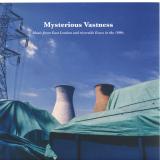
Barking-born Jane Fitz, and Transmigration label founder David Fogarty, curate a collection of tracks from East London and Essex’s rich but largely overlooked constellation of independent record labels and distributors operating from London’s E16 to the edges of the Thames estuary during the 1990s.
Mysterious Vastness documents a hidden and largely detached scene that only forms into something coherent with hindsight. From a time when record labels could press and hand-distribute 1000 copies locally, the late 80s acid house and outdoor rave scenes were moving from the fields to the clubs of London and DJs such as Colin Dale, Colin Faver and Darren Emerson were dominating the airwaves and parties with a distinct mix of other-worldly techno, trance and out-there house music. Among the seemingly bland post-war housing estates and factories, a scattered handful of producers were experimenting with early versions of music production software to create an exotic, end-of-the-century soundtrack to the suburban-meets-industrial landscape.
The compilation features a selection of finds from East London’s second hand record or charity shops over a period of 15 years. Many of which have featured in Jane’s sets over the years, most notably the “Beyond The A13" Podcast for Furthur Electronix. A mix she described at the time as the soundtrack to an area of London “totally bereft of natural beauty, but to me, somehow always full of mystery and wonder.”
REVOLT hits double digits with a special release from Athenian underground veteran Other Reality—aka Alex Psaltakis—a figure deeply rooted in the rave culture of the ’90s. His journey began in the late ’80s via the Amiga demoscene, inspired by the raw energy of acid house and hardcore breakbeat. By the mid-’90s, he was DJing at raves, clubs, and open-air festivals, fueled by a passion for psychedelic trance, ambient, Goa, and experimental acid rock. His dedication to the underground has remained unwavering ever since—fed by records, synthesizers, and a deep love for sound exploration.
Still Thrill EP is a 4-track release shaped by a wide musical range, bringing together elements of Detroit techno, trance, house, Goa, ambient, and progressive. More than just a debut on the REVOLT label, this is Other Reality’s first-ever release on vinyl—a deeply personal milestone shaped by years of dedication to his craft and the support of close friends and peers.
Crafted with a mix of hardware and software, the EP draws from years of studio sketches and archived musical ideas. A hidden detail runs through it: a fragmented sample from a rock track that deeply marked Alex in the past—a line that never fully completes in the track.
Each piece carries emotional weight and narrative depth, blending analog warmth with timeless dancefloor energy. The EP moves effortlessly through moods—nostalgic yet forward-looking, playful yet deeply personal.
Ohm ’95—with a name that subtly hints at the Goa trance soul—delivers acid basslines, trance elements, and dreamy pads. A transcendental, unifying experience. Kinda Free pulses gently like a groovy caress at dawn, with dreamy layers, steady rhythm, and acid touches that feel both tender and elevating. More Than Advice embraces movement, disorder, and acceptance, rolling through intricate percussions, hypnotic loops, and a cosmic atmosphere. Emotional and raw. Still Thrill closes the EP with slow-motion energy, submerged in flowing textures and a fluid, nostalgic groove.
Vinyl only. Limited edition.