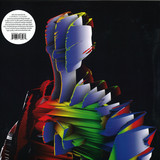
Philippe Cam is the Thomas Pynchon of the electronic music world. Little is known about him and only a couple of pictures have been put online since he emerged on this planet to write his first and only album18 years ago. We know he worked as a sailor and that’s it. If you dig deeper you might find out that he worked as a DJ in the beginning of the 90ies in Brussels and began to study electronic music there and also began to write music for theaters and ballets.
The American distributor Forced Exposure once wrote that about him: „Philipe Cam is a star in his own field. He is among the few people who have succeeded to write hypnotic dance music without a conventional beat still conveying a thrilling, dramatic feel. Cam has developed an accurate, intense and complex formula of modulation-techno. Starting with music similar to Pan Sonic in 1996, his music turned towards a more elegant form of minimal music. Abstract soundtracks lead to an organic form of music, which was equally influenced by modern techno as Wolfgang Voigt's Studio 1/Gas or Basic Channel/Maurizio. Cam's music corresponds heavily to the Cologne scene, where his music is appreciated and played throughout the clubs by the likes of Michael Mayer, Tobias Thomas and various other DJs as well as experimental djs from the A-musik corner.“
So what’s new with his music? Basically the art of filtering is still his passion. Maybe he can be less associated with techno and the themes of his new tracks emerge in a more distinctive pattern? Well that’s hard to say, we would comment the energy of his early techno days in Brussels have returned here in a fierce way with some oft he tracks. The rhythmic movements are classy and stick with you. Whereas other tracks look for a distinctive relaxation of some kind.
We are releasing the album as a double clear vinyl with cover art by Yvette Klein who also designed the cover for his Philippe Cam’s album 18 years ago. Graphics for "Rotterdam" come from Cologne designer Daniela Thiel. We also would like to thank the cultural department of Cologne for supporting us to finance the album and to see the artistic value in this piece of minimalism.
The album kicks off with the mellow and soothing "Cocoa Beach". A Gentle beat that moves like bodies swaying in the hot summer sun. The clock moves a step forward and then a step backward as evolution takes a rest.
"Manga" feels like an acceleration to the moon, the contemplative moments come in spurts and hide in the intervals of the chords which are on the loose. Philippe Cam is the most energetic person in the world when it comes to core activity, this is head banging stuff for the ambient lounge.
"Short Summer" is a heavy and violent recognition. As intensive as it is it knows when to stop and disappear. In the ear and brain of the listeners it leaves an indisputable echo which lingers on for minutes. We suggest not to make a pause but jump directly into "Vermillions Sands".
What can be said about into "Vermillions Sands"? Be prepared some Terry Riley might lure around the corner to offer you some oranges on a silver plate, but don’t eat them. This is luring and beautiful at the same time. Maybe the best ambient track ever written and yet who can ever venture to say that without making a fool of himself. "Vermillions Sands" comes in waves and they could be longer we think.
"Rotterdam" the home of Philippe Cam for a long time but not anymore. He moved away. So that changes the perspective. But when was the track written? "Rotterdam" seems mechanical and rusty and spooky and divided. This arrangement is very different to all the other tracks so far and is almost dub in style but way more fractured. A steady stop and go emerges. But the longer it runs the better it gets. At minute 6 the brain resets itself and tries to grasp what has happened so far, reconstruction as a result of its own phantasmic imagination and hardly true at all, wonderful. Applause included!
Here comes "Bis", a short episode of a track and before we can comment on it, it is already over.
"The Game" is a mule of a track. It has a quiet stubborn sequence that bites and kicks you in the back without any change in near sight. We can hear a voice whispering, which sounds like a miniature vocoder featuring the voice of a child calling out - never stopping. This is treadmill to some extend but starts to breathe towards the middle of the track and slowly changes perspective. In fact there are some changes taking place here which go beyond a sound design that works heavily on the stereo image. Stick with it and the experience will be a great one.
"Ultimate Fly For Halloway" somehow orchestrates how you might feel after you climbed a 8000 meter high mountain and reached the top. A rejoicing off a special kind. Lava for the ears. No cheerleader murder plot sorry.
"Last Track" is a perfect example of a true minimalistic pice of music that manages to make contact with other genres and does this with elegance, determination and a lot of soul.
key selling points: The key selling point is the fact that Philippe Cam once was referred to as one of the main protagonists of the minimal music scene along with Wolfgang Voigt's Studio 1/Gas and Basic Channel/Maurizio. A true artist with a vision which is very rare.
Philippe Cam has picked up the sound he was famous for but has developed it further without selling out to any genre and expectation that rules our daily business.
Exactly this is the strength of the album to create a vivid world of impressions by using instruments in a whole different way than all software developers would suggest.
"Rotterdam" is a piece of art that can set off a firework when you listen to it and it owes nothing to anyone.
Search:software
On 28th June 2019, drummer / producer / composer Myele Manzanza will release his eagerly anticipated third album 'A Love Requited' on First Word Records (winner of Worldwide Awards 'Label of the Year' 2019).
Produced with award winning Australian bassist & long time musical collaborator Ross McHenry and featuring a plethora of New Zealand and Australia's finest young instrumentalists, 'A Love Requited' is as much a musical journey as it is an attempt to process, work through and come to terms with the life around him.
"The music on this record was written often as a place of psychological refuge from the tensions of an ultimately failed relationship at home, as well as an attempt to come to grips with thought patterns and personal history that caused an often problematic relationship to music itself. Meditating on themes of love, fear, family, anger, death, ego and acceptance has helped create a narrative arc that grounds the album as well as a mode of therapy to begin working through these issues for myself.
'A Love Requited' is easily my most personal work to date and my hope is that beyond the music itself it may be of help to others, if only to say that your not alone in your struggle to make sense of the world".
This album also features the stellar talents of APRA award winning NYC based pianist Matthew Sheens (John Pattitucci, Cecil McBee, Ross McHenry Trio), alto saxophonist Jake Baxendale (Antipodes, The Jac), trumpeter Ben Harrison (Dave Douglas, Horns Of Leroy), trombonist James Macaulay (The Lagerphones, Epic Brass), multi-reedist Jason McMahon (The Shaolin Afronauts), flautist Adam Page (NZSO, John Psathas, Noel Gallagher), guitarist Django Rowe (Wizard Tone Records) as well as additional keyboard contributions by longtime collaborator Mark de Clive-Lowe (Ropeadope Records, Mashibeats), Brenton Foster and Jack Strempel.
Where Manzanza's debut album 'One' presented his ability as a producer / beatmaker, and his sophomore album 'OnePointOne' showcased his live performance and band leader prowess, 'A Love Requited' puts Manzanza's skills as a composer to the fore.
"Over the last few years I've really enjoyed the process of getting away from music software tools and just sitting at a piano with some manuscript paper and a cup of coffee and seeing what comes of it. I'm a very amateur pianist and my music theory knowledge is fairly limited, but in some ways that's an advantage as I'd be starting with a basic barometer of "does this sound good to me?", without too much consideration for formal rules and structure. From there, developing the arrangements to present to musicians forced me to get a better understanding of melody, harmony and orchestration and to really hone in on refining my ideas to a point where I now feel as much satisfaction and confidence putting myself out on the world stage as a composer as I do playing the drums."
'A Love Requited' will be available on vinyl & digital from the 28th June 2019.
Experience is not what happens to a man; it is what a man does with what happens to him, Luis Flores joins the Arts Collective with a stunning record that exposes his modular and software skills in one single place. The artist is a well-rounded persona that knows very well what he does, and how he does it. One half of the "Belief Defect" with Drumcell, project that shocked all of us at the Atonal Festival as well as with his solo project this artist keeps shining on his own light and showing us various platforms where his spacey and futuristic sound can develop. Label Boss Emmanuel takes the responsibility to melt together all the 3 tracks, creating a 4th and a 5th dimension altogether.
Since Danielle Mana's 2017 debut EP for Hyperdub, 'Creature', which was a taut, evocative suite of beatless, almost neo-classical electronics, we now find his music has caught an alien virus and started hallucinating. On 'Seven Steps Behind', the borders between reality and the weird have collapsed on each other, and with each listen through its zigzagging course, you're rewarded by its strange twists and turns. 'Seven Steps Behind' is an electronic album that doesn't always sound electronic; a great deal of the record has been created to sound like prepared pianos, harpsichords, cellos and flutes. At other times, sampled acoustic instruments and specially recorded sessions have been processed through software and careful editing. It's this sophisticated layering of contrasting versions of the same sources that help give this record its uncanny balance. The album also plays with your sense of time in its mostly drum-free hall of mirrors, pulling from minimalism, chamber music, dark jazz, and synthesiser experiments. Mana's singing voice also makes it's debut here, albeit adorned by abrasive FXs. His lyrics are encrypted in noise, in fitting with the music's chimeric character, casting images for the listener to decipher. His heavily manipulated voice enters on second track 'Myopia For The Future', sounding something like a singing motorbike pitched over bouncing ostinatos, or on 'No Body's inhuman, word-less range, where it's impossible to tell where the human finishes and the machine starts. Or in the case of 'Leverage For Survival' it's animal and machine. Here, as with the album's eponymous final track, a sensory assault subsides to reveal a heart-wrenching melancholy that anchors the record. Listening to 'Seven Steps Behind' is like stepping into a dream, with all the curious emotions and buried meaning that involves. Yet for all its restless, shifting energy it manages to hold both dissonance and melody in sweet proportion.
serenitatem, the fifteenth installment of FRKWYS, RVNG Intl.'s collaboration series pairing intergenerational artists in creative conversation, joins Visible Cloaks with Yoshio Ojima and Satsuki Shibano, two trailblazers of the Japanese avantgarde music and visual arts scenes of the 1980s and 90s.
Yoshio Ojima began his career as a composer of environmental and ambient music, with a particular interest, and optimism, in the possibilities of generative software. His compositional pursuit of human synthesis with computerized forms was realized in its fullest potential alongside Satsuki Shibano, a pianist renowned for her interpretations of Erik Satie and Claude Debussy. Together, they were among a handful of influential Japanese artists whose innovations still resonate, if not more vibrantly than ever, well beyond the tightly-knit scene's original core. In the early 90s, Ojima was among the programmers of the influential satellite radio experiment St. Giga, a constantly-evolving sonic landscape that combined field recordings and sound collage with occasional readings of Japanese poetry. Satsuki was a regular reader for the station. This musical terrarium bloomed out of sight in a small Tokyo studio, a greenhouse of sound with no set start or finish time that audiences could tune into, absorb, and immerse.
The perpetual flow state of St. Giga — recordings of which Ojima shared with Visible Cloaks — would be highly influential to serenitatem's constitution. As Visible Cloaks, the Portland, Oregon duo of Spencer Doran and Ryan Carlile have developed their own set of creative strategies that form an aesthetic fuse point between human intention, aleatoric composition, and improvisation.
These are notions most recently reflected in 2017's Reassemblage and Lex, a respective album and EP in which the duo combined generative software and virtual representations of global instruments into lacy, interlocking patterns. Long time admirers of Ojima's work on albums like 1988's Une Collection Des Chainons, Doran and Carlile discovered after an online introduction that they shared with Yoshio and Satsuki an abiding interest in pre-classical composers, the Lovely Music, Ltd. label, and the British avant-garde, as well as a mutual respect for one another's techniques and processes.
The four musicians met in Tokyo, Japan at Sounduno Studios in December 2017, at the tail end of Visible Cloaks' first Japanese tour, to commence work on serenitatem. Leading up to the studio sessions, Doran and Carlile sent Ojima processed sound sketches recorded while on a European tour, which Yoshio would add to and return. Visible Cloaks would then fold Yoshio's edits back into the original compositions, which Doran and Carlile brought to the exploratory recording session. During that week together in Tokyo, the quartet made use of a number of creative strategies — 'echoing sound together,' as Yoshio puts it. Among the strategies, MIDI randomization gave the quartet melodic lines and what Doran calls 'randomized clouds,' or 'tightly grouped notes that become smeared tonal clusters functioning more like chords in themselves.' Carlile would also feed Ojima and Satsuki's text into Wotja, a generative music software which produced a MIDI language around which the quartet expanded their compositions.
'The aim,' Doran says of serenitatem, 'was to make a work that was not specifically ambient (or environmental), but something more multi-hued, weaving these deconstructive concepts into an album that has a deeper architecture underpinning it.' Accordingly, serenitatem is a marvelously sharp record, its sutures between human and machine virtually impossible to find but suggested everywhere you turn. The collaboration among Ojima, Satsuki, and Visible Cloaks is both musically and conceptually inseparable from the technology that made it possible. Throughout the album, Shibano's playing resonates like Satie's, her rhythms cascading like drops from leaves an hour after the rain. Overtones are stretched and warped like modeling clay, then spun around and shown off from multiple angles.
A single soaring note might seem to be suddenly plunged underwater, its richness of sound made shallow and its sharp edges blunted. Pittering chimes and rapidly warping vocal samples hang in the luxuriously glossy space, water trickles from ear-toear, familiar melodies rise from nothing and dissolve before they can be traced. With the depth of its emotional charge, serenitatem burns away the easy cynicism of the day, presenting itself as the kind of delocalized work of art the internet promised us decades ago — a synthesis of artistic visions, technological sophistication, futurist ambition, and, occasionally, ancient polyphony. Listening to it can feel a bit like tuning in to a 21st Century version of St. Giga: It's a place where the future still grows.
Visible Cloaks, Yoshio Ojima, and Satsuki Shibano's serenitatem, FRKWYS Vol. 15, will be available across LP, CD, and digital formats on April 5, 2019. The quartet will perform select live shows throughout 2019.
Third LP of Cabaret Contemporain, French band (featuring Fabrizio Rat on keys) who use acoustic instruments (piano, guitar, bass, drums, contrabass) to produce a « hand-crafted » club music infused with techno. Inspired by Jeff Mills, Robert Hood or Drexciya, the five members already had a career on classical scene; their idea is not to replay classical techno tunes but to create a new path for the electronic music. 2 tracks featuring with the label boss, Arnaud Rebotini.
« Ballaro », which opens Cabaret Contemporain's third album, begins with light percussions, which seem to turn on themselves, while being conveyed by reverberations close to dub. After a few minutes of convolutions, the piece gets out of hand, transporting the listener into a rich form of pulsating trance, irrigated by a soaring melody and punctuated by persistent piano tones. « La selva »; more subdued, has the same energy, the track ending in an even more powerful way, a kind of paroxysm.
Finally, the strangest and most minimal « Cactus », features a singular groove, which evokes the most brutal house from Chicago, or the sometimes obsessive techno from Detroit. Just like other tracks such as « Transistor » or « TGV », fuelled by sweat and trance, Séquence Collective bears all the intensity of a techno cut for clubs' dancefloors. The only difference being that their music is not played with synths, drum machines or software, but with acoustic instruments. Dual curriculum The band is composed of five musicians and a sound engineer: Fabrizio Rat on piano, Giani Caserotto on guitar, Julien Loutelier on drums, Ronan Courty and Simon Drappier on double bass and of course Pierre Favrez on console. They are all in their thirties and met at the prestigious Paris Conservatoire in the late 2000s. However, all the musicians in the band have a double curriculum and navigate freely between the institutional realm and the underground or pop music scenes. Through classical or contemporary music, jazz and improvisation, rock and experimentation, they share a common passion for the original and futuristic techno of the 1990s, that of Jeff Mills, Robert Hood or Drexciya, which they have decided to reinvent and further in their own way. Not as a simple stylistic exercise practiced by virtuoso musicians, but rather as a new path for modern music, and for their generation. « The original idea » they say, « was to make club music by hand, like craftsmen. Like in the early days of jazz, our band managed to transform itself into a kind of dancing machine. Our music is therefore functional because it is danceable, but also mental and abstract, while offering several layers of listening. You can dance and play, have a purely physical and sensory connection to the music. But you can also immerse yourself in its listening, perceive refined harmonies or more complex rhythmic superpositions »
If the tones of Cabaret Contemporain are truly unique it is because each member of the band has developed a very personal approach through the use ''prepared'' instruments. The strings of their piano, guitar or double bass may recall strange machines with literally incredible sounds, obtained using objects such as chopsticks, clothes pegs, foil, hangers, a tiny pie mould or many other utensils from a DIY store. A collective energy
Cabaret Contemporain is first and foremost a live band that has been performing in venues and festivals since its inception in 2012 (Nuits Sonores, Siestes Electroniques, L'Aéronef, Le Trabendo, Philharmonie de Paris, Gaîté Lyrique, Rewire, Dancity, Barcelona Accio Musical...), both at traditional jazz and contemporary music venues, and more often at electro music hubs. When facing the audience, the band, which plays each of its sets in one go, without a break, shows an intense physical presence, which competes with the musical power of DJs who share the stage with them. Their performance, full of tension and repetition, which requires maximum concentration and a state close to trance from the musicians, is sometimes, according to them, « a mental journey and a mystic experience ». A dimension that brings to mind the historical techno culture and its dancers who, communicating on the dancefloor, were carried until the early hours of the morning by the power of the beat. An album inspired by the stage Since their beginnings, their compositions on record have drawn their energy directly from the practice of their concerts, whether referring to Terry Riley (2014) or Moondog (2015), an EP and an album dedicated to the repertoire of the two American artists, the original compositions of Cabaret Contemporain (2016) and Satellite EP (2017), as well as this new album. Séquence collective can be listened to as a condensed transcription of their inventions and their live experiments. The tracks, more than half of which were improvised during sessions held in the former Vogue studios near Paris, were recorded in live conditions, « like an old school rock band » they say. As usual, they invited a new musician to join them in the studio. After collaborating with Étienne Jaumet or Château-Flight, Arnaud Rebotini, César winner for best film music, added a welcome synth touch on two tracks (Pro- One, Prophet 600), which boosted the group's formidable collective energy. The album ends with « October Glide », again performed with Rebotini, a lyrical and lively track, built on a powerful and slow progression of timbres and percussions, which would ideally find its place at the core of a techno party « peak time »
The four tracks on this EP represent a bit of a transitional phase for Louis Jaquet (aka Kid Who), marking a move from a basic setup with an MPC2000XL sampler and a computer to a fully-fledged hardware studio. The initial versions of these tracks were quick jams that he had made early on in this change, but which had lay dormant on his hard drive for some time, before being revisited and reworked for this release with the new equipment.
'Rhythm Code' began life as an exercise in using only freely distributed software synths, and the majority of those sounds are still there, bar some additional acid sequences and tweaks to the rhythm parts.
On 'ZF Cut' his focus switched to samples, in an effort to squeeze the most he could out of his MPC, which at the time had only recently been upgraded. The unassuming beige box gives colour to anything you feed into it (breakbeats in particular), and a host of basic onboard effects add further quirky character, in this case hollow drones and rumbles which are the core of the track.
One of Kid Who's early purchases was a cheap old Yamaha multitrack cassette recorder, which presents many opportunities for sound manipulation. Different tape speeds, tape types and manual manipulation during playback open up a world of noisy, woozy atmospheres, some of which formed the basis of 'Spool Night'.
Of all four, 'Timescape' required the least revising, and the version presented here is very close to the original, 100% computer-based draft. Although the beat was built with Roland 707 drum machine sounds, a staple of early Chicago house records, he wanted to juxtapose these with a more up-to-date techno aesthetic, with a handful of final touches added in the new studio to finish
The four tracks on this EP represent a bit of a transitional phase for Louis Jaquet (aka Kid Who), marking a move from a basic setup with an MPC2000XL sampler and a computer to a fully-fledged hardware studio. The initial versions of these tracks were quick jams that he had made early on in this change, but which had lay dormant on his hard drive for some time, before being revisited and reworked for this release with the new equipment.
'Rhythm Code' began life as an exercise in using only freely distributed software synths, and the majority of those sounds are still there, bar some additional acid sequences and tweaks to the rhythm parts.
On 'ZF Cut' his focus switched to samples, in an effort to squeeze the most he could out of his MPC, which at the time had only recently been upgraded. The unassuming beige box gives colour to anything you feed into it (breakbeats in particular), and a host of basic onboard effects add further quirky character, in this case hollow drones and rumbles which are the core of the track.
One of Kid Who's early purchases was a cheap old Yamaha multitrack cassette recorder, which presents many opportunities for sound manipulation. Different tape speeds, tape types and manual manipulation during playback open up a world of noisy, woozy atmospheres, some of which formed the basis of 'Spool Night'.
Of all four, 'Timescape' required the least revising, and the version presented here is very close to the original, 100% computer-based draft. Although the beat was built with Roland 707 drum machine sounds, a staple of early Chicago house records, he wanted to juxtapose these with a more up-to-date techno aesthetic, with a handful of final touches added in the new studio to finish
Damon Zucconi is a visual artist living and working in Philadelphia. He frequently uses custom software to create his work, and has spent the past decade working as a computer programmer, producing pieces which are typically accessible online. Some of his projects include 'Fata Morgana' a reworking of Google Maps code that hides everything except text elements; a website for the Arca site-specific performance-installation Tormenta; and recent solo exhibitions with Veda in Florence and JTT in New York of physical and digital works. This is Zucconi's debut music release.
Jac Berrocal, David Fenech and Vincent Epplay return with Ice Exposure, their second album for Blackest Ever Black. A sequel and companion piece of sorts to 2015's Antigravity, its title couldn't be more apt: sonically it is both colder, and more exposed - in the sense of rawer, more volatile, more vulnerable - than its predecessor, capturing the combustible energy and barely suppressed violence of the trio's celebrated live performances with aspects of noir jazz, musique concrète, no wave art-rock, sound poetry and spectral electronics all interpenetrating in unpredictable and exhilarating ways. While there are moments of great sensitivity and even a cautious romanticism, the prevailing mood is one of anxiety, paranoia, and mounting psychodrama: close your eyes and Ice Exposure feels like a dissociative Hörspiel broadcasting from the seedy backstreets of your own troubled mind. Before he picks up an instrument or opens his mouth, Berrocal's unique and compelling presence can be felt: a combination of studied, glacial cool and anarchic, in-the-moment intensity that has served him well over a long and storied career. It was honed during his time as a theatre and film actor, and in the 70s Paris improv scene, it powered his influential Catalogue group in the 1970s, numerous seminal, sui generis solo sides, and far-sighted collaborations with the likes of Nurse With Wound, Lol Coxhill, Pascal Comelade and James Chance which have seen him come to be valorised by two generations of avant-garde agitators and eccentrics. Now in his eighth decade, it comes with an added gravitas, perhaps, but no less energy or vitality. On Ice Exposure, his lyrical, instantly recognisable trumpet playing is a key feature - see especially the ghostly, dubwise take on Ornette's 'Lonely Woman', the dissolute exotica of 'Salta Girls', and the sublime echo-chamber soliloquy 'Opportunity'. But more often it's his voice that commands centre-stage, whether casually discharging surreal poetic monologues or moaning in animal despair - a vocal tour de force that transcends language and culminates in the Dionysian frenzy of 'Why', Berrocal's half-spoken, half-howled exclamations jostling with David Fenech's slashes of dissonant guitar, over Badalamenti-ish, panther-stalk drums. Fenech's origins are in the mail-art scene of the early '90s, when he led the Peu Importe collective in Grenoble, and since then, in addition to his own recordings he has worked as a software developer at IRCAM and played with Jad Fair, Rhys Chatham and many others. Together with Vincent Epplay he is responsible for Ice Exposure's inspired arrangements and vivid, vertiginous sound design. Epplay is a visual artist and composer with particular interest in aleatory composition, concrete, and the reappropriation of vintage sound and film material. He and Fenech fashion a remarkable mise-en-scene for Berrocal to inhabit, one that embraces cutting-edge electronics while also paying homage to the best traditions of outlaw jazz and libidinous rock'n'roll ('Soundcheck' invokes the brutish spirit of Berrocal's hero Vince 'Rock N Roll Station' Taylor). On 'Blanche de Blanc', Berrocal's voice is framed by a groaning, ghoulish orchestra of industrial drones, while 'Equivoque' evokes the most humid and hostile Fourth World landscapes and 'Panic In Surabaya' lives up to its name, a hectic, pulse-quickening concrète collage that leaves you gasping for air. This is a searching and singular trio operating at the absolute peak of their powers, with an interplay that transcends studio and stage and occurs at an almost telepathic level. Ice Exposure is a triumph of that group mind, an underworld dérive as life-affirming as it is unnerving and psychologically precarious.
Panic In Surabaya
Sunda Arc are brothers Nick Smart and Jordan Smart. Best known as key members of Norwich based alternate-jazz trio Mammal Hands, Sunda Arc channels the duos love of electronic and dance music, without losing any of their deep musicality. Drawing on techno, electronica, neo-classical and post-rock influences, Sunda Arc compose and perform using both electronic and acoustic instruments, including analogue synthesisers, home-made software patches, piano, saxophones and bass clarinet - all finessed and channelled through their own unique creative strategies. Integrating electronic elements and experimentation with the expressiveness and energy of acoustic instruments and live performance, Sunda Arcs music is expansive, compelling and fun in equal parts.
07042016 (live at St.Paul's Anglican Church, Athens) is the debut album of Modal Analysis, brought by the Greek experimental band of MMMD (also known as Mohammad). Nikos Veliotis and Ilios are currently performing as the MMMD duo, with further focus on deep monolithic sounds, low frequencies, inter-modulations, dark textures, and distant folk nuances through custom made instruments (Cello & Electronic Bass) and software.
The release carries parts of the MMMD live performance at St.Paul's Anglican Church in Athens, recorded on the 7th of April 2016. The concert was hosted by Fasma Festival, on the opening day of its 2016 edition.
Lucky Me Präsentiert Das Debütalbum Des Us-produzenten Suicideyear Aka James Prudhomme Aus Louisiana, Der 2014 Mit Einer Ep Auf Oneohtrix Point Nevers Label Software Debütierte Und Jüngst Mit Yung Lean Kollaborierte. Wohnhaft In Den Us-südstaaten, Wirkt "color The Weather" Wie Eine Geographische Transzendenz, Und Gleichzeitig Introspektion Und Fantasiewelt Des Jungen Produzenten. Beteiligte Vokalisten Bzw. Co-produzenten Sind Georgia (aus London), Casey Mq (ein Klassenkamerad Von Der Red Bull Music Academy) Und Singer-songwriter John Keek (aus L.a.), Das Sample Auf "days Won't End" Stammt Von Outthepound Aka Chris Burrell.
Dais Records Is Proud To Announce The Official Reissue Of "elph Vs Coil - Worship The Glitch". Remastered By Engineer Josh Bonati And Supervised By Coil's Drew Mcdowall, The Vinyl Release Is Pressed Onto Double 12" Lp Vinyl (from The Original 10" Release), And Is Packaged In A Gorgeous 24pt Stock Matte Gatefold Lp With Sticker And Vellum Track Listing Insert. . Also Available On Digipack Cd And Digital.
"unexplainable" May Well Be The Best Explanation For The Members Of The Uk Based Electronic Outfit Coil. Making A Radical Shift From Intentional Accessibility, By Means Of Traditional Pop Songwriting, To Abstract Happenstance, Coil Had Entered Into A New Phase In Their Career...uncharted Waters Utilizing What Was Then The Newest Computer Technology, Digital And Analog Synthesis And The Newly Formed Ideas That Something Outside Of Themselves Was Steering The Ship.
During The Studio Sessions That Developed Into What Would Become 'worship The Glitch'. Coil Became Aware Of Random Compositions Emitting From Their Gear, And Were At Odds With Constant 'accidents' That Were Perpetually Plaguing The Recordings. The Band Called These Unintentional Emissions "elph": A Conceptual Being That Is One Part Physical Equipment, One Part Celestial Being...constantly Playing The Role Of Trickster, Throwing A Wrench Into Coil's Methodology. Eventually, These Accidents And Mistakes Were Embraced By The Band, And The Process Of Misusing Audio Software To Create Intentional "errors" Was Adopted As A Musical Technique. The Acceptance Of The "mistake", And The Use Of Discovered Mistakes As Intentional Elements Slowly Became The Drive And Concept Behind The Album, Thus Birthing The Title 'worship The Glitch'.
Originally Released In 1995 On Coil's In-house Imprint Eskaton, Worship The Glitch Was Coil's First Proper Album-length Attempt At Conceptual Ambient Composition, With A Radical Focus On Chance. Seamless Vignettes Of Shattered Electronics (though Ebbing Softly And In Delicate Balance With Each Other) Provide An Underlying Uncertainty And Discomfort To The Listener.
Dais Records is proud to announce the official reissue of "ELpH vs Coil - Worship the Glitch". Remastered by engineer Josh Bonati and supervised by Coil's Drew McDowall, the vinyl release is pressed onto double 12" LP vinyl (from the original 10" release), and is packaged in a gorgeous 24pt stock matte gatefold LP with sticker and vellum track listing insert. . Also available on digipack CD and Digital.
"Unexplainable" may well be the best explanation for the members of the UK based electronic outfit COIL. Making a radical shift from intentional accessibility, by means of traditional pop songwriting, to abstract happenstance, Coil had entered into a new phase in their career...uncharted waters utilizing what was then the newest computer technology, digital and analog synthesis and the newly formed ideas that something outside of themselves was steering the ship.
During the studio sessions that developed into what would become 'Worship the Glitch'. Coil became aware of random compositions emitting from their gear, and were at odds with constant 'accidents' that were perpetually plaguing the recordings. The band called these unintentional emissions "ELpH": a conceptual being that is one part physical equipment, one part celestial being...constantly playing the role of trickster, throwing a wrench into Coil's methodology. Eventually, these accidents and mistakes were embraced by the band, and the process of misusing audio software to create intentional "errors" was adopted as a musical technique. The acceptance of the "mistake", and the use of discovered mistakes as intentional elements slowly became the drive and concept behind the album, thus birthing the title 'Worship the Glitch'.
Originally released in 1995 on Coil's in-house imprint Eskaton, Worship the Glitch was Coil's first proper album-length attempt at conceptual ambient composition, with a radical focus on chance. Seamless vignettes of shattered electronics (though ebbing softly and in delicate balance with each other) provide an underlying uncertainty and discomfort to the listener.
Very LIMITED album discs available now:
This is the first album Oscar Mulero has released under his own name, after two acclaimed LPs under the moniker Trolley Route. Well known for his skills as a hard-edged, raw and floor-orientated techno dj, his productions go far beyond, digging deep into the intricate landscape of intelligent techno, floating moods, reminiscent atmospheres, harmony and detail.
Grey Fades To Green is the affirmation of his maturity as a producer, using both hardware and software in the pursuit of a highly coherent and diverse album.
The concept is split into two parts: The Grey and The Green, each one with its own character. The first part is rougher and meant for the dance floor, although pays full attention to detail and complexity. The second part is quieter, has a slower pace and is best enjoyed at home.
In The Green Oscar goes deep into the intellectual side of techno music and is heavily influenced by the post rave sound emerging from the UK in the nineties: Aphex Twin, Gescom, B12, Plaid, Autechre.. but with a contemporary approach.
This part of the album brings you melodies, harmonies, endless atmospheres, and hours of studio work. Each sound has been carefully constructed, nothing is left to chance: Every stereo panning, every change to the synth's parameters has been meticulously designed for your listening pleasure; just what you want when you listen to techno on headphones. Futuristic music made with the utmost care.
'Last Regrets' shows how melancholic harmonies can be a perfect match for abstract beats and a dub-step reminiscence. A fine piece of sci-fi techno.
'Grey Fades To Green' makes a clean break by offering us an industrial drum'n' bass piece with a techno approach that mutates as the minutes tick by. A dub-step melodic track. Futuristic breakbeat for the decades to come.
The final track of The Green, 'Silent Air', picks up the homage to the intelligent techno sound of the beginning and returns to random grooves, crunchy samples, impossible hi-hats and massive synthesizer and step sequencer routines. A perfect ending to this sound journey from the heart of the dance floor to the core of your mind.
A mature work that confirms Oscar Mulero as one of the most qualified studio animals on the techno landscape.
In its second venture into reissuing hidden gems of electronic music produced in Eastern Europe in the 20th Century, LITTLE BEAT DIFFERENT ISSUES focuses on the work of a Czech composer, musician and producer, Alexander Goldscheider. Born in Prague in 1950, Goldscheider started as a music orrespondent in New York in 1968/69, went onto reading Music at Charles University whilst continuing as a music critic and radio/club DJ, before becoming a record producer at the top Czech label, Supraphon. As a composer, he pioneered the use of synthesizers in his songs for major Czech pop/rock singers as well as in his own instrumental tracks. After moving to London in 1981, he first recorded two albums at the renowned Red Bus Studios, then proceeded to work at the legendary BBC Radiophonic Workshop, before co-founding and establishing Romantic Robot, a software and hardware design and manufacturing company which later moved into music recording and publishing. Of the many original products, THE MUSIC TYPEWRITER was ground-breaking software enabling the writing and printing of real notation on the Sinclair ZX Spectrum. Similarly TEREZÍN: THE MUSIC 1941-44 was the first ever release of CDs with music written in the Theresienstadt Concentration Camp during World War II. Goldscheider's 1980s LPs THEMES FOR A ONE-MAN BAND Vol I & II reflect his work as a solo artist, always writing, recording and producing single-handedly. He had, though, a team of technical aficionados and inventors back in Prague, who adapted and developed his electronic music equipment incl. synthesizers, sequencers and even a Studer multitrack recorder, thus creating a revolutionary set-up, on par with the much later MIDI.This LP samples Alexander Goldscheider's music produced for records, films, TV and even an art exhibition in the space of 25 years starting from 1975.
* The two label runners combine forces for the deeply old skool EP. Saiyan and Luna-C bring the simple joy of the old rave sound to their EP, with two tracks cut in the style of the early breakbeat scene of 1992, and one track that stems from a little later, when things got more 4x4 and slightly tougher. All the tracks on the EP are made with a majority of hardware rather than the standard software of today, and the result is a warm, analogue, and absolutely true to its era EP of rolling breaks, deep basslines and uplifting vibes!
- A1: Youaresurrounded (The Intro)
- A2: This Is Life (Featuring Rapper Big Pooh & Sly Johnson)
- A3: Boom Bap Love (Featuring Lisa Spada)
- A4: Leiho (Featuring Pumpkin & Sly Johnson)
- B1: N.t. (Featuring Georgia Anne Muldrow)
- B2: Lost Art (Featuring Finale & Sly Johnson)
- B3: Danceonitifucan
- C1: Ame Son (Featuring Tiemoko)
- C2: F___ It (Featuring Sly Johnson & Saga)
- C3: Raponitifucan
- D1: Retrograde (Steven Beatberg's Raw Mixxx With Sly Johnson)
- D2: Run To The Sun (Featuring Elodie Rama) D.b.b.s.m. Remix
- D3: La Dune Noire (With Dilouya)
From Hip Hop to Soul, then from Soul to Beatmaking, Sly Johnson never really changed universe. Today, it's immersed in the mechanics with processors and printed circuits that we find him, under the alias of TAGi, producer-beatmaker who, for the occasion, has joined the services of Steven Beatberg. It's together, in artistic autarchy with the only presence of softwares, samplers and sequencers, that they have built their pieces in the light of their computer screens.
.
After three EP dominated by instrumentals, the duo finally chose to realise their dream: to craft a multi-voice album where customized production for each guest would guide the creative process.
Rapper Big Pooh, the former member of the Little Brother group (With Phonte & 9th Wonder), the contemporary soul of Lisa Spada, but also the rapist #madeinfrance Pumpkin (worthy descendant of MC Solaar, Fabe ...), multi-faceted Georgia Anne Muldrow, the MC Finale, the new rising wave of artists of the Hip-Hop scene in Detroit. Tiemoko from Paris, Saga an MC who follows the pure tradition of the New York Hip-Hop, the very smooth-jazzy Elodie Rama and Dilouya, the producer of the previous record of Sly (The Mic Buddah), are of this casting where men and women share the roles and where TAGi as soon as the mic presents itself to him, becomes again Sly Johnson for some refrains, choruses or solo rereading of the sublime "Retrograde" of James Blake.
Guided by Hip Hop since the 90's until today, worked in great detail, YOUARESURROUNDED highlights vintage keyboards on granular rhythms, injecting a lascivious Soul, P-funk, electro futuristic or melancholic in black and white touches on 13 tracks that are as atmospheric as they are emotional.
Mouse on Mars' Andi Toma and Jan St. Werner return with their most
inventive album to date, Dimensional People. The electronic music pioneers
have been critically acclaimed for their playful and inventive sound and
production techniques on releases spanning from the early '90s to now. In
demand from a surprising array of artists their most recent contributions are
featured on the Grammy award winning album Sleep Well Beast by The
National.
The duo are joined on Dimensional People by an impressive list of guests
: Justin Vernon (Bon Iver), Aaron and Bryce Dessner (The National), Zach
Condon (Beirut), Spank Rock, Swamp Dogg, Eric D. Clarke, Lisa Hannigan,
Amanda Blank, Sam Amidon, Ensemble Musikfabrik, and about 20 more
musical collaborators. The cast of characters are as unique as they are vast,
clearly a rich quarry for the prodigious duo.
Dimensional People is by it's nature a collaborative album. Originally
premiering as a spatial composition using object-based mixing technology
playing with the possibilities of sonic design (4D Sound) and collective
musicianship, the recording expands upon these ideas. Dimensional People
expresses itself as a dynamic 50-piece orchestra, telling a story in sound.
Mouse on Mars offer sound as a means to encourage open-minded societies,
aided by cutting-edge technology including their own MoMinstruments
music software or a spatial mixing technique called object based mixing,
with which a spatial version of the work was created. It is a conceptual
puzzle composed around one harmonic spectrum within one rhythmic
scheme, mostly in the tempo of 145bpm (inspired by Chicago footwork,
so the dance oor is not entirely absent). Looking ahead, Dimensional
People will also be realized through installation, presenting the work as an
immersive listening experience, as well as performance.
* The Timespan was a regular artist on the famous Kniteforce subsidiary label, Remix Records. One of Luna-C's many aliases, The Timespan has always been on a mission to make simple, effective hardcore. This EP takes that formula and applies the years of knowledge gained since 1994 to make something that sounds...almost the same as it would in 1994. Only better. Full on pianos, running break beats, happy vocals, hip hop snippets and hectic stab patterns, this EP was made almost entirely on hardware rather than software. The result is that it contains not only the ideas of the old skool, but the warm analogue soundscapes from that era. It also features a 'revisit' by label mate Cru-l-t of the Timespan's classic track 'Music' - an updated and rebuilt from the ground up version of that tune.
Club / DJ Support
Billy Bunter, Slipmatt, Dj Jedi, Dj Luna-C, Dj Brisk, Bustin, Sc@r, Doughboy, Saiyan, Dave Skywalker and many others
It was chance that brought about the release of One/Three, Dabrye's debut album. Early demos were tucked on the B side of a cassette Tadd Mullinix passed to Sam Valenti in 2000 while working at the Dubplate Pressure record shop in Ann Arbor. Mullinix had spent the late '90s producing jungle, techno, house, hip-hop and more using the All Sound Tracker software as a primary instrument. Each style pulled from a similar sound palette as Mullinix used limitations to define the contours of di-erent musical personalities. Dabrye was his hip-hop wildstyle, a captivating collage of sparse instrumentals inspired by the laid back vibes of midwestern hip-hop and east coast boom bap, the futuristic funk of Umma-era Jay Dee, and the calculated subtlety of Detroit dance music. Released in 2001 as the first in an intended trilogy, One/Three announced Dabrye's arrival with an unavoidable contribution to Detroit hip-hop. Ghostly International is reissuing the album in 2017 for the first time, including a long overdue vinyl edition.
On its release One/Three was the rare album that appealed to both fans of Slum Village's smooth yet rugged hip-hop and enthusiasts of the distinct American IDM released by labels like Schematic. Over the following decade, the inadvertent demo submission turned into a body of work that placed Dabrye alongside innovators such as Prefuse 73 amid the cannon of a new generation of producers. Today, One/Three remains a concise and intriguing study in instrumental hip-hop that helps join the dots between J Dilla and Flying Lotus.
One/Three is a record that says much with little. There are no obvious hip-hop tropes. Instead Mullinix captures the ingenious minimalism of '90s hip-hop instrumentals to build tracks both supple and hard, joyous and melancholy, full of sharply angled rhythms and warm rubbery basslines: 'The Lish' throws a sickly sweet saxophone against digitally fragmented melodies, 'How Many Times (with this)' draws you in with an irresistible, clipped guitar groove, the rhythmic stutter of 'Smoking The Edge' makes your head spin with pleasure. Playing with his inspirations, Mullinix injects omitted downbeats for imagined rhymes and repurposes the intricacy of ragga jungle for breakdowns.
But what really defines One/Three is the rhythmic sensibility and metric modulation of Detroit's school of hip-hop production, which Mullinix was a fervent student of. The beats feel like they're constantly escaping a rigid tempo grid even though they are, in fact, pretty tight. A lot of it is nuance,' Mullinix explains. I've been known to say that I'm not impressed by spectacle. I think that nuance is what really captivates people.'
If you like your beats with a dash of class, do not miss this. An essential purchase of the highest order.' -BBC
- First time all tracks from the original 2001 release appear on vinyl.
- Remastered by Daddy Kev
- Standard weight black vinyl is inserted in to 3.5mm matte finish vinyl jacket.
- Download card includes free download of the Payback EP
Neue 6-Track-EP des supertalentierten Jungproduzenten Suicideyear aka James Prudhomme aus Baton Rouge, Louisiana, der nach seiner Split-Single mit Kaytranada auf Bromance (2013), seiner "Remembrance EP" auf Oneohtrix Point Nevers Label Software (2014) und einem Remix für Jacques Greene nun der Lucky Me-Familie beitritt.
The people at Antinote are always excited to introduce new names to its roster and Sign Libra, its latest addition, makes no exception to the rule.
.
Released under the moniker Sign Libra, Closer to the Equator is the work of Latvian artist and composer Agata Melnikova. Composed for a contemporary ballet at Latvian National Opera in Riga, the music on this record strongly relies on Melnikova's appreciation of BBC-produced nature documentaries. Projecting the life of each creature that inhabits the British TV-program into her very personal and highly synthetized world, Sign Libra lends these microscopic beings her own voice. Each song works like a musical tableau' in which the main protagonists - plants and animals - come on stage to play their part in a ballet carefully choreographed by the Latvian artist.
Sign Libra's mental and musical incarnations of the microcosm of the rainforest have something to do with Software's album populated by exotic insects and crawling plants, a Carnaval des Animaux' released on Sky by a MIDI-addicted Hector Berlioz. These microscopic beings incarnate themselves in resonated melodies that echo through a technicolour rainforest, while winds blow through holographic ferns, vines and palms.
Closer To The Equator synthesizes visions panning treetops as the sun's rays pierce through clouds nearby. Sign Libra takes you into a harmonic world that shines brightly wherever you stand, and offers a genuine synesthetic experience.
Jonra & e:machinery are an electronic music performance and
recording duo comprised of long time Los Angeles based Designforms
Research label boss Jonra Babiracki and electronic music artist Eric Cowden aka e:machinery.
Combining analog hardware, software and processed vocals in a live performance setting, their music spans many styles including techno, house, acid, darkwave, and electro. Their improvisational technique results in tracks that twist and turn, keeping the listener's ears perked while always encouraging the dance floor. With releases on Designforms, Blaq Records, Superfreq and now Chem Club, this veteran duo plans to continue on their path of proud abnormality.
Frenzied and unhinged, the Ritual Casting EP by Jonra & e:machinery is the third vinyl release by Oakland based label Chem Club Records. The title track, Ritual Casting, coils into a bottom heavy head spinner that takes a left turn towards the end. The second A side track, Take A Trip, is indeed just that, a roller coaster ride using their signature vocal style paired with classic bass and percussive sounds. The DJ friendly B side kicks off with Douchebag Frog, a bubbling bass sequence centered track with pad stabs that get bounced around by those eerie vocals again. Lastly, Catch Me If You Can, with a heaving acid bassline, is a sure way to end the EP with a bang.
The Single > Side A 'PARALLEL UNIVERSE' is T.D.O.S. debut single featuring Thai rapper MC Sinnamon (Dujada-Dubway), is an cosmic trip between the heat of Chennai's bazars and Bangkok chaotic streets. Based on a rare indian library sample, Side B is 'WAT THAT TONG' featured samples of Thailand molam queen Yenjit Porntavi with modern dub beat and indian percussions. The Artist > The Dude Of Stratosphear aka T.D.O.S. is Jerome Doudet (Swiss/French artist and bass player based in Bangkok). DJ, vinyl collector, musician, graphic designer and East Asian music connoisseur, The Dude of Stratosphear was groomed in the vibrant alternative scene of the very international city of Geneva Switzerland. Growing up in a musical household (His father was a disco DJ), Growing up in a musical household (His father was a disco DJ), Jerome was exposed to a wide range of music at very early age, and started playing the 4 strings at the age of 10. Bass player in the swiss math-core bands Knut for a decade, he toured intensely all around Europe's biggest venues and festivals. He also joined the very underground american band Half Japanese for a couple of european tour and recorded the album Bone Head in 1997. And on top of the list was opening for the mighty KISS with the canadian band Bionic (CA) at Molson center in Monteal. Also member of various bands such as Imericani (SP/IT/CH), Intercostal (CH), Troll Patrol (CH), Bliscappen Van Maria (CH-IT), Edison (CH), Polar (CH-FR), Prejudice (CH-FR), Buz (CH), Void (CH), Ultra DB (CH), to name a few. Aside from the rock scene, he was also part of the multimedia team Ultra Pepita , developer of the today's world famous VJ software Modul8.
The Single > Side A 'BAILAN BREAK' is T.D.O.S. third single featuring Japanese turntablalist DJ TO-RU (Dujada-Goja) is Side B is 'UCHU DAIKAIJU NO BALLAD' (The Ballad Of The Space Monster) featured samples of Gozilla dialogues with a scary soundtrack mood.on a progressive and experimental beat. The Artist > The Dude Of Stratosphear aka T.D.O.S. is Jerome Doudet (Swiss/French artist and bass player based in Bangkok). DJ, vinyl collector, musician, graphic designer and East Asian music connoisseur, The Dude of Stratosphear was groomed in the vibrant alternative scene of the very international city of Geneva Switzerland. Growing up in a musical household (His father was a disco DJ), Growing up in a musical household (His father was a disco DJ), Jerome was exposed to a wide range of music at very early age, and started playing the 4 strings at the age of 10. Bass player in the swiss math-core bands Knut for a decade, he toured intensely all around Europe's biggest venues and festivals. He also joined the very underground american band Half Japanese for a couple of european tour and recorded the album Bone Head in 1997. And on top of the list was opening for the mighty KISS with the canadian band Bionic (CA) at Molson center in Monteal. Also member of various bands such as Imericani (SP/IT/CH), Intercostal (CH), Troll Patrol (CH), Bliscappen Van Maria (CH-IT), Edison (CH), Polar (CH-FR), Prejudice (CH-FR), Buz (CH), Void (CH), Ultra DB (CH), to name a few. Aside from the rock scene, he was also part of the multimedia team Ultra Pepita , developer of the today's world famous VJ software Modul8.
Visible Cloaks' Lex proposes a utopian dream language and its accompanying sound, a limitless, delicate space developed by fluid musical techniques and subconscious voices. The six pieces comprising Lex simulate a more peaceful future, their mysteries telling a new tale in an unknown but imaginable melodic language. Visible Cloaks are the Portland-based musicians Spencer Doran and Ryan Carlile. Utilizing software-based composition rooted in randomization, MIDI-translation and chance operations, the duo has established an improbable humanist mode of music from esoteric processes. Following their self-titled debut album, Visible Cloaks offered Reassemblage, an album simultaneously honoring the post-Yellow Magic Orchestra school of avant musical adventure and diverging from it. Veering from the paths cleared by Japanese and Italian electronic pop and ambient artists of the mid-80s / early-90s, Reassemblage established Visible Cloaks' own camp in a forest of deep sound canopied by trees grown from synthetic seeds.The sound represented on Lex is webbed with sculptural arrangements and interpolated by the sounds of alien speech. These strange and serene utterances were created by Doran feeding a chain of multiple dialects and accents through a language translation software to create an auditory poetry of an evolved place and time.
Lex features both the final version of this process and earlier, simplified experiments with it ( Keys'). The idea - building on 'fourth world' or 'global village' type concepts - was to create a projected language that was a fusion of many,' Doran explains. The result was a very disorienting form of non-language that amplifies the lapses in meaning that occur with the inaccuracy of auto-translation software.'
Permutate Lex, a companion short film to Lex made by Visible Cloaks in collaboration with artist Brenna Murphy (who also created the artwork for Reassemblage and several virtualist videos for the album), is an integral counterpart, both visualizing an aesthetic alive with human form and guiding the sonic experience of the first five pieces: Wheel,' Frame,' Transient,' Keys,' and title track Lex.' World,' the longest piece presented on Lex, is redrawn from a generative composition originally produced for an installation Doran made with Murphy.
The original work incorporates LFOs and randomized MIDI-information, and was intended to variate indefinitely. In this 'fixed' version, World' provides a more conclusive view into the impossible musical environments Visible Cloaks make real. Longer than any track on
Reassemblage, World' expresses the deepening, patient intimations suggested by Lex.
Doran says the Lex attempts to communicate the essence of a world distant enough that it can't be captured or comprehended from the present, appearing only surreal and inscrutable.' The statement reveals a broader musical philosophy fueling this new moment, an awakened voice woven through complex melodic shapes and phrases establishes communication between listeners and the unknown, here presented by Visible Cloaks as sounds coloring the very edge of the envisionable.
Very LIMITED album discs available now:
This is the first album Oscar Mulero has released under his own name, after two acclaimed LPs under the moniker Trolley Route. Well known for his skills as a hard-edged, raw and floor-orientated techno dj, his productions go far beyond, digging deep into the intricate landscape of intelligent techno, floating moods, reminiscent atmospheres, harmony and detail.
Grey Fades To Green is the affirmation of his maturity as a producer, using both hardware and software in the pursuit of a highly coherent and diverse album.
The concept is split into two parts: The Grey and The Green, each one with its own character. The first part is rougher and meant for the dance floor, although pays full attention to detail and complexity. The second part is quieter, has a slower pace and is best enjoyed at home.
In The Green Oscar goes deep into the intellectual side of techno music and is heavily influenced by the post rave sound emerging from the UK in the nineties: Aphex Twin, Gescom, B12, Plaid, Autechre.. but with a contemporary approach.
This part of the album brings you melodies, harmonies, endless atmospheres, and hours of studio work. Each sound has been carefully constructed, nothing is left to chance: Every stereo panning, every change to the synth's parameters has been meticulously designed for your listening pleasure; just what you want when you listen to techno on headphones. Futuristic music made with the utmost care.
The Green starts with 'Letters From Madrid', a dreamy and melancholy track, where an introspective melody leads to a slow-building drumbeat. Broken rhythms and distorted drums go side by side with the piano riffs and analogue bleeps: intelligent techno by definition.
'Dreams of Happiness' is a sci-fi soundtrack where pads and the different atmospheres are the main stars, and where subliminal drums add flow to this tune from outer space.
'After All' departs from calm dreamy territories with its grounded beat, complex 303 programming and micro synth sounds. A track which is as good for listening at home as it is for the dance floor.
'The Darker Days' uses a similar formula. Slow bpm, fat drums and weird 303 lines that make infinite layers of sound.
- Apollo are proud to welcome Sieren, AKA Matthias Frick back to the fold with his new Ascension EP.
- Features collaboration with fellow Apollo artist Synkro
A software engineer at Ableton by day, Sieren's love for UK influenced bass music and field recording and experimental soundscaping resulted in his Apollo debut 'Static Polymorphism' a masterly EP of spaced out street-rave soul.
Now returning with the five track Ascension EP, Frick has tightened and toughened up his sound somewhat (see the caustic bass glower of 'Slinger'), augmenting his starry eyed wonder with a firmer percussive underpinning and more driving tempos. However still present are his preternatural grasp of emotion and atmosphere that marked him out as one to watch - perfectly underscored by the heartbreaking beauty of the title track.
Fellow Apollo cohort Synkro AKA Joe McBride was instrumental in the curation of Sieren's debut Static Polymorphism EP on Apollo, hand picking the tracks, as well as road testing them in his DJ sets. This time McBride goes one further, collaborating with Frick on the track 'Lost You' to memorable effect - the beautiful pads and ghostly piano are a perfect synergy of their complimentary skill sets. This is richly textured and intricately programmed post-bass music that is sure to satisfy fans of Burial, dBridge, Akkord with its soulful sincerity and warmth.
Get ready for some true wonkiness, courtesy of Neil Landstrumm. This is techno purely for those rock-solid psyches who lack that element of the deranged, the off-kilter and the strange - on the dancefloor and in their own mental constitution. If you're even slightly in doubt of your sanity, stay well clear of this cut. The fact that he's been using Elektron instruments probably means it's even
more important to have that straightjacket at the ready. Even that won't stop you from dancing, though. Neil has been making wonky techno since antiquity, hell, he's the progenitor of the genre, but what you probably didn't know is that he's also been doing
graphics for Rockstar Games, the software house that brought you Grand Theft Auto. He's been a skilled Elektron user from the very beginning, from the high and far o times of the Sidstation.
- A1: Intro
- A2: Soufflé
- A3: Cobra Water
- A4: Mungo's Groove
- A5: The Rubaiyat Of Leisure
- A6: Obsidian Eyes
- A7: Stanis
- A8: Relish Interlude
- A9: Cha Cha Dum Dum
- A10: Ottoman Bounce
- A11: Can You Dig That
- A12: Tartu Moonshine
- A13: Dem Bones
- B1: Mr. Sweet Potato Pie
- B2: Yesterday For Tomorrow
- B3: Proper Weirdo
- B4: Plot Thinner
- B5: Soul Control Trio
- B6: Capricorns
- B7: Jubilee Arts
- B8: Nougat
- B9: Morning Dub
- B10: Thing's Tip Beat
- B11: Tell Me
- B12: Outro
This is a journey into sound. A series of journeys across the globe, in-fact. This time with Don Leisure from Darkhouse Family. Let us tell you a story. Firstly, we first need to answer a question. Who is Shaboo
It began in Africa. Nasser Barwani was the son of Shabudin. At the age of 15, Nasser (Don's Uncle) left Kenya and hitch-hiked his way to London. Nasser entered the movie business, occasionally finding himself in front of the camera, acting in Bollywood films. It was then that Nasser changed his surname to adopt a screen name - Shaboo.
According to Don, "Shaboo was the most colourful character in my family. I have fond memories of him playing tabla at family parties. When I was about 17, I was on a journey with my Uncle. Whilst Shaboo drove me around, he was playing the steering wheel as if it were a tabla. It was then I nervously asked "do you think, one day, I'd be able to make music too...". Shaboo was so furious he nearly crashed the car, slamming his hand hard against the wheel. He screamed "OF COURSE YOU WILL!! IT IS IN YOUR BLOOOOOD!!!"...
A week later, inspired by the creative energy of my Uncle, I acquired some music software, and began an all new journey. A journey through the beats..."
Long family car journeys were a constant in Don Leisure's life growing up. "We'd take frequent trips from Wales to London to visit family in the late 80s / early 90s. There I'd mainline into my cousin's record collections, and make full use of the signal radiance to the M4, searching the airwaves for pirate radio stations. However, I wasn't the only one to make use of this. Every trip, my parents would routinely tune their dial into Sunrise Radio - the only Asian radio station around back then.
The soundtrack of these road trips were somewhat unique. Whilst I tried to learn the lyrics to 90s hip hop songs taped off my cousins, my Mum would constantly interrupt, interspersing my boom bap with bonkers Indian radio ads. And here we have the premise of this album. An attempt to recreate this sonic mix, with sounds pulled in from dusty crates and breaks dug from all over the globe."
25 instrumental Hip Hop tracks, linked together in a truly unique style and fashion, this is much more than a beat tape. This is a journey into sound. For real.
Dedicated to Nasser 'Shaboo' Bharwani.
After Leibniz focused on distorted grime and jungle influenced techno on his last records, he is now diving into deeper fields with his first EP for hundert. Over the time Leibniz has obsessively collected youtube videos that serve him as an audio sample library. Be it a review of a lawnmower or people singing to their pets, every track features bits and pieces of sound taken from these videos. By editing and cutting the original material the sounds get implemented into a new musical context.Pushing digital algorithms of music software to its limits and over the edge, Leibniz invokes digital artefacts that continue the motif of distortion.House and references to contemporary hip hop beats form the skeleton for four hazy out-of-the-ordinary cuts.
Lowercase Life is a new record label releasing limited vinyl editions with hand made artwork covers. Label owner Colophon kicks off with the 1st EP trying to catch the spirit that once started in Detroit. Three tracks created on old analogue synths and drum machines combined with new software technologies. In addition to the original tracks Florian Kupfer (L.I.E.S.) delivers a remix with a raw, uncompromising one-take hardware recording like only he can.
- A1: Track Uno
- A2: Bus Ride (Ft Karriem Riggins & River Tiber)
- A3: Got It Good (Ft Craig David)
- A4: Together (Ft Alunageorge & Goldlink)
- B1: Drive Me Crazy (Ft Vic Mensa)
- B2: Weight Off (Ft Badbadnotgood)
- B3: One Too Many (Ft Phonte)
- C1: Despite The Weather
- C2: Glowed Up (Ft Anderson .Paak)
- C3: Breakdance Lesson N.1
- C4: You're The One (Ft Syd)
- D1: Vivid Dreams (Ft River Tiber)
- D2: Lite Spots
- D3: Leave Me Alone (Ft Shay Lia)
- D4: Bullets (Ft Little Dragon)
After teasing its release at SXSW recently, Kaytranada presents his highly anticipated debut album '99.9%' via XL Recordings. The album finds the Haitian born, Montreal raised producer delivering on the promise of his early self-released EPs and remixes. Since the age of fourteen, when he first began to DJ and when his brother introduced him to music production software, his output has been relentless. He explains, after he showed me the basics, from that day on I couldn't stop making beats,' pumping out a handful of tracks per day for the next couple of years.
Single releases like 'Drive Me Crazy' with Vic Mensa and 'Leave Me Alone' with Shay Lia soon spread his name like wildfire. With that release Kaytranada cemented his reputation and his sound, an undeniable swing of the drums comparable to Dilla's, a signature soulful touch in the melodies and a healthy dose of funky basslines.'99.9%' continues that tradition and new track 'Bus Ride', which features acclaimed percussionist / producer Karriem Riggins as well as rising Toronto vocalist River Tiber, demonstrates that Kaytranada has stayed within his canon while demonstrating growth on the new album.
Here comes another release by Echologist aka Brendon Moeller. Brendon did several releases over the year and here comes the next Bomb!!
These tracks were recorded in autumn of 2016 in Brendon's
home studio that is conveniently located in the basement of his home in upstate New York.
The tracks were made using a combination of Hardware and Software. The protocol, well, sync all machines via midi and CV and then jam. Once a jam seems to take on a form he multitrack record all elements in Ableton and then create a nal arrangement and mix down.
You can call them a »supergroup«, but Moderat understands that it's the »group« aspect that makes them interesting.
Gernot Bronsert, Sebastian Szary (aka Modeselektor) and Sascha Ring (aka Apparat) have been working together as a trio almost as long as their two separate projects have existed. We've seen their collaboration grow from »laptop boy-band,« (as Ring playfully puts it) in 2003—with computers synched using software Ring himself had written, because at the time, »there was just no live performance software around.«
Ring confesses that Moderat wasn't »really meant to be a recording act ,« with Bronsert agreeing that, »it was really just about fun.« This maybe explains the six-year break that followed Moderat's first EP before they finally returned in 2009 with their selftitled debut album. Intent on creating something that contrasted with their own projects, the group started the cycle which blossoms on their second album, aptly titled II, culminating now in the trilogy's completion, III. Whereas I was the combination of two separate entities, II brought the members closer together, and in III, the final chapter in the trilogy, Moderat sounds like one band.
Both Szary and Ring will tell you that Moderat moved progressively from making tracks towards a more traditional writing approach of making songs - a process more fully realized on III. That's partly why the vocals have become more prominent. Mostly, you hear Ring singing (there are no guests this time), as he so often does as Apparat, but listen closely to »Ghostmother« to hear Bronsert and Szary backing him up. Stepping out of their comfort zone is the kind of thing that helped create their interplay between pop and electronics; doing it right won them the Resident Advisor Best Live Act honor as early as 2009, and they continue to gain popularity while remaining independent and underground.
Szary describes the idea behind Moderat as, »imagin(ing) yourself sitting in the cinema and watching a movie with an incredible soundtrack.« This is true with Moderat in general, but III in particular pairs an emotional pull with sensual imagery, creating dynamic sound and depth with lyrics such as »the calming scent of lavender fills the air,« or »burning bridges light my way.« You'd have
to ask them whether they're intending to manipulate the listener in the same way that John Williams or Hans Zimmer might with traditional orchestras.
One of the best parts of Moderat is their use of electronics to achieve orchestral diversity. They update the songwriting tradition with an intriguing palette, borne of careful attention and skill, informed by their »experiences with sounds of nearly 25 years of suband club culture.«
Let's not forget that these three were brought together by Berlin's now legendary rave scene. With this as their common foundation as individuals, III signifies Moderat's maturation in modern pop — an achievement shared under their collective belt.
Bronsert explains that, »the new album isn't based on jams. We went into the studio and knew exactly what we needed to do.« This is reflected in the sophisticated themes explored in the music. Take »Ghostmother,« which ponders inner peace, acceptance, fear of the unknown and how facing that fear often reveals something not so scary. Or »Running,« which is about being part of a mass that constantly needs to move to function, but doesn't have the power to decide the direction of motion. Or how about the wisdom of »Reminder,« which recognizes the world for its flaws and our role we've each played in that, but choosing to act differently and light the way to something better.
Given that, it's a bit of an understatement when Bronsert says, »I'd say our music has definitely matured.« Successful in their own endeavors, now they've mastered the »group«. It doesn't mean the end of Moderat, but it does mean they'll have to find something else to excel in.
This EP starts with Stitched", which begins by a rough & anxious introduction with a drone bass and a dissonance pad. Then a steamroller sub bass engaged itself into an insane run drived by a brushing arpeggiated synth and sharpened cymbals. College Road, the eponym track is a bright energetic trippy techno track influenced by house grooves & sonorities, for club use (not only). The last track Bkr is a live construct track with both hardware and software stuff to create a freaky bouncing groove. Can be played as main set track or as tool as well. Artist Bio : Born in Rouen, Normandy, the duo Easy Morph used to make people dance in clubs before they were even allowed to get in. Together since the age of 12, the duo experienced some emulation among themselves and with the music they cherish and collect, the electronic music and particularly techno. The logical consequence was the creation of the duo a few years later in order to exploit this connection, at first for dj sets and then for production. In their sets as in their production, they like to hear the rolling sub and the kick on time, a powerful and compelling binary techno punctuated by dark soundscapes, sometimes melancholic accompanied by saturated synths brushing against acidity. The duo met later the collective Peche Mignon,seduced by their project, their values and their love of music.
Manuel and Julian (Bedlam) experiment in different Setups on the fringes of modernist Techno. Working about freely allows them to keep a spontaneous Jam feel to their music. Utilizing whatever hard and software they can get their hands on, their tracks levitate from straight-up punchiness to subbed, backstabbing synths and more eclectic notes.
Side A:
Opens with kickless track - NUCK CHARMS , builds up the tension needed for brute, peak energy live cut, DELIA'S DENTIST'. - STEADY ON THE BRAKE however, plays with the expectation of a kick drum, setting the focus on a sneaky synth line, delivering dynamic to the early stages of a set.
On Side B:
The opener JETSUN' sets foot into more field-tested territories of Techno with an expansive bassline and driving percussions. - WALDO'S MOMENT , the track after, provides an electro framework, coated in overly dramatic arabesque melodics. The EP is secluded by close friend and label partner Sedus, who turns the quirky electronics of - WALDO'S MOMENT / SEDUS VERSION into a candid peak-time banger, utile in any Techno set.
Stock Projects - S/T' arrives in a limited run of 300 on 140g vinyl.
This project is a long distance collaboration between two amazing artists : Andrea Noce and David Kristian during the year 2013. Each track have been made after set up basic guidelines (style, tempo, structure, and workflow). « It was exciting to think two people on different continents, using different setups, and software, could find a way to exchange loops and build a track in the space of 36 hours. » In the line of label such as Innovative Communication or Edition EG , this record is completely intemporal, made for the past, the present, the future, with marvelous atmospheric and space sounds, escape from your body and synchronise. We are really proud to lunch it on Macadam mambo today.David Kristian has been making electronic for over 20 years, composing everything from experimental music to IDM, electro and synthpop. With over a dozen albums and countless 12"s and compilation appearances, David's discography continues to grow. David's soundscapes and soundtrack can also be heard on everything from science-fiction and horror movies to promotional spots for an X-rated cable channel.Andrea Noce is a very talented singer, producer, polynstrumentist and visual artist based in Berlin, she has many different projects in solo (Eva Geist), in group (Vera Mona, Le Rose) or collaborations.