Eric D. Clark
"Written in approximately 1996 or shortly thereafter & born of a night out on the town naturally!
...having been to hear Ranga Tikki (Ms. Codi from New Zealand) drop knowledge in Berlin's SO36: she'd
played the "I have a dream" speech orated by Martin Luther King;
...the mind stopped at "From every Mountain Top"! I walked back through the streets shouting that to myself
until entering the flat then started immediately on the song!
Written and produced: ERiC D. ClARk
publisher: SUBCURRENT Music lTd.
Hans Nieswandt:
Between 1996 and 2000 (and in some cases beyond), Cologne project Whirlpool Productions produced a lot
of music, both as a group and as solo artists, at the legendary Can Studio in Weilerswist, a small town about
20 kilometres south of Cologne. Much of this music has been released, most notable the international
classic „From: Disco To:Disco“; but some of the music never saw the light of day. These two tracks I
produced myself at some point shortly after my first solo album „Lazer Muzik“ and I’m super glad to get a
chance to finally release them - because there is the important cause of helping to save the Paloma Bar, a
place where I played times and always loved it - an experience I dearly hope to repeat many times more.
And because I always liked those two tracks a lot, they just never found their proper platform, for whatever
reasons. As I think they are quite fitting to the sound of the Paloma, I’m more than happy to support this
unique place with this humble contribution. Written and produced by Hans Nieswandt around 20 years ago
at Can Studio, Weilerswist. Original date unknown.
Lowtec & Marvin Dash:
"Es gibt ein paar Lieblingsclubs in Deutschland, kleine Clubs wie z.B. Paloma in Berlin oder Pudel in HH -
wo es nur um die pure Liebe zur Musik geht - wo keine Kompromisse eingegangen werden müssen in
Bezug auf Trackauswahl oder zu deepen Sets, weil das Publikum einfach versteht worum es geht.
Sozusagen das verlängerte Wohnzimmer... Bei gefühlt jeder 2. Platte fragt jemand nach einer Track ID, alle
paar Minuten bringt jemand etwas zu trinken...das wollen wir unterstützen." (Lowtec & Marvin Dash)
Marvin Dash – Lost in the Woods: Written and produced by Ronald Reuter in around 2010. Previously
unreleased.
Lowtec – Museum Of Natural History Of Life: Written & produced by Jens Kuhn, 2000. Previously
unreleased.
Suche:solo id
Ryan Lee West aka Rival Consoles announces details of his highly anticipated new album Articulation, released on Erased Tapes on 31 July 2020.
‘Articulation’, the lead track and album centrepiece, links the record back to the analogue fluidity and colour of 2016’s Night Melody. The division of varying time signatures, intertwined with a complex structure of notes, creates an expression of a moving structure and conjures a dreamy motorik energy. Ryan Lee West explains, "The title track is about articulation and playfulness with shape and time. Its structure is very machine-like, but I was really interested in how melody and sense of story could develop out of this, and it became an exploration of mathematical structures - patterns and shapes having a conversation. I love that something on paper can appear rigid and calculated, but then take on new meaning based on the context that surrounds it, or how it changes over time."
Articulation (which follows 2018’s Persona) was conceived with a very visual way of thinking, unusual for the London musician and producer. During the writing process Ryan drew structures, shapes and patterns by hand to try and find new ways of thinking about music, giving himself a way to problem-solve away from the computer. The album title references a piece by the avant-garde contemporary composer Györgi Ligeti, though not for its music, but for the non-traditional graphic score that accompanied it.
“I find electronic music is often battling to say something with integrity because technology and production can easily get in the way. I think the goal of a lot of electronic composers is to find a balance between the vision of the idea and the power of possibilities on the computer. With a pen and paper sketch you can compose and rethink ideas without technology getting in the way, so for me it acts as a very helpful tool to refresh the process.” - Ryan Lee West
The idea of using analogue drawings and tools to bolster digital creations can be heard in the structure of the pieces that make up Articulation from the broody techno opener ‘Vibrations on a String’ all the way to the album’s boundless closer ‘Sudden Awareness of Now’. While the anthemic rise and fall of ‘Still Here’ and the beatless ambient meditation ‘Melodica’ evoke a certain nostalgia, ‘Forwardism’ achieves the very opposite by burying its melody within the fast-paced rhythm of its pulsating synths.
Rising out of birdsong heard from his studio window, ‘Sudden Awareness of Now’ has a particular urgency about it and seems to perfectly capture a longing for escape. Built around a simple and repetitive melodic theme, expanding and retracting over the course of its seven-minute odyssey, Lee West explains; “I like the fact that if you say something over and over again in music, then over time it can become something else, something reflective.”
Since the release of Persona, Ryan Lee West has taken his captivating live A/V set to all corners of the world. Last seen live on stage with 17 players of the London Contemporary Orchestra for a sold-out orchestral performance at Southbank Centre’s Queen Elizabeth Hall in January 2020.
Meanwhile Lee West has kept busy. After contributing an exclusive track titled ‘Them Is Us’ to Adult Swim’s coveted Singles series, he recently shared the beautifully textured solo piano piece Winter’s Lament on this year’s Piano Day. He has also been in high demand as a composer, scoring Charlie Brooker’s much talked about Black Mirror episode Striking Vipers, composing original music for Secret Cinema presents Stranger Things as well as renowned choreographer Alexander’s Whitley’s groundbreaking new work Overflow which was set to premiere at London’s Sadler’s Wells Theatre this spring.
Articulation will be available worldwide on 31 July, with live activities to be announced as soon as the situation allows safe event planning
Sublime, unique, sexy and peculiar unreleased scores by electronic and jazz pioneer Ron Geesin, made for the sublime, unique, sexy and peculiar films by maverick director Stephen Dwoskin. There. we’ve said it. And if you have not heard of one or either of these two dudes it doesn’t really matter. Geesin made great music and worked with Pink Floyd. Dwoskin made odd films, most of them are in the BFI permanent collection. They are great and a bit strange.
These superb unreleased soundtracks come from a fascinating, progressive and important period in British film history. They represent an intriguing collaboration between the lively Ron Geesin from Scotland and the American Stephen Dwoskin, who both met in London.
Musically they are minimal, charismatic and quite groundbreaking. Here is the story…
HISTORY:
Steve Dwoskin arrived in London in 1964, aged 25, with several 16mm films in his trunk, shot in the cold-water flats of Greenwich Village. He had been on the fringe of the Factory scene, and some of his films starred Beverly Grant, ‘the queen of the underground’. But they had scarcely been seen, and they didn’t have soundtracks. For almost a year they stayed in the trunk, and stayed silent. Then he met Ron Geesin, somewhere around Portobello Road.
‘Slept last night, completely dressed after working over 12 hours on sound tracks at Ron’s,’ wrote Dwoskin in his diary for 29 July 1965. ‘My films are not anywhere near being anything. I need more energy, more concise and positive ideas and less inhibition. And of course space, money and people.’ Dwoskin, who taught and practised graphic design by day, had recently decided to stay in London beyond the term of the Fulbright scholarship that had brought him there.
Ron, living with Frankie in a basement flat in Elgin Crescent – they would marry the next year, with Dwoskin as best man – was about to leave the Original Downtown Syncopators, the trad jazz band he had joined aged seventeen-and-a-half, and was trying to go solo. On stage he would make vigorous use of piano and banjo; at home Frankie had bought him a new kind of instrument – a tape recorder. ‘Soon I had one tape recorder, two tape recorders, three tape recorders.’
Ron, wrote Dwoskin in his unpublished autobiography, ‘loved to record, and to cut and splice the quarter-inch recording tape to make new sounds. This triggered in me the idea of getting back to my films and finishing them’. Soon he was living in a dank basement in Denbigh Road, a few minutes’ walk from Elgin Crescent. Ron’s soundtracks for Dwoskin’ films, recorded in the Geesins’ flat, encompassed Ron’s very eclectic range of styles – madcap piano and fretted banjo as well as tape manipulation.
Aside from Ron’s soundtracks, some of which belong to films that no longer exist (including Pot Boiler), Frankie would act in one of the films that Dwoskin either lost or never finished during these years. He was disabled, having contracted polio as a child, and Ron and Frankie were both carers and collaborators; Ron had met him when he was struggling into his car.
There was no London equivalent to the underground film scene that Dwoskin had known in New York, and his films remained unseen until such a scene began to come into being, in the autumn of 1966. Some of them made their debut at the Mercury Theatre, near Notting Hill Gate, that September. Dwoskin wrote that Alone, starring Zelda Nelson (from Ron Rice’s Chumlum), and Chinese Checkers, with Beverly Grant and Dwoskin’s friend Joan Adler, went over best.
Soon both Dwoskin and Geesin became involved in the nascent London Film-Makers’ Co-op, which put on screenings in Better Books on Charing Cross Road – ‘if you can call them screenings,’ Ron recalls; ‘I’d call it fifteen blokes in various stages of disarray, peering through the smoke’. One or more of the films had been ‘striped’ with magnetic audiotape; with others ‘we had no means of direct syncing to the picture, so he started the film and I started the tape recorder’.
In the same autumn, Dwoskin moved into a flat almost opposite the Geesins on Elgin Crescent. More collaborations followed, including Naissant, on which Gavin Bryars, whom Geesin had met during a stint on the northern club circuit with novelty act Dr Crock and His Crackpots, played double bass.
Around the end of 1967 Geesin released his first solo LP, A Raise of Eyebrows, and Dwoskin won recognition the Fourth Experimental Film Competition, aka EXPRMNTL 4, an occasional film festival staged at Knokke-le-Zoute in Belgium. By now the films had optical soundtracks.
It was only after this that Dwoskin completed his first ‘British’ films, including Me Myself and I, with Barbara Gladstone, an American dancer who had appeared in Barbara Rubin’s Christmas on Earth, and with whom Dwoskin and Geesin had at one point devised a stage show, never produced. For Moment, a single-shot film, Geesin provided his most experimental score yet. At the time of its debut in 1970, Dwoskin and the Geesins were sharing a house in Ladbroke Grove.
By then, Ron was working with Pink Floyd, and soon afterwards he and Frankie moved out to the country, to be replaced by Bryars both in the house and as Dwoskin’s principal collaborator.
Until now these scores have remained part of the Geesin Archive and have never been issued.
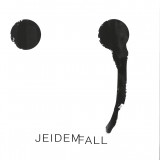
The man in the crowd is a wonderer with relaxed habits. In him the course of things and movement of the city is reproduced. The Düsseldorfer Detlef Weinrich is such a man in the crows. Some one who is constantly listening to future winds through rushes of the past. He loves the night for its free will. And his music tells stories about it. You might know him as a member of the band Kreidler. As a solo artist he goes under the name Tolouse Low Trax. And he's already got three Eps and two albums under his belt. His first solo album „Mask Talk“ thrives on a feathery beat frequency and cool new-wave-strength. His recently released piece „Corridor Plateau“, which appeared as a limited edition to accompany the exhibition „Corridor Plateau“ contains percussive electronics and Industrial sounding like its from the second industrial revolution. His third album „Jeidem Fall“, is also not from here. It sounds like music brought down to earth from the heavens. But its a dark cosmos in which there are only fleeting glimpses of light. All eight tracks were composed in a short space of time over the period of just a few months and fit together perfectly atmospherically. With a musical expressiveness that undoubtedly twists your emotions, „Jeidem Fall“ attacks the subconscious and clouds the mind. The drums have more movement that on „Mask Talk“. Along with the constant tapping of drumsticks goes melodical arpeggios dancing dark and dirty. At times longing vocals drift abstractly through the room, as on „Sa Seline“ or „Geo Scan“, without telling any obvious story.
To sound like stylistic cross references from the present and past is all just speculation for nothing on „Jeidem Fall“ really sounds like anything that has gone before. You could compare the dark minimal timbre of the drum computer aesthetic with Craig Leon's first reductive album „Nommos“. There is also a hint of the minimallist industrial of the Spanish band Esplendor Geometrico in the bubbly textures. But Tolouse Low Trax is still looking from the present into the future and filter and filters all his personal preferences through his MPC and his small synth setup to make them come alive here and now in a new way. Again Tolouse Low Trax has created a truly mysteriously vibrating drum computer music which offers hypnotic magic for the shadowy dance floor. Only a little light should illuminate the whole thing and the bodies that move above them should have no fear from threatening percussion which are displaced into a misty trance. A dark swaying shadowy mass, ideal for a journey at the end of the night and all those non-places where longing sleeps and the last romantics dance while getting drunk.
2LP: Gatefold with colored vinyl, Side AB: translucent Purple / Side CD: translucent Green. 12x24 inch fold out insert
Velvet is Adam Lambert's ode to 70's, guitar driven rock and funk music done with a modern twist and accentuated by his distinct and incredible voice. Best known as an international superstar who blew the world away on the eighth season of American Idol. Since then he's gone on to have a fully-fledged solo career, and tour the world with Queen. In addition to his musical achievements, he became the first openly gay artist to chart with a number one album in the US and Canada.
Following January’s acclaimed vinyl debut from Exterior and summer’s much-loved Kota Motomura EP, Edinburgh’s Hobbes Music label ends 2019 with its first album release, also a debut, from GAMING, a fresh new braindance electronica project straight outta Glasgow, from producer and musician Alan Bryden.
GAMING is a new solo outing that brings together a lifelong love of music and technology and creating left field, rhythmic electronica. It’s the sound of IDM, nineties techno and mensch maschine computer music that is as spontaneous as it is programmed.
“Scenes From A Deserted City is a collection of tracks that started as a set of riffs, loops, rhythms and grooves and unfurled around a sense of growing unease about the future of the urban environment around me.
It’s an album that started out as sound…and ended up as a way of telling stories about the age of anxiety we live in, how our world is changing, and how we find a way through that.
This is DIY electronica from Glasgow – it was made on a growing collection of digital and analogue synths and FX units, including a bunch of modular racks, each with its own idiosyncrasies and character that belies the assumption of the binary.
The studio where it was recorded – an abandoned, and often very cold, school building reclaimed by the community some twenty years ago – offered up stories of resilience, even when all seems lost. (I’m not sure what the mice contributed but they definitely climbed in and out of some synths).
This album is ultimately about my changing relationship with Glasgow, a city I’ve lived in for more than 25 years. It’s about how I feel now about the increasing sense of urban decay and how the city can be a very isolating place. It’s about how I reflect on my younger creative self trying to find a direction but mainly feeling a sense of dislocation and not fitting in. And it’s about the questions I have about how that relationship is changing, how it will be forced to move forward.
The result is a soundtrack for walking home on your own, in that headphone bubble when it’s just you focusing on that music that makes sense to you alone. It’s for early in the morning, after the night before, or going to work with the memories of that slipping and sliding inside your head. It’s about how it feels to be both elated and lonely, to be lost in the familiar, despairingly hopeful.”
ALAN BRYDEN (Glasgow, August ‘19)
A stunning 17-minute-drumming-trip from feathery spheres through bold grooves to a dense thundery finish by Simon Popp and Sebastian Wolfgruber, the two drummers known for channeling World Music, Afrobeat and Jazz drumming in solo projects and with Munich-based Jazz quintet Fazer.
The B-side holds a rework by fellow Munich producers Zenker Brothers. The Ilian Tape heads and notorious audiophiles put their drum machines aside and weaved the recordings with layers of mystic synths into a tingling organic IDM tune.
Creole Soul!" Two words are enough for David Walters to qualify his music. The exclamation point to support radicalism and faith in its purpose.
A lapidary definition behind the doors of which hides the maze of a culture that crosses the oceans, connects continents and islands by an invisible but powerful thread. A deeply ingrained bond that allows Africa, America, Europe, and the Caribbean to converse with each other with a language as universal as music, dance, carnivals, or ceremonies.
Spread on the globe; the different creole cultures find a point of convergence where they are all represented: New York.
In this city, where motivated by his friend photographer JR, he once gave a concert in the street, David Walters decided to set the scene for his new album.
After five years of traveling the world, meeting musicians for the TV show “The New Explorers” (Canal +), it is around this hyperactive city that he chose to shine his Créole Sun. To imbue his music with the state of mind and aesthetics that reigned in the 70s and 80s.
While in 2018, he soloes produced Nola Is Calling (an album recorded in New Orleans with the Creole community of Black Indians, selected by Gilles Peterson in the best of 2019 on BBC 6). That’s with the essential contribution of the musical mastermind Bruno “Patchworks” Hovart (Mr. President, Voilààà Sound System, Da Break ...) that David produced Soleil Kreyol.
More than a musical partner, Patchworks turned out to be the sound engineer David was looking for. The second part of an ideal pair, the one with whom, set on the same frequencies, he wrote, composed, recorded, played all the instruments. Thought all the arrangements, tweaked the details as carried by a continuous breath. Or rather a light. The “Soleil Kréyol” (Creole Sun).
Theresa Stroetges has and always will be a traveler. Under the name Golden Diskó Ship or as a member of bands like Soft Grid or the improv collective Epiphany Now!, the Berlin-based multi-instrumentalist has continuously been moving through the fringes of experimental music, but also extensively explored the possibilities of tried and tested formulas - whether folk, rock, techno or pop. With her fourth solo album, her first for the Karaoke Kalk label, the Golden Diskó Ship is yet again venturing into unknown territory. »Araceae« is inspired by environmental changes and the eerie feelings that arise when faced with natural beauty - when everything seems perfect on the surface but something feels off underneath it all. As a whole, it is notably more focused on electronic grooves that provide the foundation for Stroetges’s poetic long-form storytelling.
Partially conceived during a residency in India, »Araceae« is the first Golden Diskó Ship record to feature two guest musicians. For »Wildly Floral, Slightly Damp,« Stroetges collaborated with percussionist Dripta Samajder who with his Sri Khol contributes complex rhythms to a driving beat that wouldn’t be out of place in the record bags of daring DJs. Sophia Trollmann takes over saxophone duties for »Ortolan,« a riveting coming-together of intricate, IDM-flavoured techno and jazz-inspired improvisation. Both are integral standout tracks on an album that clearly follows a holistic plan. Already the opener »Clouds of Neon Limelight« dips into anthemic synth pop territory, but unfolds into a great saga full of ominous undertones and Stroetges’s trademark: layered vocals that at once evoke feelings of uncanniness and intimacy.
It’s a juxtaposition that runs throughout »Araceae,« thus enforcing the album’s overall themes of sensual experience and alienation. »Game of Biryani« for example lends some of its musical structures from pop music, calling into question traditional songwriting conventions which here reappear as irritating echo effects rather than recycled old tropes. With the lush »Limping over the Prairies« and the adventurous »Glow-in-the-Dark Gloves,« Stroetges further challenges her audience by applying noise and a heavy dose of autotune respectively to disorientating effect.
The couple makes for an impressive finale of an album that scrutinises our ideas of what is natural - whether in music or the world around us. »Araceae« was inspired by the travels of its creator, but also sets out to ascertain what lies beyond everything that eyes or ears can perceive.
The Berlin based label Sonar Kollektiv has been waiting for it anxiously: Key Elements' debut album leads Jazz music into the new decade down-the-line. The music Key Elements create is fresh, merciless and ruthless and has always the finger on the pulse of the time. The album's eight tracks are all far away from Broken Beat nostalgia or Beatmaking nedism, they breathe inspiration from the young, thriving British jazz scene. Key Element's initiator, DJ and producer Marian Tone, built up a reputation in the Berlin hiphop, soul and jazz scene over the years (also as a co-founder of Beatkollektiv). With all of his compositions you always feel this heritage and his love and passion for hiphop. But the other two allys within ëKey Elementsû, drummer Waldi and the keyboard or bass player Jim Dunloop made their contribution with compositions and ideas as well. An album which was initially designed to be a mere solo project became an effort of a trio over the years being inherently consistent.
Jazz funk and gritty rare grooves ensemble from down under - Kerbside Collection - return with their third record "Smoke Signals"! Continuing in a down home, instrumental approach, but this time crafting newer ideas and flavours into their spectrum of warm, analogue, dusty grooves from much more Fender Rhodes electric jazz elements, to New Orleans sprinklings alongside their 60's inspired West Coast style.
"Smoke Signals" continues the wilder tones, textures and 'library' sounds of extra instrumentation found on their last output "Trash or Treasure", whilst introducing hints of fusion and cinematic analogue electric colours into the mix bringing things into early 70s territory. Opening with the lush, analogue synth and keys palate of "Waiting Game", reminiscent of some classic Air "Moon Safari" grooves, before the album properly begins with a fresh rendition of the Rhodes heavy Cedar Walton 70's jazz funk classic "Jacob's Ladder".
Then straight into the street-styled jazz bongo breaks and funky flute of "Traffic", a skankin' New Orleans reggae homage to one of its finest Creole dishes, featuring funky Hammond organ courtesy of guest Jake Mason (Cookin' on 3 Burners) and tasty piano work from multi instrumentalist Andrew Fincher who handles both guitar and keys on the whole record.
The middle of the record comes with a steaming afro funk workout, and a low slung N'awlins styled blues 'n' soul groove, both featuring the fruity, low-end brass action of Papa Jo on the big baritone sax, before taking a gentle emotional breather with a delightful, soft, soulful, Rhodes ballad, and a 'waltz-jazz-wig-out' attributed to their label's A&R Mr Mellow (reminiscent of some humorous UK acid jazz à la Corduroy and James Taylor Quartet) featuring some beautiful jazzy Flugelhorn, and acoustic double bass.
The album wraps up with another cover - a grittier reinterpretation and arrangement of a Bob James 80s jazz funk classic "Westchester Lady" complete with funky flute and soaring guitar solo, before finishing with the explosive rock funk workout and title track "Smoke Signals", rounding out a record with a full spectrum of handmade jazz funk, reggae, soul, library and gritty rare grooves all recorded to tape machine.
Composed as a means to map the cultural translation between Chinese culture and European traditions, Piotr Kurek’s A Sacrifice Shall Be Made / All The Wicked Scenes is comprised of pieces composed between 2016 and 2018 specifically to accompany theatre performances directed by Tian Gebing (500m and The Decalogue) and Grzegorz Jarzyna (Two Swords). Kurek attended performance rehearsals in Beijing and Shanghai, with additional preparations and recording sessions taking place back in Warsaw.
While most of Kurek’s past work is unaccompanied by other musicians or outside help, A Sacrifice Shall Be Made / All The Wicked Scenes features various Polish and Chinese musicians both from classical and experimental scene (Barbara Kinga Majewska, Grzegorz Hardej, Łukasz Rychlicki and Hubert Zemler) as well as by actors of Paper Tiger Theatre Studio from Beijing. This approach of Kurek exploring new players and places is further juxtaposed as Kurek recycled samples from his own past, including various recordings with musicians he did throughout years, found sounds from the Internet, or cannibalised old solo work.
Recorded over the course of several years, this aural report of a monumental multi-disciplinary venture is in the end an enthralled and enthralling survey of a contemporary composer who is unencumbered by geographic or cultural boundaries. Concurrently, ditching any resemblance to local musical traditions and rearranging the compositions for all three performances, Kurek has formed an architecture that allows the phases of rituals to unfold while projecting social structure assumed in myth making. The regrouping of different moments in these stories is a curious way of narrating another myth — a synthetic, polyvalent story set in a city that strangely reassembles Beijing, Giza, and Prague at the same time.
Piotr Kurek is a Warsaw based musician and composer who straddles the world of electronic music taking inspiration from various genres but fitting comfortably in none. Through his unconventional use of a wide array of instruments both electronic and acoustic, he built a reputation for himself as a qualified inventor of hypnotic worlds drenched in uncanny arrangements.
Kurek has already released a range of idiosyncratic, forward-thinking works on a variety of imprints (including but not limited to Sangoplasmo, Black Sweat Records, Hands In The Dark, Dunno Recordings, Crónica, Foxy Digitalis) and participated in numerous music festivals including Unsound, CTM, OFF, TodaysArt and UH Fest as well as participating in extensive tours in Poland and abroad. In 2014 and 2015 he opened for Bonnie “Prince” Billy’s two European mini-tours. In 2016 he has been selected as a part of Shape platform for innovative music and audiovisual art from Europe.
Idris's fifth and perhaps most popular of his near-20 LP strong solo discography (that's not including the epic array of artists he's worked with from Fats Domino to Art Davis) Ranging from the heavily-sampled stone-cold soul stunner "Could Heaven Ever Be Like This" to silky disco funk such as the album title track and the sleazier "Crab Apple" to the frenetic jazz blasts of tracks such as "Camby Bolongo", this is the sound of a man fully committed to the craft and spirit of the groove. Nothing short of essential.
- A1: Flag Day/The Mother Stone
- A2: I Want To Love You
- B1: The Great I Am
- B2: Lullabbey
- B3: No Where's Where Nothing's Died (A Marvelous Pain) (A Marvelous Pain)
- B4: Thanks For Staying
- C1: Little Planet Pig
- C2: You're So Wonderful
- C3: I Dig Your Dog
- C4: Katya
- B1: All I Am In You/The Big Worm
- B2: No Where's Where Nothing's Died
- B3: Licking The Days
- B4: For The Longest Time
- B5: The Hodge-Podge Porridge Poke
"I think most of it takes place in dreams," Caleb Landry Jones says of his debut solo album, The Mother Stone. "I'm talking more about dreams than I am about what's happened in the physical realm. Or I'm talking about both, and you're not sure what's what." Caleb Landry Jones was born in Garland, Texas in 1989 and comes from a long line of fiddle players. Three, maybe four generations back, on his mother's side. His grandfather wrote jingles for commercials, his mother was a singer-songwriter who taught piano lessons in the house, and his father was a contractor who did a lot of work for the Dallas music-equipment retailer Brook Mays and knew a guy if you needed a bass or a banjo. But Jones is not sure if you can hear any of this in his music and he does not play the fiddle. Jones has been writing and recording music since age 16, around the same time he started acting professionally. Played in a band called Robert Jones for a minute, lost his guitar player to higher education, moved into his own place, and broke up with somebody, at which point the songs really started coming hard and fast. "I started playing guitar and playing more keys," he says, "and then started writing record after record after record after record, because I didn't know what to do with myself. It was a good way of healing. And it felt like as soon as I started doing it, it felt like it needed to happen all the time." In the ensuing years he'd spend a lot of time carrying unrecorded songs around in his head like goldfish in a bag, waiting for a chance to record them in marathon sessions in his parents' barn. "You gotta play the songs every day, or every two or three days, to keep `em," he says. "Otherwise I forget them." Sometimes the ideas fuse together, one chapter to the next; this is how songs grow into seven-plus-minute epics like the ones on The Mother Stone. His back catalog is around seven hundred songs deep_ a whole discography of full albums, most of them unheard outside the barn, at least for now.
It's auspicious that Sonic Boom-the solo project and nom-de-producer of Peter Kember (Spectrum, Spacemen 3)-returns in 2020 with its first new LP in three decades. Kember's drawn to the year's numerological potency, and this intentionality shines into every corner of All Things Being Equal. It's a meditative, mathematical record concerned with the interconnectedness of memory, space, consumerism, consciousness-everything. Through regenerative stories told backwards and forwards, Kember explores dichotomies zen and fearsome, reverential of his analog toolkit and protective of the plants and trees that support our lives. Sonic Boom's second album and first for Carpark began in 2015 as electronic jams. The original sketches of electronic patterns, sequenced out of modular synths, were so appealing that Stereolab's Tim Gane encouraged Kember to release them instrumentally. "I nearly did," confesses Kember, "but the vibe in them was so strong that I couldn't resist trying to ice the cake." Three years later, a move to Portugal saw him dusting off the backing tracks, adding vocals inspired by Sam Cooke, The Sandpipers, and the Everly Brothers (which he admits "don't go far from the turntable pile"), as well as speculative, ominous spoken word segments. His new home Sintra's parks and gardens provided a different visual context for Kember's thoughtful observations, and he thematically incorporated sunshine and nature as well as global protests into the ten resulting tracks. "Music made in sterility sounds sterile," he says, "And that is my idea of hell."
Reprise is a body of piano work exploring the idea of thematic repetition and development, and the intimacy of the solo instrument that allows these ideas to be driven forward. The piano offers an environment in which the building pillars of music - melody, harmony, texture, and rhythm can be presented in a raw form, free from heavy processing, and throughout the work I was keen to explore them in a way that shows the instrument as vessel for delivering a wall of sound - Not just summed up by its elegance, but also in part defined by it's imperfections.
Interdimensional Transmissions' techno sublabel Eye Teeth relaunches with a fresh series of releases featuring the solo and related works of Israel Vines -- a fresh KGIV 12", an EP of remixes, and his debut LP. The triptych begins with the stellar "Regulatory Capture EP" -- a collaborative effort from Vines and Chicago artist Kit Geary presenting their third release under the KGIV guise. Here we find them exploring new ways to own and expand the current style of techno and breakbeat fusion in the title track "Regulatory Capture", while the chthonic "Morgan" twists distorted vocals and synth lines over a bass heavy foundation built to put the sound systems through their paces. "Blue Octavo" extends their evolving ideas into melodic territory, closing the EP out in a deep and refreshing fashion. Don't sleep -- this release is pure power.
Pitto is not one to flood the scene with new music considering he’s only released two ep’s in the last three years. He takes the time to let ideas evolve and it’s clearly noticeable on last year’s EP on ‘Something Happening Somewhere’ sublabel ‘Ooshaa’, where his feel for an almost poppy hook is perfectly combined with his love for darker electronics. On the ‘Baila baila EP’ –his return to Heist after his last ep in 2018- he explores this path further. The EP is filled with live percussion, a dark and rolling acid line, chopped beats and catchy piano riffs. The three originals are accompanied by a remix courtesy of Pete Herbert that has ‘summer’ written all over it.
Opening track ‘Sammie’ has a beautiful sense of melancholy to it, where an emotional piano riff is combined with some 80’s tinged vocals and loads of live percussive elements for a smile inducing experience.
‘Discko’ takes a darker approach with a deep and ‘dubby’ low end and a guitar riff that wouldn’t be out of place on a Caribou track. The horn section and synth lead give it a real crossover appeal and it’s the kind of track you imagine working just as well on a summer festival as in a dark basement.
On the flip, there’s the title track ‘Baila’, a proto inspired acid stomper with a nice wink to early 90’s dance music vocals. An acid line gives the track its backbone, but it’s the combination of Pitto’s chords and instrumentation that give this track it’s unique edge.
The EP finishes off with Pete Herbert’s remix of ‘Sammie’. Pete’s version has that full-on summer appeal with his recognizable style of modern day island disco. He adds a bit of drama to the track with some big breakdowns, changeovers in the piano riff and turns the Balearic vibe up a notch with an added dreamy solo.
We’re happy to have Pitto back on Heist and this unique and diverse EP is one we hope will create a lot of smiles on the dance floor in the coming months.
Yours Sincerely,
Lars & Maarten
"NOON" One of the most prominent and widely acclaimed polish producers, returns after a two-year break with the new album called "Nobody Nothing Nowhere".
The fifth solo work of NOON was released by his own label called "Nowe Nagrania". The idea of "Nobody Nothing Nowhere" is connected to the various places in Poland and Europe: from the first sketches recorded in Gdynia, through Warsaw and London, to the final recordings in Łódź. Alan Kamiński is responsible for the graphic design of the album, based on NOON's own photos.
The atmosphere of working on "Nobody Nothing Nowhere" is similar to the aura of "Gry Studyjne" LP - NOON's sophomore album. However, this time NOON puts emphasis on much greater advancement, devoting himself to work alone with one analog beat making machine called Elektron Rytm Mk2.
Mikołaj Bugajak on "Nobody Nothing Nowhere" is accompanied by excellent musicians and also his regular concert partners - drummer Marcin Awierianow, bassist Piotr Połoz (both from polish post-punk band Psychocukier) and violinist Tomasz Mreńca. It is worth mentioning that NOON's part's contained on "Nobody Nothing Nowhere" were programmed on the machine in the shape of live performances, which gave the LP additional element of dynamism and life.
"Album called "Nobody Nothing Nowhere" is an album about escape, which turns out to be impossible. All these struggles and attempts to change destiny resemble a spiral journey. The albums consists of three parts, and is summarized by the song called "Spektrum".
My fifth album is released less than two years after "Algorytm" premiere in terms of experiences that I wanted to share with the audience." (NOON)
The landmark 1980 album, representing a period of consolidation for Patrice Rushen. Her studio reputation as a go-to pianist and arranger among other artists and musicians was well established and was growing exponentially. Although never originally planning a career as a solo artist, she had built this side of her work through three Prestige albums and two sophisticated soul and disco albums for Elektra, 'Patrice' and 'Pizzazz'. "I was lucky to have a group of musicians that I knew well by the time of these recording sessions," remembers Patrice. "I had my pick of really incredible players because of all of the studio work I was doing. I also played with Lee Ritenour, Harvey Mason and others almost on a weekly basis at The Baked Potato club in L.A." Tracks include the singles 'Don't Blame Me', 'Look Up!' and 'Never Gonna Give You Up'. "'Never Gonna Give You Up' came out of playing ideas at home. Bassist Freddie Washington was living with my family while he tried to get a foothold in L.A.'s music scene and that groove came out of those jams. With 'The Dream', I had been listening to Minnie Riperton's 'Come To My Garden', one of my favourite albums. With Charles Stepney's arrangements, I saw that he didn't have to use large instrumentation to be orchestral in his approach. So, 'The Dream' was a homage to that kind of writing." "After 'Posh', we had a much better idea from the performance side what was important in our music and that informed my next album, 'Straight From The Heart'. We took a little break after 'Posh' was released, although I was still writing and working regularly on scores for film and TV. That had always been my main focus in my music."