Ruff Kutz presents 'Found Sound', a debut solo album by Pugilist.
At a time where art has become readily reproduced and seemingly disposable, I have made something longer-form to be enjoyed as a complete piece, rather than it's single elements.
Found Sound delves into my internal monologue, which I hope results in a personal and introspective listening experience. Building on my previous discography - you can expect versatile sounds and tempos, with a washy dub-wise feel, intoxicating atmospherics, all in a genre-free structure. The album is floaty, euphoric and perhaps a surprisingly light listen compared to my normal output, but with notably huge bass and intricate percussion throughout.
The album taps into nostalgic reference points without leaning on retrograde tropes. While sculpted by contemporary production and FX, the sound remains raw and not overly polished. The album is best described as a collage of sounds that I have steadily collected over the last decade, which have inspired me, some very cheeky sampling and many a late night working on my studio tan. It is a tribute to the music I grew up with and love the most, from past to the present. It is fitting that this release marks the 10 years since I started the Pugilist alias.
This wouldn't have been possible without Umeya, who the album is dedicated to.
Suche:solo sounds
- 1: Time Has Come
- 2: Harptree
- 3: Take A Little Time Out
- 4: Scraggle Cat And Puss Cat Willum
- 5: Concerto Uno
- 6: Harptree Too
- 7: Concerto Due
- 8: Harptree Tree
- 9: That Crazy Wind
- 10: Behind My Eyes
- 11: Heaven Knows (Treehugging)
- 12: Whalewatching
- 13: Earthmotherearth
"Earth Mother Earth" is literally a home made album by former YES singer Jon Anderson. Acoustic based and recorded in his home, "Earth Mother Earth" in some ways brings back the magic of Anderson’s debut solo album "Olias of Sunhillow" making use of harp, acoustic guitars and vocals. In this case he goes for a more natural approach with songs about love and faith and making use of sounds recorded in his garden, including birds chirping in the background. Musically this album shows the huge influence that Simon & Garfunkel and Cat Stevens had on Anderson (and, thus, YES)
- A1: 6Up 5Oh Cop-Out (Pro/Con)
- A2: Skeleton Appreciation Day In Vestal, Ny (Bones)
- A3: Front Street
- B1: ?Aikido! (Neurotic/Erotic
- B2: White Knuckle Jerk (Where Do You Get Off?)
- B3: Cover This Song (A Little Bit Mine)
- B4: Thermodynamic Lawyer Esq, G F.d
- C1: Red Moon
- C2: Lysergide Daydream
- C3: The First Step
- C4: Jimmy Mushrooms' Last Drink Bedtime In Wayne, Nj
- D1: Chemical Overreaction / Compound Fracture
- D2: Everything Is A Lot
Will Wood's very first LP displays a variety of genres, with a chaotic homemade anti-folk feel and an experimental edge. "Everything is a Lot" began its long production in 2014, when the singer-songwriter was still 20 years old and performing drunken alt-comedy at open mics. With no funding, Wood led a slapdash band into the studio to bring songs mainly from his teenage years to life, and the unstructured production process and youthful experimentation gave it a uniquely loose and chaotic feel. The debut LP's sound is defined by Wood's Jay Hawkins-esque vocal delivery, an out-of-tune old upright piano, wailing wind instruments, jangly guitar, high-powered yet loose drums, and sardonic overdriven kazoo solos. Delivering everything from swing jazz and twee indie pop to pseudo-mariachi and waltz, these sounds and their accompanying bizarre lyrics come together to match the existential title, "Everything is a Lot." Will Wood's early career can be primarily defined by his experimental vocal delivery, honky-tonk piano smashing, and darkly edgy songwriting. While his stylings have matured and taken on a more precise approach, his refusal to conform to expectations and constant shifts in the genre have continued to be hallmarks of his songwriting and production. In his "Will Wood and the Tapeworms" releases (Everything Is A Lot in 2015, SELF-iSH in 2016), audiences can see the first glimpses into what would eventually become his signature style, presented in a uniquely raw and chaotic state of potential.
- 01: Bunny&Apos;S Pie (Feat. Bruce Johnson, John Abercrombie &Amp; Chip White)
- 02: Trial N. 5 (Feat. Bruce Johnson, John Abercrombie &Amp; Chip White)
- 03: Dimenticare Stanca (Feat. Bruce Johnson, John Abercrombie &Amp; Chip White)
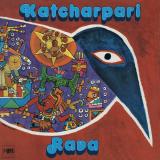
- 04: Katcharpari (Feat. Bruce Johnson, John Abercrombie &Amp; Chip White)
- 05: Fluid Connection (Feat. Bruce Johnson, John Abercrombie &Amp; Chip White)
- 06: Cheerin&Apos; Cherry (Feat. Bruce Johnson, John Abercrombie &Amp; Chip White)
- 07: Peace (Feat. Bruce Johnson, John Abercrombie &Amp; Chip White)
The breakthrough album. Enrico Rava's second solo record, recorded in Milan in January 1973 and released on the German BASF label, is nothing less than a cornerstone of Italian jazz-rock - the record that caught Manfred Eicher's attention and opened the doors to ECM. Rava himself has called it his breakthrough, and history proved him right.
The lineup is killer: John Abercrombie on guitar, Bruce Johnson on bass, Chip White on drums. Four musicians operating at the absolute peak of early seventies fusion energy - electric, cosmopolitan, burning with that particular fire that only existed in that brief window when jazz met rock and nobody knew the rules yet. Abercrombie, already on his way to becoming one of the most distinctive voices in electric jazz guitar, delivers some of his most ferocious early work here. White's drumming is relentless, pushing the music forward with an intensity that never lets up.
If Miles' Bitches Brew-era speaks to you, if Ian Carr's Nucleus gets you moving, if you know Sun Ra's Lanquidity and Don Cherry's Relativity Suite by heart - this is essential listening. Rava's vision was already fully formed: South American rhythms, Mediterranean warmth, free jazz ferocity, rock power - all flowing together without borders or categories. By the early seventies, Rava had absorbed everything - the New Thing, the European free scene, the electric revolution coming out of Miles' studio - and forged something entirely his own.
The seven tracks cover serious ground. "Bunny's Pie" introduces the music with an almost cosmic atmosphere of suspense, hovering in that liminal space before it trails off into the up-tempo vibrant frenzy of "Trial N. 5" - Abercrombie and Rava trading swirling solos at full intensity, the rhythm section locked in tight. "Dimenticare Stanca" moves from Rava's expressive balladic intro into pure funk, guitar and trumpet steering over the rhythmic drive with absolute confidence. The title track carries the lyrical feel and cadence of an Incan-Peruvian folksong - that cosmopolitan spirit made audible. "Fluid Connection" rides a funky bass riff into fusion heaven, with standout trumpet and guitar solos that build and release with perfect tension. "Cheerin' Cherry" pays homage to the great Don Cherry - Rava's spiritual mentor and fellow traveler in world music - exploring a North African soundscape that points toward the global jazz to come. Johnson's "Peace" closes the album with a minute and a half of serene, blissful calm - a moment of stillness after the storm.
This audiophile reissue - cut from the original masters, pressed by Pallas in Germany on 180gm vinyl, housed in a thick laminated hand-glued gatefold - does full justice to an album that remains a collector's holy grail.
Don't sleep on this one. Limited Edition.
- 1: Carrion Crawler
- 2: Contraption / Soul Desert
- 3: Robber Barons
- 4: Chem-Farmer
- 5: Opposition
- 6: The Dream
- 7: Wrong Idea
- 8: Crushed Grass
- 9: Crack In Your Eye
- 10: Heavy Doctor
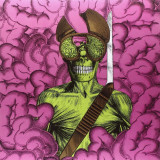
What's the first thing you think of when someone mentions Thee Oh Sees? Probably their riot-sparking live show, right? Visions of a guitar-chewing, melody-maiming John Dwyer careening across your cranium, rounded out by a wild-eyed wrecking crew that drives every last hook home like it's a nail in the coffin of what you thought it meant to make 21st-century rock 'n' roll? Yeah, that sounds about right. But it misses a more important point-how impossible Thee Oh Sees have been to pin down since Dwyer launched the project in the late '90s as a solo break from such sorely missed underground bands as Pink and Brown and Coachwhips. (While Dwyer still records songs on his own, Thee Oh Sees is now a five-piece featuring keyboardist / singer Brigid Dawson, guitarist Petey Dammit, drummer Mike Shoun and multi-instrumentalist / singer Lars Finberg.) That restlessness extends to everything from the towering, thirteen-minute title track of 2010's Warm Smile LP to the mercurial moods of 2008's The Master's Bedroom Is Worth Spending a Night In. Now, Thee Oh Sees chase the home-brewed symphonies of Castlemania with the scrappy, high-wire hooks of Carrion Crawler / The Dream. Originally envisioned as two EPs, it was cut live to tape in less than a week at Chris Woodhouse's Sacramento studio in June, reflecting the battering-ram bent of the band's live show better than any bootleg ever could. "As I'm sure most would agree," explains Dwyer, "Castlemania was more of a vocal tirade. This one's meant to pummel and throb." That it does, whether one blasts the slow, speaker-bruising build of "The Dream," the sunburnt organs and dovetailing guitars of "Crack in Your Eye" or the interstellar instrumental "Chem-Farmer," a perfect example of what happens when one takes a well-oiled machine-a gang of rabid road warriors, really-and adds a second, groove-locked drum set to the mix. To listen is to realize that Dwyer's music is as manic as the underground comic inclinations of his artwork; colorful and confusing in a way that's more than welcome. It's downright refreshing, like a slap in the face at 5:00 in the morning. Or, as Dwyer puts it, "You have to leave a mark somehow."
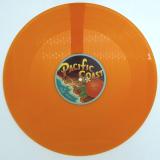
Introducing the 4th instalment of the Pacific Coast House rebirth. We bring back another much sought-after 12” from The Coastal Commission & Jesse Outlaw. “Bring down the Walls” was a nod to Raze’s “Break for Love”, Robert Owens “Bring Down the Walls” and Ritchie Hawtin’s use of the Roland 606 throughout “Sheet One”. Long out of reach and fetching $100+ on Discogs, Atjazz’s freshly remastered editions are finally available .. “Let it Go” was never mastered & only ever cut to dub-plate. It has now been mastered & available in all it’s glory.
Coastal Commission “Bring Down the Walls” “Bring down the Walls” was a nod to Raze’s “Break for Love”, Robert Owens “Bring Down the Walls” and Ritchie Hawtin’s use of the Roland 606 throughout “Sheet One.” We gave the tune a Californian psychedelic twist with conga laden drums, a moody synth, low pulsing 303 patterns + Benjamin Zephaniahs patois call to “Move the Body Rhythmwize!” The first PCH releases had dropped Worldwide to International acclaim from DJ’s far and wide across the Globe with support in London, Paris & New York. However the local scene here in L.A that preached “Love, inclusion & Unity” was anything but that. L.A at that time was very tribal & divided up into 3 camps. If you weren’t affiliated with any of them (aka independent) then you were pretty much locked out of getting any kind of gig support or the Dj’s from those camps actually playing the music. The local feedback from Dj’s was that what we were making wasn’t “house,” but “Techno” which was absurd to me. “Bring Down the Walls” was a mantra to “move the bod”y and in doing so “bring down the walls” of separation not just in L.A but throughout society in general. Thank goodness for support from people like Terry Francis, Eddie Richards, DJ Deep & Philly Stalwart King Britt. After years of copies going for upward of $100+ on Discogs the now freshly remastered copies by At Jazz’s Martin Iveson are finally hitting the platters this Spring.
Jesse Outlaw “Let it Go” I met Jesse at Beatnonstop Records on Melrose Ave with Miguel Placencia in the late 90’s. Miguel (RIP) was a mainstay in the Underground scene and had always been very supportive of my endeavors. He had had success with a huge release on Yellow Orange and was working with Jesse under the moniker “When Worlds Collide.” I signed “Brighter Days” & “Set you Free” from them and released the tracks on my Seductive imprint. They told me that they were making the tracks on a Sony Playstation “Music Now” program and I was like FFS “What.s more Underground than that!?” Later Jesse gave me some of his solo work. The track “Let it Go” was never mastered & only ever cut to Dub-plate and featured on my 1st PCH mix “Pacific Coast House Sounds.” It has now been mastered by Martin Iveson and is available in all it’s glory. The dreamy vocal “You need to let it go” beckons over the top of driving percussive Latin beats and church organ which is a great compliment to the flip side of “Bring down the Walls.” All in all two West Coast stompers now finally available remastered on PCH in Orange vinyl.
B. Chamber (Stratum A), by B. Close, is the first full length solo release by Los Angeles-based multi-disciplinary artist Brian Close. The first of two volumes assembled from some thirteen hours of music produced by Close while residing in Connecticut from 2021-2025, B. Chamber (Stratum A) offers a vivid, fractal afterimage of a prolific, specific time and space in the artist’s oeuvre.
After leaving New York City early in the pandemic to a farmhouse in the countryside with dedicated spaces for multiple sound stations, Close developed an intensive daily practice of melding with the machines. The vast, pastoral backdrop of rural CT provided inspiration and contrast for his ongoing investigations into dynamic, poly-rhythmic electronic music. The sounds on B. Chamber (Stratum A) range from the machine-modeling of acoustic instruments and natural environments to the utterly unhuman, spinning on the axis between crystalline, pointillist precision and shifty blown-cone distortion. Close’s atypical interpretations of rhythm, noise and other undefined musics land in a hybrid zone of their own.
Throughout B. Chamber (Stratum A), Close’s productions are in perpetual motion. Foxtrot’s shifting hi-hats and disembodied voices rise like cicadas propelled by glitching machines and tangled rhythms, Many Drive draws momentum from dubby stabs and twinkling atmospherics. Character Community’s nimble, drifting snares and erratic static are uplifted by swelling synths, and Mpan’s modular mining forgoes drums but is no less propulsive for it. Acre Voices’ seasick pads and deft drum patterns tap an energizing nerve, and closer 5D Bow’s ambush of pummeling machine gun fire spirals into the tryptamine palace and emerges completely rinsed and refreshed.
Equally powerful in the club as in the outdoors, in the headphones eyes closed or on the move, B. Chamber (Stratum A) grants an immersive temporary trip on B. Close’s unique wavelength, with Stratum B to complete the picture in the summer of 2026.
RIYL - Mark Fell, muay thai, Vladislav Delay, gaming, Errorsmith, modular synthesizer.
+++++
Brian Close (b. 1979, NYC) uses the cold logic of mathematics to trigger states of total sensory displacement. Close co-founded multiple AV studios to explore the "hypnotic"—a ritualistic practice of motional-graphism and improvisational sound. His work is a study in synesthesia and the architecture of trance, using geometric precision to dissolve the sense of time. It is a digital-visceral experience built on heavy logic, designed for large-scale immersion and timelessness.
Close is one half of Georgia who have released records on Palto Flats, Firecracker Recordings, Meakusma, Youth, OOH-Sounds and EM Records, and have a long-running residency on NTS.
B. Chamber was written, produced and mixed by Brian Close.
Mastered by Rashad Becker.
Artwork by Brian Close.
- 1: Lazy Bones
- 2: Automatic Fantastic
- 3: Cobra Jab
- 4: Too Many Chiefs... Not Enough Indians
- 5: Sun Brother
- 6: Let's Get Chinese Eyes
- 7: Toot
- 1: Defender Of The Oleander
- 2: Bones Lazy
- 3: Low Desert Punk
- 4: Waiting For A Coconut To Drop
- 5: Her Brown Blood
- 6: Indio
- 7: Take Me Away
Blue Vinyl[26,68 €]
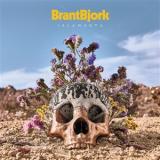
Repress on black vinyl. Jalamanta was a life changing record for me. Its the record that launched my journey as Brant Bjork. Listening to the tapes 20 years later was amazing. Tony Mason and myself were transported back to that moment in time. Jalamanta was a first for both Tony and myself. My first record as a solo artist and his first record as an engineer. We didnt think twice about re-mixing it. With our combined experience over the years, we knew we could take Jalamanta to the place we always wanted it to go..and we did. Dig it. BB
Repress on babyblue vinyl. Limited to 300 copies. Jalamanta was a life changing record for me. Its the record that launched my journey as Brant Bjork. Listening to the tapes 20 years later was amazing. Tony Mason and myself were transported back to that moment in time. Jalamanta was a first for both Tony and myself. My first record as a solo artist and his first record as an engineer. We didnt think twice about re-mixing it. With our combined experience over the years, we knew we could take Jalamanta to the place we always wanted it to go..and we did. Dig it. BB
- Side A. Gypsy Song
- Side B. Never Land
After traveling through Mexico, Miami, the Bahamas, and New Orleans, Nishioka recorded his fourth album South American Journey in Los Angeles,
released in 1979. From this album, two of his most celebrated tracks—“GYPSY SONG”, a fan favorite with numerous cover versions, and “NEVER LAND”,
featuring the distinctive sound of steel pans and a Japanese reggae vibe are now being pressed on 7-inch vinyl for the first time in a limited edition!
The recording features members of the So What Review band, including Junshi Yamagishi (guitar) and Osamu Ishida (guitar), along with renowned steel pan
player Robert Greenidge, known for collaborations with Van Dyke Parks and Taj Mahal.
(FLATT THE LAIDBACK)
Kyozo Nishioka Profile
(Born May 7, 1948 – Died April 3, 1999)
Singer songwriter from the Shima Peninsula in Mie Prefecture, affectionately nicknamed “Zo-san”.
After enrolling at Kinki University and moving to Osaka, Nishioka became a regular at the folk cafe Dylan in Namba, opened in August 1969 by Masaji Otsuka
and Yoko Ishimura. Dylan was a gathering spot for folk music enthusiasts from all over Japan.
Nishioka formed the folk group The Dylan with Masaji Otsuka and You Nagai, performing at folk camps and the Nakatsugawa Folk Jamboree. In 1971, Nishioka
left the group, and Otsuka and Nagai continued as The Dylan II. Nishioka wrote and composed the song “Puka Puka” under the pen name Zokyozo, which became
one of his signature works. The song was first released in July 1971 as the B-side of The Dylan II’s single “Otoko rashii tte Wakarukai” on URC Records.
Nishioka began his solo career, releasing his debut album “Dylan nite” in July 1972, produced by Kinji Yoshino on Bellwood Records, which included his own
version of “Puka Puka”. In September 1973, he appeared at the farewell concert of Happy End titled CITY – LAST TIME AROUND at Bunkyo Public Hall in Tokyo.
His 1974 album “Machiyuki Murayuki” was produced by Haruomi Hosono, and his 1975 album “Rokka My Baby” featured support from Shigeru Suzuki’s band
HUCKLE BACK. Nishioka recorded three albums under Hosono’s production, deepening their friendship.
Together with his wife and lyricist KURO, Nishioka wrote songs for artists such as Eikichi Yazawa. The couple traveled the world, recording overseas albums such
as “Nanbei Ryoko” (1977), “Yoh-Sollo” (1979), and “New York to Jamaica” (1981), incorporating reggae, calypso, and other global sounds. In the 1980s, he released
works under the duo name KYOZO & BUN with Yoshifumi Okajima, and in the 1990s returned to solo projects with albums like “START” (1993) and “Farewell
Song” (1997).
After KURO’s passing in 1997, Nishioka continued his musical activities until his own death in 1999 at the age of 50. His music transcended the boundaries of folk,
blending jazz and tropical elements to create a unique world view, leaving an indelible mark on Japanese music history.
Alexander Hacke became obsessed with classical music at an early age, but ended up dropping out of school and hanging out with punks, squatters, and bohemians in the West Berlin underground scene. After his first music projects under the pseudonym Alexander von Borsig, he joined the newly formed EinstuIêrzende Neubauten in 1980. While the Neubauten became a groundbreaking and hugely successful band, Hacke not only experimented with all kinds of stimulants, but also continued to develop musically: whether as an internationally successful solo artist, collaborating with Crime & the City Solution, as a film composer, or together with his wife, the artist Danielle de Picciotto, with whom he has been roaming the world since 2010. "Blast" is a dazzling testimony to the wild West Berlin before the fall of the Wall, the rise of EinstuIêrzende Neubauten, and the thrilling life story of a jack-of-all-trades. Hacke recounts international tours and surprising collaborations, as well as his cinematic soundscapes, and offers personal reflections on art and society. He looks back on an artistic career that uniquely combines avant-garde art, pop success, and creative freedom.
In the pantheon of classic free jazz, Noah Howard's The Black Ark looms large. Recorded at Bell Sound Studios in New York City in 1969 – just prior to the alto saxophonist's relocation to Europe – the album was eventually released in 1972.
The Black Ark exhibits not only the power and imagination of Howard's playing, but also his breadth as a composer and bandleader. Listeners expecting unrelenting blasts of "energy music" might be surprised to find a cohesion atypical of free jazz; amidst the wild, impassioned solos, Howard weaves in Latin rhythms and fat-bottomed grooves.
The first side, consisting of "Domiabra" and “Ole Negro,” sets the album's tone. Both tracks sound as if they could have appeared on some of Blue Note's proto-spiritual jazz, groove-heavy releases – evoking the likes of Lou Donaldson or Horace Silver – before ceding the floor to the horn players' anarchic firepower.
As John Corbett writes in the liner notes, "Two players stand out. Bassist Norris Jones – who would soon consolidate his name into a one-word reversed amalgamation/permutation of the two, Sirone – is given ample room, largely unaccompanied; his corporal approach foreshadows later work with the Revolutionary Ensemble. But the secret weapon on The Black Ark is Arthur Doyle. Straight from basement rehearsal sessions with Milford Graves, whose ensemble he had joined and who remained a favorite of the drummer for decades, Doyle is a human flamethrower."
Trumpeter Earl Cross' guttural, vocal effects complement Doyle's take-no-prisoners approach, while the estimable combination of Muhammad Ali (Rashied's brother) on drums and Juma Sultan on congas adds an ever-shifting propulsion. The septet is rounded out by the enigmatic pianist Leslie Waldron, who anchors the group with imaginative accompaniment and occasional boppish flourishes.
Every bit worthy of its reputation as an "out-jazz" holy grail, The Black Ark only sounds better with age. It remains the ideal record to convert the remaining free-jazz skeptics.
Julius Hemphill's debut record, 1972's Dogon A.D., was self-produced for his Mbari imprint, and it was issued with a beautiful black-and-white cover. Very DIY. The label's name writ large along the bottom edge, like it was the band's name. It's a quartet record featuring Hemphill on alto and flute, with Baikida Carroll on trumpet, Abdul Wadud on cello, and Phillip Wilson on drums – a classic jazz front line/rhythm section format, but nothing conventional about the way the music sounds.
The long track – from where the LP takes its title – is one of the key epic statements of new jazz in the era. Among its remarkable distinctions, it manages to draw on Wilson's schizoid experience having been a member of the Paul Butterfield Blues Band and the first drummer for the Art Ensemble of Chicago, in making an 11/8 rhythm into a staggeringly funky thing of joy. Over the course of fourteen and a half minutes, Hemphill builds a nearly continuous solo, his spiritual blood brother Wadud sawing the cello with a deep blues soulfulness that is raw and mantra-like in its repetitive incantation. It feels right and wrong in equal measure, the theme carrying its own piquancy with honked barnyard dissonances and some contrary motion between the horns and string. Most of all, it takes its own sweet time, in no hurry to get anywhere in particular, but out for a righteous stroll. – John Corbett (excerpt from the liner notes)
"And what about you? What are you looking for?" - René Daumal
This musical journey pays tribute to René Daumal and his enchanting world of mysteries and magic. The album shares its title with Daumal's novel, Mount Analogue: A Novel of Symbolically Authentic Non-Euclidean Adventures in Mountain Climbing, published posthumously in 1952, eight years after the author's untimely death.
Mount Analogue is a classic allegorical adventure novel. The novel describes an expedition undertaken by a group of mountaineers to travel to and climb the titular Mount Analogue an enormous mountain on a surreal continent, that is invisible and inaccessible to the outside world and can be perceived only by the application of obscure knowledge. The central theme of mountaineering is extensively explored through literary and philosophical lenses. Daumal died before the novel was completed, providing an uncanny one-way quality to the story, which ends abruptly in the middle of a sentence.
The first disc features a fifty-minute composition divided into six chapters: Introduction, Meeting, Supposition, Crossing, Arrival, and Conclusion. This album weavestogether a rich tapestry of diverse instruments, sounds, and voices that collectively tell the story of this conceptual work, loaded with a synesthetic multitude of colors, aromas, meanings, textures, and moods.
Contributors to this musical poem include Bill Laswell (bass), Henry Kaiser (guitar), Anna Clementi (vocals), Percy Howard (voice), Hideo Yamaki (percussion), Graham Haynes (cornet), Dorian Cheah (violin), Nils Petter Molvaer (trumpet), Peter Apfelbaum (keyboard), and P.ST (concept, electronics), who all lend their talents to a series of excerpts from Daumal's text.
A truly global project, the recordings took place across various locations in Europe, North America, and South America, culminating at Orange Music Studio in New York, thanks to the collaborative efforts of Bill Laswell, James Dellatacoma, and Michael Fossenkemper.
The second disc presents five improvisations for solo electric guitar by Henry Kaiser. The first solo, Jodorowsky's Peradam, draws its inspiration from Alejandro Jodorowsky's 1973 film The Holy Mountain, which was inspired by the Daumal novel. Kaiser's initial forty-eight-minute guitar solo serves as a foundational guide for his four subsequent, Rashomon-esque, solo musical interpretations of Mount Analogue, as seen through the psychedelic labyrinth of Jorodrowsky's cinematic masterpiece.
"And what about you? What are you looking for?" - René Daumal
This musical journey pays tribute to René Daumal and his enchanting world of mysteries and magic. The album shares its title with Daumal's novel, Mount Analogue: A Novel of Symbolically Authentic Non-Euclidean Adventures in Mountain Climbing, published posthumously in 1952, eight years after the author's untimely death.
Mount Analogue is a classic allegorical adventure novel. The novel describes an expedition undertaken by a group of mountaineers to travel to and climb the titular Mount Analogue an enormous mountain on a surreal continent, that is invisible and inaccessible to the outside world and can be perceived only by the application of obscure knowledge. The central theme of mountaineering is extensively explored through literary and philosophical lenses. Daumal died before the novel was completed, providing an uncanny one-way quality to the story, which ends abruptly in the middle of a sentence.
The first disc features a fifty-minute composition divided into six chapters: Introduction, Meeting, Supposition, Crossing, Arrival, and Conclusion. This album weavestogether a rich tapestry of diverse instruments, sounds, and voices that collectively tell the story of this conceptual work, loaded with a synesthetic multitude of colors, aromas, meanings, textures, and moods.
Contributors to this musical poem include Bill Laswell (bass), Henry Kaiser (guitar), Anna Clementi (vocals), Percy Howard (voice), Hideo Yamaki (percussion), Graham Haynes (cornet), Dorian Cheah (violin), Nils Petter Molvaer (trumpet), Peter Apfelbaum (keyboard), and P.ST (concept, electronics), who all lend their talents to a series of excerpts from Daumal's text.
A truly global project, the recordings took place across various locations in Europe, North America, and South America, culminating at Orange Music Studio in New York, thanks to the collaborative efforts of Bill Laswell, James Dellatacoma, and Michael Fossenkemper.
The second disc presents five improvisations for solo electric guitar by Henry Kaiser. The first solo, Jodorowsky's Peradam, draws its inspiration from Alejandro Jodorowsky's 1973 film The Holy Mountain, which was inspired by the Daumal novel. Kaiser's initial forty-eight-minute guitar solo serves as a foundational guide for his four subsequent, Rashomon-esque, solo musical interpretations of Mount Analogue, as seen through the psychedelic labyrinth of Jorodrowsky's cinematic masterpiece.
- A1: Run I
- A2: Run Ii
- A3: Ray
- A4: High Purple I
- A5: High Purple Ii
- A6: High Purple Iii
- A7: Riddim 345 I
- A8: Riddim 345 Ii
- A9: Riddim 345 Iii
Fast sieben Jahre nach ihrem letzten Release, zahlreichen internationalen Touren, und dem Preis als Beste Band bei der ersten Ausgabe des Deutschen Jazzpreis 2021, veröffentlicht PHILM gleich zwei neue Alben. "2024" wurde in einem alten Berliner Kinosaal, der Zentrifuge, aufgenommen. Auf der Suche nach "eigenen rhythmischen Mantras", nach seltsamen, vielschichtigen Grooves und ungewohnten Sounds. Durch Groppers Kompositionen in merkwürdige Welten katapultiert, geht es PHILM um den emotionalen Gehalt dieser Grooves und um das gemeinsame Navigieren in diesen. Diese abenteuerliche Atmosphäre im Raum und das zwischenmenschliche Zusammenspiel hinterlassen ihre Spuren im Sound. Denn genau dies macht PHILM aus: eine Band, in der es nicht darum geht, sich gegenseitig mit Solos zu überbieten, sondern eine geteilte musikalische Sprache zu finden, gemeinsam zu gestalten, wie eine verzahnte Soundmaschine.
- A1: Give It To Me Baby
- A2: Ghetto Life
- B1: Make Love To Me
- B2: Mr. Policeman
- C1: Super Freak
- C2: Fire And Desire
- D1: Call Me Up
- D2: Below The Funk (Pass The J)
Rick James Blends Brazen Attitude, Fearless Sexuality, and Shrewd Charisma on Street Songs:
Punk-Funk Album Aims for the Hips and Head, Includes the Timeless Hit “Super Freak”
Sourced from the Original Master Tapes and Strictly Limited to 4,000 Numbered Copies:
Mobile Fidelity’s 180g 45RPM 2LP Set Presents 1981 Smash in Audiophile Sound for the First Time
1/4” / 30 IPS analogue master to DSD 256 to analogue console to lathe
“Punk funk” was a relatively unknown concept before 1981. But once Street Songs took the charts by storm that year, the world soon knew about what became Rick James’ signature style. And how. True to its name, Street Songs blends outspoken sexuality, brazen attitude, and edgy commentary amid contagious R&B-fueled arrangements that simultaneously aim for the hips, head, and various nether regions. And it’s never sounded better.
Sourced from the original master tapes, strictly limited to 4,000 numbered copies, pressed at Fidelity Record Pressing, and housed in a Stoughton gatefold jacket, Mobile Fidelity’s 180g 45RPM 2LP set presents James’ platinum-certified effort in audiophile quality for the first time. Playing with crisp dynamics, lively textures, airy headroom, and revealing clarity, this collectible edition of the record that stayed at the No. 1 spot on the R&B Album Charts for 20 weeks invites you to get closer to music that beckons you to turn your space into a private dance floor.
Then again, you’ll likely be so taken by how the taut bass lines, snappy rhythms, and four-on-the-floor beats — all rendered in stunning detail and with full-bodied architecture — come across with such accuracy and presence, you might stay pinned to your seat. On this pressing, the soundstaging, imaging, and lit-fuse energy of Street Songs reach new heights. Everything from the rubbery feel of the guitar lines to the depth of James’ temperature-raising vocals to the scale of the horn charts emerges as if James and his ace session crew set up in your room.
The Buffalo native and his ensemble waste no time getting their message across. On the album-opening “Give It to Me Baby,” James and company lay down a mix of sleek funk and pulsing disco that practically activates the bright lights of a discotheque and stimulates the libido of anyone within earshot. Having reached No. 1 on the Billboard Hot Soul charts, the song is pure sex — and just one of the carnal delights on a record that embraces the subject as fearlessly as James does his identity.
Of course, the most famous of James’ erotic excursions — the timeless “Super Freak” — hit No. 1 on Hot Dance Club Play charts, No. 16 on the Hot 100, and, later, No. 153 on Rolling Stone’s list of the Top 500 Songs of All Time. Bolstered by a quavering keyboard theme and electro riffs, the much-sampled track worms itself inside your muscles with smile-inducing subject matter, gliding vocals, nimble movements, a hot tenor-saxophone solo, and backing vocals by the Temptations.
The iconic Motown group isn’t the only celebrated guest artist on the Grammy-nominated Street Songs. James’ then-labelmate, Stevie Wonder, lends harmonica to the frank sociopolitical narrative on “Mr. Policeman,” a protest tune that also manages to stroll ’n’ strut via simmering organ, staggering brass accents, and James’ gritty vocal performance. In addition to contributing backing vocals on several cuts, Teena Marie turns in one of the album’s signature moments on “Fire and Desire,” a romantic old-school duet with James that impresses with smoothness, sensitivity, and smokiness.
High-profile colleagues aside, James remains the undisputed star, a figure whose leather-and-latex attire, braided hair, and natural swagger made him misunderstood by some in the mainstream and embraced by everyone in the know as a true original. As a testament to his magnetism and skills, his charisma and rawness seemingly seep through every note, whether on the balladic sweep of the risqué “Make Love to Me” or strident, poke-and-prod persuasion of the moonwalking “Call Me Up.”
On the closing “Below the Funk (Pass the J),” an uptempo autobiographical tale that addresses the visionary musician’s second-favorite love, the singer acknowledges his upbringing and inseparable connection with his roots — an homage to where he began and a toast to where he’s gone.
Rick James, keepin’ it real on Street Songs, still as real as it gets.
Stefan Missios, one of Gothenburg’s most distinctive and soulful voices, returns with his fourth solo album “Fæst i verkligheten” – a raw blend of Swedish folk, soul, groove, and gospel. With unfiltered emotion and poetic urgency, Missios explores themes of faith, longing, and resilience. The result is a deeply human record – timeless, rhythmically alive, and impossible to ignore..
Taroug is the solo project by drummer and electronic music producer Tarek Zarroug with roots in the suburbs of the Tunisian desert and having grown up in Germany. Following the release of his 2020 EP, "Perpetual," as well as a number of notable remixes for artists such as Archive, Taroug has continued to refine his musical aesthetic.
Taroug's debut album Darts & Kites, set to be released on Denovali Records, draws inspiration from the Penrose tiling and explores themes of change and transformation. Fascinated from the pattern's unending possibilities, Taroug incorporated its infinite permutations not only into the album's nine tracks, but also in the cover art design. Darts & Kites showcases a blending of genres and styles, resulting in a sonic landscape, that is both hunting and beautiful. Experimental and abstract soundscapes are enriched by oriental influences, collected field recordings, pulsating dark beats and hypnotic vocals.
The album also features the contributions of other notable artists, including Beate Wolff's cello performance on Jewels I. Benedikt Koch's saxophone adds a sense of controlled chaos with delayed and swelling notes to the track Deguech, while Timo Schieber's piano provides a crucial element of the album's title track, Darts & Kites. Niklas Genschel lends his vocals to Queen of Carthage, which also features the saz playing of Abdallah Abozekry.
Created in collaboration with architect and designer Marie Brosius, the album artwork captures different ornaments reflecting the album's content. Darts & Kites is a mosaic of sound, blending together elements of unfamiliar and familiar.
- 1: Lost Future
- 2: Slow Deep Dive (Intro Version)
- 3: Lonely Choice
- 4: In Motion
- 5: Twisted Plans (Car Park Version)
- 6: Grief Process
- 7: Distorted Idea (Maxi In Prague Version)
- 8: Absent Mind
- 9: Acceptance
- 10: Event Flow
- 11: Slow Deep Dive (Alex Version)
- 12: Deep Dive (Jsk Version)
- 13: Twisted Plans (Red Club Version)
- 14: Strange Love
Political thriller Je Suis Karl, produced by German director Christian Schwochow, has a strong Czech connection. The soundtrack has been created by Czech musician and composer Tomáš Dvořák, a.k.a. Floex, who joined forces with British composer and pianist Tom Hodge. The soundtrack for Je Suis Karl will be released on September 16, 2021.
"In this project, Tom and I built on music that we wrote together three years ago for the album A Portrait Of John Doe. While this was the first feature film for me, Tom has extensive experience with composing music for movies and series," commented Dvořák.
Co-produced by the Czech company Negativ and filmed in part in the Czech Republic, the movie features characters played by Czech actresses Anna Fialová and Elizaveta Maximová. The picture makes use of the story of a young German girl, Maxi, and her family to draw attention to rising extremism among right-wing nationalists. Je Suis Karl was premiered during this year's Berlinale film festival in the Berlinale Special section.
At the director's initiative, music for Je Suis Karl was composed based on the script before the emergence of the COVID-19 pandemic. “Christian Schwochow asked for a demo, but when Tom and I set to work in Prague, we came up with a huge amount of inspired stuff within a short time, and the music became the foundation of the soundtrack. Because of the pandemic, the music itself was created on a long-distance basis. It was a game of ping pong of sorts," Dvořák added.
The soundtrack for Je Suis Karl features a unique timbre, far from the traditional symphonic sound. Instead, the sonic design relies on a fusion of dark, discordant, dirty sounds that present the symphony orchestra in a novel fashion.
Floex and Hodge created a database of loops, sounds, soundscapes, and sonic experiments with no specific compositional context. In composing music for individual scenes, they used this musical database, remixed themes and versions of compositions, and worked with vintage equipment, such as the Yamaha MT4X cassette player. Considering the large quantity of music recorded, the album contains 14 compositions from the movie itself, plus bonus tracks that did not make it into the film.
Tomáš Dvořák, a.k.a. Floex, is a Czech clarinetist, composer, producer, and multimedia artist, the recipient of multiple Anděl Music Awards. His discography includes two long-play records, Pocustone and Zorya, soundtracks for the games Samorost 2, Machinarium, Samorost 3, Pilgrims, and Papetura, remix albums, and extended-play records. In 2018, he joined forces with Tom Hodge to release the album A Portrait Of John Doe.
British composer, pianist, and clarinetist Tom Hodge challenges the boundaries of contemporary experimental music. He composes music for film, series, documentaries, advertising, and ballet. His most recent projects include the soundtrack for Je Suis Karl and music for the movie The Mauritanian filmed by director Kevin Macdonald. He has released several solo albums, including Piano Interrupted and Second Moon of Winter, and has pursued a long-term collaborative partnership with musician Max Cooper.