Singer-songwriter Dora Morelenbaum is one of the stunning voices at the forefront of Brazil’s exciting new musical wave. Her sublime 'Vento De Beirada' EP takes you on a trip into the sensuous sounds of Dora's world. On first hearing her music, we were reminded of the transformational moment when we first discovered the Brazilian singer-songwriter, Joyce. The music is completely new to you, yet instantly familiar, like rediscovering a past love.
Dora is a member of the Brazilian Latin-Grammy-winning superstar quartet Bala Desejo; a trailblazing light opening up Brazilian music to a whole new audience outside of the country. 'Vento De Beirada' EP showcases a different sound to the riotous, joyful, avant-garde Tropicália sound of Bala Desejo. This solo set takes a more dream-like, downbeat, MPB stance. It is firmly contemporary, yet you can also trace the lines of influence back to idols such as Gal Costa and Maria Bethânia.
The EP is comprised of four tracks that have already garnered critical acclaim following their digital release. It starts with the tender and gentle 'Japão', which was inspired by the melodies of the legendary Japanese composer, Ryuichi Sakamoto. Sakamoto once collaborated with Dora's musician parents, Paula and Jaques Morelenbaum, when she was young. 'Dó a Dó' is drenched in lush, sweeping strings that were arranged by her father himself, and is co-written by Dora and Tom Veloso of the band, Dônica. There’s further collaboration on the EP, including production from one of the lynchpins and stars of the current Rio scene, Ana Frango Elétrico. Fellow Bala Desejo band member, Lucas Nunes, contributes towards the production, writing, and guitar with Guilherme Lírio also on production, guitar, and bass. Whilst Bala Desejo’s Zé Ibarra penned the song 'Vento De Beirada' with Lucas and Victor Vasconcellos.
The four-track EP has been cut to 12" and mastered for vinyl by Joker (Liam McLean). With crystalline beauty and a breezy sense of ease and serenity, sounding classic yet contemporary. This release serves as the perfect introduction to an extraordinary talent.
Buscar:solo sounds
Los Caneyes was the first ever solo project from Cuban funk master Juan Pablo Torres and now Future Rootz - in collaboration with Canal Sounds and EGREM - is serving up a first-ever vinyl release of his early singles 'No Estabas No estabas Tu' and 'Oye Ven Y Baila Mi Son' on 7". These two superbly funky Afro-Cuban tracks were recorded in 1973 by this influential musical innovator. The first is a flame-hot and percussion-laden groove that is loose-limbed and sure to get those bones shaking and the second is similar - pure Latin heat for the floor.
2023 repress as double heavy weight black vinyl , with original artwork & gatefold sleeve. Originally released in 2006,even though 5:55 isn't technically Charlotte Gainsbourg's first solo album (that would be Charlotte for Ever, which was released in 1986 when she was 15), it is her first solo album as an adult and, with the help of a dream team of collaborators, it's a fittingly sophisticated set that touches on her father Serge's brilliantly louche, literate pop without being overshadowed by it. Air's Jean-Benoit Dunckel and Nicolas Godin (who paid tribute to Serge Gainsbourg particularly well on 10,000 Hz Legend's 'Wonder Milky Bitch') wrote 5:55's delicate music, while Jarvis Cocker and the Divine Comedy's Neil Hannon penned its lyrics. This mingling of French and English influences is mirrored in Charlotte Gainsbourg's subtly expressive voice and accent, which provides the perfect complement to the album's lush sounds and vivid imagery.
Nearly fifteen years of touring with peripheral regional projects (Mixtapes, Ogikubo Station, The Homeless Gospel Choir, Direct Hit!, The Mimes, Boys) has kept her tethered to both the road and to sounds that were not always her own.The solo endeavor marks the beginning of an autonomous output for her vision, harkening to sounds that are distinct to Ohio's brand of humble experimentation, roots aesthetics and pop-centric reliability.
Emerging from the ashes of Ireland's early rave era - that had been absorbed into the vastly commercialised club scene of the late '90s - was an oft forgotten, but exceptionally fertile period for electronic music in Ireland. Spearheaded by the then Dublin duo of Decal (later becoming the solo project of Alan O' Boyle), nurtured through nights like Phunk City at The Funnel, Model One at Switch and at a later point midweek club haunt Electric City, an unlikely Irish electro movement was born; breeding an abundance of new labels, parties and producers hungry to make their mark. "Dreams of Electric Bleep" revisits a crucial time of development (1999-2005), when production standards on the island of Ireland rose in perfect synchronicity with the collapse of the music industry as we knew it.
While Detroit, The Hague and London heavily influenced the sounds heard in the clubs, clubs in pubs, warehouses and great outdoors of Ireland - it was producers from Belfast, Cork, Donegal, Dublin, Limerick and Mayo who created the first significant chunk of high-quality Irish electro, demonstrated here over a range of styles (originally released a variety of local and international labels). This double 12" release - featuring key tracks from Decal, Magnetize, Metroneem, Americhord, Phil Kieran, Takeover Sound, Chymera and John Braine - comes on picture-sleeved coke bottle clear vinyl, and includes a download code.
Designed by Jonny Costello (Adult Art Club) with liner notes from Stephen Rennicks (Drexciya Research Lab). Mastered by Paul Mac at Hardgroove Mastering, vinyl mastered and cut by Simon Davey at The Exchange Vinyl.
Recital publishes the first vinyl edition of Let the Darkness Fall, a forgotten corner from the vast discography of Suzanne Langille & Loren Connors. Joined here by David Daniell and Andrew Burnes (of the Atlanta-based group San Agustin), Darkness was recorded in the summer of 1998 on a Tascam Porta-5 in Loren and Suzanne’s Brooklyn living room, and issued the following year as a limited CD by Secretly Canadian.
The tender gloom of Let the Darkness Fall sounds like a broadcast of some private séance. The trio of guitarists here show a beautiful restraint, hovering just underneath vocalist Suzanne Langille’s ephemeral poetry. Once they hit RECORD, the sensitivity of the players melded this quartet into a sole-entity; finishing each other’s phrases in slow motion. Suzanne’s gentle voice glows through the wispy guitar shadows with a quiet determination. One could almost imagine her building a nest out of the guitar lines she’s gathered.
This collection of musicians is a precursor to the band Haunted House, a wild sort of jam-band playing the blues without playing structure. Recital continues the series of Loren Connors-related editions, stretching from his art books Wildweeds & Night of Rain, to his masterpiece solo LPs Airs & Lullaby. And Recital is equally thrilled to highlight Suzanne Langille’s mystifying command of voice and word and the intricate guitar work of Andrew Burnes and David Daniell. Come revisit the mist that filled that living room 25 years ago.
2nd installment in RZA's brandnew 2022 Bobby Digital Trilogy on Electric Blue vinyl! Rza returns with the second of his three record Bobby Digital Trilogy, coming on the heels of his critically acclaimed first installment "Saturday Afternoon Kung Fu Theatre Rza vs Bobby Digital, Produced by DJ Scratch! The album is also the soundtrack and addition to the new Bobby Digital comic of the same name. "Dating back to the 1990's RZA has been using Bobby Digital as a pseudonym for various solo projects. These are not strictly outside of the Wu-Tang Clan diaspora as various members make cameos or co-produce, but they've allowed Diggs to explore musical and lyrical ideas that fight better with his alter ego. Bobby Digital can be considered a comic book superhero, fighting evil in both the physical realm and the virtual world of cyberspace, achieving a "meta" reality long before Facebook thought to trademark the term." - rap revies 2022 2022 release. The founding member of the multimedia supergroup, The Wu-Tang Clan, introduced the world to his alter-ego in his 1998 album Bobby Digital in Stereo. With lush digital orchestral sounds and inventive beats, he was putting the love of comic books on full display through it's concept and execution. Now, exactly 23 years since it's original release, RZA announces a partnership with Z2 Comics to give the character a story in the medium which inspired his creation! Bobby Digital: Pit Full of Snake pairs RZA with White Noise Studios member Ryan O'Sullivan, whose last collaboration with Poppy was widely celebrated by fans and critics alike, with Sound & Fury artist Vasilis Lolos rounding out the team to bring the world of Bobby Digital to life.
Jacob Bellens’ new solo Off My Meds took shape over two turbulent years in Jacob’s life. Several major life events happened back to back in a very short time, and it ended up breaking him down to a point of total exhaustion. The energy needed to uphold the outer self we all need to function was no longer there, and his inner actual beliefs and values began to show themselves one by one, which was not pretty to look at. Change was inevitable, simply because the price of not changing would be much higher in the long term.
The album is a pop-poem about accepting the premise of the life given to you. It is an ode to the perils of modern existence and our birthgiven right to love, laugh and cry, whatever hand we may have been dealt to begin with. Lyrically it is centered around self care and the courage to love someone and be loved in return. About taking responsibility for everything in your life instead of using your life history as an excuse for not living, no matter how tragic or unique your situation might be or seem to yourself.
Musically it draws upon an eclectic mix of influences and genres, while still maintaining a distinct underlying red thread throughout the album. It is a melancholic funk hybrid with a positive DNA, and though it sounds like pop music in the best sense of the word, it doesn’t quite look and feel like pop music. It is rather a collection of sounds and feelings put into words that are deeply personal - but personal for all.
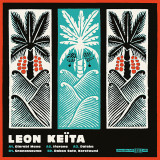
Hier hatten sich die Klänge aus dem nahen Mali und Guinea mit den lokalen Stilen vermischt und eine reiche Musikszene hervorgebracht: Bands wie Bembeya Jazz, Super Djata Band und andere Mandingue-Giganten gehörten zu den Bestsellern der Region. Leon Keïta, eine feste Größe in der malischen Musikszene, wurde 1947 in Conakry an der Atlantikküste von Guinea geboren. Leon half bei der Gründung der legendären Rail-Band, die zu einer gefeierten Stütze des Nachtlebens in Bamako wurde und die internationalen Karrieren von Salif Keita, Mory Kanté u.v.a. begründete. Leon selbst schloss sich Les Ambassadeurs Internationaux an, mit denen er durch Westafrika tourte, bevor er sich der Arbeit an seinen eigenen Kompositionen zuwandte. Als Leon bereit war, ins Aufnahmestudio zu gehen, lud er seine Freunde von Les Ambassadeurs Internationaux ein, ihm als Begleitband zu dienen; aus dieser Zusammenarbeit gingen zwei Platten hervor, die beide 1978 auf dem Label Papa Disco veröffentlicht wurden. Ein Jahr später veröffentlichte Leon "Rythmes et Mélodies du Mali", das er gemeinsam mit seinem Bruder Germain geschrieben hatte und das vom großartigen Orchestre Black Santiago begleitet wurde. Obwohl Leon nicht viele Soloaufnahmen gemacht hat, erwecken seine Lieder weiterhin die Verehrung aller, die das Glück haben, sie zu hören. In den letzten Jahren wurde der Song "Dalaka" von Carlos Estrada, dem Betreiber des Soundsystems in Barranquilla, wiederentdeckt und wurde zu einem unerwarteten Hit an der kolumbianischen Karibikküste. Zwölf Jahre nach der Veröffentlichung der von der Kritik hochgelobten Bambara Mystic Soul Compilation taucht diese neue Zusammenstellung erneut tief in die Mandingue-Kultur ein, die während Leon Keïtas legendären Sessions Ende der 70er Jahre aufgenommen wurden.
"""Down to Earth"" is an album by jazz organist Freddie Roach, released in 1962. This recording offers an irresistible fusion of soul jazz and blues, highlighting Roach's mesmerizing organ sound. With
infectious grooves and captivating solos, the album captivates listeners with its earthy energy and warm atmosphere.
""Down to Earth"" is a must-have for jazz enthusiasts and lovers of organic sounds. 180GRAM VINYL - LIMITED EDITION 1,000 UNITS - ONE TIME PRESSING."
It is with great fanfare that we proudly announce the return of the esteemed improvisational chainsaw blues trio Young James Long. Young James Long formed in Dallas in 2003 with a weekly residency at a local (and appropriately named) dive bar called Muddy Waters. PW Long (guitar, vocals) and Kirkland James (guitar) had known each other socially since the 90s when Long was fronting Quarterstick Records’ Mule, and James was playing with Tenderloin. Long would go onto make a series of incredible solo records under his own name and that of PW Long’s Reelfoot and James would play with Alejandro Escovedo (among many others) before their paths finally crossed again. They recruited Taylor Young (Hi-Fi Drowning, Young Heart Attack, The Polyphonic Spree) on drums and a raw, blues-punk-rock-and-roll band emerged fully formed, songs flying out of them with enthusiasm and ease. They recorded the You Ain’t Know The Man EP with their friend (and eventual Grammy winner) Stuart Sikes not long after. The EP came out via Southern Records in 2007, and thanks to the tasteful ears of the people this side of the pond, a European tour followed. If you saw that tour, you’ll agree that it felt like the band were really hitting their stride. However, here we are in 2023, so what happened? Answer: geography - the age-old enemy of creativity. One member left Texas and the others (being the extremely able and skilled musicians that they are) were perpetually wooed away to play in other bands. Everyone’s got bills to pay, right? And with that, things just kind of fizzled out. Long even insists he quit playing music around 2010. One of the most recognisable voices in underground music: out of the game. Incredible. Inconceivable.
Then, last year we at Wrong Speed got an email asking if we’d be interested in some new music Young James Long had been working on. We thought it might be a joke. They sent some mixes through, and it became very quickly apparent that it was anything but. Turns out the trio had started chatting about music again in 2020 (before the world had other plans) and had finally made their first full-length album Orogeny in the summer of 2021. Orogeny sounds live and thrillingly immediate, as though all obstacles between their delivery and your ears have been removed and discarded as irrelevant. There is no filler, no treading of water at any point. Amps buzz, songs teeter on the edge of collapse, you feel like you’re sitting in the middle of the band as they play and it’s a pretty sweet place to be. The album contains a whopping 17 songs, most under 2 minutes long. They don’t want to waste your time, or most importantly (after sixteen years away), theirs. If you’re familiar with Long’s previous bands, you’ll know he has a rare gift for pairing extreme volume with extreme tenderness and it’s thrilling to find that gift present and correct after over a decade away. And that voice – holy shit, that voice. He can go from a Beefheart howl to the sweetest country baritone in the space of a single line. In James and Young he’s found the perfect foils, a power trio of instinctive and soulful musicians able to conjure shining gems of magic out of the grit and the dirt. Young James Long is risen from the ashes – it’s a miracle!
Essential South African jazz, funk and soul - An anthology dedicated to the legendary Black Disco ensemble. Distilling the group’s recorded output into a single commemorative document, Discovery 1975-1976 compiles cuts from the lauded Night Express album alongside rare gems from the group’s long-out-of-print first and third albums. The newly remastered selection features previously unissued single versions of the mighty “Night Express” itself, a funk juggernaut with piercing flute whistles and rapturous sax cries as well as “Dawn” from the album Black Disco 3, a trippy, flute-driven awakening of soft light and gentle colours.
With a Yamaha organ and a dream, Pops Mohamed started his musical journey in the mid-1970s as the bandleader and composer of Black Disco, creating a hip melange of chill-out jazz with futuristic drum machine sounds and spiritual overtones. His cosmic organ transmissions were accompanied by two of the most sought-after session players on the South African scene, the sax and flute wizard Basil Coetzee, who had risen to fame in 1974 as one of the soloists on the hit “Mannenberg,” and Sipho Gumede, the young bass prodigy who was already rubbing shoulders with the old guard at the outset of his career. Backed at first with polyphonic beats from Mohamed’s electric organ and later taking on a drummer, Black Disco created a signature sound and a trilogy of innovative albums in a burst of studio creativity between 1975 and 1976.
On the heels of their epic various artists compilation, As-Shams Archive have produced a doozy of a compilation of some very essential South African jazz.
- A1: The Orielles - Beam/S (Space Afrika Remix)
- A2: Amber Arcades - Turning Light (Justin Robertson’s Deadstock 33’S Meditation)
- A3: Unloved - Number In My Phone (Black Science Orchestra Dub)
- B1: Confidence Man - Toy Boy (Raw Silk Instrumental Remix)
- B2: David Holmes & Raven Violet - It’s Over If We Run Out Of Love (Lovefingers & Heidi Lawden Low Tide Mix)
- B3: Baxter Dury - Miami (Pilooski Instrumental Dub)
- C1: Out Cold - Loving Arms (Hardway Brothers Remix)
- C2: Working Men’s Club - Cut (Mella Dee Spangled On The Terrace Dub)
- D1: Eyes Of Others - Safehouse (Decius Remix)
- D2: Katy J Pearson - Howl (Umlauts Remix)
- D3: Fran Lobo - All I Want (Tone Remix)
Heavenly Recordings release the next two volumes in their series of remixed classics and unreleased versions. ‘Heavenly Remixes 7 & 8’ sees the label going back into the archive, as well as picking off some more recent remixes, and both albums primarily feature either previously unreleased versions or re-workings available for the first time on vinyl and CD.
Heavenly have always seen immense value in the remix, a value way beyond what it might bring commercially. Since their first release in 1990 (where Andrew Weatherall overhauled a one-off single by club kids Sly and Lovechild) Heavenly remixes have been carefully curated and treated as a key part of the A&R process. It’s an opportunity to view an artist through a different prism, to play out a musical ‘what if’ scenario. It’s the kind of exploration that’s happened consistently through the thirty plus years the label has released music.
The ‘Heavenly remixes’ series continues to showcase the very best remixes, versions, meditations, re-rubs and dubs from all around the world of artists right across the roster of the country’s most exciting record label. In most cases, the albums offer the first physical release for a remix, elevating them from streaming playlists to their rightful, spiritual home on super heavy vinyl (or shiny, super-packed compact disc).
Heavenly remixes 7’ heads to Belfast, where David Holmes - a producer who first appeared on Heavenly in 1994 amping up the acid on Saint Etienne’s ‘Like A Motorway’ - appears as solo artist and as one third of Unloved, who get a lift right to the heart of a Vauxhall sweatbox by Horse Meat Disco. It draws a line between Amsterdam and Frankfurt as Ludwig A.F. amps up the electronics on Pip Blom’s ‘Keep It Together’. It stops off in a south London studio where super producer Dan Carey plays the desk with Toy, then relocates LA psych rock band Fever The Ghost to an Ibizan shoreline as the sun sets on the horizon. It cements Sheffield’s reputation as the home of modern British techno with the return of true originators Forgemasters. And it pitches up in front of a renegade soundsystem late night at Glastonbury as Erol Alkan’s mighty rework of Con Man gets its third rewind of the night.
‘Heavenly remixes 8’ opens with Space Afrika’s lush, ambient reimagining of the Orielles’ ‘BEAM/S’ before Justin Robertson stretches Amber Arcades’ ‘Turning Light’ into eight minutes of electronic dub. Elsewhere, Baxter Dury’s peerless ‘Miami’ becomes a string-laden electro skank in the hands of French producer Pilooski; Edinburgh’s bedroom techno genius Eyes of Others’ ‘Safehouse’ turns into an East End bathhouse courtesy of disco deviants Decius; Ashley Beedle’s Black Science Orchestra turns Unloved’s heartworn torch song into seven minutes of glimmering dreamlike percussive house and Katy J. Pearson’s freak flag is flown high thanks to The Umlauts’ throbbing filtered electro mix. It ends similarly to how it began as TONE takes
Fran Lobo’s ‘All I Want’ on a gorgeous slow motion spacewalk.
McKowski is pleased to confirm details of his debut solo album: ‘Notes From The Boneyard’, a new release that arrives courtesy of the Deltasonic label.
In anticipation of the record, the Irish songwriter and multi-instrumentalist has unveiled the single “Return of Pygmy Pony”.
“Return of Pygmy Pony” is one of 10 cinematic tracks, alongside previous single “Lake”, that comprise upcoming album ‘Notes From The Boneyard’. Envisioning a fictional world known as ‘The Boneyard’, McKowski’s debut will promise a purely instrumental album of atmospheric folk and otherworldly soundscapes to capture your imagination and seep into your soul.
Utilising a unique blend of acoustic guitars, strings, analog synths, and electronic toys, Mckowski creates a haunting and evocative journey across its transient 35 minutes. Gifted with the talents of some old allies, ‘Notes From The Boneyard’ sees guest musicianship from the likes of Steve Wickham (viola), Howe Gelb (guitar), Laura Mcafadden (cello), Dave Murphy (pedal steel), with St Francis Hotel also adding further elements of atmosphere and production.
With one foot rooted in a dark woodland and the other foot stepping into unknown territory, the end result is a must-listen for fans of soundtracks, the surreal, or simply those searching for the unexpected. Like the wooden beauty of Angelo Badalementi’s ‘Straight Story’ mixed with the dark synth undertones such as Carpenter-esque Moog; it’s the ideal companion for those pensive days and long nocturnal hours.
Aurora Records proudly presents Temporal Gardening, featuring
composer and performer Stephan Meidell and the baroque ensemble
Bergen Barokk
The new album will be available on vinyl and digital platforms on15th of
September 2023.
Temporal Gardening was originally a commission written in 2020 for Bergen
Barokk. The idea was to explore using early music instrumentation in dialogue
with new electro-acoustic technology. The unique and remarkable ecology grew
from pseudo- baroque music playfully reimagined, reinterpreted, disassembled,
remixed, and resampled.
The trio has been expanded with drums, functioning as speakers for the
electronic manipulations of the ensemble. A double-bass recorder vibrates a subwoofer speaker mounted inside a bass drum, and a live sampled harpsichord
sounds through cymbals, gongs, and a snare drum. Meidell himself part takes as
a musician in the performance, doing live sampling and electronic contributions.
Musician-composer Stephan Meidell is a musical adventurer who, in a nomadic
fashion, improvises his way through a plentitude of styles. Meidell's music exists
where genres dissolve into fragments that canbe picked apartand combined in
new ways. He frequently combines sounds from electronic, acoustic, and
electromechanical instruments and machines and then recontextualises them
with his finely tuned intuition and sense of detail. Meidell has a plentitude of
releases and commissions, including with Erlend Apneseth Trio, Strings &
Timpani, Cakewalk, and TRIGGER on labels such as Hubro, Clean Feed, Playdate,
and Ideophone.
Bergen Barokk was established in 1994 and is today one of Norway's leading
early- music ensembles. The group has concertized and appeared in radio
broadcasts in Europe, Russia and USA. Their recordings on Simax Classics, BIS,
Bergen Digital Studio and Toccata Classics include German, English, Italian and
French repertoire. Bergen Barokk has collaborated with several ensembles
through the recent years, some of them are Pratum Integrum (Moscow),
Norwegian Soloists' Choir and Barokksolistene (Norway). Bergen Barokk has
performed in festivals like Festspillene i Bergen, Bach Festival of Philadelphia,
Moscow Early Music Festival and Janacek International Music Festival (Czech
Republic).
Black Truffle is pleased to announce Tender Membranes, the label’s first release from Swedish-Finnish sound artist and electro-acoustic composer Marja Ahti. Active for a decade in the Finnish underground music scene, in recent years Ahti has developed a distinctive approach to patiently unfolding electro-acoustic constructions, documented on a string of solo releases and collaborative projects with Judith Hamann and her husband Niko-Matti Ahti. Working with concrete and instrumental sounds, field recordings, and electronics, Ahti favours neither disjunctive collage nor monolithic consistency; rather, her work is composed of organically unfolding sequences of details and textures, which, as she says, ‘can stretch out or cut fast as long as they have a sense of inner stillness’, a sense that she connects to moments of heightened attention in everyday life. Tender Membranes consists of four lengthy pieces, partly inspired by the image of the senses and mind as membranes allowing for the passage between inner and outer spaces, sensation and its causes, creating a world. Ahti’s unhurried pacing encourages this sense of listening as an opening or surrender to sound, which can often create the impression that the listener is moving through a space zooming in on details. The opening Shrine (Aether) exemplifies this aspect of Ahti’s approach: a bell clears the air with a single long tone, followed by the ambience of outdoor spaces, crackling electronics, an archival recording of a horsefly on a windowpane. Dozens of these moments, varying in length, density, and intensity, move past the listener’s attention, momentarily brought into focus then slipping away. Like those of the masters of the French musique concrète tradition, Ahti’s sounds are not often recognisable, though they might suggest proximity or distance, open environments or closed spaces, the urban or rural, day or night. In Ahti’s work, we do not encounter spectacular metamorphoses à la Parmegiani but rather a state of ambiguity where the listener is often unsure what is organic and what is inorganic, where the careful productions of the synthesizer might end and sounds discovered in the environment begin. What Ahti calls her ‘poetic way of experiencing and organising the familiar and the unfamiliar’ is sustained throughout Tender Membranes, but each piece has its own character. On Dust / Light, human presence is more overt, as what appear to be whispers, singing, and distant speech thread between high frequencies, untraceable drips and pops, and metallic shimmers. In all this there is a melody that you can sing and to which you may dance makes more prominent use of musical instruments, gaining a sombre beauty from half-buried piano chords and organ tones. On the closing Oh Fragrant Witness, a delicate cloud of subtly bending pitches is repeatedly disrupted by a resounding, almost ominous mass of low tones, at once a strange detour from much of what has gone before and an almost classical finale. Arriving in a sleeve reproducing contemporary Finnish photographer Sini Pelkki’s fragmented visions of the everyday, Tender Membranes is a balm to reawaken tired ears.
David Eugene Edwards has always been larger than life. His music with innovative heavy droning folk band Wovenhand, and before that the haunting revivification of high lonesome sound antique Americana of 16 Horsepower breathed a near apocalyptic sense of urgency and power into musical archetypes long abandoned in the latter-20th Century. On his first-ever solo album under his own name, Hyacinth, David Eugene Edwards delivers a sound uniquely his own, with a vulnerability and introspection unheard from him before. Stripping back the heavy rock of his recent work with Wovenhand, Hyacinth puts the man's voice, and sparing instrumentation into the main focus. There's a somber beauty and world-weary tone throughout these songs. The album could've been considered a slight return to the more melodic sounds of 16 Horsepower's Secret South (2000) and the first, self-titled Wovenhand album (2002). But there's more going on here: a rhythmic, pulsating undercurrent reminiscent of the tape loops and rudimentary rhythms of 80s Industrial post-punk as well as 808 Drill Style beats. The overall effect is often as if we're hearing the clock ticking away our own mortality. "Hyacinth was a sort of vision," Edwards says. "A dream. I sought out of my old wooden banjo and nylon string guitar a hidden path. Secrets they had kept from me within themselves all these years and created a new Mythos to myself of philosophical and spiritual ideas or concepts." Once he'd harnessed the music within, he enlisted multi-instrumentalist and producer Ben Chisholm (The Armed, Chelsea Wolfe, Converge) to help him realize the album's recording and mix. "Overall, the album is a weaving of narratives ancient and modern, of humankind's search for understanding of this world we find ourselves in and of each other. In all its simplicity and complexity," Edwards continues. "Hyacinth is a reference to the Greek myth of Apollo. And, the word meaning a precious stone and blue larkspur flower of purple and pall."
a-Musik, the Cologne-based bastion of sonic exploration, unveils a new chapter in their quest for boundary-pushing sounds.
Timekeepers II, a split LP featuring recordings of two duos by Marcus Schmickler with Jaki Liebezeit and with Hayden Chisholm. Side A bears the imprint of Liebezeit's rhythmic flow fusing with Schmickler's digital Shepard Tone interpretation. A studio recording taken before a performance at Moers Festival in 2014. On side B, Schmickler's electronics converge with Chisholm's bagpipe drones. The piece was composed for their show at Art's Birthday at Berghain and a-Musik's 20th anniversary at Gebäude 9.
Tim Berresheim's artwork serves as a visual backdrop. Berresheim mostly works with computer rendered images, which have been created for a solo exhibition at JUBG in Cologne in 2022.
Dan Auerbach’s debut solo album, Keep It Hid, returns to physical formats, with the seminal 2009 collection being reissued on vinyl and CD via Easy Eye Sound - the label that Keep It Hid first inspired him to create. The fourteen-song debut marked Auerbach’s first major work outside of The Black Keys, helping to establish his multifaceted career as a Grammy®-winning producer, mentor to emerging talent and founder of Easy Eye Sound, which is now Billboard’s reigning Blues Label Of The Year. Keep It Hid was originally recorded by Auerbach as he was building his first home studio in Akron, Ohio - a precursor to his Easy Eye Sound Studio in Nashville, where Auerbach now records and produces most of the label’s current releases. Inspired by trips to many of his all-time favorite rooms - from Suma Recording in Cleveland to Robin Hood in Texas to Toe Rag in London - Auerbach discovered a passion for studio work that remains at the center of his musical world nearly fifteen years on. Also tapping into his love of record-collecting and crate-digging more than ever before, Keep It Hid was inspired by forgotten 60s psych rock, obscure British power-pop, bluegrass family bands and even the lyricism of his own father, Chuck Auerbach (Dan would go onto produce Chuck’s debut album, Remember Me, in 2018). The album was hailed as “intimate and thrilling” by NPR’s Fresh Air upon its original release, with reviewer Ken Tucker adding it “sounds like a clearing of the throat and mind.”
David Eugene Edwards has always been larger than life. His music with innovative heavy droning folk band Wovenhand, and before that the haunting revivification of high lonesome sound antique Americana of 16 Horsepower breathed a near apocalyptic sense of urgency and power into musical archetypes long abandoned in the latter-20th Century. On his first-ever solo album under his own name, Hyacinth, David Eugene Edwards delivers a sound uniquely his own, with a vulnerability and introspection unheard from him before. Stripping back the heavy rock of his recent work with Wovenhand, Hyacinth puts the man's voice, and sparing instrumentation into the main focus. There's a somber beauty and world-weary tone throughout these songs. The album could've been considered a slight return to the more melodic sounds of 16 Horsepower's Secret South (2000) and the first, self-titled Wovenhand album (2002). But there's more going on here: a rhythmic, pulsating undercurrent reminiscent of the tape loops and rudimentary rhythms of 80s Industrial post-punk as well as 808 Drill Style beats. The overall effect is often as if we're hearing the clock ticking away our own mortality. "Hyacinth was a sort of vision," Edwards says. "A dream. I sought out of my old wooden banjo and nylon string guitar a hidden path. Secrets they had kept from me within themselves all these years and created a new Mythos to myself of philosophical and spiritual ideas or concepts." Once he'd harnessed the music within, he enlisted multi-instrumentalist and producer Ben Chisholm (The Armed, Chelsea Wolfe, Converge) to help him realize the album's recording and mix. "Overall, the album is a weaving of narratives ancient and modern, of humankind's search for understanding of this world we find ourselves in and of each other. In all its simplicity and complexity," Edwards continues. "Hyacinth is a reference to the Greek myth of Apollo. And, the word meaning a precious stone and blue larkspur flower of purple and pall."