Red Vinyl
Adrian Borland and Graham Bailey might be better known as members of legendary post-punk group The Sound, but the two were childhood friends and had been playing together even earlier in The Outsiders, and continued their deep musical rapport as a duo, creating these intense and engaging songs as Second Layer at the same time as their higher profile band output.
Combining their early recordings, including the 1979 Flesh As Property EP and 1980 State Of Emergency EP, Courts Or Wars takes its title from the first song that served as the pair’s introduction to listeners. Right from the beginning you are enveloped in what The Quietus described as, “a monochrome worldview morbidly obsessed with the dehumanizing effect of war, nuclear weapon annihilation, and the fracturing and negation of the self within an increasingly distorted and technologically mediated society.” Where The Sound fit snugly next to Echo And The Bunnymen, Second Layer had far more in common with the pulsing menace of Suicide.
Borland’s familiar vocals and sense of melody hold a connection to his other songwriting, but within these songs he takes far more risks in his guitar work to suit the subject matter. What really drives everything is Bailey’s propulsive bedrock, formed by his homemade pre-drum machine rhythm generators, creating an innovative mechanical approach that somehow inserts a jittery neurotic touch that merges perfectly with his electronic layers driven by the wasp synth, various unique effects boxes or tape loops. Adding in Bailey’s own distinctive bass playing, the results feel personal and experimental, pointed and harsh, while also bracingly accessible and covered in dark manic energy.
Over forty years later, these recordings feel shockingly appropriate. In painting a bleak reality and frightening future, there is real desperate beauty here.
quête:som sam
The relationship between Bryn Jones’ music as Muslimgauze and the track/abum titles he would provide (sometimes right on the tapes he would send in for release, but often determined later, sometimes even giving two different pieces months apart the same title, accidentally or not) has always been a little mysterious. Jones himself can no longer be asked, and as we continue to investigate the swathes of material he provided, you hit sources like the DAT or DATs that make up the contents of the new double LP »Turn On Arab American Radio«. Nine tracks, the first LP/four tracks titled »Turn On Arabic American Radio,« and the other LP/five tracks labelled only »Arabic American Radio.« None of them sound particularly radio-esque, although given the simultaneous vastness and ornate focus of Jones’ Muslimgauze work that gap between name and sound is far from atypical.
Instead here the de rigeur percussion loops that underpin this particular set of tracks, while occasionally clipping into the fierce distortion that Jones either loved to use or couldn’t get away from, steer away from both the more consistent application of that distortion as well as the Middle Eastern and Asian influences he often used. It’d be a stretch to call anything here basic boom-bap production but they come closer to it than a lot of Muslimgauze production. And while those loops are, as always prominent, they’re not actually the focus; settling into steady vamps as structures for Jones to pursue an extended and often more gentle exploration of the other sample sources he has here. There are stringed instruments, the sound of water, but most prominently or strikingly the human voice. Nothing is in English but tone and the occasional word ('familia', 'passport') still provide guides. There are ululations, snatches of melody; but most often speech, dialogue, often tense and harried sounding. Is this what Jones was thinking of or referring to with his Arabic American Radio?
As with so many other questions about Muslimgauze, we’ll never know the answer to that one. (Most pertinently in this case we might wonder who appears here, and what the context of these recordings is. But Jones never provided that with his submissions.) Here, even though those inexorable loops pound on, indefatigable, that emphasis on some of the people Jones chooses lends a measured gentleness to much of »Turn On Arabic American Radio«, at least within the context of his body of work. The last thing you hear at the end of the second LP is one last question from one of the many speakers on this peculiar Muslimgauze radio, echoed away into infinity. We may never have answers, but those questions continue to resonate.
- 1: Falling From The Sky With Ben Bridwell (Band Of Horses)
- 2: Bullets & Rocks With Sam Beam (Iron & Wine)
- 3: When The Angels Played With Pieta Brown & Greg Leisz
- 4: Tapping On The Line With Neko Case
- 5: Cumbia De Donde With Amparo Sanchez
- 6: Miles From The Sea With Gaby Moreno
- 7: Coyoacán
- 8: Beneath The City Of Dreams With Gaby Moreno
- 9: Woodshed Waltz With Greg Leisz
- 10: Moon Never Rises With Carla Morrison
- 11: World Undone With Takim
- 12: Follow The River With Nick Urata (Devotchka)
LP 180G HEAVY BLACK VINYL, INCL. 12 TRACK MP3 ALBUM
For the better part of two decades, the acclaimed band Calexico has crossed musical barriers, embracing a multitude of styles, variety in instrumentation, and well-cultivated signature sounds. With their forthcoming record Edge of the Sun, out April 13th via City Slang, they take inspiration from a trip to a place surprisingly unexplored by the band before in Mexico City, and with the benefit of many friends and comrades to help guide the way.
Encouraged by the experience, the guest list grew to include Ben Bridwell (Band of Horses), Nick Urata (Devotchka), Carla Morrison, Gaby Moreno, Amparo Sanchez, multi-instrumentalists from the Greek band Takim, and Neko Case. Burns' brother John Burns lent a hand to some lyrics and songwriting, and the band's keyboardist, Sergio Mendoza, stepped up to co-write and arrange certain songs, ultimately co-producing the album along with Burns, John Convertino, and longtime associate Craig Schumacher.
- A1: Recording A Tunnel (The Horns Play Underneath The Canal) (The Horns Play Underneath The Canal)
- A2: Les Lumieres (Part 1)
- A3: Les Lumieres (Part 2)
- A4: Throw It On A Fire
- A5: Recording A Tunnel (The Horns Play Underneath The Canal) Continued (The Horns Play Underneath The Canal)
- A6: The Upwards March
- A7: The Bells Play The Band
- B1: Recording A Tape (Typewriter Duet) (Typewriter Duet)
- B2: Nuevo
- B3: Salvatore Amato
- B4: Recording A Tunnel (The Invisible Bells) (The Invisible Bells)
Black Vinyl[17,44 €]
Clear Vinyl
Erased Tapes are immensely proud to announce the reissue of the debut album Recording a Tape the Colour of the Light by Bell Orchestre. To honour the album"s original recordings the album is also seeing its first vinyl repress since it was released in 2005. Originally formed in 1999 whilst studying at university, the first music Bell Orchestre made was live scores for contemporary dance performances. A few years later, the studio sessions for Recording A Tape.. took place simultaneously in the same studio as when Arcade Fire were recording their eponymous debut album Funeral. The two Montreal-based bands took turns to record their albums but due to the growing interest in Arcade Fire, Bell Orchestre was put on hold as band members Parry and Sarah Neufeld quickly became occupied with Arcade Fire"s busy touring schedule. "The Bell Orchestre album was almost done, but it kind of sat there. We were just sitting on this album that we were really proud of, but we didn"t have anyone to pay attention to it" Parry told Pitchfork in 2005. The album was released to critical acclaim and has since received cult status among fans. Bell Orchestre is a collaborative instrumental group based in Montreal. Its six members come from wildly divergent musical backgrounds, and the unlikely chemistry that results from their collaboration is the very thing that sustains their connection. It"s as if the group as a whole has tapped into a very particular, very distinct energy: like that of an approaching storm. In many ways, Bell Orchestre is the sum of not only its parts, but the sum of its influences and inspirations. Among those influences can be listed such diverse artists as Lee "Scratch" Perry, Arvo Pärt, Charles Mingus, and Talk Talk. But ultimately they work together to create something that none of them has quite heard before. Bell Orchestre has been known to retreat into the woods to make and write music: from a residency at the Banff Centre for the Arts, to the forests of Quebec and Vermont, and back to their hometown of Montreal. The specifics of time and place, the elemental forces at work outside, and those forces that exist inside, all come into play within Bell Orchestre"s musical process. This particular music could be made by no one else at no other time in history. The experience of listening to Bell Orchestre, whether live or recorded, is almost that of experiencing a form of synaesthesia: the result is a collage-like construction of not just sound, but visual elements as well. From a herd of elephants to that approaching storm on the horizon, from a quiet forest in the country to ice forming on a city street, from watching vapour trails disappear in the sky to watching the changing light of dusk through a window. The result then is not so much cinematic as it is evocative: Bell Orchestre have not just written the music to the film - they have created an invisible film that only comes to life in the listening
- A1: Recording A Tunnel (The Horns Play Underneath The Canal) (The Horns Play Underneath The Canal)
- A2: Les Lumieres (Part 1)
- A3: Les Lumieres (Part 2)
- A4: Throw It On A Fire
- A5: Recording A Tunnel (The Horns Play Underneath The Canal) Continued (The Horns Play Underneath The Canal)
- A6: The Upwards March
- A7: The Bells Play The Band
- B1: Recording A Tape (Typewriter Duet) (Typewriter Duet)
- B2: Nuevo
- B3: Salvatore Amato
- B4: Recording A Tunnel (The Invisible Bells) (The Invisible Bells)
Clear Vinyl[24,33 €]
Black Vinyl
Erased Tapes are immensely proud to announce the reissue of the debut album Recording a Tape the Colour of the Light by Bell Orchestre. To honour the album"s original recordings the album is also seeing its first vinyl repress since it was released in 2005. Originally formed in 1999 whilst studying at university, the first music Bell Orchestre made was live scores for contemporary dance performances. A few years later, the studio sessions for Recording A Tape.. took place simultaneously in the same studio as when Arcade Fire were recording their eponymous debut album Funeral. The two Montreal-based bands took turns to record their albums but due to the growing interest in Arcade Fire, Bell Orchestre was put on hold as band members Parry and Sarah Neufeld quickly became occupied with Arcade Fire"s busy touring schedule. "The Bell Orchestre album was almost done, but it kind of sat there. We were just sitting on this album that we were really proud of, but we didn"t have anyone to pay attention to it" Parry told Pitchfork in 2005. The album was released to critical acclaim and has since received cult status among fans. Bell Orchestre is a collaborative instrumental group based in Montreal. Its six members come from wildly divergent musical backgrounds, and the unlikely chemistry that results from their collaboration is the very thing that sustains their connection. It"s as if the group as a whole has tapped into a very particular, very distinct energy: like that of an approaching storm. In many ways, Bell Orchestre is the sum of not only its parts, but the sum of its influences and inspirations. Among those influences can be listed such diverse artists as Lee "Scratch" Perry, Arvo Pärt, Charles Mingus, and Talk Talk. But ultimately they work together to create something that none of them has quite heard before. Bell Orchestre has been known to retreat into the woods to make and write music: from a residency at the Banff Centre for the Arts, to the forests of Quebec and Vermont, and back to their hometown of Montreal. The specifics of time and place, the elemental forces at work outside, and those forces that exist inside, all come into play within Bell Orchestre"s musical process. This particular music could be made by no one else at no other time in history. The experience of listening to Bell Orchestre, whether live or recorded, is almost that of experiencing a form of synaesthesia: the result is a collage-like construction of not just sound, but visual elements as well. From a herd of elephants to that approaching storm on the horizon, from a quiet forest in the country to ice forming on a city street, from watching vapour trails disappear in the sky to watching the changing light of dusk through a window. The result then is not so much cinematic as it is evocative: Bell Orchestre have not just written the music to the film - they have created an invisible film that only comes to life in the listening
Eric Clapton’s studio albums for Reprise Records are among the most beloved of the guitarist’s storied career and the focus of a new series of limited-edition, vinyl-only boxed sets. The first instalment, The Complete Reprise Studio Albums – Volume I, is available now The 180-gram, 12-LP set features Clapton’s first six studio albums for Reprise (Money and Cigarettes, Behind the Sun, August, Journeyman, From the Cradle, and Pilgrim) along with an additional LP of rarities from the era. The second instalment, coming in January, features 10 LPs that cover all five albums Clapton recorded for Reprise between 2001 and 2010, plus an LP exclusive to the collection that includes rarities from the same time.
The Complete Reprise Studio Albums – Volume II will be available on January 13, 2023. The set contains newly remastered versions of five studio albums pressed on 180-gram vinyl: Reptile (2001), Me & Mr. Johnson (2004), Sessions For Robert J (2004), Back Home (2005), and Clapton (2010). All the albums will be released as double-LPs except Sessions For Robert J, which makes its vinyl debut in the collection as a single LP.
Rarities (2001-2010), the collection’s final LP, brings together eight hard-to-find recordings from this prolific era in Clapton’s recording career. Highlights include the B-side “Johnny Guitar” and the Japanese-only bonus track, “Losing Hand.” “Midnight Hour Blues,” another rarity, was released in 2010 as a bonus track for Clapton.
VOLUME II covers a nine-year period that starts in 2001 with Reptile, Clapton’s 14th solo studio album. It reached #5 on the albums chart in the U.S. and sold more than 2.5 million copies worldwide. Two singles from the album – “Superman Inside” and “Reptile” – were nominated for Grammy Awards, with the latter winning for Best Pop Instrumental Performance.
Clapton returned in 2004 with Me and Mr. Johnson, an album of cover songs originally written and recorded by Delta-bluesman Robert Johnson, a trailblazing artist who profoundly influenced Clapton. Packed with passionate performances, the record sold more than two million copies worldwide and was nominated for a Grammy Award. The album is presented as a double-LP in the new collection and features an etching of the album cover on the final side.
Also in 2004, Clapton released Session for Robert J, a companion piece to Me and Mr. Johnson. The album captures acoustic and electric performances by Clapton and his band in Dallas and England as they rehearsed and recorded songs for Me and Mr. Johnson. The album, which makes its vinyl debut in this collection, includes fantastic versions of “Terraplane Blues” and “Sweet Home Chicago.”
Clapton’s hot streak continued in 2005 with Back Home, his 17th studio album. Certified gold in the U.S., the record featured guest performances by Vince Gill, John Mayer, Robert Randolph, Billy Preston, and Steve Winwood. On the album, Clapton paid tribute to his close friend George Harrison with a cover of Harrison’s 1979 song “Love Comes To Everyone.” Back Home won the 2006 Grammy Award for Best Engineered Album, Non-Classical.
Clapton is the final studio album on Volume II. It debuted in 2010 and peaked on the album charts at #6 in the U.S. and #7 in the U.K. Once again, Clapton was joined in the studio by an all-star group of guest musicians that includes Derek Trucks, Wynton Marsalis, Allen Toussaint, and J.J. Cale. On the album, Clapton mixed Tin Pan Alley standards and New Orleans jazz with new songs like “Run Back To Your Side,” which was nominated for a Grammy Award in 2011.
The Complete Reprise Studio Albums Vinyl Box Set - Volume 2 track listing
Reptile
• Reptile
• Got You On My Mind
• Travelin’ Light
• Believe In Life
• Come Back Baby
• Broken Down
• Find Myself 5:15
• I Ain’t Gonna Stand For It
• I Want A Little Girl
• Second Nature
• Don't Let Me Be Lonely Tonight
• Modern Girl
• Superman Inside
• Son & Sylvia
Me & Mr Johnson (3-sided Album)
• When You Got A Good Friend
• Little Queen OF Spades
• They're Red Hot
• Me And The Devil Blues
• Traveling Riverside Blues
• Last Fair Deal Gone Down
• Stop Breakin' Down Blues
• Milkcow's Calf Blues
• Kind Hearted Woman Blues
• Come On In My Kitchen
• If I Had Possession Over Judgement Day
• Love In Vain
• 32-20 Blues
• Hell Hound On My Trail
Sessions For Robert J
• Sweet Home Chicago
• Milkcow's Calf Blues
• Terraplane Blues
• If I Had Possession Over Judgement Day
• Stop Breakin' Down Blues
• Little Queen Of Spades
• Traveling Riverside Blues
• Me And The Devil Blues
• From Four Until Late
• Kind Hearted Woman Blues
• Ramblin' On My Mind
Back Home
• So Tired
• Say What You Will
• I'm Going Left
• Love Don't Love Nobody
• Revolution
• Love Comes To Everyone
• Lost And Found
• Piece Of My Heart
• One Day
• One Track Mind
• Run Home To Me
• Back Home
Clapton
• Travelin' Alone
• Rocking Chair
• River Runs Deep
• Judgement Day
• How Deep Is The Ocean
• My Very Good Friend The Milkman
• Can't Hold Out Much Longer
• That's No Way To Get Along
• Everything Will Be Alright
• Diamonds Made From Rain
• When Somebody Thinks You're Wonderful
• Hard Time Blues
• Run Back To Your Side
• Autumn Leaves
Rarities Vol 2
• Johnny Guitar
• Midnight Hour Blues
• You Better Watch Yourself
• Traveling Riverside Blues
• Little Queen Of Spades
• Take A Little Walk With Me
• Losing Hand
• I Was Fooled
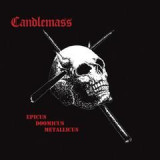
THE ICONIC 1986 DOOM METAL OPUS 'EPICUS DOOMICUS
METALLICUS', FEATURING REMASTERED AUDIO & PRESENTED WITH ITS
ORIGINAL SLEEVE DESIGN
Candlemass was formed by bassist & songwriter Leif Edling in Stockholm,
Sweden in 1984 & they are well known for their epic doom metal, having a great
influence over a generation of the genre's subsequent greats - Candlemass
themselves taking a large influence from Black Sabbath. Bands such as Paradise
Lost & My Dying Bride to this day rate 'Epicus...' among their most inspirational
albums. 'Epicus Doomicus Metallicus' is a true classic. Heavy metal riffs blended
with almost neo-classical touches, plus some theatrical elements recalling bands
like Mercyful Fate (thought to be another influence). All-in-all, this is considered
one of the definitive Doom Metal releases. 'Epicus € ' was recorded at
Thunderload Studios in 1986 & was released later that same year. The vocals
were handled by Johan L ngqvist, before the iconic vocalist Messiah Marcolin
became a solid fixture in the band until the early nineties. Candlemass instantly
became a great inspiration to countless metal bands upon the album's release in
1986; a time when thrash metal, not doom, was fast becoming the dominant style
in both Europe & the US. This edition of 'Epicus Doomicus Metallicus' features
recently remastered audio courtesy of Patrick Engel at Temple of Disharmony &
is presented with its original sleeve design.
Fire Red Color Vinyl[34,41 €]
Five tracks of masterful, ritualistic, and pitch-black evil make up the
entirety of Ng'ambu - an album which is meant to be interpreted as a
hymnal to invoke and praise spirits - shows the band drenched in
offerings to the bands personal connection and dedication to Quimbanda,
the Afro-Brazilian diasporic belief system based around magic, rituals,
and offerings
The band explains, "It is both an offering to our Cabula, that is our house, as it is
to the spirits of Quimbanda themselves. In some sense we are turning what could
otherwise be poison into medicine. It is a process of engaging, through struggle,
with those aspects of ourselves and the world which live at the pivot point of
chance and desire. It is about seeking agency even in the thistles of the road.
Quimbanda is the fire by which we forge our iron and the strangling plantst that
cure disease. Quimbanda is both the pox and the inoculation. Quimbanda is our
anxiety and the motivation that anxiety produces. It is conflict and the strength
that comes from engaging that conflict. People say, idle hands are the devil's
plaything, and so we have put those hands and The Devil to work."
For the band's sophomore release, MEHENET connects a powerful fury of black
metal mastery to the deeply rooted sounds of New Orleans - by way of utilizing
samples of the bustling French Quarter and by paying respect and praise to the
cultural music of the city by incorporating congas, whistles, and bells. Recorded
and mixed in 2019 by James Whitten at High Tower Recording in New Orleans,
LA.
Black Vinyl[34,41 €]
Five tracks of masterful, ritualistic, and pitch-black evil make up the
entirety of Ng'ambu - an album which is meant to be interpreted as a
hymnal to invoke and praise spirits - shows the band drenched in
offerings to the bands personal connection and dedication to Quimbanda,
the Afro-Brazilian diasporic belief system based around magic, rituals,
and offerings
The band explains, "It is both an offering to our Cabula, that is our house, as it is
to the spirits of Quimbanda themselves. In some sense we are turning what could
otherwise be poison into medicine. It is a process of engaging, through struggle,
with those aspects of ourselves and the world which live at the pivot point of
chance and desire. It is about seeking agency even in the thistles of the road.
Quimbanda is the fire by which we forge our iron and the strangling plantst that
cure disease. Quimbanda is both the pox and the inoculation. Quimbanda is our
anxiety and the motivation that anxiety produces. It is conflict and the strength
that comes from engaging that conflict. People say, idle hands are the devil's
plaything, and so we have put those hands and The Devil to work."
For the band's sophomore release, MEHENET connects a powerful fury of black
metal mastery to the deeply rooted sounds of New Orleans - by way of utilizing
samples of the bustling French Quarter and by paying respect and praise to the
cultural music of the city by incorporating congas, whistles, and bells. Recorded
and mixed in 2019 by James Whitten at High Tower Recording in New Orleans,
LA.
The Locket is the coming together of two masters of their craft to create something hopeful in a time of unrest. Its title track refers to memories of happier times: “we fill a locket with memories we protect, and don’t forget to keep it round your neck.” It’s a reminder to focus on positivity in the face of adversity. A collaborative project designed to be enjoyed together. A celebration of music, unity and looking ahead. It couldn’t have come at a better time. The Locket features ten tracks cut from sessions that span over eighteen months. It’s sunshine-dappled, psych-tinged, hip-hop flavoured, leftfield pop. Samples and beats, bars and this unique sort of retro futurism that zips from sepia-tinged to full technicolour almost as fast as Barney’s flow. So many reference points that burst at the seams trying to pick a genre. Perhaps most importantly, it’s an utterly joyful listen from start to finish; invaluable in a time when everyone is hard-pressed to find ways to brighten their days.
We have a very limited amount of these available now for stores. 4LP boxset - white vinyl - edition of 300 - includes: The Dream Derealised LP, Lightnesses I & II LPs, Near Future Residence LP. It’s nearing a decade since William Doyle released his Mercury Music Prize nominated debut album, Total Strife Forever, as East India Youth in 2014. A year later, he had toured the world and was releasing his second album, Culture of Volume, but it would be another four years before Doyle returned with his third full album, and the first official release under his own name. The dizzyingly ambitious Your Wilderness Revisited arrived in 2019 and was followed last year by the artpop masterpiece, Great Spans of Muddy Time. In the years between leaving the old project behind and re-emerging under his own name, Doyle self-released a string of ambient-leaning albums, The Dream Derealised, Lightnesses Vol I & II and Near Future Residence, which are now to receive a first vinyl pressing via Tough Love as both a highly limited four LP box set, titled ‘Slowly Arranged: 2016-19’, and as separate albums. The Dream Derealised is a collection of nine abstract, lo-fi pieces that were recorded during the summer of 2016, when focusing on creating them helped guide Doyle through a “difficult period of anxiety, panic and a regular dissociative feeling called derealisation.” At the time, doing something creative in a quick and immediate fashion felt vital to Doyle, carrying him to a new place: “I’m releasing them now as a cathartic measure, and as a message for others who may be going through difficult times themselves. What I told myself at the time, what I can tell you now: You are not in danger. You are not going insane. You are not alone.” Lightnesses Vol. I & II sees Doyle create what we might understand as true ambient music – that is, music intended for the background that wasn’t composed as such, but allowed to blossom out of the setting of some rules and parameters, played by sounds he created and then resampled. The deceptively simple, droning pieces are unlike anything Doyle has made before or since. “During their creation I’d often take photographs of the light coming in through the windows of the two houses I lived in during their creation. I’d post these on social media and they became quite popular parts of my output. This music was intended to accompany those visuals. The first volume’s photo is a double exposure of the sun shining in on my notebook and my hand, whereas the photo for the second volume was taken in Joshua Tree Park, California as I saw our tail lights illuminate one of the trees.” Near Future Residence is music for an imagined place based on real ideas; the soundtrack for an ecologically sustainable housing development somewhere in a not-too-distant future Britain. The eleven instrumental pieces here come from a place of optimism, imagining a future that is based on cooperation, community and ecological urbanism. It's music intended to sit in this imagined environment rather than impose upon it, similar in principle to the function of Kankyō Ongaku (Japanese environmental music). The ideas contained on Near Future Residence laid the groundwork for - and can be seen as a companion piece to - the album Your Wilderness Revisited, released to critical acclaim in 2019. Doyle explains how the pieces “were composed in entirely generative ways using samples of instruments, synthesisers and field recordings I've collected and developed throughout 2018. In generative composition, rules are set and parameters are chosen and then put into motion, the results constantly changing and surprising.”
Check point Catherine
“In the afternoon we performed in a rather austere theatre in East Berlin. Then I remember we crossed Checkpoint Charlie that evening to play in a club in West Berlin. The atmosphere was completely different. I felt as though we were living in a black and white spy movie.” Nicolas Fiszman recalls that chaotic day of 13 June 1982. Two outstanding guitarists, Philip Catherine and Nicolas Fiszman, who at the time was only seventeen years old, were taken from one side of Berlin to the other in pouring rain to perform to unlikely audiences. At both concerts, they played the same programme of seven pieces written by Philip, with the exception of “Crystal Bells”, composed by Charlie Mariano. The pair were not master and student. Rather, Philip remembers Nicolas like a young brother he might have taken to the beach. After the 1960s, Philip became a major figure on the jazz scene, working with the greatest: Charles Mingus, Chet Baker, Stéphane Grapelli, Dexter Gordon, to name only a few. Nicolas has played with Charles Aznavour, Vanessa Paradis, Francis Cabrel and Eric Serra, and travels the world with Sting.
On that gloomy afternoon, the two guitarists, alone on stage, decided to brighten up the morosity that reigned. The pieces they played bore titles such as “Janet”, “Babel” and “Petit Nicolas”. It is hard to believe that this varied, well-constructed, polyphonic music was not entirely written down on paper. Philip says, “Nothing is written from beginning to end. I compose the themes and some harmonic bridges. Then we have a chord chart … and that’s it.” The foundations are written; inspiration, taste, fantasy and friendship do the rest. We feel as though we are taking a nonchalant walk through Rio or Miami. The concert is punctuated by thunderous applause.
For these brief minutes in that year 1982, the East Berliners were able to fly over their tightly closed borders.
We are privileged to have unearthed this unique concert where two outstanding artists bring together two cultures to create an intense blaze of happiness.
Philip Catherine, Guitar
Nicolas Fiszman, Guitar & Bass
With the kind authorization of the Artists
The debut from new splinter alias of Manchester producer, sequencer designer, and Cong Burn label boss John Howes was made entirely on a Nord Modular G2, Elektron Machinedrum, and Monomachine – a rig he characterizes as “an authentic 2006 studio, best listened to on Windows XP Media Player or Winamp.” Paperclip Minimiser’s self-titled full-length collects eight elusively multi-dimensional constructs of stereo panned synthetics and slithering ambient techno, born of a web of generative patches subjected to improvisational alterations. Taking things further, Howes’ process involves “planting ghosts in the machines,” instilling each element with “some self-correcting behavior in a cybernetic / lo-fi AI / semi-autonomous agent kinda way.” The result is an ambiguous and dynamic hybrid of accident and intention, chaos and control, shuffling through an innerspace wilderness of psychic circuitry.
The title alludes to a 2003 thought experiment about the existential risk of artificial intelligence; how even a mundane objective, algorithmically extrapolated, could culminate in catastrophe. Here the notion is inverted, demonstrating the sonic infinities to be mined by “pushing and pulling at the strings” of musical systems. Howes aptly samples a vintage interview with electronic music pioneer Bebe Barron – co-composer of the Forbidden Planet soundtrack – discussing the anthropomorphic potential of randomized audio generation: “We thought of our circuits as actors in a script.” Paperclip Minimiser descends from a similar family tree, coaxed as much as crafted, flickering rhythmic synchronicities glimpsed in a mirage of wires and glass.
2024 Stock
Finally, after a long time, a new edition of this timeless classic of deep house music.
Back to Life together with Chez Damier has done a long research work: for the first time all versions of the original EP are repressed on the same vinyl with accurate version names and some hidden gems.
Don't miss it! For true collectors!
Most audiophiles know Alan Parsons Project's I Robot by heart. Engineered by Parsons after he performed the same duties on Pink Floyd's Dark Side of the Moon, the 1977 record reigns as a disc whose taut bass, crisp highs, clean production, and seemingly limitless dynamic range are matched only by the sensational prog-rock fare helmed by the keyboardist and his creative partner, Eric Woolfson. Not surprisingly, it's been issued myriad times. Can it be improved? Relish Mobile Fidelity's stupendous UltraDisc One-Step 180g 33RPM box set and the question becomes moot.
Mastered from the original master tapes and pressed at RTI on MoFi SuperVinyl, I Robot comes to life with reference-setting realism on this numbered, limited-edition reissue. Boasting immaculate highs and lows, generous spaciousness, and see-through transparency that takes you into the studio with Parsons and Woolfson at Abbey Road, this definitive edition is designed to demonstrate the full-range capabilities of the world's best stereo systems while offering listeners the convenience of having all the music on one LP.
Featuring a nearly inaudible noise floor, this transcendent UD1S edition functions as a repeat invitation to savor reference-grade soundstages, immersive smoothness, sought-after instrumental separation, three-dimensional imaging, and consummate tonal balances. Able to be played back at high volumes without compromise or fatigue, it is a demonstration record for the ages – the likes of which are no longer being made. This is the very reason you own and invest in high-end audio gear.
The special characteristics of this UD1S version extend to the premium packaging. Housed in an elegant slipcase, the reissue features special foil-stamped jackets and faithful-to-the-original graphics. Aurally and visually, it is made for discerning listeners who prize sound quality and production, and who desire to fully immerse themselves in everything about this conceptual landmark. The Alan Parsons Project's most famous record deserves nothing less.
Inspired by and loosely based around the Isaac Asimov stories of the same name, I Robot delves into themes of artificial intelligence and technological dominance that make the record extremely relevant in the 21st century. Indeed, Parsons and Woolfson's pinnacle creation dovetailed with the ascendency of Star Wars, which itself is experiencing a rebirth in an age of self-driving cars, smart devices, and mindless automation. Lyrically, songs such as "The Voice" call into question human behavior – and their relationship to increasing robotic supremacy – in everyday life. Parsons and Woolfson reflect the associated paranoia, dichotomy, and transformation via shifting sci-fi arrangements steeped in drama and moodiness.
The absorbing tunes on I Robot also continue to fascinate due to their perfectionism and innovation. Borrowing from Pink Floyd's strategies, Parsons and Woolfson utilize a looped sequence on the title track to create new downbeats. "Some Other Time" employs two different lead vocalists and yet gives the illusion that only one is involved. Captivating strings, a piccolo trumpet, and bona fide pipe organ grace "Don't Let It Show." The origins of "Nucleus" stem from a unique analog keyboard concoction dubbed "the Projectron," devised by Parsons and electronic engineer Keith Johnson. Andrew Powell's orchestral and choral arrangements top it all off, with "Total Eclipse" arriving as a frightening track that presages the climactic "Genesis Ch. 1 V. 32."
Does man or machine win in the end? Decide as you get lost in Mobile Fidelity's UltraDisc 180g 33RPM LP pressing. Secure your numbered copy today!
More About Mobile Fidelity UltraDisc One-Step and Why It Is Superior
Mobile Fidelity Sound Lab's UltraDisc One-Step (UD1S) technique bypasses generational losses inherent to the traditional three-step plating process by removing two steps: the production of father and mother plates, which are created to yield numerous stampers from each lacquer that is cut. For UD1S plating, stampers (also called "converts") are made directly from the lacquers. Since each lacquer yields only one stamper, multiple lacquers need to be cut. Mobile Fidelity's UD1S process produces a final LP with the lowest-possible noise floor. The removal of two steps of the plating process also reveals musical details and dynamics that would otherwise be lost due to the standard multi-step process. With UD1S, every aspect of vinyl production is optimized to produce the best-sounding vinyl album available today.
MoFi SuperVinyl
Developed by NEOTECH and RTI, MoFi SuperVinyl is the most exacting-to-specification vinyl compound ever devised. Analogue lovers have never seen (or heard) anything like it. Extraordinarily expensive and extremely painstaking to produce, the special proprietary compound addresses two specific areas of improvement: noise floor reduction and enhanced groove definition. The vinyl composition features a new carbonless dye (hold the disc up to the light and see) and produces the world's quietest surfaces. This high-definition formula also allows for the creation of cleaner grooves that are indistinguishable from the original lacquer. MoFi SuperVinyl provides the closest approximation of what the label's engineers hear in the mastering lab.
Forte is proud to present these fantastic reissues on the Aarght label from one of Australia's greatest rock & roll bands, the Cosmic Psychos.
The band debuted on wax almost 30 years ago and since then have become an Aussie punk/pub rock institution, touring the globe and influencing a generation of Seattle musicians (Mudhoney, the Melvins and Pearl Jam among them) in the process. On top of that there's the recently released full-length documentary on the band, Blokes You Can Trust, which is doing the rounds in cinemas around Australia and the US, a US tour in September and now these! 2013 is the Year Of The Cosmic Psycho.
Let's start with 1985's Down On The Farm mini-LP. This is the record which made the original splash back in the day and hasn't been in print on vinyl anywhere since that time. Featuring original guitarist Peter 'Dirty' Jones on wah-wah guitar, it's an absolute classic of heavy-duty punk/grunge. The vinyl edition comes with a download card.
The self-titled LP from 1987 is another classic with the original line-up. The download card for the vinyl edition comes with two bonus tracks - outtakes from the same recording session - and the CD also contains the two bonus tracks PLUS the entire Down On The Farm mini-LP. 19 songs in total.
1989's Go The Hack was Dirty's last foray with the band and featured the killer single, 'Lost Cause'. The LP edition comes with a download card.
All of these classic '80s recordings by the Psychos have been out of print since the 20th century. With the band's fortunes and notoriety in the upswing this year, expect some big interest in these long-unavailable quality reissues. Blokes you can trust, indeed.
Forte is proud to present these fantastic reissues on the Aarght label from one of Australia's greatest rock & roll bands, the Cosmic Psychos.
The band debuted on wax almost 30 years ago and since then have become an Aussie punk/pub rock institution, touring the globe and influencing a generation of Seattle musicians (Mudhoney, the Melvins and Pearl Jam among them) in the process. On top of that there's the recently released full-length documentary on the band, Blokes You Can Trust, which is doing the rounds in cinemas around Australia and the US, a US tour in September and now these! 2013 is the Year Of The Cosmic Psycho.
Let's start with 1985's Down On The Farm mini-LP. This is the record which made the original splash back in the day and hasn't been in print on vinyl anywhere since that time. Featuring original guitarist Peter 'Dirty' Jones on wah-wah guitar, it's an absolute classic of heavy-duty punk/grunge. The vinyl edition comes with a download card.
The self-titled LP from 1987 is another classic with the original line-up. The download card for the vinyl edition comes with two bonus tracks - outtakes from the same recording session - and the CD also contains the two bonus tracks PLUS the entire Down On The Farm mini-LP. 19 songs in total.
1989's Go The Hack was Dirty's last foray with the band and featured the killer single, 'Lost Cause'. The LP edition comes with a download card.
All of these classic '80s recordings by the Psychos have been out of print since the 20th century. With the band's fortunes and notoriety in the upswing this year, expect some big interest in these long-unavailable quality reissues. Blokes you can trust, indeed.
Forte is proud to present these fantastic reissues on the Aarght label from one of Australia's greatest rock & roll bands, the Cosmic Psychos.
The band debuted on wax almost 30 years ago and since then have become an Aussie punk/pub rock institution, touring the globe and influencing a generation of Seattle musicians (Mudhoney, the Melvins and Pearl Jam among them) in the process. On top of that there's the recently released full-length documentary on the band, Blokes You Can Trust, which is doing the rounds in cinemas around Australia and the US, a US tour in September and now these! 2013 is the Year Of The Cosmic Psycho.
Let's start with 1985's Down On The Farm mini-LP. This is the record which made the original splash back in the day and hasn't been in print on vinyl anywhere since that time. Featuring original guitarist Peter 'Dirty' Jones on wah-wah guitar, it's an absolute classic of heavy-duty punk/grunge. The vinyl edition comes with a download card.
The self-titled LP from 1987 is another classic with the original line-up. The download card for the vinyl edition comes with two bonus tracks - outtakes from the same recording session - and the CD also contains the two bonus tracks PLUS the entire Down On The Farm mini-LP. 19 songs in total.
1989's Go The Hack was Dirty's last foray with the band and featured the killer single, 'Lost Cause'. The LP edition comes with a download card.
All of these classic '80s recordings by the Psychos have been out of print since the 20th century. With the band's fortunes and notoriety in the upswing this year, expect some big interest in these long-unavailable quality reissues. Blokes you can trust, indeed.
- A1: Bill Evans - Very Early
- A2: Piltch And Davis - Horizontal Blue
- B1: Budy Tate - Stardust
- B2: Louis Armstrong - C Est Si Bon
- B3: Marleve Ver Planck - Deep In A Dream
- C1: Dave Brubeck - Take 5
- C2: Monty Alexander Trio - Samba De Orfeu
- C3: Matthieu Latour Reference Drum Track
- D1: Marc Valle Trio - Cameleon
- D2: Histoire Du Soldat
- D3: Trio De Curda - Oblivion
Cut by Bernie Grundman AAA all-analog from the master tapes. Plated by Master Craft and pressed at Le Vinylist Quebec
To celebrate its 70th anniversary, Naga products is introducing its 70th Anniversary 45 RPM double LP with lacquers cut by famed mastering engineer Bernie Grundman from the original masters.
The set is pure analogue from analogue master tapes. The LPs feature tracks from Bill Evans, Louis Armstrong, Monty Alexander, and Buddy Tate, along with some amazing audiophile tracks recorded on the legendary Nagra IV-S tape machine.
Naga hifi products are designed and manufactured by Audio Technology Switzerland in the Lake Geneva region. Naga's products cover high-end hi-fi equipment and professional audio recorders.
Classic Black Vinyl, DL card. Jane Weavers experimental ensemble in collaboration with Peter Philipson and Raz Ullah, Fenella returns with a hallucinogenic excursion into ambient textures and hypnagogic drones on new album 'The Metallic Index'. Taking further steps into their combined compositional universe with this follow-up to 2019's acclaimed Fehérlófia album. Loosely based on a genuine story accounting the short-lived abilities of a young psychic nurse in 1920's London, Fenella's niche muse justifies this celebratory return to vinyl but not once does it fall into the supposed tropes of staid hauntological-plunderphonics which repeatedly come to muddy our thirsty streams. Fenella make spirited melodic progressive pop music that pulsates with the same magnetism that fans of Jane Weaver's own The Silver Globe and Modern Kosmology have come to expect and hold closely. Handcrafted using a generous archive of some of the best vintage equipment in the country (partly recorded at Soundgas studios in Darkest Derbyshire) the sound structures you hear at the heart of this album form the basis for Fenella's best work yet, while the individual spectral vocalisations and ethereal electronics that circle the room capture this trio's return, as peripheral visions, in full-phantasmic bloom. "A sonic exaltation and refinement of craft, going further into the realms of atmospheric abstract cosmology blissfully morphed with the mythopoetic" The Quietus