Pauline Hogstrand's music – and Áhkká, in particular – is deeply inspired by both inner and outer influences, by the mystical as well as the rock-solid, by fictitious conversations and the queen mountain of Lappland (Áhkká).
Meaning "the old lady" in Lule Sámi, Áhkká is a barren, wild, exciting, beautiful, and sometimes grumpy mountain regardless of the season. Over the years, the mountain peaks, moss, birch forests, paths, streams, birds and people have shaped the surroundings, and the massif changed them in return - a reflection of a constantly ongoing development and emerging into greatness, surrounding and within. Speaking about why this mountain is so dear to her, the Denmark-based musician shares: "The nature there is harsh and raw and you can easily feel how it's so much bigger than you. Some people might feel overwhelmed or intimidated, but I feel that when acknowledging the greatness and the power nature consists, I can feel one with it. We come from the same source: I am a part of universe, and universe a part of me."
The music appearing on Áhkká (the album) simulates the dualities of ascent and descent, tension and release, inhale and exhale. Through implementing extended structures for analog and digital synthesis and processed acoustic instrumentations – strings, recorder, pipes and field recordings – Hogstrand expertly navigates these dual motions across two side-long pieces.
The opening "Herein" is slow, difficult, at times jagged and unwelcoming; just like climbing up a mountain early in the morning. Hogstrand shares that this piece is "about surrendering and letting go of control", especially during the last 10 minutes of the track which consist almost solely of an insistent and pulsating drone leading you to no man's land. "Magnitude" offers a release, glimpses of beauty, a softer, easier presence; descending, you're able to see beauty where previously you saw obstacles, perhaps the sun is up, breathtaking views in every direction... This piece is "about all that becomes available after letting go. Suddenly sight clears up in front of your eyes," shares the Swedish composer.
The magic ultimately lies in Hogstrand's perception and portrayal of contrasts – she does not view the two as opposites, but as one reality. "One greatness is not compromised by another greatness." In fact, the opposite is true – one without the other loses meaning, depth and context.
Поиск:som sam
Все
- Each record includes a download code for the release + 2 digital bonus tracks -
BlueBox is the first of its kind! The new colored series on Front Left by Elad Magdasi.
Elad is going back to his roots while trying something new. Keeping a balance between his serious and playful side, the release includes 4 DJ tools that are different yet embody Elad's sound in every way.
All the tracks are named by their position on the record, similar to the oldskool way, focusing on the music alone.
All BlueBox tracks were produced at the same time, on the same wave of inspiration, they compliment each other though being completely different.
Front Left Love.
You never have to guess what Tink’s thinking. The Chicago-born songstress and rapper says it all in her music. She spits, speaks, and sings straight from the heart without filter or apology. At the same time, she breaks boundaries, dropping off bars with uncontainable charisma and belting out hooks with show-stopping range. She can be romantic in one crescendo before getting raw in a bout of wild wordplay. This versatility consistently affirms her as a force in her own lane. Following her 2011 debut mixtape, “Winter’s Diary,” she dropped projects at a prolific pace, including “Alter Ego,” ‘Blunts & Ballads,” and “Boss Up.” 2014 saw “Winter’s Diary 2: Forever Yours” arrive to widespread critical acclaim, landing on year-end R&B album lists from Billboard and Rolling Stone. It also yielded “Treat Me Like Somebody,” which gathered 64 million Spotify streams and counting. A year later, XXL touted her among its coveted “Freshman Class.” Following a stint in the major label system, she embraced independence again with “Winter’s Diary 4” 2016, “Voicemails” 2019, “Hopeless Romantic” 2020, “A Gift And A Curse” 2020, and “Pillow Talk” (2023).
Continuing where Oddkut and Abstrakt Sonance’s FKOFv007 left off, our 8th record is a collaborative affair – three artists, four tunes and a whole lot of weight. 11th Hour is one of our long-standing collaborators, having appeared on our second ever EP back in 2013, and Substrada is quickly following in Jason’s footsteps with his latest outing with us. And, as you’d suspect, we’re delighted to welcome Charles back after his epic (collab) FKOFd046 in 2020. Last, but definitely not least, we welcome Kusmo to the FKOF family – an artist we’ve super excited about.
“FKOFv008’s been doing the rounds for most of 2022, with two solo outings for Substrada and two collaborative efforts. We’ve had some epic DJ support from the likes of Mala, but it’s hard to choose a favourite from across this record. ‘Coolin’ With The Gang’ is signature Substrada; all spooky atmospheres, suffocating sub pressure and a few vocal samples that have upset a few radio stations over the last 12 months. It’s a banger. The second A- side is the meditative ‘Predator Flow’ – eyes down power and our favourite beats, bass and space recipe. Watch for this one! The third inclusion, the Kusmo collab entitled ‘Wump’, does what you’d expect. It is, as it proudly exclaims, “the shit”. We’re excited to see where these two take their efforts (separately and together)! The record closes with the absolute scenes ‘Colossus’ has inspired across the dance floors this year, with Substrada and 11th Hour joining forces to create one of our tunes of the year. It is relentless.
“FKOF Records celebrates its tenth birthday in 2023 and we’ve got some epic physical releases coming to celebrate our decade of 140bpm. Substrada’s FKOFv008 gives you some idea of what we’ve got coming, and we hope you enjoy these four tunes (from three of our favourite producers!) as we close out 2022. Thank you for all your support this year, and we’ll see you on the flipside.
Fresh takes on 90’s jungle and atmospheric drum & bass by Finland’s ODJ Pirkka. Starting track ‘OMG’ combines soulful R&B vibes with blunt basslines, radical samples programming and hard hitting beats. DJ Sofa remixes ‘OMG’ into a dope Bristol style roller with infectious bassline and some hi-energy buildups and cuts. Flipside ‘Bookworm’ is an atmospheric roller with memorable sunrise synths and a sneaky dark section in the middle that slams you with a crazy reese bassline and some red hot amens. Lastly Msymiakos from Norway uses the supplied atmospherics to remix ‘Bookworm’ into an intricate and brooding drum workout.
Repress.
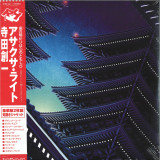
Back in 2015, Japanese DIY house pioneer Soichi Terada stepped back into the limelight courtesy of Rush Hour's 'Sounds From The Far East', a Hunee curated retrospective of material first released on his own Far East Recording label in the 1990s and early 2000s. Buoyed by the positive response and renewed interest in his work, Terada went back into studio to record his first new album of house music for over 25 years, Asakusa Light.
Developed over 18 months, Terada tried to recreate the mental and physical processes that led to the creation of his acclaimed earlier work. Those familiar with Terada’s celebrated, dancefloor-focused sound of the 1990s – a vibrant, atmospheric, and emotive take on deep house powered by the twin attractions of groove and melody – will find much to enjoy on Asakusa Light.
“I tried to recall my feelings 30 years ago, but when I tried it, I found it super difficult,” he explains. “I didn’t even know what I thought about myself five years ago, and the mental metabolic cycle seems to be faster than I thought. I tried different methods, including digging up my old MIDI data and composing by remembering old experiences. With the help of Rush Hour, I found some of the light from my heart that I had 30 years ago. I nicknamed the light I found in my heart, ‘Asakusa Light’.”
Produced using the very same synthesizers and drum machines that powered his 1990s work, the album is a joyous, colourful and life-affirming collection of timeless house music that not only recalls Terada’s own impeccable back catalogue, but also that of similarly celebrated contemporaries such as the Burrell Brothers or Ben Cenac (Dream 2 Science, Sha-Lor).
Terada, who has spent much of the last two decades writing video game music, has always had a gift for combining warm, undulating synthesizer basslines and perfectly programmed machine drums with stirring chords, smile-inducing melodies and mellow musical flourishes. It’s this immersive, sun-kissed and tuneful trademark style that takes centre stage on Asakusa Light, an album for the ages.
The set begins with the alien-sounding chords, soft-touch percussion and dawn-friendly warmth of ‘Silent Chord’ and ends on a high via the bouncing string stabs, starlight chords and thickset grooves of ‘Blinker’; in between, you’ll find a deluge of effortlessly feelgood music that’s the aural equivalent of a dopamine rush at sunrise.
There are subtle variations aplenty throughout the album – see the 8-bit lead lines and pulsing electronic textures of ‘Takusambient’, the vintage Tony Humphries flex of ‘Diving Into Minds’ and the effortlessly funky ‘Marimbau’ – but it’s the uniquely atmospheric, vivid and tactile nature of Terada’s loved-up sound that resonates. After well over 30 years in house music, the light in his heart is shining brighter than ever.
The EP FACE II is a continuation of the Faces EP series, of which the first EP was released in october 2022. The basis here is also a literary fixpoint with KAFKAS VER- WANDLUNG.
the examination of the urban modern man has its origin in the album JAHRE and is now explored in more detail here. What happens to us in a time of digital transparency as a glass human of the city and night.
It starts with THE VOID, which was originally intended as a poem about being lost. We go out into the night, some to search, some to forget and some to never come back as the same again. On our journey we often take substances that we expect to make this journey easier and faster. the escape from ourselves and from our relationships to the environment and humans can‘t just be skipped. a fast way is always a dangerous way and often leads to an even bigger EMPTINESS.
In THE GHOST something appears to us late at night, it is like a shadow of the previous hours, something that has followed us on the streets and accompanied us un- discovered until we reached our home. We wake up and at first it is unclear whether we are dreaming.
In half-sleep the dimensions blur together and the whole polyva- lence of the different existences gapes open. We blink into the DARKNESS and try to recognize something, the light remains far away and yet we hear this piercing sound, which in the end leaves us only with ourselves. we are the spirit of the night, trapped on an old tape in the chest of nothing.
The next section THE MOON shows us the light in the darkness. The shadows and ghosts give way for a moment and the light flows through our veins and molecules. The poem describes our unspoken longing to follow the light, in the light our fears disappear and everything blurs into an unknown familiarity. We stagger back and forget the encounters with our inner DAWN.
In the light the ghosts disappear like childhood memories left behind.
The last chapter is written by THE DAWN, a stanza from the poem of the same name as a spoken reconciliation with the world. In spite of everything, we seek harmony and connectedness. No one wants to become an exile, even if we can‘t always bring it about ourselves. We love LIFE and we hear and feel everything around us, if we let ourselves ...
ALL LOVE
AMAS_DHE / AMAS_PHI
The dynamic duo of Komponente & Kurilo from the Ukrainian label Trance Pandemic are preparing for their next sold-out record. This “Defenders” EP is made from tracks, that were made before the full-scale Russian invasion in Ukraine and also it is the continuation of “For A Brave” EP.
The main track of the release, also called “Defenders” is a signature piece for their duo. Moderately slow and calm, that evolves into something bigger around the third minute. The mayhem of sounds with that hell’s bells also. And there’s a little Easter egg at 1:29. If you know the sample – you’ll smile for a bit.
The record starts with “Victory”. Bold, a bit broken at the beginning piece, that is also evolving. This time we’re talking about the structure. The straight one comes after that broken start. “Kharkiv Mnemonic” also has some bells inside, paired with a nice, bubbling acid and a heavenly melody a bit closer to the end. The calmest track on the release.
Last, but definitely not least (the choice for the pick was between these two from the B-side) is “Broken Dreams”. Still can’t get enough of that break that we know lately from Alec Falconer’s release on Art Of Dark (not that lately, to be honest) and a dozen of other tracks. Here it’s hidden a bit in the back, so we can hear another kinda trancey and melancholic melody in full.
With a sonic palette coated in majestic melodies, luscious sound design, and masterful mixdowns, drum & bass duo GLXY have been creating some of the highest calibre liquid drum and bass since their emergence in 2015. Raising the levels once again with their latest body of work, Shogun Audio proudly presents the 'Fear, Ego' EP, a six-track, stripped-back masterpiece that sees Jon & Tom combine a handful of idyllic productions with collaborations with Lenzman, Halogenix, and Zoe Kypri.
Hot off the back of their 'By Design' EP, this latest project sees the duo further cement their beguiling signature sound whilst venturing into new spaces that encapsulate their ability to continuously keep things fresh year after year. Emitting sumptuous amounts of soul, sonic serenity, and superb sampling, the 'Fear, Ego' EP effortlessly wanders across moods in the most brilliant of fashions.
Whether you're listening to groove-laden sounds of 'Unconditional', their first collaboration with Halogenix, the dark and techy sounds of '3C Roller', or Lenzman's vibrant remix of 'New Soul', this EP is packed full of flavours that will appeal to fans across the drum & bass spectrum.
Always exciting when Klasse Wrecks comes with a new label project!! This one they do together with Kid Who and is a series of records showcasing previously unreleased house, techno, acid and more from the 90s Amiga Demoscene.
Created using early sample sequencers such as ProTracker, these tracks radiate the authentic energy of techno's golden era - and they've been hiding in plain sight in Demoscene web repositories for many years. It was during the long days of the 2020 lockdowns that Kid Who began to explore these archives, sifting through thousands of tracks to eventually amass a collection of several hundred of his favourites.
Curated by Klasse Wrecks and Kid Who in close collaboration with the talented artists behind them, the .NFO project aims to bring some of these finds to the broader dance music community via a series of VA 12"s and mixes. Tip!! Vinyl comes with A4 insert and stickered sleeve.
Evelyn spreads her wings and prepares to fly. This is her first offering for the ESP Institute. On side A, 'Tremors' slams together a plethora of seemingly disparate rhythms, organic percussion, field samples, hypnotic chants and a relentless low end punch, that when in full-swing, works some seriously deep sorcery. Contrasting her pounding kick and rolling sub combo are a softer grouping of melodies, soft mallets and muted tones that lay subtly beneath the aggression, skillfully playing with a sense of spatial depth and room size. Its the kind of track that draws you in with meditative bars, concentric cycles that sit ever so slightly off-axis, inducing the mind and body to obsess and regulating its timing, and then drops you into a very intentionally arranged soundstage giving expansive space to explore. On the flip, 'Pregunta' continues this approach of natural versus industrial instrumentation. The consistent machine kick has a powerful but playful tone, the negative space between each stroke evoking a mighty gesture as its note bends in the decay. Set in 3/4, a community of live percussion successively adds and subtracts, each player’s imperfect attack accumulating into a mechanically smeared and addictive loop that toys with peaks a handful of times yet restrains any unnecessary climax for the betterment of a driving groove. Near the end, as the kick and various players mute and the base of the track is given a moment to breathe, its apparent just how layered the production was in the moments prior, as we’re suddenly at home, smitten with the wobbly and lopsided innocence of the foundational percussion. These two songs will push you headfirst into the light.
As it celebrates its 50th anniversary, Bill Withers' Still Bill remains true to its title – and stands as the greatest male-fronted soul album not made by a singer named Marvin, Al, Sam, James, or Ray. Though the saying "keeping it real" did not exist in popular parlance when Withers released his sophomore effort on Sussex Records, no words better capture the music's approach, mindset, and value. Every facet of Still Bill radiates honesty, truth, and emotion.
These characteristics – along with Withers' strong singing, hybrid arrangements, and deceptively simple songwriting – have allowed the album to endure to the point where it sounds as fresh today as in 1972.
After rising into the Top 5 of the Billboard Album charts and attaining gold status within a year of release, Still Bill has long been evaluated not by sales – but according to its merit, spirit, and agelessness. Included by The Guardian on its "1,000 Albums to Hear Before You Die" list (2007) as well as in Tom Moon's 1,000 Recordings to Hear Before You Die book (2008), its contemporary standing as one of history's most venerated soul efforts eclipses the positive reception it enjoyed in the early ‘70s.
Still Bill walks the same hallowed ground as What's Going On, Call Me, Night Beat, and Genius + Soul = Jazz. Like those landmarks, Still Bill plays with a mix of consistency, effortlessness, and complexity that rewards repeat listening and transcends categorization.
In combining four of the era's predominant styles – Philly soul, sweaty funk, Southern-reared blues, acoustic-based folk – and melding them with standout production borrowed from both minimalist affairs and sophisticated singer-songwriter albums, Still Bill occupies a distinct universe.
Its rhythmic fare is equally laidback and invigorating; relaxing and rollicking; eloquent and muscular; soft and tough. Withers' calm, self-assured voice hovers above it all, doubling as a warm blanket that adds comfort and grace to lyrics steeped in maturity, perspective, and compassion.
Withers' balanced outlook on human desires, needs, and situations stem from his own existence as a former blue-collar employee who believed his time as a musician would soon end. That grounding forever separates Withers from other contemporary soul greats – and stamps Still Bill with a conversational nature and egoless approachability.
"I mean look, I'm really a factory worker," said Withers in 1972. "That's a real job." There's that word again: real. The songs on Still Bill are tethered to modesty and actuality, wedded to a belief in simplicity, and connected to universal truths that link us all – independent of our economic or social standing. No track better exemplifies those principles than "Lean on Me," a feel-good paean to brotherhood and community that hit No. 1 on the pop and R&B charts en route to becoming a mainstream staple.
Withers approaches the plainspoken insight on "Lonely Town, Lonely Street" and heartbreaking vulnerability of "I Don't Want You on My Mind" with similar sincerity and straightforwardness. His proclivity for authenticity extends to the record's other big hit: the sexual, funk-laden "Use Me," which reached No. 2 and reflects the singer's everyman persona. It's an identity couched in keeping it real, the very inclination that ultimately led Withers to retire in the mid-'80s rather than bend to industry pressures or risk credibility.
That commitment to truthfulness and realism helps make Still Bill feel as unaffected as the air we breathe. Looking back on "Lean on Me" years later, Withers said it seemed like "something that was there before I got here" – the kind of song that could be 100 or 10 years old, or one we encounter anew 10 years into the future. The same can be said for every note on Still Bill.
Two mavericks, out on the weekend, trying to make it pay...
"Maverick was the word that came to mind when I listened to this music. A slightly wayward independence of spirit and outlook. The word originally referred to an unbranded male calf that had become separated from the herd (because Texan rancher Sam Maverick was so negligent in his branding - ‘if it ain’t branded, it’s a Maverick’). But Sam’s grandson Maury Maverick gave it a different twist in his short but stormy Congressional career as the only liberal member of the Southern Democratic caucus. Maury was so out of step with his own folks that he not only voted in 1937 to make lynching a federal crime, he even addressed the House to condemn the practice as barbaric. His attempt to ban racist mob murder sadly failed, but it’s that refusal to march in step which distinguishes the two ‘mavericks’ who made this record.
Who would attempt to combine cunning ethnological forgery, Scottish folk songs, claw-hammer guitar, untutored horn-tootling, elastically relaxed drumming and garage electronic fuckery? Only Greg and Stefan, high on sea, sunshine and mis-judged micro-dosing – that’s who. ‘Don’t drown’ was offered as practical advice during the self-described ‘Yellow Submarine’ phase of making this record. And while they managed to avoid literally doing so (phew), they sound here like they got pretty ‘deep in’ to an Octopus’s sound world all their own. This surprisingly clear analogue recording has just enough Bikini Bottom grit to ensure traction. The tunes are inviting, and the sonic disruptions are too good-natured and goofy to upset even the most delicate digestion.
The sessions have had a couple of years to marinate, courtesy of some pandemic, and are here offered in that most Archducal of vinyl formats, the double ten inch. What are you waiting for, a side of Crabby Patties? Get your water-wings and dive in (unless you’re tripping)!" - Bruce Russell (The Dead C)
Pumice is the long-running, endlessly inventive project of New Zealand native Stefan Neville (1974), whose shambolic music is equally reminiscent of Kiwi pop groups such as The Clean and Tall Dwarfs as well as the country's experimental noise-rock bands like the Dead C. Largely recorded solo by himself on junky equipment, his songs typically feature blown-out guitars, wheezing chord organs, and vocals disguised by tape hiss and static.
Greg Malcolm (1965) is a guitarist from New Zealand who has played everywhere on the globe and with all most everyone, including Rosy Parlane, Toshimaru Nakamura, Tetuzi Akiyama and Bruce Russell, as well as solo releases on his own label, Corpus Hermeticum, Kraak and Celebrate Psi Phenomenon.
Eli Escobar returns for his 9th full length LP. While his last few projects found him exploring downtempo beats, EBM and ambient in§uences, this latest offering of Eli's studio craftsmanship marks a return to the sound of his early releases like Up All Night and Happiness. Warm samples expertly woven into classic drum machine rhythms and searing synth lines, The Beach Album takes listeners on a journey through golden era hip hop beats, feel-good NYstyled house grooves into sweaty techno bangers. Similar to Eli's DJ sets, the 16 track long player has something for everyone. Created during the uncertainty of the pandemic when as Eli put it, "It didn't feel like the right time to release dance music," The Beach album celebrates the return of NY nightlife and optimism for the future.
Melts In Your Mind is the mercurial new LP by Healing Force Project, aka Italian producer Antonio Marini.
An amorphous, shapeshifting, intangible proposition, Melts In Your Mind represents Healing Force Project at it’s most fluid and alchemical yet, a melon-twisting amalgam of jazz, dub and acid house tropes mulched and rearranged in inimitable style. Seemingly live and erratic polyrhythms, liquid basslines and expressive roving keys combine with kitchen sink sample hits and rogue licks for a thrilling, constantly shifting, alive sound. It’s music that’s difficult to grasp on first or even fourth listen, and as such continues to reward on repeat. Rather than going somewhere, tracks just go, rarely repeating motifs but riffing on, digging into and working out.
Behavior Of Waves sets the scene discretely enough, a simple bass refrain that is eventually overcome with an urgent rhythm that stumbles over itself into a post-dub cavern. The title track resembles a scramble of disparate earthly sounds - lurking synthesizer, restless popping drums, West African balafon and a muted vocal sample - sucked into the same swirling black hole and dropped into another dimension, completely cohesive. Equator acts as loose-limbed palette cleanser, an unmoored drift gently driven forward by an insistent snare roll and improv piano stabs. Inharmonious Layer stands out on the record for being less reliant on samples and by it’s relatively predictable unfolding, a queasy acid lope from the darkest corner of a deviant dancefloor, while on Diaphonization Marini flexes his aptitude with drum sampling, a bouncing excursion in sampled loops interrupted by unironic jazz cliches, the product of an omnivorous lover of the genre’s high and low. Melts In Your Mind closes on the droning tambura, ethereal pads and scattered rhythm of Two Waves In The Dark, a suitably metaphysical and ultimately peaceful resting place for a record that challenges perceptions from the outset.
Marini has released records as Healing Force Project on Firecracker, Berceuse Heroique, Bedouin and most recently Beat Machine Records. He’s based in Treviso, Italy.
Melts In Your Mind was written, produced and mixed by Antonio Marini. It was mastered by Chris Wang. Art and design by Ginji Kimura.
Montreal duo Bas Relief present a collection of rough-cut IDM and pitch-corrected emo on Insulary, a five-song EP out June 2023 on Brooklyn imprint Quiet Time. Written and compiled long distance from threads of bass music-inspired alt pop and guitar recorded in isolation, Insulary is the duo’s first substantial release since 2018. Granulated microglitches fill out the digital drum arrangements, calling on influences Baths and Loraine James, overlaid with warm piano progressions, melancholic guitar loops, and collaged vocal production.
These self-reckoning, forlorn vocals form a patchwork narrative, hazed like a shapeshifted memory, long reconfigured with each conjuring, coherence inconsistent but still there. Recurring dreams find home among recursive passages, self-referencing lyrically and with samples churned through plugins, recorded on loop until you fall upon the most satisfying aha! moment and lock it to the grid. At certain moments all the pieces combine to reminisce in sentimental shards of Porter Robinson or The Postal Service, while never straying from Bas Relief’s own vernacular.
Visiting the past in person simply by walking the routes you took in a life long past, that reenactment of memory, that attempt to capture that which you can’t – it might even be a future – is a central bolt of Insulary’s lyrical content. It’s sentimental, it longs for some past which might not even have existed, and it’s hopeful too, never capitulating to traditional structures in its embrace of unusual stylistic combinations. Insulary – brim-packed with fragments of drum and bass, uptempo electronica, and emo – is but a preview of Bas Relief’s exciting near future
Respect The Craft's archives keep growing. After a double-hitter with Ricardo Villalobos, Tripmastaz is back on solo duties for the third iteration of RTC with "Rare Sensation EP".
Filling the a-side with the warmest summery vibes, 'Rare Sensation' perfectly displays Andrei's deep love for house music - groove, rhythm, emotional chords and club-ready, euphoria-inducing samples very tightly reminiscent of the world's best beach parties. A "deeper dub" version is also available, stripping down some elements and bringing a classier, less euphoric tone to the forefront.
'3000' has the virtuosic producer back to exploring the minimal and deep tech-house realms while, in essence, still targetting the summer-drenched tropical raves. And where the original version is a driving, slightly dryer, percussion-infused affair, its dubbier 'Space Program' version brings all its elements to the astral plain, filling the space with melody and atmosphere.
Respect The Craft - a goal, a call, and a mission.
"Don't DJ is back with his new album sampler to teach the imitators how it is done.
Leftfield tribalism at it's best, with a pinch of Martin Denny and Les Baxter exotica for some flavour and a little bit of Zoviet France fourth world voodoo for the 5am crew that wants to get hazy in the dance. Florian knows how to incorporate percussion sounds that at first you think that they wouldn't work but it always works and this is only a taste of what is gonna come with the release of his album (soon come).
Morgan Buckley of the mighty Wah Wah Wino crew, takes this deep and intense trip and he goes ballistic while he is playing a live Bodhran to invoke the ancient spirits of Ireland. If the essence of a remix is to keep the original vibe of the tune and add a different flavour to it then Morgan Buckley nailed it in a big way.
Two drum wizards at their best and it's an honour to have them together in one record."
Illustrations by Non Yung Hoon.
Design by NMR.
Here we are - the new release from the italian project Club Soda is finally here!
The trio, made up of Nicola on bass, Simone on drums and samplers, and Filippo on keys, is bringing some real, raw, authentic sounds to the table. Their first LP, "Vibin' Places" dropped in 2020 and it's a versatile homemade electronic album that hits different, whether you're a listener, DJ, or clubber.
This new EP is fire too. A1 track "Basso e Batteria" with Sara Loreni on lyrics and vocals, has clear echoes of a '00s vocal-house joints, but sounds like it was recorded in a Chicago basement. The dirty grooves, thumping bass, and enveloping pads create a free-form vibe that's perfect for you summer madness.
But then they go and take it to the next level with the remixes on B side. Cristalli Liquidi's remix is on some current dance floor-ish, with bouncing rhythms, a wild bassline, and a catchy vocal cut. And Hill's dub mix is straight up trippy - like you're lost in a warehouse at 6am, with dreamy pads, a solid bassline, and rhythms that are distant but still pull you in.
And let's not forget "Gin Tonic" (A2) - it's a dope sunset jam session that's pure “Club Soda style”, with congas, DX7 keys, funky bass, and an MPC chop. This EP is the real deal, from start to finish! Shout out to Giulia Dall’ Ara for the sick artwork on the cover and label too - she killed it!