In Todmorden, the oddly-named market border town in West Yorkshire with a habit for embracing the weird and wonderful, a burst of sunshine is a precious thing. Through the thick of Winter, through every season in fact, the town’s folk are used to the wind and rain, fog and mist. As much a part of the town as the trademark deep valley it sits in, here the lay of the land invites the weather in, just as it does the many musicians, artists, and unique characters that have come to call the place home over the centuries.
Bridget Hayden is one such soul who found a home among these hills. The experimental musician, who invites the ghosts in for the classic folk songs that make up her stunning new album, knows only too well about such weather, how rare and treasured the breaks from it are. Her favourite thing to do in the valley, she says, is “to make the most of every tiny minute of sunshine.”
Such aspirations nearly derailed the recording of Cold Blows the Rain, her new eight-song collection released via the Todmorden- based label Basin Rock. Having hired the town’s Oddfellow’s Hall to record these new songs in the late summer of 2022, Hayden says the weather was so good she ended up basking in every second of it, only moving inside to begin recording when the sun was setting, working deep into the night to make up the time.
There’s a good chance, however, that it had to be this way. The songs that make up Cold Blows the Rain are not made for the sunlight. They come, instead, wrapped in mist and coated with drizzle, those elements shaping the album as much as the voice and the instruments held within, as real but ambiguous as the ghosts that linger in the shadows. The sound of the dark valley floor.
Mostly centred around meditative and experimental improvisation, Bridget’s work to-date has seen her spend more than two decades recording and performing on the underground music scene. She’s also toured internationally both as a solo artist and as part of bands such as Schisms and The Telescopes, while working on various side-projects with the likes of Folklore Tapes.
For all of this sonic exploration, so much of her work has been formed around elements of traditional folk aesthetics and, over time, she began to piece together a collection of reinterpreted traditional songs that she absorbed as a child from her mother: through The Dubliners and Muddy Waters, to Bessie Smith and The Leadbelly Songbook. Harvesting her love for Nina Simone, Karen Dalton, Margaret Barry, and more, Bridget takes these traditional songs and transforms them into something uniquely evocative
"It goes back to the womb,” Bridget says of that connection. “I would not call it a memory as it is so deep within my blood and bones. My mum was the source, she sang all the time, as part of life. So it was a very lulling and natural introduction. It seemed common to hear her singing – unbeknownst to her – in time with a raindrop dripping at the window,” Bridget continues. “I’ve always wanted to do a folk record as I love these songs so much. It comes much more naturally to me to sing other people’s words, especially when they’re as beautiful as these old verses.”
Underpinned by waves of analogue reverb, and led by Bridget’s stirring and weather-beaten voice, the songs on Cold Blows the Rain drift and crawl like low heavy clouds on flat-top hills, shaped by the land. The backdrop is equally as arresting, all subtle gloom cast in shadow, a gentle but pronounced swirling of textures, crafted from harmonium and violin courtesy of The Apparitions (Sam Mcloughlin and Dan Bridgewood-Hill).
“The weather speaks the most eloquently about human loss,” Bridget says, articulating such sentiments. “It’s good to feel enveloped by something so much vaster than ourselves. The rain and the tears all become one.”
Поиск:som sam
Все
- A1: That's All Right
- A2: Mystery Train
- A3: Heartbreak Hotel
- A4: Blue Suede Shoes
- A5: Tutti Frutti
- A6: My Baby Left Me
- A7: Hound Dog
- B1: Don't Be Cruel
- B2: Love Me Tender
- B3: So Glad You're Mine
- B4: All Shook Up
- B5: Let Me Be Your Teddy Bear
- B6: Jailhouse Rock
- B7: Baby I Don't Care
- B8: Doncha' Think It's Me
- C1: King Creole
- C2: Trouble
- C3: Stuck On You
- C4: Fever
- C5: Such A Night
- C6: It's Now Or Never
- C7: Are You Lonesome Tonight?
- D1: Mess Of Blues
- D2: Tonight Is So Right For Love
- D7: Night Rider
- D8: Return To Sender
- D3: Surrender
- D4: (Marie's The Name) His Latest Fame (Marie's The Name)
- D5: Little Sister
- D6: Can't Help Falling In Love
Of all the nicknames given to Elvis, only one of them really seems to reflect his importance in the history of rock: they called him The King.
Together with Chuck Berry, Elvis represented the young generation that vibrated to the music with new rhythms that appeared in the Fifties: Rock’n’Roll. Presley’s personality, not to mention his voice, charm, and a whole series of chart hits, guaranteed Elvis a special place in the hearts of his fans; and not only in his own lifetime, because the same is true some fifty years later.
The thirty titles included in this album are a brilliant demonstration of Elvis’ talents, and the music alone is enough to explain the cult following of his fans, who will worship him forever.
When The World Was One is something of a companion piece to Matthew Halsall’s 2012 album Fletcher Moss Park (much of the music was written at the same time) but draws more explicitly on Halsall’s love of spiritual jazz and Eastern music as well as his own studies in meditation and travels in Japan. Beautifully recorded at Hasall’s favourite studio, 80 Hertz in Manchester, and engineered by Brendan Williams and George Atkins it features the recording debut of Halsall’s large ensemble, The Gondwana Orchestra, which utilises the exotic flavours of harp, koto and bansuri flute and Eastern scales to create a global palate for Halsall’s life-affirming sounds.
- A1: 3 Horas Da Manha (Ivan Lins, Waldemar Correia)
- A2: Samba Do Aviao (Antonio Carlos Jobim)
- A3: Tema Medieval (Agustin Pereyra Lucena)
- A4: Despues De Las Seis (Agustin Pereyra Lucena, Guillermo Reuter)
- A5: Tema Barroco (Guillermo Reuter)
- A6: La Rana (João Donato)
- B1: Pra Que Chorar (Baden Powell)
- B2: Encuentro De Sombras (Agustin Pereyra Lucena)
Far Out Recordings proudly presents Argentinian guitarist Agustín Pereyra Lucena’s 1980 album La Rana. Recorded in Oslo, La Rana features Agustín’s stunning takes on compositions by Ivan Lins, Antonio Carlos Jobim and Agustín’s friend and musical hero Baden Powell. In addition to these, and a number of Agustín’s own compositions including the fifteen-minute masterpiece “Encuentro De Sombras”, the album’s title track is an idiosyncratic version of Joao Donato’s “A Rã” (Eng: The Frog/ Esp: La Rana) from his 1973 album Quem É Quem.
Forming the rest of the quartet are two fellow Argentinians who were also Agustin’s bandmates from the group Candeias: bassist and multi-instrumentalist Guillermo Reuter and flautist Ruben Izarrualde; with Norweigan drummer Finn Sletten on drums and percussion.
Throughout La Rana we hear not only Agustín’s fabled guitar playing, which ascended him to share stages with the likes of Vinicius de Moraes, Dorival Cayymi, Toquinho, Maria Bethania, Chico Buarque and Quarteto Em Cy, but also his talent as a vocalist. He also provided the heartening illustration for the cover art, which perfectly fits the cordial, inviting tone of the music. Inspired in equal measure by South American rhythms and Norweigan glaciers, mountains and waterfalls, La Rana is filled with the warmth, humility and sincerity of a man seizing a joyful moment in life through music.
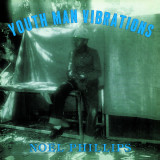
Erstmalige Wiederveröffentlichung seit 1981! Noel Phillips, der bis dato ausschließlich in Sammlerkreisen einen Namen hat, war seinerzeit 17 Jahre alt, als er für den Produzenten Prince Jammy dieses Juwel des Roots Reggae eingesungen hat, das es ab sofort zu entdecken gilt. Mit den Musikern Bass: Robbie Shakespeare, Drums: Sly Dunbar, Guitar: Boo Peep, Dougie, Horns: Deadly Headley, Bobby, Organ: Ansel, Winston Wright, Percussion: Scully, Sticky, Piano: Gladdy. Als CD exklusiv in der Box "Rootsman Vibration At King Jammy's" (VPGSCD7000) - Tipp!
- A1: Progetto Tribale - The Sweep
- A2: Onirico - Echo Giomini
- A3: Open Spaces - Artist In Wonderland
- B1: Alex Neri – The Wizard (Hot Funky Version)
- B2: M C.j. Feat. Sima - To Yourself Be Free - Instrumental Mix Energy Prod
- B3: Mato Grosso - Titanic Expande
- C1: Dreamatic - I Can Feel It (Part 1)
- C2: Carol Bailey - Understand Me Free Your Mind (Dream Piano Remix)
- C3: The True Underground Sound Of Rome - Secret Doctrine
- D1: Don Carlos - Boy
- D2: Lazy Bird – Jazzy Doll (Odyssey Dub)
Vol 2[28,99 €]
Volume 1 of this expertly curated project of 90s Italian House - put together by Don Carlos.
If Paradise was half as nice… by Fabio De Luca.
Googling “paradise house”, the first results to pop up are an endless list of European b&b’s with whitewashed lime façades, all of them promising “…an unmatched travel experience a few steps from the sea”. Next, a little further down, are the institutional websites of a few select semi-luxury retirement homes (no photos shown, but lots of stock images of smiling nurses with reassuring looks). To find the “paradise house” we’re after, we have to scroll even further down. Much further down.
It feels like yesterday, and at the same time it seems like a million years ago. The Eighties had just ended, and it was still unclear what to expect from the Nineties. Mobile phones that were not the size of a briefcase and did not cost as much as a car? A frightening economic crisis? The guitar-rock revival?! Certainly, the best place to observe that moment of transition was the dancefloor. Truly epochal transformations were happening there. From America, within a short distance one from the other, two revolutionary new musical styles had arrived: the first one sounded a bit like an “on a budget” version of the best Seventies disco-music – Philly sound made with a set of piano-bar keyboards! – the other was even more sparse, futuristic and extraterrestrial. It was a music with a quite distinct “physical” component, which at the same time, to be fully grasped, seemed to call for the knotty theories of certain French post-modern philosophers: Gilles Deleuze, Félix Guattari, Paul Virilio... Both those genres – we would learn shortly after – were born in the black communities of Chicago and Detroit, although listening to those vinyl 12” (often wrapped in generic white covers, and with little indication in the label) you could not easily guess whether behind them there was a black boy from somewhere in the Usa, or a girl from Berlin, or a pale kid from a Cornish coastal town.
Quickly, similar sounds began to show up from all corners of Europe. A thousand variations of the same intuition: leaner, less lean, happier, slightly less intoxicated, more broken, slower, faster, much faster... Boom! From the dancefloors – the London ones at least, whose chronicles we eagerly read every month in the pages of The Face and i-D – came tales of a new generation of clubbers who had completely stopped “dressing up” to go dancing; of hot tempered hooligans bursting into tears and hugging everyone under the strobe lights as the notes of Strings of Life rose up through the fumes of dry ice (certain “smiling” pills were also involved, sure). At this point, however, we must move on to Switzerland.
In Switzerland, in the quiet and diligent town of Lugano, between the 1980s and 1990s there was a club called “Morandi”. Its hot night was on Wednesdays, when the audience also came from Milan, Como, Varese and Zurich. Legend goes that, one night, none less than Prince and Sheila E were spotted hiding among the sofas, on a day-off of the Italian dates of the Nude Tour… The Wednesday resident and superstar was an Italian dj with an exotic name: Don Carlos. The soundtrack he devised was a mixture of Chicago, Detroit, the most progressive R&B and certain forgotten classics of old disco music: practically, what the Paradise Garage in New York might have sounded like had it not closed in 1987. In between, Don Carlos also managed to squeeze in some tracks he had worked on in his studio on Lago Maggiore. One in particular: a track that was rather slow compared to the BPM in fashion at the time, but which was a perfect bridge between house and R&B. The title was Alone: Don Carlos would explain years later that it had to be intended both in the English meaning of “by itself” and like the Italian word meaning “halo”. That wasn’t the only double entendre about the song, anyway. Its own very deep nature was, indeed, double. On the one hand, Alone was built around an angelic keyboard pattern and a romantic piano riff that took you straight to heaven; on the other, it showcased enough electronic squelches (plus a sax part that sounded like it had been dissolved by acid rain) to pigeonhole the tune into the “junk modernity” section, aka the hallmark of all the most innovative sounds of the time: music that sounded like it was hand-crafted from the scraps of glittering overground pop.
No one knows who was the first to call it “paradise house”, nor when it happened. Alternative definitions on the same topic one happened to hear included “ambient house”, “dream house”, “Mediterranean progressive”… but of course none were as good (and alluring) as “paradise house”. What is certain is that such inclination for sounds that were in equal measure angelic and neurotic, romantic and unaffective, quickly became the trademark of the second generation of Italian house. Music that seemed shyly equidistant from all the rhythmic and electronic revolutions that had happened up to that moment (“Music perfectly adept at going nowhere slowly” as noted by English journalist Craig McLean in a legendary field report for Blah Blah Blah magazine). Music that to a inattentive ear might have sounded as anonymous as a snapshot of a random group of passers-by at 10AM in the centre of any major city, but perfectly described the (slow) awakening in the real world after the universal love binge of the so-called Second Summer of Love.
For a brief but unforgettable season, in Italy “paradise house” was the official soundtrack of interminable weekends spent inside the car, darting from one club to another, cutting the peninsula from North to centre, from East to West coast in pursuit of the latest after-hours disco, trading kilometres per hour with beats per minute: practically, a new New Year’s Eve every Friday and Saturday night. This too was no small transformation, as well as a shock for an adult Italy that was encountering for the first time – thanks to its sons and daughters – the wild side of industrial modernity. The clubbers of the so-called “fuoriorario” scene were the balls gone mad in the pinball machine most feared by newspapers, magazines and TV pundits. What they did each and every weekend, apart from going crazy to the sound of the current white labels, was linking distant geographical points and non-places (thank you Marc Augé!) – old dance halls, farmhouses and business centres – transformed for one night into house music heaven. As Marco D’Eramo wrote in his 1995 essay on Chicago, Il maiale e il grattacielo: “Four-wheeled capitalism distorts our age-old image of the city, it allows the suburbs to be connected to each other, whereas before they were connected only by the centre (…) It makes possible a metropolitan area without a metropolis, without a city centre, without downtown. The periphery is no longer a periphery of any centre, but is self-centred”.
“Paradise house” perfectly understood all of this and turned it into a sort of cyber-blues that didn’t even need words, and unexpectedly brought back a drop of melancholic (post?)-humanity within a world that by then – as we would wholly realise in the decades to come – was fully inhuman and heartless. A world where we were all alone, and surrounded by a sinister yellowish halo, like a neon at the end of its life cycle. But, for one night at least, happy.
- A1: Turn Down The Sound
- A2: It's Me
- A3: Anna May
- A4: Two Hearts Combine
- A5: Thunderstrike
- A6: Reverie
- A7: First Step On The Moon
- A8: Dusts Of Gold
- B1: Midnight Blue
- B2: Lovely Lady
- B3: Sound Of A Man
- B4: Sirens
- B5: Mourning Melodies In Rhapsody
- B6: Something About April
- B7: Niacin
Adrian Younge presents: Something About April flaunts all of the trademarks that have made Adrian Younge an in-demand name as a composer and sample source-point. His work oozes raw, analogue soul and the primal sonic edge of psychedelic rock, sitting nicely alongside Ennio Morricone's best soundtrack work or Pink Floyd's early catalogue. Recorded and mixed by Adrian Younge at Linear Labs, the preeminent analog studio of Los Angeles, CA.
LINEAR LABS: Sao Paulo läutet eine neue goldene Ära musikalischer Genialität ein, die durch den Maestro Adrian Younge definiert wird. Eine außergewöhnliche psychedelische und gefühlvolle Erfahrung bietet "Adrian Younge presents Linear Labs: Sao Paulo", eine Zusammenstellung von neuen Songs, die die musikalische Brillanz von Adrian Younge mit Künstlern aus der ganzen Welt präsentiert. Im Wesentlichen enthält das Album jeweils einen unveröffentlichten Song aus einer Reihe von bevorstehenden Alben, die Younge für Linear Labs produziert hat, darunter "Something About April Ill", der dritte Teil von Younge's Meisterwerk-Trilogie, und ein neues Blaxploitation-Abenteuer von Hip-Hop-Legende Snoop Dogg, mit dem Titel "Don't Cry For the Devil".
- A1: Turned To Dust (Rolling On)
- A2: London May
- A3: Tonight With The Dogs I'm Sleeping
- A4: Boise, Idaho
- A5: The Water's Fine
- A6: Sometimes It's Hard To Breathe
- B1: New Water
- B2: Guns Are For Cowards
- B3: Downstream
- B4: One Of These Days (I'm Gonna Spend The Whole Night With You)
- B5: Is My Living In Vain?
- B6: Our Home
Black Vinyl[22,65 €]
Ltd Edition!
Bonnie "Prince" Billy - Alias des Musikers Will Oldham - wird am 31. Januar 2025 sein neues Studioalbum mit dem Titel "The Purple Bird" veröffentlichen. "The Purple Bird" wurde in Nashville mit dem Produzenten David "Ferg" Ferguson und einem Ensemble erstklassiger Session-Musiker aufgenommen. Es könnte als "eine richtige Nashville-Platte" bezeichnet werden, die aus einer Sammlung von Songs besteht, die hauptsächlich am Küchentisch von Ferg entstanden sind.
Auf "The Purple Bird" arbeitet Bonnie "Prince" Billy erst zum zweiten Mal in seiner illustren Karriere mit einem Produzenten zusammen. Seine Beziehung zu Ferg reicht mehr als zwei Jahrzehnte zurück bis zu den Sessions für das Johnny Cash-Album American III mit Rick Rubin, bei denen Ferg als Tontechniker fungierte und bei denen Cash eine Coverversion des BPB-Tracks "I See A Darkness" aufnahm. Die beiden haben im Laufe der Jahre an zahlreichen Projekten zusammengearbeitet, aber an keinem so intensiv wie an "The Purple Bird". Was bedeutet "eine richtige Nashville"-Platte für den rätselhaften Bonnie "Prince" Billy? Zu Beginn der Sessions hatte Ferg zu Oldham gesagt : "Ich will keine Country-Platte machen, mach einfach deinen Scheiß, Will."
Und in der Tat haben Oldham und Ferg, zusammen mit ihren Mitstreitern, ein beeindruckendes Album eingespielt und somit einen neuen Höhepunkt im umfangreichen Katalog von Bonnie 'Prince' Billy geschaffen.
Rauelsson's third solo album for Sonic Pieces focuses on simplicity and minimalism. It recalibrates his love for ambient with an austere approach that conjures an atmosphere of silence and solitude. On Niu, the artist has traded his craft for shimmering layers of sound clusters and electronic editing in favor of a predominantly raw and acoustic recording.
Recorded primarily in Sofia and Berlin and mixed at Saal 3 of Funkhaus Berlin, Niu presents a 9-song journey that includes orchestral compositions, delicate synth miniatures, and sparse brass and woodwind drones with room for spoken word and a hint of psychedelic noir fable. The result is an album that, despite the eclectic choice of instrumentation, paints a landscape of spiritual clarity; an album that without being typically classical, still feels like a classical album. Three themes vary across the 9 pieces, starting with the purely orchestral "Prelude No. 7" before moving on to airy synth bass arpeggio and pedal steel. With more changing instruments, Raúl next takes us into a fairytale flute composition with guest flutist Heather Woods Broderick and brass vibrations by the trio Zinc & Copper. Finally, Katrine Grarup Elbo recites a poem by Raúl, ending the piece on a somber but beautiful note. The rest of the album continues in this vein, creating a unique sound that surprises the listener at every turn. Niu is a real departure from the artist's previous works in both scope and musicality. Everything was recorded without overdubs and with only minimal editing, trying to preserve the feeling of music coming from a room where musicians play live. Overall, this is music that finds comfort in movement as much as in pause and silence; music in which tenderness and tension exist in the same gesture.
The album also follows a certain mysticism with its poetic interludes, alternate track lists and titles like "Podium Of Riddles", "A Keyhole-Shaped Island" and "Ceramic Swallows, Set Of 3". Perhaps, given enough time, a hidden meaning or a new perception will be revealed. Niu is also set to be expanded into an art book, containing poems and photographs by Raúl, as well as an exhibition. Perhaps the key lies somewhere in there.
- Sick Of You
- Centre Of Lies
- The American In Me
- Cranked Up Really High
- Raggare
- Vital Hours
- I Need Nothing
- Here I Go And Here I Am
- Silver Son Johnnie
- First Time Is The Best Time
- Dark Yellow Easy Flow
- Samma Sak
- Shitty Shitty Bang Bang
- Bye Bye Hey Hey Hey
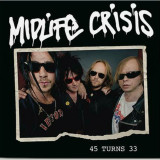
MIDLIFE CRISIS! - Something as unusual as a Swedish "supergroup" in the genre of '77 Punk Rock.
Urrke (Maryslim, Bizex-B), Dregen (Backyard Babies, The Hellacopters, Mike Monroe Band), Robban Eriksson (The Hellacopters, Strindbergs, Winnerbäck, Syl Sylvain), and Måns P Månsson (Crimson Shadows, Wrecks, Maggots).
In 2004, they first put their wild heads together and recorded three old punk classics, released on a vinyl EP. The band went on to release three more EPs (the latest one in 2018). Now, everything is being released on ONE fantastic collection via Wild Kingdom Records. By the way, Dregen is currently making waves on Swedish national TV with the popular series "Så Mycket Bättre".
Hold on to your hats folks!
Sound Like: Heartbreakers, Slaughter & The Dogs, PF Commando, early Damned, The Saints, UK Subs, Dictators, etc oldschool Punkrock.
MIDLIFE CRISIS! - Something as unusual as a Swedish "supergroup" in the genre of '77 Punk Rock.
Urrke (Maryslim, Bizex-B), Dregen (Backyard Babies, The Hellacopters, Mike Monroe Band), Robban Eriksson (The Hellacopters, Strindbergs, Winnerbäck, Syl Sylvain), and Måns P Månsson (Crimson Shadows, Wrecks, Maggots).
In 2004, they first put their wild heads together and recorded three old punk classics, released on a vinyl EP. The band went on to release three more EPs (the latest one in 2018). Now, everything is being released on ONE fantastic collection via Wild Kingdom Records. By the way, Dregen is currently making waves on Swedish national TV with the popular series "Så Mycket Bättre".
Hold on to your hats folks!
Sound Like: Heartbreakers, Slaughter & The Dogs, PF Commando, early Damned, The Saints, UK Subs, Dictators, etc oldschool Punkrock.
Multicolor Splattered Vinyl[23,95 €]
Black & White Splattered Vinyl[23,95 €]
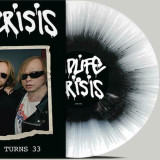
MIDLIFE CRISIS! - Something as unusual as a Swedish "supergroup" in the genre of '77 Punk Rock.
Urrke (Maryslim, Bizex-B), Dregen (Backyard Babies, The Hellacopters, Mike Monroe Band), Robban Eriksson (The Hellacopters, Strindbergs, Winnerbäck, Syl Sylvain), and Måns P Månsson (Crimson Shadows, Wrecks, Maggots).
In 2004, they first put their wild heads together and recorded three old punk classics, released on a vinyl EP. The band went on to release three more EPs (the latest one in 2018). Now, everything is being released on ONE fantastic collection via Wild Kingdom Records. By the way, Dregen is currently making waves on Swedish national TV with the popular series "Så Mycket Bättre".
Hold on to your hats folks!
Sound Like: Heartbreakers, Slaughter & The Dogs, PF Commando, early Damned, The Saints, UK Subs, Dictators, etc oldschool Punkrock.
Imaginary friends Akka & BeepBeep share the third release on their label: Floral Ancestors by Raduns. The 12” offers blooming ambient rooted in dub, lush drone and hand-picked cosmic that’s all grown deep in Detroit.
Spacious sonic arrangements vividly swell yet keep grounded within a sculptural rhythmic core. Raduns sows synth basslines and wispy pads next to harmonious guitars and muted field recordings. Grooving propulsion drives throughout. Rhythms appear, in negative space, like outlines between leaves. Recorded with machines direct to SD card, the compositions represent ephemeral blessings of experience. As if strolling into a verdant conservatory, the layered and diverse sensations blend into one cohesive revelatory experience.
On their first record, Raduns draws an ancestral line in Detroit as inspiration. A time when you could ride a streetcar from Dexter-Linwood to Belle Isle. A time before freeway expansion demolished vibrant Black neighborhoods. A time before the rebellion, motown and white flight. A time when Raduns’ great-grandparents were florists in the city, serving the community in times of celebration and times of grief. This melancholic circle shapes the project in which Raduns summons these Floral Ancestors, stretching upward from the darkness of the earth into the light of the world back down once more.
AKKA’s Side: “Grass Boulevard” exhales a luscious soundscape that develops through wave-crashing synths and circulated guitars to a transplanted acid lead. “Spread” lays out a decoration of blended sample and hold synth with kosmische styled guitar licks. Tracked as a single take in a Detroit community studio, the tune intuitively reseeds the symbiotic sprout between krautrock and Detroit techno.
BEEP’s Side: “Metrograde Bouquet” submerges you into the bulb of a handcrafted vase. Dub techno roots grow out into murky water with energy that is subtle yet profound. “Oldest of Arrangements” textures breaths of misty air cascading ventilating in on itself. The track’s time seems to stretch and disappear within a dark and deep undercurrent. A harmonic and reverberant resonance closes the record in a flowering of beauty and peace.
“You’re a flower child. Put this music out.” - Someone Important in Detroit
Ginnels never let up. Though it has been, staggeringly, eight long years since the last irresistible jangle pop transmission under the Ginnels moniker, nothing much has changed in Mark Chester's approach when it comes to the practice of music making, even if much everything else for Chester has seen considerable flux – he's now a father of two, and most shockingly of all for an indie popster of his ilk, gainfully employed. "It definitely started the same way all Ginnels stuff starts," Chester explains, "which is just me looking through five years of phone demos and going 'that's a decent song' and 'that's a decent song', and if you keep that up then you have a full album."
The man himself might be coyly committed to making his process sound as pedestrian as possible, but from the moment the delicate chiming introduction of album opener 'The Body Was Gone' goes widescreen – revealing an expanded sonic palette richer in timbre and exponentially wider in scope than anything Chester has let out into the world thus far – it is apparent that "The Picturesque" is poised to be less than parochial in its sonic purview.
From here, "The Picturesque" plays like a gauzy road trip Super 8 footage cutting between scenes of sunset at Monument Valley and B-roll from around middle-Ireland, entirely soundtracked by some enchanted mixtape of heretofore unheard B sides from REM, XTC and The Go-Betweens, unexpected guest appearances from the surprisingly together-sounding ghost of Johnny Thunders and snippets from your coolest friends' unreleased instrumental experiments. All liberally rippled with Chester's unique ear for melody and appetite for the unexpected when it comes to crafting guitar parts. And this, by design, feels like a Guitar Record, above all else.
For all its effortlessly sticky lyrical and melodic twists, "The Picturesque" separates itself within the mighty Ginnels catalogue in both the dexterity in playing and diversity in tone on show across these 12 tracks. And 12, of course as we know, being the optimum number of tracks for any LP to have, so bonus points for that too.
- 1: A Day Walks By
- 2: Glow Emits
- 3: Window Dream
- 4: Poem
- 5: Flex
- 6: A Go To
- 7: Explain A Green
- 8: Something New All Day
- 9: Shedding Shredding
- 10: Do You Know What I Mean
The Durutti Column, Linda Perhacs, Penguin Cafe Orchestra, Judee Sill. Hello and welcome to Decide Which Way The Eyes Are Looking, the new record by Lina Tullgren. It is a deeply gorgeous intervention, a carefully ornamented dilemma, the most inviting crisis. Made with a host of Los Angeles musicians, Decide exposes Tullgren's daring and trust. Each song is a ring of curious sound: the skip of harp strings, the flutter of woodwinds, the ratchet of percussion, the euphonium's sigh. And at the center of each wreath, Tullgren sings, finding this space between Judee Sill and Sam Jayne. It's a tone that signals weariness, but a weariness hand-in-hand with tenacity. There's a clarity, a kind of immovability. Lina Tullgren's first record came in 2016, a homemade, under-the-skin set of laments. Subsequent LPs and constant touring cemented Tullgren's reputation as a composer of "wide-eyed wonder paired with a resonant despair." 2019's Free Cell showed Tullgren lingering in the margins of their songs, finding places both aloof and spare. Floodgates opened; Tullgren spent the subsequent years exploring deep listening, improvised music, and extended technique. They developed a patience and faith in cooperation that ranged at the far edge of song. Collaborations with Mayo Thompson and Claire Rousay furthered this development. This was not a break with the past for Tullgren, rather it was an opportunity to see how far a song could go. And from that distance, deep in a landscape of drone and tension, Tullgren returned to the bright vulnerability of a lyric and a hook. Weaving together the affective and the radical, Tullgren took the quiet isolation of a shoreline cabin to write the songs that would become Decide Which Way The Eyes Are Looking. For Tullgren, Decide is a culmination of all the work they've done throughout their life: the melodic, the dense, the confessional, the unknowable. It's also a tribute to collaboration. Describing the sessions as having "a lot of space and a lot of ease,"" Tullgren invited musicians from a vast field of songmaking to play on the recording: Leng Bian, Zach Burba, Luke Csehak, Corey Fogel, Jenny Hirons, Tara Milch, Tim Ramsey, Michael Sachs, Jude Tedaldi, Marta Tiesenga and Ben Varian. Jonny Kosmo's backhouse was offered as a cozy, easygoing space for the players to create their parts together, and the record was completed by Tullgren and Luke Csehak together at their Los Angeles home. In Tullgren's words: "I feel really strongly that this album is a portrait of the community I found in Los Angeles." Decide Which Way The Eyes Are Looking is a quiet masterpiece: a generous, memorable journey. It is the result of five years of labor, the product of abandoning the pop song entirely and starting over. Whatever wanderings or doubt fueled it, Decide is also entirely at ease: a record on which Tullgren sings "and I know/what to do now" and "I know exactly what to do" in subsequent songs, clear in the revelations this path has given the
Mr Bongo is proud to present an official reissue of Zé Rodrix E A Agência De Mágicos ‘O Esquadrão Da Morte’. Written, arranged and composed by the genius of Zé Rodrix and performed by his band 'Agência de Mágicos’, this Brazilian library funk beauty is the soundtrack to Carlos Imperial's 1975 film of the same title. Echoing European soundtrack maestros such as Roy Budd and Ennio Morricone, but with a Brazilian swagger, Zé Rodrix's score is a sublime gem that needs rediscovery.
Rich in 70's soundtrack cool, the score is packed with orchestrated jazz, chase scene-funk, breaks, psychedelic freakouts and plenty of drama. The loose and quirky break-beat jazz-funk of 'Assalto' feels almost tailor-made for today's hip-hop production aesthetic. The opening drum break of 'Esconderijo' is a sampler’s dream and has already been reinterpreted by the Turkish Rapper Anıl Piyancı, as well as Brazil's DJ Caique.
Carlos Imperial was a jack of all trades. As a songwriter and music producer, he created a highly impressive back catalogue. It includes working with or writing songs for Tim Maia, Elza Soares, Brigitte Bardot, and Wilson Simonal. He also co-wrote the rare cult Brazilian 7" compacto 'Lindo Sonho Delirante (L. S. D') by Fábio. Carlos Imperial wrote liner notes and was an actor, filmmaker, television presenter, and media figure. His film 'O Esquadrão da Morte' is a violent heist movie starring Beto Bandeira, Claire Chevalier, and Baby Conceicao; in the vein of exploitation films and gritty, raw B-Movie cinema of the day. Both the film and album share striking, macabre artwork by artist Benicio.
The instrumentalist, arranger, and singer-songwriter Zé Rodrix has a musical achievements list that is also one to admire. He’s worked with the cream of Brazilian music, having written songs covered by the greats, including Quarteto Em Cy, Ronald Mesquita, Elis Regina, Karma, and Célia, to name just a few. His written arrangements have graced the music of Luli Lucinha E O Bando and Helio Matheus. He was a member of the iconic group Som Imaginário and played piano and synthesizer on Secos & Molhado's classic 1973 album.
We are super pleased to make this dusty treasure available again. It is a wonderful soundtrack score that more than holds its own with its European and American counterparts of the era.
Smart dresser and dedicated beard groomer Manuold - real name Emmanuele Macagnone - has notched up some excellent releases since making his bow in 2017, including admired EPs on House Puff and Madhouse Records. Here he brings his classy brand of deep house to GLDOM for the first time. With its squelchy synth-bass, loose-limbed garage-house drums, gospel vocal samples and warm pads, opener 'Jersey' sounds like a long-lost Kerri Chandler gem. He continues the retro-futurist theme on the low-slung and jazzy 'Hot & Crunchy', before doffing a cap to deep house/tech-house fusion on the Tenaglia-influenced 'Zanzibar'. Over on the flip, 'Night Long' is a chunky slab of 21st century New Jersey deep house with an Italian twist, while 'In The Clouds' sees him successfully lean into his Italo-house influences while retaining a dreamy and chunky deep house flex.
We are so pleased to welcome back Dego on Neroli for the fourth chapter of his ‘dego & the 2000BLACK family’ saga! Songs like ‘Find a way’ and ‘Don’t Stop let it go’ have become modern Classics and here the vocal gem ‘Make The Right Move’ has all the right ingredients to follow the same path. The flipside offers some extra groove and funkiness with ‘The Stakeout’ and the boogie cut ‘Jam Number Six’ closes the ep leaving you wanting for more…
This new release shows once again why Dego and his 2000 Black crew are truly on a league of their own.
All tracks Produced by dego & Mr Mensah for 2000BLACK
Vocals performed by Noreen Stewart. Flute on ‘The Stakeout’ performed by Kaidi Tatham.
Mixed by mr goodgood. Licensed from 2000black