Seven years after the haunting resonance of Voids, electronic pioneer Martyn returns to the album format with Music For Existing. Arriving on 15 May 2026, the record is more than a collection of tracks; it is a profound exploration of what it means to remain devoted to a craft in an era of relentless noise.
The album’s announcement is heralded by the lead single "Heavy Sound." The track serves as the perfect bridge between Martyn’s past and present - a masterclass in tension and release that previews the album’s dialogue between the producer, the musicians, and the audience. We live inside a culture that has prioritised and monetised restlessness. The modern apparatus runs on the continuous production of "next," driven by algorithms that value novelty over depth.
Music For Existing serves as a love letter to the communal act of making music - something that is both healing and inherently defiant. For Martyn, a musician often finds solace in musical conversation with others; in the moment we press record, we simply exist together. This record is an invitation to build human infrastructure around what we love, leaning into the fluid nature of community and seeing exactly where the music takes us when we choose to listen.
The album is a sprawling, "off-the-grid" tapestry that echoes Martyn’s profound appreciation for jazz - free, instinctive, and bursting in every sonic direction. This collection features an expansive cast of collaborators, including Duval Timothy, Dan Only, Lucinda Chua, and Mark Cisneros. The record is further elevated by the contributions of jazz talents Mischa Porte and Cees Bruinsma, alongside the evocative words of writer and poet Musa Okwonga.
While the acoustic textures and improvisational spirit of this record may feel like a departure, they represent a homecoming. Jazz has always been ingrained in Martyn’s work; even in his most stripped-back club tracks, the DNA of swing, syncopation, and free-form structure was always present, if not always visible.
Music For Existing marks the beginning of an exciting journey that will continue from the studio to the stage, celebrating the radical act of existing in the moment.
Search:som
Noko is a Gda?sk-based (Poland) band operating at the intersection of jazz, electronics, and club music. Their sound grows out of improvisation, but instead of following a traditional jazz narrative, it focuses on trance, repetition, and the physicality of rhythm. The band's sound is built on a fusion of acoustic instruments-trumpet, saxophone, double bass, and drums-with electronics and synthesizers. The result is a dynamic structure that works just as well at jazz festivals as it does in a club setting. ?oko's second album is a sonic residue suspended somewhere between a jazz festival and a Berlin techno club. KO is a form of recycled jazz and electronics that opens up wide, cinematic landscapes for the listener. It's deeply physical music, driven by a trip-hop groove that keeps things grounded while allowing the mind to drift into less obvious territories. For this release, ?oko invited two outstanding artists who add a unique character to the whole. Novika brings her signature dreamlike calm, while the voice of Maciej ?winiarski appears in a song about death, closing the band's improvised journeys. This is a personal record the band wants to share with you.
Warehouse Find!
Introducing Red D, the Belgian DJ and producer, one half of FCL (alongside San Soda), long standing club promoter (since 1992), owner of We Play House and general all round good guy. With releases on Ferrispark and Delusions Of Grandeur (with MCDE), remixes on Eskimo, regular sets at the likes of Panorama Bar and an RA Mix under his belt you could say things are falling into place nicely. On top of all this his FCL project continues to go from strength to strength with a new
EP dropping soon on Kai 'KZR' Alce's highly regarded NDATL label. When he sent over two originals for Freerange it was love at first listen as the simple, warm beats and emotive chord stabs of title track Chez oozed from the speakers. This sounded to me like house music in it's purest form, from the days when the focus was on a feeling rather than complex sounds or technological
trickery. And the proof is in the pudding with this one as you can feel the dance floor go into some kind of collective bubble of love whenever you play it. The second original follows drawing you into a false sense of security with familiar 707 beats and gentle pads before taking a left turn. Appropriately titled Into Darkness the blissful vibes of the intro begin to fall away as the
track reaches a breakdown and we're treated to the rudest of Chi-Town basslines taking us down a somewhat less wholesome path. Flipping over we're treated to two Jacob Korn remixes, one of each of the originals and if the A side is the good cop, we can trust the Uncanny Valley regular to deliver some pure badness on the flip. His Remix of Chez is clearly inspired by his studio hardware as you can hear the improvised and 'live'
sounding arrangement, the machines taking on a life of their own as things twist and turn in a spontaneous and unpredictable way. A rattling white noise pulse drives the rhythm whilst bubbling synths add some lightness to the pummeling
kick. Into Darkness gets the Korn treatment next and here he puts it right through the sonic mangler, tape saturation distorting the mix to within an inch of it's life. Jacob puts the focus on the bassline of the original, keeping things simple at
first before winding in layers of Juno chords and the bleepiest of synth lines resulting in the finest of raw, bassment house jams.
Rocksteady Disco returns with more heat for the heads, this time from Glenn Echo & Daniel Meinecke delivering a stunning 7" that bridges various eras of dancefloor magic. Their take on Sylvester and Patrick Cowley's 'I Need Somebody To Love Tonight' is pure cosmic seduction with New Orleans vocalist Mark-Anthony Thomas channelling Sylvester's spirit while Meinecke's synth work and Glenn's rich production elevate the classic into a shimmering modern anthem. Flip it and Lucky 7s takes a left turn into dub-funk psychedelia with chunky drums, low-slung bass, wild time signatures and futuristic vocoder texture. Red hot so handle with care.
The Black Hole EP continues in the vein of recent Maximum Minimum releases with some hi-octane techno from Ciuciek, Dilks, Luca Pointzero, and Pest Control - all acid artists showing what they can do without their trademark 303 blitzkrieg. Ciuciek pounds the st out on 'Lost In Underground' whilst Dilks and Luca Pointzero create some driving Acid Techno (but without the 303) on their respective tracks 'Blatant Fkery' and 'Virus', whilst Pest Control whips up a stunning old school rave homage on the brilliant 'Nomads Of The Sky'.
DJ Support: Garnier, Opolopo, Worldwide FM, Marcia Carr, Bill Brewster, Timeout Moscow, Craig Smith, Delfonic, Tony Nwachukwu, Marcel Dettmann, DJ Rocca, Shuya Okino, Borrowed Identity, Titonton Duvante, Alex Attias, Rainer Truby, Sol Power All-Stars, Kyri R2, Robert Luis, Severino Panzetta, Lars Behrenroth, Kassian, Alkalino, Getdown Edits, Moodymanc, Gerd, Lea Lisa, Young Pulse, Mark de Clive-Lowe, Mark Grusane, Alex Barck….
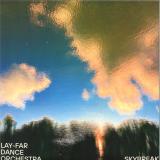
International dance music heavyweight, producer and DJ Alexander Lay-Far returns with a powerful new chapter - Lay-Far Dance Orchestra (LFDO) - a fully-fledged live band project that reconnects him with his jazz-funk and fusion DNA while pushing dance music forward with unmistakable groove, musicianship and emotional weight. Formed in early 2024, LFDO is no nostalgia exercise. With Lay-Far at the helm as bassist, bandleader, composer, arranger and sound engineer, the orchestra has already been turning heads with explosive live performances, reinventing classic Lay-Far cuts, and now unveil their first album “Skybreak” with all new and original material written and produced by Lay-Far together with his bandmates and star guests, including Lipelis, Antoha MC and Seven Davis Jr. This work shows the departure from the predominantly electronic sound of Lay-Far's previous solo albums in favour of live instrumentation recorded to analogue tape and effortlessly bridging the gap between Jazz, Library Music, Disco-Funk, House, Broken Beat and Drum’n’Bass. “Skybreak” is dynamic, passionate, spiritual, cinematic, playful, heartfelt, life-affirming, dreamy and deeply romantic. Ultimately, there’s something profoundly romantic in recording and releasing such music in this day and age!
“Take Flight (Part 1)” is opening the album with style. It takes us on a beautifully orchestrated journey, blending the sensuality of Library Music with high-octane Jazz-Funk and raw b-boy breaks, propelled by breathtaking flute and Rhodes solos of Timur Nekrasov and Maxim Glonti. This aural symbiosis of “beauty and the beats” will become more and more prominent as the album unfolds.
It’s time for “Aquarius Love” created with the inimitable artist and vocalist Seven Davis Jr. (Secret Angels, Ninja Tune). In this composition cinematic soul and heavy jazz meet the restless energy of live drum & bass with deep and heartfelt vocals - timeless sound combined with a timeless message about love and life!
Next is “Head In The Clouds” - a theme for an imaginary rom-com, an ode to all the dreamers - sweet, light, naive and heartwarming. Space-Disco-Funk at its best!
“Where You From” is a fiery Soulful House number with heavy Afro-Latin influences recorded in collaboration with Lipelis. It’s full of Sun, joy and passion. Its irresistible rhythm is emphasised by funky octave bass, wah-wah guitar, catchy piano riffs, guitar solo by Lipelis and seemingly light conscious message delivered by Lay-Far and Maryag. Summer is here!
Now the album takes an unexpected twist in the form of “The Harp of Boom” which at first glance appears to be a classic-sounding Boom-Bap banger. Yes, It’s loud, raw, and gritty, yet it gradually evolves into something delicately-touching and deeply-soulful thanks to a memorable flute melody and lush string arrangement. Definitely recorded with tongue in cheek.
Next is “Feel The Moment” a remarkable collaboration with one of the most recognisable and distinctive Russian artists, singer, trumpeter and cultural icon Antoha MC. It’s a feel-good song, hopeful, life-affirming and bittersweet. A stylish excursion into Brit-Funk and Soviet Jazz-Fusion sound, drawing inspiration from the likes of Atmosfear, Light Of The World or Soviet Jazz bands like Allegro and Arsenal, but reimagining the influences through the modern West London broken beat lens.
The spectacular music journey continuous with “Take Flight (Part 2)” - it’s all about the deep infectious jazz-funk groove, heavy beats, rolling percussion and the glory of the soloing instruments - saxophone and flute by Timur Nekrasov, demonstrating the wide range of emotions from thoughtful and lyrical to restless and borderline vicious. One for freestyle dancing!
As the album draws to an end a vibrant musical triptych “Soul Constant” awaits, mixing together the deep and sensual mood of spiritual jazz with heavy syncopated drum’n’bass rhythms by Michail Fotchenkov, lush orchestration, expressive saxophone solos and the ending which can simply be described as “aural bliss”. It’s breath-taking!
A pleasant bonus is the exclusive version of “Where You From” by Lipelis himself, who is taking it into dub territories, further enhancing the rhythm section and enriching the song with his trademark playful synth flourishes and dreamy guitar solos for maximum effect (and appeal).
The album “Skybreak” by Lay-Far Dance Orchestra is the work of real artistry and craftsmanship with timeless sound that’s not only deeply-rooted but also forward-thinking.
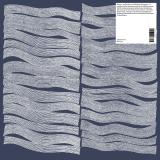
WRWTFWW Records is very happy to announce the release of Renga, the new collaborative album from Gak Sato and Tadahiko Yokogawa - available on limited edition LP (300 copies worldwide !) housed in a heavyweight sleeve with inside out print of a beautiful artwork by Aoi Huber Kono.
Renga (??, linked poem) is a genre of Japanese collaborative poetry in which alternating stanzas, or ku (?), of 5-7-5 and 7-7 morae (sound units or syllables per line) are linked in succession by multiple poets.
Inspired by the traditional Japanese poetic form of linked verses, Renga unfolds as a fluid 10-track journey spanning ambient, jazz, breakbeats, electronica, environmental music, techno, cinematic, library music, and musique concrète. Much like its literary namesake, the album is built on intuition and shared momentum, each piece emerging from what came before while opening new paths forward. Beats appear, disappear, then reassemble, while textures shift between organic warmth and electronic abstraction. The result is music that resists fixed categorization, existing somewhere between known subgenres and free-form exploration.
The album's visual counterpart, created by Aoi Huber Kono, mirrors the sensibility of the music. It's elegant, modern, and quietly expressive, extending the idea of linked forms from sound into image.
Points of interest
- For fans of ambient, experimental electronic music, jazz-inflected compositions, breakbeats, techno, cinematic soundtracks, library music, musique concrète, genre-blurring sonic exploration, linked verses, and dark blue.
- A unique collaboration between Gak Sato and Tadahiko Yokogawa, inspired by the Japanese poetic form of linked verses.
- Presented on limited edition LP housed in a heavyweight sleeve, edition of 300 copies.
- Artwork by acclaimed visual artist Aoi Huber Kono, extending the album's concept of interconnection across disciplines.
After more than 7 years of silence, Marvin Zeyss returns with his new vinyl EP “Piece of Me” on his hometown Nuremberg label Beatwax Records, delivering exactly the sound his fans have been missing for so long. As is often the case with him, the title reflects the personal touch that is deeply infused with emotion throughout the tracks.
From the classic house sound of the lead track “Piece of Me,” to the driving percussion and bassline in “Let Loose,” the captivating atmospheres of “Flames,” and the deep vibes of “Only You,” this release offers something for every dancefloor and every listener. With this versatility as his trademark, Marvin Zeyss has already released and sold out more than 10 records — so don’t hesitate, no repress.
>>> comes in 4c Sleeves
After the well-received Kreme de la Kreme EP, D3 Classic Edition returns with another essential vinyl release. This time, they present four rare and highly sought-after tracks from the talented Toyin Agbetu—all newly re-mastered from the original DAT tapes. Showcasing some of his finest work as The Dark Knights, this collection is a treasure trove for fans of deep, soulful grooves and classic, old-school rhythms. Featured are four must-have tracks: I Do Believe, Party Time, Piece of Time, and U Gotta Slow Down—the latter released under Agbetu’s other alias, Nemesis, and making its debut on vinyl.
But there’s more: the release also includes a brilliant reinterpretation of Piece of Mind by London producer K15, who adds his signature spacious, broken-beat style to the original, breathing new life into a classic track. For vinyl collectors and true aficionados, this is an absolute must- own.
Black Truffle is pleased to present Radis, the first recording by the Oslo-based trio of Andrea Giordano (voice and organetto), Kalle Moberg (accordion) and Jo David Meyer Lysne (guitar and snare drum). Now based in Norway, Giordano is a native of Cuneo, in the Piedmont region in the north-west of Italy and her exploration of the Piedmontese language provides the starting point and conceptual anchor of the trio improvisations heard on Radis, which make use of the words of 20th century Piedmontese poets Nino Costa, Bianca Dorato and Oreste Gallina. As the musicians explain, the project is an attempt to preserve the beauty and singularity of a language at risk of extinction.
Fittingly, the first sound we hear on the opening piece ‘Fiorìa’ is Giordano’s unaccompanied voice. She sings a poem from Oreste Gallina as a kind of floating cadenza, the accompanying silence sensitizing the listener to the pellucid quality of Giordano’s voice and the unique sound of the Piedmontese language. The voice dies away and into the silence swells a single tone, sounded by Moberg’s accordion and—special guest on this opening piece—the alto saxophone of Mario Gabola. Extended techniques and preparations create unexpected timbres from the acoustic instruments: Gabola’s saxophone is augmented with tin cans and springs and Moberg’s unorthodox techniques allow the accordion to generate wheezing, buzzing textures and patterns of microtonal beating. Giordano’s voice returns, picking up the thread of the languorous opening melody, coexisting for a while with the shifting drone before the piece takes an unexpected yet organic left-turn into a delicate saxophone solo of sorts.
Recorded in several locations across Italy and Norway over the course of three years, Radis documents an ensemble who have developed both a distinctive sound-world and a remarkably sensitive group dynamic. Moving from folkish duets between accordion and Giordano’s organetto (the small accordion used in Italian folk music) to episodes of metallic guitar scraping from Meyer Lysne, the music is both quietly contemplative and gently chaotic. Ensemble roles shift with disarming ease. If on ‘Profij dëspers’ Meyer Lysne’s prepared guitar adds a haywire noise element to a lyrical episode of organetto and accordion, the next piece, ‘D’antorn a lor’, is grounded in chiming guitar chords of stunning beauty; once Giordano’s joins, the result calls up the most spacious moments of Maria Monti’s Il Bestiario. Throughout the seven pieces, the trio explore countless possibilities of group interaction and the margin between conventional euphony and pure abstraction: at times the voice floats against silence or seems almost disconnected from the gentle clatter of the instruments (sometimes reminiscent of Nikiforas Rotas’ haunting settings of Cavafy), while at other points the instruments touch on conventional harmonic accompaniment. What is perhaps most striking of all is the way that voice and instruments relate to each other, the extended technique reframing the voice as a kind of abstract sound object, while the melodic beauty of Giordano’s voice lends a contemplative, almost melancholic air to the wheezing and scraping of accordion and guitar.
Captured in gorgeously intimate recordings, Jim O’Rourke’s careful and beautifully spacious mix highlights the wealth of textural detail in each element. Accompanied by notes, session photos and the text of the Piedmontese poems, Radis is a work of stunning beauty that demonstrates the vitality of exploratory music in Norway today.
Diversion Ends EP highlights the classic sound of chicago acid house, whilst yet emerging into a much deeper and experimental lane of electronica. With three original tracks and an intellectual yet pumping remix from Berlin’s Cinthie, the EP is prepared for the most exciting club playing DJ’s - those who love a curveball yet appreciate a strong, consistent groove.
Lulah Francs has played some of the most respected venues and festivals in electronic music. Her DJ sets have spanned iconic institutions like fabric London, where she’s shared lineups with leading international talent, and she’s played at major events such as Gottwood, Lost Village, and La Terrrazza Barcelona. In addition, Lulah champions grassroots culture through her own event series sub:terra, a collective and club night inspired by the spirit of early acid house, having invited selectors such as Niks, Jaye Ward, etc and taken over strong institutional rooms such as Fabric Room 3.
Analog Fingerprints Vol. 0 is a compilation bringing together the early 2000s works of Marco Passarani under his Analog Fingerprints alias, collecting key tracks originally released on Rome’s Plasmek and Pigna labels.
For Numbers, the story starts long before the label itself. In their formative years, digging in Glasgow’s Rubadub, Passarani’s records felt like dispatches from a future city. Releases on his own Nature Records and on labels such as Generator and Interr-Ference Communications were mind blowing: rooted in Detroit techno, Chicago house and electro, yet pushing somewhere new. Much like fellow travellers Autechre, who would remix him in 2001, Passarani’s music balanced machine funk with restless experimentation.
Information was scarce, and you would hear these records first on the dancefloor or at listening stations in shops like Rubadub. Print fanzines like Ear and early web outposts such as Forcefield offered only fragments. But there was a palpable axis forming between Detroit techno and a new European wave of record labels including Skam, Rephlex, Clone, Viewlexx and Nature itself. It was the sound that defined Saturday nights at Rubadub’s ‘69’ parties in Paisley, just outside of Glasgow.
Passarani’s records, in particular, were instrumental in bringing together the future Numbers co-founders. Richard had already booked him pre-Numbers; meanwhile Calum (Spencer) and Jack (Jackmaster), then 16/17 year olds working alternate Saturdays in Rubadub, were so enamoured with the Roman sound that they travelled to Rome for the Bitz Festival in 2003 to seek out Passarani and Lory D at their source.
The first Analog Fingerprints release landed as a 12” on Plasmek in 2001, following the fractured, IDM-leaning 6 Katun material. For Passarani, the project marked a recalibration. A DJ first and foremost, he had moved into production via early computer setups, from a Commodore Amiga through primitive PC audio, Cubase and Logic, later experimenting with Ableton. The IDM scene had offered a playground for trial and error, but there was always a tension between abstraction and the dancefloor. Analog Fingerprints became the bridge: still intelligent, but with more dance than distance. After years of broken beats and complex arrangements, he wanted directness without surrendering identity.
Working closely with Francesco de Bellis and Mario Pierro in the Pigneto district, the trio formed Pigna as a vehicle for reclaiming a more accessible dance sound, deliberately steering away from the minimal wave beginning to dominate Europe. Sessions were fast, instinctive, often stretching late into the night with friends dropping by. It was a studio as social space, production as collective energy.
“In that constant search for balance, Analog Fingerprints was my way of expressing something closer to the classic dance floor. The track 'Tribute' - a tribute to my favourite early Detroit techno track of all time, 'First Bass' by Separate Minds - came after I realised I had almost lost my connection with the dance floor. The simplest step was to take inspiration from early Chicago and Detroit and twist it in our Roman ‘Pigna’ way. My goal was to create more accessible dancefloor tracks by mixing my unconscious Italo roots with my teenage love for that early US sound, ensuring the result was as far as possible from the minimal sound that was starting to dominate everywhere.” - Marco Passarani
Technically, the Analog Fingerprints tracks span a transitional era: Roland TR-909, SH-101 and Alpha Juno hardware met early software experiments. A Novation Drumstation rack stood in for the unattainable TR-808, syncing with TB-303 and TR-606. Yet the true secret weapon was Jeskola Buzz, a tracker-style modular environment that allowed step-by-step parameter control and strange melodic constructions, later exported into the audio sequencer. Even the lead on ‘Tribute’ came from an early PPG Wave-style plugin. It was hybrid thinking at a moment when digital tools still felt unstable but full of possibility for technologists like Passarani.
Behind the music sat Finalfrontier, a loose Roman collective orbiting Nature and Plasmek. Distribution and production were intertwined; importing obscure records into Italy built connections with like-minded outsiders across Europe and the US. Expensive phone bills and fax machines forged an “electronix network” that linked Rome to Clone, Viewlexx, Skam, Rephlex, Rubadub and Detroit’s Underground Resistance. There was a shared sense of survival and resistance, of operating against commercial systems.
Passarani recalls “The first time I found a sheet of paper inside an Underground Resistance 12” with info about upcoming releases... and a huge picture of Spock on the back. Imagine that: you love the music, you love Star Trek, and there’s someone on the other side of the ocean sharing those same values and sounds. It was the perfect match. We even gave our original company the suffix ‘Finalfrontier’: that says it all.”
Feedback in that era arrived physically: distributor faxes, conversations with visiting DJs, the experience of playing abroad and meeting kids who had connected with the records. Glasgow became a key node in a scattered outlier network. Passarani personally brought the first two Nature releases to Fat Cat in London, playing them in-store. Shortly after, a fax arrived from Rubadub in Glasgow requesting copies.
“I still remember that phone buzz and the fax paper slowly sliding out, with someone I didn’t know saying they wanted 75 copies of Nature 001. Or like the time we got a fax from the Rephlex crew just saying, “Hello Nature Records, Keep up the good work.” That was how we knew the message was getting through. It was a fantastic feeling; just one piece of thermal fax paper as an analog notification - the mood for the entire week would change.” - Passarani
The connection to Glasgow has since stretched across generations. As Passarani reflects, links often fracture as scenes renew themselves, but in Glasgow something different happened. New and old mixed seamlessly. There was a visible trust in what came before, and a willingness to carry it forward rather than discard it. Observed from Rome, it was deeply encouraging.
Analog Fingerprints Vol. 0 captures that moment of exchange: Rome to Glasgow, Detroit to Europe, experiment to dancefloor. It documents an artist recalibrating his sound and a network of scenes discovering one another in real time, connected by vinyl, faxes and shared intent.
Originally released in 2004, this record now fetches up to 50 euros for a used copy on Discogs. It has recently regained attention and support from current DJs and featured on Paramida’s mix for The Mudshow.
Da Sunlounge handles the A side with a funky, jacked-up track, while the B side features a collaboration with Office Gossip (Winding Road / Urban Tourq) for some deep, twisted tech house music. This release was initially supported in 2004 by Inland Knights, The Lawnchair Generals, Hipp-e, The Littlemen, and David Duriez.
Music For Parents is a low-frequency, vibroacoustically informed album developed through research into sound, rest, and nervous system regulation. Composed between 2019 and 2020, the record explores slow-moving bass structures and reduced harmonic density, inviting a form of listening that is felt as much as heard.
The work emerged from a personal process, shaped by a desire to support rest and release through sound. Music For Parents takes its title reflecting on the dynamics of parent–child relationships - formative environments that shape emotional, sensory, and relational orientation, often without clear language or shared understanding.
While effective on standard playback systems, the album can also be paired with vibroacoustic devices such as bass transducers or wearable low-frequency systems for enhanced somatic engagement.
An inspired link up between UK and continental producers - yeah, in your face, Brexiteers - as Brit talent and Crayon boss Mark Ambrose joins forces with Spanish duo Serious Cut aka Raul Zapata and Ivan Martinez, across four irresistible cuts. 'Remedy' nods its head subtly to the Diana Ross (and then Associates) classic 'Love Hangover' while enchanted, spacious and spacey grooves do their thing, while the cherry on top of 'Deep Track' proves to be some neat sci-fi spoken word, not to mention the kind of soft, jazzy chords that Global Communication's house productions used to revel in. Flip it over for the more electroid 'Talk Box' and the unashamedly Windy City-referencing 'Auto Level. Four sides of a classic sound, three great producers, two sides of top vinyl and one must buy bit of vinyl.
No stranger to the game, Jay Tripwire returns bringing his usual caliber of stylish, late night tales.
2 extended no-nonsense cuts combine to form his ‘Jazz is Pain’ EP. Ethereal themes bleed through a body of meticulously programmed rhythms and beats that bubble and bleep in “Jazz is Pain”. With sprinklings of deep tones and jazz notes creeping in throughout, Jay delivers some otherworldly weaponry fit for the darkest hour.
“Jazz is Life” embodies the spirit of world music as he tells the story through twisted and tweaking lenses, as a plethora of drums, calls and crashes lead the way, punctuated by a tight rhythmic section that ticks away.
Consistent funk operator Ralo is back with a brace of tunes that will shake your bones loose. First up is 'Broken Way', a magnificently jumbled rhythm made from languid bass and kicks, peppered with organic percussion and heated through with soft synths. It's atmospheric and real, like the overheard soundtrack to a party happening in your kitchen. 'Djembe' then brings out some brassy horns to take things to the next level. They jump out of the low-slung drums and add jazz, soul and colour that cannot be ignored. Gledd and Monsieur Van Pratt step up on the flip with cultured reworks that turn things up to 11.
East London's Jeigo works alongside North London perfume house Nosu on this quietly inventive release from Fleurella Records that extends beyond the usual club framework and intertwines scent and sound. Opener 'Placid Shimmers' drifts between organic house, lo-fi ambient and introspective worlds with swung rhythms and soft focus synths, while 'SPF 50' leans into melancholic breaks and 90s IDM echoes. It feels delicate but still moves you and is where texture and mood carry the groove into something subtly uplifting and tactile. A beatless version of the opener is included for pure dreamy escape.
2026 Repress
French talent Hyden makes label debut on Mutual Rytm with conceptual new techno EP, 'To Whom It May Concern'. Hyden is a potent force in the French underground, creating powerful techno with dense percussion, immersive grooves and subtle nods to classic influences - all through his own unique lens. Having delivered standout releases in recent years, here he offers up sounds "anchored in psychoanalysis, time, and emotional residue" as he makes his mark on SHDW's Mutual Rytm imprint, delivering influences of dream logic and surrealism as the palette moves between brutality and introspection. "It's hypnotic music for moments of rupture where something breaks or breaks through". Opener 'Manifest Content' is inspired by Freudian theory and explores the surface illusions of thought and dream. It's about the dissonance between what we perceive and the deeper meaning that slips away beneath and is a deep and dubby techno track with flashes of unsettling melody. 'Bruises' is emotional trauma made sonic. This piece delves into invisible scars and traumas, residues of past conflict or intimacy - it's slow-burning, heavy and raw. 'Jikan' is a meditation built on time and its erosion. Inspired by the Japanese concept of impermanence, it reflects fleeting moments, decay and the tension between stillness and motion with jacked up but warm drums and turbulent bass. Next, 'Free Will' is born from inner conflict and plays with deterministic rhythms and evolving layers, questioning whether we are truly in control or just passengers in a prewritten sequence. The vocal mentions, "creatures, you're out of time" to bring darkness to the intense but sleek rhythms. The streamlined physicality of 'Swarm' channels the primal force of collective movement and is a nod to the loss of individuality in group behaviour. In addition, the package is loaded with digital bonus cuts. 'Yumehara' is a dive into surreal dream-states and evokes subconscious landscapes where logic dissolves and emotion reigns, while 'Lu Bu' is brutal and warlike and named after the legendary Chinese general that captures impulsive violence, betrayal and reckless glory with relentless energy and rhythm. Lastly, 'Neon Pale' is a synthetic dreamscape about fading beauty under artificial light - a melancholy ode to cities at night and the loss of warmth in modern life.
Born in Madrid and now entrenched deep in Boston's underground, Ketzaal operates at the darker more, textural end of the techno spectrum. He shows off that signature again here with a tightly wound four-tracker. Opener 'Placed Upon Thee' lands with great tension, all driving stabs and forward thrust, while 'Final Ritual' dips into a rolling, bass-heavy stride that loosens the grip without losing pace. On the flip, 'The Throne' locks into a head-down groove before 'In Bloom' stretches into something more elusive and shapeshifting. Purposeful construction and a clear sense of function don't mean there isn't plenty of character in these dance floor bombs.