Next up on Mesh is Throwing Snow’s ‘Jackals’, a five-track EP drawing on echoes of UK subcultures.
Written in Ireland late last year with the London 2010s in mind, ‘Jackals’ is Throwing Snow’s love letter to his time spent there, tapping into a detailed web of sounds and styles through a personal lens, but skillfully produced to resonate with many. Locating memories in a transient city that is constantly reconfiguring itself, each track is an attempt at honouring fragments of recent, but seemingly distant, musical history. Taking us from DMZ at Brixton Mass to FWD at Plastic People, or Future Garage Fridays in Soho (IYKYK) to early days of NTS, the EP captures some of the fleeting moments that continue to play a significant part in the city’s sonic patchwork.
Production-wise, all the tracks share the same sounds twisted in different directions. The hats are vocoded with noise and random LFOs, and much like the chaos of London, every bounce has a unique pattern.
Opening track ‘Jackals’ walks the line between dub and UK bass, quickly overtaken by a wonky synth lead that spirals eternally upwards. ‘Ohnein’ jumps in with a massive pad swirling above a half-time step. In Throwing Snow’s own words, ‘I had to check with Martyn whether I'd ripped him off, turns out I hadn't, but it's a heavy head nod crossed with Un Vingt from my first 12"’. ‘A Cloud Mountain’ - a nod to the timeless James Holden remix of Nathan Fake’s ‘The Sky Was Pink’, leans into a maximalist progression of deep chords and fractured synths. ‘Forged’ steps into a weightier space with sparse drums driven forward by a deep cut of bass and twitchy echoes. Rounding things off, ‘Path Dependency’ speeds things up with touches of DnB in the drums, distant echoes in the forefront and the occasional sub wobble holding things together.
Search:som
Das windgepeitschte Leben an der Ostküste Schottlands, die gemächlichen Klänge und das warme Gefühl, dass am Ende doch alles gut wird, vereinen sich auf Gulps drittem Album zu einem betörenden Erlebnis, auf dem die Band um das Duo Lindsey Leven und Guto Pryce (Super Furry Animals) ihren ätherisch-folkigen Psych-Pop zelebriert. "Beneath Strawberry Moons" ist ein hyperlokales Album mit minimalem CO2-Fußabdruck, basierend auf dem zart aufgeladenen Gefühl des Paares für das schottische Erbe und die erfrischende Nähe zum Meer. Eine Feier von Raum, Liebe, Verbindung und Zeit, durchzogen von einem zugrunde liegenden Bewusstsein für die Zerbrechlichkeit dieser Schönheit.
Do you remember Cush?
A nod to the enigmatic Danakil warrior from Corto Maltese — wise, fierce, and fiercely free. That spirit is back, and this time, it speaks through sound.
Welcome to Cush — a bold sonic territory where the elegance of myth meets the urgency of noise.
Across 14 tracks, this power trio delivers a raw, immersive journey that bends genre boundaries and stirs the imagination. A soundscape emerges, somewhere between dystopia and liberation: windswept grooves, fractured brass, buzzing machines, explosive drums. Think improvisation at its most daring, textures at their most tactile, and themes that haunt like echoes from the future.
Cush is a cry. A rebellion. A pulse.
It’s where musique concrète collides with free jazz and industrial atmospheres — and something new is born.
For listeners drawn to Pierre Henry’s audacity, Alain Damasio’s visions, industrial ASMR, or sonic voyages à la Corto: this is your next deep dive.
Unbuckle your seatbelts. You’re in Cush territory.
An album that demands to be heard — and experienced — live.
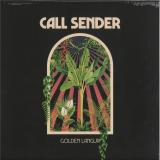
Call Sender is the collaborative brainchild that unites the talents of Paul Elliott, a versatile multi-instrumentalist, composer, producer, and recording engineer from Suffolk/UK and Michael Reed, a multi-talented instrumentalist, recording engineer, and drummer residing in the Bay Area/USA. Despite working together for the past four years, the pair are yet to meet in person!
After connecting on social media over their love of drum breaks and vintage reverbs Elliott and Reed fostered their creative partnership by bouncing recordings back and forth via email and this virtual collaboration resulted in their first album, the jazz-funk inspired “Lost To The Storm” (Tru Thoughts, 2023). With four singles from the album gaining radio play and becoming a favourite for tastemakers and DJs, the pair began work on the follow up “Golden Langur”. With this new record, the aim was to retain their signature Call Sender sound, a heady mix of B-movie soundtracks, classic library music and psychedelic funk and soul, but also introduce elements of lo-fi soul as well as collaborating with some of their talented friends as featured artists.
These features include fantastic instrumental contributions from the incomparable funkmaster Shawn Lee (Ping Pong Orchestra/Young Gun Silver Fox) on “Brainforests” and the legendary JJ Whitefield (Poets Of Rhythm/Whitefield Brothers) who kicks ass in two tempos on “Two Tails”. Not to mention the silky-smooth vocals from the Bay Area’s Andre Cruz, vocal duet from Lucid Paradise that is reminiscent of Gil Scott Heron and Paul Elliott’s seven year old son Buddy drops a vocal on the future B-boy classic “Rainbow”. Together Call Sender has an old-school vintage foundation with a modern perspective. Influenced by iconic acts such as Klaus Weiss, Miles Davis and Nino Nardini and with a hip and funky sonic aesthetic, Call Sender’s music is nostalgic without being pastiche, has a sense of travelling at its core, having been recorded in different parts of the globe, while never hesitating on the direction of the music.
Paradise Lost’s sixth studio album (1997), which charted well across Europe, marked something of a change of direction for the West Yorkshire group: a transition from gothic metal to a more electronic approach, epitomised by the lead single ‘Say Just Words’, which remains a fan favourite and one of their biggest streaming tracks. This re-tooled aesthetic proved slightly controversial at the time but by the time of its acclaimed 20th anniversary reissue (mirrored here), for which it was remastered by Jaime Gomez Arellano, the general consensus was that the riffs, lyrics, and compositions on One Second are all vintage Paradise Lost. As noted by Decibel magazine, “There is a natural flow on display throughout the 12 songs that is akin to watching a favourite actor take on a somewhat different role than he or she is known for— and killing the performance.”
Space Echo is proud to present the new single by Derane Obika and Go.Soul.Map., arranged and performed by Sicilian
mastermind producer Salvo Dub - an overwhelming fusion of electronic sounds and soulful vibes. This track is a balance
of pulsating rhythms and enveloping melodies, a sonic journey that invites dancing and reflection.
The production stands out with its electronic soul — a rich blend of synthesizers and deep bass lines that pull the listener
into an energetic and immersive atmosphere. Every beat is crafted to move your feet and light up even the most
sophisticated dance floors.
It’s an explosion of energy, set against the unmistakable voice of Derane Obika. With his warm, soulful tone reminiscent of
Seal, Derane brings a unique spirit to the track, infusing every word with raw emotion and deep.
Here, Derane and Go.Soul.Map. don’t just celebrate dance music — they invite the listener into a full-bodied sensory
experience, where electronic beats meet soul tradition to create something truly extraordinary.
The lyrics expresses the idea of a complete fulfilment found in someone or something essential. It suggests that this
presence — a person, an emotion, or a spiritual guide — is so fundamental and complete that everything else becomes
unnecessary.
It evokes a profound sense of connection, purpose, and clarity. Like a path that leads directly to the essence of existence,
it conveys the feeling of being guided, inspired, and grounded all at once. It is a declaration of absolute trust, of love or
devotion — where the journey and the destination fully coincide.
Side B features a new version of “Walkin’ a Dream” from the debut album “Peaceful Sound for Broken Minds”. The new
rework 25, offers us futuristic and electronic sounds with 70s and 80s disco influences, mixing with space and cinematic
themes - very interesting!
“For Today” is a timeless album—a sonic journey that seamlessly blends electronic influences, Trip-Hop, Folk, Indie Rock,
and Psychedelia.
It unfolds like an immersive soundscape, rich in complex atmospheres, experimental textures, and a deep emotional
undercurrent. Agosta has envisioned a record that transcends trends and market conventions, crafting a cinematic, soulstirring experience that fuses the intensity of trip-hop, the purity of folk, and the swirling colours of psychedelia.
The result is music that stimulates the intellect as much as it stirs the heart. With a delicate, refined touch and melodic
depth, Agosta combines contemporary sounds with vintage warmth, pairing poetic lyrics with themes of love, introspection,
and the human experience.
A standout element of “For Today” is the presence of five tracks featuring female performers and writers. This
intergenerational collaboration brings a richness of perspective and emotional range to the album. Far from a simple gesture
of gender inclusion, it serves as an authentic integration of diverse voices, offering new layers of sensitivity and storytelling.
Where Agosta’s previous work leaned more toward instrumental composition, here the inclusion of female voices adds
lyrical nuance and depth. These contributions explore themes such as love, identity, relationships, and personal liberation—
offering a poetic yet grounded lens through which to experience the album’s contemporary sound.
In essence, “For Today” is a mature and cohesive work that defies the boundaries of traditional genres, creating a unique
and resonant sonic world.
Each track explores a different emotional and musical dimension, with meticulous attention to sound design and a clear
desire for emotional experimentation. The album balances the introspective depth of trip-hop with the lightness and
spirituality of folk, weaving in modern pop elements and touches of psychedelia and groove.
The result is a compelling, emotionally charged, and genre-blending experience—one that invites listeners not only to hear,
but to feel.
An absolute must-listen!
Two Grammy Award–winning artists joined forces for this inspired peak-hour track, originally featured on Louie Vega’s Expansions In The NYC album. The pairing of Louie’s signature house-driven percussive energy with Robyn’s instantly recognizable vocals created a moment that pushed boundaries and hinted at a future direction for the genre.
The remix package builds on that vision, showcasing a stellar line-up of some of the scene’s most innovative tastemakers—including Honey Dijon, KDA, and Dam Swindle—each delivering their own unique grooves while honoring the spirit of the original.
C.A.R. (Choosing Acronyms Randomly) is the musical project of Chloé Raunet, a Canadian-born, London-based artist known for her icy synths, warm vocals, and left-field pop sensibility. Drawing from post-punk, electro, and experimental songwriting, she creates music that’s both emotionally charged and sonically adventurous.
Following a five-year hiatus, C.A.R. returns with Shyana, the first single from her long-awaited fourth album, Dance at Oscar’s. Produced by Nathan Ridley, the release marks a creative rebirth: a new label, a new live formation with Joni Green, and a sound pulsing with revitalised energy. After a pandemic-induced break to focus on filmmaking — and a period of burnout and disillusionment — Raunet was ready to walk away from music altogether. But a pair of carried-over festival dates and an impromptu onstage reunion with longtime friend Joni Green unexpectedly reignited the spark. What was meant to be a farewell became the start of something new.
Shyana is a shimmering slice of machine-funk — a warped and groovy tribute to Paul Anka, filtered through C.A.R.’s surreal pop lens. A meditation on teen hysteria, pop manufacture, and the strange alchemy of early fame, the track pulses with wonky elegance and strutting confidence. One of the most playful cuts from Dance at Oscar’s, it showcases Nathan Ridley’s tight, swaggering production while capturing the album’s embrace of movement, humour, and the weirdness of cultural nostalgia.
On the B-side, Cecilia Road offers a more reflective counterpoint — a nostalgic, synth-drenched ballad built around a call-and-response vocal, throbbing melodies, and emotional tension. Intimate yet expansive, it hints at vulnerability without losing the pulse.
Artwork by Chloé Raunet, Craig Richards and Oliver Hupfau.
12th Isle ready the first of many new releases after a break over the first half of 2025. Radx is a new collaborative endeavour between label artists X.Y.R. and Vlad Dobrovolski (½ of S A D) exploring a shared appreciation of vintage 80s & 90s synthesisers, ambient-adjacent furniture music and, er, dragons. Referencing the electronica of artists such as Kim Cascone/Hydrosphere as well as the sci-fi literature of Michael Swanwick where dragons act as living machines, the pair combine various synthesis models, pedals and samplers for an album that sits somewhere firmly between each of their solo works. From the cathedralic ascension of ‘Heavenly Shepherd of Silence’ to the back-room bean bag swirls of ‘Ovgo’s Etheric Mind’ and dense, jungle-like humidity of ‘Liminal Space’, the more ambient-leaning end of the catalogue is built upon further.
On point, until it hurts. With a decade-spanning discography, several bands and half of SHXCXCHCXSH this restless creator presents himself. SSTROM embodies the calmly bold. Building a version of the modern disco that nobody asked for. SSTROM is the capsule that shocks and comforts, gathers and spark a new thought. The robust shell acts as a camouflage for the wild and wicked bleakness of the music he produces. If the contemporary club urge could be described as a helmet waiting to brake this experience is what you are after; surprising, uplifting and changing. With 'Avvik' SSTROM carves out 6 somatically clear scenes articulating diverse textures, densities and states of aggregation. The constructions evolves as fractious rhythms strives for another order. Trial and errors bungys droughty, moist, stiff and tensile. Sstrom forces us to flicker in twitches between layers and dimensions beyond the given three.
Gwenan Spearing, known for her perceptive, groove-oriented DJ sets, and more recently as a live performer working with hardware improvisation, launches a new imprint, Phase Space, with Degrees of Freedom, a debut album diving deep into generative electronics, modular systems, and real-time response. Composed and recorded in 2019-2020, the album treats constraint as creative fuel, floating between ambient,
sonic sculpture, and improvisation, mapping Gwenan’s path from rural Wales to Berlin’s outer zones of experimental sound.
Sync opens with a theme on a slow triangle wave, expanding the space as it evolves. Some Pluck explores generative counterpoint using LFOs and Euclidean rhythms. Generator I unfolds in an oscillating time where keyboard and bass circuits cross-modulate. Sleep Pressure is a lullaby for grown-ups, capturing that eerie threshold before sleep, followed by Loper, where time flows fluid and unstable. The closer, Generator II, holds machine heartbeats in delicate equilibrium before unraveling into graceful decay, a soft farewell. (That’s the Universe waving.) Degrees of Freedom is algorithmic music with a pulse: visceral, hand-wired, and built for deep listening.
- A1: Brothers In Rhythm - Such A Good Feeling
- A2: Black Box – Ride On Time
- A3: C+C Music Factory - Gonna Make You Sweat (Everybody Dance Now)
- A4: Inner City - Good Life
- A5: Adventures Of Stevie V - Dirty Cash (Money Talks)
- A6: Grace – Not Over Yet
- A7: Billie Ray Martin – Your Loving Arms
- B1: S'express - Theme From S-Express
- B2: Kenny “Dope” Presents The Bucketheads - The Bomb! (These Sounds Fall Into My Mind)
- B3: Nightcrawlers - Push The Feeling On
- B4: Coldcut And Lisa Stansfield - People Hold On (Single Version)
- B5: Bomb The Bass - Beat Dis
- B6: Tony Di Bart - The Real Thing
- B7: Saint Etienne - He's On The Phone
- B8: D Ream – U R The Best Thing
- C1: Snap! - Rhythm Is A Dancer
- C2: Corona – The Rhythm Of The Night
- C3: Real Mccoy - Another Night
- C4: Dr. Alban - It’s My Life
- C5: Haddaway - What Is Love
- C6: K.w.s. - Please Don’t Go
- C7: Cappella - U Got 2 Let The Music
- C8: Opus Iii – It’s A Fine Day
- D1: Deee-Lite – Groove Is In The Heart
- D4: Urban Cookie Collective - The Key, The Secret
- D5: Oceanic - Insanity - Dream Tripper (Old Skool Radio Edit)
- D6: N-Trance – Set You Free
- D7: Felix - Don't You Want Me
- D8: Utah Saints - Something Good
- E1: Yazz & The Plastic Population - The Only Way Is Up
- E2: 49Ers - Touch Me
- E3: Baby D - Let Me Be Your Fantasy
- E4: Rozalla – Everybody’s Free (To Feel Good)
- E5: Strike - U Sure Do
- E6: Jx – Son Of A Gun
- E7: Blue Pearl - Naked In The Rain
- E8: Adamski & Seal - Killer
- F1: Soul Ii Soul, Caron Wheeler - Back To Life (However Do You Want Me)
- F2: Beats International - Dub Be Good To Me
- F3: Freak Power - Turn On, Tune In, Cop Out
- F4: The Prodigy – Charly
- F5: Guru Josh - Infinity
- F6: 808 State - Pacific - 707
- F7: The Beloved - The Sun Rising
- D2: Livin' Joy - Dreamer
- D3: Cece Peniston - Finally
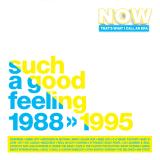
NOW Music proudly presents the next release in our “NOW That’s What I Call An Era” series - Such A Good Feeling: 1988-1995 – a euphoric celebration of a truly transformative time in music.
This stunning 3LP set pressed on blue, white and yellow vinyl showcases 46 essential tracks that soundtracked the dancefloors, charts, and airwaves from the late ’80s through the ’90s — an era when dance culture reshaped the mainstream, soundtracked a generation, and lit up the charts across the UK and beyond
LP1 – Side A opens in style with ‘Such A Good Feeling’ from Brothers In Rhythm, this collection’s inspiring title…followed by Black Box with ‘Ride On Time’ — the best-selling UK single of ’89, and one of dance music’s defining tracks. Massive club classics continue with C+C Music Factory’s ‘Gonna Make You Sweat (Everybody Dance Now)’, house anthems from Inner City with ‘Good Life’, and ‘Dirty Cash (Money Talks)’ from Adventures Of Stevie V, plus dance-pop gems ‘Not Over Yet’ from Grace, and Billie Ray Martin with ‘Your Loving Arms’…Flip the LP over for the pioneering ‘Theme From S-Express’, a chart-topper from 1988, before dancefloor earworms from Kenny “Dope” Presents The Bucketheads with ‘The Bomb! (These Sounds Fall Into My Mind)’, Nightcrawlers with ‘Push The Feeling On’ and ‘People Hold On’ from Coldcut and Lisa Stansfield. The influential ‘Beat Dis’ from Bomb The Bass is up next ahead of Tony Di Bart’s #1 ‘The Real Thing’, Saint Etienne’s sophisticated dance-pop nugget ‘He’s On The Phone’, and LP1’s closer from D:Ream with the Perfecto radio remix of ‘U R The Best Thing’.
LP2 – kicks off with a run of electrifying Eurodance – all massive club anthems. ‘Rhythm Is A Dancer’ from SNAP! leads off; a UK No. 1 and another defining track of the decade – followed by smashes from Corona, Real McCoy, Dr. Alban, Haddaway, KWS and Cappella, before the side closes with the techno-pop of Opus III with ‘It’s A Fine Day’… The party continues on Side B with an irresistible lineup led by Deee-Lite with ‘Groove Is In The Heart’, their brilliant fusion of funk, house and pop that continues to be a massive floor-filler… as is ‘Dreamer’ from Livin’ Joy, a 1995 No. 1 smash, and vocal house classic ‘Finally’ from CeCe Peniston. Urban Cookie Collective scored a huge hit with ‘The Key, The Secret’, which is followed by the rave energy of Oceanic, N-Trance, Felix – and Utah Saints who sign-off LP2 with the epic ‘Something Good’.
Kicking off the final LP, Side A explodes into life with massive feel-good tunes:- Yazz & The Plastic Population’s ‘The Only Way Is Up’ – a 1988 No. 1 and landmark UK house hit ahead of 49ers with ‘Touch Me’ and Baby D with their #1 ‘Let Me Be Your Fantasy’. Another run of floor-fillers from Rozalla with ‘Everybody’s Free (To Feel Good)’, JX with ‘Son Of A Gun’, Blue Pearl’s ‘Naked In The Rain’ and ‘U Sure Do’ from Strike follows and the side closes with the electronic acid house of ‘Killer’ from Adamski that hit the top of the charts and introduced Seal… and over on the final side, the collection moves toward it's close with stunning and enduring tracks of the era – opening with Soul II Soul & Caron Wheeler’s #1 ‘Back To Life (However Do You Want Me)’ blending soul, R&B and club rhythms to perfection, while Beats International’s fusion of dub reggae and house: ‘Dub Be Good To Me’ (another chart-topper) follows with its iconic bassline and leads us into the stylish and smooth ‘Turn On, Tune In, Cop Out’ from Freak Power. The journey through this incredible era is completed with genre pioneers The Prodigy with ‘Charly’, ‘Infinity’ from Guru Josh, and closing with ambient house, ‘Pacific - 707’ from 808 State, and the timeless ‘The Sun Rising’ from The Beloved.
An unforgettable journey through the sounds that defined an era:- NOW That’s What I Call An Era - Such A Good Feeling: 1988-1995 — the definitive celebration of a golden age of dance music.
Shhh. The command to be quiet is not just part of the title of one of the two sprawling compositions on this pioneering album. It's also an apt metaphor for the relaxed hypnotism and spaced-out atmosphere that define In a Silent Way, a record that pushes the boundaries of studio possibilities, artist-producer relationships, and rock-jazz chasms. Recognized as Miles Davis' first full-on fusion effort and part of his "electric" era, the 1969 landmark claims a Who's Who line-up that sends the music into an ethereal stratosphere.
Mastered from the original master tapes and pressed at RTI, this unsurpassed 180g LP edition lifts the veil on the cutting-edge assembly process that created the pair of lengthy suites. Helmed by three electric instruments, the bevelled compositions melt away all preconceived notions of "jazz," ˜rock," and "ambience," following a loose theory Davis dubbed "New Directions."
Few albums are so delicately textured. And on Mobile Fidelity's meticulous reissue, such sulcate elements pour over ink-black backgrounds on a canyon-wide soundstage. In particular, Tony Williams' inventive percussive touch – he causes the cymbals to shimmer as a pieces of silver tend to do when exposed to sunlight – is broadcast with lifelike three-dimensional qualities, the panoramic view extending to Davis' nocturnal trumpet, Wayne Shorter's ribbon-unfurling saxophone, Dave Holland's extrapolative bass, and the mosaic of keys.
If the record's only accomplishment is its introduction of guitarist John McLaughlin to the world, it alone would be enough. Yet In a Silent Way continues to bedazzle, puzzle, and inspire for myriad reasons – not the least of which is the seemingly telepathic communicative methods employed by the group's members. The line-up is great on paper, but, if it's even possible, the octet sounds even better in practice, with the instruments and tonalities conjoining in avant-garde communion like hyper-sensitive tentacles exploring the stippled landscapes of an undiscovered planet.
Diverting from expectation, tubular grooves twist, turn, and spin, sometimes piling atop of each other, always shying away from structure and melody. Ellipsoidal solos provide hesitant guidance, ranging from Chick Corea's Fender Rhodes phrases to Davis' decorative spirals. And as colour is the primary unit of currency on Davis' Sketches of Spain, laid-back episodes, geometric spaces, and quiet sensuality reign here, with the set's maverick reputation attained via musings on solitude rather than explosions of noise.
Controversial for the period, the heavily edited production of In a Silent Way blew open the once-locked doors on what producer's could attempt – and how artists could assist them. Knitted together as one would construct a cross-hatched quilt, songs contain grafts of repeat passages that provide unifying structure and experimental continuity. What a statement.
Max Giesinger meldet sich mit seinem fünften Studioalbum „Glück auf den Straßen“ zurück – ab dem 26. September 2025 ist es überall erhältlich. Auf dem Album erwarten euch 13 Songs, darunter die bereits veröffentlichten Singles „Menschen“, „Butterfly Effect“ und „Wimpernschlag“, sowie viele weitere musikalische Highlights.
- A1: Raz Olsher Ft. Luzmira Zerpa - Infinite Blue
- A2: La China De La Gasolina - Ricky Ricardo
- A3: Charlie Chimi - Echale Candela
- A4: El Dragón Criollo - Ponte A Trabajar
- A5: Ron Juan - Party People
- B1: Pancæs - One4Chicho
- B2: Juan Hundred - No Pares, Juanito
- B3: Pinchado & Tribilin Sound - Cumbia Ritual
- B4: Q.a.p Band Aka (Swin Batuka) - La Picosa (Remix)
- B5: Whodamanny - La Fiesta
- B6: Addict Ameba - Michael Collins
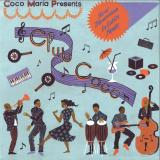
New compilation by Coco Maria on her own new founded imprint Club Coco. Comes with a 4 page folded insert.
There are albums that aren’t just listened to—they’re lived in. Club Coco – New Dimensions in Latin Music is one of them. This compilation, curated by Coco María, marks the first release on her own label and serves as a sonic portrait of what Latin music can become when it’s guided by intuition rather than labels. Eleven tracks open the windows and cross continents as effortlessly as changing a song. Here, Neapolitan synthesizers coexist with digital cumbias, voices whisper from within the groove, and rhythms invite movement—without urgency or pretense.
This selection isn’t defined by a genre but by a feeling: that of someone dancing with an open heart and keen ears. Each track is a postcard from a corner of the world, and also a love letter to rhythm and the emotions it stirs. From Bogotá to Naples, passing through Lima, Amsterdam, and New York, this compilation offers a journey where past and future brush against each other in the present moment. Club Coco doesn’t aim to define a sonic truth, but to invite listeners to discover new ways of hearing and feeling.
The party has already started. Come on in.
Lontra is the new project from Brazilian born, Colombian based producer, and musician, Guille Katorzi. The inspiration and influences for this particular project were drawn from diverse sources, including disco, house, Nigerian boogie & afrobeat.
The instrumentals were and produced in Bogotá with Guille laying down the guitar & bass parts which the songs were built upon. After sending the demos to vocalist Sir Jean (Voilaaa/Sir Jean & NMB Afrobeat Experience), with an invitation to collaborate, he was thrilled to receive a warm response to the songs from Sir Jean and so travelled to France in 2023 to record vocals in the singers' home town of Lyon. Returning to Bogotá, a selection of top brass musicians contributed their blazing horns to the project.
Opening up the EP, "Money, Money" serves up a lively disco beat with percussive Afrobeat highlights, funky guitar licks & Afrobeat inspired horn parts, backed by an irresistibly groovy bassline, setting the scene for Sir Jean's lyrical warning "money cannot buy your soul".
Dropping some of the Afrobeat accents and staying closer to the centre line, "Life Is Movement" is a dancefloor focused track where Katorzi's guitar hook pairs with a restless bassline over which Sir Jean's vocal delivery shines. The flipside begins with a sensuous overture on "Mysterious". A loose Afro-beat & guitar syncopation provides an inviting space for the horn section's refrains and solos. The arrangement allows plenty of room for the listener to become intoxicated by the groove, before Sir Jean opens his heart with the emotive ode to someone we learn of only as..."Mysterious".
Closing out proceedings is a more driving club track. The Lyon & The Hunter... where Sir Jean sings a warning wrapped in metaphors while Lontra throws down a club focused punch that deftly dances between funk, house and afro flavours while the scorching horns set the lot aflame.
The culmination of different inspirations and intonations imbues the project with a vivacity and richness in colour that reflects the multi-cultural assembly of players. Canopy is delighted to welcome the talent of Lontra to the family and are happy to say that this is the first in a number of exciting projects that this artist is serving up
Blue Album[22,65 €]
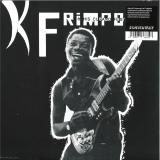
Two Seminal albums from cult Ghanaian musician Alhaji K. Frimpong and his group the Cubano Fiestas, recorded in 1976 and 1977 respectively and considered to be some of the best highlife albums ever recorded, at the pinnacle of West African musical tradition and innovation.
Both originally self titled, they have become known by the colour of the covers - Blue and Black respectively. The Blue Album brings new arrangements to traditional Ghanaian melodies and features the masterpiece Kyenkyen Bi Adi M’awu (come back my love) - universally known in Ghana, covered and sampled by artists such as Chronnix, Gnarls Barkley and many more. The Black Album expands the electronic elements and features the equally visionary Hwehwe Mu Na Yi Wo Mpena, although the real gem is hiding on the B side: the extended groove of “Adam Nana”. Sinuously evolving guitar lines, clavinet vamps, harmonised vocal snatches and otherworldly percussion expand and contract over a full quarter of an hour - a Ghanaian repost to the Afro Jazz experiments going on at the same time on the other side of the Atlantic. Although popular in Ghana at the time of the release, the albums were never distributed internationally and original copies of the album are extremely rare.
The albums got a limited reissue in 2011 and have been unavailable since - even reissue copies sell for high prices on the second hand market
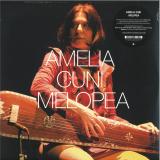
Black Truffle is pleased to announce Melopea, presenting two new pieces highlighting the incredible voice of Amelia Cuni (1958-2024), the great Italian singer, based in Berlin in later life, whose mastery of the classical Indian dhrupad developed in parallel with a commitment to contemporary experimental approaches. After two stunning archival releases documenting traditional dhrupad performances in India in the 1990s (BT079 and BT092), the two side-long pieces here embody the freedom with which Cuni explored new contexts and settings for her singing.
Both make use of a long recording of Cuni singing the pentatonic Raag Bhoop (or Bhopali) made in 2012 by her partner Werner Durand in Berlin. ‘Melopea’ began from Cuni and Durand’s superimposition of this recording with violinist Silvia Tarozzi and cellist Deborah Walker’s performance of Éliane Radigue’s ‘Occam River II’. Inspired by the beauty of this chance encounter (and other experiments with non-synchronous collaboration during the pandemic years), Tarozzi and Walker recorded independently, without hearing Cuni’s voice but ‘having her present in memory’. Tarozzi and Walker’s bowed strings places Cuni’s magisterial performance in a new context, emphasising, as Radigue commented upon hearing the initial layering of her piece with Cuni’s voice, a shared ‘searching toward the partials, overtones, these natural constituents of acoustical sounds in their richness’. Beginning with whispered bowed harmonics, the violin and cello swap the stability of dhrupad’s traditional tanpura drone for a slowly evolving, uneasy web of harmonic interactions recalling some of Harley Gaber’s work, sometimes sitting on dissonances for long periods or allowing changing interference patterns to come to the fore. Primarily focusing on her lower register, Cuni’s performance demonstrates her mastery of microtonal pitch subtleties, elegant sweeping glissandi and meditatively unhurried pacing.
The continuation of the same recording by Cuni forms the foundation of ‘Bhoop-Murchana’, with Anthea Caddy on cello and Werner Durand on soprano saxophone. In contrast to the randomised layering of the first piece, here Durand and Caddy have carefully selected pitches based on the raag Cuni sings, using the ‘Murchana’ form, which uses the constituent notes of the raag as tonics of new raags, retaining the same interval structure. Both players who have developed tones of striking depth and harmonic purity on their instruments, Caddy and Durand’s patient long tones are simultaneously rigorously grounded in the physical properties of sound and possessed of an immaterial, floating quality. Combined with Cuni’s voice and, near the piece’s end, her contributions on hammered and plucked tanpura, the effect borders on miraculous. To surrender to this music is like slipping into an onsen pool, feeling the instantaneous release of every tension. Accompanied by liner notes from Durand, Tarozzi and Walker, Melopea is both a moving tribute to the profound art of Amelia Cuni and, for the uninitiated, a perfect introduction to it.