quête:some other people

Genres
Tout
The Mighty Mocambos - Scenarios LP

A unique longplayer by Germany's Funk champions The Mighty Mocambos: 'Scénarios' is a wild journey through iconic performances captured on 8-track tape, including celebrated versions of breakdance favourites like 'Axel F.' And 'Let The Music Play' as well as brand new original material composed especially for recordings in unusual settings.

Hamburg's deep funk chefs are known for their intuitive recordings that capture the energy of a live performance, and with this record they go all the way.

Just before the pandemic, the group recorded an in-store live session at legendary Hamburg record shop Groove City and taped an impromptu performance at JAM PDM! breakdance battle in Potsdam. Both were released on vinyl 45s, quickly sold out and became secret weapons for DJs. While most bands shifted their stage to the studio in 2020, producing an abundance of isolated lockdown-inspired material, the Mighty Mocambos – never shy of an antidote - took the mobile version of their recording studio on the road.

With no audience allowed at the Pitt Hopkins Music Session charity concert, the group used the occasion to compose meditative folk-soul instrumentals to be performed exclusively on stringed instruments. Sweaty funk does not work via video stream, but the format provided a welcome opportunity to create something entirely different. Even without electricity and drums, the cinematic "Four Two Three" and "Silent Heroes" are unmistakably recognizable as Mocambo themes.

When you follow Nina Simone's credo that an "artist's duty is to reflect the times", it became evident that once the world slowly started opening up again, further concerts would be captured on the group's portable Fostex R-8 tape machine. Luckily, restrictions fell on the very evening that the band hit the open air stage at the Import Export in Munich on September 11th 2021. The extended afrobeat-inspired jam on J.J. Cale's "Carry On" witnesses people celebrating and dancing together again for the first time after a year and the manic "Munich Psycholympics" unleashes all bottled-up energies that had being lying dormant.

The slightly kafka-esque "Ghost Walk" was taped during a soundcheck for a concert that was eventually called off for safety reasons, reflecting once more the uncertainty of the time. The last scénario sees the Mighty Mocambos returning to a packed indoor venue, playing "Let The Music Play" to a audience of b-boys and -girls – a testament to the sheer power of music. Featured as an encore here, an acoustic version of "Where Do We Go From Here?" (originally recorded with Lee Fields) closes the record and its restless voyage through unusual recording situations.

"Scénarios" differs drastically from other live albums as it does not seek to replicate existing material from studio albums. All songs were written or arranged especially for the live recordings in order to combine the group's DJ-friendly trademark sound with added vibes and momentum from the audience. Most of them were recorded while they were performed in public for the first time ever.

Comes in gatefold sleeve & includes download voucher.


d 04: Theme from Beverly Hills Cop (Axel F) Live

pas en stock

Commandez maintenant et nous commanderons l'article pour vous chez notre fournisseur.

17,61

Last In: 2 years ago
Hagop Tchaparian - Bolts LP

Hagop Tchaparian

Bolts LP

12inchTEXT054
Text Records
24.10.2022

Kieran Hebden’s Text Records is proud to announce Bolts, the debut album from British-Armenian producer Hagop Tchaparian, set for release in autumn 2022.

“Can I say, my friends call me Hagop? I don’t want people to struggle with my long name. I always liked that Eminem introduced himself and said “hi, my name is….” I think I want to be called Hagop so people find it easy to connect.”

Hagop’s debut album Bolts features ten tracks of hyper-personal rhythm music that mixes techno with field recordings of his travels through Armenian and Mediterranean culture. Early DJ support has come from Four Tet, Gilles Peterson and Nikki Nair. The artwork for Bolts was curated by skateboard, music and sports photography legend Atiba Jefferson.
“As a teenager I would make the pilgrimage to Slam City skateboard shop - I couldn't really afford to buy anything other than Thrasher magazine. I would see Atiba’s photos and get super inspired and want to push across the bridge and go skate Southbank. Downstairs was Rough Trade Records where I would be able to find the music from the music section in Thrasher and music i heard in the background of skate videos that I couldn’t really seem to find anywhere else. Atiba was photographing loads of these bands too so it's absolutely a crazy dream to be able to work with someone who provided so much of the inspiration throughout my life.”

pas en stock

Commandez maintenant et nous commanderons l'article pour vous chez notre fournisseur.

18,87

Last In: 19 months ago
WHITMER THOMAS - THE OLDER I GET, THE FUNNIER I WAS

The Older I Get, the Funnier I Was, which follows Thomas’ brilliant 2020 HBO special The Golden One and his Can't Believe You're Happy Here EP released earlier this year, surveys a range of emotion and offers a broad sonic palette, moving between pop punk, electro, and the obvious influence of the singer-songwriters he grew up listening to in early childhood. It conjures the ennui of Bright Eyes alongside the barefaced storytelling of John Prine, the overstuffed lists of Fred Thomas with the lackadaisical humor of Colleen Green, among many others.

Thomas attributes the dexterity of the record to Duterte, who recorded and engineered most of it in addition to serving up plenty of encouragement when Thomas got down on the process. “As a comic, I used to test out new songs during sets to see if the funny bits were hitting, but since I wrote this in isolation I ended up writing lyrics and worrying less about making jokes,” Thomas says. That said, the album’s plenty funny. Stand-out and lead single “Rigamarole” opens with a Thomas-voiced infomercial that recalls his oft-cited lookalike Jim Carrey as the Grinch, before launching into a buoyant pop song about being depressed.

Whitmer Thomas will admit that when he traveled home to small town Gulf Shores, Alabama to record his HBO stand-up special, The Golden One, he expected to be greeted as a returning hero, a conquering king, or at minimum, a guy with a moderately successful career as an entertainer in Los Angeles. “I expected a big welcome home, open arms, but when I went back I realized: nobody fucking knows me. Nobody remembers me,” Thomas says. “In the years I’d been performing that show, I’d been romanticizing my childhood in this mythologized place, but the visit made me see that I’m not really from there anymore.”

The sense of alienation compounded when Thomas recognized how few people in town remembered his mom, to whom The Golden One is dedicated and largely about. Thomas grew up watching her perform with her twin sister at the legendary Flora-Bama Lounge, where he set the special, and still counts her as one of his musical influences. His new album, The Older I Get, the Funnier I Was, isn’t overtly about his mom, her presence is deeply felt throughout. While in Gulf Shores, Thomas discovered dozens of her old recordings, all of which had been wrecked by Katrina, but upon returning to LA, Thomas paid “a fancy place in Hollywood” to fix the tapes and hired Melina Duterte (Jay Som, Bachelor, Routine) to mix them. The two struck up a collaborative friendship, and Thomas had the sound of his mom’s voice back. “I was listening to songs she recorded when she was about my age, just these heartfelt, sweet Americana songs,” he says. “I decided then that I wanted to lose the Ian Curtis voice I always sing with; I wanted to do what came naturally, because my mom always sounded like herself, even when she was singing some cheesy reggae song about, like, Jamaica.”

Thus he went into The Older I Get, the Funnier I Was knowing it was time to retire his darkwave persona, and leaning into his natural, chirpier voice, which he says sounds “like a 12-year-old’s.” It makes sense: much of the album chronicles what Thomas calls “being a kid and feeling like you have no control and overcompensating by being annoying.” “So much of the album is about witnessing drug and alcohol addiction as a kid and seeing what it does to people, but also realizing that there's nothing you can do about it,” Thomas says. It’s familiar territory (see: “Partied to Death”) but the methodology is different this time around; true to its title, The Older I Get, the Funnier I Was isn’t always looking for laughs. Thomas might’ve left his hometown behind, but his kid self is still tagging along, a Peter Pan shadow he can’t untether himself from. The first line he sings on The Older I Get, the Funnier I Was is: “There should be a room at every party where you can just sit and watch a movie.” Find a 12-year-old who wouldn’t say the same.

pré-commande21.10.2022

il devrait être publié sur 21.10.2022

27,10
Lee Tracy & Isaac Manning - Is it What You Want

As the sun sets on a quaint East Nashville house, a young man bares a piece of his soul. Facing the camera, sporting a silky suit jacket/shirt/slacks/fingerless gloves ensemble that announces "singer" before he's even opened his mouth, Lee Tracy Johnson settles onto his stage, the front yard. He sways to the dirge-like drum machine pulse of a synth-soaked slow jam, extends his arms as if gaining his balance, and croons in affecting, fragile earnest, "I need your love… oh baby…"

Dogs in the yard next door begin barking. A mysterious cardboard robot figure, beamed in from galaxies unknown and affixed to a tree, is less vocal. Lee doesn't acknowledge either's presence. He's busy feeling it, arms and hands gesticulating. His voice rises in falsetto over the now-quiet dogs, over the ambient noise from the street that seeps into the handheld camcorder's microphone, over the recording of his own voice played back from a boombox off-camera. After six minutes the single, continuous shot ends. In this intimate creative universe there are no re-takes. There are many more music videos to shoot, and as Lee later puts it, "The first time you do it is actually the best. Because you can never get that again. You expressing yourself from within."

"I Need Your Love" dates from a lost heyday. From some time in the '80s or early '90s, when Lee Tracy (as he was known in performance) and his music partner/producer/manager Isaac Manning committed hours upon hours of their sonic and visual ideas to tape. Embracing drum machines and synthesizers – electronics that made their personal futurism palpable – they recorded exclusively at home, live in a room into a simple cassette deck. Soul, funk, electro and new wave informed their songs, yet Lee and Isaac eschewed the confinement of conventional categories and genres, preferring to let experimentation guide them.

"Anytime somebody put out a new record they had the same instruments or the same sound," explains Isaac. "So I basically wanted to find something that's really gonna stand out away from all of the rest of 'em." Their ethos meant that every idea they came up with was at least worth trying: echoed out half-rapped exhortations over frantic techno-style beats, gospel synth soul, modal electro-funk, oddball pop reinterpretations, emo AOR balladry, nods to Prince and the Fat Boys, or arrangements that might collapse mid-song into a mess of arcade game-ish blips before rallying to reach the finish line. All of it conjoined by consistent tape hiss, and most vitally, Lee's chameleonic voice, which managed to wildly shape shift and still evoke something sincere – whether toggling between falsetto and tenor exalting Jesus's return, or punctuating a melismatic romantic adlib with a succinct, "We all know how it feels to be alone."

"People think we went to a studio," says Isaac derisively. "We never went to no studio. We didn't have the money to go to no studio! We did this stuff at home. I shot videos in my front yard with whatever we could to get things together." Sometimes Isaac would just put on an instrumental record, be it "Planet Rock" or "Don't Cry For Me Argentina" (from Evita), press "record," and let Lee improvise over it, yielding peculiar love songs, would-be patriotic anthems, or Elvis Presley or Marilyn Monroe tributes. Technical limitations and a lack of professional polish never dissuaded them. They believed they were onto something.

"That struggle," Isaac says, "made that sound sound good to me."

In the parlance of modern music criticism Lee and Isaac's dizzying DIY efforts would inevitably be described as "outsider." But "outsider" carries the burden of untold additional layers of meaning if you're Black and from the South, creating on a budget, and trying to get someone, anyone within the country music capital of the world to take your vision seriously. "What category should we put it in?" Isaac asks rhetorically. "I don't know. All I know is feeling. I ain't gonna name it nothing. It's music. If it grabs your soul and touch your heart that's what it basically is supposed to do."

=

Born in 1963, the baby boy of nine siblings, Lee Tracy spent his earliest years living amidst the shotgun houses on Nashville's south side. "We was poor, man!" he says, recalling the outhouse his family used for a bathroom and the blocks of ice they kept in the kitchen to chill perishables. "But I actually don't think I really realized I was in poverty until I got grown and started thinking about it." Lee's mom worked at the Holiday Inn; his dad did whatever he had to do, from selling fruit from a horse drawn cart to bootlegging. "We didn't have much," Lee continues, "but my mother and my father got us the things we needed, the clothes on our back." By the end of the decade with the city's urban renewal programs razing entire neighborhoods to accommodate construction of the Interstate, the family moved to Edgehill Projects. Lee remembers music and art as a constant source of inspiration for he and his brothers and sisters – especially after seeing the Jackson 5 perform on Ed Sullivan. "As a small child I just knew that was what I wanted to do."

His older brother Don began musically mentoring him, introducing Lee to a variety of instruments and sounds. "He would never play one particular type of music, like R&B," says Lee. "I was surrounded by jazz, hard rock and roll, easy listening, gospel, reggae, country music; I mean I was a sponge absorbing all of that." Lee taught himself to play drums by beating on cardboard boxes, gaining a rep around the way for his timekeeping, and his singing voice. Emulating his favorites, Earth Wind & Fire and Cameo, he formed groups with other kids with era-evocative band names like Concept and TNT Connection, and emerged as the leader of disciplined rehearsals. "I made them practice," says Lee. "We practiced and practiced and practiced. Because I wanted that perfection." By high school the most accomplished of these bands would take top prize in a prominent local talent show. It was a big moment for Lee, and he felt ready to take things to the next level. But his band-mates had other ideas.

"I don't know what happened," he says, still miffed at the memory. "It must have blew they mind after we won and people started showing notice, because it's like everybody quit! I was like, where the hell did everybody go?" Lee had always made a point of interrogating prospective musicians about their intentions before joining his groups: were they really serious or just looking for a way to pick up girls? Now he understood even more the importance of finding a collaborator just as committed to the music as he was.

=

Isaac Manning had spent much of his life immersed in music and the arts – singing in the church choir with his family on Nashville's north side, writing, painting, dancing, and working various gigs within the entertainment industry. After serving in the armed forces, in the early '70s he ran The Teenage Place, a music and performance venue that catered to the local youth. But he was forced out of town when word of one of his recreational routines created a stir beyond the safe haven of his bohemian circles.

"I was growing marijuana," Isaac explains. "It wasn't no business, I was smoking it myself… I would put marijuana in scrambled eggs, cornbread and stuff." His weed use originated as a form of self-medication to combat severe tooth pain. But when he began sharing it with some of the other young people he hung out with, some of who just so happened to be the kids of Nashville politicians, the cops came calling. "When I got busted," he remembers, "they were talking about how they were gonna get rid of me because they didn't want me saying nothing about they children because of the politics and stuff. So I got my family, took two raggedy cars, and left Nashville and went to Vegas."

Out in the desert, Isaac happened to meet Chubby Checker of "The Twist" fame while the singer was gigging at The Flamingo. Impressed by Isaac's zeal, Checker invited him to go on the road with him as his tour manager/roadie/valet. The experience gave Isaac a window into a part of the entertainment world he'd never encountered – a glimpse of what a true pop act's audience looked like. "Chubby Checker, none of his shows were played for Black folks," he remembers. "All his gigs were done at high-class white people areas." Returning home after a few years with Chubby, Isaac was properly motivated to make it in Music City. He began writing songs and scouting around Nashville for local talent anywhere he could find it with an expressed goal: "Find someone who can deliver your songs the way you want 'em delivered and make people feel what you want them to feel."

One day while walking through Edgehill Projects Isaac heard someone playing the drums in a way that made him stop and take notice. "The music was so tight, just the drums made me feel like, oh I'm-a find this person," he recalls. "So I circled through the projects until I found who it was.

"That's how I met him – Lee Tracy. When I found him and he started singing and stuff, I said, ohhh, this is somebody different."

=

Theirs was a true complementary partnership: young Lee possessed the raw talent, the older Isaac the belief. "He's really the only one besides my brother and my family that really seen the potential in me," says Lee. "He made me see that I could do it."

Isaac long being a night owl, his house also made for a fertile collaborative environment – a space where there always seemed to be a new piece of his visual art on display: paintings, illustrations, and dolls and figures (including an enigmatic cardboard robot). Lee and Issac would hang out together and talk, listen to music, conjure ideas, and smoke the herb Isaac had resumed growing in his yard. "It got to where I could trust him, he could trust me," Isaac says of their bond. They also worked together for hours on drawings, spreading larges rolls of paper on the walls and sketching faces with abstract patterns and imagery: alien-like beings, tri-horned horse heads, inverted Janus-like characters where one visage blurred into the other.

Soon it became apparent that they didn't need other collaborators; self-sufficiency was the natural way forward. At Isaac's behest Lee, already fed up with dealing with band musicians, began playing around with a poly-sonic Yamaha keyboard at the local music store. "It had everything on it – trumpet, bass, drums, organ," remembers Lee. "And that's when I started recording my own stuff."

The technology afforded Lee the flexibility and independence he craved, setting him on a path other bedroom musicians and producers around the world were simultaneously following through the '80s into the early '90s. Saving up money from day jobs, he eventually supplemented the Yamaha Isaac had gotten him with Roland and Casio drum machines and a Moog. Lee was living in an apartment in Hillside at that point caring for his dad, who'd been partially paralyzed since early in life. In the evenings up in his second floor room, the music put him in a zone where he could tune out everything and lose himself in his ideas.

"Oh I loved it," he recalls. "I would really experiment with the instruments and use a lot of different sound effects. I was looking for something nobody else had. I wanted something totally different. And once I found the sound I was looking for, I would just smoke me a good joint and just let it go, hit the record button." More potent a creative stimulant than even Isaac's weed was the holistic flow and spontaneity of recording. Between sessions at Isaac's place and Lee's apartment, their volume of output quickly ballooned.

"We was always recording," says Lee. "That's why we have so much music. Even when I went to Isaac's and we start creating, I get home, my mind is racing, I gotta start creating, creating, creating. I remember there were times when I took a 90-minute tape from front to back and just filled it up."

"We never practiced," says Isaac. "See, that was just so odd about the whole thing. I could relate to him, and tell him about the songs I had ideas for and everything and stuff. And then he would bring it back or whatever, and we'd get together and put it down." Once the taskmaster hell bent on rehearsing, Lee had flipped a full 180. Perfection was no longer an aspiration, but the enemy of inspiration.

"I seen where practicing and practicing got me," says Lee. "A lot of musicians you get to playing and they gotta stop, they have to analyze the music. But while you analyzing you losing a lot of the greatness of what you creating. Stop analyzing what you play, just play! And it'll all take shape."

=

"I hope you understood the beginning of the record because this was invented from a dream I had today… (You tell me, I'll tell you, we'll figure it out together)" – Lee Tracy and Isaac Manning, "Hope You Understand"

Lee lets loose a maniacal cackle when he acknowledges that the material that he and Isaac recorded was by anyone's estimation pretty out there. It's the same laugh that commences "Hope You Understand" – a chaotic transmission that encapsulates the duality at the heart of their music: a stated desire to reach people and a compulsion to go as leftfield as they saw fit.

"We just did it," says Lee. "We cut the music on and cut loose. I don't sit around and write. I do it by listening, get a feeling, play the music, and the lyrics and stuff just come out of me."

The approach proved adaptable to interpreting other artists' material. While recording a cover of Whitney Houston's pop ballad "Saving All My Love For You," Lee played Whitney's version in his headphones as he laid down his own vocals – partially following the lyrics, partially using them as a departure point. The end result is barely recognizable compared with the original, Lee and Isaac having switched up the time signature and reinvented the melody along the way towards morphing a slick mainstream radio standard into something that sounds solely their own.

"I really used that song to get me started," says Lee. "Then I said, well I need something else, something is missing. Something just came over me. That's when I came up with 'Is It What You Want.'"

The song would become the centerpiece of Lee and Isaac's repertoire. Pushed along by a percolating metronomic Rhythm King style beat somewhere between a military march and a samba, "Is It What You Want" finds Lee pleading the sincerity of his commitment to a potential love interest embellished by vocal tics and hiccups subtlely reminiscent of his childhood hero MJ. Absent chord changes, only synth riffs gliding in and out like apparitions, the song achieves a lingering lo-fi power that leaves you feeling like it's still playing, somewhere, even after the fade out.

"I don't know, it's like a real spiritual song," Lee reflects. "But it's not just spiritual. To me the more I listen to it it's like about everything that you do in your everyday life, period. Is it what you want? Do you want a car or you don't want a car? Do you want Jesus or do you want the Devil? It's basically asking you the question. Can't nobody answer the question but you yourself."

In 1989 Lee won a lawsuit stemming from injuries sustained from a fight he'd gotten into. He took part of the settlement money and with Isaac pressed up "Saving All My Love For You" b/w "Is It What You Want" as a 45 single. Isaac christened the label One Chance Records. "Because that's all we wanted," he says with a laugh, "one chance."

Isaac sent the record out to radio stations and major labels, hoping for it to make enough noise to get picked up nationally. But the response he and Lee were hoping for never materialized. According to Isaac the closest the single got to getting played on the radio is when a disk jock from a local station made a highly unusual announcement on air: "The dude said on the radio, 107.5 – 'We are not gonna play 'Is It What You Want.' We cracked up! Wow, that's deep.

"It was a whole racist thing that was going on," he reflects. "So we just looked over and kept on going. That was it. That was about the way it goes… If you were Black and you were living in Nashville and stuff, that's the way you got treated." Isaac already knew as much from all the times he'd brought he and Lee's tapes (even their cache of country music tunes) over to Music Row to try to drum up interest to no avail.

"Isaac, he really worked his ass off," says Lee. "He probably been to every record place down on Music Row." Nashville's famed recording and music business corridor wasn't but a few blocks from where Lee grew up. Close enough, he remembers, for him to ride his bike along its back alleys and stumble upon the occasional random treasure, like a discarded box of harmonicas. Getting in through the front door, however, still felt a world away.

"I just don't think at the time our music fell into a category for them," he concedes. "It was before its time."

=

Lee stopped making music some time in the latter part of the '90s, around the time his mom passed away and life became increasingly tough to manage. "When my mother died I had a nervous breakdown," he says, "So I shut down for a long time. I was in such a sadness frame of mind. That's why nobody seen me. I had just disappeared off the map." He fell out of touch with Isaac, and in an indication of just how bad things had gotten for him, lost track of all the recordings they'd made together. Music became a distant memory.

Fortunately, Isaac kept the faith. In a self-published collection of his poetry – paeans to some of his favorite entertainment and public figures entitled Friends and Dick Clark – he'd written that he believed "music has a life of its own." But his prescience and presence of mind were truly manifested in the fact that he kept an archive of he and Lee's work. As perfectly imperfect as "Is It What You Want" now sounds in a post-Personal Space world, Lee and Isaac's lone official release was in fact just a taste. The bulk of the Is It What You Want album is culled from the pair's essentially unheard home recordings – complete songs, half-realized experiments, Isaac's blue monologues and pronouncements et al – compiled, mixed and programmed in the loose and impulsive creative spirit of their regular get-togethers from decades ago. The rest of us, it seems, may have finally caught up to them.

On the prospect of at long last reaching a wider audience, Isaac says simply, "I been trying for a long time, it feels good." Ever the survivor, he adds, "The only way I know how to make it to the top is to keep climbing. If one leg break on the ladder, hey, you gotta fix it and keep on going… That's where I be at. I'll kill death to make it out there."

For Lee it all feels akin to a personal resurrection: "It's like I was in a tomb and the tomb was opened and I'm back… Man, it feels so great. I feel like I'm gonna jump out of my skin." Success at this stage of his life, he realizes, probably means something different than what it did back when he was singing and dancing in Isaac's front yard. "What I really mean by 'making it,'" he explains isn't just the music being heard but, "the story being told."

Occasionally Lee will pull up "Is It What You Want" on YouTube on his phone, put on his headphones, and listen. He remembers the first time he heard his recorded voice. How surreal it was, how he thought to himself, "Is that really me?" What would he say to that younger version of himself now?

"I would probably tell myself, hang in there, don't give up. Keep striving for the goal. And everything will work out."

Despite what's printed on the record label, sometimes you do get more than one chance.

pas en stock

Commandez maintenant et nous commanderons l'article pour vous chez notre fournisseur.

11,72

Last In: 3 years ago
Embrace - How To Be A Person Like Other People

Embrace have announced their eighth studio album 'How To Be A Person
Like Other People' will be released on their own Mo'betta label
Talking about the album, Richard said "Whenever we put out a new album it's
always a really big deal to us, we put everything we have into it. We know that
there's something about what we do that people love, that they just don't get from
other bands. It's like a pact, they want us to be intimate and personal and
autobiographical, but they also want us to be confident and rousing and
anthemic. It sounds like a contradiction, but I think when we're at our best we
somehow pull it off. I think in that sense this album is the most Embrace album
we've ever made".
Meanwhile the band have announced tour dates in support of the new album,
including their biggest London show in over 17 years at Brixton Academy on
Friday 9th September, a venue the band last played in 2005.
Produced and mixed by Richard McNamara at Magnetic North Studios the new
album is the follow-up to the band's 2018 Top 5 album, Love Is A Basic Need.

pré-commande14.10.2022

il devrait être publié sur 14.10.2022

26,85
Bunny Striker Lee - 'strikes Back- The Sound Of Studio One'

2022 Repress
The Sound of Studio One can be identified by the great singers that it cultivated along the many great songs that these singers released. But as studio 1's dominance was slowly pulled away by the up and coming new breed of producers many of the artists would inevitably end up working for these new camps and so the songs and singers found a new audience. The reggae sound of the Studio 1 would make a great combination and the man to pull this was together Bunny Lee.
The 1960's in Jamaica was run by two main factions, Coxsonne's Studio 1 and Duke Reid's Treasure Isle. These two leading protagonists saw what some of the other great Sound System men like ' Tom The Great Sebastian' had not taken onboard, that when the tunes they imported began to dry up from the USA, their future lied in producing music. Tunes that suited the musical styles that the people of Jamaica still enjoyed. By the late 1960's thse supremacy was being challenged by the up and coming new producers on the scene, Lee Perry being one, and the other being 'Ghost of the Studios' himself, Bunny Lee. Bunny 'Striker' Lee may have inherited the moniker 'Striker' from his liking of a particular TV show called 'The Hitch-Hiker', but it would soon stand also for the considerable hits he would obtain as he was declared producer of the year in Jamaica in 1969, 1970,1971 and 1972.
For this release, we have compiled many of the great Studio hits that Bunny Lee recorded with the singers that had originally cut at the famed Studio 1. Bunny Lee's sprinkling of magic over some classic tunes....the sound of Studio 1 backed up this time Bunny 'Striker' Lee's set of star musicians The Aggravators. Proving you can't keep a good tune down, or a great producer pushing forward.....Bunny Lee strikes back....
Hope you enjoy the set.....

pas en stock

Commandez maintenant et nous commanderons l'article pour vous chez notre fournisseur.

13,40

Last In: 3 years ago
Lester Robertson - Akirfa/Untitled Ballad

On this 7”, we present two lost jazz tracks by the trombonist and Horace Tapscott-collaborator, Lester Robertson. Lester has worked with some of the greats of jazz including Gerald Wilson, Anita O'Day, Lionel Hampton and Roy Porter Sound Machine on the classic 'Jessica' album.

Lester was a member of Horace Tapscott's The Pan-Afrikan Peoples Arkestra and features on the iconic underground jazz albums 'The Call' and 'Live At I.U.C.C.'. The Arkestra was set up in 1961 in Los Angeles and over the years has included wonderful, inspirational musicians such as Adele Sebastian, Kamasi Washington, Dwight Trible, Phil Ranelin, Arthur Blythe, Jesse Sharps and Nate Morgan.

These two recordings have recently been discovered on an archived master tape that little information on it other than Lester's name and the track titles. Sadly, the other players on the tracks aren’t credited on the tape, so a line-up can’t be 100% confirmed. Still, the magic of what they laid down in the session pays testament to their artistry. First up is the lively popping track 'Akirfa' in which Lester gets space to let rip and exercise his talents. On the flip is the euphonious 'Untitled Ballad', a mellifluent lullaby for an end-of-the-day wind-down.

Lost for a while, but thankfully not forgotten, these beautiful recordings finally get their chance to shine.

pré-commande14.10.2022

il devrait être publié sur 14.10.2022

15,92
Surprise Chef - Education & Recreation

Surprise Chef’s music is based on evoking mood; their vivid arrangements utilize time and space to build soundscapes that invite the listener into their world. The quintet’s distinct sound pulls from 70s film scores, the funkier side of jazz, and the samples that form the foundation of hip hop. They push the boundaries of instrumental soul and funk with their own approach honed by countless hours in the studio, studying the masters, and perhaps most importantly, the “tyranny of distance” that dictates a unique perspective to their music. Hailing from just outside of Melbourne, Australia their first two albums, All News Is Good News and Daylight Savings amassed a die-hard fanbase and brought their sound from their home studio to every corner of the globe. The band is now signed to Big Crown Records, joining a lineage of contemporary and classic sounds that have influenced Surprise Chef’s music since their formation in 2017. Surprise Chef is Lachlan Stuckey on guitar, Jethro Curtin on keys, Carl Lindeberg on bass, Andrew Congues on drums, and Hudson Whitlock—the latest member who does it all from percussion to composing to producing. Their self proclaimed "moody shades of instrumental jazz-funk" have a bit of everything: punchy drums, infectious keys, rhythm guitar you might hear on a Studio One record, and flute lines that could be from a Blue Note session. But when you step back and take in the entirety of their sound and approach, you'll hear and see a group greater than the sum of its parts. In many ways Surprise Chef embodies the idiom "the benefits of limits." They were limited in that there weren't many people making or talking about instrumental jazz/soul/funk in Southeast Australia, let alone putting out records. This left them to develop their sound and approach in a kind of creative isolation where a small circle of friends and like-minded musicians fed off each other. "Being in Australia, being so far away, we only get glimpses and glances of this music’s origins," Stuckey says. "But hearing a label like Big Crown was one of the first times we realized you could make fresh, new soul music that wasn't super retro or just nostalgic." This approach is on full display throughout their new album Education & Recreation. Tracks like “Velodrome” pair chunky drums with an earworm synth line that has all the making of something you would find on an Ultimate Breaks & Beats compilation while numbers like “Iconoclasts” show their knack for tasteful use of space. From the crushing intro of “Suburban Breeze” to the floaty mellow bop of “Spring’s Theme” Surprise Chef has weaved together an album that takes you through peaks and valleys of emotion and provides a vivid soundtrack that will pull you deeper into your imagination. There is a beauty in the vast space for interpretation of instrumental music and they are adding a modern classic to the canon with this new album. Turn on the record and enjoy the ride, wherever it may take you.

pré-commande14.10.2022

il devrait être publié sur 14.10.2022

24,58
Nutrients - Different Bridges

Reflecting upon their new album Different Bridges, Nutrients discovered a
time capsule from the dullest days of the pandemic
The 10 hopeful songs manage to sonically sound as optimistic as their lyrics.
Unbeknownst to the band, they were composing an ode to the way life had once
been. Lyrically, Teeple subconsciously penned love letters to everything he had
taken for granted: parties, air travel, even just meeting new people. The band's
sun-drenched guitars continue to jingle and jangle on Different Bridges, yet this
time around, other ingredients are in the spotlight. Sean McKee's basslines
ecstatically bounce around on the album's title track opener, while Iulia Ciobanu's
ghostly harmonies and tense keys soar on the jazzy, lounge pop bop Nauseous.
Ben Fukuzawa's steady cadence and vivacious fills animate tracks like the spritely
closer, Kool Kat '22. Saxophone by guest Emily Steinwall shimmers alongside the
buoyant congas, bongos, and triangle added by percussionist Juan Carlos
Medrano. Still, guitar work on songs like the wordplay-adorned I and the nostalgic
House Fire Painting sturdily underpin Taylor Teeple and Will Hunter's smooth
songwriting. Compositionally, the band has freshened up forgotten cliches from
'70s soft rock and '80s new wave and incorporated them into a signature sound
listeners first discovered on their self- titled debut. Some of the more oblique
noodling may bring to mind bands like Steely Dan, while certain funk-lite grooves
evoke British pop groups like Orange Juice or Haircut 100. Contemporarily,
Different Bridges would likely find fans in listeners of fellow Canadians TOPS,
Video Age, or even Drugdealer. That optimism was perhaps a bit….well optimistic,
the band now recognizes. But they still believe that keeping a positive mindset is
key to creating music you can be proud of, and living a fulfilling life in general.

pré-commande14.10.2022

il devrait être publié sur 14.10.2022

30,21
The Brother Brothers - Cover To Cover

On 'Cover to Cover', The Brother Brothers pay homage to those early
influences and other favorite songwriters with unique arrangements of
twelve beloved classics they want more people to hear
Among their eclectic picks: Tom T. Hall’s “That’s How I Got to Memphis,” Jackson
Browne’s “These Days,” James Taylor’s “You Can Close Your Eyes,” Hoagy
Carmichael’s “I Get Along Without You Very Well (Except Sometimes),” Robert Earl
Keen’s “Feelin’ Good Again,” Richard Thompson’s “Waltzing’s for Dreamers,” Judee
Sill’s “Rugged Road” and Tom Waits’ “Flowers Grave.” Their exquisite version of
The Beatles’ “I Will” holds special significance, because they created their own
harmonies over the solo-vocal original when they were six.

pré-commande14.10.2022

il devrait être publié sur 14.10.2022

26,26
Sam Moss - Blues Approved

GREAT LOST ALBUM BY NC LEGEND SAM MOSS IS DISCOVERED, MIXED
FOR DELUXE RELEASE produced by Chris Stamey In Winston-Salem, NC,
guitarist Sam Moss is a legend - A superior, highly versatile musician
whose advocacy for the blues and mastery of the nuances of electric
blues-based soloing somewhat paralleled Mike Bloomfield's in Chicago,
Moss was an inspiring, charismatic mentor to generations of North
Carolina rockers, including Let's Active and The dB's
He was a larger- than- life character whose club appearances astounded local
audiences, yet he never released a record in his lifetime. So, producer Chris
Stamey was thrilled to discover, in 2020, on the end of an old tape, forgotten
masters of Blues Approved, a spectacular Stax- and Muscle Shoalsinfluenced
solo record, made with Mitch Easter in 1977.This "great lost" record reveals that
Moss was also a soulful songwriter and singer. It has now been carefully remixed
and produced for release, with a deluxe booklet featuring detailed liner notes and
bio, session notes by Easter, and lots of vivid color photos. Peter Holsapple (The
dB's) says, "Sam Moss was an inspiration to so many of us; with the release of
Blues Approved, people everywhere will understand why.
Mitch Easter of Let's Active recalls: "Sam wrote interesting songs that almost
always had a blues angle, but he brought in a lot of elements from elsewhere." But
the material then sat on the shelf, unreleased, as Moss opened a vintage guitar
store, selling internationally to rock stars and other celebrities for several
decades.
On July 30, 2021, the City of Winston-Salem honored Moss with a sidewalk star in
the city's Walk of Fame downtown.

pré-commande14.10.2022

il devrait être publié sur 14.10.2022

34,66
Web Web - Oracle LP

Web Web

Oracle LP

12inchCPT499-1
Compost Records
07.10.2022

The first album of Web Web is very uncut, raw, live and direct. Oracle is the first output of a German Supergroup. Check the musician credits below and you'll get the score. The initial idea was to record a spiritual-jazz type of album, with all its imperfection as far as intonation, sound, influences of tunes... just like from their big jazz-heroes in the 70ies (e.g. Strata East, Black Jazz).

Web Web's idea was to record a jazz jam session while to found and proclaim being a fictive band, a formation, which did not exist, while telling people, it would be a secret jam session recording of the Seventies. The prompt problem they were facing: Oh, we never would be able to play concerts, doing interviews, or placing photos on sleeves or post likeness images online. So they decided to reveal their real identities:

Web Web are: Roberto Di Gioia (Piano, Synth, Percussion), Tony Lakatos (Tenor- and Sopranosaxophone), Christian von Kaphengst (Upright Bass) and Peter Gall (Drums).

Roberto Di Gioia (Mastermind of Web Web): - The four of us set up very close in a big room, so we could hear and feel each other the best way. The music became more intensive, improvisations became more dynamic and it was impulsive .

The album Oracle' was recorded on one day, only first takes were used!

We want to keep the burning spirit and the loose vibe we had during the recording session. And we play concerts the wild and free way we recorded this album. Web Web will be on tour 2018, but playing a few concerts in 2017.
Furthermore, one main decision to blab their real identities was: The second Web Web album is recorded in June (with guests like the famous and unique Gembri-player and multiinstrumentalist and singer Majid Bekkas from Morocco).
Both albums were engineered, recorded and mixed by Jan Krause (Beanfield, Poets Of Rhythm).

Roberto Di Gioia: - Tony was tuning his Soprano too high, and his (overdubbed) tenor way too flat!
My synthesizers were somewhere in between...HA! We exactly had the sound we had in our minds, we had it exactly there were we wanted it: a bit of Sun Ra here, a bit of Horace Tapscott there. On some tunes Tony's soprano just sounds like a trumpet, since due to his weird tuning the soprano develops different frequencies in relation to other instruments.

Oracle' is the first live jazz release on Compost. Produced by Roberto Di Gioia and Michael Reinboth.

Roberto Di Gioia has been working with numerous jazz-legends, such as Woody Shaw, Art Farmer, James Moody, Johnny Griffin, Charlie Rouse, Clifford Jordan, Clark Terry, Roy Ayers, Gregory Porter and many more.

From 1990 to 2008: member Klaus Doldingers Passport. As a pianist he made recordings with Udo Lindenberg (MTV-Unplugged, 2011), Charlie Watts ( Music Of The Rolling Stones , 2005), Console ( Reset The Preset , 2003), The Notwist ( Shrink 1998, Neon Golden , 2002). Since 2007 he is working together with Samon Kawamura and Max Herre as KAHEDI: Max Herre ( Hallo Welt , 2012), Joy Denalane ( Gleisdreieck , 2017), u.v.m...His own group MARSMOBIL (produced by Peter Kruder) will release his fourth studioalbum in winter 2017.

Tony Lakatos originates from the world famous Lakatos-familiy from Budapest, Hungary. His father was a famous violinist, as well as his younger brother Roby. He started playing saxophone when he was 15 years old. Tony studied at the Bela-Bartok-Conservatory in Budapest, and made his degree in 1979. Since then he played on over 350 jazz albums (!!), to name a few: Al Foster, Kirk Lightsey, Randy Brecker, George Mraz, David Witham, Terri Lyne Carrington, Anthony Jackson. Tony was a member of Jasper Van´t Hofs PILI PILI. Since 1993 he is working with the HR Radio-Bigband as a soloist.

Christian von Kaphengst learned the piano at the Peter-Cornelius-Conservatory in Mainz when he was 6 years old. From 1988 to 1995 he studied upright-bass at the - Musikhochschule in Cologne. He was touring with his own Jazzquartett - Cafe du Sport to Pakistan, India, Turkey and West-Africa. Since 1999 he regularly plays with Patti Austin and The New York Voices in Europe. Von Kaphengst played with the greatest musicians, such as Randy Brecker, Nat Adderley, Roy Hargrove, Joe Sample, Charlie Mariano, Katja Ebstein, Xavier Naidoo, Roachford, Yvonne Catterfeld.

Peter Gall won some important German awards already when he was a youngster, like - Jugend Jazzt . He was touring with the famous - Bundesjazzorchester conducted by German jazz legend Peter Herbholzheimer. He studied at the Berlin University Of Fine Arts and at the Jazz Institute Berlin with John Hollenbeck. Gall made a masterclass at the Manhattan School Of Music with John Riley. He has been working with Seamus Blake, Ben Street, Gabriel Rios, Jasmin Tabatabai, Thomas Quasthoff, Peter Fessler.

pas en stock

Commandez maintenant et nous commanderons l'article pour vous chez notre fournisseur.

15,76

Last In: 8 years ago
The Oaken Chariot - Biznes Time

What is the sound of the Russian dub? There is a storied history of attempts to adapt roots music to Russian soil, but most of them can be attributed to reggae (the so-called 'northern' variety) rather than dub. Gost has a history with the town of Smolensk. It's home to Gamayun, whose great album Filterealism was released on our label last year. Now Anton, one of Gamayun's members, presents his new duo Dubovaya Kolesnitsa (The Oaken Chariot). In his words, it has no connection to his other band at all and is an attempt to go back to the roots of a genre that doesn't truly exist.

The Russian word for oak, 'dub,' looks exactly like the genre, and the chariot emerged from the name for the group's jams - 'telega' - which can be translated as a cart. All the music here is the result of live improvisations: no samples, just instruments (notably Vasiliy Shilov's bass). These recordings have been slightly edited, and even the almost indecipherable texts are freestyle. There's no place for real riddims in Russian dub: sometimes this record sounds like something akin to dub variations on underground Russian hip hop (and we mean that in the best possible way).

We should also remember that dub and reggae (and hip hop as well) all started as the voice of people. The voice of those who are always in the minority and try not to be silent. The most prominent dub producers and reggae performers were against hierarchy, imperialism, and colonialism - and their music was born out of the desire to protest against it. As Anton puts it, Oaken Chariot, the "Russian mutation of dub," is an attempt of voicing the concern. And he links this attempt to a historic Russian tradition of Foolishness for Christ, also known as yurodstvo. The "fool" in question is not naive at all; he's trying to seem lunatic on purpose. For Anton, the music of Oaken Chariot is a rebellion with a cut-off tongue. Here, illegible speech, full of inarticulate sounds, is a sign of the inability of the statement. But this inability represents a statement itself that is inevitable.

Yet, the music of Oaken Chariot is genuinely fun, free, and mesmerizing (like the happenings of holy "fools"), but we could also approach it more conceptually. Theoretician Michael E. Veal describes dub as a 'postsong', taking the form of "linguistic, formal and symbolic indeterminacy." The duo's faintly eerie compositions call back to the notion of musical hauntology. There is an attempt, without any direct references, to reconstruct the feeling of something that was never there at all. A little nostalgic and very forward-thinking at the same time, the music of Oaken Chariot is best described in its own words. In the opening track, a voice can be heard saying "eto delo v lob," which means something like "it's a straight-on thing." This is very direct, almost in the vein of folk music. This is a great - and, it must be said, successful - experiment in searching for the soul of Russian dub. Simple as that.

pas en stock

Commandez maintenant et nous commanderons l'article pour vous chez notre fournisseur.

5,84

Last In: 3 years ago
Ernesto Djedje - Roi Du Ziglibithy LP

If someone would have told me years ago, when I started the label, that one day I would be releasing music by Ernesto Djédjé, the king of Ziglibithy himself, I would have personally driven them to the closest psychiatric institute such is the magnitude of the artist and his iconic tune “Zighlibitiens”.

The star of Ernesto Djédjé started rising in the late 60s, when he became the guitar player and leader of Ivoiro Star, founded by Amédée Pierre, star of Dopé, the leading musical style at the time. Annoyed by the “congolisation” of the Ivorian music that was taking place within the band, Ernesto left the group and emigrated to Paris in 1968 to record his first few singles arranged by Manu Dibango and influenced by Soul, Rhythm & Blues and Jerk. Those recordings reflect the musical mood at that time which was dictated by two musical trends within the Ivoirian scene: Traditional music, embodied amongst others by Amédée Pierre on one hand and imported music from the States, Cameroon and Zaïre on the other. And while the first trend was generally neglected, the youth fully embraced the second and as a result bands such as „Les Black Devils“, „Djinn-Music“, „Bozambo”, “Jimmy Hyacinthe”, shot to stardom overnight by recording mainly funk and disco music. It is within this context that Ernesto would draw the inspiration for a future formula.

Returning to Côte d‘Ivoire in 1974 Ernesto began looking for like minded musicians to form the mighty “Ziglibithiens”. Diabo Steck (drums), Bamba Yang (keyboards & Guitar), Léon Sina (Guitar) and Assalé Best (chef d´orchestre and Saxophon) would become the core of the group and together with Ernesto they began thinking of ways of combining the rhythms and chants of the Bété people and fuse them with Makossa, Funk and Disco and create a musical style that was both Ivorian and International. He called his experiment Ziglibithy and his first two albums, immortalised at the EMI studios in 1977 in Lagos and released on the Badmos label, took West Africa by storm turning Ernesto Djédjé into an icon overnight and one of the legends of African music.
Ernesto Djédjé died in mysterious circumstances on June 9th, 1983 - at the age of 35 - shocking the whole Ivorian nation. And although the end came abruptly, it didn’t come soon enough, and Ernesto had time - within 5 albums - to cement his legacy as one of the most innovative artists the Ivory Coast ever produced.

The song Zighlibitiens, brought to Colombia by an aeronautical mechanic in the early 1980, would become a huge hit on the Caribbean Coast. Renamed “El Tigre” by locals soundsystem operators - certainly due to the Badmos logo - that particular song would reach legendary status in Barranquilla and Cartagena. Setting fire to uncountable local parties, it has become one of the most sought-after Album in that part of the world. And so, while Ziglibithy has mostly disappeared from the airwaves of its country of birth, on the other side of the Atlantic, its fire continues to shine bright.

pré-commande07.10.2022

il devrait être publié sur 07.10.2022

30,46
Goatwhore - Angels Hung from the Arches of Heaven

Rampaging into their 25th year as purveyors of the most ruthless extreme metal, Goatwhore return with perhaps the strongest album of their storied career. Angels Hung From The Arches Of Heaven is 47 minutes of their trademark blend of death, black, thrash and sludge metal delivered with breathless intensity and an unrepentant bloodlust, making for one of the most thrilling records to come out of 2022. Featuring beasts such as the savage “Born Of Satan’s Flesh” that thrashes along relentlessly and drips with evil, the old school crossover flavored “Death From Above” with its guttural chorus, and the epic, chilling title track that is as haunting as it is heavy they cover a lot of sonic territory, everything having that signature Goatwhore feel while constantly doing something a little different. The title of the record - like all Goatwhore releases - is both deep and direct - “It is a basis of human despondency, the arc of life and its relationship with the personal abyss of overwhelming emotion and thought. A mixture of esoteric ideas and biblical scripts and the journey to the places some people care not to venture on mental paths. The rise and fall of the self and how the abyss can be a turning point for some and a passageway to oblivion for others. It is blunt and to the point, just like countless aspects of life.”

pré-commande07.10.2022

il devrait être publié sur 07.10.2022

26,47
Other Lands - Archipelagos LP

AOTN proudly present a new solo outing from long time friend & contributor to Athens of the North, Other Lands aka Gavin L.Sutherland.

Channelling his considerable improvisational skills to evoke notions of island life, his concept was to create something that could work equally well in the wilds of the Western Isles as in the sunnier spots of the world that we all yearned to escape to at that time. The more he played with this idea of groups of islands, of archipelagos the world over, the more it also became about people themselves experiencing isolation as individuals, while still feeling a sense of togetherness with others in the same boat.

Working a little at home but mainly here at Athens of the North studios, he would come in each day over the course of a few weeks and just hit record, playing at times almost without mind. Sometimes the mood would call for keys, strings, or drums through delays for days and days. Often, the music would happen by chance as much as by design. One rule he tried to adhere to was to not overthink things, capturing moments honestly with minimal editing or digital processing.

What we've ended up with is a beautiful, spontaneous, timeless and honest meditation on what it is to be at once both alone and part of a larger whole.

pas en stock

Commandez maintenant et nous commanderons l'article pour vous chez notre fournisseur.

22,27

Last In: 3 years ago
WATI WATIA ZOREY BAND - DÉLIRYOM LP

A violin, a fife, and the endless sky opens up to us. Two voices cross it, a duet of swallows playing their perpetual encounters, joined by percussion that crashes like waves on jagged coasts. This is the opening of the album Déliryom, the beginning of this "watia watia" - meaning joyful mess or tasty mishmash, opened by six "zoreys": in Reunion Island Creole, it means metropolitan people from France. But these zoreys claim their creolity as a family of the heart, a chosen homeland. And they celebrate it. Rosemary Standley (Moriarty) and Marjolaine Karlin met at a concert where Reunionese maloya was resounding in Paris. It was in 2008, and their fascination for the island, its rhythms, its language born for poetry was bound to bring them together. A character too, a majestic poet and celestial wanderer, who for them would be a spiritual father - Alain Peters. Or rather his ghost, since he died in 1995 of a heart attack, leaving behind a daughter and some twenty songs that have shaped a fertile horizon for all the musicians of the Reunion Island... and elsewhere! Six years after giving birth to their first album (Zanz in Lanfèr, 2016), the two singers continue this great journey, exploring other pieces forged over the years, always alongside percussionist and rhythm doctor Salvador Douézy, and new zoreys who have joined them. There is Gérald Chevillon, who plays bass saxophone, Chadi Chouman as a guitarist who has no equal in awakening the colors of his native East, and finally Jennifer Hutt, whose energetic violin evokes the Cajun colors of New Orleans. For even if this new album tells of other facets of the Peters totem, it also ventures towards other Creole lands, other islands where music and song are much more than entertainment: they are a way of being in the world.

pré-commande30.09.2022

il devrait être publié sur 30.09.2022

25,84
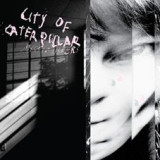
City of Caterpillar - Mystic Sisters LP

CITY OF CATERPILLAR return with their first new album in 20 years, Mystic Sisters! When guitarist/vocalist Brandon Evans, guitarist Jeff Kane, drummer Ryan Parrish and bassist/vocalist Kevin Longendyke unveiled their self-titled debut in 2002, their emotional, frenzied and often cinematic music was at the vanguard of the burgeoning screamo movement. Along with bands like Pg.99 (with whom they shared members), Majority Rule, Planes Mistaken For Stars and others, they helped develop a style of music that took hardcore into convulsive new territory. After years spent living in other parts of the country and playing in other bands—including Darkest Hour, Malady and Ghastly City Sleep, the long awaited CITY OF CATERPILLAR reunion shows snowballed into writing sessions. The result - Mystic Sisters, an album that recaptures the magic of old while taking the band’s music into exciting new territory! The winding and atmospheric title track that embodies CITY OF CATERPILLAR's experimental side features some noise violin from Evans’ former Pg. 99 bandmate Johnny Ward, while tracks like "Decider" and "Paranormaladies" showcases the band's roots with a flurry of viceral, noisey hardcore swagger. Tracked primarily at Montrose Recording in Richmond, Mystic Sisters was self-produced by the band and then mixed and mastered by Jack Shirley (Deafheaven, Bosse-de-Nage). Ultimately, CITY OF CATERPILLAR are more concerned with creating a mood than telling a story. “The band is always focused on mood,” Evans confirms. “To me, that’s the most important thing. I don’t really want people dissecting what we’re trying to say, because it’s not really about us. It never has been. What we cared about 20 years ago was innocent, raw emotion, and that’s what we care about now.”

pré-commande30.09.2022

il devrait être publié sur 30.09.2022

23,14
Maston - Panorama

Maston

Panorama

12inchBEWITH110LP
Be With Records
30.09.2022

With Panorama, Frank Maston pays homage to the classic era of library records and Italian soundtracks of the 70s. A blissed-out, grooving collection of filmic cues, it continues the unique brilliance of Tulips and Darkland. Elegant and easy, subtle and stylish, breezy and beautiful; this is his Maston-piece. Commissioned by legendary label KPM, Panorama cements Maston as a master of modern classics and the most mesmeric of contemporary composers.

In early 2020, Be With suggested to Frank that he should make a KPM record. He wasn't aware that they were still putting out new library records - but he was super keen: "It was completely surreal and it still hasn't fully sank in that I have a record in that catalog, sitting alongside those incredible albums that were so influential to me."

Frank was visiting family in his hometown of LA in March 2020 when the world ground to a halt so the KPM project arrived at a fortuitous moment. Having fantasised about committing to a record with no distractions, with a proper budget, access to his gear and space to work in - to really dig in and try to write and arrange the best work he could possibly make - it was a real "be careful what you wish for" moment. But, as Frank explained, "it completely saved my year and sanity to have something to focus on and get excited about. It was my lifeline." He spent seven months on it, working almost every day.

Maston had already been making library-influenced music so when KPM outlined the criteria for the tracks it was exactly what he had been doing all along. He thought the best approach would be to make a follow-up to Tulips that had a parallel life as a KPM record. Enjoying complete creative freedom, “gave me the drive to power through and dig in deep. I'm not sure if I could have kept myself on such a rigorous recording schedule under my own steam, and I think the momentum I had writing and recording it is part of the strength of this record."

Maston’s sleek retro-groove instrumentals emulate the classic KPM “Greensleeve” reel-to-reel recordings that provided mood-setting music for mid-century cinema, television, and radio programs. Apparently in close conversation with the John Cameron-Keith Mansfield KPM pastoral masterclass Voices In Harmony, Maston's Panorama could be heard as that record's funky follow-up. Yes, it's *that good*. Another reference point from the hallowed library would be Francis Coppieter's wonderful Piano Viberations.

Opener "First Class" is a blissed-out groove, featuring the soothing vocals of Molly Lewis and a glistening harp over drums, a two-note bass motif (from Eli Ghersinu of L'Eclair) and an assemblage of guitars, synths, French horn and glowing vibraphone. Acid Lounge, anyone? The irresistibly funky "Easy Money" is a gorgeous cut led by more of Molly's vocals, pastoral flute and Rhodes, underpinned by drums and percussion, grooving bass, chilled guitars and synth strings. Kicking the tempo up, the percussive "Storm" is a vibin' filmic-fusion jam where psychedelic guitars (courtesy of Pedrum of Allah Las/Paint) organ, jazzy flute, Rhodes and vibes all compete for a place in the sun, over drums and walking bassline.

The heavenly "You Shouldn't Have" is a delicate, melancholic wonder; a dreamy instrumental where the melody is shared by a whistle, harpsichord and celeste, over a cyclical piano chord sequence and bass, synths, guitars, organ and distant French horn. The tempo rises again with the passionate, sticky "Fling", a summery, nostalgic groove with skipping drums and percussion, warm bass and electric guitar, yearning flute and synth strings. The brilliantly titled "Fool Moon" has that Voices In Harmony sound down pat. A romantic slow-mo dreamscape of Rhodes and harpsichord, piano, light drums and softly strummed acoustic guitar.

Side B opens with "Medusa", a hopeful, mellowed-out track with shuffling drums, feel-good flute, muted horns, glowing Rhodes and synth strings. The soft and gentle "Morning Paper" is an elegant way to start the day; a beatless blend of flute, guitar, percussion, ambient synths and vibes. The upbeat head-nod jam "Scenic" has that widescreen car-chase feel, uptempo drums and percussion, grooving bass, piano, synths and ambient electric guitar. "Adieu" is a smooth summer vibe, relaxing with brushed drums, Rhodes, flutes and horns. Molly Lewis's gorgeous vocals steal the show, alongside vibes, jamming organ and synth strings.

"Hydra" is another laid-back 70s-sounding retro cinema cue with light drums and percussion, walking bass, spacey synths, clavinet, glowing vibraphone, vintage organ and electric guitar. Closer "Jet Lag" is a laconic bow out; bass-driven drum machine soul, featuring hand percussion, Rhodes, vibes, synths and organ.

Multi-instrumentalist Frank played a bit of everything across Panorama. Yet, humble as ever, he believes the time, energy, and enthusiasm of all of the musicians invited to the sessions helped him realise his vision: "There were two Italian flautists who really understood what I was going for. Two french horn players, cor anglais, a vibraphonist and a flügel horn player. I've never involved this many people in my projects before, and yet the result is the most "me" record I've ever made."

Musically, a strong Italian theme runs through the record. Frank is fascinated by ancient Rome and both his parents are Italian (Maston was originally Mastrantonio before anglicisation). So, it felt natural to fully embrace these strands and tie everything together with the striking artwork. The Romans were influenced by Greek culture, emulating their art and architecture, which, in turn, influenced Renaissance era artists. Frank acknowledged this tradition when reflecting on his place in the lineage of library and soundtrack composers. He then asked his friend Mattea Perrotta, a painter and sculptor, for some sketches. What he received was exactly what he had in mind: "Especially the theater mask, which really captures the range of moods on the album". Frank arranged them as per the cover and it soon felt right: "I wanted to make a cover that was reminiscent of the classic KPM albums without making it too pastiche - so it has its own identity and looks at home alongside other library records, while still fitting in nicely in the KPM catalogue." The last step was for us to introduce Frank to Be With-KPM’s Rich Robinson, who helped put together the back and centre labels and align it all within the KPM standard.

Panorama is a perfect title for the album. With no opportunity to travel for tours or recording projects, Frank arranged postcards from his collection on his desk with beautiful views of the mediterranean coast, the Roman Colosseum and Cinque Terre. These also served as visual prompts: "That was part of the sonic concept - imagining myself driving down the mediterranean coast with this music on, with the top down." Additionally, the range of moods and vibes - "I tried to make each song very different from the previous one in terms of tempo and arrangement and feeling" - speaks to the idea of a Panorama of music and sounds and emotions. The last track was originally called Panorama, but KPM already had that title in their catalogue so it was changed to "Jet Lag", which, as Frank notes, "is perhaps even more fitting, since the trip is over".

pas en stock

Commandez maintenant et nous commanderons l'article pour vous chez notre fournisseur.

23,32

Last In: 3 years ago
Various - Are They Hostile? Croydon Punk, New Wave & Indie Bands 1977-1985

LAUNCH EVENTS Sept 2nd - Film premier at the David Lean Cinema in Croydon with a Q & A afterwards by Griff and Mark, and an aftershow party nearby with special celebrity guests TBC. An 18 track compilation featuring the best of Croydon's punk and post punk scene! Are They Hostile? Is a new documentary film about the Punk, New Wave and Indie scene in Croydon in the late ‘70s and early ‘80s. It takes its name from the first single by Croydon band Bad Actors. To coincide with the film’s release Damaged Goods Records are releasing a compilation vinyl LP and CD featuring bands from in the film including Johnny Moped, The Marines, The Daleks, Case, Fanatics and also bands such as The Straps who played Croydon many times usually at The Star Pub in West Croydon. The CD version also features a specially recorded introduction by the legendary ex-Croydon Greyhound DJ Peter Fox. It’s been argued that Croydon was the birthplace of Punk in the UK, largely due to The Damned and Johnny Moped. But there was a group of other, less well-known bands who were part of that scene, or who came just after, but who didn’t achieve the same success or recognition. The film and album attempt to set the record straight by shining a light on bands such as Bad Actors, Case, The Daleks, The Heroes and Fanatics. the music still fizzes with the energy and enthusiasm of youth and the punk ethos of just doing it. And the participants, if a bit older and slightly less slim than forty years ago, come alive in the current interviews as if connected to the mains. As the saying goes, “old punks don’t die”, but they do remember. The documentary film takes us through the history of these bands, the people in them, the places they played and, through current interviews with “a bunch of old punks”, what they did next, and how formative and important being in a band was for them growing up. The film is the brainchild of Bad Actor Griff Griffiths and Mark Williams and will premier at the David Lean Cinema in Croydon on 2nd September with a Q & A afterwards by Griff and Mark, and an aftershow party nearby with special celebrity guests TBC. Griff explains: “It’s also a film about being young, being passionate, being part of something.” TRACKLISTING 1 – Bad Actors – Are the Hostile? 2 – Johnny Moped – Groovy Ruby (Live at the Roxy) 3 – The Marines – Step This Way 4 – Slime – Controversial 5 – Case – Smiling My Life Away 6 – The Daleks – Tiny Town 7 – Fanatics – Total Confusion 8 – The Straps - New Age 9 – The Heroes – Tarzan 10 – Bad Actors – One Of Us 11 – Johnny Moped – Incendiary Device (Live at the Roxy) 12 -The Marines – Pleasure Business 13 – Slime – Loony 14 – Case – I Don't Wanna Kill The Whales 15 - The Daleks - Rejected16 – Fanatics – When The Sun Goes Down 17 – The Straps – Brixton 18 – The Heroes - Russia

pré-commande30.09.2022

il devrait être publié sur 30.09.2022

20,80
Articles par page:
N/ABPM
Vinyl