quête:something bad

Genres
Tout
AÄRON KOCH - FOR ONCE LP

Aäron Koch

FOR ONCE LP

12inchUNDAY171LP
UNDAY RECORDS
07.11.2025

Debut solo album from guitar player of Calicos. The result is a record that balances melancholy and raw intensity, where vulnerability is never far from power.Aäron Koch's voice cuts straight through, while the band builds a sound that feels both timeless and urgent, echoing The Veils, My Morning Jacket and Strand of Oaks.


For years, Aäron Koch was the guitarist in other people's bands. Writing intricate riffs and odd time signatures came naturally, but the thought of writing a simple song, a verse, a chorus, a melody that could stand on its own, felt out of reach. He tried and failed, discarded demos, and pushed himself through the humbling exercise of writing "bad songs" just to learn the craft.

'For Once', his debut album (out via Unday Records), is the unexpected outcome of that long struggle. What began as an exercise became a set of songs that refused to stay in the drawer. Months after recording rough sketches, Koch listened back and realized they weren't throwaways after all. With a small heart, he shared them with friends, musicians from bands like Calicos, Uma Chine and Tin Fingers, who immediately heard their potential and joined the project.


The result is a record that balances melancholy and raw intensity, where vulnerability is never far from power. Koch's voice cuts straight through, while the band builds a sound that feels both timeless and urgent, echoing The Veils, My Morning Jacket and Strand of Oaks.

"This music is about weaknesses and vulnerability," Koch says. "Autobiographical really, something I only realized once the album took shape."


That honesty struck a chord. In 2024, after only a handful of shows, Aäron Koch reached the finals of Humo's Rock Rally and was invited to open for Belle & Sebastian at a sold-out Ancienne Belgique. Now 'For Once' shows why: it's the sound of someone learning to write songs the hard way, and discovering in the process that he has something entirely his own to say.

pré-commande07.11.2025

il devrait être publié sur 07.11.2025

22,65
Molly Nilsson - Amateur (LP)

The word "amateur" originates from the Latin word "amator," meaning "lover" or "admirer". This Latin term is derived from "amare," which means "to love". The French adopted "amateur" from Latin, and the English then borrowed it from French, initially retaining the sense of someone who loves or is devoted to something. Over time, the English usage of "amateur" also developed a meaning related to a lack of professional skill or experience. How did a word derived from love become a slur? Is love really so defenseless? They say love conquers all, but in reality isn’t love quite ridiculous? It has no intention, no motive, no agenda. How could it possibly prevail? It can’t be bought or sold, or so they say.Its mere existence can't be proven or even measured. What an impossible thing. Trying and failing, time and time again, no wonder cynicism always seems to win. I see “amateurism” as a delighted, even foolish, protest. Protest against everything. Of what’s expected of someone, or expected of someone to desire or strive for. To be elite, to be expert, to be professional, to be a master, to excel and succeed. Where’s the joy in that? I just want to have fun. I want to want. I want to love. And keep doing it, forever. I want to have fun, even when it’s tiring and sometimes even heaven is boring as hell. I want to be bad. I want to do my own thing. “I vant to be alone”. I want to be someone so dedicated to their passion that it starts to seem like there’s something wrong with them. All the way. We can take it all the way, and never get it back. ” - Molly Nilsson Amateur is the 12th studio album by Molly Nilsson. Deep in the teeth of a career that threatens to tip into something resembling a “legacy,” Molly Nilsson celebrates with an album recorded instinctively, quickly and bursting with so many moments of emotional brilliance and clarity it may be her greatest yet. Hers has been a career spent reaching out, perennially powerful in her earnestness, a warrior ridiculously defenceless and armed with a glittering sincerity. Shearing herself of the machinations of the music industry, recording at home, writing direct to the heart. Amateur is a jubilee for losers. A treatise in 13 songs, Amateur states clearly that we should live our life with eternal curiosity, offers us an open hand of comradeship out of the rat race. The songs on the album are both some of the most personal of Nilsson’s career and the most anthemic. First single How Much Is The World asks us to re-evaluate value in the face of a Neo-liberal system squeezing the life out of our loves. Pulsing opener Die Cry Lie satirises the commercialisation of emotion in the form of a shout-along diss-track. With a pounding rhythm track held down by gorgeous chord changes, heartbreaker Valhalla carries the torch for the main themes of the album: never growing up, making mistakes with kindness, moving on. When the drums crash in on the line “It’s going to get better now, you’ll see, going to be much better off without me” there is a world of feeling swirling about in the vocal delivery. One reading of the track might be that it’s a break up song but the subtext is classic Molly Nilsson: by living truthfully, making mistakes, we’re active agents against the myriad oppressions of the world. All The Way takes the theme for a run into the eternal sunset. It’s a manifesto for living fully. “Take it all the way, and never get it back” - it’s the process that’s the important point. The journey not the destination. Big Life, follows on like a part 2: An ode not only to Molly Nilsson’s career of endless gigs, endless connections with people, it’s a massive ode for following your dreams, doing it yourself. Closer The Bitter End is a powerful anthem for friendship, another definition of love infused in Nilsson’s work, A beautifully poignant ode to comradeship til the end, it seems to be the songwriter approaching aging, approaching life’s inevitability with the same vigour and earnestness, the same love of life she enjoyed at the onset of her career. There are moments on Amateur shrouded in reverb, slightly out of focus, forcing the listener to step deeper into the Mollyverse.. Nilsson’s open-armed beseeching to the world permeates every beat, every chord. These are songs exploding with life: the chunky, aggressive bassline on the punker Get A Life can’t hide its massive, catchy chorus. The sweeping Swedish Nightmare might be a tongue-in-cheek self-reference, but at its heart it’s a song about the duality of living life large, what is a dream, what is a nightmare? Molly Nilsson says you can’t have one without the other, and why would you want to? Here’s to making mistakes.

pas en stock

Commandez maintenant et nous commanderons l'article pour vous chez notre fournisseur.

23,32

Last In: 5 months ago
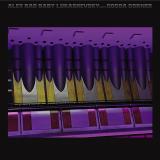
Alex Lukashevsky - OOOOH!

Alex Lukashevsky

OOOOH!

12inchTAR121
Tin Angel
24.10.2025
  • A1: That Musician Thats Dead
  • A2: Preference Is A Good Friend, Mind
  • A3: No One Can Sing That Well
  • B1: Last Herald
  • B2: Mo**Real
  • B3: Things Keep Happening

OOOOH! by Alex Bad Baby Lukashevsky with Cocoa Corner (2025)

Celebrated veteran of Toronto’s music scene, known for his boundary-pushing approach to folk and avant-garde music, twists rock music into strange and brilliant new shapes with the help of young jazz players, U.S. Girls, and his own immensely talented son.


OOOOH! is hard on the outside and soft on the inside. Made in the spirit of unity,
humanity, and poetry — disobediently renouncing the glory of personal triumph for the
generosity of an honest experiment. On the last track of the album you’ll hear “Or do you only ever never want to make a single enemy? / That’s not freedom or humility / It’s nothing, honestly.” Oooh, that's a bad baby!

A celebrated Toronto songwriter and performer, Alex Lukashevsky has always been disobedient. Which simply means, nothing is off the table when he’s looking for his
poetic voice; when trying to find the realest I of the teller. As he sings on the lead track “that musician that’s dead” The musician is radical/ it’s the world that’s demented/ listening with their eyes, the music looks dented/ they’re over-represented.
OOOOH! was recorded in January 2024 at Sound Department in Toronto, engineered by Patrick Lefler (ROY), mixed by Grammy-nominated producer Matt Smith. All the songs were tracked live off the floor in two days, with one extra day for recording vocals, to keep the recording fully alive and breathing. As leader of Deep Dark United, as a solo performer, and a sideman in Brodie Wests’ Eucalyptus and Luka Kuplowsky’s Ryokan Band, Alex has been an outsized influence on the Toronto music scene that spawned acts like Broken Social Scene and Owen Pallett. (Pallett, who has toured with Lukashevsky, went so far as to record an entire album’s worth of Alex’s songs, backed
by a full orchestra.)

Lukashevsky has approached each of his albums and projects as something completely new, using only the musical boundaries he creates with each song. Even when he
has recorded songs with nothing but his voice and his own acoustic guitar accompaniment, the results are never “stripped down” or “back to basics,”
Gong! How do you get to heaven / have fun! have fun!
It’s cool to approach music as a game of “spot the influence”; Burt Bacharach-meets-Black Flag; Lana Del Rey-meets-LCD Soundsystem etc. Glorified mash-ups are promising because of their conversational nature. But they can turn us into hyperboreans; blowing cold air beyond ourselves while doing what we can to remain warm. To devise a game or a narrative is to have a winner and a loser, but we all know that just as you win/ so you lose. And does anything really change? Alex Lukashevsky and Cocoa Corner are more at ease drawing blind contours or playing an old game like consequences. They let things add up without knowing particularly how. Cognition is recognition.

Lukashevsky, in addition to writing all the songs, plays guitar and sings on OOOOH!, doing both in ways that are soulful and spikey at the same time. Joining him on guitar and vocals is his oldest child, Charlie Lukashevsky, who, at 23, is already a talented performer and songwriter in his own right. Cocoa Corner also includes Aidan McConnell, an in-demand drummer and composer, Jack Johnston, a jazz bassist and Barry Harris acolyte, and percussionist Evan Cartwright (The Weather Station, U.S. Girls, Cola, Tasseomancy), who plays steel pan and marching drum.

Working with his son and with other younger musicians is central to the album’s
unpredictable aesthetic. It reinvigorated the sound in unexpected ways. Lukashevsky says, “I had to reconsider my own instincts. I had to deal with being 99 years old.”
In addition to these performers, the album includes a tasty contribution from Meg
Remy, the visionary musician and producer who is the leader of the critically acclaimed
project U.S. Girls. Remy duets with Lukashevsky on the imagistic and sprawling album
closer “things keep happening.”
About that album title: OOOOH! is taken straight from “that musician that’s dead” an
arch and unhinged comment on the exertion required to navigate a lifetime of music making.
Lukashevsky’s delivery of that one emotive word is a kind of cultural posture, but also a
hundred percent primitive expression. The impact is never less than visceral. His vocal
delivery ranges through rich baritone blues to keening falsettos to a kind of sprechstimme that periodically steps out from the music to grab the listener’s shirt. He
doesn’t sound too nice, but he is sincere. When life gives you lemons lament.
For OOOOH! his first official full-length album since 2012’s Too Late Blues, (a collection of knotty-yet-effervescent tunes built upon the enchantingly serpentine harmonies of Lukashevsky and his vocal collaborators, Felicity Williams (Bahamas, Bernice) and Daniela Gesundheit (Snowblink, HYDRA)), Alex has once again broken apart and rebuilt his own approach to music. Or rather (because that sounds too over-determined), he
has allowed his music to build itself into strange new shapes that only fleetingly and
coincidentally, but happily, resemble anything that might be called rock and roll. There is some editorializing within the song’s lyrics— Lukashevsky even cheekily contributes to the “spot the influence” game with the line “Muddy Waters, Rite of Spring!” a funny preemptive strike against anyone already reaching for some variation of avant-blues to describe what the song is up to here. In fact there are many names checked on this record (literally and in spirit); they are the lily pads that trace the path of this expression! Palestrina, Peter Pears and Benjamin Brittain, Andrés Segovia, Stravinsky, Lotte Lenya, Alice Coltrane, Skip James, Chuck Berry, D’Gary, Betty Carter, Mukhtiyar Ali, Chuck D, Yoko Ono, Hailu Mergia, David Bowie, Jane Siberry. rhythm is a skeleton mansion / haunted by melody / feckless prodigy / the world is under a spell / cast by some demon angel / Practice day and night / Try as hard as hell / no one can sing that well Musicians are often worried by the way in which they are prepared to fail rather
than how they would like to succeed; it’s such a deep concern that it tempers their creativity and shackles their process. Current cultural proclivities, tend to comfort a certain kind of artistic failure and abnegate another kind. How many testimonials, full of heartfelt care and investment, have you heard for Taylor Swift, and yet a craftsman like Chris Weisman is often dismissed easily as though he’s doing something anti-social. what’s throwing itself in my ears and my eyes / arrogant devil ad hominem christ.
The music you will hear on this recording veers off in multiple directions at once,
and features a rock and roll spirit with a divergent heart. This is no sclerotic clomp of the Average Rock Song, but in fact a flood of humanity in all its darkness and moodiness and unpredictability. If most performers make songs that are like sports cars or pickup trucks to drive around, Lukashevsky has built something more akin to a rowboat in a tree: it’s weird and beautiful.

pré-commande24.10.2025

il devrait être publié sur 24.10.2025

25,17
The Beths - Auckland, New Zealand, 2020 LP 2x12"

The Beths

Auckland, New Zealand, 2020 LP 2x12"

2x12inchCAK177LPC
Carpark Records
24.10.2025

The anticipation is there in Elizabeth Stokes’ solo guitar riff under the opening lines of “I’m Not Getting Excited”: a frenetic, driving force daring a packed Auckland Town Hall to do exactly the opposite of what the track title suggests.

As the opener of The Beths’ Auckland, New Zealand, 2020 expands to include the full band, the crowd screeches and bellows. It’s a collective exhalation, in one of the few countries where live music is still possible.

The album title, and film of the same name, deliberately include the date and location, lead guitarist Jonathan Pearce says. “That’s the sensational part of what we actually did.” In a mid-pandemic world, playing to a heaving, enraptured home crowd feels miraculous.

In March 2020, everything seemed on track for another huge year for The Beths. Home after an 18-month northern hemisphere tour, they had just finished recording sophomore album Jump Rope Gazers and were primed for more extensive touring. But within days, New Zealand’s lockdown split the band between three separate houses. All touring was cancelled.

“It was existentially bad,” Stokes says. As well as worrying about economic survival, they lost something crucial to the band’s identity: live performance. “It's a huge part of how we see ourselves... What does it mean, if we can't play live?”

The band found an outlet through live-streaming, returning to the do-it-yourself mentality of their early days to connect with a global audience. The album and film have their genesis in that urge to share the now-rare experience of a live show, as widely as possible.

The fuzzy-round-the-edges live-streams pointed the way aesthetically. Native birds, wonkily crafted by the band from tissue paper and wire, festoon the venue’s cavernous ceiling while house plants soften and disguise the imposing pipes of an organ. The presence of the film crew isn’t disguised: much of the camerawork is handheld; full of fast zooms and pans.

With much of the material still fresh, the band was less focused on re-invention than playing “a good, fast rock show”, Pearce says. The tempo is up on crowd favourites “Whatever” and “Future Me Hates Me” (released as a live single on its third anniversary) as both band and audience feed off the mutual energy in the room.

Certain songs have taken on special resonance post-Covid. Pearce has found “Out Of Sight”, a tender rumination on long-distance relationships, hits particularly hard with live audiences.

Album closer “River Run” visibly brings Stokes to tears as a mix of achievement and relief kicks in. “You can finally relax at that point … You play the last note, breathe out a sigh and look up - and you’re in a giant room full of people happy and smiling.”

pré-commande24.10.2025

il devrait être publié sur 24.10.2025

23,49
Jessica93 - 666 Tours de Periph'

Jessica93

666 Tours de Periph'

12inchBBLP192
Born Bad Records
10.10.2025

Jessica93, prodigal bastard of our glorious french squat scene, relocated on Born Bad : this is no picnic. Geoffroy Laporte, alone against all odds, alternates bass and guitar to build harsh loops with a drum machine spitting pre-Gulf War patterns. That’s where it gets tricky : every musical posse claims him. Grunge, sure, but Jessica doesn’t indulge in necrophilia. His circuit is punk, he doesn’t dress the part though. Cold wave, the atmosphere fits somehow, but the gear does not. The self-confident rock horde saw him playing with hair in his eyes… but he never joined the Party. Metal had something to say but sadly, nobody listened. Maybe it's time to give it a rest and let Jessica93 cook his great misery broth on her own, called « 666 tours de périph’ » (666 laps on the beltway). Witnessing Jessica93 live makes you dread that he'll get up the next morning, drive 200 miles and one nap later kick it again, when it takes us a good week to recover from the bad half of that same evening. Like so many other unknown soldiers during our very own world war of music, he patrols small venues relentlessly.


At the heart of this cultural pentacle painted by french weirdos Bryan's Magic Tears, and Carine Krinator, Jessica93 has built a sound validated by years of chosen vagrancy, birthing bands with joyously stupid monikers, in the humid jungle of small labels. Jessica93's debut album had a track celebrating Omar Little, HBO’s gay bandit from Baltimore. This story begins on the beltway, where Florence Rey, accidental copkiller turned to political icon of the 90’s. Geoffroy offers his brilliant analysis : " C’est la police qui nous tire d’ssus / C’est mon trou d’balle qui leur chie d’ssus « (Police shoots us down / my dripping asshole gets the job done).


A previous album was haunted by bedbugs, this one is essentially about love, a delicious scourge just as hard to eradicate. Two black diamonds peek out of the LP : ’’La colline du crack’’, heartbreak song about the ultimate temptation of violent delights, located on crackhead central in Paris. The brilliant chorus, ‘Take my hand and come with me to Crack Hill’ will put an end to the rumours, almost everything was really false. And Bébé Requin, alternative obituary that’ll make you shiver, where our nice couple states ‘’on kiffe la drogue dure et les ptits chiens’ (‘we love hard drugs and little dogs’). And that is the reason we face the wall of sound jostled by unnecessary shoulder thrusts: those nice fat chunks of charcoal poetry, hidden under light sarcasm.


The rest of the record demonstrates the know-how acquired in loop-by-loop construction of ruins that are pleasant to squat in together. There’s your classic doom delicatessen, with bits of heavy metal inside, crafted with the manic care typical of hard wankers. Arthur Satàn, who produced and mixed the album at home in Bordeaux, helped him get his head out of the reverb safe house. And Jessica93 took the opportunity to switch to the dark side of the language : french at last. Worth the wait ! Sing along : « nique sa mère / nique sa grosse mère » (translate that yourself).

pré-commande10.10.2025

il devrait être publié sur 10.10.2025

22,65
Loleatta Holloway - Can't Let You Go (Louie Vega Remixes)

Like sneaking an extra scoop (or two) of ice cream for dessert, what do you do when you know something’s bad for you, but its vice-like nature makes it all the more irresistible? Vega Records explores this conundrum in its latest release, “Can’t Let You Go” by the late, great Loleatta Holloway.

“Can’t Let You Go” is one of the last unreleased recordings Loleatta completed before her passing in 2011. In the main mix, she addresses a relationship she knows she should end but can’t bring herself to leave because the lovin’ is just too good: “I keep coming back time and time again,” she ruminates with raw emotion. “We got to make things better or we got to do whatever to make it right… oh, let’s make it right, ‘cause I can’t let you go.”

For the unfamiliar, Loleatta Holloway, a.k.a. the “Queen of the Night,” is a bona fide disco and soul icon. The singer behind successful singles such as “Hit and Run” and “Love Sensation,” she is one of the most sampled artists from the disco era.

The posthumous single was written and produced by prolific artist Yvonne Turner, whose resume includes production and remix credits for music greats such as Whitney Houston, Willie Colon, and Jeffrey Osborne; as well as mixes for Lenny Kravitz, Lalah Hathaway, Mica Paris, and more. Providing subtle, smooth background vocals for the track, she allows Loleatta’s belting vocals to be the star of the percussive house groover; while Vega Records boss Louie Vega offers a “Roots” mix and emotion-charged “Soul House” mix. Louie Vega also invited his vocalist friends Tawatha Agee (of seminal R&B and soul group Mtume) and Cindy Mizelle (Louie Vega’s longtime collaborator) to add powerful hooks and new background arrangements, enhancing the track with some call and response to Loleatta's adlibs during the vamp. Gene Perez on Bass, Axel Tosca on Fender Rhodes, and Roberto Quintero on percussion. In all, the record is club-ready catharsis made for dancing all your troubles away.

“Loleatta Holloway was one of the most dynamic vocalists of our time,” says Yvonne Turner. “She was blessed with the gift of song and her energy was electric! Loleatta's passion and artistry is on full display as she masterfully interprets a lyric then delivers her signature adlibs, which never disappoint. To describe her in a few words, Loleatta Holloway was the truth... my friend... extraordinary!”

Adds Louie Vega, “Loleatta Holloway has had a huge impact in my life as a DJ, producer, and clubber. She touched me in many ways through my music-making and even style of DJing; to this day, I still play many of her songs and acapellas. This is just our little way of saying thank you so much for what you've done for so many lives with your beautiful voice, you've affected us all!!!”

The record’s cover artwork is a mural of Loleatta Holloway created by Richard Wilson, a London-based artist who takes inspiration from DJs and producers from the house music and disco scene. Last month, Louie traveled to Liverpool, England for the mural’s unveiling.

pas en stock

Commandez maintenant et nous commanderons l'article pour vous chez notre fournisseur.

22,48

Last In: 4 months ago
MARGO GURYAN - 28 DEMOS LP 2x12"

MARGO GURYAN

28 DEMOS LP 2x12"

2x12inchNUMLPC2609
Numero Group
24.09.2025

Wenn sie nicht gerade aus dem Fenster auf die stürmische Skyline von Manhattan blickte, verbrachte Margo Guryan ihre dreißiger Jahre damit, Ohrwürmer für Leute wie Bobbie Gentry, Jackie DeShannon, Claudine Longet, Carmen McCrae und Julie London bei CBS's April Blackwood Music zu schreiben. Guryans zeitlose Gedanken über Liebe, Sonntage, Erdbeben, Weinen und Jungs namens Timothy haben unzählige Filme und virale Videos unterlegt. Meisterwerke aus früheren Zeiten. 28 ihrer Songwriting-Demos aus den 60er und 70er Jahren sind auf dieser 25-jährigen Jubiläums-Doppelalbum-Edition.

pas en stock

Commandez maintenant et nous commanderons l'article pour vous chez notre fournisseur.

28,78

Last In: 7 months ago
Various - Dolores: Salsa & Guaracha From 70's French West Indies

In Guadeloupe, many people think that jazz and ka music are like a ring and a finger. To some extent, the same could be said about so called Latin music and the music played in the French West Indies.

Both aesthetics were born in the Caribbean and bear so many connections that they can easily be considered cousins. In constant dialogue, there are lots of examples of their fruitful alliance and have been for a while. The English country dance that used to be practiced in European lounges came to be called kadrille in Martinique and contradanza in Cuba. They both featured additional percussion instruments inherited from the transatlantic deportation. Drawing from shared feelings about the same traumatized identity – later to be creolized – it would be hard not to assume that they were meant to inspire each other. The golden age of the orchestras that graced the Pigalle nights during the interwar period further proves the point. As soon as the 1930s, Havana-born Don Barreto naturally mixed danzón and biguine music in a combo based at Melody's Bar. In the following decade, Félix Valvert, a conductor who was born and raised in Basse-Terre in Guadelupe, also worked wonders in Montparnasse with La Coupole, which was an orchestra made up of eclectic musicians. Afro- Caribbean performers of various origins were often hired on rhythm and brass sections in jazz bands, which used to enliven the typical French balls of the capital. In the 1930s and onwards, Rico’s Creole Band was one of them.


Martinican violinist-clarinettist Ernest Léardée, who would become the king of biguine music as well as the main figure of French Uncle Ben's TV commercials (a dark stigma of post-colonial stereotypes), had musicians from the whole Caribbean sphere play at his Bal Blomet – and they all enchanted "ces Zazous-là" (according the words of Léardée's biguine-calypso piece). In les Antilles (French for French West Indies), music history started to speed up in the 1950s, when trade expanded and radio stations grew bigger. The Guadelupean and Martiniquais youth tuned in their old galena radio sets to South American and Caribbean music. As for the women traders, les pacotilleuses, they bought and sold goods across different islands (the "passing of items through various hands" was thought to be most pleasurable) and brought back countless sounds in their luggage. Such was the case of Madame Balthazar, who once returned from Puerto Rico with the first 45rpm and 33rpm to ever enter Martinique.

Out of this adventure was created the famous Martinican label La Maison des Merengues, a music business she opened and undertook with her husband and which proved to be a major landmark. At the end of the 1950s, in Puerto Rico, Marius Cultier competed in the Piano International Contest playing a version of Monk's Round 'Midnight. He won the first prize and this distinction foreshadowed everything that was to come. Cultier, the heretic Monk of jazz, was quickly praised for writing superb melodies, always tinged with a twist that conferred a unique sound to his music. It didn't take long for the gifted self-taught musician to get to play with Los Cubanos, making a name for himself thanks to his impressive maestria on merengues.

The rest is history. Besides, in the late 1950s, Frantz Charles-Denis, born into the upper middle class in Saint-Pierre and better known by his first name Francisco, went back home after working at La Cabane Cubaine – a club located rue Fontaine where he had caught the Latin fever. Francisco's music was therefore heavily marked by his Cuban cousins' influence, which gave the combos he led a specific style and also led to renewal. Things were swinging hard in La Savane, located in the main square in Fort-de-France. He set up the Shango club close by and tested out the biguine lélé there, a new music formula spiced up with Latin rhythms. Soon afterwards, fate had him fly to Puerto Rico and Venezuela.

As for percussionist Henri Guédon (percussions were only a part of his many talents), he was born in Fort-de-France in May 22nd 1944, the day marking the celebration of the abolition of slavery. As an old man, he could remember that in " his father's Teppaz, a lot of hectic 6/8 music was constantly playing...". In the opening lines of his Lettre à Dizzy, a small illustrated collection of writings published by Del Arco, he highlighted the huge impact that cubop had on him as a teenage boy, around 1960. He eventually turned out to be the lider maximo in La Contesta, a big band steeped in Latin jazz. He was also the one who originated the word zouk to describe music which brought the sound of the New York barrio to Paris. It was the culmination of a journey that started in Sainte-Marie: "a mythical place for bélé, the equivalent of Cuban guaguancó". In the early 1960s, the tertiary economy developed to the detriment of agriculture. Yet rural life was where roots music emerged in Martinique and in Guadeloupe.

Record companies played a major part in the process of Latin versions sweeping across the islands – before reaching everywhere else. Producer Célini, boss of the great Aux Ondes label, and Marcel Mavounzy, both the head of Émeraude records - a firm which was founded in 1953 - as well as the brother of famous saxophonist Robert Mavounzy, were big names to bear in mind. Although there were many of them - all of whom are featured on this record - Henri Debs was definitely the major figure in the recording adventure. He proved to be so influential that he even got compared to Berry Gordy. In the mid 1950s, when he acquired his first Teppaz, he worked on his first compositions: a bolero and a chachacha. Then, he became the one man who made people discover Caribbean music, from calypso to merengue. He was among the first ones to rush out to San Juan, Puerto Rico, to buy records and distribute them through a store run by one of his brothers in Fort-de-France. He had members of the Fania All Star come and perform there, which he was madly proud about. He was also the first one to pay attention to Haitian music, such as compas direct and various other rhythms which would soon flood the market. As a result, many of the combos hitting his legendary studio would end up boosted by widespread "Afro-Latin" rhythms. However, he never denied his identity: gwo ka drums were given a major role, although they were instruments which had long been banned from the "official" music spheres. The present selection bears witness to such a creative swarming. Here are fourteen tracks of untimely yet unprecedented cross-fertilization: all types of music rooted in the Creole archipelago have found their way, whatsoever, to the tracklisting. Whether originating from the city or being more rural, they all go back to what Edouard Glissant, in an interview about the place of West Indian music in the Afro-American scope, called "the trace of singing, the one which got erased by slavery." "It is so in jazz, but also in reggae, calypso, biguine, salsa... This trace also manifests through the drums, whether Guadelupean, Dominican, Jamaican or Cuban... None of them being quite the same. They all point to the idea of a trace, seeking it out and connecting to each other through it. This is the hallmark of the African diaspora: its ability to create something new, in relation to itself, out of a trace. It may be the memory of a rhythm, the crafting of a drum, a means of expression which doesn't resort to an old language but to the modalities of it." The opening track features one of the emblematic orchestras of this aesthetic identity, criscrossing many music types from the archipelago. The 1974 Ray Barretto guajira – Ray Barretto was a major New York drummer influenced by Charlie Parker and Chano Pozzo – is magnificently performed by Malavoi, a legendary Fayolais group (i.e from Fort-de-France). Additionally, the compilation ends on a piece by Los Martiniqueños de Francisco. It symbolically closes the circle as it is a genuine potomitan of Martinique culture which also functions as a tireless campaigner for Afro-Caribbean music. Practicing the danmyé rounds (a kind of capoeiria) to the rhythm of the bèlè drum, it delivers a terrific Caterete, a kind of champeta of Afro- Colombian obedience which was originally composed by Colombian Fabián Ramón Veloz Fernández for the group Wgenda Kenya. The icing on the cake is Brazilian Marku Ribas, who found refuge in Martinique in the early 1970s, bringing his singing to the last trance-inducing track. These two "versions" convey the whole tone of a selection composed of rarities and classics of the tropicalized genre, swarming with tonic accents and convoluted rhythms. It is the sort of cocktail that the West Indians never failed to spice up with their own ingredients. For instance, the Los Caraïbes cover of Dónde, a famous Cuban theme composed by producer Ernesto Duarte Brito, has a typical violin and features renowned Martinique singer Joby Valente and his piquant voice.


The track used to be – or so we think – their only existing 45rpm. The meaningful Amor en chachachá by L'Ensemble Tropicana, a band which included Haitian musicians among whom was composer and leader Michel Desgrotte, also recalls how Latin music was pervasive in the tropics in the mid-1960s. They were the ones keeping people dancing at Le Cocoteraie in Guadelupe and La Bananeraie in Martinique. Around the same time, another "foreign" band, Congolese Freddy Mars N'Kounkou's Ryco Jazz, achieved some success on both islands by covering Latin jazz classics – such as their adaptation of Wachi Wara, a "soul sauce" by Dizzy Gillespie and Chano Pozo whose interweaving of strings and percussions can have anyone hit the dancefloor. How can you resist Dap Pinian indeed, a powerful guaguancó by Eugene Balthazar, performed by the Tropicana Orchestra and published by the Martinique-founded La Maison des Merengues? It also acts as a symbol of the maelstrom at work. Going by the name Paco et L'orchestre Cachunga, Roger Jaffory used to play guaguancó too: his Fania-inspired Oye mi consejo is one example of his style. Baila!!!!! Dancing was also one of the Kings' focus points. Oriza is a Puerto Rican bomba and a "classic" originally composed by Nuevayorquino trumpeter Ernie Agosto, which reserves major space for brasses, giving it a special sheen.

Emerging from the New York barrios crucible was also La Perfecta, a Martinique group originating from Trinidad, whose name directly references the totemic Eddie Palmieri figure as well as his own band, also called La Perfecta. Here they borrow Toumbadora from Colombian producer and composer Efraín Lancheros and interpret it by emphasizing percussions, which set fire to the track even more than the wind instruments. The same goes for Martinique's Super Jaguars, who use Tatalibaba – a composition by Cuban guitarist Florencio "Picolo" Santana which was made famous by Celia Cruz & La Sonora Matencera – as a pretext for sending their cadences into a frenzy. In a more typically salsa vein, the Super Combo, a famous Guadelupean orchestra from Pointe-Noire that was formed around the Desplan family and had Roger Plonquitte and Elie Bianay on board, adapt Serana, a theme by Roberto Angleró Pepín, a Puerto Rican composer, singer and musician also known for his song Soy Boricua. Here again, their vision comes close to surpassing the original. In the 1970s, L'Ensemble Abricot provided a handful of tracks of different syles, hence reaching the pinnacle of the art of achieving variety and giving pleasure. They played boleros, biguines, compas direct, guaguancó and even a good old boogaloo - the type they wanted to keep close to their hearts for ever, "pour toujours", as they sang along together in one of their songs. Léon Bertide's Martinican ensemble excelled at the boogaloo which had been composed by Puerto Rican saxophonist Hector Santos for the legendary El Gran Combo.


Three years later, in 1972, Henri Guédon, with the help of Paul Rosine on the vibraphone, tackled the Bilongo made famous by Eddie Palmieri. Such a classic!!!!! And so were the Aiglons, the band from Guadelupe: choosing to execute Pensando en tí, a composition by Dominican Aniceto Batista, on a cooler tempo than the original, they noticeably used a wonderfully (un)tuned keyboard in place of the accordion. On the high-value collectible single – the first one released by Les Aiglons under the Duli Disc label – there is a sticker classifying the track under the generic name "Afro". Now that is what we call a symbol. Jacques Denis

pas en stock

Commandez maintenant et nous commanderons l'article pour vous chez notre fournisseur.

21,43

Derniere entrée: 41 jours
MITSKI - LAUREL HELL

MITSKI

LAUREL HELL

12inchDOC250LP-C7
Dead Oceans
05.09.2025

"Laurel Hell" ist ein Soundtrack zur Transformation. Eine Landkarte für den Ort, an dem Verletzlichkeit und Widerstandsfähigkeit, Trauer und Freude, Fehler und Transzendenz in unserer Menschlichkeit Platz finden und als würdig angesehen werden können - um letztendlich anerkannt und geliebt zu werden. "I accept it all," verspricht MITSKI. "I forgive it all." Auf "Laurel Hell" festigt MITSKI ihren Ruf als Künstlerin, die die Kraft besitzt, unsere wildesten und zwiespältigsten Erfahrungen in ein heilendes Elixier zu verwandeln. "I wrote what I needed to hear. As I've always done." Nach der Veröffentlichung von "Be The Cowboy", einem der meistgelobten Alben des Jahres 2018, das von Outlets wie Pitchfork (u.a.) zum Album des Jahres gekürt wurde, stieg MITSKI vom Kultliebling zum Indie-Star auf. Mit spürbaren Folgen: Die Schinderei des Tourlebens und die Fallstricke die mit der erhöhten Sichtbarkeit einhergingen, beeinflussten ihre Musik ebenso wie ihren Geist, die sich in der ersten Single "Working For The Knife" niederschlägt. Ein Song, wie ein Prüfstein für das Gesamtgefühl von "Laurel Hell": "I start the day lying and end with the truth / That I'm dying for the knife." "Be The Cowboy" wurde von weiblicher Stärke und Trotz angetrieben, lebte jedoch von seinem Spiel mit Masken. Wie der Berglorbeer bzw. die "laurel hell", nach dem das neue Album benannt ist, kann die öffentliche Wahrnehmung, wie das berauschende Prisma des Internets, eine verlockende Fassade bieten, hinter der sich eine tödliche Falle verbirgt. Die sich immer enger zieht, je mehr man sich anstrengt. "I got to a point, where I just knew that if I kept going this way, I would numb myself to completion." Erschöpft von diesem verzerrten Spiegel und unserer Sucht nach falschen Binaritäten, begann MITSKI, Songs zu schreiben, die die Masken abstreifen und die komplexen und oft widersprüchlichen Realitäten dahinter offenbaren. MITSKI dazu: "I needed love songs about real relationships that are not power struggles to be won or lost. I needed songs that could help me forgive both others and myself. I make mistakes all the time. I don't want to put on a front where I'm a role model, but I'm also not a bad person. I needed to create this space mostly for myself where I sat in that gray area." Die daraus entstanden Songs verkörpern genau diesen Raum. Wie die zweite Single des Albums, "The Only Heartbreaker", die gemeinsam mit Dan Wilson geschrieben wurde und der erste Song dieser Art in ihrer Diskografie ist. "The Only Heartbreaker" verbindet treibenden 80er-Pop mit einem trügerisch einfachen Text, dessen aufrichtiger Refrain ins Ironische kippt, sobald dieser "the person always messing up in the relationship, the designated Bad Guy who gets the blame," beschreibt und sich zugleich fragt, ob "the reason you're always the one making mistakes is because you're the only one trying." MITSKI schrieb viele Songs für "Laurel Hell" während und teilweise vor 2018. Das Album wurde allerdings erst im Mai 2021 final abgemischt. Es ist die längste Zeitspanne, die MITSKI jemals für ein Album gebraucht hat und für die Musikerin inmitten einer radikal veränderten Welt endete. MITSKI nahm "Laurel Hell" mit ihrem langjährigen Produzenten Patrick Hyland in der Zeit der Isolation während der Pandemie auf, als einige der Songs "slowly took on new forms and meanings, like seed to flower." Das Album als Ganzes entwickelte sich "to be more uptempo and dance-y. I needed to create something that was also a pep talk" erklärt MITSKI. Die Spannung, die zwischen ihren raffinierten, aber wehmütigen Texten und dem sprudelnden Pop-Sound der 1980er Jahre entsteht, ist eine dringend benötigte Infusion in Zeiten wie diesen und das Werk einer reifen wie unwiderstehlichen Künstlerin, die auch zu fröhlich ansteckenden Dance-Beats immer noch etwas Profundes beizutragen hat.

pré-commande05.09.2025

il devrait être publié sur 05.09.2025

25,17
Maxo - Mars Is Electric LP

Maxo

Mars Is Electric LP

12inchSFM-003
RRC Music Co.
29.08.2025
  • A1: All Of Everything
  • A2: Saturday Love (Cherry)
  • A3: Sweet N Sour
  • A4: Donahoo’s Chicken
  • A5: Human ?

'it’s his loosest, dreamiest dispatch yet, an enveloping and atmospheric collection that constantly comes together and breaks apart.'

Maxo releases his new album Mars Is Electric. Earlier this week, Maxo released a third haunting video, directed by Vincent Haycock, from the visual world of ‘Mars’ for the title track. Maxo previewed the album with the release of singles “Human?” and “Donahoo’s Chicken” this spring, which arrived with equally raw, inventive, and unnerving music videos.

Mars Is Electric is Maxo’s first official release since he dropped two critically acclaimed albums in 2023 with Even God Has A Sense of Humor and Debbie’s Son. His fifth full-length album finds the Southern Californian artist self-aware and mature. Having lived the last decade of his musical life intentionally creating specific bodies of work rooted in imagery, observation, and capturing moments, Maxo spent this previous year freely creating without a specific plan, relieved from all obligations and restrictions.

“This is the first time that I really didn’t care, I didn’t approach things so seriously,” the artist shrugs off, meaning that without expectations or specific goals, his creativity flourished. This opening finds the artist having conversations he’s been avoiding, having lived silently in the pain of those topics for the past few years. Exploring uncomfortable themes about personal life, relationships, and family fractures, life before and after the loss of innocence, and an abundance of existential spirals.

The exploration was not only thematic but also musical in nature. During the creation process, Maxo was immersed in a wide array of music from past to present - France Joli, $amaad, Steve Spacek, Cherelle, DJ Quik, Lisha G - influences that seeped their way into these songs. The album opens in a loose, dreamlike state—experimental and searching, mirroring the emotional fog of someone looking for something real to hold onto. But as it progresses, so does Maxo’s energy as he fiercely rides and weaves on songs with a contagious confidence, producing some of his most kinetic and lyrically impressive music to date.

As the work and vision coalesced into a body of work, Maxo found that he was unlocking a creative language with his collaborators that felt wholly new - a new understanding of why and how he was making art for this world. What emerged from this year-long process was a new musical journey and a future where Maxo refuses to be another bad example of what could be, refusing to mind the blueprint set down. Maxo is the sole voice on the album featuring production by lastnamedavid, Quelle Chris, Baird, Groove, and more.

Listen to Mars Is Electric above, see full album details below, and stay tuned for more from Maxo very soon.

pré-commande29.08.2025

il devrait être publié sur 29.08.2025

29,37
Marcel Wave - Something Looming LP

Limited 180g black vinyl (500 copies worldwide)
“Marcel Wave combine sharp-eyed Northern lyricism with DIY guitar-janglers rooted in a retro C86 aesthetic. Epic finale ‘Linoleum Floor’...is a gloriously bleak rumination on the horrors of enforced late-night hedonism worthy of prime Pulp” UNCUT
Marcel Wave write eulogies for tragic actresses, ancient riverbeds and concrete obscenity. Their inaugural sonic instalment ‘Something Looming’ is part trades club symphony, part itchy serenade, and part wistful lament. As their heady concoction of ‘Meades meets Pat-E-Smith meets Kirklees Borough Council’ gets prepped to be formally baptised on a dank stage near you, Upset the Rhythm and Feel It Records have dutifully stepped in to deliver its songbook to the masses on both sides of the pond.
Formed when Lindsay Corstorphine and Christopher Murphy of Sauna Youth and brethren Oliver and Patrick Fisher of Cold Pumas were summoned by northern ink-slinger Maike Hale-Jones, Marcel Wave’s debut offering is a walk through a smoke-filled pub with yellowing wallpaper and all eyes on you. It’s a chronicle of the death of the docklands, the decline of industry, of the high street, of civic pride, of civilisations, of hopes and dreams. As Hale-Jones delivers the bad news in her low, West Yorkshire brogue, Corstorphine adds the bells and whistles via the frantic pulsations of a wheezing Hohner organ in tandem with Fisher O’s rasping guitar. MW are completed by the throbbing basslines of Murphy and Fisher P’s fervent rhythms.
The title itself sets the tone for the listener. There’s a sense of foreboding in Hale-Jones’ lyrics which sit at the quintet’s core—elegiac, sardonic and piquant in equal measure. A mixture of narrative epilogues and inward paeans, her words weave tales across a broad thematic church. Crooked tales of urban renewal and the voices left behind are probed in ‘Barrow Boys’ and ‘Stop/Continue’ and are at the fore in ‘Where There’s Muck There’s Brass’ with its refrain lamenting ‘Concrete and slate shine in the rain, cities destroyed, nothing to gain’. In these lyrics, tower blocks loom over terraced houses with the same shadows that the Hollywood sign casts over Peg Entwistle before she takes her tragic leap. ‘Peg’ and ‘Elsie’ are both meditations on two different actresses with different fates crushed by the cut-throat trappings of showbusiness: ‘The mad hopes break, fragile as glass. She traded it all, for the cutting room floor.’ A snaking, existential dread also runs through the album, stated more obliquely in the otherwise poppier interludes of the title track ‘Something Looming’ and album opener ‘Bent Out of Shape’, and present too on the comparatively ramshackle ‘Discount Centre’, where Hale-Jones reports ‘On a mini bus on the outskirts of Enfield, I’m losing all of my spark’. On the album closing weeper ‘Linoleum Floor’, it is laid barer still—a keyboard-led reflection on the deflating nights out of our early-twenties.
Marcel Wave invites the listener to dance to society’s decline, and then to later weep into its lukewarm pint.

pas en stock

Commandez maintenant et nous commanderons l'article pour vous chez notre fournisseur.

14,08

Last In: 8 months ago
SCOWL - ARE WE ALL ANGELS

Scowl

ARE WE ALL ANGELS

12inchDOCLPC7358
Dead Oceans
08.08.2025

Scowl is a band that sounds exactly like their name implies. Venomous, fierce, antagonistic. A sneer not to be crossed. Over the last five years, the Santa Cruz, California, band has firmly planted their flag in the hardcore scene with their vicious sound and ripping live show, sharing stages around the world with Circle Jerks, Touché Amoré, and Limp Bizkit, and filling slots at prominent festivals like Coachella, Sick New World, and Reading and Leeds. But with their new album, Are We All Angels (Dead Oceans), Scowl is aiming to funnel all that aggression through a more expansive version of themselves.Much of Are We All Angels grapples with Scowl's newfound place in the hardcore scene, a community which has both embraced the band and made them something of a lightning rod over the past few years. Standout single "Not Hell, Not Heaven" outright rejects the narratives cast onto them by outsiders. "It's about feeling victimized and being a victim, but not wanting to identify with being a victim," explains vocalist Kat Moss. "It's trying to find grace in the fact that I have my power. I live in my reality. You have to deal with whatever you're dealing with, and it ain't working for me." The band breaks from a sense of disassociation to seek deeper connections on "Fantasy." "It's incredibly challenging to try to balance my love for the scene while also feeling, in some spaces, extremely alienated and hated," Moss says. "`Fantasy' is about feeling like I don't know how to connect with these people anymore, because I have shelled myself away so hard." The album ends in a philosophical place on the closing, titular track, "Are We All Angels," asking questions like, "Is this all there is?" and ultimately putting it on the listener to decide. "It's about the personal struggle between good and evil. It doesn't matter how `good' or `bad' you are, there are systems that will try to rewrite your narrative no matter what you actually do," explains Moss, noting that punctuation on "Are We All Angels" has been deliberately omitted in an attempt to leave the statement open-ended. Are We All Angels is the highly anticipated follow-up to Scowl's debut, 2021's How Flowers Grow, a 16-minute primal scream over punishing riffs. But amidst the pounding chaos, it was the record's sonic outlier, a cleaner interlude called "Seeds to Sow," that, true to its name, planted the seed for what was to come for the band. "It kind of laid out this destiny for us, and I feel like now we're fulfilling that," says drummer Cole Gilbert. The band continued to expand their sound on 2023's widely acclaimed Psychic Dance Routine EP, incorporating more pop hooks and favoring gentler singing over heavy screaming, paving the way for what would come next.Scowl's growth got a huge boost from producer Will Yip (Turnstile, Title Fight, Code Orange, Balance and Composure), who broadened the band's scope. "Will would say, `Everything you have here is correct, but it's in the wrong place,'" says Gilbert. Moss adds: "Will really helped restructure a lot of the material. Some songs he tore apart to make more space for the really good hooks and choruses." But even through this more eclectic approach, Scowl loses none of their edge, and still manages to convey the anger and frustration that lies underneath. They are deeply committed to carrying the ethos of punk and its sense of community. "Hardcore and punk have sculpted how we operate, what we want to do as a band, and how we participate," says guitarist Malachi Greene. "At our core, we are a punk and a hardcore band, regardless of how the song shifts and changes."

pré-commande08.08.2025

il devrait être publié sur 08.08.2025

22,27
Cho Co Pa Co Cho Co Quin Quin - Tradition LP
  • 1: Chichibu - 秩父
  • 2: Watatsumi - ワタツミ
  • 3: Cuba - キューバ
  • 4: 15 Eunomia
  • 5: Gandhara - ガンダーラ
  • 6: Sora Tobu Tokyo - 空飛ぶ東京
  • 7: Ātman - アートマン
  • 8: Tradition
  • 9: Moon Dance
  • 10: Kayohnenka - 花様年華
  • 11: Quarantine Mood
  • 12: Ryukyu Boogie Woogie - 琉球ブギウギ

Japanese acid pop outfit Cho Co Pa Co Cho Co Quin Quin channel the globe-trotting spirit of Haruomi Hosono’s 1970s tropical boogie on their debut album, Tradition.

Named after one of the basic rhythms of Cuban folk music and drawing on influences from across the globe, Cho Co Pa Co Cho Co Quin Quin are quite simply a world unto itself.

Comprised of three childhood friends, Daido, Yuta and So, who reconnected during the coronavirus pandemic, Cho Co Pa initially emerged as a playful way for the three 23-year-olds to pass the time. Tapping into their youthful connection, they created a sound that exudes confidence and curiosity, a homage to the masterful world of YMO’s and Happy End’s Haruomi Hosono, rooted in the trio’s own idiosyncratic experience of the present.

Recorded at home and promoted on hugely popular DIY TikTok videos, their debut album Tradition is a technicolour exercise in armchair travelling – a kind of lockdown exotica for the housebound whose nostalgic flights of fancy are laced with a sense of whimsical melancholy for the lost freedoms of youth.

Referencing everything from Afro-Cuban percussion to lo-fi beats, Buddhist spirituality to trap, each member of the band brings different musical inspirations to the table. Latin American and Middle Eastern styles sit adjacent to a fascination for the electronic music of Aphex Twin, Dorian Concept, Underworld and Daft Punk. At times, the music verges on acid pop bliss, at others, it grooves with the instrumental funk sensibility of BADBADNOTGOOD.

“In the first place, when I create a song, my goal is to transport the listener to a mysterious place,” vocalist Daido explained in a recent magazine interview. Using lyrics as another sonic texture in the composition of ideas, Cho Co Pa paint beguiling sonic postcards of far-flung moods across 12 highly original tracks.

Marrying the organic and the electronic on rhythmically sophisticated compositions like ‘Chichibu’ and ‘Watatsumi’, it is on the album’s standout track ‘Gandhara’ that the experimental sound of Cho Co Pa comes to the fore. Referencing the ancient city of Gandhara through which Buddhism made its way from India to China, the track is a vocoder-trap-inspired, Udu drum-driven pop jam that lilts with unmistakable Balearic flair. If that’s difficult to imagine, then know simply that ‘Gandhara’ sounds like nothing else on this side of Saturn. Even Daido seemed surprised by the outcome: “I feel like we were able to create something that exceeded our abilities. That was huge!”

Hugely popular in Japan, with festival appearances lined up alongside BADBADNOTGOOD at Asagiri Jam in October, it's safe to say the success of Tradition has taken Cho Co Pa by surprise. You won’t have heard anything like it."

pré-commande23.07.2025

il devrait être publié sur 23.07.2025

27,69
Solene & J.Rawls - Midnight Angel LP
  • I'm Ready
  • Midnight Angel
  • Rise In Colors
  • Can't Catch Me In Love
  • Bad Man (Ft. Niko Is)
  • Quick Hands (Ft. Anonymuz)
  • The Fontaine Blues
  • Lady Day
  • Love Moon
  • Down 'N' Doomed
  • 24: K Rose (Ft. Talib Kweli)
  • What A Way To Go

A deeply personal journey of an aspiring artist (Solene) navigating the harsh realities of Hollywood. An album that explores the emotional toll of being a hopeless romantic in a city full of predators and narcissists. A raw look at survival — and the trauma that follows. A narrative arc that takes the listener from LA to Las Vegas, only to find the same demons follow: addiction, vices, self-destruction, and the allure of illusion but ultimately setting on a journey of healing: picking oneself up, learning from pain, and choosing hope again and again. A love letter to Jazz, honoring Solene’s roots, with Hip Hop providing the fire and framework, produced by J. Rawls, to create something new: a genre-bending sound that’s soulful, futuristic, and fearless. Midnight Angel is not just an album — it’s a testimony of recovery, and of rebellion.

pré-commande11.07.2025

il devrait être publié sur 11.07.2025

28,99
WYTCH HAZEL - II: SOJOURN

Wytch Hazel

II: SOJOURN

12inchOMEN17
Bad Omen
27.06.2025
  • The Devil Is Here
  • Save My Life
  • Still We Fight
  • Wait On The Wind
  • See My Demons
  • Barrow Hill
  • Chorale/Slaves To Righteousness
  • Victory
  • Angel Take Me

Wytch Hazel's stellar 2016 debut Prelude confirmed these Lancastrian apprentice wizards to be Britain's most promising new hard rock band. Two years on, that promise comes to abundant fruition on II: Sojourn, an album that moves Wytch Hazel on from the innocence and exuberance of the debut to a darker, more profound and complex place, carefully wrought into optimum shape by the band's singer, guitarist, songwriter and mastermind Colin Hendra. "I'm really into the idea of an album," notes Colin. "I don't do mix-tapes, I don't listen to singles, I'm interested in albums. I want to make a good, listenable, cohesive work, that is the whole thing." Asked what inspirations were brought to bear this time, Colin has good news, and even better taste: "I was listening to plenty of Judas Priest, Thin Lizzy and Wishbone Ash last year," remarks the frontman. "This seems to be more of a hard rock album, where the last one was more rock-folk. It's definitely more rock than folk!" The most crucial influence fully expresses itself via Les Paul guitars in sweet twin harmony through cranked Super Lead Marshalls - "Exactly the same type of amp that Thin Lizzy would have used," beams Colin - a benefit of working in James Atkinson's Hand Of Law Studio, a converted gaolhouse in Leeds. "We knew there would be a lot more great gear, more amps, more options," enthuses Colin of this productive new work environment. "We were more prepared, we planned better. I had a lot more vocals to record on this album, pretty much every song has at least three harmonies, but James is a really chilled out guy, he made it easy for us. I had a very clear idea of how I wanted each song to sound, I thought about every single aspect. I probably over-prepared for this album, and it paid off!" Wytch Hazel's proud, avowed Protestant Christianity continues to set them apart from the occult hocus-pocus of their peers, and the very title Sojourn has a Biblical inspiration: "It's used a lot in the Old Testament, people would travel somewhere to stay for a short period of time," explains Colin, comparing the idea to Wytch Hazel's development since Prelude. "We're going to reside here with this sound for a while, and the next album might not sound the same. Come and have a listen to this aspect of Wytch Hazel - it's a temporary stay. We'll be here for a while, then there will be something else. I'm always writing, it's a constant stream, but I'm always trying to raise the bar, because I don't want the next album to be not as good as the other ones!"

pré-commande27.06.2025

il devrait être publié sur 27.06.2025

31,72
Badflower - No Place Like Home 2x12"
  • Story Of Our Lives
  • No Place Like Home
  • Haunting You
  • Snuff
  • London
  • Swinging Hammer
  • Detroit
  • Number 1
  • What’s The Point
  • Let Me Get Something Off My Chest
  • Don’t Be A Stranger
  • Paws
  • Butterfly

In echter Badflower-Manier kehren die Rocker aus Nashville zurück, um schwierige Themen mit ihrem neuen Album „No Place Like Home“ – dem Nachfolger ihres 2021er-Albums – erträglich zu machen. Frontmann Josh Katz nimmt sich die Zeit, alles richtig zu machen und führt uns durch persönliche Geschichten von Paranoia, Reue und sogar dem Verlust eines Haustiers, die dennoch universell nachvollziehbar und angenehm sind. Die charakteristische Fähigkeit der Band, schwierige Themen mit selbstironischer Entwaffnung zu überziehen, findet sich auch auf diesem Album wunderbar umgesetzt.

pré-commande20.06.2025

il devrait être publié sur 20.06.2025

35,50
JAIME WYATT - NEON CROSS

Jaime Wyatt

NEON CROSS

12inchLPNW5376
New West Records
20.06.2025
  • A1: Sweet Mess
  • A2: Neon Cross
  • A3: L I V I N
  • A4: Make Something Outta Me
  • A5: By Your Side
  • B1: Just A Woman, Vocals – Jessi Colter
  • B2: Goodbye Queen
  • B3: Mercy
  • B4: Rattlesnake Girl
  • B5: Hurt So Bad, Vocals – Shooter Jennings
  • B6: Demon Tied To A Chair In My Brain
pré-commande20.06.2025

il devrait être publié sur 20.06.2025

20,63
VARIOUS ARTISTS - WICKED

VARIOUS ARTISTS

WICKED

12inch4792790
UCJ
17.06.2025
  • A1: Kristin Chenoweth, Sean Mccourt, Cristy Candler, Jan Neuberger, Citizens Of Oz– No One Mourns The Wicked
  • A2: Students– Dear Old Shiz
  • A3: Carole Shelley, Idina Menzel– The Wizard And I
  • A4: Kristin Chenoweth, Idina Menzel, Students– What Is This Feeling?
  • A5: William Youmans, Idina Menzel, Students– Something Bad
  • B1: Norbert Leo Butz, Kristin Chenoweth, Christopher Fitzgerald, Michelle Federer, Idina Menzel, Students– Dancing Through Life
  • B2: Kristin Chenoweth– Popular
  • B3: Idina Menzel– I'm Not That Girl
  • B4: Kristin Chenoweth, Idina Menzel, Denizens Of The Emerald City– One Short Day
  • B5: Joel Grey– A Sentimental Man
  • C1: Kristin Chenoweth, Idina Menzel, Guards Of Oz, Citizens Of Oz– Defying Gravity
  • C2: Kristin Chenoweth, Carole Shelley, Citizens Of Oz– Thank Goodness
  • C3: Joel Grey, Idina Menzel– Wonderful
  • D1: Kristin Chenoweth– I'm Not That Girl (Reprise)
  • D2: Idina Menzel, Norbert Leo Butz– As Long As You're Mine
  • D3: Idina Menzel– No Good Deed
  • D4: Christopher Fitzgerald, Citizens Of Oz– March Of The Witch Hunters
  • D5: Idina Menzel, Kristin Chenoweth– For Good
  • D6: Kristin Chenoweth, Idina Menzel, Citizens Of Oz– Finale
pré-commande17.06.2025

il devrait être publié sur 17.06.2025

39,45
Johnny Flynn - Lost in the Cedar Wood
  • 1: Ten Degrees Of Strange
  • 2: Nether
  • 3: The World To Come
  • 4: Flood In The Desert
  • 5: Tree Rings
  • 6: Gods And Monsters
  • 7: Enkidu Walked
  • 8: Bonedigger
  • 9: I Can’t Swim There
  • 10: Home And Dry
  • 11: Ferryman

Johnny and Robert began work on the album in the first weeks of the pandemic, wanting to make music that sang of those dangerous, disorienting spring days; when birdsong was brighter –– and the sense of bewilderment more powerful –– than any of us had known before. They drew inspiration in part from The Epic of Gilgamesh, the oldest surviving work of world literature; an epic poem from Ancient Mesopotamia that contains the earliest version of the Flood Myth. To Johnny and Robert, Gilgamesh resonated eerily with the present moment –– and it catalysed their song-writing. For Gilgamesh is a story of friendship, love, loss, grief, bad governance and good dreaming; of natural disaster and environmental crisis. It also contains the first recorded act of human destruction of the natural world: when Gilgamesh and Enkidu travel to the Sacred Cedar Wood, slay the guardian spirit of the forest, and cut down the trees with their axes, thereby bringing catastrophe upon themselves. Johnny and Robert wrote the album between March 2020 and February 2021, during a year in which we all wandered unsure of our path, lost in the cedar wood. The songs were composed in large part as a correspondence, through a back-and-forth of notebook pages, voice-recordings and WhatsApp-messages, at a time when lockdowns made meeting in person impossible. The first eight songs were recorded in an off-grid cottage deep in a Hampshire forest, with the sounds of chainsaws felling trees drifting in through the windows along with the birdsong. The result is an album at once urgent and ancient, which fuses poetry, landscape, myth and music into something unique. These are songs that ring with hope, love and sadness –– and one need not know anything about The Epic of Gilgamesh to be touched by them.

pré-commande13.06.2025

il devrait être publié sur 13.06.2025

27,69
Ellen Beth Abdi - Ellen Beth Abdi LP
  • Who This World Is Made For
  • Thickskinpeel
  • Tenterhooks
  • Elsewhere
  • The Bad Dream
  • Sad Chord
  • Spellbound
  • Problem Child
  • Kingsway Bouquet
  • Sweet Twenty-Three

Weisheit, Disziplin und unbändige Kreativität prägen den smarten Electro-Soul von Ellen Beth Abdi. Die renommierte Livemusikerin wird mit ihrem Debütalbum auf dem eigenen Label zur überragenden Solovirtuosin. Poppige Synth-Sounds, sich langsam steigernde Backgroundklänge und feinfühlige Worte von kraftvoller und persönlicher Bedeutung: Manchesters am schlechtesten gehütetes, genreübergreifendes Multiinstrumentalisten-Geheimnis steigt aus dem Schatten ins Licht. Vor fast einem Jahrzehnt wurde ihr aussergewöhnliches Talent entdeckt, was zahlreiche Support-Slots für u.a. Lady Blackbird, Courtney Pine und Angelique Kidjo einleitete. Diese Live-Erfahrung fliesst nun in die Konzerte zur Feier des lang erwarteten Soloreleases von Ellen Beth Abdi ein.

- "Something of a masterclass." - Louder Than War

- "Sharp lyrical insight with a distinctive sonic identity." – Backseat Mafia

pré-commande23.05.2025

il devrait être publié sur 23.05.2025

29,37
Articles par page:
N/ABPM
Vinyl