Space Echo is proud to present the new single by Derane Obika and Go.Soul.Map., arranged and performed by Sicilian
mastermind producer Salvo Dub - an overwhelming fusion of electronic sounds and soulful vibes. This track is a balance
of pulsating rhythms and enveloping melodies, a sonic journey that invites dancing and reflection.
The production stands out with its electronic soul — a rich blend of synthesizers and deep bass lines that pull the listener
into an energetic and immersive atmosphere. Every beat is crafted to move your feet and light up even the most
sophisticated dance floors.
It’s an explosion of energy, set against the unmistakable voice of Derane Obika. With his warm, soulful tone reminiscent of
Seal, Derane brings a unique spirit to the track, infusing every word with raw emotion and deep.
Here, Derane and Go.Soul.Map. don’t just celebrate dance music — they invite the listener into a full-bodied sensory
experience, where electronic beats meet soul tradition to create something truly extraordinary.
The lyrics expresses the idea of a complete fulfilment found in someone or something essential. It suggests that this
presence — a person, an emotion, or a spiritual guide — is so fundamental and complete that everything else becomes
unnecessary.
It evokes a profound sense of connection, purpose, and clarity. Like a path that leads directly to the essence of existence,
it conveys the feeling of being guided, inspired, and grounded all at once. It is a declaration of absolute trust, of love or
devotion — where the journey and the destination fully coincide.
Side B features a new version of “Walkin’ a Dream” from the debut album “Peaceful Sound for Broken Minds”. The new
rework 25, offers us futuristic and electronic sounds with 70s and 80s disco influences, mixing with space and cinematic
themes - very interesting!
Buscar:something else!
Sticking a dirty thumb in the eye of fate, our third collaboration sees this marrow deep family malarky turn official as Pace Yourself teams up with YS’s own imprint ERF REC for a split release. As if our status as minor celebrities and footnotes of the underground could level off no further: the unification no one asked for is here. Sticking it to the man, handing your arse to ya on plate; cauterising infected suburban minds world over.
Burn is the second YS album and written as a direct follow-up album to Brutal Flowers. If their first album was an exercise in the incremental, a construction of poise and patience, Burn, should be taken way the fuck at it’s word: it quite literally finds catharsis in twisted reverse. Birthed out the malignant kick found in deconstruction and chaos. Evil twin, psychotic younger sibling, call it what the hell you like. It might take you a moment to get the lay of the land in this darkly mutated world. Like a bug eye’d native first confronted with a zippo, the hit is radical and instant: a new way for the world to go up in smoke.
Splice the Seattle slacker scene with the spliffhead soundsystem culture of the 90s Bristol trip-hop scene, then cross-breed that with the DIY optimism and glee in creation found in the cut-and-paste worlds of skate, graffiti and hiphop, now run that through the skitzo basement mind of John.T. Gast and you’re close to the kind of scorched earth and spiked suburbia that birthed Burn.
Dunno quite what YS have been ingesting of late but this massively twisted LP touches on a host of gloriously fucked totemic underground sources while not sounding much like any of them. It has the ballsy swagger and hard flipping of the script as Massive Attack’s seminal Blue Lines. Indeed, the eponymous album tracks sound similar - the opener ‘Burn’ is like a hard nosed jammed out redux of ‘Blue Lines’. Getting into a kind of slow-spinning overdubbed maximal euphoria ending with mumbled downer vocals, struggling to conceal their tongues in their cheeks there’s an air of paranoia and proto-conspiracy theory. It’ll leave you scratching your head, feeling like you’ve stepped into a New World Order governed by a cacophony of drop outs, dope fiends and apocalyptic stoners. A cracked out world somewhere between Richard Linklater’s movie Slacker (1990) and Marc Singer’s Dark Days (2001).
The rest of the album parts like a tongue on a wine glass: Smith and Mighty, Bandulu, ambient Luke Slater records, Wah Wah Wino, Nurse with Wound, Land of the Loops, Placid Angels, Adrian Sherwood, Urban Tribe and DJ Shadow can all be heard in momentary splatters - but Burn like other works by YS, is its own ritual beast. ‘Moth’, a track which has been knocking about the underground deejai circuit for many moons, is a real raw chopped and screwed slice of stoner erotica that reeks of obsession and unrequited desire. Elsewhere, on tracks like ‘Switch’, ‘Trying’ and ‘Drift’ the throughline from Brutal Flowers can be heard. Underneath the driving heavy gravity the trademark emotional intimacies of YS linger: eternal recurrence, ghosts of static and shortwave, worn memories of the playful and painful sort. The brief moments where flashes of orchestral ambience get out from underneath the swagger are so pure, personal and unguarded that for a moment they leave you completely lonesome. In the album’s closer ‘End’, you can hear the fleeting promise and DIY possibilities of an analogue world and embers of ash that flutter in its wake: where it seemed, for a brief moment, that collective of DJs, engineers, rappers, graffiti artists and skate crews were emerging from the streets, giving the middle fingers to the system, before just as quickly disappearing back to the doldrums of obscurity. ‘End’ is a bittersweet ode to early soundsystem culture, MCs and pirate radio - an out of step time where for a moment the underdogs and weirdos seemed to be kicking on the door of something bigger.
A veritable teenage doof suite dosed with desire, claustrophobia and deviance. Burn is a good old howl at the moon: lonely, raw, and out for blood; basement style exegesis at its best. A thump to the gut, a stud through your blood. A dubbed-to-death classic straight out of the annals of nowhere. A perfect post card from oblivion. A bleak, bold and personally ferocious vision of tomorrow and tomorrow and tomorrow.
This is everything that record collectors skip dates for. Fuck the scene and keep that shit underground. That’s what it is all about. Know what I mean, if you do? You’re in…
- A1: Reise Der Schatten (Titles)
- A2: Sans Visages #1
- A3: The Wind Comes From The East #1
- A4: U?Berwacht #1
- A5: Pyrapulse
- A6: The Silver Tree #1
- A7: Tod Und Der Affe #1
- A8: The Wind Comes From The East #2
- A9: U?Berwacht #2
- A10: Candle With Wings #1
- A11: Tage Ohne Stunden #1
- A12: City Symphony
- B1: Candle With Wings #2
- B2: A Friend From The Deep #1
- B3: The Silver Tree #2
- B4: Paper Moon
- B5: Mechanocrab #1
- B6: Tage Ohne Stunden #2
- B7: Mechanocrab #2
- B8: Island Interlude
- B9: Mechanocrab #3
- B10: U?Berwacht #3
- B11: A Friend From The Deep #2
- B12: Mechanocrab #4
- B17: Tod Und Der Affe #2
- B13: Sans Visages #2
- B14: U?Berwacht #4
- B15: Assimilation
- B16: Sans Visages #3 (Credits)
»Reise der Schatten« (»Journey of Shadows«) is the soundtrack to the eponymous debut feature-length animation film by Swiss artist Yves Netzhammer. Composed by Anthony Pateras and released as a stand- alone album through Hallow Ground, the 29 pieces are based on »weird folk melodies ornamented with electro-acoustics to give the film a more fantastical, fairy-tale feeling,« as the composer puts it. His extensive international recording sessions with a slew of guest musicians results in a record imbued with a sense of mystical surrealism, otherworldly and haunting.
»Reise der Schatten« tells the abstracted story of a genderless being coming to terms with its identity and place in a world full of conflicts and systems of control. »The film was made with old animation software that only works on Mac OS 9. So already, we are in a very hermetic, unique space,« says Pateras. Having tried (and failed) to compose something »typically experimental,« he went for long walks in the Australian bushlands and came home with something else: the idea to create a soundtrack that would create »a kind of distance, or perceptual shift, but also a narrative drive and emotional context which is not always clear.«
While recording the album, the tētēma co-founder did not use digitally generated sound, instead workingwith live instrumentation whose sound palette was enriched by the use of feedback, tape delay, analogue synthesizers, and samples from vinyl records. Wanting to work primarily with acoustic instruments suchas the clarinet made Pateras embark on a complicated journey of his own. The initial recording sessions took place in Basel on metallophones that were designed by Domenico Melchiorre’s Lunason company and laid the foundation for everything that came after.
Pateras recorded with musicians such as guitarist Alexander Garsden, viola player Erkki Veltheim, clarinetist Aviva Endean, multi-instrumentalist Justin Marshall and Lizzy Welsh on the viola d’amore among other instruments. He recorded percussion and recorders with Rohan Rebeiro and Natasha Anderson in his hometown of Castlemaine, double bass with Benjamin Ward in Sydney, bass and flutes with Jon Heilbron and Rebecca Lane in Berlin, and electronics in Zürich with Netzhammer. »Reise der Schatten« was thus a literal journey, made with a »big, international electro-acoustic ensemble.«
As a stand-alone album, »Reise der Schatten« opens up a space of its own. Its stylistic diversity makes it atmospherically and emotionally multi-faceted. As its composer notes, »music for screen can be very virtuosic, sophisticated, and variegated!« His own work is a testament to that claim.
ele
The writer Max Sebald often pondered over the nature of human memory, specifically, how our thoughts and desires - and their results - overlap and mutate over time. In A Place in the Country, he writes of the significance of what see as “similarities, overlaps and coincidences”. Are they the “delusions” of the self and senses, or manifestations of “an order underlying the chaos of human relationships, ... which lies beyond our comprehension”?
Song of the Night Mists, the new album by post-classical composer Stefan Wesołowski, often feels it draws on Sebald’s premise.
On a simpler plane, the one where the market dictates the neatly ordered information we consume, Song of the Night Mists can be described thus: recorded in the main by Stefan Wesołowski in Gdańsk, both in his studio and in Saint Nicholas' Basilica, the album incorporates acoustic instruments - piano, violin, double bass - and classic synthesizers such as the Roland Jupiter-8, the Soviet Polivoks. A Roland Space Echo RE-150 tape delay was also pressed into service as an instrument. We also hear the basillica’s organ and field recordings from the Tatra Mountains. Other musicians were Maja Miro, who played the flute parts on ‘Glacial Troughs’ and brother Piotr Wesołowski, who played the organ on ‘Wilhelm Tombeau’. Sound engineer was Marcin Nenko, who was also on hand to record the basilica organ parts. The album was mixed in New York by Al Carlson (Oneohtrix Point Never, Jessica Pratt, Zola Jesus, Lady Gaga, and Liturgy) and Rafael Anton Irisarri handled the mastering.
Ostensibly, Song of the Night Mists is the last in a trilogy, following on from albums Liebestod (2013) and Rite of the End (2017). All three deal with existential matters such as love, death, decay and “an ultimate end”; apocalyptic and Promethean in spirit, and betraying very human conceits. The Sebaldian nature of the new record starts to make itself felt when Wesołowski talks of how he used sampling. One element is unexpected, that of sampling himself: “I go back to dozens of my own unused sketches and recordings, treating them as raw material to cut, slow down, reverse, and transform in every possible way.” Memory as sound, to be reemployed by the listener through their own imaginings.
Another set of samples made by Wesołowski plays another role. These are field recordings, originally created for an audio illustration of the formation of the Tatra Mountains, and used in a film by sound designer Michał Fojcik. Wesołowski: “You can hear cracking ice, streams, footsteps in the snow and the wind, and a real avalanche, recorded from the inside.” The “Tatra connection” on the album is also found in samples referencing composer Karol Szymanowski. The album’s title alludes to a poem about the mountains by Polish poet, Kazimierz Przerwa-Tetmajer.
Wesołowski’s Tatra recordings are “about a world without humans - about the fact that the world existed, was beautiful, and had meaning long before people arrived, and for the vast majority of its history, it was a place without us.” Wesołowski, using one iteration of the natural world, plays out in sound Sebald’s idea of another order, underlying the chaos of human relationships lying beyond human comprehension.
These feelings play themselves out on the five album tracks. Sonorous and rich, they illustrate tectonic shifts we have no control over. Wesołowski hints that the overall sound is a “meditation on the metaphysics of the non-human set against the spirituality that human presence has brought into it.” In that light, the opening number, ‘Core’, with its slow build, and crackling and straining sound effects, create an effect of the earth groaning into life in a creation myth. Once the piano part raps out a simple melody and modulated tonguing trumpet samples add to the overall atmosphere, the listener can certainly find a cue in the “spiritual”, or “human” side of the story. Human versus nature: from the strains and harmonic muscle stretches of the second number, ‘Glacial Troughs’, through to the powerful and filmic ‘Stalagmite’ and heart-on-sleeve romance expressed in closer, ‘Wilhelm Tombeau’, we listeners are cast as Friedrich’s wanderer, looking out over a landscape that will appear only if we engage with it.
Formations of melody appear incrementally, almost appearing by chance - like hidden footings in the rock shelves to give us something to grasp onto. Rhythms are used sparsely: the prolonged percussive taps on ‘Glacial Troughs’ are an anomaly and maybe there to give pace to the album to come; essentially to keep the listener strapped in. Elsewhere, percussion is used as an aid to mood, the two thudding, timpani-style passages on ‘Peak’ there to offset the short, beautiful, kosmische passage that splits them.
Elements of the borderline religious spirit that drove German electronic music in the late 1960s and 1970s also find a place on Song of the Night Mists. The swells and recessions of the organ find their emotional climax on ‘Wilhelm Tombeau’, a track which summons up echoes of the “mountain magic” vistas created by Popol Vuh or Tangerine Dream, especially with the slightly atonal wobble of the Mellotron that counters it.
This is a dramatic album, but it does feel a strangely short, or curtailed listen on ending, evoking the feeling one gets when waking from a dream, and, for all its incipient grandeur, a track like ‘Stalagmite’, for instance, ends on a minor note. Wesołowski admits that Song of the Night Mists is born of the all too human process of temptation, doubt and recalibration - Sebaldian overlaps and coincidences forming something that must live another life, away from its creator. In Wesołowski’s words, the album is “a newborn foal must stand up and walk right after birth.” Now it is yours to ponder.

- A1: Paul Older - Che Disco Vuoi (Extended Version)
- A2: Riva Starr - Allora Amore (Extended Mix)
- A3: Valentino Vivace - Statua Greca
- B1: Hey Cabrera! - Tutto Matto (Extended Version)
- B2: Sam Ruffillo & Fimiani Feat Gianni D'uomo - Non Era Facile (Extended Version)
- B3: Kymono - Lasciati Andare (Extended Version)
- C1: Dov'e Liana - La Notte Infinita (Extended Version)
- C2: Mille Punti - Matto (Extended Version)
- C3: Bruno Belissimo - Donna Piu
- D1: Fimiani - Proibito (Extended Version)
- D2: Alessandro Rotter - La Sera, La Discoteca, La Spiaggia
- D3: Alberto Melloni – Credimi
Toy Tonics ITALOMANIA Vol. 3 is a compilation dedicated to NEW ITALIAN DISCO. (Not Italo Disco.) 14 young contemporary Italian producers made new organic disco, indie dance, pop house tracks with Italian vocals. Everything on this compilation has been produced in 2024. Fresh dance music by Italian artists Paul Older, Riva Starr, Valentino Vivace, Sam Ruffillo & Fimiani, Kymono, Mille Punti, Mind Enterprises, Bruno Belissimo and legendary cosmic disco pioneer Daniele Baldelli + french italo hitmakers Dov'e Liana. The ITALOMANIA compilation was initiated by Toy Tonics boss Kapote. Italo-German producer, DJ, keyboarder and head of Toy Tonics and Gomma records. ITALOAMNIA is a MANIFESTO to show the status of Italian Disco of today. Kapote invited the most relevant Italian producers to make new tracks with Italian vocals and show different styles of modern Italian disco with Italian vocals.
Italian Disco is not Italo Disco. The last years the trashy pop music of the 1980’s called Italo Disco (with English lyrics) had a big revival. But this compilation is about something else: It’s about this Italian Disco. Because the popularity of good Italian pop music is rising all over the world. And Toy Tonics want to show a new way to combine Italianity with dance culture. Its funny that also in France, Swiss and Germany there are new artists singing in Italian. Let’s not forget: The culture of party, dancing, show bizness and pop music would be unimaginable without the heritage and creativity that Italians contributed Italy is not just the country of good food, beaches and high fashion, but it’s also the original country of dance music. Since the ancient roman times the Italians have been the kings of entertainment. And if it comes to music; The DISCO wave of the 1970ies and the Pop music of the 1980ies has been co-created by Italians (and Italoamericans in New York).
Repress.
Marcal is back for round two on Dustin Zahn’s Enemy Records with “Cyber Dystopia.” Marcal’s trademark grooves and clever vocal processing make this one of his most exciting and hypnotic records yet. It’s pure class…there isn’t much else to say!
BUT we have to try anyway…
“Cyber Dystopia” starts off with Bionic Jungle, a trippy peak time roller sprinkled with uh, lifeforms or something? We haven’t been able to identify them, which is just proof that Marcal is living on another planet we haven’t been to yet. We’re standing by for the invite.
Moravex’s Paradox picks up where Bionic Jungle left off…chugging along in his signature style. It’s loopy. It’s tooly…but still heavy on the grooves, making it a perfect fit in deep and peak time sets alike.
Nothing About the United States hits a little harder and darker. Dissonant drones and catchy sound design take over, flipping the switch from “party” to “punish.” For fans of his recent track on Enemy, “Never Wrote This.”
Don’t Fear the Three is a classic Marcal percussive workout in heads-down mode. It’s as equally powerful as every other track on the record.
- A1: It Feels Much Better Feat Harry Stone (Extended Mix)
- A2: Set The Mood Right Feat Harry Ston (Extended Mix)
- A3: Know You Love Me With Flight Facilities (Extended Mix)
- A4: Novalight Feat Close Counters (Vinyl Edit)
- B1: House Of Mirrors Feat Harry Stone (Extended Mix)
- B2: She's Cosmic Feat Close Counters (Extended Mix)
- B3: I Was Lost (And I Found You) Feat Chromeo (Extended Mix)
- B4: Boudoir (Extended Mix)
- C1: Keep Me On The Dancefloor Feat Harry Stone (Extended Mix)
- C2: Chasing Thrills Feat Harry Stone (Extended Mix)
- C3: (I'll Be Your) Paradise Feat Nic Hanson (Extended Mix)
- C4: Keep Me On The Dancefloor Feat Harry Stone (Mo' House Vinyl Edit)
- D1: Internet (Vinyl Edit)
- D2: Only Love Feat Harry Stone (Vinyl Edit)
- D3: Vicino O' Mare (Reprise)
- D4: We Made The World Feat Biishop (Extended Mix)
- D5: Wildfire Feat Biishop (Original Mix)
DJ support from - Hector Romero, Marco Lys, Mousse T, Sam Divine, Vintage Culture, Ferreck Dawn, Mat.Joe, Claptone, Joseph Capriati, Claude VonStoke, Dennis Cruz, Huxley, Mark Knight, Format:B, Nic Fanciulli.
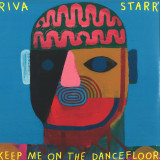
Riva Starr presents his fifth album 'Keep Me On The Dancefloor' on Snatch! Records.
An opportunity to demonstrate his growth as a producer and as an artist, the album showcases an unexpected Riva Starr sound – one that explores a fresh creative approach, focussing on songwriting, collaboration, and telling stories that are firmly rooted on the dancefloor.
Featuring collaborations with Chromeo, Flight Facilities, Harry Stone and more.
'The album was entirely crafted through writing sessions with talented musicians, writers, and singers. This approach brings something unique, as being in the room with other creatives adds an extra layer of creativity and depth, enhancing the production quality. Most of the tracks came together quickly, thanks to the incredible vibe and chemistry in the studio. Sometimes, the process needed a bit of back and forth and more than one session to perfect.' – Riva Starr
Fusing sounds that represent different eras of Riva’s career, 'Keep Me On The Dancefloor' wistfully and effortlessly glides between disco, funk, soul, filtered house, and even the guitar licks of classic rock; a sum of his career to date, it is a body of work that focusses on amplifying the positive moments, memories, and experiences that can only be found in music. Exploring what it means to connect with someone in the moment; a celebration of losing your inhibitions to the music and finding yourself completely in sync with someone you’ve only just met.
Charged with storytelling and heartfelt lyrics, his most personal work to date is the result of a considered approach to making music, one of collaboration with one foot still on the dancefloor, and the other firmly in the studio guiding an array of talent to build something unique with him. Moving away from the DJ-friendly cuts that have underpinned much of Starr’s career, the fifteen tracks on 'Keep Me On The Dancefloor' are much deeper. With singer Harry Stone providing catchy toplines and infectious vocals across at least half of the album, there is a clear maturity on display at every level.
Additional features come from electro-funk duo Chromeo on the irresistibly groovy 'I Was Lost', and Prince-esque vocals from Nic Hanson on '(I’ll Be Your) Paradise'. 'Know You Love Me' – the laid-back, sun-kissed cut with Flight Facilities – compliments the melancholy vocals of Biishop on “Wildfire” and the disco-infused 'It Feels Much Better' with Harry Stone.
Music is a tonic for the soul, but it feels much better with someone else.
DJ Support: Gilles Peterson (BBC Radio 6 Music), Tom Ravenscroft/Deb Grant – New Music Fix (BBC Radio 6 Music), Huey Morgan (BBC Radio 6 Music)
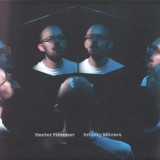
Infinity Mirrors is a representation of the ongoing process of learning about who we are and how we chose to live our lives. Taking moments to reflect on where we have come from, where we currently are, and where we might be going.
Thematically, this record explores a breadth of human experiences… Yearning to be with loved ones far away, battling with anxiety, recognising love felt for the first time, welcoming life into the world, learning to go with the flow & not get caught up on focusing on things that don't necessarily matter.
Written, developed and reworked over the five year period since second album Next to Nothing.
The process of this album spanned over two different studios, birth, death, the pandemic and more. Almost all of the music on this record was started between 2020 & 2021. It’s been an enlightening experience being able to go back to old tracks and re-work them to bring them up to date based on my lived experiences up until that point. With each new revision I have learnt something else about my creative practice and brought my current self into the music whilst also maintaining where I’ve been at previously.
This album has the most features on any of my records to date, both long time and brand new collaborators with guest appearances from Laura Misch, Marysia Osu, Andrew Ashong, Julia Biel, Dariés Street-Soul, Tawiah, Alexa Harley, Rohan Ayinde and Alex Cosmo Blake.
2026 Repress
Been wanting to release Murder Most Foul on 3AM Eternal since hearing his amazing EP on Soundcrumpet. He delivered 2 amazing tunes "Dogfish" has his expertly blend of rare groove and hardcore ragga jungle. Raw but oh so smooooth. "Cosmic Love Birds" is something else, otherworldly vibes with an insane amen workout equals 100% fire!
FFF returns with "Never In A million Years" which brings, rare groove, soundclash amen choppage in known FFF fashion, You can't stop the drum and you can't stop the bass!! "Hustlers pt 2" Brings manic filtered amen workout with rare groove clash vibes. Hustlers of life, never survive!
South African composer and producer Jason van Wyk is continuously honing his craft, with each consecutive release feeling like a clear evolution of its predecessor. Through his albums and soundtrack commissions, van Wyk’s technique at perfectly balancing melody and atmosphere is now more apparent than ever.
Inherent, his sixth aptly named album, finds van Wyk distilling his sound to where each note seems to have implicit cinematic intent, revealing intricate new details with every listen. Inherent features large swaths of warm, wispy ambient, ghostly piano and widescreen drone. Yet, at the very moment when all seems to apex, van Wyk presses on by mining his past endeavors in club music, neo-classical and scoring work to create something else entirely.
Distorted guitars, percolating synth arpeggios and poignant beat design propel the contemplative ambient sections into the light, bringing van Wyk’s sound into previously unexplored territory.
- A1: Banchee - Evolmia
- A2: The Dirty Filthy Mud - Forest Of Black
- A3: Wool - Love, Love, Love, Love, Love
- A4: Spencer Mac - Ka-Ka Baya Mow-Mow (Sing A Little Love Song)
- B1: Trifle - One Way Glass
- B2: Brainticket - Black Sand
- B3: Emma De Angelis - Trip
- B4: Blonde On Blonde - Castles In The Sky
- C1: The Braen's Machine - Fall Out
- C2: Eddie Warner & Roger Roger - Shut Up
- C3: Köy Karde?Ler - Shürük
- C4: The Children - Beautiful
- D1: Moebius & Beerbohm - Doppelschnitt (Richard Norris Edit)
- D2: Demon Fuzz - Past, Present & Future
"Throughout all my time as a musician and producer, ever since Jack the Tab, I've been focused on developing a single idea: Blending psychedelic sounds and effects with rhythm." Richard Norris, Strange Things Are Happening White Rabbit 2024
Over the past few years Eskimo Recordings have invited some of the best crate diggers around to curate compilations that don't just reveal the hidden contents of their record bags but something about themselves too. Now, following in the footsteps of the likes of Bill Brewster and Psychemagik, producer, musician, DJ, writer and more, Richard Norris, takes us on a globetrotting psychedelic journey with the epic 42 track collection, Mr Norris Changes Brains.
For over forty years Richard has played a part in many of the UK's most important music subcultures. Whether sharing stages with the likes of Tracey Thorn as a pubescent punk in St. Albans, or running freakbeat nights in Liverpool and working at the pioneering psychedelic label Bam Caruso, co-producing the UK's first acid house inspired LP with Throbbing Gristle's Genesis P. Orridge or riding the wave of creativity that the second summer of love unleashed all the way to the Top of the Pop studios as The Grid, Richard's career has continually seen him work to expand both his own and the public's musical horizons.
With Mr Norris Changes Brains it's the most recent part of his mercurial career that he's focused on. Drawing inspiration from his post 2006 adventures as one half of Beyond the Wizard's Sleeve, alongside Trash's Erol Alkan, this compilation shows how a more connected world has blown the dust off a paradoxically sometimes straightjacketed scene. The result is a dizzyingly wide-ranging collection that explores the further out there reaches of worldwide psychedelia and dancefloor mayhem.
"A lot of these tracks are fairly recent discoveries, things that I've discovered from around the time I started working with Erol and going right up to today," Richard explains. "Whether that's from going out to play and finding new records in places like Istanbul or just connecting with people online from all around the world. Psych can sometimes be a sort of narrow-minded field, with everything having to sit in its specific niche, but more and more people are open to new sounds and that's allowed for a much broader selection."
Despite their disparate origins what does unite these tracks is that they aren't just there to zone out to on a bean bag as projections of swirling coloured oils and psychedelic patterns wash over you. Mr Norris may change brains but his DJ sets also move feet, and whether it's their killer guitar riffs, oscillating synths floor shaking drums or soulful Hammond organs these are all cuts that from festival tents to underground clubs have proven time and time again to get people dancing.
"With a lot of these tracks there's a kind of fun element in them," says Richard. "It's still psychedelia, but they've also got these solid, funky grooves. They sound phenomenal on the dancefloor and as much as these records might excite old psych heads, this compilation is also for a new generation out there who might have never heard anything like this before and, just like when I was 18 and heard The 13th Floor Elevators for the first time, think 'Oh, my God, what on earth is this and more importantly what else is out there?'"
- A1: Iron Butterfly - Iron Butterfly Theme
- A2: Rare Bird - Devil's High Concern
- A3: Paul St. John - Flying Saucers Have Landed
- A4: Chris Hodge - We're On Our Way (2010 Remaster)
- B1: Juantrip - Shadows
- B2: 62 Miles From Space - Time Shifts
- B3: White Trash - Road To Nowhere
- C1: Blue Phantom - Diodo
- C2: The Mannheim Rock Ensemble - Hungarian Dances
- C3: Limousine - Barriers
- D1: Ugo Busoni - Rullio
- D2: Bernard Estardy - Cha Tatch Ka
- D3: Kate - Shout It
- D4: Dyna-Might - Need You
- D5: La Metamorfosi - Scusa, Eh!
"Throughout all my time as a musician and producer, ever since Jack the Tab, I've been focused on developing a single idea: Blending psychedelic sounds and effects with rhythm." Richard Norris, Strange Things Are Happening White Rabbit 2024
Over the past few years Eskimo Recordings have invited some of thebest crate diggers around to curate compilations that don't just reveal the hidden contents of their record bags but something about themselves too. Now, following in the footsteps of the likes of Bill Brewster and Psychemagik, producer, musician, DJ, writer and more, Richard Norris, takes us on a globetrotting psychedelic journey with the epic 42 track collection, Mr Norris Changes Brains.
For over forty years Richard has played a part in many of the UK's most important music subcultures. Whether sharing stages with the likes of Tracey Thorn as a pubescent punk in St. Albans, or running freakbeat nights in Liverpool and working at the pioneering psychedelic label Bam Caruso, co-producing the UK's first acid house inspired LP with Throbbing Gristle's Genesis P. Orridge or riding the wave of creativity that the second summer of love unleashed all the way to the Top of the Pop studios as The Grid, Richard's career has continually seen him work to expand both his own and the public's musical horizons.
With Mr Norris Changes Brains it's the most recent part of his mercurial career that he's focused on. Drawing inspiration from his post 2006 adventures as one half of Beyond the Wizard's Sleeve, alongside Trash's Erol Alkan, this compilation shows how a more connected world has blown the dust off a paradoxically sometimes straightjacketed scene. The result is a dizzyingly wide-ranging collection that explores the further out there reaches of worldwide psychedelia and dancefloor mayhem.
"A lot of these tracks are fairly recent discoveries, things that I've discovered from around the time I started working with Erol and going right up to today," Richard explains. "Whether that's from going out to play and finding new records in places like Istanbul or just connecting with people online from all around the world. Psych can sometimes be a sort of narrow-minded field, with everything having to sit in its specific niche, but more and more people are open to new sounds and that's allowed for a much broader selection."
Despite their disparate origins what does unite these tracks is that they aren't just there to zone out to on a bean bag as projections of swirling coloured oils and psychedelic patterns wash over you. Mr Norris may change brains but his DJ sets also move feet, and whether it's their killer guitar riffs, oscillating synths floor shaking drums or soulful Hammond organs these are all cuts that from festival tents to underground clubs have proven time and time again to get people dancing.
"With a lot of these tracks there's a kind of fun element in them," says Richard. "It's still psychedelia, but they've also got these solid, funky grooves. They sound phenomenal on the dancefloor and as much as these records might excite old psych heads, this compilation is also for a new generation out there who might have never heard anything like this before and, just like when I was 18 and heard The 13th Floor Elevators for the first time, think 'Oh, my God, what on earth is this and more importantly what else is out there?'"
- A1: André Brasseur - Saturnus
- A2: Contessa Vittoria - Can We Stay Together
- A3: Klaus Weiss - Time Signals
- A4: Brainstorm - You Are Whats Gonna Make It Last
- B1: Paladin - The Fakir
- B2: A To Austr - Thumbquake & Earthscrew
- B3: Dave - In My Mind
- C1: Relatively Clean Rivers - Journey Through The Valley Of O
- C2: The Advancement - Stone Folk
- C3: The Pretty Things - The Sun
- C4: Poll - Psachno Na Vro To Filo Mou
- D1: Higamos Hogamos - Moto Neurono
- D2: The Invisible Girls - Huddersfield Wastes
"Throughout all my time as a musician and producer, ever since Jack the Tab, I've been focused on developing a single idea: Blending psychedelic sounds and effects with rhythm." Richard Norris, Strange Things Are Happening White Rabbit 2024
Over the past few years Eskimo Recordings have invited some of the best crate diggers aroundto curate compilations that don't just reveal the hidden contents of their record bags but something about themselves too. Now, following in the footsteps of the likes of Bill Brewster and Psychemagik, producer, musician, DJ, writer and more, Richard Norris, takes us on a globetrotting psychedelic journey with the epic 42 track collection, Mr Norris Changes Brains.
For over forty years Richard has played a part in many of the UK's most important music subcultures. Whether sharing stages with the likes of Tracey Thorn as a pubescent punk in St. Albans, or running freakbeat nights in Liverpool and working at the pioneering psychedelic label Bam Caruso, co-producing the UK's first acid house inspired LP with Throbbing Gristle's Genesis P. Orridge or riding the wave of creativity that the second summer of love unleashed all the way to the Top of the Pop studios as The Grid, Richard's career has continually seen him work to expand both hisown and the public's musical horizons.
With Mr Norris Changes Brains it's the most recent part of his mercurial career that he's focused on. Drawing inspiration from his post 2006 adventures as one half of Beyond the Wizard's Sleeve, alongside Trash's Erol Alkan, this compilation shows how a more connected world has blown the dust off a paradoxically sometimes straightjacketed scene. The result is a dizzyingly wide-ranging collection that explores the further out there reaches of worldwide psychedelia and dancefloor mayhem.
"A lot of these tracks are fairly recent discoveries, things that I've discovered from around the time I started working with Erol and going right up to today," Richard explains. "Whether that's from going out to play and finding new records in places like Istanbul or just connecting with people online from all around the world. Psych can sometimes be a sort of narrow-minded field, with everything havingto sit in its specific niche, but more and more people are open to new sounds and that's allowed for a much broader selection."
Despite their disparate origins what does unite these tracks is that they aren't just there to zone out to on a bean bag as projections of swirling coloured oils and psychedelic patterns wash over you. Mr Norris may change brains but his DJ sets also move feet, and whether it's their killer guitar riffs, oscillating synths floor shaking drums or soulful Hammond organs these are all cuts that from festival tents to underground clubs have proven time and time again to get people dancing.
"With a lot of these tracks there's a kind of fun element in them," says Richard. "It's still psychedelia, but they've also got these solid, funky grooves. They sound phenomenal on the dancefloor and as much as these records might excite old psych heads, this compilation is also for a new generation out there who might have never heard anything like this before and, just like when I was 18 and heard The 13th Floor Elevators for the first time, think 'Oh, my God, what on earth is this and more importantly what else is out there?'"
Now releasing their third album together, ‘Deep Freedom’ on Connessioni, Lorenzo Fortino and Brody have grown even closer and more complementary as artists.
Renowned and recognized globally as producers thanks to their two previous albums, they take another step forward with this new work, delivering something truly unique and unlike anything else. Their sound remains consistent, mature, and decisive, driven by a commitment to absolute artistic freedom.
The EP opens with “Our Truth” (A1), a techno/electro track where electronic drums, bass, and atmospheric synths blend seamlessly. Lorenzo’s processed vocals add depth to the composition, uilding to a point where body and mind move in unison on the dancefloor.
The journey continues on the same side with “Homemade Mould” (A2), a raw and direct house track that most closely embodies the recognizable hallmark of the two Italian producers.
Side B begins with “Deep Freedom” (B1), featuring singer Veronica Marini in her recording debut. The song delivers an explicit message of rebellion, layered with a profound call to action for the world. Set against a deep, immersive soundscape that bridges house and techno, it seeks to awaken the spirit—encouraging listeners to embrace life and fight for freedom.
The album concludes with “Leave Those Memories” (B2), a house track that feels like an instant global hit from the very first listen. The drums, bass, and synths come together flawlessly, creating the perfect backdrop for Veronica Marini to shine. Her remarkable jazz-infused soul takes center stage, moving effortlessly through lyrics that showcase her distinctive interpretative style — one that can only come.
Ltd edition sky blue vinyl, inc download.
Up In Her Room are delighted to bring you the latest offering from US psych heads White Shape, in conjunction with US label Little Cloud Records!
Hailing from Rockford Illinois, White Shape are a reverb-soaked experimental heavy psychedelic rock band that are able to create sublime ethereal soundscapes. Previous releases include the widely renowned 2019’s ‘Perfect Dark’ where the band deliver a heady and physical ride of tidal proportions. Whether you want cerebral psychedelic, body moving rhythm, or hard-hitting riffs White Shape caters to your every need. The record is an anthem to their collective vision, spreading out to showcase the various talents and specialties of each band member.
With the departure of two of the founding members through covid, Josh Weidman and Alyssa Hall set the sails once again to the wind and from the tumult of those incomparable times, they brought into existence their latest album, “Through the Lupine”. It is decidedly White Shape, with its brooding atmospheres, Hall’s iconic vocals that float and expand until they fill every physical space, and the classic narrative architecture that invites you to enter the music and with it create your own inner worlds. You can hear these in every track, and particularly in “Draped Urns.”
But as it has been said, no one came through those times unscathed, untouched. Within the quintessential White Shape sound there is something else, something new. It can be heard in the previously releases 1st single from the album “Knives Down”; a shift in the barometric pressure, a sea change both profound and subtle. It’s a defiance, a refusal to go quietly into that good night, but with undercurrents of something else, something not yet found in the band’s prior work. Is it optimism? Hope? Or simply the resignation to create for the sake of creating.
The true value of Through the Lupine is that it provides the listener with the space to craft their own interpretation. For the White Shape fan, there is everything you love and want. There’s just more, and it’s different, evolved. For the initiate, there is the beginning. The introduction to the next understanding of what it means to experience music. Long live White Shape!
At the start of the 1980’s X-Plode’s dad had a second-hand colour TV business in Bolton, Lancashire where he would buy, sell, repair and trade TVs. He would come back home with all kinds of things he had traded for a TV but the most memorable, to a 10 year old kid at that time, were the keyboards. He use to watch his dad play songs from the 1960’s on these keyboards and when his dad had gone out, Lee X-Plode would sneak on them and start messing about, experimenting with the drum programs and fiddling with the buttons, trying out ideas. He had to move fast though because these keyboards didn’t stay in the house for long as his dad would trade them again for something else; one time that was an old analogue echo chamber, which Lee also messed about with when his dad was out. That echo chamber was a revelation to Lee and opened up the possibilities of what was possible with sound. So by the time Lee was 16, he decided he wanted his own keyboard and started saving. When his 17th birthday came around he had saved up £200 and visited his local Argos where he bought himself a Yamaha PSS 680, an FM synthesizer with memory banks and a basic drum machine incorporated. ‘It was shit quality like, but I didn’t mind. I just wanted it for the programmable drum machine, the synth and the memory banks that came with it” Lee recalls. The year was 1987 and by this time in Lee’s life he was into reggae and hip hop, the latter he first embraced in 1983 by the way of breakdancing and listening to electro, so all he wanted to do when he got his gear was make reggae and electro sounding beats. Recalling his youth and the fun he had with the echo chamber, the next edition to his home set up was to acquire one of those, which he did via a mate of his. But by the time he got his minimal set up sorted in 1988, his musical tastes had changed. House music had landed here in UK and this was Lee’s new passion, so from that point on wards he started experimenting, trying to nail a decent house groove. ‘I wanted 808 sounds, but I didn’t know what one was!’ Lee explains.
Around late 1990 or early 1991, Lee started to improve upon his set up, purchasing an Atari STE, a Cheetah MS6 , a 6 voice polyphonic/multi-timbre analogue rack mounted synth that linked up to his Yamaha – “It wasn’t a great bit of kit, I kept getting electric shocks from it. Eventually it just blew up!” Lee had acquired a cracked copy of Cubase on floppy disk from his local computer game shop but struggled with it. “It was so complicated to understand and took me ages to get used to it. I was stoned a lot back then and I just couldn’t concentrate on anything for long” Lee laughs, continuing “I also picked up a 4 channel sampler/sequencer which plugged into the side of the Atari and that’s when I first started sampling, I think this would have been late 1991. I had the Simon Harris ‘Breaks, Beats and Scratches’ vinyl that he put out on Music for Life which were a godsend back then. I was also sampling a lot from cassette tapes, especially reggae. I would also record the Stu Allan show on Key 103FM, one of the main stations broadcasting out of Manchester. He would do a 3 hour show with hip hop and house, and then hardcore house came along. Eventually he dropped the hip hop altogether and it was just house and hardcore. I recorded the shows onto cassette most weeks and started to learn more about how house and hardcore was put together by listening to those shows.”
- A1: Piece Of Me - Lady Wray
- A2: Follow Me - The Shacks
- A3: Xxplosive - Bacao Rhythm & Steel Band
- A4: Murkit Gem - El Michels Affair Feat. Piya Malik
- A5: Float Back To You - Holy Hive
- A6: Grow Forever - Lizette & Quevin
- B1: Enfant - El Michels Affair Feat. The Shacks
- B2: Fight - Liam Bailey
- B3: Tonight You Might - Synthia Feat. Lady Wray
- B4: Reasons - El Michels Affair Feat. Bobby Oroza
- B5: Then We’ll Wave - Paul & The Tall Trees
- B6: Bye Bye - Brainstory
Vol. 3[22,65 €]
Some of these songs first time on LP. The Sound of Big Crown. Gold foil cover art. An amazing listen. Big Crown is proud to present the next volume of Crown Jewels, our various artists compilation series that highlights some of the most popular tunes next to some of the more obscure. Every artist on Big Crown stands on their own two feet with ease, but together, something else becomes apparent. If you discover one artist on the roster and it brings you to the label, it's very likely you will nd more that you enjoy. The Crown Jewels comps are just that, a chance to get a listen to the whole roster in one place. Even though not all BC artists can be found in the same aisle of the record store, after listening to Crown Jewels Vol. 2, it should be clear how they all t on the same record label. When we started Big Crown we wanted to have a label that’s only boundaries were dened by our taste, not by genre. We think that this is a perfect example of that. Thank you to everyone who has supported us thus far and please stay tuned as we have a lot more music on deck
Over three years in the making, Needle Mythology Records is delighted to announce a super deluxe, expanded remastered reissue of The Lilac Time’s 1991 masterpiece, Astronauts. Released as a triple vinyl, triple CD or single vinyl, only 1000 copies of each format will be produced, there will be no further pressings. Both the 3LP and 3CD editions will come with an extensive 11,000 word oral history of Astronauts and liner notes by Needle Mythology co-founder and longtime Stephen Duffy fan, Pete Paphides.
All three albums including a 2024 remaster, a collection of works in progress entitled‘Softened By Rain The Making Of Astronauts’ and a live compilation ‘Any Road Up The Lilac Time Live 1990/91’ have been mastered for vinyl by Miles Showell at Abbey Roadand will be housed in a triple gatefold sleeve with a colour inner sleeve and new artwork for each disc, which has been especially created by designer Mike Storey. The main sleeve for Astronauts itself will replicate the original artwork but with the four distinctive “blobs” rendered in a red “foil” texture. In addition to these three disc sets, 1000 single vinyl remastered copies of Astronauts will also be made available, in a cherry red vinyl edition to match the outer sleeve.
With the shoegaze and baggy movements at their zenith, The Lilac Time’s fourth album was released at a moment when the left-field music zeitgeist was shaped by the nascent shoegaze, baggy and grunge movements. Whilst Astronauts conformed to none of those trends, neither was it the record Stephen had in his head when he finally finished working on it. We’ll never know how that record would have sounded, but it’s hard to imagine a better version of the album he did end up making. The songwriter who brought ‘A Taste of Honey’ and ‘Hats Off, Here Comes The Girl’ into the world envisaged the sort of choruses that would jump from the single speaker of your favourite transistor and lodge themselves into the collective memory bank.
But while he really was writing some of his most beautiful melodies, Astronauts is a family of songs that demands to be kept together in the sundazed cloud of inspiration that created it. It constitutes a partial retreat from the outwardfacing utopianism of its predecessors, choosing instead to dwell on the journey taken to get to this point. That this is an audibly different band to the pastoral expeditionaries of the group’s previous releases is almost entirely down to the departure of Nick Duffy and the arrival of Sagat Guirey. Suddenly, accordions, banjos and mandolins are out; jazz guitar is in. Sagat’s filigree work on the outro of ‘A Taste for Honey’ acts as a sublime parting shot to a lyric which acts as a wiser, wistful companion piece to Stephen’s 1985 solo hit ‘Kiss Me’, something tantamount to the camera retreating to reveal the years elapsed between the time depicted and the present day. The distance between the carefree youth of pop stardom and the first intimations of mortality can be measured between the first and second verses of the quietly devastating ‘Madresfield’; from the depiction of the deserted cricket pavilion obscured by fresh snowfall to the sudden shift in perspective from subject to protagonist: ‘No one ever told me/That killing time is harmful/For time cannot recover/What soon the ground will offer.’ For all of that, however, the resulting album didn’t correspond to the vision its creator had for it. At a loss as to what to do with it, Stephen surrendered Astronauts to Creation with no plans to promote or draw attention to it. The consciousness shift of which Stephen had hoped The Lilac Time might be a precursor hadn’t happened. Or, rather, it had – but it had happened elsewhere, in the Haçienda and Shoom and in Ibiza. Not on the hills of Herefordshire. In a nod to that sea change, Stephen handed over one song, ‘Dreaming’ to Hypnotone, who
While they’ve been active for more than two decades, it’s only been in recent years that the Berlin and New York based contemporary sonic arts platform, Soundwalk Collective, has begun to gather the accolades and attention that they rightfully deserve. Firmly rooted within a multi-disciplinary practice that engages the narrative potential of sound within the contexts of visual art, dance, music and film, as well as tapping anthropological, ethnographic, and psycho-geographic research, they’ve gained great note for collaborations with Jean-Luc Goddard, Nan Goldin, Sasha Waltz, Charlotte Gainsbourg, and numerous others.
Building on the back of 2023’s brilliant “All the Beauty and the Bloodshed”, Soundwalk Collective now returns with “Khandroma”, one of their most fascinating and singular endeavours to date, which re-engages their enduring creative partnerships with Patti Smith. Issued by Ubi Kū, a brand new imprint founded by the Italian Buddhist Union dedicated to the relationships between Buddhist cultures, music, and sound, across the album’s stunning two sides this incredible ensemble draws inspiration from and conjures Tibetan deities, the Himalayan Plateau, the valleys of Nepal and the highest peaks where the most ancient Buddhist temples reside, culminating as a sprawling sonic tapestry like little else. Issued as a beautifully produced, limited edition vinyl LP and CD, mixed and mastered by Giuseppe Ielasi, complete with a booklet featuring liner note essays penned by Chiara Bellini and Filippo Lunardo, and images by Stephan Crasneanscki, it’s hands down among our favourite releases by Soundwalk Collective to date and not to be missed!
An international experimental sound art collective founded in 2001 by the artists Stephan Crasneanscki, who was joined in 2008 by producer Simone Merli, Soundwalk Collective is a contemporary sonic arts platform, featuring a rotating constellation of artists and musicians, that, in vastly varied number of ways, has continuously explored the remarkable potential of sound within the contexts of visual art, dance, music and film, offering particular emphasis to anthropological, ethnographic, and psycho-geographic research, examining conceptual, literary or artistic themes. In addition to their many collaborations and accolades that attend to an increased ambitious catalog of releases, they scored Laura Poitras’ film, “All the Beauty and the Bloodshed”, which won the Golden Lion at the 2022 Venice Film Festival, as well performed and exhibited at Berghain, CTM Festival, documenta, Manifesta, New Museum, and Centre Pompidou, where they notably opened “Evidence”, a exhibition with Patti Smith comprising an audio-visual journey from the work of French poets Arthur Rimbaud, Antonin Artaud and René Daumal. While Soundwalk Collective’s output and use of sonority - sometimes original composition and others manipulated archival recordings - and context is varied, the project’s endeavours are unified by a focus on sound as material that is both tactile and poetic, pursuing layered narratives that address ideas of memory, time, love and loss. Their latest, “Khandroma”, enlisting Patti Smith’s contribution on one of its tracks, stands among the most exciting and rich of these explorations yet.
Perhaps the best way of approaching “Khandroma” is through Soundwalk Collective’s longstanding focus on the discipline of psycho-geography - a practice that interrogates the impact of an environment’s embedded histories and meanings on the psychology of the present - as well as the group’s integration of observations of nature, and uses of non-linear narrative, as a vehicle for recording and the synthesis of meaning. Like previous projects that have encountered them traveling extensively across the world, occupying diverse environments for long periods of investigation and fieldwork, during which they source materials for subsequent works, the material roots of “Khandroma” are a body of field recordings made by Crasneanscki, Francisco López, and Merli at altitudes between 2,760 and 4,500 meters, in varying locations across Upper Mustang during 2016.
Drawing the album’s title from the Tibetan feminine deity who reigns the skies, the album’s two compositions weave a stunning sonic tapestry from collaged sounds of nature, bells, drones, unplaceable tones and vocals, and in the case of its second piece, “Chasing the Demon”, the voice of Patti Smith, culminating as a deeply emotive and imagistic expanse that taps something far more profound than any of its single parts. As the collective states: “the album traces the continuous morphing of the wind into sound expressions. The Himalayan Plateau seems designed to amplify and echo the encounter of the breaths, the prayers, and the chants emerging from around and within those temples; amid the sounding of bells, the turning of prayer wheels, and the billowing of flags. A resonant musical body that we recorded so as to capture its boundless mutations; an unstoppable force that cries, whispers, and blows through and over stones, wood, empty halls and monastic robes, etching an ever-changing sonic landscape onto the surfaces it encounters.”
Immersive, stunningly beautiful, and haunting, “Khandroma” draws the ancient and distant into the consciousness of the present, close to home, bordering on the profound. Issued by Ubi Kū as a beautifully produced, limited edition vinyl LP and CD, mixed and mastered by Giuseppe Ielasi, complete with a booklet featuring liner note essays penned by Chiara Bellini and Filippo Lunardo, and images by Stephan Crasneanscki, we can’t recommend it enough.
2024 Repress
There isn’t many who would disagree with the underlying sentiment that electronic music makes us feel something extraordinary. Much in the same way, the possibilities for creative discourse and cosmic interactivity are accessible to anyone with an open mind. It’s in this place where these possibilities materialise, and it’s in this space where SYNCROPHONE 39 operates within.
You see, you won’t find cleverly constructed adjectives or nonsensical descriptors for the music presented here. It doesn’t need them. The music speaks for itself, much in the same way the artists do. Stojche has been carving out timeless techno for two decades now, working tirelessly without fanfare to enrich a scene that sits close to his heart. Whether that be through releases on his own imprint TANGIBLE ASSETS or the ever expanding a.r.t.less, his trademark sound signature is synonymous with the soul of Detroit. You may be hard pressed to find anyone else who’s been as consistent with this sound over the years as he has. On the other hand, Gerard Hanson aka Convextion has been doing exactly that without fault his entire career. So the combination of these two artists on this release makes perfect sense.
Syncro39 is a celebration of core values in music. Of devotion to a singular obsession crafted over the course of decades devoid of trends or cheap influences, social or otherwise. It’s that unwillingness to compromise and to put everything on the line in the pursuit of the dreaming process that makes this a special release.
One thing is for certain. Those who are inspired by Stojche’s signature original and the timeless journey of Convextion’s remix,
will carry themselves through the smoke and haze into the sunlight as it takes some time for the rush to subside. That’s probably an apt abstract for this release thus far. For the most part though, the narrative for Stojche has only just begun.
ReKaB drops another strong four-track EP, rooted firmly in the Detroit sound with a nod to the soulful techno styles that shaped the UK underground in the 90s. His second EP for Cologne's YORE Records. The production, as always, is spot on—sharp, detailed, and endlessly listenable. While the tracks carry the weight of tradition, they’re not stuck in it. There’s a fresh, forward-facing energy here that keeps things exciting.
My Inspiration opens with classic metallic strings and a tight, robotic square bass that locks you in straight away. Just when you think you know where it’s going, the vocal drops—a bold touch that shifts the track into more human territory, giving it an emotional pull without losing its edge.
Soul Brother is a late-night cruiser. Rhodes chords, rolling bass, and lush strings set the scene for a proper cityscape vibe. It’s smooth, it’s warm, and it glides effortlessly, all while keeping enough groove to move.
Future Times kicks things up a gear with more tempo and bite. Acidic basslines and a writhing lead sit alongside deep chords, making it equal parts hypnotic and urgent. It’s the kind of track that turns heads in the club—direct and effective without being predictable.
Wrapping it up, Random Fragments pulls things back into a more reflective, dubby space. The layers are rich but restrained, with chirps and analogue echoes drifting through a hazy atmosphere. It’s introspective but not sleepy, the perfect comedown to round off the EP.
ReKaB’s consistency is something else—each release feels like it’s levelling up, pushing his sound forward without losing its roots. This EP is no different. It’s a tight package of ideas, all executed with precision and style. One for the heads, no question.
Ute co-head Oprofessionell crafts expansive soundscapes for the adventurous listener, weaving together analog ever-evolving textures, with bouncing basslines and cathartic breaks. Expect wooded psychedelia combined with introspective trips and euphoric highs from the Ute mainstay.
The world was a different place in June 2020. Most of us were coming out of a first lockdown and accepting limitations, new fears, and changes in our lives. There was some hope things were going to be better, optimism in the summer, a new beginning. For some, like Molero, it was. He released his first album in June 2020, one he had been working on over the previous years. “Ficciones Del Trópico” felt like a discovery, the synths approached a new world, raw, full of wonder, fresh. It was the sound we needed, the horizon we were longing for.
Four years have passed. Molero spent most of that time thinking about and creating the music for “Destellos Del Éxtasis”. If “Ficciones Del Trópico” lived in the depths of the Amazon jungle, “Destellos Del Éxtasis” releases itself from a physical location/idea and creates upon symbolism and the abstract. The more we listen to it, the more we get lost in how he created music that is shapeless, no angles, constantly morphing, transforming into something else.
Like magic, alchemy, but also like visions, hallucinatory visions, or dreams if dreams could step out into reality. And the more we get lost, the more we are convinced the music from “Destellos Del Éxtasis” is part of us, of our body, present as a permanently passing cloud. It gets into dark places, moving constantly into new ground, testing feelings, emotions and how they gravitate with sound. There’s something different in each track. Like magic. Not magical music (but there’s an argument for that). We prefer music for magic. Ritualistic, celebratory, transformative and increasingly visual. Close your eyes, it will open your perception. Follow the ecstasy, let yourself go. The reward is here.
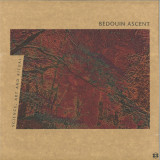
'Science, Art And Ritual' is a story of ‘process'. Growing up in Harrow (a then quiet suburb of London) in the 70’s and 80’s from the age of about 10, Kingsuk Biswas aka Bedouin Ascent's ears opened up to sound as he scanned the airwaves. The undeniable righteousness of 80’s dub via David Rodigan’s Roots Rockers shows was the first prominent influence he received, and with punk roots —and his burgeoning record collection— became exposed to the breathless post punk experimentation that followed in the early 80’s sweeping up free jazz, noise, dub and much more. Throughout though, he maintained his fascination with Indian Classical music which was a mainstay in his parent’s house and spoke with the same infinite space as Joy Division's 'Unknown Pleasures', and King Tubby’s Studio dispatches. Through those teens he assembled and de-assembled, knocking about with fellow travellers —punk bands, garage, space rock, noise. Something was happening. On-U Sound, ECM, Factory Records kept him plugged in and sane.
At that time Kingsuk's core studio setup revolved around his vintage Gretsch, Fender Jazz, Moog, TR-606 and rudimentary FX. He added congas, folk instruments, pipes, hand percussion, gongs, and jammed out shards of funk, noise, jazz fusion, electro and ambience into his hungry Tascam Portastudio. By 1987 these had morphed into what we’d now refer to broadly as techno, but the genre didn't exist beyond the reverberating walls of his bedsit, and he hadn’t yet plugged into the global conversation.
'Science, Art And Ritual' was released in 1994 by Rising High Records and was presented as Bedouin Ascent's debut album, although 'Music for Particles' (released in 1995, again on Rising High) was recorded even before —'SAR' sessions span from 1992-1993, whereas 'Music for Particles' were earlier from 1989-1992, with some older 4-track references from about 1986 too.
Weaved in throughout the album are subconscious references to music that Kingsuk heard in the past that still remained within sight as companions. The opening track "Ancient Ocean III", referencing the extinct ocean Tethis, unapologetically channels Tackhead, Colourbox, Mantronix and Lee Perry. The style was also deliberately juxtaposed to the prevailing sound in techno at the time, which had locked onto a rigid form of symmetrical kicks and light snare drums. Elsewhere 80’s soul and funk are frozen and captured in fragile glass lattices. Electric pianos resound throughout, such as in "He Is She", probably a half-memory of 70’s MOR radio from childhood sleepy night drives. A duel between kick drums from three generations of Roland drum machines —TR-808, TR-707 and R-8— is a central theme in "Transition-R", all in conversation, calling and responding. These were not just machines to Bedouin Ascent, but part of an extended family, with heart and soul.
Three decades after seeing the light, Lapsus is proud to present a special 30th anniversary reissue of this
left-field techno gem in a repackaged and redesigned edition. All pressed on a deluxe 3LP marbled vinyl and including a limited lithographic insert print of the original album cover. All tracks have been restored and remastered directly from the original DAT tapes, and the album also features previously unreleased tracks such as "In the Clouds" and "Thru Water" —regularly performed live at that time and produced in the same period as the album sessions in 1993.
'Science, Art And Ritual’ may refer to esoteric traditions in Indian philosophy, but equally embodies the collision of the science, the art and the ritual that is at the core of being immersed in a deep musical journey.
in the middle of it we instantiate false aralia: a series of recordings growing in all directions, cataloging the work of a group of north american collaborators centered around the studio practices of izaak schlossman (of aught, s transporter, loveshadow etc.) and facilitated by brian foote (of peak oil, kranky, etc.). with this outlet we hope to provide useful tools for dance and avenues for intentional listening.
the first release, ‘zero key’, explores valences of an idea as it slips, as would a thought or a cloud, into something else entirely across its four tracks of recursive microhouse rhythms and hallucinated dub spatializations. foregrounding its most melodic state, its most percussive, and two points between, the versions cut an indeterminate and continuous process into discrete objects that invite repurposing, layering, and other nonlinear methods of evaluation. played through, it may be interpreted as an emerging, or a coming-to-light, as a soft vocal figure develops a tougher rhythmic architecture that eventually occludes its prior form entirely. each of zero key’s facets spurs a parallel investigation into its internal logic of patterning and form.
- A1: Apiento & Tepper - 606 Dog
- A2: Other Lands - The Old Ways
- A3: Datasal - Sea Palace
- B1: Black Bones - Tipping Point
- B2: Froid Dub - Item By Item (Dub)
- B3: Paperclip Minimiser - Planarian Wormhole
- C1: Cosmo Vitelli & Die Wilde Jagd - Elixir
- C2: Amy Denio - Fresh Fish
- C3: Exotic Gardens - Soundwaves & Dark Caves
- D1: Yamila & Sofa Elsewhere - Yo Tampoco
- D2: Valentina Magaletti - Radio77
- D3: Ocean Moon - Light Vibrations
Vol 2[28,15 €]
You can never really pin down what the excellent Emotional Repose label does and that is exactly the sinking behind the title of its superb All Trades show on NTS. The sheer eclecticism of that show is now reflected in this new two-part compilation, also called All Trades, which offers up little morsels of what they do, something like a sonic tasting menu at a fancy restaurant. There is chugging electronic dub from Apiento & Tepper, industrial clatter from Black Bones, cosmic ambient breakbeat from Paperclip Minimiser and blissed out dub from Yamila & SoFa Elsewhere amongst many more highlights.
Esencia is beyond proud to share the fourth and final album by Culross Close. Like previous albums it’s both inward and outward facing, something for the individual and the group and ‘Learning To Let Go’ follows this tradition.
Becoming Present is a peaceful refrain, littered with percussion and devotion,encouraging the listener to sit with what is, while Reactive State taps into something else entirely. It’s a hard-hitting ride filled with percussion and decimated drums, woven into a serenading flute that captures the mind for the song’s duration.
The mood changes with Attachments. A tale of two halves, twisting between hypnotic and swirling. Surrender requires time and immersion, as the listener bears witness to an enthralling interaction between drums and keys,eventually drifting into the soul-inflected Grounding.
The magic in Letting Be unfolds naturally. From the majestic string and harp arrangements, to the metronome of the percussion, each musician finds equanimity, place and peace in the composition. Letting Go…well, that speaks for itself.
The album closes with Forward, Only. This is the sound of a group of musicians comfortable in their stride and confident in their thinking. Ready to move with whatever happens.
Yes, *that* Al Hirt record. Featuring the godlike "Harlem Hendoo", looped unforgettably by De La Soul for the legendary Buhloone Mind State cut, "Ego Trippin' (Part Two)"!
Al Hirt's infamous Soul In The Horn is inextricably tangled up in crate-digger lore. Originally released in 1967, the album has been in heavy, heavy demand for over 30 years, entirely down to the majestic soul-jazz fire of "Harlem Hendoo". And it's a song so good, so vital, so timeless, that it will always tower above everything else in its proximity. This one track alone is worth the price of admission - even if the cost of entry were $100 or even $1000.
However, it would be an error to dismiss this record as merely a one tracker, loaded as it is with dope samples for adventurous beat makers. Certainly the funkiest Al Hirt record, it definitely lives up to the "soul" in the title. Thanks to composer Paul Griffin and arranger Teacho Wiltshire, Hirt got uncharacteristically free and groovy throughout. It comes on more like an obscure KPM library funk record than the easy listening Al was notorious for.
A Louisiana trumpeter and band leader who made Allen Toussaint’s “Java” famous, Al Hirt was also known for TV themes, Dixieland, Swing and being a minority owner of the New Orleans Saints. Unlike every other Al Hirt record - and despite most "diggers" claiming otherwise - this here gem is genuinely hard to come across "in the wild". Normally, you can't give Al Hirt records away, except this particular one, which raises pulses in the crate digging community to life-threatening levels. For every owner claiming to have found their copy for a dollar, there's scores more claiming to have *never* unearthed one in the field. So, paradoxically, you can consider this the most tricky-to-pull "thrift store record", ever. This is why we're finally making it available for everyone, not just those with endless hours to spend scouring the global goodwills!
Soul In The Horn represented an expressive detour into authentic soul-jazz for Al Hirt. Throughout, we're struck by a fierce, fiery energy that's otherwise absent from his typically easy listening work. Without question, the slinky, magical "Harlem Hendoo" is the standout, here. It's also the reason why the record is so scarce and commands awe among crate diggers, sounding like something from an obscure and deeply revered spiritual jazz record. As is often the case, the true genius of the song is tricky to do justice to; it's like a minor miracle of songwriting and performance that simply swooned down from the heavens on the back of horns, bells and harpsichord. It's one of the sweetest musical compositions ever recorded inside a studio - it's only failing is that it's just too short. Sampled brilliantly by De La Soul, it has also been used by The Roots for "Stay Cool" and Nightmares On Wax for "Damn".
The rest of the record makes for a mighty fine listen. From the opening cover of Booker T. & The MG's "Honey Pot", to the propulsive, ultra-funky "Mess Around", it's nothing but a good time. Given its title, the elegant stepper "Calypsoul" sounds exactly as you'd hope whilst the melancholic, wistful "Long Gone" hurts so good. Truly, this is just dying to be looped up, Al's muted playing capturing a soulful longing only horns can often achieve. The bluesy, slo-mo swing of "Sweetlips" oscillates between cool disaffection and swelling pride whilst the graceful, low-key funky "Girl" closes out the A-Side in the fine style. Ushering in the B-Side, the brief but brilliant strut of "Love Ya' Baby" shines brightly before the skipping funky-jazz of true highlight "Sunday-Goin' To Meetin' Time" demands both your attention and your dancing shoes. The mellifluous piano-funk of bass and horn-drenched "Snap Back" serves as the sumptuous prelude to "Harlem Hendoo"'s main character energy before the irrepressible, upbeat R&B of "Ludwig" closes out this quite remarkable album. An album deserving of a place in every serious record collection.
The audio for Soul In The Horn has been carefully remastered by Be With regular Simon Francis, ensuring it sounds better than ever. Cicely Balston's expert skills have made sure nothing is lost in the cut whilst the records have been pressed to the highest possible standard at Record Industry in Holland. The original sleeve has been restored here at Be With HQ as the finishing touch to this long overdue re-issue. This is after-hours music. Let it speak for itself. Listen. Listen to the soul in Al Hirt's horn.
At its best, Bristol's scene has been marked out by the artists with an independent spirit. Not just the self-reliant DIY approach to getting the music out there, but a unique, inventive slant on emergent sounds which feed into the city's storied reputation. Flynn & Flora embody that idea, having come up in the nascent Bristol jungle scene while offering something wholly different to their peers in fabled crews like Full Cycle and More Rockers.
The duo were absolutely connected to the wider community, but they followed their own path, and the records reflect that. They're not as widely name checked as the likes of Roni Size, Krust, or Smith & Mighty, but their legacy is just as rich with personality and flair, offering that indefinable twist which sets West Country rhythms apart from the sounds in London or elsewhere. City Road wanted to recognise that fact with a modest 12" which cherry picks four crucial early cuts from Flynn & Flora's archives, before they went on to produce three LPs and a series of 12"s up to the mid 00s.
"We knew as much as anyone else at that particular time," recalls Flynn. "Samples, hip-hop breaks, bass lines. You've got your synth, your drum machine. It's all you needed. So that's what we did."
“It’s just too easy to make a standard dance track,” Aphex Twin said of his mindset back in 1992. “You’ve got to put a bit of thought into it to get something a bit different.”
‘Didgeridoo’ was released on the Belgian R&S Records label in 1992, and originally peaked at #55 in the UK singles chart in May of that year. Over the last 32 years the track has become one of the essential Aphex Twin tracks in a gargantuan catalogue that continues to amaze and inspire.
“I wanted to have some tracks to play to finish the raves I used to play in Cornwall, to really kill everybody off so they couldn’t dance,” Richard D James, AKA Aphex, told Select magazine back in the 90s. “Digeridoo came out of that.”
Released as a 4 track EP that also included early Aphex productions (now classics) including the industrial, acidic clang of ‘Flap Head’ and hyperbolic futurism of ‘Isopropanol’, the release cemented a relationship with the R&S label that went on to release the ‘Xylem Tube’ EP and the pivotal album ‘Selected Ambient Works 85-92’ in the same year. The label’s owner & A&R Renaat Vandepapeliere reflected “When I first heard Aphex Twin’s music I said, ‘This is it!’, and everybody else said, ‘You’re crazy!’ …a lot of the hardcore R&S fans dropped us. To them it wasn’t music.”
‘Didgeridoo’ (Expanded Edition) is the first time the EP has been re-issued with extra material. Whilst digging in his DAT archive (allegedly stored in an airtight military ammo box), Richard James revisited the recordings, encoding them through a Nakamichi CR7e cassette deck, using the customised deck with vari-speed to encode at speeds “felt right at the time”. Alongside these CR7e versions, the original mixes have been remastered by Beau Thomas at Ten Eight Seven Mastering, offering a dilated insight into one of electronic music’s most endearing releases.
‘Digeridoo’ (Expanded Edition) by Aphex Twin is available on R&S Records from 31st May 2024.
Following the "Hey Oh Let’s Go!" 7-inch debut, label owner Dove Quiete is back on Muovo Musica Records for its second release: a 3-tracker mixture of Acid, Bass, Electro, Footwork, Ghetto, Punk, Techno, and a whole lot else.
Written and produced by Guglielmo Prati aka Dove Quiete in the infamous Serendeepity basement studio. Mastered at Prisma Sonoro Studio. Milan, 2023.
Aerials live, dials tuned, Transmission Towers broadcasting. On either side of the river Mersey, transcendental communications are traded back and forth. Two late-night revellers, one firing messages filled with music, the other returning them laced with lyrics. The result, a dopamine hit of oddball machine soul, melded with a highlife, Afrofuturist touch. Wonky and murky yet deeply emotional, Transmission One, is a debut album that also marks the first release on Luke Una’s É Soul Cultura label, encompassing expertly the off-kilter atmosphere the label sets to orbit.
A synthesised landscape with a Northern charm, Transmission Towers marry the musical worlds of two artists that last collaborated over a decade ago. 10 years have passed, lives have been led, but a gravitational pull has placed Mark Kyriacou and Eleanor Mante back in each other’s spheres on opposite sides of the city of Liverpool. Energised with a newfound desire to strip it all back to the sounds that influenced their formative years in the late ‘80s and ‘90s - astral travelling, intoxicated on Motor City techno, Black Dog IDM and mystical Sun Ra.
Mark half Irish, half Greek Cypriot, Eleanor half Nigerian, half Ghanian, the music contained within is an alchemy of those roots and the pivotal acts that buried deep into their minds. A cosmic contrast, part machine-made, part distinctly human. Take the opener ‘UP’, an ESG-channelling, sci-fi punk beatdown or the polychromatic hyperspace anthem ‘Roller Skater 23’.
Transportive throughout, you ride the solar waves, pace and emotion ebbing and flowing. Tracks like ‘Go Slow Heart’ and ‘Cosmic Trigger’ step to a slower beat but hit with a punch. The former, a slo-mo blast of celestial tenderness, the latter an otherworldly, chugged-out lunar excursion, micro-dosing on whacked-out Wah Wah and Eleanor’s ethereal vocals. Beaming love letters to space and back, ‘Sparse’ marries the organic with the artificial, pianos and percussion circling around synth pads and broadcasting bleeps.
Elsewhere, vibrations move faster. ‘Mega’ strikes, fusing sonic tribalism with psychedelic swirls, as ‘Everything’ sweeps you up in its extra-terrestrial new wave grip. Synth stabs and basslines fizzing from every angle.
Demos of Transmission Towers music surfaced on Luke Una’s radar, making him stop in his tracks. Something magical was emerging, perfectly aligned with the E Soul guardian’s tastes. Guidance followed, quickly turning into conversations about Transmission One becoming the first release on Luke’s own label.
Escapist and futurist yet grounded and relatable. Transmission One is synthesis meets sentiment with a deep, spine-tingling soul at its core.
It's been 40 years since Michal Turtle released his seminal, ground-breaking album "Music From The Living Room" into the world and promptly disappeared back into the aether.
An extremely obscure cult classic known only to deep diggers and aficionados of the finest order, it wasn't until Music From Memory reissued some of the tracks from it via retrospective compilations of Turtle's unreleased music almost 30 years later that his name become more widely known and a new generation were able to discover the artist's unique and pioneering style of experimental electronic music production, the majority of it very much ahead of its time, and to this day, still timeless.
Invisible Inc contacted Turtle in the summer of 2023 about releasing something else by him and it was during this exchange of emails that ideas were expressed about releasing not simply a straightforward reissue of "Music From The Living Room" to mark its 40th anniversary (the album has never been reissued in full) but rather a re-imagined/re-constructed take on the album bringing contemporary techniques, styles and newly recorded vocal and instrument parts into the mix and breathing new life into these wonderful compositions.
Collaborators old and new were brought into the studio and the songs re-created from the ground up. Familiar songs like "Are You Psychic?" and "Village Voice" get overhauled and echo remnants of their original counterparts but simultaneously sound like completely new tracks. The always mesmerising "Phantoms of Dreamland" is represented through a live recording at Café Oto featuring original album vocalist Lucianne Lasalle and regular collaborator HOVE on electronics. The remaining tracks, however, will be completely new to the ears of most people, never having been reissued or heard in these new forms ever before.
Regardless, whether in some way familiar or not, these hypnotic and repetitive pieces of beautiful sound art, all very different in style from one another, have an entirely new identity that even diehard devotees of the originals will fall in love with.
“Holy shit. This record is amazing. 'Are You Psychic?' is really something” dj_2button Dummy Hand / Weirdos Inc.
“What a record!” Cosmo Vitelli I'm A Cliché
“Amazing release. Probably your best release yet! Does everything an amazing record should and more...” Alexis Le-Tan Oddity Radio / Full Circle / Offen Music
Debut album from UK jazz saxophonist and composer Miles Spilsbury, featuring Carlos Niño. Produced by Slugabed.
Light Manoeuvres is about warmth, generosity and openness. The music which would become Light Manoeuvres was sketched in fragments, but began to take shape in earnest during a period of living under the Marseille haze in the South of France.
The specific character and opacity of the light in Marseille inspired the album title which imagines the movement of light passing over different subjects and spaces in intricate motion. Sand blows over from the Sahara on the Sirocco wind and is whipped up by the Mistral, the Marseille sky becomes golden and vapoured, then intermittently pastel blue. That image stuck while shaping this body of work, and became integral to the function of the compositions - which act as jumping off points for the players and myself, vehicles for improvisation and gateways to something else entirely.
Miles Spilsbury is a saxophonist, composer and multi-instrumentalist. Light Manoeuvres may be Spilsbury’s first full-length as bandleader, but the Brighton-based artist brings more than a decade of experience to bear on this record. In addition to a list of collaborators which includes Carlos Niño, Iglooghost, Nate Mercereau, Surya Botofasina and Yasei Collective, Spilsbury has been a permanent member of celebrated avant-rock experimentalists The Physics House Band since 2018. He has performed at prestigious UK venues such as the Southbank Centre and the London Jazz Festival, and has toured extensively throughout North America, Europe and Japan.
In time between other musical projects, Spilsbury spent several years sketching fragments of solo material. The music which would become Light Manoeuvres began to take shape in earnest during a period of living in Marseille. The specific character and opacity of the light there inspired the album title, which imagines the movement of light passing over different subjects and spaces in intricate motion.
- A1: Pool Boy - Movie Night Cancelled (Domenique Dumont Ambient Remix)
- A2: Fertita - A Lo De Antes
- A3: Reuben Vaun Smith - Milky Joe
- B1: Brothers Of Eternal Love - The Best Is Yet To Come
- B2: Scissorwork - All Good Things
- B3: Bowaswell - Something Else
- C1: Golf Trip - Sweet Life
- C2: Jah One - Morning Friends
- C3: Jesper Ryom - Alone
- D1: Marvin Horsch - Deen
- D2: Sonny Ism - These Days
- D3: Tell - Floating Lands
Over the past few years, we have strengthened our ties with photographers to showcase music we stand for.
Art Curation is deeply rooted in Délicieuse’s DNA. It all started with our Youtube channel where we have been showcasing the music we love for 10 years now. Parallel to music curation, our curiosity and appeal for aesthetic imagery brought us to enhance the music with photographs, illustrations or cinematic scenes. As a result, our Youtube channel has been the laboratory of our collaborations with photographers from all horizons such as Yosigo, Victor Costa or George Natsioulis.
Following that path, the Chambre Noire Compilation tends to expand the synergy between music & imagery. The idea is to highlight a photographer’s work & make the compilation a gallery in itself. For this first episode we are collaborating with Yosigo, a well established photographer from Barcelona. The art direction and graphic design side is imagined in collaboration with Brazilian art director Hermes Miranda.
The compilation contains 12 exclusive tracks released digitally and physically across a double vinyl edition. The physical edition includes an A6 photo booklet aiming to highlight Yosigo’s work while exploring the compilation concept.
Musically speaking the compilation follows Délicieuse’s travels and features a blend of established & emerging artists from all over the globe featuring the likes of Tell, Domenique Dumont, Fertita, Logh, BowAsWell, Pool Boy, Scissorwork, Jesper Ryom, Marvin Horsch, Jah One, Brothers of Eternal Love, and Golf Trip oscillating between Balearic, Deep House, Electronica, Electro & Indie Pop.
Get ready for an immersive and captivating musical experience with Chambre Noire.
Search Party is the debut album from pianist, Rupert Cox. Rupert has made a little following for himself already being a respected player for Myele Manzanza, China Moses, Chris Hyson and many more.
His debut album swings between laidback contemporary jazz and swirling electronics. There are mellow and moving moments alongside joyful, uplifting melodies and dancing rhythms.
The record has already won support from people like Deb Grant on BBC Radio 6 Music and is slowly developing an ardent following.
DJ Support:
Deb Grant (BBC Radio 6 Music) and Tony Minvielle (Jazz FM)
Jacob Collier: “Having known Rupert for more than a decade, I can honestly say that this kaleidoscopic beauty of an album does effervescent justice to his magnificent musicianship. It’s a journey for the soul! I can’t wait for the whole world to hear it.”
Brad Mehldau: “Music is all about storytelling for me at its base and it’s got that going on all the tracks… It really holds together as a singular voice.” “It feels like I’ve heard it before, like it has a familiarity, but it doesn’t sound like something or someone else.”
Having been re-discovered as a groundbreaking slice of proto-grime from 1994, Dylan Beale’s legendary soundtrack for the SNES game Wolverine: Adamantium Rage finally gets the reissue treatment it deserves via Sneaker Social Club.
When the game came out in 1994, Beale’s soundtrack for the SNES edition stood out from the pack for its gritty beats, deceptively weighty low end and edgy orchestra stabs, but few would have guessed how certain tracks would predict the shape of music to come. Around 2016, the ‘Tri-fusion’ track in particular was picked up on by London-based producer Sir Pixalot as a mind-blowing slice of Eski beat coldness. To prove his point, Pixalot ran an acapella from J-Wing over the track and the results spoke for themselves.
While ‘Tri-Fusion’ is a straight-up accidental grime sheller, there’s scores more heat packed away in Beale’s soundtrack for Adamantium Rage. The limitations of the space on the game cart meant Beale had to get creative with the most limited samples. Fortunately his background producing UK hardcore and jungle in Rude & Deadly and Stuck To Your Lips meant he knew his way around the restrictions of an Akai s950. Fuelled by the inspiration of jungle and West Coast rap, he worked on the game soundtrack with a similar spartan attitude, limited to 200kb with which to load up the music engine for the game, samples and all.
Given the importance of minimalism in the effectiveness of soundsystem music, it’s not surprising tracks like ‘Cyber’ and ‘Dark Queen’ pack a punch which could absolutely set a dance off. Watch out for ‘Weapon X Lab’ too - another stand out bomb creating a deadly machine funk out of the tightly clipped bass samples and weird animal groan loops. Alongside the full, original soundtrack, this first issue of Wolverine: Adamantium Rage OST comes with additional tracks never used in the original game which widen out the styles Beale was exploring within the shockingly limited means at his disposal.
“I vividly remember when we first played the soundtrack on a bigger set of speakers to the boss,” Beale recalls, “his initial reaction was one of amazement that we had created something so ‘real’and different in comparison to everything else out there in terms of video game music, which I remember with great pride and fondness. Comparing to everything out there, it was totally unique- a moment in time.”
GRAILS don’t mince words. Awesomely communicative but entirely instrumental, this dynamic band’s violin, guitars, piano, and drums collide with sober melodies and massive emotion. At alternate moments, Grails can sound vaguely classical, Eastern European, Irish, like the lost tapes of Pauline Oliveros, and, you know, rock. They’re not really like anything else on the Neurot roster, but they’ve got something in common with all the Neurot bands: a commitment to intense music that forges new paths and, yeah, communicates in the most real way possible.
Grails have their fair share of ambient noise - shivery violins, a trickle of a high-hat, the amplified scrape of a guitar string - but their music is based on strong, narrative melodies that resonate in the heart. At times it sounds delicate, but they never cower; Grails ROAR, even when they’re being quiet.
The Burden of Hope is the debut LP, following a pair of self-released, eponymous ep’s in 2000 and 2002. The LP is the culmination of a year’s worth of recordings, including a reinterpretation of Sun City Girls’ classic “Space Prophet Dogon.”
Grails are gathered in Portland, Oregon from Baltimore, Little Rock, Louisville, Chapel Hill, and Reno. As an ensemble, their respective backgrounds in hardcore, classical, folk, and rock blend seamlessly. Formed in late 2000 to execute live the bedroom recordings of guitarist Alex Hall, the once-tentatively-assembled group found unexpected success with both audiences and local press. Originally formed under the moniker Laurel Canyon, the name of the group was changed to Grails to coincide with the release of The Burden
INTOXTC is the first EP under Ash Luk's post Minimal Violence alias,Infinity Division. Like a phoenix rising, he continues his ascent through amelodic dystopia simultaneously channeling nostalgia and violence. No stranger to Never Sleep after our //ZOO release and playing live shows for the club night for many years. 'Visions' has ID howling over eerie pop lubed melodies, jungle breaks which all come together to form a new age in crossover music. Sounding like nobody else and completely blows the doors off the"Hyperpop" stigma associated with this kind of bravery. 'Thirteen' shows the club some trance fever dreams whilst 'Something Dreamy' breaks the whole fourth wall in its unashamed hands in the arrangement and palette. Leading the charge is 'T-INT' - a HUGE orchestral noise rhythmic workout and shows the sheer volume that this producer can materialise. Leftfield break up a mosh pit in NYC's CBGB and find Ian Curtis still dancing.
There’s more than a hint of ambition on the double LP sophomore effort from Sam Austin Rabede, the producer known as DJ Black Low. Pretoria, South Africa-born and based, the young man makes amapiano with new ways of expressing this local turned-global style of dance music.
In DJ Black Low’s musical imagination, the songs manage to smoothly vacillate between dreamy and firmly-grounded. Adorned with vocalists across most of the twelve tracks, there’s a new dimension to Black Low’s now-signature approach to abstract, angular deconstruction of the rhythmic developments in his songs.
The album references influences and ambitions in its song titles and lyrics while the music itself is anthemic in its sonic and structural aspirations. On many of the songs a slow-burning tension transforms into something unexpected until you’re somewhere else as the track concludes. There is an emotional and compositional maturity that builds on his earlier work. Vocals and lyrics are in focus.
Production collaborators among Black Low’s Gauteng Province circle add to the constantly churning array of ideas that populate this consistently surprising release. Despite being a relative newcomer, DJ Black Low is onto something here.