DJ Support: Garnier, Opolopo, Worldwide FM, Marcia Carr, Bill Brewster, Timeout Moscow, Craig Smith, Delfonic, Tony Nwachukwu, Marcel Dettmann, DJ Rocca, Shuya Okino, Borrowed Identity, Titonton Duvante, Alex Attias, Rainer Truby, Sol Power All-Stars, Kyri R2, Robert Luis, Severino Panzetta, Lars Behrenroth, Kassian, Alkalino, Getdown Edits, Moodymanc, Gerd, Lea Lisa, Young Pulse, Mark de Clive-Lowe, Mark Grusane, Alex Barck….
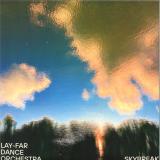
International dance music heavyweight, producer and DJ Alexander Lay-Far returns with a powerful new chapter - Lay-Far Dance Orchestra (LFDO) - a fully-fledged live band project that reconnects him with his jazz-funk and fusion DNA while pushing dance music forward with unmistakable groove, musicianship and emotional weight. Formed in early 2024, LFDO is no nostalgia exercise. With Lay-Far at the helm as bassist, bandleader, composer, arranger and sound engineer, the orchestra has already been turning heads with explosive live performances, reinventing classic Lay-Far cuts, and now unveil their first album “Skybreak” with all new and original material written and produced by Lay-Far together with his bandmates and star guests, including Lipelis, Antoha MC and Seven Davis Jr. This work shows the departure from the predominantly electronic sound of Lay-Far's previous solo albums in favour of live instrumentation recorded to analogue tape and effortlessly bridging the gap between Jazz, Library Music, Disco-Funk, House, Broken Beat and Drum’n’Bass. “Skybreak” is dynamic, passionate, spiritual, cinematic, playful, heartfelt, life-affirming, dreamy and deeply romantic. Ultimately, there’s something profoundly romantic in recording and releasing such music in this day and age!
“Take Flight (Part 1)” is opening the album with style. It takes us on a beautifully orchestrated journey, blending the sensuality of Library Music with high-octane Jazz-Funk and raw b-boy breaks, propelled by breathtaking flute and Rhodes solos of Timur Nekrasov and Maxim Glonti. This aural symbiosis of “beauty and the beats” will become more and more prominent as the album unfolds.
It’s time for “Aquarius Love” created with the inimitable artist and vocalist Seven Davis Jr. (Secret Angels, Ninja Tune). In this composition cinematic soul and heavy jazz meet the restless energy of live drum & bass with deep and heartfelt vocals - timeless sound combined with a timeless message about love and life!
Next is “Head In The Clouds” - a theme for an imaginary rom-com, an ode to all the dreamers - sweet, light, naive and heartwarming. Space-Disco-Funk at its best!
“Where You From” is a fiery Soulful House number with heavy Afro-Latin influences recorded in collaboration with Lipelis. It’s full of Sun, joy and passion. Its irresistible rhythm is emphasised by funky octave bass, wah-wah guitar, catchy piano riffs, guitar solo by Lipelis and seemingly light conscious message delivered by Lay-Far and Maryag. Summer is here!
Now the album takes an unexpected twist in the form of “The Harp of Boom” which at first glance appears to be a classic-sounding Boom-Bap banger. Yes, It’s loud, raw, and gritty, yet it gradually evolves into something delicately-touching and deeply-soulful thanks to a memorable flute melody and lush string arrangement. Definitely recorded with tongue in cheek.
Next is “Feel The Moment” a remarkable collaboration with one of the most recognisable and distinctive Russian artists, singer, trumpeter and cultural icon Antoha MC. It’s a feel-good song, hopeful, life-affirming and bittersweet. A stylish excursion into Brit-Funk and Soviet Jazz-Fusion sound, drawing inspiration from the likes of Atmosfear, Light Of The World or Soviet Jazz bands like Allegro and Arsenal, but reimagining the influences through the modern West London broken beat lens.
The spectacular music journey continuous with “Take Flight (Part 2)” - it’s all about the deep infectious jazz-funk groove, heavy beats, rolling percussion and the glory of the soloing instruments - saxophone and flute by Timur Nekrasov, demonstrating the wide range of emotions from thoughtful and lyrical to restless and borderline vicious. One for freestyle dancing!
As the album draws to an end a vibrant musical triptych “Soul Constant” awaits, mixing together the deep and sensual mood of spiritual jazz with heavy syncopated drum’n’bass rhythms by Michail Fotchenkov, lush orchestration, expressive saxophone solos and the ending which can simply be described as “aural bliss”. It’s breath-taking!
A pleasant bonus is the exclusive version of “Where You From” by Lipelis himself, who is taking it into dub territories, further enhancing the rhythm section and enriching the song with his trademark playful synth flourishes and dreamy guitar solos for maximum effect (and appeal).
The album “Skybreak” by Lay-Far Dance Orchestra is the work of real artistry and craftsmanship with timeless sound that’s not only deeply-rooted but also forward-thinking.
quête:something j
After more than 7 years of silence, Marvin Zeyss returns with his new vinyl EP “Piece of Me” on his hometown Nuremberg label Beatwax Records, delivering exactly the sound his fans have been missing for so long. As is often the case with him, the title reflects the personal touch that is deeply infused with emotion throughout the tracks.
From the classic house sound of the lead track “Piece of Me,” to the driving percussion and bassline in “Let Loose,” the captivating atmospheres of “Flames,” and the deep vibes of “Only You,” this release offers something for every dancefloor and every listener. With this versatility as his trademark, Marvin Zeyss has already released and sold out more than 10 records — so don’t hesitate, no repress.
>>> comes in 4c Sleeves
After a long hiatus broken by their inclusion in Om Unit's final epic Acid Dub Versions set, Alter Echo & E3 step out once more with the four-track “No Peace EP.”
With past releases on storied labels including ZamZam Sounds, Moonshine, Scrub A Dub, Lion Charge, LavaLava, and Khaliphonic, the duo opted to forego labels for this one, instead dropping the first release on their own AEE3 imprint.
The main mix of the title tune is a pounding dystopian slow-stepper collab with old friend & sparring partner Ishan Sound, dusted off and rebuilt after years on dubplate. Shot-through with stinging percussion, swirling with leaden atmospherics and dread truths, this one’s an absolutely uncompromising piece of supremely heavy steppers.
RSD’s remix opts for crystal clarity, extra layers of percussion, an emotional mid-range melody, and of course the huge bassweight Rob Smith is known & loved the world over for.
Om Unit’s “Kaliuyga Verse” recenters the tune on deeply spiritual indigenous wisdom spoken by Floyd “Red Crow” Westerman. This long-form rework fleshes out the instrumentation with classic UK dub percussion and FX, plus flute and much more, transmuting the original’s darkness into something magisterial and hopeful while maintaining absolute heaviness.
AEE3’s "Southeast Rock" closes the EP with a slower tempo meditation powered by a melodic bassline, chopped drums, dub tech stabs and righteous horns, an introspective ganja tune that will stay with you long after the runout groove.
2026 Repress
French talent Hyden makes label debut on Mutual Rytm with conceptual new techno EP, 'To Whom It May Concern'. Hyden is a potent force in the French underground, creating powerful techno with dense percussion, immersive grooves and subtle nods to classic influences - all through his own unique lens. Having delivered standout releases in recent years, here he offers up sounds "anchored in psychoanalysis, time, and emotional residue" as he makes his mark on SHDW's Mutual Rytm imprint, delivering influences of dream logic and surrealism as the palette moves between brutality and introspection. "It's hypnotic music for moments of rupture where something breaks or breaks through". Opener 'Manifest Content' is inspired by Freudian theory and explores the surface illusions of thought and dream. It's about the dissonance between what we perceive and the deeper meaning that slips away beneath and is a deep and dubby techno track with flashes of unsettling melody. 'Bruises' is emotional trauma made sonic. This piece delves into invisible scars and traumas, residues of past conflict or intimacy - it's slow-burning, heavy and raw. 'Jikan' is a meditation built on time and its erosion. Inspired by the Japanese concept of impermanence, it reflects fleeting moments, decay and the tension between stillness and motion with jacked up but warm drums and turbulent bass. Next, 'Free Will' is born from inner conflict and plays with deterministic rhythms and evolving layers, questioning whether we are truly in control or just passengers in a prewritten sequence. The vocal mentions, "creatures, you're out of time" to bring darkness to the intense but sleek rhythms. The streamlined physicality of 'Swarm' channels the primal force of collective movement and is a nod to the loss of individuality in group behaviour. In addition, the package is loaded with digital bonus cuts. 'Yumehara' is a dive into surreal dream-states and evokes subconscious landscapes where logic dissolves and emotion reigns, while 'Lu Bu' is brutal and warlike and named after the legendary Chinese general that captures impulsive violence, betrayal and reckless glory with relentless energy and rhythm. Lastly, 'Neon Pale' is a synthetic dreamscape about fading beauty under artificial light - a melancholy ode to cities at night and the loss of warmth in modern life.
- A1: School
- A2: Baby
- A3: Harpsichord
- A4: Teenage Birdsong
- A5: Romantics
- B1: Love Salad
- B2: Insect Near Piha Beach
- B3: Hi Hello
- B4: Istm
- B5: Something In The Sadness
- C1: 1993 Band Practice
- C2: Green
- C3: Bubbles At Overlook 25Th March 2019
- C4: 4T Recordings
- C5: This Is For You
- C6: Mama Teaches Sanskrit
- D1: Locked Groove 1
- D2: Locked Groove 2
- D3: Locked Groove 3
- D4: Locked Groove 4
- D5: Locked Groove 5
- D6: Locked Groove 6
- D7: Locked Groove 7
- D8: Locked Groove 8
- D11: Locked Groove 11
- D12: Locked Groove 12
- D13: Locked Groove 13
- D14: Locked Groove 14
- D15: Locked Groove 15
- D16: Locked Groove 16
- D9: Locked Groove 9
- D10: Locked Groove 10
This tune was destined to be the one when Adam and SG Lewis met in Los Angeles in 2023. They hit it off immediately—why wait to collaborate on something when you can use the time in between Coachella weekends to go to a studio in LA together? That’s where „Be The One“ came to life. Refined and road-tested in the months that followed, it’s finally seeing the light of day as a record that thrives on both artists’ mutual penchant for captivating hooks and heartwarming emotional depth.
"Remnants" is an album marked by the ambiguity of presence and absence. The pieces, recorded using minimal equipment in what Suzuki describes as a ritual-like atmosphere, began as a way of processing the loss of her father in 2019. But beyond this, they also come to speak to the ways in which loss changes our relationship with someone, and our experiences of the world. Indeed, the experience of loss is not marked merely by a single event, but is instead a process that unfolds over time. Despite the other's absence, a particular location, the smell of a certain brand of tobacco, a look on a friend's face - traces such as these are enough to bring about a renewed presence.
It is through these subtle traces and remnants, encountered over time, that we come to understand loss as not only the acceptance of absence, but the recognition of a continued presence. As Suzuki says, "this is not a solo album." Its creation was instead shaped by an ongoing dialogue, the continued elaboration of a complex and ambivalent relationship. At once melancholic, warm, and embracing, it is this ambiguity, these subtle traces, that Suzuki’s compositions speak to. These are not merely the sounds of mourning, but instead have been shaped by the evolving dialectic of presence and absence into something far more subtle and haunting. (Zefan Sramek, 2026)
A label long synonymous with raw, off-centre electronics and uncompromising club tools, Bjarki’s bbbbbb recors welcomes a producer whose approach feels cut from the same cloth, London’s Henry Greenleaf. In an era where functionality often outweighs feeling, ‘Brawn’ is a record that doesn’t court approval; it insists on impact. Built for high-pressure systems and low ceilings, it channels force not as spectacle, but as design.
Greenleaf’s catalogue to date, spanning labels such as Par Avion, YUKU, and ARTS, sketches a restless trajectory between precision and collapse. His productions operate where rhythm becomes architecture: kicks land like poured concrete, subs buckle and flex beneath shifting percussive grids, and textures are stretched until they fray at the edges. Sound is treated as a physical material, layered and stress-tested, reshaped until the familiar mutates into something tactile and strange.
Across the EP, that philosophy takes full form. A1 ‘Brawn’ sets the tone with dense, piston-like drums and tightly coiled low-end pressure, balancing brute force with meticulous spatial control. ‘Jump Up To Be’ follows with a more fractured swing, percussive shards ricocheting across a framework that feels perpetually on the verge of rupture. On the flip, ‘Gawk’ strips things back to skeletal components, carving negative space between distorted pulses and menacing, warped rhythmic figures, before ‘UNTUNTUNT’ closes the record in driving fashion, delivering a raw, functional workout that reduces the groove to its bluntest, most hypnotic form.
True to the label’s ethos, ‘Brawn’ doesn’t chase trends or smooth its edges. It folds air and pressure into motion, pares club music down to its working parts, and leaves room for spontaneous chaos to erupt within the grid; moments where structure splinters, energy misbehaves, and control gives way just enough to keep things volatile. Engineered yet unpredictable, utilitarian yet unruly, the EP embodies the tension, unpredictability, and uniqueness that have long defined bbbbbb recors.
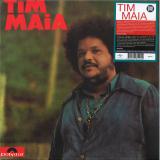
Tim Maia’s self-titled 1973 album is one of those records that hits you from the very first groove and doesn’t let go. Originally released on Polydor Brazil, this was the fourth in a series of Tim’s self-titled albums and many fans and critics still consider it the crown jewel. Packed with irresistible hooks, lush arrangements, and that unmistakable Tim Maia swagger, the album captures the singer at the peak of his creative powers.If you’re new to Tim Maia, here’s the quick story: born in Rio de Janeiro, Tim was a larger-than-life icon whose music married American soul and funk with Brazilian samba and pop long before “fusion” was a buzzword. A true musical polymath, he absorbed everything from Curtis Mayfield to Motown and translated it into a sound entirely his own, gritty, passionate, and full of groove.
He didn’t just introduce soul to Brazil; he made it Brazilian.On this 1973 release, Tim pushes everything up a notch. The arrangements are bigger, slicker, and surprisingly majestic, without losing the raw spirit that earned him a devoted following. From the moment ‘Réu Confesso’ opens the album, you know you’re in for something special—smooth, funky, and heartfelt in all the right ways. The bittersweet ‘Gostava Tanto de Você’ remains one of his most beloved classics, while ‘O Balanço’ bursts with Brazilian flavor that practically dares you not to move. And with tracks like ‘Do Your Thing, Behave Yourself’ and ‘Over Again,’ Tim shows just how naturally the soul idiom fit him, even when he switched to English.This record has everything: deep grooves, soaring strings, magnetic vocals, and that unmistakable sense of joy that Tim Maia carried into every session. It’s a front-to-back winner—one of those albums that deserves a spot not just in Brazilian music history, but in any collection that celebrates great soul, funk, and timeless grooves.If you’re a longtime fan, it’s a reminder of why Tim Maia is legendary. If you’re discovering him for the first time, this is the perfect place to start. Either way: press play, turn it up, and let Tim do his thing.
"Late loud music has a purpose & I'm trapped in a particular type of understanding of it! And I grow! This is never experienced as something limitless. I know that this will end!" A cyber-take on after-hour narrative murk from Seattle's veteran DJ & conscientious objector.
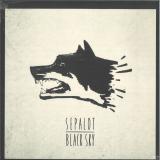
On this album the former "Chasing Clouds" have accumilated into the eponymous "Black Sky"; these drifting soundclouds have swallowed a bulk of Sepalot´s sunny nature; his trademark relaxed attitude gave way to instrumental melancholy and pugnacity. "Before I started recording I listened to lots of The Doors songs. I found the suicidal aspect in their music very exciting. I totally inhaled it." Sepalot reports. "The breakage, the grid, the dirt - that was my inspiration. I was thirsty for the energy of pureness." In order to capture this roughness Sepalots first production steps were drafting soundsketches - often more than 100 in a row. This is then is followed by a sorting procees with many drafts going immediately into the trashcan. The survivors create the first basic draft.
There is something waiting in the wings. Don´t fear the storm, come outside with us... "Black Sky" is here.
Clemens Brentano: "These sounds are a wonderfull living breath of darkness"
Gatefold Sleeve
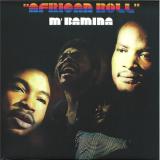
M’Bamina – African Roll (1975)
The story of an album born between Africa, Italy, and the nightclub culture of the 1970s
In the heart of 1970s Italy — a country undergoing profound social change and a music scene just beginning to open itself to distant sounds and cultures — an extraordinary, almost improbable story took shape. It is the story of a group of young African musicians who found their way to Europe, of a Turin nightclub that became a crossroads for communities and experimenters, and of an album which, released in small numbers and largely unnoticed at the time, is now considered a rare jewel of Afro-fusion.
The band called themselves M’Bamina — an ensemble of musicians from Congo, Cameroon, and Benin, who arrived in Italy in the early Seventies. Settling between northern Italy and the Pavia area, they began performing in small clubs and community events, bringing with them a vibrant rhythmic heritage: African polyrhythms, call-and-response vocals, funk-infused bass lines, and Caribbean or Afro-Latin colours absorbed along their musical journeys. Their raw, contagious energy on stage quickly drew attention.
Meanwhile, in Turin, another story was unfolding. There was a venue becoming almost legendary: Voom Voom, one of the city’s liveliest nightclubs, run by Ivo Lunardi. The club attracted an eclectic crowd — students, artists, foreigners, night owls — and Lunardi quickly understood that the dancefloor wasn’t just a place for music, but a melting pot for a new kind of cultural energy. Out of this vibrant atmosphere came his idea: to turn the club’s name into a small independent record label, Voom Voom Music, capable of capturing the spirit of those years and giving voice to unconventional projects.
When Lunardi heard M’Bamina, he immediately sensed that this was the sound he had been searching for: fresh, different from anything circulating in Italy at the time, and capable of blending African tradition with funk and European sensibility. He brought them into the studio.
Production was handled by Lunardi along with Christian Carbaza Michel, while the engineering was entrusted to Danilo Pennone, a young sound technician with a sharp, intuitive ear.
The recording sessions — held in Turin in 1975 — produced a remarkably warm and direct sound. The music feels almost live: grooves rooted in African tradition, but open to funk-rock structures and modern arrangements. It is a natural fusion, never forced. Tracks move between tribal rhythms, funk basslines, light electric guitars, congas and Afro-Latin percussion, with call-and-response vocals and melodies that echo both Congolese tradition and the lineage of Latin jazz. Not by chance, one of the album’s most striking tracks, Watchiwara, reinterprets a Latin standard through M’Bamina’s own rhythmic language.
The album was titled African Roll — a name that was already a statement of intention. It is African music that “rolls,” that moves, adapts, transforms within a new geographic and cultural setting. It is not strictly Afrobeat, nor Congolese rumba, nor Western funk: it is a spontaneous, hybrid blend, shaped more by lived experience than by any calculated aesthetic program.
When African Roll was released, the world around it barely noticed. Distribution was limited, and 1970s Italy had yet to develop a cultural framework for receiving such music. The national music press rarely paid attention to African or “world” productions. The album slipped into silence — though the band’s own story did not.
M’Bamina continued performing across Europe and Africa, even sharing a stage in Cameroon with none other than Manu Dibango. By the late Seventies, they moved to Paris, signed with Fiesta/Decca, and recorded a second LP, Experimental (1978). Meanwhile, the peculiar record they had made in Turin began to resurface quietly among vinyl collectors, Afro-funk enthusiasts, and DJs hunting for forgotten grooves.
That is when the album’s fate began to shift.
Over the decades, African Roll emerged as an almost unique document: a snapshot of an intercultural Italy before the word “intercultural” even existed, a fragment of migrant history, a spontaneous experiment in musical fusion born far from major industry circuits but rich in authenticity. Original copies began commanding high prices on the collector’s market, and the album became recognized as one of the hidden classics of European Afro-fusion from the 1970s.
Today, more than fifty years later, this reissue finally restores visibility and dignity to a project that deserves to be heard, studied, and celebrated. It is not simply an album: it is the testimony of a rare cultural encounter, born in an Italy unaware of how fertile such exchanges would one day become.
It is the story of a visionary producer, an extraordinary band, and a fleeting moment in which music, migration, and nightlife came together to create something genuinely new.
African Roll is — now more than ever — the sound of a bridge: between continents, between eras, between cultures. A record that, after rolling far and wide, has finally come home.
Wolfgang Haffner is one of Europe's most respected jazz drummers, known for his impeccable sense of timing, groove, and atmosphere. Though rooted in jazz, his musical language transcends genre boundaries, guided by pulse and subtle nuance rather than tradition alone. For Cocoon Recordings, he now enters an entirely new dialogue, offering warm, organic reinterpretations that honor the spirit of the source material while opening a fresh sonic horizon. The result is a meeting of two artistic worlds where Sven Väth's timeless energy and Haffner's refined touch flow naturally into a new musical form, an encounter between two artistic universes, merging into something both unexpected and deeply musical.
Fusion is a groove driven piece built around a clear, flowing melody, allowing Haffner to reinterpret it acoustically through a jazz lens. Its straight, driving pulse lets him explore the track's rhythmic and melodic interplay with clarity and nuance.
L'Esperanza, originally a dreamy, trance like track, envelops listeners in strings, filtered downbeats, and a playful synth melody, a perfect canvas for Haffner's warm, organic touch. Its ethereal layers and subtle tension allow him to explore the track's emotional depth while preserving its entrancing charm.
Barbarella, emblematic of Sven Väth's early 90s vision, carries the energy and innovation of a club classic. Haffner's reinterpretation transforms it into a rich, acoustic exploration that honors its hypnotic essence. By emphasizing the track's iconic motifs and underlying drive, and by drawing out the track's essential elements, he bridges its electronic origins with a new, organic perspective.
Together, these three reinterpretations form a cohesive journey that celebrates the timeless essence of Sven Väth's music while revealing a new dimension through Haffner's masterful touch, a release that invites listeners to experience familiar classics in a completely new light.
Singer-songwriter and multi-instrumentalist Son Little expands his musical palette on his upcoming album, Cityfolk. Blending elements of soul, folk, and blues, Son Little captures his signature sound along with expressive yet personal lyrics. Cityfolk is a reflection on love, loss, and finding peace in the chaos. It"s about holding on, letting go, and learning to breathe again when the world feels heavy. Born Aaron Earl Livingston to a preacher and a teacher in Los Angeles, Little"s collaborations with The Roots and RJD2 helped him make a name for himself in his adopted hometown of Philadelphia. Critics were quick to recognize the unique power of Little"s solo recordings, which stripped the past for parts that could be reconstituted into something wholly new and original. NPR hailed Little"s "impeccably crafted songs" as "honest and unpretentious," while The Independent proclaimed him "a formidable talent." Since then, his catalog has racked up over 250 million streams, and Little has toured with everyone from Leon Bridges and Kelis to Shakey Graves and Mumford & Sons alongside festival appearances at Bonnaroo, Newport Folk, and more. Never one to rest on his laurels, Little also earned a GRAMMYî for his work helming Mavis Staples" acclaimed "See That My Grave Is Kept Clean."
- A1: Walk Out Music
- A2: Death Of Love
- A3: I Had A Dream She Took My Hand
- B1: Trying Times
- B2: Make Something Up
- B3: Didn’t Come To Argue (Ft Monica Martin)
- C1: Doesn’t Just Happen (Ft Dave)
- C2: Obsession
- C3: Rest Of Your Life
- D1: Through The High Wire
- D2: Feel It Again
- D3: Just A Little Higher
Black Vinyl[30,67 €]
'Trying Times' is a record about being in love whilst battling the limits of the self against a backdrop of global uncertainty. James Blake explores the tension between intimacy and isolation, the pressure to curate and perform even as everything, inside and out, feels fragile and precarious. Themes of reflection, both literally and metaphorically, run through the record’s visual presentation, as Blake holds a mirror to the contradictions of modern connection - how we see ourselves, how we’re seen by others, and what gets lost in between. It’s about the disorienting loop of joy and dread: feeling safe in love, yet knowing the bubble could burst at any moment; struggling to stay present while global anxiety and private doubt pull you in different directions. A meditation on love, identity, and fragility in an age where the world feels balanced on a knife edge
13 Track Album is James' seventh studio album and first fully independent release Album features British rapper Dave, and singer-songwriter Monica Martin Marketing plan will support long term growth, audience building and connecting with super fans Strong Content Plan including Single / Focus Track Performance Videos Alternative album versions TBC inducing deluxe, piano version and more
- A1: Not The Country You Know
- A2: This Ain't That
- A3: Am I Wrong
- A4: Comin Right Back
- A5: Bad For You
- A6: Nasty Player
- B1: God Mode
- B2: Freddy Tiffany
- B3: Is You Cool
- B4: How You Wanna Play
- B5: No Fun
- B6: Ain't Going
- C1: Should I
- C2: Always Something
- C3: Who Am I
- C4: Psychology Of Revenge
- C5: Control What I Can
- C6: What's Really Real
- D1: Plant A Seed
- D2: Chasing
- D3: Massage Envy
- D4: Walk Away
- D5: Bad At Goodbyes
In the evolving landscape of modern Southern hip-hop, the pairing of Starlito and Bandplay stands out as a unique bridge between street-level authenticity and refined, calculated musicality. Their collaborative project, Not The Country You Know, functions less like a standard release and more as a manifesto—a masterclass in the chemistry between a seasoned, introspective lyricist and a producer who possesses an intuitive grasp of the region's pulse. It is an exploration of legacy and adaptation, capturing the tension between where they came from and where the culture is currently headed.
Bandplay, long recognized for sculpting the sonic identity of Memphis icons, brings his signature, trunk-rattling 808s to the project, yet he manages to pivot here. The production feels remarkably expansive, masterfully blending the raw, stripped-back aesthetics of classic Tennessee rap with forward-thinking textures that refuse to be confined to a single sub-genre. Complementing this, Starlito operates with his trademark mix of cynical observation and genuine vulnerability. He navigates these beats with the weary grace of an artist who has weathered the music industry's relentless cycles, treating every bar like a necessary piece of a larger, ongoing story.
The album’s title serves as a direct commentary on these shifting tides. Across the tracklist, the duo investigates the growing disparity between the romanticized South and the cold realities of the streets, alongside the inevitable evolution of the music business itself. There is no frantic chasing of streaming-era trends or algorithmic bait here; instead, the project remains a stubborn, confident assertion of artistic identity. By weaving together Starlito’s "voice-of-reason" flow and Bandplay’s evolving, genre-bending sound, Not The Country You Know challenges the listener to abandon their preconceived notions of the region, offering instead a complex, urgent vision of a South that is as haunting as it is vibrant.
Australia's Dancing in Space crew have thus far kept their vinyl releases to a minimum, reappearing every so often with a fresh batch of their own excellent disco edits. Here they try something different, delivering a typically assured two tracker from one of the most talented and productive scalpel fiends in the business, Chicago scene stalwart Rahaan. A-side 'Allright' is a typical Rahaan rub, with the talented re-editor skilfully rearranging and lightly dubbing out what sounds like a turn-of-the-80s fusion of classic disco, synth-splattered boogie and soaring jazz-funk. On 'My Strategy', he successfully breathes new life into an old Philadelphia International favourite, opting for a largely instrumental extension that subtly pitches the track up, tempo wise, for greater dancefloor pleasure.
- 1: Testcard
- 2: Horizontal Hold
- 3: Not Waving
- 4: Water
- 5: Twilight Furniture
- 6: 24 Track Loop
- 7: Diet Of Worms
- 8: Music Like Escaping Gas
- 9: Rainforest
- 10: The Fall Of Saigon
- 11: Testcard (Locked Groove)
‘They went beyond punk before punk had properly started…the entire album is a controlled explosion of ideas. Nearly fifty years on, This Heat’s debut is something the world has still not completely caught up with.’ - Simon Reynolds
‘Over the years, there have been bands to play as aggressively, or even as strangely, but very few have been able to rise from their collective influences and histories to create music so singularly distinctive and inspiring.’ – Pitchfork 9/10
‘This Heat sounded like the future then ... and still do now.’ - Dan Snaith (Caribou)
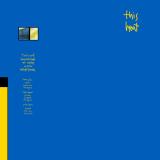
Although widely considered to be Post-Punk’s finest, This Heat actually began performing and recording their music in 1976, the early days of London’s punk era. Within their two albums and an EP they perfected a strange and volatile new strain of avant-garde rock that time has proved to be massively influential, a blueprint for much that would follow: post-rock, math rock, homemade musique concrète, experimental electronica.
Numerous critics have recognised the band's influence on the music of Sonic Youth, Glenn Branca, Steven Wilson, Public Image Ltd., Radiohead, Swans, Shellac, Young Knives, Black Dice, Lightning Bolt and numerous other experimental and post-rock bands. Disbanding in 1982 they have left an undeniable legacy that has only continued to grow in stature and relevance.
The album This Heat, also known to fans and critics as the ‘Blue and Yellow’, was their eponymous debut release, recorded in sessions between February 1976 and September 1978 in a variety of studios including their own Cold Storage, a converted cold storage room in the Acme Studios complex. Innovating throughout, they combined loops and tape manipulation (producing for example the proto-drum and bass ‘24 Track Loop’) with live performance and haunting vocals to a complex, dissonant whole. The band recorded everything they ever did – including gigs – and tracks such as “Water” were entirely improvised in the studio.
Having recently passed the 50 year anniversary of their first gig, and the recording of material that appears on their debut album, the group’s surviving members Charles Bullen and Charles Hayward, true to their DIY roots, have set up an imprint to release their recordings for their growing fan base that is increasingly recognising their influential place in music history.
In Lande’s words: “It’s a daydreaming song about wanting a life of excitement and adventure rather than a dull and ordinary life - one where people underestimate you and belittle you. And where you’re forced to buy into capitalism and become a pathetic, losing player in a game that you hate. I’d rather escape and live in a queer space fantasy and be brave.”
Available on limited turquoise vinyl and digipack CD
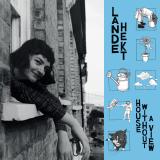
It is with both pride and excitement that we announce the reissue of ‘House Without A View’, the out-of-print second album by singer-songwriter Lande Hekt – the first of a three-part reissue series on Circuitry, with ‘Going To Hell’ and ‘Gigantic Disappointment’ (first time physically) to follow in the coming months.
With a new album ‘Lucky Now’ released on Tapete in January, supported by an extensive spring UK tour (dates below), Lande’s contemporary twist on the classic C86 indie sound - with a queer feminist punk identity lyrically explicit throughout – is drawing in an ever-growing audience of devotees, such is the consistent quality of her songwriting, and the personality within.
The opening track of the album is ‘Half With You’ which “is about growing into yourself as a queer person, and enjoying who you are after not enjoying it for so long,” says Lande. ‘Cut My Hair’ is about how her relationship with her gender has changed over the last few years, becoming more comfortable in herself and understanding more about what makes her happy. “It’s also about how easy it is to not talk to people when you’re struggling, which is something I did for a long time,” admits Lande.
The title track of ‘House Without a View’ deals with childhood trauma and how events of our formative years “affect us so much into our adult lives and are intrinsic to our personalities and the way we cope (or don’t) with life and relationships,” says Lande. Although there’s darkness and sadness within the record, there’s also some shining beacons of positivity and a light-hearted side, albeit with a side of frustration. ‘Lola’ was written about Lande’s cat shortly after she came to live with her and her girlfriend. “She’s the first pet I’ve ever had and I wasn’t quite ready for how hard it would be to not be able to verbally communicate with her. I worried constantly that she was depressed because all she did was sleep, but my girlfriend assured me that that was regular cat behaviour.”
APRIL 2026 DATES: 4th Cardiff/5th Trowbridge/6th Penryn/7th Portsmouth/9th Ramsgate/10th Cambridge/11th Norwich/12th Nottingham/13th York/19th London/20th Brighton/21st Bristol/22nd Exeter/23rd Manchester/24th Sheffield/25th Oxford