Phylipe Nunes Araújo's songs are as rich and varied as the diverse landscapes they were written in. The hills of Pernambuco, the lagoons of Alagoas, and the beaches of Bahia are all woven into his stripped-back, folk-inspired Brazilian songwriting. As part of a wider movement of musicians originating from Brazil's Northeast, Phylipe sees the process of music-making as the search for beauty itself.
Collaborating with fellow Northeastern artists Bruno Berle, Batata Boy and Nyron Higor among others, Phylipe's debut album represents the latest flowering of this exceptionally talented community's creative search.
The Northeast holds an almost sacred importance in Brazil's collective cultural imagination. The region bore witness to the brutal histories of Portuguese colonization and the African slave trade, while simultaneously amalgamating the diverse cultures, religions and traditions of those who have called it home. Countless Brazilian music greats - Gilberto Gil, Caetano Veloso, Hermeto Pascoal, Djavan and Luiz Gonzaga - have emerged from this vast cultural melting pot.
Born in Caruaru, Pernambuco state, and raised in the city of Santa Cruz do Capibaribe (famed for its textiles industry), Phylipe describes his music simply as "Brazilian music from the Agreste of Pernambuco". His masterful compositions thread together regional rhythm, folk poetry and sophisticated harmony.
Phylipe's musical foundations were laid in youth, listening to the local elders rehearsing their forrós, attending São João street parties in front of his house and watching the Junina Quadrilhas dance through his neighborhood. At street fairs he would read the Literatura de Cordel (handcrafted pamphlets of Brazilian folk literature), and watch the rhyme battles between cantadores, violeiros, and repentistas, who improvise verses on daily life, social commentary and philosophy. This tradition of Northeastern folk poetry proved particularly formative for Phylipe as a lyricist. "I always try to write things as simply as possible. I believe that beauty must be easily understood. If I can facilitate the path to the message, there's no reason not to. It's something I learned from the traditional poetry here: it's more beautiful if everyone understands."
At the age of 11, Phylipe first got access to the internet. As he explains: "Still in adolescence I was also able to discover things like The Beatles and Nick Drake - I started to get to know music from the rest of the world and later to correlate that with my local musical experiences." Rich with extended chords and artful dissonances, it's clear from his compositions that jazz and bossa nova also took hold, but he's quick to eschew stereotypes. "Inevitably, people associate a Brazilian musician playing a nylon-string guitar with bossa nova..." "But the foundation is another story," he asserts, "It's the Northeast."
On the guitar Phylipe experiments with the binary rhythms inherent in traditional Northeastern music. Coco, frevo, maracatu and baião are recontextualised, placed alongside Brazilian popular music (MPB), gentle lullabies and stunning ballads. "In these 10 songs, I am experimenting with making pop music on a nylon-string guitar with my foundation in the Northeastern songbook."
The contemporary musical community which Phylipe belongs to developed initially in Pernambuco's neighbouring state Alagoas. Phylipe lived in its capital Maceió for three years, where he built friendships and musical bonds with Bruno Berle and Batata Boy who together produced his album. Bruno also sings in unison with Phylipe on the duet "Valise", a song Phylipe wrote aged just 15.
In recent years, Phylipe, Bruno and Batata have migrated south to São Paulo, where the majority of the album was recorded. Other collaborators on the album include Alici, who provides vocals for the ebb and flow of "Temperim", Nyron Higor who plays drums on lead single "Asa" and the sweet indie moment "Ziz"", bassist Meno Del Picchia who plays on the mystical baião "Bixin" and the propulsive "Subindo a Ladeira", and Raphael Coelho who joins Bruno and Batata on percussion for "Santa Cruz", Phylipe's hypnotically powerful portrait of his hometown.
Поиск:something j
Все
- 1: I'm Not Getting Excited - Live
- 2: Great No One - Live
- 3: Whatever - Live
- 4: Mars, The God Of War - Live
- 5: Future Me Hates Me - Live
- 6: Introduction
- 7: Jump Rope Gazers - Live
- 8: Uptown Girl - Live
- 9: Bird Talk
- 10: Happy Unhappy - Live
- 11: Out Of Sight - Live
- 12: Thank You
- 13: Don't Go Away - Live
- 14: Little Death - Live
- 15: Dying To Believe - Live
- 16: River Run - Live
The anticipation is there in Elizabeth Stokes’ solo guitar riff under the opening lines of “I’m Not Getting Excited”: a frenetic, driving force daring a packed Auckland Town Hall to do exactly the opposite of what the track title suggests.
As the opener of The Beths’ Auckland, New Zealand, 2020 expands to include the full band, the crowd screeches and bellows. It’s a collective exhalation, in one of the few countries where live music is still possible.
The album title, and film of the same name, deliberately include the date and location, lead guitarist Jonathan Pearce says. “That’s the sensational part of what we actually did.” In a mid-pandemic world, playing to a heaving, enraptured home crowd feels miraculous.
In March 2020, everything seemed on track for another huge year for The Beths. Home after an 18-month northern hemisphere tour, they had just finished recording sophomore album Jump Rope Gazers and were primed for more extensive touring. But within days, New Zealand’s lockdown split the band between three separate houses. All touring was cancelled.
“It was existentially bad,” Stokes says. As well as worrying about economic survival, they lost something crucial to the band’s identity: live performance. “It's a huge part of how we see ourselves... What does it mean, if we can't play live?”
The band found an outlet through live-streaming, returning to the do-it-yourself mentality of their early days to connect with a global audience. The album and film have their genesis in that urge to share the now-rare experience of a live show, as widely as possible.
The fuzzy-round-the-edges live-streams pointed the way aesthetically. Native birds, wonkily crafted by the band from tissue paper and wire, festoon the venue’s cavernous ceiling while house plants soften and disguise the imposing pipes of an organ. The presence of the film crew isn’t disguised: much of the camerawork is handheld; full of fast zooms and pans.
With much of the material still fresh, the band was less focused on re-invention than playing “a good, fast rock show”, Pearce says. The tempo is up on crowd favourites “Whatever” and “Future Me Hates Me” (released as a live single on its third anniversary) as both band and audience feed off the mutual energy in the room.
Certain songs have taken on special resonance post-Covid. Pearce has found “Out Of Sight”, a tender rumination on long-distance relationships, hits particularly hard with live audiences.
Album closer “River Run” visibly brings Stokes to tears as a mix of achievement and relief kicks in. “You can finally relax at that point … You play the last note, breathe out a sigh and look up - and you’re in a giant room full of people happy and smiling.”
- 1: Open Heart 02:36
- 2: Sullen Walks Through Green Hills 0:17
- 3: A Lone Thought 02:46
- 4: When She Comes 02:52
- 5: Light Breaks Through 02:4
- 6: If It Was 02:43
- 7: Nesting 02:0
- 8: Names 02:33
- 9: Two Twos 02:31
- 10: Boy No Longer 02:05
- 11: If We Only Knew 02:03
- 12: Like Water 02:57
- 13: River Lady 02:59
- 14: All Rose No Thorn 02:20
- 15: Skyward Blossoms 02:42
- 16: The Wading 03:10
Limited[40,13 €]
Found Keys is the debut album by American artist Ruth Maine. Although Ruth has been playing and composing music for over two decades, this is the first time she decided to record some of her varied compositions and share them with the public. But in times when it is the norm to clamour for attention, she prefers to go the opposite way. Ruth likes to let her music speak for itself and stay in the shadows.
The 16 short piano pieces heard on this album, each about two to three minutes long, were recorded remotely and purely surrounded by nature. Once a composition was found and Ruth considered it mature, she only recorded it once, embracing the beauty of doing something for the first time with all its little imperfections. Found Keys sounds anything but imperfect though. These compositions feel timeless, intimate and comforting, as if they have been around for a long time, like an old friend. Gently played keys slowly evolve into minimal pieces through repetitive melodies. There’s stillness as much as there’s brightness, sadness as much as joy; welcome to a beautiful journey through Ruth’s world of wonder.
In many ways, Found Keys is a deeply personal record that takes Sonic Pieces back to its roots. And it leaves a feeling of nostalgia while reviving memories of the past.
- 1: Open Heart 02:36
- 2: Sullen Walks Through Green Hills 0:17
- 3: A Lone Thought 02:46
- 4: When She Comes 02:52
- 5: Light Breaks Through 02:4
- 6: If It Was 02:43
- 7: Nesting 02:0
- 8: Names 02:33
- 9: Two Twos 02:31
- 10: Boy No Longer 02:05
- 11: If We Only Knew 02:03
- 12: Like Water 02:57
- 13: River Lady 02:59
- 14: All Rose No Thorn 02:20
- 15: Skyward Blossoms 02:42
- 16: The Wading 03:10
Standard[23,32 €]
Found Keys is the debut album by American artist Ruth Maine. Although Ruth has been playing and composing music for over two decades, this is the first time she decided to record some of her varied compositions and share them with the public. But in times when it is the norm to clamour for attention, she prefers to go the opposite way. Ruth likes to let her music speak for itself and stay in the shadows.
The 16 short piano pieces heard on this album, each about two to three minutes long, were recorded remotely and purely surrounded by nature. Once a composition was found and Ruth considered it mature, she only recorded it once, embracing the beauty of doing something for the first time with all its little imperfections. Found Keys sounds anything but imperfect though. These compositions feel timeless, intimate and comforting, as if they have been around for a long time, like an old friend. Gently played keys slowly evolve into minimal pieces through repetitive melodies. There’s stillness as much as there’s brightness, sadness as much as joy; welcome to a beautiful journey through Ruth’s world of wonder.
In many ways, Found Keys is a deeply personal record that takes Sonic Pieces back to its roots. And it leaves a feeling of nostalgia while reviving memories of the past.
A record born of insurmountable joy and simultaneous profound loss; World Maker marks a time of great change for Psychonaut, both personally and musically, as the band burn away the philosophical narrative complexities of previous offerings with a searing, panoramic clarity that implores us to savour the beauty of the now as a means of leaving a legacy for the future. The traditional, three-piece line up of Belgian, psychedelic post-metal collective Psychonaut has long belied the compositional prowess, captivating narrative depth and crushing live presence of a band now operating at the forefront of forward-thinking, contemporary heavy music. Having sent a shockwave through the post-metal and prog scenes with their three times repressed Pelagic Records debut Unfold The God Man in 2020 before following it up with the transformative metaphysical complexities of 2022's Violate Consensus Reality, Psychonaut have played prestigious Belgian open-air festivals like Alcatraz, Rock Herk and Boomtown Festival as well as boutique events such as Soulcrusher, Roadburn Redux and A Colossal Weekend whilst sharing stages across Europe with the likes of Amenra, Brutus and Pelagic labelmates The Ocean and PG.Lost. The seed of World Maker took shape just as the campaign for Violate Consensus Reality came to a close, with the news that guitarist/vocalist Stefan De Graef was to become a father. This tilting of life's axis led De Graef, like most fathers-to-be, to re-assess what was really important. As such, the music he was inspired to write felt free of the band's previous philosophical and spiritual foundations and instead took the form of life lessons for his unborn son, a legacy of love in case something were ever to happen. This hopeful euphoria shines keenly throughout World Maker as an uncharacteristically optimistic warmth; from the reverberating Rhodes organ on the titular opening track and the meandering, free-jazz inspired guitar solo that introduces `Everything Else is Just The Weather' to elements of world music, electronica and the otherworldly voice of Dutch multi-instrumentalist and old friend Anthe Huybrechts (Anthe/Helion Creek) most notably on tracks like `Origins' which also features tabla, a pair of indian hand drums, as its propulsive heartbeat. Whilst Psychonaut's giant riffs, punishing polyrhythms and guttural vocal rage are more resplendent than ever, there is a wider dynamic spectrum to World Maker that sees the band proudly exploring their more delicate, intimate extremes as well as their most aggressive and abrasive. Not long after the birth of De Graef's son came the devastating news that both his own father and Psychonaut bassist/vocalist Thomas Michiels' father had been diagnosed with advanced cancers. Living day-to-day and torn between joy and grief, the band found themselves shedding the grand scope and world-shattering agenda of Violate Consensus Reality to focus on the here and now. Lead single `Endless Currents', the first full track on the album, explodes in a barrage of staccato guitar tapping but mellows to let the powerful, newly pared back lyrics ring out as a call to embrace the flow and follow joy. The song's final few words `Lead the way. / Soar. / Everlong.' double as both a greeting and a goodbye as the trio build their formidable post-metal might to a thunderous breaking point. Similarly, the pulsing, propellant `Stargazer', named so for De Graef's son being born in stargazer position, pairs delicate guitar motifs and folk-inflected optimism with huge and sprawling breakdowns as some of the band's most genre-pushing work to date; asking difficult but important questions of what happens next. It is `And You Came With Searing Light' though that most immediately exemplifies Psychonaut's redirected ambition on World Maker, as euphoria collides with blinding fury. The first track written for the album, `_Searing Light' is easily the most complex and initially wouldn't sound out of place on Violate Consensus Reality. Originally meant to be the new album's opening track; the decision to defer its impact, not to mention its compositional and dynamic gravity, speaks of a fundamental change to the band's very core. The words "Discover the world with wide eyes" recurring throughout speak as much to those having lost a part of their world as they do to those seeing it for the first time. Amidst such turbulent times, the band found strength and support within their Post-Metal community. The album was recorded and produced by the band alongside their longtime collaborator and close friend Chiaran Verheyden (Hippotraktor) with help and advice from Psychonaut's live engineer Victor, who will no doubt make this album sound just as awesome on stage. Even the artwork for World Maker was a family affair, being designed by close friend Sam Coussens of Belgian cosmic sludge metallers Pothamus. In the face of life's soaring highs and desolate lows, World Maker is direct and brave without sacrificing any of Psychonaut's raw power, creative innovation or inimitable musical depth. Where their previous full-length offerings have charted grand introspective courses through time and space, World Maker is breathtaking in its uncompromising clarity: a father singing to his newborn son as a son bids his own father farewell. FOR FANS OF Mastodon, Russian Circles, Tool, Gojira, The Ocean, Pelican, Hypno5e, Cult Of Luna, Amenra
- Volver
- Tinta
- Pa Lxs Que Se Van
- Nombre De Bienes
- Sudaca Meeting
- Deep Horizon
- Guararapes
- Spit
Argentine pianist Hernán Jacinto and Uruguayan drummer Mateo Ottonello, come together in this boundary-pushing duo album recorded in New York. Blending acoustic and electronic textures, tradition and innovation, this project reimagines South American jazz through a contemporary lens-offering a powerful journey into the evolving sound of the Rio de la Plata. The two shores of the Río de la Plata-Buenos Aires and Montevideo-share a deep and vibrant jazz tradition, one that merges global influences with the region's rich musical heritage. For over half a century, rhythms like tango, candombe, and milonga have intertwined with jazz and other instrumental forms, continually exploring new directions and pushing creative boundaries. Argentine pianist and composer Hernán Jacinto and Uruguayan drummer and percussionist Mateo Ottonello embody this spirit of exploration. Though from different generations, both are among the most innovative voices in the Río de la Plata music scene-artists unafraid to blend past and present in pursuit of something new. Recorded in New York, their duo album offers a journey into the musical soul of the Río de la Plata, reimagined through a contemporary lens. It weaves a rich tapestry of acoustic and electronic textures, tradition and experimentation, groove and introspection. More than a fusion, it's a reinvention-revealing a new dimension of South American jazz musicianship.
An’archives presents Kagome Kagome, the first collaboration between France’s Delphine Dora and Japan’s Ayami Suzuki. Curious listeners might know Dora from the string of lovely, idiosyncratic albums she’s released over the past two decades, most recently for labels like Modern Love, Morc and Recital; she’s also worked with the likes of Michel Henritzi and Sophie Cooper. Suzuki’s performances, predominantly for voice, place her within a tradition of Japanese improvised music – see the music she’s made with artists such as Takashi Masubuchi, TOMO and Leo Okagawa – but her approach also takes in folk song, ambience and claustrophobic drone.
On Kagome Kagome, Dora and Suzuki play to their many strengths: a gentle, free-willed folksiness; long, aerated drone constructs; ghostly, time-warping explorations for voice. They met on Dora’s May 2024 tour of Japan, though they’d been in touch beforehand, with Dora proposing the collaboration to Suzuki, developed around “concepts of ‘otherworldliness’ and ‘impermanence’,” the latter says, “and explored the relationship between ‘the invisible’ and sound in Japanese culture – a common interest we share.”
They recorded across several days that month, with the sessions for Kagome Kagome taking place in Kanumi, in Tochigi prefecture, at a space named Center. “I was particularly looking forward to seeing Delphine encounter the vintage 104-year-old harmonium from Nippon Gakki Seizo Co. that had just been repaired at Center,” Suzuki recalls. “It was as if the harmonium had been waiting for Delphine to draw sound from it. I felt it was a beautiful relationship where they could guide each other.”
Indeed, there’s something channelled about the music that Dora and Suzuki made together in the session that constitutes Kagome Kagome. Dora’s harmonium might be the spine of the album, but Suzuki’s free- floating voice, and gaseous, muddied banks of electronics, wrap around the wheezing, ancient tonality of the harmonium beautifully – they, too, sound as though they were just waiting to be willed out of the daytime air. Their voices nestle together beautifully – “when we sang together in a tunnel,” Suzuki says, “there were times when we sang the exact same melody without planning. It happened so naturally that the boundaries between us became blurred.”
And that title? It’s drawn from a Japanese children’s song, and the song titles themselves constitute the song’s lyrics, in alternating Japanese (Romanized) and French language. Urban legend connects the song “Kagome Kagome” to the Nikko Toshogu Shrine, nearby Center, that Suzuki and Dora visited while they were in Kanumi. “The mysterious lyrics of ‘Kagome Kagome’ and its puzzle-like connection to Nikko Toshogu were a perfect fit for this mysterious album,” Suzuki reflects, “which I think has its own kind of puzzle-like elements.”
A deep album of prayer and magic, of divination and ritual, Kagome Kagome’s sense of serious play, its rich beauty, feels somehow dislocated from our time. If you’ve ever enjoyed the music of Nico, Kendra Smith, Charalambides, or other channelers of ghostly mystery, its eerie otherness will, somehow, feel oddly familiar.
- A1: The Missing Hikers
- A2: Rat King
- A3: The Ultimate Intimacy In Divine Flesh
- A4: Mildew Or Something?
- A5: A Fucking Three-Legged-Race
- A6: Dumb City-Folk Who Went Against Nature And Lost
- A7: A Great Thirst
- A8: 23 Likes
- A9: Together With Tim
- B1: Thirsty All Over, A Love Song
- B2: It Was Like A Window Opened Between Our House And That Night
- B3: The Beginning Of Something Wonderful!
- B4: It Feels...crowded
- B5: I Just Saw’d Through Our Fucking Arms!
- B6: Muscle Relaxant!
- B7: By The Way, I’m Sorry I Didn’t Believe You, You Were Right, Obviously
- B8: Together With Millie
- B9: Our First Dance
For her sophomore outing on Razor-N-Tape, Megatronic drops There’s Truth in Gospel, an extended concept EP built around the idea of a modern-day gospel congregation, reimagined through the lens of soulful, high-energy club sounds. Its six soulful house tracks explore vibrant layers of live instrumentation, from trumpets, flutes, and diverse percussion styles that breathe warmth into the sonic palette of the record. Featuring the voices of Fawziyya Heart, Aku, and Chiqo Casidi, and gorgeous artwork that perfectly captures the rich concept of the music, There’s Truth in Gospel is an ode to unity, joy, and collective celebration.
- Robespierre?
- Berio
- Kaldur Vindur
- Cipher
- Well, Actually
- Oslo
- Fount
- Ry
- Sneaking Around
Leading Danish contemporary jazz label April Records is proud to present Well, actually..., the third album from Polish acoustic jazz quartet O.N.E. Grounded in the spirit of democracy andcollective improvisation, the album offers a tightly woven set of original compositions that blur the lines between modal jazz lyricism and the raw energy of free improvisation.The band name O.N.E. is a clever double entendre: in Polish, "one" (pronounced oh-neh) means "they" in the feminine plural - an apt nod to the all-female lineup. In English, of course, it signifies unity. Both meanings reflect the band"s egalitarian, leaderless approach and cohesive group sound.Almost three years after the recording of their previous release Entoloma(Audio Cave), the group reunited in December 2024 at Studio S4 in Warsaw to record a fresh set of ten compositions. Spread over two sides, the album captures the continued evolution of a band that thrives on interaction, trust, and shared purpose - even in a society fractured by post-pandemic socio-economic uncertainty and political ambiguity. Featuring contributions from all four members - pianist Kateryna Ziabliuk, saxophonist Monia Muc, bassist Kamila Drabek, and drummer Patrycja Wybranczyk - the recordreflects their commitment to artistic democracy. Each voice is given space, yet the music always feels greater than the sum of its parts. Even on the miniature solo track solo form, the other three players remain present, supportive, and responsive. From Ziabliuk"s percussive piano textures and dreamlike voicings on tracks like Osloand Berio, to Muc"s expressive, woody tone on alto and baritone sax, each piece explores dynamic interplay and shifting emotional landscapes. Drabek"s resonant, grounded bass - by turns lyrical and propulsive - provides a central thread, while Wybranczyk"s drumming fizzes with precision and imagination, as heard on Cipherand the angular closer Sneaking Around.Together, these four distinctive creative forces have developed a shared language built on mutual respect, long-term collaboration, and deep listening. Their concerts across Europe (including Jazzahead, B-Jazz, Umea, and the Edinburgh Jazz & Blues Festival) haveaffirmed their standing as a boundary-pushing group with something new to say.
[f] [SOLO FORM]
- Dimmed Sun
- Se Sufre Pero Se Goza
- No Pilgrim
- Beware The Centrist
- Oubliette
- Captagon
- Dissolving
- Reject All And Submit
- Th
- Auguries Of Guilt
- For Those Who Will Outlive Us
The World Is a Beautiful Place & I Am No Longer Afraid to Die return October 17 with Dreams of Being Dust, an album that finds the Connecticut-formed collective plumbing the depths of emotional ruin and emerging with their most scorched, unrelenting work yet. Co-produced by guitarist Chris Teti (Fiddlehead, Anxious) and Greg Thomas (END, Misery Signals), the album exchanges the band"s usual sprawl for something more serrated-folding djent-like heft and post-hardcore volatility into their post-everything DNA. Dreams of Being Dust is the band"s fifth studio album, and follows up their well- received 2021 album, Illusory Walls, which arrived as their "heaviest, proggiest, most audacious release to date" according to Stereogum. Tackling complex social and political themes like religion and capitalism, Pitchfork praised its scathing indictments as "fuming with resentment for the ruthless greed and self-interest fueling societal collapse. If Illusory Walls was their grand reckoning, Dreams Of Being Dust is the aftermath: raw, furious, alive. But even amid the chaos, the band"s core remains intact-a belief in community, resistance, and making sense of the world through sheer volume and vulnerability. TWIABP have always blurred the lines between hope and despair, and here, that duality feels sharper than ever. Now a decade in, the band- David F. Bello (vocals), Chris Teti (guitar/ vocals), Joshua Cyr (bass), Katie Dvorak (synth/vocals), Steven K. Buttery (drums), and Anthony Gesa (guitar/ vocals)-deliver a message that sounds less like a eulogy and more like a rallying cry.
- 1: Did You See The Words
- 2: Grass
- 3: Flesh Canoe
- 4: The Purple Bottle
- 5: Bees
- 1: Banshee Beat
- 2: Daffy Duck
- 3: Loch Raven
- 4: Turn Into Something
- 1: Must Be Treeman
- 2: Fickle Cycle
- 3: People
- 4: Tikwid
- 5: My Favorite Colors
- 6: Banshee Beat
- 7: Bees
- 8: Grass
- 9: Tikwid
- 1: No Surrender
- 2: A Little Something
- 3: Point Blank
- 4: Devil In Me
- 5: In Over My Head
- 6: Heartbeat
- 7: Dogma 2.0
- 8: Scream
- 9: Love Over Healing
- 10: Here Comes The End
- 11: High Places
Perc returns to Perc Trax for his first full EP since the release of his Resident Advisor recommended album 'The Cut Off' in March 2024. Across the three tracks of 'Soft Launch' Perc sets out his current sound, a groove led take on classic techno with the depth of production and unexpected twists that Perc's tracks are famous for.
Title track 'Soft Launch' is based around the interplay between the three main elements of the track, the driving kick & bass, cut up percussion loops and the ever building string chords, creating something unique that has been a key track in Perc's sets since it was completed.
'Tonight' sits somewhere between pulsing electro and gritty lo-fi techno, constantly pushing forward as a female vocal breaks through the wall of percussion demanding to hear something fresh.
Finally 'Gravity Drop' pushes the sound design further, mixing a crisp industrial kick drum groove with cut up atmospheric melodic and vocal elements creating a psychedelic dreamlike atmosphere to close the EP. Packaged in a full colour sleeve designed by Perc Trax design god Jonny Costello, Perc's Soft Launch is a statement of Perc Trax's future both sonically and visually.
Following up the big room belters on Pablo and Shoey 'Raw Human Emotion' EP was going to be quite the task for those lovable Dublin disco messers at Fatty Fatty Phonographics, so they handed the reins over to one of the true maestros of the artform - NYC legend Mr. K.
The A-side is a propulsive extension of 'Let The Sunshine In', featuring ecstatic, gospel-shouting breakdowns. Dropped at the right moment, this is one of those tunes that brings everyone together with that look on their face, the hairs on the back of the neck standing up, arms instinctively flying toward the sky, disco fingers aloft...Excuse us, we just have something in our eye here...
Flip it over for a serious one for the heads...A few years ago Mr. K put out '1,2,3' on a 7-inch on the aptly named Most Excellent label. It was an edit of a roaring clav-funk number from the acetate collection of the legendary 'DJ's DJ' Walter Gibbons.
The Fatty folk persuaded him to revisit it, and he did a magical job of extending it out across the full 12 inches of vinyl, just the way the good Lord intended. 2 sides of utter dancefloor devastation here, be quick!
- Tokyo 1
- Osaka
- Nagoya
- Matsumoto (Beginning)
- Matsumoto (Ending)
- Hokkaido
- Tokyo 2
- Each Story
Black Vinyl[22,27 €]
Emily A. Sprague's Cloud Time traces an audio-spiritual journey through time and place, recorded across a long-awaited debut tour of Japan in the fall of 2024. Compiled from environmental improvisations captured in and for the moment, material at once welcoming, responsive, and inimitable, the album distills a voyage guided by psychic wayfaring, unbound presence, and activating performance for a reciprocal exchange with space, listener, and each fully engaged instant. The Japanese tour documented on Cloud Time held an almost mythic significance for Sprague, taking on properties of her own sonic white whale. After many near-departures and dropped plans to play in the country, "the empty spaces of cancelled trips and forgotten music turned into strange little misty spirits that I felt followed by," she says. "When I began preparing for the tour, I couldn't shake a sense that the invitation to Japan was more about opening myself up to this new place instead of bringing something into it tightly under my control. Improvisation has always been such a pillar in my music practice, and I really wanted to meet the country, spaces and people through that process." To amplify these intuitive whispers on-stage, Sprague reimagined her time-tested live rig, designed to be as free from error as possible, as a looser, more flexible set up that would allow her to interface with what was essentially a blank sonic canvas every night. Each performance became a collaboration between environment and instinct, Sprague processing the events, energies, and emotions informing the evening through her new sound ecosystem, and projecting an entirely present and unique version of herself to each open-eared and hearted crowd. "It was very much more than just an act of playing for me, but a total experience of time and place," she says. The seven long-form pieces that plot the course of Cloud Time, excerpted from over eight hours of recordings archived on the artist's on-stage recorder and generously shared on the album with no additional mixing and only minimal editing, invite listeners to become still in these deep-rooted moments of presence as the album moves from city to city, venue to venue. Cloud Time chronicles material recorded at each tour stop, Sprague selecting and sequencing the album around mood-based storytelling more so than linear chronology. "I tried to make the whole album flow in the way that any one of the complete live performances did," she explains, "while also keeping the spirit of the whole thing as a journey." The result is equal parts travelog, love letter, and impressionistic collage channeled from the potent ferment of a now encased in the glowing amber of memory. Intrinsically inspired by kankyo ongaku, an environmental music philosophy, known both in and widely outside of Japan that tunes into the similarly expansive ethos as Pauline Oliveros' deep listening practice and posits the listener as composer, Cloud Time is ambient music that seems to be listening right back, grounded in heartfelt synthesized frequencies that abundantly hold and heal. Pieces like "Nagoya," "Tokyo 1," and the ten minute "Matsumoto" in particular hum with the atomic resonance of gently tended landscapes, offering space for tuning way in and dropping far out from perspectives that stifle and bind. Cloud Time is an invitation to embrace each moment as both fleeting and eternal, floating by with nothing to grasp onto and absolutely everything to gain. The exercise in acceptance and letting go that Sprague practiced throughout the tour deeply impacted her understanding of self as both a guest and venerable performer. "The process of loving wherever I am, being present and focusing on a clear channel of communication for mind and emotion, rooted so deeply in respect for the space, those within it, and myself, ended up being profoundly healing," she says. "My vision and hope is that this album can be released as a gift back to anyone who either was or wasn't there. A cloud time of life passing by."
"The Happening by Tomorrow Comes The Harvest is the least case, a provocative confrontation. It's a challenge or dare to the idea that music can be useful if we are able to experience it. I would imagine that to many, music having an objective beyond the listener doesn't make sense because the general thought is that Music is made for us to consume, to make us remember, to influence us and to make us feel something. The Happening does all those things but much more. What it does is expand the scope from us to "it". Creating and constructing music for the subject of existence is a tall order.
The concept of The Happening is about the beginning and the end of Time and Space; the initial point of when reality starts and its conclusional apex. In the beginning, there is a great light. And from this light, comes life. Life is lived until it isn't.
This is what The Happening implies. It speaks about a 9-minute frame in reality, used to emphasize something that happened a very long time ago, something that happened in its creation and what will eventually happen far in the future.
The Happening was of an accidental birth. The love child of three musicians (Jeff Mills, Prabhu Edouard and Jean-Phillippe Dary) who was just asked to play "something" so that the camera crew could have extra b-roll for all the previous footages of the band while they were working in the recording studio in the North of Paris for their album Forbidden Planet. There was no discussion of what they'll do, no plan, no direction other than to use music to reach a level of consciousness.
Somehow within these transformative 9 minutes, something was felt by each of them, explored to its furthest point, which lead to this extraordinary creation. The Happening refers to the life and death of everything living thing. Infinity."
Jeff Mills
- A1: This Is A Never Ending Story (You Just Need To Close It)
- A2: Hidden Road (For Yoo Jae-Ha)
- A3: It Must've Been The Sunset (That Altered My Memory From That Day)
- A4: Good Morning, Harrison, It's Time To Go
- A5: Let's Walk Down To The Swamp Together
- B1: Rainy Night Ride With Roy
- B2: Crows Over My Shoulder (Take Me)
- B3: Spiral Dance (Up Or Down, I'm Not Too Sure)
- B4: Dear Oddie, Today Rainbows Are Falling From The Sky
- B5: Lying Here Half Awake, I Hear Kids Outside Laughing With Their Hearts
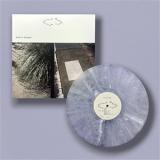
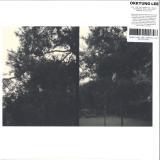
Unlike anything we have heard from her before, Okkyung Lee returns to Shelter Press with "Just Like Any Other Day: Background Music For Your Mundane Activities", a deeply intimate body of recordings at the juncture of ambient music, minimalism, and the baroque, that stands as radical intervention with what experimental music can be, and the place that organisations of sound occupy in our lives. For more than two decades, Okkyung Lee has stood at the forefront of the most radical trajectories of experimental music: a virtuosic cellist and improviser, renowned for her creative rigour and emotive depth. Particularly noteworthy for her range, dexterity, and adaptability, over the last five years Lee's output has revealed unexpected shifts and developments that move far afield from the realms of free improvisation for which she is most well known. 2020's "Yeo - Neun", a heart-wrenching, ambient chamber work - drawing inspiration from the Korean popular music of her youth - was issued by Shelter Press to great critical response, followed closely by "Teum (The Silvery Slit)" - one of a series engrossing electroacoustic works created at Groupe de Recherches Musicales in Paris - on Portraits GRM, and then "Na-Reul" in 2021, regarded by Lee as a closing statement of more than two decades living in New York, which set the precedent of her allowing her emotions to fully occupy the forefront of the music for the first time. Marking her return to Shelter press, "Just Like Any Other Day": Background Music For Your Mundane Activities", encounters Lee upturning the apple cart once again, weaving a profoundly intimate artistic statement on completely unexpected terms. Like its three aforementioned predecessors, "Just Like Any Other Day" belongs to broadening shift in Lee's approach to composing that roughly aligns with her return to her native South Korea, having lived in the United States since her late teens. Infused with a deep reengagement with her own culture and relationship to memory, it is equally a response to those critical challenges and questions provoked by significant life change. Worked on in isolation, and continuously returned to, over the course of four years, the album's nine pieces began with a simple recognition that experimental music is not always what we imagine it to be. It is a practice and a pursuit - a music for which, at its inception, the outcome is unknown - rather than an idiom defined by certain syntaxes, approaches, and qualities of structure and sound. From this departure point, Lee began to inquire after the utility of music itself: what is it for, what does it do, and what place does it (or can it) occupy in our lives? This solitary and durational journey, each composition gradually moving through different phases and evolutions over years, led Lee toward uncharted ground: a music that is not only playful, introspective, and seductive, but also intended to provoke a relationship to experimental music beyond its normative expectations. Rather active or deep listening, it pursues passive listening. Rather than a grand statement, it is discreet. Rather than virtuosity, it embraces the elegant and direct. Even more strikingly, for the first time, the music of "Just Like Any Other Day" encounters Lee leaving the cello entirely behind. Created at home on keyboard, computer, and an inexpensive cassette recorder, "Just Like Any Other Day" presents a remarkable form of ambient music - organisations of sound that become their own environment, to be occupied - intended, as the album's subheading infers, as Background Music For Your Mundane Activities. An expansion of the creative pathways opened by the Korean pop imbued compositions of Yeo - Neun, aspects of electronic process explored by "Teum (The Silvery Slit)", and the emotive foregrounding of "Na-Reul", each of the pieces presented across the two sides of "Just Like Any Other Day" implies something far greater than the limits of its own temporarily: a mood, provocations of memory and place, mirrors for the solitude within which it was made, and palpable emotion lingering just out of grasp. For Lee, each of the album's compositions could be continued or looped for an indeterminate duration: straddling a ground between the minimal and the baroque, enveloping the listener in endless cycles of appreciating, repetitive and rhythmical notes, flirting with the melodic and implying a disembodied imagism that borders on the profound. Remarkably beautiful and direct, Okkyung Lee's "Just Like Any Other Day: Background Music For Your Mundane Activities" - issued by Shelter Press on vinyl - represents a radical reconfiguration of experiential music, stripped to its bare essence in defiance of the widely presumed aesthetic signifiers. Unlike anything we've heard from her before, this immersive body of intimate recordings not only reveals new dimensions of Lee's striking range as an artist, but also of how we might regard and occupy music itself: an ambience to lived and felt like a second skin.
Ferdi is an emerging saxophonist artist from the Brusselian-Parisian musical scene. Fifteen years after evolving at the conservatory, he decided to develop his artistic career. He surrounded himself with prominent artists of the modern music scene: the rapper Peet, the pianist Sofiane Pamart, his trumpeter mate Bessau, and the King of Funk Dabeull!
Ferdi’s new album « Romance » has been conceived from this artistic exchange. « Romance » offers a romantic, funky moment for two lovers of 80s music: Dabeull and Ferdi. »