Scanning Backwards, Phase Fatale’s second full-length album originally released on Berghain’s in-house label Ostgut Ton in 2020 is now reissued via his label BITE on limited edition pink marble vinyl after being long sold out and sought after. Using the connection between weaponized sound and psychological manipulation as a conceptual foundation, Hayden Payne explores the ways in which music – and sub frequencies in particular – are used to influence thinking and to synchronize emotions and behavior: from military technology to sound systems and the physicality and sexuality of queer techno culture.
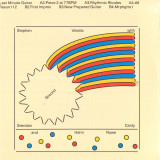
Known for his innovative post-punk takes of dance music as featured on EPs for unterton and Ostgut Ton, the Berghain resident draws on his background as both a guitarist and sound engineer to create a heady mix of broken rhythms, noise-, and shoegaze-inflected techno, often at slower tempos. The result is music with space and pace to expand, highlighting the intense rushes of frequencies found in both sonic warfare and functional dance music. Over eight tracks named after a combination of historical and fictional narratives from literature and science fiction, Payne’s rhythmic excursions explore different manifestations of sound as power – specifically within the context of seeing Berghain as an instrument itself. This is also reflected in the album artwork, taken from an early flyer for the SNAX party series and an obvious ode to the fetishization of power dynamics.
In his own words: “All tracks on the album, no matter the style, were tailored to sound a certain way in Berghain – something I figured out through years of dancing in the middle of the floor, DJing as a resident and investigating what frequencies really penetrate the body. This includes speech and high-frequency, brain-penetrating instrumentation and drilling textures that I had not utilized so often before, but which I think also have an effect on thought and memory. It’s especially true in a space where gay and fetish roots combine with music in unexpected ways, almost in a cultish manner. A musical and physical deprogramming and reprogramming, psychic driving and de-patterning, the erasing and replacing of memories.”
Ultimately, Scanning Backwards surveys not only the manipulative properties of electronic music (mantras, loops, subliminal messages) but also how rhythm facilitates both moving and thinking in synchrony; a pulse of coordinated sound- and brainwaves.
Cerca:something system
System Error presents LRS Grooves. From the South of Italy, LRS brings us something special, in a mesmerising three-part series. This is Volume 1 - the Get Back to Livin’ EP.
A heartfelt homage to someone dear and lost to the artist, there is so much feeling in this record. Classics in the making, and there is even room for an absolute peak-time showstopper at the B2. Fusing melancholic sounds with power, LRS tells us a story.
A tribute, a celebration, and an invitation to feel deeply and move freely. This sets the stage for what promises to be an unforgettable trilogy…
Fresh off the back of a breathtaking performance for System Error on the MS Hoppetosse, we are genuinely thrilled to present this record from the sensation from Sicily, Monica Venturella.
Just 22 years old and already rocking the most revered venues with sets of 100% own produced tracks, we think this is the beginning of something special…
A young, self-taught musician, Monica has already forged her own unmistakable sound, with her very personal take on high-energy electro fused beats filled with emotion.
This record is no exception. Every track expertly delivering her urgent, high-energy sound. This is a guaranteed dancefloor damager.
“Gallows” is our third solo EP for Artikal Music, and was written over mid-2020 as an intended collection of 140bpm tracks with varied styles, themes and sound palettes, which would still gel together in EP form. The track that got the ball rolling was the title track, “Gallows” a link-up with PAV4N, in which we explored some of the more melodic, experimental corner of our sound for the instrumental, which is beautifully contrasted by Pav’s aggressive and intense delivery, and his lyrics which serve as an observation on political and government hierarchies. The second track, “Understand”, is a more dark, dub-focused outing, with chunky elements and bass that are built for sound system playback. Building this one was really fun, allowing us to dig for drums and elements that we don’t typically use to create a more grungy experience. Track three, “Blinded”, goes darker still, enlisting regular collaborator Jack Flynn-Oakley, who we love working with, to write something with pure, crushing impact and a level of anxiety that increases steadily throughout the track. There’s no dance that this one hasn’t shelled down yet. The final track, “Inner Sanctum”, was the last track to be finished for the release and is a track we’ve been keeping locked down for a while now. It’s an off-kilter mix of wailing vocal cuts, cold bass movement, and percussion that’s bursting with character.
We’re stoked to be back on Artikal, and we hope you guys enjoy the sounds this time around.
Will & Mike
Mystic State
System Error’s ERROR300 Series welcomes Amalgama, a musician from Quito, Ecuador, who delivers for us something deep and special for the dancefloor.
No Pretensions is an EP crafted with the intent of creating something different for the dancefloor. Deep basslines and chords are decorated with lush synths and touching arpeggios for a soulful journey. A record full of feeling…
- A1: Suzanne Ciani - Jungle Vint
- A2: Marina Herlop - Collige Virgo Gladium
- A3: Lord Of The Isles - Ca11
- A4: Le Motel - Serenade Of The Seas
- B1: Pépe - And Everything Glimmers
- B2: Kettel - Opsterland 99
- B3: Wordcolour - Weightless
- B4: Plaid - Unions
- C1: Seph - Lunarglass
- C2: Kode9 - Nuvola
- C3: Simo Cell - Jesus Suave
- C4: Nueen - Potentia Gaudendi
- D1: Gazzi - Trece
- D2: Μ-Ziq - Holmbush 2
- D3: Naemi - Ambergris
- D4: Claraguilar - Vega
A gas generator, a hi-fi system, a semi-abandoned house, and 20 hastily printed flyers. That's how, almost without realizing it, Lapsus was born in 2004. Over the course of two decades, we've ridden a rollercoaster of emotions: from soaring epiphanies, convinced that nothing could stop us, to moments of near defeat when we almost threw in the towel. Let's be honestMaking a career out of music is not exactly choosing the easy path. But epic tales aside, today we look back with pride at having created something that, in our humble view, is genuine. To celebrate Lapsus' journey and what lies ahead--and also keeping an eye on what is yet to come--we've gathered some of the artists who have joined us along the way, musicians we consider friends and for whom we have the deepest admiration. In a way, VINT (Catalan for ''twenty'') is like a sonic photo album, a tracklist that tells our story better than we could ourselves, a collection of unreleased music that celebrates the fact that we've made it this far. Leading this outstanding compilation are forward-thinking producers, with contributions from some of the most respected names in cutting-edge electronic music (A-Z): CLARAGUILAR, GAZZI, Kettel, Kode9, Le Motel, Lord Of The Isles, Marina Herlop, naemi, Nueen, Pepe, Plaid, Seph, Simo Cell, Suzanne Ciani, Wordcolour, and u-Ziq. VINT is our way of thanking you for your unwavering support over these 20 years. We hope you enjoy it!
Always endeavoring to drop it a little way different, Ital Counselor Records once again stretch things in a forward direction while paying full and forceful tribute to that which has come before. This heartical 7" is a tribute to the late great Prince Lincoln Thompson in the form of a reimagined take on his composition "Kinky Money Game."
It is with great honor that ITAL COUNSELOR records has been able to work with two legends of the music business on this slab of plastic. Firstly, Jeb Loy Nichols comes with a storied history in music and the visual arts. He first came to ITAL COUNSELOR’s attention upon discovering the 1981 compilation, “Wild Paarty Sounds” via Cherry Red/On-U Sound. Later would be greater, with projects skirting the realms of country, soul, reggae, and leftfield. Bands like the Fellow Travelers, solo albums with Adrian Sherwood, and more recently writing songs for Horace Andy’s latest On-U album have all contributed to an impressive body of work.
Over the years when Jeb is not making music, he can be found writing books or churning out block prints of birds, leaves, pithy phrases, and the odd sleeve art for labels like Pressure Sounds, and, yes ITAL COUNSELOR. His sleeve work on this 7” indeed captures the essence of the music hiding under the cardboard exterior. Lo-fi, retro while poignantly on time. Social commentary manifested auditorily and visually.
Jeb’s reinterpretation of Thompson's original bubbles over a slow burning one drop built by none other than Studio One, Riz Records, and Tuff Scout Records alum Gil Cang. In yet another musical first brought to you by ITAL COUNSELOR, this piece of wax represents the only time Jeb and Gil have worked together. The results are a magical mix equally at home in the hands of a sound system operator unconstrained by the current ‘steppers’ norms as it is on a home stereo where one can deeply sit with the lyrics of depth and significance. An old time something feel for these nowadays times. An ITAL COUNSELOR Records essential.
Feel the vibes…
limited to 300 copies - no repress
Barcelona-based Italian record label DANCE CONMIGO introduces themselves with 4 exciting tracks ready to blow up the dance floors!
A1 Lukinsky takes us on a dreamy journey, something you can’t let drift away, getting lost in a nostalgic memory. A2 Elgo Blanco picks up the tempo slightly, giving this release the right kick to slide from day to night.
In B1 we find Flavio Folco’s inimitable touch, his live bass-line in a fresh energetic arrangement! While B2 is a collaboration of Daryl System & Mr Fantasy, bringing back a warm 80s vibe and sexy harmonizing that invites to dive into cosmic spaces, reaching out to other dimensions…
Compiled and produced with love by Chico Simon, hoping to support other DJs in fulfilling every dancer’s desires. Limited to 300 copies worldwide!
- A1: World Is Dog
- A2: Cctv (Feat Creature)
- A3: Yottabyte
- A4: Bad Pollen (Feat Billy Woods)
- A5: Slum Of A Disregard
- A6: Rfid
- A7: Instant Transfer (Feat Billy Woods)
- A8: Ikebana
- B1: In The Shadow Of If
- B2: Skp
- B3: Hushpuppies
- B4: 14 4 (Feat. Skech185)
- B5: Voice 2 Skull
- B6: Xolo
- B7: Zigzagzig
Black Vinyl[35,08 €]
We’re teaming up with ELUCID and Fat Possum for a limited edition of 300 copies of a Rush Hour black ice coloured edition.
E L U C I D, one half of the illustrious duo Armand Hammer, is here with the full-length follow-up to 'I Told Bessie'. Further experiments in the sonic, expanding on the 'live' side of music paired with the embracing of chaos. Something you haven't heard, or not so for a very long time. E L U C I D is here to reveal the bleakness of reality.
---------------------------------------------------------------------------------
''There is never time in the future in which we will work out our salvation. The challenge is in the moment; the time is always now.''
James Baldwin
A raw, crackling urgency runs through rapper-producer ELUCID’s new album REVELATOR like an underground power line. There is no space here for sepia-toned reminiscences or indulgent self-mythologizing. Intellectual rabbit holes have been filled in with concrete and rebar ; there is nowhere to hide and no off ramp from the audio Autobahn that ELUCID has fashioned—a renegade Robert Moses with gold fronts, bulldozing the homes of the powerful and the complicit. REVELATOR brims with the energy of now, with a refusal to look away. Carpe diem in a murder one mask.
Born in Jamaica, Queens, ELUCID has been on the cutting edge of New York’s underground scene since the mid-2000s. From the beginning, he has defied both convention and expectation. He ran with Okayplayer darlings Tanya Morgan, but his own music eschewed their throwback charm for glitchy noise experiments and bass-swamped culture jamming. His 2016 debut studio project Save Yourself (re-released in a deluxe edition last year) announced him in earnest. But in recent years, his Armand Hammer releases with partner-in-crime billy woods have received significant attention and acclaim. Serving as a followup to his last solo album—2022’s comparatively balmy I Told Bessie—ELUCID hoped to “re-distinguish” himself with REVELATOR, setting himself apart amidst the increasing attention around the music he and his friends are making together.
For ELUCID, this meant setting bold new challenges for himself. One of these was diving further into live instrumentation than ever before—”getting my Quincy Jones on,” as he puts it. The testing ground for this approach was Armand Hammer’s most recent project, 2023’s We Buy Diabetic Test Strips’ Möbius strip soundscapes, warmed with instrumental flourishes and skin-shedding beat progressions. With REVELATOR, though, ELUCID strove to create an atmosphere of chaos, embracing experimental electronics and atonal sample bursts. He worked on much of the album with co-producer Jon Nellen, who comes from a background in avant-garde and Indian classical music. “I wanted to get as freaky as I could at this moment. I wanted people to hear things, maybe for the first time, or in a way they haven’t for a long while,” the rapper explains.
ELUCID arrived at the studio with a collection of noise sources: non-referential samples, glitches and noises. Together he, Nellen, and others created forms out of them and, as ELUCID recalls, “just started playing drums with it.” Their fried, distorted sound was directly inspired by Miles Davis at his most uncompromising—specifically, the tone-clustering funk track “Rated X” from his 1974 double LP Get Up With It. At times, the pairing of rap with avant-fusion sounds also brings Emergency! from The Tony Williams Lifetime to mind, perhaps in an alternate timeline where the late drummer was listening to Ice Cube’s AmeriKKKa’s Most Wanted.
“The World is Dog,” REVELATOR’s lead single, functions as the album’s aesthetic thesis statement. Like the Davis track, the textures are punishing, the tonality is in free-fall, and the driving breakbeat of a groove cuts in and out unceremoniously. Avant-jazz bassist Luke Stewart, who appears throughout the record, holds the whole thing together just long enough for ELUCID to tightwalk over the beat. This tension is exactly where REVELATOR sets itself apart; in a time of drumless loops, and safe soul samples, this is a high-wire act with no safety net. Similarly, the song announces the themes of the album within just a few phrases, evoking the way societies accept and adjust to new levels of debasement and brutality while suffocating under the weight of history: “Can’t clock the kill, all a mystery/Forced past will eating everyone eventually/The world is dog.”
Many of the songs on REVELATOR grapple obliquely with dissolution and disenfranchisement in America and across the world—the grim realities of our domestic sociopolitical climate and our involvement in foreign conflicts. “Much of my artistic and political sensibility comes from the Black arts movement here in New York,” ELUCID explains. “Recognizing the interconnected global struggles against oppression, artists and thinkers created works and actions in solidarity with freedom movements in South Africa and Palestine.” ELUCID cites intellectuals like Amiri Baraka, Kwame Nkrumah, Audre Lorde, Sonia Sanchez, and Nikki Giovanni among his heroes. (One track on the album is specifically inspired by Lorde’s work, “SKP,” citing the scholar’s paper “Uses of the Erotic: The Erotic As Power.”) Songs like REVELATOR’s insistent closer “ZIGZAGZIG,” find ELUCID applying up-to-the-minute messaging, making explicit reference to the conflict in Gaza: “Feed a war machine…from river to sea, in lieu of peace.”
Despite ELUCID’s preference for cacophonous system overload here, the rapper also provides moments of respite. Recorded at The Alchemist’s Los Angeles studio, the laid-back, wheezing “INSTANT TRANSFER” is a collaboration with billy woods, which crystallizes their shared sense of creative determination. “With much momentum behind us and even more on the horizon, I knew a purpose, and that every step was ordered to that purpose,” ELUCID said of the experience. Meanwhile, the jittery “HUSHPUPPIES” is a playful anomaly on the track list, providing a snapshot of ELUCID watching his grandparents in the kitchen while preparing for Friday night fish fry dinners.
“Love still rules over on this side,” ELUCID says. ”I’m raising a family. We are making meaning and finding joy in the midst of all the fucked up-ness of everything around us because the alternative is cowardice and slow death. We remain rooted. We celebrate our people and our wins. Struggle is necessary.”
“IKEBANA” is one of ELUCID’s strongest statements of purpose on the record, blending the record’s heaviest themes with its most hopeful sentiments. supported by a shoutalong refrain and an urgent prog-funk groove. Breaking away from images of dissolution and crumbling societal systems that populate REVELATOR, ELUCID notes that the only way to navigate life’s bleakest landscapes is to cling to love and believe in those around you—to look forward toward something better that may or may not be possible. For the rapper, one of the album’s most trenchant lines comes during a centerpiece of a beat drop: “Being alive/I must look up.”
“The lyric ‘being alive I must look up’ is important especially in the context of this album. Much of the album imagery is harsh and reflects the actual doom some of us experience. But still I/we exist,” ELUCID explains.
Every artist is, in one way or another, the product of their time, bound by life’s leaden gravity to operate within the space of that which is already known. But there are some who are able to shake free of these ties, to shape the culture as it unfolds, to make the present their own.
Revelation, as a concept, points to the scales falling from people’s eyes—something that has been hiding in plain sight becoming clear. “The revelator relates to things that have been talked about, things that have been forecasted,” ELUCID adds. “And now they’re really here, and everyone sees it. And there’s no escaping.” REVELATOR plays out with the unmitigated power of those storms, laying waste to any genre conventions in pursuit of a certain physicality. Here, ELUCID develops a wholly distinctive musical language to explore our fractured modernity.
REVELATOR's packaging was designed by longtime Armand Hammer / Backwoodz art director, Alexander Richter.
NIX is back with 'My Friend Was Eaten by a Modular Rack', a fresh release from Ocirala. Hailed for his hugely popular release ‘I Want To Lick Your Brains’, Ocirala now returns with a four tracker that veers away from his earlier vocal-driven work while maintaining his naughty style.
'My Friend Was Eaten by a Modular Rack', a year in the making, captures a collection of those odd yet perfectly cohesive tracks. The A-side delivers high-energy, club-ready tunes, while the B-side, though perfect for after-hours, retains the power to electrify any big system setup, all confirming Ocirala's talent for impeccable sound design. Wild synths, haunting atmospheres, driving drums and twitchy kicks, there is something for everyone.
Following on from their contribution to theButter SessionsCome Togethercompilation released in March this year, Melbourne'sPolitodeliver their debut EPUltraparallel.Politois the collaboration between musicians Robert Downie and Finnian Langham and dancers Arabella Frahn-Starkieand Hillary Goldsmith. The ensemble integrates improvised techno and contemporary dance to form well-considered and captivating performances. The spirit of these performances are masterfully captured on the 12" record. On the transition between mediums, the group states; "we always aim to capture the unpredictability and liveliness of our improvised performances when we record, and try to sculpt the feeling of continuous movement which is so intrinsically tied to Polito's identity."
Ultraparallelconsists of four tracks that were extracted from studio sessions, emerging organically whilst jamming. The EP's introductionHornet's Webwields mutilated samples of vocals and spoken word, paired with abrupt rhythms to forge anomalous techno. The eponymous trackUltraparallel, recorded in 2018, is a dark and brooding arrangement with a murmuring melody and an infectious recurring bassline. Polito reflects; "this track is from the first batch of studio sessions we had as Polito where our intention was to create more discrete 'tracks' which could be played by DJs, rather than the longform compositions more similar to the live performances which we had recorded up to that point."
Turning the record over,Seventh Limbembodies the music for dance nuance by infusing dub with sounds from outer-space. Polito reveals; "we wanted to explore creating something more in line with the mood of our live performances, which are typically slower and have a rather meditative atmosphere. The more relaxed tempo allows the dancers to move at a sustainable pace and gives the musicians more space to prepare and manipulate the various musical elements in real-time. The result is our first formal exploration of 'the chugger.'"Ultraparallel'sfinaleSublunaryis a playful sequence mingling electronics with an airy clarinet and saxophone.
Attuned to their audience,Politoimagines how their music will be consumed throughout the creative process. They comment "while making music in the studio, we try to transport ourselves mentally to hypothetical dancefloors the music we're making could be played on, adding moments and sounds which would excite, energise, disorient, or have some other desired somatic effect. We're also considering not just how the music sounds, but how it would 'feel' when played on large sound systems."Ultraparallelultimatelypresents a refreshing visual take on literal dance music; a considered and holistic approach to enhancing the experience of listening and moving.
When Cicadas appear in the area they cause a huge uproar. It’s hard to escape the distinctive noise these critters make, reaching up to 120 decibels. The hypnotic, trance-inducing sound disappears with the insects. A few months after Cykada's explosive debut, the world was hit by turbulence and from Cykada there was silence - fortunately only seemingly, because the next cycle began underground, in the privacy of the studio. It was there that the cicadas matured, waiting for a metamorphosis.
The year 2019 was very successful for Cykada, with a brilliantly received debut album, concerts at numerous festivals in the UK and Europe such as Glastonbury, Wilderness, London Jazz Festival, BAM Festival, La Defense Jazz Festival or Love Supreme Festival, along with constantly composing and preparing material for the second album. As the musicians entered the studio, the coronavirus pandemic was already in full swing across the globe. It was clear then that the world would never be the same. With increasing restrictions Cykada went underground, waiting for changes to surface again. Unfortunately the expected change that was happening seemed only for the worse - Brexit and its socio-economic consequences, worldwide disinformation, accelerating climate catastrophe and Russian invasion of Ukraine. The collapse of the old world order is the perfect moment for metamorphosis and with this message Cykada steps out again into broad daylight, matured and carrying a message with their long-awaited second album “Metamorphosis”.
The meaning behind the title is multifaceted. It refers both to changes taking place in our society and changes to our world as nature defends itself from human stupidity and greed. It is also a reference to the personal and musical development of the band members in that difficult period. It all became a foundation to bravely attempt to make new beginnings.
The metamorphosis is also clear in the musical aspect of Cykada. Their debut album was already difficult to shoehorn into specific genres with their sound that balanced jazz, electronics and elements of global music styles. With the second album their eclectic style has evolved into something distinct and innovative, combining folk/jazz song form and improvisation with heavier sounds inspired by sound system culture and rock. The band grew into a septet thanks to multi-instrumentalist Rob Milne, expanding the horn section to 3 instruments and galvanising its sound. But the biggest change that happened compared to the first album is the singing of Cykada leader Jamie Benzies in singles “So Divided” and “The Crack in the Bricks”. Both songs carry an important message, showing us that the changes in the world are already happening and that only we can make it head in the right direction. This unique sonic mix along with the message unleashes a powerful energy that the musicians want to send to and infect every listener.
Long-time house music producer, DJ and journalist Anthony Teasdale is back with a new four-track EP for London’s Pamela Records.
The lead track is ‘Tango de la Boca’, an uplifting house tune with an unforgettable piano line and a groovy disco beat. Named after the barrio of La Boca in Buenos Aires, the tango feel is supplemented with layers of percussion, electric guitar stabs and moody strings. So far, it’s been played in clubs and on the radio by DJs like Rocky, David Holmes and Richard Sen.
“I think this is the most uplifting record I’ve ever made,” says Anthony. “Hearing those piano lines come in on a club system is a massive buzz.”
Second up is ‘A Pavement in Palma’ – a chilled jazz-house track. Inspired by lazy afternoons in Majorca’s capital, its swinging beat is joined by electric piano chords, live bongos and a bassline you can’t help but move to.
On Side B, we set sail on the good ship disco for ‘Deep in the Forest Something Stared’. Opening with bucolic bird noises – referencing the title – the track adds ’80s-style bass, glockenspiel melodies and soothing strings. It ends with a haunting piano motif that’s well worth the wait.
Finally, we return to 2023 with ‘It’s 5am Somewhere’, which blends old-school Roland 909 drum beats with minor chord synth stabs and rumbling piano melodies – plus an atmospheric breakdown guaranteed to excite any dancefloor.
Anthony says: “The EP reflects the music I’m listening to at the moment – which goes from classic techno to uptempo disco-house (and lots of synth pop!). The fusion of beautiful, often brittle, melodies with percussive house beats sets these records apart. And they sound as good on a dancefloor as they do in headphones when you’re relaxing at home.”
- A1: Tobias - Know What You Expect
- A2: Christopher Ledger - Two Systems
- B1: Ricardo Villalobos - Diasoul
- C1: Arno & Raddatz - The People002
- C2: Edward - Pressure
- D1: John Dimas - 3@3
- D2: Patrick Klein - Acapulco
- E1: Dan Andrei - Bang Ya Head
- E2: Cedric Dekowski - Jetzt Aber3
- F1: Tripmaztaz - Naota Tripmastaz Enterprises
- G1: Frost - Something We Cannot Change
- G2: Alexis Cabrera - I Everything U
- H1: Andy Kolwes - You Can´t
- H2: Matthias Schildger - Polyphenix
10 Years Pressure Traxx. 10 Years of genre defining tracks like Suciu – Dusintors, instant classics like Ricardo Villalobos – Wispa or Dj Sneak – 3d Print. Forgotten gems like Nail – Sentipede or Transparent Sound – Punk MF. Now we celebrate 10 years of Pressure Traxx with a big compilation.
The 4 x vinyl box will be released in September and we are looking forward to share it with you.
- A1: Nandele & A-Tweed - Deserto 05 20
- A2: Nadia Struiwigh – Lovessong 04 38
- B1: E-Saggila - Pr1Nt 04 18
- B2: Nvst - Heatstress (Tunnel Edition) 05 36
- C1: Ryan James Ford - Totes (Bath Mix) 04 42
- C2: Viikatory – Cinema 03 56
- D1: Jean Redondo – Hypersonic 03 52
- D2: Significant Other - Cellar One 04 30
- D3: Willis Anne - Späti System 03 28
- E1: Dj Sotofett Meets Kavadi - Kandhan Karunai 05 10
- E2: Ireen Amnes – No Longer Human 05 12
- F1: Solid Blake – Hexaghost 05 33
- F2: Nit. - Cirrus Virga 06 00
yet is a slippery word in English. Amorphous, these three letters in dierent contexts can define contrast or emphasis, set a place in time, show an expectation that something will occur or, paradoxically, that it is likely to stop.
It is this mercurial nature that makes yet the perfect title for Tresor’s latest compilation: the label follows on from the more explorative sections of 2021’s landmark Tresor 30 boxed set with a compilation, featuring 13 artists making music that resists easy definition.
Every track hints at and borrows from the familiar yet none follow the expected path: halfway through Deserto, Nandele & A-Tweed dramatically reveal a very dierent sonic landscape that was initially suggested; DJ Sotofett collaborates with Sri Lankan artist Kavadi with results that are unlike anything in the Norwegian producer’s catalogue as yet.
Further invention can be found as Jean Redondo’s Hypersonic moves across spaces inhabited by digital hardcore and hyperpop before swerving o-road and into a futuristic hip-hop section; on No Longer Human, Ireen Amnes takes a dierent path at the crossroads melding hyperpop, trance, and sci-fi soundtrack atmospherics, Significant Other heads towards UK Bass and Dubstep, and France’s Willis Anne skims by the outskirts of footwork with a piece that is almost completely uncategorisable.
Yet more sonic experimentation comes from E-Saggila, Nadia Struiwigh, NVST, Solid Blake, and Viikatory who oer unique takes on the well-established electro blueprint, while Ryan James Ford, and Nit. both find ways to blend elements normally found in ambient pieces with those heard on a dancefloor.
The feel of the compilation is yet again reflected in the enigmatic artwork by Malik Arbab, where shapes and colours suggest animals and plants but in a world that appears to be transient and constantly evolving.
Kerri’s Kaoz Theory label unlocks the vault to two key tracks from the early days of the label that have never pressed on vinyl before.
First up the man himself, Kerri Chandler with a deep, heads down stomper ‘Who’s Afraid Of The Dark’. Kerri at his hard hitting best, as vocal refrains wash over the chunkiest of synth stabs and basslines with crunched up percussion laying the basis for a track that is readymade for smoke filled clubs and pumping sound systems.
On the flip, Josh Butler ‘Sunday Club’ goes deep down the rabbit hole effortlessly moving from ethereal elegance to twisted machine energy, showcasing that light and dark can sit together seamlessly to produce something seriously special.
RNT brings the heat for their 2nd outing in their Family Affair compilation series, representing both their ever-expanding RNT ménage, as well as their tight knit musical nuclear fam.
Side A welcomes two seasoned producers to the catalog for the first time: Red Axes with their flip of fellow Israeli Nenor’s banger 'Do You Remember', and Chicago legend Boo Williams comes correct with 'Besty Smith', characteristically bumping and soulful.
OG RNT artist Frank Booker delivers his classic sampley deep sound with 'Time Won’t Tell', and Underground System’s Peter Matson takes JKriv’s 'Something Else' in a synthy and modern electro disco direction to round out the B side. Aural hugs all around in this fam jam!
Oddball Japanese electro-fueled vocoder funk with occasional raps from the 80s, including unreleased material...
.
Japanese Electro original, Minoru Hoodoo Fushimi, self-released four albums. Two vinyl LPs and two CDs between 1985 and 1992. Melbourne`s Left Ear Records have selected twelve tracks, for a double vinyl retrospective. 10 tracks from Minoru`s four albums and a further two unreleased tracks from the archives.
Minoru set out to combine his love of all things Funk with traditional instruments and song from his homeland. He uses shamisen on Thanatopsis. Where Parliament`s Flashlight, George Clinton`s Atomic Dog, ride with Osamu Kitajima`s Masterless Samurai. Shakuhachi on Mizuko No Tamashii Hyakumademo. Nohdashi puts koto with a Jimmy Castor riff. All set to popping and locking beats.
Minoru`s vocals switch between raps about cellular metabolism and haemoglobin, Soul croon and vocoder. On Shinz-San he adds Metal guitar to vintage Sugarhill. And he goes crazy with his sampler. Scratching in cats, frogs, babies, laughter, giggles, traffic jams, failing ignitions, opera singers, and amorous sighs. Furarete mixes elephant roars and Go-Go. Creating unique avant grooves that share something with Tackhead`s ON-U Sound System, Savant`s tape experiments, and fellow countrymen EP-4.
co-compiled by Left Ear Records and Jerome Qpchan
Analog Fingerprints Vol. 0 is a compilation bringing together the early 2000s works of Marco Passarani under his Analog Fingerprints alias, collecting key tracks originally released on Rome’s Plasmek and Pigna labels.
For Numbers, the story starts long before the label itself. In their formative years, digging in Glasgow’s Rubadub, Passarani’s records felt like dispatches from a future city. Releases on his own Nature Records and on labels such as Generator and Interr-Ference Communications were mind blowing: rooted in Detroit techno, Chicago house and electro, yet pushing somewhere new. Much like fellow travellers Autechre, who would remix him in 2001, Passarani’s music balanced machine funk with restless experimentation.
Information was scarce, and you would hear these records first on the dancefloor or at listening stations in shops like Rubadub. Print fanzines like Ear and early web outposts such as Forcefield offered only fragments. But there was a palpable axis forming between Detroit techno and a new European wave of record labels including Skam, Rephlex, Clone, Viewlexx and Nature itself. It was the sound that defined Saturday nights at Rubadub’s ‘69’ parties in Paisley, just outside of Glasgow.

Passarani’s records, in particular, were instrumental in bringing together the future Numbers co-founders. Richard had already booked him pre-Numbers; meanwhile Calum (Spencer) and Jack (Jackmaster), then 16/17 year olds working alternate Saturdays in Rubadub, were so enamoured with the Roman sound that they travelled to Rome for the Bitz Festival in 2003 to seek out Passarani and Lory D at their source.
The first Analog Fingerprints release landed as a 12” on Plasmek in 2001, following the fractured, IDM-leaning 6 Katun material. For Passarani, the project marked a recalibration. A DJ first and foremost, he had moved into production via early computer setups, from a Commodore Amiga through primitive PC audio, Cubase and Logic, later experimenting with Ableton. The IDM scene had offered a playground for trial and error, but there was always a tension between abstraction and the dancefloor. Analog Fingerprints became the bridge: still intelligent, but with more dance than distance. After years of broken beats and complex arrangements, he wanted directness without surrendering identity.
Working closely with Francesco de Bellis and Mario Pierro in the Pigneto district, the trio formed Pigna as a vehicle for reclaiming a more accessible dance sound, deliberately steering away from the minimal wave beginning to dominate Europe. Sessions were fast, instinctive, often stretching late into the night with friends dropping by. It was a studio as social space, production as collective energy.
“In that constant search for balance, Analog Fingerprints was my way of expressing something closer to the classic dance floor. The track 'Tribute' - a tribute to my favourite early Detroit techno track of all time, 'First Bass' by Separate Minds - came after I realised I had almost lost my connection with the dance floor. The simplest step was to take inspiration from early Chicago and Detroit and twist it in our Roman ‘Pigna’ way. My goal was to create more accessible dancefloor tracks by mixing my unconscious Italo roots with my teenage love for that early US sound, ensuring the result was as far as possible from the minimal sound that was starting to dominate everywhere.” - Marco Passarani
Technically, the Analog Fingerprints tracks span a transitional era: Roland TR-909, SH-101 and Alpha Juno hardware met early software experiments. A Novation Drumstation rack stood in for the unattainable TR-808, syncing with TB-303 and TR-606. Yet the true secret weapon was Jeskola Buzz, a tracker-style modular environment that allowed step-by-step parameter control and strange melodic constructions, later exported into the audio sequencer. Even the lead on ‘Tribute’ came from an early PPG Wave-style plugin. It was hybrid thinking at a moment when digital tools still felt unstable but full of possibility for technologists like Passarani.
Behind the music sat Finalfrontier, a loose Roman collective orbiting Nature and Plasmek. Distribution and production were intertwined; importing obscure records into Italy built connections with like-minded outsiders across Europe and the US. Expensive phone bills and fax machines forged an “electronix network” that linked Rome to Clone, Viewlexx, Skam, Rephlex, Rubadub and Detroit’s Underground Resistance. There was a shared sense of survival and resistance, of operating against commercial systems.
Passarani recalls “The first time I found a sheet of paper inside an Underground Resistance 12” with info about upcoming releases... and a huge picture of Spock on the back. Imagine that: you love the music, you love Star Trek, and there’s someone on the other side of the ocean sharing those same values and sounds. It was the perfect match. We even gave our original company the suffix ‘Finalfrontier’: that says it all.”
Feedback in that era arrived physically: distributor faxes, conversations with visiting DJs, the experience of playing abroad and meeting kids who had connected with the records. Glasgow became a key node in a scattered outlier network. Passarani personally brought the first two Nature releases to Fat Cat in London, playing them in-store. Shortly after, a fax arrived from Rubadub in Glasgow requesting copies.
“I still remember that phone buzz and the fax paper slowly sliding out, with someone I didn’t know saying they wanted 75 copies of Nature 001. Or like the time we got a fax from the Rephlex crew just saying, “Hello Nature Records, Keep up the good work.” That was how we knew the message was getting through. It was a fantastic feeling; just one piece of thermal fax paper as an analog notification - the mood for the entire week would change.” - Passarani
The connection to Glasgow has since stretched across generations. As Passarani reflects, links often fracture as scenes renew themselves, but in Glasgow something different happened. New and old mixed seamlessly. There was a visible trust in what came before, and a willingness to carry it forward rather than discard it. Observed from Rome, it was deeply encouraging.
Analog Fingerprints Vol. 0 captures that moment of exchange: Rome to Glasgow, Detroit to Europe, experiment to dancefloor. It documents an artist recalibrating his sound and a network of scenes discovering one another in real time, connected by vinyl, faxes and shared intent.
A label long synonymous with raw, off-centre electronics and uncompromising club tools, Bjarki’s bbbbbb recors welcomes a producer whose approach feels cut from the same cloth, London’s Henry Greenleaf. In an era where functionality often outweighs feeling, ‘Brawn’ is a record that doesn’t court approval; it insists on impact. Built for high-pressure systems and low ceilings, it channels force not as spectacle, but as design.
Greenleaf’s catalogue to date, spanning labels such as Par Avion, YUKU, and ARTS, sketches a restless trajectory between precision and collapse. His productions operate where rhythm becomes architecture: kicks land like poured concrete, subs buckle and flex beneath shifting percussive grids, and textures are stretched until they fray at the edges. Sound is treated as a physical material, layered and stress-tested, reshaped until the familiar mutates into something tactile and strange.
Across the EP, that philosophy takes full form. A1 ‘Brawn’ sets the tone with dense, piston-like drums and tightly coiled low-end pressure, balancing brute force with meticulous spatial control. ‘Jump Up To Be’ follows with a more fractured swing, percussive shards ricocheting across a framework that feels perpetually on the verge of rupture. On the flip, ‘Gawk’ strips things back to skeletal components, carving negative space between distorted pulses and menacing, warped rhythmic figures, before ‘UNTUNTUNT’ closes the record in driving fashion, delivering a raw, functional workout that reduces the groove to its bluntest, most hypnotic form.
True to the label’s ethos, ‘Brawn’ doesn’t chase trends or smooth its edges. It folds air and pressure into motion, pares club music down to its working parts, and leaves room for spontaneous chaos to erupt within the grid; moments where structure splinters, energy misbehaves, and control gives way just enough to keep things volatile. Engineered yet unpredictable, utilitarian yet unruly, the EP embodies the tension, unpredictability, and uniqueness that have long defined bbbbbb recors.
Siren Selector launches its mixtape series with a companion release to Remy Solar’s - ‘Heavy Terrain’ cassette.
“Jamaican music grows in rings like an old tree. From a core of early riddims, the genius of Studio One, versions of original basslines and melodies evolve over time New releases of the same tune follow each other through the 70s, 80s, 90s, into this millennium. Generations of the same family. And then there’s the unreleased versions, the frontier dubs built strictly for sound systems, held close by those who got them and only gradually circulated into the wider audience of selectors and collectors. These are the ones where the bass is heavier, the echoes more mind- bending, the effects wilder and the drums harder. Older sound followers tell stories of how these dubs defined dances, flattened opponents in clashes, inspired a dozen rewinds. Younger followers remember these tales and pass them down. These dubs are folklore.
Who knows how many such versions there are in the vast worldwide archives of Jamaican music? Not me. But as a little taster of a lifetime’s musical journey you can open your ears right now to a few moments: Lacksley’s Castell’s “Unkind”, transported from the sprightly riddim which underpinned it on his Princess Lady album and reengineered into a thunderous version of Ras Michael’s None A Jah Jah Children; “Deceivers” by the Heptones, stripped back into something simultaneously ethereal and bathyspheric; Keith Hudson’s “I’m No Fool” emerging from a pressure cooker of bass and drum; Jah Lloyd’s “Black Moses”, busting down walls with its epic echo and siren opening.
I started collecting these dubs in the late 90s. We were going to Shaka at the Rocket, Aba Shanti in the Arches, then Imperial Gardens. Entebbe somewhere off Mare Street. Iration Steppas in Kingsland Road, Jah Tubby’s in the Rec. We were doing our own parties at the time in east London, Bohemia Place, then Trenz, Dungeons, the old social services office by London Fields. Building up a sound, taking it on the road, crew sitting on the speaker boxes in the back of a Mercedes 508. Under the stars or in warehouses with sweat dripping from the ceiling, lugging crates and amps across fields or up flights of stairs, stringing up boxes under bridges, in car parks or on roundabouts. Waiting for the moment to drop the dubs.
This tape is dedicated to my crew and all the music providers and anyone who also knew or wants to know these moments.“
Fifty Physical Copies - 60 mins - No digital
- 1: Better With You
- 2: I'm Not The One
- 3: I'll Be There
- 4: You Won't Fool Me
- 5: Open Your Eyes
- 6: Won't Quit You
- 7: Flippin' Stomp
- 8: I Like It
- 9: Stung
- 10: Time Will Tell
- 11: I'll Wait
- 12: Play With You
Cream White Vinyl[25,17 €]
Although they emerged from Melbourne bayside outer suburbs onto the local live scene with their fresh and spirited indie-rock update of the garage-beat sounds of The Easybeats, Kinks and early Beatles only a year or so ago, Gnome actually started out as a bedroom solo project for teenaged singer/songwriter/ guitarist Jay Millar a few years back. Jay, playing everything himself, started recording and releasing a steady succession of material - quite a few albums' worth - on his own Goblin Records label via Bandcamp. Realizing he needed a band to start playing out, Jay approached some like minded players from Frankston's rehearsal hub Singing Bird, and with Jay on lead vocals and lead guitar, Ned Capp on guitar, Olly Katsianis on bass, and Ethan Robins on drums, Gnome became a band.
Early in 2025, the last solo Jay recordings released under the Gnome name caused something of an international underground sensation when the Bandcamp only I Like It EP - four songs of kranked up Kinks-style mono riffage - was posted by a Spanish garage-punk YouTube page and quickly clocked up over 50,000 views.
At the same time, the band quickly began gaining attention on the thriving Frankston scene and around Melbourne. They started breaking out, sharing bills with the likes of Drunk Mums, Skegss, Split System, The Prize, The Unknowns, Cosmic Psychos, Hockey Dad, Guitar Wolf, The 5.6.7.8's, The Breadmakers, Loose Lips, fellow Frankstoners/Singing Bird alumni The Belair Lip Bombs, and, on a quick trip to Sydney, Cammy Cautious & The Wrestlers.
And now, finally, we have The Gnomes' debut album. Twelve killer tracks that combine the best of the '60s with the best of today. Twelve killer tracks that show off assertive and accomplished songwriting, singing and playing and an explosive and authentic swinging group sound. Twelve killers slices of raw rock'n'roll running the gamut from the savage Rhythm & Blues of "Play With You" and “Better With You” to the vibrant beat pop of "I'll Be There" and "I'm Not The One", with forays into the heavy reverb psych of "Stung", the Cavern/Star Club stylings of "Flippin' Stomp" and the first flyte jangle of "Time Will Tell" along the way. There’s more of course, including a new version of that Kinks-style kranker “I Like It” for good measure.
Frankston’s Fab Four are taking their sound to the world. Join them for the ride!
Introducing Luka Lickshot aka Luke Palmer aka the Wolverhampton Wolverine, prolific reggae DJ and genre warping producer of all things low end inclined.
In previous incarnations Luke has released hypnagogic house for labels such as Workshop and Third Ear, but with his debut LP release ‘Shots Fired’ he takes a sharp turn into the leftfield.
Sonically triangulating early 80s Manc post punk existentialism, 90s darkside trip hop and UK (On-U) sound system culture, the result is something like a more ruffneck Massive Attack jamming with Dome in the Black Ark.
‘Shots Fired’ was forged in an underground Peckham hideout, under strict parameters of time and space, fusing conventional instrumentation with digi know-how, improvised vocals, one take licks and dub fx. Pretty much impossible to pigeonhole the ten tracks but adjacent to / resonant with Giulio Erasmus, DJ Marcelle, Tricky, ‘Hex’….
Kulture Galerie releases its 3rd Digital Artefacts cassette tape: "Mediterranean Blue" by NYC's own Alien D. Alien D is back on Kulture Galerie. Prior to this, Daniel Creahan has been featured on labels such as Lillerne Tapes, Banlieue Records, and Theory Therapy, and now shares a 6 track EP called Mediterranean Blue that lands on Filippo MSM's tapes series Digital Artefacts, the label's more experimental output.
The work is something of a companion piece to his recent release on Theory Therapy, “For the Early Hours of the World in Bloom,” exploring similar states with a more hazy, fluid sensibility. The compositions here trace back to a week spent several years prior on the Puglia coastline, where, in the midst of a read through of Helene Cixious’s Tomb(e), he began compiling a series of works drawing the gleaming sun, swirling waves and jagged, rocky coastline of the region, mixing in fragments of slow, pulsing low end, wafting synth elements and a range of processed samples dwelling on states of transition, life and love. Waves and dripping water swirl around lilting saxophone, kick drums drown the mix in heavily side-chained throbs of bass, and breaks rush in and out of the mix, making for a series of recordings that seem to view the dancefloor as a dream, always front of mind but hazily remembered.
“I was obsessed with these balances between the light-washed, dusty landscape and these quiet modest homes dotting the hills, and all I could think about was the passage of time, falling in and out and back in love, and the slow drift of memory,” he says. “It was like waking up with a new thought.”
- 1: On Stubborn Defiance
- 2: A Worldwide Clique Pt. Ii
- 3: Before Judge And Jury
- 4: When They Come For Me
- 5: Death Is Not Our Only Option
CLIQUE exists not as a traditional band but as a forum for radical discourse within hardcore's landscape. Formed in 2022 in California with members spanning the Bay Area and Los Angeles, CLIQUE has quickly made a name for itself through an undeniably vicious live show and a depth that's been long missing from the scene. In a world increasingly defined by individual recognition, CLIQUE operates anonymously, rejecting the spotlight in favor of their message and finding strength in collective struggle.
Unlike many of their contemporaries, CLIQUE was formed with explicit political intent. In an era where hardcore’s content has drifted toward toothless posturing, they aim to reintroduce radical thought into a scene that has lost much of its subversive edge. Drawing from influences spanning Crass to Neurosis, Earth Crisis to MBV, they forge a sound that defies easy categorization while undoubtedly belonging to hardcore.
CLIQUE isn't interested in raising awareness for impotent establishment causes or upholding the system. Their vision extends beyond reform to revolution - the dismantling of structures that exploit people, degrade cultures and destroy the earth. Each show is an invitation for people of all walks of life to participate, a reminder that hardcore’s true strength lies in the connection of everybody in the room, erasing the boundary between stage and crowd.
As they put it: "This is a prayer for those we've lost along the way. This is a celebration of our liberation to come. This is a eulogy for the state and its worthless existence." In an increasingly commercialized hardcore landscape, CLIQUE stands apart - anonymous, uncompromising, and unwavering in their conviction that another world is possible. The message is clear: no one is coming to save us, we can only make our own future, together. This music is both a reflection of our hellish reality and an invitation to imagine and create something better. Clique up. Say nothing.
In TIME TO FACE, Boris Divider seems to operate from an invisible sub-layer of the system, where machines no longer execute orders—they interpret, react and reconfigure themselves.
Each track works as a fragment of a world in mutation, a territory where the friction between algorithm and synthetic consciousness generates brief sparks of humanity.
On Walls, structures rise like barriers erected by the network itself, while Time To Face opens the first emotional fracture within this controlled environment.
Benchmark Test #T08A2 acts as a short diagnostic interlude, an internal check-up that prepares the ground for Rival, where the tension amplifies and takes shape as an open confrontation between forces that can no longer turn back. A cold, persistent inner pulse suggests that something is about to break—or awaken.
It is in Time To Face and, especially, Your Fate that this fracture becomes pure emotion. Divider introduces melodies that do not intend to move you, yet inevitably do; minimal gestures that feel like residual memory trapped between cables and predictive models.
Rival works as the bridge between diagnosis and collapse, driving the narrative toward a point of no return.
Each frequency feels like a message transmitted from an eroded future, where technology no longer imitates the human—it analyses it, reflects it and confronts it. TIME TO FACE confirms Divider’s singular approach: advanced electronic music that is direct and elegant, built on a constant balance of tension, detail and a deeply personal futuristic sensibility.
- Escaping Encirclements
- Something Isn't Right
- Unreal Shapes (Dreamland Ii)
- A Mountain Doesn't Budge
- Untouchable
- Criss-Cross
- Under The Maples
- Not Too Late (To Take Revenge)
Gong Gong Gong aus Peking und Mong Tong aus Taipeh sind gleichgesinnte Duos, die für ihre cineastischen und rohen Klänge bekannt sind und transglobale Melodien mit unwiderstehlichen Grooves verbinden. Auf Mongkok Duel haben sich die Bands zusammengetan, um einen imaginären Soundtrack für einen verlorenen Kung-Fu-Film zu kreieren. Es handelt sich zweifellos um die musikalische Untermalung einer übernatürlichen Geschichte über Ehre, Intrigen und (natürlich) Rache. ,Mongkok Duel" knüpft an die langjährige Rhythm 'n' Drone-Kollaborationsreihe von Gong Gong Gong an und präsentiert die unverwechselbare Ästhetik beider Gruppen, indem es eine gemeinsame Sprache aus zyklischen Motorik-Rhythmen, sich entwickelnden Drones, texturierten Soundeffekten, knurrenden Gitarren und growlenden Bass-Hooks aufbaut. Geschrieben und live aufgenommen in den legendären Proberäumen der President Piano Co. in Mongkok, Hongkong, spielten die Bands auf den Instrumenten und Verstärkern des Studios, die noch aus der Gründungszeit der President Piano Co. im Jahr 1978 stammen. Die Aufnahmetechnik des Studios ist ein einzigartiges System, das vom Eigentümer Lee King Yat entworfen und eingerichtet wurde und dem Album seinen unverwechselbaren Vintage-Sound verleiht, ohne dabei an beeindruckender Klarheit einzubüßen.
»La Traversée« (»The Crossing«) is Matthias Puech’s second album for Hallow Ground and follows up on 2023’s »Mt. Hadamard National Park.« Profoundly inspired by re-reading »The Odyssey,« the French composer, instrument designer, and scholar used a Eurorack modular synthesizer to create four pieces that are by far the most intuitive and emotionally charged in his ever-expanding catalogue. Puech’s masterful command of sound comes to the forefront with even more urgency on this record. A wandering meditation on the human condition, »La Traversée« is an album that is constantly in motion—complex electronic music at its most gripping and evocative.
The foundation for »La Traversée« was laid when Puech prepared a live set for a tour organised in collaboration with Hallow Ground in support of »Mt. Hadamard National Park.« Before writing the first three pieces—»Ennosigaios,« »Polyphármakos,« »Nekuia«—the 18½-minute-long »Ithâké« was composed in near-total isolation in the South of France at the end of 2023. Puech performed the material live several times before taking a step black from it for a while. He revisited the pieces when preparingthem for a release. »I was struck by how the technical process and the intention behind the music had completely vanished from my memory,« he says.
What remained intact, however, was Puech’s association of the material with one of the most influential texts of Western literature. Reading a graphic novel adaptation of »The Odyssey« with his two four-year-olds, he noticed the effect that it had on them and himself. »Its themes of longing, fear of and attraction to the unknown, unresolved quests, and the struggle for control felt topical,« he says. »I was completely taken. Every story ever told seemed contained in this ancient tale; every story I have ever tried to tell as a composer seemed inscribed in this framework.« This also extended to formal motifs such as the repetition of incidents, narrative developments, or dramatic effects that also mark »La Traversée.«
Puech says that he perceived Homer’s writing as musical, »like an old Delta blues or a Renaissance counterpoint,« which inspired his writing process. »With a couple of knobs on my Eurorack system, I could control the unfolding of a story,« he notes. »This made me pass through different emotional statesand led to moments in which everything made sudden sense—when you as an artist get a glimpse atsomething essential, can touch upon something universal.« This shines through »La Traversée,« a wildly imaginative album that is deeply personal while also telling a story far more wide-reaching than that of its creator.
Concrete Noir is the latest project from multimedia artist and sound designer Piero Fragola, known for genre-defying ventures like We Love (BPitch Control) and ANGLE (Tiptop Audio Records). With this project, he explores a hybrid space where electronics, voice and image merge into an introspective and shadowy form. The debut album, Romance Ruins, is the first release on the newly founded Frequens Records.
Composed entirely using Tiptop Audio’s ART modular system, it unfolds as a series of layered, emotionally charged compositions. These are structured songs with a physical low-end impact.
Musically, Romance Ruins moves beyond genre boundaries to inhabit a space shaped by contrast and collision. The result is a form of modern hybridization—melancholic yet forceful, intimate yet expansive. The sonic identity is carefully constructed but deliberately raw, emphasizing emotion over precision.
The title itself captures the core of this paradox. Romanticism, in its intensity, may ultimately destroy. And yet, from that destruction, something vital emerges. The album embraces the figure of a decadent hero—a child of broken ideals who reclaims beauty from collapse. It’s a romantic vindication of decadence, a belief that clarity can rise from ruin, and meaning from fragmentation.
Moving through a broad range of tempos, the tracks explore murky, melancholic, tactile and cinematic moods. Synths intertwine with guitars (Fender and Gretsch Dobro). All vocals are performed by Piero Fragola, except on Faraway Places, where his voice is joined by that of Viktoria Lishkee—the album’s only guest appearance.Nearly every track is paired with a video, expanding the work’s audiovisual dimension. As a designer for Tiptop Audio and instructor at IED and LABA in Florence, Fragola brings a multi-sensory vision to Concrete Noir—one where medium and message, form and feeling, are inseparable. With Romance Ruins, he delivers an artistic statement. A body of work that resists categorization and embraces the beauty of decay.
Romance Ruins marks the beginning of Frequens Records. Available in a 180-gram vinyl edition.
- Better With You
- I'm Not The One
- I'll Be There
- Won't Fool Me
- Open Your Eyes
- Won't Quit You
- Flippin' Stomp
- I Like It
- Stung
- Time Will Tell
- Play With You
- I'll Wait
Black Vinyl[21,64 €]
Although they emerged from Melbourne bayside outer suburbs onto the local live scene with their fresh and spirited indie-rock update of the garage-beat sounds of The Easybeats, Kinks and early Beatles only a year or so ago, Gnome actually started out as a bedroom solo project for teenaged singer/songwriter/ guitarist Jay Millar a few years back. Jay, playing everything himself, started recording and releasing a steady succession of material - quite a few albums' worth - on his own Goblin Records label via Bandcamp. Realizing he needed a band to start playing out, Jay approached some like minded players from Frankston's rehearsal hub Singing Bird, and with Jay on lead vocals and lead guitar, Ned Capp on guitar, Olly Katsianis on bass, and Ethan Robins on drums, Gnome became a band.
Early in 2025, the last solo Jay recordings released under the Gnome name caused something of an international underground sensation when the Bandcamp only I Like It EP - four songs of kranked up Kinks-style mono riffage - was posted by a Spanish garage-punk YouTube page and quickly clocked up over 50,000 views.
At the same time, the band quickly began gaining attention on the thriving Frankston scene and around Melbourne. They started breaking out, sharing bills with the likes of Drunk Mums, Skegss, Split System, The Prize, The Unknowns, Cosmic Psychos, Hockey Dad, Guitar Wolf, The 5.6.7.8's, The Breadmakers, Loose Lips, fellow Frankstoners/Singing Bird alumni The Belair Lip Bombs, and, on a quick trip to Sydney, Cammy Cautious & The Wrestlers.
And now, finally, we have The Gnomes' debut album. Twelve killer tracks that combine the best of the '60s with the best of today. Twelve killer tracks that show off assertive and accomplished songwriting, singing and playing and an explosive and authentic swinging group sound. Twelve killers slices of raw rock'n'roll running the gamut from the savage Rhythm & Blues of "Play With You" and “Better With You” to the vibrant beat pop of "I'll Be There" and "I'm Not The One", with forays into the heavy reverb psych of "Stung", the Cavern/Star Club stylings of "Flippin' Stomp" and the first flyte jangle of "Time Will Tell" along the way. There’s more of course, including a new version of that Kinks-style kranker “I Like It” for good measure.
Frankston’s Fab Four are taking their sound to the world. Join them for the ride!
Acclaimed electronic musicians, producers and sound architects Max Cooper and Rob Clouth team up for a new collaborative EP; a dark, playful four-track dive into ambient, breakbeat and techno’s subconscious flow, featuring a standout vocal performance from South London rapper FLOHIO.
Recorded over a series of spontaneous London sessions, “8 Billion Realities” channels years of creative exchange between two of the genre’s most quietly innovative artists and is a result of a decision between the longtime friends to refrain from conceptual overthinking in favour of instinct and joy.
As long-time admirers of each other’s audio/visual work, Cooper and Clouth collaborated in London together after both emerging from intense, idea-heavy album cycles. What followed was a series of exploratory sessions, half-improvised, half-built around half-formed thoughts.
The result is a club-ready EP that feels alive and human: imperfect and hypnotically rich.
“Rob Clouth has been one of my favourite electronic music producers since I first heard his work in 2011,” says Cooper. “His work is more full of ideas and structure than anyone else.” “We were both coming from extensive conceptual studio albums and both in the mood for simplifying things and having some fun with the music, so that’s what we did”.
For Clouth, no stranger to Max Coopers Mesh label having previously released an array of EP’s plus his 2020 debut album “Zero Point” this record marks a new chapter, both creatively and personally.“Something pretty new for me is collaborating,” he says. “You kind of have to when to stop, because if you develop an idea all the way to its endpoint, the other person has nowhere to jump in.”
The first “A Moment Set Aside” began as a break from another idea, a live, unplanned improvisation based around arps and ambience. “The track was written in about as long as it took to play it,” says Cooper. “It was pulled from a 1 hour recording session, more or less as you hear it… the energy and excitement grew as the unplanned moment bore some magic.”
“The lesson being that sometimes it’s helpful to set aside a moment without forcing results, and let the subconscious have something to say.” What followed was darker, heavier. “Asymptote” is detuned techno. Subversive and euphoric in its descent. “We found a sort of brain mangling, half consonant, half wandering detuned techno pulse, which we started chatting about being a sort of pit of spiralling body parts we were falling into,” says Cooper. “It was a lot of fun to work on and let loose with bigger kicks than I usually ever get to unleash.”
Then came “8 Billion Realities”, featuring a standout rap performance from FLOHIO; an emerging figure in the UK grime and rap scene. The track was inspired by conversations about algorithmic echo chambers and hyper-personalised online worlds. Frantic, direct, and South London to the core, FLOHIO brings this tension to life. Her sharp, intense flow cuts through distortion and rhythm, landing the track somewhere between chaos and control instantly making it one of the most striking moments in either artist’s catalogue. “A different reality for all 8 billion of us,” says Cooper. “We weren’t sure if it would work… but there was something about the energy of the percussive idea and the story which felt like it might fit.” “Then FLOHIO had a play with it and straight off the bat absolutely killed it, not just with the lyrics and energy, but the harmonising too, it was a beautiful process.”
The final piece on the EP “Candeleda” originated from Clouth’s solo experiments with a live rig made entirely of vocals and keys, using his self-developed “cheatbox” system. “He put forward a beautiful stumbling melodic sequence which we bounced back and forth adding harmonies and synth layers,” says Cooper. “It rounds off a collection covering some of the breadth of music that we both love.”
The word "amateur" originates from the Latin word "amator," meaning "lover" or "admirer". This Latin term is derived from "amare," which means "to love". The French adopted "amateur" from Latin, and the English then borrowed it from French, initially retaining the sense of someone who loves or is devoted to something. Over time, the English usage of "amateur" also developed a meaning related to a lack of professional skill or experience. How did a word derived from love become a slur? Is love really so defenseless? They say love conquers all, but in reality isn’t love quite ridiculous? It has no intention, no motive, no agenda. How could it possibly prevail? It can’t be bought or sold, or so they say.Its mere existence can't be proven or even measured. What an impossible thing. Trying and failing, time and time again, no wonder cynicism always seems to win. I see “amateurism” as a delighted, even foolish, protest. Protest against everything. Of what’s expected of someone, or expected of someone to desire or strive for. To be elite, to be expert, to be professional, to be a master, to excel and succeed. Where’s the joy in that? I just want to have fun. I want to want. I want to love. And keep doing it, forever. I want to have fun, even when it’s tiring and sometimes even heaven is boring as hell. I want to be bad. I want to do my own thing. “I vant to be alone”. I want to be someone so dedicated to their passion that it starts to seem like there’s something wrong with them. All the way. We can take it all the way, and never get it back. ” - Molly Nilsson Amateur is the 12th studio album by Molly Nilsson. Deep in the teeth of a career that threatens to tip into something resembling a “legacy,” Molly Nilsson celebrates with an album recorded instinctively, quickly and bursting with so many moments of emotional brilliance and clarity it may be her greatest yet. Hers has been a career spent reaching out, perennially powerful in her earnestness, a warrior ridiculously defenceless and armed with a glittering sincerity. Shearing herself of the machinations of the music industry, recording at home, writing direct to the heart. Amateur is a jubilee for losers. A treatise in 13 songs, Amateur states clearly that we should live our life with eternal curiosity, offers us an open hand of comradeship out of the rat race. The songs on the album are both some of the most personal of Nilsson’s career and the most anthemic. First single How Much Is The World asks us to re-evaluate value in the face of a Neo-liberal system squeezing the life out of our loves. Pulsing opener Die Cry Lie satirises the commercialisation of emotion in the form of a shout-along diss-track. With a pounding rhythm track held down by gorgeous chord changes, heartbreaker Valhalla carries the torch for the main themes of the album: never growing up, making mistakes with kindness, moving on. When the drums crash in on the line “It’s going to get better now, you’ll see, going to be much better off without me” there is a world of feeling swirling about in the vocal delivery. One reading of the track might be that it’s a break up song but the subtext is classic Molly Nilsson: by living truthfully, making mistakes, we’re active agents against the myriad oppressions of the world. All The Way takes the theme for a run into the eternal sunset. It’s a manifesto for living fully. “Take it all the way, and never get it back” - it’s the process that’s the important point. The journey not the destination. Big Life, follows on like a part 2: An ode not only to Molly Nilsson’s career of endless gigs, endless connections with people, it’s a massive ode for following your dreams, doing it yourself. Closer The Bitter End is a powerful anthem for friendship, another definition of love infused in Nilsson’s work, A beautifully poignant ode to comradeship til the end, it seems to be the songwriter approaching aging, approaching life’s inevitability with the same vigour and earnestness, the same love of life she enjoyed at the onset of her career. There are moments on Amateur shrouded in reverb, slightly out of focus, forcing the listener to step deeper into the Mollyverse.. Nilsson’s open-armed beseeching to the world permeates every beat, every chord. These are songs exploding with life: the chunky, aggressive bassline on the punker Get A Life can’t hide its massive, catchy chorus. The sweeping Swedish Nightmare might be a tongue-in-cheek self-reference, but at its heart it’s a song about the duality of living life large, what is a dream, what is a nightmare? Molly Nilsson says you can’t have one without the other, and why would you want to? Here’s to making mistakes.
- A1: Broken Steps / Tokyo Ch
- A2: Rebirth - Reboot / Tokyo Ch
- A3: Wired Grace / Tokyo Ch
- A4: Steel And Skin / Tokyo Ch
- A5: Legacy In Limbo / Tokyo Ch
- A6: Beyond / Tokyo Ch
- B1: System Error / New York Ch
- B2: The Dream's Underbelly / New York Ch
- B3: Home Across Borders / New York Ch
- B4: Caught In A Paradox / New York Ch
- B5: Dilemma / New York Ch
- B6: Downfall / New York Ch
- B7: The Breaking Point / New York Ch
- C1: Guarding The Blue / Lagos Ch
- C2: Oceans In Translation / Lagos Ch
- C3: Political Obstruction / Lagos Ch
- C4: Inventing Change / Lagos Ch
- C5: The Plastic Purge / Lagos Ch
- D1: Seeds Of Tomorrow / Rio Ch
- D2: Fading Futures / Rio Ch
- D3: Something New / Rio Ch
- D4: Whistle Against The Storm / Rio Ch
- D5: We Are Human / Rio Ch
C"mon Tigre announces their new instrumental project,Instrumental Ensemble - Soundtrack for Imaginary Movie Vol 1. This album oï¬Çers an alternate view of cinematic music: a soundtrack composed for a fictional film using a challenging and inventive method.This project investigates an alternative approach in which music shapes and guides visual storytelling. It"s the first in a series of albums dedicated to as-yet-unmade films, enabling listeners to explore music as a key component in cinematic narrative. The original story that inspired this music was created in partnership with a large language model, which was taught and instructed in substance and style to best fit the project"s artistic concept. C"mon Tigre works with AI to achieve collaborative harmony while contemplating on the unavoidable future ahead. Each track on the album depicts a scene, delivering stories about humans jugglingpersonal issues and contacts with advanced technology. The end result is a story told by sound and text, designed to immerse listeners in a multisensory universe
- A1: Riot Radio
- A2: A Different Age
- A3: Train To Nowhere
- A4: Red Light
- A5: We Get Low
- A6: Ghostfaced Killer
- B1: Loaded Gun
- B2: Control This
- B3: Soul Survivor
- B4: Nationwide
- B5: Horizontal
- B6: The Last Resort
- B7: You're Not The Law
- C1: Too Much Tv Dub
- C2: Invader Dub
- C3: D-60 Fights The Evil Force
- C4: No Control Dub
- C5: Tower Block Dub
- D1: Cns Lazer Attack D-60
- D2: Police Radio Dub
- D3: Flight Mission Dub
- D4: No Good Town Dub
- D5: Game Over
The Dead 60s seminal self-titled album gets a timely Deluxe edition reissue on Vinyl for its 20th Anniversary, on Deltasonic Records
“Back in the day, punk and dub weren’t just sharing space—they were smashing into each other headfirst. Late '70s Britain was a pressure cooker, and for kids like me, growing up between Brixton’s bass bins and the chaos of King’s Road, that collision was everything. Jamaican sound system culture met punk’s raw spirit in a haze of smoke, sweat, and feedback. It wasn’t about genre—it was about energy. Identity. Defiance. so when The Dead 60s came along, post-Britpop and post-bullshit, it felt like someone had dusted off the blueprint and run it through a battered old tape echo. These weren’t just lads with good taste—they understood the assignment. They took the DNA of two rebel cultures and mutated it into something that could stand tall in the 21st century. Dub-soaked, punk-fuelled, dripping with that Liverpool attitude. I remember first hearing them and thinking—yeah, here we go again. Not in a retro way, but in a real way. Guitars that cut like sirens in the night. Basslines fat and warm, straight out the Channel One playbook. Lyrics that painted the grey corners of Britain like CCTV poetry. It was the sound of youth under pressure. The sound of not fitting in—and not wanting to.
Their debut album dropped in 2005, and it hit like a flare in the dark. “Riot Radio” was a pirate broadcast from the concrete frontlines. “Control This” swaggered with menace and reverb. It was like someone opened a time capsule from the punky-reggae party and rewired it for a new generation.
Now, with this 20th anniversary vinyl reissue—complete with the full dub companion produced by Central Nervous System—we get to hear the bones and blood of it all. The dub versions pull the tracks apart and let the ghosts speak. Reverb, delay, space—it’s not just production, it’s meditation. Revolution slowed down to a heartbeat. It’s music that makes you move and think. What they’ve done here is more than remix a record—they’ve revealed its soul. That’s what dub does when it’s done right. And The Dead 60s, they got that. They weren’t tourists in the culture—they were students of it, shaped by it, and ultimately, contributors to the legacy. Liverpool’s long had a love affair with Jamaican music—you can hear it in the streets if you’re really listening. The Dead 60s tapped into that lineage, but they brought their own thing to the table. Punk's fire. Dub’s depth. Ska’s bounce. All filtered through a Northern lens and blasted out like protest graffiti. This 20th anniversary reissue ain’t about nostalgia. It’s a reminder. A celebration. A call to arms. Music like this doesn’t belong in a museum—it belongs on a system, shaking walls and waking minds. Crate diggers, completists, young punks, old heads—this one's for all of you.
So put it on and turn it up. Let the punk edge sharpen your thoughts, and the dub shake your bones ‘cos this isn’t just a reissue - it’s resistance on wax.....”
Ostinato as resistance: Rafael Anton Irisarri’s landmark work reimagined. Marking the tenth anniversary of the American composer’s critically acclaimed album 'A Fragile Geography', this new edition arrives renewed, both sonically and visually.
First released in 2015 (Room40) during a period of personal upheaval and creative reinvention, it endures as a testament to resilience, transformation, and the connection we hold with the places that shape us.
Written in the aftermath of a devastating theft, A Fragile Geography was born out of loss. Just days before a cross-country move to New York, Irisarri’s entire Seattle-based studio was wiped out. Instruments. Recordings. Archives. Gone without a trace. He arrived on the East Coast to an empty room and the daunting task of starting over.
“This album wasn’t just a record; it was a lifeline,” Irisarri reflects. “It became a way to process the emotional chaos that followed: uprooting, instability, and ultimately, the slow, intuitive rebuilding of a life.”
Composed and recorded in the rural woods of the Hudson Valley, the album took shape in seclusion, surrounded by nature, and through a process guided by improvisation. Embracing limitations, Irisarri wove textural layers of field recordings with half-remembered melodies from his Seattle years, piecing them together like fragments of memory. Tracks like “Displacement,” “Hiatus,” and “Persistence” juxtaposed haunting stillness with restless momentum, mapping an inner terrain of grief, catharsis, and rebirth.
Among its defining sounds is “Empire Systems,” a monumental centerpiece built around a simple four-chord progression, organ textures, and guitar drones. Gradually, the track expands into layers of immersive loops and thick, enveloping distortion that wash over the listener like a rolling wave. Often cited as the album’s most majestic passage, it captures Irisarri at his most sonically ambitious. With a harmonically saturated structure crafted from restraint and repetition, it remains one of his most recognizable compositions: an exercise in the art of maximal minimalism.
From the outset, “Reprisal” received praise from BBC’s Mary Anne Hobbs, who championed the track on her radio show. Her support played a key role in introducing Irisarri’s work to wider audiences and solidifying his place within the lineage of electronic, drone, and experimental sound artists. A slow-burning elegy, the piece emerges from a haze of distortion and sub-bass, with dense, unrelenting drones carrying a sense of mounting tension. Just as it seems to collapse under its own weight, flickers of guitar emerge like distant light through fog. It’s a meditation on dissonance, resolve, and the elusive possibility of release.
The closing track, “Secretly Wishing for Rain,” is steeped in saudade: a longing for Seattle’s dour grey skies, lush green landscapes, and desaturated sunsets. Through it, Irisarri mourns a vanished chapter of life bound to the city, a time documented in scattered mementos and cherished collections, now permanently gone. A reflection on what could never be recovered: an era lost to time. Julia Kent’s looped cello motifs added a melancholic warmth to the track, marking the first collaboration between the two artists and sparking a musical dialogue that would keep growing in the years that followed.
More than a career highlight, A Fragile Geography has laid the foundation for Black Knoll studio, which Irisarri rebuilt from the ground up. The studio has since grown into a creative hub for countless projects, with Irisarri engineering records for iconic music figures like Terry Riley, Ryuichi Sakamoto, William Basinski, MONO, Devendra Banhart, Grouper, Emeralds, Steve Hauschildt, Julianna Barwick, and many others. Carried by its lasting influence, the album has quietly captured the ear of a younger generation, its sound and emotional arc finding new listeners in unexpected corners.
The album’s new visual language was reimagined in collaboration with Mexico City–based designer Daniel Castrejón. Irisarri captured ghostly images at Gaztelugatxeko Doniene, a historic coastal site in Bermeo, Euskal Herria. Castrejón then treated the photographs with distressed textures and spectral overlays. The final artwork channels the rugged, elemental forces that shaped both the music and Irisarri’s aesthetic, renewing his ties to ancestral ground inspired by the Basque homeland of his bloodline.
Mastered by Stephan Mathieu with exceptional attention to detail, this anniversary edition uncovers every nuance in the sound design, enhancing clarity and presence. With each listen, new elements emerge, inviting discovery and reconnection.
“I don’t experience this album as a document of grief anymore,” says Irisarri. “I hear adaptation and I'm reminded that when everything falls apart, something meaningful, maybe even beautiful, can emerge.”
Ostinato as resistance: Rafael Anton Irisarri’s landmark work reimagined. Marking the tenth anniversary of the American composer’s critically acclaimed album 'A Fragile Geography', this new edition arrives renewed, both sonically and visually.
First released in 2015 (Room40) during a period of personal upheaval and creative reinvention, it endures as a testament to resilience, transformation, and the connection we hold with the places that shape us.
Written in the aftermath of a devastating theft, A Fragile Geography was born out of loss. Just days before a cross-country move to New York, Irisarri’s entire Seattle-based studio was wiped out. Instruments. Recordings. Archives. Gone without a trace. He arrived on the East Coast to an empty room and the daunting task of starting over.
“This album wasn’t just a record; it was a lifeline,” Irisarri reflects. “It became a way to process the emotional chaos that followed: uprooting, instability, and ultimately, the slow, intuitive rebuilding of a life.”
Composed and recorded in the rural woods of the Hudson Valley, the album took shape in seclusion, surrounded by nature, and through a process guided by improvisation. Embracing limitations, Irisarri wove textural layers of field recordings with half-remembered melodies from his Seattle years, piecing them together like fragments of memory. Tracks like “Displacement,” “Hiatus,” and “Persistence” juxtaposed haunting stillness with restless momentum, mapping an inner terrain of grief, catharsis, and rebirth.
Among its defining sounds is “Empire Systems,” a monumental centerpiece built around a simple four-chord progression, organ textures, and guitar drones. Gradually, the track expands into layers of immersive loops and thick, enveloping distortion that wash over the listener like a rolling wave. Often cited as the album’s most majestic passage, it captures Irisarri at his most sonically ambitious. With a harmonically saturated structure crafted from restraint and repetition, it remains one of his most recognizable compositions: an exercise in the art of maximal minimalism.
From the outset, “Reprisal” received praise from BBC’s Mary Anne Hobbs, who championed the track on her radio show. Her support played a key role in introducing Irisarri’s work to wider audiences and solidifying his place within the lineage of electronic, drone, and experimental sound artists. A slow-burning elegy, the piece emerges from a haze of distortion and sub-bass, with dense, unrelenting drones carrying a sense of mounting tension. Just as it seems to collapse under its own weight, flickers of guitar emerge like distant light through fog. It’s a meditation on dissonance, resolve, and the elusive possibility of release.
The closing track, “Secretly Wishing for Rain,” is steeped in saudade: a longing for Seattle’s dour grey skies, lush green landscapes, and desaturated sunsets. Through it, Irisarri mourns a vanished chapter of life bound to the city, a time documented in scattered mementos and cherished collections, now permanently gone. A reflection on what could never be recovered: an era lost to time. Julia Kent’s looped cello motifs added a melancholic warmth to the track, marking the first collaboration between the two artists and sparking a musical dialogue that would keep growing in the years that followed.
More than a career highlight, A Fragile Geography has laid the foundation for Black Knoll studio, which Irisarri rebuilt from the ground up. The studio has since grown into a creative hub for countless projects, with Irisarri engineering records for iconic music figures like Terry Riley, Ryuichi Sakamoto, William Basinski, MONO, Devendra Banhart, Grouper, Emeralds, Steve Hauschildt, Julianna Barwick, and many others. Carried by its lasting influence, the album has quietly captured the ear of a younger generation, its sound and emotional arc finding new listeners in unexpected corners.
The album’s new visual language was reimagined in collaboration with Mexico City–based designer Daniel Castrejón. Irisarri captured ghostly images at Gaztelugatxeko Doniene, a historic coastal site in Bermeo, Euskal Herria. Castrejón then treated the photographs with distressed textures and spectral overlays. The final artwork channels the rugged, elemental forces that shaped both the music and Irisarri’s aesthetic, renewing his ties to ancestral ground inspired by the Basque homeland of his bloodline.
Mastered by Stephan Mathieu with exceptional attention to detail, this anniversary edition uncovers every nuance in the sound design, enhancing clarity and presence. With each listen, new elements emerge, inviting discovery and reconnection.
“I don’t experience this album as a document of grief anymore,” says Irisarri. “I hear adaptation and I'm reminded that when everything falls apart, something meaningful, maybe even beautiful, can emerge.”
Ostinato as resistance: Rafael Anton Irisarri’s landmark work reimagined. Marking the tenth anniversary of the American composer’s critically acclaimed album 'A Fragile Geography', this new edition arrives renewed, both sonically and visually.
First released in 2015 (Room40) during a period of personal upheaval and creative reinvention, it endures as a testament to resilience, transformation, and the connection we hold with the places that shape us.
Written in the aftermath of a devastating theft, A Fragile Geography was born out of loss. Just days before a cross-country move to New York, Irisarri’s entire Seattle-based studio was wiped out. Instruments. Recordings. Archives. Gone without a trace. He arrived on the East Coast to an empty room and the daunting task of starting over.
“This album wasn’t just a record; it was a lifeline,” Irisarri reflects. “It became a way to process the emotional chaos that followed: uprooting, instability, and ultimately, the slow, intuitive rebuilding of a life.”
Composed and recorded in the rural woods of the Hudson Valley, the album took shape in seclusion, surrounded by nature, and through a process guided by improvisation. Embracing limitations, Irisarri wove textural layers of field recordings with half-remembered melodies from his Seattle years, piecing them together like fragments of memory. Tracks like “Displacement,” “Hiatus,” and “Persistence” juxtaposed haunting stillness with restless momentum, mapping an inner terrain of grief, catharsis, and rebirth.
Among its defining sounds is “Empire Systems,” a monumental centerpiece built around a simple four-chord progression, organ textures, and guitar drones. Gradually, the track expands into layers of immersive loops and thick, enveloping distortion that wash over the listener like a rolling wave. Often cited as the album’s most majestic passage, it captures Irisarri at his most sonically ambitious. With a harmonically saturated structure crafted from restraint and repetition, it remains one of his most recognizable compositions: an exercise in the art of maximal minimalism.
From the outset, “Reprisal” received praise from BBC’s Mary Anne Hobbs, who championed the track on her radio show. Her support played a key role in introducing Irisarri’s work to wider audiences and solidifying his place within the lineage of electronic, drone, and experimental sound artists. A slow-burning elegy, the piece emerges from a haze of distortion and sub-bass, with dense, unrelenting drones carrying a sense of mounting tension. Just as it seems to collapse under its own weight, flickers of guitar emerge like distant light through fog. It’s a meditation on dissonance, resolve, and the elusive possibility of release.
The closing track, “Secretly Wishing for Rain,” is steeped in saudade: a longing for Seattle’s dour grey skies, lush green landscapes, and desaturated sunsets. Through it, Irisarri mourns a vanished chapter of life bound to the city, a time documented in scattered mementos and cherished collections, now permanently gone. A reflection on what could never be recovered: an era lost to time. Julia Kent’s looped cello motifs added a melancholic warmth to the track, marking the first collaboration between the two artists and sparking a musical dialogue that would keep growing in the years that followed.
More than a career highlight, A Fragile Geography has laid the foundation for Black Knoll studio, which Irisarri rebuilt from the ground up. The studio has since grown into a creative hub for countless projects, with Irisarri engineering records for iconic music figures like Terry Riley, Ryuichi Sakamoto, William Basinski, MONO, Devendra Banhart, Grouper, Emeralds, Steve Hauschildt, Julianna Barwick, and many others. Carried by its lasting influence, the album has quietly captured the ear of a younger generation, its sound and emotional arc finding new listeners in unexpected corners.
The album’s new visual language was reimagined in collaboration with Mexico City–based designer Daniel Castrejón. Irisarri captured ghostly images at Gaztelugatxeko Doniene, a historic coastal site in Bermeo, Euskal Herria. Castrejón then treated the photographs with distressed textures and spectral overlays. The final artwork channels the rugged, elemental forces that shaped both the music and Irisarri’s aesthetic, renewing his ties to ancestral ground inspired by the Basque homeland of his bloodline.
Mastered by Stephan Mathieu with exceptional attention to detail, this anniversary edition uncovers every nuance in the sound design, enhancing clarity and presence. With each listen, new elements emerge, inviting discovery and reconnection.
“I don’t experience this album as a document of grief anymore,” says Irisarri. “I hear adaptation and I'm reminded that when everything falls apart, something meaningful, maybe even beautiful, can emerge.”
- In The Rural Pattern
- What To Look For Outside
- Birds In General: And The Rook
- Outline Of Nature
- Moths That Rally To A Soundless Call
- Rotating Seasons
- All The Animals Under A Fractal Sky
First released on August 18, 2023, "Outline of Nature" started as an experiment in building a modular synthesizer system and ended up as a voltage controlled outpouring of love for the natural world. Sylvan-born and pastoral-powered, sap-blooded and lightning-charged, this album grew out of the damp florescent corners of the woods, each note and sound, a fractal extension of their seedling sounds. It was nurtured into being at The Twilight Research Centre, a studio facility situated on the border of Somerset and Dorset. During Covid lockdown 1.0, I spent the outdoor hours we were permitted, wandering through the centre's surroundings, in the green lanes, woodlands and corridors of the wilds with their wary and flickering inhabitants, beneath the distant eyes of the soaring buzzards and the hulking red kites. I didn't expect it, but it was in the quiet, ferociously vibrant dens of nature, that I found a deeply profound connection with the natural world. It once again made sense to feel as much a part of the woods as the trees were; I felt like a natural entity in its habitat again, not something I'd properly felt since running wild through the gullies, dells and fells of the Midlands as a child. And I became afflicted with a powerful urge to build strange electronic sound systems that were organic, chaotic, fractal and in some way reflective of the awesome natural systems that surround us and surround the centre. I plugged in the modular, and went searching for signs of life. Adding to this, just before the lockdowns, I stumbled across a three volume nature encyclopedia in a local charity shop, called "Outline of Nature in the British Isles" by Sir John Hammerton. The sub-heading reads "A Comprehensive Photo-Survey of the Varied Life of Field and Hedgerow, Moor and Mountain, River, Pond and Sea", and it's a stunning collection of grainy photographs, beautiful illustrations and wondrously poetic writing, some of which inspired track titles and of course, the album title. I also rekindled my love of Ladybird nature books such as the "What to Look for in Spring/Summer/Autumn/Winter" series, "Birds and How They Live" and "Butterflies, Moths and Other Insects", rebuilding a small collection I had as a child and discovering numerous volumes new to me. Between the two literary sources, I had a rich well of imagery, writing and pastoral nostalgia to draw from; and coupled with the extended sessions of blissing out in my own heavily ecstatic awe descended on me in the sheer grandness of the wilderness, I set about enticing out of the woods an album of phosphorescent electrical music, abundant with comparatively microscopic, but persistent and wild life-forces.
Müne isn’t just a label—it’s a sonic language carved somewhere between the imagined and the real. Born from the fusion of the Japanese words 夢 (yume, “dream”) and 音 (oto, “sound”), Müne exists as a liminal space where emotion, memory, and sound design blur into something that feels. Less about genre, more about atmosphere. Less formula, more intuition.
The debut release capture that vision into four tracks shaped by hardware grit, dusty grooves, and moods that shift between tension and warmth.
A-side
Jose Daguerre sets the tone with Barbaria, a hypnotic loop-based workout with gritty low-end, dry drums, and a subtly evolving structure. It’s meditative, but with weight. Electro Reunión leans into stripped-down electro mechanics—tight sequencing, foggy FX, and a lingering sense of space. With Patricio Felip collab on the keyboard, both tracks feel tactile, intentional, and refreshingly unpolished.
B-side
Dani Labb brings Resfr0m, a broken-beat track that feels like it’s breathing—loose and raw, wrapped in textures that drift between dreamy and distorted. Finally, Veloz y Raptor by Juan Proeliis & Cohema closes this first release with a bouncy, dark cut full of kinetic energy, tape color, and playful detail.
MÜNE 001 is a declaration of intent: warm, human, and left-of-center. Built for deep listening and late-night systems.
- Obsolete
- Violence Voyager
- Earthshaped
- Congratulations Champion
- Human Bean Instruction Manual
- Steps
- Massive Everything
- Infinite Trolley
Pickle Darling has always existed just outside of the periphery. In a heightened time of fast music, algorithmic consumption and rapid virality, Lukas Mayo (they/them) has remained focused on the album. Their discography is a reflection of their creative evolution, and they deliberately look for ways to push sonic boundaries from release to release. Since debuting with Bigness in 2019 followed by Cosmonaut in 2021, Mayo has curated a catalog that is deeply personal and strangely tactile, where tiny, unexpected details_an off-kilter loop, a whispered aside, the warmth of an old Casio_become as crucial as melody itself. Their 2023 LP Laundromat was a precise and polished expansion of that world, a record that felt like it had been carefully placed behind glass. Their forthcoming fourth album, Battlebots, by contrast, is unruly and full of static: a collection of songs that feel like they could only ever exist on scratched CD-Rs passed between friends. Self-recorded in their home studio in Christchurch, New Zealand, it finds Mayo taking a scalpel to their own songwriting. Songs were stretched, chopped, reversed. Some ideas started as "unlistenable garbage" before morphing into something unexpectedly beautiful. If a song felt too straightforward, Mayo had to mess it up. That friction of old and new, organic and digital, melody and noise is what drives Battlebots. Drawing inspiration from a strange, scattered lineage: Four Tet's Rounds, The Books, Neneh Cherry's Broken Politics, The Wrens' Three types of reading ambiguity, but also the emotional directness of 2000s pop like Madonna's Ray of Light and Robyn's Body Talk, the result is an album that feels like a glitch in the system, pushing against past constraints while embracing the weird, beautiful mess of making something new.