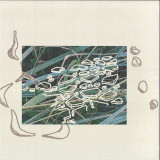
VEYL is pleased to welcome Harlem to the label for a new seven track album titled ‘Bait’. The Stockholm-based duo of Martin Thomasson and Johan Skugge bring a vast history of production behind them, operating since the early aughts and known for their work in dub and minimal techno. ‚Bait’ ventures into new territory for the project, delivering infectious strains of body music, new beat, industrial and beyond coupled with soul-stirring vocals which quickly dig beneath the skin. The release is about everyday manipulation, soft power and persuasion. We exist in a world in which corporate management techniques are deployed in our everyday lives, nudging each other for short-term gain, slowly hallowing out any lasting trust while ultimately all being crushed by a hyper-capitalist system. From the opening synths of the title track to the ominous ending notes of ‘Night Vision’, we also uncover funky grooves and diabolical floor shakers which remind us of something from the past but exist perfectly in this corrupted new world. As is customary, the striking cover art was photographed by Tomaso Lisca, and it’s a fitting piece for the record, depicting a tantalizing well-oiled machine, all while something menacing lurks under the hood.
Suche:something system
Clear Vinyl
WRWTFWW Records is happy to announce the release of Para One’s new album SPECTRE: Machines of Loving Grace, available in half speed mastered 180g double lp housed in a heavy sleeve with UV spot varnish. Machines of Loving Grace, the new album by Para One, whose real name is Jean-Baptiste de Laubier could be called fiction. It is an object freed from constraints, formats, genres, territories: the gospel of a new world. Six years after Club, eight years after Passion, his previous LP, this lover of electronic music, who has also been putting his sensitivity to the service of movies (soundtracks for Céline Sciamma in particular) opens with this record a new dimension in his artistic career. “I needed to break away from patterns and systematisms of formats, and take unexpected turns. To do so, I had first to allow myself to do so”. Allow oneself and maybe above all confront oneself – with one’s childhood, with one’s childhood’s ghosts, and what fantasies, ideals, memories, and grey areas they harbor. He had to go back – without giving up on his position as an adult, as a full-fledged artist – to the sources of his imagination, to the moment when music was holding almost mystical power. And then revisit it to make something new out of it. Just like Sanity, Madness & the Family (the feature film directed by Para One that he just finished and of which it is a consubstantial part), Machines of Loving Grace has an investigation around a family secret and the father figure as its starting point. “When you go down the path – of a work, of a person, of the past – you never really find out what was. You find yourself
Repress
Chris Liberator and Darc Marc with some classic Acid Techno over 3 trax, with "Acid Music Has Come To Set You Free" already causing mayhem in the acid community with it's subversive anti-system mantra. "Heart Of The Underground" is pill-popping fizzy Acid Techno, whilst "Something Dark This Way Comes" goes for a more atmospheric and menacing vibe.
Straight Outta Caledonia is the first commercially available “Greatest Hits” of the outsider songwriter Jackie Leven, an artist
who has largely remained in obscurity in his native Scotland despite being one of the greatest wordsmiths – and singers – it ever
produced. A well-travelled musician who began making psychedelic, progressive music in the late 60s before emerging as an
epic storyteller full of pathos, humour and humanity in the 90s, Leven lived and wrote like many of the fragile, gregarious
characters of his songs; large, full of life and empathy. Leven passed away in 2011 after recording 30+ albums under different
guises or with his briefly successful New Wave band Doll by Doll. Straight Outta Caledonia is a compilation collated by Night
School Records on its Archival label School Daze that seeks to introduce Leven’s music to new generations.
In an age of isolation, alienation and loss of visceral experience, Jackie Leven’s music can be massive and welcoming. It feels
connected to some universal humanity and vibrates with vitality. His songs are often full of tragedy and comedy simultaneously,
cutting straight to the heart, often plugging directly into the nervous system of the listener. His lyrics are rich, dense with imagery
that can veer from apocalyptic to the comically banal in a sentence, with a songwriting panache that can be heavy handed to
almost bursting point before skewering the song with a clownish, warm punchline. His productions ranged from Bob Dylan’s
Rolling Thunder Revue style rock band orchestrations with strings and organ as on the epic Ancient Misty Morning or they could
be pared down to the purest form of folk song as on Poortoun: Leven on stage alone with an acoustic guitar, albeit played with a
mastery of the instrument that he often only hinted at. Musically his sound can bend traditional structures or stay completely
confined within them yet still forever push towards an ecstatic release, as on the cinematic Snow In Central Park.
The most exciting, jaw-droppingly effective tool at Leven’s disposal was his voice. A multi-octave instrument that, though
damaged during a savage assault in Fife, he used with flair; he had both a brazen disregard for the rules and a deep humility, all
of which is evidenced with every phrasing. A baritone that could flit up through the register – always touched by his gentle
Kirkcaldy accent – it’s the prime delivery method for his songs. Leven’s voice enabled him to inhabit the characters in his songs to
an uncanny degree, a skill that in turn enables the listener to empathise with them and, subsequently, the singer. It’s most evident
in stand out song The Sexual Loneliness Of Jesus Christ, a breathtaking re-telling of the life of its protagonist, not as a pure,
sinless messiah but as a sexually frustrated, solitary man condemned to an existential loneliness no one else will ever feel. In
many ways the track is the archetypal Jackie Leven song. Produced by Pere Ubu’s David Thomas, what strikes the ear first –
after the samples of unemployed workers in Glasgow following the closing of the Clyde shipyards – is the audacious, rhythmic
tremolo effect Leven employs through the verses before the production opens up to allow Leven’s vocal to lift into a soar, a
freeing glide powered both by the force of the singer’s chutzpah and the inherent, doomed destiny of the protagonist. With any
other singer such subject matter could come across as gauche or worse, pretentiously sonorous, but Jackie Leven’s genius was
such that he could be this cinematic and brazen while touching something elemental and true in the beholder. It’s a skill evident in
every song on Straight Outta Caledonia, the trademark of a songwriter who revelled and excelled in intensity with a lightness of
touch.
In his lifetime, Jackie Leven toured, wrote and recorded at a ferocious rate. He recorded under aliases to avoid record contract
restrictions, played house shows in Europe after or instead of official concerts, events which were often spoken word story telling
masterclasses as well as performances of his often bewilderingly dense songbook. His music has traditionally been catalogued
as “folk” music and has been largely banished to a small, dedicated group of international fans and apostles both private and well
known, like author Ian Rankin or Glenn Matlock. Since his passing in 2011 however, there has been a growing recognition
amongst a newer generation, with artists like James Yorkston or Molly Nilsson publicly stating the influence of the unsung
troubadour on their own craft. Jackie Leven’s fairytales for hard men are often forensic deconstructions of masculinity, sad and
ecstatic, light and shadow, always endlessly rich, a resource as bountiful as Leven himself’s human spirit undoubtedly was.
- Rare 1987 Detroit experimental Funk/Soul album - Solo album by Tony Newton (Motown, Funk Brothers) - First ever vinyl reissue - 180g Black Vinyl Edition - Limited to 500 copies // Antonio L. Newton AKA Tony Newton (born 1948) is a multi-instrumentalist from Detroit, MI who began his professional career at the age of thirteen, playing bass guitar with blues legends like John Lee Hooker and T-Bone Walker. Discovered by Motown executive Hank Cosby while playing the Detroit blues circuit at the age of 18, he became the touring bassist with Smokey Robinson and the Miracles on the famed 1965 European 'Motown Review' tour. Within two years, Newton became the Miracles' musical director. Tony Newton also toured and recorded with other Motown artists such as The Supremes, Marvin Gaye, Stevie Wonder, The Jackson 5_and countless others. Earning the nickname "the Baby Funk Brother" he left his trademark of solid, hard-driving and deftly clever grooves on such timeless hits as "Where Did Our Love Go," "Baby Love," "Stop In The Name Of Love," "Nowhere to Run," "ABC," "Never Can Say Goodbye," "Don't Leave Me This Way," and many others. Next to his impressive body of work for Motown, Newton can be heard on several hit singles from labels like Invictus-Hotwax and Stax. Later, Newton gained recognition as a member of both the acclaimed jazz-rock fusion group: The New Tony Williams Lifetime (headed by Miles Davis' drummer Tony Williams) and the British hard rock group: G-Force (with veteran guitarist Gary Moore). Tony Newton also recorded several solo albums during his impressive career, including the two total classics: 'Mysticism & Romance' (1978) and 'Novaphonia' (1987). On the album, we are presenting you today (Novaphonia from 1987) the listener is treated to something UNIQUE (and this is not an overstatement). Newton really puts the 'multi' into multi-instrumentalist, playing the synthesizers, the electric bass and the drum machine. Experimental is the keyword here, sounds vary from psych/trance (almost like a soundtrack from a space movie), to funk, fusion, rock, R&B, soul and jazz. Novaphonia has both elements of Tony Newton's impressive musical past and his vision for the future. Spacious synths, unusual instruments and an all-around cosmic approach make this an 'out of this world' and VERY intriguing album. Resonant, sonically rich, sonorous, colorful, mind-expanding sounds are what one should expect from the 20th century Novaphonic sound developed to its greatest extent. These harmonies are innately pleasing to the human ear, mind and nervous system.
Antonio L. Newton AKA Tony Newton (born 1948) is a multi-instrumentalist from Detroit, MI who began his professional career at the age of thirteen, playing bass guitar with blues legends like John Lee Hooker and T-Bone Walker. Discovered by Motown executive Hank Cosby while playing the Detroit blues circuit at the age of 18, he became the touring bassist with Smokey Robinson and the Miracles on the famed 1965 European ‘Motown Review’ tour. Within two years, Newton became the Miracles’ musical director.
Tony Newton also toured and recorded with other Motown artists such as The Supremes, Marvin Gaye, Stevie Wonder, The Jackson 5…and countless others. Earning the nickname “the Baby Funk Brother” he left his trademark of solid, hard-driving and deftly clever grooves on such timeless hits as “Where Did Our Love Go,” “Baby Love,” “Stop In The Name Of Love,” “Nowhere to Run,” “ABC,” “Never Can Say Goodbye,” “Don’t Leave Me This Way,” and many others. Next to his impressive body of work for Motown, Newton can be heard on several hit singles from labels like Invictus-Hotwax and Stax. Later, Newton gained recognition as a member of both the acclaimed jazz-rock fusion group: The New Tony Williams Lifetime (headed by Miles Davis’ drummer Tony Williams) and the British hard rock group: G-Force (with veteran guitarist Gary Moore).
Tony Newton also recorded several solo albums during his impressive career, including the two total classics: ‘Mysticism & Romance’ (1978) and ‘Novaphonia’ (1987).
On the album, we are presenting you today (Novaphonia from 1987) the listener is treated to something UNIQUE (and this is not an overstatement). Newton really puts the ‘multi’ into multi-instrumentalist, playing the synthesizers, the electric bass and the drum machine. Experimental is the keyword here, sounds vary from psych/trance (almost like a soundtrack from a space movie), to funk, fusion, rock, R&B, soul and jazz. Novaphonia has both elements of Tony Newton’s impressive musical past and his vision for the future.
Spacious synths, unusual instruments and an all-around cosmic approach make this an ‘out of this world’ and VERY intriguing album. Resonant, sonically rich, sonorous, colorful, mind-expanding sounds are what one should expect from the 20th century Novaphonic sound developed to its greatest extent. These harmonies are innately pleasing to the human ear, mind and nervous system.
Explore new musical frontiers intended to catapult the listener towards new dimensions…this is an album that just begs for a special place in your record collection!
Tidal Waves Music now proudly presents the first-ever vinyl reissue of ‘Novaphonia’ since its release in 1987. This rare & private-pressed album (original copies tend to go for large amounts on the secondary market) is now finally back available as a limited 180g vinyl edition (500 copies) complete with the original artwork.
Once upon a time, two operators stared at their screens. They sat silently for hours, their whole being dedicated to the task they had been assigned to. Days and nights passed in the same monotonous manner. Suddenly signals showed up on their monitors. Alarms started to ring. Both reacted at the same speed and did what they were supposed to do. Controls and commands were entered, as was protocol. After observing these waves for 61:01 minutes, everything became quiet again. What they had just witnessed made them wonder. For the first time they addressed each other. "The data is transferring through our system," announced the first. “Let us both check how this can be interpreted.” The second validated the response. Together, they looked at what had been recorded. Ideas raced through their complicated minds until they realized simultaneously: sounds! They listened. “Is this an unknown language?” one asked. “This is the first time this has been heard throughout our history,” the other answered. They listened again and again. “This electricity has been arranged to form a cohesive entity,” the first said. “Why would machines be used to create that?” the second mused. Something had awakened inside of them, an obsessive curiosity they had never experienced before. They did not understand and were blown away by the beauty of it. “Do you think it could have been left by humans before us?” one whispered. “If it was, these would be Major Signals,” the other concluded. As they processed these thoughts, the two artificial intelligences sat still.
New Pagans create music that's not only vivid and engaging but also home to massive riffs and rare dynamics. The bands audible influences range from PJ Harvey to Sonic Youth while lyrically the band deliver protest songs, songs about women, songs about mothers and songs about conversations overheard on Belfast's public transport systems. Their live shows are also something to behold and have just been the recipients of the best live act at The Northern Island Music Prize 2020. Music is the focus and an important vehicle for the healthy message the band promotes. New Pagans is a proud advocate for women’s rights, visibility and inclusion in the global music industry – an industry dogged with a history of stark gender inequality. The arts community and media have responded to the bands refreshing social and historical lyrical stance which includes protest songs, songs of suffrage and an ode to Lily Yeats, the often overlooked sister of Jack and William B and a key mover in the world of Irish arts and crafts back in the day along with her younger sister, Elizabeth. New Pagans have headlined events as part of Women’s Work and Lyndsey McDougall has proudly embraced the demands of live performance and recording whilst pregnant twice!. The band are committed to promoting honest inclusion, demonstrating the female force and showing that you can be born as or identify as female, raise a family and have your place as a career musician. Young women, young mothers see Lyndsey as a symbol of strength and hope in her fearless and forthright attitude to motherhood whilst fronting a band. A lot of young mothers feel the need to hide that aspect of their personal life for fear of how people may perceive it as a limit in achieving creative breakthroughs. New Pagans are that breakthrough, a visible work in motion
Formed from the ashes of The Beta Band, The Aliens blazed a trail with two critically acclaimed LP's in the mid to late Noughties - hitting the UK official charts as well as Hollywood film & TV - before mysteriously vanishing from the Humanoid star system.
Hot on the heels of marking their return with the surprising electronica-delia of Electronville The Aliens pre-sent their latest album-length EP and a return to something more familiar for their long time fans. The A-side on Back To Beyond entails the 10 minute drone rock disasterpiece Follow The Son, the melancholy instru-mental sdlmnm strings and the bastard love child of two of their most popular songs in Roxbot. Side B features atmospheric instrumental tingler For Emma, a Robot Man disco mix appropriately titled Reboot Man and finishes with the longer, dirtier, rawer, inbred cousin of fan favourite Magic Man - Majic Man Pre-quel. Something old, something new, something borrowed, something blue… Back To Beyond is like a wedding of The Aliens.
After a dormant decade the mercurial Gordon Anderson AKA Lone Pigeon is on a crusade to release as many of his estimated 10,000 songs as Alienly possible and come to the rescue of the downward spiralling Humanoids of Planet Earth. While The Aliens continue work on their much anticipated new LP the good news is that there’s plenty to keep fans occupied in the meantime.
Originally recorded and released in 1980, "Six of One" beautifully captures the detail in Evan Parker's high frequency split tones for which he is now perhaps better known. Five years on from "Saxophone Solos" and with circular breathing and polyphonics well worn into his live performances, Parker's experimentations here produce sustained passages of brilliant flight. Set into the echoes and resonances of St Judes On The Hill church, the results are stunning. "The recital commences with a split tone line of twining sine waves that expand and contract in telepathic collusion. Pitch dynamics narrow and redefine themselves more emphatically on the second piece where sliding legato rivulets born of Parker's compartmentalized tonguing create the sonic semblance of up to three separate voices emanating from the single reed speech center. It's a feat he's accomplished innumerable times since, but every fresh hearing never fails to open an aperture into a style of improvisatory expression that is at once wholly alien and intensely mesmerizing. There's also something strangely subterranean about the flood of sounds, like the rush percolating water through an underground aquifer system enroute to unknown tributaries. The third piece trades tightly braided tones for leaner and more linear phrases, but a vaporous trail of phantom notes still clings to the central line. And so it goes, with the illusion of repetition guiding the momentum, though Parker never explicitly repeats himself." - Derek Taylor, All About Jazz Transferred from the original master tapes at Abbey Road Studios and released in an edition of 500.
TERMINAL BLISS makes their Relapse Records debut with the unrelenting album Brute Err/atta! A veritable who’s who of Virginia punk, the band features vocalist Chris and guitarist Mike Taylor (Pg. 99 and Pygmy Lush), drummer Ryan Parrish (Darkest Hour, Iron Reagan, City of Caterpillar) and bassist Adam Juresko (City of Caterpillar). Inspired by the likes of Born Against, Gauze and Void—not to mention Black Flag, Crass, Negative Approach, Disrupt, Necros, Crossed Out and Disclose—TERMINAL BLISS conducted their first band practice on January 14 th, 2020. Just six weeks and five practices later, they were recording their full-length debut with Majority Rule frontman Matt Michel in the engineer’s chair. The name TERMINAL BLISS was born out of the merciless consumerism and environmental destruction that are America’s enduring legacy. From dystopian, sci-fi themes in tracks such as “March of the Grieving Droid”, to the apathy of the checked-out masses on “Small One Time Fee” and the personal recount of loss and the inefficacy of our healthcare system in "Clean Bill of Wealth", it’s the merging of personal experience and social critique that has informed the punk edge behind the members of TERMINAL BLISS for decades now. For TERMINAL BLISS, it’s become a crucial combination born of decades of playing live. (Unfortunately, the band’s first show was cancelled when the US began its COVID-19 lockdown.) “I realized early on that if you don’t write something that resonates with yourself on a fundamental level, it’s going to get trite when you’re performing night after night,” Chris Taylor says. “So, with the idea in mind that we’ll eventually play shows, I always try to write something that will resonate.”
On Interior, Swiss composer Samuel Reinhard excavates intricate resonances at the periphery of our attention. Across four movements, Reinhard follows a process whereby he layers and loops fragments of piano improvisations. Yet Interior complicates its own systematicity by using samples that are not only recognizable as piano notes, but as live recordings of a piano being played. Reinhard composes from traces both analog and digital: we can hear static hiss and clicks, but also the soft trace of a finger pressing a key or the shuffle of a body shifting position.
Interior asks us to think about where we are, and how close we are willing to look, feel, and listen. Over the course of the four movements sounds return, familiar but transformed. What sounds like repetition is something more like accumulation, a thickening of space. Whether regarded at intimate range or from a distance, these compositions reveal more the longer we linger in the presence of each.
Much like its predecessor, In Decay, the 2014 compilation of unreleased, early Com Truise recordings, In Decay, Too unlocks a new set of rarities and unheard fragments from the past for the producer's legion of fans. To accomplish such a feat, the Com camp tapped the Internet's foremost Com Truise archivist, Polychora (formerly Comrade), whose YouTube channel has diligently documented Seth Haley's musical output since his earliest Komputer Cast (Haley's podcast mix series) days. Polychora's vault and input helped Haley and the team locate and curate the ultimate sequence of career-spanning off-album material, showcasing an artist in perpetual orbit of hazy machinist nostalgia. Haley's singular style of melodic beat music is the work of countless iterations; with In Decay, Too, his idiosyncratic exercises, experiments, and pivots pause for a rightful wave of appreciation. Following the smeared introductory tones of "Zeta," the album locks into its first robotic groove on "Compress_ Fuse," a trademark Truise treatment with cascading synth lines and deep, sinister low-end bass stabs. Further down is the suspiciously bright "False Ascendancy," which lures listeners through a labyrinth of drum patterns and siren-like keys, all colliding into "Constant Fracture." The track pushes to the point of stress, reaching the album's apex with a punishing series of blows before fading to relief, where the beatless and contemplative "Trajectory" awaits. In 2019, Com Truise left his previous sci-fi narratives behind for the visceral Persuasion System, a markedly more human record, which now makes In Decay, Too something like a bookend to an era. One last transmission from coordinates unknown; a culminating exhale ahead of what's still yet to come.
Created in 2006, Setenta, the Latin Soul Band spreads a unique mix over the world scene. For their fifth album Materia Negra, the Paris-based band returns to its roots: hard Latin funk with plenty of Afro-Latin percussion upfront in the mix contrasted with accents of lush vocal harmony and warm, breezy melody. But at its core, there is something essentially darker, rougher and funkier than their previous releases, especially in the guitar and synth work, bluesy minor key arrangements, and lyrical content. It’s essentially a heavier feel with this record, influenced no doubt on the negative side by the current dark times being experienced across the globe due to the pandemic, subsequent economic downturn and the lack of effective government leadership and global solidarity to deal with the crisis. On the positive tip, the inspiring Black Lives Matter movement and international protests against oppressive governments, systemic racism, corporate greed, global warming and environmental exploitation no doubt have something to do with the serious feel of Materia Negra as well.
Another crucial aspect to this newfound toughness is what band member and Latin Big Note founder and director Osman Jr. states is the group’s desire to address DJs and dancers who appreciate the rawest songs from Setenta’s previous productions. The desire is to leave their mark on the decks and dance floors of the planet with a genre that “we defend by taking the torch extended by our mentors such as Joe Bataan: Latin Funk!” Setenta’s sound has always been soulful, with plenty of tropical Caribbean roots, but this time there is an even stronger Afro-centric theme and gritty psychedelic R&B angle, clothed in galactic, outer-space trappings, bringing to mind another forerunner, Mandrill, as well as the Afro-Futurist mothership vibe of Parliament-Funkadelic.
SUMMER OF SEVENTEEN are MONIKA KHOT (NORDRA, ZEN MOTHER), WILLIAM FOWLER COLLINS, DANIEL MENCHE, FAITH COLOCCIA (MAMIFFER), and AARON TURNER. (SUMAC, SPLIT CRANIUM).
Wildfires plagued Washington state during the summer of 2017, their smoke drifting westward toward the Seattle area and toxifying the air. Shortly before that trauma, MONIKA KHOT, WILLIAM FOWLER COLLINS, DANIEL MENCHE, FAITH COLOCCIA, and AARON TURNER had gathered at the latter two musicians' House Of Low Culture studio on idyllic Vashon Island with revered producer RANDALL DUNN. There they cut eight songs that capture the makeshift band's feelings of what COLOCCIA calls "a kind of doomsday lurking in the background." It's as if these highly attuned players had a premonition.
"Summer Of Seventeen" -which was edited and arranged by MONIKA KHOT, who records apocalyptic music solo as NORDRA and plays in the avant-rock band ZEN MOTHER—is a nuanced admixture of these musicians' sounds and a culmination of all of their previous collaborations. COLOCCIA and TURNER have created eldritch folk and chamber rock for over a decade in MAMIFFER while engaging in various solo and group projects that explore their profound spirituality in sound. MENCHE has been a fixture on the abstract composition scene for 31 years and COLLINS is a savvy explorer of drone and ambient forms. Their ephemeral summit meeting has yielded a masterwork for the ages.
A heaven/hell and beauty/beastliness dichotomy pervades the album—as if a titanic struggle was transpiring in that small studio. The fearsome trumpet fanfare that starts "Chorus Of The Innocents" heralds a baleful fate. With a subliminal industrial rhythm bristling beneath the eerie exhalations, the song submerges us in a slow-motion maelstrom, a horror-film facsimile of MILES DAVIS' "Bitches Brew". "Perceived Slight" threads death-metal screams through a stark, suspenseful atmosphere, with austere glints of guitar and beats like fists on a casket lid intensifying the dread.
Angelic chants and celestial drones perfume the air in several of the songs on "Summer Of Seventeen", countered with muted blast beats, serrated hums, jagged glitches, simulacra of grinding gears and lightning. It's as if no good deed goes unpunished. "Spirits Of Redeemer" could be an elegy for the human race while "Cultural Orphan" sounds like a symphony for a malfunctioning factory. The album ends with "Theatre Needs An Audience," a harrowing ballad somewhere between EINSTÜRZENDE NEUBAUTEN and MERZBOW; it's a savage rent in the space-time continuum.
"Thinking about this record now," COLOCCIA recalls, "it seems like we were all sort of anticipating something like this current pandemic happening, although we were thinking about it as fire in the hands of man (literal fire, and also gunfire) that would overturn the normal running of things and reveal the current false beliefs systems holding up most of America."
That grave aura infiltrates "Summer Of Seventeen", However, a hopefulness bubbles beneath the foreboding architecture of sound and noise summoned here. The bunker is the new penthouse.
-Dave Segal, April 2020
Melissa Guion’s second offering for Kranky retains the glassy gauze of her debut, 2016’s Precious Systems, but shaded starker and darker, framed by mechanical rhythms and humid industrial moods. She speaks of Sour Cherry Bell as something of a reckoning with her tools of creation: “I was curious to see how far I could go with them, even if that meant reaching the ends of their capacity to do what I wanted. But I never exhausted them and they never exhausted me.”
Utilizing her trusted combination of instrumentation, Guion tracked the record between her New Orleans home and rehearsal space, capturing chemistries both intimate and expansive. The songs sway between twilit shoegaze, downer ballads, and gothic pop, mapping a delicate palette of electric melancholies, though in retrospect she cites as her primary muse the notion of power: “lost and found, corporeal and cerebral, harnessed and exploited, of one and many, in this reality and the next.” Sour Cherry Bell reverberates beyond the here and now into scenes unseen, worlds unheard.
Brand new release from Turbo Guidance Entertainment! We deliver a compilation with 4 versatile dubs cooked by our wizards ! Pablo Bozzi (half of Imperial Black Unit and half of Infravision) signed "Sangria Sound System N°1", a slow burner italo-disco track. Perfect to close a cosmic set in the afternoon drinking pepper-mint lemonades! Cowbells everywhere and powerful arpeggiator. Watch out the guy, this year is going to his year! In the second position we have a reggae-disco remix from the man Androo; part of NS Kroo and also well known on the label Music From Memory. He totally switched the
original dub techno track of Babe Roots into something sweet and bouncy. Lobster for you ears. You can even ear autotune on the vocal! Awesome! Coming at the third place, here come Komodo from Indonesia! "Funky Buzz" is a perfect blend of tribal and dub rhythms with a repetitive bassline. Big delays and full effects to rock iguanas. Komodo is a rising star of South Asia, look at the sky to see him shining like a Telsa soon ! And last but not least, we serve you a sweet downtempo riddim from Mali-I aka Z Lovecraft (Rhythm Section). He built a hip-hop influenced track with aerial chords. Perfect music if you want to take the mic and try to toast like a real badboy. Only 400 copies for the world. Sleeve visual is gently printed in risography 3 colors at Shift Studio (Tunisia) - DIY each and everytime.
HIGHLIGHTS First ever reissue of "Kabwlú", a very hard-to-find album released by Discos Fuentes in 1965. The mysterious Los Picapiedra (which translates as The Flintstones, inspired by the 1960s American cartoon show), was a short-lived studio group with one albumto their name, "Kabwlú", mixing 'folkloric' and 'modern' elements with calculated 'caveman' humor. It is very musically diverse; not only are there the requisite genres that could be found on similar Colombian teenage-oriented groups' records of the time, such as cumbia, gaita, rock, twist and pachanga, but there is also a smattering of surf, doo-wop, Latin jazz, guajira, ska, and calypso. But what makes the whole thing so special is the odd, off-kilter arrangements, spooky tunings, rudimentary clanging percussion, invented 'cave' language, prominent twanging electric guitar and many zany sound effects. Several of Los Picapiedra's songs became very popular in Colombia as well as Venezuela and especially in the 'rebajada' (slowed down) version as played by the 'sonidero' sound system DJs in Mexico, such as "La Hossa". Presented in its original artwork and pressed on 180g vinyl. Part of Vampisoul's reissue series of classic Fuentes LPs. DESCRIPTION While Discos Fuentes was known for recording all sorts of interesting sounds from traditional folkloric Colombian music to the latest popular international styles, every once and a while they would put out a "novelty" record, perhaps to exploit a passing fad, and at times the label would green-light something strange or even outlandish. Many of those left-field releases have their merits and have subsequently become collectors' items over the years. One such case is the mysterious Los Picapiedra (which translates as The Flintstones, no doubt inspired by the 1960s American sitcom cartoon show), a short-lived studio group with one album to their name, "Kabwlú" (an unpronounceable, invented "caveman" term that is also untranslatable, but seems to have been the 'traditional rhythm' of Los Picapiedra's 'homeland'). What is interesting about the record is that it is very musically diverse; not only are there the requisite genres that could be found on similar Colombian teenage-oriented groups' records of the time, such as cumbia, gaita, rock, twist and pachanga, but there is also a smattering of surf, doo-wop, Latin jazz, guajira, ska, and calypso. But what makes the whole thing so special is the odd, off-kilter arrangements, spooky tunings, rudimentary clanging percussion, invented 'cave' language, prominent twanging electric guitar and many zany sound effects. Much like its namesake American cartoon The Flintstones, "Kabwlú" trades in creative anachronism, mixing 'folkloric' and 'modern' elements with calculated 'caveman' humor that works on many different levels. For instance the title tune seems to have been inspired by the pachanga craze and recalls the vibe of Ray Barretto's massive 1962 hit, 'El Watusi', but it has a certain joyful simplicity and rock-solid underpinning that elevates it beyond mere novelty or exploitation - and argues for its timely reissue for today's audience. The band was a studio invention that had no major significance in Medellin's live music activity. However, several of Los Picapiedra's songs were very popular in Colombia as well as Venezuela and especially in the 'rebajada' (slowed down) version as played by the 'sonidero' sound system DJs in Mexico, such as "La Hossa". Pablo E Yglesias (aka DJ Bongohead, Peace & Rhythm) Additional research by Luis Daniel Vega
You learned that there are genres. Everything separated into categories with their own canon and rules: Major, minor, 4/4, 6/8, highs, lows, high head, butt end. Techno here, Disco there. You learned that art and music are two different things. Visually auditory, audio-visual, optically acoustic, not to mention the surface feel. Listen to me, look at me, touch me. But everything in that order please! You have learned that understanding takes you further. Night / life, rhythm / dancing, substance / excess, water / holding out, sleep / rest, headache / not good. But what would it be if all of that wasn't just right? If all of our knowledge is based on the mistake of having to put everything in relation? To classify it, to make it responsive. What do we do with something that doesn't follow the rules of this logic? That is not based on 0 and 1 and therefore not bound to our binary systems? Is this all at once? After all, what if the whole thing has no limits?
Jens-Uwe Beyer recently released the Yellow Book with Albert Oehlen on Gagosian and on his own label Magazine. He also runs PNN and Schalen. His 4th album „Horizons“ as Popnoname is the very first long player to be released on Cologne based label Feines Tier.
Limited edition 180g 12″ record featuring 5 bangers. Comes with high-quality gloss sleeve featuring Gobsmacked skull artwork.
Taking influences from underground spaces and dark clubs, the GOBSMACKED! 12” series kicks off with a bang, dropping a five track vinyl from Diarmaid O Meara. The Irish producer describes himself as “trying to push the boundaries of electronic noise” and he couldn’t be more right. It’s just 30 minutes long and hugely pulsing, but packs more punch than a gym full of heavyweight boxers. “While working on new tracks in the studio, I’m always trying to create my own personal rave, and when I find myself in the middle of a dark and twisted sound, then I know I’m on to something,” he says of the creative process in his Berlin bunker studio.
The 12” includes a number of previously released digital singles by Diarmaid O Meara, which have been his chart topping and most widely played tracks, that have not yet made it onto black gold until this point. Featured as multiple Beatport number ones, peak time festival big room sounds, countless Boiler Room recordings, the 12” is a collection of club belters, tried and tested over countless sound systems and DJs.
At Diarmaid O Meara’s touch in the studio, the technotic sounds released from his control become alive, while dark vibes take a stormy ride through intense rhythms. Track titles like ‘Selfish Bass’ convey the vibe of music that chews up and spits out razor-sharp techno and rave fusions that race to tempos upwards of 140BPM. There are playful techno tracks like ‘In Your Head’ next to euphoric rave ups like ‘Live In The Night’ and bass contortions like ‘Ripcord’ that are masterfully concise but utterly devastating. Not to mention the ever hypnotic, chugging sounds meets massive crescendo of ‘Improbable Strip’.
“Whenever something crazy emerges through a rig, enough for you to you hear people screaming in ecstasy, and you know the production has delivered”, he says. And it is exactly this momentum that GOBSMACKED! wants to deliver – it sounds loud and obnoxious but also fun that draws on real appreciation for dancefloor destruction as well as countless hours of studio work. Therefore, it is no surprise that the artwork for the series also features the style of the well known Gobsmacked bunker parties run in Berlin venues like the infamous Griessmuehle, where said music has probably been overplayed to crowds with goldfish length memories. .
Carl Finlow returns with a double vinyl 8 track album, following a prolific run of singles for Lone Romantic, Electrix, Craigie Knowes and Orson. Apparatus is a forward thinking album that reflects Finlow's return to live touring with many tracks hitting harder and darker, pushing his electro sound into new directions and soundscapes. Flawless production is something we have come to expect from Mr.Finlow yet he has managed to raise his game yet again with Apparatus. The album means business from the start, kicking off with the title track, 'Apparatus', a no-nonsense assault on the system with fast tight drum programming, heavily vocoded vocals and powerful synths. The pace continues on the record with 'Bind' and 'Carbon Deposits', Structure' but there are also pure electro cuts like 'Differential' and moody grooves in 'Ampere' and 'Viroids'.
Finlow has been on a staggering run of form and Apparatus continues this remarkable purple patch with a new lease of electro energy. It's not surprising that every credible electronic master on the planet from Weatherall and Craig Richards to Dixon and Maceo Plex are all fans of his work.
Riding high on the success of his recent Soul Flip project, Del Gazeebo busts loose here with a pair of Rootsy, rigorously road-tested, certified party starters on his own brand new Art Surgery imprint.
First for a 2020 freshen-up is Barbara & The Browns' sassy, soulful rendition of the Rhythm & Blues and Reggae classic, "You Don't Love Me" - taking the already energetic 1971 recording, stretching it out, and giving it a little something extra in all the right places. Already touted as "one to watch in 2020" on the BBC's Craig Charles Funk & Soul Show & getting support from The Allergies, Smoove & Jalapeno Sound System.
On the flip, Pluto Shervington's 1976 uplifting Reggae smash "Dat" gets a subtle yet crucial lift to make it even more infectious. This sunny, irresistible ear-worm has long been a staple of Del's DJ sets, yet somehow as yet unreleased. Until now; re-refreshed for 2020.
Samuel Rohrer CONTINUAL DECENTERING With his Arjunamusic label and a growing catalog of categorydefying releases, Samuel Rohrer continues to quietly, yet confidently, make a name for himself as a genuinely unique Gigure within the European electronic music realm. In the current era, talk of blurring boundaries between musical genres and attitudes is more the rule than the exception, but not always something done with any degree of success. Rohrer is one of those rare alchemical explorers to have truly created a hybrid which is all his own, one that does not just exist to melt distinctions for its own sake, but is a natural result of years of experimentation with both the determination of electronic music and the ludic spirit of ‘free improvisation.’ On his newest offering, Continual Decentering, this vision is applied to a set of mostly in real time (live) performed explorations. In keeping with his many years’ worth of fruitful collaborations, the tonal palette on this new record is one that is expectedly rich for those familiar with his work, yet still surprising in terms of how exactly the differing tonal colors come together. Representative tracks like Spondee and The Fringe are brimming with dub pulses, noir shivers and blooming timbral variations that are in many places carefully isolated / focused and in other places blended together in vivid fusions. In terms of the emotional atmosphere created here, the pensive and questioning tone hearkens back to the ‘wide open’ state of electronic music in the mid-late 1990s, yet with a greater clarity and maturity of vision that makes this music feel like a possible answer to aesthetic questions being raised at that time. As with Rohrer’s most recent solo work, like the Range of Regularity LP, Continual Decentering showcases the artist’s skill in turning the drum kit into a lead instrument. While the term “lead instrument” denotes a kind of exuberant “Glash,” or a clear separation from the rest of the voices in an ensemble, we can take the term to mean something different throughout this listening program of 13 short vignettes: that is to say, everything else within the audible environment exists to complement the character of the percussive playing rather than to stand apart from it. It helps that Rohrer has, in fact, developed a unique and complex hybrid system in which drum hits trigger modular synthesizer processes, the use of which makes for an incredibly fluid response time between distinct sonic events. In contrast to the previous Range... LP, this new offering is propelled less by interlacing threads of intensity and more by a shared sense of deep listening. As displayed on pieces like All Too Human, there is a profound sense of attention to silences or thoughtful pauses that maybe hints at another crucial aspect of Rohrer’s style: over the course of this program, we tend to hear the player not only playing but listening, an activity which makes perfect sense given the sense of instrumental dialogue already mentioned. All of the above come together to give Continual Decentering a “live”-ness that will easily translate from recorded document to dynamic performance.
Adapted Vinyl was a UK based techno label active in the late 90’s that picked up regular DJ support from taste makers of the time ranging from Jeff Mills to Mr C.
This, the label’s 7th record disappeared before a public release when the Integrale Muzique distribution company went out of business in 2008, but now gets its first official release date after years of very limited availability
Label founder Suade is the artist behind this release and these days he is best known as a highly-sought-after mastering engineer working for artists like Dense & Pika, Paranoid London, Jamie Jones and Vitalic.
Focusing his energies into family life and the fine tuning of other peoples music it’s rare to see Suade’s own music on a new release, but this hasn’t stopped him from collaborating on original tracks with the likes of Magda and Radioactive Man in recent years.
The EP has four contrasting tracks all with different moods and tempos all blended with Techno’s classic motoric drive.
With it’s absence from the usual music marketplaces creating something of a mystery this record ended up receiving a new, unofficial name on Discogs - The Citadel EP which is a title taken from the broken-beat second track on the B side of the record.
The Citadel is just one of the highlights on this eclectic EP, as it’s a Latronic Notron sequencer workout that patiently deploys layered synths in ever-shifting cross-rhythms for a languid 5 minutes before its deep, underpinning bass arrives evoking desert travel and arrival.
Baikal, named after the huge freshwater lake in Russia, is another stretched out meditation on tone and harmony acting as a foil to the delicate and vibrant Latin American percussion that filters in and out through a massive stereo Moog Modular system creating an energetic yet static, ritualistic atmosphere.
Trajan - the most driving track on the EP, gives a nod to the Probe era Richie Hawtin sound with a touch of Drexciyan melodics with shuffled percussion and bleeps over a snaking TB303 shaped bassline where the classic Acid box is given the role of control sequencer only commanding the thick, dirty oscillators of the big Moog.
A1 track Felix is a contrast yet again. A big room melodic Techno piece with another massive bassline and an almost orchestral level of layering, building to nine counter-melodies in total before letting rip with a classic TB303 acid line that builds from the heart of the track.
Pregnant Void returns with another of their deeply involving and thought-provoking albums, this time from Berlin based sound designer and live-performer Francesco Devincenti.
Devincenti has been making music all of his life and quickly established himself back home in Northern Italy. To further his talents he headed to Berlin to study at the S.A.E. Institute and soon went on to a job at Analogcut mastering studio. As such he is a sound design wizard with an exceptional ear for detail and someone who can get real meaning and soul of out the machines he often solders together himself. He is part of a couple of live hardware duos - MORK and TDV - and always fuses ambient, techno, distorted grooves, jungle beats and dub moods into his immersive recordings.
This new album draws on ten years of life experiences and uses music as a way of telling his own autobiographical story. "With the album I try to explain what I have inside in a way I cannot using only simple verbal communication: those moments of Brutal Reality where you lose something very important and cannot fully express yourself." Though always obsessed with finding his own musical voice, Devincenti is also inspired by studio masters like King Tubby, Adrian Sherwood and Mark Ernestus. His experimental music follows no existing path and is made on modular systems that result in unpredictable and unconventional ambience and rhythms. A number of collaborations add more flavours to this most rich and rewarding album, including friend Hi.Mo, label boss Simone Gatto and vocalist Alice Lobo.
Brutal Reality is filled with truly freeform electronic music - sounds without borders, but with very real narrative and an absorbing sense of emotion that makes it a moving listen in more ways than one.
In early 2018, Jas Shaw, one half of Simian Mobile Disco was diagnosed with a rare health condition – AL amyloidosis – a disorder of bone marrow cells. Having just completed SMD’s 7th studio album Murmurations and with a special show at the Barbican scheduled for April, things were thrown into confusion. At the time, no one, including Shaw, knew how the prognosis would pan out. Jas had to start chemotherapy almost immediately, which meant cancelling the tour. The duo decided to go ahead with the Barbican show in spite of Shaw’s illness, which was especially poignant as all involved knew it could potentially be SMD’s last ever live performance – in the end it turned out to be a tour-de-force. If this was SMD’s swansong, so be it.
In the year that followed, Jas spent months receiving weekly chemotherapy, learning to live with his condition, and when he felt well enough, spending hours in his studio making music.
The result of this was twofold, firstly a collaborative album with Derwin Dicker (Gold Panda), released as Selling – On Reflection, on City Slang Records Secondly, a growing archive of solo work, which is now ready for release. Entitled “The Exquisite Cops”, this 20+ track growing body of work will see the light of day via SMD’s Delicacies label – with a 2-track single released every fortnight /month and a limited
edition double LP scheduled for 27th September.
At the end of 2018 a difficult year was capped with hopeful news. With his condition in remission, able to stop chemotherapy Jas is able to start DJing and playing live again.
Jas: “The Exquisite Cops tracks seem to have made their own system for creation. Normally I record electronic music like a band would, as a take. So, it’s kind of surprising to me that that this batch of tracks wasn’t made this way. Instead of a single take that gets edited and developed these tracks were all made in bits, usually months apart. Some days I’d make a drum track, often editing it down so that it’s some sort of semblance of a structure; on other days I’d end up just making a synth sound or texture. This wasn’t something that I gave into reluctantly, it’s nice to be able to give a feedback based pad your whole attention rather than just set it up and only attend to it if it gets really out of hand.
The process of matching these misfits together was originally born out of laziness, rather than break open the synths to make something to develop an idea, what if I could just use something that I already had; slack. The interesting thing was that in pulling two takes together that were done months apart, they cast each other in a different light and though sometimes making them fit together was a hatchet job, sometimes they locked up together in an improbable way, making the rough structures that I’d improvised make a different sort of sense; often a more interesting sort of sense.
The more I did this the more it felt like this was not just a slacker’s way to use up offcuts, this resulted in combinations that I’d probably not have chosen if I’d done the tracks in one go. Also, and I know this isn’t something that’s important to everyone, there was a level of fastidious detail that I’d never have got if I’d had the textural and rhythmic elements playing together. It’s a longwinded process but it’s changed how I record and how I think about recordings I’ve made; plus I enjoy all parts of it so why cut it short?”
- A1: Jacques Thollot - Cécile
- A2: Philippe Besombes - La Plage
- A3: Igor Wakhévitch - Materia-Prima
- A4: Mahjun - Les Enfants Sauvages
- B1: Lard Free - Warinobaril
- B2: Etron Fou Leloublan - Le Désastreux Voyage Du Piteux Python
- B3: Jean Cohen-Solal - Captain Tarthopom
- C1: Z. N. R. - Solo Un Dia
- C2: Red Noise - Sarcelles C’est L’avenir
- D1: Pierre Henry - Générique (Thème De Myriam)
- D2: Horrific Child - Freyeur
- D3: Dashiell Hedayat - Fille De L’ombre
- D4: Jean Guérin - Triptik 2
After years of mythology, misinterpretation and procrastination Nurse With Wound’s Steven Stapleton finally chooses Finders Keepers Records as the ideal collaborators to release “the right tracks” from his uber-legendary psych/prog/punk peculiarity shopping list known as The Nurse With Wound List, commencing with a French specific Volume One of this authentically titled Strain Crack Break series. Featuring some Finders Keepers’ regulars amongst galactic Gallic rarities (previously presumed to be imaginary red herrings) this deluxe double vinyl dossier demystifies some of the essential French feee jazz and Parisian prog inclusions from the alphabetical “dedication” inventory as printed the anti-bands 1979 industrial milestone debut.
When Steven Stapleton, Heman Pathak and John Fothergill’s anti-band Nurse With Wound decided to include an alphabetical dedication to all their favourite bands on the back of their inaugural LP the notion of creating a future record dealers’ trophy list couldn’t have been further from their minds. By adding a list of untravelled European mythical musicians and noise makers to their own debut release of unchartered industrial art rock they were merely providing a suggestive support system of existing potential likeminded bands, establishing safety in numbers should anyone require sonic subtitles for Nurse With Wound’s own mutant musical language. Luckily for them, the record landed in record shops in the midst of 1979’s memorable summer of abject apathy and its sound became a hit amongst disillusioned agit-pop pickers and artsy post-punks, thus playing a key role in the bourgeoning “Industrial” genre that ensued. On the most part, however, the list , like most instruction manuals, remained unreadable, syntactic and suspiciously sarcastic... As potential “real musicians” Nurse WIth Wound became an Industrial music fan’s household name, but in contrast many of the names on The Nurse With Wound List were considered to be imaginary musicians, made-up bands or booby traps for hacks and smart-arses. It took a while for the rest of the record collecting community to catch on or finally catch u
Since then, many of the rare, obscure and unpronounceable genre-free records on The Nurse With Wound List have slowly found their own feet and stumbled in to the homes of open-minded outernational vinyl junkies, D’s and sample hungry producers, self-propelled and judged on their own merit, mostly without consultation of the enigmatic NWW map. But, to the inspective competitive collector’s chagrin, one resounding fact recurs, NWW got there first! Via vinyl vacations, on cheap flights and Interrail tickets, buying bargain bin LPs on a shoestring while oblivious to the pending pension worthy price tags after their 40 year vintage, Stapleton and Fothergill, even if you’ve never heard of them, were at the bottom of the pit before “digging” became paydirt. And NOW at huge international record fairs that occur in massive exhibition halls (or within the confines of your one-touch palm pilot) amongst jive talk acronyms such as SS, PP, BIN, DNAP and BCWHES the coded letters NWW have begun to appear on stickers in the corner of original copies of the same premium progressive records accompanied by a customary 50% price hike to titillate/coerce the initiated as dealers extort the taught. Like “psych” “PINA” or “Krautrock” did before, “NWW” has become a buzzword and in the passed decades since its first publication The List has been mythologised, misunderstood and misconstrued. It’s also been overlooked, overestimated and under-appreciated in equal measures, but with a growing interest it has also come to represent a maligned genre in itself, something that all members of the original line-up would have deemed sacrilegious. Bolstered by the subtitle “Categories strain, crack and sometimes break, under their burden,” all bands on the inventory (many chosen on the strength of just one track alone) were chosen for their genre-defying qualities... A check-list for the unchart
Forty years after Nurse With Wound’s first record, Finders Keepers Records, in close collaboration with Steve Stapleton remind fans of THIS kind of “lost” music, that there once existed a feint path which was worn away decades before major label pop property developers built over this psychedelic underground. As long-running fans and liberators of some of the same records, arriving at the same axis from different-but-the-same planets, Finders Keepers and Nurse WIth Wound finally sing from the same hymn sheet resulting in a collaborative attempt to officially, authentically and legally compile the best tracks from the list, succeeding where many overzealous nerds have deferred (or simply, got the wrong end of the stick). Naturally our lavish metallic gatefold double vinyl compendium would only scratch the surface of this DIY dossier of elongated punk-prog peculiarities hence out decision to release volume one in a series which, in accordance with Steve’s wishes, focusses exclusively on individual tracks of French origin, the country that unsurprisingly hosted the highest content of bands on the list. Comprising of musique concrète, free jazz, Rock In Opposition, Zeuhl School space rock, macabre ballet music, lo-fi sci-fi, and classic horror literature inspired prog, this first volume of the series entitled Strain Crack And Break throws us in at the deep end, where the Seine meets the in-sane, introducing the space cadets that found Mars in Marseilles.
Like the Swedish flat-pack record shelves that attempt to house the vast amounts of vintage vinyl that goes into a multi-volume compilation like this, its time to prepare your own musical penchants and preconceived ideas about DIY music and hear them slowly strain, crack and b
Originally a Library oriented Music label, Apollo Sound by the mid 70s commissioned contemporary musical pieces from new composers, aiming presumably to provide atmospheric backgrounds for film, television and advertising, and to feed the burgeoning demand for ‘New Age’ music. Therefore comes Following The Light.
While certainly melodic, Owen’s music makes no concessions to mid-afternoon mindfulness or commercial use and reuse. Instead, Following The Light - whose title is taken from the Tao. Number 27 - is a deep and immersive listening experience, clearly the work of a singular musical imagination following its own rules in its own way.
With the help of Katherine Sweeney on violin and Milada Polasek on electric piano and organ, Albert Alan Owen recorded Following The Light in “live” condition, taking profit of a strong use of the digital effects which were in its infancy at this time; the music was written to make the most of what technology was available, resulting a singular piece of music of sheer beauty
The record demands to be considered as a stand-alone unit, its three sections unfolding elegant and propulsive by turns, as reoccurring themes answer each other through the layers. There are echoes of Reich and Riley in the use of delay, that warm rolling repetition and those bass pulses. But this is not in the service of a system. There is something more lyrical, more humane at work in the music.
With Following the Light, Albert Alan Owen has given us a record that stands outside of time and place, it’s familiar elements made strange and new, all bathed in magic hour light.
Having broken a decade's silence with 2016's 'System', LA-based electronic musician Joseph Fraioli, a.k.a. Datach’i, returns this summer with his eighth album 'Bones'.
Released on Venetian Snares' Timesig imprint, 'Bones' features 12 tracks of mind expanding electronica, once again recorded on his custom-built Eurorack modular system. Much like its predecessor, 'Bones' manages to make the most of the possibilities modular systems offer, whilst avoiding their many pitfalls that can often turn such music into little more than a dry academic exercise. Indeed 'Bones' is a remarkably intimate album, written and recorded in the time following his father's death, and reflects this intense period of personal change in Joseph's life.
"Creating this music was a therapy of sorts," Joseph recalls. "It was almost like a close friend being there for me, and it's something that I hope others can perhaps utilize in the same way."
The connection to his father is something that is reflected not just in the emotional intensity of 'Bones', but in the actual production itself. "My father and I were very close," he explains. "Whilst he was sick with cancer I bought him a guitar as he wanted to learn how to play, just to have something to do while he was getting treated. After he passed away my mother gave me the guitar to have as a sort of memory of him. I had the idea to record some sounds and music on the guitar and load it onto granular sample players on the modular synth so I could make new music from those sounds as a sort of tribute to my dad. You can hear some of those sounds on a few of the tracks here like 'Arrivals', 'Motion in the Living Room' and 'Undimension'."
The resulting album grapples with the intensity of these emotions. But for all their weight, tracks like 'Saugerties Road', ‘Rockledge 3A’ and ‘Antumalal’ transform that heaviness into something warm and comforting whilst the aforementioned 'Arrivals' or ‘Wand’ ultimately achieve some kind of escape velocity and soar. Even though 'Bones' is about endings and finding closure, it also looks forward to new beginnings.
"It was something very much on my mind throughout recording this album," he relates, "ends being beginnings and beginnings being the end. Cycles of time and how time works, it's all reflected throughout the album right down to how the tracks are ordered."
Ranging from blissful ambience and guileless, starry eyed melodies, to intricate claustrophobic rhythms that forever sound close to collapsing in on themselves before expanding into bold new patterns, 'Bones' is the work of a producer who, twenty years on from his debut, continues to push the boundaries of electronic music.
repressed !
SNTS presents the last part of his double trilogy, this time called SCENE III. SNTS wanted to obtain a different view of one of the tracks of this release, and, in order to achieve that, he introduced a big star of the techno scene to this story, that artist is SHIFTED. Anonymity remains the centerpiece of SNTS. To convey feelings and sensations without a face reference or a name is the key point of this mysterious artist. This time the titles of the tracks refer to dates. You may never discover what events those dates belong to, but perhaps we can decipher something through sounds and their path. 20.01.1944 It reminds us of a battle in an eerie and desolate terrain in which each sound makes you move, observing what is happening around you. 20.01.1944 The version from SHIFTED is the story told from the outside of the bipolar world where is SNTS. 07.09.1981 It is a step in the course of a life that accompanies an atmosphere that breathes, but is not noticeable by other senses. 15.04.1946 Destruction, desolation and despair is reflected in this track. It definitely meets all the conditions to describe SNTS' sound.
Played & Supported by:
Planetary Assault Systems, Paula Temple, Svreca, Takaaki Itoh, James Ruskin, Tommy Four Seven, Ryuj Takeuchi, Giorgio Gligli, Speedy J, Ancient Methods, Terence Fixmer, Cio D'or , Eomac, Milton Bradley, Samuli Kemppi, Dj Emerson, Chris Liebing, Par Grindvik, Ø Phase, Kr!z Token, Zadig, Marcel Dettmann, Answer Code Request, Slam, Norman Nodge, Dave Miller, Deepbass, Nihad Tule, Truncate, Dj Hyperactive, Angel Molina, Ben Gibson, Juho Kusti, Claudio PRC, Bas Mooy, J. Tijn, Manni Dee, Donor, Rebekah, Go Hiyama, Francois X, Adriana Lopez, Electric Indigo, Bleak, Inigo Kennedy, Pfirter, Alex.Do, Eric Cloutier.
Dark Star Safari, a newly formed group featuring Samuel Rohrer, Jan Bang, Erik Honoré and Eivind Aarset, present its eponymous recording debut, an evocative song-driven album. These songs conjure shadows of memory, clouds of dreaming and silhouettes of foreboding through the album’s layered, many-textured fabrics and Jan Bang's silken delivery of Erik Honoré's acute lyrics. Dark Star Safari is the work of four kindred spirits, their open modus operandi, and a remarkably interconnected creative nerve system. Key to their collaboration is an organic freedom that enables the music “to fill itself in", to be self-actualizing via the musicians as medium. The music of the 10 songs resulted from a two-stage process: an initial phase of free flowing open improvi- sation, and a subsequent exploratory phase where hidden potenti- als were discovered and nurtured. The groundwork of the album’s music originates from a session initiated by Samuel Rohrer, who invited Jan Bang and Eivind Aarset to the renowned Candy Bomber studio in Berlin. The ses- sion was run under the imaginative craftsmanship of sound engi- neer Ingo Krauss, who worked in the famous Conny Plank stu- dio, and its recording and mixing employed sophisticated use of vintage analogue equipment alongside cutting edge digital pro- cesses. This meeting opened the door for something larger to emerge. The group did not settle for just the outcome of the initi- al open improvisation. They were driven to dig deeper, to atten- tively examine and manipulate the material, in order to discover what it had to offer. This caused a creational chain reaction, forcefully spreading across the group. During this second phase, Jan Bang, while meditating upon the possibilities and reach of the improvised material, felt a strong urge to give additional shape and colour to it by singing. Thus, he organically stepped into the role of vocalist, a role he had not pursued since the early days of his musical career. He sent the results to Erik Honoré, who immediately was inspired by its po- tential, quickly penning lyrics and providing the project with its name. Honoré composed two additional songs, Mordechai and Fault Line, and thus rounded the project out towards a fully reali- zed opus. The group continued this back and forth process, with Samuel Rohrer and Eivind Aarset bringing in fine-tuning and e nrichment to the song structures and textures.
Charlemagne Palestine's majestic 1976 work The Golden Mean, originally performed by Palestine on two pianos, is revisited here as The Goldennn Meeenn + Sheeenn, a new collaboration between Palestine and enigmatic musician Rrose.
March 2018: the Festival Variations in Nantes commissions Charlemagne Palestine to reinvent The Golden Mean for two pianists. Palestine chose Rrose to join him in this new rendition of the work. Together, they performed The Goldennn Meeenn + Sheeenn onstage at the main opera house in Nantes -- the sumptuous Théâtre Graslin – with extraordinary results.
The concept of the 'golden mean' goes back to the roots of mathematics, and ancient Greek philosophy. It is an important work in the Palestine mythos, embodying his total immersion in the power of the interval. "It's probably his most systematic work . . . a step-by-step journey through the intervals of the octave," says Rrose. "When we rehearsed it, we were noticing how each interval is like a universe of its own -- with its own history, emotions, and sonic qualities all mixed up together. Every time you move from one interval to the next, it feels like moving into another world."
"I love the interval," Palestine told me in a recent interview. "I love when it plays with itself. That's what I learned from organ musics too. You can just do an interval, and if they're just slightly out of tune with each other, then they shimmer . . . they play themselves. And it sounds like somebody's playing lots of notes. In your ear, it's like an aural phenomenon . . . that's my whole concept. I make something that then does itself somehow. It continues by itself. So I don't have to always be there. And that makes my music a little less egocentric. So there's more space. Also for the listener — the ear plays with these things, and you're not always being given orders. Your ear isn't given orders all the time of what to listen for."
Beautifully recorded, with mastering by Rashad Becker of Dubplates and Mastering, The Golden Mean + Sheeenn feels expansive, radiant and hypnotic, opening new ears to its enduring mystery.
Rrose adds this note to listeners: "Do not focus your attention on the notes being played, but on the ocean of overtones swimming, suspended, overhead, brushing against one another, kissing one another, melting into one another."
On March 15th Erased Tapes presents the invigorating and powerful debut solo album Lines of Sight by Australian-born, Liverpool-based composer, saxophonist and founder of Immix Ensemble, Daniel Thorne. Deeply moving, full of otherworldly beauty and rapture, the album is alive, throbbing like a circulatory system, colourful and glowing. It literally dazzles - effectively capturing what the birth (or death) of a planet might sound like.
In Daniel's own words, 'Thematically, this music was inspired by birds-eye aerial images and the idea of perspective - how something incredibly complex like a river or the surface of the ocean is reduced to a simple line or shape when viewed from the heavens. The line between natural and man-made becomes increasingly blurred.'
Every strand is fresh, vital and purposeful. The description 'seamless' might suggest a smooth, bland fusion, but here elements overlap in intermittent, undulating layers of mesh. Avant-garde, noise, electronics, ecclesiastical, classical, a touch of jazz and traces of Wyatt-style contemporary folk come together, each occupying their own space while acquiescing with the whole.
'Several compositions are derived from ratios and processes, and are highly calculated, while others evolved in a much more organic way. I wanted to create music that blurred lines between acoustic and electronic, organic and synthetic, composition and improvisation.
I've long been a fan of studio-based composition, but have always found the infinite possibilities on offer daunting and, often, a stumbling block. To get around this I set myself a challenge of limiting myself to the physical instruments in my possession - a few different saxophones and a bass synth, with no more than four tracks to record them,' he adds.
Lines of Sight follows Thorne's work as artistic director of the acclaimed, collaboration-focussed group Immix Ensemble. Together with experimental electronic artist Vessel, he co-wrote Transition released on Erased Tapes in 2016, described by BBC Radio 6's Mary Anne Hobbs as 'a remarkable new piece of music'. More recently, he worked with acclaimed modular synth wizard Luke Abbott, to create a four-part suite, which was premiered live in June 2017. Immix Ensemble have also performed special live commissions with Kelly Lee Owens, Dialect, Jane Weaver and Bill Ryder-Jones, among others.
Prior to leaving Australia, Daniel was fortunate to work with some of the country's leading new music ensembles as both a composer and performer, receiving commissions from the TURA New Music Festival and the Australia Council, as well as being appointed as Composer in Residence at the Western Australian Academy of Performing Arts. In the UK he was the recipient of the prestigious Dankworth Prize for Jazz Composition, and also undertook a residency at Metal Liverpool, which provided him with the time and space to create Immix.
As the first track under Thorne's own name, 'Iroise' was recorded for the Erased Tapes 10th anniversary release 1+1=X, alongside works by Nils Frahm, Penguin Cafe, A Winged Victory For The Sullen and Rival Consoles. He also recently remixed Manu Delago, known as the live percussionist for Björk and Ólafur Arnalds. After a first solo performance at Sea Change Festival 2018, the new year will see Daniel tour across Europe, promoting the forthcoming release of Lines of Sight.
R&S Records present the first key transmission from the Lost Souls Of Saturn's multidisciplinary conceptual project. The title track of the LSOS debut EP is revealed immediately, with the full 'Holes In The Holoverse' EP to follow on the 1st March.
Primarily LSOS are Seth Troxler and Phil Moffa, with opaque additional participants congregating to combine music, imagery, storytelling and communion into an inextricably linked whole, all wrapped-up in a philosophy of their own making.
Check the launch visual for 'Holes In The Holoverse' here:
The EP follows their performance debut as part of the 'GaiaMotherTree' installation with artist Ernesto Neto at Zurich Main Train Station, and a second show at Houghton Festival. Following these site-specific ambient renditions, the full LSOS live experience will be unveiled at the Village Undergound in London on the 18th April 2019, with further live performances to follow (including Field Day) and to be announced.
The classic-R&S-style groover 'Holes In The Holoverse' propels ever starwards, whilst the acid techno of 'World of the Wars' evokes a probe motoring through the cosmos. Further solar system surfing comes from world-renowned, Turner prize winning artist and photographer Wolfgang Tillmans. For his first ever remix, Tillmans tweaks the frequencies, adds extra percussion and his own 'va va voom' vocals.
Attempting something creatively that's above-and-beyond, LSOS explore new ways to open doors of perception and challenge the presumed reality, whilst capturing the spirit of Alejandro Jodorowsky, HG Wells, Sun Ra and the KLF within their music, live experiences and forthcoming films.
These spiritual, psychoactive aural vibrations resonate for a long distance, all the way back to something deeper and more enchanting than the prosaicism of modern life:
'We're searching for signs from another dimension and channelling a higher consciousness. We want to explore the concepts of reality vs simulation/hologram, ancient knowledge and ritualistic experiences. We're inspired by art, film, literature, astrology, mysticism, cults, rituals, paganism, synchronicity, conspiracy, altered reality, virtual states, spiritualism, chaos, cosmology and science. Both sci-fi and real science especially interest us - from Philip K. Dick books, to NASA articles, to the hexagonal storm at Saturn's North Pole.'
Lost Souls Of Saturn are preparing their debut album for release in June 2019.
Too $hort's legendary 1992 effort 'Shorty The Pimp' is back in effect on vinyl thanks to the hip hop preservationist at Get On Down. Though many don't consider this to be one of Too $hort's strongest releases, the project did move well over 80,000 in its first week of release landing at Number 6 on the Billboard Top 200. Taking the title from the incredibly rare 1973 Blaxploitation film, Too $hort does what he does best on Shorty The Pimp: funk beats, boastful braggadocio, a few conscious rhymes and layers of straight up pimp talk. The lyrical content can certainly be considered comical and entertaining. 'Shorty The Pimp' is also a stand out project for producer Ant Banks who did many of the beats for the project, his first works with Too $hort with many more to follow over the next decade. Oddly enough, one of the best comments on 'Shorty The Pimp' comes from a random guy on the internet who commented on his experience listening to the release, 'I ran my car into a tree after listening to 'It Don't Stop' Definitely made for cars with the booming systems!'
You might know Peter Matson as the founder, frontman, and guitarist of NYC-based breakout band Underground System, who recently released a debut album of otherworldly global-dance anthems (on Soul Clap's self titled imprint) and have been touring their live show at venues around the US. Matson's roots, while nestled in worldly live sounds, also firmly grip deeper dance music styles, though they manage to still pack a refreshingly eclectic energy.
His debut EP 'Short Trips' for Brooklyn's Bastard Jazz connects the dots between his time moving bodies in the club as a DJ, as well as in his group as a guitarist and producer, though this record is better suited for a woozy club floor. "Roma Norte" kicks off the wax with its soulful cocktail of latin-house styles and hypnotic basslines that would elevate the opening hours of any club night. Deep house legend and Freerange Records boss Jimpster provides an ethereal, creative remix that delves into afro-house territory. "3AM to Sete" is a warm and bubbly deep house tune that sounds like something you might hear late-night in a South London nightclub—it's all warm bass vibrations and subtle synth explorations. Matson's seasoned instrumental skills shine on "126," another breezy synth jam with just enough punch to make you move, eyes closed, of course. 'Short Trips' sounds like the work of someone not interested in where one scene ends and the other begins, but instead, where they connect.
After a break of 6 years, Atlanta based electronic musician, producer and sound designer Richard Devine returns with a new album 'SortLave' on Venetian Snares' Timesig imprint. Recorded between 2016 and 2017 using Richard's custom built Eurorack modular system and two Nord G2 Modular units, SortLave features 12 tracks of intricate electronica that ranges from abrasive percussive experiments such as 'Revsic' to 'Astra's dazzling juxtaposition of sounds and onto the radiant ambience of the album's closer 'Takara'.
Talking about the album's genesis Devine explains 'I've been using modular synthesizers since I was 17, but have never written complete tracks using these newer systems. This was my first experiment to see if it would be possible and I probably spent about 5 years building up the systems that I used on this album.' 'I wanted the record to sound very different to my previous works which had been more cold, digital, clinical even, and had all been made using computers. The aim here was the complete opposite, to create something that felt very organic, detailed, spacious, big and warm and just as importantly, a record that you could put on and play all the way through that flowed in a seamless way.' This new approach was to prove fruitful and enabled Devine to create music in an entirely new way. 'I really wanted to break free from timeline-based music creation and do things with my hands on the fly,' he explains. 'So the tracks are more like captured snapshot performances where I could experiment and play around with the idea of probability-based sequencing for every patch, string multiple sequencers together that would feed other sequencers to come up with interesting rhythms and melodies. It was really fun coming up with new sounds this way too, I felt like I created several I haven't heard before with this album. Some of the tracks on the album were complete accidents and evolved from something that happened spontaneously. In the end I feel this is one of the best records I have released to date, so I'm very excited to share it with the world.'
Making his debut in 1995, Devine's releases for labels including Schematic, Warp Records and Detroit Underground have established him as one of the leading figures within the electronica community. In addition to his musical productions, Devine has enjoyed a lengthy and successful career in sound design, developing patches for many of the world's leading music technology businesses and working with companies such as Google and Nike.
Terence Fixmer's path through the changing techno landscape of the past 20 years has been anything but direct. Indeed, the French born producer, musician and Planete Rouge label founder has long been influenced by the periphery of continental European dance music subgenres from electronic body music, new beat and acid, before combining them into his own pioneering hybrid of futuristic, EBM-inflected techno with classic releases such as 2001's Muscle Machine or the collaborative Between The Devil LP with Nitzer Ebb's Douglas McCarthy as Fixmer/McCarthy. While the sound in recent years has been rediscovered and recast in diverse contexts by a new generation of producers, Through The Cortex sees Fixmer gravitating toward a different kind of industrial-tinged electronics, led as much (or more) by analogue sequencers, melodies and ultra-saturated sounds of synthesizers than drums and percussion. Across eight tracks at a compact but varied 40 minutes, the LP touches on an aesthetic hinted at in recent Ostgut Ton releases (2016's Beneath The Skin EP and 2017's Force EP), revealing a sonic narrative through noisy, screaming synth/vocal riffs with a jagged, guitar- like post-punk sensibility. Through The Cortex is techno with a voice - or rather multiple voices - guiding listeners through hypnotic, space- and social-themed terrain as a kind of dark soundtrack to darker days. The result ranges from the slow John Carpenter-inspired Escape From Precinct 13 funk of 'Expedition' and the patient yet muscular stomp of 'Fury' to the mesmerizing Suicide-like pop of single 'Accelerate', where Fixmer, using his voice as an instrument, chants the track's ambiguous title in an invocation of systemic change/collapse. Elsewhere, the story is told with more abstract and wailing vocals like on 'Shout in A Black Hole', or in the warm, entrancing chords floating across the stereo image in ostensibly changing time-signatures on 'A Halo Somewhere' - the LP's uncharacteristically kosmische musik come-down. The track, and Through The Cortex as a whole, reflect what can be described as Fixmer's idiosyncratic take on both techno subgenres as well as the larger pool of electronic music in general. This broad approach translates into a sound that is not only difficult to pin down, but also one that lends itself to multiple listens.