Rubinho E Mauro Assumpção's 'Perfeitamente, Justamente Quando Cheguei' has to be up there as one of the finest Brazilian-psych-folk-MPB records we know. Unfortunately, it's very hard to find in the wild; even on digging trips to Brazil, an original copy rarely shows up, and when it does, it comes with a hefty price tag.
This highly sought-after rarity was released on the Brazilian label Tapecar Records in 1972 and is the one and only album by the sensational pairing of Rubinho and Mauro Assumpção. Effortlessly blending folk, MPB, funky-psych, rock, and relaxed, swaggering samba, this record ought to be heralded as a true Brazilian classic. However, maybe due to its scarcity and the previous reissue predominantly being only available to the Brazilian market, it has not had a chance to fully shine and find the wider audience it deserves. Through our reissue we hope to put things right. Fans of records by Milton Nascimento and Lô Borges are sure to enjoy the same magic and allure in 'Perfeitamente, Justamente Quando Cheguei'.
In addition to being the album’s songwriters, Mauro Assumpção took on the role of producer and Rubinho was co-producer as well as playing piano, organ, acoustic guitar and performing vocals. The record features the drummer Gegê who worked with Milton Nascimento, Edu Lobo, Nana Caymmi, Dom Um Romão and more. It also features guitarist Rick Ferreira, who played with Erasmo Carlos, Gal Costa and other greats. Rounding off the players on the album are Darcy Da Cruz and Formiga who have graced many a fine recording on horns.
'Perfeitamente, Justamente Quando Cheguei' is a truly stunning work that washes over you with beauty. Delve in and savour.
out of Stock
Last delivered 3 years ago available to reorder, subject to availability
First time reissue of one of the milestones of independent production in Brazil and one of the greatest achievements of MPB (Brazilian Popular Music) ever that deserves wider recognition, and shines with a depth that makes it an instant classic to our ears!
Features some of Brazil's leading musicians, arrangers, and composers of all time: Wagner Tiso, Mauricio Maestro, Robertinho Silva, Pascoal Meirelles… The songs on this album sound so fresh they could have been recorded today while also retaining the feel of the best post-Tropicalia work of 70s Brazil.
For those into Milton Nascimento, Caetano Veloso, Arthur Verocai… 180g vinyl edition. First time reissue.
DESCRIPTION
This 1982 Chico Lessa album is one of the milestones of independent production in Brazil and one of the greatest achievements of MPB (Brazilian Popular Music) ever that deserves wider recognition, and shines with a depth that makes it an instant classic to our ears!
The arrangements on the beautiful ‘Choveu’ and ‘Me Pega, Me Larga’ can easily bring names like Verocai to your mind. No wonder the album features some of Brazil's leading musicians, arrangers, and composers of all time: Wagner Tiso, Mauricio Maestro, Robertinho Silva, Pascoal Meirelles…
The songs on this album sound so fresh they could have been recorded today while also retaining the feel of the best post-Tropicalia work of 70s Brazil. It has become a much sought-after album in recent times after being rediscovered by top collectors worldwide
Egg Meat is a new project from London based artists Tooth Rust aka Laurel Uziell and Georgie McVicar, their self-titled EP features poems spoken by Danny Hayward.
The EP features speech-jammed text skittering across insistent rhythms, clipped signals and buzzing, saturated grains. You hear the racket of gunshots, mechanical clutter and punctuating tones that ring out impatiently like an unanswered phone call. Hayward's words at times surfacing as meaningful utterances, at others buried under this dense sonic matter.
The manipulations of voice are also at times so extreme as to render them indistinguishable from the clattering electronics that engulf them. The speech shapeshifts, shudders, and shatters in the way a violin glides and trills above an orchestra. The EP ends with an ambiguous promise: "Don't worry", Hayward assures us, "we'll be back."
out of Stock
Last delivered 2 years ago available to reorder, subject to availability
TOWNES VAN ZANDT STUDIO SESSIONS FROM 1974 AVAILABLE ON VINYL FOR THE FIRST TIME EVER In 1974, Townes Van Zandt recorded what would have been his seventh album, ‘Seven Come Eleven’. Business issues prevented its release until the recordings surfaced two decades later as ‘The Nashville Sessions’. To commemorate the 50th anniversary of the beginning of Van Zandt’s turbulent musical career and launch of a major catalogue reissue programme, Charly has restored and re-mastered ‘The Nashville Sessions’ to present a stunning document of the folk-blues master at his absolute peak. “These are songs that tap into the timeless myth of the American troubadour, a place where wandering souls tramp the byways of their homeland...” Restored and mastered to vinyl from the original tapes provided by producer and manager Kevin Eggers. Full colour LP sleeve with original Milton Glaser portrait cover. Fully illustrated inner with detailed sleeve notes by Uncut magazine journalist Rob Hughes. Part of Charly’s 50th anniversary programme celebrating the start of Van Zandt’s career. All original Poppy and Tomato albums which Townes Van Zandt recorded at the peak of his career will be newly re- mastered, restored and lavishly repackaged and available on CD & limited edition 180g heavyweight vinyl. The death of Townes Van Zandt in 1997 at age 52 robbed the world of a troubled genius as well as one of America’s finest songwriters. His reputation and popularity has grown greater by the year inspiring books, a documentary and renewed interest from the media, passionately loyal fans and contemporaries such as Willie Nelson, Merle Haggard and Emmylou Harris who have covered his songs to the upper-reaches of the American charts. “From Neil Young and Willie Nelson, Bono and Bob Dylan (who reportedly once said that Townes was “in some ways the better writer”) to Tindersticks and Mudhoney, songwriters and musicians speak of Townes with reverence.” MOJO MAGAZINE “He was the best songwriter and most riveting solo performer I’ve ever seen.” STEVE EARLE “An effortless masterclass in emotionally effecting Americana”.
Junior Ross and The Spears are another great Jamaican Roots group that have been nurtured under the guidance of fellow Jamaican, producer and singer Tapper Zukie.Who not only gave the singer and his band their name but recorded, produced and released their records on his own 'Stars' imprint label.
Junior Ross (Clifford Palmer, b.7 Sept 1953, Kingston, Jamaica) grew up alongside his brothers Frankie Jones and Roy 'Soft' Palmer, who in turn had entered the music business alongside future roots singer Price Alla .
Prince Alla had formed a group called 'The Nazarines' with Roy Palmer and Milton Henry, so music was all around Junior Ross and he would soon follow in their footsteps and start recording some of his songs.
This album you have here had its initial release in 1992...We have added to it various dub versions that were b-sides to the singles and extended recordings again produced by Tapper Zukie.
So you have the Junior Ross and the Spear's classis album and its related musical accompaniments all in one place and sounding better than ever...
"Let The Lights On" ist die erste Single aus dem mit Spannung erwarteten zweiten Album der Nordlondoner Band Sorry. Das Album folgt auf das von allen Seiten gefeierte Debüt „925" und erscheint am 07.10.2022.
"Let The Lights On" wurde von Charlie Andrew produziert und wird von einem von MILTON & FLASHA gedrehten Video begleitet. Über den Song sagen Sorry: "Es ist ein lustiges Liebeslied für den Club. Ein bittersüßer Track für uns. Er handelt davon, dass man ehrlich sein und Dinge direkt sagen will, obwohl einen das am Ende auch ruinieren kann. Wenn du ein Licht hast, lass es nicht ausgehen... manchmal muss man Dinge zurücklassen, aber es ist schwer, das zu tun. Wir haben versucht, es ein bisschen ironisch zu machen, indem wir die Dinge sehr klar und direkt sagen. Es ist der letzte Song, den wir für das Album geschrieben haben, und er entstand, als wir versuchten, etwas Schwungvolleres für das Album zu finden. Er begann als tanzbarer Song mit treibendem Bass und Schlagzeug und wurde poppiger, als wir ihn mit der Band spielten und aufnahmen."
Mice Parade returns from a decade of silence to release lapapọ, an album that spans the many styles of their storied career,and features guest singer appearances by Angel Deradoorian (Dirty Projectors) and Arone Dyer (Buke & Gase). The rock is louder; the West-African-inspired highlife breaks are chubbier; the dueling drumkits are more complex, the instrumental passages more serene. What started as a home recording project in the late 90s soon morphed into a formidable and completely unique live band of incredible musicians from around the globe, all live-mixed and effected by legendary UK engineer Brandon Knights (aka Dub Warrior), the longtime sound engineer for Lee Scratch Perry, Soul II Soul, Gladiators and others. After 9 albums and nearly 15 years years of worldwide touring, including festivals across the UK, Iceland, mainland Europe, Turkey and Japan, and supporting Stereolab across the US, Mice Parade fans can finally hear some new music, and the live band hopes to safely reunite later this year. Throughout it all, Adam has mostly recorded with same ethos: allowing only one take for each track, forcing him to either leave in mistakes or address them with mutes or distractions, and embracing the Bob Ross concept of 'happy accidents.' This was a strict rule for the first several albums, and while he eventually became less strict about it, it's still a goal that is achieved more often than not. Perfection is not the goal - indeed, there should be no such thing in music. Most songs are not even written before pressing the record button, but instead are built piece by piece in improvised fashion. lapapọ is a Yoruba word meaning something akin to "totally" or "altogether."
out of Stock
Last delivered 4 years ago available to reorder, subject to availability
It is to the detriment of our understanding of musicality that we mostly measure it by the capacity to produce, and much less by the capacity to receive some sort of acoustic information or event. The virtuosity of listening, of understanding the sonic situation and its potential, is, however, that which defines one's capacity to interact – with other musicians, with the audience, and with the environment. This could also be taken to mean that an ethical act is implied in the situation of listening – the decision to relate, to be attentive to, to actively position oneself in relation to what is heard.
Rarely is this capacity so thoroughly pronounced and ethically conscious as in the case of Manja Ristić, the Belgrade-born and Royal Academy of Music-schooled musician, composer, sound and multimedia artist (the list could go on), who currently lives on the island of Korčula in the Croatian part of the Adriatic. Ristić’s recent, field recording-based work, is indeed all about attentiveness, most of all towards the environment and the acoustic traces of the endangered ecological layers of her old-new Mediterranean surroundings. With that in mind, it is indeed no wonder that her newest album draws from Milton’s Paradise Lost, which could easily be the anti-slogan of the endangered Croatian coast, eaten up by the pressures of touristification and the usurpation and privatization of once common space. More precisely, the album is inspired by one of the fifty Gustave Doré illustrations of Milton’s epic, Him, fast sleeping, soon he found, In labyrinth of many a round, self-rolled, from which it draws its title. The verses and the scene are from Book IX, and depict the moment Satan inhabits the Serpent, the beginning of his subversion of God’s autocratic rule, as some interpretations would have it.
For Ristić, the actual Paradise she introduces us to is in a state of imbalance – the idyllic soundscapes of her island surroundings overlain with sonic anxiety, such as on the album’s first track, The Flies, with its unrelenting, nervous buzzing evoking the ominous Biblical entity of Beelzebub, or The Lord of the Flies. The next track, Whales, which beautifully utilizes archival whale recordings, could also be taken to establish an intertextual relation to Milton through Melville, whose Moby Dick was strongly influenced by Paradise Lost. The middle track of the album, dedicated to the Croatian-American painter and muralist Maksimilijan Vanka, uses to great, unsettling effect what to my ears sounds like a buried hydrophone, a technique often employed by Ristić in her work, giving us a rough, grinding impression of water beating the pebbles over a high-pitched drone. But perhaps the most ominous, pessimistic image is painted in The Flag Pole, in which the symbol of revolutionary victory (I’m thinking of the Yugoslav modernist Tin Ujević and his proto-avant-garde sonnet Farewell from 1914) becomes a source of terrifying sonic unease, as we are listening to the incessant sound of its rope hitting the metal pole. However, with Dlana Night comes relief – the drones become airier, calmer; there is a distant notion of people, dogs, everyday life, all shrouded in the calming sound of the crickets on the island of Silba. Ristić, ultimately, serves us some hope on this wonderful new album, showing us that something has been lost, but that something can also be gained through the thoughtful attention with which she listens to the world around her.
„My recording techniques all boil down to one thing – intuition. I do not use expensive or highly sensitive equipment nor do I employ special techniques. On the contrary, I believe that the information regarding a space or an object can be recorded well enough on an average device. My personal guideline when recording sound is the positioning of myself as the listening medium, active and with the intention of establishing a connection that is sometimes intellectual, sometimes conceptual, and sometimes phenomenological.” - Manja Ristić, in an interview for Kulturpunkt.hr
Far Out Recordings proudly presents Milton Nascimento's Maria Maria. Recorded in 1974 and unreleased until almost thirty years later, the album was written as the soundtrack to a ballet which dealt with the legacy of slavery in Brazil. Raw, atmospheric and emotionally charged, Maria Maria reveals one of Brazil's greatest ever songwriters at his creative peak. Featuring an all-star cast of fellow Brazilian legends including Nana Vasconcelos, Joao Donato, Paulinho Jobim, and members of Som Imaginario, Maria Maria holds what Milton considers to be the definitive versions of some of his classic songs, including 'Os Escravos De Jó' and 'Maria Maria'.
Originally released in 2003 as a double CD package, with Milton Nascimento's 1984 follow up ballet soundtrack Ultimo Trem, Maria Maria will be available on vinyl for the very first time from December 2019, with Ultimo Trem set for vinyl release early 2020.
Milton Nascimento possesses one of the most immediately recognizable voices in Brazilian music: high and sweet and as breathtakingly sublime as that of any soul singer. It was this voice that the legendary Brazilian singer Elis Regina fell in love with back in 1964, having heard Milton perform his song 'Canção do Sal (Sultry Song)' at a private party in Sao Paulo. Ellis went on to record the song in 1967 -giving Milton his first hit in Brazil and beginning a career that has spanned over 50 years.
Born in Rio on the 26th October 1942, Milton moved with his adoptive parents at the age of 18 months to Tres Pontas, a rural town in the state of Minas Gerais, 500 miles north of Rio. He began his musical career as a young teenager, singing in a crooner style he learnt from listening to Brazilian singers and US groups such as The Platters on the radio. Hungry for more opportunities to perform, Milton moved to Belo Horizonte, the capital of Minas Gerais, at the age of twenty. By the beginning of the 60s Milton had made a name for himself both as an accomplished singer and guitarist.
Milton became part of a local network of musicians, film makers, dancers, theatre directors and writers that included the journalist and song writer Fernando Brant as well as lyricist Marcio Borges and his younger brother Lo Borges. Together these four wrote and produced what would become Milton's milestone album, 'Clube da Esquina (Club on the Corner)'. The originality of 'Club da Esquina' shaped the local scene, and it reflects the essence of 'the Nascimento Sound'. Milton's religious upbringing as an Afro-Brazilian Catholic saw him exposed to church choral music from an early age. His love of this genre of music is apparent in both his celestial falsetto and vocal choral arrangements. This collection also displays his early fascination with evocative, non-verbal, scat-style singing, spare, harmonic guitar work and local folk music, jazz and rock.
In 1976, Milton and Fernando Brant teamed up with a new contemporary dance company called Grupo Corpo, whose Argentinian choreographer Oscar Araiz, would become a collaborator with the two musicians. Together, they conceived a show based on the composite life story of the daughter of a black slave called Maria. Nascimento wrote music to Brant's lyrics and "Maria Maria" was premiered in the main theatre of the Belo Horizonte Palacio das Artes that year. "Fernando wrote the lyrics for the ballet, but there were originally no lyrics for the theme song, "Maria Maria'". Milton and Fernando worked on the lyrics together, basing them on folk stories about black women of the countryside. Adds Milton "These memories are mostly things that we witnessed – Fernando and I – rather than what we experienced ourselves.
Milton's music is impressionistic, emotional and romantic. Relying on songs without lyrics as well as evocative vocalizing and choruses, Milton experimented heavily with Afro-Brazilian percussion and taped jungle sounds. His composing method for these recordings was highly unconventional: "I wrote the music for 'Maria Maria' in a tiny Rio apartment with friends and their kids running around and having fun! I love to be in noisy places, surrounded by people", he says.
The music on 'Maria Maria' was performed by an impressive group of young musicians who are today household names in Brazilian music, including Naná Vasconcelos (percussion and effects), Toninho Horta (guitars) and Paulo Moura (sax). Several vocalist including Naná Caymmi, Fafá de Belém, Beto Guedes, and Milton himself, had hits in years to come with reworkings of these songs.
Milton says his compositions follow his visions "like a movie", and he believes that reflects his long love affair with cinema. "I only began composing because of enjoying the movies so much," he says. "I wrote my first song "Peace for the Coming Love" after seeing 'Jules et Jim' (the cult 60s French film directed by François Truffaut), with my friend Marcio Borges. We went early in the morning and watched it four or five times in a row, then went to Márcio's home and wrote the song."
The songs also include solo spoken passages set to music, clearly influenced by this style of French art cinema. On the title track, Maria's story is narrated and translated to music through the use of African Percussion, drums and metal signifying the field slave tools of the day. 'Trabalhos (Works)' runs to work rhythms and whipcracks: no words, just pain. 'Lília' documents the beating of the slave woman. After 'A Chamada (The call)' and the triumphant 'Era Rei e Sou Escravo (I was a king now I am a slave' things begin to turn and Milton employs tropical jungle cries to symbolize freedom. 'Santos Catholicos x Candomble (Catholic Saints vs Candomble)' represents the battle between African and European religions through the music of both sides. Milton's heavenly falsetto pours into 'Francisco' and 'Pai Grande (Great Father)' and the outstanding 'Eu Sou Uma Preta Velha Aqui Sentada no Sol (I'm an old black lady, sitting under the sun)' conjures images of an old woman sitting deep in the forest, her memories painted in drums, piano and voices.
out of Stock
Last delivered 6 years ago available to reorder, subject to availability
Astrel K is Rhys Edwards of Ulrika Spacek. Astrel K's debut single ‘You Could If You Can’ was released via Duophonic Super 45s - a label which has a history of releasing limited edition abstract releases from Stereolab, Broadcast & Yo La Tengo. 500 copies of the 7” were made, hand stamped and numbered, quickly selling out in selected record shops. Following the loss of KEN, a shared house in which Ulrika Spacek band members lived and worked from, Edwards relocated to Stockholm, Sweden where he began making music on his own: “At this time, I didn’t really know anyone in Stockholm so kinda retreated into making music just by myself. The album title definitely reflects this period; I was on my own making music and sometimes nothing would be happening and sometimes there would be little sparks of ideas that could keep me going” Edwards would spend nights writing and recording in a shared rehearsal space producing music rich with layers and texture, synonymous with the work of Ulrika Spacek but with perhaps a greater focus on the art of ‘song writing’. Tracks with verse’s and chorus’s are surrounded by instrumental interludes; inspired by old library music and compositions for film as well as being reminiscent of bands such as Broadcast. The album doesn’t sound like one made in either London or Stockholm, rather somewhere in the nether region. Written pre pandemic but mixed in the past year, the music led Edwards to finding like minded musicians from the Stockholm music scene: “Though I’m now glad I can say I wrote an album by myself, I was definitely confronted with my own musical strengths and weaknesses. Sometimes when you have an A/B decision you want some perspective and you’d be in the studio, turn around and no one is there. It really made me curious to bring in more people into the fold, not to compromise any original vision or anything, but to have other energy in the room, to exorcise out any lazy tricks I may fall into”. Stockholm musicians (including Lili Holényi, Milton Öhrström, Niklas Mellberg, Tomas Hellberg) played on the album and join Edwards in the live version of the project. UK and European live dates to follow.
FOR FANS OF:
Airto Moreira, Gilberto Gil, Chick Corea, George Duke, Jorge Ben, Sabrina Malheiros, Hermeto Pascoal, Chico Buarque, Stanley Clarke, Jaco Pastorius, Carlos Santana, Jose Neto, Dizzy Gillespie, Stan Getz, Milton Nascimento
First new studio album in over 15 years by the “Queen Of Brazilian Jazz” Musician line-up includes Airto Moreira, Jose Neto, Diana Purim and Celso Alberti.
One of the all-time greats of Brazilian jazz fusion, Flora Purim, returns with her first studio album in over 15 years, ‘If You Will’, released on Strut on 29th April.
Conceived as a celebration of her music and collaborations, the album explores new compositions alongside fresh versions of Flora’s favourite personal songs and positive lyrics from across her varied career. Title track ‘If You Will’ reprises a song from her inspired collaborations with George Duke: “You will find... good love, real joy, so much peace of mind, if you will…”; the resilient ‘This Is Me’ updates an Airto jam band tune ‘I Don’t Wanna Be Myself Again’; ‘500 Miles High’ marks the heyday of the late Chick Corea’s Return To Forever band and ‘Zahuroo’ interprets a song by Claudia Villela about “a shapeshifting animal creature, a messenger who acts as a bridge between our thoughts and the universe.” A family affair recorded primarily in Curitiba and Sao Paulo, ‘If You Will’ brings together many of Flora’s closest circle of musicians including Airto Moreira, guitarist José Neto, her daughter Diana Purim on vocals and percussionist Celso Alberti.
The album is the latest chapter in Flora’s long, illustrious and varied career. As well as her celebrated partnership with Airto and her early days with Quarteto Novo, Flora has worked with Stan Getz, Gil Evans, Miriam Makeba, George Duke, Chick Corea (as an original member of Return To Forever), Dizzy Gillespie’s United Nation Orchestra, Uruguayan band Opa and many more. Her solo albums on Milestone remain true jazz fusion classics.
‘If You Will’ is released on CD, LP and digital, supported by a full international PR and marketing campaign worldwide. The album was co-produced by Flora Purim and Roberta Cutolo with package photos by Mel Gabardo in Brazil and cover illustration by Gabriela Barbalho.
out of Stock
Last delivered 4 years ago available to reorder, subject to availability
FOR FANS OF:
Airto Moreira, Gilberto Gil, Chick Corea, George Duke, Jorge Ben, Sabrina Malheiros, Hermeto Pascoal, Chico Buarque, Stanley Clarke, Jaco Pastorius, Carlos Santana, Jose Neto, Dizzy Gillespie, Stan Getz, Milton Nascimento
First new studio album in over 15 years by the “Queen Of Brazilian Jazz” Musician line-up includes Airto Moreira, Jose Neto, Diana Purim and Celso Alberti.
One of the all-time greats of Brazilian jazz fusion, Flora Purim, returns with her first studio album in over 15 years, ‘If You Will’, released on Strut on 29th April.
Conceived as a celebration of her music and collaborations, the album explores new compositions alongside fresh versions of Flora’s favourite personal songs and positive lyrics from across her varied career. Title track ‘If You Will’ reprises a song from her inspired collaborations with George Duke: “You will find... good love, real joy, so much peace of mind, if you will…”; the resilient ‘This Is Me’ updates an Airto jam band tune ‘I Don’t Wanna Be Myself Again’; ‘500 Miles High’ marks the heyday of the late Chick Corea’s Return To Forever band and ‘Zahuroo’ interprets a song by Claudia Villela about “a shapeshifting animal creature, a messenger who acts as a bridge between our thoughts and the universe.” A family affair recorded primarily in Curitiba and Sao Paulo, ‘If You Will’ brings together many of Flora’s closest circle of musicians including Airto Moreira, guitarist José Neto, her daughter Diana Purim on vocals and percussionist Celso Alberti.
The album is the latest chapter in Flora’s long, illustrious and varied career. As well as her celebrated partnership with Airto and her early days with Quarteto Novo, Flora has worked with Stan Getz, Gil Evans, Miriam Makeba, George Duke, Chick Corea (as an original member of Return To Forever), Dizzy Gillespie’s United Nation Orchestra, Uruguayan band Opa and many more. Her solo albums on Milestone remain true jazz fusion classics.
‘If You Will’ is released on CD, LP and digital, supported by a full international PR and marketing campaign worldwide. The album was co-produced by Flora Purim and Roberta Cutolo with package photos by Mel Gabardo in Brazil and cover illustration by Gabriela Barbalho.
out of Stock
Last delivered 4 years ago available to reorder, subject to availability
Recorded in 1991 by the quintet of vocalist Billie Ray Martin and Birmingham-based electronic musicians Brian Nordhoff, Joe Stevens, Les Fleming and Roberto Cimarosti, Electribal Soul was conceived as the sequel to the band’s 1990 debut album, Electribal Memories.
Electribal Memories had yielded the hits ‘Talking With Myself’ and ‘Tell Me When The Fever Ended’ and pushed Electribe 101 to the forefront of a crossover electronic scene that fused dance music with pop savvy. They were snapped up by Phonogram, managed by Tom Watkins and hailed as “the next band to meet the Queen” by i-D. The band took the coveted support slot for Depeche Mode on their epochal World Violation tour and supported Erasure at Milton Keynes Bowl. Seen as the next big thing, everything pointed toward enduring critical success for Electribe 101, and the band settled into putting their second album together.
“There was a degree of confidence among us when we came to write the second album,” recalls Billie Ray Martin. “To me, the songs we put down sound like some of our finest moments.” More immediately lush and warm than the dancefloor-friendly structures of Electribal Memories, the clue to the sound of Electribal Soul lies in the second word in its title: soul. Songs like the aching sensuality of opening track ‘Insatiable Love’ or the emboldened defiance of ‘Moving Downtown’ showcase Billie Ray Martin’s distinctive vocal range as it moves from haunting quiet to dramatic, euphoric rapture. Lyrics from ‘Moving Downtown’ had found their way into ‘Pimps, Pushers, Prostitutes’ by S’Express, and the song would appear as ‘Running Around Town’ on Martin’s 1996 solo album. The strikingproduction on the version of the song presented on Electribal Soul suggests classic late sixties soul influences, such as those of legendary Motown producer Norman Whitfield, with the long shadow cast by Kraftwerk never being far away.
‘Deadline For My Memories’, the song that provided the title for Martin’s first solo album, was originally intended for the second Electribe 101 album. Its lyrics document a sense of freedom and liberation from the darkness of a bad relationship, accompanied by jazzy piano and organ sounds over a quiet rhythm and discrete electronics. In contrast, ‘A Sigh Won’t Do’ finds Martin in soothing vocal mode, despite its devastating message about the final ending of a strained relationship, her lyrics framed by restrained and subtle beats and sounds.
To spend time with Martin’s voice on Electribal Soul is to find yourself moved deep into the ordinarily impenetrable emotional corners of your own psyche. “I was into big ballads at the time and listening to all kinds of US and UK singers, and I was also young enough to want to prove myself as a belter of ballads,” explains Martin of the classic soul edge the album showcased.
Electribal Soul heads into darker territory with ‘Hands Up And Amen’. Originally written by Martin in Berlin in the period before moving to London and forming Electribe 101, the song was then perfected and enhanced by the band’s production nous. ‘Hands Up And Amen’ savagely documents the mugging of a woman in Queens, NY at gunpoint, only to resolve itself with a middle section that nods reverently toward gospel tradition. The song coalesces around a regimented break and burbling synths, finally ending with layers of urgent synth sounds.
Meanwhile, a cover of Throbbing Gristle’s ‘Persuasion’ takes us into a seedy world of sexual coercion and creepy infatuation, predating Martin’s chilling version of the track with progressive house unit Spooky two years later. Supported by a minimal, nagging rhythm and barely-fluctuating sounds, Electribe 101’s take on ‘Persuasion’ makes for uneasy listening, even though Martin manages to inject a sort of twisted sympathy for the protagonist as the song progresses.
That Electribe 101 were as comfortable offering complicated, nuanced tracks like ‘Persuasion’ alongside pop house bangers like ‘Space Oasis’ – written by Billie Ray Martin with Martin King before Electribe 101 was formed – is testament to the way the band wove their way effortlessly through electronic music reference points. Framed by light, jazzy piano melodies and string sounds, the energy of ‘Space Oasis’ soars so high that it could easily reach the moon, while highlighting how well-suited Martin’s voice has always been to club music. We hear the same reminder of her dance music credentials on ‘True Memories Of My World’, finding her describing a Hollywood actress who reflects on being used by directors to sell her ‘tears’.
Hooking up with the Birmingham-based Nordhoff, Stevens, Fleming and Cimarosti after placing a Melody Maker ad in 1988 (“Soul rebel seeks musicians – genius only”), it was clear that Martin had found a group that recognised the unique power and importance of her voice. Having worked with genres as diverse as reggae, rock and R&B, the four producers proved to be perfect collaborators, presenting carefully-sculpted backdrops that emphasised the towering emotional dexterity of her voice.
“Listening back to these tracks now, I was reminded of what a bunch of great musicians they were,” says Martin. “They had a rule that if a part still sounded good after a day or two then it could stay. If it bothered the vocals, it would go.” Even more so than on Electribal Memories, Electribal Soul places Martin at the captivating centre of these pieces, surrounding her voice with everything from dubby rhythms to chunky R&B beats to nascent trip hop breaks; wiry, acid-hued synths uncoil gently without ever dominating, while horn samples and lush, disco-inflected strings provide a rich, naturalistic accompaniment for Martin’s emotional outpourings.
The band finished mixing the album at London’s Olympic Studios in 1991. They were assisted by Apollo 440’s Howard Gray on production duties for ‘Deadline For My Memories’, ‘Insatiable Love’ and ‘Space Oasis’, with Gray supported by talented engineer Al Stone. Pre-release promo tapes were issued and an enthusiastic energy started to build around the band’s anticipated second album.
It was not meant to be. Against a backdrop of a worsening relationship with Tom Watkins, and a disinterested Phonogram, instead of receiving a positive reaction to the new tracks, Electribe 101 were swiftly dropped by their label. Electribal Soul languished, unreleased, and the band yielded to pressures that had been building and split up. After collaborating with Spooky and The Grid, Billie Ray Martin went on to release her seminal debut solo album in 1996, with it securing the era-defining hit ‘Your Loving Arms’, while the other group members continued to work together as The Groove Corporation.
Thirty years after the songs were recorded, we’re now finally able to hear what the second and final chapter of Electribe 101’s story sounded like. Electribal Soul shows that the band had really only just got started when they dropped their first album in 1990. Heard only by a select and privileged few, what followed elevated the band’s music to a completely new level, making Electribal Soul musical buried treasure of the most precious and rare variety.
Electribal Soul will be released on LP, CD and digital formats on 18th February 2022 through Electribal Records. The physical formats include extensive liner notes from Billie Ray Martin, and the album sleeve features unseen archive photographs by Lewis Mulatero from the original 1990 sessions with the band that were never used in the sleeve designs for Electribal Memories.
out of Stock
Last delivered 4 years ago available to reorder, subject to availability
On a balmy Brazilian night in February, 1981, a crowd gathered in Rio de Janeiro's Gávea neighbourhood under the iconic dome of the city's Planetário (Planetarium). Alongside musicians like Helio Delmiro and Milton Nascimento (who were in the audience that night), they were there to see the great "Bruxo" (sorcerer) Hermeto Pascoal live in concert, with his new band formation which would become known simply as "O Grupo" (The Group).
Growing up on a farm in Brazil's northeastern state of Alagoas, Hermeto has always been deeply in tune with, and inspired by nature. In his youth he would make his own flutes to play call and response with the birds and frogs. He would build scrap-metal instruments in his blacksmith grandfather's forge, and sit for hours by the lake listening to the sounds of nature. On the Planetário Da Gávea recordings though, Hermeto is cast as the "sorcerer" or the "cosmic emissary" (as the great Brazilian guitarist Guinga once called him), exhibiting an intuitive sense of harmony and melody beyond that of our own world.
"Tudo e Som" (All is Sound). It's a phrase Hermeto regularly returns to, and it points to the fact that not only can music be made from anything, but also alludes to something much more profound. It's an understanding of the universe as being in a state of constant movement, forever vibrating at the quantum level, like the string of a guitar, or a saxophone's reed. "Tudo e Som" is a declaration of the mystical and spiritual power of sound, as a fundamentally vibrational force.
The series of concerts at the Planetário marked the birth of "O Grupo" which would last with the same line-up (apart from Zé Eduardo Nazário) for the next eleven years. Every member of O Grupo was a phenomenal musician in their own right. It was one of saxophonist/flautist Carlos Malta's first gigs with the group, and the concert unusually featured two drummers, Zé Eduardo Nazário and Marcio Bahia. Nazário, from São Paulo, had played with Hermeto during the mid-70s (as well as with Milton Nascimento, Egberto Gismonti and Toninho Horta, to name a few). Bahia though had just joined the group. Acclaimed keyboard player Jovino Santos Neto was on keyboards, piano and organ, and the great Itiberê Zwarg (who remains in Hermeto's band to this day), played bass. Rounding the group off was the percussionist Pernambuco. During this period (up until the early 90s) the group would rehearse for hours on end, virtually seven days a week, with a total dedication to music and Hermeto's musical vision.
Most of the compositions performed that night at the Planetário had never been recorded before, and many are unique to this album, including the wild 'Homônimo Sintróvio', the exaltant 'Samba Do Belaqua', 'Vou Pra Lá e Pra Cá' and 'Bombardino', which features Hermeto's wonderfully absurd call and response mouthpiece soliloquy. Then there's the stunning 7/4 Samba 'Jegue' which builds with inventive dissonance, before releasing yet another celestially colourful, celebratory refrain. The show also features the first recorded performances of 'Era Pra Ser e Não Foi' and 'Ilza na Feijoada' (inspired by Hermetos' wife Ilza's famed black bean and meat stew), which Hermeto later recorded on his 1984 studio album "Lagoa Da Canoa Município De Arapiraca".
Dubbed by Miles Davis as "one of the most important musicians on the planet", a Hermeto Pascoal live show was (and still is) an experience like no other. Across the recording of the Planetário concert, wild improvisation meets groovy, virtuosic vamping on progressive, extended psychedelic jams. The tracks are generally built around a beautiful, transcendent melody; instantly recognisable as being Hermeto's, and for the most part, the musicians then solo over extended two chord vamps. There's a plethora of powerfully delivered rhythms, wild solos and the performances are punctuated by Hermeto's unpredictable, at times comical sonic antics.
Over forty years since this historic happening, Far Out Recordings is overjoyed to release this magical recording of Hermeto Pascoal e Grupo Live at Planetário Da Gávea, on double vinyl LP, CD and digitally for a February 4th 2022 release.
out of Stock
Last delivered 4 years ago available to reorder, subject to availability
Finally reissued on vinyl here is Blurt's self-titled essential debut from 1982 remastered and accompanied by a second album that collects all singles from 1980-1984 including: - My Mother Was A Friend Of An Enemy Of The People (1980) - The Fish Needs A Bike (1981) - The Ruminant Plinth (1983) - White Line Fever (1984). Led by poet/saxophonist/blurter Ted Milton, they were one of the oddest and most galvanizing bands from Great Britain’s post-punk movement. Surfacing a year after 1981’s live full-length In Berlin, their self-titled debut studio LP consists of seven tracks that strip funk and jazz-inflected no wave down to insanely logical essentials. These lean vehicles operated by Milton, his brother Jake (drums), and Pete Creese (guitar) get your hips twitching and your brain itching. The songs are both tight and spacey—a rare combo of elements that coheres into trance-funk jams punctuated by Milton’s rude, shredded sax jags and spluttering, megaphoned rants. If you saw Ted Milton doing his thing on the street corner, you’d give him a wide berth. See him onstage or hear him on record and you’re transfixed and repulsed in equal measure. (Jive Time)
To start the year 2014, Stroboscopic Artefacts bring you SA021 - a remixes selection of tracks from Lucy's forthcoming LP Churches Schools and Guns. In presenting four of the album cuts in altered impressions, SA021 helps the label keep on re-examining the timbres, tones and textures of techno.
First up is the unsettled edit of 'Catch Twenty Two' by the young Italian producer Shapednoise. The infamous Heller novel of the same name (though in numerals rather than letters) was a satirical rampage through the futility and tragedy of conflict; this is also a rampage, littered with opaque utterances of sonic thrust, stood stoutly on an unpredictable and emotional structure of aural dissonance. Following this is the Italian maestro Donato Dozzy and his presentation of 'The Illusion of Choice'. The track bounds along like a train through the jungle, powered by a distant rumble and purring synths. Skittering and melodic percussion sounds a little like birds; the drums are made of rawhide, strong, insistent, controlled. Third in line is the remix of 'Laws and Habits' by Milton Bradley. This cut is hypnosis with little regard - not an accident, but effortless. Metallic distortion buzzes like bees across your head, zipping across the top of delicate hi-hats and an elastic groove. This is a walk through the 4am night, appreciative of the glimmering streetlamps, and fearful of nothing. Last is Eomac's rework of 'The Self As Another', bringing the record to a resonant conclusion. One half of label favourite Lakker, the Irish producer begins with a melody line cut from razor-sharp cloth. The pulsating beat is dressed in metallic shimmer, confidently pursuing a dangerous course. And yet there is a pause amid this brief insistence, a moment of perspective, perspicacity. The record considers its place, and asks for contemplation.
With a selection this strong, and of such ideas and identities, this contemplation is surely a worthy vice. This may be a prelude to the full record, but it is a cut made of vehement conviction.
This double album is a new collaboration between long-time Umor Rex artists Andreas Gerth (one half of Driftmachine) and Carl Oesterhelt (11 Pieces for Synthesizer). Both developed their shared musical cosmos during their time with the now defunct Tied +Tickled Trio. Oesterhelt is also known for his solo compositions for orchestras and for collaborations with Johannes Enders and Hans-Joachim Irmler of Faust.
As futurism seems inherent to electronic music, the backward-looking view is alien to its nature – consequently, a dialectical struggle between these principles is rarely expressed with the means of electronics. Especially today, its essence as a medium of progress stands in opposition to a sceptical position. By reconnecting us with history, The Aporias of Futurism seeks to define a critical location, that stands in opposition to the postmodern concept of interpretation, deconstruction and reformulation and the belief in progress that goes with it.
The working method for the album Andreas and Carl followed was the usual musique-concrète-technique – cut/assemble/edit/process pre-recorded sounds – but instead of deconstructing the concrete noises into an abstract sound entity, they followed a different path: the organic interweaving of orchestral structures with the electronically processed noise layers into a composition in the sense of classical modernism at the beginning of the 20th century.
Carl started with sketches recorded via a broken CD player, processed through a ring modulator, which sounded like old electronic music from the 1950s. To interact with these fragments Andreas recorded and processed a plethora of everyday noises, atmospheres, tonal fragments from the modular, industrial and shortwave radio noise, percussion in the form of door slamming, falling metal sheets, ball tracks, and so on. So, while they still played within the futuristic discipline, the reference to the past is actually unmistakable. One can hear it in the tonality of the contrasting orchestral passages, in the sound character of the processed samples and the sonic electronic layers. But it is precisely here, where a narrative tension develops. Theses and antitheses, extreme (unresolved) opposites, contrasts… essentially inner contradictions, or expressed in another word aporias… … but there is another factor at play here, something that plays a subordinate, almost ostracized role in the post-modern context: beauty (albeit the beauty of ruins) – beauty, the only refuge of the pessimist.
In the course of the process, a wide range of motifs and ideas emerged from the fog of memory. Free associations of concepts, books and authors from a wide period of time, such as Milton's Paradise Lost, William Blake, Robert Graves, ancient Rome, as well as Borges and Juan Rulfo. This flood of images is also incorporated on the album cover as a "free interpretation" of cultural objects and their relations in time.
The overarching motif of a sceptical rejection of the idea of Futurism is illustrated by a quote from Emile M. Cioran, the writer who most closely embodies the common spirit of the work presented here.
"But here comes the strangest thing: the Futurist idolizes becoming only until he has enforced that order for which he fought; then the ideal conclusion of time becomes apparent to him, the ‘always’ of utopia, which concludes and crowns the historical process. The conception of the Golden Age of Paradise par excellence, thus grips believers and unbelievers alike. But between the original paradise of the religions and the eschatological of the utopia there is the whole distance that separates a nostalgia from a hope, a repentance from a delusion, an achieved from an unrealized completion."
All music composed by Andreas Gerth and Carl Oesterhelt between Berlin and Munich, Germany in 2021. Produced and mixed by Andreas Gerth in Berlin. Mastered by John Tejada in Sherman Oaks, USA. Artwork by Daniel Castrejón in Mexico City.
Maisie Peters treated fans to their first taste of ‘You Signed Up For This’ earlier this year with ‘John Hughes Movie’. The track soared to No. 1 on iTunes the weekend of release, was playlisted across BBC Radio 1 and 2, and has been streamed over 11.5 million times globally to date.
Revered for her songwriting, Maisie has spent the past three years honing her craft in sessions across London, LA and Nashville, creating songs for ‘You Signed Up For This’ alongside the likes of Ed Sheeran, Steve Mac, Fred again.., Johnny McDaid, Miranda Cooper, and producers Joe Rubel (Tom Grennan, Benjamin Francis Leftwich), Afterhrs (Niall Horan, GRACEY), Rob Milton (Easy Life, Holly Humberstone) and Brad Ellis (Jorja Smith, Little Mix).
Impressively, ‘You Signed Up For This’ is Maisie’s second full length release in the space of three months, as she recently became one of the youngest musicians in history to write and curate a soundtrack for the second season of Apple TV+ Original Series, ‘Trying’, at only 20 years old. Written in just two months last winter, the stunning body of work includes duets with her friends and favourites, including Griff, James Bay and Bear’s Den.
With her knack for transforming everyday experiences in to vividly written diary-style songs, ‘You Signed Up For This’ is both Maisie’s coming of age story and a love letter to girlhood; penned with the wit, charm and quiet confidence that has seen her ascend from busking on the streets of Brighton, to recently making her US TV debut on The Late Late Show with James Corden. Transporting us directly in to her world as she navigates from small town teenager to adulthood, there’s a universal sense of familiarity and nostalgia as she shares memories of blossoming relationships (‘Outdoor Pool’, ‘My Elvis Song’), being played (‘Boys’, ‘Volcano’), heartbreak (‘Tough Act’, ‘Villain’), and first holidays with her twin sister (‘Brooklyn’).
The original Rio beach boy returns in style, with a new record of unabashedly feel-good Brazilian party music. Featuring Azymuth bassist Alex Malheiros (responsible for some of Brazil’s all-time funkiest low-end licks), a horn section including Valle’s go-to high-trumpeter Jesse Sadoc, and percussion master Armando Marcal, Sempre has all the masterful composition, exceptional musicality, and forward-thinking ideas you’d expect from the Brazilian titan, and it’s fresher than a fruity caipirinha in the Copacabana sunshine.
Updating Marcos Valle’s seminal boogie-era sound, Sempre spans ecstatic disco, cosmic samba, and late-night jazz-funk, drawing obvious comparisons to some of Valle’s late-seventies and early-eighties output. ‘Estrelar’ (1983), for example, an ode to the joy of exercise, has become one of the biggest Brazilian disco hits of all time. But lyrically the new album is more closely reminiscent of Valle’s progressive early seventies’ releases. Heralding love, tolerance and living in the present, while satirising political corruption, the new release recalls a time in which Valle, together with his brother Paulo Sergio, was writing subtly subversive lyrics in order to bypass the censorship imposed by the military dictatorship, which ruled over Brazil between 1964 and 1985.
The album marries compositional genius with pure pop perfection. From the blistering brass arrangements on up-tempo disco hit ‘Olha Quem ta Chegando’ and the infinitely classy ‘Vou Amanhã Saber’, to the nine-minute synth heavy instrumental funk stepper ‘Odisséia’, which gradually morphs into an interplanetary samba jam, the songs are tightened and given an extra coat of gloss, by London based producer Daniel Maunick (son of Incognito frontman Bluey). More moments of boogie delight come in the form of ‘Minha Roma’ (a musical nod to the famed ‘Estrelar’), and the sunshine anthem title-track ‘Sempre’.
Translating as ‘Ever’, Sempre is a testament to the continual drive for development and reinvention that has defined Marcos Valle’s astounding six-decade career. Ever changing, ever moving forward, he began as one of the second-wave of early bossa nova composers in the sixties, writing the world famous bossa standard ‘Summer Samba (So Nice)’ for his sophomore album ‘Samba 68’. After a brief stint in the States, Valle returned to Brazil, and the early ’70s saw the release of four ground-breaking Valle albums which incorporated progressive rock, psychedelic influences, pop, jazz, soul and cinematic arrangements. These albums would see Valle work alongside a number of hugely influential Brazilian bands, including Milton Nascimento’s backing band Som Imaginaro, the prog-rock band O Terco and jazz funk legends Azymuth. Returning back to the US in ‘75, Valle resided in LA, writing music for the likes of Eumir Deodato, Airto Moreira, Chicago, Sarah Vaughn and Leon Ware, before returning to Brazil once more, where after releasing a handful of hit pop records, he took a hiatus from recording.
Since the mid-nineties, Marcos Valle has been experiencing a renaissance with London based label Far Out Recordings, where his approach to music has remained, as always; decidedly open to new influences, possibilities and technologies. Sempre is Marcos Valle’s fifth album for the label, following 2010’s critically acclaimed Estatica.
Just in time for summer, Sempre is out on Vinyl LP/ CD on 28th June 2019 on Far Out Recordings, and Marcos Valle and band will be touring Europe in May /June (see below for dates).
out of Stock
Last delivered 2 years ago available to reorder, subject to availability
Everaldo Marcial aka Évé, born in 1951 and raised in Sao Paulo, fled the Brasilian dictatorship in 1974 to settle in France. Canto Aberto, originally released on the Free Lance label in 1979, is his one and only sought-after recording, made before he moved to the US in the early 80s and decided to quit music.
Recorded with Parisian musicians, noteworthy fellow expatriate Manduka on one song and the AfricanAmerican saxophonist Bruce Tobe Grant as musical director, the music of Évé will please fans of Egberto Gismonti, Nana Vasconselos, Milton Nascimento, Edu Lobo...
This first vinyl reissue is remastered from the original master tapes by Frank Merritt at The Carvery.
out of Stock
Last delivered 5 years ago available to reorder, subject to availability
The variety of Kühn’s pianism in this collection is
quite remarkable.
The listener is first welcomed into the inviting,
comforting and regular pulse of Mal Waldron’s
‘Warm Canto’. And yet later, by complete contrast,
Kühn’s own composition ‘Sintra’ gives a
masterclass in freedom, delay and the alchemical
art of keeping the listener waiting on tenterhooks.
Prince’s ‘Purple Rain’ is achingly soulful, whereas
Kühn found the encouragement to revisit Bill
Evans’ ‘Peace Piece’ from the dignity and restraint
of classical pianist Igor Levit’s version.
LP pressed on 180g vinyl.
Recorded in 2011 in a dusty, beloved barn, ‘Even Your Drums Will Die’ is a time machine, a real one, to a moment packed thick with Richard Swift’s singular, crackling liveliness. Where Swift’s studio recordings are marked by texture, tone and mood, ‘Even Your Drums Will Die’ puts a spotlight on Swift’s voice, his lyrics and his songwriting.
Running through all of Swift’s tunes is a certain agitation - a fidgetiness, a restlessness. It’s clearer than ever now, over two years after Swift’s passing, that he used his music to let a little pressure out of his tire. ‘A Song for Milton Feher’ nods to all this, its namesake coming from the professional dancer and director who taught his students to release their “habits of tension.” The song feels like a skeleton key to Swift’s oeuvre, a clear look into the wild wheels spinning inside his big old artist noggin.
On the flipside is ‘Lady Luck’. The classic. The revived ghost of a lost 45 that never existed, or maybe always did, but that only Richard Swift could make real.
If you know these songs, you will find them set alight here. If you don’t, ‘Even Your Drums Will Die’ is an incomparable snapshot of both art and artist. It is a genie, a real one, let loose from the lamp with Richard Swift’s explosive energy, imagination and mischief.
Recorded Live at Pickathon, 2011.
Swift was a celebrated recording artist, collaborator (The Black Keys, The Shins, the Arcs) and producer (Nathaniel Rateliff, Kevin Morby, Guster, Pretenders).
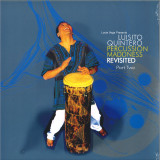
Grammy award winner & multi grammy nominated Luisito Quintero grew up with the Latin American and African tradition of percussion. His father is just as much a percussionist as his uncle Carlos Nene Quintero and his cousin Roberto Quintero . He became a member of the Orquesta Simfonica de Venezuela , but soon appeared with ensembles such as Grupo Guaco and El Trabuco
Venezolano and toured with Oscar D'León .
He then moved to New York, where he initially worked with Latin jazz musicians such as Willie Colón , Eddie Palmieri , Tito Puente and Celia Cruz . He then turned to the fusion of jazz, funk, salsa and African music and performed with George Benson , Herbie Hancock , Ravi Coltrane and Toshiko Akiyoshi , but also with pop musicians such as Gloria Estefan and Marc Anthony .
Vega Records are proud to present his new vinyl release “Percussion Maddness Revisited” Part Two. From the Osibisa remake by Luisito Quintero “Music For Gong Gong” to collaborations with the Great Richard Bona, Latin Jazz legend Hilton Ruiz and Salsa Veterans Jose Mangual and Milton Cardona, you can see the caliber of musicians that make up this timeless piece. For the afrohouse heads you have the new track “Yemaya” Featuring Nina Rodriguez remixed by Afrohouse King Manoo. Prepare for the sonic fun with vinyl pressings by Optimal !!
Percussions Maddness Revisited Part Two Double Vinyl Set out soon at a vinyl store near you !!!
out of Stock
Last delivered 3 months ago available to reorder, subject to availability
Growing up in Milton Keynes, the largest of the "new towns" outside of London designed and built in the 1960s, perhaps explains why producer Nicholas Worrall is subconsciously drawn to clearly delineated sonic structures and flawed techno utopianism, two concepts that are ever present in both his sound and aesthetic approach to music.
Wordcolour was formed just two years ago, at a time when Worrall was habitually cutting up and splicing human voice samples ripped from YouTube memes, film dialogues and musique concrète tapes.
The first artistic demonstration of these ideas arrived in 2019 via his mixtape “I Want To Tell You Something” for the Blowing Up The Workshop platform. This unique set immediately grabbed the attention and support of the specialized music press and media, including Pitchfork and Resident Advisor.
“Tell Me Something” is Wordcolour’s official debut EP and heads straight for the dance floor. It is comprised of an unusual melting pot of influences that fuse the UK club sound, post-dubstep and a style akin to Paul Lansky's ‘90s musique concrète. “Tell Me Something” offers a vibrant leftfield, avant-garde techno and edgy electro, all immersed in the vast cosmos of the human voice.
out of Stock
Last delivered 5 years ago available to reorder, subject to availability
Following the release of Milton Nascimento’s Maria Maria, Far Out Recordings proudly presents Nascimento’s 1980 follow up. With the success of Maria Maria in 1976 behind them, Nascimento reunited with his writing partner Fernando Brant in 1980 to produce another ballet, ‘Ultimo Trem (Last train)’. This time, they chose to tackle a more contemporarily relevant subject, the impact of the closure of a train line that connected certain towns and cities in the North East of Minas Gerais to the coast. “The military government shut down the route and the whole region began to fade away,” explains Milton. “I love train rides” adds the composer, “But today there are almost no trains to Brazil. So when I go to the US and Europe, any time I can, I go by train. The longer the journey the better.”
Featuring much of the same all-star line-up as Maria Maria – including legendary Brazilian musicians Naná Vasconcelos, João Donato, Paulinho Jobim and members of Som Imaginário, amongst many others, like Maria Maria, the album holds what Milton himself considers to be the definitive versions of some of his most beloved tracks, including 'Saídas E Bandeiras' and 'Ponte de Areia'.
The title track, ‘Ultimo Trem’ – performed exquisitely by Zezé Mota with a choir and piano – is a mournful lament about the human consequences of the axed line. The ballet brought great media attention to the campaign against closure. “Most of Fernando’s lyrics have some political tone,” says Milton, “This one helped the area a lot because the politicians grew concerned about the subjects.”
Fernando’s and Milton’s shared passion for the sounds, smells and memories of trains, inspired the soundtrack for the production which premièred in 1980. ‘A Viagem (The trip)’, launched with a train’s steam whistle, sees Milton’s guitar moving to a train’s rhythm. In contrast to the usual lyricism, ‘Bicho Homen (Beastly man)’ and ‘Decreto (Degree)’ are atypically upbeat and funky, their vocals a mesh of wordless male voices resembling the then fashionable Swingles Singers’ renderings of Bach. ‘E Daí? (And so what?)’, and ‘Olho d’Agua (Water’s Eye)’ were both drawn from ‘Clube Da Esquina’. ‘Olho d’Agua’ is mellow and delicate and Milton’s homage to the great voices of Brazil whilst ‘E Daí? (And so what?)’ is a stunning mosaic of voices. The unusual ‘O Velho (The Old Man)’ conjures up an image of an old shaman singing alone into the wind against the cries of nature. Perhaps the most affecting songs are Nascimento’s ‘Itamarandiba’ and ‘Oração (Prayer)’. The latter is a cry for a change in the situation whilst ‘Itamarandiba’ ends with an upbeat, whirling Hammond organ and guitar timepiece. The closing track ‘Ponta de Areia (Sand Edge)’, was based on one of Fernando’s newspaper stories and became one of Milton’s most famous pieces, covered by musicians across the planet, including Wayne Shorter and Earth, Wind and Fire. It reappeared as a ghostly 45-seconds memory on the ‘Milton e Gil’ album, his millennial collaboration with Gilberto Gil.
After 27 years of being locked inside contracts and record company legalities, these sublime songs were finally released in 2003 as a double CD package, along with Maria Maria. Set for its first ever vinyl release for this year’s Record Store Day, on limited edition red vinyl, Ultimo Trem sounds as fresh and relevant now as when Brazilian music was still a South American secret.
out of Stock
Last delivered 5 years ago available to reorder, subject to availability
Released during the late 1970's Disco era, Milton Wright's sophomore long player has always stood out as a singular, innovative example of the deepest, rarest grooves known to underground Soul lovers all over the globe. This often overlooked body of work has found a whole new audience who revisited the man's work retrospectively, pushing the LP into the domain of "holy grail" status amongst Black music lovers and Funk fanatics. "Spaced" has been at the top of the wants lists of serious music lovers for decades, often unattainable and commanding stellar collectors prices on-line, sometimes fetching amounts of upwards of £400. This unique LP could be perceived as being Wright's most personal work, tragically overshadowed by the burgeoning successes of his then label mates on Miami's Alston Records imprint. The sheer craftsmanship and songwriting prowess on show is undeniable, as is the top level musicianship and production, sounding ridiculously fresh almost some 40 years later. Above Board distribution has collaborated with Alston / TK Records to ensure the quality of this fully legitimate repress of this long lost Soul / Funk classic has been maintained. Remastered, reissued and represented with the full cooperation of the license holders for 2016. Do not pass up the chance to own a true gem, a pivotal, lost LP like "Spaced", now made available again to be enjoyed by all. "Magic Music".
out of Stock
Last delivered 3 years ago available to reorder, subject to availability
South London’s Lianne La Havas re-entered our musical consciousness at the end of February with her emotionally stirring soul-gem ‘Bittersweet’. This came in conjunction with an Annie Mac Hottest Record, a mind-blowing live show at the Barbican with the BBC Symphony Orchestra & Jules Buckley and an incredible Colors session – all of which helped put Lianne firmly back on the cultural map for 2020.
‘Lianne La Havas’, Lianne’s third album and her first in five years and is an album of startling beauty and insight—made entirely on her own terms which has been quite a journey. In one sense, geographically: La Havas spent a lot of time moving back and forth between the UK and the States working on writing and exploring her own identity. As a result, ‘Lianne La Havas’ feels spacious and luminous. Its sunbaked sounds recall, in places, the Brazilian singer, songwriter, and guitarist Milton Nascimento (on “Seven Times”). You might also hear the curveball chords of Joni Mitchell and Jaco Pastorious’s jazz explorations (“Green Papaya”), or the puttering drums and inviting warmth of golden-era Al Green (“Read My Mind”). And throughout the record, there’s a sense of empowerment that has its roots in the crisp ‘90s R&B of Destiny’s Child.
out of Stock
Last delivered 6 years ago available to reorder, subject to availability
Milton Wright's perfect deep Soul classic "Keep It Up" has always been a top shelf record, everything about it is almost flawless! Whether it's Milton's silky vocal delivery, the incessant guitar driven back beat or the total space Funk vibe of his omnipresent ARP-2600 synthesizer this record has it all. Originally released on TK Disco's more Soul and Funk orientated Alston label which was home to many legendary artists and records, this 1975 sunshine classic never fails to make people move. A classic rare groove indeed. "The Silence That You Keep" takes up side-B, a jazzy, flute driven love song that again features Milton's perfect voice and some fantastic arrangement. A real gem of a record, with the original 45 changing hands for over £100 a time in used condition.
This is the first time "Keep It Up" has been re-issued in it's original 45 rpm format with the original Alston label artwork. It's been re-mastered, re-pressed and made available again with the permission of TK Disco / Alston Records, Miami Florida, USA.
out of Stock
Last delivered 5 years ago available to reorder, subject to availability
1970’s best-kept Bossa Nova secret. Surrounded by mystery for nearly 50 years due to its obscurity, this is one of the most honest, personal and unpretentious albums of it's genre.
A selection of 12 exquisitely crafted songs supported by measured, subtle arrangements. The list of musicians born or raised in the Tijuca district of Rio de Janeiro is long and illustrious and includes names that have shaped Brazilian music: Tom Jobim, Roberto Carlos, Tim Maia, Milton Nascimento, Jorge Ben or Erasmo Carlos – to mention but a few.
We can now add to that list another name: Werther. In 1970, a man by that name recorded an album unique in its personality, its honesty, and its lack of pretense. In a time when Bossa Nova had become a global phenomenon and its main characters were already household names in Brazil, Werther assembled a collection of songs that uncannily – almost naively – remind us of the time when Bossa Nova was just a group of youngsters making music. His songs are about simple things: bohemian life, the sea, love.
Despite Werther and his friends being only in their teens, without any previous experience recording music, those working behind the scenes were not equally amateur. Producer Peter Keller had already worked with Aloysio De Oliveira in the quintessential Bossa Nova label Elenco, and was also an initial partner in Roberto Quartin’s cult label Forma.
Studio owner Bill Horne was a very loved character in the Rio jazz scene who had regularly taken part in the legendary meetings in Nara Leão’s apartment and befriended some of Brazil’s most respected musicians. Some of these musicians were, for example, Naná Vasconcelos and Edison Machado, who provided small contributions to Werther’s album.
out of Stock
Last delivered 6 years ago available to reorder, subject to availability
Club Internacional dig deep to launch their new global reissue series in style with two long lost cuts from Rio-based label Top Tape. First up is Jose da Silva aka Zeca Do Trombone.
A massively respected instrumentalist, he has worked his trade over the years with many of Brazil's leading artists such as Tim Maia, Milton Nascimento, Elizeth Cardoso, Beth Carvalo, Martino Da Vila, Gonzaguinha and Carlos Dafe amongst others.
He also produced a very much sought after LP in 1976 alongside Roberto Sax which was finally re-released this year on Mad About Records. Tema Do Brisa dates from a few years later in 1978 and is Zeca's only solo 45 single. Never released on digital and never reissued on vinyl before, it is with great pleasure that Club Internacional re-launch this psychedelic jazz and heavily funk influenced gem with its still stunningly fresh sounding drum patterns to a new generation of listeners. Fans of jazz, funk, rare groove and Brazilian music in general will appreciate the strong vibes of this original track and be delighted to finally have this record in their hands. The track represents a unique moment in the career of a great musician fully in control of his instrument and more than willing to test its musical boundaries. Zeca continues to play out as an artist regularly in Brasil right up to the present time.
On the flip side, Sambacanas, or Os Sambacanas as they were sometimes also known, were a group of Samba musicians recorded by the Sao Paulo based producer Julio Nagib.
Although they were mostly known for a samba covers LP entitled 'Sucessos Da Juventude Em Tempo De Samba' (re-released in the UK under the title 'Fly Me To Brazil'), this song, Panga, Danga, Panga, was the A side of their only 45 single release for Top Tape which came out in 1976. Again this track has never been re-released before in its 45 single version, and has not been made available digitally. A beautiful example of raw and simple Batucada-style Brazilian samba music infused with Latin funk vibes, it features excellent vocals and percussion including the berimbau and cuica. Club Internacional hopes you enjoy this journey back to rediscover these very different, but wonderful, long lost sounds of Brazil on this limited edition vinyl 45 pressing to add to your record collection. Each Club Internacional edition may take some time, but it will be worth the wait!
out of Stock
Last delivered 2 years ago available to reorder, subject to availability
For his third album for Far Out Recordings, London based multi-instrumentalist and one of Europe's finest saxophonists Sean Khan ventures to Rio de Janeiro to collaborate with iconic Brazilian polymath Hermeto Pascoal. Taking its title from the escaped slave settlement 'Palmares' in the Northeast of Brazil during the 1600s, Palmares Fantasy is Khan's utopian jazz message for the world, and features Azymuth drummer Ivan 'Mamao' Conti, bassist Paulo Russo, guitarist Jim Mullen, and guest vocals from Brazilian chanteuse Sabrina Malheiros, and Cinematic Orchestra frontwoman Heidi Vogel.
Like Hermeto Pascoal, Sean Khan is a self-taught musician. Never able to afford his original dream of studying at Berklee, and having been turned away from Guildhall School of Music for being 'too raw', he became disillusioned with what he saw as the exclusivity, elitism and dangerous institutionalisation of the jazz world. Yet Sean's love for music and the drive to create never faltered.
Hermeto Pascoal, the man Miles Davis once dubbed the most impressive musician in the world', is a similarly independent artist. A true maverick whose ingenuity and freedom from conventional restraints is so great that he has essentially conceived his own musical language, made him the dream collaboration for Sean.
Aspiring to inclusivity and equality also informs the message in Khan's music. Inspired by the 17th Century settlement of Palmares in Brazil's Alagoas region, which was free from the Portuguese crown's murderous exploitation of South America for a century, Khan notes his fascination with the fact that while majoritively made up of escaped African slaves, many deserter conquistadors also joined the settlement.
Hearing the deep-grooving title track with this history in mind, the listener is transported to a futuristic musical eden, with Mamao's insatiable 10/8 rhythm back-boning Hermeto's wild improvised vocals, rhodes and whistles, while Sean's harmonically brilliant sax and flute add more layers of moody, characterful expression. 'Moment of Collapse' is Sean's poetic study on the uncertainties of modern day western civilisation, delicately presented by the gorgeous vocals of Heidi Vogel and drenched in lugubrious strings and Alice Coltrane-esque harp. The two covers on the album are of Hermeto's own 'Montreux' (on which Hermeto plays solos on a teapot and a pint of water), and an uplifting soulful jazz-funk take on Milton Nascimento & Lo Borges MPB classic 'Tudo Que Voce Podia Ser' featuring the vocals of pioneering nu-bossa voice Sabrina Malheiros.
The recording sessions for the album were part of an intensive and hugely productive eight-week excursion to South America for Far Out boss Joe Davis in the summer of 2016, which also saw the sessions for Azymuth's Fênix and a forthcoming album from Uruguayan fusion legend Hugo Fattoruso.
Fantastic' Gilles Peterson
Loving this!' Opolopo
Thank you!' Sassy J
Proper! Great track.' Colin Dale
this is great!' Yannick Elverfeld (RBMA / Needs Records)
I've enjoyed Sean Khan's earlier releases, but this really seems like he's grown into his fairly considerable talent.' Mark Sampson (Songlines)
His last album was his best so far, but I think this one may be even better.' Laurence Pragnell (Soul Brother Records)
dope!!!' Kyri (R2 Records)
this is great - really cool vibe!' Sam Redmore
wonderful track - can't wait to hear the lp.' Simon Harrison (Basic Soul Radio)
This is very tasty indeed.' Gavin Boyd (Soul Has No Tempo)
(180gr) An incredible album from Lo Borges - one of the best singer/songwriters on the Brazilian scene of the 70s!
An incredible album from Lo Borges - one of the best singer/songwriters on the Brazilian scene of the 70s! Borges first burst into the spotlight for his work on the Club Da Esquina album by Milton Nascimento - and his work as part of Milton's "corner club" really helped shape the style of the more famous singer. Yet Borges is almost an equally great talent on his own - with a soaring, soulful approach that's every bit as great as the best Nascimento material from the period - and recorded in a wonderfully similar spirit! The sound here is completely sublime right from the start - music that moves us, even if we can't understand the language of the lyrics - like some of the best work by Caetano Veloso and Gilberto Gil. There's maybe a bit more guitar than on some of the Milton Nascimento work of the period - but used in a fuzzy way that slides in nicely with some of the jazzy phrasing of the instrumentation - which is delivered with help from key contemporaries who include Beto Guedes, Nelson Angelo, Toninho Horta, and Tenorio Jr. The songwriting is amazing - and titles include "Cancao Postal", "Voce Fica Melhor Assim", "Nao Foi Nada", "Calibre", "Faca Seu Jogo", "Toda Essa Agua", "Pensa Voce", "Como O Machando", and "Aos Baroes".