Search:son of a son

- とんでもマウンテン / Mount Amazing
- アドバタイズデモ / Advertise Demo
- キャラクターせんたく / Character Selection
- マジンディスコ / Genie Dancer's Disco
- マジンロック / Genie Dancer's Rock
- カンフーストリート / Kung-Fu Alley
- ドラゴンカンフー / Dragon Kung-Fu Fighter
- ウキウキおもちゃランド / Toytown
- わくわくテレビスタジオ2 / Funtime Tv Studio 2
- トレーニングスペース / Training Room
- とこなつアイランド / Eversummer Island
- ウエスタンビレッジ / Wild West Town
- ファンタジーナイト / Fantsy Knight
- たいけつ!ウッキーピンク(バナナにハートブレイク) / Battle! Monkey Pink
- ナイトキャッスル / Knight's Castle
- うちゅうテレビようさい / Space-Tv Fortress
- たいけつ!ウッキーイエロー / Battle! Monkey Yellow
- とのさまじょう / The Emperor's Castle
- サルなげスタジアム / Super Monkey Throw Stadium
- Happy☆センセーション / Happy Sensation
- マジンダンサー / Genie Dancer
- うみべリゾート / Seaside Resort
- わくわくテレビスタジオ / Funtime Tv Studio
- サルうらない / Hall Of Horoscope
- ピポサルのテーマ / Super Monkey
- ゲッチュマン / Cyber Ace
- とのさまじょう2 / The Emperor's Castle 2
- とんでもマウンテン2 / Mount Amazing 2
- カッチンコールたいりく2 / Freeze Continent 2
- ミニマルテーマ / Minimal Theme
- かくれんぼのもり / Hide-N-Seek Forest
- カッチンコールたいりく / Freeze Continent
- ワイルドウエストキッド / Wild West Kid
- へんしんとうじょう / New Morph
- ガチャメカとうじょう / New Gadget
- しんきろうタウン / Mirage Town
- ウエスタンビレッジ2 / Wild West Town 2
- ひこうきだいへんたい / Airplain Squadron
- どっきりホラータウン2 / Bootown 2
- けっせん!スペクター(スペクターのテーマ) / Final Battle! Specter(Specter's Theme)
- びゅんびゅんビッグシティ / The Big City
- クリアリザルト2 Sg3 / Result 2 Ae3
- クリアリザルト Sg3 / Result Ae3
- サルをつかまえろ!/ Catch Monkeys!
- どっきりホラータウン / Bootown
- テレビステーション / Tv Station
- トモウキシティ / Tomouki City
- サルティメットファイティング / Ultim-Ape Fighting
- ドンドコゆきまつり2 / Winterville 2
- はじめてのゲッチュ / The First Catch
- とこなつアイランド2 / Eversummer Island 2
- たいけつ!ウッキーレッド2 / Battle! Monkey Red 2
- たいけつ!ドクタートモウキ / Battle! Dr.tomouki
- トモウキシティ2 / Tomouki City 2
- しょうてんがい / Mall
- ミラクルニンジャ / Miracle Ninja
- びっくりおんせんランド / The Hot Springs
- けっとう!ウッキーブルー / Fight! Monkey Blue
- マジンワルツ / Genie Dancer's Waltz
- ナイトキャッスル2 / Knight's Castle 2
- マジンチーク / Genie Dancer's Cheek
- トモウキタワーはっしん! / Go Tomouki Tower!
- サトルねつべん / Satoru's Speech
- トモウキのカツラ / Tomouki's Wig
- たいけつ!ウッキーレッド / Battle! Monkey Red
- トモウキのテーマ / Tomouki's Theme
- スタッフロール Sg3 / Staffroll Ae3
- サルシネマ / Monkey Cinema
- びっくりおんせんランド2 / The Hot Springs 2
- だつりょくハカセ / Lazy Professor
- まよなかベイサイド / Midnight Bay
- たいけつ!スペクター / Battle! Specter
- うちゅうテレビようさい2 / Space-Tv Fortress 2
- ドンドコゆきまつり / Winterville
- たいけつ!ウッキーホワイト / Battle! Monkey White
- たいけつ!ウッキーブルー / Battle! Monkey Blue
- クリアジングル Sg3 / Clear Fanfare Ae3
- ウキウキおもちゃランド2 / Toytown 2
- ブルーのオルゴール / Blue's Orgel
- はくちょうのみずうみ / Swanlake
4XLP box set, 4 Coloured discs: translucent violet, ice, blue, and orange vinyl
Hardcover slipcase box
Celebrate twenty-five years of Ape Escape and thirty years of PlayStation with Ape Escape 3 Originape Soundtracks in a Box!
Saru Get You 3
As with the Ape Escape Originape Soundtrack, composer Soichi Terada has meticulously re-recorded and reconstructed all tracks from the Ape Escape 3 Original soundtrack. Previously only available on CD, this is the complete soundtrack's first time on vinyl. This box set was produced in partnership with Mr. Terada and Far East Recording, and is an officially licensed Sony Interactive Entertainment product.
This release contains eighty tracks, spanning four individually sleeved records, housed in a hardcover box. It is similar in construction to the Ape Escape Originape Soundtracks in a Box release (2024), and the two will look quite nicely next to one another on your shelf!
We are happy to announce that this box set features a definitive edition of the Ape Escape 3 Originape tracklist. This also includes "Swanlake," a track previously unavailable on the CD release. At its core, the Ape Escape 3 soundtrack features much of Soichi Terada's signature sound: lush electronic, jungle, silky smooth synthesizer, humor, and charm.
Ape Escape 3 was originally released in 2005 (Japan), and its moviemaking pipos were unleashed across the rest of the globe in 2006. The game features two new protagonists (Kei and Yumi) who battle the Freaky Monkey Five, underlings of the nefarious Dr. Tomoki and the evil monkey Specter.
Complimenting the game's journey through the TV-verse, the Ape Escape 3 soundtrack also features twists on themes from Wild West Showdowns, Kung-Fu movies, and space operas. Fans of the Ape Escape Originape Soundtrack, as well as newer work like Asakusa Light, will certainly enjoy all elements of Soichi Terada's music present in Ape Escape 3.
The music on this box set was mastered by Justin Perkins of Mystery Room Mastering, who also mastered the original Ape Escape Originape Soundtracks box set (2024). Using Mr. Terada's premastered source files, the music was completely and specifically mastered for vinyl. The box set also features original Ape Escape 3 character renders and key art. All of the design elements have been put together with careful thought, referencing the original Japanese guidebook for inspiration and visual cohesiveness.
It is with great pleasure that we celebrate Soichi Terada's music and the Ape Escape franchise with this four-disc release!
Original key art and renders from the サルゲッチュ team
Officially licensed © Sony Interactive Entertainment
©2025 Sony Interactive Entertainment Inc. “PlayStation”, ”プレイステーション”, “Ape Escape” and ”サルゲッチュ” are registered trademarks of Sony Interactive Entertainment Inc.

11
Jorge Ben is someone who needs no introduction. Since his first hits in the early 60s, this the greatest icons of the greatest icons of Brazilian pop music. His anthems 'Mais Que Nada' or 'Pais Tropical' are among two of the most ever listened Brazilian songs of all time. Ben's self-titled 1969 album is a true samba-soul masterpiece from one of Brazil's most creative voices. This isn't your typical late-'60s LP: Jorge Ben blends the hypnotic swing of samba with funk, psychedelia, and sun-soaked soul in a way that feels both classic and ahead of its time. Released in November 1969, this was Jorge Ben's sixth studio record, and his first back with the Philips label after a creative hiatus. He recorded it with the tight-knit, percussive groove of Trio Mocoto -- whose rhythms lock in beautifully with Ben's laid-back guitar and vocals. On top of that, the album features lush orchestral arrangements from Jose Briamonte and Rogerio Duprat, adding a soaring, psychedelic dimension to Ben's sound. Standout tracks? You've got the joyous anthem 'Pais Tropical', a perfect celebration of Brazilian life.
Then there's 'Take It Easy My Brother Charles', a socially conscious number that tells the story of a rebellious sailor -- Ben weaves in themes of race, identity, and resilience. And songs like 'Que Pena' bring in that sweet, soulful melancholy, while breezy cuts like 'Criola', 'Domingas', and 'Barbarella' highlight his playful, poetic side. This record is a rare blend of genres -- samba, soul, funk, psychedelia -- and it's got a timeless energy. Whether you're already into Brazilian music or just looking for something fresh and soulful, Jorge Ben's 1969 album is a joyous entry point. Reissue on 180g vinyl.


- The Country
- Shadows Above
- These Birds Are Mine
- Dance In The Milky Way
- A Finer Sense
- We Gotta Coast
- Dreaming Of Roads
- The Treadmill
- Shaking Like A Leaf
- Far Less To Another
- Over The Skyways
Formed in Southend in the late 90’s, Beatglider’s tale is a familiar one taking in early acclaim only for momentum and promise to be dashed by major label statis and indifference.
After the release of the debut long-player, ‘40 Days Of Summer’, in 1999 the band signed to Sony subsidiary Lakota and decamped to LA to record its follow-up, ‘Dreaming Of Roads’, an album that was never to see the light of day.
And now, over 20 years later, ‘Dreaming Of Roads’ eventually gets a deserved release on 28th February via the Arlen label. A beautiful 11-track understated delight which musically falls somewhere between the likes of Elliott Smith, Grandaddy, Yo La Tengo and Sparklehorse, the album has not only stood the test of time, but arguably sounds as fresh as ever in 2026.
The tracklisting of the album - recorded in Los Angeles at the famed Sound City studios - is as follows:

- 1: Dc2Nyc
- 2: Interlude 1 (Movin')
- 3: Dc2Nyc2 (Feat. Maryanne Ito, Shing02, Spin Master A-1)
- 4: Interlude 2 (Ooh Aah)
- 5: Blue (Feat. Nicholas Kaleikini)
- 6: Interlude 3 (Game Over)
- 7: Honolulu Jazz
- 8: Disco
- 9: The Flu
- 10: In A Dream
Dae Han is the unsung backbone behind progressive Honolulu acts and international artists. He’s the go-to drummer whenever Japanese rapper Shing02 tours the US and Asia with a full band. In 2019, Takuya Kuroda tapped Dae to organize a band to support the Brooklyn-based trumpeter’s gig at Blue Note Hawaii. Dae also recently teamed up with guitarist Gilbert Batangan and bassist Mark Tanouye to open for Khruangbin. And every year he organizes an always impressive jazz-forward tribute to the late J Dilla.
On the drums, Dae’s swift, technical style compliments every situation, from jazz and funk to R&B, reggae, and hip hop. Much the same, Dae has approached the compositions and arrangements for his debut with craft and purpose.
BLUE, coming in February 2020, came to fruition over the past 12 months with the help of Nelson Cho, the musician and recording engineer behind Lightworks Recordings in Wahiawa, Oahu. Together, the two spent countless hours honing a sound that travels across hip hop, jazz, and house.
The resulting songs act as a diary of the artist’s fateful journey from Washington D.C. through New York to Honolulu, where he resides today. Reflecting on joyful highs and the lowest lows, Dae creates a collage for the listener to hear, appreciate, and understand the path he’s traveled thus far.


- A1: Another Thought (02:16)
- A2: A Little Lost (03:18)
- A3: Home Away From Home (05:12)
- A4: Lucky Cloud (02:16)
- B1: This Is How We Walk On The Moon (04:42)
- B2: Hollow Tree (02:30)
- B3: See Through Love (04:46)
- C1: Keeping Up (06:20)
- C2: In The Light Of The Miracle (06:05)
- C3: Lucky Cloud (Return) (03:00)
- C4: Just A Blip (03:42)
- D1: Me For Real (04:55)
- D2: Losing My Taste For The Night Life (04:34)
- D3: My Tiger, My Timing (05:41)
- D4: A Sudden Chill (02:45)
15
2026 Repress
Another Thought was the first collection of Arthur Russell’s music to be released after his death in 1992. Released in 1993 on Point Music it marked the beginning of nearly 30 years of work to let the world hear the enormous archive of unreleased recordings Arthur left behind. Be With revisits this first compilation for a new gatefold double vinyl version and a triple-fold digipak CD reissue.
Both versions of Be With’s 2021 reissue of Another Thought have been mastered by Simon Francis and the vinyl cut by Pete Norman. The original artwork has been restored and tweaked at Be With HQ for the gatefold sleeve and the triple-fold digipak, with the essential help of Janette Beckman. Each version comes with an insert reproducing the liner notes and lyrics from the original CD release.
Together with Calling Out Of Context, Soul Jazz’s World of Arthur Russell, and much of the ongoing work of Audika, Another Thought is absolutely essential for even the most casual Arthur Russell collection. In fact we’d argue it’s essential for any fan of non-obvious pop music. This is the only place where you can hear some of Arthur’s most recognisable tunes and it’s an album that absolutely deserves to be kept in press.
We’ll assume that by now you’re all at least a little familiar with the story of Arthur Russell, the farm boy from Iowa who moved to 1970s New York. Arthur Russell the genuine musical genius who died just 40 years old, leaving behind a wealth of music that dwarfed the few 12"s and LPs that were released during his short life.
Although Arthur had been working on an album for Rough Trade during his last years, with the label no-longer operating it was Point Music (Philip Glass and Michael Riesman’s label set up together with Philips) who stepped in to help Arthur’s partner Tom Lee start working out exactly what Arthur had left behind.
Tom suggested that Arthur’s friend Mikel Rouse was the right person to make the first catalogue. Working in Tom and Arthur’s apartment he had only two weeks to go through what turned out to be around 800 tapes.
As Tom explained “at the end of each day he would generally wait for me to come home and I would, to the best of my knowledge, name and identify pieces in question from that day’s work. As he worked Mikel compiled about a dozen cassettes that he thought would present the most finished sounding songs for Don/Point to use. As Don listened he would then suggest and ask me and thus we collaborated on the choices.”
Don is Don Christensen, Another Thought’s producer. With a final selection of songs from recordings made between 1982 and 1990, including sessions with some of Arthur’s regular collaborators Peter Zummo, Steven Hall, Mustafa Ahmed, Elodie Lauten, Julius Eastman, Jennifer Warnes and Joyce Bowden, it was then Don’s job to turn these into a finished album.
Another Thought is a little different from the compilations of Arthur’s music that came out since. In our conversations with Steve Knutson (who founded Audika Records and who manages Arthur’s estate together with Tom), he explained that “more than any project released by Arthur during his lifetime or posthumously by Audika, ‘Another Thought’ is the most worked over. The material was significantly edited and rearranged from the original source tapes”.
If the aim was to release a comprehensive exploration of every facet of Arthur’s music, from the most avant-garde of his avant-garde compositions through to the most disco-not-disco of his disco-not-disco tunes then the project was a spectacular failure. But as a coherent album of non-obvious pop music Another Thought is wonderful.
Starting with the sparse voice-and-cello of the title track, A Little Lost adds some guitar along with the sneaking suspicion that we’re listening to something nowhere near as simple as it first sounds. By the time we get to This Is How We Walk On The Moon - it could be the moment you notice the congas, or the percussion that’s been building behind them, or maybe it’s that blast of trumpet and trombone - we realise we’ve gone from splashing around to being completely submerged in the musical world of Arthur Russell.
From here the album heads off on its journey around the sounds of the left-field contemporary classical music of the time, re-directed towards pop ears, with minor detours through the swirling woozy disco of the half-remembered night before on In The Light Of The Miracle and My Tiger, My Timing. Whether it’s just Arthur, his cello and some bleeps on Just A Blip, or whether he has some vocal help as he does on the bounding Keeping Up, this is difficult music made so, so easy. And through it all is Arthur’s voice and cello. Sometimes drowned in distortion and sometimes clear as a bell, but always there somewhere.
A Sudden Chill finally returns us to the calmer waters we started in and this last track closes the album with a melancholy that’s not surprising given how soon after Arthur’s death the album was put together.
Whilst Another Thought holds together with the consistency of a proper album, there’s still no getting away from the fact that this was put together from audio recorded in different ways, in different places, with different people at different times. Those with keen ears will hear traces of tape hiss, the occasional blown-out note and some digital fuzz, all fingerprints of those original recordings as well as of the 1990s digital equipment that was used to piece Another Thought together.
Add to this Arthur’s obvious pleasure in making music from the sort of sounds that can make microphones, speakers and ears uncomfortable, it’s no surprise that Another Thought isn’t glossy and pristine. Don Christensen’s productions have been careful to not scrub up those original recordings so much that they lose their original vibe, understandable given that Arthur wasn’t around as a guide. We’ve applied a similarly light touch with the mastering for these Be With versions, just working to make sure they sound like they should on both the vinyl and the CD.
Despite the Discogs rumours, Another Thought was never originally released as an LP. So when it came to the sleeve for this Be With vinyl version we took the original CD artwork as a starting point to come up with something that looks like it could have been in the record racks back in 1993.
We have to thank Janette Beckman for helping us reproduce her iconic photograph of Arthur in his newspaper boat hat. One of many photographs she took of Arthur, Janette shot this in her New York studio back in 1986 for a short article in the January ’87 issue of The Face Magazine. Those with eagle-eyes will notice we’ve used an ever-so-slightly different shot from the one that appeared in The Face and then again on the original cover of Another Thought. The original has long since been lost so we’ve worked with what is left in Janette’s archives. And we also have to thank Tom Lee for giving us permission to reproduce his liner notes from the original CD booklet, together with Arthur’s lyrics.

- こびと
- ハレルヤ:左?
- 孤独のハープ弾き
- パラダイス:真昼
- Black Hole
- 紫の夕べ
- 目の前の天使達
- Another Lonely Harpist
- They’ve Gone, They Will Come
- パラダイス
- 童話
- Spirit In My Hair
1
World Of Echo announces the reissue of two remastered albums by Japanese guitarist and songwriter Naoki Zushi, 1988’s Paradise, and 2005’s III. Two classics of Japanese psychedelia, both Paradise and III were originally released on Org Records, the imprint of Shinji Shibayama of acid-folk group Nagisa Ni Te, with whom Zushi has guested on second guitar for decades. Both intimate and expansive, rich with revelatory songwriting and blasted, sky-scouring guitar, these reissues return these albums to print for the first time since the 2000s. It’s the first time III has been officially released on vinyl, with an extra, previously unreleased track, “Under The June Moonlight.”
Recorded in Kyoto’s Townhouse Studios in mid 1987 and released in limited-to-500 vinyl pressing in 1988, Paradise emerged from a scene in Kansai, Japan that was embracing the idiosyncracies of 1970s singer-songwriters, the soaring solos of early seventies psychedelia, and the DIY impulse of 1980s post-punk. While Zushi’s musical history stretched back to the early eighties – he was a founding member of Jojo Hiroshige’s noise outfit Hijokaidan – he found his feet with groups like Hallelujahs, whose dream-pop collection Niku O Kuraite Chikai Wo Tateyo was recently reissued by Black Editions, and Idiot O’Clock.
Paradise appeared two years after that Hallelujahs album and share much the same membership – Zushi’s backing band on several of the songs includes Shibayama on drums and Ken-Ichi Takayama (aka Idiot) on electric guitar, though just as often, Zushi plays all the instruments himself. The coordinates here are wide-reaching – you can hear the volume and intensity of Neil Young & Crazy Horse (on “Hallelujah: Left Side” and “Paradise: Midday”), the slow-motion magic of Galaxie 500, the idiosyncratic spirit of The Only Ones, all mixed up with tender guitar miniatures and stumbling garage-psych-pop moves.
Seven years later, after the transitional album Phenomenal Luciferin, Zushi released III. Perhaps his masterpiece, it’s already been bootlegged on vinyl, but this reissue is the real deal. The album was recorded at Studio Nemu over seven years, and sees Zushi backed by Shibayama (bass) and Masako Takeda (drums), his erstwhile bandmates in Nagisa Ni Te. By this stage, Zushi had started to really stretch out, and many of the songs on III swoon languorously, taking their sweet time to say what they need to say. It’s rich with lovely, melancholy songs, in a similar realm to bandmates Nagisa Ni Te, of course, but you can also hear traces of everything from Syd Barrett’s The Madcap Laughs, through seventies private press loner folk, to the slow-burn meanderings of the likes of early Low or Damon & Naomi.
When interviewed by Shibayama in the mid-nineties, Zushi said of Paradise, “it was a sort of collection of songs that had meant something to me up to that point… it was my paradise. I wanted to create paradise.” That’s something Zushi achieves on both of these albums – visionary Japanese psychedelia, en route to paradise. - Jon Dale

13
French artist Trypheme debuts on Impatience with “Odd Balade”, a darkly-hued collection of songs drawn from human delicacy and dreamworld mythology.
“Odd Balade” is Trypheme’s most ambitious and boldest record to date - both lyrically and musically. The album’s thirteen tracks resist rigid genre boundaries and flutter from medieval folk realms, sprawling synths, gothic 80s wave, leftfield pop, haunted vocals, mutant electronica to reverbed guitars - all reflected through her own shadowy prism. Especially album closer “A Walk In The Vercors” evokes a soothing serenity that echoes the sonic balm of Julee Cruise.
Trypheme’s musical repertoire trends heavily electronic and somewhat abstracted, but on “Odd Balade”, the artist slips into the role of the modern troubadour with a shift to a more poetically and personal songwriting that is infused with symbolism and dreamlike fantasies. The connective tissue of the album is the audacity to love and the vulnerability that ensues. As intimate and introspective as the lyrics are, the themes remain universal and human to the core: the fear of losing a loved one, the melancholia of leaving places and t“the fear of losing a loved one, the melancholia of leaving places and the cycles of life. The record was largely composed in Chars, stirred by the French village’s eerie atmosphere and frequent trips to the seaside in Brittany, where Trypheme resides. Drawing inspiration from the rugged terrain of the seaside landscapes, the writings of Allen Ginsberg and Mark Fisher and the hyperrealist art of Scott Prior, Trypheme uses her songs to depict life with broad strokes of rhythm.
On “Odd Balade” Trypheme consolidates herself as a gifted, nimble songwriter, masterly producer and subtly powerful vocalist. The record combines her skill for crafting lush, alien sound worlds and efficient, alluring arrangements with stealthily devastating songs. Belin’s voice becomes a key ingredient, appearing on eleven of Odd Balade’s thirteen tracks, by turns heavily manipulated, sampled and replayed as a form of percussion, or basically bare.
“Odd Balade” is the manifestation of Trypheme’s roving artistic practice, a ceremonial-grade sacrament cast in a rich nocturnal glow. Pairing the mundane with the mythic, the album stays true to its core: odd and strangely familiar.
RIYL - Riding off into the sunset to an unknown destination, hauntology, present, tales told by the fireside, hot summer rain, adventures, to feel a warm presence when you are walking in the forest or in the mountain, coastal landscapes, sailor’s stories, slow motion, vitesse, heavy blossoms, colors, the warmth of the sun, the tenderness of the moon, getting lost in unfamiliar streets, city’s lights, motorway rest area by night, magic numbers, rendez-vous, picnic, serendipity, poetry, the smell of old records and old books.
Tiphaine Belin has been releasing music as Trypheme since 2016. Odd Balade was written and produced by Belin, and mixed by Belin and Abel Roux. It was mastered by Amir Shoat. Cover art photography is by Ariane Kiks, with art direction by Ariane Kiks in collaboration with Mathilde Chaize.

- =
- Sovay
- A Nervous Tic Motion Of The Head To The Left
- Fake Palindromes
- Measuring Cups
- Banking On A Myth
- Masterfade
- Opposite Day
- Skin Is, My
- The Naming Of Things
- Mx Missiles
- =/=
- Tables And Chairs
- The Happy Birthday Song
- Sovay
- A Nervous Tic Motion Of The Head To The Left
- Blood
- Measuring Cups
- Banking On A Myth
- Masterfade
- Opposite Day
- Skin Is, My
- The Naming Of Things
- Mx Missiles
- Capital I
- Right On Time
- The Happy Birthday Song
- Measuring Cups
- Knapsack
- Fake Palindromes
- A Nervous Tic Motion Of The Head To The Left
- The Happy Birthday Song
- Tables And Chairs
- Tables And Chairs
- The Happy Birthday Song
Im Jahr 2005 war Andrew Bird eine bis dahin unvorstellbare Kombination aus virtuosem Violinisten, Singer-Songwriter, Gitarristen und Pfeifer. Mit seinem Album ,The Mysterious Production of Eggs" aus diesem Jahr schuf Bird einen neuen Sound, der bis heute nachgeahmt wird. Anlässlich des 20-jährigen Jubiläums von ,The Mysterious Production of Eggs" veröffentlicht Andrew Bird ein ganz besonderes Boxset mit einem 54-seitigen Buch mit Fotos, besonderen Überraschungen und zwei Essays: einen von Andrew selbst und einen von Anders Lindall, der den verschlungenen und faszinierenden Prozess untersucht, den Andrew und seine Mitstreiter bei der Aufnahme des Albums durchlaufen haben. Das Boxset enthält außerdem die Originalveröffentlichung des Albums sowie zwei LPs mit bisher unveröffentlichtem Material auf schwarzem Vinyl. Auf einer LP befindet sich eine vollständige Wiedergabe des Albums, jedoch mit Demos, Live-Aufnahmen und alternativen Versionen. Die dritte LP enthält weitere unveröffentlichte Raritäten auf Seite A und eine Auswahl von Songs aus dem Originalalbum, die von Andrew mit dem Nu Deco Ensemble gespielt werden. Der ursprüngliche Cover-Künstler hat ein völlig neues Artwork für das Jubiläumswerk geschaffen.

- A1: Lazy Love
- A2: The Best
- A3: Like The Sun
- A4: Bitter Medicine
- A5: Hunned Bandz
- B1: Natural
- B2: The Blue Sky
- B3: Sundays
- B4: Perfect
- B5: This Time
Sundays is the debut full length from Oakland-based Tanukichan, aka multi-instrumentalist Hannah van Loon. At surface level, the album sounds just how the title describes: hazy, dreamy, reflective, just like a lazy Sunday afternoon. Upon second and third listens, the dreamy music unveils a deeper world: an ever present sense of longing, an endless state of summer and a period of instability that plagues us all at one point or another in our lives.
Raised in San Francisco, van Loon started out making classical, bluegrass and jazz music as well as playing in numerous bands in the area before deciding to make something more personal. What started with a few unfocused demos, with van Loon playing all the instruments herself in her house, became a studio experience and viable collection of music after her friend Anthony Ferraro of Astronauts, Etc. introduced her to Company Records founder Chaz Bear (Toro Y Moi, Les Sins). After collaborating on her 2016 EP Radiolove, van Loon and Bear set out to make a much more sonically cohesive release, with both the producer and artist playing all the instruments on the record. The result is a slice of dream pop that could only come from the combination of the laid back atmosphere of California and the nostalgic and often difficult memories that are generally associated with coming of age.
To van Loon, the tracks of Sundays are a form of contemplation and approaching life’s issues from a different and less complicated perspective. “Sometimes for me, it feels easier to write songs about things than to talk. A lot of things in life are layered and paradoxical, but with songs it always seems simpler.”
Opening track “Lazy Love” sets the stage, sonically and lyrically, for the rest of the album, combining vulnerable lyrics with gorgeous, fuzzy tones. Above pummeling synths and guitar tones, van Loon sings “you know I'd do anything/don't you know I try my best/if I could wake up when the sun is rising” showing the album’s constant theme of balancing always wanting to be the best person you can be, while also feeling a low level joy at letting life play out as it wants to. “Natural” is a track that feels perfect for a road trip, a track that hums away with a driving beat, culminating in the sheer excitement of finally having a night alone with someone you’ve loved for a while, among many highs and lows: “a window too bright/it's natural sunlight/grey fades to white lie/kiss you tonight/it's natural delight/help me feel right.” The tracks collectively address a deep rooted sense of yearning for someone, something new, while also feeling content with your life; a realization that maybe the places you’ve always belonged aren’t where you should be anymore, that suddenly you might be looking for something completely different.
“I settled on the name Sundays as the title of the record because it encapsulated how the record felt to me,“ van Loon says. “I was thinking about the laziness, and dreamy clarity that you can feel after a late night, waking up having to face the world with a new perspective.” Sundays encapsulates this feeling, a nostalgic way of looking at the world, waking up feeling like a slightly different person than before, looking back on life, not sure if you can tackle what’s next, but doing your best, day in and day out

11
Impatience is thrilled to present Leaving Memory, the latest album-length work by Piper Spray and Lena Tsibizova. Leaving Memory is a searing distillation of the duo’s ouevre - it’s eleven prismatic electronic seances combining for a mind warping wormhole with it’s own internal (il)llogic, where pop, ambient, and industrial music convene beneath a rugged HD of digital processing and brain fog. Equally rosy with nostalgia as it is ominously forward looking, Leaving Memory defies easy categorization and makes for an astounding, confounding listen.
By turns violently abrasive and disarmingly touching, Piper and Lena deploy sounds that fracture and disintegrate, burn up and explode, synthetic supernovas that give the record an unmistakable, inimitable texture. Song structures often abide by their own blueprint - heading in one direction before making an abrupt dive elsewhere. Bursts of vibrant colour lurk below layers of grayscale noise. Unidentifiable voices deliver secret messages from the murk. When rhythm’s emerge they ground the tracks to some unknown terrain and invigorate.
Lame Line veers towards the sweeter end of their spectrum, a hazy plaintive repetition increasingly lashed with friction, before Exit erupts with clanging rhythm and shards of distortion. Diagnosis is an almost sweet alt-pop song, Lena’s vocals yearning beneath a dubby shuffle, while Keeper Of The Void’s possessed incantations open up to a ripping, fried climax. Beryl Grey releases the pressure gauge, a gently lilting drift arpeggiating as the sun sets, and Lost Cars sweats through claustrophobic drones and bird song before the clouds part on a serene scene. Leaving Memory closes with Shin, offering a genuinely sweet resolution and a gentle landing back down to earth of either footsteps or fireworks, swelling synthesized horns and woodwinds, a kiss on the cheek for making it out the other side.
On Leaving Memory, Piper Spray & Lena Tsibizova share their uniquely discordant take on freaky music for unsettled minds, an intensely energized set that offers a deeply evocative, unimaginable otherworld for adventurous ears.
Piper Spray and Lena Tsibizova have been producing music together since 2020. Leaving Memory is the first to be presented in the LP format. Piper has previously released music via Orange Milk, Hausu Mountain and Gost Zvuk, as well as his own Singapore Sling Tapes label. Lena works predominantly as a photographer, and together Piper and Lena have released music via radio.syg.ma and Kartaskvazhin. Both make music as part of Air Krew, who have released music on the Echotourist and Motion Ward labels. They’re both currently based nowhere.
Leaving Memory was written, produced and mixed by Piper Spray and Lena Tsibizova, and mastered by Sergey Podluzhniy. Cover photo by Lena Tsibizova, design and layout by Justin Sloane.

- Out Of Desperation (Luxury Chicken Song)
- Fare Dodging With The Mekon's Rider (3 Beers & A Lemon)
MEKONS - OUT OF DESPERATION (LUXURY CHICKEN SONG): ,Ein Luxus-Huhn ist was ganz Besonderes und Einzigartiges und hat einen hohen Wert. Es gibt auch ein handbemaltes Mekons-T-Shirt mit einem Huhn drauf, das eine Zigarette raucht. Hagar the Womb sind auch ganz besonders und einzigartig und haben einen hohen Wert, und ich bin froh, dass sie sich an dem Abend im Hawley Arms nicht wirklich getrennt haben, obwohl sie unseren Rider geklaut haben." - JON LANGFORD (Gründungsmitglied von Mekons, Three Johns und Waco Brothers), 2025 // HAGAR THE WOMB - FARE DODGING WITH THE MEKON'S RIDER (3 BEERS & A LEMON): Geschrieben von Ruth Elias & Chris Knowles. Aufgenommen bei Church Road Recording Company, Hove, von Paul Pascoe 2025. Hags: Ruth, Karen, Paul, Lorna, Mitch, Chris. Coverdesign & Illustration von Lorna Tiefholz. Text von Ruth. Der Labelaufdruck zeigt Chris, wie er eines der drei Biere im Zug trinkt. Dieser Song entstand kurz nachdem das dritte Bier getrunken war. ,Fare Dodging with the Mekon's Rider" entstand, nachdem wir vor ein paar Jahren in Brighton unsere Lieblingsband The Mekons supportet hatten. Im Gegensatz zu den Hags hatten sie einen reichhaltigen Rider, darunter eine Obstschale mit einer prächtigen Zitrone. Als wir uns auf den Weg zum Zug zurück nach London machten, steckte Ruth heimlich drei Bier aus dem Rider der Mekons in ihre Tasche und konnte sich dann nicht von der Zitrone trennen! Von Gesetzlosigkeit erfüllt, sind wir aus dem Zug ausgestiegen, nachdem uns gesagt wurde, dass wir nicht einsteigen könnten, weil wir die falschen Fahrkarten hatten. Wir haben die Biere getrunken, bevor der Zug den Bahnhof verließ, aber, liebe Leser, die Zitrone wurde nie verzehrt. Ein trauriges Ende für die Zitrusfrucht, aber in diesem Song, der unsere Errungenschaften des Abends feiert, wird sie nie vergessen werden.

- 13: The Times They Are A' Changin
- 14: If I Had My Way
- 1 50: 0 Miles
- 2: Sorrow
- 3: This Train
- 4: Bamboo
- 5: It's Raining
- 6: One Kind Favor
- 7: If I Had My Way
- 8: Cruel War
- 9: Lemon Tree
- 10: If I Had A Hammer
- 11: Autumn To May
- 12: Where Have All The Flowers Gone?
The most popular acoustic folk music group of the 1960s, Peter, Paul and Mary mixed great songs with political and social activism. They brought folk music to a new prominence in the post-McCarthy era, putting lyrics about politics and morality on the radio amid the syrupy boy-girl love tunes that dominated the airwaves. Presented here is the trio's debut album, originally issued in 1962, the splendid selftitled Peter, Paul and Mary. It features some of their most popular compositions such as 'Early in the Morning' and 'Cruel War', and great renditions of Hedy West's '500 Miles' and Pete Seeger's 'If I Had a Hammer'.
The bonus tracks were recorded live in San Francisco and Long Beach, California, late 1962: 'One Kind Favor', 'The Times They Are A' Changin', and 'If I Had My Way'. "The debut album by Peter, Paul & Mary is still one of the best albums to come out of the 1960s folk music revival. It's a beautifully harmonized collection of the best songs that the group knew, stirring in its sensibilities and its haunting melodies as it crosses between folk, children's songs, and even gospel. Peter, Paul & Mary, which hit the top spot on the album charts as part of a 185-week run, is the purest of the trio's albums, laced with innocent good spirits and an optimism that remains infectious"
f 6 ONE KIND FAVOR [Live version]
[m] 13 THE TIMES THEY ARE A' CHANGIN' [Live version]
[n] 14 IF I HAD MY WAY [Live version]
[f] 6 ONE KIND FAVOR [Live version]
[m] 13 THE TIMES THEY ARE A' CHANGIN' [Live version]
[n] 14 IF I HAD MY WAY [Live version]
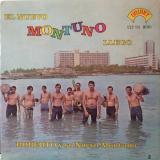
- A1: El Nuevo Montuno Llego
- A2: Llamé A Chango
- A3: Monina Y Ramon 4:00
- A4: Balanceate 6:50
- B1: Triste Arrabal
- B2: Me Queda Un Guaguanco
- B3: Dichoso 3:30
- B4: Oye Tu Son Borinquen
Roberto y su Nuevo Montuno recorded their first album, “El Nuevo Montuno Llegó” (1970), when Roberto Berríos was just 22 years old. This was also the debut release on Haddock’s own Uniart label. Berríos remembers that they did the recording in two sessions, splitting it up into four tracks per visit. The engineer was the famed Pedro “Pedrito” Henríquez, who recorded El Gran Combo, Roberto Roena and many others. The band had a mix of tasty, powerful originals, from Tony Cintrón’s title track that announced the band had arrived, ‘El Nuevo Montuno Llegó,’ to Quique Dávila’s mournful ‘Triste Arrabal.’ Then there was the hit Santería themed tune, ‘Llamé a Changó,’ which was a song that Quique Dávila brought to the band, but had been originally composed by Carlos Pinto, though Quique was given the credit. Dávila also composed ‘Me Queda Un Guaguancó,’ which is Roberto’s favorite song on the record (as well as a fan favorite), with Papo sounding like his friend Héctor Lavoe, and Quique Dávila’s proud manifesto declaring that Puerto Rico now had its own son montuno, ‘Oye Tu Son, Borinquen,’ featuring the pianist’s tasty but brief solo. The cover versions came from the group’s earliest period when most of their repertoire consisted of renditions of beloved but lesser known tunes, and include Louie Ramírez’s ‘Balancéate’ (a favorite of Roberto’s from Ray Barretto’s songbook), Bobby Valentín’s ‘Monina y Ramón’ (recorded during his stint with Willie Rosario), and a bolero indelibly sung by Cheo Feliciano when he was with the Joe Cuba Sextet, ‘Dichoso,’ written by Joe Cuba’s talented pianist, Nick Jiménez. Some of the arranging was done by Cintrón and some by Dávila, though Quique had some help from his old friend from El Combo Moderno, Freddie Miranda, who at that time was with Roberto Roena’s Apollo Sound. Roberto says that the arrangements of the cover tunes were made specifically to be different and more contemporary sounding than the originals. “El Nuevo Montuno Llegó” has become a legendary salsa dura classic from Puerto Rico and we are thrilled to present this first legitimately licensed and remastered vinyl reissue. It includes detailed liner notes that reveal the untold story of the band and their debut album, and rare photos.

10
Synthpop, minimal wave, post-punk, goth, new romantic - fans and critics alike have dug deeply into their vintage thesauruses to describe the beguiling work of Nation of Language. And if you can't precisely define the band, that's the point. Frontman Ian Richard Devaney has become prodigious in expanding what synthesizer-driven music can evoke, such that his output is as much an extrasensory journey as it is an all-too-human destination. With that experience in mind, he wrote the band's fourth album - the spectral, spacious Dance Called Memory - in the most humble of ways: chipping away at melancholia by sitting around and strumming his guitar. Nation of Language's first two albums, Introduction, Presence (2020), and A Way Forward (2021), came as pandemic godsends: gorgeous, relatable soundtracks to our collective doldrums. But it was their last LP, Strange Disciple (2023), that catapulted the group from cultural standouts to critical darlings, with the album being named Rough Trade's Album of the Year. With that release, Pitchfork wrote that the band "are learning what it means to get bigger and better." This is Devaney's calling: soulfully translating individual despair into a comforting, collective mourning. The single "Now That You're Gone," which radiates and reverberates with a devastating wistfulness, was inspired by witnessing his godfather's tragic death from ALS, and his parents' role as caretakers for this ailing friend. At its heart, the song is a reflection of how friends can be there for each other, and also highlights a theme throughout the record: the pain and lost promise of friendships that fall apart. On Dance Called Memory, the band once again collaborated with friend and Strange Disciple producer Nick Millhiser (LCD Soundsystem, Holy Ghost!). "What's so great about Nick is his ability to make us feel like we don't need to do what might be expected of us," says synth player Aidan Noell, who, along with bassist Alex MacKay, rounds out the Nation of Language lineup. They imbued Dance Called Memory with a shifted palette - sampling chopped-up drum breaks on "I'm Not Ready for the Change" for a touch of Loveless-era My Bloody Valentine or smashing all of the percussion of "In Another Life" through a synthesizer to cast a shade of early-2000s electronic music. Ultimately, the hope was to weave raw vulnerability and humanity into a synth-heavy album. "There is a dichotomy between the Kraftwerk school of thought and the Brian Eno school of thought, each of which I've been drawn to at different points. I've read about how Kraftwerk wanted to remove all the humanity from their music, but Eno often spoke about wanting to make synthesized music that felt distinctly human," Devaney says. "As much as Kraftwerk is a sonically foundational influence, with this record I leaned much more towards the Eno school of thought. In this era quickly being defined by the rise of AI supplanting human creators I'm focusing more on the human condition, and I need the underlying music to support that_ Instead of hopelessness, I want to leave the listener with a feeling of us really seeing one another, that our individual struggles can actually unite us in empathy."
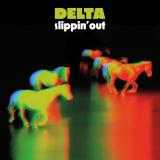
“From Birmingham and centred around the extraordinary songwriting talent of James and Patrick Roberts – initially as The Sea Urchins and since 1993 as Delta – they’ve only just got round to releasing their debut album, Slippin’ Out. It is a work of some beauty”. 9/10 NME ALBUM OF THE MONTH, 2000
“It’s classicist for sure, shot through with the influence of The Beatles, Byrds and Buffalo Springfield. In James’ downright beautiful closing ballad ‘I Want You’ one can also discern the school of ambitious English balladry that peaked in about 1968: The Casuals, Love Affair, Barry Ryan. The impression of accomplished old-schoolery is only furthered by the dizzying string arrangements penned by Louis Clark Jnr, son and namesake of the one-time orchestral chief of Electric Light Orchestra” – Mojo lead review, 2000
Having ended the 90s with the spirited ‘Laughing Mostly’ compilation of singles and demos (Guardian Album Of The Week) Delta finally released their debut studio album of twelve songs in the summer of 2000 on the Dishy Recordings label. Accepting that this might be their sole studio album the band threw everything at these recordings allowing it to exist in its own sphere, unbothered by their contemporary generation and disregarding the idea of even releasing a single.
Recorded at DEP International there was a notable difference to the scruffier, looser charm of their 1990s recordings, a tighter focus developed by having the experienced Lenny Franchi mixing the LP with them. Lenny had been working with a number of Island artists including My Bloody Valentine and Tricky so knew his way around a desk. There was also the question of budget (a few months passed between recording and mixing whilst funds were raised) so every day counted. Ultimately though you can hear the joy in the recordings, even amongst the melancholy and angst. As James recently recalled in an interview in Shindig! Magazine: “It was such a big deal for us. It’s one of my fondest memories doing that record. Everyone was happy. If there’s anything that I’d stand by, I think it would be that”
Louis Clark Jr joined the band towards the end of the ‘90s and brought a classically-trained element to the recordings particularly with his string arrangements. For ‘Cuckoo’, ‘I Want You’ and the prophetic ‘We Come Back’ Louis brought in eight players from the Birmingham Conservatoire; the baroque style is partly why the record often receives comparisons to Love’s ‘Forever Changes’.
On release ‘Slippin’ Out’ was a big favourite with writers at the NME, Mojo and The Guardian again and before long the band were signed to Mercury/Universal for their second studio album ‘Hard Light’, a far more expensive and expansive love affair. It was a temporary palatial home where things quietly fell apart again, but that’s another chapter.
“If long-term memory is nothing more than selective editing and only pop’s most weighty visceral works are built to last then it’s quite possible that in 50 years the Britpop era will be best recollected for the two bands it ostracised. Earlier this year we met Shack and thought their story of mercurial brilliance indicated the biggest music biz oversight of the 90s. We were wrong because we hadn’t met Delta yet. This is richer and more engrossing than anything by Shack”
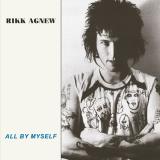
- 1: O.c. Life
- 2: 10
- 3: Yur 2 Late
- 4: Everyday
- 5: One Shot
- 6: Falling Out
- 7: Surfside
- 8: It's Doing Something
- 9: Fast
- 10: Section 8
Rikk Agnew's All by Myself is one of those records that feels like a secret you're lucky to stumble upon -- a raw, weird, totally personal snapshot of a restless artist at a pivotal moment. Originally released in 1982 on Frontier Records, the album stands apart from most of what was coming out of Southern California at the time, even though it was born right in the middle of the exploding hardcore punk scene. By 1982, Rikk Agnew was already a big deal underground. As the guitarist for Adolescents, he helped shape the sound of Orange County hardcore with sharp riffs, surf-inflected melodies, and a sense of urgency that became hugely influential. He also played in bands like D.I. and later Christian Death, moving fluidly between hardcore punk, post-punk, and darker, more experimental territory. Agnew wasn't just a fast, aggressive guitarist -- he was a songwriter with range, curiosity, and a strong DIY instinct. All by Myself lives up to its title in the most literal way. Agnew recorded the album largely on his own, playing all the instruments and handling vocals himself. Instead of delivering another straight-up hardcore record, he went inward. The result is a lo-fi, home-recorded collection of songs that blend punk energy with new wave, post-punk, psychedelic touches, and even moments of pop sensitivity. It's rough around the edges, but that's exactly the point -- the album feels intimate, unfiltered, and honest. In the early '80s, Southern California punk was loud, fast, and often confrontational. Bands were pushing against the mainstream and even against each other, racing toward more extreme sounds. While All by Myself shares that DIY spirit, it doesn't fully play by hardcore rules. The tempos shift, the moods wander, and the songs feel more like personal experiments than scene anthems. That made the record a bit of an outlier at the time -- but also what gives it lasting appeal. Frontier Records was the perfect home for a release like this. The label was known for supporting artists who didn't quite fit into neat categories, and All by Myself captured that ethos perfectly. Today, All by Myself is often seen as a cult classic. For fans of early punk, post-punk, or anyone interested in the roots of DIY recording culture, this album is essential listening

- A1: The Letter
- A2: L'intrigue
- A3: Drinking At A Stream
- A4: Oakwood Green
- A5: Children Of Clay
- A6: Sur La Plage
- A7: Her Masters Voice
- B1: The Draw In Room
- B2: The Slides
- B3: Fleur's Dolls
- B4: Mortuary
- B5: The City Sleeps
- B6: Birds
- B7: Silence & Wisdom
- B8: Festival
- C1: Our English Friends
- C2: Piroette
- C7: Albert The Mud Fish
- C8: Who Art In Heaven
- C9: Shackleford Breeze
- C10: 2 Blind 2 See
- C11: Zazinthos
- C3: The Third Movement
- C4: Play Room
- D1: Little Brown Jig
- D2: Tounges
- D3: Shalama
- D4: The Sun On The Sea
- D5: Interlude
- D6: The Snow Falls & The Village Is Overflowing With Children
- D7: Double Happiness
- C5: Starboard She Said
- C6: Los Estrellas
33
The short, mysterious career of the female French duo Deux Filles is bookended by tragedy. Gemini Forque and Claudine Coule met as teenagers at a holiday pilgrimage to Lourdes, during which Coule's mother died of an incurable lung disease and Forque's mother was killed and her father paralyzed in an auto accident. The two teens bonded over their shared grief and worked through their bereavement with music. However, after recording two critically acclaimed albums and playing throughout Europe and North America, Forque and Coule disappeared without a trace in North Africa in 1984 during a trip to visit Algiers. The short and terribly unhappy lives of Forque and Coule are at the root of the small but fervent cult following the mysterious duo have gained since their disappearance, not least because the placid, largely instrumental music on the duo's albums betrays no hint of the sorrow that framed their personal lives.
This would be a terribly sad story if a word of it were true. In reality, Deux Filles were Simon Fisher Turner, former child star/teen idol and future soundtrack composer, and his mate Colin Lloyd Tucker. Turner and Tucker left an early incarnation of The The in 1981 to pursue another musical direction. Turner claims that the idea of Deux Filles came to him in a dream, and he and Tucker strictly maintained the fiction throughout the duo's career. Not only did they pose in drag for the album covers, the duo once even played live without the audience realizing that the tragic French girls on-stage were actually a pair of blokes from south London. Deux Filles released two albums through Turner and Tucker's Papier Mache label, 1982's Silence & Wisdom' and 1983's Double Happiness'. Both albums are included here and blend watery piano, occasionally ghostly vocals, sheets of synthesizers, heavily processed guitars and the barest minimum of percussion. Drifting and wistful, they're a pair of lost ambient gems from a time when the genre had yet to mature, an excellent example of post-Eno, pre-Orb ambient music.
All songs have been remastered for vinyl by George Horn at Fantasy Studios in Berkeley. The vinyl comes housed in gatefold sleeve with original front covers of both albums, and a centerfold of archive images and the original liner notes. Each LP includes a sticker of the Lino cuts by Adrian Gill that was included with the original pressing.
"Like an early French film soundtrack with melodramatic overtones, the sound is jagged and disjointed but never harsh. Lilting guitars and ample use of echo smack of Vini Reilly, relying on the hypnotic qualities of the sound rather than abrasive noise" (Sounds, 03/1983)
