The Tedeschi Trucks Band and Leon Russell’s Mad Dogs & Englishmen Revisited ist eine lebendige Hommage an eine der kultigsten Live-Rock-Kollaborationen der Musikgeschichte. Ursprünglich von Joe Cocker
und dem legendären Keyboarder und Bandleader Leon Russell im Jahr 1970 geleitet, war Mad Dogs &
Englishmen eine raue, gefühlvolle Tour, die ein riesiges Ensemble von Musikern zusammenbrachte. Im
Jahr 2015 ließ die Tedeschi Trucks Band unter der Leitung des Gitarrenvirtuosen Derek Trucks und der
kraftvollen Sängerin Susan Tedeschi diesen Meilenstein wieder aufleben und fügte ihm ihre eigene Mischung
aus Südstaaten-Soul, Blues und Rock hinzu.
Das Revival-Konzert im Rahmen des Lockn’ Festivals war mit einem Staraufgebot besetzt. TTB brachten
nicht nur ihr übliches 12-köpfiges Ensemble mit, sondern begrüßten auch ursprüngliche Mad Dogs-Mitglieder
wie Rita Coolidge, Chris Stainton und Claudia Lennear sowie eine vielfältige Gruppe zeitgenössischer Kollaborateure, darunter Chris Robinson von den Black Crowes, Warren Haynes, Anders Osborne und Dave
Mason. Die Bühne schwoll oft auf über 20 Musiker an, was den großen, gemeinschaftlichen Geist der
ursprünglichen Tournee widerspiegelte.
Derek Trucks selbst sagt zum Projekt:
”Als ich anfing, mit Susan darüber zu sprechen, eine Band zu gründen, schauten wir ungefähr zu der
Zeit den Film ‚Mad Dogs‘ noch einmal. Uns ist klar geworden: Wenn wir jemals eine Big Band oder einen
Rock ‚n‘ Roll-Zirkus machen wollten, dann ist jetzt der richtige Ze
Cerca:son of a son
Nach dem Erfolg der ersten zehn Alben der Vinyl Edition von Hyperion (veröffentlicht im September 2024
und März 2025) folgen nun sechs weitere LPs. Alle Alben erscheinen erstmals auf Vinyl und zeigen weltweit
tourende Künstler, mit denen das Label seit langem eng zusammenarbeitet. Jeder der sechs Titel wird als
limitierte 180g-LP erscheinen, die in einem vollfarbigen Gatefold präsentiert wird und mit einem Begleitheft
ausgestattet ist.
„Absolut herausragend“, „ein wildes neues Talent“ und „elektrisierend“ sind nur einige der Superlative, mit
denen Andrey Gugnins Hyperion-Debütalbum mit Schostakowitschs Präludien und Klaviersonaten bei seiner
Veröffentlichung 2019 überhäuft wurde. Gugnin war der Gewinner des Internationalen Klavierwettbewerbs
von Sydney 2016, „von dessen Klavierspiel man einfach nicht genug bekommen kann“ (Gramophone).
Der in Moskau geborene Konzertpianist Andrey Gugnin erlangt schnell internationale Anerkennung als
leidenschaftlicher Virtuose, der über eine „außerordentlich vielseitige und agile Technik verfügt, die einer oft
inspirierten musikalischen Fantasie dient“ (Gramophone). Als gefragter Konzertsolist wurde Andrey Gugnin
zu Gastauftritten mit namhaften Orchestern auf der ganzen Welt eingeladen: dem London Philharmonic
Orchestra, dem Danish National Symphony Orchestra und dem Mariinsky Theatre Orchestra, um nur einige
zu nennen.
Born in Antwerp in 1939, Ferre became a true icon in the sixties, adored by youngsters and hippies and hated by the establishment. His successful debut album in 1966, which featured the hits “Ring Ring, I’ve Got to Sing,” “Crucified Jesus,” and “Drunken Sailor,” brought him an international breakthrough with concerts in Paris, London, and Hamburg, leading to a contract with the famous French Barclay label. The next three albums did not equal the initial commercial success — a pressure the music business was happy to put on his shoulders. Still, these three albums, reissued in their original packaging and artwork on vinyl for the very first time, are loaded with hidden gems, combining folk, blues, and psychedelics in Ferre’s original songs.
Grignard sadly succumbed to throat cancer in 1982 at the early age of 43.
- A1: I Warned You
- A2: The New Sheriff
- A3: All Right
- A4: Orphan Blues
- A5: Irene Goodnight
- B1: I’m Alabama Bound
- B2: Have A Whiff On Me
- B3: On My Dying Bed
- B4: Midnight Special
- B5: Smoozy Punky Baby
Born in Antwerp in 1939, Ferre became a true icon in the sixties, adored by youngsters and hippies and hated by the establishment. His successful debut album in 1966, which featured the hits “Ring Ring, I’ve Got to Sing,” “Crucified Jesus,” and “Drunken Sailor,” brought him an international breakthrough with concerts in Paris, London, and Hamburg, and led to a contract with the famous French Barclay label. The next three albums did not equal the initial commercial success — a pressure the music business was happy to put on his shoulders. Still, these three albums, reissued in their original packaging and artwork on vinyl for the very first time, are loaded with hidden gems, combining folk, blues, and psychedelics in Ferre’s original songs.
Grignard sadly succumbed to throat cancer in 1982 at the early age of 43.
- 1: Cheang Kat Sak Day Ek (Haircut Talent)
- 2: Nov Teh Sralanh (Still Loving You)
- 3: Susana
- 4: Krom Samleng Teuk Phleang (Under The Sound Of The Rain)
- 5: Moan Ro Ngeav (Chicken Is Crying)
- 6: Ruth Pleung Atreat Sanga (The Night Train Takes My Lover Away)
- 7: Som Kmean Tors (Perfect)
- 8: Thavary Meas Borng (Thavary, My Darling)
- 9: Theub Teuk Phnek Oun Oy Snguot (I Kmiss Your Tears Dry)
- 10: Phally, Phally
- 11: Kamping Puoy
- 12: Chamreang Eth Preang Tuk (Unwritten Songs)
- 13: Sampeay Kam (Karma From A Previous Life)
Everything Is Recorded, the collaborative music project centred around producer Richard Russell, returns with a brand new single, “Porcupine Tattoo” - a stripped-back lament featuring two American musical icons - Noah Cyrus and Bill Callahan - who appear on record together for the very first time. The collaboration came together while Russell was hosting sessions for a forthcoming Everything Is Recorded album, one set to build on previous acclaimed releases including 2018’s eponymous, Mercury Prize-nominated debut album. Reaching out to Callahan - an artist he’s long admired and whose song “I’m New Here” was covered by, and provided the title for, Gil Scott-Heron’s final, Russell-produced studio album - Russell asked the simple question “who would you like to write a song for?”. “Noah Cyrus” was Callahan’s reply. The final single features Callahan’s original demo vocal, pitched down and resting on layers of sub bass and complemented by Cyrus’ crystalline counterpoint vocal. It was recorded during a rainy week of sessions in a bungalow at Los Angeles’ Chateau Marmont, which Russell described as “comfortable but haunted”. The song continues a lineage of Russell productions – from “I’m New Here” to Bobby Womack’s “Deep River” and Damon Albarn’s “History of a Cheating Heart” – that explore a sparser, more acoustic side of his sound. The limited edition 7” vinyl single is released on XL Recordings in partnership with Drag City, Bill Callahan’s long term label home. The 7” exclusively features a second collaboration between Everything Is Recorded and Callahan in the form of “Norm”, a tribute to the Austin-based singer songwriter’s favourite comedian Norm MacDonald”
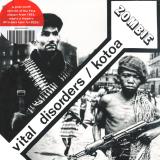
- A1: Vital Disorders - Zombie
- B1: Kotoa - Zombie
Wah Wah 45s present a unique moment from 1982 where New Wave and Post Punk collided with Afrobeat in the shape of Norwich DIY outfit Vital Disorders and their subversive yet instantly memorable version of the Fela Kuti classic, Zombie.
Band member Suzy Cox explains more:
"The song came to the band through our vocalist Lenneka Van Gilst who was in the group between January 1980 and December 1981. Lenneka grew up in Nigeria and had the original track on vinyl. When she moved to Trowse House, Norwich, the flat under Chris, the VD's bass player, he heard the vibes floating through the floorboards. One thing led to another and it was in our set for ages. Lenneka had left the band to travel to Mexico by the time we recorded the track. We did well to choose it as the song has really stood the test of time. Lenneka had a lot of African Beat which was a big influence on us."
The track came to label boss Dom Servini's attention having been unearthed by BBC 6 Music DJ Gilles Peterson in late 2024, and a vinyl reissue of this rare and one-off gem was the obvious choice. Rather than pairing it with its original punky B-side though, Dom enlisted new signings to the label - young Afro-dub outfit Kotoa - to record their take on the Kuti classic. The quintet delivered what is a three minute, intense take on the Afrobeat genre, complete with youthful voices of protest echoing those of over 30 years ago.
The 7-inch vinyl only release of Zombie comes with re-worked art courtesy of our award winning designer Animisiewasz, taking the home-made look of the original cover and updating it respectfully for 2025.
After the success of the first two chapters, label owner Sciahri returns with the third installment of Pareidolia, further expanding the series' distinct sonic narrative.
The EP opens with No More Time, a perfect balance of power and finesse, where hypnotic vocal loops elevate the tension. It then transitions into Near the Bar, a groove-driven gem with refined textures that make it simply irresistible.
On the flip side, Two Letters follows up on the iconic One Letter, bringing back its unmistakable, heavy-hitting bassline and perfectly placed vocals that make it truly unique.
Closing the EP is Hit and Run, a deeply hypnotic yet driving cut, blending mental intensity and epic energy into a captivating sonic experience.
- A1: The Look
- A2: The Bay
- A3: Heartbreaker
- A4: Lately
- A5: A Thing For Me
- B1: Love Letters
- B2: My Heart Rate Rapid
- B3: I'm Aquarius
- B4: Reservoir
- B5: The Light
- C1: Salted Caramel Ice Cream
- C2: Everything Goes My Way
- C3: Corinne
- C4: This Could Be Beautiful (It Is)
- C5: Night Owl
- D1: Old Skool
- D2: Walking In The Dark
- D3: Things Will Be Fine
- D4: Right On Time
- D5: You Could Easily Have
Yellow & Blue 2x12" Limited Edition[34,66 €]
Celebrating 20 years of defining, and redefining, electronic alt-pop - Metronomy ‘GREATEST HITS’ is the first comprehensive collection of their “smash hits” spanning across all 7 studio albums, and will be release alongside a separate album of BBC Sessions.
Formed in 1999 by Joseph Mount, Metronomy has released six acclaimed studio albums and become one of the UK's most influential electronic acts. Known for their distinctive visual aesthetic, innovative production techniques, and energetic live shows, Metronomy continues to bridge the gap between experimental electronic music and accessible pop. From the charm of early tracks like "You Could Easily Have Me" to the sophisticated pop of "The Look" and the dance floor magic of "Love Letters," Metronomy's distinctive sound has consistently pushed boundaries while maintaining their unmistakable identity.
The previously unreleased BBC Sessions reveal another dimension to these songs, capturing their magnetic live energy and Joe’s evolving approach to arrangement and performance, all recorded between 2009-2019 across BBC6Music, BBC Radio 1 & BBC Radio 2.
- A1: Mr Tinkertrain
- A2: I Don’t Want To Change The World
- A3: Mama, I’m Coming Home
- B1: Desire
- B2: No More Tears
- C1: Won't Be Coming Home (S I.n)
- C2: Hellraiser
- C3: Time After Time
- D1: Zombie Stomp
- D2: A V.h
- D3: Road To Nowhere
Picture Vinyl[30,71 €]
We Are Vinyl label release - 30th anniversary edition. Considered to be one of his most successful and popular albums, Osbourne’s sixth solo studio record was originally released in September 1991 and featured four songs co written by Motörhead’s Lemmy Kilmister. The album went on to become quadruple platinum in the US, becoming one of Ozzy’s two best selling albums alongside his groundbreaking solo debut "Blizzard of Ozz". An 11 song double album pressed on 180gm black vinyl. No download code.
1988's Love Hysteria was produced by Simon Rogers, who at the time was also playing with The Fall. It contains eight songs written by Peter with Paul Statham, plus a cover of Iggy Pop's "Funtime". Record Collector said that the album's songs "All Night Long, Indigo Eyes, Dragnet Drag and Blind Sublime managed to combine direct rock power with Murphy's vocal gymnastics and imaginative way with lyrics."
- A1: Malavoi - Te Traigo Guajira
- A2: Los Caraibes - Donde
- A3: Tropicana - Amor En Chachacha
- A4: Ryco Jazz - Wachi Wara
- A5: Eugene Balthazar - Dap Pignan
- A6: Roger Jaffort - Oye Mi Consejo
- A7: Les Kings - Oriza
- B1: Les Supers Jaguars - Tatalibaba
- B2: Super Combo De Pointe A Pitre - Serrana
- B3: L'ensemble Abricot - Se Quedo Boogaloo
- B4: Henri Guedon - Bilonga
- B5: Les Aiglons - Pensando En Ti
- B6: Los Martiniquenos - Caterate
In Guadeloupe, many people think that jazz and ka music are like a ring and a finger. To some extent, the same could be said about so called Latin music and the music played in the French West Indies.
Both aesthetics were born in the Caribbean and bear so many connections that they can easily be considered cousins. In constant dialogue, there are lots of examples of their fruitful alliance and have been for a while. The English country dance that used to be practiced in European lounges came to be called kadrille in Martinique and contradanza in Cuba. They both featured additional percussion instruments inherited from the transatlantic deportation. Drawing from shared feelings about the same traumatized identity – later to be creolized – it would be hard not to assume that they were meant to inspire each other. The golden age of the orchestras that graced the Pigalle nights during the interwar period further proves the point. As soon as the 1930s, Havana-born Don Barreto naturally mixed danzón and biguine music in a combo based at Melody's Bar. In the following decade, Félix Valvert, a conductor who was born and raised in Basse-Terre in Guadelupe, also worked wonders in Montparnasse with La Coupole, which was an orchestra made up of eclectic musicians. Afro- Caribbean performers of various origins were often hired on rhythm and brass sections in jazz bands, which used to enliven the typical French balls of the capital. In the 1930s and onwards, Rico’s Creole Band was one of them.
Martinican violinist-clarinettist Ernest Léardée, who would become the king of biguine music as well as the main figure of French Uncle Ben's TV commercials (a dark stigma of post-colonial stereotypes), had musicians from the whole Caribbean sphere play at his Bal Blomet – and they all enchanted "ces Zazous-là" (according the words of Léardée's biguine-calypso piece). In les Antilles (French for French West Indies), music history started to speed up in the 1950s, when trade expanded and radio stations grew bigger. The Guadelupean and Martiniquais youth tuned in their old galena radio sets to South American and Caribbean music. As for the women traders, les pacotilleuses, they bought and sold goods across different islands (the "passing of items through various hands" was thought to be most pleasurable) and brought back countless sounds in their luggage. Such was the case of Madame Balthazar, who once returned from Puerto Rico with the first 45rpm and 33rpm to ever enter Martinique.
Out of this adventure was created the famous Martinican label La Maison des Merengues, a music business she opened and undertook with her husband and which proved to be a major landmark. At the end of the 1950s, in Puerto Rico, Marius Cultier competed in the Piano International Contest playing a version of Monk's Round 'Midnight. He won the first prize and this distinction foreshadowed everything that was to come. Cultier, the heretic Monk of jazz, was quickly praised for writing superb melodies, always tinged with a twist that conferred a unique sound to his music. It didn't take long for the gifted self-taught musician to get to play with Los Cubanos, making a name for himself thanks to his impressive maestria on merengues.
The rest is history. Besides, in the late 1950s, Frantz Charles-Denis, born into the upper middle class in Saint-Pierre and better known by his first name Francisco, went back home after working at La Cabane Cubaine – a club located rue Fontaine where he had caught the Latin fever. Francisco's music was therefore heavily marked by his Cuban cousins' influence, which gave the combos he led a specific style and also led to renewal. Things were swinging hard in La Savane, located in the main square in Fort-de-France. He set up the Shango club close by and tested out the biguine lélé there, a new music formula spiced up with Latin rhythms. Soon afterwards, fate had him fly to Puerto Rico and Venezuela.
As for percussionist Henri Guédon (percussions were only a part of his many talents), he was born in Fort-de-France in May 22nd 1944, the day marking the celebration of the abolition of slavery. As an old man, he could remember that in " his father's Teppaz, a lot of hectic 6/8 music was constantly playing...". In the opening lines of his Lettre à Dizzy, a small illustrated collection of writings published by Del Arco, he highlighted the huge impact that cubop had on him as a teenage boy, around 1960. He eventually turned out to be the lider maximo in La Contesta, a big band steeped in Latin jazz. He was also the one who originated the word zouk to describe music which brought the sound of the New York barrio to Paris. It was the culmination of a journey that started in Sainte-Marie: "a mythical place for bélé, the equivalent of Cuban guaguancó". In the early 1960s, the tertiary economy developed to the detriment of agriculture. Yet rural life was where roots music emerged in Martinique and in Guadeloupe.
Record companies played a major part in the process of Latin versions sweeping across the islands – before reaching everywhere else. Producer Célini, boss of the great Aux Ondes label, and Marcel Mavounzy, both the head of Émeraude records - a firm which was founded in 1953 - as well as the brother of famous saxophonist Robert Mavounzy, were big names to bear in mind. Although there were many of them - all of whom are featured on this record - Henri Debs was definitely the major figure in the recording adventure. He proved to be so influential that he even got compared to Berry Gordy. In the mid 1950s, when he acquired his first Teppaz, he worked on his first compositions: a bolero and a chachacha. Then, he became the one man who made people discover Caribbean music, from calypso to merengue. He was among the first ones to rush out to San Juan, Puerto Rico, to buy records and distribute them through a store run by one of his brothers in Fort-de-France. He had members of the Fania All Star come and perform there, which he was madly proud about. He was also the first one to pay attention to Haitian music, such as compas direct and various other rhythms which would soon flood the market. As a result, many of the combos hitting his legendary studio would end up boosted by widespread "Afro-Latin" rhythms. However, he never denied his identity: gwo ka drums were given a major role, although they were instruments which had long been banned from the "official" music spheres. The present selection bears witness to such a creative swarming. Here are fourteen tracks of untimely yet unprecedented cross-fertilization: all types of music rooted in the Creole archipelago have found their way, whatsoever, to the tracklisting. Whether originating from the city or being more rural, they all go back to what Edouard Glissant, in an interview about the place of West Indian music in the Afro-American scope, called "the trace of singing, the one which got erased by slavery." "It is so in jazz, but also in reggae, calypso, biguine, salsa... This trace also manifests through the drums, whether Guadelupean, Dominican, Jamaican or Cuban... None of them being quite the same. They all point to the idea of a trace, seeking it out and connecting to each other through it. This is the hallmark of the African diaspora: its ability to create something new, in relation to itself, out of a trace. It may be the memory of a rhythm, the crafting of a drum, a means of expression which doesn't resort to an old language but to the modalities of it." The opening track features one of the emblematic orchestras of this aesthetic identity, criscrossing many music types from the archipelago. The 1974 Ray Barretto guajira – Ray Barretto was a major New York drummer influenced by Charlie Parker and Chano Pozzo – is magnificently performed by Malavoi, a legendary Fayolais group (i.e from Fort-de-France). Additionally, the compilation ends on a piece by Los Martiniqueños de Francisco. It symbolically closes the circle as it is a genuine potomitan of Martinique culture which also functions as a tireless campaigner for Afro-Caribbean music. Practicing the danmyé rounds (a kind of capoeiria) to the rhythm of the bèlè drum, it delivers a terrific Caterete, a kind of champeta of Afro- Colombian obedience which was originally composed by Colombian Fabián Ramón Veloz Fernández for the group Wgenda Kenya. The icing on the cake is Brazilian Marku Ribas, who found refuge in Martinique in the early 1970s, bringing his singing to the last trance-inducing track. These two "versions" convey the whole tone of a selection composed of rarities and classics of the tropicalized genre, swarming with tonic accents and convoluted rhythms. It is the sort of cocktail that the West Indians never failed to spice up with their own ingredients. For instance, the Los Caraïbes cover of Dónde, a famous Cuban theme composed by producer Ernesto Duarte Brito, has a typical violin and features renowned Martinique singer Joby Valente and his piquant voice.
The track used to be – or so we think – their only existing 45rpm. The meaningful Amor en chachachá by L'Ensemble Tropicana, a band which included Haitian musicians among whom was composer and leader Michel Desgrotte, also recalls how Latin music was pervasive in the tropics in the mid-1960s. They were the ones keeping people dancing at Le Cocoteraie in Guadelupe and La Bananeraie in Martinique. Around the same time, another "foreign" band, Congolese Freddy Mars N'Kounkou's Ryco Jazz, achieved some success on both islands by covering Latin jazz classics – such as their adaptation of Wachi Wara, a "soul sauce" by Dizzy Gillespie and Chano Pozo whose interweaving of strings and percussions can have anyone hit the dancefloor. How can you resist Dap Pinian indeed, a powerful guaguancó by Eugene Balthazar, performed by the Tropicana Orchestra and published by the Martinique-founded La Maison des Merengues? It also acts as a symbol of the maelstrom at work. Going by the name Paco et L'orchestre Cachunga, Roger Jaffory used to play guaguancó too: his Fania-inspired Oye mi consejo is one example of his style. Baila!!!!! Dancing was also one of the Kings' focus points. Oriza is a Puerto Rican bomba and a "classic" originally composed by Nuevayorquino trumpeter Ernie Agosto, which reserves major space for brasses, giving it a special sheen.
Emerging from the New York barrios crucible was also La Perfecta, a Martinique group originating from Trinidad, whose name directly references the totemic Eddie Palmieri figure as well as his own band, also called La Perfecta. Here they borrow Toumbadora from Colombian producer and composer Efraín Lancheros and interpret it by emphasizing percussions, which set fire to the track even more than the wind instruments. The same goes for Martinique's Super Jaguars, who use Tatalibaba – a composition by Cuban guitarist Florencio "Picolo" Santana which was made famous by Celia Cruz & La Sonora Matencera – as a pretext for sending their cadences into a frenzy. In a more typically salsa vein, the Super Combo, a famous Guadelupean orchestra from Pointe-Noire that was formed around the Desplan family and had Roger Plonquitte and Elie Bianay on board, adapt Serana, a theme by Roberto Angleró Pepín, a Puerto Rican composer, singer and musician also known for his song Soy Boricua. Here again, their vision comes close to surpassing the original. In the 1970s, L'Ensemble Abricot provided a handful of tracks of different syles, hence reaching the pinnacle of the art of achieving variety and giving pleasure. They played boleros, biguines, compas direct, guaguancó and even a good old boogaloo - the type they wanted to keep close to their hearts for ever, "pour toujours", as they sang along together in one of their songs. Léon Bertide's Martinican ensemble excelled at the boogaloo which had been composed by Puerto Rican saxophonist Hector Santos for the legendary El Gran Combo.
Three years later, in 1972, Henri Guédon, with the help of Paul Rosine on the vibraphone, tackled the Bilongo made famous by Eddie Palmieri. Such a classic!!!!! And so were the Aiglons, the band from Guadelupe: choosing to execute Pensando en tí, a composition by Dominican Aniceto Batista, on a cooler tempo than the original, they noticeably used a wonderfully (un)tuned keyboard in place of the accordion. On the high-value collectible single – the first one released by Les Aiglons under the Duli Disc label – there is a sticker classifying the track under the generic name "Afro". Now that is what we call a symbol. Jacques Denis
- A1: Time Or Tide
- B1: I Loved And I Lost
Occasionally, one experiences serendipitous events in life. On the 13th of July this year, I received a message from Tim Trapnell, who had discovered an unknown 60’s track on YouTube and expressed his admiration for its exceptional quality. Intrigued by the message, I clicked on the link and was immediately captivated by the musical composition. Within minutes, I embarked on a quest to uncover more information about the band and the particular track. On the 16th of July, only three days after, I’ve received a message from Jim Bojorquez (aka JC), the lead vocalist of the Baron of Soul, “Hello Yann, I was delighted to hear that you have discovered and enjoyed my original composition, ‘Time or vs Tide.’ It was written by myself and Clark Baldwin. that the recording was performed live and this song was never released in any format back in the day. I have reached out to Jim Bojorquez the next day and we spent a considerable amount of time conversing via video chat about his illustrious 60-year music career as an artist in San Jose, California.
I proposed to Jim that I could release two songs from The Barons of Soul through Epsilon Record Co. I re-mastered both songs and made a deal with Jimmie that same day. So today, I am so pleased to present these two previously unissued tracks. "Time or Tide" is a powerful uptempo piece featuring an exceptional brass section and a Hammond B3. The vocals are exceptionally punchy and catchy, ensuring an unforgettable listening experience. "I Loved and I Lost” is a remarkable take of the Impressions classic written by Curtis Mayfield’s If you are an enthusiast of 60s uptempo music like Tim and myself, then this new and exceptional 45 is an absolute must-listen and must have!
Introducing the Evil B-Side Twins — A New Era from Yazzus & DJ TOOL
Two of the most unpredictable forces in the underground are colliding at full velocity: YAZZUS and DJ TOOL are proud to launch Evil Twin Rekords — a label and collaborative project born from the wildest corners of their shared sonic imaginations.
Under the moniker The Evil B-Side Twins, the duo are setting out to warp time and space through a blazing fusion of trance, gnarly breaks, and techno rhythms. Their sound? Think hyper-speed rave transmissions beamed in from another galaxy — distorted basslines, and acidic euphoria intersecting 90’s psychedelic textures as they soundtrack a playful, alien-friendly universe. It’s high-energy, no-rules, evil as hell club music with a space-age edge. And their debut EP Relentless Spirit delivers just that.
Four rave-ready ‘in your face’ anthems, breaking the boundaries of modern electronic music. A collision of catchy grooves, iconic motifs from the old school trance world and mental melodies that you won’t forget easily.
Evil Twin Rekords isn’t just a label. It’s a wormhole into a sound that’s too futuristic, too feral, and too fun to fit into anyone’s algorithm. Expect inter-dimensional anthems, and records that feel like they’ve been smuggled from the B-side of a black hole.
This is rave culture turned inside out — full-throttle, unapologetically weird, and always one step ahead. From the UK to Scandinavia let the band expand your horizon and welcome you to the Evil Era. Listen without prejudice.
The artwork is a specially commissioned portrait of the twins, hand painted by friend and collaborator Ryo Koike, known for his eerie, whimsical fantastical style. Throughout his visual ident, he provides an imaginative window into the twins’ cosmos and beyond.
In a history that stretches back some 25 years, Faithless have long occupied a pivotal position in the world of British electronica. Marrying elements of house, trip-hop, dub and a songwriting flair into arena-filling, explosive, euphoric dance floor classics. Their accomplishments tell their own story: seven Top 10 singles, six Top 10 albums (three at Number 1), a Mercury Prize nomination for their brilliant sophomore album, 1998’s ‘Sunday 8PM’ and their impressive four times Platinum certified ‘Forever Faithless -The Greatest Hits’ adding to a career total in excess of 15 million sales worldwide
- A1: We Are Here (Remastered)
- A2: Dumkraft (Remastered)
- A3: Hot Wire My Heart (Edit)
- A4: Weiter (Remastered)
- B1: Beautiful Music/Dangerous Rhythm (Edit)
- B2: Knartz Iv (Remastered)
- B3: Smily Blu (Remastered)
- B4: Aranda
- C1: Everybody (Remastered)
- C2: Live At Sirius Prime (Remastered)
- C3: Nobody Expected It To Happen That Way (Remastered)
- C4: A Piece Of The Action (Vinyl Version) (Remastered)
- D1: Hohl Von Innen (Edit)
- D2: Telefunken (Remastered)
- D3: Disco Past Perfect (Remastered)
- D4: Memories Can Wait (Edit)
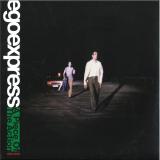
Dies ist deine Einladung zur besten Party überhaupt! Mit A Piece Of The Action erscheint eine längst überfällige Retrospektive des Hamburger Duos Egoexpress - ein wilder, tanzbarer Ritt durch ein Jahrzehnt elektronischer Subkultur. Zwischen 1995 und 2005 erschufen Mense Reents und Berndt "Jimi" Siebels einen Sound, der sich jeder Schublade entzog: roh, verspielt, hypnotisch. Aus dem Punk- und Rock-Umfeld kommend, schmuggelten sie ein störrisches Selbstverständnis und ansteckenden Humor in den Club. Statt verkopfter Coolness setzten sie auf Körperlichkeit und Bauchgefühl - und landeten damit direkte, tanzbare House-Hits mit Eigensinn. Ihre Musik war nie glatt, nie angepasst - sondern ein lebendiger Gegenpol zur Ästhetik ihrer Zeitgenossen. Die 2LP-Compilation versammelt 16 remasterte Tracks - darunter Klassiker wie We Are Here, Knartz IV oder Telefunken - und dokumentiert eindrucksvoll die Entwicklung von minimalistischen Loops hin zu psychedelischen Clubtracks. Egoexpress waren nie Teil eines Trends - sie waren ihr eigener.
- A1: October (1 19)
- A2: My & Me (Feat Sampha, Laura Groves, Ricky Washington & Alabaster Deplume) (3 21)
- A3: Porcupine Tattoo (Feat Noah Cyrus & Bill Callahan) (3 38)
- A4: Never Felt Better (Feat Sampha & Florence Welch) (4 06)
- A5: Ether (Feat Maddy Prior) (3 17)
- A6: Losing You (Feat Sampha, Laura Groves, Jah Wobble & Yazz Ahmed) (3 09)
- A7: Firelight (Feat Florence Welch, Berwyn & Alabaster Deplume) (3 19)
- B1: The Summons (1 29)
- B2: No More Rehearsals (Feat Roses Gabor, Jah Wobble, Jack Jack Penate & Yazz Ahmed) (3 14)
- B3: You Were Smiling (Feat Samantha Morton) (3 51)
- B4: Norm (Feat Bill Callahan) (1 26)
- B5: Swamp Dream #3 (Feat Clari Freeman-Taylor) (5 57)
- B6: The Meadows (Feat Roses Gabor, Kamasi Washington & Ricky Washington) (4 50)
- B7: Goodbye (Hell Of A Ride) (Feat Nourished By Time) (3 32)
Black Vinyl[21,81 €]
Everything Is Recorded, ist das musikalische Kollaborationsprojekt von XL-Recordings Chef Richard Russell. Auf dem Album "Temporary" sind zu hören u.a. Sampha, Bill Callahan, Noah Cyrus, Florence Welch, Maddy Prior, Berwyn, Alabaster Deplume, Jah Wobble, Yazz Ahmed, Laura Groves, Kamasi Washington, Ricky Washington, Roses Gabor, Jack Penate, Samantha Morton, Clari Freeman-Taylor und Nourished By Time. "Temporary" entstand im Verlauf von vier Jahren in Russells Londoner Copper House Studio und während einiger zusätzlicher Sessions in Tottenham, Cumbria, Dorset, Los Angeles und Las Vegas Es schließt an die vorangegangenen Releases wie das 2018 für den Mercury Prize nominierte Debüt an. Auf dem neuen Album erfährt Russells musikalische DNA allerdings ein Reboot: Sein Cut & Paste Approach reicht in die Zeit vor Sampling-Helden wie The Bomb Squad und Prince Paul zurück bis hin zu Innovatoren wie Steve Reich, Robert Rauschenberg und William S. Burroughs. Während Russells Musik bislang geprägt war von Rhythmus, Worten und Melodie - in ebendieser Reihenfolge - tauschen zwei Aspekte diesmal ihre Rollen. Der Rhythmus tritt zugunsten der Melodie in den Hintergrund. Musikalisch ist "Temporary" vom Gedankenexperiment "what if folk music had "gone digital" in the 80s, just as reggae had?" geleitet, während sich in spiritueller und lyrischer Hinsicht vieles um Trauer und den Verlust von Freunden, Familienmitgliedern und Kollegen dreht. Im Ergebnis stehen leuchtende und gelassene Kompositionen, auch dank der faszinierenden und vielfältigen Gästeliste, die "Temporary" mitbringt. Die fragilen, zärtlichen und stillen Tracks liefern vielleicht eines der sanftesten Alben, die je über den Tod geschrieben wurden. "Das Album zu machen, war erfüllend, eine Art, das Leben zu heiligen", so Russell. "Temporary" ist die erste reguläre Veröffentlichung von Everything Is Recorded nach über vier Jahren. In der Zwischenzeit war Russell allerdings nicht untätig. Via Soundcloud und Bandcamp erschienen zuletzt "Summer Solstice", "Autumn Equinox", "Winter Solstice" und "Spring Equinox", die alle mit einer Reihe von Gastmusikerinnen und -.musikern im Rahmen ausgiebiger Jams an jeweils nur einem Tag entstanden. Mit der Schauspielerin und Regisseurin Samantha Morton tat er sich zum Duo Sam Morton zusammen, welches sein Debüt "Daffodils und Dirt" veröffentlichte. Für Peter Gabriels Comeback-Album "i/o" produzierte Russell den Song "Four Kinds of Horses".
- A1: Sad Chord (A Certain Ratio Remix)
- B1: Tenterhooks (Paige Kennedy Remix)
Limitierte 7" mit zwei superben Remixen zum Debütalbum der Künstlerin Ellen Beth Abdi aus Manchester. Die Kultveteranen von A Certain Ratio verleihen ihrem Remix von "Sad Chord" genau die Dynamik und Energie, die man von ihnen erwartet. Während die aufstrebende Produzentin Paige Kennedy Ellens Debütsingle "Tenterhooks" mit frechen Garage-Grooves neu erfindet.
- "Something of a masterclass." - Louder Than War
- "Sharp lyrical insight with a distinctive sonic identity." - Backseat Mafia
- A1: Talco - Noche Especial
- A2: Dj Lelewel - Piano Dub (Milord Remix)
- A3: El Latino Man - Boss En San Andrés
- A4: Ray Ridha - Non Va Bene (Luca Sorrentini Remix)
- B1: Vanitas By Contessa Pinina Garavaglia - Audace Ci Piace (New Sound Mix)
- B2: Tonny Montana - Amore Me Conbenso
- B3: All Trouvee - Darling (Instrumental)
- B4: Gabriella Bove - Autoblu
An incredible journey through the dark and seductive soundtracks of the Italian nights, this compilation takes you deep into the after-hours soul of Rimini, Riccione, and Milan between the late 1980s and the early 1990s — a period of wild experimentation, underground parties, and sonic exploration. Eight rare and visionary tracks, all produced in the Belpaese, reflect a sound that was too ahead of its time to be fully appreciated back then, yet feels incredibly fresh and relevant today, as if they were made for the dancefloors of now.
In the middle of this evocative collection, a blasting remix by Milord stands out — a peak-time weapon that has already destroyed dozens of dancefloors with its hypnotic energy and raw power. Also featured is the stunning debut of Luca Sorrentini, who breathes new life into an obscure Italo-Arabic track originally composed by Ray Ridha
Credits.