Suche:son of sun

Styles
Alle
GUEDRA GUEDRA - Son Of Sun

London's On The Corner Records proudly present "Son Of Sun'' - the new EP from Morroccan producer Guedra Guedra. Having previously turned heads with his mind-bending Boiler Room performance at last year's Atlas Electronic Festival, as well as delivering a storming remix of On the Corner signees Penya, Guedra Guedra (aka Abdellah M. Hassak) returns with six genre defying cuts.

His earth trembling debut is a relentless barrage of euphoric, high-energy, future dance music, demonstrating the rich product of North Africa's fertile club music scene. Hailing from Casablanca, Guedra Guedra is a DJ/Producer exploring tribal polyrhythms of the past-
and dancefloor innovations from the underground.

His productions are defined by high energy tribal bass, psychedelia that is rooted in the cadence and mystery of ancient rhythms.

nicht am Lager

Bestelle jetzt und wir bestellen den Artikel für dich beim Lieferanten.

12,14

Last In: vor 4 Jahren
Uyama Hiroto - A Son Of The Sun LP 2x12"
  • A1: . 81Summer
  • A2: . Climbed Mountain
  • A3: . One Dream
  • B1: . Nightwood
  • B2: . Waltz For Life Will Born
  • B3: . Ribbon In The Sea
  • C1: . Port51(Interlude)
  • C2: . Carbon Rose
  • C3: . Vision Eyes Featuring Golden Boy
  • C4: . Fly Love Song Featuring Pase Rock
  • D1: . Last Transit(Interlude)
  • D2: . Stratus
  • D3: . Walk In The Sunset
  • D4: . Color Of Jade

Uyama Hiroto, one of the most important artists behind Nujabes works, released his debut album 'a son of the sun' on 2LP after 12 years.

Uyama Hiroto provided "Letter From Yokosuka" for Nujabes "metaphorical music" released in 2003 and was featured on the title track of "modal soul" released in 2005.

A son of the sun" was released in 2008 and continues to fascinate many listeners to this day.

vorbestellen05.10.2024

erscheint voraussichtlich am 05.10.2024

47,35
Various - Ease

Various

Ease

12inchSUN-001
Sun & Sound Detroit
17.04.2026

This isn’t a compilation—it’s a vinyl conversation between cities, generations, and musical bloodlines. This inaugural release embodies the spirit of collaboration, community, and cross-generational artistry that defines each artist’s deep musical legacy.

A statement on wax bringing together Glenn Underground, Coflo, Jon Dixon, Kevin Reynolds and sillygirlcarmen, this four-song project documents the shared language of five Artists through deep house, jazz roots, and forward-looking soul. Though these artists have shared DJ booths and dance floors around the world, this release marks a rare moment where their creative voices intertwine on wax. Each track stands on its own, but together they form a continuum—past, present, and future etched into wax. Pressed with intention and made for real systems, this release exists for the heads, the selectors, and anyone who still believes vinyl is where the story lives. Meant to be played—not archived. The kind of tracks that feel alive in the room and grow every time you hear them.

‘Ease’ EP tracks:
Glenn Underground ‘Dive (Into The Deep)’; the Chicago legend & Strictly Jaz Unit co-founder combines deep house, freeform jazz & soul, here in a jazz-infused, laid-back, hypnotic melange of house beat, synth chord riff, rippling arps, with a whisper of disco in the bassline and 80’s electro in the high, singing strings.

Coflo x sillygirlcarmen ‘Never Forget (That Feelin’)’; East Bay CA-based Coflo combines Hawaiian & Portugese roots with a global reach. A collaborative skipping house beat, pattering percussion & melodic jazz synth piano embrace sillygirlcarmen’s soulful voice and heartfelt lyrics. This collaboration marks a merging of emotional storytelling and percussive sophistication.

Jon Dixon ‘Saturday At Northland’; Detroit’s modern jazz & techno fusionist, rooted in long study and prestigious performance of classical & jazz piano both in orchestral and electronic contexts, employs his keyboard virtuosity in a thrilling wave of melodic piano improvisation & complex lively percussion, combining sheer craft with spiritual heft.

Kevin Reynolds ‘I Got Music’; from an Irish/US Detroit family, producer/live artist Reynolds blends techno, jazz, soul, from influences as diverse as 90s underground techno, Kraftwerk & John Coltrane, and roles/performances in multiple prestigious venues & positions. Here, a stealthy beat & Kraftwerk-evoking robotic electro synth theme are joined by a dual vocal used as a riff, while clusters of piano chords flower into jazz motifs.

vorbestellen17.04.2026

erscheint voraussichtlich am 17.04.2026

15,92
Various - Tchic Tchic: French Bossa Nova 1963-1974  Colored Edition LP 2x12"
  • A1: Les Masques - Il Faut Tenir (1969)
  • A2: Isabelle Aubret - Casa Forte (1971)
  • A3: Christianne Legrand - Hlm Et Ciné Roman (1972)
  • A4: Jean Constantin - Pas Tant D'chichi Ponpon (1972)
  • A5: Billy Nencioli & Baden Powell - Si Rien Ne Va (1969)
  • B1-: Marpessa Dawn - Le Petit Cuica (1963)
  • B2: Jean-Pierre Sabar - Vai Vai (1974)
  • B3: Sophia Loren - De Jour En Jour (1963)
  • B4: Isabelle - Jusqu’à La Tombée Du Jour (1969)
  • B5: Sylvia Fels - Corto Maltesse (1974)
  • C1: Frank Gérard - Comme Une Samba (1972)
  • C2: Ann Sorel - La Poupée Des Favellas (1971)
  • C3: Charles Level - Un Enfant Café Au Lait (1971)
  • C4: Andrea Parisy - Les Mains Qui Font Du Bien (1970)
  • C5: Audrey Arno - Quand Jean-Paul Rentrera (1969)
  • C6: Aldo Frank - T’as Vu Ce Printemps (1970)
  • D1: Christianne Legrand - Cent Mille Poissons Dans Ton Filet (1972)
  • D2: Clarinha - Lemenja (1970)
  • D3: Hit Parade Des Enfants - Aquarela (1976)
  • D4: Jean-Pierre Lang - Tendresse (1965)
  • D5: Magalie Noël - Une Énorme Samba (1970)
  • D6: Françoise Legrand - La Lune

Ever since the late 1950s bossa-nova revolution, Brazil’s influence on French music has been undeniable. Pierre Barouh, Georges Moustaki and a vast array of lesser known artists, all made the Musica Popular Brasileira (MPB) an axis of promotion at the service of a cool and metaphysical, modern and mixed Brazilian lifestyle. Some were seduced by the poetic languors of the bossa, some were looking for fun, and others just loved the American hybridization of jazz-bossa, jazz-samba.


What is bossa nova? One of its creators, Joao Gilberto said: "Its style, cadence, everything is samba. At the very start, we didn't call it bossa nova, we sang a little samba made up of a single note - Samba de uma nota so .... The discussion around the origins of bossa nova is therefore useless”. It is nevertheless useful to remember that these magnificent Brazilian songs, which the guitarist describes as samba, were shifted and balanced around improbable chords. "I like things that lean, the in-betweens that limp with grace," said Pierre Barrouh, quoting Jean Cocteau.


With emotion, arrangements for violin and supple guitar licks, bossa nova rapidly changed. A transformation that can be heard in the Tchic, tchic, French Bossa Nova 1963-1974 compilation, the result of a cultural reappropriation, which traveled through the United States and supplemented itself in France.

A musical revolution that has remained significant, bossa nova was born in Rio. From 1956 to 1961, Brazil lived through its golden years. In five years, the country had invented its modernist style. Elected president in 1956, Juscelino Kubitschek de Oliveira, an elegant man with a broad forehead, brandished a promising slogan: "Fifty years of progress in five years". He quickly got to work. Not worried about increasing debt, he launched the project for a new federal capital, Brasilia, designed by the communist architect Oscar Niemeyer. Volkswagen opened state-of-the-art factories and created the “fusquinha”, the Beetle. In Rio, the Vespa made its first appearance. The Arpoador Surf Club crew run into the “girl” from Ipanema, Helô Pinheiro - the tanned garota ("chick"), between a flower and mermaid, who at 17 walked by the Veloso bar, where the fiery author and composer, Tom Jobim and Vinicius de Moraes, were getting drunk on whiskey. From then on, bossa symbolized cool.

In 1958, Joao Gilberto recorded Chega de Saudade, which the directors of Philips denied, calling it "music for fagots". The marketing director, who believed in it, secretly pressed 3000 78-inch vinyls and distributed them at schools around Rio, creating a tidal wave.

American jazzmen then took over. In particular, trumpeter Dizzy Gillespie and guitarist Charlie Byrd. In November 1962, the Brazilian Ministry of Foreign Affairs funded a "Bossa-Nova" concert at Carnegie Hall in New York, inviting the genre’s pioneers. Unprepared, the show soon turned to disaster. But the troupe was invited to the White House by Jackie Kennedy. The first lady loved "the new beat" and in particular Maria Ninguem, a song by Carlos Lyra, later covered by Brigitte Bardot.

In Brazil, the 1964 military coup quickly ended this euphoria. The destructive atmosphere that ensued pushed many Brazilian musicians to leave, if not to exile. Thus, Tom Jobim, Sergio Mendes and Joao Gilberto arrived to the United States. In New York, Joao Gilberto met saxophonist Stan Getz. At the time, he was married to the Bahianese Astrud Weinert Gilberto, who had a German father. She had never sung before, but she knew how to speak English. Getz therefore asked her to replace her husband on The Girl From Ipanema. The Getz/Gilberto record with Tom Jobim on piano, was released in March 1964. Phil Ramone, the "pope of pop" was in charge of sound.

Bossa nova arrived in Paris through the classic “guitar-voice” channel (Pierre Barouh, Baden Powell, Moustaki…) But France loved jazz and Paris had already welcomed its American contributors. All these good people were to pass through Saint-Germain-des-Prés. The cabaret l'Escale became the Mecca of Latin American sound where one could find Pierre Barrouh and his friends, such as the Camara Trio, samba-jazz aces, whose only record was published by the Saravah label. With a band strangely called Les Masques (a band that included Nicole Croisille and Pierre Vassiliu, among others), the Camara Trio recorded an interesting Brazilian Sound, including the track Il faut tenir which is present on this tasty compilation of rarities.

Other enlightened musicians can also be found on the compilation, such as Jean-Pierre Sabar (songwriter for Hardy, Auffray, Leforestier ...) and the French pop rock organist Balthazar. In 1975, Sabar recorded Aurinkoinen Musiikkimatka on a Finnish label, which featured the crazy Vai, Vai, included on this record. We are now following the footsteps of Brazilian electronic musicians such as Sergio Mendes, Eumir Deodato or Marcos Valle who created funk and disco sounds on their keyboards and synthesizers. A style that influenced Véronique Sanson when she wrote Jusqu’à la Tombée de la nuit in 1969 for Isabelle de Funès, the niece of Louis and a great friend of Michel Berger - Sanson did end up singing this track on her 1992 Sans Regret record.


The pinnacle of exoticism and travel, Sylvia Fels’ Corto Maltese includes bongos, sea mist and ocean sounds. The title was taken from Jacky Chalard’s concept album written in 1974, Je suis vivant, mais j’ai peur (I am alive, but I am scared), based on Gilbert Deflez’s science fiction novel.


However, bossa nova extended the scope of popularity. "In the 1970s, I was a fan of Sergio Mendes, Getz / Gilberto. I fell in love with this music that I knew because I had been an orchestral singer, " explained Isabelle Aubret, who in 1971 delivered a composite record of covers by the very funky Jorge Ben, Orfeu Negro, Tom Jobim, Vinicius de Morais and Jean Ferrat. "I recorded this album for Meys Records in Paris, far from Brazil, with wonderful musicians, François Raubert, Roland Vincent, Alain Goraguer...". The latter wrote the arrangements for Casa Forte, a very percussive title borrowed from Edu Lobo, one of the initiators of the bossa who spent time in California. "Jazz and bossa came together and produced very rhythmic music. I love singing, it allows me to dream, to have fun, to feel a high on stage, and these songs brought me joy, made me swing, my singing felt like a dance.”


The world tours of French singers and their desire for the tropics, often brought them to Rio with its hills, forests, caipirinhas and tanned bodies. There are surprises though, like this Iemenja (Iemenja is the goddess of the sea in the Afro-Brazilian candomblé religion). Not unlike the composer and musician Jean-Pierre Lang, based in Sao Paulo, Claire Chevalier taught Brazil to Brazil. In 1970, the singer and painter published a 45-inch vinyl, Mon mari et mes amants (My husband and my lovers), under the improbable pseudonym of Clarinha (little Claire). She was then living in Rio, with her husband, Joël Leibovitz, who founded a band called Azimuth, and who owned a record label specialized in "sambas enredos" songs for samba school parades.


For its B side, she asked Pierre Perret to come up with lyrics for a song composed by Carlos Imperial: "Oh goddess of the sea, o goddess Iemenja, I bring a white rose to adorn your long hair ..." . "Perret came to see us, and we had fun, remembers Joël Leibovitz. We wrote Lemenja for fun, we recorded it at the Havaí studio, behind the Central do Brasil the central station. Erlon Chaves, the arranger who worked with Elis Regina, joined us" adding his share of Afro-Brazilian percussions and funky brass to the mix.

There is a common misunderstanding in Franco-Brazilian history: that bossa, admittedly hedonistic, is perceived as funny, even though the poets who wrote the texts are often philosophizing on the human condition. Its French interpreters pull it towards a carnival inspired universe, far removed from its fundamental essence. Thus, Jean Constantin covered the famous Samba da minha terra, an ode to the art of samba written by the classic Bahian composer Dorival Caymmi, renaming it with the enticing title of Pas tant de tchi tchi pompon: "On your pier there is no tchi tchi / when you arch your back, you know everything is alright ”(lyrics by Gérard Calvi). This expedited bossa aims for the absurd, but retains a certain elegance.

Indeed, Jean Constantin was not an idiot, the rather large man had a huge mustache and liked fantasy, (Les pantoufles à papa, Le pacha, inspired by cha-cha-cha-cha, salsa and jazz) but he was also the lyricist of Mon manège à moi interpreted by Edith Piaf, the composer of Mon Truc en plume by Zizi Jeanmaire and the soundtrack of François Truffaut’s 400 Blows. Le Poulpe, published in 1970, from which this bossa is extract, was arranged by Jean-Claude Vannier, an accomplice of Serge Gainsbourg’s Melody Nelson. In short: "There is enough of samba / By looking at the parasol / Because my poor cabeza / Is going to die in the sun".

Even the American actress Marpessa Down, who was at the heart of the bossa nova revolution with her role as Euridyce in Marcel Camus’ film Orfeu Negro, winner of the 1959 Cannes Palme d'or, fed the clichée with Je voudrais parler au petit cuica - "Tell me how you manage to always make people want to dance / It's true, I must admit that I cannot resist your magic" - in consequence, once can hear the cuica, a little drum inherited from the Bantu.


But bossa nova had many angles. Societal, of course, pushing actresses who were symbols of women's liberation like Brigitte Bardot, Jeanne Moreau, or Sophia Loren to engage in the exercise of accelerated bossa. In February of 1963, Sophia Loren made a record in French in Rome, Je ne t'aime plus, featuring the song De jour en jour, a bossa written by two Italians, Armando Trovajoli and Tino Fornai, which was released a little later by Barclay. Bossa accompanied the 1960s, a decade of moral liberation. Ann Sorel, who interpreted La Poupée des favellas, caused a sensation with L’amour à plusieurs, a provocative song written by Frédéric Bottom and Jean-Claude Vannier. As for the actress Andrea Parisy, she displayed her bourgeois cheekiness in Marcel Carné's Les Tricheurs before interpreting Les mains qui font du bien. And Magalie Noël, the friend of Boris Vian, who sung Johnny fais-moi mal, was hired to sing Une énorme Samba, composed by Alain Goraguer (arranger to Gainsbourg, Bobby Lapointe and Jean Ferrat) with lyrics by Frédéric Botton.

But in the end, of what wood is bossa nova made of? The answer is given by Christianne Legrand, daughter of Raymond the conductor, and sister to Michel the composer: "With me, with jà" - jà means "immediately" in Portuguese. In 1972, the singer, an expert in vocal jazz and a member of the Double Six, published Le Brésil de Christianne Legrand. Two songs included on the Tchic Tchic compilation that demonstrate how bossa, jazz, funk, rock, etc. work like a swiss army knife: the music is used to denounce broken systems, or miracles, HLM et ciné roman, Cent mille poissons dans ton filet, two songs from the O Cafona soundtrack, a successful telenovela broadcast, at the time in black and white, on TV Globo. The first was adapted in French by the fighter and friend of the Legrand tribe, Agnès Varda. The second is content with a play on words, jostling them into a summer fun.


Véronique Mortaigne

vorbestellen17.04.2026

erscheint voraussichtlich am 17.04.2026

27,31
Hannah Lew - Hannah Lew LP

“One foot out the door, another in the otherworld…”
So begins Hannah Lew’s debut, self-titled solo record, soaked in imperious, wide-eyed pop songwriting and a girl-group/post punk aesthetic that belies the artist’s history in the U.S. underground. A towering, hook-laden album, it’s infused with an optimism and surrealism that conversely deals with the times we find ourselves in.

Recorded at home in Richmond, CA and in The Best House studio with Maryam Qudus in Oakland CA, with the assistance of a crack team of West Coast musicians, this album sees Hannah Lew stepping out from behind the legacy of her two groups Grass Widow and Cold Beat. While musically bearing similarities with her previous work, “Hannah Lew” is a bold leap into direct pop territory, making ample use of a vocal style that teases out the inherent melancholy in her melodies. Mastered by Sarah Register, each song is a perfectly honed nugget that frequently pulls the heart in two directions at once.

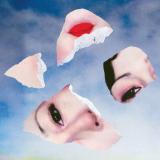
Themes of change, breaking up, shattering old ways of being are shot through the record. For the front cover, a photograph of the artist’s face was printed, ripped up and re-assembled, resembling the creative process embarked upon by Lew for her first “solo” material. The album feels instinctual, almost dream-like in its assemblage of sweeping synths and pulsating, propulsive drum machine beat patterns with Lew’s vocal performances sensitive and caressing over the top. Increasingly relying on the subconscious and dreams to guide her creative process, Hannah Lew frequently abandons literal interpretations or linear narratives, the songs seeming to exist in a swooning, effortless flow-state while remaining emotionally hard hitting.

On an album where every song could be a single, there are kaleidoscopic shades and varying emotional tones in abundance. First single Another Twilight is carried along a pumping, Italo-disco-style 4/4 beat and mono-synth bass line, the low end pulling at the heart and body. Lew’s vocal melody teases the track before swan-diving into a gorgeous chorus as she sings “it’s all over baby and I don’t mind… in decline, I take my time…” The album is suffused with moments like this. On slow builder Damaged Melody, an arpeggiated synth elongates the verse before a cascading synth showers down melodic glitter. The stunning Replica uses dual swirling synth patterns before a driving, synthpop chorus for the ages carries Hannah Lew’s vocal into the stereo field, sailing in on a high register singed with the embers of a break up.

In a departure from previous groups, her solo songs are guided by dreams and free association inspired by Dada and the Surrealist movement and sculpted afterwards. As such, the songs reveal themselves on repeated listens, revealing traces of heartbreak inspired by both personal and global elements - Hannah Lew regards the album “a wartime album.” On Move In Silence, Lew intones “there’s a war outside, just out of view,” revealing the dichotomy at play throughout. With the songs evolving naturally and in a flow state, the pressures and sadnesses of the modern age bleed through, mixed in with Lew’s inherent love, sensitivity and fractured-but-intact optimism. On the swooning, sublime Sunday layers of Numanoid synths open up for the commanding vocal performance pontificating on grief, love, pain as she “feels the ache on Sunday…” As the chorus builds and Lew’s call-and-response vocal adds to the emotional tension, it almost feels like too much to take.

Elsewhere, there are echoes of Hannah Lew’s previous work. On Time Wasted a bass guitar comes in with a heavy, punk attack before the synths and vocal harmonies reminiscent of later Cold Beat elevate everything. The glassy, sweetly resigned closer The Clock sounds like so classic it could be cover, a sweetened Jesus & Mary Chain tune perhaps, before it erupts into volcanic chorus that could only come from Hannah Lew in 2026.

vorbestellen17.04.2026

erscheint voraussichtlich am 17.04.2026

23,32
Esbe - Sunset Girl

Esbe

Sunset Girl

7"-VinylCB145-7
Cold Busted
17.04.2026

Esbe returns to Cold Busted for a phenomenal new four-track EP, Sunset Girl. With previous releases on Dusted Wax Kingdom and Cult Classic, as well as his acclaimed Bloomsday and Late Night Headphones albums for Cold Busted, the Los Angeles-based multi-genre beat-maker is riding a wave. Sunset Girl is another exciting moment in Esbe's musical progression. The release starts quietly with the gentle, muted piano chords of "Special." A sparse hip-hop beat and subdued melodic layers round out the tune, cutting away to reveal a lonesome vocoder vocal. "Again" is as close as Esbe gets to a pop song, as a carefree male vocal and twinkling pianos ride over a crisp, solid rhythm track. More delights await on "Sunset Girl" with its simple piano line, reverby percussion hits, distant sax solo, and splashes of vocal collide in a sonic daydream. "I Want Love" closes things out on a vintage flavor, with echoes of a mid-century school dance reverberating into a modern day beat battle. Potent vibes all around.

vorbestellen17.04.2026

erscheint voraussichtlich am 17.04.2026

15,55
Martina Bertoni - Hypnagogia

Martina Bertoni

Hypnagogia

CassetteKR097TP
Karlrecords
17.04.2026

Cello player and electronic artist Martina Bertoni returns with her 2nd album for Karl: Hypnagogia delivers six new, masterfully crafted tracks between experimental ambient, drone and modern composition.

Cellist and composer Martina Bertoni started playing the cello at a very young age. Classically trained, her career further developed around experimental and film music, for which her cello has been featured in numerous records, works and soundtracks for films and series. After two EPs and her debut full length All The Ghosts Are Gone (2020), Bertoni joined the Karl roster where she released Music For Empty Flats in January 2021 to critical acclaim (a.o. one of the Top Ten drone albums of 2021).

On her new album Hypnagogia she continues to explore the sonic possibilities of her cello which she uses as primary source for composition and sound processing through reverbs, feedbacks and sub-bass frequencies, thus crafting sonic sculptures, rich of atmospheres and frictions, fed by ambient as much as drone and modern composition.

In the words of Martina Bertoni:
"The six tracks that constitute Hypnagogia have been written during 2021 and partially inspired by the reading of Stanislaw Lem's book Solaris. The title refers to a transitional state of consciousness from wakefulness to sleep, during which one might experience sensorial hallucinations and lucid dreaming, and can tap into the pristine structures of the subconscious. Hypnagogia portraits an imaginary cosmic journey of the Self that crash ends into a blinding sun."

vorbestellen17.04.2026

erscheint voraussichtlich am 17.04.2026

21,81
Hánkel Bellido - A Change of Mourning

Taking place in the Paras district, Cangallo province, in the Ayacucho region of the Central-South Sierra of Peru - this is a recording of a ritual held on February 5th 2020 for the one year anniversary of the death of Mrs. Sofía Miranda de Bellido, recorded by her grandson Hánkel Bellido.

At noon the coffin of "Mamay Sofía" was presented, so that her relatives could say goodbye for the last time. Following tributes from family members, these songs dedicated to her life and her passing were sung.

The townspeople were notified of the events by the sound of bells that produce a peculiar and powerful sound, and that can be heard in the other nearby towns of Paras. It is said that these bells were greased with human fat, and brought from the Cerro de Pasco region during colonial times. The bells must be played all morning until the change of mourning takes place.

At midnight the songs of the Almakunapaq (also known as San Gregorios) mass began. These are unique to the Andean peoples - a fusion of Andean and Christian syncretic traditions - and are said to help the dead to enter the eternal Kingdom.

It was 4am when the change of mourning took place, and in accordance with traditions, the friends & family announce the presence of harp and violin players, to liven up the proceedings with songs of joy and merriment until the next day.

"Mamay Sofia, manan wañukunkichu, kawsakuchkankim sunquykupi; sichus qunqarusqaykiku, chaymi ichaqa wañukunki!"

"I have not died, I will die on the day that you forget me!"

vorbestellen17.04.2026

erscheint voraussichtlich am 17.04.2026

10,04
Guests - Common Domestic Bird LP

Guests is the home recording project of Jessica Higgins and Matthew Walkerdine. Vaguely named as such to avoid any problems with the poster if they pull out of a gig (which has only happened once, about a year and half before any songs were actually written to be fair) but also to capture a sense of reverse hospitality. That is, arriving at your door with a bottle of good wine (can’t turn up empty handed) or a fist full of savoury or sweet snacks (time of day dependant); oversharing at the afters (and then passing out on your couch); reading to your toddler while you make their lunch or put everything back where it was meant to go (only to get torn apart again). So, something about what happens when private worlds meet each other, making or having been made a space for. But at times, it’s a different kind of intimacy, a temporal or material one, like the feeling of crisp fresh sheets, and abundant and soft, body-part appropriate towels in a hotel in a city you’ve been to before and love to go back to.

Their debut record, “I wish I was special”, was variously described as “a collage of concrète experiments and outerzone pop gestures, music that sounds as if it’s been written from the depths of a dream”; “music for people who love music but also hate it too”; “something like chasing ghosts or befriending a wild animal”; “pulling apart nervous sensations with haphazard ease and requisite humour”; and “a melody of refusal, of being all-in (…) finding the exact right WRONG sound to express the discontent”. Common Domestic Bird continues in this vein, layering synthesiser, keyboards and samples over rudimentary drum rhythms and field recordings, which are in turn sung or spoken with to create nine new songs.

Written and recorded between autumn 2024 and summer 2025 in Reading, Berkshire, the music has matured since its last outing, in a way, leaning less into collage and more toward structured composition and melodic depth, yet retains a healthy dose of indeterminacy and off-kilter rhythms for the forever-amateur. The songs on Common Domestic Bird hint at some “about”-ness through a series of discrete vignettes which sound a bit like architecture or end of year lists, gossip or over-thinking subjectivity, like disappearances and impressions, the support structure of the spine, letters and signs offs, things you could really do without and where they should go, hoping you’ll see something that isn’t there, pretences and performance. At times they feel kind of funny, others kind of sad or a bit angry and annoyed, a bit like you really.

vorbestellen17.04.2026

erscheint voraussichtlich am 17.04.2026

21,64
Gigi - Illuminated Audio (2x12")

180g Heavy double vinyl LP with liner notes by Tyran Grillo. Limited Japanese Obi for the first pressing. Original artwork by Russell Mills and photography by Jean-Baptiste Mondino.

The third Time Capsule is a body of dub reinterpretations by celebrated producer Bill Laswell of Ethiopian singer Gigi. Curated by Tokyo record collector, music researcher and seasoned reissue supervisor Ken Hidaka, it is the first time Illuminated Audio is pressed to vinyl after its CD release in 2003.

Ejigayehu Shibabaw was born in 1974 in Chagni, northwestern Ethiopia and by pursuing a career as a singer, went against her father’s strict, traditional gender roles. As Gigi, she embraced the same musical freedom she had strived for in her personal life, incorporating the Ethiopian church, funk, hip-hop, West and South African music into her work. She first settled in Nairobi, then Addis Ababa, where she quickly established herself as one of the city’s leading singers. A move to San Francisco in 1998 led to a long and fruitful creative partnership with bassist and producer Bill Laswell.

Around the same time, Chris Blackwell had stepped away from Island Records to start the art house film company and label Palm Pictures. He took an interest in Gigi and together with Laswell, pulled together an all-star cast of musicians for her self-titled US debut album, including Herbie Hancock, Pharoah Sanders and Wayne Shorter. It won international critical acclaim, not just for its musicianship but for making Gigi a “defining voice for the Ethiopian expatriate community”, as journalist Tyran Grillo praises in his Time Capsule liner notes. From the nation-defining 1896 victory over Italian invaders to the quiet revolutionaries who wear simple shemma garments, Grillo believes the themes in Gigi make it “a shower of sunlight on her homeland for those ignorant of its struggles.”

After its success, Blackwell encouraged them to go back into the studio to rethink the album and Illuminated Audio was born. “Anyone can make a voice sound worldly”, Grillo remarks, “but rare are those who can make one sound inner-worldly.” Gigi was clear with Laswell to give her vocals a minor role “because it’s already been done.” Instead her Amharic verse is fleeting, exhaling through the textures like ghostly fragments; soaring yet muted. Yet the album is still titled under her name, an assertion by Laswell of her central role in the album’s creation. Not only was it a fully endorsed project by Gigi, but she would be present throughout its development, giving feedback on half-finished ideas as Laswell played them back in the studio. “It works perfectly”, she reflected after the album’s release. “We wanted to capture the whole spirit of each track, and Bill’s remixes create a different music language that really puts you in a pleasant place”.

This new vocabulary takes its lead from a technical approach that Laswell had been perfecting during a furtive creative period at the turn of the millennium. Much like his ambient interpretations of Miles Davis (Panthalassa, 1998), Bob Marley (Dreams of Freedom, 1997), and Carlos Santana (Divine Light, 2001), Laswell approached Illuminated Audio by returning to the original multitrack masters. Gigi wasn’t just reworked, but recomposed into an expansive lattice of instruments, submerged in a watery ambience of dub and trance undercurrents.

Sonically, this new language that Gigi refers to, is manifested by the original album’s more understated parts being pushed to the fore. Explaining his contrasting methods, Laswell saw Gigi as being “put together in a way that fits”. Contrastingly, in Illuminated Audio, “a lot of things that I featured in the remix weren’t as audible in the original.” Instrumentation laying near-dormant, deep in the mix, are brought to the fore: the acid rock guitar and Wayne Shorter’s saxophone on ‘Tew Ante Sew’, Graham Haynes’ flugelhorn on ‘Nafekeñ’, Laswell’s bass on ‘Kahn’, the melodica in Mengedegna or the floating synths and talking drums in ‘Gud Fella’.

Brought to his attention by mentor DJ Nori, Hidaka describes Illuminated Audio as a “masterful sonic exploration into ethereal ambience and dub” and made sure this reissue also contained a full remaster to give its “deep musicality” much better dynamics and density in the overall sound. Hidaka admits that Laswell's music “is sometimes so out-there, it is often misunderstood” and, indeed, to dub album non-believers this might seem like a prolific producer imposing himself on another artist’s work; eternally developing rearrangements that never quite get to its destination. But that’s missing its true power and triumph. This is more than the reissue of a remix, but “a wholly unique musical entity”, as Hidaka describes. Illuminated Audio refers to the illuminated manuscripts that comprise the major part of Ethiopian art and its new compositions stand in proud solitude as a rare body of reworks that both informs and enhances their originals.

vorbestellen17.04.2026

erscheint voraussichtlich am 17.04.2026

18,07
Petter Eldh, Koma Saxo & Sofia Jernberg - Koma West LP

Petter Eldh's explosive ensemble Koma Saxo continues their adventures with a new album "Koma West", out on We Jazz Records, 18 March 2022. The album sees Koma Saxo expand on their previous sound with the addition of vocalist Sofia Jernberg and a strong cast of featured artists, including cellist Lucy Railton, violinist Maria Reich, pianist Kit Downes and accordionist Kiki Eldh (Petter's mom!). The hard-hitting key quintet remains, including Eldh on bass and assorted instruments, Christian Lillinger on drums, plus saxophonists Otis Sandsjö (of Y-OTIS), Jonas Kullhammar and Mikko Innanen bringing the SAXO to the KOMA operation.

At 14 tracks, "Koma West" is a full menu of monumental compositional ideas that could spawn entire albums. True to his chop & go production style, Eldh relies on continuous movement while presenting another all killer no filler program taking Koma Saxo on a sonic outing not quite like anything that had previously appeared under the band's name. That being said, there's very much the Petter Eldh touch here, one which might be hard to pinpoint and verbalise, but nevertheless a recognisable style of composing, producing and arranging.

Thematically, the album is rooted in the West Coast of Sweden, where Eldh grew up – he's from a tiny town called Lysekil. There's a thread of Swedish folk song tradition that has been part of the Koma Saxo DNA from the get-go and you can hear that here as well, especially on cuts such as "Närhet", beautifully sung by Sofia Jernberg.

Petter Eldh says:

"In a way, it's a concept album and a celebration of the Swedish West Coast. The first single is called 'Koma Kaprifol', and kaprifol is the landscape flower of Bohuslän on the West coast, where I grew up. I'm not too wild about attaching strong narratives to my music but there's no way around it this time. The oysters, a common snack around the coast, are a strong conceptual presence here. Anyway, they seem to pop up here and there quite often already thus far in the Koma Saxo narrative, even though it's not always so obvious. Koma Vocals! Koma Strings! I love the presence of Sofia Jernberg here and I love writing string arrangements, too, although I never thought I would do it for Koma, but of course, Koma should have some strings, why not?. Koma Saxo should and can become anything."

vorbestellen17.04.2026

erscheint voraussichtlich am 17.04.2026

22,48

Last In: vor 2 Tagen
ALEK LEE - BLUE BIRD

ALEK LEE

BLUE BIRD

12inchISLELP019
ISLE OF JURA RECORDS
17.04.2026

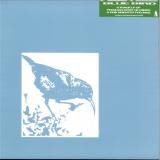
Following the critical success of last year’s ‘Cold Feet’ LP, producer, DJ, and multi-instrumentalist Alek Lee returns to Isle of Jura with his most introspective work to date, the ‘Blue Bird’ album. Across eight tracks, the Athens-based artist explores what he describes as a "Peculiar state of minds & Dub Orientated Feelings," blending his signature guerrilla style production with deep, organic soul.

The album’s centerpiece and title track, ‘Blue Bird’ features the haunting vocals of singer-songwriter Keren Ilan. It is a raw, heartfelt exploration of the aftermath of a breakup. The lyrics speak of a "desert heart" and a "loss that grows tall and loud," eventually finding a path toward healing as the "blue bird sings the dawn." Musically, the track is anchored by hazy, sun drenched guitars, a central instrument that weaves a consistent Balearic thread throughout the LP.

The journey through ‘Blue Bird’ is one of shifting shadows and unexpected textures. ‘Treasures’ is a standout instrumental, leaning into a grit-flecked, bluesy "twang" reminiscent of Duane Eddy, while ‘The Beach Road’ sees long time collaborator and ‘Shame On Us’ bandmate, Yovav, lending his magical bass and guitar work to a track that feels like a slow drive toward the horizon.

Side B shifts the energy toward the dancefloor and the sophisticated leftfield pop of the 80s. ‘First Rain’ is a subtle house leaning gem underpinned by a kick drum and lush, synth heavy emotive chord progression. ‘Thanks to Sade’ is a seductive downtempo groove with epic guitar lines shifting through, while ‘Remember the Good’ brings a subtle reggae skank and a French-influenced organ sound into the mix. The LP comes full circle with a smoked out Dub version of the title track ‘Blue Bird’.

A 180 gram pressing in a 3mm spine full colour sleeve and sticker designed by Bradley Pinkerton.

vorbestellen17.04.2026

erscheint voraussichtlich am 17.04.2026

22,65
Anderson .Paak - Malibu (10 Year Anniversary) (Lp 2x12")
  • A1: The Bird
  • A2: Heart Don't Stand A Chance
  • A3: The Waters (Feat. Bj The Chicago Kid)
  • A4: The Season / Carry Me
  • B1: Put Me Thru
  • B2: Am I Wrong (Feat. Schoolboy Q)
  • B3: Without You (Feat. Rapsody)
  • B4: Parking Lot
  • C1: Lite Weight (Feat. The Free Nationals United Fellowship Choir)
  • C2: Room In Here (Feat. The Game & Sonyae Elise)
  • C3: Water Fall (Interlude)
  • C4: Your Prime
  • D1: Come Down
  • D2: Silicon Valley
  • D3: Celebrate
  • D4: The Dreamer (Feat. Talib Kweli & Timan Family Choir)
auch erhältlich

Colored Vinyl:[30,88 €]

Green Cassette[15,08 €]


Ten years ago, Anderson .Paak didn't just release an album; he staged a full-scale takeover of the soul and hip-hop landscape. Released on January 15, 2016, Malibu served as the definitive arrival of an artist who had spent years grinding in the underground before a star-making turn on Dr. Dre’s Compton. While his previous work hinted at his potential, Malibu was the moment the world met the "Cheeky Andy" persona in full—a virtuosic drummer, a raspy-voiced crooner, and a sharp-witted rapper all rolled into one. The album is a sprawling, sun-drenched journey through the Southern California coast, blending 1970s funk, church-reared gospel, and gritty boom-bap into something that feels both nostalgic and entirely futuristic. With a heavyweight production lineup including 9th Wonder, Madlib, Kaytranada, and Hi-Tek, the record maintains a warm, analog texture that was a breath of fresh air in an increasingly digital era. It’s an album that breathes, full of intentional imperfections and the kind of "in-the-pocket" groove that can only come from a seasoned live performer. Beyond the infectious, dance-floor-ready energy of tracks like "Am I Wrong" and "Come Down," the album is a deeply autobiographical masterwork. .Paak uses the 65-minute runtime to unpack his life story with startling clarity, touching on his mother’s gambling addiction, his father’s incarceration, and his own brushes with homelessness with a sense of resilience that never feels heavy-handed. He weaves these heavy themes through a lens of triumph, grounded by vintage surfing documentary samples that give the project its cinematic, coastal atmosphere. It’s a celebratory record born out of struggle, anchored by his impeccable technicality on the drums and a guest list—featuring ScHoolboy Q, Rapsody, and The Game—that feels hand-picked to complement his specific brand of West Coast swagger. A decade later, Malibu stands as a modern classic and the blueprint for the soulful revivalism that would eventually lead .Paak to global superstardom and Grammy-winning heights. It remains a testament to the idea that the most profound music often comes from the most personal places, proving ten years on that the best way to move forward is to stay rooted in the groove.

vorbestellen17.04.2026

erscheint voraussichtlich am 17.04.2026

41,13
Anderson .Paak - Malibu (10 Year Anniversary) (Lp 2x12")

Ten years ago, Anderson .Paak didn't just release an album; he staged a full-scale takeover of the soul and hip-hop landscape. Released on January 15, 2016, Malibu served as the definitive arrival of an artist who had spent years grinding in the underground before a star-making turn on Dr. Dre’s Compton. While his previous work hinted at his potential, Malibu was the moment the world met the "Cheeky Andy" persona in full—a virtuosic drummer, a raspy-voiced crooner, and a sharp-witted rapper all rolled into one. The album is a sprawling, sun-drenched journey through the Southern California coast, blending 1970s funk, church-reared gospel, and gritty boom-bap into something that feels both nostalgic and entirely futuristic. With a heavyweight production lineup including 9th Wonder, Madlib, Kaytranada, and Hi-Tek, the record maintains a warm, analog texture that was a breath of fresh air in an increasingly digital era. It’s an album that breathes, full of intentional imperfections and the kind of "in-the-pocket" groove that can only come from a seasoned live performer. Beyond the infectious, dance-floor-ready energy of tracks like "Am I Wrong" and "Come Down," the album is a deeply autobiographical masterwork. .Paak uses the 65-minute runtime to unpack his life story with startling clarity, touching on his mother’s gambling addiction, his father’s incarceration, and his own brushes with homelessness with a sense of resilience that never feels heavy-handed. He weaves these heavy themes through a lens of triumph, grounded by vintage surfing documentary samples that give the project its cinematic, coastal atmosphere. It’s a celebratory record born out of struggle, anchored by his impeccable technicality on the drums and a guest list—featuring ScHoolboy Q, Rapsody, and The Game—that feels hand-picked to complement his specific brand of West Coast swagger. A decade later, Malibu stands as a modern classic and the blueprint for the soulful revivalism that would eventually lead .Paak to global superstardom and Grammy-winning heights. It remains a testament to the idea that the most profound music often comes from the most personal places, proving ten years on that the best way to move forward is to stay rooted in the groove.

vorbestellen17.04.2026

erscheint voraussichtlich am 17.04.2026

30,88
Anderson .Paak - Malibu (10 Year Anniversary) (MC)

Ten years ago, Anderson .Paak didn't just release an album; he staged a full-scale takeover of the soul and hip-hop landscape. Released on January 15, 2016, Malibu served as the definitive arrival of an artist who had spent years grinding in the underground before a star-making turn on Dr. Dre’s Compton. While his previous work hinted at his potential, Malibu was the moment the world met the "Cheeky Andy" persona in full—a virtuosic drummer, a raspy-voiced crooner, and a sharp-witted rapper all rolled into one. The album is a sprawling, sun-drenched journey through the Southern California coast, blending 1970s funk, church-reared gospel, and gritty boom-bap into something that feels both nostalgic and entirely futuristic. With a heavyweight production lineup including 9th Wonder, Madlib, Kaytranada, and Hi-Tek, the record maintains a warm, analog texture that was a breath of fresh air in an increasingly digital era. It’s an album that breathes, full of intentional imperfections and the kind of "in-the-pocket" groove that can only come from a seasoned live performer. Beyond the infectious, dance-floor-ready energy of tracks like "Am I Wrong" and "Come Down," the album is a deeply autobiographical masterwork. .Paak uses the 65-minute runtime to unpack his life story with startling clarity, touching on his mother’s gambling addiction, his father’s incarceration, and his own brushes with homelessness with a sense of resilience that never feels heavy-handed. He weaves these heavy themes through a lens of triumph, grounded by vintage surfing documentary samples that give the project its cinematic, coastal atmosphere. It’s a celebratory record born out of struggle, anchored by his impeccable technicality on the drums and a guest list—featuring ScHoolboy Q, Rapsody, and The Game—that feels hand-picked to complement his specific brand of West Coast swagger. A decade later, Malibu stands as a modern classic and the blueprint for the soulful revivalism that would eventually lead .Paak to global superstardom and Grammy-winning heights. It remains a testament to the idea that the most profound music often comes from the most personal places, proving ten years on that the best way to move forward is to stay rooted in the groove.

vorbestellen17.04.2026

erscheint voraussichtlich am 17.04.2026

15,08
Anderson .Paak - Malibu (10 Year Anniversary) (2x12")
  • A1: The Bird
  • A2: Heart Don't Stand A Chance
  • A3: The Waters (Feat. Bj The Chicago Kid)
  • A4: The Season / Carry Me
  • B1: Put Me Thru
  • B2: Am I Wrong (Feat. Schoolboy Q)
  • B3: Without You (Feat. Rapsody)
  • B4: Parking Lot
  • C1: Lite Weight (Feat. The Free Nationals United Fellowship Choir)
  • C2: Room In Here (Feat. The Game & Sonyae Elise)
  • C3: Water Fall (Interlude)
  • C4: Your Prime
  • D1: Come Down
  • D2: Silicon Valley
  • D3: Celebrate
  • D4: The Dreamer (Feat. Talib Kweli & Timan Family Choir)

Ten years ago, Anderson .Paak didn't just release an album; he staged a full-scale takeover of the soul and hip-hop landscape. Released on January 15, 2016, Malibu served as the definitive arrival of an artist who had spent years grinding in the underground before a star-making turn on Dr. Dre’s Compton. While his previous work hinted at his potential, Malibu was the moment the world met the "Cheeky Andy" persona in full—a virtuosic drummer, a raspy-voiced crooner, and a sharp-witted rapper all rolled into one. The album is a sprawling, sun-drenched journey through the Southern California coast, blending 1970s funk, church-reared gospel, and gritty boom-bap into something that feels both nostalgic and entirely futuristic. With a heavyweight production lineup including 9th Wonder, Madlib, Kaytranada, and Hi-Tek, the record maintains a warm, analog texture that was a breath of fresh air in an increasingly digital era. It’s an album that breathes, full of intentional imperfections and the kind of "in-the-pocket" groove that can only come from a seasoned live performer. Beyond the infectious, dance-floor-ready energy of tracks like "Am I Wrong" and "Come Down," the album is a deeply autobiographical masterwork. .Paak uses the 65-minute runtime to unpack his life story with startling clarity, touching on his mother’s gambling addiction, his father’s incarceration, and his own brushes with homelessness with a sense of resilience that never feels heavy-handed. He weaves these heavy themes through a lens of triumph, grounded by vintage surfing documentary samples that give the project its cinematic, coastal atmosphere. It’s a celebratory record born out of struggle, anchored by his impeccable technicality on the drums and a guest list—featuring ScHoolboy Q, Rapsody, and The Game—that feels hand-picked to complement his specific brand of West Coast swagger. A decade later, Malibu stands as a modern classic and the blueprint for the soulful revivalism that would eventually lead .Paak to global superstardom and Grammy-winning heights. It remains a testament to the idea that the most profound music often comes from the most personal places, proving ten years on that the best way to move forward is to stay rooted in the groove.

vorbestellen17.04.2026

erscheint voraussichtlich am 17.04.2026

97,44
Purple Disco Machine - Dished (Male Stripper)

Collecting Orders For 2025 Repress

Backing it up can mean so many things. According to the urban dictionary, it means to carry on drinking the next day in spite of a rather large one the night before. According to Apple, it means to take your I-phone and attach it to an I-pad or Apple Mac - and copy the information to the cloud. Or the device. But in music.....what we mean is basically this....."Damn......that was a big hit......how the hell are they going to emulate that success on the next one."And it's hard for so many reasons. Was it luck Timing That one in a million sample With all the pressure, soon the artist can start second guessing themselves........and that's when backing it up becomes a real problem.But not for our boy PURPLE DISCO MACHINE. If BODY FUNK, his last outing on CLUB SWEAT, wasn't one of THE biggest songs of last year, from Ibiza to Miami and back again.....played by every single DJ under the sun, from BLACK MADONNA to JAMIE JONES to your mama......then I'm not sitting at my lap top writing this shpeel....which I'm very sure I am. AND I'm going to back myself (see what I did there) - and say that DISHED (MALE STRIPPER) is the best way to back up a hit ever. With another hit. Doesn't sound the same....doesn't worry about what the last one did...just does what it does.....which to be honest - is GO OFF!!!! It builds and builds and builds and......In the same way that BODY FUNK masterly made the sum of 2 disco songs bigger than their parts had ever been, this time PDM takes some Italo Disco from MAN TO MAN MEET MAN PARRISH's MALE STRIPPER and mashes it with the aptly named ELLIS D's DISHAPELLA to create a 12/10. Back it up PDM - you are a legend!!!!

vorbestellen17.04.2026

erscheint voraussichtlich am 17.04.2026

13,66

Last In: vor 2 Jahren
Soothsayers - Love Is Still The Answer (Prince Fatty Remixes) (7")
  • A1: Prince Fatty Rockers Remix
  • B1: Prince Fatty Rockers Dub

Wah Wah 45s are very excited to announce a brand new remixes from dub donPrince Fattyfor beloved Afro-reggae outfitSoothsayers.

Love Is Still The Answeris a beautifully uplifting song, written and sung by long time Soothsayers member and collaboratorJulia Bielabout the eternal power of love and its ability to overcome hate. It appears in its original incarnation on the band's recent, critically acclaimed album,Fly Higher.

Mike Pelaconi, AKA Prince Fatty has been part of the Wah Wah 45s and Soothsayers extended family for many years, and here he delivers a typically crowd pleasing mix, in both vocal and dub form, from the world of Rockers Reggae, calling legendary reggae drummerHorsemaninto the studio, and crafting a lush rocksteady remix with a new horn arrangement and stripped back instrumentation.


"In a world that feels more divided and chaotic than ever,Love Is Still the Answer is a reminder that real change can still come from within. We may feel powerless in the face of global turmoil, but when we choose love - actively, consistently, even in tough situations - we reclaim strength for ourselves. This song calls us back to our shared humanity, to the energy that connects us all. It's an invitation to tune into what really matters, and to rediscover beauty where we may have forgotten to seek it." Robin Hopcraft (Soothsayers)

a A1: Prince Fatty Rockers Remix [feat. Julia B.]

[a] A1: Prince Fatty Rockers Remix [feat. Julia B.]

vorbestellen17.04.2026

erscheint voraussichtlich am 17.04.2026

18,07
MIGUEL HERRNANDEZ - NEON CYBERWAVE EP

Bosconi Records proudly introduces Neon Cyberwave, the first solo EP on the label by Italian electronic visionary Miguel Herrnandez, marking a milestone in the evolution of an artist who has consistently bridged Detroit-rooted aesthetics with the experimental pulse of the European underground.

Based in the Val d’Elsa region between Florence and Siena, Miguel has forged a unique sonic identity shaped by his devotion to vinyl, his deep connection to the techno capital the “Motor City”, and his passion for deeply rooted yet still futuristic electronic culture.

His productions and DJ sets—built on a seamless fusion of raw electro, deep house attitudes, new beat flavors, and timeless grooves—have appeared on respected labels such as Bosconi, Rawax, and Norm Talley’s Upstairs Asylum. With Neon Cyberwave, he now delivers his most complete and personal statement to date.

The EP opens with “Neon Cyberwave”, a powerful acid-driven stomper built around a rolling 303 bassline, warm melodies, and an emotional breakout moment that captures both the effectiveness and the sensitivity of Miguel’s approach. It flows naturally into “Italo FM”, a track infused with Italo disco spirit—choir-like harmonies, a punchy bassline, and a groovy, ecstatic progression that turns into a genuine dancefloor trigger.

The journey deepens on the flip, where “VHS Direct Drive” introduces a dystopian atmosphere characterized by constantly shifting, unusually toned bass movements—unpredictable yet catchy, fresh yet rooted in classic electro DNA. This is followed by “Electric Soul Stranger”, where Miguel navigates Drexciyan undercurrents and subtle Gigolo-era references, balancing between straight rhythmic propulsion and broken-beat twists to create a cold, mental, transportive electro experience.

The record closes with the epic “Punky Shift”, a dramatic and powerful finale echoing the spirit of artists like The Hacker. Dramatic strings, an intense acid bassline, and a massive groove come together to shape a timeless closing track—one designed for peak emotional moments, sunrise sets, and long-lasting memories.

With Neon Cyberwave, Miguel Herrnandez has crafted a work that feels fresh yet nostalgic, classic yet forward-facing, and deeply personal. It stands as a versatile DJ weapon, a tribute to electro’s past and future, and a defining chapter in the artistic evolution of one of Tuscany’s most intriguing electronic voices.

vorbestellen17.04.2026

erscheint voraussichtlich am 17.04.2026

14,50
Anané - It Looks Like Love

Anané’s colourful life in music has seen her do everything from singing at the famous pre-game show at Super Bowl XLI as part of the group Elements of Life, DJ at hotspots like Hi Ibiza, Pacha NYC and Ushuaïa to name a few, while also curating her own monthly residency Nulu Movement, now ten years strong at Le Bain NYC, release unique blends of Afro, house, and pop on labels like Vega Records, and head up her own imprints, Nulu Music and Nulu Electronic. The Cape Verdean-born DJ, producer, vocalist, and songwriter has had countless club hits and has released acclaimed albums like ‘Ananésworld’ and ‘Chapters Of Becoming’, often with a lush, live, and orchestrated style that is truly unique.

With this release, Anané steps forward with her first solo production to date. Here she serves up the sumptuous ‘It Looks Like Love’, a poised, elegant house sound with her own smoking, soulful vocals and classy strings bringing colour to an Afro groove packed with infectious bounce. Neat guitar riffs and silky synths all enrich this most sophisticated sound. The first mix sees Anané link up with veteran Italian Christian Mantini, who has hosted Sunset Ritual parties with Anané and Louie Vega since 2013. Their dub is rooted in warm, rubbery drums that are even deeper and more immersive than the original.

Manda Moor & Sirus Hood are a red-hot contemporary pair who run the Mood label and are defining the contemporary underground. Their remix is more driving, but it retains the soulful vibe with breezy pads and jazzy motifs drifting in and out above the swaggering groove.

Rotterdam-based Chicagoan Jamie 3:26 is a master at blending disco, soul, and house into timeless sounds, and here he delivers a loopy rework that pairs deep drive and sun-kissed vibes with funky, Chic-style bass guitar motifs.

vorbestellen17.04.2026

erscheint voraussichtlich am 17.04.2026

16,39
Artikel pro Seite:
N/ABPM
Vinyl