Поиск:sons of sound

Стили
Все
Aerial Salad - Roi De L’Herbe LP
  • 1: King Of The Grass
  • 2: L.a
  • 3: Inject Your Blood
  • 4: Wires
  • 5: My Girl

Following on from last year's acclaimed ‘R.O.I.’ album, Manchester’s favourite sons Aerial Salad are set to return to the fray with a brand new 5-track EP titled ‘Roi de l’herb’ to be released June 27th via Venn Records.
Having released their ‘Dirt Mall’ album during lockdown, which was a pretty grim time to put an album out, the release still eventually opened up some exciting doors for the band and captured Aerial Salad at their most Aerial Salad; loud, brash, silly and emotive.
This led swiftly to 2024’s ‘R.O.I.’ album that marked a real evolution in the band’s sound and songwriting.

“R.O.I. is a concept album but rather than being about a band, it’s from the perspective of an individual pushed to the brink of insanity by the ever-present quest from commercial success,” explains singer and guitarist Jamie Munro. “The idea came from my job; I’ve been working in the tech industry in ‘sales’. ‘Return on investment’ was probably my most uttered phrase for a few years, I was sick of it, sick of having no positive impact on the world and sick of the tech bro, double espresso, thirsty thursdays, work hard - play hard bollocks culture that comes with it. ‘R.O.I.’ is me saying ‘know what, you can actually earn a lot of money in life, even without the fallacy of educational infrastructure and financial privilege, however, it comes at the cost of your soul, time and energy. ‘R.O.I.’ is called such because it’s in the opposite pursuit, it’s not about a return on a financial investment, it’s about doing something with your life that’s enjoyable.”
This brings us crashing into 2025, no longer in the same line of spirit destroying work, with some seriously exciting gigs on the horizon, Aerial Salad wanted to kick off the next era of the band with a short, fast and hard EP and have served up 5 absolute bangers that sit somewhere between ‘Dirt Mall’ and ‘R.O.I.’ The EP is called ‘Roi de l’herb’ because of the track ‘King Of The Grass’: “We tour and play a lot in France, we’ve played most of our “best” gigs in France, so out of curiosity I wanted to see if the title would translate well, naturally, when the translation contained both “ROI” and l’herbe” - I though, fuck it, that’s about as spot on a title for this EP as we can possibly muster.”
‘King of The Grass’ is about the band’s bassist Mike Wimbo who works for Rochdale council on the greens team, which means he spends his life in the pouring rain chopping down overgrown hedges and mowing lawns. Elsewhere on the EP, ‘Inject Your Blood’ is another romantic love song inspired by the TV series ‘True Blood’ (“I’d inject your blood, into mine just to feel you close”), ‘Wires’ rages against the world of AI and GPT, whilst the EP’s opening track ‘My Girl’ is a chaotic, high energy catchy punk song, nothing profound, nothing complicated. It’s a punk song as god intended, a few chords and a load of shouting.
“The EP is like the teaser for what’s next,” summarises Jamie. “The overall hook for this EP is one of hope, that by sticking to what you believe in you can do anything.”

Сделать предзаказ05.07.2025

он должен быть опубликован на 05.07.2025

22,65
RAVIN / BUDDHA BAR PRESENTS - MONTE-CARLO SUMMER SESSIONS LP 2x12"

BUDDHA-BAR SUMMER SESSIONS - MONTE-CARLO BY RAVIN A MUSICAL ODYSSEY TO CELEBRATE SUMMER & THE 15TH ANNIVERSARY OF BUDDHA-BAR MONTE-CARLO Under the starry sky of the Riviera, lulled by the warm breeze, an invitation to travel rises. A beat, a melody... and the mind drifts away. Buddha-Bar, the temple of world music and sonic elegance, celebrates 15 years of magic in Monte-Carlo with an exceptional compilation: Buddha-Bar Summer Sessions Monte-Carlo by Ravin. Conceived as a musical odyssey, this double compilation weaves captivating atmospheres, blending ethereal lounge, organic electro, and world sounds, in an intimate dialogue between East and West, tradition and modernity. Each track (including more than a dozen unreleased tracks) has been carefully selected by Ravin, who creates a captivating and chic experience, a true invitation to dance and escape.

нет на складе

Закажите сейчас, и мы закажем товар для вас у нашего поставщика.

28,53

Последний логин: 50 дн. назад
Filhos - Vol.1 (TAPE)

Filhos

Vol.1 (TAPE)

CassetteSUC66
Sucata Tapes
20.06.2025

Guilherme Granado & Bruno Abdala Unite in FILHOS, a long-awaited collaboration between the two Brazilian musicians.

After years of friendship and sporadic live collaborations, Granado (São Paulo) and Abdala (Goiânia) have finally brought their creative synergy into a full-fledged project. Despite the geographical distance, a collaboration was inevitable — and now, it has become a reality.

The creative process moved swiftly once the exchange of ideas and files began. While the exact timeline is a blur, the inspiration remains clear: life itself. Musical influences are ever-evolving, shaped by experiences and time, but the essence of this project remains rooted in a deep connection to existence.

The sonic landscape is built from an eclectic palette: samplers, bells, synthesizers, drums, marimba, vibraphone, bass, violas, and more to create an elegant tapestry of sound that pays homage to the past while forging new paths forward.

At its core, this project is a tribute to tradition and lineage, hence Filhos (Sons). We are all products of what came before us, and through music, we strive to honor that legacy—carrying it forward into the future.

Сделать предзаказ20.06.2025

он должен быть опубликован на 20.06.2025

13,40
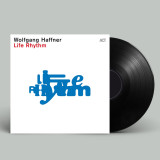
Wolfgang Haffner - Life Rhythm Live LP

Wolfgang Haffner

Life Rhythm Live LP

12inchACTLP8031-1
ACT
30.05.2025
  • Life Rhythm
  • Balance
  • Joy Of Life
  • Eternity
  • Desert Move Feat. Shantel & Thomas Konstantinou
  • Second Nature Feat. Dominic Miller
  • Open Land
  • Full Circle Feat. Bill Evans
  • Silence And Sound
  • Supernova
  • Home

»Ich denke immer wieder aufs Neue darüber nach, wie ich mich als Schlagzeug-spielender Bandleader so positionieren kann, dass das Instrument eine tragende Funktion einnimmt, dies aber auf eine musikalische Weise geschieht und auf keinen Fall als Zurschaustellung von Virtuosität«, sagt Wolfgang Haffner. Diese Haltung zieht sich als roter Faden durch seine gesamte Karriere - und auch durch »Life Rhythm«, sein zehntes Album auf ACT.

Und obwohl Haffners Musik gängigen Vorstellungen virtuoser Schlagzeug-Leader ganz bewusst widerspricht, steht das Instrument diesmal besonders im Fokus. Ausgangspunkt dafür war Wolfgang Haffners allererstes Solokonzert im Jahr 2022 auf Schloss Elmau. Er erinnert sich: »Das war eine Wahnsinns-Herausforderung bei der ich auch vor der Entscheidung stand: Spiele ich jetzt eine Stunde Schlagzeugsolo? Natürlich nicht! Also habe ich habe eine Menge melodisch klingender Perkussionsinstrumente eingebaut, Passagen live geloopt, mit Echos und Delays gearbeitet – im Grunde wie im Studio, nur eben auf der Bühne.« All dies brachte Haffner dazu, sich noch einmal auf ganz intensive Art mit dem Thema mit dem Instrument zu beschäftigen, welches ihn sein Leben lang begleitet. Und so haben alle Stücke auf »Life Rhythm« diesmal ihren Ursprung, nicht wie sonst bei Haffner, am Piano, sondern am Schlagzeug.

Das Ergebnis dieses Prozesses kann man gleich zum Auftakt von »Life Rhythm« auf dem Titeltrack erleben: Das Stück basiert auf einem hypnotischen Groove, bei dem nicht die Becken, wie sonst im Jazz üblich, die Time angeben, sondern vor allem die Trommeln. Das dieser Groove direkt Phil Collins und besonders an dessen Stück »Take Me Home« erinnert, ist kein Zufall: Collins' Art, Drum-Parts zu elementaren Teilen des Songwritings zu machen, ist bis heute eine von Haffners größten Inspirationen. Und auch jedes weitere der elf sehr kompakten, Song-haften Stücke auf »Life Rhythm« öffnet eine eigene Welt des musikalischen Schlagzeugspiels: Mal mal trocken-reduziert mit Besen wie auf »Balance«, poppig bei »Joy of Life«, mit filigranen Becken-Grooves, dezenter Elektronik und Percussion auf »Eternity« oder minimalis-tisch bis kurz vor der Stille in »Silence and Sound«.

Das aus all diesen Stilistiken ein so stimmiges Ganzes ent-steht liegt daran, das Wolfgang Haffner diese im Laufe seiner Karriere bis in die Tiefe durchdrungen hat - an der Seite von stilbildenden Charakteren wie Al Jarreau, Chaka Khan, Pat Metheny, Jan Garbarek, Esbjörn Svensson, Nils Petter Molvaer, Albert Mangelsdorff, Ricardo Villalobos und vielen, vielen mehr. All diese Kollaborationen haben Wolfgang Haffners Voka-bular am Instrument und auch als Komponist geprägt und die da-mit verbundenen, unterschiedlichsten Stile sind gleichermaßen Teil seiner musikalischen Persönlichkeit.

Vielseitigkeit und höchste Musikalität sind auch die Eigen-schaften, die Wolfgang Haffner und seine Mitmusiker auf »Life Rhythm« verbinden. Die Basis bildet ein bestens einges-pieltes Trio zusammen mit Keyboarder Simon Oslender, selbst auch Drummer und Bandleader, und Thomas Stieger, einem der gefragtesten deutschen Bassisten in Pop wie Jazz. Dazu kommen Trompeter Sebastian Studnitzky, Mitstreiter Haffners seit seinem ACT-Debüt »Shapes« und der Finne Arto Mikälä, eine echte Entdeckung in Sachen Klangvielfalt an der Gitarre. Diese Band herausragender Allrounder erweitert Haffner um eine Reihe musikalischer Charaktere, die der Musik ihre ganz eigene Farbe verleihen: Nils Landgren, Freund und Weggefährte seit mehr als 20 Jahren, Saxofon-Ikone Bill Evans, Sting-Gitarrist Dominic Miller, Balkan-Beat-Star Shantel, Bass-Feingeist Nicolas Fiszman, Oud-Virtuose Thomas Konstantinou und Bruno Müller, einer der besten deutschen Jazzgitarristen.

»Life Rhythm«, sagt Wolfgang Haffner, »ist für mich eine Fortsetzung, keine Wiederholung«. Die Musik trägt mit ihrer Wärme, Kraft und Klarheit die charakteristische Handschrift, die Haffner mit seinen Alben und auf tausenden von Konzerten in mehr als 100 Ländern zum wohl populärsten Schlagzeug-spielenden Leader Europas gemacht hat. Und gleichzeitig ist es eine Evolution seiner Musik. Gut möglich, dass Haffners Erfolg genau darin begründet ist, dass seine Musik immer etwas Ver-trautes und etwas Neues beinhaltet und dass Haffner sein Publikum so immer »mitnimmt« im Fluss seiner Ideen - und in einem gemeinsamen »Lebensrhythmus«

Сделать предзаказ30.05.2025

он должен быть опубликован на 30.05.2025

33,57
De Frank Kakra - Finding De Frank LP 3x12"
  • 01: Call Me Frank
  • 02: The World Is One
  • 03: Psychedelic Man
  • 04: Think Of The Future
  • 05: Afe Ato Yen Bio
  • 06: Yare Ye Ya
  • 07: Sometimes We Love
  • 08: We Can Take Time
  • 09: Hippy Around
  • 10: Groovy In Groove
  • 11: Come On Baby
  • 12: Funky Train
  • 13: Ayee Menko
  • 14: Get On Tonite
  • 15: Dig This Way
  • 16: Dankasa
  • 17: Rain, Rain
  • 18: Worry
  • 19: Keep On Loving
  • 20: Sons Of Jehovah
  • 21: Baby Don&Apos;T Play Me Wayo
  • 22: Mefa Medo
  • 23: Rasudilahi
  • 24: Abusua

Not much is known about De Frank Kakra - let alone his birth name or where he is today. A few liner notes scattered across his records give a glimpse of his career as a backing vocalist and percussionist on the Ghanaian highlife scene of the 1970s, notably with Vis-A-Vis, K. Frimpong's band (Cubano Fiestas). He later formed his own bands, The Professionals and The Diggit Ways, alongside Sammy Copper, recording throughout West Africa. His recordings have now been unearthed, remastered and compiled in a triple LP anthology of his musical works. Although much remains unknown, RastaPastaRecords' goal is to ascertain several discoveries made about his life during the production of this record and to continue the research. "Call Me Frank" is a funky take on 1970s highlife set to a vintage Afro - rock fusion that evokes a time when West African dance floors vibrated with raw energy and relentless groove. "Psychedelic Man" is a full dive into the De Frank Kakra sound. With its hypnotic guitar riffs, cosmic organs and head- nodding drum rhythms, this infectious anthem will plunge you into a state of nostalgic psychedelia.

Сделать предзаказ30.05.2025

он должен быть опубликован на 30.05.2025

49,16
EF - MOURNING GOLDEN MORNING LP 2x12"
  • Escapade #1
  • Sons Of Ghosts
  • K-141 Kypck
  • Longing For Colors
  • Fyra
  • 401: Lwa
  • Alp Lugens And Beyond
  • Au Revoir Dear Traitor

The anniversary edition comes in a gatefold-sleeve on clear / golden marbled vinyl with an exclusive poster. It all started in Gothenburg, Sweden back in 2003. After various incarnations the band we've now come to know as EF hit their stride by opening up their heavy distorted guitar palet to a much richer, textural approach with haunting melodies and harmonies. The band started touring and built up a dedicated fanbase throughout the years. The experience and confidence gained from these 22 odd tours have taken them all over Europe and Asia. It has shaped them to become the explosive, energetic and cathartic live band they are now today. As it goes with age and experience also comes growth. Although the sound of the band has evolved away from the hardcore infused post-rock of their early days, EF have always kept their hardcore d.i.y. ethics alive. By running their own record label, And the Sound Records, and setting up their own worldwide distribution they sold thousands of records along the way. In 2010 EF started to collaborate with German label Kapitän Platte by releasing the third album "Mourning golden morning" on vinyl. Now 15 years later, especially as the record is long time out of print, it's time to celebrate this anniversary with a new edition of this album that reached in the meantime the status of a post-rock masterpiece, to name in a row with bands like Caspian, Mogwai or Explosions in the sky.

Сделать предзаказ16.05.2025

он должен быть опубликован на 16.05.2025

35,08
Amber Run - 5am

Amber Run

5am

12inchMOVLPY2795
Music On Vinyl
18.04.2025
  • I Found
  • M.f. (Interlude)
  • Spark
  • Hurricane
  • Noah
  • Pilot
  • Cf (Interlude)
  • 5: Am
  • Just My Soul Responding
  • Good Morning
  • Shiver
  • See You Soon

Amber Run is a British indie rock band from Nottingham. The band have released three albums and four EPs. They played Reading and Leeds festivals, enjoyed national radio support and had a strong press reaction: "Their vast sound has Coldplay stadium ambitions" (Independent); "Epic tunes that sound destined for arenas" (Daily Star); and "Incredibly effective" (The Sun).

Amber Run recorded their debut album throughout January and February 2014 with Sam Winfield and Brit Award-winning record producer Mike Crossey, who previously produced albums for Arctic Monkeys, The 1975, Twenty One Pilots, Walk the Moon, Foals, Keane, Jake Bugg and Yungblud. With Noah’s Mumford & Sons-like vocal melodies and the wisps of Bastille’s fist-pumping pop on single “Just My Soul Responding”, Amber Run maintains a legitimising rockstar edge.

There are comparisons with Coldplay on the single “I Found”, while the title track has London Grammar’s mellow trip-hop vibes.

To celebrate the 10th anniversary of 5 AM, Music On Vinyl in cooperation with Amber Run and Sony Music present a limited, individually numbered 10th anniversary edition on yellow & black marbled vinyl. The package includes an insert with lyrics.

Сделать предзаказ18.04.2025

он должен быть опубликован на 18.04.2025

31,51
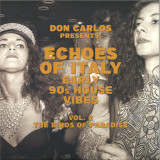
Various - ECHOES OF ITALY – THE BIRDS OF PARADISE – EARLY 90S HOUSE VIBES VOL.2 (2x12")

Googling “paradise house”, the first results to pop up are an endless list of European b&b’s with whitewashed lime façades, all of them promising “…an unmatched travel experience a few steps from the sea”. Next, a little further down, are the institutional websites of a few select semi-luxury retirement homes (no photos shown, but lots of stock images of smiling nurses with reassuring looks). To find the “paradise house” we’re after, we have to scroll even further down. Much further down.

It feels like yesterday, and at the same time it seems like a million years ago. The Eighties had just ended, and it was still unclear what to expect from the Nineties. Mobile phones that were not the size of a briefcase and did not cost as much as a car? A frightening economic crisis? The guitar-rock revival?! Certainly, the best place to observe that moment of transition was the dancefloor. Truly epochal transformations were happening there. From America, within a short distance one from the other, two revolutionary new musical styles had arrived: the first one sounded a bit like an “on a budget” version of the best Seventies disco-music – Philly sound made with a set of piano-bar keyboards! – the other was even more sparse, futuristic and extraterrestrial. It was a music with a quite distinct “physical” component, which at the same time, to be fully grasped, seemed to call for the knotty theories of certain French post-modern philosophers: Gilles Deleuze, Félix Guattari, Paul Virilio... Both those genres – we would learn shortly after – were born in the black communities of Chicago and Detroit, although listening to those vinyl 12” (often wrapped in generic white covers, and with little indication in the label) you could not easily guess whether behind them there was a black boy from somewhere in the Usa, or a girl from Berlin, or a pale kid from a Cornish coastal town.

Quickly, similar sounds began to show up from all corners of Europe. A thousand variations of the same intuition: leaner, less lean, happier, slightly less intoxicated, more broken, slower, faster, much faster... Boom! From the dancefloors – the London ones at least, whose chronicles we eagerly read every month in the pages of The Face and i-D – came tales of a new generation of clubbers who had completely stopped “dressing up” to go dancing; of hot tempered hooligans bursting into tears and hugging everyone under the strobe lights as the notes of Strings of Life rose up through the fumes of dry ice (certain “smiling” pills were also involved, sure). At this point, however, we must move on to Switzerland.

In Switzerland, in the quiet and diligent town of Lugano, between the 1980s and 1990s there was a club called “Morandi”. Its hot night was on Wednesdays, when the audience also came from Milan, Como, Varese and Zurich. Legend goes that, one night, none less than Prince and Sheila E were spotted hiding among the sofas, on a day-off of the Italian dates of the Nude Tour… The Wednesday resident and superstar was an Italian dj with an exotic name: Don Carlos. The soundtrack he devised was a mixture of Chicago, Detroit, the most progressive R&B and certain forgotten classics of old disco music: practically, what the Paradise Garage in New York might have sounded like had it not closed in 1987. In between, Don Carlos also managed to squeeze in some tracks he had worked on in his studio on Lago Maggiore. One in particular: a track that was rather slow compared to the BPM in fashion at the time, but which was a perfect bridge between house and R&B. The title was Alone: Don Carlos would explain years later that it had to be intended both in the English meaning of “by itself” and like the Italian word meaning “halo”. That wasn’t the only double entendre about the song, anyway. Its own very deep nature was, indeed, double. On the one hand, Alone was built around an angelic keyboard pattern and a romantic piano riff that took you straight to heaven; on the other, it showcased enough electronic squelches (plus a sax part that sounded like it had been dissolved by acid rain) to pigeonhole the tune into the “junk modernity” section, aka the hallmark of all the most innovative sounds of the time: music that sounded like it was hand-crafted from the scraps of glittering overground pop.

No one knows who was the first to call it “paradise house”, nor when it happened. Alternative definitions on the same topic one happened to hear included “ambient house”, “dream house”, “Mediterranean progressive”… but of course none were as good (and alluring) as “paradise house”. What is certain is that such inclination for sounds that were in equal measure angelic and neurotic, romantic and unaffective, quickly became the trademark of the second generation of Italian house. Music that seemed shyly equidistant from all the rhythmic and electronic revolutions that had happened up to that moment (“Music perfectly adept at going nowhere slowly” as noted by English journalist Craig McLean in a legendary field report for Blah Blah Blah magazine). Music that to a inattentive ear might have sounded as anonymous as a snapshot of a random group of passers-by at 10AM in the centre of any major city, but perfectly described the (slow) awakening in the real world after the universal love binge of the so-called Second Summer of Love.

For a brief but unforgettable season, in Italy “paradise house” was the official soundtrack of interminable weekends spent inside the car, darting from one club to another, cutting the peninsula from North to centre, from East to West coast in pursuit of the latest after-hours disco, trading kilometres per hour with beats per minute: practically, a new New Year’s Eve every Friday and Saturday night. This too was no small transformation, as well as a shock for an adult Italy that was encountering for the first time – thanks to its sons and daughters – the wild side of industrial modernity. The clubbers of the so-called “fuoriorario” scene were the balls gone mad in the pinball machine most feared by newspapers, magazines and TV pundits. What they did each and every weekend, apart from going crazy to the sound of the current white labels, was linking distant geographical points and non-places (thank you Marc Augé!) – old dance halls, farmhouses and business centres – transformed for one night into house music heaven. As Marco D’Eramo wrote in his 1995 essay on Chicago, Il maiale e il grattacielo: “Four-wheeled capitalism distorts our age-old image of the city, it allows the suburbs to be connected to each other, whereas before they were connected only by the centre (…) It makes possible a metropolitan area without a metropolis, without a city centre, without downtown. The periphery is no longer a periphery of any centre, but is self-centred”.

“Paradise house” perfectly understood all of this and turned it into a sort of cyber-blues that didn’t even need words, and unexpectedly brought back a drop of melancholic (post?)-humanity within a world that by then – as we would wholly realise in the decades to come – was fully inhuman and heartless. A world where we were all alone, and surrounded by a sinister yellowish halo, like a neon at the end of its life cycle. But, for one night at least, happy."

нет на складе

Закажите сейчас, и мы закажем товар для вас у нашего поставщика.

28,99

Последний логин: 6 мес. назад
Breaka - Aeoui LP 2x12"

Breaka

Aeoui LP 2x12"

2x12inchBREAKA008
Breaka Recordings
11.03.2025

Sharpening his modernist, hybridised club sound with the restless energy he’s made his name on, Breaka returns with Aeoui. Nodding to the vowel-only vocal samples he scatters throughout his tracks, this much-anticipated second album reaffirms Charlie Baker’s reputation as a many-sided bass music innovator.

Since 2019, Breaka has been primarily shaping his own destiny by self-releasing most of his music, and it’s afforded him the space to evolve his sound on his own terms. In the wake of his 2022 debut LP We Move, the consistently prolific producer had been looking for a fitting window to channel his work into a second full-length. The opportunity arose when he struck on a fit of jet-lagged inspiration in late 2023 and laid down two of the new album’s key tunes, ‘squashy track’ and ‘yolo bass rewind’. Jutting out at a distinct angle from his other work, Breaka knew he’d found the anchor point around which to build out the next phase of his sonic evolution.

This productive period also aligned with a new studio space to work in, leading to the album’s striking double-dose opening of ‘Aeoui’ and ‘Are We There’. With the flavour of his new album established, Breaka was able to comb back through his reams of existing ideas and find the remaining pieces that fit the emerging puzzle. There are enduring influences which bind together the Breaka sound — footwork, techno and dancehall continue to guide the infectious floor-ready pressure of the record, but he worked free of stylistic concerns to find a vibe that remained true to his independent spirit.

It’s clear the Breaka DNA reaches beyond purist club music — his roots as a jazz drummer from an early age guide the expressive flair in his beat programming, while he took a more direct influence from a mind-blowing Sons Of Kemet gig in 2022 to make psychedelic centre-piece ‘Roundhouse’. Elsewhere ‘Cascara’ pays tribute to the Afro-Cuban rhythm of the same name, which he fused with amapiano’s lithe log drums and shakers, Brazilian percussion and edgy sound design to create a maverick soundsystem wrecker.

The collision of organic and synthetic, crisp forms and chaotic energy are captured perfectly in the cover artwork created with Jordan Core. It’s a savvy sum-up of where Breaka is at right now, continually building out with clear intentions while embracing the unpredictable energy of lived experiences and the ideas that get sparked along the way. That’s why Aeoui sounds like no one else out there but Breaka.

нет на складе

Закажите сейчас, и мы закажем товар для вас у нашего поставщика.

20,97

Последний логин: 10 мес. назад
VARIOUS - GOOD GOD! BORN AGAIN FUNK LP 2x12"

Unofficially the third entry in our Good God! series of ecstatic worship, Born Again Funk picks up where A Gospel Funk Hymnal leaves off. Yes, the prodigal sons of Thomas Dorsey arrived in there multitudes, only some of them toting fuzzboxes and Fender amps. These are the most devout songs, but done up amid the hot, sweaty, earthy moonshine rhythms downed by any blues singer thumbing his way up north from the Mississippi delta. Born Again Funk hones in on wholly modern vulgarity brought to a joyful strain of American composition, and performers unafraid of expressing their devotion with both inspiration and invention. They were acolytes faithful to a spirit, but never to an ordained sound.

нет на складе

Закажите сейчас, и мы закажем товар для вас у нашего поставщика.

32,14

Последний логин: 13 мес. назад
MAUD THE MOTH - THE DISTAFF LP

Maud The Moth

THE DISTAFF LP

12inchLAR001/LRP034
THE LARVARIUM
21.02.2025
  • 1: Canto De Enramada
  • 2: A Temple By The River
  • 3: Exuviae
  • 4: Burial Of The Patriarchs
  • 5: Siphonophores
  • 6: Despe?Aperros
  • 7: O Rubor
  • 8: Fiat Lux
  • 9: Kwisatz Haderach
также имеющийся в продаже

Coloured Vinyl[29,20 €]


Maud the moth, the solo project of Spanish-born and Scotland-based pianist, singer and songwriter Amaya Lopez-Carromero announces her new album, The Distaff, to be released via The Larvarium (digital +CD) and La Rubia Producciones (vinyl) Amaya has long used the mantle of Maud the moth as an alter-ego, a séance-like conduit to explore themes of rootlessness, identity and trauma. The Distaff in particular refers to the stick or spindle onto which wool or flax is wound for spinning, and an object which has historically been used across multiple cultures as a symbol wielded by the “virtuous woman”, an authoritarian ideal around which much of the trauma surrounding the feminine coalesces. The album takes the form of a sort of self reflective and surreal autobiography. It was in part inspired by the poem of the same name written by the Greek poet Erinna, as she mourns her friend's loss of individuality and agency in exchange for marriage - and therefore safety and acceptance in the eyes of society. The album exists in an ethereal but violent world of aesthetic overlaps where time stands still and fictional and reimagined folk sits at the table with Maud the moth’s usual sonic menagerie. It is the result of a lifetime of obsession with sound and music, where glimpses of musical genre offer insight into Amaya’s artistic interests and her participation in the underground European scene for many years, in bands such as healthyliving. Heavier, darker, and more exposed than any of her previous works it features some highly accomplished artists, such as Seb Rochford (Patti Smith, Polar Bear, Sons of Kemet, Pulled by magnets, etc.) on drums, Alison Chesley (Helen Money) on cello, Fay Guiffo on violin and Scott McLean (Ashenspire, healthyliving, Falloch) on guitar, saxophone and synthesiser. Maud the moth shares the video for "Siphonophores". About the track, Maud the moth says; I wrote "Siphonophores" on guitar, during the first lockdown, a period where I was kind of trapped between an almost empty flat in Edinburgh and Dresden. It was an incredibly harrowing time, but also one of hope and where important new things were being birthed. I felt incredibly sensitive to everything, almost like life was happening in slow motion. I´m not a confident guitarist since I am completely self-taught, but, probably because of this, I feel that this instrument allows me to focus on aspects of the songwriting that I normally overlook when writing on piano, and I think it was a necessary step for this song to exist. Something else which I've been really exploiting lately and features strongly in the album is the percussive capabilities of the piano, and in particular, of the sustain pedal when mic'd up. This can be heard very clearly at the beginning of "Siphonophores". Written and arranged by Amaya, with some contributions in the later role from the aforementioned collaborators, the album presents nine tracks originally written entirely on acoustic piano as accompanied voice pieces, in pure singer-songwriter fashion. The album was co-produced and recorded by Scott and Amaya in different studios across the UK between January and July of 2024, in a process that started shortly after the 2020 pandemic and finished alongside the album recordings in a detailed, organic and at times obsessive process aimed primarily at capturing the natural dynamics and expression of free performance. The Distaff was mixed in its entirety by Scott and mastered at Abbey Road by Alex Wharton (Radiohead, My Bloody Valentine, Aurora, Kathryn Joseph etc.) Despite being born of a very personal point of view, the album lacks a specific narrator and was conceived almost as a sonic trousseau, where the needle point, silks and other family heirlooms have been swapped for out-of-the-corner-of-the-eye memories of rural Spain by the vineyards, family disputes, old tales of wartime pains, generational breaches and finally the conflict of migration and estrangement. The songs paint dystopian pastoral scenes which evolve throughout the span of one fictional day outside of time and coherent locations and where imagination (often the only account surviving from traumatic events and gaslighting) has become indistinguishable from fact. The Distaff attempts to acknowledge past trauma, comprehend and process some of the more difficult aspects which have contributed to our darker self and offer closure and solace through creative catharsis.

Сделать предзаказ21.02.2025

он должен быть опубликован на 21.02.2025

29,20
MAUD THE MOTH - THE DISTAFF LP

Maud The Moth

THE DISTAFF LP

12inchLAR001/LRP034X
THE LARVARIUM
21.02.2025

Maud the moth, the solo project of Spanish-born and Scotland-based pianist, singer and songwriter Amaya Lopez-Carromero announces her new album, The Distaff, to be released via The Larvarium (digital +CD) and La Rubia Producciones (vinyl) Amaya has long used the mantle of Maud the moth as an alter-ego, a séance-like conduit to explore themes of rootlessness, identity and trauma. The Distaff in particular refers to the stick or spindle onto which wool or flax is wound for spinning, and an object which has historically been used across multiple cultures as a symbol wielded by the “virtuous woman”, an authoritarian ideal around which much of the trauma surrounding the feminine coalesces. The album takes the form of a sort of self reflective and surreal autobiography. It was in part inspired by the poem of the same name written by the Greek poet Erinna, as she mourns her friend's loss of individuality and agency in exchange for marriage - and therefore safety and acceptance in the eyes of society. The album exists in an ethereal but violent world of aesthetic overlaps where time stands still and fictional and reimagined folk sits at the table with Maud the moth’s usual sonic menagerie. It is the result of a lifetime of obsession with sound and music, where glimpses of musical genre offer insight into Amaya’s artistic interests and her participation in the underground European scene for many years, in bands such as healthyliving. Heavier, darker, and more exposed than any of her previous works it features some highly accomplished artists, such as Seb Rochford (Patti Smith, Polar Bear, Sons of Kemet, Pulled by magnets, etc.) on drums, Alison Chesley (Helen Money) on cello, Fay Guiffo on violin and Scott McLean (Ashenspire, healthyliving, Falloch) on guitar, saxophone and synthesiser. Maud the moth shares the video for "Siphonophores". About the track, Maud the moth says; I wrote "Siphonophores" on guitar, during the first lockdown, a period where I was kind of trapped between an almost empty flat in Edinburgh and Dresden. It was an incredibly harrowing time, but also one of hope and where important new things were being birthed. I felt incredibly sensitive to everything, almost like life was happening in slow motion. I´m not a confident guitarist since I am completely self-taught, but, probably because of this, I feel that this instrument allows me to focus on aspects of the songwriting that I normally overlook when writing on piano, and I think it was a necessary step for this song to exist. Something else which I've been really exploiting lately and features strongly in the album is the percussive capabilities of the piano, and in particular, of the sustain pedal when mic'd up. This can be heard very clearly at the beginning of "Siphonophores". Written and arranged by Amaya, with some contributions in the later role from the aforementioned collaborators, the album presents nine tracks originally written entirely on acoustic piano as accompanied voice pieces, in pure singer-songwriter fashion. The album was co-produced and recorded by Scott and Amaya in different studios across the UK between January and July of 2024, in a process that started shortly after the 2020 pandemic and finished alongside the album recordings in a detailed, organic and at times obsessive process aimed primarily at capturing the natural dynamics and expression of free performance. The Distaff was mixed in its entirety by Scott and mastered at Abbey Road by Alex Wharton (Radiohead, My Bloody Valentine, Aurora, Kathryn Joseph etc.) Despite being born of a very personal point of view, the album lacks a specific narrator and was conceived almost as a sonic trousseau, where the needle point, silks and other family heirlooms have been swapped for out-of-the-corner-of-the-eye memories of rural Spain by the vineyards, family disputes, old tales of wartime pains, generational breaches and finally the conflict of migration and estrangement. The songs paint dystopian pastoral scenes which evolve throughout the span of one fictional day outside of time and coherent locations and where imagination (often the only account surviving from traumatic events and gaslighting) has become indistinguishable from fact. The Distaff attempts to acknowledge past trauma, comprehend and process some of the more difficult aspects which have contributed to our darker self and offer closure and solace through creative catharsis.

Сделать предзаказ21.02.2025

он должен быть опубликован на 21.02.2025

29,20
Various - ECHOES OF ITALY - ARTISTS IN WONDERLAND – EARLY 90S HOUSE VIBES VOL.1 LP 2x12"

Volume 1 of this expertly curated project of 90s Italian House - put together by Don Carlos.

If Paradise was half as nice… by Fabio De Luca.

Googling “paradise house”, the first results to pop up are an endless list of European b&b’s with whitewashed lime façades, all of them promising “…an unmatched travel experience a few steps from the sea”. Next, a little further down, are the institutional websites of a few select semi-luxury retirement homes (no photos shown, but lots of stock images of smiling nurses with reassuring looks). To find the “paradise house” we’re after, we have to scroll even further down. Much further down.

It feels like yesterday, and at the same time it seems like a million years ago. The Eighties had just ended, and it was still unclear what to expect from the Nineties. Mobile phones that were not the size of a briefcase and did not cost as much as a car? A frightening economic crisis? The guitar-rock revival?! Certainly, the best place to observe that moment of transition was the dancefloor. Truly epochal transformations were happening there. From America, within a short distance one from the other, two revolutionary new musical styles had arrived: the first one sounded a bit like an “on a budget” version of the best Seventies disco-music – Philly sound made with a set of piano-bar keyboards! – the other was even more sparse, futuristic and extraterrestrial. It was a music with a quite distinct “physical” component, which at the same time, to be fully grasped, seemed to call for the knotty theories of certain French post-modern philosophers: Gilles Deleuze, Félix Guattari, Paul Virilio... Both those genres – we would learn shortly after – were born in the black communities of Chicago and Detroit, although listening to those vinyl 12” (often wrapped in generic white covers, and with little indication in the label) you could not easily guess whether behind them there was a black boy from somewhere in the Usa, or a girl from Berlin, or a pale kid from a Cornish coastal town.

Quickly, similar sounds began to show up from all corners of Europe. A thousand variations of the same intuition: leaner, less lean, happier, slightly less intoxicated, more broken, slower, faster, much faster... Boom! From the dancefloors – the London ones at least, whose chronicles we eagerly read every month in the pages of The Face and i-D – came tales of a new generation of clubbers who had completely stopped “dressing up” to go dancing; of hot tempered hooligans bursting into tears and hugging everyone under the strobe lights as the notes of Strings of Life rose up through the fumes of dry ice (certain “smiling” pills were also involved, sure). At this point, however, we must move on to Switzerland.

In Switzerland, in the quiet and diligent town of Lugano, between the 1980s and 1990s there was a club called “Morandi”. Its hot night was on Wednesdays, when the audience also came from Milan, Como, Varese and Zurich. Legend goes that, one night, none less than Prince and Sheila E were spotted hiding among the sofas, on a day-off of the Italian dates of the Nude Tour… The Wednesday resident and superstar was an Italian dj with an exotic name: Don Carlos. The soundtrack he devised was a mixture of Chicago, Detroit, the most progressive R&B and certain forgotten classics of old disco music: practically, what the Paradise Garage in New York might have sounded like had it not closed in 1987. In between, Don Carlos also managed to squeeze in some tracks he had worked on in his studio on Lago Maggiore. One in particular: a track that was rather slow compared to the BPM in fashion at the time, but which was a perfect bridge between house and R&B. The title was Alone: Don Carlos would explain years later that it had to be intended both in the English meaning of “by itself” and like the Italian word meaning “halo”. That wasn’t the only double entendre about the song, anyway. Its own very deep nature was, indeed, double. On the one hand, Alone was built around an angelic keyboard pattern and a romantic piano riff that took you straight to heaven; on the other, it showcased enough electronic squelches (plus a sax part that sounded like it had been dissolved by acid rain) to pigeonhole the tune into the “junk modernity” section, aka the hallmark of all the most innovative sounds of the time: music that sounded like it was hand-crafted from the scraps of glittering overground pop.

No one knows who was the first to call it “paradise house”, nor when it happened. Alternative definitions on the same topic one happened to hear included “ambient house”, “dream house”, “Mediterranean progressive”… but of course none were as good (and alluring) as “paradise house”. What is certain is that such inclination for sounds that were in equal measure angelic and neurotic, romantic and unaffective, quickly became the trademark of the second generation of Italian house. Music that seemed shyly equidistant from all the rhythmic and electronic revolutions that had happened up to that moment (“Music perfectly adept at going nowhere slowly” as noted by English journalist Craig McLean in a legendary field report for Blah Blah Blah magazine). Music that to a inattentive ear might have sounded as anonymous as a snapshot of a random group of passers-by at 10AM in the centre of any major city, but perfectly described the (slow) awakening in the real world after the universal love binge of the so-called Second Summer of Love.

For a brief but unforgettable season, in Italy “paradise house” was the official soundtrack of interminable weekends spent inside the car, darting from one club to another, cutting the peninsula from North to centre, from East to West coast in pursuit of the latest after-hours disco, trading kilometres per hour with beats per minute: practically, a new New Year’s Eve every Friday and Saturday night. This too was no small transformation, as well as a shock for an adult Italy that was encountering for the first time – thanks to its sons and daughters – the wild side of industrial modernity. The clubbers of the so-called “fuoriorario” scene were the balls gone mad in the pinball machine most feared by newspapers, magazines and TV pundits. What they did each and every weekend, apart from going crazy to the sound of the current white labels, was linking distant geographical points and non-places (thank you Marc Augé!) – old dance halls, farmhouses and business centres – transformed for one night into house music heaven. As Marco D’Eramo wrote in his 1995 essay on Chicago, Il maiale e il grattacielo: “Four-wheeled capitalism distorts our age-old image of the city, it allows the suburbs to be connected to each other, whereas before they were connected only by the centre (…) It makes possible a metropolitan area without a metropolis, without a city centre, without downtown. The periphery is no longer a periphery of any centre, but is self-centred”.

“Paradise house” perfectly understood all of this and turned it into a sort of cyber-blues that didn’t even need words, and unexpectedly brought back a drop of melancholic (post?)-humanity within a world that by then – as we would wholly realise in the decades to come – was fully inhuman and heartless. A world where we were all alone, and surrounded by a sinister yellowish halo, like a neon at the end of its life cycle. But, for one night at least, happy.

нет на складе

Закажите сейчас, и мы закажем товар для вас у нашего поставщика.

28,99

Последний логин: 6 мес. назад
Ray & His Court - Ray & His Court LP

Ray&His Court

Ray & His Court LP

12inchMRBLP312
Mr Bongo
25.10.2024

Latin funk at its finest. A kingpin player of Miami’s Cuban music scene, Ray Fernandez, brought together his ‘court’ for this sensational Afro-Cuban funk triumph. Largely a family affair, the album features his wife, two sons and a range of other talented musicians including Rickey Washington on saxophone, father of the contemporary jazz maestro Kamasi Washington. Originally released in 1973 on Manuel J. Mato’s iconic and collectible Sound Triangle Records, Ray & His Court is a dose of Miami heat fuelled by a Cuban fire, taking in salsa, soul, funk, calypso and Afro-Cuban rhythms.

A kaleidoscopic album that draws influence from a range of different genres and scenes blended together in true Ray Fernandez style. Side A, showcases an array of traditional Latin workouts including the addictive enticing opener 'La Señorita Lola' and the pulsating 'Lo Sabia' with its punchy horns and Ray’s wonderful, quirky bubbling organ groove. The tantalising ‘Venimos Acabando’ and bouncing organ stabs of ‘El Alacran’ are two further tickets to get a dancefloor vibing.

The B-side then steps things up, slipping a hit of heavy-weight Miami funk into the mix. Take the DJ favourite ‘Cookie Crumbs’ with its fiery bassline, tripped-out voiceovers and breakbeat drums. Or the amazing, memorable and truly unique funk instrumental ‘Soul Freedom’ with some mighty fine bass clarinet work courtesy of Gary Gottfried. Also featured is a seductive organ-led Cuban funk rework of Bobby Hebb's 'Sunny' (are there any bad versions of this song?), with a sumptuous female vocal that combine to serve up a seductive take us this much-loved classic.

'Ray And His Court' is a brilliant blend of Afro-Cuban gems and Miami funk heat from an influential group on Miami’s Latin music scene. A majestic and magnetic classic where every track is a surefire winner.

Сделать предзаказ25.10.2024

он должен быть опубликован на 25.10.2024

25,17
REX84 - Come For You

Rex84

Come For You

12inch33JUANITA002
Juanita Recordings
10.10.2024

ALONZO and M PARENT join forces bringing their gutter-laced sound, through combining their analog and modular studios into a dark cohesion for Juanita Recordings. ALONZO is a Brooklyn based producer, originally from Miami and has released on W.T., ZEMENT, Cultivated Electronics, Kraftjerkz, Rotterhague (as Lithium Parasites with Vidrio), and LSE amongst others. M Parent is a Philly based producer, originally from Connecticut and has released on ZEMENT, Sons of Traders, Acid Camp, Lost Soul Enterprises, and Spectral Sound (as SEER with Maroje T) amongst others.

нет на складе

Закажите сейчас, и мы закажем товар для вас у нашего поставщика.

12,56

Последний логин: 16 мес. назад
The Congos - Feast

The Congos

Feast

12inchKSLP008
Kingston Sounds
04.10.2024

The Congos were formed by Cedric Myton (born 1947 St Catherine, Jamaica) and Roydel ‘Roy’ Johnson (born 1943 Hanover, Jamaica), around the mid-seventies, a time when the Rasta message coming out of Kingston and other pockets of the Jamaican Island was at its most prominent. Cedric Myton’s singing career began back in the rocksteady era in Reggae’s musical story.

He formed the ‘Tartans’ group taking lead vocal duties alongside Devon Russell, Prince Lincoln Thompson and Lindbergh Lewis. They cut ‘Dance All Night’ (1967) and ‘Coming On Strong’ (1968). The line-up reduced to a two piece, Cedric and Devon Russell, when tracks like ‘What a Sin Thing’ and ‘Short Up Dress’ were cut. This line-up became the Royal Rasses, Cedric formed The Congos, on meeting Roydel Johnson. Roydel previously sang as a member of Ras Michael and the Sons of Negas, cutting such tracks as ’Go To Zion’ (1973). As we can see Cedric’s and Roydel’s Rasta roots were firmly in place by the time they had formed The Congos sometimes called ‘The Congoes’.

The Congos possess what all bands look for,that unique sound that draws the listener to them.Lead singer Cedric Myton’s style and phasing, with his distinctive Falsetto voice makes this just the case.Built on a foundation of classic rhythms and with the aid of then Producer, Lee Perry, the groups statement of intent was laid down with one succinct message. The Congos mighty 1977 ‘Heart of the Congos’ album, is quite simply one of the best reggae albums ever recorded.

Producer Lee Perry had wanted to record a classic Jamaican vocal group in his newly built Black Ark Studio. The voice of Watty Burnett was added at the time to cover baritone vocal duties. The studio after various changes in equipment etc. was finally finding its way. A sound built in Lee Perry’s back yard in Cardiff Crescent, Washington Gardens, Kingston, but existing until then in Mr Lee Perry’s mind. The album they cut would be the defining group release to come out of The Black Ark studios, when the vital elements, vibes, musicians, songs and singing would gel to form ‘Heart Of The Congos’. Come the time of it’s release 1977, Lee Perry was in dispute with Island Records and opted to release the record on his own ‘Black Art’ label. Without the high-profile push of a major label, the record undersold and caused a split between producer and band. Under different circumstances maybe this album would be sitting in thousands of homes alongside the Bob Marley, Culture, Burning Spear releases. Cedric Myton went on to release albums with the French arm of the CBS label and Roy Johnson records and tours as Congo Ashanti Roy.

Cedric Myton the central force carries on the mantle of the Congos and we at Kingston Sounds are proud to pick up the story with another set of vocal statements, which sees Cedric cut some of his finest tunes. Helped along by another reggae legend Brent Dowe, lead singer of the Melodians (Rivers of Babylon), over some classic 1970’s rhythms. Yet again we find that magic formula of strong statements working alongside classic rhythms making the balance work. The Rasta message is still strong on modern classics like ‘King Rastafari Is His Name’, ‘Rasta Congo Man’ and the injustices of the world dissected in tunes ‘Some A Thief’, ‘Watch & Pray’ and the prophetical, ‘Citizen Of The World’.

Once touched by magic it does not fade away, but resurfaces as it has with what we believe to be some of the Congos most heartfelt and meaningful set of songs ...... Let the feast begin.

Сделать предзаказ04.10.2024

он должен быть опубликован на 04.10.2024

15,55
Maelstrom - The FM Tapes

Maelstrom returns to Central Processing Unit for the fourth time, and it's the one born Joan-Mael Péneau's lengthiest drop on the Sheffield label yet. The French artist has been a mainstay in the European electro game since the 2000s, and Malestrom brings that experience to bear on new LP The FM Tapes. He goes about this album with the assurance of a seasoned pro, combining his mastery of electro production techniques with a trademark guile to craft an expertly-paced eleven-track affair.

The first section of The FM Tapes sets out the album's stall with style and aplomb - listeners are in store for a rich feast of off-kilter machine-funk which will feature no shortage of intriguing detours. On opener 'Ondes Courtes' the mix throbs with all manner of strange electronic gristle: a distorted bass hum rattles the monitors; wisps of distortion float across the mix; eerily pretty keys wax and wane before giving way to a radar pulse.

'Ondes Courtes' is an ominous slouch of a scene-setter, and it lines things up perfectly for following cut 'Alt50ser' to lock in. This track's churning, gurgling mid-tempo rattle brings to mind the wacky insistence of Modeselektor. Maelstrom repeats the slow-fast one-two again directly afterwards - 'La Vie Sociale Des', a strange nugget that sounds like an early Eski instrumental stripped for parts and blasted into the cosmos, is an ideal prelude to the twitchy space-funk of 'My Digitone'.

Maelstrom's staying power in the electro world comes, in no small part, from his ability to apply his delightfully idiosyncratic choices to some of the genre's staple production tropes. On The FM Tapes, he marks himself out once more as a pleasingly unorthodox talent by taking tracks in unexpected directions to produce surprising - and often rather moving - results.

There are multiple cuts here which channel the more cerebral end of Richard D. James' AFX/Analord output: 'My Digitone' may be a quicksilver techno-electro number, but there's still something cinematic about the synth treatment here which softens the edges; 'Suede's minor-key oscillations bring other CPU veterans like Cygnus and Bochum Welt into view; 'Res 06', one of two Fasme collaborations on the record, is full of pathos even as the beat programming bangs and whirrs throughout.

While there's a deep emotional undercurrent to The FM Tapes, though, Maelstrom's commitment to bringing the thrills surfaces time and again. If 'Res 06' had Maelstrom and Fasme getting wistful, the album's other Fasme link-up 'Trempo' is one of the hardest club joints here, a piece of old-school Detroit energy replete with some great cascading drum production. Indeed, 'Trempo' comes in the middle of a run towards the album's end where Maelstrom takes the handbrake off - there's a wild-eyed sense of fun to 'The Operator' and 'Upside Down DX7' which has one thinking of the zany cut-and-thrust of KiNK's best work.

Maelstrom's latest drop for Sheffield's Central Processing Unit label is an album of leftfield electro numbers that bring both pounding beats and poignant production.

RIYL: KiNK, Modeselektor, Cygnus, Bochum Welt, AFX

нет на складе

Закажите сейчас, и мы закажем товар для вас у нашего поставщика.

16,60

Последний логин: 10 мес. назад
SURALIN - NOTHING IS THE NEWS LP

Absolute Überforderung, die einfach nur nervt. Am liebsten alles hinschmeißen und verkriechen. Doch SURALIN haben es geschafft, dem allgemeinen Fatigue-Syndrom zu entkommen. Sie haben mit "Nothing is the News" ein Album geschaffen, dass tief berührt, fesselt und gleichzeitig befreit. Der fünfte Longplayer des Chemnitzer Quartetts baut zunächst auf dem Sound seiner Vorgänger auf: ein feingesponnenes Netz aus diversen Indie- und Post-Whatever-Einflüssen, das trotz aller Komplexität ganz einfach und organisch wirkt. Die "Reduktion auf das Wesentliche", wie Bassist Matthias sagt, ist diesmal noch konsequenter ausgefallen. Live im Studio eingespielt und ohne instrumentale Overdubs oder zusätzliche Effekte beim Mix. "Das ist der pure Klang der Instrumente, unserer Pedals und des Aufnahmeraums." Im Ergebnis klingen SURALIN noch dringlicher als sonst, mit bewegender Tiefe. Auf dem treibenden Teppich von Schlagzeug und Bass können die beiden Gitarren ihr Mit- und Gegenspiel zwischen Melodie und Dissonanz entfalten. Die neun Songs beinhalten dabei erstaunlich viele arabeske Figuren sowie motorische Wiederholungen, die erhebliche Sogwirkung entfalten. Darin eingebettet ist der oft fragile Gesang von Alex, der den Zustand seiner Umwelt kommentiert. Laut Sänger Alex vereint der Albumtitel "Nothing is the News" die Gedanken, dass sich die Welt zwar ständig verändert, die Technologie weiterentwickelt und der Mensch sich drastisch vermehrt. Aber der Mensch als solches gleich bleibt. Macht, Unterwerfung, Ausgrenzung, Neid, Missgunst und Egoismus sind die vorherrschenden Themen." Trotz dieser Schwere wird in den Texten immer wieder deutlich, dass durch das eigene Verhalten Veränderungen möglich sind und der Wille zum Besseren überwiegt. Positive Verzweiflung. Außerdem sei der Titel auch eine Anspielung auf SURALIN selbst, die konsequent an der Leidenschaft zum Musik machen festhalten, so Alex.

Сделать предзаказ28.09.2024

он должен быть опубликован на 28.09.2024

23,32
Turbokill - Champion

Turbokill

Champion

12inch249621
Steamhammer
27.09.2024

Die sächsische Band TURBOKILL um ex-Alpha Tiger Sänger Stephan Dietrich, meldet sich mit ihrem zweiten Album zurück. Nach den beiden
Vorab-Singles „Time to Wake“ und „Tear it Down“, folgen dieses Jahr drei weitere Singles, bis das neue Album „Champion“ am 27. September 2024
auf SPV/Steamhammer weltweit digital sowie als CD und Vinyl erscheint.
TURBOKILL haben sich dem europäischen Powermetal verschrieben. Geprägt von starken Melodien und der einprägsamen Stimme Stephan Dietrichs.
Eine Kurz-Tournee Anfang des Jahres, unter dem Banner „New Wave of German Metal“ mit den Bands SINTAGE und FIREBORN im Package,
verdeutlichte die instrumentellen Fähigkeiten des Quintetts und den erstklassigen Powermetal. Das Rock Hard zählte TURBOKILL nach deren Show im
Backstage München immerhin zur „Elite des Teutonenstahls“. Dieser Auszeichnung wollten die Musiker der Band natürlich gerecht werden. Belebt
von der Energie ihrer Live-Auftritte, nahm die Band in der Folge ein entsprechend inspiriertes Album unter der Regie von Lars Rettkowitz (Freedom
Call) in seinem Emperial Sound Studio auf.

Сделать предзаказ27.09.2024

он должен быть опубликован на 27.09.2024

27,94
Eradicator - The Paradox LP

Eradicator

The Paradox LP

12inchMV0381-V
Metalville
20.09.2024

"The Paradox" ist das sechste und ohne Zweifel vielseitigste Album der Thrasher ERADICATOR. Es erscheint im Jahr des 20. Jubiläums der Band. Zehn neue Songs befassen sich textlich mit der widersprüchlichen Natur des Menschseins und präsentieren viele musikalische Facetten, nicht nur des Thrash Metals.

"The Paradox" trägt die Handschrift von ERADICATOR und zeigt ihre ungebrochene Spielfreude. Damit hat sich die Band inzwischen auch live einen Namen gemacht. Die vier Sauerländer scheuen aber nicht davor, ihre neuen Kompositionen stilistisch zu verfeinern und weiterzuentwickeln.

ERADICATOR beginnen auf The Paradox atmosphärisch mit "Beyond The Shadow's Void": Der Track entwickelt sich zu einem stampfenden Headbanger, um sich zuletzt in einem Thrash-Gewitter zu ergießen. Neben Death Metal Growls, unter anderem im Titeltrack, findet mit "The Eleventh Hour (Ramble On)" erstmals eine Halbballade Einzug in das Band-Repertoire. ERADICATOR haben aber keineswegs verlernt die Thrash-Keule zu schwingen, was sie unter anderem mit "Drown In Chaos", "Hell Smiles Back" oder "Fake Dealer" und auch sonst unermüdlich unter Beweis stellen.
Die lyrischen Themen auf "The Paradox" spiegeln die Zwiespältigkeit und Ambivalenz des menschlichen Handelns und Denkens wider. In "Perpetual Sacrifice" geht es darum Schwächere zu verunglimpfen, um sich selbst größer zu fühlen sowie um die Umkehr zwischen Opfer und Täter. "When The Shooting Begins" handelt von der Paradoxität durch Krieg Frieden schaffen zu wollen - wobei im Regelfall die Wahrheit nach dem Aufschrei der Waffen eine der ersten Opfer ist. Das abschließende "Debris Of Demise" ist eine fiktive Erzählung davon, dass die Menschheit aufgrund von Umweltzerstörung den Planeten evakuieren muss, die rettende Arche wegen der großen Menge an Weltraumschrott den Orbit jedoch nicht verlassen kann. Sänger und Gitarrist Seba Stöber sagt dazu, "Dabei wollen wir uns nicht als Moralapostel profilieren, sondern viel mehr die Themen und Probleme unserer Zeit reflektieren. Als Künstler besteht die Aufgabe auch darin, einen Diskurs anzuregen!"

Gemixt und gemastert wurde das Album, wie schon sein Vorgänger, von Sebastian "Seeb" Levermann (Orden Ogan, Asphyx, Brainstorm), der es wieder geschafft hat, ERADICATOR mit einem authentischen Sound auszustatten. Nach 20 Jahren wissen die vier Musiker wie sie klingen möchten und genau so klingt "The Paradox".

Сделать предзаказ20.09.2024

он должен быть опубликован на 20.09.2024

26,68
Продуктов на странице:
N/ABPM
Vinyl