Reissue of one of the Ultimate Soukous banger !
Originally recorded in 1992 in Paris , « Eki Bis « is a party classic. The chorus « 100 % 100% » became a common expression all over the world helped by the hypnotic guitars of the maestros Diblo Dibala and Rigo Star and a smashing uptempo electro acoustic drum beat.
Le Cobra de Sundama is a famous singer from Kinshasa (Democratic Republic of Congo ) who composed more than 12 albums backed by great band such as Empire Bakuba , and was considered as The voice like Kofi Olomide or Papa Wemba mixing lingala and French street expressions.
After many concerts and tours allover the continent , he finally settled in Angola . The B side features a Dj / radio edit with the addition of few electro synths . Produced in Paris by the great producer Jacky Toto and now officially licensed.
Remastered by The Carvery and pressed on limited 500 Deluxe vinyl copies
Buscar:souk star
- 1
- A1: Ghidrah
- A2: Partes Nada
- A3: Nos Deixei
- B1: Choros (Edit)
- B2: Choros (Club)
- B3: Sigilo (Megamix)
Bruno Silva, operating here under his restless Serpente alias, returns with Visita do Fogo — a sharp, stripped-back and incendiary counterpoint to the drifting, dream-jazz abstractions of Dias da Aranha. If that record floated like smoke, this one crackles and snaps like dry wood.
Visita do Fogo finds Silva stepping back into the heat of his beat-driven origins, embracing a raw, forward-leaning approach that feels closer to his live detonation than a studio construction. The record is built on stark materials — drum fragments, percussive jolts, scorched-earth loops — all manipulated with his unmistakable “screw” instincts: micro-cuts, sudden pivots, rhythmic false floors and the sense that the track might turn itself inside-out at any moment.
Rather than smoothing edges or leaning into atmospherics, Serpente doubles down on urgency. Each piece moves through the record with a chop-and-go physicality, a kind of ritual propulsion that never settles into comfort. Silva’s rhythmic language remains entirely his own: crooked but precise, feral yet meticulous, rooted in dance structures but constantly mutating away from them.
Visita do Fogo is less a sequel to Dias da Aranha than a flare shot into the same night sky — brighter, hotter, and designed to leave afterimages. It captures an artist burning forward, shedding everything unnecessary, trusting the flame.
The first in a two part series on Canopy documenting the work of the Beninoise supergroup, T.P. Orchestre Poly-Rythmo, who were responsible for an astonishing multitude of records, numbering well over 250 releases. While the group underwent numerous personnel changes over the course of their 40+ year legacy; the founder, composer, vocalist & multi-instrumentalist Clément Melome remained a constant and uniting force.
The title track, "Zo Tche Kpo Do Te", sung in Fon by bandleader Clément Melome translates as, "My Fire Will Not Go Out" and was taken from the self-titled LP "Melome Clement & L'International Orchestre Poly-Rythmo". It is here remastered and reissued by Canopy for the first time. This evocative song is a hybrid of soukous-like elements with a driving, almost disco beat and a relentless bassline shot through with funky guitars and triumphant horn arrangements. The atmosphere is given a cosmic sensibility with synth lines and psychedelic FX, culminating in a sonic cocktail that has often been described as "Voodoo-disco".
Accompanying the original version are two remixes by producers whose work Canopy has long admired.
Jose Marquez adds live bass and percussion to his "Mezcla", turning it into an uplifting opus that deftly dances the line between the original work and the modern elements, tastefully updating the sound to segue between the past and present.
Sol Power All-Stars up the ante with their powerful reinterpretation. Throbbing bass underpins a club focused yet dubbed out and psychedelic afrobeat over which Clement Melome's composition shines. The Ibibio Horns add complimentary horn arrangements and galactic synth solos. The end result is a master work in 21st century future-vintage afro funk creation.
(180gr vinyl) Dizzy Mandjeku & Odemba OK Allstars, the esteemed Congolese musical ensemble, joyfully announces the forthcoming release of their latest masterpiece, "Odemba Nostalgie - Rumba Congolaise," on vinyl format.
Dizzy Mandjeku is considered a living guitar legend. The guitar riff from Stromae’s Papaoutai, ten years on tour with Zap Mama and besties with Baloji. Over the years he has built up an entire repertoire with the greats of Congolese rumba. Cuban rumba was vibrant in Congo and it didn’t take long before traditional elements started to blend with modern instruments. With Franco Luambo and his band T.P.O.K. Jazz at the forefront, the music evolved into a brand new style called Rumba Odemba. Dizzy, having been a member of the T.P.O.K. Jazz later founded the Odemba OK Allstars in Brussels in order to keep th unique ‘Rumba Odemba’ alive.
As an hommage to Franco Luambo, Dizzy took six of songs he used to play with him and interweaved them into two medleys: ‘Odemba #1’ and ‘Odemba #2’.
"Odemba Nostalgie - Rumba Congolaise" pays homage to the timeless tradition of Congolese rumba. Guided by the expertise of producer Toms Ntale and mixer Vincent Kenis (Crammed Discs) the album delivers an authentic listening experience that transports listeners to the heart of Congo's vibrant music scene.
"Dizzy Mandjeku & Odemba OK Allstars bring pure Franco OK Jazz rumba to the stage - brassy, funky, soukous heaven, with the enduring sound of the 60’s and 70’s getting everyone dancing and whooping." - Songlines (Anita Scott)
Ngwaka Son Systéme’s debut album Iboto Ngenge means “power struggle” or “seizing the opportunity” but while words can only be roughly translated, the music reaches listeners unambiguously: A potent mixture of techno, rumba, soukous, zagué and dancehall with the unique “Kinoise” brand fresh out of Kinshasa, the Congolese megacity that never stops innovating in the music landscape worldwide. Ngwaka Son Systéme is led by musicians Love Lokombe and Bom’s Bomolo, having previously founded the band KOKOKO!. This new project continues the contemporary Congolese tradition of reinventing electronic music by shaping and crafting music instruments made of household objects. As a means to continue strengthening the links between Africa and Latin America, Eck Echo has tasked Colombian dub engineer Diego Gomez with the analog mixing of the stems, originally recorded by Levy David at Timbela Ba Studio in Kinshasa. With the aim to bring the lexicon of shared Colombian and Congolese music into the next chapter, we proudly present to the world the magnificent music of Ngwaka Son Systéme. The inadvertently techno-oriented Lakala, a trance-inducing experience where listeners can quickly relish to the lyrics even without speaking Lingala, for the shapes of the words are already inviting listeners to dance, sing and smile, all the while virtuoso percussionist Steroy operates the DIY-drum kit at high-tempo. The call-and-response effect, where each musician lends their voice to the choir, is particularly felt in Bo Lobi Pe, where the vocals guide us ever so playfully to the tune of an acoustic guitar that invites us to take off our shoes, kick back and relax. Zanga Mbongo (translated as “there is no money”) is lyrically a proud anthem to celebrating life in spite of economic scarcity, and musically it is a triumphant renewal to the legendary soukous genre of the 1970s, championed by worldwide renowned stars such as Pepe Kallé and Sam Mangwana.
The official new edition from this rare and great Afrobeat & Soukous masterpiece from Nigeria !
"Vibro Success Intercontinental Orchestra was an extraordinary group from the Central African Republic, founded by the sax player Rodolphe 'Beckers' Bekpa, also known as Master Békers, in the late 60's. The band achieved surprising domestic success after Beckers introduced the first drums to the Congolese Rumba rhythm. His innovation proved to be wildly popular so they were hired as the resident band of “ciel d’Afrique au Km5”, a night club in Bangui. The club was renowned as the temple of the Olympic Réal football team's fans and that visibility propelled them into becoming the official national orchestra.
1970 marked beginning of the band's international fame . Their fame spread beyond national borders until they became so popular that invitations began to arrive from nearby countries like Cameroon and Chad, the former of which the band would then tour that same year. The success of their performances prompted a further tour in 1972. According to Rodolphe Bépka, the audience enthusiasm Vibro encountered was bewildering. "We filled the old military stadium in Yaoundé in 1970, in 1972 the new Amadou Haïdjo stadium ... We are running with great success in the cities.” Their popularity was also growing in Chad, where they would tour several times through the early and mid 70's.
Towards the end of 1976, Vibro Success decided to take their music global and introduce Central African music to listeners worldwide. It worked. The turning point came in Nigeria. There the group achieved extraordinary success, with live performances followed by contracts with local labels like Scottie and Ben/Clover resulting in hit releases. Most of their LP's were originally released on this later label, Ben Limited, owned by Ben Okonkwo.
Ben, also known as Clover Sounds, brought a great number of the biggest bands from the country to market, bands like The Apostles, Akwassa,The Doves, Aktion, The Visitors, Mansion, Folk 77 and many others. Nearly all those groups started their recording careers in the label's studios based in the commercial heart of Aba, Abia State, one of Southeastern Nigeria’s largest cities. Aba at that time was a flourishing city, an important crossroads of people and culture with an intensive and active and cutting edge live music and nightlife.
But after that golden era the group began to lose its popularity. In the 1980's they returned to Bangui and resumed their old-time gigs in dance halls there - only to realize that their music didn't have the appeal it used to. Making matters worse, the domestic economic downturn accelerated, forcing the orchestra to slowly end its activities . Vibro Succès Intercontinental Orchestra disappeared at the end of the 80s and most of its members died in the 90s.
We discovered this LP during our first trip to Nigeria in 2016. While traveling in the east to meet up with a musician, we stopped for a night in a village. As often happens in Nigeria, information has a way of traveling fast. The news that a couple of white guys looking for records had arrived in the village the day before spread like light. When we awoke, we found a couple of elderly music lovers in the hall of our hotel with a little pile of records for sale. The nice cover of the “Drunkard” album was right on top!
At first we thought it was just another really good soukous album made by Vibro Success but after we heard “Drunkard” - we knew we had stumbled onto something very special. That was the “easy” part. Soon after, we had the idea of reissuing this LP and that was a bit harder. There were no credits on the cover and not much information about Vibro Succès. We started to ask to our friends to ask around, see if somebody knew them or the producer. That's when sadly we discovered that Ben Okonkwo had passed. So with no leads to follow and seemingly without any possibility of making progress on the matter, we "gave up" and returned to Italy.
A couple years later, in the summer of 2019, we found ourselves again in Aba. This time we had the chance to meet Nnamdi Okonkwo, the eldest son of the late Ben Okonkwo. After Nnamdi's mother and family agreed, he was glad to cooperate with us for the re-release of this special album."
- A1: Scream + Dance - In Rhythm
- A2: Talisman - Wicked Dem
- B1: Animal Magic - Get It Right
- B2: X-Certs - Untogether
- B3: Electric Guitairs - Don't Wake The Baby
- C1: Talisman - Run Come Girl
- C2: Scream + Dance - Giacometti (Wicked Mix)
- D1: Ivory Coasters - Mungaka Makossa
- D2: Animal Magic - Trash The Blad
- D3: Scream + Dance - In Pink & Black
Collecting orders for repress!
Afro Dub Funk & Punk Of Recreational Records '81-‘82
Emotional Rescue returns to what it does best by unearthing musical gems of the British post punk scene with a double pack compilation of Bristol's short lived Recreational Records.
Teaming up with Bristol Archive Records, 10 songs are remastered, reissued and cut loud for DJs and collectors. What is most striking is, although created in the space of just two years, with a disparate collection of artists, musicians and producers coming together, the music holds a considerable cohesive sound.
Set up in 1981 by Bristol based shop, Revolver Records, Recreational was formed as an independent label with its own distribution, as part of the co-operative, Cartel. The label was a natural progression from the shop's punk's DIY aesthetic, acting as a hang out and inspiration for local artists from Mark Stewart to later staff member, Daddy G.
'Get It Right' starts with a one-off project in Scream + Dance, who similarly, alongside local bands Glaxo Babies, Maximum Joy and Rip Rig & Panic, explored post-punk with funk and jazz all underpinned with heavy tribal and dub influenced rhythms. 'In Rhythm', with its infectious groove, acts as a call to arms for the compilation, coming in two parts, the latter dropping away to explore the links with dub.
Next is possibly the label's biggest band in Talisman, going on to be active up to today, their release 'Run Come Girl / Wicked Dem' are both featured in long 12" mixes that explore the classic 'discomix' of vocal and dub in longform.
Animal Magic lead with the pack's title, 'Get It Right' a short-driven punk funk burst that captures the label's sound to perfection. However, much of the compilation is given over to the more experimental side of the bands, with a high percentage the B sides where they headed to the mixing desk for echo chambered dub inspired versions.
X-Certs' 'Untogether; Electric Guitars' 'Don't Wake The Baby' and Animal Magic's 'Trash The Blad' are culled from the flips of various 7" singles and all are a fusion of percussive rhythms, studio trickery and dub inspired techniques, played out against the "Do it Yourself" aesthetic of the time.
To complete is London based, soukous, kwela and afrobeat inspired collective, Ivory Coasters' 'Mungaka Makossa' and two rhythmic curveballs by Scream + Dance in 'Giocometti (Wicked Mix)' and their riotous (and short) closer, 'In Pink & Black'. "Get it right this time, get it right!".
'I heard about Seif Abu Bakr and The Scorpions maybe 3-4 years ago. Their album 'Jazz, Jazz Jazz' ended up on my radar because of an eBay auction with the bids eventually rising daily up to a staggering 1000$. The music is a unique combination of incredible horn arrangements powerfully performed, a vigorous drummer contributing a funky backbone and Seif's vocals uniting those elements. The results range from instrumental tracks awaking memories of 1970s crime thriller soundtracks to more Sudanese-rooted tracks, a lot of them modernized versions traditional rhythms of the diverse regions of Sudan and even an excursion into Colgolese Soukouss.
I went for my second trip to Sudan in December 2018 and after doing some research on the first trip my local colleagues Larissa and Yassir had managed to reach Amir, The Scorpions band leader and he was happy to meet. We got together with him in a Cafe right at the Nile in Omdurman. It was a happy occasion for everyone. He told us stories about him meeting Jimmy Cliff and Lewis Armstrong when they visited Sudan and how he and his band mates from The Scorpions played extensively in Kuwait, both in club residencies as well as for television. Amir brought tons of incredible photos illustrating not only the bands history but the vivid cultural live in the many music clubs in Khartoum of the 1970s. During this decade up until 1983 the capital was home to a huge number of clubs, bards and concert halls. This scene started to perish after president Nimeiry's turn away from his socialist policies, that he was widely associated with in the first decade of his rule, towards the implementation of Sharia law in 1983. During the first decade of his rule he had actively supported various artists of the Jazz scene, taking some of them on trips throughout Africa. The 1989 coup of Bashir and his generals then caused the final blow to a once thriving scene. Both of these political events within 6 years lead to significant drawbacks for the Sudanese jazz scene resulting into hardly no gig opportunities left and parties and concerts being critically observed. A number of musicians faced prosecution, most of the time for their political views; some left Sudan for good. Music never completely vanished from public life and even the regime kept selected artists close, but for a majority of those bands affiliated to the jazz scene life and making ends became a lot harder. The Scorpions dissolved as a group around the same time.
The re-release was produced with a clean copy of the vinyl version as a source. The original reel tape of the album stayed with Saif Abu Bakr along with another reel with other recordings that were never released. Unfortunately it was lost when Saif Abu Bakr had to flee to Kuwait temporarily during the second gulf war when Iraq raided Kuwait. Vinyl version comes with extensive booklets with photos, interviews, liner notes. The vinyl version also has a DLL code.
- Panda Bear, Voice of the Seven Woods, Mammane Sanni Abdoulaye. File under: Jazz / Electronic. Titi Bakorta almost didn't make it. Born in and raised in Kinshasa, the Congolese multi-instrumentalist was on his way to Uganda when he fell off the boat as it traversed the mighty Congo River. Unable to swim, Bakorta was saved by a friend who dragged him to the closest city Kisangani, where he was unexpectedly acquainted with local singer Dancer Papalas. Soon they were performing in bands together, traveling across the continents and settling in Tanzania, South Sudan and Dubai - they even appeared in front of General Defao, the beloved Congolese vocalist who fronted legendary soukous bands Grand Zaiko Wawa, Choc Stars and Big Stars. Now based in Kampala, Bakorta offers his own unique take on Congolese pop and folk sounds, weaving traditional elements through a psychedelic lattice of guitar loops, mangled voices and eccentric beatbox rhythms on his debut full-length. He bends woodblock snaps on 'Kop' into stuttered blurs, wailing emotionally over twanging riffs and bizarre, theatrical xylophone twinkles. It's still pop music on some level, but curved around Bakorta's unwieldy personal narrative - there's a sense that everything could unravel at any time but it all hangs together, strengthened by Bakorta's confident, contemporary production smarts. 'Elles Vais' is more airy, with celestial soukous vocals that float above tight, electronic drums. Tangled guitar echoes overlap each other like dense, weaved tapestries, contrasting perfectly with Bakorta's urgent, driving pulse. Occasionally, he transcends completely, like on 'Molende' where his chants and phrases neatly flutter between praise music and contemporary R&B. "Hustling, hustling, hustling, everyday I'm hustling," an angelic voice coos over phased electric guitar plucks and looped, AutoTuned chorals. It makes perfect sense that Bakorta should team up with Metal Preyers' Jesse Hackett on the album's final track, the aptly-titled 'Titis Haunted House'. The two artists share a similar obsession with moonlit, carnivalesque soundscapes, and Hackett's eerie synths provide a suitably eccentric foundation for Bakorta's ghostly wails and fuzzy guitar sounds.
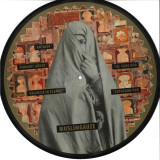
Brilliantly remastered (picture) LP/CD with new stunning artwork!
Lo-Fi India Abuse was recorded in 1998, some tracks are “pure” Muslimgauze and some are re-mixs of tracks from Systemwide’s “Sirius” CD (see also Systemwide meets Muslimgauze “at the City of the Dead” 12″). Nearly all of the tracks have hand percussion in varying tempos and intensities and at least 1/2 make use of electronic noise surges. The sound is very crisp and clean, extremely well produced, recorded and nicely varied throughout the length of the disc. Some track by track comments: “Antalya” is obviously from the same sessions as “Fakir Sind” seeing as it shares the same hand percussion sound, whistles, vocal wailing, cut-ups and delays. “Valencia Flames” sounds like a Systemwide remix. A dub bass line, hi-hat and background vocal of some sort are all obliterated by numerous delays, starts, stops and re-starts with an unpredictable nature in these cut-up tracks. “Al Souk Dub” injects background voices, market sounds and drones into the cut-up mix of slow hand percussion playing. “Catacomb Dub” and the final two tracks make use of twinkling synth waves, presumably a Systemwide sound source. “Dust of Saqqara” has a heavy pulsating electronic sound wave over an old beat box rhythm. “Android Cleaver” is brutal (as is “Nommos’ Afterburn”) hand percussion, jabs of noise and an oft repeated, unintelligible vocal sample. Yes, Lo-Fi India Abuse is yet another great Muslimgauze release, grab it!
All tracks recorded by Muslimgauze 1998
Some tracks are re-mixes from Systemwide’s “Sirius” album
Re-mastered by Višeslav Laboš
Sleeve by Oleg Galay
Originally released in 1999 via BSI Records (BSI 1999-3).
A wild and funky collection of Afro grooves that was ahead of its time in 1977 and has become a collector’s item in recent years, especially due to the growing international interest in Colombian picó sound system culture. Fruko and his studio bands Wganda Kenya and Kammpala Grupo treat us to a diverse set of African and Caribbean styles, laced with crazy synths, psychedelic guitar and infectious pan-African polyrhythms. By the time Discos Fuentes released the album “Wganda Kenya Kammpala Grupo” in 1977, Wganda Kenya’s discography was expanding with many 45 singles and appearances in various artists collections. The group’s 1975 debut record “África 5.000” was a full length LP in the U.S. and a various artists compilation in Colombia, which was followed by the self-titled long player the following year. However, Kammpala Grupo, which shared the album’s title and was credited to three songs on the record, had never appeared before, yet was basically the same studio group as Wganda Kenya. Most likely the creation of this short-lived studio band was just a ploy by the label to make it seem like there were more groups playing the type of exotic afro tracks favored by the picotero DJs of Colombia’s Caribbean coast (especially in Barranquilla and Cartagena). 1974 Discos Fuentes’ management had sent musician, band leader and producer Julio Ernesto “Fruko” Estrada to the coast on an A&R mission to discover what people were dancing to in the verbenas (communal open air neighborhood parties) run by the owners of picó sound systems (decorated mobile DJ rigs). Always game for an adventure, Fruko was tasked with bringing some popular examples of these esoteric, hard-to-find African, French and Dutch Antillean records back to Medellín to serve as inspiration (or to outright copy) so that the label could enter into the growing regional market and spread its popularity to the interior of Colombia and other Latin American countries via its own studio creation, Wganda Kenya. Fuentes was always returning to exploit the rich African-rooted culture of the coast as it had with the cumbia and other regional genres before, so in a way it was not surprising that they were attuned to this particular niche phenomenon from a marginalized sector of the population. The most popular genres with the champeta dancers in the 70’s and 80’s were styles like Congolese rumba, highlife, afrobeat, juju, mbaqanga and soukous as well as the music of Haiti, Guadeloupe, Martinique, Curaçao and Dominica, all of which were fiercely guarded by the DJs who had managed to acquire them often through extreme means of travel, barter and intense digging. The record kicks off with the joyful ‘El Gallo Africano’ which features exquisite interplay between Sepúlveda’s highlife style guitar and an authentic-sounding African style saxophone, perhaps played by Carlos Piña. In reality it was ‘Go Call Police Chief’ by prolific Nigerian highlife guitarist Chief Oliver Sunday Akanite, aka Oliver De Coque. Next up is Kammpala Grupo’s ‘La Yuca Rayá’ (‘Grated Yuca’), written by Isaac Villanueva in a style he termed son haitiano which sounds much more like Zimbabwe Shona mbira music. Wganda Kenya’s ‘Caimito’ (star apple, a type of tropical fruit), on the other hand, is actually a cover of a relatively well-known Haitian merengue song. Kammpala Grupo then takes us from the French Antilles to the multi-cultural discotheques of Paris, where a cover version of Black Soul’s Afro-boogie anthem ‘Black Soul Music’ is retooled and renamed ‘King Kong’, perhaps in a nod to the 1976 remake of the monster flick of the same name. Side two introduces us to the infectious merengue rebita of Angola via ‘La riphyta’ with “Paparí”, aka Mariano Sepúlveda, doing the vocals and faithfully replicating the Angolan guitar style. ‘La Trompeta Loca’ (‘The Crazy Trumpet’), probably the nuttiest track on the album, is an ingenious cover of ‘Ye Gbawa Oo Baba (Tribute To Nigeria)’ by Joe Mensah of Ghana. As with all their covers of African tunes, this rendition tightens up the original with some pop sheen, more consistent drumming and higher production values, remaking it into a powerful slow-burning dance floor filler. This is followed by one of the most powerfully original songs to come out of the entire Wganda Kenya project, Mike Char’s reggae anthem ‘El Nativo’ with Joe Arroyo on vocals. The record ends on a more authentically Caribbean sounding note with the instrumental ‘El testamento’, a cheerful islands banger with bright brass, syncopated calypso beats and chunky cuatro guitar (or ukulele). The original was in the mento genre and titled ‘Sweet meat’, written and recorded by Jamaican trumpeter Bobby Ellis. First time reissue. 180g vinyl.
Introducing a new scintillating, transatlantic collaboration from Names You Can Trust and Loboko, a new group created in the fertile ground of modern New York City's melting pot. The band's debut recording features the young Congolese vocalist and guitar virtuoso, Yohni Djungu Sungu, alongside Soukouss-Stars legend and master bassist in his own right, Ngouma Lokito. The group is rounded out by drummer and co-founder Morgan Greenstreet (himself a contributor to NYCT and Combo Lulo's debut recording, amongst others). He, along with Yohni, helped spawn the group's few but raucous NYC live appearances with various members throughout a couple year period before 2020.
Built upon those influential jam sessions, Loboko took two original compositions to the studio in an effort to document some of the traditional Congolese music they have been cooking up. Rooted in a now ubiquitous guitar-driven sound of African soukous that have permeated the greater Caribbean music landscape for up to six decades, Loboko's take on the ethnic Baluba rhythm, mutuashi, adorns the single's A-side as "Kanyunyi." The B-side stand-out "Ekenge" draws from the Seben style. It's a familiar sound to those sound system aficionadas, an intoxicating guitar combination that has reverberated from the heart of the Congo, through a wave in France's popular African music industry, and into the discerning selections of Colombia's Pico culture. Loboko's original take on these rhythms is quite unique in 2023, eschewing any modern production crutches for the raw pedigree of an electrified trio, and ultimately represents a clear window into the group's authentic live performances.
- A1: La Dame - Mordido - Ft Cyril Atef
- A2: Asna - Atalaku
- A3: Sly A 10 & Dom Peter - Au Maquis Electroniq
- A4: Mc Waraba - Djoro - Pedro Bertho & Sheitan Brothers Remix
- A5: Chabela - N'djamena Love - Ft Pulo N'dj
- B1: Pangar - Ekidongo - Ft Swordman
- B2: Asna & Anyoneid - Abissa
- B3: Aunty Rayzor & Cardozo - Décalement
- B4: Praktika - Five Power - Ft Mc Waraba
- B5: Okyki Onanayo, Stelair & Cardozo - Souké Pou Siki
Blanc Manioc present NYAMAKALA BEATS N°3 their third compilation, and frst-ever vinyl release, due in the spring of 2022.
The label, once again, brings together its extended global musical family - Cardozo, La Dame, Asna, Mc Waraba, Praktika, Aunty Razor, Sheitan Brothers and Pedro Bertho. Blanc Manioc also showcase new family members - Sly A10, Chabela, Pangar and AnyoneID. Rising starts of Abidjan, Oyoki Onanayo and Stelair, and South African heroes, Aero Manyelo, Shujaa Bora, Pulo N'Dj and Mc Swordman also join the family with contributions to the release.
Running parties, festivals and courses in Abidjan (Le Maquis Electroniq), Blanc Manioc pioneer extraordinary talents between Africa and Europe. As well as presenting their frst vinyl release, Blanc Manioc will launch "Blanc Manioc party” this year, a live event following the "Nyamakala" principles (Nyamakala" means "the antidote of evil” in Mandinka) curing the people through dance.
- A1: Afrocult Foundation - The Quest (Version Piano Solo)
- A2: Orchestre Lipua-Lipua - Distingue (Edit)
- A3: B G. And Fibre - (G#) Thanks And Praises
- A4: Akwassa - I Don`t Want No-Body (To Tell Me)
- A5: Aura - I Got To Make It
- B1: Akofa Akoussah - Ramer Sans Rame
- B2: Francis Bebey - La Condition Masculine
- B3: Benis Cletin - Jungle Magic
- B4: Sorry Bamba - M&Bife Je T`aime
- B5: Gregoire Lawani - Elle M` Mordu La Langue
After "Afro Exotique - Adventures In The Leftfield, Africa 1972-88" was enthusiastically embraced by heads, collectors and core Africa Seven enthusiasts alike, we dived back down into the vaults, and hope we've come up with another volume of listenable esoterica from roughly the same period.
"The Quest", courtesy of fleeting 1978 leftfield supergroup Afro Cult Foundation (featuring Joni Haastrup, Remi Kabaka and friends) sets the tone-bar high and sideways, with 4.50 mins of atmospheric, effected solo piano drift to get things started.
Congolese ensemble band "Orchestre Lipua Lipua" introduces gently lilting Soukous with 1977's, "Distingue", before BG and Fibre's "Thanks and Praises" introduces some wobbly, Moog tinged Lagos reggae shuffle to proceedings.
Akwassa's 1974 funker "I Don't Want Nobody" peels off into a Hammond / wah wah / moog mini odyssey half way through, before Tongolese chanteuse Akofa Akoussah's stirring "Ramer San Rame" introduces emotional charge into proceedings.
Francis Bebey's "La Condition Masculine" (1976) is a centre piece of the album, with it's skippy drum machine rhythm and spoken world vocal, but we'll admit, we probably wouldn't have used it if we'd read a translation of that vocal first.
Benis Cletin's "Jungle Magic" (1979) acid funk intro then gives way to a blatant, and at times slightly unhinged homage to the all conquering (at the time) "I Feel Love", Sorry Bamba's "M'Bife Je T'Aime" keeps the leftfield funk groove rolling, before the mournful, immersive croon of Gregoire Lawani's "Elle M'a Mordu La Langue" brings proceedings to a reflective close.
Brilliantly remastered (picture) LP/CD with new stunning artwork!
Lo-Fi India Abuse was recorded in 1998, some tracks are “pure” Muslimgauze and some are re-mixs of tracks from Systemwide’s “Sirius” CD (see also Systemwide meets Muslimgauze “at the City of the Dead” 12″). Nearly all of the tracks have hand percussion in varying tempos and intensities and at least 1/2 make use of electronic noise surges. The sound is very crisp and clean, extremely well produced, recorded and nicely varied throughout the length of the disc. Some track by track comments: “Antalya” is obviously from the same sessions as “Fakir Sind” seeing as it shares the same hand percussion sound, whistles, vocal wailing, cut-ups and delays. “Valencia Flames” sounds like a Systemwide remix. A dub bass line, hi-hat and background vocal of some sort are all obliterated by numerous delays, starts, stops and re-starts with an unpredictable nature in these cut-up tracks. “Al Souk Dub” injects background voices, market sounds and drones into the cut-up mix of slow hand percussion playing. “Catacomb Dub” and the final two tracks make use of twinkling synth waves, presumably a Systemwide sound source. “Dust of Saqqara” has a heavy pulsating electronic sound wave over an old beat box rhythm. “Android Cleaver” is brutal (as is “Nommos’ Afterburn”) hand percussion, jabs of noise and an oft repeated, unintelligible vocal sample. Yes, Lo-Fi India Abuse is yet another great Muslimgauze release, grab it!
All tracks recorded by Muslimgauze 1998
Some tracks are re-mixes from Systemwide’s “Sirius” album
Re-mastered by Višeslav Laboš
Sleeve by Oleg Galay
Originally released in 1999 via BSI Records (BSI 1999-3).
In 2003, Pisco Crane assembled a six-piece band from motivated and talented like minds in the Kinshasa slums where he grew up. Pisco had been involved with a handful of local rap acts when he was younger, but after meeting legendary instrument builder Bebson De La Rue, he was inspired to follow a new path. He set about building instruments from the discarded trash that surrounded his city: bits of old computers or oil cans were fashioned into bass guitars and drums, and keyboards were bashed together using springs, metal pipes, and offcuts of tubing. If there was a core philosophy that guided Pisco at this stage in his journey, it was that everyone should have access to instruments, no matter where they come from or what their budget might be. And following in the footsteps of Bebson, Pisco locked into a Congolese tradition that touches on the eccentric genius of globally lauded artists like Konono Nº1 and Staff Benda Bilili. Over the years, Fulu Miziki's notoriety grew in the Kinshasa underground - their utopian vision of the future was infectious. Eventually, they were joined by performance artist, sculptor and fashion designer Lady Aisha, who offered the band unique colour and a soulful central focus. Influenced by Kinshasa's street performance scene, Aisha helped the band devise vivid masks and costumes that were as electric and singular as the instruments they played, and the scene was set. In 2020, as the world was plunged into lockdown, footage of Fulu Miziki went viral and their star began to grow exponentially, with a video of the band preforming the track 'Tikanga' racking up millions of views on Facebook. The band used this opportunity to work on documenting their sound, and shored up at the Nyege Nyege studios in Kampala for a year to assemble a definitive album. Recorded by HHY & The Macumbas' Jonathan Saldanha, this record captures the band's furiously innovative mixture of industrial sonics, spiritual jazz, punk, and Congolese soukous pressure. At their best, Fulu Miziki sound almost completely out of time, curving pounding rhythms around microtonal clanks, rousing chants and spiky sonics. On 'Mutangila', there's a hint of disco in the 4/4 stomp, but it's been shifted into a post-punk ritual, adorned with complex bell percussion and overlapping vocals. 'Congo' is even harder to define; electrified buzzes form a bassline, but it's the mindboggling rhythms that shuttle the track into psychedelic realms, led confidently by Lady Aisha's limber rhymes. Fulu positively slither on the sultry, industrial-influenced 'Sebe', while 'Tikanga' reminds of Congo's rumba-derived soukous traditions, materializing the sounds into the future with tight, pounding percussion and head-melting fx. The story of Fulu Miziki is sprawling and complex and constantly evolving, with various offshoots and band iterations. Two members left the band in 2016 to form KOKOKO! with French producer Débruit. Not long after they recorded this magnum opus album, several other original members left to form a similarly named outfit currently based in Europe. This other incarnation recently released an EP of electronic productions without the band founder Pisko Crane and lead vocalist Lady Aicha, on the UK based Moshi Moshi records. Pisco and Lady Aicha currently lead a different outfit in Kinshasa made up of completely new musicians. This full-length is the remaining proof of Fulu Mziki at their most vital and most complete - it won't be repeated - and can never be recreated. It's an essential portrait of one of the Democratic Republic of Congo's most innovative contemporary outfits, and some of the most surprising hybrid music you're likely to hear.
Rare & unreleased 80's bangers from Sao Tome e Principe's most iconic singer !
Bongo Joe pursues their work with friend DJ Tom B and are sharing the fourth effort in their São Tomé & Principe series : “Recordar é viver”, the first volume of an anthology dedicated to the one and only Pedro Lima, , "A voz do povo de São Tomé" (the people's voice of Sao Tomé).
“Recordar é viver: Antologia Vol. 1” features some previously unreleased tracks and gives a comprehensive look into the discography of one of the islands’ biggest stars, known for his political outspokenness as much as for his soft voice, delicate rumbas, and high-energy puxas.
With his band Os Leonenses he built a brand new genre around the strong rhythms and infectious energy of Sao-Toméan Samba Socopé ("only with the feet” in Portuguese), but with the influence of Congolese soukous, Cape Verdean Coladeira, elements from French West-Indies Cadence/Compas, and Brazilian Afoxé, it soon developed into the infectiously danceable style known as “puxa”. The band kept playing together up until Pedro’s death in 2019, performing at large events around the islands and on the continent.
But Pedro shined also on his own. Alone, he demonstrated his compositional skills and ability to balance the band’s powerful rhythm section with São Tomé & Principe’s harmonic backing vocal traditions, creating strong, dance floor ready puxas or melodic, delicate rumbas.
Pedro Lima died in 2019, leaving behind the 23 children he fathered, with thousands of mourners accompanying him to his final resting place. The public funeral, paid for by ex-president Pinto da Costa, was one of the biggest the islands have ever seen. Lima, "O cantor do povo” (“The people’s singer”), was buried with his wireless microphone, so his powerful voice would always be heard.
Etran de L'Aïr (or "stars of the Aïr region") welcomes you to Agadez, the capital city of Saharan rock. Playing for over 25 years, Etran has emerged as stars of the local wedding circuit. Beloved for their dynamic repertoire of hypnotic solos and sun schlazed melodies, Etran stakes out a place for Agadez guitar music. Playing a sound that invokes the desert metropolis, Agadez celebrates the sounds of all the dynamism of a hometown wedding. Etran is a family band composed of brothers and cousins, all born and raised in the small neighborhood of Abalane, just in the shadow of the grand mosque. Sons of nomadic families that settled here in the 1970s fleeing the droughts, they all grew up in Agadez. The band was formed in 1995 when current band leader Moussa "Abindi" Ibra was only 9 years old. "We only had one acoustic guitar," he explains, "and for percussion, we hit a calabash with a sandal." Over the decades, the band painstakingly pieced together gear to form their band and built an audience by playing everywhere, for everyone. "It was difficult. We would walk to gigs by foot, lugging all our equipment, carrying a small PA and guitars on our backs, 25 kilometers into the bush, to play for free_ there's nowhere in Agadez we haven't played." Whereas other Tuareg guitarists look to Western rock, Etran de L'Aïr play in a pan-African style that is emblematic of their hometown, citing a myriad of cultural influences, from Northern Malian blues, Hausa bar bands, to Congolese Soukous. It's perhaps this quality that makes them so beloved in Agadez. "We play for the Tuareg, the Toubou, the Zarma, the Hausa," Abindi explains. "When you invite us, we come and play." Their music is rooted in celebration, and invokes the exuberance of an Agadez wedding, with an overwhelming abundance of guitars, as simultaneous solos playfully pass over one another with a restrained precision, forceful yet never overindulgent.
- A1: Ritm
- A2: Apollo 06
- A3: Buhar
- A4: Krauthane (Part 2)
- A5: Buyuleyici (Part 1)
- A6: T
- A7: Uf De
- A8: Buyuleyici (Part 5)
- A9: Epik
- A10: Makara
- A11: Milyoner (Feat Dj No Frost)
- A12: Mega
- A13: Cizbiz
- A14: Yoo
- B1: Interlude
- B2: Malikane
- B3: Damar Operasyonu
- B4: Toplardamar Operasyonu
- B5: Kilcaldamar Operasyonu
- B6: Basparmak
- B7: Planet Ses (Part 1)
- B8: Planet Ses (Part 2)
- B9: Telan (Grup Ses Remix)
- B10: Mono
Limited edition of 500. Vinyl edition includes tracks not available on digital and streaming formats
Grup Ses, Istanbul based veteran beatmaker returns to Souk after 2 years with first fully instrumental album since 2011's sought after 'Beats and Pieces from Turkish Psychedelia'.
Grup Ses project dates back to 2007 which at the time focused on v/vm style edits and breakcore infused mash ups. Starting from 2008 Grup Ses started to build a version of Stones Throw & Brainfeeder influenced beatmaking mixed with a touch of humour. A blend including all kinds of local recorded material like records, tapes, radio broadcasts etc., which became the building blocks of signature Grup Ses sound.
'Beats from the vaults' is a showcase of beatmaking aesthetics Grup Ses visited between 2008 and 2021. Including various cuts available only on soundcloud plus unheard material compiled just for this album.
Nèg Ginen is a song composed by Jean Claude Dorvil on a traditional Nago rhythm (from Benin). Nèg in Haitian creole means “the dude“, “the guy“. It is about pride of being Haitians with solid African roots. As a matter of fact, when we mention Ginen, we talk about Africa. Like the majority of Chouk Bwa’s songs, this one is full of references mentioning Haitian voodoo rituals and spiritual /igures. For instance, Simbi Ganga is a lwa (voodoo spirit) from the Lakou Soukri Danach (voodoo temple) that lives in the water. Wild and brutal when he is chained up, he faithfully represents the Iwa Kongos, notorious for being real party-starters! Kebyesou is an Iwa who lives in the Lakou Souvnans (another temple). He is a royal /igure, like the Dahomey Iwas in general. The voodoo families are, so to speak, all present in this project!
Biography
After a /irst European performance in 2015 at Roskilde Festival leading to many other performances all around Europe, including WOMEX and WOMAD, Haitian traditionnal vodou band Chouk Bwa met the Brussels based duo The Ångströmers in 2016. Their new project combines a renewed dub sensitivity and Haitian rhythm science and spirituality. The ensemble has performed in Haiti and in European festivals including Trans Musicales de Rennes before releasing their /irst album Vodou Alé via Bongo Joe in 2020.
Modular synths and other vintage electronic instruments bring another dimension to Chouk Bwa’s music, although obviously it is always the band’s groove and /luent tempo that leads the energy of the ensemble: no laptops, no drum machines. There are certain freedoms that cannot be coerced. Even more, the electronic instruments are wired directly to the drums that feed them with impacts and caresses. All the Vodou families are there with their many rhythms and songs. Radical Vodou roots for urban audiences.
A brand new studio album from Gorillaz titled The Now Now will be released by Parlophone Records on 29th June.
The Now Now is 11 all-new songs from the World's Most Successful Virtual Act, produced by Gorillaz, with James Ford and Remi Kabaka, and recorded in London, in February this year.
The album sessions for The Now Now saw the band largely eschewing guest stars, taking it back to the core creative crew: blue-haired, sweet-natured dreamer 2D on vocals, whip-smart Japanese badass Noodle on guitar, not forgetting Brooklyn-born philosopher and the meat-behind-the-beat Russel Hobbs on drums. And with Murdoc Niccals temporarily indisposed, bass duties on the new album have been taken up by erstwhile Gangreen Gang member Ace.
A sun-drenched new video for first track Humility, starring a roller-skating 2D and a busking Jack Black, was directed by Jamie Hewlett and filmed entirely in Venice Beach, California last month
Back in 2014 when we first released the self-titled Chupame El Dedo we weren't sure if people could hold their mojitos while banging to their music. In 2019 we seriously advise to keep your hands free while listening to their second album. Formed by psych cumbia master Eblis Alvarez (Meridian Brothers) and Pedro Ojeda (Romperayo), the man that found the perfect cocktail mix for acid + folk + tropical beats, Chupame El Dedo are ready to mess around with Satan. 'No Te Metas Con Satan' it's a humorous title for music that expels cartoonish metal-vibes mixed with tropical rhythms. It's a pitch perfect title for a record that's never at the right pitch. The humour makes way for the funny stories that Eblis and Pedro explore in their lyrics. Souk's fourth release is a daring adventure in global beats. Frequently it comes to mind the universe of Quasimoto, Madlib's abstract hip hop that sounded delicious in the early 2000s. Chupame El Dedo lives in the same kind of power trip, fuelled by intense salsa rhythms dressed with heavy metal images.
That's where Satan comes into place. The Devil wears many clothes, but none are as multi-coloured and trendy as the ones we see in 'No Te Metas Con Satan'. We are advised of that during the first side of the LP. Each song dares the listener, with a multitude of ideas, sometimes dissonant ones, that find their way to make sense. An example The first song 'No Te Metas Con Satan' sounds like a perverted version of 'Da Ya Think I'm Sexy' and when you think it's over, it starts again, repeating ideas and leaving you extremely confused. What the fuck just happened Chupame El Dedo happened.
And it goes on. Flip to the other side and 'Alexandra Candelaria' says hi. A 7:43 minute long sinful & hilarious soup opera. No-one is ready for this. Laughter mixes with intense head banging, while we listen to what would happen if Jodorowsky made a Cartoon Network show. A damn good one. Maybe it's a good idea to not mess around with Satan, but you'll be in serious trouble if you don't listen to this. Seriously.
Soundway Records present a special summer tribute double a-side 12" with two tracks from African musicians that both passed away within a couple of months of each other at the end of 2013 / start of 2014. Both tracks are perfect smooth summer tropical DJ fodder for the dancefloor.
On the first side South African singer Shaluza Max's massive Mashkandi / house anthem from 2002 gets a first release on vinyl. This track was a huge hit in South Africa and around the world on its release. With a soaring Zulu vocal and big sound it's a fitting reminder of a very talented musician who worked as a very well respected producer, composer and arranger who died tragically young at the age of 47 in January of 2014.
On the flip we drop a fairly unknown track from the mid 1980s from one of the biggest names in African music, Tabu Ley Rochereau. With a kind of almost balearic proto-house congolese pop cut with drum machines, and trademark sweet congo horn section, Hafi Deo is a beautiful track that fell into obscurity by perhaps being too smooth for the world music crowd in the mid 80s. Tabu Ley passed away in November 2013 in his late 70s with over 250 albums and 3000 songs to his name. A true pioneer of the congolese soukous sound, he was also one of the most influential African musicians of his generation.
- 1