The meaning of the Blues whether sung, moaned or
shouted is a reflection of the troubled performer's
soul and there is little doubt that John Lee Hooker
was one of the most successful Blues artists that
ever lived. This collection of songs express twelve
chapters of a novel from a Blues icon who's music
continues to inspire with a legacy that lives on.
quête:soul express
Summer at Land’s End is not an interlude or tangent for The Reds, Pinks & Purples but rather a perfect fourth movement following the albums Anxiety Art, You Might Be Happy Someday, and Uncommon Weather. As with these self-recorded records (the primary work of songwriter Glenn Donaldson), the songs on Summer at Land’s End were crafted slowly and then drawn together to make a unified statement. But here, and more than before, Summer at Land’s End combines Donaldson’s rueful pop sensibility with a parallel musical universe, one composed of pictures, dreams, and feelings without words. Even if the underlying theme of this collection is one of conflict or unhappiness, the vision of the music presents an escape to a new world, always fading in and out of sight.
For listeners who may not be familiar with Donaldson’s corner of San Francisco––the Richmond district––or the current wave of hazy, melodic DIY pop groups performing in the city, Summer at Land’s End pulls in images and scenes that feel like a collision of the mundane and the sublime of this present landscape. But settings such as these are the backdrop for personal narratives, expressed as a struggle with love, with companionship and the conflicts of home. With this record, The Reds, Pinks & Purples give less focus to the vanities of a subculture and more to the challenge of connecting with someone, to the ordinary goals of being human and finding harmony with others.
This deliberate saturation in drama and ambiance, along with some of Donaldson’s best songwriting to date, is what gives Summer at Land’s End its special class in the project’s discography. Of the album’s cinematic mood, Donaldson refers to films like Summer of ‘42 and the influence of the classic 4AD catalogue of the 1990s. This style informs much of Donaldson’s prior and current ventures of course (The Ivytree, Vacant Gardens, and a dozen projects in between) but now The Reds, Pinks & Purples have taken the mantle, embracing this instinct for instrumental or dreamier modes of pop songwriting. It’s a pleasure to experience Summer at Land’s End, as this record finds a thrilling balance between songs and sounds, instruments and voices, and the ironic twin poles of art and life.
- A1: Black Slate - "Sticks Man
- A2: Dee Sharp - "Rising To The Top
- A3: Asher Senator - "One Bible
- A4: Cymande - "Fug
- B1: Digital Mystikz - "Misty Winter
- B2: Winston Curtis - "Be Thankful For What You've Got
- B3: Trevor Hartley - "It Must Be Love
- B4: Shut Up & Dance - "Java Bass
- C1: Brown Sugar - "Black Pride
- C2: The Terrorist - "Rk1
- C3: Black Harmony - "Don't Let It Go To Your Head
- D1: Pebbles - "Positive Vibrations
- D2: Ragga Twins - "Ragga Trip
- D3: Janet Kay & Alton Ellis - "Still In Love
- E1: Funk Masters - "Love Money
- E2: Cosmic Idren - "Compelled
- E3: Harry Beckett - "No Time For Hello
- F1: Sandra Reid - "Ooh Boy
- F2: Tabby Cat Kelly - "Don't Call Us Immigrants
- F3: Brown Sugar - "I'm In Love With A Dreadlocks
Soul Jazz Records new ‘Life Between Islands’ collection coincides with the launch of Tate Britain’s exhibition of the same name. This landmark exhibition explores the links between Caribbean and British art and culture from the 1950s to now.
Soul Jazz Records album, sub-titled “Soundsystem Culture – Black Musical Expression 1973-2006,” focuses on the most important Black British musical styles to emerge out of the distinctly Caribbean world of sound systems. The album features an all-star line-up including Dennis Bovell, Shut Up and Dance, Cymande, Digital Mystikz, Brown Sugar, Funk Masters, Janet Kay, Ragga Twins and more.
The album is a lightning-rod journey across Roots Reggae, Jungle/Drum & Bass, Jazz-Funk, Lovers Rock, Jazz, Dubstep and more. Much of Soul Jazz Records’ catalogue comes out of these genres and this album is partly an overview of some of Soul Jazz’s earlier releases (including Digital Mystikz’ long-deleted groundbreaking and now highly-collectible single, ‘Misty Winter’) alongside some choice rare and classic tunes that span over 30 years of sound system culture.
Many of the tracks represent how Black British artists defined their own identity with songs such as Brown Sugar’s righteous ‘Black Pride’, ‘I’m In Love with A Dreadlocks’ and Tabby Cat Kelly’s powerful ‘Don’t Call Us Immigrants’. Aside from being musically rooted in the distinctly Jamaican-born phenomenon of the sound system, much of this identity is also shaped by the triangular relationship of being British-born, of Caribbean heritage, and with an equal love of African-American Jazz, Funk and Soul, as evidenced with many Lovers Rock tunes reggae covers of American soul tunes (such as those of Jean Carn, William de Vaughan and Rose Royce featured here). This stateside influence can also be heard in groups such as the Funk Masters, a group formed by reggae radio DJ Tony Williams, whose jazz-funk music successfully crossed over into New York’s clubland, as well as the great Cymande, whose unique street-funk became staple material for numerous US hip-hop artists in the years that followed.
In the early 1990s, jungle and drum and bass artists took the essence of reggae’s soundsystem culture – MCs, dubplates, crews – and applied them to their own music, applying heavy reggae bass lines to intense double-speed drum breakbeats. At the forefront of this new movement were the duo Shut Up and Dance, working closely with The Ragga Twins, aka Deman Rocker and Flinty Badman, both MCs for North London’s infamous Unity reggae soundsytem. In the early 2000s, dubstep, spearheaded by Digital Mystikz, became the latest instalment in this ever-evolving soundsystem culture.
- A1: John Mehegan – Mabomvana
- A2: The Jazz Epistles - Uku-Jonga Phambili
- A3: Dollar Brand Trio - Eclipse At Dawn
- A4: Miriam Makeba - Ngola Kurila
- B1: Chris Mcgregor & The Castle Lager Big Band – Switch
- B2: Gideon Nxumalo - Chopi Chopsticks
- B3: Miriam Makeba - Love Tastes Like Strawberries
- B4: Dollar Brand – Gafsa
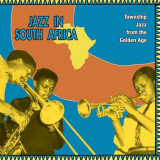
South Africa is in fact the only country in the whole African continent that has developed a strong Jazz tradition. Initially influenced by the great American stylists, (Ellington, Gillespie...) South Africa gradually developed its own soulful style based on a distinctive taste for melody and a deep sense of groove. Masterfully selected from the so-called Golden Age of the genre, (late Fifties / early Sixties), this compilation represents the best introduction to the work of a large and varied body of musicians and composers who inevitably developed their music as part of the historical Anti-Apartheid struggle, and as means of self expression in the dark times of exile. Kippie Moeketsi, Hugh Masekela, Dollar Brand, Chris McGregor, Dudu Pukwana, Mongesi Feza, Barney Rabachan, Nick Moyake and of course the queen Miriam Makeba are just some of the main voices represented here. A bunch of true warriors. in one word: A must!
After more than a year of strengthening our bodies through workout, our poetic endeavors via the discovery of our inner worlds, and also the life of plants and mushrooms, insects, arachnids, birds and wild mammals, after a year and a half that saw us in lockdown, shattered around the planet, after one a and a half year in which we deepened our production skills and also the meaningfulness of our work, Cómeme returns to a new planet with new music.
The beginning is this unique collaboration between Medellín based musician and DJ Julianna, and Matias Aguayo aka “The Don” himself.
In this deep therapeutical exploration of rhythm and sound, these artists established a magical dialogue on distance, leading up to this EP called “Que si el mundo”, roughly translated: “What if the world”.
Between soulful industrial expressions, emotional breakdowns but also discoveries free of any grids and algorithms, Julianna and Aguayo have created a beautiful piece of work, intense as the movements that we had to experience mentally and economically. “Que si el mundo” is state of the art electronic music of today, a work that is both introspective but also extremely open to the outside world and the universe. Compositions reminiscent of Coil, Angelo Badalamenti, Closer Musik, Steve Pointdexter or Mark Broom, shaped this EP that can be considered a short album in its conceptual layout and narrative. Let’s dive into it...
A1. Hiedra
One of the more danceable tunes, ideal for both a sensual warmup or the very late night to the rising sun sensitivity, is polyrhythmical melancholy and hypnotic inevitability, slow dance, deep trance.
A2. Primer Paso
A fat, slick and modern synth sequence, accompanied by heavy drumming and celestial drops that seem to fall onto the body of the listener or dancer, this post EBM stomper is a manifestation of elegant minimalism and reason. As if Liaisons Dangereuses reincarnated in a cloudy forest, to then pause towards the end of the track, with sentimental and gloomy synth chords that open the view towards the horizon.
B1. Que Si El Mundo
The title track keeps up the more melodic approach - somewhere between ambient, avant- garde and late night jazz. Morphing melodies that are both disturbing and soothing at a time encounter smooth free jazz drumming with drums that seem to have travelled from the sixties to today’s world.
B2. Bajo Tierra
This track continues the deep drumming experience that this record means, between laid back rides and intense taikoesque drumming. Distorted dark pads and subterranean choirs build up to a heavy sadness and intensity. Again, a therapeutical track to send those demons fly.
B3. Micelio
A more hopeful conclusion of the EP is “Micelio”. Open chords, soothing and melancholic, spread over profound drum grooves of champed and house. Nothing seems as it was before. A new life has begun.
- A1: Willie Ninja - I’m Hot (Louie Vega & Josh Milan Remix)
- A2: Willie Ninja - I’m Hot (Expansions Nyc Dub)
- B1: Willie Ninja - Hot (Louie Vega’s Why Because I’m Hot Original Mix)
- C1: Ralph Falcon - Break You (Radio Slave Remix)
- D1: Ralph Falcon - Break You (Original Mix)
- E1: The Messenger - End This Hate (Tensnake Remix)
- E2: The Messenger - End This Hate (Todd Edwards Original Mix)
- F1: Beltram Presents Phuture Trax - Future Groove (Agent Orange Dj Rework)
- F2: Beltram Presents Phuture Trax - Future Groove (Maxed Out Original Mix)
- G1: Kim English - Unspeakable Joy (Dr Packer Remix)
- G2: Kim English - Unspeakable Joy (Maurice Joshua Original Mix)
- H1: Byron Stingily - You Make Me Feel Mighty Real (Kevin Mckay Remix)
- H2: Look Out - Let Your Body Go (Franky Rizardo Remix)
part 2[37,77 €]
Nervous Records, the iconic label synonymous with the rise of house from the streets of New York City, will mark 30 years in the music industry by releasing the celebratory compilation LP ‘Nervous Records: 30 Years’ on October 1st (Part 1) and October 15th (Part 2).
Featuring original mixes of the label’s biggest tracks, plus remixes by some of its most celebrated acts, ‘Nervous Records: 30 Years’ is both a celebration of the past and of the future. Featuring a who’s who of electronic dance music, the long player sees names including Louie Vega, David Morales Darius Syrossian, Tensnake, Monki, Franky Rizardo, Danny Howard and more take on iconic Nervous cuts: ‘You Make Me Feel Mighty Real’, ‘Treat Me Right’, ‘Future Groove’, ‘Feel Like Singing’, ‘Get Up Everybody’, ‘Break You’, ‘Hot’, ‘End This Hate’, ‘Unspeakable Joy’, ‘Can Ya Tell Me’, ‘Jerk It’, ‘The Anthem’, ‘It Makes A Difference’, ‘Learn 2 Luv’ and ‘Don’t You Ever Give Up’.
The album marks one of the most enduring, extraordinary legacies to grace America’s illustrious music history, not just in electronica but far beyond. Founded in 1991 by Michael and his father Sam Weiss, and recognizable immediately by its distinctive character logo, the label grew rapidly, in no small part due to Michael Weiss’ practically unmatched passion for discovering new music.
“Louie Vega and Kenny Dope woke me at 4am on Tuesday night, Wednesday morning from their studio telling me they had something really different that I needed to hear,” Michael recollects. “I asked if they could play it over the phone. They said if I wanted to hear it I had to come to the studio. So of course I got myself up, got dressed and went there. That “really different track” ended up being ‘The Nervous Track’, a tune that became our signature release and was also highly instrumental in the emergency of London’s ‘Broken Beat’ movement.”
The label’s willingness to take chances on fresh sounds and innovative concepts rising up from the melting pot sidewalks of NYC ensured a body of work that has become a living musical history of the city. House cuts ‘Unspeakable Joy’ and ‘Nitelife’ (Kim English), ‘Get Up (Everybody)’ (Byron Stingily) and ‘Feel Like Singing’ (Sandy B) bump up against hip-hop anthems like ‘Who Got Da Props’ (Black Moon) and “Bucktown” (Smif-n-Wessun) and reggae cut ‘Take It Easy’ (Mad Lion); soulful flows from Mood II Swing (Kim English ‘Learn 2 Luv’, Loni Clark “Rushing”), Armand Van Helden (‘The Anthem’) and Nuyorican Soul (‘Mind Fluid’) sit alongside seminal techno singles like Winx’ ‘Don’t Laugh’. The young artists and producers who joined the Nervous Records’ family have gone on to become some of the most hallowed and celebrated dance acts of all time: Louie Vega, Kenny Dope, David Morales, Tony Humphries, Roger Sanchez, Armand Van Helden, Kerri Chandler, Kim English, Byron Stingily, Josh Wink, to name just a handful.
“We did a release with Josh Wink under his Winx alias entitled ‘Nervous Build-Up’,” Michael said. “It did well and it was obvious how talented Josh was. Subsequent to that release I was pretty persistent in asking him to continue to play me his new demos. During one phone conversation he said, “Mike I’m gonna play you something over the phone but don’t laugh when you hear it.” That demo ended up being ‘Don’t Laugh’, which became one of our biggest international hits and still to this day is one of America’s earliest and most impactful techno hits.”
As much a celebration of the label’s future as it is of their past, Nervous Records: 30 Years is but a marker in the imprints’ history, a clear sign of where they’ve been and also where they’re going. With 30 years behind them, the label’s determination to unearth new raw diamonds in the rough is as unwavering as ever.
“I’ve always been one to look at what others are doing (the industry at large) and think, “ok, are they doing this specific thing for a reason, or doing it because everyone else is doing the same thing” and make my decision based on that,” says Nervous Records’ General Manager Andrew Salsano. “In an age where data metrics and analytics reign supreme, I remain steadfast that they should be complementary to your decision and not the sole indicator to make one. So many songs today are written with 15 second hooks in mind for social media, and while there’s nothing wrong with that business model you will always be chasing the wave instead of carving out your own path and identity.
“My primary focus for the sound of the label has and will continue to revolve around signing good songs and music that has the ability to react at the street level first. The best results come from artists that are firstly given a bit of local love that grows into a global impact. Fresh ideas that express child-like curiosity and artists showing vulnerability in their music are also something I look for, artists and producers that are not making music with certain markets in mind, but rather their own style and signature that is unique but able to straddle the fine line of underground and overground.”
Still as raw, as underground and as finely tuned to the dance floor as they ever have been, perhaps the secret to the success - and the longevity - of Nervous Records has something to do with that hard, dogged, no-holds-barred NYC edge that runs through the veins of the label. With the next generation of producers rising from the clubs of New York, one thing is certain; Nervous Records will be there to find them, nurture them and bring them to the world at large, over the next decade and beyond.
- A1: Amore Adesso (No Time For Love Like Now) (No Time For Love Like Now)
- A2: Canta La Vita (Let Your Love Be Known) (Let Your Love Be Known)
- A3: The Scientist
- B1: Wicked Game
- B2: Luce (Tramonti A Nord Est) (Tramonti A Nord Est)
- B3: Follow You Follow Me
- C1: Natural Blues (Feat Mahmood)
- C2: Fiore Di Maggio
- C3: Human
- C4: Con Te Partiro
- D1: High Flyin' Bird
- D2: Ho Visto Nina Volare (Feat Fabrizio De Andre)
- D3: Lost Boys Calling
DISCOVER" is the new album by ZUCCHERO "SUGAR" FORNACIARI. It is the first cover album of Zucchero’s career, who stripped and restyled in his own iconic view, Italian and international music masterpieces. The first single will be "Follow you follow me", an engaging reinterpretation of one of the first great worldwide Genesis’ hits. “DISCOVER” unites Zucchero’s two musical souls of the best Italian melodic tradition and the deepest Afro-American roots. Also important are the collaborations with BONO in "Canta la Vita" (Italian version with Italian written lyrics by Zucchero of Bono's song "Let Your Love Be Known"), with ELISA in "Luce (Tramonti a Nord Est)", and with MAHMOOD in “Natural Blues”, Moby's version of Vera Hall's song “Trouble So hard”. Also included is the intense duet" Ho visto Nina volare " with FABRIZIO DE ANDRÉ.Reviews Daily Express, Daily Mail, Uncut, Sunday Times, Telegraph Ads Sunday Times, Uncut. LP Version.
Ever-evolving Australian outfit The Possé debut on cult deep house label Pulp with Moods & Vibrations. Their fresh new four-tracker includes a remix from Space Ghost.
Andrew Elston and Ross Ferraro are the core members of The Possé, but the group often expands or contracts with various other musicians. Since 2017 they have released on the likes of Plastic World, Ken Oath Records and Kolour LTD, and bring plenty of Southern Hemisphere heat to all their productions.
'Parting' opens up with plenty of soulful Detroit house flavours. The dusty drums get you in the groove while subtle acid and silky pads bring a feel-good, sun-kissed vibe. Remixer Space Ghost is Sudi Wachspress, a real album specialist who has released on Tartelet and Apron Records. He has a uniquely lo-fi house sound that draws on funk
and soul. This remix is a late-night jam with gorgeous trumpet motifs and scuffed-up drum patterns all finished off with warming sunset chords.
Then comes 'In Focus', a brilliantly loose and jazzed-up jam. The skipping drums are run through with playful keys and humid chords that cannot fail to bring the party. 'Prime Mover' is a little more direct and dynamic but no less heartfelt, with more expressive melodies and infectious drums. A liquid Mix of 'Prime Mover' layers in fatter bass and more crisp percussion to take you to another level. Moods & Vibrations is an EP of rich, musical house grooves that are overflowing with soul.
By the time of their second album, 1989’s ‘Unfinished Business’, EPMD were firmly cemented in the rap stratosphere. With one certified classic album under their belts, they proved they were no one-hit wonders, with the sequel possibly even better. A concise 12 tracker once again produced by the artists themselves, it saw them adhering to the ‘if it ain’t broke, don’t fix it’ maxim, while going somewhat ‘bigger’.
In other words, guests started to appear – not just on the records, but in the videos – and marketing budgets were higher. None of which watered down their sound. In fact, this is the ultimate EPMD record: a beat that’s simple but perfect, and two top-of-their-game MC’s going back and forth. But the appearance of NWA in the video for ‘The Big Payback’ hints at their reputation at the time – and at the cordial relations between coasts before the deadly beef that was to come.
‘Payback’ takes both its title and core sample from James Brown’s ‘The Payback’ from 1973, and then weaves two more JB elements with it, including the addictive stabs from ‘Baby, Here I Come’. It’s a golden track from the golden age.
The B-side is another gem from the same album, and only released before on 7” in a very rare, limited pressing. ‘So Wat Cha Sayin’ was the album’s lead single, and shows EPMD’s wide sampling palette. There’s bits of BT Express, a whole lot of Funkadelic and, brilliantly, some drums lifted from Soul II Soul’s gem from just the year before, ‘Fairplay’. Lyrically, it’s just all about threats to sucker’s MC’s – what else do you want from EPMD?
• A certified Hip Hop classic.
• Samples James Brown’s ‘The Payback’ from 1973.
- A1: 20/20 Vsn 00 03:11
- A2: Karþýlýklý (Talk To Me) 00 02:19
- A3: Holy Waters Feat Mulay 00 04:06
- A4: Being Alive Feat Sedric Perry 00 03:17
- A5: Dayrunner Feat Ndo 00 02:14
- A6: Power Feat Young Naughty Soul 00 03:00
- A7: Dream On 00 04:02
- B1: Interlude 00 01:12
- B2: On Me Feat Mike Nasa 00 03:18
- B3: Sex'n'ghetto 00 02:37
- B4: Wholesome Feat Barne 00 03:04
- B5: Resilience 00 04:01
When Berus debuted in January 2021 on Kommerz Records with his “Voyage EP”, he had no idea how precise the title would be for the coming months. A little over a year before the release of “Voyage” the Berlin based multi-instrumentalist and producer had taken his focus away from his, more than a decade lasting, house and techno career towards a new sound, inspired from neo soul and hip-hop. Whilst his electronic projects found home on Kerri Chandler's Madhouse Recordings and DVS1’s infamous Mistress and gained his moniker Frag Maddin worldwide attention, it was part of his progress to focus on himself and Berus, his real name. He took this step not knowing it would lead him into a dark journey of self revelation, identity finding and for the foremost new hope: blue hope.
Berus was born to a Zaza family in Kurdistan, which eventually migrated to Germany escaping prosecution and discrimination of the nationalist regime in Turkey. The family settled in Hamburg and Berus grew up to be a New Release Information
musician. He played the drums, formed teen punk bands and started producing at an early age experimenting and shaping his future as an artist.
Since the beginning of his career Berus releases can be seen like a diary, always expressing his very personal state at the time. For the work on “Blue Hope” two main topics fall into the production of the album: love relationships and seeking identity.
There is a blue melancholy and reflection leading through the album. On “Talk to Me (Karþýlýklý)” Berus opens up about his feelings of true love and the need to set free when they are not answered. Whilst the incredible Mulay who is featured on “Holy Waters” answers with her female perspective. And there is hope. The hope (“Dream On”) and fears (“Being Alive” feat. Sedric Perry) of a young migrant generation. “Blue Hope'' is a coming of age story that’s relatable and yet unique, honest but vulnerable and for the foremost: 100% Berus.
The album is a neatly curated mixtape and delivers a wide range of styles like the jiggy sounding Mike Nasa on “On Me” all the way to “Wholesome” on which Barne delivers a John Mayer-esque performance.
On “Blue Hope” Berus gathered a mixture of old friends and new talent around him to produce the record. The outcome is an LP referencing different influences without the use of any samples.
Since its creation in 2007, Hifiklub has led more than 150 collaborations which have allowed the Toulon trio to open its music to multiple artistic experiences revealing a constant desire for research and novelty. From unprecedented encounters to unique projects, Hifiklub has developed over the years a now substantial discography whose musical proposals range from pop to jazz through the most experimental sounds and even traditional music. One path, however, remained unexplored: contemporary music."Last Party On Earth" is organized around the association of three energies: contemporary composer Jean-Michel Bossini, singer Duke Garwood and the instrumental ensemble Hifiklub.
Surrounded by mysticism and darkness, the creation has cinematographic dimensions. It positions the listener in a depth and disposition of soul where the voice - and the poetry - of Duke Garwood is carried by Hifiklub and Jean-Michel Bossini around cold and tormented atmospheres. The album seduces by the detail of its sounds, its apparent tranquility and its intimate atmospheres thwarted by harsh flashes.
Mixed by Alain Johannes (Queens of the Stone Age, Them Crooked Vultures, Eleven), the album sees the exceptional participation of the string trio Anpapié (Alice Piérot, Fanny Paccoud and Elena Andreyev) who magnificently perform the score by Jean-Michel Bossini.
All songs performed by Hifiklub, Duke Garwood and trio Anpapié (conducted by Jean-Michel Bossini)
Pascal Abbatucci Julien – drums, percussion
Eléna Andreyev – cello
Jean-Loup Faurat – guitar
Duke Garwood - vocals, guitar
Régis Laugier – bass
Nico Morcillo – guitar
Alice Piérot – violin
Fanny Paccoud – alto
Collaboration is an essential ingredient to this open trio’s creative approach, forming a recurring theme in Hifiklub’s extensive discography and filmography. Based in Toulon, the hyperactive experimental rock band offer a diverse ever-evolving catalogue that now boasts over 150 artist collaborations since they started in 2006. Over the years they have formed as many fruitful artistic friendships allowing them to explore the endless possibilities of expression combining sound, image and text.
Some of the artists that feature in Hifiklub’s kaleidoscopic discography: Lee Ranaldo (Sonic Youth), Alain Johannes (Queens of the Stone Age, Them Crooked Vultures, Eleven), Roddy Bottum (Faith no More, Imperial Teen), Matt Cameron (Pearl Jam, Soundgarden), The Legendary Tigerman, Jad Fair (Half Japanese), Iggor Cavalera (Sepultura, MixHell), Jean-Marc Montera, R. Stevie Moore, Mike Watt (Minutemen, The Stooges), Fatso Jetson, Nels Cline (Wilco), Scanner, Mike Cooper, Eugene Chadbourne…
LP+Buch
Limited Edition Deluxe Version comes with 50 page children's book inspired by the album. Written by Francine Prose and illustrated by Omar "El Oms" Juarez. The colored vinyl is red. Fresh off of their 2020 offering Adult Themes, El Michels Affair is back with a new full-length release. Titled Yeti Season, this newest album has everything we've come to expect from EMA's patented cinematic style of instrumental soul music. Where Adult Themes inspired a soundtrack to an imaginary film, Yeti Season brings us to a different place in time_with new inspirations. Taken with Turkish-styled funk and an almost Mumbai-esque take on soul, El Michels Affair offers us a different kind of drama and imagination with Yeti Season. If you've been following along, this shouldn't be viewed as too far a departure for El Michels Affair. The first single off of Yeti Season showed their hand back in 2018. A double-sided banger, that release brought the musical textures to the fore that dominate this record. The first song, titled "Unathi," is fully realized with the beautifully haunting-yet-hopeful vocals of Piya Malik, formally of 79.5_another Big Crown artist. Singing in Hindi, Piya's ethereal voice is telling us to work and strive together toward progress. Even if you don't understand her language, you can still hear the urgency of purpose, creating a lasting vibe that sits on top of it all. Leon Michels explains that Piya had a vital influence on this record: "When Piya started singing in Hindi, she had a different voice, a different tone. I knew we had to do something together." And so Piya appears on three other songs on Yeti Season: "Zaharila," "Murkit Gem," and "Dhuaan." Each providing particular signatures to the album. "Zaharila" is a building and changing love song punctuated by blaring trumpets, driving drums, and Piya's pleading lyrics. While the more upbeat "Murkit Gem" opens with a fuzzed out, Wu-Tang-esque baseline that buoys Piya's stylings. The psychedelic guitar and Piya's changing tones and textures singing about an all-consuming love are what pushed "Dhuaan" on to the second single from Yeti Season. There is also a vocal appearance from Shannon Wise of The Shacks, yet another Big Crown artist. Her song called "Sha Na Na," lies more in the familiar EMA vein: melodic, hypnotic, soulfully visual. But between Shannon's airy singing, the jumpy baseline, moody vibes, the active drum lines, it sounds like a pensive walk home after a strangely dramatic night. So what is Yeti Season? It could be more of a feeling than an actual place or time of year. It's a heavy album_as evidenced by the signature musicianship and dramatic vocal expressions. But it's also a hopeful record, with phrasings, textures, and chord changes that hint at something better_or fuller_coming our way. You hear it in songs like "Ala Vida," with its stabby, pulsing chords laying a bedrock for EMA's bright, atmospheric horn lines. Or even in "Fazed Out," which leaves you with a feeling of determination, a striving for resolution even though the driving, march-like song structure should accompany some conquering army. This persistence has to come from the fact that Leon Michels and company finished this record during the lockdown. It was a tough and troublesome time. But look at what has come of it: Yeti Season_a record of high and heavy drama, but also one of hope and promise. It may take a year like 2020 behind us to find hope in a winter big footed creature like a Yeti, but that's where we are.
- A1: Tumblack - Invocation
- A2: John Ozila - Funky Boogie
- A3: Erotic Drum Band - Jerky Rhythm
- A4: Airto - Toque De Cuica
- B1: Ralph Macdonald - Jam On The Groove
- B2: Barrabas - Woman
- B3: Titanic - Sultana
- B4: Black Soul - Mangous Ye
- C1: Kongas - Anikana O
- C2: Brooklyn Express - Hollywood Party
- C3: Bob-A-Rela - Spend The Night
- C4: Spaghetti Head - Big Noise From Winnetka
- D1: Bohannon - Dance With Your Parno
- D2: Larry Page Orchestra - Erotic Soul
- D3: Voyage - Point Zero
- D4: Black Soul - Mangous Ye (Instrumental)
LP is limited to 1000 copies, black vinyl. Swansea Sound started in the middle of lockdown. They realised that fast, loud, joyous, angry indie-pop punk was the answer to being stuck indoors. Who needs introspection? Hue Williams is reunited with Pooh Sticks partner Amelia Fletcher (ex- Talulah Gosh, Heavenly). Rob Pursey (also ex-Heavenly) and Ian Button (Wreckless Eric’s live collaborator) provide the noise. Swansea Sound are the fast, acerbic and joyous past, present and future of indie. Four of the tracks were released as singles, all of them now impossible to obtain. ‘Corporate Indie Band’ was a limited edition cassette, ‘I Sold My Soul on eBay’ was a one-off lathe cut that got auctioned on eBay (with a £400 winning bid), ‘Indies of the World’ was a 7” inch single that briefly hit the UK physical charts, but immediately sold out and plummeted back out again. And then there was ‘Swansea Sound’: a requiem for a lost radio station; an anti-corporate lament - another limited edition cassette single. First track Rock N Roll Void gives a three minute revision session, just in case you’ve forgotten about The Ramones, The Kinks, The Buzzcocks and the brief explosion of indie noise pollution of 1986. Some of the songs are reflexive – ‘Swansea Sound’ and ‘The Pooh Sticks’. (Who else was going to write a tribute to The Pooh Sticks?) Others are searching for hope in the digital desert – ‘Let It Happen’, ‘I’m OK When You’re Around’, ‘Pasadena’, ‘Angry Girl’. ‘Je Ne Sais Quoi’ is pure pop throwaway fun. The others songs are dead catchy too, they just happen to express a sickness and a contempt for the state of things. ‘Corporate Indie Band’ is about a group who have mortgaged their creativity to a major label and sold their identities to an online marketing team of public schoolboys. Freedom of Speech takes a look at three contemporary ‘alternative’ music stars and considers how they’ve responded to BLM, the pandemic and the rise of right-wing populism. ‘Like self-serving arseholes’, is the unfortunate answer. (You won’t struggle to work out who the three ‘alternative’ stars are.) Swansea Sound took their name from a well-loved local radio station when it was given a corporate makeover in 2020. They even used the radio station’s abandoned logo. Like the indiepunk pop songs, something modern acidic and angry has taken up residence in a familiar, borrowed frame. You can throw yourself around to Swansea Sound like it’s 1986, but if you catch the lyrics you’ll remember you’re in 2021. (Sorry about that.) The Rum Puncheon, a notorious pub in Swansea, closed down decades ago.
Truly adventurous and life enhancing music that invigorates your soul. TIP!
Press Release:
Gordan join traditional Serbian singing with abstraction, energy and minimalism. Their music is marked by radical reduction, seemingly endless ascension and a passion for experiments.
The Serbian singer Svetlana Spajić is an internationally recognized and acclaimed artist. She, like almost no other contemporary singer, is a master of all the complex local stylistic variations of singing from Balkan music. Guido Möbius plays bass and various electronic sound generators. Additionally he uses guitar amps, microphones and effects to provoke feedback which either harmonize or are juxtaposed with the song. It is a dialogue between sound and noise which is accentuated or fragmented by means of Andi Stecher’s expressive drumming. With a rich pool of ideas the percussionist drives the sound forward breathlessly and grounds it. Together the trio form a dynamic body of sound.
Gordan recorded their debut during the first wave of the Covid19 pandemic in Europe in March 2020. Due to the lockdown in Berlin at that time the city didn’t have many distractions to offer, so the trio just concentrated on work. The atmosphere of being isolated in a recording studio had a big impact on the musical results. All three band members came up with ideas for new pieces, which were immediately tested, worked out and recorded. On abstract instrumentals provided by Stecher and Möbius, Svetlana Spajic sometimes reacted with personal interpretations of serbian traditionals, and the other way around. Most of the time it was as if the music just happend to the band; playing together felt natural from the first moment on.
Some of the old serbian traditional songs that Spajic sang are extinct forms with a specific local melodic mode. The skillful improvisation of their lyrics and ornaments was of great importance and very estimated among village singers. The title song Down In The Meadow for instance originally is a love song from the village of Odevce in eastern Kosovo, Serbia. The singing manner is of a great intensity and sonority, with lots of specific local ornaments. It disappeared along with the village communities from the area. Oh, my Rose flowers is from the region of Kopaonik mountain (southwest Serbia) and the mode, scale is known as ”kopaonički glas” (Kopaonik mountain air). Svetlana adopted the style from the late singer Veličko Veličković from the village of Ostraće. It is an old mountain solo chant, rich in fast ornamentation movements and microtonal intervals. Don’t ask how I live is Svetlana’s homage to the new popular folk music movement from the 80ies known as Južni Vetar (Southern Wind) led by a musician and composer Mile Ilić, known as Mile Bas (“Mile the Bass”) which revolutionized popular music introducing tabooed oriental music and original arrangements.
All music by Spajic Stecher Möbius except ‘Don’t Ask How I Live’ by Miodrag M. Ilić, original title Što me pitaš
All lyrics are traditional, except ‘Don’t Ask How I Live’
Svetlana Spajic — vocals
Andi Stecher — drums & percussion
Guido Möbius — bass, feedback, electronics
Recorded by Alberto Lucendo at UFO sound studios Berlin in March 2020 mixed by Morphosis
Mastering by Neel at Enisslab, Rome
Artwork by Lorenzo Mason Studio
Tape
SectorSept’s ‘954’ is a boldly original record, one which announces the arrival of a singular musical mind. Its creator states that he crafted this EP by trying to make tracks that were ‘a representation of how I believe music would sound in some distant land in the future’. On ‘954’ this vision takes flight in the form of eight multifaceted, genre-defying electronic productions.
To unpack this record one must first understand the myriad influences which feed into SectorSept’s style. The producer grew up between the UK and Florida - indeed, the record’s title references the area code he had while in the USA. His formative years were spent soaking in the dancehall sounds he heard around him in his Jamaican household as well as techno, jazz, Miami bass and the city’s ‘Love 94 Smooth Jazz’ radio station.
All of this and more can be heard in the fabric of ‘954’. The drum programming alone reveals SectorSept to be someone with extremely wide-ranging musical tastes. Cuts such as ‘Get Ready For The Programme’ and ‘Be There’ are powered by deft beats that have Miami bass, Jersey Club, juke and more in their make-up. Drexciya-adjacent machine-funk creeps into the mix in ‘954’s mid-section, ‘Golden Third Eye’ touches on trap, and closing duo ‘Tropic Universe’ and ‘Prize’ bring dancehall dembows to the fore.
The productions of ‘954’ are simultaneously driving and chilled, coasting nicely yet still plumbed with enough bite to do damage on the dancefloor. It’s a feeling which is heightened by SectorSept’s gorgeous textural work. Several of the tracks here soften up collages of vocal clips with wistful, dreamy synths - see the way that club-caller snippets orbit Boards Of Canada-esque keys on ‘Get Ready For The Programme’ or how closing cut ‘Prize’ works both the classic Warp/Planet Mu sound and the pitched-down stylings of DJ Screw. It’s a rich and fully-formed artistic aesthetic, something which is all the more impressive when you consider that ‘954’ is SectorSept’s first official release.
That said, while the overall flavour of ‘954’ is SectorSept’s and SectorSept’s alone, one also finds links to Gobstopper’s previous output here. Those dancehall influences on ‘Tropic Universe’ and ‘Prize’ line the record up with Gobstopper drops like Otik’s ‘Thousand Year Stare’ while the emotive, soulful synth work that has long been a Gobstopper calling card is also in evidence here. Perhaps the thing about ‘954’ which makes it feel most at home on Mr. Mitch’s label is SectorSept’s imaginative futurism. SectorSept is a keen scholar of anime composers Kenji Kawai and Joe Hisaishi, and as such it is no surprise that there is a slightly fantastical quality to ‘954’. This is most boldly expressed on ‘Intuition Segment’, a magic-realist vignette which looks to Oneohtrix Point Never.
Blending ethereal textures with hybrid electronic grooves, SectorSept’s ‘954’ EP uses the sounds, influences and cultural experiences that have shaped its creator in order to build a vibrant vision of the future.
- A1: Offering - Valgeir Sigurdsson
- A2: Witness (Selfless Rework) - Colin Self
- A3: Constructs Of Still - Kmru
- A4: Tendril (Midnight Peach Rework) - Hudson Mohawke
- B1: Returnless - Kara-Lis Coverdale
- B2: Tendril (Germinative Rework) - Caterina Barbieri
- B3: Fountain (Ars Amatoria) - Vessel
- C1: Sugarcube Revelations - Eris Drew
- C2: Everything Is Beautiful & Alive - Eris Drew
- C3: Cradle (Patience Rework) - Ben Frost
- C4: Kaca Bulan Baru - Gabber Modus Operandi
- D1: Gossip (Catalyst Rework) - Heaven In Stereo
- D2: New Moon (Distant Shores Rework) - Nailah Hunter
- D3: New Moon (In Pisces Rework) - Tygapaw
LIMITED ICE BLUE VINYL
On Delta, a dozen artists across four continents freely interpret Fountain across a double LP, again featuring Donna Huanca’s surreal artwork, and the unearthly graphic manipulations of Nufolklore Studios. Remaining faithful to Fountain’s presentation, Lyra’s curation reflects her commitment to stylistic diversity, with the old guard and the next wave alongside each other. Where some artists chose to rework existing works, others composed new material from fragments found across the record. The results showcase the very themes of wordless identity conflict and technological concerns that Lyra and her foremothers have projected.
the limitless highs of Sigur Ros and the steady pulse of The Knife. KMRU cloaks Lyra in a hazy film, soundtracking the depths of space embedded within the ghosts of jungle past. Gabber Modus Operandi expose the realities of artificial nature in a multicoloured rave dystopia. Eris Drew’s double opus takes the tenets of her philosophies into both ambient and peaktime expressions of the trip, the things that lead to the decision before, and the portals that can open up after.
Ben Frost dissolves Cradle’s deep and tremulous hymn in analogue warble, distressed tape spooling out of control and breaking up over the heavens, while remaining oddly serene. Heaven In Stereo conjures up post-rock with trap drums out of Gossip, buried in bass weight and dub space. Nailah Hunter and Tygapaw transform New Moon into an earthbound ode to nature and a pounding trance state induction, while Caterina Barbieri and Hudson Mohawke extract and amplify Tendril’s mind and soul. Vessel takes what feels like the entire album and builds it up to a frantic climax before subsuming into Enoesque pastoralia.
Alongside Delta, Lyra has collaborated with Spitfire Audio to develop Siren Songs, a free plug-in for their LABS series made from playable samples from Fountain, able to work across DAWs in multiple formats. By removing barriers to access, the listener can craft their own responses to the album’s themes, or use its language to express their innermost feelings in their own works.
Life and society emerge where water tessellates over land and provides fertile soil. The chances of evolution that made them interact as they did could have had meaningful environmental consequences had things developed differently. For Lyra Pramuk, that fertile geology provides the ground for her albums. Fountain was that burst of water and swell of energy that propelled her to critical acclaim. Delta is a new take on a traditional remix album, centred on transgenerational dialogue and global storytelling, and will be released again via Iceland’s Bedroom Community label. Projecting Fountain through prisms, wordless songs fractalize into lush creations that blossom with new life.
The ability to have such sheer diversity of material in one place is thanks to the global increase in accessible technologies, fueling an explosion of creativity and genre exploration that was thought of as unthinkable in our lifetimes. Like its namesake, Delta is a point where creative flows meet and triangulate, where global and personal folk histories are presented in novel ways, where transcultural collaboration is celebrated, where many worlds emerge from the depths below.
RIYL: The Knife, Spacetime Continuum, Lorenzo Senni, the soundtrack to Planete Sauvage, 3:45 AM by the front left speaker, 7:45 AM as light pours in and everything winds down.
There are records with empathy, records which are your friends and then there's the others... There might be little difference between them, a certain "je ne sais quoi", an "almost nothing but still something" which makes the difference between almost pointless and vital records. Despite, or rather thanks to his cynical despair, Matt Elliott's music never holds up a moralizing mirror to us - on the contrary, it creates a compassionate dialogue with listeners like the rhythm of two steps that synchronize to become as one. In 2016, Matt Elliot brought out his seventh solo album The Calm Before whose obscure title is neither exactly threatening nor comforting... the calm before what? Before the storm for sure but maybe also before the great record, the immediate classic we felt might be coming for a long time in the dual discography of the Bristol-born artist working under his own name and his electronic alias Third Eye Foundation. The elegant details and perspectives of Little Lost Soul (2000) already hinted at the upcoming masterpiece from the English singer-songwriter. The Mess We Made (2003) was Matt Elliott's first solo album and portrayed a universe in a kind of flight towards Balkan horizons made up of visceral despair. With the Songs trilogy, he put aside the electronic side of his work to continue working with a minimalist, stark and lucid style of writing. The Broken Man (2012) was full of tears and long laments sometimes carried by Katia Labèque's piano on a record which painted new shades of grey. On this record Matt began working with the producer, arranger and multi-instrumentalist David Chalmin (La Terre Invisible) who has kept on collaborating with the Bristol-born singer since then. Their partnership continued on Only Myocardial Infection Can Break Your Heart (2013) and The Calm Before (2016). Stéphane Grégoire is the head of the Ici D'Ailleurs label which has accompanied Matt Elliott since 2005 and perhaps he describes this album the best: "This new record by Matt is without a doubt his best album to date, a record that takes him into another dimension where he fully asserts himself as a songwriter and singer of the calibre of artists like Bill Callahan, Leonard Cohen or Johnny Cash." Matt Elliott's other records all seemed like empathic links between each other. Farewell To All We Know is an instant classic based on the sensitive piano and superb arrangements of David Chalmin, the sensitive cello of Gaspar Claus, the subtle bass of Jeff Hallam (who has also played with Dominique A and John Parish). There is a clear form of alchemy in all of this and still we find Matt Elliott's usual atmospheres and scenery, the same Eastern European folk music, long songs that take time to settle over time. Everything is the same but also is transfigured. By making his music stark and purifying and redefining the subject matter, Matt Elliott's work became so much more delicate. However this work is never frail nor really turned in on himself and thus becomes like a vital tune that vibrates and unfolds. The opening song Farewell To All We Know seems torn between the fear of what tomorrow may bring, inevitability and hope for the future in a permanent and progressive dramatic tension expressed by his Spanish guitar, the impressionist style piano and Matt's voice teetering on the edge of whispers. A funereal tribute to endless twilights and the dawns we all dream of seeing. There are touches of Leonard Cohen from Songs from a Room or Thanks For The Dance in The Day After That with Gaspar Claus's counterpoint cello. There is no spirit of resignation in Matt Elliott's work - life's path has to be followed against all odds. We have to follow the river's flow to reach the immense ocean and its infinite freedom. The haunted instrumental Guidance Is Internal harks back to the atmospheres of Howling Songs (2008) with its guitar parts full of scansions and muted threats. The music is transcendental but never seems afraid of the risk of falling. This is also what Bye Now tells us with its quasi-obsolete simplicity and sunburst melancholy reminiscent of the work of Luiz Bonfá, Bill Evans on Peace Piece or laidback crooners of the 50s. In Farewell To All We Know, Matt Elliott incessantly alternates between the dual desires to face up to the world or to protect himself from it. Hating The Player, Hating The Game is a lucid statement about the dullness of our daily lives sometimes, our right to get out of the game and no longer want to be part of it. Matt Elliott is tender but spares no one, particularly himself. Aboulia speaks of the tiredness of living and of looming death while Crisis Apparition says that there is always a time for reconstruction after chaos. This is like initially wearying wandering in the ruins of Aleppo with the slow dilution of the melody into a hallucinated drone. However the smell of great fires always fades and the earth always regenerates. Matt Elliott seems to suggest that the survival instinct is stronger than any cold winds could ever be. Matt Elliott never sings of certainties and prefers possibilities. Possibly the worst is over? Maybe... Maybe the storm has passed and devastated everything, now we just have to rebuild and live again. Farewell To All We Know shows us the distance that still needs to be walked and he walks next to you - right next to you, he is the friend who doesn't spare you the truth like all true friends really do.
"Life, Love And Faith" - Allen Toussaint (p, g, hca, arr); Alvin Thomas (ts); Francis Rousselle (tp); Clyde Kerr (tp, frh); George Plummer, Vincent Toussaint (g); Walter Payton (b); Joe Lambert, Joseph Modeliste (dr); a.o. & The Meters
Allen Toussaint had it all around him – the voices and spirits of black music, rhythm ’n’ blues, funk and soul. He was born in New Orleans and grew up there, the birthplace of jazz. As from 1960, he worked as a record producer and an A&R man at Minit Records, an independent label, which was closely associated with the transformation of the New Orleans Sound. His compositions for fellow musicians landed them in the charts, he frequently participated by performing with them on the piano, and so became a connoisseur and master of all possible sounds.
"Life, Love And Faith" marks his launch into his solo career, and quite rightly so. In the songs, Toussaint amalgamates all he had mastered with a rocking R&B, funky rhythms and expressive soul to create his highly personal sound.
Although it is a soul album through and through, one has the feeling that one is listening to an album from Reprise’s stable of singers/songwriters – including such artists as Randy Newman, Bonnie Raitt, Little Feat and Joni Mitchell – rather than what usually came out of New Orleans in the early Seventies. And also because "Life, Love And Faith" captures an eccentric genius who pursues his own idiosyncratic vision. It is a structured, multi-layered album, which does not show Toussaint in his purest form, but it is his only album that shows just how widely ranged and profound his many talents were.
This Speakers Corner LP was remastered using pure analogue components only, from the master tapes through to the cutting head.
All royalties and mechanical rights have been paid.
Recording: 1972 at Jazz City Studios, New Orleans, by Cosimo Matassa and Skip Godwin
Production: Allen Toussaint
- A1: What's Going On
- A2: What's Happening Brother
- A3: Flyin' High (The Friendly Sky) (The Friendly Sky)
- A4: Save The Children
- A5: God Is Love
- A6: Mercy Mercy Me (The Ecology) (The Ecology)
- A7: Sad Tomorrows
- B1: Right On
- B2: Wholy Holy
- B3: Inner City Blues (Make Me Wanna Holler) (Make Me Wanna Holler)
- B4: Head Title
Originally released in 1971. "What's Going On is not only Marvin Gaye's masterpiece, it's the most important and passionate record to come out of soul music, delivered by one of its finest voices, a man finally free to speak his mind and so move from R&B sex symbol to true recording artist. With What's Going On, Gaye meditated on what had happened to the American dream of the past -- as it related to urban decay, environmental woes, military turbulence, police brutality, unemployment, and poverty. These feelings had been bubbling up between 1967 and 1970, during which he felt increasingly caged by Motown's behind-the-times hit machine and restrained from expressing himself seriously through his music. Finally, late in 1970, Gaye decided to record a song that the Four Tops' Obie Benson had brought him, 'What's Going On.' When Berry Gordy decided not to issue the single, deeming it uncommercial, Gaye refused to record any more material until he relented. Confirmed by its tremendous commercial success in January 1971, he recorded the rest of the album over ten days in March, and Motown released it in late May. Besides cementing Marvin Gaye as one of the most important artists in pop music, What's Going On was far and away the best full-length to issue from the singles-dominated Motown factory, and arguably the best soul album of all time." John Bush, AllMusic