Luca Yupanqui was not yet born when she recorded her debut album. The music on the aptly titled Sounds of the Unborn is the expression of life in its cosmic state _ pre-mind, pre-speculation, pre-influence, and pre-human. It is the first album created by a person while they were still inside the womb, the expression of a soul that hasn't yet seen the light of day nor taken a single breath of air. It is a message that comes from a different realm, a sublayer of our existence. Sounds of the Unborn was made with biosonic MIDI technology, which translated Luca's in utero movements into sound. With the help of her parents, Psychic Ills bassist Elizabeth Hart and Lee Scratch Perry collaborator Iván Diaz Mathé, Luca's prenatal essence was captured in audio. They designed a ritual, a kind of joint meditation for the three of them, with the MIDI devices hooked to Elizabeth's stomach, transcribing its vibrations into Iván's synthesizers. They let the free-form meditations flow without much interference, just falling deeper into trance and feeling the unity. After five hour-long sessions, the shape of an album began to emerge. Elizabeth and Iván then edited and mixed the results of the sessions, respecting the sounds as they were produced, trying to intervene as little as possible, allowing Luca's message to exist in its raw form. This cosmic soul summoning created new sounds, striking into uncharted territory for Elizabeth and Iván as musicians. A new language was being created, a new form of communication. It was a music without intellect or intentionality behind it, with no preconception or attempt to create any specific sound or melody. Every note on Sounds of the Unborn occurred naturally. It is human nature to wonder what life is like inside another human being's consciousness. How does it feel? What does it sound like? All these questions became stronger and more important to Elizabeth and Iván while they were waiting for Luca to come into the world. At a certain point the questions turned into, What would she say if she could speak? How would she react to the outer world? And ultimately, What kind of music would she play if she was able to? This album is an attempt to answer those questions. RIYL: Brian Eno, Mort Garson, Kaitlyn Aurelia-Smith
Search:soul express
serpentwithfeet is not only imagining, but exploring a world wherein Black love is paramount. His new album, DEACON, is "a study rather than a story," delving into Black, gay love and the tenderness present in the best companionships, romantic or otherwise. Fully self-actualized and more devoted than ever to personal fulfilment, DEACON highlights his growth as a songwriter, which he credits to taking a more straightforward approach to expression. Spending time with pop songwriters and observing how they traverse language encouraged serpent to take more risks lyrically, resulting in more purity. Raised by religious parents in Baltimore, serpent's flair for theatrical themes and gospel sensibilities can be traced to the Black church, a place where the artist had his earliest experiences with glamour and the ornate. Well-executed vocal flourishes and the implementation of a quickening vibrato are just a few of the skills he picked up during his time in a Pentecostal choir. He proudly follows in the tradition of R&B artists whose gifts were helmed in the church, and he approached DEACON with an undeniable passion and reverence for the genre. In his love for love, serpentwithfeet is offering a look into the soul of a man who articulates his passion in a warmer, gentler way. He's become wholly confident in his gift and messaging on DEACON, which is to be expected when one gives vent to maturity. Through his music, he allows compassion to be the backbone of his art, as he communes with his most loving self.
LTD. OPAQUE BROWN VINYL
serpentwithfeet is not only imagining, but exploring a world wherein Black love is paramount. His new album, DEACON, is "a study rather than a story," delving into Black, gay love and the tenderness present in the best companionships, romantic or otherwise. Fully self-actualized and more devoted than ever to personal fulfilment, DEACON highlights his growth as a songwriter, which he credits to taking a more straightforward approach to expression. Spending time with pop songwriters and observing how they traverse language encouraged serpent to take more risks lyrically, resulting in more purity. Raised by religious parents in Baltimore, serpent's flair for theatrical themes and gospel sensibilities can be traced to the Black church, a place where the artist had his earliest experiences with glamour and the ornate. Well-executed vocal flourishes and the implementation of a quickening vibrato are just a few of the skills he picked up during his time in a Pentecostal choir. He proudly follows in the tradition of R&B artists whose gifts were helmed in the church, and he approached DEACON with an undeniable passion and reverence for the genre. In his love for love, serpentwithfeet is offering a look into the soul of a man who articulates his passion in a warmer, gentler way. He's become wholly confident in his gift and messaging on DEACON, which is to be expected when one gives vent to maturity. Through his music, he allows compassion to be the backbone of his art, as he communes with his most loving self.
LTD. CLEAR BLUE VINYL
Fresh off of their 2020 offering Adult Themes, El Michels Affair is back with a new full-length release. Titled Yeti Season, this newest album has everything we've come to expect from EMA's patented cinematic style of instrumental soul music. Where Adult Themes inspired a soundtrack to an imaginary film, Yeti Season brings us to a different place in time_with new inspirations. Taken with Turkish-styled funk and an almost Mumbai-esque take on soul, El Michels Affair offers us a different kind of drama and imagination with Yeti Season. If you've been following along, this shouldn't be viewed as too far a departure for El Michels Affair. The first single off of Yeti Season showed their hand back in 2018. A double-sided banger, that release brought the musical textures to the fore that dominate this record. The first song, titled "Unathi," is fully realized with the beautifully haunting-yet-hopeful vocals of Piya Malik, formally of 79.5_another Big Crown artist. Singing in Hindi, Piya's ethereal voice is telling us to work and strive together toward progress. Even if you don't understand her language, you can still hear the urgency of purpose, creating a lasting vibe that sits on top of it all. Leon Michels explains that Piya had a vital influence on this record: "When Piya started singing in Hindi, she had a different voice, a different tone. I knew we had to do something together." And so Piya appears on three other songs on Yeti Season: "Zaharila," "Murkit Gem," and "Dhuaan." Each providing particular signatures to the album. "Zaharila" is a building and changing love song punctuated by blaring trumpets, driving drums, and Piya's pleading lyrics. While the more upbeat "Murkit Gem" opens with a fuzzed out, Wu-Tang-esque baseline that buoys Piya's stylings. The psychedelic guitar and Piya's changing tones and textures singing about an all-consuming love are what pushed "Dhuaan" on to the second single from Yeti Season. There is also a vocal appearance from Shannon Wise of The Shacks, yet another Big Crown artist. Her song called "Sha Na Na," lies more in the familiar EMA vein: melodic, hypnotic, soulfully visual. But between Shannon's airy singing, the jumpy baseline, moody vibes, the active drum lines, it sounds like a pensive walk home after a strangely dramatic night. So what is Yeti Season? It could be more of a feeling than an actual place or time of year. It's a heavy album_as evidenced by the signature musicianship and dramatic vocal expressions. But it's also a hopeful record, with phrasings, textures, and chord changes that hint at something better_or fuller_coming our way. You hear it in songs like "Ala Vida," with its stabby, pulsing chords laying a bedrock for EMA's bright, atmospheric horn lines. Or even in "Fazed Out," which leaves you with a feeling of determination, a striving for resolution even though the driving, march-like song structure should accompany some conquering army. This persistence has to come from the fact that Leon Michels and company finished this record during the lockdown. It was a tough and troublesome time. But look at what has come of it: Yeti Season_a record of high and heavy drama, but also one of hope and promise. It may take a year like 2020 behind us to find hope in a winter big footed creature like a Yeti, but that's where we are.
- A1: Wolfwalkers Theme
- A2: Wolves
- A3: Running With The Wolves (Wolfwalkers Version)
- A4: Mechanical
- A5: Wolf Or Girl
- A6: I'm A Wolfwalker
- A7: Howls The Wolf (Moll's Song Wolf Run Free) (Moll's Song Wolf Run Free)
- A8: Our Forest
- B1: What Are You Doing Here?
- B2: This Is Intolerable
- B3: Please Mummy
- B4: My Little Wolf
- B5: Our Victory
- B6: Follow Me
- B7: Mebh's Tune
- B8: Robyn's Tune
In the cinema, the composer must go to meet the filmmakers, enter their world, but without giving up his own. This is the difficulty or the paradox of music for the image. By collaborating with directors from a wide variety of backgrounds, I think I have indirectly discovered a lot about myself. It helped me to progress, to explore territories that were not naturally mine. Cinema is a laboratory where I have sought to construct original orchestral formulas combining Corsican polyphonies, musicians from jazz, variety, classical, or even rappers. Like the world today, a fragmented world where all cultures mingle. So said Bruno Coulais, one of the most innovative composers of contemporary cinema, during the tribute paid to him in 2011 at the Cinémathèque de Paris
In 1978, Bruno Coulais, a young composer of concert works, discovered in film music a new means of expression, a way of bringing the demands of his writing to the masses. François Reichenbach, then Josée Dayan, Jacques Davila, Souleymane Cissé or Laurent Heynemann, first on television and then in the cinema, lead him of his own accord in the discovery of this new world.
In 1995, he composed the music for Microcosmos. This centimeter-scale initiatory journey offers him the opportunity to reveal the full dimension of his writing. He injects into his score a strange lyricism, between wonder and fantasy, confirming the lesson learned from François Reichenbach: "to any documentary image, music brings a part of fiction".
The success of Microcosmos established the musician and made him the indispensable composer of other natural tales, notably alongside Jacques Perrin (Le Peuple migrateur, Oceans, Les Saisons, etc.). Other long-term relationships will be forged, in particular with Benoît Jacquot, with whom he has worked for more than a decade, not to mention Frédéric Schoendoerffer, James Huth or Jean-Paul Salomé.
In addition to great popular successes such as Les Choristes, Brice de Nice or Sur La Piste Du Marsipulami, it is hardly surprising that this insatiable curiosity has found in the animated cinema the most inspiring playgrounds, in particular through his collaboration with two exceptional designers, Henry Selick and Tomm Moore.
The first, American director of The Nightmare Before Christmas produced by Tim Burton, invites Bruno Coulais to sign in 2009 the magnificent score of Coraline (film nominated for the Oscars). 10 years later, he is about to find him for a new and beautiful Wendell & Wild adventure. For Irishman Tomm Moore, Bruno Coulais has already composed the music for two Oscar-nominated films, The Secret of Kells (2009) and Song Of the Sea (2014), and in 2020 he will sign the score for Wolfwalkers.
Whether it is about author's films or more mainstream films, Bruno Coulais maintains the same standards, always considering his art as a window open to the world. Much less wise than it seems, he reveals in it a gift of a modern alchemist and a very personal way of mixing the most diverse cultures in universal harmony at work.
In between acting as Producer on all of the Black Jazz label releases, keyboardist Gene Russell also cut two fine albums for the imprint, of which this is the second, released in 1973. Judging by the quality of their respective solo outings for the label, the fact that Russell’s band includes bassist Henry Franklin and guitarist Calvin Keys bodes very, very well for the quality of this record. And indeed, Talk to My Lady represents a sterling stylistic leap for Russell from his New Direction album, which was the first release issued on Black Jazz; here, he’s leading an electric band instead of the basic piano trio format found on the former record, and playing a number of original, soul jazz compositions like “Get Down” and the title tune. As for the covers, both “Me and Mrs. Jones” and “You Are the Sunshine of My Life” are heartfelt renditions given a little extra bounce by Russell’s ivory tickling and Franklin’s expressive bass playing in particular, while the version of “My Favorite Things” goes way out beyond what John Coltrane played on his original Atlantic studio version. It’s hard to go wrong with a Black Jazz album and you won’t on this one from the label’s creative helm. First-ever LP reissue!
From Nanakuli comes a simple yet stunning ode to the islands with “Hawaii Is Beautiful”, composed and performed by Mike Kahikina. Previously unreleased, “Hawaii Is Beautiful” has been restored and remastered from original master tapes.
Kahikina played an active role in Hawaii’s music scene in the 1970s and 80s, writing and performing protest songs in support of sovereignty for the Kingdom of Hawaii and land rights for Kanaka Maoli, or native Hawaiians. Featured in the 1988 music documentary Hawaiian Rainbow is Kahikina’s song “Who Came First” which provides a clear, poignant message: “Who came first to Hawai‘i? All of us kanaka’s. And how come us kanaka’s, we no own the aina?” Kahikina later served as state representative on the Hawaiian Homes Commission from 2011-2019, championing Native Hawaiian’s rights to homestead lands and pressuring the state government to provide better access to and higher quality of housing for kanaka.
Despite the frustration and fiery feelings he expressed in his protest songs (check out his song “I Am A Native” with Nelson Waialae, written in protest of kanaka who were evicted from Waimea Valley), Kahikina still had plenty of room for songs of love and aloha for his home, including a rare 45 devoted to the art of surfing (“Ocean Rider”, recorded under the name Ka’ala). “Hawaii Is Beautiful” is a shimmering statement of Kahikina’s aloha for his home; a palm-trees-are-swaying tribute to the natural beauty of the Hawaiian Islands.
From Nanakuli comes a simple yet stunning ode to the islands with “Hawaii Is Beautiful”, composed and performed by Mike Kahikina. Previously unreleased, “Hawaii Is Beautiful” has been restored and remastered from original master tapes.
Kahikina played an active role in Hawaii’s music scene in the 1970s and 80s, writing and performing protest songs in support of sovereignty for the Kingdom of Hawaii and land rights for Kanaka Maoli, or native Hawaiians. Featured in the 1988 music documentary Hawaiian Rainbow is Kahikina’s song “Who Came First” which provides a clear, poignant message: “Who came first to Hawai‘i? All of us kanaka’s. And how come us kanaka’s, we no own the aina?” Kahikina later served as state representative on the Hawaiian Homes Commission from 2011-2019, championing Native Hawaiian’s rights to homestead lands and pressuring the state government to provide better access to and higher quality of housing for kanaka.
Despite the frustration and fiery feelings he expressed in his protest songs (check out his song “I Am A Native” with Nelson Waialae, written in protest of kanaka who were evicted from Waimea Valley), Kahikina still had plenty of room for songs of love and aloha for his home, including a rare 45 devoted to the art of surfing (“Ocean Rider”, recorded under the name Ka’ala). “Hawaii Is Beautiful” is a shimmering statement of Kahikina’s aloha for his home; a palm-trees-are-swaying tribute to the natural beauty of the Hawaiian Islands.
Justin Thurgur has been at the heart of the UK's World Music scene for over twenty years, primarily through his collaborations with the Afrobeat maestro Dele Sosimi (former keyboardist for both Fela and Femi Kuti) and with the pianist Kishon Khan. Most recently in Khan's projects Lokkhi Terra and the Afrobeat/Cuban crossover, Cubafrobeat.
Thurgur has worked with Cuban giants Giraldo Piloto, Changuito and Julito Padron, with the Nigerian drum legend Tony Allen and with Damon Albarn's Africa Express project; which included Cheick Tidiane-Seck and Fatoumata Diawara. He's also worked with the likes of Bukky Leo, Francis Fuster, Pandit Dinesh, Baby Akhtar, Inemo, Tony Kofi, Kodjovi Kush, The Soothsayers, The Levellers and The Selecter.
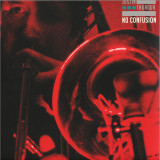
He is perhaps most known as the trombonist from the multi-award winning 'folk' group Bellowhead. Their split in 2016 led to him forming his own band and releasing his debut album as a bandleader, 'No Confusion'.
The album features original compositions written by Thurgur in collaboration with double bassist Max De Wardener, piano/rhodes/Hammond organ player Kishon Khan and guitarist Phil Dawson, with band members including the likes of Graeme Flowers on trumpet, James Allsopp on bass clarinet and Oreste Noda on congas.
Thurgur promoted 'No Confusion' throughout 2016 and 2017, culminating in an enthusiastically received performance at Love Supreme Jazz Festival in 2017. Jazz FM, in particular Chris Philips, gave extensive airplay to the album as well as streaming a live performance from the Jazz FM studios and doing an interview. They subsequently playlisted two of Thurgur's single releases. Lopa Kothari played a track on BBC Radio 3's show 'The World On 3'. The band did a live interview and performance on DJ Ritu's 'A World In London' show on Resonance FM. Beyond this Thurgur has been developing relationships with various other digital radio stations, including Gordon Wedderburn, John Waugh and a number of Global music stations based in Europe.
* The Menahan Street Band includes members of The Roots, Budos Band, Lee Fields and The Expressions and The Dap-Kings...an all star Brooklyn line up!
* First album in 9 years.
*LPs are In gatefold sleeve and contain download code.
* MSB tracks have been the foundation for some of modern hip-hop's most successful beats; their music has been sampled by the likes of Eminem, Jay-Z, Kendrick Lamar, Travis Scott, 50 Cent, Curren$y, to name a few.
Menahan Street Band, a veritable supergroup of some of today's most prolific songwriters, arrangers, and producers return with this beat-forward, cinematic masterpiece.
Their unique brand of instrumental soul has not only been the foundation for some of modern hip-hop's most successful beats, it has also become the perennial soundtrack and veritable vibe-generator for countless parties, art shows, and restaurants throughout NYC and abroad.
While this album carries the aesthetic torch that MSB has skillfully woven into the tapestry of their DNA, it also delves deeper into the experimental, exotic sounds that fill many of the coveted Sound Library and Soundtrack LPs of the late sixties and early seventies - an amalgamation of moog synths, electric pianos, drum machines, and a bevy of analog instrumentation, that ebb and flow in lush swells of Morriconian grandeur.
When it came to playing soul jazz with organ combos, jamming bebop with a quartet, caressing ballads or coming up with fresh approaches to Latin jazz and spirituals, the versatile Grant Green was at the top of his field. Among his many recordings, his most vital and adventurous remains Idle Moments. With such inspiring sidemen as Joe Henderson, Bobby Hutcherson and Duke Pearson, Green is heard at the absolute apex of his creativity throughout this stunning set.
He builds up statements like a masterful speaker, sounds both passionate and thoughtful at every tempo, and never runs out of brilliant and personal ideas to express. Every phrase leads to the next one yet all of his solos are spontaneous. While the other musicians are inspired and in top form, Idle Moments is particularly notable as the height of Grant Green’s musical genius!
- Halcyon - Lost Horizons Feat. Jack
- Wolter
- I Woke Up With An Open Heart
- Lost Horizons Feat. The Hempolics
- Grey Tower - Lost Horizons Feat
- Tim Smith
- Linger - Lost Horizons Feat
- Gemma Dunleavy
- One For Regret - Lost Horizons
- Feat. Porridge Radio
- Every Beat That Passed - Lost
- Horizons Feat. Kavi Kwai
- Nobody Knows My Name - Lost
- Horizons Feat. Cameron Neal
- Cordelia - Lost Horizons Feat
- John Grant
- In Quiet Moments - Lost Horizons
- Feat. Ural Thomas
- Circle - Lost Horizons Feat. C
- Duncan
- Unravelling In Slow Motion - Lost
- Horizons Feat. Ren Harvieu
- Blue Soul - Lost Horizons Feat
- Laura Groves
- Flutter - Lost Horizons Feat. Rosie
- Blair
- Marie - Lost Horizons Feat
- Marissa Nadler
- Heart Of A Hummingbird - Lost
- Horizons Feat. Lily Wolter
- This Is The Weather - Lost
- Horizons Feat. Karen Peris
Lost Horizons release their new album ‘In Quiet Moments’ via Bella Union. The album features a stellar array of musical guests including John Grant, C Duncan, Marissa Nadler, Porridge Radio, Penelope Isles, Karen Peris (the innocence mission), Tim Smith (Midlake), Ren Harvieu and many more.
In 2017, Simon Raymonde and Richie Thomas had both abstained from making music for 20 years until they united as Lost Horizons and released a stunning debut album, ‘Ojalá’ - the Spanish word for ‘hopefully’ or ‘God willing.’
“These days, we need hope more than ever, for a better world.” Thomas said at the time. “And this album has given me a lot of hope. To reconnect with music.... And the hope for another Lost Horizons record!” Thomas’ hopes had a mixed response.
On the plus side, the new Lost Horizons album ‘In Quiet Moments’ is an even stronger successor to ‘Ojalá’ with another distinguished cast of guest singers and a handful of supporting instrumentalists embellishing the core duo’s gorgeously freeflowing and loose-limbed blueprint that one writer astutely labelled, “melancholydelia.”
On the minus side, any hope for a better world, as Earth continues to freefall toward political and social meltdown. Then, to make matters worse, as Raymonde and Thomas buckled down to create the improvised bedrock that Lost Horizons is built on, the former’s mother died. At least Raymonde had a way to channel his grief.
“The way improvisation works,” he says, “it’s just what’s going on with your body at the time, to let it out.”
Raymonde (bass, guitar, keyboards, production) and Thomas (drums, occasional keys and guitar) forged ahead, creating 16 instrumental tracks to send to prospective guests. When he did, Raymonde suggested a guiding theme for their lyrics: “death and rebirth. Of loved ones, of ideals, at an age when many artists that have inspired us are also dead, and the planet isn’t far behind. But I also said, ‘The most important part is to just do your own thing, and have fun.’”
Lost Horizons’ melancholy-delia also feels buoyed aloft by airy currents, informed in part by Raymonde and Thomas’ former respective bands: the legendary Cocteau Twins and Dif Juz. Their former bands were labelmates on 4AD in the mid-80s, which is how they first met.
“I think ‘In Quiet Moments’ is more in the direction of where we’re going,” Thomas concludes. “People have retreated into their lives and, in those quiet moments, reflected on the world, how we fit in and who we and trust. Maybe the next album will be about rebellion! But the road is long and winding. We just need to express ourselves in how we feel at the time.”
Coloured vinyl 2LP (disc one green, disc two blue) in PVC outer sleeve with printed text, 350gsm wide spined sleeve on uncoated/reverse board, 16pg booklet on standard paper with contributions from all featured artists and digital download code.
Whitesnake celebrates the blues sound that helped inspire its multi-platinum career on a new collection that features remixed and remastered versions of the group’s best blues-rock songs. The Blues Album is the third and final release in the band’s Red, White and Blues Trilogy, a series of compilations organised by musical themes that began earlier in 2020 with Love Songs (red) and The Rock Album (white). The new compilation delivers a potent mix of hits and deep tracks that originally appeared between 1984 and 2011 on six Whitesnake studio albums and Coverdale’s solo album, Into the Light.
Whitesnake’s singer-songwriter David Coverdale says, the music reflects how blues artists like Muddy Waters, Howlin’ Wolf, and the three Kings (Albert, B.B. and Freddie) continue to inspire him. In the album’s liner notes, he writes: “It’s hard to find the words to show how profoundly they connected with my soul. But ‘blues’ to me is a beautiful word that describes emotional expression… feelings, be it feelings of sadness, loneliness, emptiness… but, also those that express great joy, celebration and dance, sexiness and love!!!”
The Blues Album showcases two of the band’s biggest songs: “Slow An’ Easy,” a big hit in 1984 from Whitesnake’s massive album Slide It In, and the smash “Give Me All Your Love” from the band’s 1987 self-titled globally successful album. Other choice tracks from Whitesnake are also featured: “Looking For Love” and “Crying In The Rain,” and “Steal Your Heart Away.” The collection also includes “If You Want Me,” a studio recording released in 2006 as a bonus track on the live album, Live…in the Shadows of the Blues. Coverdale also taps his 2000 solo album, Into the Light, for “The River Song.”
We last heard from Radeckt on the Spektrum 2 compilation, now he’s back with his debut solo EP. The Danish producer specialises in emotionally-driven club music, designed to spark inspiration and moments of contemplation. The dance floor is a safe space for free expression, human interaction and catharsis… Radeckt’s music is the perfect accompaniment to these channels of connection, while encouraging you to dance. On the Corroded Mind EP we get four original cuts, all of which encapsulate Radeckt’s penchant for music that moves the soul… It all begins with the title track. ‘Corroded Mind’ has a subdued intro, gently guiding us into a mesmerising sonic landscape. Soft pads massage the mind while siren-esque effects and metallic beats encourage the body to move to their hypnotic rhythm. Radeckt imbues the second half with drama and energy, while still keeping the mood sombre. ‘Narrative Lie’ utilises layers of emotive synth and serene sounds, along with a meandering melody that lures you into its rhythmic flow. The glum low end counteracts the brighter elements of the track creating a neat juxtaposition. As the track progresses, the intensity of the main motif increases, sending temperatures rising. Next up is ‘Invisible Guard’ with its oscillating bass and simple, yet highly effective riff. Radeckt confidently applies the pressure, carefully increasing the tension until we reach a scintillating breakdown which takes us into the glorious second half.
‘Silver Lining’ closes the EP, bringing a little bounce to the release. Radeckt gives us stuttered beats with great use of percussion to provide the energetic allure of this cut. As it builds, he incorporates an earworm melody along with neon laser synth lines and the whole thing feels like an eighties TV show theme with 21st Century sheen.
The label’s first release seeks to offer an initiatory experience to Forbidden Teaching’s mission, namely to express the inexpressible.
The A side of the record is body oriented and is introduced with NN’s “The Blood Of A White Monark”, a track characterised by its forceful rhythm, cinematic breakdown and strong synths. Mind I Matter dives deeper in the EBM spectrum with “Thelema”, a track featuring a bassline that goes straight to the body and supported by an expertly crafted atmosphere, reminiscent of the notorious esoteric doctrine.
The B side of the record is soul oriented and begins with Antechamber’s “The Ephemeral Hallucinations”, an atmospheric track that elevates the listener to a place where earthly senses become blurry. Nigh/T\mare concludes the compilation with his track “Unconscious Traction”. It features a robust and hypnotic rhythm coupled with an intense atmosphere that leads the listener to a state where deeply buried emotions and desires could resurface.
SebaKaapstad is not just a band; SebaKaapstad is about showingpeople what it looks like when cultures collide - stories that come from the lives of PalesaModiga, Philip Scheibel, Ndumiso Manana, and Sebastian Schuster. If you have ever wondered what it would sound like if a South African, a Swazi and a few Germans got together and used their talents to express themselves, this is your answer. SebaKaapstad is the coming together of worlds and experiences while appreciating how alike we are as human beings. Through the global perspective of the members, SebaKaapstad are able to explore a soundscape influenced by soul, groove, electronic undertones, jazz and African music.
Ubuntu Music is excited to announce the signing of Skeltr for the worldwide release of their album, ‘Dorje’. Skeltr began as a late night, post-gig session between Sam Healey (keys) and Craig Hanson (drums) in the dusty old cotton mills of Manchester. Forging a shared connection inspired by Post-bop and Modern groove, the pair developed a tightly knit, highly musical duo. Their first UK gig in 2017 at the Manchester Jazz Festival saw the duo sell all of their physical records of their debut release in one day. Within a few months of this auspicious start, the lads found themselves supporting L.A sensation KNOWER on UK tour, appearing on JazzFM, Worldwide FM, listed as ‘ones to watch’ in Jazzwise Magazine as well as performing across European jazz festivals, including Reykjavik Jazz Festival, InJazz, Rotterdam and the famous Osloscene Club in Norway. A tragic accident saw hard times fall upon the Duo as Sam suffered a serious hand injury. However, after operations and months of rehabilitation, Sam was able to return to his saxophone and continue playing music again. Having had chance to compose during rehab, the Duo immediately hit the studio and recorded their second album, named after Sam’s new-born son, Dorje. A nucleus of Saxophone and Drums set to scapes of synths, vocals and guest features, Skeltr's second album, 'Dorje', combines heartfelt statements of sensitive, illuminating, incensed improvisation which stem from ardent and fluent melodies. Craig ondrums is as much an expressive protagonist of the music as he is a foundation with deep roots, leading to intricate interplay between the Duo. Themes include understanding the nature of happiness, self-examination and acceptance in aquest to achieve a positive mental state. Ultimately, ‘Dorje’ seeks to provide the listener with a space in which to explore their own relativities with guidance, inspiration and accompaniment. Sam describes the project, saying, “What a wonderful experience it has been to create this album. We look forward to spreading the music far and wide with positive intentions. The sounds are crafted with a passionate energy in our hearts and I hope otherswill be able to feel and hear that.” Concerning Skeltr’s new relationship with Ubuntu Music, Healey continues, “It has been a three-year journey to bring this album to fruition and we’re so happy to have met Martin (Hummel) and Ubuntu Music as the album was coming to completion. This auspicious timing makes the new relationship all the more rewarding. The Ubuntu Music team’s knowledge, experience and phenomenal work ethic are vastly inspiring and will help Skeltr to reach a much wider audience across the world. We look forward to a close relationship with theLabel as we strive to bring great musical offerings to many people.” Martin Hummel, Director of Ubuntu Music, said, “These guys have breath-taking talent. I first came in touch with Sam on New Year’s Day (probably not the best day to do so) and told him what I thought of their music. It’s deep. It’s spiritual. And it shakes your senses, inside out and to your very core. Sam is meticulous in everything he does, and you can hear this in the recording. If you want to feed your soul with the best musical vibes, check this out.”
Generative music seems to imply a systems approach to music, or a system that once created can utilise randomness in a creative way. The benevolence of nature’s creativity belies this musical term, and can flip the word ‘generative’ to mean to involve constantly flowing creativity with purpose. In Europe there was a time in the Pagan Renaissance when architecture would mirror nature’s generative quality. Sculptures and columns were to imply animation or movement.
That’s where Milan W.’s album comes through in 2020. His music involves the night shadows of Europe’s architecture and its growth. In Bloom personifies itself by showing Antwerp’s influential ‘Night Play’: a term that can relate to many European cities such as Bologna, Vienna, and so on and so on. The leftovers of Renaissance and gothic architecture are everywhere in Europe still; layers of ruins that can generate the impression of simultaneous time periods. Tracks like Spa and Helium Queen reveal and revel in the power of shadow movement that is generated by the night. In Milan W.’s past works, the poignant and simple creative play of dark wave and synth beat music was his vehicle for expression, but now on In Bloom he departs to a touching sidereal impressionism allied with Coil’s instrumental pieces on Horse Rotorvator — an album whose cover portrays the potential powers of the pavilion just as Milan W. is portraying the generative soul and alienation of Europe’s ‘Night Play’. Because of In Bloom we can come to believe that there is a secretive energy in alienation, a playfulness that is alight at Night.
Sabaturin is Charles-Émile Beullac (Galerie Stratique, Canada) and Simon Crab (Bourbonese Qualk, United Kingdom). In the spirit of old school tape exchanges that resulted in musical collaborations developed over long periods of time but informed by the infinitely easier processes of the digital age, "Kenemglev" was assembled without the musicians ever meeting.
The title "Kenemglev" means "consensus" in Breton, something which quite naturally had to be achieved between both musicians. The other consensus was a sort of virtual middle ground symbolized by the Breton language, particular to a geographical area (Brittany) that both agreed would stand for a neutral meeting point between their respective native languages and, consequently, cultures. All titles are Breton words and the name Sabaturin ("standing on one feet", "to be off-balance") expresses mainly Charles' excitement: "Simon's bold approach has been some kind of a shock therapy for my music".
The sleeve was designed by Simon Crab, using a Chladni pattern simulation based on specific pitches. Looking like stained glass, it sort of reflects the way the music is presented: although including 9 titles, the album's tracklist flows uninterrupted on each side of the vinyl, semi-mixed, blended.
Detailed electronic ambience, glitches, loops and tiny details are augmented by a sort of signature rhythmic grid we recognize from "My Government Is My Soul"-era Bourbonese Qualk. It never settles into a formula and so the music remains loose, as much Mille Plateaux as classic 80s industrial shortwave-sampling or dub, rolled into one same entity, touching base with the gorgeous glitch dub "Morgouskus". This concludes a gentle and discreet album that doesn't require the validation of being associated with any of the current keywords in the electronic music scene.
Musa Ancestral Streams remains a relative oddity in the pantheon of jazz's black consciousness movement -- a solo piano set of stunning reach and scope, its adherence to intimacy contrasts sharply with the bold, multi-dimensional sensibilities that signify the vast majority of post-Coltrane excursions into spiritual expression, yet the sheer soulfulness and abandon of Stanley Cowell's performance nevertheless vaults the record into the same physical and metaphysical planes. Cowell's energy and touch are remarkable, as if guided by divine power, and for all the music's structural spaciousness and rhythmic freedom, not a note feels out of place, let alone excessive. Most intriguing is "Travelin' Man," an overdubbed "duet" featuring Cowell on both acoustic and electric piano that underscores his uncommon affinity for space and presence.