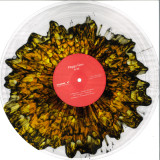
Denmark's premiere outlet for forward-thinking modern jazz, April Records proudly presents the debut of a brand new quartet featuring some of Scandinavia and the UK's most celebrated instrumentalists: Mathias Heise, Anton Eger, Rasmus Sørensen and Conor Chaplin. Meeting for the first time on a spring day in 2023, the quartet quickly discovered a natural synergy.Their debut performances that summer were met with resounding acclaim, with Politiken music editor Thomas Michelsen calling them a "supergroup" and awarding their concert at Balders Plads five hearts. Buoyed by their success, the group headed into the studio to record their eponymous debut album. THE ACTION 4s thrives at the intersection of jazz, rock, funk, fusion, and electronica. Their music is a dynamic interplay of raw energy and masterful artistry, seamlessly blending the acoustic and the electronic. The chromatic harmonica's soulful tone meets the rich textures of piano and synthesizer, while the foundation laid by the electric bass and dynamic drumming creates a playful arena for ever-evolving spontaneity. Their compositions pulse with rhythm, melody and interplay, pushing the boundaries of genre and tradition to forge an exciting new direction for Danish jazz. The quartet brings together four internationally acclaimed musicians, each a master of their craft: Mathias Heise: Chromatic Harmonica, Synthesizer Anton Eger: Drums, Percussion Rasmus Sørensen: Grand Piano, Synthesizer Conar Chaplin: Electric Bass
Buscar:soul foundation
Der meisterhafte Selektor Mark Iration hat vollen Zugang zu den Greensleeves-Archiven erhalten und eine sorgfältige Auswahl von Roots- und Dub-Schätzen zusammengestellt, die seit langem zu den Grundpfeilern des Iration Steppas Soundsystems gehören. Die Sammlung enthält legendäre jamaikanische Sänger wie u.a. Michael Prophet, Johnny Osbourne und Wailing Souls. Die zweite Disc entführt in die Echokammer und zeigt Dub-Versionen von Schwergewichten wie Roots Radics, Augustus Pablo und The Revolutionaires. Die illustrierten Innenhüllen von Tony McDermott und Fotos aus dem Iration Steppas-Archiv runden die Gatefold-Verpackung ab. Die erste Ausgabe unserer Soundsystem-Reihe (mit Channel One Soundsystem) war so schnell vergriffen, dass die Nachfrage das Angebot bei weitem übertraf - verpassen Sie dieses Mal nichts!
- 1: Death By Horses
- 2: Devil's Flower
- 3: Lazarus
- 4: Your Soul
- 5: Mantis
- 6: Norpo
- 7: Under The Nails
- 8: Queen Of The World
- 9: Darling Corey
- 10: Gengivitus
- 11: Out
Prayer Meeting' is an incredible early document from the dark space rock collective from North Carolina. Remastered by Ivan Pjevcevic in 2024. Psych to post metal to prog and folk and heavy weirdness unite under USX's unique approach.
"Prayer Meeting" was originally the very first unreleased record by the pastoral psychedelic congregation U.S. Christmas, hailing from Marion NC, in the middle of the Appalachian region. USX have a long career and several released on the mighty Neurot Recordings, published just after an ultra-limited demo batch of “Prayer Meeting” was around.
“Some bands make demos. We made a record. We didn't do this for a label, an agent, or anyone but ourselves. It was the first step toward what would become a series of connected works. This record marks a special time in my life, and I'm sure the other dudes agree. Those days in the little trailer in Marion, NC were electric and filled with building power. Listen up, these are the sounds of our foundation.”
Nate Hall
Heady house label Courtesy Of Balance only releases music that you know will stand the test of time. It is informed by the classic schools of deepness but always with a modern touch and unique character, and next to carry that torch is Ostrich aka Nadir Agha. He's in charge of curation at Montreal's legendary Stereo Club and shows his class here with opener 'Snake Charmer' which is built on a dynamic groove foundation and embellished with wispy pads that take your mind on a wander. 'Promiscuous' is heavy, dubby house stripped back to the core essentials and perfectly executed. 'Buttered Up' is a little more mobile but embellished with nothing chords and smoky vocal soul and 'Broken Science' closes with a brilliant broken beat flourish that is full of jazzy invention.
Ground-breaking afro-rock and jazz with Memphis soul roots on this lost 1972 gem. Lovingly restored and reissued by Matsuli Music
'Black Soul' from 1972 is the third and last known album by The Anchors, a soul group originally formed in Johannesburg's Alexandra township in 1968. Their first two albums, 'Soul Upstairs' from 1969 and 'Everything' from 1971, were issued on Teal's City Special label alongside other prominent South African soul groups of the era like The Beaters, The Movers and The Flaming Souls.
On 'Black Soul', The Anchors undergo a notable shift, moving away from their early Memphis soul influences towards a pioneering African-driven sound. These changes laid the foundations for an emerging afro-fusion scene in the years to come from groups like Batsumi, The Drive and Harari.
'Black Soul' features a who's who of intergenerational musicians from great South African bands over the decades. In addition to Zacks Nkosi, the renowned bandleader of the Jazz Maniacs and long-time member of the African Swingsters in the 1940s and 50s, this album includes kwela star Little Kid Lex Hendricks, known for his Columbia recordings of the late 1950s; as well as Zack's son Jabu Nkosi who would go on to play with The Drive, Roots and Sakhile; and Banza Kgasoane later a member of The Beaters, Harari and then Mango Groove.
Now remastered for its first release since the original 1972 pressing, this lost gem offers a revealing glimpse into the evolution of South African music during a transformative era.
Zacks Nkosi (Sax), Patrick Jabu Nkosi (Organ and Flute), Anderson Nkosi (Lead Guitar), Given Sabela (Bass Guitar), Kid Lex Hendrix (Sax), Banza Kgasoane (Trumpet), Peter Morake (Drums), Hamilton Nzimande (Musical Director).
Original LP issued in South Africa on GRC’s CBS label (LAB 4037) in 1972.
Produced for reissue by Chris Albertyn and Matt Temple at Matsuli Music, and Siemon Allen at Flatinternational.
Original vinyl sourced from the Flatinternational Archive.
Artwork restoration and design by Siemon Allen.
Audio restoration, mastering and lacquers by Frank Merritt at The Carvery.
Manufactured at Pallas, Germany.
To celebrate the label's 10th & 11th release, Soul Quest Records have curated a family type affair that sees faces both new and old for the label. An encapsulation of the sound that the label has been pushing since its inception back in 2023, the VA contains a wide reaching spread of house orientated cuts that showcases the labels musical personality and depth - and is reflective of the supreme talents behind the music.
The A side opens proceedings with three emotive house numbers, with label co-founder Max Sinàl and King Crowney’s track ‘Intentions’ landing first. A smooth, soul-laden progression, with subtly placed muted trumpet throughout. From the ethereal vocal lines of Liv East through to the gentle breeze of thechords, this one is Soul Quest to its core. Co-founder SIxm Sol lands next with ’NYBB’, a percussive groover that once again demonstrates a deft level of subtle interplay within the melodic layers. Dreamy vocal lines hit all the right notes alongside a blend of atmospheric pads and tinkling jazzy notes. Wrapping up the A side, Hitch 93 presents ‘Uno, Dos, Tres, Four’, which features an ear worm of a chord progression weaves its way around a rock solid percussive foundation, as the vocals chime out through the middle that helps craft a deeply hypnotic atmosphere.
The B Side opens up with Rob Redford and his track ‘Garden Party’. This track focuses around an inspired ‘everybody loves the sunshine’ sample, and exudes big level, blue sky energy, with hands in the air feels throughout as the dance shifts with smiles all round.
Two prime house steppers land next, with ‘The Blues Kitchen’ by Soul Groove presenting a top quality drum pattern that entices whilst the vocal lines and engrossing melodic section wrapping the dance around its little finger; and finally, ‘Edith’ by Flying Moth may be short but its ever so sweet - skipping stepped grooves interlaced with a bass line that thuds to the rhythms of the heart, whilst the melodies atop stir the emotions ever so delicately.
- Ishi
- Many
- Tonbo
- Horo Horo
- Mushi Dance
- Spells
- Nami
- Wakaranai
- Dottsu
- Kodama
- Tent
- Metallic Gold
- Omajinai
- Ghost
Taba voices a subtle yet surprising shift for the Japanese musician and producer Satomimagae. Observing and absorbing the fleeting scenes and sounds of life flowing outside of her home studio, Taba unfolds as a series of vignettes that document the personal and the universal. Satomi sings beyond herself in an orbit of souls and systems known and unknown, seen and unseen, in the present and in the strange flux of memory, leaving linear songwriting to rest for circuitous stories expanded and expansive in tone and texture. Following the logic of taba, a Japanese term for a bunch, bundle or grouping together of different things, the album is assembled as a loose collection of short stories. Shapeshifting into something like a poet-narrator, Satomi casts her writer's eye to the often perplexing shapes that form from quotidian events and exchanges defining our increasingly alienated age. Where Satomi's last full-length, 2021's Hanazono, bloomed from the lush soil of a private inner sphere, the bird's eye of Taba searches to place the artist_somewhere, somehow_within a wider, wilder world. Collaborations with other artists and musicians close to Satomi's universe further elevate the album's sweeping sonics. Synthesizer lines from Norio, who also helps define the album's visual identity through photo and video, enliven the tender ballad "Kodama." The bell-like Rhodes piano ringing in and around Satomi's guitar on "Dottsu" is played by Akhira Sano, who created the cover art for her 2021 Colloid EP. Yuya Shito's clarinet was the missing puzzle piece that completed "Spells," and it was also Yuya who mixed Taba with an ear for its organic textures and elegantly frayed edges, giving utterance to a distinctly different energy than Satomi's earlier expressions. The tonal and rhythmic play that lay the foundation of these songs also animates a colorful palette of melodic gestures, noisy resonances and pointed moments captured by Satomi's close-at-hand recorder. While Taba is still carried by the innate intimacy that has defined Satomi's music to date, these songs channel her newly spacious and inquisitive songwriting approach, unlocking unusual layers in the process. Some are subsumed in the speculative poetics of sound design, while others peer through the window of bedroom pop. Gathering imagistic reflections, tracing vast ideations and quietly lingering in humble moments, Taba connects vivid lines between the individual and the collective, the constructed and the cosmic, the articulated and the felt. Satomi's sonic tales gain an eloquent coherence by the simple fact of existing in conversation, humming a harmony of parts that buzzes with the tangled circuitry of a life in motion. Taba is the fifth album from Japanese musician, songwriter and dream traveler Satomimagae, following her 2021 album Hanazono and the 2023 reissue of her debut album Awa, both for RVNG Intl. On Taba, Satomimagae leaves linear songwriting to rest for circuitous stories expanded and expansive in tone and texture, unfolding as a series of vignettes that document both the personal and the universal. Some of the songs on Taba feature intimate moments captured on Satomi's hand recorder, poetic moments of sound design animated by tonal and rhythmic bedroom pop foundations. As with Hanazono, Taba's album artwork features a wooden block print by Satomi's sister, the artist Natsumi Magae.
The Ibex Band, with Giovanni Rico and Selam Woldemariam at the creative helm, provided the musical backbone for legends like Aster Aweke, Girma Beyene, Tilahun Gessesse, Mulatu Astatke, and Mahmoud Ahmed, including the iconic album Ere Mela Mela, shaping modern Ethiopian music as we know it today. This 1976 album (Ge’ez Year 1968) played a pivotal role in that legacy and has now resurfaced to set the record straight.
There’s a tendency to talk about the seventies as a golden age of Ethiopian music. There are good reasons for that, and just as good reasons against it. However, the notion of a golden past privileges the role of Western explorers and suggests that the pinnacle of Ethiopia’s musical culture is something only a foreigner can appreciate and unearth. It downplays the complexities of Ethiopia’s culture and history, creating an artificial divide between then and now. And it underestimates the constantly evolving sound that has followed.
The legendary musical outfit The Ibex Band, later metamorphosed into The Roha Band, has played a central role in defining the sound of many of the greatest stars on the music scene of Ethiopia from the mid-seventies onwards–but their golden output has never really waned. The story of the origins of the band that provided the musical backbone for greats such as Aster Aweke, Girma Beyene, Tilahun Gessesse, backing the solo career of group member Mahmoud Ahmed as well as backing Mulatu Astatke and many others has yet to be properly told.
Two misconceptions plague the image of Ethiopian music, one is that the music is pure because it is, by some notion, unexploited, the other is that it is all traditional. To begin with, a combination of political changes between the late sixties and the mid-nineties created an environment where only the most dedicated and skilled musicians struggled on and pursued a musical career against fierce odds. The whole Ibex Band, with Giovanni Rico and Selam “Selamino” Seyoum Woldermarian at the creative helm, are arguably the origo of the vibrant scene in the mid-seventies, and the said pair are foremost responsible for not only navigating the band through troubled times, but also modernizing the 6/8 chickchicka rhythm to a contemporary form. Giovanni laid the rhythmic foundation with heavy looped basslines that reinvented traditional melodies as dance music, and with Selamino’s innovative guitar work they influenced scores of musicians from Abegaz Kibrework Shiota to Henock Temesgen. Even Giovanni’s Fender bass and Selamino’s Gibson guitar inspired younger musicians in their choice of instruments. Not only in choice of instruments but also in sound–even as the digital revolution hit Ethiopian music, a lot of popular music still took its cue from the masters from Ibex and Roha.
Ibex emerged out of the ashes of the sixties group the Soul Echos band, adding Giovanni and Selamino to their ranks and taking their cues from a slew of influences, such as Motown and The Beatles, fused with traditional music. A tighter-knit unit than most bands at the time – Ibex has remained six to seven members throughout their whole career, compared to many bands that were as large as fifteen or sixteen men strong when Ibex set out. Their playing has been viciously focused, economical yet heavy. Just a year before the recording sessions of the album in your hands, Giovanni and Selamino made a contribution to the popular musical lexicon of Ethiopia that was simply defining the popular sound: their arrangement and recording of bandmate Mahmoud Ahmed’s solo effort and real commercial breakthrough tune and eponymous album, Ere Mela Mela, from 1975.
Selamino has never limited himself to being an adroit lead guitarist, but has always been a scholar of history, and as such he has probably contributed as much to modern Ethiopian music with his guitar playing and compositions as with a deepened understanding of modern or contemporary – Zemenawi – Ethiopian music. Selamino’s contributions serve as a metaphor for those of the whole band, at one and the same time creating and defining a new, danceable and updated sound anchored in Giovanni’s bass, whilst also elevating the broader scene through their support for others on the scene and on top of that, increasing the understanding of the music.
There is an understandable desire to romanticize the musical heyday Ibex and Roha were at the forefront of, because so much of the output is sorrowfully hard to come by. Ibex creativity was nothing short of ridiculously fierce compared to many of their Western contemporaries. Based on their sheer recorded output alone they could have usurped the title “hardest working in show business” from James Brown, recording more than 250 albums or 2500 songs in the seventies and eighties. Some only surface as cassettes today, others were never given full LP release, and some are simply impossible to find today. In the light of that, it’s nothing short of a miracle that the recording Stereo Instrumental Music from 1976 (Ge’ez Year 1968) has resurfaced. Unearthed in perfect condition on a chrome cassette, this is musical history comes alive–to set the future straight. Stereo Instrumental Music was recorded in collaboration with Karl-Gustav Lundgren, a Swedish national working for the Radio Voice of the Gospel. It took two sessions at the Ras Hotel ballroom in Addis Ababa. The Ibex Band was the first band in Ethiopia to employ a four-track recorder for their recording (the first available in the country, lent by Karl-Gustav). Later the same week, Giovanni and Selamino realized that, lengthwise, the recorded material fell short of what they wished for, so they recorded four more tracks in one more session on a single-track recorder. The Ras Hotel and Ghion Hotel, where the Ibex Band held musical residencies were to Ethiopia in general and Addis Ababa in particular what Motown was to the USA and Detroit a few years earlier – a hotbed of musical creativity and showmanship.
The most astonishing thing about Ethiopian music of the last half century is how tradition and modernity are intertwined. Because of this feature, it’s kind of hard to tell when there ever was or when we are in a “golden age”. So much of music from the past has been criminally neglected, but because of the hardships in the past, it would be an oversimplification to say that said past was a golden age. Probably, the golden age is what we are approaching, because for the first time both the past and future are accessible, and the monumental contributions from before can lay a firm foundation for a thriving music scene today. The Ibex Band stands firmly in the past, present and the future. That, if anything, is golden.
The detailed history of Stereo Instrumental Music is in many ways unique. To begin with, it couldn’t have been recorded earlier (there were no four-track recorders available) and it really couldn’t have been recorded afterwards either, at least not in the years directly following, because of the toll the musical scene took from the unfavorable political climate that followed when the nascent Derg regime and rival groups tried to assert themselves, the musical equipment lent from The Voice of Gospel Radio simply disappeared from Ethiopia when the radio station folded in 1977. Karl-Gustav Lundgren,
the Swedish foreign national who assisted during the recording, worked with the Ethiopian Evangelical Church Mekane Yesus at the time, recalls how they only had about fifteen minutes to get the microphones in place for the recording as to not alert neither the management at Ras Hotel nor the authorities and most importantly, to complete the recording before the curfew came into effect at midnight. In leaping to the opportunity to use previously unavailable equipment to push their sound forward and improvising to meet the logistical challenges, the Ibex Band displayed the very avant-gardism and adaptability that explains their longevity as a band through the years. The recording of Stereo Instrumental Music is from a given time in history, but it sounds as beyond time.
Much of the energy that burst out of the scene that Stereo Instrumental Music came out of dissipated or got sidetracked during the societal changes Ethiopia went through in the 1970s and 80s. Whilst leaders might have professed to be revolutionary, the work ethic of the Ibex Band can truly be described as that. They never called it quits, but adapted, toured extensively abroad in Africa, Europe, and the Middle East, and found ways to work even in the face of the curfew that curtailed a lot of musical life. They even played major arenas in the nineteen eighties, despite said curfew and restrictions. The whole extent of their legacy has never been told, but their music speaks louder than words, so therefore… tune in to the Ibex Band’s Stereo Instrumental Music.

Definitive Recordings is proud to announce the reissue of deep house classic "Liferaft" by Juicy Fruit (aka Meredith Ledger), fully remastered and set to breathe new life into one of the 90s' most iconic releases. Originally dropped in 1993, this EP features the original as well as remixes by John Acquaviva and The Stickmen.
The standout title track, "Liferaft", is a rich and soulful deep house gem, built around a captivating piano house theme that harks back to the golden era of house music. The track's groove is driven by a classic house beat and a funky, rhythmic guitar lick that perfectly complements its melodic core. The fresh remaster brings new clarity to its timeless warmth, elevating it for modern sound systems while keeping the vintage charm intact.
House music legend John Acquaviva takes the funky guitar lick and pushes it further into the groove, layering it with a robust and simplistic bassline. His remix evolves into a deep yet vibrant soundscape, showcasing Acquaviva's signature house influence.
The "The Stickmen Dub" intensifies the original's foundation by supplementing it with a hypnotic organ sound. This remix enriches the track with subtle but powerful layers, creating a mood that's both dancefloor-ready and deeply immersive.
Definitive Recordings is excited to share this release with long-time fans and newcomers alike. Whether you're a die-hard house aficionado or just discovering the classics, the "Liferaft" EP is a must-have addition to any collection.
Stone Foundation return with their 11th studio album. Collaborative as ever, the band's first LP in 3 years boats appearances from a diverse range of soul artists from Omar and Laville to J.P. Bimeni and regular collaborator Mick Talbot (The Style Council). Following a year celebrating their 25th anniversary as a band with a major compilation release alongside a summer touring with Grace Jones and Paul Weller, Stone Foundation's sights are now firmly fixed on the future. Join them as the sound of small town soul transforms itself once again.
15 years after it's original release, Freestyle Records serve up reissue for The Apples' Kings LP - fully remastered with a fresh new cut, it's sounding better than ever!
In a musical first for the band, they wrote, arranged and recorded Kings with specific collaborators in mind. They held sessions with two of their heroes; a congregation with two musical and spiritual father figures from opposite ends of The Apples rich spectrum: Fred Wesley (pioneer of funk trombone in particular and funk horn arranging in general with James Brown, The JBs) Shlomo Bar (vocalist, percussionist, godfather of Israeli world music).
The exciting process of these recordings exposed the band's many roots and influences; elements of The JB's funky foundations, cut 'n paste, soul, middle eastern and dub are all clearly displayed - strained through the band's unique decks-horns-sfx-bass-drums lineup. This release signified the next step in The Apples ever thickening groove stew, primed for festival and club stages with a relentless live set filled with runaway grooves, countless twists and turns, dizzying transitions, spontaneous arrangements, the occasional reworking of early 90's alt-rock fist shakers - plus the basic jump-up-and-down crazyness for which The Apples are known across dancefloors, soundsystems, playlists, films, televisions, cars and ears worldwide.
e B1 | Batash (Alwoojdi) feat Shlomo Bar
- A2: Decode (Twilight Soundtrack Version)
- A3: Full Moon (Twilight Soundtrack Version)
- A4: Leave Out All The Rest
- A5: Spotlight
- A6: Go All The Way
- B1: Tremble For My Beloved (Twilight Soundtrack Version)
- B2: I Caught Myself (Twilight Soundtrack Version)
- B3: Eyes On Fire (Twilight Soundtrack Version)
- B4: Never Think (Twilight Soundtrack Version)
- B5: Flightless Bird, American Mouth (Twilight Soundtrack Version)
- A1: Supermassive Black Hole (Twilight Soundtrack Version)
- B6: Bella's Lullaby (Twilight Soundtrack Version)
New Moon[32,73 €]
Beschreibung des Produkts: Gepresst auf Mercury
Marble. Der Original Motion Picture Soundtrack von
TWILIGHT enthält Songs von Paramore, Rob Pattinson
und Perry Farrell, plus "Bella's Lullaby" und Songs von
Muse, Linkin Park und mehr!
a a1 Supermassive Black Hole (Twilight Soundtrack Version) - Muse - 03:31 -
[b] a2 Decode (Twilight Soundtrack Version) - [Paramore] - 04:23 -
[c] a3 Full Moon (Twilight Soundtrack Version) - [The Black Ghosts] - 03:50 -
[d] a4 Leave Out All The Rest - [Linkin Park] - 03:19 -
[e] a5 Spotlight - [MuteMath] - 03:20 -
[f] a6 Go All The Way [Into the Twilight] (Twilight Soundtrack Version) - [Perry Farrell] - 03:27 -
[g] b1 Tremble For My Beloved (Twilight Soundtrack Version) - [Collective Soul] - 03:53
[h] b2 I Caught Myself (Twilight Soundtrack Version) - [Paramore] - 03:55
[i] b3 Eyes on Fire (Twilight Soundtrack Version) - [Blue Foundation] - 05:01
[j] b4 Never Think (Twilight Soundtrack Version) - [Rob Pattinson] - 04:29
[k] b5 Flightless Bird, American Mouth (Twilight Soundtrack Version) - [Iron & Wine] 04:01
[Carter Burwell] - 02:21
- A1: Peggy Gou - Hungboo (Dj Kicks Exclusive)
- A2: The System - Vampirella
- A3: Pegasus - Perseguido Por El Rayo
- B1: I Cube - Cassette Jam 1993 (Dj Kicks Exclusive)
- B2: Sly And Lovechild - The World According To Sly & Lovechild (Andrew Weatherall Soul Of Europe Mix)
- C1: Deniro - Epirus
- C2: Psyche - Crackdown
- D1: Hiver - Pert (Dj Kicks Exclusive)
- D2: Aphex Twin - Vordhosbn
For Peggy Gou, recording an instalment of !K7’s DJ-Kicks series was one of the items on her list of career goals. “It’s the premier class of DJ mixes,” she says. “Some of my favourite selectors have contributed to it.” In 2019, Peggy Gou was able to tick that off her list as she proudly presented the 69th edition of the mix series.
To kickstart 2025, which is !K7's 40th anniversary year, the release is re-issued on a tigerfur-coloured 2LP. Peggy started working on the mix in 2018. It was a busy time for the then 28-year-old: she’d just scored her first Mixmag cover and her single ‘It Makes You Forget (Itgehane)’ was receiving awards and critical acclaim. Each month she would DJ in 20 nightclubs all over the world. And yet, the goal for her mix was ambitious: instead of trying to capture the energy of her DJ sets, she aimed to create a portrayal of her own musical journey.
An 18-track listening session that takes you straight into Peggy Gou’s living room where she plays you the formative tunes from her collection. No genre boundaries – she moves across disco, house, techno and electro. No tempo limits – the mix ranges from 90 to 150 BPM. And no age restriction – the earliest tunes on the mix are from 1983.
The same level of attention was brought to the arresting cover artwork, in which the well-documented animal lover references both Korean iconography and the endangered status of the creature of the country's foundational mythology, the tiger. The album artwork shows Gou posing alongside a tiger. "As the first Korean woman to contribute to the DJ-Kicks series I wanted to do something from my heritage," she said in a statement. "I chose the tiger, which is very important in Korean traditions and a metaphor for my personality. As it is inhumane to shoot with a real tiger, I and the photographer Jonas Lindstroem used a library image to make a composite. The tiger disappears when you turn to the inside-cover photo, to highlight that these beautiful animals are already extinct in my home country and in danger of disappearing from our world entirely.”
- Tout Tremblant De Fièvre (1969, Single "Tout Tremblant De Fièvre")
- Fac,On De Parler (1971, Album "Acte Ii")
- Annie, Christine Ou Patricia (1972, Single "Il Faut Rêver")
- A Bas Tous Les Privilèges (1973, Compilation "La Révolution Française")
- Les Indiens Du Dernier Matin (1974, Album "Acte Iii")
- Mon Premier Hold-Up (1975,Album "N°1 Usa Hits Of The 60'S")
- Disco Circus (François K Edit) (1978, 12" Single)
- Bains Douches (1980, Album "De Sang Froid")
- J't'ai Vu Dans Le Canoe' (1983, Single "Solange")
- Pourquoi Tu M'la^ches Pas? (1985, Single "Trop Sentimental")
As soon as Martin Circus was born in 1969, the band laid foundations for the French "Pop Musique" genre, deliberately turning its back on both French yéyés and rock'n'roll to better embrace psychedelia and the French language. In 1971, they were a pioneering, innovative group moving as fast as a speeding train, building upon everything they found on the way. However, faced with band members changing often, management issues and music evolution, Martin Circus ended up trying to fit in every style: soul, R&B, glam rock, disco, new wave, 80s mainstream music. To follow their journey is to listen to the world shifting along music charts. Behind the scenes, since the very first days of the band, one man had been pulling all the strings. Manager and artistic director Gérard Hugé used to work for both the band and the label - this has never been good news. What he cared about the most was getting records out, no matter who played on them. In the mid-70s, he registered the Martin Circus name, granting himself full power over the band. Deciding that it no longer had either a lyricist or a composer, he made the remaining musicians embark on a series of American 60s hits adaptations. As a result, they made tons of money : "Marylène" was a huge hit and gave them a new impulse. The Martins adopted a new look by wearing shiny Courrèges-style suits and platform boots, and on stage they performed dance moves choreographed by the eccentric Amadeo. They completely fit into the disco craze which was about to take over. Still, their music blended doo-wop and rockabilly with glam rock and funk music. They eventually hit disco with a soundtrack in the mannerof French disco groups such as Space and Voyage. Effortlessly, they released the epic 14- minute "Disco Circus", a track which was to become a real underground gem. DJ and remixer François Kevorkian then released it on the American Prelude label in a self-edited version, shortened to 7 minutes while retaining all the dazzling passages of the original track. It came to be a hit in the clubs of New York and Chicago, making a lasting impression on everyone who heard it. It got sampled on at least 40 tracks over the following decades and featured in dozens of bootlegs and prestigious compilations - by Laurent Garnier, Carl Craig, Juan Atkins, Joey Negro, The Beatnuts, The Rapture, and by Danny Krivit in the DJ culture film Maestro. As the 80s arrived, Martin Circus once again changed the way they looked and their style. Inspired by Devo and their cold dance music, by Buggles' synthpop and Plastic Bertand's postpunk. Throughout their career full of ups and downs, Martin Circus nonetheless managed to keep up with one stable element: contrary to what they seemed, the musicians never took the easy way out. Their playing and arrangements were consistently flawless and polished, they relentlessly dedicated themselves to playing quality music and this can only compel admiration. As Coco Chanel once said, "Fashion goes out of fashion, style never does."
The Tonarium is an idiosyncratic instrument comprising of two sets of modular synthesizers: Serge by Random Source, and another one by Bugbrand, both of which operate alongside a mixer constructed by Piotr Ceglarek and Jan Dybała. This intertwinement facilitates precise control over audio and CV signals and integrates technology with analog sound, offering the artists a distinctive sonic palette to delve into.
The present record unfolds in two parts, each exploring the fluctuating nature of sound. Both equally contribute to the work’s immersive imaging characterized by sound intensity, continuity and endless flow. Within its sonic tapestry lies a space for listeners to uncover subtle nuances, pulsations, and moments of harmony flickering through each chord’s firm surface.
In Part I, a formidable force consisting of chord progressions pierced by abrupt shifts and transitions unfolds. This deliberate disruption of harmonic continuity invites listeners to immerse themselves fully in each musical entity, uncovering the intricate details of the chords’ overtonal structure, drifting and steadily glimmering inside their glowing cores.
Part II, on the other hand, presents a more closed form—a recurring four-chord motif that evolves and transforms with each iteration until it finally fades out into whisper-like serenity. Here, the bass pulsates with greater intensity, like a wave enveloping the listener in a froth of feelings, which prevails and swells throughout the composition. In contrast to Part I, it exudes a sense of warmth and intimacy, inviting listeners to reflect over the dimensions of their own inner landscapes.
The Tonarium is to serve as a conduit for expression—a vessel through which the artist Aleksandra Slyz is enabled to channel her creativity and emotion into the music. Both Part I and II of the work have the capacity to drag listeners into a sonic odyssey that transcends time and space, therefore leaving an indelible impression on one’s trembling soul.
Performed & recorded on December 18-19th 2023 while in residence at The New Media Laboratory in Katowice, Poland.
Organized by The Soundscape Foundation
Composed & produced by Aleksandra Słyż
Mastered by Rashad Becker
Photographies by Kacper Krzętowski
Design by Maks Posio
Executive production by Christian Di Vito
1/4" / 15 IPS / Dolby A Analogue Copy to DSD 256 to analogue console to lathe
Carlos Santana and Company Return to a Dynamic Blend of R&B, Latin, Funk, and Rock: Amigos Aims for the Hips, Spreads Joy, and Includes “Europa (Earth’s Cry Heaven’s Smile)” Amigos has been beloved for decades by both long-time and recent Santana admirers, with multiple generations of fans drawn in by the record’s contagious blend of R&B, Latin, rock, and funk elements. As well as its immense accessibility. Coming off a series of albums that heavily leaned into jazz fusion, the band returns to the more dynamic and concise approaches of its earlier works without losing the sense of adventurousness, craftsmanship, and virtuosity that turned it into a juggernaut embraced by both the mainstream and experimentally minded communities.
Mastered at Mobile Fidelity’s in-house studio in California, pressed at Fidelity Record Pressing, and strictly limited to 3,000 numbered copies, Mobile Fidelity’s 180g 33RPM LP of Amigos presents the 1976 album in audiophile sound for the first time on a domestic release. Part of the reissue label’s Santana series, this collectible version features quiet surfaces and black backgrounds that help reveal the intricate details, distinguished tones, and cohesive interplay that cause Santana’s music to take flight.
The enhanced aural perspectives extend not only to Carlos Santana’s intoxicating fills and solos, but to the rich tapestry of the rhythmic, melodic, and vocal elements that help Amigos feel as fresh today as it did several decades ago. This LP shines a beaming light on the surrounding musicians that simultaneously feed off and inspire their bandleader. The solidity and depth of the bass lines; the wash of the organ; the scope and carry of the vocals; the grip and weight of the low-end frequencies; and, possibly the most enticing traits, the textures of the acoustic guitars, numerous percussive devices, and then-modern synthesizers: all come across with tremendous presence and energy.
Entirely appropriate for a set that kicks from the start, with the opening “Dance Sister Dance (Baila Mi Hermana)” true to the song title’s combination directive-invitation meaning. Tropical, soulful, upbeat, and liberating, it beckons hips to shake and delicious libations to pour. Clinking cowbells, spirited background vocals, hand-tapped congas, and Carlos Santana’s six-string magma pour forth with abundance. The song sets the mood and expectations for a record that contains not an ounce of filler, and which inspires and spreads joy at practically every turn.
On the gold-certified Amigos, the ensemble never seems to run short of zest or happiness. Key in on the Latin bite and searing guitar architecture of “Take Me With You,” an instrumental that shifts tempo at its midpoint and sparkles with a samba-like outro that aims to put everyone in earshot on the dance floor. Surrender to the slow-burn of “Tell Me You Are Tired,” sent up with Greg Walker’s sympathetic vocals and spun around with whirling funk accents. Marvel at the Spanish guitar introduction, Mexican folk foundation, group vocals, and extroverted grooves of the forward-propulsive “Gitano,” with lead singing by conga/bongo expert Armando Peraza.
Having reached the Top 10 in the United States and spawned the hit “Let It Shine,” Amigos marked the final stint for bassist David Brown, the last of the group’s famed Woodstock lineup to depart. His contributions feel especially spirited throughout the album, compass readings that the group uses to chart their course. Just listen to how his passages pop on “Let Me” and frame the can’t-get-it-out-of-your-head “what you need is what you want” refrain. And while Carlos Santana remains the centerpiece of the brilliant and meditative “Europa (Earth’s Cry Heaven’s Smile),” Brown serves as a trustworthy anchor and friendly advocate.
Stone Foundation's latest 7" single, 'Reach Out', featuring Laville, delivers an uplifting soul anthem. The track blends soulful grooves with a danceable rhythm, carrying a powerful message of unity and positivity. Laville's expressive vocals are complemented by a classy keyboard solo, adding an elegant touch to the overall vibe. On Side-2, 'The Beat I Know' brings Carmy Love and Sheree DuBois on board, offering a smooth, laid-back counterpoint to the energetic A-side. This track maintains the band's signature soul style, providing the perfect balance. Both songs are part of their forthcoming album, The Revival of Survival, continuing Stone Foundation's legacy within the UK soul scene.