First time vinyl reissue of Univers Zero's legendary Crawling Wind, originally released in 1981 on the Japanese 'Chaos International Series' label, with the original cover artwork has been beautifully redesigned by Thierry Moreau.
Toujours Plus à l'Est, as the title suggests, is heavily influenced by the traditional music of Eastern Europe, particularly Bulgaria., and paying tribute to the iconic catchphrase of Professor Calculus (Tournesol), the character from the Belgian comic series Tintin. Before The Heat, played live a few times, is an ambient composition by Andy Kirk, who is part of the EP's lineup alongside Daniel Denis, Guy Segers, Alan Ward, and Dirk Descheemaeker. Central Belgium in the Dark is a live improvisation from a period when Univers Zéro dedicated part of their concerts to complete improvisation. What makes this recording unique is that one of Andy Kirk's effects pedals picked up and emitted the sound of a mysterious radio signal, seemingly coming from "nowhere," especially noticeable at the end of the piece. The title of this improv is a nod to contemporary composer Charles Ives' work Central Park in the Dark. Central Belgium refers to the concert venue where the piece was recorded (Haine-St-Pierre).
Univers Zero represents one of the longest-living bands in Belgium. It was established in 1974. Drummer Daniel Denis had the brilliant idea to gather together a team of professionals sharing the same taste for music. The band has adopted an instrumental progressive style. Over the last couple of decades, the band has also implemented a series of influences from chamber music - most commonly, chamber music from the 20th century. Even if the line-up changes a lot over the years, the overall sound of UZ remained fairly consistent.
The sea has long been central to Japanese culture, symbolizing both sustenance and spiritual depth. Charles A.D.'s Deep Diver draws inspiration from this, channeling the ancient traditions of diving and fishing into his music. Historically, the sea has influenced everything from Shinto rituals to the livelihoods of coastal communities. In Deep Diver, this reverence flows through aquatic soundscapes, where rhythmic waves of 90s house and Detroit techno meet Japanese minimal production techniques, New Age and Pacific Jazz. Like the tides, the album ebbs and flows, creating a serene yet dynamic homage to the timeless connection between Japan and the sea.
The opening track 'Deep Diver' plunges into the depths, its abstract sound design capturing the sensation of deep-sea propulsion. Rhythmic bubbles pulse gently alongside slow-moving chords, creating an otherworldly atmosphere. The textures are lush yet restrained, setting a tranquil stage that pulls the listener into a submerged world. 'Underwater Ruins' builds on this aquatic theme, introducing rhythmic layers and bass-heavy notes reminiscent of mid-90s Japanese ambient techno. The smooth, melodic flow nods to pioneers like Mr.YT and Susumu Yokota, while subtly incorporating the Detroit techno influence through soulful, deep basslines.
The track feels like a fusion of ambient and techno, balancing serene tones with a rolling groove, emblematic of Japanese techno soul. As the album progresses into 'Bubble Ring', it becomes clear that Charles A.D. is a master of minimalism. The production is timeless, leaning
on analog techniques where echo-drenched chords and carefully layered soundscapes take on an addictive, hypnotic quality. The simplicity of the composition is deceptive, as each element carries weight, drawing the listener deeper into the rhythm and space between the notes.
'Merperson' is where organic rhythms truly come into play. Charles A.D. gently evolves the patterns, allowing each percussive hit to flow naturally into the next. Soothing melodies emerge from within the track’s structure, eventually reaching an emotional peak without ever feeling forced. The organic nature of the arrangement creates an effortless progression that feels deeply connected to the natural movement of water.Starting the second half with 'Deep Exploration', the theme of underwater excursions becomes even more pronounced. Light, steady drumming anchors the track, allowing the melodic layers
to develop gradually. It unfolds with a calm, measured pace, before ending softly, almost as if the sounds are drifting off into the oceanic depths. 'Diffuse Reflection' stands out as the most dub house-influenced on the album, with rolling rhythms and hypnotic elements reminiscent of Maurizio's deep, pulsing sound. Yet here, the production feels submerged, with aquatic effects swirling around the rhythmic core, blending dub house with a fluid, oceanic touch. 'Traitors' delves even deeper into dub-inspired territory. Deep, resonant bass hits combine with wooden drums, while static-like sounds evoke the image of a radio tuning through static to find clarity.
Chords shimmer briefly before fading back into the liquid depths, evoking the ebb and flow of the tide. The final track on Deep Diver 'Levitation', is a fitting conclusion, as the rhythms merge and overlap like waves gently lapping the shore. The minimalistic arrangement allows each element to blend effortlessly into the next, creating a sense of unity and closure. The sounds move with the gentle grace of water, ending the album in a way that feels both complete and
open-ended, like the infinite motion of the sea.
out of Stock
Last delivered 19 months ago available to reorder, subject to availability
Erich Fromm's “Escape from Freedom” was published 83 years
ago. His assumption was that modern man, having freed himself
from the shackles of the old days and living freely, longs to
return to the totalitarian, destructive and conformist world. In
2024, the pluralistic and individualized way of life of the socalled West seems self-evident. Boundless freedom is suggested -
but we continue to flee. Utopias are crumbling and conservatism
is experiencing a renaissance. At the same time, the freedom to
decide “ to be able to stay” in contrast to “having to leave”
currently seems to represent a high value.
This EP, between the two producers from Germany and Ukraine, was
created in this field of tension. David Heine and Konstantin
Kost are already working together on the current AMAS project
(Odessa EP)
"Freedom From Esacape" adapts the former title of Erich Fromm's
central work, which is given a prominent role on this record.
Music and techno are freedom and escape at the same time:
transcendence and escapism. In interaction and contradiction at
the same time.
The cover picture was taken on 25 July 1909, when Louis Blériot
became the first person to cross the English Channel in an
aeroplane with the Blériot XI, which he had designed himself.
The reversal of the title and the idea for the cover artwork
came about during a conversation with the artist Jennifer Mattes
in Vienna.
About the tracks:
On the A-side, the two protagonists create a world of minimalist
dub techno, which also has melodic, flat side strands in its
narratives. The more than 60-year-old fragments from TV
interviews with Erich Fromm on the subject of freedom,decisions, constructivism and destruction are presented so
densely and rustlingly that you don't feel compelled to follow
the lecture. Instead, the spoken word corresponds with the
minimalist framework of the two pieces. The old audio recordings
are embedded as part of the composition. Some of it may be
understood and arouse the listener's curiosity, but again and
again you get lost in the repetitive swamp of sound, so that you
may understand more of the text each time you listen to it
without it imposing itself on you.
The two remixes of the first track take a different approach.
"Save Your Atoll" specifically frames and limits the spoken word
in its interpretation and embarks on a hypnotic journey that is
less worldly and more futuristic.
"Anna Kost" goes one step further by literally suffocating the
old man's spoken word, as if the destructive drum patterns were
trying to shut him up.
"Freedom From Escape" will be released on 18 October 2024 in a
physical edition of 200 records and is available digitally on
all common portals.
WEIRDMOUTHRECORDS2024
out of Stock
Last delivered 8 months ago available to reorder, subject to availability
GǼG, the production unit of Tokyo's leading club sound Monkey Timers and Okayama-based maverick producer Keita Sano, is proud to present this heavyweight, alternative, and leftfield release on the "Sound of Vast."
Over a powerful and mysterious bassline, the hypnotic A1 'Jack' builds up with sharp synth stabs, dark pads, and ACID voices taken from Ron Hardy's open reel soundtrack series Jackmaster Hater.
AA1 is followed by the obscure percussion track 'Yamato.' It is a reinterpretation of the drumming of legendary drummer Curt Cress from the German jazz-rock scene of the 80s in the context of dance music.
AA2, 'Central' takes the funky bassline of The S.O.S. Band's 1982 album 'High Hopes' and infuses it with roaring feedback, cutting guitars, and spacy synth sounds, giving it a fresh, modern twist and elevating it to the realm of cosmic disco.
Monkey Timers' love for the classics of disco, krautrock, and Chicago house, the intensity and immersion of current club music created by their real-life experience in the field, and Keita Sano's unique free-form outlandish sound techniques coexist on this 12" EP.
東京のクラブサウンドをレペゼンしてきたMonkey Timersと岡山の奇才プロデューサーKeita SanoによるプロダクションユニットGǼGが〈Sound of Vast〉より満を持して放つ超重量級オルタナティブ・レフトフィールド・ストンパー!
The next installment of MFM's popular multi-artist compilation Virtual Dreams: 'Virtual Dreams - Ambient Explorations In The House And Techno Age, Japan 1993-1999'. As with Part One, released in 2020, 'Virtual Dreams II' shines a light on house and techno-adjacent music that helped redefine the definition of ambient music during the 1990s.
The focus of Part One heavily fell on music from techno and house producers in Europe, eagerly exploring new soundtracks for chill-out rooms and re-imagining the potential future of club culture from new perspectives. For Part Two, we narrow the lens to focus on a unique time and place, namely Japan between 1993-1999. Despite missing out on the 'Acid House Fever', club culture was beginning to take shape in Japan during the early '90s. In contrast to the rest of the world, where ambient techno / IDM emerged as a by-product or response to the scene, 'listening techno', as it is known in Japan, was a central pillar of the culture right from the start.
'Virtual Dreams II' aims to shine a light on this unique moment in time where the thread of ambient music weaved its way through the music of an emerging club culture. This period saw the birth of many great Japanese techno labels such as Sublime Records, Transonic Records, Syzygy Records, Frogman Records, and Form@ Records, following in the late '90s. 'Virtual Dreams II' features ambient, chill-out, and intelligent techno from these leading labels alongside other lesser-known but equally influential imprints, as well as ambient deviations from Japanese house producers. Much of the music featured has only ever been released on CD.
'Virtual Dreams II' is compiled by Eiji Taniguchi and Jamie Tiller, who have worked closely together on previous Music From Memory releases such as 'Heisei No Oto' and 'Dream Dolphin - Gaia'. It is also the final project Jamie Tiller worked on before his tragic passing in 2023. Jamie had been researching, planning, and compiling this version of Virtual Dreams even before the first chapter was released, believing that there were many great tracks in Japan that fit the concept of the series. Knowing how much love and energy he put into compiling it gives it an extra special place in our hearts.
Compiled by Jamie Tiller and Eiji Taniguchi with artwork by Kenta Senekt, design by Steele Bonus and liner notes by Itaru W. Mita,
out of Stock
Last delivered 27 days ago available to reorder, subject to availability
Bogotá-based Colombian composer Eblis Álvarez, known as Meridian Brothers, has been concocting a unique blend of psychedelic sounds since 1998. With his latest project, "Mi Latinoamérica Sufre," Álvarez explores the untapped potential of the electric guitar in a tropical Latin context. Drawing inspiration from African highlife and soukous traditions, Álvarez crafts a fearless sonic experiment infused with invention, playfulness, and emotion. Unlike typical tropical guitar records, this album eschews distortion and clichés, opting for a pure, clean approach. Through intricate compositions blending cumbia, champeta, soukous, Brazilian tropicalia, and underground psychedelic rock, Álvarez pays homage to the golden era of Congolese rumba, Ghanaian highlife, and Nigerian afrobeat.
"Mi Latinoamérica Sufre" delves into the ego trip, presenting a humorous yet introspective journey of self-discovery and identity. The central character, Junior Maximiliano the Third, navigates through the complexities of self-discovery using psychedelic substances, political philosophy, and folklore. As he grapples with nostalgia, paranoia, and shared suffering, Álvarez showcases his vocal prowess, creating a sonic theater of the mind. Accompanied by visual narratives from Colombian artist Mateo Rivano, the album portrays various psychological states of disorientation, self-pity, enlightenment, and optimism. "Mi Latinoamérica Sufre" emerges as a worthy and innovative addition to the concept album tradition, offering a distinctive blend of bitter-sweet flavors inspired by Latinoamérica.
out of Stock
Last delivered 23 months ago available to reorder, subject to availability
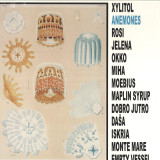
Xylitol is the alias of Catherine Backhouse, producer and DJ under the name DJ Bunnyhausen. She was a resident DJ at Kosmische, the now dormant Krautrock club and is a fan of jungle and hardcore. She currently co-hosts the radio show Slav To The Rhythm, which focuses on vintage central and eastern European pop and electronica and she's also co-writing a book on Yugoslavian pop culture. 'Anemones' is a total project from the cover to the music. Backhouse is fascinated by early botanical illustrations of anemones and other aquatic fauna, and how the act of taxonomy reveals as much about human psychology, desire and sublimation as it does about the organic specimen as a thing in itself. Each track is a microcosm of this 'other life', an allegory for the extraordinary potential latent within bodies that the dancefloor has the power to activate. Using early jungle and garage as starting points to connect dots and open up contrasts between dance music and vintage electronics, Backhouse finds a sweet spot which, in her words "feels like something that's simultaneously still and ancient yet propulsive and ecstatic." Not afraid of letting the the hiss and flutter of the music show, 'Anemones' holds attention with ancient bubbling synths and gracefully drifting arpeggiations, occasionally brought to heel by charming melodies, all accompanied by breakbeats that explode like fireworks. 'Anemones' has a lively and unpolished aesthetic that's a kindred spirit to Nondi_'s 2023 album of smeary, water-damaged footwork, 'Flood City Trax'. 'Moebius' pits the spaced out neon chords of the track's namesake against absolutely tearing breaks, allowing time for this almost overwhelming combination to become near enough transcendental, while the bleeping melody and sad slavic chorus motif in 'Okko' feels like an artifact from an alternative future. The Drexciya meets 2-step garage of 'Dobro Jutro' creates a welcome respite at the album's midpoint before the flow builds up again to 'Daša' with its glassy sounds from a lost radiophonic workshop miniature meeting bruising kicks and snares. Meanwhile 'Iskria' has purring synth chords and 8-bit melodies evoking the cosmonaut age. The subliminal influence of the Yugo era is felt in DIY synthesis and Mitteleuropean melody and seen in song titles such as 'Jelena', 'Miha', 'Daša' (named after novelist Daša Drndič) and 'Iskria' (taken from the fictitious Balkan region in Ottessa Moshfegh's bleak fable 'Lapvona'). 'Anemones' very effectively folds experimental genres from different times and places into a very enjoyable new sound.
out of Stock
Last delivered 2 years ago available to reorder, subject to availability
The Congos were formed by Cedric Myton (born 1947 St Catherine, Jamaica) and Roydel ‘Roy’ Johnson (born 1943 Hanover, Jamaica), around the mid-seventies, a time when the Rasta message coming out of Kingston and other pockets of the Jamaican Island was at its most prominent. Cedric Myton’s singing career began back in the rocksteady era in Reggae’s musical story.
He formed the ‘Tartans’ group taking lead vocal duties alongside Devon Russell, Prince Lincoln Thompson and Lindbergh Lewis. They cut ‘Dance All Night’ (1967) and ‘Coming On Strong’ (1968). The line-up reduced to a two piece, Cedric and Devon Russell, when tracks like ‘What a Sin Thing’ and ‘Short Up Dress’ were cut. This line-up became the Royal Rasses, Cedric formed The Congos, on meeting Roydel Johnson. Roydel previously sang as a member of Ras Michael and the Sons of Negas, cutting such tracks as ’Go To Zion’ (1973). As we can see Cedric’s and Roydel’s Rasta roots were firmly in place by the time they had formed The Congos sometimes called ‘The Congoes’.
The Congos possess what all bands look for,that unique sound that draws the listener to them.Lead singer Cedric Myton’s style and phasing, with his distinctive Falsetto voice makes this just the case.Built on a foundation of classic rhythms and with the aid of then Producer, Lee Perry, the groups statement of intent was laid down with one succinct message. The Congos mighty 1977 ‘Heart of the Congos’ album, is quite simply one of the best reggae albums ever recorded.
Producer Lee Perry had wanted to record a classic Jamaican vocal group in his newly built Black Ark Studio. The voice of Watty Burnett was added at the time to cover baritone vocal duties. The studio after various changes in equipment etc. was finally finding its way. A sound built in Lee Perry’s back yard in Cardiff Crescent, Washington Gardens, Kingston, but existing until then in Mr Lee Perry’s mind. The album they cut would be the defining group release to come out of The Black Ark studios, when the vital elements, vibes, musicians, songs and singing would gel to form ‘Heart Of The Congos’. Come the time of it’s release 1977, Lee Perry was in dispute with Island Records and opted to release the record on his own ‘Black Art’ label. Without the high-profile push of a major label, the record undersold and caused a split between producer and band. Under different circumstances maybe this album would be sitting in thousands of homes alongside the Bob Marley, Culture, Burning Spear releases. Cedric Myton went on to release albums with the French arm of the CBS label and Roy Johnson records and tours as Congo Ashanti Roy.
Cedric Myton the central force carries on the mantle of the Congos and we at Kingston Sounds are proud to pick up the story with another set of vocal statements, which sees Cedric cut some of his finest tunes. Helped along by another reggae legend Brent Dowe, lead singer of the Melodians (Rivers of Babylon), over some classic 1970’s rhythms. Yet again we find that magic formula of strong statements working alongside classic rhythms making the balance work. The Rasta message is still strong on modern classics like ‘King Rastafari Is His Name’, ‘Rasta Congo Man’ and the injustices of the world dissected in tunes ‘Some A Thief’, ‘Watch & Pray’ and the prophetical, ‘Citizen Of The World’.
Once touched by magic it does not fade away, but resurfaces as it has with what we believe to be some of the Congos most heartfelt and meaningful set of songs ...... Let the feast begin.
Cindy is to release a new six song EP called Swan Lake on 4th October via Tough Love. The title isn’t a nod to the folktale or ballet in any real way, but to the fact that it all has ended up in the collective imagination as an object, vaguely recognizable, a little suggestive, and mostly blank. Karina Gill, Cindy’s songwriter, likes to make use of that kind of resonance to connect sound and experience. The six songs on this EP continue the stripped-down habits of previous Cindy releases, while adding a few departures and left-turns. Cindy likes to work at the essentials and the elements here say exactly what’s needed. In other ways, these songs present a soft filigree that’s unusual for their recordings. Oli Lipton (Now, Violent Change) on guitar and Will Smith (Now) on bass play counterpoint melodies to Gill’s structures. Staizsh Rodrigues (Children Maybe Later, Almond Joy, Peace Frog) sings vocal harmonies that both offset and deepen Gill’s voice and delivery. There are playful drums by Mike Ramos (Tony Jay, Sad Eyed Beatniks) and coolly elaborate guitar lines from Stanley Martinez (Famous Mammals, Violent Change, Non Plus Temps). Gill’s songs strike this balance too: almost nonchalant reporting tied up in unexpected knots. A ride in an elevator connects up with questions about peace and/or the nature of things; the title track wonders about associative thinking and associative feeling; The Bell is an account of one of those times when everything makes sense but you can’t explain it; and there’s the scene of a party viewed with admiration for how friends can love each other. As Gill herself says: "People have told me that they can’t quite identify my influences. Me neither. The foundational layers of music of the past and my past have been metabolized like breakfast and turned into more me, sorry to say. But I experience the music of people I’m connected with and it impacts me in the moment. There’s the music I’m around – April Magazine, Sad Eyed Beatniks, Violent Change, Katsy Pline, collaborating with Mike on Flowertown – that I can feel a direct line from. Then there’s music that is being made far away but feels close, like Lewsberg, specifically, for this EP. " CINDY – UK Tour Dates: Oct 31st WOE is 6 @ Walthamstow Trades Hall, London w/ Cuneiform Tabs & Bobby Would. Nov 1st Coventry, UK Just Dropped In Records, 2 Halifax, UK The Grayston Unity, 4 York, UK The Fulford Arms, 5 Gateshead, UK The Central Bar, 6 Glasgow, UK The Glad Café, 7 Manchester, UK Rat & Pigeon, 8 Cambridge, UK NCI Centre.
Maelstrom returns to Central Processing Unit for the fourth time, and it's the one born Joan-Mael Péneau's lengthiest drop on the Sheffield label yet. The French artist has been a mainstay in the European electro game since the 2000s, and Malestrom brings that experience to bear on new LP The FM Tapes. He goes about this album with the assurance of a seasoned pro, combining his mastery of electro production techniques with a trademark guile to craft an expertly-paced eleven-track affair.
The first section of The FM Tapes sets out the album's stall with style and aplomb - listeners are in store for a rich feast of off-kilter machine-funk which will feature no shortage of intriguing detours. On opener 'Ondes Courtes' the mix throbs with all manner of strange electronic gristle: a distorted bass hum rattles the monitors; wisps of distortion float across the mix; eerily pretty keys wax and wane before giving way to a radar pulse.
'Ondes Courtes' is an ominous slouch of a scene-setter, and it lines things up perfectly for following cut 'Alt50ser' to lock in. This track's churning, gurgling mid-tempo rattle brings to mind the wacky insistence of Modeselektor. Maelstrom repeats the slow-fast one-two again directly afterwards - 'La Vie Sociale Des', a strange nugget that sounds like an early Eski instrumental stripped for parts and blasted into the cosmos, is an ideal prelude to the twitchy space-funk of 'My Digitone'.
Maelstrom's staying power in the electro world comes, in no small part, from his ability to apply his delightfully idiosyncratic choices to some of the genre's staple production tropes. On The FM Tapes, he marks himself out once more as a pleasingly unorthodox talent by taking tracks in unexpected directions to produce surprising - and often rather moving - results.
There are multiple cuts here which channel the more cerebral end of Richard D. James' AFX/Analord output: 'My Digitone' may be a quicksilver techno-electro number, but there's still something cinematic about the synth treatment here which softens the edges; 'Suede's minor-key oscillations bring other CPU veterans like Cygnus and Bochum Welt into view; 'Res 06', one of two Fasme collaborations on the record, is full of pathos even as the beat programming bangs and whirrs throughout.
While there's a deep emotional undercurrent to The FM Tapes, though, Maelstrom's commitment to bringing the thrills surfaces time and again. If 'Res 06' had Maelstrom and Fasme getting wistful, the album's other Fasme link-up 'Trempo' is one of the hardest club joints here, a piece of old-school Detroit energy replete with some great cascading drum production. Indeed, 'Trempo' comes in the middle of a run towards the album's end where Maelstrom takes the handbrake off - there's a wild-eyed sense of fun to 'The Operator' and 'Upside Down DX7' which has one thinking of the zany cut-and-thrust of KiNK's best work.
Maelstrom's latest drop for Sheffield's Central Processing Unit label is an album of leftfield electro numbers that bring both pounding beats and poignant production.
‘Lead You To Water’ marks a new chapter for Quinn Oulton, built around the foundations of 90s and 2000s RnB, whilst carving room for his unconventional production techniques and distinctive songwriting voice. Sitting somewhere in between Sampha, Mk.gee and Nick Hakim, a central thread to his approach on the project is simplicity – rather than relying overtly on production elements to embellish the sound of the songs, Quinn instead sought to create spacious pieces that stand on their own, stripping the core of his creativity down to voice and acoustic guitar.
Over the past year, the prolific multi-instrumentalist and songwriter has been refining his sound and production style. Collaborating with artists including Linden Jay, Reuben James and Col3trane, and relocating from his London base to LA and Berlin, he’s been on a creative drive, pushing his forward-thinking RnB to new places and amassing millions of streams in the process.
The South London-born and bred multi-instrumentalist, vocalist & producer has always been a musical explorer. With a foundation deeply rooted in jazz, he possesses a profound understanding of complex musical concepts which he translates seamlessly into the more mainstream genres of contemporary RnB and alt-pop. With Quinn’s music, you can expect to hear beautifully constructed, classic-sounding tracks with hidden layers for appreciators of depth and detail.
In the story of Los Sanders, many sources can be found to understand the emergence of “chicha”, a style associated with the life of migrants in the city that saw its heyday in the 1980s, but also to understand the connections between youth music, “new ola”, and rock with tropical rhythms.
Los Sanders serve as a bridge between periods and styles, and their ability to adapt to musical genres and reinvent them has given them a unique style. Los Sanders de Ñaña reflect a Lima that was transforming, giving way to a new face and a new urban soundtrack.
In the universe of Peruvian tropical music, one can distinguish a wide variety of styles. One of the most unique is known as the “carretero” style, also referred to as the “Carretera Central” sound, which alludes to the sound developed by a series of musical groups that became known during the 1970s in the areas surrounding this major highway. At that time, this area received a large influx of migrants from the provinces who came to the capital in search of a better future. The initiators of this carretero style were Los Sanders de Ñaña, and following them, other groups emerged, not only creating a unique style but also establishing a circuit.
out of Stock
Last delivered 23 months ago available to reorder, subject to availability
“Big City Blues” is the title of the new – fifth – album by the Antwerp band Handkerchief , which will be released on September 27. As the title suggests, the big city now plays a more central role in the band's world. This results in a harder rocking sound, more guitars, but
still the bluesy feeling with a steamy horn section and the rough voice of Christof Annaert, which also sounds like he has single-handedly cleared every dark alley in the big city of every possible scum.
Their latest albums “Mutiny Ballads & Fishguarding Songs” and “Ghosts of this Town” were particularly well received by the press and fans. Singles such as “They Drive by Night”, “Human Sense” and “Lucky Day” were regularly heard on national radio: including Willy,
Radio 1… and the band played dozens of shows in Belgium and the Netherlands. This fall the band will go on tour to present the new album.
A/B Side Effect, Black & Gold, limited to 200 copies. More than 4 years after "Sculpture Of Violence," GIVER from Cologne, Germany, announce their third album "The Future Holds Nothing But Confrontation" for September 20, 2024, on End Hits Records. In recent years, GIVER have not only refined their hardcore sound to be more brutal and atmospheric with elements of metal and post-punk, but thematically, it's clear that their new album serves as an even more drastic political manifesto. Capitalism, culture wars, the climate crisis, and their societal implications and consequences are central themes on "The Future Holds Nothing But Confrontation." GIVER critique the prevailing neoliberalism and its ongoing agitation for the uncompromising pursuit of happiness and satisfaction. The band explains: "What neoliberalism has established is a lonely place. Its driving force is the individualized pursuit of constant fulfillment, altering the way we interact with each other. Whatever we do to achieve satisfaction, there's always a lingering sense of something missing. Happiness and contentment are never the goal; they've been replaced by profit margins and excess. These are endless and extremely unevenly distributed. Anger arises in this vacuum. With this album, we want to remind that it's the economic conditions and inequalities that should be the target of our collective frustration. They create depression, despair, and a downward spiral. Being anti-fascists is not enough; we must also be anti-capitalists." This anger is also reflected musically in the furious 11 new tracks. Filled with powerful guitar riffs and sometimes bilingual lyrics, some of the songs also introduce a new, deep style of spoken word for GIVER, making the eventual eruptions that much more impactful. With the release of their third album, GIVER venture into fresh and melodic territory, integrating elements of post-punk, black metal, and hardcore into a sound that sits somewhere between bands like Oathbreaker, Converge, or Chelsea Wolfe. Although "The Future Holds Nothing But Confrontation" builds on a foundation of biting, powerful metal, it also incorporates dark vocal lines that could be found on a Fontaines D.C. or IDLES record. "The Future Holds Nothing But Confrontation" was produced by Lewis Johns (Rolo Tomassi, Employed To Serve, Funeral For A Friend).
Île Flottante is Mr. Beatnick´s 5th album, following 2023’s Joy In Variation (including the notorious cover of Love on a Real Train) and his well-received off-beat collaboration with London-based avant-garde agitator Richard Greenan – Coasty – this is his first contribution to the International Feel trademark. Probably best known for some big deep house revivalist tunes circa 2013 on the now dormant Don’t Be Afraid record label, Beatnick now converts that aural quality and dimensionality into the Balearic system.
Île Flottante takes its name from the tastiest French pudding of Mr. Beatnick’s childhood holidays. The name, also a jeux de mots - floating island - hinting at the album’s inspirations and sense of identity, as a danceable soundtrack to a fictional island. Explored with high intensity and over a yearlong process, the sounds of the well-worn, but never failing Balearic universes were a mind expanding influence. Think of genre staples like Software, Manuel Goettsching, Mark Barrott, Len Leise, Don Carlos, Gaussian Curve, Joan Bibiloni or Yasuaki Shimuzu.
„I spent a year listening to a lot of synthesized island music, and marveling at the many twinkling wonders of the Balearic musical universe. Struck by a sense of belonging that had often eluded me on my musical journey thus far, as the weirdo at the back of the club who had orbited many scenes for 20 years, but never felt like I fitted in, I found music that made me feel like I had come home. The songs that came out of this process are presented in the order that they were written - an open book of ocean hymns, honest and spoken from the heart.“
Île Flottante tries its very hardest to avoid being any one thing in particular. At one point, it is a gentle beach walk accompanied by polyrhythmic drum plod and flourishes of Guzheng. At another, the infamous James Yancey septuplet swing is repurposed against a marimba melody that wouldn’t be out of place in one of Link’s forest adventures.
Elsewhere, there are the bellows of distant whales, touches of Italian dream house and a splash of vintage madchester, all working to create a space that feels both familiar and loaded with well worn tropes, but with its own quirky sense of personality, facets which are often attributed to Mr. Beatnick’s holistic b-boy approach. This is his understanding of a Balearic (b-boy) stance. Just with a float instead of a freeze.
out of Stock
Last delivered 2 years ago available to reorder, subject to availability
Born in Aldershot on 11 September 1947, Catley's family moved to the Tile Cross area of Birmingham when he was young. He went on to attend the nearby Central Grammar School for Boys (Birmingham) and left to start an apprenticeship at the GPO before deciding on a musical career shortly after meeting similarly minded individuals at college. Whilst at college he joined several bands, such as The Smokestacks (Jeff Clark-guitar, Ron Savage-guitar, Derek Danks-bass & Brian Worrell-drums, Life and Clearwater). His first professional band was when he joined local outfit The Capitol Systems. The initial line-up was Bob Catley (vocals) Paul Sargent (guitar) Paul Whitehouse (bass), Dave Bailey (keyboards) and Bob Moore (drums). Shortly afterward they changed their name to Paradox, inspired by a science-fiction novel. A one-off deal was arranged with Mercury after Paradox had come to the attention of Francis Rossi and Rick Parfitt. The tracks were "Ever Since I Can Remember", backed with "Goodbye Mary". In addition, they recorded "Mary Colinto" and "Somebody Save Me". All of these songs were written by Dave Morgan. Paradox played festivals in the Netherlands and Italy before splitting up upon their return to the UK in 1970. Formed in 1972, Magnum throughout the next 16 years consisted mainly of Bob Catley on vocals and Tony Clarkin on guitar. Magnum began as the house band at Birmingham's famous Rum Runner night club (later the home of Duran Duran). They began to develop their own style by playing Clarkin's songs at a residency at The Railway Inn, in Birmingham's Curzon Street, in 1976. Joining Clarkin and Catley were drummer Kex Gorin and bassist Dave Morgan (later a member of ELO). Their most notable success during these early years was the Jeff Glixman produced Chase The Dragon (1982) which reached No. 17 in the UK, and included several songs that would be mainstays of the band's live set, notably ‘Soldier of the Line’, ‘Sacred Hour’ and ‘The Spirit’. Their breakthrough album came in 1985 with On a Storyteller's Night which featured the single ‘Just Like an Arrow’. This success continued in the following years with the Roger Taylor (Queen) produced Vigilante in 1986, the top 5 album Wings of Heaven in 1988, and the Keith Olsen produced Goodnight L.A. reaching No. 9 in the UK album charts in 1990. Subsequently, Clarkin decided to maintain a tighter control, and after their initial mainstream success, the band lost their major label backing and returned to a more personal level of production. This finally found the band splitting and the formation of Hard Rain in 1995, which saw Clarkin pursue a more Pop orientated direction with a band that included Sue McCloskey on lead vocals. This new direction didn’t sit well with Catley, and after a headline performance at The Gods in the late 90s, a conversation with Bruce Mee of Now & Then Records saw Catley agree with a decision which eventually led to his debut solo album, ‘The Tower’. This release was completely written by Gary Hughes of Ten, with the writing completely decided to be in the vein of classic Magnum. The album itself was recorded by various members of Ten, including the amazing Vinny Burns (Dare) on guitar. On release, the many positive reviews concluded that the release of ‘The Tower’ had succeeded beyond its wildest imagination…..and Bob Catley’s solo career had been launched with amazing success!! With a lyrical intricacy and majestic pomp, songs like ‘Far Away, ‘Fear of the Dark, ‘Madrigal’ and ‘Deep Winter’ take you back to that glorious period of Magnum between ‘Chase The Dragon’ and ‘Wings Of Heaven’ whilst hard melodic rockers such as ‘Scream’, ‘Dreams’ and title track ‘The Tower’ show just what Magnum would have sounded like if they’d gone a little bit harder. Another absolutely brilliant album that totally deserves to be filed alongside those mid-period Magnum classics.
No Signal records is proud to introduce for the 10th release of the label one of the most important producer of all time: Jamie Bissmire. His productions have been central part of the scene through the 90s and the last decades. The UK legend spread the proper techno and electronic vibe with his solo moniker and in collaborations projects like Bandulu and Space DJz satisfying any kind of enthusiastic. The EP starts with the ambient skit "Subteranium", subtle synths and textures combined with a smooth-alternate basslines keep the listener moody and tense for an unexpected start. In Temporal Mst open up the dances. Slightly distorted 4/4 beat track, jam-packed in No Signal style, plucked arps well arranged for an elegant swing. Lore & Order is the match up to lead the dancefoors and listeners into more gloomy and wicked mood. Different sequenced synths wrap the drum groove for an hypnotic, yet enchanting and dreamy moving session. The Tapestry of Fate is definitely a massive Jamie Bissmire's signature track. Total ensemble of Ground Recordings releases, wicked patterns, dark mood and relentless pressure. Dancefloors will go mad for it. Antediluvian Analogue closes the shakers with a more modern vision, high cut on bass synth and 2/4 bleepy synth for a step-forward march. Woven Whispers closes the EP as Subteranium opened. Gloomy and dark mood, effective and reverberated synths in full shaded ambient atmosphere to stun the listener and bring it into a different sound dimension.
out of Stock
Last delivered 7 months ago available to reorder, subject to availability
Unter den Galionsfiguren der französischen Disco hatte Bernard Fèvre, besser bekannt als Black Devil, wahrscheinlich die kürzeste Karriere, aber er war der brillanteste und einzigartigste Kopf von allen. Sein erstes Album Disco Club, das 1978 erschien, blieb zwar zunächst unbeachtet, ist aber inzwischen ein Muss, ein Sammlerstück, das viele Hörer dazu veranlasst hat, sich mit seinem umfangreichen Werk zu beschäftigen. Von Rockmusik bis Music Hall, von Sound-Illustration bis Disco, von Pop bis Reggae, von Filmmusik bis Werbung - Bernard Fèvre hat mit so vielen Genres experimentiert, dass es schwer war, den Überblick nicht zu verlieren. Eines seiner besten Alben trägt sogar einen so eindeutigen Titel wie The Strange World of Bernard Fèvre. Machen Sie sich auf den Weg in eine kosmische Dimension, die an das Unbekannte grenzt. BERNARD FEVRE (BLACK DEVIL DISCO / MILLPATTE / SUSPENSE) SPACE ODDITIES ist eine Reihe, die sich der Library-Music französischer (und anderer) Elektronik-Pioniere widmet. Das Projekt wird von Alexis Le-Tan & Jess initiiert und kuratiert und von Born Bad Records veröffentlicht.
out of Stock
Last delivered 22 months ago available to reorder, subject to availability
Thandii (aka Jessica Berry, Graham Godfrey) first made waves with their debut album A Beat To Make It Better in 2023. The album gained somewhat cult critical acclaim long after it’s release, with listeners luxuriating in the unusual sound collaged from offcuts of Soul, Lo-fi Hiphop & Psych. Thandii’s world comes bolstered by collaborations with esteemed artists such as Michael Kiwanuka, Inflo, SAULT, Joy Crookes, Jordan Rakei, and Little Simz. The duo’s sophomore offering comes in the form of two companion albums Dream With You & Come As You. The two albums make up a single conceptual statement celebrating dissonance, contradiction, polarity and opposition.
The pair believe that binary thinking has a lot to answer for in today’s world and is often used to divide us as a people. ‘We wanted to explore what it felt like to hold disparate notions in both hands whilst making the music. Starting with the title tracks, we explored the idea of unashamedly being your authentic self in every moment - this is admirable for those that can live their life in an uncompromising way. In contrast to that idea, we explored those moments where we perhaps wished we were more than our reality - a dreamed up, imagined self’. It’s no surprise that duality is central to what Thandii is all about with the pair co-writing, co-recording & co-producing from their seaside studio HaloHalo in Margate, Kent.
The albums each have a distinct flavour of their own. Dream With You is built on cassette-tape-driven lofi beats, art-pop melodies and soulful piano breaks. Whilst Come As You explores more experimental song-form that wouldn’t seem out of place on Tender Buttons - Broadcast or Dots And Loops - Stereolab. Jessica’s voice is the transcendent, ethereal form that shapeshifts between the realms of the two statements; dancing playfully through falsetto harmonies, confessional spoken word, detuned alter egos and haunting choirs.
Thandii (aka Jessica Berry, Graham Godfrey) first made waves with their debut album A Beat To Make It Better in 2023. The album gained somewhat cult critical acclaim long after its release, with listeners luxuriating in the unusual sound collaged from offcuts of Soul, Lo-fi Hiphop & Psych. Thandii’s world comes bolstered by collaborations with esteemed artists such as Michael Kiwanuka, Inflo, SAULT, Joy Crookes, Jordan Rakei, and Little Simz. The duo’s sophomore offering comes in the form of two companion albums Dream With You & Come As You. The two albums make up a single conceptual statement celebrating dissonance, contradiction, polarity and opposition.
The pair believe that binary thinking has a lot to answer for in today’s world and is often used to divide us as a people. ‘We wanted to explore what it felt like to hold disparate notions in both hands whilst making the music. Starting with the title tracks, we explored the idea of unashamedly being your authentic self in every moment - this is admirable for those that can live their life in an uncompromising way. In contrast to that idea, we explored those moments where we perhaps wished we were more than our reality - a dreamed up, imagined self’. It’s no surprise that duality is central to what Thandii is all about with the pair co-writing, co-recording & co-producing from their seaside studio HaloHalo in Margate, Kent.
The albums each have a distinct flavour of their own. Dream With You is built on cassette-tape-driven lofi beats, art-pop melodies and soulful piano breaks. Whilst Come As You explores more experimental song-form that wouldn’t seem out of place on Tender Buttons - Broadcast or Dots And Loops - Stereolab. Jessica’s voice is the transcendent, ethereal form that shapeshifts between the realms of the two statements; dancing playfully through falsetto harmonies, confessional spoken word, detuned alter egos and haunting choirs. Key collaborators on the albums include bass player Jonathan Harvey and pianist Steve Pringle, both members of Margate’s burgeoning Arts scene. Thandii escaped London nearly a decade ago, their sights set on creating a means for prolific expression, without the distractions that the city can bring. The albums find them in an exploratory stage, throwing paint at the canvas with joyful abandon, gifting themselves permission for uncensored expression. The LPs muse on relationships - romantic, platonic & familial - community, self-worth, self love, healing and boundaries, at times from differing perspectives. This contrast of opinion makes for rich listening throughout a vast emotional landscape
Ambient Maximalism in Synths, Strings, Harps, and Horns. A sonic excursion, taking inspiration from public parks across the globe, Big Majestic features Kronos Quartet soaring above desert vistas on West Coast Sky Forever, Shabaka Hutchings' kaleidoscopic shakuhachi and tenor saxophone meditations on Spiritual Sun and Primrose Hill, James McVinnie performing an electrifying synth organ epic on Blue Sky | Mirrored Glass, and the otherworldly voice of Lisel beckoning the listener into the unknown.
American Pulitzer Prize winning composer and sound artist Ellen Reid is set to release ‘Big Majestic,’ an album of music written for her acclaimed GPS-enabled work of public art, Ellen Reid SOUNDWALK, that reimagines urban parks as interactive soundscapes. The album features performances by the Kronos Quartet and Shabaka Hutchings. SOUNDWALK premiered in New York's Central Park, and continues to expand to urban parkland around the world, including Los Angeles' Griffith Park, London's Regent's Park & Primrose Hill, and Tokyo's Ueno Park. The project has already been featured on NPR, the New York Times, the Washington Post, and the LA Times.
Thrasher is the soundtrack to a virtual reality video game about a creature that has a life cycle that traverses different psychedelic realities. Thrasher was composed and performed by Brian Gibson, bassist of Lightning Bolt. It is the follow up to the acclaimed best-selling game and soundtrack Thumper. The central character in Thrasher is a giant centipede like creature, so Gibson employed a lot of melodic sequences that resonated well with its segments moving through space. The soundtrack has the drive you might expect knowing Gibson"s work in Lightning Bolt combined with complex melodic structures that are absolutely irresistible. In addition to bucking the hyperreality trend in gameplay, Gibson"s DIY ethos and warehouse culture roots permeate the entire soundtrack. He says it best: "Thumper has that combination of psychedelic and iconic that takes me back to the Fort Thunder days. Thrasher is a further exploration into some of those motifs." We recommend that you play this record VERY loudly.
Thrasher is the soundtrack to a virtual reality video game about a creature that has a life cycle that traverses different psychedelic realities. Thrasher was composed and performed by Brian Gibson, bassist of Lightning Bolt. It is the follow up to the acclaimed best-selling game and soundtrack Thumper. The central character in Thrasher is a giant centipede like creature, so Gibson employed a lot of melodic sequences that resonated well with its segments moving through space. The soundtrack has the drive you might expect knowing Gibson"s work in Lightning Bolt combined with complex melodic structures that are absolutely irresistible. In addition to bucking the hyperreality trend in gameplay, Gibson"s DIY ethos and warehouse culture roots permeate the entire soundtrack. He says it best: "Thumper has that combination of psychedelic and iconic that takes me back to the Fort Thunder days. Thrasher is a further exploration into some of those motifs." We recommend that you play this record VERY loudly.
Thrasher is the soundtrack to a virtual reality video game about a creature that has a life cycle that traverses different psychedelic realities. Thrasher was composed and performed by Brian Gibson, bassist of Lightning Bolt. It is the follow up to the acclaimed best-selling game and soundtrack Thumper. The central character in Thrasher is a giant centipede like creature, so Gibson employed a lot of melodic sequences that resonated well with its segments moving through space. The soundtrack has the drive you might expect knowing Gibson"s work in Lightning Bolt combined with complex melodic structures that are absolutely irresistible. In addition to bucking the hyperreality trend in gameplay, Gibson"s DIY ethos and warehouse culture roots permeate the entire soundtrack. He says it best: "Thumper has that combination of psychedelic and iconic that takes me back to the Fort Thunder days. Thrasher is a further exploration into some of those motifs." We recommend that you play this record VERY loudly.
"Magdalena Bay, the Los Angeles-based duo of Mica Tenenbaum and Matthew Lewin, create magical pop music that floats in the ether of our collective social cosmos. While they call California home, their essence lies in the clouds, emitting unique yet familiar frequencies of synthesized nostalgia, kitschy catchiness, and warped neo-hooks. Suited for the times, Magdalena Bay blends the known and felt with innovative sonic landscapes.
Tenenbaum and Lewin met as teenagers in a Miami high school music program. Tenenbaum, who moved from Buenos Aires to Florida at age one, and Lewin, a guitar shredder influenced by his dad’s prog and concept rock records, quickly recognized their kindred spirits. They formed a prog band called Tabula Rasa and began a romance. Both were skilled musicians; Tenenbaum a pianist and singer, and Lewin self-taught in production and music theory. Despite attending different colleges, they maintained their band, traveling hours to rehearse before realizing two things: their relationship was undeniable, and prog rock wasn’t resonating with young audiences.
Shifting their focus to pop, they explored its craft, leading to the creation of Magdalena Bay. They learned the complexities of pop writing and production, striving to create something interesting within the genre. Describing their music broadly as ""pop,"" they released several EPs and singles before debuting their album, ""Mercurial World,"" in 2021. Praised for its melodic hooks and meticulous production, it was often labeled as ""synth-pop.""
Their success is reflected in streaming numbers, social media followers, and festival appearances. Magdalena Bay's stylized online aesthetic complements their music, creating a cohesive artistic vision. Tenenbaum says, “We love extending the world of our music past sound into videos or graphics.” Lewin adds, “We’re trying to create an atmosphere or an emotional quality with it.” This integrated approach, termed ""world-building,"" is central to their artistry."
out of Stock
Last delivered 18 months ago available to reorder, subject to availability
Dauw welcomes Berlin based musician Midori Hirano to the label with her new album Soniscope. Award winning composer Robot Koch provided a rework of the track Patterns under his recently announced new ambient project Foam and Sand.
With releases on acclaimed labels such as Longform Editions, Sonic Pieces and Alien Transistor, Midori Hirano is no stranger within the field of electro-acoustic piano music. While she is more known for her studio-work, it is often forgotten that she also has a long tradition of writing for films and theatre productions. This forms an important part in her work and a constant inspiration for her autonomous work. Soniscope is no exception in that regard. While working on the film Mizuko (Kira Dane, Katelyn Rebelo, 2019), a still of many little Jizo statutes got her attention and came to be the first steps of her new album.
“I was fascinated by the combination of the image and sound which well emphasized the stillness with a slight of emotion.” (Midori Hirano)
With the Jizo statutes on her mind, Midori Hirano wanted to make an album and started envisioning several personal narratives. Soniscope can be considered as the soundtrack of her own personal stories related to these statues of which Mizuko Jizo was the starting point. With Soniscope, Hirano continues in the same vein as her previous albums in which piano and electronic arrangements hold a central place. However, on this record she specifically explored new possibilities in terms of techniques and instruments.
Midori Hirano is a Japanese musician, composer and producer, born in Kyoto and living in Berlin since 2008. She started learning the piano as a child, and this triggered what was to later see her study classical piano at university. Therefore her productions are based on the use of acoustic instruments such as the piano, strings or guitars, but yet experimental and an eclectic mixture of modern digital sounds with subtle electronic processing and field recordings.
Her first two albums were released on noble records, and her second, “klo:yuri”(2008), saw her further develop of her sound, garnering critical acclaim from various media including TIME magazine , BBC radio and FACT Magazine. Over the following years Midori has performed in venues and festivals as diverse as Club Transmediale, Heroines of Sound Festival, Erased Tapes Sound Gallery, L.E.V. Festival, Boiler Room Berlin, and Wonderfruit Festival.
The nine solo albums and numerous single track releases to date include the works of her other moniker MimiCof, in which she explores the realm of experimental music and detailed rhythmic patterns, combined with an idea of drawing melodic shapes and harmonies. Her recent works have been released by labels such as Sonic Pieces, Daisart, Alien Transistor, raster-media, 7k! Music and Longform Editions.
Besides producing her own works, she composes music for films, video installations and dance performances. The films that have commissioned works by Midori have been screened at Berlin International Film Festival, SXSW Film Festival, International Documentary Film Festival Amsterdam and among others.
out of Stock
Last delivered 4 years ago available to reorder, subject to availability
Filipovich is one of a kind. The Belarus-born, Paris-based artist works in a multitude of media - found footage films, painting, silkscreening and performance to name a few. It's her musical output that has caught the attention of late, though, with Filipovich dropping a run of releases in recent years which began with 2021's Magnificat on Time Released Sound. Filipovich takes as much of a novel approach to her music-making as she does with her other artistic endeavours - Magnificat was centred around treated samples of Sergei Rachmaninov's All-Night Vigil, and she's also combined classical composition with contemporary electronic techniques on her subsequent drops.
For Idealized, Filipovich's debut on Sheffield's Central Processing Unit, she maintains the gothic air which characterised her previous releases and applies it to a record of widescreen contemporary techno joints. These tracks represent something of a gear shift for CPU, a label which has long made its name by delivering top-quality electro and machine-funk jams, but such is the quality of Idealized that these superbly-executed techno productions are sure to win over label fans both old and new.
Idealized is very much schooled in the German tradition of minimal/dub techno. Tracks like 'Physical', 'Wave' and 'Dance Minor' all anchor themselves on single, steady drum pulses and delay-drenched single-chord loops. Filipovich generally lets the central idea of these tracks play out across several minutes while introducing increasingly disorientating elements into the rest of the mix - wiccan atmospherics, clashing chords, spiralling delays and so forth. It's an approach at once respectful of Filipovich's predecessors - Basic Channel, Deepchord, Ellen Allien and so on - but also full of idiosyncrasies and individuality.
Many of the club cuts here hardwire us into the moody, murky environs of the darkest Berlin Basements. 'Ultra Red' rides forward on a crisp drum machine snap, a menacing burble of bassline and an eerie single-note synth whistle in the upper end of the mix; 'Dance Minor' shows off a bit of KiNK in the brain-bending modular loop that waxes and wanes at its centre; the second-half run from 'Wave' to closer 'Small Cave' travels ever-further out into deep space - the kick drums remain insistent, yet the textural elements are delivered with an edge and flair that evidences Filipovich's ability to think outside the box.
Filipovich's unusual methods, and the influence of sound art and electroacoustic composition on her music, are drawn out further when Idealized steps away from the dancefloor. 'Hydra' comes off like a more gothic version of Pole - its central pulse draws from dub techno but never quite settles into a danceable groove, and this beat is combined with the kind of unnerving keyboard work that would make John Carpenter proud. Although closer 'Small Cave' eventually locks into another dark-room techno roller, the opening section of the track delivers a weightless soundscape of bright, tinny chords and a scene-setting field recording.
Idealized, the first drop on Central Processing Unit from Paris-based Belarusian Lina Filpovich, broadens the label's horizons with a selection of finely crafted minimal/dub techno joints.
RIYL: Andy Stott, Deepchord, Ellen Allien, Moritz von Oswald
out of Stock
Last delivered 16 months ago available to reorder, subject to availability
Air is the central element in Antonina Nowacka's third solo album Sylphine Soporifera. The title names an imaginary species and the land they inhabit, inspired by the unreal desert landscape of Paracas and the undulating tree-less hills of the Outer Hebrides, and comes from the writings of Rudolf Steiner, who describes creatures called Sylphs as the spirits of the air, and the Latin word sopor which means deep sleep.
As with all her releases, Nowacka's other-worldly vocals coming as if from beyond the veil, at once haunting, alien and utterly entrancing. "The voice is the most beautiful and resonating instrument,” she says. “When I sing I feel I create a field in between myself and the air in front of me," she explains. "It is not just that I'm singing – something in the space in front of me is happening, and I merge with this sphere.”
She conjures and is inspired by open environments and infinite landscapes: places full of light and air, manifested here in the sound of ocarinas from Budrio in Italy, whistles from Mexico, simple bamboo flutes from Nepal, alongside tremulous zithers, synthetic Hawaiian sounds from a vintage organ and the uncanny wind instrument presets from a 90s synth.
Nowacka’s first album was informed by vocal sketches made in caves in Indonesia, later recorded at a fortress in Poland; she studied Hindustani music in India with vocalist Shashwati Mandal, fell in love with early Cumbia in Mexico and Peru, and has more recently found inspiration in the landscapes of Italy. Hers is a new New Age soundworld that finds its origins everywhere and nowhere. Sylphine Soporifera gathers these sounds, visions and experiences into an album permeated with a sense of hope and fulfilment, that feels like sitting in an enlivening white beam of afternoon sunlight, as dustmotes swirl in the stillness.
out of Stock
Last delivered 2 years ago available to reorder, subject to availability
These days it seems as if at every turn, week in week out, the Reggae fraternity grieves the loss of another journey man singer, unassuming session musician or foundational sound man.
The power of remembrance, of tribute, of deeply honouring the historical legacy of so many singers & players has been, from its very inception, central to the mission of Ital Counselor Records. The arrival of IC008 carries forth this tradition in the form of an epic tribute to two of our most cherished influences who have recently passed on – The ever-spirited drummer Angus “Drummie Zeb” Gaye of Aswad fame and the indomitable UK sound man, the Mighty Zulu Warrior Jah Shaka.
This release brings together some of the usual Ital Counselor collaborators Chris Lane (AKA the Dub Organiser, Fashion Records), Soothsayer Horns, Inyaki BDF, along with new IC collaborator Gil Cang (Riz Records, Tuff Scout Records).
Collectively known as the IC All Stars, their mission was to rebuild a mythic dubplate made legendary by Shaka in the early 1980s. Known on the scene as Rasta Serenade, this horns driven instrumental dubplate was a never released version of Aswad’s vocal cut “Just a Little Herb” only ever played on Shaka’s sound.
To achieve maximum effect, the Dub Organiser dug back into the Fashion records vaults to unearth an unused loop of ‘Drummie’ marching out a militant beat. Inyaki BDF was recruited to lay down the bassline. Soothsayers horns hit harder still. Chris and Gil put the final guitar, keys, and mix touches to make this 4-cut maxi 12” a sound system killer; a set of big people dubs for the young and old. Meditative and marching; Weighted and spritely IC008 must mash up sound system dance north, south, east and west. Take a listen and you will hear.
Drummie Zeb of the Tribe of Zebulon.
Jah Shaka of the Tribe of Simeon.
This is a tribute. This is a remembrance.
This is also a pushing forward of a tradition
In a new Direction
A movement Forward
Ital Counselor Style.
out of Stock
Last delivered 2 years ago available to reorder, subject to availability
Innercity Griots, the second album from Freestyle Fellowship, is perhaps *the* essential West Coast left-field rap album of the early ’90s. Released in 1993 on 4th & Broadway, it’s a towering, progressive hip-hop masterpiece that expanded rap’s boundaries through lyrical elevation and production innovation. Their talent was ahead of everybody else by light years. This is pure b-boy jazz.
The original single vinyl LP is now hideously scarce, and of course the sound suffers from not being officially released as a double. This Be With re-issue fixes both problems, and for completeness also includes “Pure Thought” from the CD version of the album. This incredible display of imaginative hip-hop sounds better than ever.
Freestyle Fellowship were some of the earliest technically dazzling rappers to come out of California. Mikah 9, P.E.A.C.E., Aceyalone and Self Jupiter - along with DJ Kiilu - forged their famed lyrical dexterity in the ultra-competitive crucible of the Good Life Cafe. Founded in Leimert Park, South Central LA in December 1989, this earthy health-food store and cafe was where the city’s finest microphone fiends would gather to showcase their freestyle skills at the Thursday night open-mic.
Innercity Griots has been described as the Rosetta Stone for rap styles. The group’s dense, vibrant wordplay and enviable interplay quickly earned the attention and respect of the city’s hip-hop underground. Frenetically trading acrobatic rhymes with agility and grace, the Fellowship used their voices as instruments like true virtuosos, spraying improvised raps like a Coltrane sax solo.
With the bulk of the album’s production handled by The Earthquake Brothers, and Bambawar, Daddy-O, and Edman taking over for some of the tracks, Innercity Griots dances between organic and programmed music, largely forgoing sampling and instead built around live jazz jams. The likes of Freddie Hubbard’s “Red Clay” and Miles Davis’s “Black Comedy” were used more as templates for house band The Underground Railroad Band to spiral out from. As Pitchfork noted in their recent 9.0 review of this classic album, “Freestyle Fellowship embodied the style and spirit of jazz on a molecular level. They shared the effortless cool and tough countenance of the great bebop players from the ’50s without verging into jazz-rap parody. Their innate jazziness felt tangible and hard-earned”.
The unusual approach to the music was matched by the Fellowship’s lyrics. Eschewing the tired rap tropes of the time, this multifaceted album instead explores their ruminations on greed and homelessness, weed, sex, survival, insecurity and tribalism.
Remastered by Simon Francis for double vinyl and cut by Pete Norman, we hope this long-overdue re-issue of Innercity Griots satisfies the legions of fans that have since been bewitched by the majesty of this record. It should also introduce some new listeners to yet another overlooked classic.
out of Stock
Last delivered 2 years ago available to reorder, subject to availability
The first time we discovered Emanuel‘s voice was during the making of Pinnacle Sound‘s album Soul Medicine (BAT 007), it was in 2021. Some slaps leave a deep and indelible mark. We knew then that a new adventure was about to be born. Everything comes in time to those who wait, and what was supposed to happen happened: Emanuel contacted Bat Records for the realization of his new project. Nations Shall Know is the fruit of this meeting.
Emanuel & The Bionites are the many facets of one man. A diligent producer, it is with a selection of his best compositions that he knocks on the door of Bat Records to put his unique style on tape. The idea is clear, to produce a Showcase album: for each vocal, a dub mixed by the flagship duo Dub Shepherds. From a children’s song with soulful power in the introduction to “Arkitect“, to Africa as the central theme on “Imansion“, to the pure song of praise on “Jah Love“, through warm riddims carrying texts with apocalyptic resonances like on the title “Nations Shall Know”, there will be something for everyone.
And in discomix, ladies and gentlemen, following Emanuel‘s favourite format! Latest illustration of a rising figure of a certain Roots revival in Europe, this album will reconcile young zealous dubbers and old reggae backpackers.
a a1. Arkitect (Discomix) 8.25
[b] a2. Imansion (Discomix) [7.28]
[c] b1. Jah Love (Discomix) [8.26]
[7.42]
Malphino is a mysterious band from an imaginative tropical island of the same name that plays Cumbia and a heady mix of exotic sounds. The musicians of Malphino reinterpret the traditional banda, playing organ, accordion, tuba, and an array of percussion and rhythms from all corners of the world. Malphino has an unique style and is a gathering of nationalities, hailing from Japan, Malaysia, Colombia, France, UK and the Philippines. This central idea of multiculturalism is the foundation for Malphino’s conceptual music project.
January 2023, Dorset. Snow is piled at the door, icy roads are closed, and Emily Cross is in a coffin. Not a setting typical for a rebirth. But for Loma, this is where they bring their band back from the brink. "It's like a demon enters the room, whenever we get together", writer, singer and instrumentalist Cross says of the struggle to bring new Loma music into the world. Following the release of their 2020 second album Don't Shy Away, Loma's three members were cast around the globe and the band-not for the first time-entered a deep sleep. Multi-instrumentalist and recording engineer Dan Duszynski remained in his studio in Don't Shy Away's central Texas heart, but Cross, a UK citizen, moved to Dorset, and writer and instrumentalist Jonathan Meiburg left the US for Germany to research a book. In the pandemic years, even being in the same room was impossible, and attempts to start a new record faltered. The following winter, in an attempt to salvage the record and the band, Cross suggested they regroup in the UK, in the tiny stone house-once a coffin-maker's workshop-where she works as an end-of-life doula. With minimal recording gear and few instruments, Loma turned two whitewashed rooms into a makeshift studio, using a padded coffin as a vocal booth. It was a turning point. They scrapped much of what they'd made, letting a new place set a new course. The one-lane roads, hedgerows and dark skies of Dorset gave the new songs an ineffable but unmistakable Englishness. The band used the ruin of a 12th-century chapel as a reverb chamber-surprising hillwalkers who peeked in to find them singing to no one-and the sounds of Cross's chilly workshop wormed their way into the recording: a leaky pipe, a drummer's brushes on a metal lampshade, the voices left on an ancient answering machine. What emerged was How Will I Live Without A Body?: a gorgeous, unique, and oddly comforting album about partnership, loss, regeneration, and fighting the feeling that we're all in this alone. Many of its songs have a feeling of restless motion; faceless characters drift through meetings and partings, tangling together and slipping away. "I Swallowed A Stone" is like a nightmare with a happy ending; "How It Starts" and "Broken Doorbell" reflect on the challenge (and necessity) of wrestling with agoraphobia. Though the record nods to the trio's separate lives- a German percussion ensemble, a pair of Texan owls, and the surf at Chesil Beach make guest appearances-the core of Loma's sound remains intact: earthy, organic and deeply human, anchored by Cross's cool, clear voice. Loma's previous album, Don't Shy Away, was galvanized by the unexpected encouragement and contributions of Brian Eno. This time, they found inspiration in another hero, Laurie Anderson, who offered a chance to work with an AI trained on her entire body of work. Meiburg sent her a photo from his book-in-progress about the once and future life of Antarctica; Anderson's AI responded with two haunting poems. "We used parts of them in a few songs," he says. "And then Dan noticed that one of its lines, 'How will I live without a body?' would be a perfect name for the album, since we nearly lost sight of each other in the recording process." In the end, Loma's efforts to reconnect with one another are the album's central focus: what do you owe a shared past, when everyone and everything has changed? "Making this record tested us all," says Duszynski. "I think that feeling was alchemized through the music." Alchemized, because How Will I Live Without A Body? is by no means a stressed-out record: an undercurrent of deep calm runs through it. But maybe 'relaxed' isn't the right word. It's more like a feeling of relief, of making it through a tough journey together.
Stag-O-Lee präsentiert hier Teil 7 der äusserst erfolgreichen Trashcan Records Serie, die sich obskuren und vergessenen Vinyl Schätzen aus den 50er und frühen 60er Jahren widmet. Die originalen 45er stammen aus der stattlichen Sammlung von Fedor, einem Sammler und Jäger aus Amsterdam, der sich in den letzten 25 Jahren durch tausende von Kisten mit Gebrauchtvinyl auf Flohmärkten der holländischen Metropole wühlte. Diese Veröffentlichung ist wie gewohnt thematisch gegliedert. Seite 1 ist "Wacky Weirdos" betitelt und durchaus ein Sammelsurium an obskursten Schrägheiten, die einem einerseits ein Lächeln ins Gesicht zaubern und andererseits die Frage aufwirft, was man alles ungestraft auf Kleinvinyl pressen durfte. Seite 2 ist mit "Moody Instros" genau das. Instrumentals zwischen Mod Jazz und Rhythm & Blues, vom Lo-Fi Spuk bis zu sanften Kriechern. Natürlich alles megarar und bis dato auf keiner der zahlreichen anderen Compilations zu finden.
The qualities of that object may be summarized as follows: 1, Formal legibility of plan; 2, clear exhibition of structure, and 3, valuation of materials for their inherent qualities „as found“ “ Reyner Banham „The new Brutalism“ Architectural Review (1966)
Following on from our audio visual experiences in St. Gertruds church in cologne, this album contains eight excerpts from live sets, specially produced for the unique space of the building designed by Gottfried Böhm, in an attempt to capture its architecture and sound. Since 2015, our goal has been to establish a format at the interface between pop and club culture, as well as "academic" electronic music, in which media art, visuals, sound installations and dance performances play a central role in an immersive and architecturally memorable environment alongside the sophisticated musical program.
out of Stock
Last delivered 2 years ago available to reorder, subject to availability
Akio Niitsu's first album, "I/O(i?o)" released in 1978, was produced in a homemade studio that had been converted from a storeroom in his home, and he spent three years doing everything from composition to engineering by himself, using overdubbed guitar recordings. 's first analog re-release has been decided.
As a guitar multi-recording album, the idea was realized six years earlier than the album "E2-E4" released in 1984 by Manuel Göttsching, the central figure of "Ash La Tempel", but it was too early. A hidden experimental/ambient gem!
The paradoxical sound that makes you feel as if you are lost deep in a labyrinthine forest, combined with Tadanori Yokoo's artwork, is a piece that allows you to enjoy Akio Niitsu's worldview with your ears and eyes.
The bleak and foreboding landscape surrounding Keeley's North Yorkshire home seems to inhabit her third LP, 'The Hollow'. The moors, visible from her studio window, impact upon a music that feels made of these places: windswept, rain-soaked and blinking through the low-lit landscape. The album's title derives from discovering a long-abandoned mining shaft whilst out walking - the past lurking within and haunting the present we now occupy. A connection to time that places us within it, facing what is gone and what may come. But also, perhaps that time has no concern as to whether we're here or not.
Keeley's unique elemental voice again sits centrally within this world-building. Her cathartic reflections are exorcisms in song. We hear an artist making sense of her life, willing to expose vulnerability without ever appearing weak. Working again with producer Ross Downes, the LP features Matthew Bourne and Colin Stetson, Forsyth sought to expand both her voice and music. Taking aspects of sacred music, minimalist post-classical, dark ambient, film and theatre soundtracks, she layers her vocals into chamber choirs, applies pitch shifts and other digital processing, moves from clear articulate intention to mumbled numb utterances.
Composer Mihály Vig's score to Bela Tarr’s film 'The Turin Horse' is reimagined as a pressurised outpouring, recasting the everyday within a mythical light of survival and hope. On ‘A Shift’, Mal Finch's protest song ‘We Are Women, We Are Strong ‘, originally sung by wives and daughters in support of the '80s miner’s strikes, is recontextualised in solidarity for an experience of creative labour.
out of Stock
Last delivered 2 years ago available to reorder, subject to availability
If you can judge an artist's quality by the company they keep, then FaltyDL is up there with the best of them. The label history of the producer known to his friends as Drew Lustman reads like a "who's who" of 21st century electronic music imprints - Ninja Tune, Unknown to the Unknown, Planet Mu, Studio Barnhus, the list goes on.
WithIn the Wake of Wolves, we can now add Central Processing Unit to this illustrious roster. The Sheffield label joins the party at a notable juncture - while FaltyDL has kept up an impressive clip of releases throughout his career,In the Wake of Wolvesis both the NYC-based producer's first LP for two years and his first full-length release away from his own Blueberry Records for almost a decade.
In the Wake of Wolvesproves to be both a great match for CPU and also further evidence of the label's burgeoning sonic palette. While CPU has built its reputation on top quality electro joints, recent releases have delivered adventurous electronica experiments (Proswell'sPeople Are Giving And Receiving Thanks At Incredible Speeds), hard-wired breakbeat techno (Baby T'sI Against I) and golden-age synth explorations (twenty-fifth anniversary reissues of Bochum Welt'sDesktop RoboticsandFeelings on a Screen, both of which first emerged via the legendary Rephlex Records).In the Wake of Wolvestakes things further still - this is a brilliantly genre-voracious record, one which marries the rhythmic cut-and-thrust that we have long known FaltyDL for with all manner of adventurous stylistic choices.
Those familiar with the FaltyDL experience will recognise the trademark blend of synthetic grit and harmonious softness in album opener 'I Need You'. This could pass for Four Tet or even Hannah Diamond at points, the steady build of pulsing synths and looped vocals recalling a more mysterious version of the PC Music sound. 'I Need You' stands shoulder-to-shoulder with any of FaltyDL's other great atmospheric album openers - no small feat given the competition. 'Further', the following number, is yin to 'I Need You's yang. This is a pulsating track which gleefully skitters between machine-funk, tubing darkside bass and breakcore-adjacent drum programming, all of which is peppered with some genuinely beautiful work in the higher synths.
'Further' sets the scene for several of the more club-facing cuts here. 'Minds Protection' similarly features all manner of strange percussive sounds to surprise the ear, and it also boasts a thrilling mid-section in which the bottom falls out the track to incorporate a short snippet of blown-out junglism. With its tunnelling low-end and clattering drums, 'Full Spectrum' kicks off a delightful run of grime-influenced joints which take cues from Mr. Mitch, Logos and many of those other producers who took the Eski sound to exciting new places in the 2010s. 'Forget Me Not', the album's longest track which is placed three spots from the end, feels like the record's climactic point - a pitter-patter post-house joint that has a hint of Caribou in its DNA, it'll take the clubs by storm.
But as much as FaltyDL may consistently bring the heat in terms of the beat programming, the thing which has long marked Lustman out as a special talent is the musicality of his compositions. No matter how much drums clatter or bass bangs, FaltyDL always hooks the ear back in with a sonorous synth or pleasing nugget of melody. Nowhere is this more apparent than onIn the Wake of Wolves' more weightless numbers, each startling in their prettiness. 'Half Spectrum' is a new-era beat track packed full of ear candy; the keening keys of 'GasGas' are potent with feeling; and on the album's closer, the evocatively-titled 'Mila Stans In A Meadow For The First Time Eating Strawberries', we get a gorgeous synth vignette that joins the dots between the modern mastery of Yung Sherman and the most emotionally affecting moments of Aphex's Twin's catalogue.
At once wistful and hopeful, archival and futuristic, FaltyDL's brilliantly unpredictableIn the Wake of Wolvesis a feather in the cap for both this seasoned producer and the Central Processing Unit label.
RIYL: AFX, Bochum Welt, Mark Fell, Mrs Jynx, Boards of Canada
out of Stock
Last delivered 16 months ago available to reorder, subject to availability
"Espontaneamente se Tenta: Aventuras Sonoras de Djalma Corrêa is an album of deeply exploratory pieces by legendary percussionist and composer Djalma Corrêa. This double-LP set features previously unreleased recordings that cover a wide range of sonic experiments, revealing an unknown side of the prolific and groundbreaking Brazilian artist. Most of the tracks on this album were digitized for the first time – directly from the original tapes – and were compiled in collaboration with Corrêa just before he passed.
The result is a wild and unsettling collage that shows us just how original and intense Corrêa could be: from the unorthodox electroacoustic piece Evolução (Para Fita e Filme), which channels ancestral African inspirations to create a sonic cosmogonical narrative, to the proto-mixtape Exemplo de Sintetizadores, in which he transitions from transcendental drones to astral cha-cha-chas.
While the compilation might seem disjointed at first listen, it is in fact the most accurate translation or representation of his central concept: spontaneous music. Djalma's relationship with sound was always guided by his fearless approach to listening, and by his audacious and dynamic interaction with both musicians and equipment, which enabled him to work across a wide array of genres: from jazz to completely abstract music, always through a personal DIY ethic.
Corrêa developed a strong bond with experimentalist and inventor Walter Smetak, with whom he shared a studio during his formative years at Universidade Federal da Bahia. Suite Contagotas, featured in this collection, is no less than a sonic materialization of that bond: an experiment revolving around dripping water and its randomness – a tentative exploration of the ideas and possibilities envisioned by Smetak for his audacious, albeit unrealized, Estúdio OVO.
Djalma, however, is best known for his studio work in historical albums, including many by Caetano Veloso, Gilberto Gil and Jorge Ben, and for his own polyrhythmic opus Baiafro. The last track is an early recording called Bossa 2000 dC, first performed by Djalma at the 1964 Nós, Por Exemplo concert, an event which is often cited as marking the beginning of the Tropicalia movement. At the time, he was the only artist in the lineup using electronic devices to create sounds, e.g. medical oscillators and contact mics to augment his percussive palette.
The artwork is an amalgamation of material found in the Djalma Corrêa Archive (currently managed by his son Caetano Corrêa) and other material created during the period in which the record was being put together. The intention is to guide the listeners through this possibly tempestuous soundscape, giving them additional resources so that they may draw their own meanings and make their own sense of this extremely immersive and original experience – which is like nothing we've ever heard before."
"Listen to This." As the original working title for Bitches Brew, the instruction and invitation resonates to this day as the best way to approach a record that shattered conventions, altered music history, and, more than five decades after its original release, still sounds far ahead of its time. The aural Mount Rushmore of jazz fusion, Bitches Brew is rightly ranked by virtually every significant outlet among the 100 greatest albums ever made in any genre. Sewn together with vibrant colours, voodoo textures, and ethereal moods, the 1970 landmark emerges with supreme detail on Mobile Fidelity's definitive 180g 33RPM 2LP set.
Sourced from the original master tapes and pressed on 180g vinyl at RTI, this numbered-edition version of Bitches Brew joins the audiophile ranks of other essential Miles Davis sets reissued by Mobile Fidelity. Having established new possibilities for studio-recording techniques, the record can now be experienced to maximum degree by way of a pressing that widens and deepens the soundstage, opens up separation between instruments, and broadens the dynamic range. If ever a jazz album can be said to have gone to outer space and back, this is it.
Davis conceived Bitches Brew by having the musicians stand in a semi-circle, where he pointed at them with vague directions for tempo, solos, and cues. The collective improvisation and interplay spawned a galaxy of melodies and grooves later spliced together by producer Ted Macero. On this reissue, these creations take shape with utmost realism. Compositions stretch across black backgrounds and paint abstract canvasses on par with those of Axis: Bold As Love and Abraxas. Juxtaposed percussion, loose jams, and melodic segues explode with impressionistic verve.
And "verve" defines Bitches Brew. Gathering a Hall of Fame-worthy lineup of musicians and tweaking it according to his desires, Davis follows through on his idea to "put together the greatest rock and roll band you ever heard." Central to his proposition is the presence of two (and sometimes three) drummers and two bassists, a tactical move that thrusts rhythms into central focus. Akin to the futuristic album cover art, the drum-driven suites head toward distant universes and uncharted territories. At once hypnotizing and grooving, they chart maverick adventures with quixotic rock, funk, and R&B elements.
Conceptually, Davis described Bitches Brew as "a novel without words" and "an incredible journey of pain, joy, sorrow, hate, passion, and love." The vast psychedelic expanses of warped echoes, liquid reverb, and tape loops confirm such ambitious contrasts of light and dark, fear and hope. Yet the most absolute characteristic of this watershed effort lies in how it resists definitive interpretation and encourages free thought — the very principles with which Davis conceived the everlasting beauty and fascination that remain Bitches Brew.