Seit 2020 vereinen Sea Fever Kunstfertigkeit, Handwerk und Bühnenerfahrung der beiden New Order-Mitglieder Tom Chapman und Phil Cunningham mit dem Johnny Marr-Bassisten Iwan Gronow (ex-Haven), Sängerin Beth Cassidy (Section 25) und Schlagzeuger Elliot Barlow (Brix, The Extricated). Ermutigt durch kollektive Widerstandskraft kündigt die Band aus Manchester ihr neues Album "Surface Sound" an, Nachfolger ihres 2021er Debüts "Folding Lines". Der britische Musikblog Louder Than War beschreibt Sea Fever als "eine Band aus Manchester, die eine wunderbare Mischung aus fast westküstenartigen Sixties-Psych-Melodien und -Harmonien mit einem Post-Factory-Electropop-Kern spielt".
Buscar:sound man
- Love's Death
- Cathy Don't Go
- Madman
- Preamble: Great Divine Rector's Call
- Particle Harmonies
- Jodler
- James Alley Blues
- Susume
- C.e.d
- His Outer Feelings Expressed Musically
- Song Of The Victory
- Segment
Volume 2 of the absolutely infamous (and highly sought after) Cult Sounds compilation, comprised of music done by fringe religious cults around the world. Oh, boy! Volume 2 of Cult Sounds is here, so it's time for another bad trip through the music produced by weird, extreme cults all over the world. From hypnotic Manson Family recordings to the catchy 80s pop manufactured by The Family, to jazz, psych jams, country music or plain out there musical experimentation, this second volume gets as weird, dark and mesmerizing as its predecessor, amazing.
- Angels
- Wanna Know (Ontario)
- Man
- Sierra
- Flicker
- Wandering Attention
- Fear
- More Than You Are Now
In dark and difficult times, the music of Barney Lister and Kojo Degraft-Johnson lifts us up. As MRCY, the production and vocal duo are confronting the many crises of modern life with a fresh sound full of punchy instrumentation, enveloping orchestration and lyrical honesty. On their latest project, VOLUME 2, Barney and Kojo deliver emotive music that surprises as much as it comforts, referencing timeless sounds as much as a sense of the cutting edge. Channeling soulful vocal melody alongside afrobeat polyrhythms, jazz soloing and driving, distorted grooves, tracks like "Man" address the challenges of modern masculinity, while standout number "Fear" drives a message that encourages us to fight the terror we might feel about the state of the world with optimism. Following the acclaimed release of their 2024 debut project VOLUME 1, which saw the duo nominated as Rising Stars at the Rolling Stone Awards and named as one of DIY's Class of 2025, MRCY returns with vital music that addresses the complexities of being alive today. "We're trying to extinguish fear with optimism and worry with love," Barney says. "VOLUME 2 breaks the mould to present a bigger picture of who we are - something with angst, surprises and more guts. The main feeling of the project is that the world is fucked but let's dance through it."
- Apartment Life
- The Machinist
- The Men Are Fighting
- Lakeland
- Seven And Seven
- Over & Over, Pt. 1
- Bells And Bells
Fit for Consequences: Original Recordings, 1984–1987 is the first ever archival release from Repetition Repetition, the “two-man electric minimalist band” consisting of Ruben Garcia and Steve Caton hailing from Los Angeles in the mid 1980’s. Repetition Repetition’s unique blend of cosmic art-rock minimalism / maximalism was self-released across a series of cassettes produced in micro editions, and while garnering the attention and participation of luminaries such as Harold Budd, remained under the radar during the band’s existence. Fit for Consequences: Original Recordings, 1984–1987 collects select material from across the duo’s catalog.
It was over a plate of Mexican breakfast food when Ruben Garcia and Steve Caton first told Harold Budd of Repetition Repetition and the worlds they intended to explore by respective way of synthesizers and guitars --- a rendezvous instigated by the former’s fan mail to the legendary composer. If the upstarts entered this restaurant from a one-way street of admiration, they would leave with not only Budd’s interest but, sometime later, a blessing in the wake of many hours shared by the three in Garcia’s Los Angeles home recording studio: “This is going to be difficult, but God help them, I think they’re great,” noted Budd in a USC lecture in 1985. Now several degrees removed from prior rock music aspirations, the real game was afoot.
Between 1984 and 1988, Repetition Repetition operated within something akin to the underground of the experimental underground, although even that designation perhaps overstates the case. The duo’s sparse output consisted of three cassettes self-released on Garcia’s Third Stone Music label: Repetition Repetition (1985), Lakeland (1987), and The Machinist (1987). Their songs would also be included during this period on Trance Port Tapes’ vital scene-scanning compilations assembled by A Produce. Live performances occurred with similar infrequency, but Garcia and Caton counted converts in quality over quantity, numbering among them the aforementioned Budd, a Chambers Brother, and, judging by a memorably drop-jawed reaction following a rare Repetition Repetition gig, Jackson Browne.
Likewise, critical support materialized in the form of KCRW deejays Brent Wilcox and Dean Suzuki, whose steady airplay positioned Repetition Repetition’s music amidst fearless company like Jon Hassell, Hiroshi Yoshimura, and Richard Horowitz. Yet, to hear fellow Trance Port featured players like Tom Recchion and Bruce Licher of Savage Republic tell it, Garcia and Caton moved as ghosts --- a notion more vexingly endorsed by the silence of record companies that failed to come knocking --- and therein lies an overarching truth to the work itself.
Journey to the heart of Repetition Repetition and one discovers a collective ear impossibly attuned to the hypnotic possibilities of stylistic convergence, the resulting music possessed of seamless multimodalities which beckon to a glimmering plane of the disembodied. Where Caton sought his artistic fixes at an intersection of popular genres, Garcia zoned in on the sonically spare, drawing from the same wellspring as the Enos and Rileys of his personal avant-garde pantheon, and in their coming together the two tapped into a deeper cosmic source. Synthetic walls of keyboard sound in forever states of reprise met waves of shimmering --- and at times even punishing --- guitar in reply, their soundscapes hovering convincingly between, as suggested in fittingly dualistic fashion in a press kit assembled by Garcia, such disparate sensations as bird flight in one song and oil drilling in the next.
But don’t call it a push-pull dynamic, as this was a creative partnership founded upon fluidity and organicism by way of, naturally, repetition. In contrast to, say, the Bressonian ideal of repetitive motion as a great stripping away, the concept in the hands of Garcia and Caton equated to ascendancy via continuous unfolding, a maximal route to minimalism. To be sure, their recording philosophy morphed over the course of the act’s short history, and what started as a process defined by consistent in-person interplay developed into a more isolated method formulated by Garcia, who eventually took to his own one-man bedroom-studio sessions in order to fully chart any and all potential ostinato-loaded paths which he could travel down, the Tascam-captured resonances subsequently provided to Caton as blueprints from which to take flight himself, adding layer upon layer of steel to the proceedings.
If the practice and execution changed, however, the evidence certainly didn’t rest in the results: The seamlessness remained, and, despite the brevity of their time together, so has Repetition Repetition. With this finely calibrated collection of songs in Fit for Consequences: Original Recordings, 1984–1987, Freedom To Spend sees to it that the private worlds of Garcia and Caton can now be visited by all rather than just the count-‘em-on-both-hands lucky few whose musical endeavors or collector vocations carried them into this once-distant dimension.
Repetition Repetition’s Fit for Consequences: Original Recordings, 1984–1987 will be released on Freedom To Spend in vinyl and digital editions on May 30, 2025. The collection includes extensive liner notes from Bill Perrine, and wil be offered alongside Over & Over, a supplemental collection of music available exclusively as a mail order cassette from Freedom To Spend and RVNG Intl.
Die malische Ethnie der Dogon sind für ihre Tier-Masken und rituellen Tänze weltweit berüchtigt. Auch ihr unglaubliches astronomisches Wissen - wichtige Feste orientieren sich an der Laufbahn von Sirius B, einem mit bloßem Auge nicht zu erkennenden Planeten - lassen westliche Forscher seit über hundert Jahren rätseln. Aber hat man schon jemals von der Musik dieses Mythen-umrankten Volkes gehört? Petit Goro hat als erster Musiker die traditionellen Dogon-Rhythmen für ein junges, modernes Publikum aufbereitet, ja er ist der erste Popstar der Dogon überhaupt. Wenn er sich auf einer der Freiluftbühnen von Bamako seine Gitarre umhängt, dann wirbeln tausende von Tänzern den Staub auf. Es ist ein Sound, der bisweilen so klingt, als hätte es Junior Kimbrough, R.L. Burnside und die One-Chord-Vamps des Mississippi Hill Country Blues an den Niger verschlagen. Pentatonische Akkorde. Dogon-Chants. Und der Sog seiner Band - die mit Bass, Gitarre und traditioneller Perkussion Richtung Trance reitet. Petit Goro besingt dabei den Kampf um die eigene Kultur und Identität. Der Popstar ist das Aushängeschild einer neuen Bewegung : Die jungen Dogon haben angesichts der Bedrohung, - fast jede Woche wird ein Dogondorf von Dschihadisten attackiert - ihre gefährdeten animistischen Traditionen wiederentdeckt. Überall in Bamako sieht man Jugendliche stolz ihre Dogon-Tracht tragen. Petit Goro aber trägt ihre Botschaft in die Welt hinaus, rockt archaische Traditionen mit einem nie gehörten Dogon-Blues
- 01: Call Me Frank
- 02: The World Is One
- 03: Psychedelic Man
- 04: Think Of The Future
- 05: Afe Ato Yen Bio
- 06: Yare Ye Ya
- 07: Sometimes We Love
- 08: We Can Take Time
- 09: Hippy Around
- 10: Groovy In Groove
- 11: Come On Baby
- 12: Funky Train
- 13: Ayee Menko
- 14: Get On Tonite
- 15: Dig This Way
- 16: Dankasa
- 17: Rain, Rain
- 18: Worry
- 19: Keep On Loving
- 20: Sons Of Jehovah
- 21: Baby Don&Apos;T Play Me Wayo
- 22: Mefa Medo
- 23: Rasudilahi
- 24: Abusua
Not much is known about De Frank Kakra - let alone his birth name or where he is today. A few liner notes scattered across his records give a glimpse of his career as a backing vocalist and percussionist on the Ghanaian highlife scene of the 1970s, notably with Vis-A-Vis, K. Frimpong's band (Cubano Fiestas). He later formed his own bands, The Professionals and The Diggit Ways, alongside Sammy Copper, recording throughout West Africa. His recordings have now been unearthed, remastered and compiled in a triple LP anthology of his musical works. Although much remains unknown, RastaPastaRecords' goal is to ascertain several discoveries made about his life during the production of this record and to continue the research. "Call Me Frank" is a funky take on 1970s highlife set to a vintage Afro - rock fusion that evokes a time when West African dance floors vibrated with raw energy and relentless groove. "Psychedelic Man" is a full dive into the De Frank Kakra sound. With its hypnotic guitar riffs, cosmic organs and head- nodding drum rhythms, this infectious anthem will plunge you into a state of nostalgic psychedelia.
COMPUMA's new new album “horizons”now available on vinyl via his own label Something About!
The album “horizons” is a further development of COMPUMA's “horizons EP”, which was released in July 2023 as a digital-only EP on his Bandcamp. The songs are inspired by the scenery and environment of Lake Ezu, Kumamoto, where the artist's roots lie, and by his walks in various places around Japan.
Horizons 1”, in which the undulations of electronic sounds seem to represent a leisurely walk across a clear expanse of sky and lake scenery, and the vocoder voice somewhat reminds us of people's activities, and the piece changes to a more minimalistic play of rhythms and electronic sounds, as if focusing on introspection in the midst of walking. The album also includes “horizons 2,” which changes with exquisite salinity, “horizons 3,” which pays homage to early electronic music, and “horizons 4,” a more stoic minimal electro-dubwise piece that seems to be immersed in the act of walking, The last track on the album, “horizons 5,” is a non-beat ambient track with a hint of the waterfront, as if the artist is gazing at the vast sky, as if the steps of the first half of the album are expanding into a faint memory, and is accompanied by a field recording. The album includes “horizons 5”, a non-beating ambient taste that is covered by field recordings and depicts the atmosphere of a wandering waterfront, and five versions of “horizons” that remind us of the days of “walking”, sometimes immersed in the scenery and walking, sometimes lost in thought, with “horizons interlude” in between, which reminds us of the surface of a bobbing lake, and is a self-titled version of “View 2” from the previous album, “A View”. The album contains seven songs in total, including a self-remix of “View 2” and an electro version of “view 2 electro”, reminiscent of the shimmering surface of a lake.
Personally speaking, this work reminds me somewhat of Kraftwerk's “Autobahn,” which depicted the countryside of West Germany with minimal electronic sounds, and this work also seems to depict a scene of a “walk” with electronic sounds. However, what is different from “Autobahn” is that there is an element in the middle part of the album that seems to go into introspection in the midst of walking, and it is a work that shows various views (including feelings) throughout the album. From a macro perspective, this album is a new response to the recent environmental music revival and generalization of ambient music, which he has introduced as a DJ and record buyer for a long time.
The album was co-produced by hacchi, who also works with Deavid Soul, Urban Volcano Sound, and as a recording/mastering engineer, and mastered by Nakamura Soichiro of Peace Music, a studio that has produced many masterpieces, including Shintaro Sakamoto's solo work. The package artwork is by designer Seiichiro Suzuki. The package artwork is by designer Sei Suzuki. (The package artwork was designed by designer Sei Suzuki.)
******
Compuma is a Tokyo-based log-serving DJ whose extensive knowledge of obscure and left-field music across so many genres and different regions of the world established himself as one of the most respected record buyers in Japan,
a country well known as record collectors’ paradise. While he built his career in record business over decades, he has also been sharing his expertise in music as a DJ just as long. Not only the breath and the depth of where his selection derives are hard to compete, the way he blends them all together is also a state of art. Often intricately layered and collaged, Compuma is capable of sculpting something entirely new with bits and pieces of existing tracks in various forms such as ambient soundscapes to dubbed out club sets. In 2017, his unique ability caught the attention of Berlin Atonal directors and he was invited to play at the festival in Berlin.
He extends his skills into remixing which can be heard on the released from EM Records - “Compuma meets Haku” (2015) and “Bangkok Nights” (2017.) In June 2022, he released his first solo album, A View.
He is also an active member of a DJ trio called Akuma No Numa (which translates to “devil’s swamp”) in which he explores darker and more psychedelic periphery of dance music.
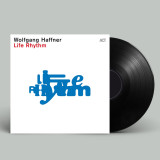
- Life Rhythm
- Balance
- Joy Of Life
- Eternity
- Desert Move Feat. Shantel & Thomas Konstantinou
- Second Nature Feat. Dominic Miller
- Open Land
- Full Circle Feat. Bill Evans
- Silence And Sound
- Supernova
- Home
»Ich denke immer wieder aufs Neue darüber nach, wie ich mich als Schlagzeug-spielender Bandleader so positionieren kann, dass das Instrument eine tragende Funktion einnimmt, dies aber auf eine musikalische Weise geschieht und auf keinen Fall als Zurschaustellung von Virtuosität«, sagt Wolfgang Haffner. Diese Haltung zieht sich als roter Faden durch seine gesamte Karriere - und auch durch »Life Rhythm«, sein zehntes Album auf ACT.
Und obwohl Haffners Musik gängigen Vorstellungen virtuoser Schlagzeug-Leader ganz bewusst widerspricht, steht das Instrument diesmal besonders im Fokus. Ausgangspunkt dafür war Wolfgang Haffners allererstes Solokonzert im Jahr 2022 auf Schloss Elmau. Er erinnert sich: »Das war eine Wahnsinns-Herausforderung bei der ich auch vor der Entscheidung stand: Spiele ich jetzt eine Stunde Schlagzeugsolo? Natürlich nicht! Also habe ich habe eine Menge melodisch klingender Perkussionsinstrumente eingebaut, Passagen live geloopt, mit Echos und Delays gearbeitet – im Grunde wie im Studio, nur eben auf der Bühne.« All dies brachte Haffner dazu, sich noch einmal auf ganz intensive Art mit dem Thema mit dem Instrument zu beschäftigen, welches ihn sein Leben lang begleitet. Und so haben alle Stücke auf »Life Rhythm« diesmal ihren Ursprung, nicht wie sonst bei Haffner, am Piano, sondern am Schlagzeug.
Das Ergebnis dieses Prozesses kann man gleich zum Auftakt von »Life Rhythm« auf dem Titeltrack erleben: Das Stück basiert auf einem hypnotischen Groove, bei dem nicht die Becken, wie sonst im Jazz üblich, die Time angeben, sondern vor allem die Trommeln. Das dieser Groove direkt Phil Collins und besonders an dessen Stück »Take Me Home« erinnert, ist kein Zufall: Collins' Art, Drum-Parts zu elementaren Teilen des Songwritings zu machen, ist bis heute eine von Haffners größten Inspirationen. Und auch jedes weitere der elf sehr kompakten, Song-haften Stücke auf »Life Rhythm« öffnet eine eigene Welt des musikalischen Schlagzeugspiels: Mal mal trocken-reduziert mit Besen wie auf »Balance«, poppig bei »Joy of Life«, mit filigranen Becken-Grooves, dezenter Elektronik und Percussion auf »Eternity« oder minimalis-tisch bis kurz vor der Stille in »Silence and Sound«.
Das aus all diesen Stilistiken ein so stimmiges Ganzes ent-steht liegt daran, das Wolfgang Haffner diese im Laufe seiner Karriere bis in die Tiefe durchdrungen hat - an der Seite von stilbildenden Charakteren wie Al Jarreau, Chaka Khan, Pat Metheny, Jan Garbarek, Esbjörn Svensson, Nils Petter Molvaer, Albert Mangelsdorff, Ricardo Villalobos und vielen, vielen mehr. All diese Kollaborationen haben Wolfgang Haffners Voka-bular am Instrument und auch als Komponist geprägt und die da-mit verbundenen, unterschiedlichsten Stile sind gleichermaßen Teil seiner musikalischen Persönlichkeit.
Vielseitigkeit und höchste Musikalität sind auch die Eigen-schaften, die Wolfgang Haffner und seine Mitmusiker auf »Life Rhythm« verbinden. Die Basis bildet ein bestens einges-pieltes Trio zusammen mit Keyboarder Simon Oslender, selbst auch Drummer und Bandleader, und Thomas Stieger, einem der gefragtesten deutschen Bassisten in Pop wie Jazz. Dazu kommen Trompeter Sebastian Studnitzky, Mitstreiter Haffners seit seinem ACT-Debüt »Shapes« und der Finne Arto Mikälä, eine echte Entdeckung in Sachen Klangvielfalt an der Gitarre. Diese Band herausragender Allrounder erweitert Haffner um eine Reihe musikalischer Charaktere, die der Musik ihre ganz eigene Farbe verleihen: Nils Landgren, Freund und Weggefährte seit mehr als 20 Jahren, Saxofon-Ikone Bill Evans, Sting-Gitarrist Dominic Miller, Balkan-Beat-Star Shantel, Bass-Feingeist Nicolas Fiszman, Oud-Virtuose Thomas Konstantinou und Bruno Müller, einer der besten deutschen Jazzgitarristen.
»Life Rhythm«, sagt Wolfgang Haffner, »ist für mich eine Fortsetzung, keine Wiederholung«. Die Musik trägt mit ihrer Wärme, Kraft und Klarheit die charakteristische Handschrift, die Haffner mit seinen Alben und auf tausenden von Konzerten in mehr als 100 Ländern zum wohl populärsten Schlagzeug-spielenden Leader Europas gemacht hat. Und gleichzeitig ist es eine Evolution seiner Musik. Gut möglich, dass Haffners Erfolg genau darin begründet ist, dass seine Musik immer etwas Ver-trautes und etwas Neues beinhaltet und dass Haffner sein Publikum so immer »mitnimmt« im Fluss seiner Ideen - und in einem gemeinsamen »Lebensrhythmus«
Amsterdam natives Maarten Smeets and Lars Dales, aka Dam Swindle, unveil their third long-player with the release of a new track, the first to be shared from the upcoming album, ‘Open’ - out on 30 May 2025 via Heist Recordings.
The new album sees the acclaimed duo dive far beyond the deep sonic waters they’re most known for, exploring lower tempos, synthwave, hip-house, and ambient across fourteen tracks. With a gestation period that traces back several years, ‘Open’ is their most intimate and personal body of work thus far, birthed during a time of self-reflection away from touring and personal transformation as individuals.
“We felt the need to tell a very personal story through our music as a translation of our personal development in the past years. We also wanted to make music without a specific goal in mind; We simply wanted to create. By taking away the grid of dance music and any expectations of what a Dam Swindle song should sound like, the creativity started to flow naturally with songs in many different styles and tempos. The result is an album that feels refreshing and uplifting and still very much true to the heart and soul of our sound.” - Dam Swindle, January 2025.
While the trademark Dam Swindle four-to-the-floor beats are still ever-present on tracks like ‘The Present Is Always Perfect’, ‘I Need You’, and ‘Is This Love?’, it’s the gentle waves of synths on opener ‘Home’, the contemplative piano chords of ‘Bloom’ featuring Joep Beving, and the lo-fi ambience of ‘It’s Okay, I Can Wait’ that showcase a melancholic, ethereal sensibility previously uncharted by the duo. Collaborations with vocalists such as NYC’s Haile Supreme on ‘Not Enough’ and Neo-soul singer Faye Meana on ‘Girl’ expertly find room in between the dancefloor and home listening sessions, and a clear standout on the LP is the title cut where message-heavy rapped vocals from UK artist Samson ebb and flow amongst iridescent grooves.
Under the helm of Maarten and Lars’ adept A&R, their Heist imprint has become a beloved home for house heads of both schools old and new, platforming some of dance music’s biggest names from Cinthie to DJ Sneak as well as the musical dawnings of artists such as Kassian and Makèz. The Dam Swindle alias has achieved house music royalty-like status across a storied 15-year career that includes two critically lauded full-lengths, collaborations with the likes of Tom Misch and Kerri Chandler, and a globetrotting touring schedule. This album stands as their most profoundly personal work of art to date, and they can’t wait to share it with you.
In an ever-expanding musical universe, Azymuth have long existed as a celestial giant, drawing countless artists, musicians and followers into their orbit. Marking fifty years since their 1975 debut album Azimuth, their new album Marca Passo proves that the band’s alchemic brew of Brazilian jazz-funk and cosmic samba soul remains as vital as ever, as the group honours the profound legacy of their departed founders.
Recorded in Rio de Janeiro, Marca Passo is the first full-length release since the passing of founding drummer Ivan "Mamão" Conti in 2023, following the earlier loss of keyboardist José Roberto Bertrami in 2012. Alex Malheiros, the sole remaining original member, sees his stewardship of the band’s musical legacy as his spiritual duty. He is joined by the equally devoted Kiko Continentino (Milton Nascimento, Djavan) on keyboards, who has been with the group since 2016, and new recruit Renato Massa (Marcos Valle, Ed Motta) on drums.
Yet since their earliest recorded music, Azymuth have always been far greater than the sum of their parts. The "three-man orchestra’s" unmistakable sound is rooted in Brazil's MPB studio scene of the 1970s and early 1980s—a time when artists blended traditional Brazilian rhythms with global jazz, rock, and emerging psychedelic and progressive elements. Marca Passo continues this legacy, seamlessly fusing Brazilian musical traditions with global influences while showcasing the exceptional musicianship that powers Azymuth's distinctive, multi-dimensional sound.
The album is produced by studio mastermind Daniel Maunick, responsible for Azymuth’s two previous studio albums, Fênix in 2016 and Aurora in 2011. Daniel’s credits also include albums by Marcos Valle, Sabrina Malheiros and Terry Callier. Azymuth also invited Daniel’s father, British jazz-funk royalty Jean Paul “Bluey” Maunick, of Incognito, to play guitar on a new version of Azymuth’s eighties classic “Last Summer In Rio”, in tribute to the song’s composer, José Roberto Bertrami. Equally, “Samba Pro Mamao” is a new composition dedicated to Azymuth’s beloved original drummer, Ivan “Mamão” Conti.
Credits:
Alex Malheiros - Bass, Acoustic Guitar & Vocals: 1,2, 3, 4, 5, 6, 7, 8, 9, 10
Kiko Continentino - Keyboards, Organ, Vocoder & Vocals: 2, 3, 4, 5, 6, 7, 8, 9, 10
Renato Massa - Drums & Vocals: : 2, 3, 4, 5, 6, 8, 9, 10
Ian Moreira - Percussion: 1, 2, 3, 4, 5, 6, 8, 9, 10
Sidinho Moreira - Percussion: 1, 2, 3, 4, 5, 7, 8, 9, 10
Dudu Viana - Keyboards & Vocals: 1
Victor Bertrami - Drums: 1
Mangueirinha - Repinique: 3
Jean Paul ‘Bluey’ Maunick - Electric Guitar: 5
Jose Carlos Bigorna - Soprano Sax: 9
Daniel Maunick: Additional Percussion, Synths & EFX: 1, 2, 3, 4, 5, 6, 7, 8, 9
Produced, Engineered, Mixed & Arranged by Daniel Maunick
Co-Produced & Arranged by Alex Malheiros
Executive Producer: Joe Davis
Recorded by:
Daniel Maunick & Leonardo Vieira @ Estúdio Nos Trilhos, Santa Teresa, Rio, Brazil
Daniel Maunick & Amadeu Signorelli @ Sigstudio, Niterói, Rio, Brazil
Daniel Maunick & Alex Malheiros @ Estúdio Basslab, Piratininga, Rio, Brazil
Mixed by Daniel Maunick @ The Sugar Shack, Carluke, Scotland
Artwork & Design: Tyler Askew
Action Speaks Louder Than Words is the 1975 debut album by Chocolate Milk, a funk and soul band from New Orleans. The band emerged in the mid-1970s and quickly gained recognition for their unique sound that blended the rich musical traditions of their hometown with the influences of contemporary funk and soul. The band was discovered by producer Allen Toussaint, a legendary figure in New Orleans music, whose influence is evident in the polished arrangements and the band's tight, cohesive sound. The album's themes of social awareness and personal reflection, combined with its infectious grooves and skilled musicianship, have ensured its lasting appeal. Also due to the single and title track "Action Speaks Louder Than Words", which charted well and was later sampled by numerous artists, including Public Enemy, Eric B. & Rakim, Aaliyah, Neneh Cherry and Toni Braxton feat. The Notorious B.I.G & Puff Daddy, cementing its place in music history. Action Speaks Louder Than Words is available as a limited edition of 500 copies on blue coloured vinyl.
- A1: Citizen Kane
- A2: Remembrance Day
- A3: Polar Opposites
- A4: Marilyn Dreams
- A5: Ice
- B1: La Lune Lunatique
- B2: All Fall Down
- B3: Nowhere Girl
- B4: Crowds
- B5: Beginning To Fade
In May 1981 B-Movie and Soft Cell went into Advision Studios in London with the same producer, Mike Thorne (Wire, Bronski Beat, China Crisis, The Communards) to record singles for the label they were both signed to. Phonogram had really wanted to sign B-Movie but had also committed to Soft Cell, having been coerced into it by Stev0, who managed both artists and wouldn’t let them have one without the other. B-Movie commenced recording the dark moody anti-fame anthem ‘Marilyn Dreams’, whilst Soft Cell got underway on a cover of an obscure Northern Soul classic. When both songs were released in July 1981, ‘Tainted Love’ became a worldwide hit and shot Soft Cell to international fame, making them the biggest stars of 1981. B-Movie had formed in 1979, in Mansfield, a typical northern town in the middle of the Nottinghamshire coalfield. Originally a three piece featuring, vocal / bass, guitar and drums, they expanded by adding a keyboard player to broaden their initial post punk sound. Local Lincoln independent record label, Dead Good Records, firstly put them on the compilation LP ‘East’, followed by 7" inch EP and then a mini-album releases, which led to an appearance on the legendary Some Bizarre label (alongside the likes of Blancmange, Depeche Mode, Soft Cell and The The)
Major label interest followed, from which came the deal with Phonogram, B-Movie initially re-recording the track ‘Remembrance Day’, which reached No61 in the UK chart in early 1981 and, more importantly, was played by BBC Radio 1 DJ John Peel, and appearing in his Festive 50 for that year. All of the recordings the band made during their Phonogram period have been consigned to the Universal Music vault for several decades, with the band finally managing to have these returned in 2024. The various tapes have been digitised and restored, resulting in the creation of what would have been their 1982 debut LP ‘that never was’. Ten tracks including the three singles plus seven previously unreleased recordings. The CD version contains a further seven recordings including the 12” versions, single B-sides and the track “Moles’” from the Some Bizarre compilation.So “Hidden Treasures” from B-Movie, is only four decades late but still able to sit seamlessly alongside contemporaries like The Chameleons and The Sound. The LP is a darker, more brooding and psychedelic affair, more akin to the gothic elements of the Bunnymen or Joy Division, than the ‘pop sensations’ Phonogram wanted them to become. By both opening and closing this chapter of B-Movie, it puts them firmly in the same bracket as their new wave and post-punk contemporaries, which is the least they deserve, as one of the great ‘lost’ bands of the early 1980’s. "It’s nice to hear B-Movie are finally getting a chance to release their forgotten gems’” Matt Johnson (The The) Vinyl
handsigniert & nummeriert
Wir schreiben das Jahr 2025 und FEINE SAHNE FISCHFILET kündigen ihr neues Album „WIR KOMMEN IN FRIEDEN“ an:„Alle gegen alle, im Krieg mit sich und untereinander und natürlich immer exklusiv mit der alleinseligmachenden Offenbarung im Gepäck.
Jeden Tag passiert so viel, so viel Scheiße, so viel Dummes, aber auch immer die guten Sachen mit den Freundinnen und Freunden, der Familie, mit all denen, die noch nicht komplett im Arsch sind. Zeiten, in denen man sich nur umdrehen muss und einem die Idee für das nächste Lied an den Kopf geworfen wird. Und so erscheint am 30. Mai unser neues Album mit einer Menge neuer Songs. Wir kommen in Frieden. Das ist unsere letzte Warnung.“
Angetrieben durch ihren ureigenen Signature Sound - High Energy Melody-PunkRock mit Trompete – gelingt den fünf Musikern mit ihrem neuen Werk eine hinreißende Bestandsaufnahme und gleichzeitig Ausblick auf eine der ungewöhnlichsten Band-Karrieren der letzten Jahrzehnte dieses Landes, ein wilder Trip, der sie aus der vorpommerschen Provinz durch viele Irrungen und Wirrungen bis an die Spitze der deutschsprachigen Musikszene geführt hat.
Produziert wurde der Longplayer erneut von Philipp »Philsen« Hoppen, der auch schon bei Alben von Die Ärzte, Kraftklub, Deichkind und K.I.Z. seine versierten Finger im Spiel hatte.
- A1: Tokyo
- A2: Leonard Street
- A3: Recognise
- A4: World’s Worst Girlfriend
- A5: Richardson (Feat. Cassandra Jenkins)
- A6: America
- B1: Online
- B2: I Wanna Be Loved By You
- B3: Ringpull
- B4: If You Don’t Believe In Love (Feat. Helado Negro)
- B5: Bad Kid (Feat. Becca Mancari)
Fünf Jahre nach ihrem gefeierten Album 'forevher' meldet sich die britische Sängerin Shura mit ihrem dritten Studioalbum 'I Got Too Sad For My Friends' zurück. Eine Mischung aus Kammerpop, 60er-Jahre-Folk und Lagerfeuer-Americana, die Shuras introspektives Songwriting in eine weite Landschaft ausdehnt - ruhiger als der gefühlvolle Schwung von 'forevher' und rustikaler als der grüblerische Synthie-Pop ihres Debüts 'Nothing’s Real' aus dem Jahr 2016.
Obwohl das Album Themen wie Isolation, Traurigkeit und Depression bearbeitet, klingt es aber alles andere als niedergeschlagen - Shuras kristallklarer Gesang trifft auf eine warme, erdige Produktion. Shura dazu ganz selbst-ironisch: „Auch wenn es nicht unbedingt eine maximalistische Platte ist, was den Sound angeht, war der Ansatz für mich, die Platte mit maximaler Freude aufzunehmen - was urkomisch ist, denn es geht darum, unglücklich zu sein!“
Angegangen wie eine „Old-School-Platte“, die eher eine Performance als eine Produktion einfängt, wurde ein Großteil des Albums live aufgenommen, wobei Keys, Bass, Gitarre und Schlagzeug in einem Rutsch aufgenommen wurden. Nur der Gesang wurde separat aufgenommen - mit Ausnahme des sanften Funk-Tracks Ringpull.
With releases on Brooklyn’s Major Records and UK imprints Non Stop Rhythm and Indulgence, DJ Split is a breakthrough producer putting his own stamp on the classic Chicago house sound. For his Shadow Pressings debut he has conjured up five original club cuts that will work their magic on any dance-floor worth it’s salt.
Last Night Baby sets the tone with taught 909 beats, punchy bassline stuttering vocal hits. Piano chords and a smattering of melodic chimes and just the right amount of musicality without taking away any of the raw energy and turbo-charged grunt. Treading a similar path but upping the BPM’s, XNXX goes for the jugular with gnarly FM bassline and frenetic groove.
Flip over for Can I Tell You? which goes a little deeper with a rolling bassline, filtering Detroit pads and strings whilst Step For brings touches of acid, banging 909 toms and vocal chops. Closing out the EP we have One In A Life Time which turns up the jack factor with snappy 808 snares, mechanical bass line and deep stabs. DJ Split is a man on a mission to bang the party and has come prepared with his piñata fully loaded with big, fat beats n basslines.
Swans kehren mit 'Birthing' zurück, dem neuesten Album, das im Laufe einer einjährigen Tournee 2023-2024 entstand.
'Birthing' wird über Mute und Young God Records veröffentlicht. Die Erstpressungen der Deluxe-Vinyl und CD enthalten eine Bonus-DVD mit Swans Live 2024 (Rope) The Beggar, einem Konzertfilm von Marco Porsia, der die letzte US-Tour der Band dokumentiert. Die DVD enthält außerdem 'I Wonder If I'm Singing What You're Thinking Me To Sing', eine Dokumentation von Christopher Nicholson über Michael Gira's Solotournee 2022.
'Birthing', das durch unerbittliche Improvisation und Live-Performance sowie neu komponierte Studiostücke verfeinert wurde, ist ein Zeugnis von Michael Giras kompromissloser klanglicher Vision. Die Songs, die als akustische Kompositionen begannen, wurden im Studio mit langjährigen Live-Mitgliedern und Kollaborateuren schrittweise erweitert und transformiert.
"Dieses Album, zusammen mit der kürzlich erschienenen Live-Veröffentlichung Live Rope, ist mein letzter Ausflug (als Produzent/Impresario) in die alles verzehrenden Klangwelten, die mich seit Jahren besessen haben. Wir werden in diesem Modus gegen Ende 2025 eine letzte Tournee machen, und das war's dann. Danach wird es mit Swans weitergehen, so lange ich dazu in der Lage bin, allerdings in einer deutlich reduzierten Form. Hinweise auf diese Richtung sind in einigen Momenten auf dem aktuellen Album zu finden. In der Zwischenzeit hoffe ich, dass die Musik eine positive und fruchtbare Atmosphäre bietet, in der man träumen kann." - Michael Gira / Swans
Produziert von Gira, wurde 'Birthing' in der Soundfabrik Berlin aufgenommen, im Candy Bomber Studio von Ingo Krauss gemischt und von Doug Henderson bei Micro-Moose gemastert.
- 1: You Make Every Lie Come True
- 2: It Ain't Easy
- 3: Taste Of Heaven
- 4: Never Ready To Go
- 5: The Forgiveness Tree
- 6: When The Moon Cries Wolf
- 7: Trader's South
- 8: Leave Him
- 9: Sit With My Soul
- 10: I Wish You Peace
THE SPEAKER WARS, an American rock band formed by Stan Lynch and Jon Christopher Davis, brings a unique blend of rock, country, and gospel influences to their debut self-titled release, the product of a longstanding collaboration. Stan Lynch, a founding member of Tom Petty and the Heartbreakers and Rock and Roll Hall of Fame drummer, has contributed his talents as a songwriter, producer, and multi-instrumentalist, drawing on his work with Don Henley, Ringo Starr, The Byrds, and many others. Lynch produced, engineered, and mixed the album, lending guitar, keyboard, bass, and vocal skills to the mix. Jon Christopher Davis, a seasoned singer-songwriter from Dallas, honed his craft in Nashville, writing songs for icons like Dolly Parton, Timothy B. Schmit, and Vince Gill. Davis, known for his soulful lead vocals, fronts the band and adds guitar, bass, and keyboard layers to their distinct sound. The band’s live lineup features Lynch on drums, Davis on guitar, and additional musicians Jay Brown, Brian Patterson, Steve Ritter, and Jay Michael Smith, creating a dynamic stage presence.
- 1: You Can't Hide
- 2: Take It All In Before The Lights Go Out
- 3: I Won't Run Away
- 4: Find My Way
- 5: Won Na Pa
- 6: My Voice
- 7: Story
- 8: Life As We Know It
- 9: Our Own
- 10: After The Tears Flow
- 11: Pray
During the course of his career, the legendary creator of Afrobeat Fela Kuti used his music to lament social injustices and political corruption in his native Nigeria. His music, a compelling blend of American funk and West African highlife, often locked into spellbinding grooves that seemed to go on forever. Yet that was the point: to fall deep into the rhythm and dance away the hardship. While this impacted Nigeria and the entire world, it also affected Fela’s son Femi and his son Made, both of whom carry his legacy as torchbearers for change. On February 5th 2021, Partisan Records, home to Fela’s catalog, will release two albums from Femi and Made — both very much in the tradition of Fela’s music, but with different scopes. Femi’s album, Stop The Hate, radiates the unique Afrobeat sound that he has forged throughout his long career, affirming the sharply political conviction that his father would’ve claimed in the 1960s, ‘70s and ‘80s. Made’s album, For(e)ward, is a modern and progressive freedom manifesto, pushing boundaries of the subgenre even further. Made also performs every instrument on the album. Together they will be packaged into a double album called Legacy + that, when taken as a whole, bolsters the rich musical heritage of the Kuti name. Yet this isn’t just about honoring Fela, it’s also personal for Femi and Made, a father and son with deep creative synergy. Most importantly, the project finds these men coming together in the name of family. “This is probably the most important part of my life right now,” Femi says. “I’m happy because he’s not copying me. He has found his voice. What other joy could a father want than to experience this in his lifetime?”
Mia Zapata was the greatest rock singer of her time. She may have likely been the greatest blues singer in punk rock history, the woman who married the 78 and the '78. Tragedy did not make this true. Mia Zapata made this true, and the ferocious, spring-loaded shrapnel frame that was built around her by Andy Kessler (guitar: metronomic and furious), Matt Dresdner (bass: fluid, punching, beat-addicted and melodic), and Steve Moriarty (drums: martial and explosive) - who, with Mia, combined to form The Gits - made it true. The Gits were formed at Antioch College in Yellow Springs, Ohio in mid-1986, grabbing and swapping pieces of art, thrash, noise, punk rock, classic rock, and all the sorts of magical silly and bookish jingle bells that an old-school liberal arts education handed you; for the next few years they worked on turning it all into something tough, sensitive, both brutal and kind. Andy, Matt, Mia, and Steve moved to Seattle in middish 1989, landing in a house on Capitol Hill where they (and fellow travelers) wood-shedded and rehearsed for the next few years. The Gits put out three EPs in 1990 and '91 before signing with C/Z Records and releasing their first full-length album, Frenching the Bully. Seattle quickly claimed the quartet as their own and embraced the Gits blend of ferocious fangs and soft heart, the slug/slap of the guitars, and the gorgeous, soft underbelly of the poetic emotions. These qualities not only fit in with the doe-eyed/sharp-clawed grunge ethos but earned the Gits the respect of their peers, including Nirvana, who tapped them to open a major local show in 1990. Then other stuff happened, and their frantic, confessional barbed-heart snowball began rolling up hill very, very fast; the Gits "quickly" (hah! After half a decade learning to implode and explode hearts and stomping their boots on manifold beer-softened, Marlboro-weeded wood stages!) inspired rapture, awe, and the levitation that happened when peak emotion meets peak grindage in front of amps spitting out something that sounded like the mad marriage of Bolan swagger and Dischord tension_ all fronted by a genuinely incomparable woman who held her heart in her mouth and shared it, in all its celebration and fear, without hesitation. The Gits were an angry, inflamed slinky fully in tune with and tuned by the Bessie Patti Smith of her time, truly the only singer who could summon Joplin, Poly Styrene, Sam Cooke, Iggy Pop and Ian MacKaye all in the same goddamn song. In 1993, less than four weeks after accepting an offer from Atlantic Records, Mia died. I leave it at that, because this is not about death; it's about an extraordinary life. I do not say, "You should have been there," I say, "We are lucky so many of us were, and I am so glad we have this extraordinary evidence of the power and gifts of Mia and the Gits that you now can hold in your hands." And I note that Frenching the Bully, this extraordinary testament to the soul, shock, fury and feeling of the Gits, has been long out of print on vinyl and CD, and this new edition - remastered by legendary Seattle engineer Jack Endino - joyfully rectifies that. -Tim Sommer
- Peter Gunn
- Victims Of Society
- Insane Human Race (Feat. Tom Angelripper)
- Strange Ways
- Warmonger
- Sound Thrashing
- Metropolis
- Valley Of Suiciders
- Beautiful World (Feat. Nancy Kunze)
- Wicked Siste
Oxblood Vinyl[26,47 €]
High Roller Records präsentieren zum 10. Jahrestag von Frank Blackfires erstem Soloalbum "Back on Fire" eine remasterte Neuauflage mit neuem Artwork und zum ersten Mal auch eine Vinyl-Edition. Frank Blackfire als lebende Legende zu bezeichnen ist keine Übertreibung. Sein bahnbrechendes Gitarrenspiel bei den frühen Sodom und Kreator war für die Entwicklung des deutschen Thrash-Metal-Sounds maßgeblich. Während er nach der Jahrtausende in Brasilien lebte, gründete er die Band Mystic und nahm mit ihr zwei Demos auf, die den Grundstein für ein vollständiges Album legten, das allerdings lange auf sich warten ließ. "Es war eine Menge harter Arbeit, bis wir es veröffentlichten", sagt Blackfire rückblickend, während er tatsächlich an einem zweiten Soloalbum arbeitet. Die zehn Tracks von "Back on Fire" - darunter eine thrashige Interpretation von Henry Mancinis ‚Peter Gunn'-Titelmelodie als Intro und ein Gastauftritt von Sodom-Frontmann Tom Angelripper - zeichnen sich durch Franks charakteristische Gitarre und raue Stimme aus. Mit seinen etlichen Killer-Riffs in herausragenden Stücken wie ‚Victims of Society', ‚Warmonger' und ‚Valley of Suiciders' bleibt die Platte ein ein zeitloses, aber vergessenes Thrash-Juwel, das es wert ist, (wieder-)entdeckt zu werden.