“Though seeing they do not see, though hearing they do not hear or understand.”
NYC-based producer/visual artist Nathaniel Young returns with the sophomore 12” under their techno-focused alias, Guilt Attendant. “A Flower Wilts Under The Heat Of The Son” is cut from the same cloth as 2020’s “Suburban Scum” where Young delves into overtly religious motifs and ideological critique of their cult-like upbringing. Here, though, Young challenges themself and the listener to seek hope and resolve rather than hatred and contempt.
Considering its sometimes-monolithic sound palette, the timeless sub-genre of dub techno has long stood as a versatile vehicle for exploring and expressing a wide range of emotions. From mourning those we’ve lost, to somber reflection, to hope and celebration–all united by warmth, soul, and perhaps most importantly, groove. This versatility has underpinned Young’s affinity for the dub techno framework, and this collection of tracks is the culmination of material that they’ve long aspired to manifest. Atop this foundation, Young explores the place of acceptance and understanding that they’ve ultimately had to reach in relation to their religious upbringing and the inherent dualities that plague dogmatic religious circles and our beloved dance-floor communities alike.
“A Flower Wilts Under The Heat Of The Son” places a heavy emphasis on groove and swing while attempting to stretch the limits of classic dub techno tropes. Through creative melodic layering, swung low-end, and syncopation, these tracks hope to offer a fresh take on the sound while remaining solely devoted to the dancefloor.
Through their design work for Dais Records and Hospital Productions, Young had the pleasure of crossing paths with the recently departed Juan Mendez (Silent Servant), who graciously contributed a striking, cacophonous, and noise-laden remix. Given Mendez’s expansive and diverse body of work, as well as his own affinity for dub techno, Juan’s contribution could not be more harmonious. A singular talent and an extremely kind, generous soul, Juan will be dearly missed.
Rest in peace Juan Mendez, 1977-2024
Search:sound man
FFF touches down on Rupture for the first time, bringing big flavours from Rotterdam to London with his 'Big Request EP'.
A prolific producer and integral figure in the Dutch scene, FFF follows up past appearences at Rupture events with a debut release on the label.
The four track EP spans the full spectrum of his influences, drawing from dancehall to hardcore and beyond, cutting between hard edged breaks and teaming with pure energy.
DJ support from:
Ben UFO
Coco Bryce
Ivy Lab
Mantra
Double O
Doc Scott
J:Kenzo
Stretch
Felix K
Rare as hen's teeth digital dancehall from out of late 80s/early 90s NYC, via Cooly aka Koolindian aka Super Cat's cousin Andrew Maragh, originally released on his own Mad Indian Records - reissued here for Death Is Not The End sub-label 333.
Maragh sang in church choirs and on soundsystems in Jamaica before moving to New York in the 1980s where he quickly became involved on the underground music circuit, taking inspiration from his cousin the legendary Super Cat. "Freedom" was penned while he was incarcerated, and details the unfairness of the judicial system at that time, alongside the heartfelt need to "hustle everyday to make ends meet, whether that's picking up scrap metal or cutting lawns or voicing dubplates, whatever you do to make a dollar", says Maragh.
Having bought an Ampex tape in Manhattan, Maragh headed over to the legendary Philip Smart's HC&F studio on Long Island with the intention of laying down his lyrics on the version to Dennis Brown's "Children of Israel". After hearing the song however, Smart went ahead and built this one-away "Freedom" rhythm on the spot. The track was then carried to Count Shelly's Super Power Records where it was then pressed & distributed as the first and only release on the Mad Indian label around the turn of 1989/1990.
Da Buze BruvazpresentsClever 1 X Lord Beatjitzu
Master Sip, Legendary teacher of Bruce Lo Da First Drunken
Grilchy Party presents another epic from Da Buze Bruvaz own Clever 1 and mysterious production wizard Lord Beatjitzu. This new adventure follows where the last one, Perverted and Drunken, left off. They have cooked up another album following the footsteps of their classic Perverted and Drunken LP. This new adventure follows where the last one left off. Introducing Master Sip, Legendary Teacher Of Bruce Lo Da First Drunken. It is illuminating one of the many chambers of their Drunken Fly Chi style, the martial arts mind states of Clever 1 and Lord Beatjitzu combining as the "Fly Chi School Of Da Drunken Artz". The duo pops the listener in the face With vicious, bloody Nunchuck Lyrics over high-velocity, swift kick-in-the-chest production. With these seasoned masters of their perspective arts, they form a powerful, unstoppable combo and truly take no prisoners in this Action-Packed sophomore foray. It's a pure Saturday morning Kung Fu sound theater where Wing Chun enters the world of Drunken Fist on Wax. Beware as you enter the Dojo and watch your step!
If there ever was a monicker apt for describing an artist’s behavior, that is Ghost Lemurs. Manifesting spottily in compilations and limited edition tapes, then returning to the shadows without much fanfare, the project has indeed demonstrated a ghostly behavior and a nature as puzzling as the animal it takes its name from. Wombs And Alien Spirits represents now their most public outing, one in which the duo of visual artist / producer Kareem Lofty and Daniele Guerrini (better known as Heith and as Haunter’s co-founder) are happy to showcase all the discoveries in a process of musical and spiritual research begun in 2019. Described by the artists themselves as an experiment in mediterranean psi-trance, the album makes use of an incredibly diverse number of traditions, sonic sources and techniques of musical experimentation, keeping its psychedelic intentions central to the whole creative endeavor. Moments of meditative relaxation are brought to unsettling new levels by cavernous basses and spaced out drones, while tight polyrhythms bring beautiful granular melodies to a sidereal ceremonial dance. As beautiful and captivating as it is, Wombs And Alien Spirits remains as chimeric and unrestrained as any previous effort by the two artists. It’s a type of folk music devoid of a specific homeland, but resulting from the authors’ heritages, simultaneously divided and united by the mediterranean sea, injected with all the trajectories of their personal journeys. It ends up sounding profoundly human and uncannily inhuman, tapping into the undiscovered alien element at the beginning of the experience of life. Genre: Electronic / Experimental Listen:
Red Vinyl[20,97 €]
REKORDER is "a kind of retrospective of myself", says M.RUX about his second, long-awaited solo album. For over 10 years, Marten Rux aka M.RUX appears as a DJ, producer, editor, remixer and multi-instrumentalist all over the world and has developed an idiosyncratic sound that opens up subtle fields of tension: M.RUX mixes a sound between experimental sound design and hooklines that stay in your ears forever. Between wild percussion and contemplative harmonies, between ecstasy and meditative calm. In his DJ and live sets, M.RUX usually steps up to the controls with a smile, discreetly bobbing his head, while the audience goes wild. He circumnavigates clichés with trustworthy certainty and develops his very own guiding threads in his selection beyond BPM or genre straitjackets. One constant is his warm, often stoically slow kick drum, which holds all that playfulness together. REKORDER is a manifestation of this typical M.RUX sound. Similar to his concept album "Vermonische Melodien" from 2020 (on the Pingipung label), the artist's curiosity is directed towards the musical visions of the past. When new music technology projected great visions of the future and when new sounds had not yet solidi ed into clichés. REKORDER refers to the recording device, spelled in a German way, because most of the recordings were made in Germany (and in England as well). Phonography is a miracle that has only been around for 150 years: Technology gifts upon us prosthetics for remembering sound. Every recording is a process, and every playback a new performative act. Recordari (Latin) is a beautiful word. It literally means to take something to heart (cor) once again (re-). This doesn't just refer to remembering, but also to a ponderous, loving, sometimes doubtful contemplation. It is a perfect headline for M.RUX’ approach to processing sound. REKORDER draws deeply from its own archive, which has ourished quite splendidly during the pandemic. Multi-instrumentalist M.RUX mixes his own recordings of banjo, guitar, auto-harp, synths, percussion and jews harp with fragments from sessions with friends that have accumulated since 2020. They unfold in the process of re-listening in the mix and transform into a solid musical tapestry. A typical gesture for this album? M.RUX bows deeply to the history of pop music - especially the blues and its melancholy, coolness and shuf ing groove. The harmonic framework of the album is based on blues scales throughout. Instead of conveying blue emotions via lyrics or the tone of the voice, as the original genre does, the synthesizer takes on this role on REKORDER. With his sound design, M.RUX achieves an ecstatic sorrow in his melodies, this gurgling portamento that is reminiscent of R&B (or even the ingenious title melody of the series "Bojack Horseman”). If voices are heard on REKORDER, then as hypnotic fragments that guide us through the groove as conjunctions: "Because...", says the voice in the track of the same name. That's enough. There are no lyrics, no literal weariness, no love-songs or storytelling, REKORDER processes all of this into timbres and groove as vessels for the album’s individual, contemplative melancholy. Never forgetting, with a gentle smile, to swing a leg.
Black Vinyl[17,61 €]
LIMITED RED COLOURED VINYL!
REKORDER is "a kind of retrospective of myself", says M.RUX about his second, long-awaited solo album. For over 10 years, Marten Rux aka M.RUX appears as a DJ, producer, editor, remixer and multi-instrumentalist all over the world and has developed an idiosyncratic sound that opens up subtle fields of tension: M.RUX mixes a sound between experimental sound design and hooklines that stay in your ears forever. Between wild percussion and contemplative harmonies, between ecstasy and meditative calm. In his DJ and live sets, M.RUX usually steps up to the controls with a smile, discreetly bobbing his head, while the audience goes wild. He circumnavigates clichés with trustworthy certainty and develops his very own guiding threads in his selection beyond BPM or genre straitjackets. One constant is his warm, often stoically slow kick drum, which holds all that playfulness together. REKORDER is a manifestation of this typical M.RUX sound. Similar to his concept album "Vermonische Melodien" from 2020 (on the Pingipung label), the artist's curiosity is directed towards the musical visions of the past. When new music technology projected great visions of the future and when new sounds had not yet solidi ed into clichés. REKORDER refers to the recording device, spelled in a German way, because most of the recordings were made in Germany (and in England as well). Phonography is a miracle that has only been around for 150 years: Technology gifts upon us prosthetics for remembering sound. Every recording is a process, and every playback a new performative act. Recordari (Latin) is a beautiful word. It literally means to take something to heart (cor) once again (re-). This doesn't just refer to remembering, but also to a ponderous, loving, sometimes doubtful contemplation. It is a perfect headline for M.RUX’ approach to processing sound. REKORDER draws deeply from its own archive, which has ourished quite splendidly during the pandemic. Multi-instrumentalist M.RUX mixes his own recordings of banjo, guitar, auto-harp, synths, percussion and jews harp with fragments from sessions with friends that have accumulated since 2020. They unfold in the process of re-listening in the mix and transform into a solid musical tapestry. A typical gesture for this album? M.RUX bows deeply to the history of pop music - especially the blues and its melancholy, coolness and shuf ing groove. The harmonic framework of the album is based on blues scales throughout. Instead of conveying blue emotions via lyrics or the tone of the voice, as the original genre does, the synthesizer takes on this role on REKORDER. With his sound design, M.RUX achieves an ecstatic sorrow in his melodies, this gurgling portamento that is reminiscent of R&B (or even the ingenious title melody of the series "Bojack Horseman”). If voices are heard on REKORDER, then as hypnotic fragments that guide us through the groove as conjunctions: "Because...", says the voice in the track of the same name. That's enough. There are no lyrics, no literal weariness, no love-songs or storytelling, REKORDER processes all of this into timbres and groove as vessels for the album’s individual, contemplative melancholy. Never forgetting, with a gentle smile, to swing a leg.
Since the early 80's Allan Crockford has been a major figure in Medway's garage rock scene, including playing for The Prisoners, Billy Childish's Thee Headcoats, the original line-up of the James Taylor Quartet, The Solarflares and many more. Since 2010 he has fronted his own band, The Galileo 7, as writer, guitarist, and lead vocalist. Their unique blend of powerful '60s garage rock'n'roll, psychedelic vocal harmonies and quality songwriting has now featured on no less than eight albums. Their ninth, You, Me and Reality, sounds like the work of a seasoned rock 'n' roll band dialling things up one and approaching its zenith. The group performances of the quartet of Allan Crockford, Viv Bonsels, Paul Moss and Mole ooze energy and dynamics - whether it's the garage ramalama of opener 'Can't Go Home', the woozy psychedelics of 'Slow Down', the chipper folk-rock of 'A Simple Man' or the '60s mod-pop stomp of the title track. As with 2019's last album proper, There Is Only Now, all four group members share lead vocal duties, with Viv's contributions adding an affecting indie-pop flavour that coyly suggests new directions. You, Me & Reality largely eschews its predecessor's predilection for ambling unplugged off the beaten path, instead sticking with up-tempo ensemble performances that showcase the players' musical chops and vocal interplay in the kind of warm, fizzy, analogue soundscape that's become a touchstone of many Medway bands.
Partiboi69 strikes poses, chords and hot irons. Australia’s spiciest export since INXS’s front man is a sensation on many (meta-)levels. Musically, aesthetically and hedonistically exhilarating, the man’s man shows his sensitive side on Running Back. Four tracks answer the Call of the Void with a showcase of sounds and moods that are as much informed by the rules of old school dance music (Bodies) as they draw inspiration from classic rave closing tracks (Playin’), plangent pop (Feel This) and a former new romantics band that just discovered house music pre-internet (Call of the Void): surprisingly serious and simultaneously not-so-serious. Composed and executed with serious songwriting skills and an uncanny feel for the aural world of Running Back Records. A mutual pleasure, indeed.
Short: Partiboi69 strikes poses, chords and hot irons. Showing his sensitive side for Running Back with four tracks that are as much informed by the rules of old school dance music (Bodies) as they draw inspiration from classic rave closing tracks (Playin’), plangent pop (Feel This) and a former new romantics band that just discovered house music pre-internet (Call of the Void). A sensation on many meta-)levels and a mutual pleasure, indeed.
Montenegrin born in Istanbul, precocious pianist growing up in an embassy, brilliant musician. Prolific composer speaking eight languages, he arranged music for jazz, pop music, adopting multiple identities.
For one label, he is Andy Loore; for another, Emiliano Orti. For others, he is called Alan Blackwell or Johnny Montevideo, but behind all these aliases, there is only one man: Janko Nilovic.
Exploring the shelves of musical production, venturing into the less-illuminated corners of library music, Janko Nilovic's name lights up dozens of shelves on which his soundtracks, his records for Editions Neuilly or Sforzando, but above all his twenty albums for Editions Montparnasse, are stored. A considerable and imposing work, rich in orchestrations of keyboards, strings and brass instruments, themes, atmospheres and melodies. A repertoire in which the cinema, television and advertising have come to find their delight ...
Subjected to the sharp blades of samplers, reduced to a few effective seconds, joined with rhythmic beats, some of his tracks have infiltrated hip hop for a long time , leading the most curious to go back to the source to get the complete albums from which the precious loops had been taken.
Almost unknown to the general public, Janko Nilovic is a master for the initiated, whether they are at his side in the studio or comfortably seated in their armchair savouring the final result on their turntable. His discretion combined with his long years of silence on the record could lead one to believe that he had cleverly arranged his disappearance from the radar to make Janko Nilovic a mystery that has never been completely solved.
Until this message from The Soul Surfers.
A few miles away, in their studio fired up by analog funk, the Muscovites had been put back on the Nilovic track by multi-instrumentalist Shawn Lee. A few passionate discussions later, and the desire for a joint album was already lighting up the amps, making the bass strings shiver and the drum skins tighten.
Initiated by the coming and going of scores, the collaboration finally continued in studio for a real exchange, instantly bouncing off proposals, developing ideas in a live group dynamic that distance would have made impossible.
To feel the vibrations accumulated for decades at the CBE studio (like Chatelain Bisson Estardy), a mythical place founded in 1966, in which many albums, especially library, were immortalized. A place where consoles, equipment and instruments were kept as they were, accumulating in their wiring, meters and speakers, endless hours of experimentation and recording.
A place that Janko knew well and where an old acquaintance was waiting for him. A Hammond organ with a Leslie booth whose keys he had already flattered in the past and behind which an improvisation and a single take were enough to complete the eponymous title.
Together, Janko Nilovic and The Soul Surfers have built Maze Of Sounds, a musical labyrinth paved by the master's keyboards where the soul-funk groove of the fiery Russians is the listener's thread, his point of reference in this maze of atmospheres and emotions, at once cinematic, nostalgic, dancing, dreamlike and contemplative.
An album where, however, nothing is compartmentalized. Where, blown by the whirlwind strung by a violin quintet, the barriers move preparing the entrance of a Slavic choir, letting a screaming guitar come and go alongside the crystalline liveliness of the Fender Rhodes, organize some rhythmic aerations at the disposal of the samplers.
A fusion between the cleverly blackened scores, between the science of precisely written arrangements and the soul-funk feel of The Soul Surfers. An album such as Janko Nilovic has been dreaming of making for years.
What the listener might encounter on this album goes all the way down to the sound of a neuron transmitting pain, beatitude or any one of the countless senses and impressions we feel on any one day of life. N E U R O is the debut album by CURA MACHINES, a new project by Daniel Lea whose tracks are at once scientific in their capturing of the morphing of body cells as well as the larger expanses of a poetic filmscape of the contemporary metropolis.
The name CURA MACHINES comes from a sign Lea saw on a trip to Ancona, Italy at an abandoned hospital: Prima E Dopo La Cura (Before and after the cure). The sound in between, of what was lost or found, transmuted in the heavily manipulated and pulsating synthesisers, is the restoration here. With a physically visceral mix by Ben Frost and soaring re-amped bass textures from Yair Elazar Glotman, the album is lush with trans-morphing apeggia that shudder, quack and soar into ashen sparks.
Back in the turn of the 20th century the poet Rilke posited that the suture patterns of fused skull plates could potentially be played by the then-new technology of the gramophone, with each of us having our own personal tonal source code or anthem etched onto our skulls. And with a track like 'Suture' we have such an embodied sound: the close-up exhumation of the neural brain casing, stitched and sewn together in fleeting pulses of whisper and alarm.
The individual is exposed and isolated, but not without the promise of succour.
Or one also has the soundtrack to the loneliness of a morose private eye – a pulp novel set in a future time of neurosis or washed out euphoric beauty. It is here in tracks such as 'Terminal Zone' or 'Inversion Layers', music that is blinking in celluloid frames. The plot could easily be a sci-fi, paranoid tale of brain emulation, transhumanist crimes against humanity itself. After all this is Lea's soundtrack to Los Angeles, the city of angels that has been captured in countless movies: the racing tracking shot of the 2nd Street Tunnel at night, the freeways spreading out in a glorious sprawl of lit up veins and arteries. The last track 'Zosa' marks out the boundary line that delineates between day and night, when the lunar strains wane, the tides subside and the city comes to life.
Recorded live at the Black Hawk, San Francisco in September 1959, At The Blackhawk 1 is the first of 4 volumes released in 1960. Featuring six cuts, Manne (drums), is joined by Joe Gordon (trumpet), Richie Kamuca (tenor sax), Victor Feldman (piano) and Monty Budwig (bass). This new edition of the album is released as part of the Contemporary Records Acoustic Sounds series and is pressed on 180-gram vinyl pressed at QRP with (AAA) lacquers cut from the original tapes by Bernie Grundman and is presented in a tip-on jacket.
Sheer Mag haben sich eine einzigartige Position im Kanon des zeitgenössischen Rock erarbeitet: Sie wechseln mit Leichtigkeit zwischen den
raffinierten Schnörkeln einer "Kenner-Band" und der ekstatischen Umgangssprache des populistischen Songwritings - und zeigen dabei keine strikte
Loyalität zu einem der beiden Lager - ihr Sound wird zwar oft zitiert, ist aber unverkennbar und sofort als ihr eigener erkennbar. Auf Playing Favorites,
Sheer Mag's drittem Album und dem ersten bei Third Man Records, profitiert die Band von einem Jahrzehnt der Hingabe an ihren eigenen kollektiven
Geist - einem Geist, der sowohl in den verschwitzten Gräben der Punk-Lagerhallen als auch im überlebensgroßen Glamour der Konzerthallen
verfeinert wurde - und bringt ein dichtes Werk voller packender Emotionen, massiver Hooks und meisterhaft konstruierter Power-Pop-Hymnen
hervor. Wie Sängerin Tina Halladay es ausdrückt: "Niemand scheint mehr geradlinige Rock-Knaller zu schreiben - mehr als alles andere wollten wir mit
dieser Platte das große, eingängige Songwriting in den Mittelpunkt stellen." Dies ist das Album, das die vierköpfige Rock'n'Roll-Band aus Philadelphia
schon immer machen wollte.
Sheer Mag haben sich eine einzigartige Position im Kanon des zeitgenössischen Rock erarbeitet: Sie wechseln mit Leichtigkeit zwischen den
raffinierten Schnörkeln einer "Kenner-Band" und der ekstatischen Umgangssprache des populistischen Songwritings - und zeigen dabei keine strikte
Loyalität zu einem der beiden Lager - ihr Sound wird zwar oft zitiert, ist aber unverkennbar und sofort als ihr eigener erkennbar. Auf Playing Favorites,
Sheer Mag's drittem Album und dem ersten bei Third Man Records, profitiert die Band von einem Jahrzehnt der Hingabe an ihren eigenen kollektiven
Geist - einem Geist, der sowohl in den verschwitzten Gräben der Punk-Lagerhallen als auch im überlebensgroßen Glamour der Konzerthallen
verfeinert wurde - und bringt ein dichtes Werk voller packender Emotionen, massiver Hooks und meisterhaft konstruierter Power-Pop-Hymnen
hervor. Wie Sängerin Tina Halladay es ausdrückt: "Niemand scheint mehr geradlinige Rock-Knaller zu schreiben - mehr als alles andere wollten wir mit
dieser Platte das große, eingängige Songwriting in den Mittelpunkt stellen." Dies ist das Album, das die vierköpfige Rock'n'Roll-Band aus Philadelphia
schon immer machen wollte.
The Pheromoans are tenants of an unruly domain. Over the last 18 years the group have evolved from garage rock primitivists to auteurs of their own curious sound; a frothy brew of loose electronics, refractory rock and humdrum musing. Their songs are mutable, capricious, unreliable narrations, often withholding as much as they reveal. Russell Walker’s understated vocal has always been the band’s unifying focus, it is wry, unsparing and wilfully honest. Walker’s lyrics are an observational tour de force, sometimes droll, yet often tipping over into unlikely pathos. With previous releases on Upset The Rhythm, Convulsive and Alter, 2024 will witness The Pheromoans return with lucky album number 13, entitled ‘Wyrd Psearch’ (out March 1st on Upset The Rhythm).
‘Wyrd Psearch’ was recorded in Lewes throughout 2023. This was undertaken by founding member James Tranmer, his keen instinct for how the band should sound shaping many of the creative decisions. Joined by new guitarist Henry Holmes, the five piece doubled down on a decidedly breezy, melodic approach. Scott Reeve’s drumming is ever brisk, whilst Daniel Bolger explores AOR peripheries on keyboard and bass. “Wyrd Psearch finds us on relatively zestful form” affirms Walker “whether it be merrily recalling the Jason Williamson / Tim Lovejoy Covid summit, or mentally bathing in the pleasures of lunch hours spent strapped to a listening post in Borders.” With The Pheromoans there is always a familiarity at play, only broken and reassembled, like a bygone sitcom gone rogue in your memory. This contributes to the group’s peculiarly British outsider perspective, one that shouts from the sidelines, but never goes unnoticed.
Subjects covered lyrically on ‘Wyrd Psearch’ include “mid-life crises, male pattern baldness, and thwarted artistic and personal ambitions” according to Walker himself. “Nothing is off limits for scrutiny, even rural arts communities” he concludes. Lead single ‘Downtown’ swings with chiming guitars and finds Walker mid-breakdown trying to persuade a loved one to accompany him into the town centre to collect controlled medication and wind back the clock to happier times. “I want to keep you in cotton wool until pay day” he confides. ‘Cropped to Death’ and ‘Father Austin’ are ruminative and more relaxed in nature, whilst ‘Twibbon Wife’ is a more energetic effort, all jabbed synth chords, circuitous basslines and rampant drum fills. ‘Faith in the Future’ similarly bounds along with reverie.
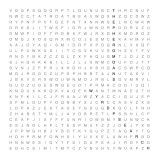
Walker claims that the album’s title is an expression of his frustration at the ubiquity of people claiming things are eerie or weird / wyrd in the present cultural milieu. The artwork for the record is designed as an actual word search too, a knowing nod to how we all grapple for meaning amongst the absurdity of each day. Leaning into ‘weird’ as a coping mechanism is not on The Pheromoans’ agenda however. This album holds little sway with the supernatural, it’s not enough. The overriding impression given by ‘Wyrd Psearch’ is of a band renewed with ideas. There’s no trouble finding the right words, they’re hitting their mark, keeping up with the commentary. ‘Wyrd Psearch’ is a document of The Pheromoans mastering their unquiet moment.
Blending sounds of early 70s Funk & Soul, Latin-Jazz, and Afrobeat, Mestizo Beat kicks the year off with a heavy dose of new material. First up is “She’s A Rose b/w Lotsapapa,” their next 45, offering two sides of masterful instrumental soul music written & produced by The Magaña Brothers out of their hillside studio, Spc 166 in Topanga, CA. Side A’s “She’s A Rose” takes us back to the golden years of the Blaxploitation film genre and the soundtracks we have grown to love. This song was inspired by the compositional and orchestral arrangements from the greats, such as Curtis Mayfield’s “Superbad,” Johnnie Pate’s “Shaft in Africa,” and Bobby Womack’s “Across 110 Street.” Featuring Tim Felten of Surefire Soul Ensemble on keys, with horns written and arranged by Jesse Audelo, Mestizo Beat takes the listener on an evolving journey, exploring the mood and cinematic elements of flute, saxophone, and wha’d-out guitar, topped off with a funky drum and percussion break. On the flip, “Lotsapapa” rounds out the B-Side, blending the musical styles of Latin and Nigerian disco-funk into a track that’s perfect for the dancefloor and those late nights out. Written about Bernard “Lotsapapa” Crowe, a notorious drug dealer who survived an attempted murder by Charles Manson, this side is sure to get the body moving with the afro-disco rhythms and chant vocals, dubbed out around a tightly arranged horn section written and arranged by Jesse Audelo and Jason Cressey. “Lotsapapa” features guests Steve Haney from Jungle Fire on Percussion and Cressey of the True Loves on trombone.
With each side highlighting the various talents of the ensemble, Mestizo Beat always stays true to their sound and recording techniques. Both tracks are mixed by Sergio Rios at Killion Sound and are featured on the forthcoming LP, Jaraguá, coming mid-2024.
Peace Okezie, das Genie hinter Master Peace, nimmt kein Blatt vor den Mund. Er muss die Dinge aussprechen und verkörpert den Satz: "Wenn du es sagen willst, dann sag es einfach." Obwohl er nie unvorsichtig oder unsympathisch mit seinen Worten umgeht, ist dieser Satz eine Bestätigung, die ihn antreibt.
Seine Energie ist auf Augenhöhe mit der eigenwilligen, überschäumenden und vor allem extrem guten Musik, die er macht. Bei Master Peace geht es darum, die Menschen in seine verrückte, wunderbare und kakophonische Welt einzuladen. Er zieht Hörer an, die sich nach Rebellion und Abweichung von der Norm sehnen. Mit seinem Debütalbum "How To Make A Master Peace" verschiebt Master Peace die Parameter des Genres mehr denn je. Peace lässt seine Inspirationen spielen, indem er die Generationen der britischen Musik, die ihn groß gemacht haben, in seinen Sound integriert. "I Might Be Fake" hat die Dringlichkeit von "Giddy Stratospheres" von den Long Blondes aus dem Jahr 2005, gemischt mit der Spacigkeit des Klaxons-Katalogs der späten Nullerjahre. "Shangaladang" ist eine Ode an Peace' Black-Music-Inspirationen, mit einer Anspielung auf Skepta; hier passt er den Text "I've got my hood mates and white niggas" aus dem 2016er Song "Man" des Rappers an seine rauere, The Clash-artige Melodie an.
Der raue Künstler wird bereits als neue Stimme des britischen Indie gefeiert und war bei den AIM Awards 2023 als "One To Watch" nominiert. Das 11-Track-Album ist eine Mischung aus der alternativen Musik, mit der der Brite aufgewachsen ist, von Arctic Monkeys & Friendly Fires bis hin zu Gorillaz.
Wo ein Krater liegt, muss es einen Vorfall gegeben haben. Etwas ist eingeschlagen oder ausgebrochen, wo jetzt Ruhe ist. 2012 spien Messer das fiebrige Debüt "Im Schwindel" in die brodelnde Begeisterung für Punk aus Deutschland und wuchsen zu einer prägenden Stimme im Post-Punk-Revival der Zehnerjahre. Was auf den letzten beiden Platten "Jalousie" (2016) und "No Future Days" (2020) noch wild wucherte, ist nun auf "Kratermusik" stärker begriffen und gibt zugleich Sicherheit für weiterführende Expeditionen. Die einzelne Idee ist jetzt schärfer konturiert als zuletzt, Kratermusik ein Album im Wortsinn: Jede Seite ein anderes Bild, eine andere Szene mit anderen Figuren, zusammengehalten von einem Einband, einer Motivwelt, einem Sound, der dieses Mal dicht, aber umso detaillierter ausfällt. An anderer Stelle lösen sich Stimmen auf: Pola Lia Levy, die lange schon eng mit der Band befreundet ist und gerade mit ihrer neuen Band Dews in den Startlöchern steht, spendet Harmonien, die im erst sachten, dann zunehmend mitreißenden "Im falschen Traum" mit dem Rest der Band verschwimmen. Im Space-Dub-Finale "Am Ende einer groszen Verwirrung" stimmt sie mit Joachim Franz Büchner in einen beherzten Singsang ein. Was hier tröstlich klingt, wirkt im vielstimmigen Spiegel zerrissen, wenn auch nicht zwingend unheimlich - sondern ähnlich faszinierend-ambivalent wie Mille Petrozza von der legendären Thrash Metal-Band Kreator, der mit einigen englischsprachigen Zeilen durch den wispernden Refrain am Ende des Wave-Epitaphs Grabeland schneiden darf. Messer bleiben also ambivalent, fragend und suchend, gerade wenn es um Krieg und Frieden oder die Zukunft des Planeten geht. Die Bewegung steckt schon im Titel: Das "Messer verwandte Wort" Krater, so Otremba, "ist vieldeutig, ein Wort, bei dem klar ist: Zu dem muss man sich verhalten. Das ist ein scharfkantiges, schroffes Wort." Im Krater steckt immer auch das Potenzial zur Explosion, im Frieden lauert der nächste Krieg. Im Vorrang des Ästhetischen ist die neue Platte aber ein typisches Messer-Album, auch in seiner gewohnten Überschreitung dessen, was Post-Punk sein kann. Vielfältiger klang diese Band nie, ihr Referenzsystem bleibt undurchschaubar. Parallel spülen die Pop-Gezeiten wieder eine (Neue) Neue Deutsche Welle an, doch Messer bleiben ihren eigenen Zyklen verpflichtet, befinden sich in ständigem Übergang: Metaphern nie ganz auflösen, Motive immer neu ausleuchten, Sounds nochmal anders aufeinander beziehen.
Bosconi Records is thrilled to announce a distinctive vinyl release that harks back to berlin 2000’s good old days
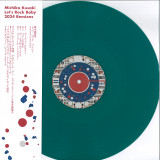
The featured track of this release unveils Console’s , known and active as Acid Pauli, reinterpretation of a track that gained fabio’s attention during his stay in Berlin in 2000. Fabio Della Torre, the owner and A&R of Bosconi Records, stumbled upon this hidden gem during his year in Berlin as many djs in the city were spinning it. Finally his quest to uncover the origins of this track led him to a CD release on the label of Angelika Köhlermann. The track in question is Console’s reimagining of “Let’s Rock Baby” a composition by the independent musician and video artist Anne Laplantine, who adopted the Japanese-sounding alias Michiko Kusaki. This version was originally released alongside a series of remixes by artists such as Dmx krew, Felix Kubin, and Adult, all featured on Angelika Köhlermann’s label.
Today, Bosconi Records is thrilled to bring this iconic track to light again on vinyl, accompanied by fresh interpretations. It’s important to note that these reinterpretations breathe life into Console’s work, not Laplantine’s original track, making Console’s version the centerpiece of this release. We have a banger version from German electro luminary The Exaltics which his typilcal electro techno trademark sound. The Exaltics had just released his new album on Clone and has been featured by Helena hauff in her Fabric Mix compilation. Italian producers Voodoos & Taboos, known for their homonymous label and with an recent “banger” on Bordello a Parigi with an electro playful version. The vibrant Queen of Coins have breathed new life into Console’s track, delivering a fresh new-beat acid ebm burner, giving the track a new and personal perspective.
This project mirrors Bosconi Records’ commitment to exploring diverse dimensions of electronic music and featuring compelling compositions. The release looks to resonate with DJs and electronic music enthusiasts, offering a contemporary perspective on a timeless track.
- A1: Prologue
- A2: Unexpected Error
- A3: Sprint In Danger
- A4: Reality
- A5: Joyful Trotting
- A6: Inorganic Creature
- A7: New World
- A8: Despair
- A9: Encounter
- B1: Dropping
- B2: Cruel Reality
- B3: Escape
- B4: Brave Determination
- B5: Another Planet
- B6: Dark Spacecraft
- B7: Growth Alone
- B8: Enigmatic Trouble
- B9: Dark Tunnel
- C1: Nightmare
- C2: Sudden Attack
- C3: Glorious Appearance
- C4: Philosophy Of Eden
- C5: Beginning
- C6: Nostalgia
- D1: Soul Of The Earth
- D2: Peaceful Air
- D3: Rescue
- D4: Lost Future
- D5: Greedy
- D6: Contrary
- D7: Battle
- D8: Beautiful Land
- C7: Destroying Future
- C8: Devastated Illusion
STUDIO4℃×Osamu Tezuka
A story of the love and adventure of a woman who lived for 1300 years.
``Phoenix'' Nostalgia Arc has been made into two animated works with different endings!
Theatrical release of the movie “Firebird Eden no Hana” / Disney Plus “Firebird Eden no Sora” world exclusive distribution
Master Osamu Tezuka is hailed as the "God of Manga" and is still revered all over the world. Of the 12 stories in the timeless masterpiece "The Phoenix," which became his masterpiece and life's work, the "Nostalgia Chapter," which depicts the future of the earth and the universe in which we live, will finally be made into an animated film for the first time. STUDIO4°C, which continues to create artistic video works, was the one who completed the spectacular spectacle, which took seven years to create. The voice actors include Rie Miyazawa, who plays the main characters Romi, Yosuke Kubozuka, Issey Ogata, Honoka Yoshida, Shintaro Asanuma, and Ryohei Kimura. A gorgeous voice actor team gathers to make a timeless masterpiece into a movie. The person in charge of the music is Takatsugu Muramatsu, who is active in a wide range of areas including film music and providing music for numerous artists. The music, which has both a grand scale and a poetic feel, gently envelops the story.