Dubbed out new version of a Japanese reggae classic from 1982 by UK-based Tokyo Riddim Band. Recorded and mixed by the legendary Prince Fatty in South London, it's a fusion of past and present, East and West.
Three generations of female musicians from Japan come together, blending reggae drums, funky bass, and the smooth City Pop guitar, all magically dubbed-out live on stage. Tokyo Riddim Band is a culture clash phenomenon unlike anything else.
Championed by Gilles Peterson, and featured on NTS, Pitchfork and Bandcamp Daily, the group was born out of Time Capsule’s wildly popular compilation “Tokyo Riddim 1976-1985”. In just a matter of months they have sold out headline shows across London and supported Kyoto Jazz Massive at Jazz Cafe, conjuring a raucous, dubby dancefloor that brings the classic Japanese reggae sound of the ‘70s and ‘80s to life for a new generation.
Led by the inimitable pianist and composer Izumi ‘Mimi’ Kobayashi who featured on the original compilation, Tokyo Riddim Band are set to release a series of 7” singles in the coming months with more live shows planned throughout the summer 2024.
The first single, 'Denshi Lenzi', reinvents the Natural Mystic riddim of the original Japanese production, infusing it with dubbed-out vocals, sirens, and electrifying e-tom sounds, delivering an authentic reggae/dub experience with a distinct UK flair.
Поиск:sound of the sirens
Все
Sonic Behavior by Driftmachine & Ammer is an album exploring the origins of sound, noise, and various music genres. Alongside lyrical declarations of love for noise ("Song To Noise"), the album delves into sonic reflections on how beauty and emotion emerge from mundane vibrations in the air ("The Siren Is A Simple Device"). For the first time, the analog sound researchers of Driftmachine (Andreas Gerth, Florian Zimmer) incorporate spoken language and noise into their sound research. They have collaborated with word and sound artist Andreas Ammer, renowned for his radio plays with Acid Pauli, aka Console ("Spaceman 85"), or FM Einheit ("Radio Inferno," "Symphony of Sirens").
In "The Siren Is A Simple Device," the words are spoken by 81-year-old musician and poet legend Ted Milton (Blurt, Loopspool). Despite its simplicity and obvious ability to produce high volumes, the siren has led a marginal existence as a musical instrument. Yet, it is capable of evoking the most intense emotional states in the listener in the shortest possible time, like almost no other sound-producing mechanism. "Sonic Behavior" capitalizes on this fact. The familiar hypnotic sounds of Driftmachine are accompanied by a siren organ inspired by the revolutionary Russian futurist Arsenij Avranov and built by Andreas Ammer, while the lyrics talk about the simple physical reasons behind the sound chaos that has just been unleashed: A siren ... chops the air into sound.
The core of the album is "Song To Noise," an electro-acoustic mini-symphony about the beauties of noise and all its producers, which is based on a poem by the British poet Deryn Rees-Jones and spoken by the poet herself and Alexander Hacke (Einstürzende Neubauten, Hackedepicciotto). Driftmachine & Ammer develop a soundtrack that is as powerful as it is loud and danceable (which is why the LP also includes a textless version of the composition).
"Sonic Sculpture" is the zenith of the work: a text/music track spoken by Ted Milton, which creates the possibility of a sound sculpture that encompasses the universe: What if one could imagine the infernal sound that encompasses all conceivable harmonies at the same time? A piano does when you throw it down an earthly staircase (the epitome of music is a piano falling down the stairs) through silent space to the next theoretically life-filled, Earth-like planet, Proxima Centauri B. The radio makes it possible. Driftmachine & Ammer tried it. The result will be heard there in 4.24 light-years. On planet Earth, the time has come on May 2, 2024. On this day, Sonic Behavior will be released, a conceptual album by Driftmachine & Ammer exploring sound, its creation, and its power.
Having built a loyal local Antwerp following off of the success of their 2019 debut self released album, ‘Forgotten Kingdom’, and growing reputation for electrifying stage performances, Kolonel Djafaar achieved worldwide recognition in 2021 for the ‘Cold Heat’ EP on Batov Records, attracting praise from Music Is My Sanctuary (“triumphant), and support from Gideon Coe on BBC 6 Radio Music, and DJs across Worldwide FM, Soho Radio, Le Mellotron, and KEXP.
The group overcame busy schedules and frequent quarantine periods to hit the studio in February 2022 to lay down four tracks. However, the creative itch persisted, leading to an intense writing session in August, deep in the heart of a tranquil forest. From noon until midnight, the band immersed themselves in the creative process, embracing the freedom to make noise without restraint.
Fueled by hearty breakfasts, unwavering focus, and the ambient clucking of chickens roaming the studio, Kolonel Djafaar crafted the majority of ‘Getaway’. This period marked a pivotal shift as a number of new band members joined just in time for the August sessions.
Membership changes, including Emiel Lauryssen joining on trumpet, alongside guitarist Philip Matthhijnssens, the band's palette has broadened and new sounds are able to break through. From psychedelic rock and soul influence of the Daptone Records’ affiliated Budos Band, surf rock (“Urban Dweller”), Morricone Spaghetti Western guitar, and Afro Cuban (“Kelmendi”), alongside the brassy Afrobeat and Ethio jazz vibes the group have been known for.
The broader dynamics of ‘Getaway’, and the band’s more cinematic and experimental approach, is particularly apparent on "Siren’s Glitch" and "Phil’s First Tear". The latter, first conceived by drummer Anton Van Hove, features the lead guitar doubling up with the bass guitar for added impact. Whilst the origins of "Convoi Exceptionnel", a brass & synths stomper of a march, trace back to a jam session during the band's Hungarian tour, another vital period of prolonged time together, capturing the organic essence of their experiences on the road.
Each track on ‘Getaway’ holds a unique connection to at least one band member, and all benefit from a collaborative approach to songwriting. "Sparking Clover'', an Ethio-inspired psych & soul groover penned by tenor saxophonist Doyin Smith, carries a poignant undertone inspired by personal loss, while psych rock leaning tracks like "Apologies in Advance" showcase the band's evolution and increasing professionalism in crafting a distinct sonic experience.
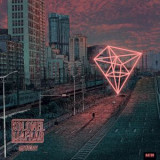
The curious cover art depicts a lone individual heading down an empty city street towards a large mysterious glowing object, evoking the common emptiness and struggle of urban life, and the search for meaning or just something better. The band envision the object to represent this album, offering a beacon to like-minded listeners. Kolonel Djafaar invite music enthusiasts on an immersive journey, to ‘Getaway’ from the daily grind of life, on an album reflecting diverse influences and marking a new chapter in their musical exploration.
Maquis Son Sistem is a project from Stefan Dubs that lands only on its own eponymous label, but is also showcased on a radio show on Lyl Radio. The music is often made live and then recorded to tape where the multitrack is used "as a narrative instrument" while sound effects and dub sirens are also added. This one in particular is "dedicated to these temporary zones, fugitive interstices, where we are committed to forming and re-forming moments of collective trance." It features three sublime sounds from the broken rhythms of 'Cortegi Astral' to the wet and tribal dub of 'Spirituau' via the ethereal sound of 'Drone Chasseur' (version I, II & III).
Sully returns to Astrophonica for a celestial collaboration with young Manchester based vocalist Salo.
Always one step ahead of the pack, Sully relinquishes the signature crusty Jungle breaks in exchange for crisp and steely, live sounding drums to provide the groove for a stripped back and crushed 808 bassline - a hi-def take on his iconic sound. This minimalist structure gives the foundations and space for Salo’s bittersweet vocals to take the lead with clarity and float off into the glorious twilight. A celestial collaboration that spotlights both artists’ strong points.
Sully totally flips the script with the ‘Not Just a Dub Mix’ by taking Salo’s vocals and giving them the Tubby treatment. The Jungle breaks return and sirens ring out - one for the club Salo, born in Tbilisi, Georgia before moving to Manchester via Glasgow as a child, is a classically trained pianist with all the swagger and charm of Manchester club music. She studied at Glasgow Music Academy and Royal Northern College of Music before working with club legends such as Zed Bias, Chimpo and Bassboy.
This is Sully’s first return to the label since 2020’s seminal, highly requested and repressed Swandive EP. At this point he honestly needs little introduction - he’s become one of the highest selling and most sought after Jungle artists for the best part of a decade and shows no signs of stopping
30 Jahre Metal: Drei Jahrzehnte lang hat Wade Black mit Bands wie Crimson Glory, Leatherwolf, Seven Witches, Leash Law und Chalice of Sin den Metal gelebt und international getourt. Wade, dem Veränderungen weder fremd sind noch Angst davor hat, ein Katalysator dafür zu sein, kündigt sowohl Neuerungen als auch einige sehr verlockende Teaser für die Dinge an, die im Jahr 2024 kommen werden. Geschmiedet aus über einem Jahrzehnt des gemeinsamen Schreibens, Aufnehmens und Tourens haben Wade und Rich einen Songwriting-Stil entwickelt, der nicht von dieser Welt ist - das ist auch der der Grund, warum sie den Namen Astronomica gewählt haben. Sie glauben, dass dies der beste Weg ist, um ihren Sound zu beschreiben. Ein Blick in die Zukunft: Sie freuen sich darauf, Musik zu machen, die das Herz, den Verstand und die Vorstellungskraft ihrer Fans anspricht - sie auf eine Reise zu weit entfernten Orten mitnimmt und sie dazu inspiriert, ihr Bestes zu geben! Sie bereiten sich auch darauf vor, ihren Fans eine super Live-Show zu bieten und freuen sich darauf, all ihre METAL-Fäuste in die Luft zu strecken, wenn die Band die Bühne dezimiert. See you soon!
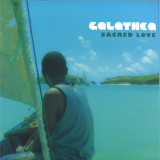
Two years after the release of his first self-titled album, DJ producer Massimo Napoli aka Galathea presents the new 'Sacred Love', in which he once again avails himself of the collaboration of his friend producer and bass player Salvo Dub, as well as a combo of respected musicians: singer Kadi Koulibaly - originally from Burkina Faso - already featured on the first album, Giulia La Rosa, author of the lyrics and performer of the title track, pianist Mario Pappalardo, percussionist Sergio Spitaleri and drummer Luciano Cantone.
'Sacred Love' is definitely a more mature, intense and profound journey than the previous album of the same name, which enhances the magical dreamlike and spiritual atmospheres of a certain African culture.
The album guides the listener along a path of multi-ethnic contaminations: "Divinité", "Ouaga" and "Koloko", well interpreted by Kadi, touch on the sacredness and mysticism of the African continent and blend well with the Spiritual Jazz sounds that have evolved in the West.
"Divinité", through the spoken word of French poet Diego Hernandez, tackles the themes of faith, life and the relationship with one's 'self', with references to French chanson productions, in which Kadi's spiritual song, at times 'Saharan', intersects and expands into cosmic space.
The title track, the first single from the album, also released on 7" (45rpm) in two versions, is an Afro-American gospel with a typically afrobeat rhythm, vaguely reminiscent of Nina Simone's 'See-Line Woman'.
North Africa is represented by "Equator", while we climb further north into the middle of the Mediterranean Sea with "Medican Blues", to land in Stromboli with the Deep Jazz of "Ginostra", whose title recalls the village of the marvellous island in the Aeolian archipelago.
Then we have the Cuban track "Caminito", a sort of Cha-Cha with a romantic piano melody (à la Chucho Valdez) well performed by maestro Mario Pappalardo; and then again "Eos", strongly Balearic with a Brazilian mood; "Impression", a dreamy journey of impact; "Sirens", already present on the first album and here reworked in a new Spiritual-Ambient version produced by Agosta.
"Sacred Love" is thus an original and musically borderless album, which expands a certain African sacred culture and naturally blends Afrobeat, Jazz and Blues atmospheres with the Balearic sounds of Mediterranean culture.
Enjoy listening!
Prince Fatty's 'Mercedes Benz' with Shniece and Horseman is a rub-a-dub version of a 1970s hit from Janice Joplin that now gets a very special and very limited edition pressing courtesy of Lovedub Limited. The A-side kicks off with the spine-tingling and epic original vocal before disappearing into a world of reverb.
At that point the dubby low end arrives and brings a different vibe to the stunning vocals but one that really makes a mark next to new bars from Horseman, police sirens and funky riffs. It's a tough sound system groove that is backed with a fine version and has been a firm fixture of Prince Fatty's record box for a while now.
Flying Wig is an album of recurrent dualities; a can of paradoxes, a box of worms. The redwood and pine-surrounded cabin studio where Banhart was “constantly listening to The Grateful Dead” somehow birthed something slick, modernist, city pop-adjacent and Eno-esque. Banhart's eleventh record, it's the actualisation of a “precious friendship” with the acclaimed solo artist, multi-instrumentalist, producer and Mexican Summer stable-mate Cate Le Bon — a coming together prophesied by the mirror-image titles of their early solo albums (Banhart’s 2002 Oh Me Oh My to Le Bon’s 2009 Me Oh My) and a tenderness built on crude haircuts (“we finally met, soon after she was cutting my hair with a fork and that was that”) and home-made tattoos — but never previously translated into the recording studio. “It’s about transmuting despair into gratitude, wounds into forgiveness, and grief into praise,” - the product of a ritualistic creative practice that melts down and re-casts as it mulls, the stuff of sadness beautified as it changes shape — culminating in a record that “sounds like getting a very melancholic massage, or weeping, but in a really nice outfit… if I’m going to cry, I wanna do it in my best dress.”
With Scream If You Don’t Exist, Richie Culver metamorphoses from outsider musician to underground fixture, feeling his way from the fringes towards a growing community of musicians that have gravitated towards his singular sound world. Building upon the stark catharsis of his previous dispatches, on his sophomore album the artist draws from grimdark drone, industrial noise, experimental hip-hop and UK rave to map out a space for himself, caught between genre and discipline. While on his debut, I Was Born By The Sea, Culver took a last glimpse back at his grey, salt-flecked past while struggling towards somewhere brighter, here, he documents the process of finding fresh waters, parsing through the complexity of inhabiting a more open and optimistic place while contending with the weight of his resolve, staring hard won self-acceptance in the face. The album’s title speaks to this creative and emotional work, serving both as the foundational paradox from which the artist’s new discordant sound emerges and as a call to action, a defiant cry in the face of existential angst.
Part of this process involves visiting familiar territory with renewed focus. Macabre opener ‘Hottest Day Of The Year’ signals an unpleasant memory with crow caw, queasy, gas leak ambience and dental drill whir as Culver recalls a life lived in nihilism: “Everything is just something that happened / Reductionism, muscles spasms, a mother’s first contraction.” Yet, on Scream If You Don’t Exist, Culver’s irresistible formula for ragged machine poetry is shot through with palpable urgency. No longer listless and despairing, he finds new intricacies for these compositions, tracing a stark interplay between crushing bass excavations and penetrating vocal clarity, a contrast picked out in the delicate threads of rhythmic pulse suggesting themselves in the blunt pressure and skittering creep of ‘Weakness’, on which Culver offers up vulnerability as a tentative solution to self-described emotional constipation: “Please do / Do take my kindness for weakness / For I am weak / And that is ok.” The amniotic soundscape of ‘YOLO (then u die)’ gives way to depth charge drone and unnerving machinic improvisations, like a noise show heard from deep in the Mariana trench, while on ‘Underground Flower’ the low-end fog lifts to reveal a brighter, colder scene. “Love me for who I could be / Not who I am,” he pleads, tending gently to his own tenacious bud.
Scream If You Don’t Exist gives us a glimpse of this flower in bloom. On the album’s cursed self-help tape title track stuttering loops of off-kilter keys and childlike repetition make light of the very real risk of disappearing all-together, a nervous breakdown rendered as a malfunctioning nursery rhyme. Paranoiac anthem ‘Say 4 Sure’ introduces bit-crushed boom-bap stomp, as though hammered out on a water-logged Game Boy, swarms of loose-wire noise sparking up against guttural grunts and ragged exhalations, while ‘On The Top’ enacts a seance for the hardcore spirit, with loops of rave piano and hiccuping vocal chops pirouetting through knackered samples, air raid sirens and the ghostly crash of breakbeat cymbals. As though in response to the solitary nature of much of his musical exploration, this time, the artist invites other voices into the world of Scream If You Don’t Exist. On ‘Swollen’, the unflinching, brimstone prophecy of Billy Woods sounds clear through an expanse of spirallic bass, preaching the same frayed gospel as Culver when he issues the quietly devastating contemporary diagnosis: “Computer broke but it still works for now / That’s the best you can say for most of us anyhow,” while another fearless correspondent from the fringes, Moor Mother, brings earthbound heft to the ambient drift and obliterating barrage of ‘Restaurants,’ teasing out meaning with elongated intonation and pitch-shifted intensity.
It’s during the album’s most meditative moments that we might recognise this space Culver has found for himself for what it really is. ‘OMG They’re Gone’ follows a chopped and slowed monologue from Culver’s wife, who works as a death doula, reflecting on her own experiences with grief and the reality of living within a culture both terrified and ignorant of the process. Floating over glistening ebb, etherised croons and luminous chimes, her words stand as a prescient reminder of the power of ephemerality. Just as Culver flourishes in imperfection, here we can find enormous strength in transcience. But it’s with ‘Just Jump In,’ which unfurls like a buoyant counterpart to the sparkling oil rigs of ‘I was born by the sea’, that Culver illuminates the hopeful waters we realise we’ve been making our steady way towards. “I know now / That you loved me,” he admits, a revelation a lifetime in the making. Through the rawest reflection Culver has found a way forward, driven by an optimism drawn from a resolve to be better, to love and be loved, an admission to weakness and the discovery of a new kind of strength. “Don’t test the water,” he reassures us and himself, “just jump in.”
Scream If You Don’t Exist will be released in November 2023 by Participant, on limited edition vinyl, and digital download . The release will be accompanied by a series of films directed by Mau Morgo, Josiane M.H Pozi, William Markarian-Martin, Simon Bus, and Bruxism.
In the new Mastak Records release “Sauerland”.
Salat offers analog sirens with flashes of cosmic echo on Hypnotic, garage swing, contrasting with a rough and ready bass sound.
Discover these winding and deep trails! The Belarusian producer combines his usual breakbeat style with electro.
Hot on the heels of their fifth fantastic LP ‘Thee’ - their first for 25 years and debut for Acid Jazz - house stalwarts X-Press 2 have enlisted David Holmes to remix album track ‘Phasing You Out’.
The original version of ‘Phasing You Out’ features Kele Okereke from Bloc Party and sits at the heart of the new album which again showed that Rocky and Diesel remain dedicated to proper house music.
David Holmes has had a 25-plus year career in music that has seen him release several vital albums and remix artists like Andrew Weatherall, Primal Scream and Noel Gallagher’s High Flying Birds, hold down a cult NTS radio show and turn out a seminal mix for Late Night Tales.
David Holmes brings plenty of signature musicality to what is a standout remix - his version of ‘Phasing You Out’ is an intense one that unfolds over eight minutes of percussive density, dusty drum work and careful treatment of the original vocal. The whole arrangement is lavishly decorated with wispy pads and glassy sound effects, police sirens and a rhythmic intensity that never lets up and will work any floor into a frenzy.
About time ! As you can imagine, we’ve been fans of Hodge since… forever ?
A true force of nature and Bristol legend, we’ve fondly witnessed him display the kind of range we love here at Timedance, covering everything from bouncy House to mind-warping peak time Techno via kaleidoscopic declinations of the future facing Bristol bass sound.
This long overdue debut on the label displays three jaw dropping numbers. Harvested for maximum stroboscopic efficiency, this EP is packed with Hodge’s anthemic signature hooks, bass weight for days and a truly singular approach to a forward rave sound.
Summoning sirens from space, laser guided Grime-Tech and intoxicating explorations into peak time tempos, « Voice Crash » stands as the perfect sonic portrayal of a producer we have revered for years and Timedance’s very own mission statement.
The last twelve months have been a whirlwind for Henry Counsell and Louis Curran, the men who make up Joy (Anonymous). Having established themselves during the Covid-19 era by playing impromptu meet-ups on London’s South Bank, they have graduated to bigger venues, travelled to far-flung locales and recorded their second album, Cult Classics, while maintaining the spontaneous energy and irrepressible joy that made their name. Their music revels in the euphoria of being alive and all the feelings, good or bad, that come with it. It invites us into a community, draws us close and promises the night of our lives.
Recorded over the course of a year, the blueprint for Cult Classics was laid down over a two-week span at Imogen Heap’s Round House in east London. Joy (Anonymous) invited friends old and new to visit - they’d record live instruments in jam sessions upstairs and then retreat to a second room to flip and loop and generally mess with the sounds, moulding them into sizzling dance tracks. “Loads of people were coming up to me like ‘I thought this was going to be a dance record?’” Louis says, remembering the quietly beautiful music they’d be recording. “I’d be like, don’t worry about that, just keep playing.” He’d send it back to people later and they’d be floored - “That was my bit and you’ve made it... jungle!”
It was an organic and creatively fulfilling approach, one that didn’t allow any of the music to get stale or stagnate. As they built the tracks from the sounds they’d collected, Joy (Anonymous) would weave the new songs into their famously improvised live sets, testing them, refining them, taking note of the audiences’ reactions. In a year punctuated by a lot of travel, they’d also incorporate the voices of people they met along the way - “Beazley’s Poem”, which opens the record, features the words of a man who was working security at a Fred Again show at New York’s Terminal Five. “He was basically doing the opposite of his job and being a hype man, climbing on the fence and ramping up the crowd - we ended up hanging out with him - like, who’s this legend?” Louis explains. “He just speaks really amazingly about his life, all these amazing thoughts and opinions - he started jumping on the mic when we were playing, preaching these amazing messages to the crowd, like that we all need to be nicer to each other. The first time we played the record in its entirety, he introduced us and that’s the recording we’ve used.”
Joy (Anonymous) remain dedicated to the spirit of spontaneity. They shut a street down with a surprise waterside party in New York. On a trip to Copenhagen they played an impromptu set in a cafe, which turned into a house party and a night-long good time. In Lithuania, they ended up playing in a decommissioned prison. It’s harder, perhaps, to keep that spirit alive now that they are operating more within the confines of the music industry but they will keep lugging their kit to wherever the party calls for as long as they can. “I think if we lose that, we’ve kind of lost what makes us us,” Henry says.
Bursting with multi-genre reference points and disparate influences, Cult Classics is very much a dance album. The samples we made ourselves or we took from music that is quite different to dance music, but we definitely wanted to shout out a lot of the dance influences that we love,” Henry says. They listened to a lot of Daft Punk and Basement Jaxx as well as The Prodigy (“more rage stuff”), taking songwriting tips from their dance forebears, but also recording bits that felt more like jazz and motown (see: A Place I Belong and the lovely album closer, You’re In Or You’re Out). Emir Taha’s gentle classical guitar runs like a thread throughout Cult Classics, washing into the undertones of the record, tying it all together.
The album follows the beat of a night out, from frenetic, sweaty movement to the gentler winding down as the dawn breaks. At times it is euphoric, celebratory and pure, whirling fun, at others it seeks the joy in the darker emotions that life throws our way. 404 is designed to encapsulate everything about the Joy (Anonymous) journey so far. Skittering beats and ghostly vocals give way to vibrating house chords: sirens blare as we approach a dubstep drop. It’s dramatic and wild, ratcheting up, seeming to settle then hitting you with an intense and frantic breakdown before the ghostly vocal returns to lull us back into the world. It has the feel of a hungry cat playing with a mouse, toying with it before letting it get away.
What sounds like someone playing the spoons on playful, housey How We End Up Here is actually Louis’ restless habit of clicking his rings on everything, one of a myriad of calling cards and easter eggs that day one fans will recognise. They rework Miley Cyrus and Swae Lee’s Party Up The Street into a French-electro-inspired future classic, adding a note of melancholy to a tune that you can imagine hearing blaring from every car on a summer drive. The lyrics on Cult Classic are generally reassuring, inspirational, originally drawn from Henry in stream-of-consciousness freestyles. You’re fine the way you are, they seem to say - the repeated “No need to try” of A Place I Belong, the assurance that “It’s in me all the time” on In Me All The Time. Even the summery but regretful Did You Wrong hints at the growth that is possible from less than ideal behaviour. For Joy (Anonymous), joy isn’t about just being “happy” all the time - it’s about relishing every element of your being.
The name ‘Joy (Anonymous)’ is taken from the work Henry did with Alcoholics Anonymous groups: it is a way to build a community around sharing joy. Their impromptu live sets are known as ‘meetings’; they encourage fans to share moments of joy to their website. They care deeply about the scene they’ve come up in and are determined not to leave it behind. Every show is another chance to reach out and connect with people who love to come together and revel in music as loud as it can go.
Support slots for Fred Again and The Streets, wild B2Bs with Fred and Skrillex, and a set at Four Tet’s Finsbury Park all-dayer this summer have given the duo the opportunity to live out childhood dreams and introduced their infectious live shows to new audiences at huge venues.
With an album as assured and joyful as Cult Classics on the horizon (and a killer collab with The Blessed Madonna coming up), they’re only going to reach higher heights. But the essence of Joy (Anonymous) remains on the South Bank. Between shows at Ally Pally in September, they dragged their camping chairs and gear back down to the banks of the Thames: and it just felt right.
Nach einer anspruchsvollen, mehrjährigen Tournee, bei der die Band ihre Heavy-Metal-Power nach Europa, Kanada und in die USA brachte, kehren die Australier ELM STREET endlich mit ihrem dritten Album zurück: "The Great Tribulation"
"The Great Tribulation" ist ein Soundtrack für unruhige Zeiten oder wie ein verkohlter Spiegel, der den Zustand der heutigen Welt widerspiegelt. Es kommentiert aber auch die dunklen Seiten des Lebens, gepaart mit der bis dato anspruchsvollsten und heftigsten Musik der Band.
Nach einer anspruchsvollen, mehrjährigen Tournee, bei der die Band ihre Heavy-Metal-Power nach Europa, Kanada und in die USA brachte, kehren die Australier ELM STREET endlich mit ihrem dritten Album zurück: "The Great Tribulation"
"The Great Tribulation" ist ein Soundtrack für unruhige Zeiten oder wie ein verkohlter Spiegel, der den Zustand der heutigen Welt widerspiegelt. Es kommentiert aber auch die dunklen Seiten des Lebens, gepaart mit der bis dato anspruchsvollsten und heftigsten Musik der Band.
Limited Black & White Swirl Vinyl. On December 29, 2012, three songs into Chastity Belt's first KEXP in-studio, something extraordinary happened: they shared "Black Sail" with the world. That year, I'd seen Chastity Belt play countless basement, bar, and DIY shows all over Seattle, but nothing could've prepared me for how my friends turned patience and quiet observation into something so affecting and effortlessly cool. Ten years later, "Black Sail" isn't just a fan favorite - it's practically a statement of purpose for the great albums that followed. But before those records, there was No Regerts: the sound of four friends evolving from a party band into a "real" one (whatever that means) in real-time. They're above it all on "Seattle Party," "Happiness," and "Evil," but remain the sirens of Whitman College's cursed frat houses - see the explosive choruses of "James Dean," "Healthy Punk," and "Pussy Weed Beer." When No Regerts came out in the summer of 2013, Seattle - and the world at large - took notice. I still hear these songs in surprising places, and they still surprise me - just as they did a decade ago. If you missed out the first time, this is your second chance.
al
The mystery continues to deepen, as you hear whispers beckoning you out to the sea...
After refining their dark and seductive vision of alternative/gothic metal to surreal, cinematic levels with three EPs and a full-length album, The Cause of Shipwreck, behind them, the Assen-based Blackbriar continue to set their sails towards the future in 2023, signing with Nuclear Blast Records and working towards their second full-length album, again accompanied by long-time collaborator Joost van den Broek.
Formed in 2012 by Zora Cock, René Boxem, Bart Winters, and Frank Akkerman, they crafted their first single in 2014 with “Ready to Kill,” but it was 2015’s second single “Until Eternity” that truly propelled them into the scene. A sweeping track with an equally compelling and beautiful video, it continues to draw many to the act with over 18.1 million views since its debut. Taking advantage of the growing buzz surrounding the band, they independently recorded and released their first EP, Fractured Fairytales, as well as acquiring a second guitarist in Robin Koezen. This EP layed down an impressive foundation for the band’s ethereal and breathtaking sound and brought about new opportunities for the act, including tour dates in The Netherlands, Germany, Belgium, France, Switzerland, Czech Republic, Hungary, and more, where the band played alongside Epica, Halestorm, In This Moment, Delain and MaYan. To keep moving ahead with full control of their creative ideals, the band successfully crowdfunded their follow-up EP, We’d Rather Burn, and brought it to life in October 2018. This EP would be the first time the band worked alongside esteemed producer Joost van den Broek to arrange and produce the effort, and this fruitful collaboration allowed Blackbriar’s whimsical and enigmatic sound to reach new sonic heights. Released the same day as their self-made video for “I’d Rather Burn,” this EP showcased a stronger sense of dreamy atmosphere and brought listeners beautifully grim tales of witches, banshees, and sea sirens. In the time following, keyboardist Ruben Wijga (ex-Re-Vamp) took a larger role within the band and began playing shows, after being involved in the songwriting process since Fractured Fairytales.
A busy 2019 followed, the band released a haunting single in May entitled “Snow White and Rose Red.” A duet with Ulli Perhonen, their take on the Grimm’s fairytale featured striking cinematic visuals to accompany the spellbinding track. Continuing to dig deeper into fairytale realms, Blackbriar closed the year with their third EP, Our Mortal Remains. Ever-sharpening their intoxicating blend of storytelling and breathtaking musicianship, the EP brought about new live exposures for the act as well. Small, sold out tours with Epica in 2019 and 2020, as well as a sold out opening for Delain’s Apocalypse & Chill release show in Utrecht followed, with more future plans then being put on hold due to COVID-19. Championing their continued independence, which included everything from songwriting, maintaining their web presence, overseeing merch, as well as shooting and producing their own videos and photos, Blackbriar reached out to their ever-growing and loyal fanbase for assistance to make their full-length album a reality in 2020. Fans fervently heeded the call, reaching the € 25,000 goal in under 24 hours and ending with a total of € 70,000 and achieving all five stretch goals. An impressive accomplishment for an independent act, which also showcases a strong internet presence with over 214,000 YouTube subscribers and 46.1 million channel views as well as 27.6 million Spotify streams and 150,000 monthly streamers on the platform.
After a meteoric rise over the past decade, acclaimed Australian rapper Iggy Azalea drops the third and (possibly) final album, The End of an Era. Signifying a time to potentially take a step back from music, Iggy surely doesn't go out without a bang. With standout hits such as "Brazil," "Iam The Stripclub," & "Sex on the Beach (feat. Sophia Scott)," the 14 track album is filled with bangers returning to the sound of her mixtape roots. Features include BIA, Sophia Scott & Ellise.
Eight years after its original release in 2015, and sold out upon release, Umor Rex finally presents a vinyl repress of Sirens, by Kara-Lis Coverdale and LXV. This new edition is limited to 500 copies and comes with revised artwork.
Inspired by the link between seduction and violence, Sirens comprises a series of timbrally vast anamorphic pieces that poise the voice as a newly imagined tool of multiplicity. Processes of sample manipulation, signal processing, routing, and source design inform instrumental writing and performance in feedback until intertwined, flickering between states of conflict and consonance. Apparitions of the schizophrenic voice are at one moment fractured and cold and at the next full of warmth and vivaciousness, embodying velvet rituals of romanticism in the digital age.
Ultimately, Sirens is music for ambitious dreamers: surreal sound portraits sound like the warmth of the world laid over an ice cold virtual altar. LXV’s vocal truncations and fleshy sound palettes depict the archivation of the breath and aural fantasies of the flesh which Coverdale sets amongst a vast and unconfined landscape of deeper and unknown force. Harmonically active and dynamic orchestrations underpin post-sacred tonalities while brooding pipe organs, sphinx flutes, and hailstorms of metallic percussion characterize uniquely disjointed discussions between disparate compositional ontologies. At times violent and at others serenely peaceful and seductive, these pieces, at their most powerful moments illuminate a felt space between cybernetic energy and the body.
Composed and recorded by Kara-Lis Coverdale and David Sutton. Mastered by John Tejada. Cover photograph by Cody Cobb. Layout by Daniel Castrejón.