Rob Zombie and Waxwork Records have partnered to release an exclusive, curated line of classic Horror movie soundtracks. “Rob Zombie Presents” features several never-before-released film soundtracks that were personally selected by the singer, songwriter, and filmmaker. “I have always been a huge fan of movie soundtracks. So I jumped at the opportunity to work with Waxwork on this project.” Says Zombie, “I can’t wait to release these albums. So many of these films are greatly under appreciated and, they all contain such great music. So, to be able to release these deluxe packages is a dream come true.“ - Rob Zombie In collaboration with Rob Zombie, Waxwork Records is thrilled to release Rob Zombie Presents HOUSE ON HAUNTED HILL Original Motion Picture Soundtrack by Von Dexter. Starring Vincent Price, HOUSE ON HAUNTED HILL is a 1959 American Horror film produced and directed by William Castle. Vincent Price plays an eccentric millionaire, Frederick Loren, who, along with his wife Annabelle, has invited five people to a house for a ""haunted house"" party. Whoever stays in the house for one night will earn $10,000. As the night progresses, the guests are trapped within the house with an assortment of terrors. The film uses many props used in carnival haunted houses to generate fear and terror. The film is also known for its promotional gimmick, Emergo, which included a ""flying skeleton"" that would appear over the audience as they enjoyed the film in a movie theater. Waxwork worked with the rights holders of the original film elements which have been restored, allowing for the best source material of this never-before-released soundtrack album. In addition to the original music by composer Von Dexter, this release features segments of the film's dialogue and sound effects appealingly included and sourced from the restored original soundtrack. Included in this very special release is the first part of an exclusive two-part interview conducted by Rob Zombie with Vincent Price's daughter, Victoria Price. Part two will be included with Waxwork's upcoming release of Rob Zombie Presents The Last Man On Earth! Von Dexter (1912-1996) was an American composer born in Aurora, Illinois. He later moved to Chicago where his professional music career began playing in bars and nightclubs. After gaining a music degree at USC, he moved to California where he became the West Coast MD for NBC. In addition to House On Haunted Hill, Dexter composed the scores for other William Castle films including 13 Ghosts and The Tingler."
Search:sound source
Finally, the stand-out cuts of Rasa’s 1978 LP feature on 45 for the first time - ‘When Will The Day Come’, coupled with ‘Within The Sound’. Back in the summer of ’78, when London McDaniels and his brother Chris frequented a Krishna temple to take advantage of the weekly open feasts, the heads of the temple soon learnt the duo were Berklee College Of Music students and asked them to record an album of contemporary Hare Krishna worship songs. The result was Everything You See Is Me by Rasa, a jazz funk laced classic that’s gained notoriety amongst record collectors across genres, steered by the sons of singer-songwriter Eugene Mcdaniels. Produced and composed by guitarist London McDaniels, with Chris McDaniels on vocals and drums, and lyrics written by Hare Krishna devotee Andrew Marks, the album is coveted by beat heads, rare groove, soul, and balearic heads alike. The songs feature an A-list collective of session players including bassist Anthony Jackson and trumpeter Randy Brecker and have been a sample-source for numerous hip-hop records including Common’s ‘Take It Ez’, Black’ Rob’s Can I Live’ and BDP’s ‘Beef’.
The latest release on Jai Alai follows the format of forgotten vinyl tracks never before released on 7” format, or previously CD only album tracks, and will raise some eyebrows in artist selection and pairing.
Donaldson Toussaint L’Ouverture Byrd II was one of the most significant jazz artists of all time having joined Art Blakey’s Jazz Messengers in the mid-50s and establishing himself as one of the best hard bop trumpeter/flugelhorn players. His progression was continuous through the 50s/60s working with John Coltrane, Gigi Gryce, Pepper Adams, Thelonius Monk, Sonny Rollins as sideman, and became one of Blue Note Records leading artists.
By the end of the 60s Byrd decided to move away from that idiom, experimenting with jazz fusion, African music and Rhythm & Blues. He worked hard to make jazz and its history part of the curriculum in US music colleges and he taught at many including Rutgers, Hampton, Howard, and Columbia, the latter from who he received his PhD in music.
Byrd took a great interest in how Miles Davis’ experimentation was resonating with a younger audience, and despite being castigated by his musical peers, his development of jazz fusion changed the jazz scene forever. His work with the Blackbyrds was a cornerstone for the progression of jazz funk in the UK.
The effect of his hook-up with brothers Larry & Fonce Mizell was immediate and his Blue Notes albums “Black Byrd” (1973), “Street Lady”, “Stepping Into Tomorrow” (1974), “Places & Spaces” (1975) and “Caricatures” (1976) became legendary on the newly evolving jazz funk scene with certain tracks such as “Change (Makes You Wanna Hustle)” normalising dance jazz on the disco floors, not to mention being a rich source for many hip-hop samples.
A slightly leaner period followed when he moved to Elektra Records and of the three albums with his new incarnation 125th Street NYC, a group of musicians he taught at North Carolina Central University, two were produced by Isaac Hayes including “Words”, “Sounds, Colors & Shapes” (1982) from which “Everyday”, a fabulous forgotten piece of mellow jazz funk derives.
By the end of the 80s he had returned to his harder straight-ahead jazz roots, but his place in history and the evolving of jazz as a dance culture in our clubs should never be forgotten.
Transcendental outernational funk and psychedelic jazz from mystery L.A.- based collective Sun Atlas
Little is known about Sun Atlas. The group members are hidden behind masks and costumes to keep their identities secret and to put the focus entirely on the music and oneness. A sense of community and universal spirit as an alternative to idolization and individualism is heavily reflected in their eclectic musical style.
The sound of Sun Atlas is mystical and cosmopolitan, combining afrobeat, cinematic soul, spiritual & ethio jazz with space sounds, hiphop-breaks and a garage funk vibe.
Their cryptic first 45 single "The Mystic Parade" b/w "Grand Theft" sold out immediately after release and has often been mistaken for either "lost" hiphop samples, 70s habibi funk or another project in disguise from the inner circles of the Mocambo, Big Crown or Daptonefamilies (which it is not).
Return To The Spirit picks up where Sun Atlas' first single leftoff, with everyone wondering where the journey might lead. With the door to a colourful universe opened, the full-length format gives time & space for further exploration.
The ltd.first vinyl edition comes in black vinyl in a deluxe handmade tip-on sleeve.
2024 Repress
Ned Doheny's Hard Candy, originally released in 1976, is widely considered the finest blue-eyed soul album of all time. It is has long been a source of great frustration then, that this perfectly-formed Southern California masterpiece has been unavailable on vinyl for almost 40 years. Previously bootlegged in derisory fashion, original copies are rarely found for less than $100.
Be With Records, a new vinyl-only reissue label, continues apace by marking its third release with the first officially licensed reissue of Doheny's nautical classic. Perhaps most famously, this impeccably smooth set features the timeless Get It Up For Love, a wonderful example of mid-70s mid-tempo white-(hot)-funk.
Produced by the legendary Steve Cropper, it featured a veritable who's-who of the Laurel Canyon soft-yacht sound (JD Souther, The Eagles, Linda Ronstadt, the entire horn section for Tower of Power!) yet bombed mysteriously. It's been a cult record since.
Pressed on audiophile 180gram vinyl and featuring the original artwork for both jacket and full colour inner sleeve, this very limited reissue of 500 copies is one not to be missed.
Repress.
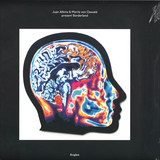
Juan Atkins and Moritz von Oswald - the two vital proponents of Detroit-Berlin axis, return to the mothership following their 2016 full length effort Transport.
Angles is the result of a new conversation between the founding father of electronic music and his German counterpart. The serene source of captivating musical ideas that is Borderland, keeps on flowing and vibrating with subtle energy.
Two versions form here a new set of studio-refined sequences. Both parts of Concave' are the ungraspable manifestation of the wild quietness in which the duo finds itself. Predicting at once, possible outcomes for the craft of electronic sound, while respecting their profound origins.
Solo Throat is the first solo LP from vocalist, composer and movement artist Elaine Mitchener. Drawing on the work of African-American and African-Caribbean poets Edward Kamau Brathwaite, Aimé Césaire, Una Marson and N. H. Pritchard, these twelve new vocal compositions disrupt semantic sense, play with the margins of lyrical translation, and give rise to new voicings. Elaine Mitchener is a veteran of vocal expression in the global Black Avant Garde, traversing free improvisation, cross-disciplinary music theatre and contemporary composition with clarity and joy. Most recently, Mitchener has been improvising and composing with the written word as source material - challenging classical ensembles with her piece (“the/e so/ou/nd be/t/ween”), and commissioning composers Matana Roberts, Jason Yarde and George Lewis to respond to the work of Sylvia Wynter (“On Being Human as Praxis”, Donaueschinger Musiktage, 2020). Her performance of Umbra poet N.H Pritchard’s text FR/OG at OTO in 2021 was a revelation - a solo vocal recasting of the powerful visual-material form that Pritchard uses to disrupt semantic ‘sense’. Building on this performance, Solo Throat takes the work of Pritchard alongside poets Edward Kamau Brathwaite, Aimé Césaire and Una Marson as its source material. Its compositions are a loose translation - a carrying from text to voice which holds multiplicity and celebrates the transformative power of literary possibility. Surrendered to the spacing and repetition of consonants and vowels, Michener’s exceptional phonetic freedom gives rise to a sensuous experience which intensifies the roles of rhythm, timbre and breath in expressing meaning. Solo Throat comes together as much through difference as similarity. Mitchener’s own solo improvisations sit alongside the work of Brathwaite, Césaire, Marson and Pritchard, forming a constellation of unlikely alignments which make no aesthetic conclusion. Instead, Solo Throat is a site of encounter, an irreducibly plural de-composition of words into a heterogeneous assemblage of sounds and impulses, emphasising what Anthony Reed calls, “the play on and the surplus of margins of lyrical translation to resituate other pathways of expression”. Just as the poets cited use white space to complicate our act of reading, so Mitchener utilises silence and multiphonics to complicate the act of voicing and the way we listen. Genre: Experimental / Vocal / Poetry
Runar Magnusson is an Icelandic/Danish sound artist and musician, currently based in Austria. With a masters degree in Electronic Music Composition from The Royal Academy of Music, Aarhus, Denmark, he is inspired by the sounds of nature, noise, and meditation. Magnusson specialises in atmospheric disturbances through minimalist compositions. A sly humour cuts through the dark hues of his works.
Magnusson writes: "The two works which make up "Inside Out of Chaos" are somewhat related. They were made at the same time and share the same source materials somewhat – a pool of sounds I had been experimenting with for a couple of years. Two separate projects created the opportunities for me to realise them in these finished forms.
At the beginning of 2020 I was invited to participate in an acousmatic concert series at the Traktorfabrikken in Vienna. Curated by Austrian composer Christian Tschinkel and performed on his Akusmonautikum sound system this particular event, titled Kill & Kaoss, was the last in the series. I named my piece after the event and dedicated it to Tschinkel´s Akusmonautikum system. Without my knowing, I had witnessed this system in action half a year earlier at a concert at the Hermann Nitsch Museum in Mistelbach, with Hermann Nitch playing the organ and Tschinkel operating the sound system – a profoundly enjoyable performance. I was very happy when I connected the dots soon after the invitation to participate. I intended my work for Kill & Kaoss to be a way to greet the new lunar year of the rat – a year which held many surprises… The event took place on 22nd of February 2020 at Traktorfabrikken, Vienna.
"Inside Out (for Trattner)" was composed for Austrian artist Josef Trattner. It was the soundtrack for a film that was a part of his exhibition "Inside Out" at the Kiesler Foundation in Vienna, 2020. I assisted with the installation of the exhibition, itself a filmed action that evolved into the movie of which this is the score. The installation was a very hard physical process that left me bloody and blistered. It was also a fascinating, trance-inducing experience. Mining with ones bare hands, digging out this huge structure and creating a womblike cave, a tunnel system, a playground, a hideaway while experiencing ever-increasing pain in the fingers and hands. The exhibition ran from 27 February 2020 until 23 December 2020.
I consider this release as the final part of a trilogy I refer to as "the three sisters of sorrow". These three releases are an insight into my state of mind at the time – a mental collapse, somewhat triggered by a move to a new country, the death of my friend Jóhann Jóhannsson and the loss of my father a year later. Between 2018 and 2021 I had the trilogy almost ready but had not been able to finish them. I sought professional help to lift me up from the deep and was diagnosed with ADHD, which explained many things in my life. Only after the darkness had lifted could I see that these three releases were connected. They depicted both the mental state I had been in – an incapacitating downward spiral, a crushing chaos – and also my search for the light, a way out of the maze and my path up to the surface."
Runar Magnusson, Vienna, 13 November 2023
Combining elements of post-rock, trip-hop, and industrial music, HAAL have quickly become cult favourites in the UK live scene. Their psychotropic blend of samples, DIY pedals, and monolithic instrumentation, has seen the band play and tour alongside the likes of Kyoto Kyoto, WEB, Deliluh, Treeboy & Arc, Katy J Pearson, and Gurriers, as well as appearing at festivals such as ArcTanGent, Dot To Dot and more. Coming off the heels of their recent singles “Janus” and “Judy” (and subsequent remixes by Water From My Eyes and Crimewave), the new EP “Back To Shilmarine” arrives as a blistering snapshot of the band’s protean dynamism.
The band celebrate their late-90s / early-00s influences in a caustic yet melodic blend of tracks that nod as much to the output of labels such as Dischord, Touch & Go, and Nothing Records, as they do their contemporaries in the UK scene such as SCALER, Famous, deathcrash, and LICE. The EP sees them bring all these touchstones together to create a unique and uninhibited maelstrom of sound that spans everything from intricate math-inflected guitar lines and pensive vocals to propulsive drumming, totemic riffing, and warped synths.
Arguably some of HAAL’s heaviest material to date, “Platform 1, 18:19” offers the first look into this new material melding motorik rhythms and hypnotic riffs with sudden explosions of noise and power. However, as ever with HAAL, there is more than meets the eye – the track also features samples completely abstracted from their sources, for instance, the drone that begins the song is taken from a video of frontman Alfie Hay and his friends beating Bop It.
Elsewhere on the EP, the lyrics explore themes of cosmic existentialism, absurdism, meaning, transhumanism, inner reflection, science, history, and general philosophy. “All the lyrics are musings or verses that I wrote at very different times in my life” says Hay. “I then had to fit them around the music, despite being written at wildly different periods.” The record was once again recorded with long-time collaborator Alfie Tyson Brown (Katy J Pearson, LICE, Lazarus Kane) at The Louisiana in Bristol. The band have a tight knit collaborative circle around them, this is particularly notable around the band’s imagery
- A1: Goldne Abendsonne, Wie Bist Du So Schön
- A2: Aprilnacht
- A3: Urin Deiner Blüten 1
- A4: Mutter Maria Zwischen Den Himmeln
- A5: Requiem Für Eine Ringelnatter
- A6: Urin Deiner Blüten 2
- B1: Apfelbaum, Kuh Und Backofen
- B2: Nie Kann Ohne Wonne, Deinen Glanz Ich Sehn
- B3: Requiem Für Ein Schwalbennest
- B4: Morgensonne
- B5: Afra Altar Maidbronx
Originally released on tape by SicSic in 2014, Aprilnacht commemorates a decade of music from Brannten Schnüre and marked the spring in a tetralogy of albums about the four seasons when it came out. Back then the Würzburg-based project consisted solely of Christian Schoppik, who later welcomed Katie Rich to take over the vocals. He used to perform as Agnes Beil, but dropped the name when, while making this album realized his music was becoming "much gentler and more fragile". Aprilnacht already captured the particular musical ideas that Schoppik would thoroughly keep exploring, delving deeper and deeper into the use and manipulation of samplers from sources so diverging as to wander between the five continents to post-war German family television and cult cinema. Heir of the ritualistic intensity of Coil, of the intricate sampler assemblies of Ghédalia Tazartès', and of the dusty, dismal old ballads from around the world, Brannten Schnüre manages to make these paths cross in a territory that is as inherent as it is uncanny; sieged by the past and intimate as a hearth. An organic approach to folk, ambient, and sound collage, where ethereal yet thoroughly textured pieces coalesce in enthralling, delicate, and innermost musical rituals.
The album cover paintings reveal the temper: dreary old towns where shadows come to dim the slow passage of crepuscular colors, a soft area of reanimation where wind and light come close and foresee the night of spring. Aprilnacht was inspired by the stories of German philosopher and writer Friedrich Alfred Schmid Noerr, whose work exhaustively examines the conflict between paganism and Christianity, safeguarding myth in a way that Schoppik describes as boldly modern, humorous and unpredictable in its variations of the Germanic folklore motifs. "I wanted to do the same with the music," he states, and the music here could as well be suitable for a night when household deities welcome wandering will-o'-the-wisps, water nymphs, and gyrovagues to discuss Perchta's leadership of The Wild Hunt, but this album is not a folk tale, it's not an elegy to worlds already gone, hidden in years; it's an intersection of routes that open mysteriously before our ears like a congregation of vapors. Aprilnacht is a gathering of voices; "There are too many children, and none of them keeps quiet," reads the last verse of «Requiem für eine Ringelnatter.»
Sensuality drips over the music to celebrate both the voluptuousness and tragic quality of nature; "It's raining on me, urine from your flowers," Schoppik sings in «Urin deiner Blüten» and later on, faced with a snake's erotic features, as if he wanted to be embraced by it: "Your quick, sharp tongue and your warm venom; that's what the pond is missing." Orality is where this profusion of contents thrives. When the voices get closer and condense, the words reveal the saliva employed to pronounce them; we feel the mouth and the tongue, but when breath envelops them in sorrow and softens their edges, they sound distant, diffused in the atmosphere, letting go of the body that held them. These two vocal facets oscillate permanently and interact naturally with the fertile assembly of samplers and instruments that develop throughout the album, which condense and disperse impersonating each other, interweaving to search for a specific syntax. Tangled whisperings of enigmatic phrases, timid voices that stick out to check the scene but hide away quickly, shivering trance chants and monastic ambiances, distant screams and clamors in between chaos and warfare swirl until bursting into subtle songs where even Mother Mary comes forth softly. Soothed by foggy atmospheres and crackling punctuations, these voices shape a vulnerable crowd, an occasion of fragility. Along this swarm of songs thrown into thin air, accordions sound like heavy-breathing lungs; clarinets sigh like curtains shaking; violin solos wander around like bees; Gjallarhorns cries distend like fleeing cattle; glockenspiels evoke remote music boxes and inherited toys; backward emanations emerge like slender waves retreating. On the banks of stretching loops and ember textures is where the songs slowly nest, collecting the words to find their tone.
A poem by Jorge Teillier says, "To talk with the dead you have to choose words that they recognize as easily as their hands recognized the fur of their dogs in the dark. To talk with the dead you have to know how to wait: they are fearful like the first steps of a child. But if we are patient one day they will answer us with a flame that suddenly revives in the fireplace." This may be Brannten Schnüre's main purpose: To find the voice to speak to those of whom we were a vision. Not in mourning, but acknowledging the obscure and volatile nature of spring's regenerative force, searching for the treasure of balance, as evidenced in the lyrics of «Requiem für ein Schwalbennest,» "Its nest was destroyed so many times before it was finished, and despite that, the shallow builds as if it is infatuated." The same idea is here in the words of Schmid Noerr, who made poetry an act of resistance to the horror of Nazism; "Since having seen the ability of a brilliant spirit to die, with a calm mouth that everyone saw, health is true again and we affirm it, even if rivers of blood flow." And as we call for the dusk's kindness, waiting to return home and eat with our kin by the stove, our ears become used to the games of the night. We feel like we're rowing on wetlands, while the "moon musick" keeps us vigilant against the slightest movement of water or sweet moan because eeriness here is imperative for survival. Do not succumb to the insipid howl of death, for nothing may last but mutability. You see, the rock has moved a little during the night; the rest is just wind fleeing from the void.

Glasgow’s Somewhere Press return with their inaugural vinyl release, a new album from Madelyn Byrd aka Slowfoam. Mining the seam between ecology and technology, Byrd offsets syrupy, dissociated electronics with sparse acoustic instrumentation and expressive field recordings.
The polyrhythmic pulse of the natural world surges through Byrd’s productions, and though the sounds are mostly electronic and strictly metered, a landscape teeming with insects, birds, and wildlife fills the horizon. We’re languidly ushered through the gates on the opening 'Enlightened Smudge on the Machine', juxtaposing glassy tones with flute (from Berlin-based sound artist Diane Barbé) and skittering percussion that could have been lifted straight off Björk’s 'Vespertine'. "No traffic, under the stem," a stoic voice muses while sounds dissolve into waterlogged ambience. There are hints of vintage West Coast new age music, but Byrds' over-arching theme is one of a contemporary digital reality slowly harmonising with its distant, bucolic past.
Field recordist Pablo Diserens provides some of the album's most arcane material, handing over environmental recordings of sulphur pools, Arctic terns and glacial streams. The lengthy 'Divine Morpho, Shimmering' deploys a swarm of insects, forming a looped, uneven rhythm that counters Byrd's pulsing electronics. Choral stems mesh with uncanny strings, blurring the line that separates artificial from organic sound sources. Byrd uses mutation and reconstruction as a form of "speculative melting" to bring us closer to utopia. On 'Like Phantom Memories In The Slinking Storm’, one of the album's most levitational moments, they tease twangy harp-lyre plucks into dubbed-out smudges, eventually given a reprise on 'Grief Rituals' where the same riffs are stretched into slower phrases, queered against giddy, xenharmonic drones.
Bird calls and tremulous exotica mark the brilliant 'Fragrant Dusking', and ‘Soft Body Virisdescence' takes us to a gurgling, kaleidoscopic climax, with electronic processes thrust into the foreground. 'Of Data & Delight' distills all the album’s sonic elements into a sort of delirious fever dream, using pitched animal calls to signal sensuality. It's not ambient, exactly, even if it shares space with the 3XL crew's sludgy eroticism, and it's not wholeheartedly electro-acoustic either. The record exists at a place of convergence, as one era wrestles with a new dawn, and real life glimpses high fantasy.
- A1: Pikiran Dan Kepentingan (Thoughts And Concerns)
- A2: Fenomena Demi Fenomena (From Phenomena To Phe-Nomena)
- A3: Lubuk Yang Terdalam (The Depths Of The Depths)
- A4: Manusia Oh Manusia (Human, Oh Human)
- B1: Selalu Ada Jalan Keluar (There Is Always A Way Out)
- B2: Meyakini Sebuah Jawaban (Believe In An Answer)
- B3: Kepada Cahaya Yang Menerangi Jiwa (To The Light Which Illuminates The Soul)
Born in 1977, in Malang, East Java, Wukir Suryadi began playing music for theatre at the age of 12 with the Idiot The-ater Studio, and later with the Rendra Theater Workshop. In his solo work, and as a member of Senyawa, Error Scream, Bendera Hitam Setengah, Potro Joyo and other groups, Wukir breaks the boundaries of traditional music, death metal and avant-garde performance. On this new release, “Cycle and Prayer,” recorded in 2023, he expands the edges of his unique artistic world further, by digging in to meditative improvisation, art, and community building in his home workshop in the mountains of central Java. These recordings vibrate inwards, toward the microcosmic ecologies of forests and rivers; they distort outwards, resonating with global waves of apocalyptic change that are forcing all living beings to the edges of existence on earth. The result is a meditative poem that moves, as its titles an-nounce, from phenomena to phenomena, praying that humans find a way out from the depths of the depths to the light that illuminates the soul.
An essential mode of creative work for Wukir is the creation of unique instruments, using these sound sources as “bullets of expression.” In addition to the spear-like tube zither Bambu Wukir, he has created the Solet, Enthong, Garu, Luku, Arrows, and Industrial Mutant instruments, which in addition to being used in live performance, have been exhibited in the Instrument Builders Project and the 2017 Jakarta Biennale. In the past few years, Wukir has begun to collaborate with local guitar makers, carpenters, and suppliers of native endemic wood in the mountain region of Salatiga. Using earthen bricks along with local woods (suren, coconut, mindi, and waru lengis) as building materials, he constructed a new studio and workshop space in Tingkir, where this album was made. The trees, water and air of the local environment have exerted a powerful influence in Wukir’s documentations of instrumental sound. On this recording, he uses the simple Cetta guitar, an instrument designed in Bali and made for Indonesian children and local communities of folk and popular musicians, in order to explore the different sonic characteristics of a more “normal” instrument built from local wood.
The themes of the album -- cycle and prayer -- arise from a foreboding series of meta-events that shook Indonesia and the world over the past years, following one after the other: the COVID-19 pandemic, the Ukrainian-Russian war, the Kanjuruhan Stadium tragedy in which football supporters were gassed and killed by police, revelations of govern-ment failures and corruption, the rise of personal vehicles, the increasing disturbance of natural patterns of the rainy season and other ecological cycles. “In these waves of technology and narratives of truth made for certain interests, playing a sound at a certain frequency and repeating can try to bring images and feelings to a certain point of con-sciousness,” Wukir told me. “Sound is a prayer that creates a change, whether gradual or rapid, in the behaviour of living things, to face the demands of the time, as humans struggle to live according to what they believe.” The draw-ings and sketches used for the cover spontaneously emerged alongside the recordings, as an instinctive depiction of “time and sound, nature that is outside of oneself, and nature that is within.”
The Flenser is pleased to announce the release of Living Is Easy, the latest EP from ecstatic black metal band Agriculture. Ecstatic black metal from Los Angeles. Follows up 2023’s critically acclaimed debut. A new EP plus first vinyl release of their first EP. Appearing prominently at the 2024 edition of Roadburn. US and European tour dates in the works through 2024. Video for title track featuring Flenser goons, Chat Pile. This new EP will be paired with the band’s debut EP, The Circle Chant. For the first time, both EPs will be pressed together on a single 12-inch vinyl record as well as a cassette format Living Is Easy represents a significant new statement from the band. With their debut self-titled, Agriculture embarked on a journey to explore how heavy music can provide insights into the joys of life, both everyday and divine. Their extensive touring with this material led to a profound experience of ecstasy, surpassing expectations as they shared the intensity and joy of these songs with audiences worldwide. This experience was a catalyst for the band, inspiring them to delve even deeper into the realm of “ecstatic black metal” music. They believes that with this release they have pushed this concept to its limit, resulting in a transformative explosion of sound and meaning. The record delves into themes of community connection, holiness, violence, and the cycles of life. The title track is especially notable, featuring a retelling of a story from one of the Buddha’s past lives. In this narrative, the Buddha encounters a starving family of tigers and sacrifices himself to save them, a tale of serenity and selflessness. This story resonates deeply with the band, reflecting the humility and inspiration they find in their collaboration and echoing the generosity and interconnection they strive to explore through their music. Touring holds a special place in the heart of Agriculture. It brings them immense joy to share their music, visit new places, and meet new people in cities around the world. This constant interaction with diverse audiences serves as a continuous source of inspiration for this work. Agriculture is eager and excited to share Living Is Easy as well as give new life to the first vinyl pressing of The Circle Chant
"Due to the big success of The Original Source Series, on 3rd May 2024 Deutsche Grammophon will launch Batch #5, presenting four more legendary recordings. Same high standard as with the previous releases of The Original Source series: All are 4-track recordings from the 1970s, remastered by Emil Berliner Studios, using their own cutting-edge and 100% pure analogue techniques (AAA) to create versions of the highest possible audio quality.
The new batch presents much praised interpretations of the symphonic repertoire, including Karl Böhm’s iconic version of Beethoven’s “Pastoral” Symphony and Claudio Abbado’s wonderful rendition of Brahms’s 1st Symphony, both with the Wiener Philharmoniker. Daniel Barenboim and the Chicago Symphony Orchestra are heard with their exciting recording of Bruckner’s 4th Symphony, and Rafael Kubelík’s legendary collaboration with the Boston Symphony Orchestra in Bartók’s Concerto for Orchestra. Produced on 180g virgin vinyl by Optimal, these limited and numbered releases will be issued in deluxe gatefold editions featuring the original artwork and liner notes, with additional photos and facsimiles of the recording documentation on the inner sleeve. Furthermore, each release includes a note by Rainer Maillard/EBS detailing the technical background and procedure of the Original Source Series, and an additional insert with a photo of the original tape box. Each LP comes in a protective cellophane jacket with a sticker highlighting the USPs of the series:
Pure analogue mixed & cut from the original four-track ½-inch master tapes (instead of the ¼-inch stereo copies)
Mixed by Rainer Maillard & cut by Sidney C. Meyer directly from original analogue source at Emil Berliner Studios
Manufactured at optimal media on 180-gram virgin vinyl
Original Source Series = no copy used, no extra devices in the signal pass, no digital sound processing at all; more clarity, more detail, and far less noise; Pure analogue"
2024 Repress
Mannequin Records is proud to present a full length by the Philly minimal-synth princess Void Vision.
Void Vision is a Philadelphia-based electronic project helmed by Shari Vari. It began around 2009 at a time when a wave of synth-revivalists were materializing, but the quality of the songwriting and intense vocals set the band apart from the pack. In a rare instance, Void Vision has managed to combine vintage dance elements with melodic structures, haunting melancholy, and lyrics that have a palpable soul. The songs themselves are dynamic, referencing a cross-section of the last 30 years of electronic music, while simultaneously retaining a uniqueness all their own.
The infamous Wierd Records weekly club night in New York, which showcased a variety of talented electronic and coldwave artists, served as an incubator for Void Vision in it's early stages. After a standout debut performance at the club, they immediately caught the attention of Blind Prophet Records, who consequently released their first 7" single, 'In 20 Years', which received excellent reviews.
Vari has continued performing and recording steadily over the last few years, releasing songs on compilations for various labels, including Rough Trade, and in 2012 the song 'Everything is Fine' was selected for Artforum magazine's 'Best of 2012' issue. In 2013, Void Vision toured the West Coast and later that year released a split 12" with Portland-based band, Vice Device. The first official full-length album, entitled 'Sub Rosa' is set to debut on Berlin-based Mannequin Records, followed by a European tour in 2015.
Shari Vari formed Void Vision in 2009 originally as a duo, during the explosion of the new minimal synth and cold wave scene in United States. Sharing the same scene of the Wierd Records associates like Led Er Est, Martial Canterel, Xeno & Oaklander, Automelodi, in 2010 VV released 'In Twenty Years' on Blind Prophet (Sean Ragon's Cult Of Youth record label), receiving also the attention of the Rough Trade dudes, who asked to put out a track for one of their synth wave compilations.
After other split vinyls, tapes and compilations, Mannequin approached Shari with the intention to continue what Wierd Records started, giving a proper shape to her beautiful and youthful dark electronic sound. The result is 10 hypnotic cold analog tracks dominated by the warm and fragile Shari's voice, some more 'pop orientated' some others belonging to the original 'cold wave' atmosphere.
"Sub Rosa" is an edition of 400 copies on 160 gram black vinyl and 100 copies on 160 gram white vinyl.
Pieces of debris washed up on a coastline shrouded in mist. Gratification comes from an eternal search for solace. Locked away at the top of a lighthouse somewhere on an unnamed isle, Grady Steele broadcasts to those within the beacon’s reach. A soundsystem built of driftwood and salvaged car stereos is pieced together with precision and laboriously dragged to the top of the obelisk. A timeless fugue state spent playing arpeggios on a Spanish guitar, the PA system ebbing out phasing loops across benevolent waters. Layering, occasionally faulting, stopping, recording, starting again. The phosphorescent glow atop the obelisk is ever-present.
Perhaps the first release on Archaic Vaults to feature (at least prominent) use of the guitar, these six compositions feel sketch-like and yet burned into the retina, like that of a passing car’s headlights leaving an impressionistic imprint of the source material. To mention this is Grady Steele’s debut release is not to imply he is new to working with sound, having been the proprietor of one of London’s most important soundsystems for the last decade. An obsession with fidelity can be heard and and at times deliberately perverted amongst the body of work. The warm and melancholic tones of the Spanish guitar evident in almost all songs are juxtaposed with various collaged material, including what sounds like hastily captured iPhone recordings and drum machines neglected at the back of the studio, dragged out for one or two stubborn, lurching takes and then once more committed to storage. The 90s voice-imitator pads glowing with undulance are reminiscent of John T. Gast’s early studio takes, and the synergy and precision in guitar layering could lend a clue as to what Fuck Buttons would have sounded like had they sold off their studio equipment for a couple of wooden 12-stringers. Stare long enough at those Windows 95 screensaver-esque rolling hills, and one might witness some miniscule movement in the growth.
Music composed and arranged by Grady Steele Painting by Antoine Larrera Mastered by Owen Pratt Design by Severin Black
Black Vinyl 2024 Repress
Polygonia & MTRL - Division / Taris EP incl. Remixes by Claudio PRC and Mary Yuzovskaya
A1. Polygonia - Division
Right from the start the listener is cast into orbit with driving percussion and abstract sound effects. Soon they are followed with a morphing bass sound and cymbals which lock the groove into place, cranking the drive to the max. As the track progresses the landscape of sound reveals its nature with metallic quality, like schrapnel from a barren city. Truly a Deep Techno banger which will without a doubt fill a dance floor.
A2. MTRL - Taris
The listener is slowly submerged into the waves of percussive bass sounds and menacing sweeps of noise which remind of a storm in a desert, the horizon only slightly glimmering behind the veil of sand. Soon the listener is introduced with a pounding kick drum, almost making the landscape seem even more ruthless as the track progresses.
Quality, heady Deep Techno.
B1. Polygonia - Division Claudio PRC Remix
The hypnotic Techno maestro Claudio PRC twists the idea of the original track into a mind explorative voyage with a triplet feel. The remix is shrouded in melancholy with distant pad sounds, which add a nice tension to the track. As usual, a brilliant remix from Claudio PRC.
B2. MTRL - Taris Mary Yuzovskaya Remix
On the remix the Berlin based producer is molding the source material into a driving and psychedelic track, functional yet synapse tingling. Now the bass has a bit more liquid-like quality and the overall soundscape is more abstract. Hallucinatory effects of noise are filling the spaces between the sounds, almost like being surrounded with faint whispers. Driving and psychedelic Deep Techno done with finesse.
Words by Latmos
Cate Brooks is back with her seventh release for Clay Pipe Music. Never one to stand still, ‘Easel Studies’ finds her pushing the boundaries of sound synthesis and experimentation on the Buchla Music Easel while still sounding beautifully beguiling and hypnotically melodic.
"On this day in 2015, at exactly Midday, I took delivery of a wildly exotic musical instrument. To call it a synthesizer would be a misrepresentation; it’s really more of a tactile, living, breathing entity than anything else. It had originally supposed to have been delivered on the day before, but had somehow been mislaid in the labyrinths of the Royal Mail sorting office at Elephant and Castle.
I sat patiently and quietly all morning, waiting for its imminent arrival. I had already read through the ‘manual’, which is more of a concept / design for living, written by synthesis legend Allen Strange.
With Noon approaching, I became a little anxious- my local postie, Barrie, was usually here by about 10:30am and there was no sign of him.
At 11:58, Barrie walked past, completely ignoring my house. Obviously concerned, I stood at the door and waited for him to walk back toward his van. As he came back, he smiled and I called out, quizzically “Barrie?”. His reply was “Yes I have!” and walked back to his van, collecting a large box and bringing it to my door. I remember the weather was muggy and my neighbour was attending to her rose bushes, as the cheery and helpful postie deftly navigated around her busy secateurs.
I took the box inside, opened the top and just looked at the inner box for a while. I took a photo of it, which I still have. It felt like quite a momentous occasion, because I felt that this instrument would take me to different sonic spaces than I was used to. It wasn’t my first experience with Don Buchla’s instruments by any means, as I’d learned to use his 200e system. But this was quite a different beast.
My cat Brillo came to inspect the box and I set the Music Easel up on the floor and plugged it in. The result of that very first experiment became “Pendula”.
In the following days and weeks of that summer, I created many more experiments on the Easel, quite often with Brillo either sat on me as I played, or trying to climb up on the instrument itself, attempting to move the faders and switches himself.
By the end of August, I had amassed some thirty-something pieces, which I put aside for future reference. I had learned a lot about this instrument, its idiosyncrasies, subtleties and ways of working.
Sadly, Brillo died in September of 2015. I like to think that his last summer with me was a comforting experience, curling up and listening to the sonic experiments taking place, as he regularly did for the sixteen years he was with me. The first track on the album, “Con Brillo” is my little tribute to him.
Fast forward to 2021 and I rediscovered all of these experiments. Some were almost unlistenable, but some had a beguiling charm about them- perhaps the sound of someone not really knowing what they’re getting into. They needed mixing and balancing, so I set to work. I also wrote a new piece, with exactly the same recording chain, in the same way, in the same room. This became the suitably titled final track “Hindsight”.
The Music Easel has remained a constant source of sonic worlds for me to explore. It because the main instrument on the album Agri Montana, for example and has cropped up on many other records I’ve made since.
I would especially like to thank David at Postmodular for selling the Music Easel to me, after phoning him and disturbing his Sunday afternoon outing to Hyde Park (sorry about that David). I always promised I would send him a copy of something I had produced on it, so hopefully he will enjoy Easel Studies."
As I finish writing this, I notice that it is, once more, exactly Midday.
I hope you enjoy Easel Studies too.
Cate Brooks (21st of May, 2023).
Keep It Simple!
That's what Tony Allen told me, whether on stage, in the recording studio or when we were working together on the album "The Source"(Blue Note 2017) in my studio. Obviously, if he repeated it at will, it's because it's so difficult, to express the essential, not to scatter, over-play, over-arrange. So natural for him, so constraining for others! For years he pushed us, the members of his group to develop our projects. I had something in mind, necessarily with him, unfortunately his unexpected demise decided otherwise.
It took a moment to accept his departure, to accept being a voice, to find a new path. The desire to continue the work started together, that of mixing styles, sounds to appropriate them and create new, authentic. The desire also to meet new people, another energy.
After composing music for this project, I asked my friend Ben Rubin, musician and producer to help me record it. I found in NYC what I was looking for, a sense of urgency, that of doing, generous and committed musicians. I knew Jason Lindner, a musician that I have been following for a long time and he was the first person I thought of for pianos and synthesizers. He has this ability to find new and powerful sounds, with a direct and unadorned playing. For the drums, I didn't especially thought about a musician whose playing could come close or far to Tony's. Ben suggested Josh Dion to me, I've been following him since his "Paris Monster" project, I love his ability to make his drums sound like a new instrument by playing the bass synth with his right hand, that forces him to keep it simple! He also plays 2 tracks in drum/synth mode on the album.
I'm also happy that he agreed to sing a song on this album.
So we recorded at the Figure8 recording studio in Brooklyn, Eli Crews providing the sound recording, we decided with Ben to create a powerful and assumed sound from the take. Many biases on the tones, whether on the drums and the keyboards. Back in my studio in Paris, I continued to search, to dig while recording additional saxophones, percussions and keyboards.
I met Tchad Blake during a week-long mixing seminar. His work on the album on is radical.
Keep it simple?
Difficult but I try to remain so on all the phases of evolution of this project, from writing to production, in the improvisation parts. Where I feel it the most is in the immediate joy of playing with Jason and Josh, of tweaking a few sounds in my studio to create the unexpected, surprise in the structures, authenticity. Simple as the desire to go towards something essential, to seek oneself, to find oneself, to doubt but also to invent oneself.
New album by the successful duo Steve Kilbey (The Church) and Martin Kennedy. Interest and profile of Steve Kilbey has been raised considerably over the past year due to The Church re-forming, touring and issuing 2 new albums. Steve’s solo albums are all getting a complete makeover and the fan clubs are ablaze with rumours and gossips regarding forthcoming releases. Reviews & advertising in Vive Le Rock, Record Collector, Classic Rock, R2, The Big Takeover. Embark on a mesmerising journey with the third and culminating chapter of the highly acclaimed trilogy by Steve Kilbey and Martin Kennedy. Building on the success of Jupiter 13 (2021) and The Strange Life of Persephone Nimbus (2022), their latest epic, 'Premonition K,' unveils a sumptuous and organic sonic landscape, delving into the dark and enigmatic realms that exist between the boundaries of life and death. This album, a testament to their musical synergy, encapsulates a darkly beautiful soundscape, drawing inspiration from diverse sources, ranging from the haunting tones of Roger Waters' Final Cut to the shadowy depths explored by early 1970s Black Sabbath. Steve Kilbey, best known as frontman of legendary Aussie post-prog rockers The Church, infuses each track with an emotional resonance and sense of mystery. Martin Kennedy co-pilots this sonic odyssey with Steve Kilbey, weaving an intricate musical bed for Kilbey's lyrical dreamings. Drawing from his twenty years of soundscaping with All India Radio, Kennedy adds layers of sonic complexity, at once warmly familiar and mysteriously strange, creating an immersive experience for the listener. Together, Kilbey and Kennedy invite you to break out the Ouija board, turn off the lights, and immerse yourself in the mysteries of 'Premonition K'