In 2007 an Italian film festival invites Mouse on Mars to score a film of their choice. The organizers claim to be able to clear the rights for any movie the band chooses. Werner Herzog’s fictional documentary Fata Morgana, which merges footage of several desert explorations by Herzog and his team into one continuous association, has long been a band’s favorite. The film comes with a soundtrack by Mozart, Leonard Cohen, Third Ear Band and field recordings. Andi Toma and Jan St. Werner are sent a DVD to Düsseldorf and start working. The idea is to score the film in real time so instrumentation has to be readily at hand: guitar, percussion, electronics, mouth harp, pedals, software, tapes, samplers. Once the arrangement for the three-part film is sorted Mouse on Mars bring their score to stage. Herzog Sessions is performed twice: first when the band still thought the rights had been cleared, and a second time at London’s Southbank Center knowing that Herzog would have never approved a new score.
--
Mouse On Mars – London Queen Elizabeth Hall soundtracking Werner Herzog.
By Mike Diver, 24.04.2009
Filmed in 1971, Fata Morgana is perhaps not one of Herzog’s best-known works (think Grizzly Man, Rescue Dawn, et cetera…), but then Mouse on Mars have never been ones to embrace the mainstream, quietly letting their modern, experimental take on krautrock do the talking over the years, thus producing some quietly brilliant electronica that far outweighs their modest profile.
The film itself is not altogether dissimilar to the wonderful, Phillip Glass-scored Koyaanisqatsi, with sweeping landscape shots and no obvious plot or narrative, though Fata is concentrated purely in one place – in and around the Sahara Desert, switching from images of barren wasteland to desert tribes and dead, skeletal cattle.
The obvious thing to do when soundtracking such powerful imagery is to vie for dreamy electronic soundscapes which can be sustained for a long period, and whilst this ambient shoegaze approach was present and correct (also carefully constructed and highly effective), Mouse on Mars added a human element to the performance, incorporating a live dimension by using and looping guitars, harmonicas, processed vocals and even a live horn player (quite possibly a flugelhorn. Look it up if you don’t believe me) for the final section of the film.
Some of the most interesting points arose when the duo suddenly switched from solemn, ambient tones to glitchy, bouncing electro (reminiscent of their more upbeat work) whilst on the same film shot – causing the audience mood to flick from tripped-out bliss to attentive semi-wired, utterly subverting any idea of a narrative the film may have possessed. Clever stuff.
Ranging from sinister to surreal to humorous, all the moods portrayed in Fata Morgana were successfully matched by Mouse on Mars’ live rescore – no mean feat. The duo also went above and beyond the call of duty with their own soundtrack, adding a fascinating personal signature to an already unique film.
quête:sounds from around
2024 Repress!
Ahead of two albums worth of Severed Heads reissues on the excellent Medical Records, their West Coast compadres Dark Entries present a 12" edition of what is perhaps the band's most iconic track. One of three records due this month to celebrate Dark Entries fifth anniversary, this 12" is themed around "Dead Eyes Opened", perhaps Severed Heads' most iconic track and presented here in extended 12" mix version. Anyone with a passing interest in primitive electronics should be more than familiar with "Dead Eyes Opened" which sounds remarkably ahead of it's time even today. Both the B Side tracks from the original 1984 pressing make the cut too and Dark Entries have done a wonderful job in replicating the artwork too.
Coming together as Raz & Afla, Raz Olsher and Afla Sackey converge worlds through their dynamic fusion of electronic and traditional African rhythms, forging a path that is as bold as it is innovative. Rooted in their deep-seated passion for music and cultural exploration, they seamlessly blend their distinct musical backgrounds to create a unique sonic landscape that captivates audiences worldwide.
Raz Olsher is a visionary producer and composer known for his boundary-pushing electronic soundscapes, bringing his expertise in blending diverse musical elements to the duo. His meticulous attention to detail and penchant for experimentation form the foundation upon which Raz & Afla's sound thrives.
Already part of the Wah Wah 45s family with his band Afrik Bawantu, Afla Sackey is an esteemed percussionist and vocalist with roots tracing back to Ghana. He infuses the duo's music with rich traditional African rhythms and melodies. Afla's virtuosity on percussion instruments and his soulful vocals add a visceral, organic dimension to their compositions, creating a mesmerising auditory experience that transcends cultural boundaries.
Together, Raz & Afla defy genre limitations, seamlessly weaving together electronic beats, Afrobeat grooves, and intricate percussive textures. Their music resonates with a deep sense of cultural authenticity and a forward-thinking approach that pushes the boundaries of contemporary music.
Following on from their critically acclaimed full length debut The Cycle, and its subsequent remix project, their sophomore LP, Echoes Of Resistance, finds the duo remaining committed to exploring new sonic territories and creating music that speaks to the universal language of rhythm and melody. Once again, they invite listeners on a journey that celebrates the beauty of cultural exchange and the power of music to inspire and unite.
From more politically conscious cuts like the singles What's Going On? and We Taya, and On Da Phone, which deals with addiction to social media, to dealing with more personal and social issues on songs like ENo Be Me and Ano Be Mumu, Raz & Afla's music is something for the mind, body and spirit, as well as the feet.
There are moments of pure euphoria and unadulterated joy too though, as tracks like Mon Ni Fere, Voodoo Zeezee and Baby Moo inspire elated, tribal dance floor pleasure, and there's still time for a little, good old fashioned loving as Shikor Shikor conjures up the raw emotions of care and affection whilst delivering a hypnotic beat and instantly irresistible vocals from Afla Sackey.
With a growing discography that includes critically acclaimed releases and collaborations with musicians from around the globe, Raz & Afla continue to carve out their place in the international music scene. Their electrifying live performances are celebrated for their energy and the profound connection they forge with audiences, making every show a vibrant celebration of musical diversity and harmony.
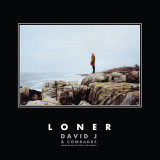
“…a surprisingly cohesive atmospheric soundtrack to a movie that does not yet exist.” LONER is the stunning album from cult auteur DAVID J (Bauhaus, Love & Rockets) featuring Mia Doi Todd and Tim Newman. U.K. Edition in orange vinyl with gatefold sleeve. Limited edition of 500. Former Bauhaus and current Love and Rockets bass man returns via Dakota Records with a series of deconstructions of an original twenty some year old demo. Originally streamed as part of his 2007 series of unreleased stash ‘Tracks from the Attic,’ a precursor to the now hugely successful platform: Patreon. David’s original demo titled ‘Albino Dog’ alongside singer/songwriter Mia Doi Todd’s sublime studio version both appeared via that platform in 2015; only the latter appears amongst this new series of arrangements. David’s premonition of Mia’s voice on this song is one to be applauded – perfectly suited creating a ghostly sepulchral aura. Here the Colonel is aided by a series of foot soldiers varying in rank. Veteran comrade Joyce Rooks adds texture with her trademark cello to Mia’s ‘Albino Dog’, whilst privates’ Nigel Gwennap (‘The Day that David Bowie Died’) and Whitehall Rec’s Joel Baldwin contribute electric guitar and drum programming respectively. But it’s the work of the captain that captivates this whole package. Tim Newman (Love is a Ghost), arranger, sound alchemist, mixer and lunatic. Tim’s work with David is best savoured via their ‘Analogue Excavations & Dream Excavations’ 2002 Glass Modern set. ‘Loner’ offers the listener a kaleidoscope of sounds best experienced with headphones, the journey from David’s simple ‘Albino Dog’ strummed acoustic demo to ‘Crescendo’ is quite staggering. Joel’s synth on ‘Cold, Cold, Cold’ and the glitch added to Mia’s vocal (‘Loner on the Range’) for example take the song into an altogether different direction. But it’s ‘Crescendo’ though that sits atop the apex. Building, as the title suggests, into a blistering array of guitars, bass and drums with a gorgeous, ethereal repeating low vocal motif from Mia wrapping itself around the cacophony.
Time to welcome another newcomer to Freerange with a brilliant debut that has already been gaining a lot of interest from early spins. Stefano Ritteri should be a familiar name to many, having dropped several well- received releases on key labels such as Pets, Rockets & Ponies and Get Physical as well as his own monthly Rinse France radio show. A producer in the old school sense, he has the ability and desire to flip from deep, emotive and down tempo jams to the most impactful, high energy floor fillers, all with a deft touch and unique and experimental spin. The Italian producer, now relocated to London, has a studio chock full of vintage synths and hardware outboard which keep him inspired and ensure his output sounds fresher and fatter than most, as can be heard on this excellent two-tracker entitled A Different Happiness EP The title track is a spaced out, percussion-heavy jam which takes a minimal approach but wins hearts and minds with an ear-worm of a melody that gets gets you hooked in from the start. Snippets of spoken word add to the intense atmosphere making this one of those sure-fire, perennial tracks which can work in a variety of sets and still guaranteed to make an impact and stand out in the crowd. Flip over for Pocket Melody, another simple yet effective and inventive track which sees Stefano letting loose on his synths and coming up with some warped Zawinul-inspired vibes in the process. The playful melody snakes around in an improvised way whilst the dubby drums and classic analogue machine beats ensure everyone stays locked into it's hypnotic groove. Definitely a producer to watch for us and we're sure Stefano is on track to continue making some amazing music. We hope you love this as much as we do!
“A huge thing for this record was to make it feel as close to our live show as possible,” says Tom Sharkett of W.H. Lung’s latest album. “We didn’t want it to sound live but we wanted to capture the excitement of the live performances.”
This is something that has become paramount to the group in recent years as they have undeniably blossomed into one of the most joyous and arresting live bands in the country. “The reason I’m in a band is to play live music,” says singer Joe Evans. “For me, music is live music. That’s what it’s for, to be played with people.”
The five-piece band, also featuring Chris Mulligan, Hannah Peace, and Alex Mercer-Main, decided to try something new on their third album after two incredibly successful collaborations with previous producer Matt Peel. In order to capture the energy, spirit and dynamism of their live shows, they relocated to Sheffield to work with Ross Orton (MIA, Arctic Monkeys, Working Men’s Club) who was able to harness this side of the band to remarkable effect. “Ross is the Sheffield Steve Albini,” says Evans. “He’s the king of not overthinking it and trusting the process of the art of recording songs. He was always there to stop us fucking around with cerebral stuff and get it down.” Sharkett echoes this too: “He was the exact producer we needed without us even realising. His productions and mixes are bombastic, lively and in your face and that’s exactly what we wanted.”
However, while this album is rooted in a sense of capturing a moment and a sparky liveness, that’s not to say it’s a raw or ragged record. It is still a meticulously composed, delicately layered and pristinely produced piece of work that, in true W.H. Lung style, runs the gauntlet from dance to pop to indie while still capturing that distinctly unique quality that is unquestionably their own. “It was a really big thing for me to realise what made us sound like us on this record,” says Sharkett. “I think the album sounds a lot more confident and self assured because of it. Some songs sound just so much like Lung and I’m really proud of that. I’m not sure we’ve done that as consistently across the other records.”
While the band have drilled deeper into finding their own singular identity, it’s not a record resting on its laurels. It’s a significant leap forward, expanding on their solid foundations while also breaking new ground. “The big difference with this record is its directness in every sense,” says Sharkett. “The songwriting is more upfront. Previously we’d focused a lot on vibe and production as opposed to just writing songs. The overall mission here was to revert to a classic songwriting structure and for the production to come afterwards.” And so what you have on this record are deeply considered and well-crafted songs, then recorded with blistering intensity in the moment, and then given a touch of experimentation afterwards. Then throw in Orton’s contributions to the band and it’s proven to be a real winning formula. “He brought a real dose of magic to the songs we’d written,” says Sharkett. “And brought an extra bit of wonk and quirkiness each time.”
The band’s ability to write more traditional and conventional songs is clearly a skill they’ve taken to with ease, at times there’s an almost Springsteen-like quality – but if he'd ever had an ecstasy period – to tracks such as ‘Thinner Wine’ and ‘Bloom and Fade’. While ‘How to Walk’ was constructed with one thing only in mind: that it would absolutely slay on stage. “I can’t wait to play this live,” says Evans. “We wanted a song to represent our live set, a new big one, and this is it.” Once again it leans towards the anthemic, with its driving, propulsive charge complete with incandescent synths and vocal melodies so irresistible you can already hear them being sung in unison by a crowd.
It’s an incredibly difficult feat to pull off a record that is more rooted in traditional songcraft while also capturing the power of a live performance, as well as pushing sonics into experimental new directions while working with a brand new collaborator. But here the band has managed to do just that. And the album’s closing song ‘I Will Set Fire To The House’ is a perfect example of such a thing. It’s a song that feels immaculately constructed but also very much alive and of the moment as its radiating synths engulf from the off, and Evans’ vocal is silky but powerful and in perfect symbiosis with Peace’s. It’s a song that captures the endless joys of music playing long into the night. “It may be a bit of a bloody bombastic way to end an album saying ‘and we’ll dance into the sunrise’,” says Evans. “But fuck it.”
MORE PRESS ON ‘VANITIES’ (MELO131)
"Vanities artily refines an exhilarating brand of up-front electro-dance" MOJO ⅘
'Idiosyncratic yet euphoric electronic pop on triumphant second LP' 9/10 Uncut
''One of the most effective alternative pop albums of the year'' 4/5 Record Collector
'Dance music for the modern age' - The Times (4*)
After the Spanish escapade 'Teatro Lucido' and the sweet journey 'Paris Hawai', the group created by Marlon Magnée and Sacha Got continues their world tour with 'Rock Machine,' their first album entirely written in English. Composed over the past few years during various tours around the world, this new LP has been strongly inspired by the succession of dates in the USA, Canada, South America, Australia, and the encounters that ensued. The band returns to its New Wave and Synthwave roots from their acclaimed first LP 'Psycho Tropical Berlin' (Machine), which they mix with an Anglo-Saxon rock sound from the 80s/90s (Rock). This album is an ode to rock'n'roll, its effectiveness, and timelessness, but also an ode to love and despair. La Femme continues to develop with Rock Machine a universe beyond trends with their own sound and aesthetics. In addition to rock and synthwave sounds (of which 'Clover Paradise' is the perfect example), there's still electro (Sweet Babe), surf music (Ciao Paris), disco with a UK punk twist (My Generation), and even elements of western. The list is long but always unique and coherent
Pearson Sound returns to his Hessle Audio label with Which Way Is Up, a 4 track EP showcasing a range of textures and tempos with soundsystem pressure as the anchor. The 808-laced 'Hornet' kicks things off with a sound palette inspired as much by '80s Miami as '10s London. 'Twister' dials up the energy with a jagged lead and scattered breakbeats pulling in opposing directions, while the steppers pulse of 'Slingshot' evokes formative experiences at Subdub in Leeds. The EP is brought to a close with the blissed out title track 'Which Way Is Up', whose arpeggios dance around each other until they fizzle to breaking point. Support from Mala, Mary Anne Hobbs, Joy Orbison and more.
Forgetting You Is Like Breathing Water, the self-titled debut from the duo of trumpeter Will Evans and guitarist, synthesist, producer and multi-instrumentalist Theo Trump, arrives like a vault revelation. It feels like a decades-old yet newly unearthed masterwork of gorgeous ambient improvisation, the sort of thing scholars live to research and shepherd into deluxe reissue.
The patient, crystalline chords that swell and resonate like a series of confessions; the textured brass murmurs that suggest a ’60s or ’70s Fire Music master at their most poignant. Provocative found-sound experiments threading arcane religious recordings through dystopian soundscapes. Ear-shattering free-noise tumult. Where and when did this music come from? Who are these voices?
As it turns out, Forgetting You Is Like Breathing Water springs from an engrossing human story, though it isn’t necessarily the one you’d expect. This work of stunning maturity is in fact an entrance by two little-known explorers in their early 20s, who grew up together in Virginia, in the shadow of the Blue Ridge Mountains. It documents one of those perfect, sparkling moments in post-adolescence when big decisions and responsibilities are right around the corner, but for a spell, two young artists are able to create among the comforts and nostalgia of their shared past.
It also represents a reunion of sorts, as Evans and Trump connected as toddlers, became inseparable as boys, then pursued independent lives and creative paths as young adults. “Theo is my oldest friend,” Evans says, “and I feel like that’s what this band is — us meeting right in the middle of our interests.”
Now, having conjured this magic, they’ve detached once again: Evans, whose other works include the indie/avant-jazz unit Angelica X, is currently based in New York City. Trump recently moved to England, where he’d participated in his family’s theatre company, to go to school and further his solo ambient project. “This album didn’t start out as something super ambitious,” Evans explains. “It was more just an excuse to spend time together again and make music.”
***
In conversation, Evans and Trump are a delight, especially for cynics who might think that Gen-Z is only capable of doomscrolling. They come across as kindly young intellectuals who grew up using the internet as it was intended, for exposure to ideas and art across genres and generations. Trump points to indie-folk and the oracular post-rock of late Talk Talk, Bark Psychosis and Gastr del Sol. Pressed for his guitar heroes, he cites Bill Orcutt, Mary Halvorson and Marc Ribot, and mentions his devotion to alt-country. Heyday electro-industrial stuff like Skinny Puppy and Nine Inch Nails also meant a lot to him.
Evans is equally intrepid, though his background has a greater jazz focus. Ambrose Akinmusire, among today’s most thoughtfully commanding trumpeters, is a favorite. As for the soulful murmur he offers throughout Forgetting You, Pharoah Sanders’ wistful and lyrical contributions to Floating Points’ work is a touchstone.
The two grew up down the street from each other in the northern Piedmont town of Batesville, Virginia. Their families were friends, holidays were celebrated together and they became the most loyal of pals. As children they had a pretend band.
Then life unfolded, they attended different schools and their paths diverged. Evans discovered John Coltrane and became a jazz obsessive, as Trump found punk and hardcore and later began making ambient music. As a dedicated jazz trumpeter, Evans studied formally and widely; Trump was an autodidact, teaching himself guitar and absorbing synthesis and production techniques. The late teens and very early 20s brought moves away from home and back to home, as well as plenty of listening and learning. The Covid pandemic meant an opportunity to reconnect on long walks. Through it all, together and apart, they remained reverent of each other.
By early 2023, they found themselves living again among the Blue Ridge Mountains. In the evening, after giving trumpet lessons in Charlottesville, Evans would make the eerily beautiful trek “over the mountain” to Trump’s home in Staunton, Virginia. They’d talk and eat and begin to improvise, deep into the night. Evans played trumpet and sometimes drums. (Given the wee-hours recording schedule, the neighbors didn’t appreciate the latter.) Trump plugged a rickety, junk-store Telecaster-style guitar into a cheap solid-state amp and explored open tunings; he also layered on lap steel, electric bass, synths and electronics.
They locked in and relished each other’s gifts. In Trump, those include patience and intentionality and sonic decision-making; for Evans, a distinctive trumpet sound that both musicians think of as a singer’s voice. “Will’s playing is so thoughtful and well placed,” Trump says. “My goal from a producer’s mindset is that the trumpet will occupy the space that vocals would take.”
Often, they got lost in the best way. “The thing I look for most when I’m playing is that feeling of disappearing into what you’re doing,” Evans says. “Usually when that happens, the music is good.”
By the same token, they didn’t pursue free improvisation as an ethic, or as a pure process. Their goal was something closer to spontaneous composition. “We were trying to make good songs,” Evans says simply. Later, Trump did brilliant post-production work, expanding a modest setup into an enthralling soundworld. Under his judicious editorship, music that was wholly improvised sounds at times like a carefully composed new-music commission.
The results speak for themselves. “A Happy Death” summons up a swath of American desolation through the viewfinder of Wim Wenders. “Flesh of Lost Summers” and “Partings” are highlights from an essential ECM LP that never was. “A Collapse of Horses” infuses those seminal post-rock influences with the plod of doom metal or slowcore. The album’s final track, “The Mountains Are a Dream That Calls to Me,” was in fact the first thing the duo recorded, as an evocation of those twilit drives across the Blue Ridge Mountains. “Looking back at what we chose to name the songs,” Evans says, “and some of the sounds and how they make me feel, there is an air of impermanence and loss to this album.”
“I’m excited for everything that’s to come,” he adds, “but I recently thought, ‘Damn — that’s not going to happen again.’ It was a privilege for us to have that time together.”
Austrian electronic music producer Peter Kalcic, better known as B.Visible, is set to release his third studio album titled "Life is my Hobby" on October 10th through his own imprint, Data Snacks.
This new album sees B.Visible continuing to blend genres, drawing inspiration from the trip-hop sounds of the 90s, the R&B of the 80s, and mellow house music. True to his signature style, he maintains a balanced mix of acoustic drum sounds, electric pianos, and shimmering synths.
Unlike his previous works, the creation process for "Life is my Hobby" extended beyond the traditional studio setting. Much of the album was crafted in his newly moved apartment and various cafes in Vienna's 5th district. His collaboration partners were close to home, literally-Anda Reverie and Silvia Ponce Marti, his upstairs and downstairs neighbors, respectively, feature as vocalists on the album.
Silvia Ponce Marti's contribution for instance is featured on the track "Ella," which addresses the sensitive issue of the hyper-sexualization of the female body in today's society. She also created a stunning mixed media video for the song, which can be viewed here.
Anda Reverie appears on the track "Bad Karma," portraying an alien questioning the moral implications of humanity's destruction. The music video for this song brings the scenario to life with dreamy environments and unsettling projections.
B.Visible describes the album's creation as guided by causality, resulting in a less experimental and more accessible sound-his closest encounter with pop music to date. Asked about the title he keeps quite. The listener is encouraged to form their own opinion from the impressions.
BIO (EN)
Viennese producer B.Visible is always pushing his craft forward, with each concept being an evolution. His music is mutating organically as each project brings novelty, but always while blending sharp electronic components with dusty acoustic layers. That duality exists in every aspect of his creative journey, with DJ sets revolving around second-hand records and modern-day productions, but also his live project offering a whole new dimension and generosity to the audience. B.Visible melts the barrier between analog and digital in a such distinctive and elegant way that it feels natural.
…Into a Real Thing is the first record David Porter produced by himself, and it sounds like an important checkpoint in the invention of progressive R&B as a genre, an album that bent the space-time continuum around R&B and willed it into something new altogether. It’s in conversation with Isaac Hayes’ own output of the era — Hot Buttered Soul especially — but where Hayes blew up the R&B form by throwing a bomb into it, helping create funk in the process, Porter worked more firmly in R&B’s space to build something new from within. …Into a Real Thing is a six-song powerhouse that manages to cram an 11-minute cover of a garage rock hit by the guy who’d later write Hulk Hogan’s entrance song alongside gut-bucket ballads with intricate string arrangements, and metaphorical tracks that compare grocery delivery to lovemaking. Its 33 minutes feel more like a fever dream than most other collections of 33 minutes.
»lacuna and parlor« is anchored in the left-field chamber music and incidental recordings that have long accented more eaze’s roving sound. Composed with one ear pressed to the rich textures of instrumental recording environments, this is a resonant and tactile collection tinged in rephrased space and skewed time.
Taking the rudiments of tonal music theory as her conceptual base, more eaze formed the compositions around her own manipulations of these core principles. Simple chord progressions stretch over minutes rather than seconds, for example, while elsewhere specific tonal signifiers were deleted from harmonic progressions, altering the expectations of these tropes.
These and many other bespoke techniques underpin compositions that span Americana-inflected ambient ballads and jaunty string recitals. With wistful vocals, bursts of improvisatory noise, loose chatter and overdubbed room sounds flowing in and out of the mix, more eaze invites us to lounge and linger in these lacunate moments, at once heard, felt and imagined.
'a masterclass in hardcore dancefloor and bittersweet feeling...Alex Crossan is both acclaimed and not feted enough' **** The Observer
Available on his own Pond Recordings, Curve 1 is a love-letter to club spaces, and the music and people who fill them.
Mura Masa’s forth album is a full-circle moment. Departing from the pop-leaning narrative and who’s-who guestlist of his most recent records, Curve 1 heads back down the rabbit-hole of club music that’s alternately euphoric, introspective, nostalgic and future-facing. Full of tension and release, ambiguity and playfulness, the significance of Curve 1 is left up to the individual: whether enjoyed solo or in the sweat of a packed room, here is music as enigmatic and layered as its author.
Mura Masa himself introduces Curve 1 as 'a manifestation of an attitude I’ve been cultivating in my personal life; ignore everything. All the content, all of the attention economy, all of it. In doing that, the really meaningful and vital parts of what’s around you make themselves known and unignorable, demanding your energy. It’s my first offering as an independent artist through my own record label, and as such I wanted it to be as free and anti-narrative as possible. Impressionistic. Music as entertainment has in many cases, to me, become very advertorial and excessively sentimental in terms of creating narrative around albums and artists. I wanted to strip this away as much as possible to leave room for the music to create its own meaning in the lives of people who form connections with it. It's hard for me not to explain away the intricacies and ideas contained within these records after having theorised and tolled and executed them over the course of nearly three years, but I think it’s far more fitting of the album’s intent to say simply: listen to it in the dark.'
Curve 1 pulls Mura Masa into focus as one of this generation’s most influential figures. Aptly reflecting his rare standing at the heart of youth culture, Mura Masa recently co-wrote long standing collaborator PinkPantheress’ single ‘Turn It Up’, as well as creating a series of remixes for Troye Sivan’s ‘Honey’. From producing global hits like ‘Boy’s a liar Pt.2’ to seminal records like Shygirl’s Mercury-nominated Nymph, it’s a juncture that has also seen Mura Masa embark on a new chapter of his own. He has set up his label and a creative hub and arts space - The Pond - in Peckham as a base for emerging artists and likeminded creatives, which will launch officially next year. Across his three critically-acclaimed solo albums, Mura Masa has built an audience who will follow wherever his genre-defying work goes next; with 2 billion streams, headline festival sets around the world, and live shows ranging from Alexandra Palace to Warehouse Project.
Curve 1 marks a back-to-your-roots approach whilst also highlighting the trailblazing young star’s recurring theme: to capture ‘that’ curvature in pop culture, to make it Mura Masa’s own, and to push things forward.
'Curve 1 has a club focus, no f—ks attitude and production that’s mature, lush — simply put, it’s just cool.' billboard
'a scintillating love letter to club culture and sounds' Wonderland
'the Grammy-winning producer throws a total curveball. Ditching his usual dreamy pop, Mura goes full hardcore dance. From techno to vintage rave' **** The Mirror
'Get sweaty as Mura makes it messy' **** The Sunday Express
'a total curveball...intense but full of hooks' **** The Daily Star
'Mura Masa has always been ahead of the creative curve, but with his new album, the tenured producer is consciously forging a path inspired by his newfound independence.'
'a grab-bag of sounds from a brilliantly restless mind' Rolling Stone
- A1: Welcome Back
- A2: Just Like You
- A3: Automatic (Feat Panama)
- A4: Northern Lights (Feat David Harks)
- B1: String It Again
- B2: Mirage
- B3: Shadow Of You (Feat David Harks)
- C1: Primordial (Feat Niya Wells)
- C2: Still Not Forgotten
- C3: Take It From Me (Feat Emma Brammer)
- C4: Athena (Feat Anduze)
- D1: Don't Go (Feat Nteibint)
- D2: All For You
- D3: Through The Night (Feat David Harks)
2024 Repress
'Solar Nights' is the long awaited second album from German nu-disco star Tim Bernhardt, aka Satin Jackets. Released on Eskimo Recordings this April, 'Solar Nights' follows on from Bernhardt's critically acclaimed, and Gold certified, debut LP 'Panorama Pacifico' and features 14 tracks of smooth disco and leftfield pop sounds with guest appearances from the likes of Future Classic's Panama, David Harks, Niya Wells, Emma Brammer and Anduze.
The global success of 'Panorama Pacifico' has seen Bernhardt coaxed out from his remote studio in one of Germany's ancient forests to play to fans across the world, from South Korea to Mexico and beyond, experiences that inspired both the album itself and its title, 'Solar Nights'.
"In recent years the world's become smaller, a more inter-connected place. It can be dark and cold here, with snow all around, and the next day I can be playing to people on a beach. Somewhere on the planet it's always daytime or summer, but beyond that day and night just blend into each other these days," Tim explains. "We have daytime discos so you can go and party while the sun is still high in the sky, and you can go and hit the gym at night. Beit day or night, Satin Jackets is your soundtrack."
And what a soundtrack it is, from the first chords of opening 'Welcome Back' it's clear we're in safe hands here, the warm pads, delicate guitars and pianos providing the perfect introduction to the album. Whether it's the slow burning seductive pop of tracks like 'Just Like You', piano led house tracks like 'String It Again', the Balearic haze of 'All For You' or bonafide hits like the Nordic inspired 'Northern Lights' and 'Mirage' that between them have already scored well over 10 million streams across streaming platforms, 'Solar Nights' takes everything we loved from 'Panorama Pacifico' and polishes it to an ultra high sheen.
And in an age when rough and raw production is seen as an easy shorthand for authenticity, Tim's love of über-smooth production has made him an unlikely iconoclast, "I had always been fascinated by how glossy people like Nile Rodgers made their music," he reveals. "It always sounded like the musical equivalent of a fashion magazine's cover. I'd been making more underground music for a while but really wanted to go in totally the other direction and instead create a really smooth, polished sound."
That obsession with sonic fidelity shines through across every track on 'Solar Nights', and the years since his debut was released have been well spent perfecting his craft. "Even in just the last couple of years I've made some big changes in how I produce music. Compared to my debut, everything under the hood has changed here," he explains. "Every day, with every production, I'm learning new things and when I listen to these new tracks, the depth in the mixes, the clarity, I like to think of 'Solar Nights' as Satin Jackets but in 3D."
From wanting to recreate the sound of magazine covers to appearing on them, the past few years has been quite some journey for the still enigmatic producer. The man behind the golden mask may prefer to stay out of sight but 'Solar Nights' reveals him to be fully in control, producing music that reflects the glamour and glitz of 70s Manhattan, artfully updated for the 21st century.
On their third full-length album, 'The Signal', the Compact Disk Dummies keep a few interesting balls in the air. They play with the opinions and expectations of the outside world, while also confronting their own desires and doubts. This is aptly depicted on the cover with a table, a bell, two brothers and an impatient crowd: who is waiting for whom? The album is as diverse as its cover is surprising. In a mix of styles and influences ranging from retro house to funk, Lennert and Janus Coorevits demonstrate their versatility. Following their scintillating performances at Rock Werchter and Pukkelpop, and the success of the radio hits 'There's No Sex Without You' and 'fomo', 'The Signal' marks the start of a new era for the Dummies.
Lennert notes, "Pfff, I would think about everything indefinitely. And I'm not the only one, I notice. Stuck in a kind of limbo, a state of uncertainty, surrounded by signals, but still feeling a certain fear of following the signal."
On 'The Signal', 'fomo' dissects human desire, reaching for the unattainable. 'Where We Go (Calypso)' is like the shipwreck no one wants. And in the title track, the female lead character finds herself in a toxic relationship, the signs of which are obvious, at least to the outside world. While the content of 'The Signal' revolves around doubt, contemplation and acting or not acting, the musical interpretation is in direct opposition to that. The Compact Disk Dummies do not doubt; they hold their heads up and their chests out. With certainty, they mix everything that excites them musically into the blender, without grinding the identity of the Dummies themselves; actually enriching it instead. The retro house of 'Solàr' (a song about Louis the Fourteenth? Why not) flows into the rampant funk of 'Ballet Dancer' before expanding into 'Underwater'. In every track, you sense the long road the Coorevits brothers have travelled since their breakthrough - and their then angular electro-punk. This third album is Lennert and Janus' most sophisticated work in the expanding universe of the Compact Disk Dummies.
In addition to being a mix of styles, 'The Signal' is also a mix of collaborations. There is the French touch of mixer Michael Declerck and mastering engineer Alex Gopher. There is the Dutch input of Wieger Hoogendorp (Goldband) and Jens Van Der Meij (Froukje). Beautiful string sections are provided by Wietse Meys and Reinhard Vanbergen, bass licks by Boris Van Overschee and backing vocals by Isolde Lasoen and Judith Okon, among others. Producer Jasper Maekelberg always kept an eye on things. And again, for the third album in a row, after 'Mess With Us' (2013) and 'Neon Fever Dream' (2020), artist Athos Burez also provided the artwork for 'The Signal'.
But however international the music sounds, however great the contributions from other top artists, 'The Signal' remains largely the work of the Dummies, with Lennert as vocalist, lyricist and multi-instrumentalist, and Janus as engineer, producer and all-around tech wizard. The album was not made in New York, Tokyo or Berlin, but in Desselgem. Studio 87, the Coorevits family's garage converted into a studio, remains Ali Baba's cave for the Compact Disk Dummies. In their studio crammed with synths, percussion and guitars, Lennert and Janus could not ignore the signal: time to smash it!
After recent explorations into ambient and pop under his full name, Sacha Renkas switches back to his Antenna moniker for ALT013. The Kiev-born, longtime Rotterdam-based artist uses a rough-around-the-edges, hiss-laden palette to construct his intricate, pensive club tracks. Often recording on the fly, he embraces the limitations and quirks of the hardware he works with, curating the happy accidents that come with them and that help make his music feel as alive as it does. It is emotional and imaginative in spirit, yet raw, almost instinctive in its rendering. Renkas cites the new wave and synth-pop from his youth and the sounds coming from Chicago and Detroit, as well as the Dutch West Coast he encountered later on, as inspirations. The sensitivity and hands-on approach associated with these are also tenets throughout his work. The ''Another Wave EP,'' a selection of tracks created over nearly a decade, further substantiates this approach. Made on multiple MPCs, Juno synthesizers, and an Akai S900, and mixed on a Mackie 16-channel mixer, it blends, among others, elements of first-wave techno and European proto-trance. Opener ''Alisa'' stacks angular sine melodies and formant basslines one upon another yet flows like silk, its balance immaculately kept in check. On ''Everyone M1,'' the bass organ patch from which the track derives its title finds itself amidst a lo-fi flux of capricious arpeggiators, ethereal pads, and decocted drums. ''Another Wave'' is a carefully sculpted slow burner, collected in its unfolding. Wisps of melody, gated pads, and whisper seem to wind between its drum patterns; the tension looming beneath this patchwork never entirely reveals itself. ''Quasar'' blends signature dramatic chords and off-rhythm bells with a creeping acid bassline and more kaleidoscopic drum patterns. It closes an EP distilled in its form, confident in its intent, and nowhere too bothered by genre boundaries or other formal constraints.
Following on from his percussion driven 'Rhythm Trainx Vol 2' EP on the renowned Running Back Ketiov returns with something special for the fourth outing on his own self-titled label. The 'King Of Hypocrisy' LP is a journey of personal development and musical discovery built around soundscapes, field recordings and new monotone arrangements. From the start the Ketiov alias has been about free expression and musical direction and in stark contrast to the Running Back EP this record shows the broad spectrum of the artist's influences and inspirations. Each track holds a special meaning and background story, written in private and kept private until totally finished. From the spooky vocals of 'the Wait' to the blissed-out guitars of 'Today' and the analogue arpeggiators of 'Dual Morality' the ten short tracks come together as an exceptional personal listening experience, which leave us wondering... what else does Ketiov have in store for the future
Debut album from Los Angeles duo Los Yesterdays, Sweet Soul music meets Mexican Folklorico "Sweet soul music also known as lowrider oldies on the West Coast, rolas and souldies are typically early 60s-style tunes that emphasize vocal harmonies. Most songs are slow-to-midtempo, many are ballads, and the sub-genre is generally stripped down compared to the highly produced Motown hits of the time....there is a generations-long appreciation for sweet soul music among California’s Latino communities. Eastern Los Angeles teens.... helped foster a love of sweet soul in the early 60s by covering soulful ballads by artists like James Brown... Those sounds... were kept alive by record collectors and people who spent evenings cruising along East Los boulevards." BILLBOARD // Los Yesterdays are a Chicano soul band from Los Angeles based around the creative collaboration between Gabriel Rowland and Victor Benavides. They began working together when Rowland a drummer by trade, then creaky and exhausted from waking up at dawn to work construction decided to channel those struggles into song. He contacted Benavides, a former bandmate of Rowland’s deceased brother, to record the soul ballads that Southland Chicanos call “oldies.” Los Yesterdays filter love-struck R&B crooning through guitar-strumming Mexican balladeering; the result is something that sounds like the Los Angeles of yesterday and today the indelible, immovable Los Angeles of cruising Whittier Boulevard, of cold drinks on the porch on blazing summer nights, of watching a blue-orange toxic sunset and wondering if they are thinking about you. Los Angeles changes; Los Angeles stays the same. Los Yesterdays have changed, outgrown their childhood barrios and the bands of their early 20s and their private garage hermitude; Los Yesterdays are Frozen In Time. Tracks: A1. Nobody’s Clown A2. Frozen In Time A3. Something Happened A4. I Can’t Feel A5. Brown Boy B1. Last Request B2. I Want You To Stay B3. But You Did B4. Name On Me B5. Love Is A Game For Fools
Her tracks have been played and recommended by Iggy Pop, Mary Anne Hobbs and Nine Inch Nails. ZAMILSKA, one of the most original artists on the European electronic scene, announces a new album, "United Kingdom Of Anxiety" – out October 4.
Combining the rawness of techno and the trance-like nature of world music, industrial sound and a fine blend of trip-hop, the Polish producer created a dystopian, post-apocalyptic,
fascinating vision of a collapsing world. "United Kingdom Of Anxiety" begins with a sonic assault. The breaks and powerful bass in "Phantom" awaken from hypnotic slumber, numbness caused by the daily hustle, serve as a reminder that to survive in an unfriendly world, concentration, willpower and perseverance are essential. This is the beginning of a journey through "United Kingdom Of Anxiety" - the new album by Zamilska, a sensitive outsider.
"I’m here to ruin you again," announces a voice in "Mummy," while the crescendo of beats and noise in "Better Off" further amplifies the tension. It's hard to find peace when hell lurks just around the corner. Is it the horror of civilization or perhaps cosmic dread? The answer depends on the listener's sensitivity.
The much-needed balance and coolness are brought by huskie vocals - that is Ola Myszor - an incredibly talented young artist who appears in several tracks on the album. Besides huskie, there are other guests on "UKOA": Natalia Przybysz, who, with a robotic voice, delivers a manifesto of indomitable, proud solitude in "Persist" and Lukasz Pach, the charismatic frontman of the grindcore band Hostia. His growling is heard in the intense, uncompromising "No Gods," which was presented by Iggy Pop on his BBC6 Music radioshow.
The sonic spectrum is also filled with anonymous voices: echoes of quarrels, media messages, sounds of war clamor, monologues - looped, accelerated, manic, psychotic, but also a wistful singing coming from the depths, from afar. The metaphysical horror of Lovecraft on one hand, and the sober, no less gloomy diagnosis of George Orwell on the other, constantly correspond here.
This entire album is a story about society as a whole and the contemporary, dystopian world, which is inevitably heading towards war. The track "1984" clearly defines the inspiration for the artist's post-apocalyptic vision. A distorted radio signal, alarm siren and gabba/techno beats driving into the head like nails serve as an expression of the fear and anger born in a world of impending totalitarianism.
Modern progressive rock band DILEMMA presents its third full length album, ‘The Purpose Paradox’. This concept album, spanning over 60 minutes, is released on CD, double LP and via all streaming platforms, and distributed internationally by Butler Records, a division of V2 Records.
It features 9 brand new tracks ranging in length from 4 to nearly 16 minutes. The sound showcases a broader side of DILEMMA — louder, faster, more technical, more progressive. With new frontman Jermain van der Bogt (Wudstik), the vocals have become rawer and more varied. Almost six years after the previous record ‘Random Acts of Liberation’ the band sounds reborn.
Like its predecessor, ‘The Purpose Paradox’ was produced by drummer Collin Leijenaar, who, together with the famed music wizard Rich Mouser (The Mouse House, LA), was also responsible for the mix and mastering. Thanks to their unmatched ears, the result is an audio experience that DILEMMA has worked on with great pride over the past years.
As said, ‘The Purpose Paradox’ was written and produced like a concept album. Because let’s face it, you’re either a progressive rock band or you’re not. But seriously: the story of ‘The Purpose Paradox’ revolves around a man named Neon. Someone like us in the here and now. During his quest for connection and fulfilment, he finds support from an unconventional guide named Electra. She points out to him that sometimes the things we look for are the things that found us first. Will Neon’s heart glow again when he discovers the outer light? Or does the greed of the corporate machine known as The Hand succeed in extinguishing his inner fire? Can Neon’s secrets be deleted? And will he, in the end, arrive in the comfort zone of allies in the raw, rainy city he once left behind?