The Juan Maclean return to DFA with a compilation LP of 12-inch singles they’ve amassed over the past six years – re-edited, re-mastered, and ready for fans who may have missed the tracks the first time around. From the dub house sway of 2013’s “You Are My Destiny” to the high-energy stomp of this May’s “Zone Non Linear,” and featuring two never-before-released tracks, “Quiet Magician” and “Pressure Danger,” The Juan Maclean once again justify their longevity as a musical force that is more than capable of repurposing club tracks for every setting.
The Brighter The Light is put together in a way that lends itself to appreciating the sheer banging quality of the songs while simultaneously being able to dance to them in your living room. For example, take “Feel Like Movin,’” which Pitchfork called “gloriously beatific” and “pure DFA gold.” In the new remastered version, the fullness of the keys and the kicks takes over, unfurling across the listener. Deep house rhythms, sparkling synths and a certain spaciousness are what’s emphasized across the record. Gone is the slow-motion melancholy disco from their recent full-lengths – The Brighter The Light is all fierce enthusiasm and dance floor missives, perfect for those who aren’t quite ready to let go of summer.
Juan Maclean is a DJ and producer who has been a mainstay of the New York club scene, as well as maintaining a rigorous international touring schedule, since the release of his first records on DFA in 2002. Vocalist Nancy Whang is his longtime collaborator, best known as a founding member of LCD Soundsystem and a busy touring DJ. Together, the two artists have released an extensive catalogue of 12” singles and full-length albums for DFA, including 2014’s seminal In A Dream LP. The proper follow-up studio album will follow in 2020.
Suche:sounds from around
Johnny Clarke is one of the great vocalists that ruled the Jamaican Dancehall scene from the mid – 1970’s to the early 1980’s. While Bob Marley was out conquering the world, Dennis Brown, Gregory Issacs and Johnny Clarke were winning the hearts of the Jamaican people .Johnny Clarke’s use of the ‘Flying Cymbal‘ sound took the Island by storm and produced a run of hit singles few could match.
Johnny Clarke (b.1955, Jamaica, West Indies) cut his first record ‘God Made The Sea and Sun’, after winning a local singing contest in the Bull Bay area of Jamaica. Although the single was not a hit, it led to two follow up tracks for producer Rupie Edwards, ’Everyday Wandering’ and ‘Julie’ that fared much better, both on the island and oversees in England and Canada. These tracks also brought the singer to the attention of producer Bunny Lee and a working relationship that would go on to produce a prolific catalogue of music. Johnny Clarke’s Dread Conscious / Love Song style were to grace many hits around this time in 1974. Such tunes as ‘None Shall Escape The Judgement’, ‘Move Out of Babylon’, ‘Rock With Me Baby’, ‘Enter The Gates With Praise’ to name but a few. All new songs added to a host of cover tunes, recommended by Bunny Lee, many taken from the singer John Holt’s catalogue, that suited Clarke’s vocal style. The rhythms were cut at various studios around the Island. Randy’s Studio 17, Channel 1, Treasure Isle, Dynamic Sounds and Harry J’s, by a group of musicians loosely called the Aggrovators and some tunes incorporating the ‘Flying Cymbal’ sound again introduced by Bunny Lee, working the Hi-Hat in fine style. The tracks were then taken to King Tubby’s studio where Johnny Clarke’s vocals would be voiced.
Another phenomenon that was happening in the early 1970’s, was the version cuts to vocal tracks. This is when the tunes were cut back to the bass and drums and the vocals were dropped in and out in a dubbed style, and reverb and echo and various effects were added to these tracks. The main exponent to this style was King Tubby himself, and as was the fashion at the time, each vocal track would carry a version as its B-Side. Producer Bunny Lee lead this style working closely with King Tubby and all of his singles from then on would carry a Dub cut on its flipside. As Johnny Clarke was one of Bunny’s main singers at the time, we would hear a great selection of popular songs getting the dub treatment and in many cases the single was purchased for its more exciting dub cut, again made popular at the various dances where the dubplates were played out. We have compiled some of the best of these dubs from the time and put them together for this release, hope you enjoy the great voice of Johnny Clarke alongside the productions of Bunny Lee and the creative genius of King Tubby, a great combination we hope you will agree….
Sometimes you know it’s coming, sometimes it’s unexpected, but the time to hang your boots will always come. It’s better when you have total control, even better if you end up on a high (or on a low). After seven years of sonic interferences, calibrating the soundscape of field recordings and helping to recreate the old sounds of today, Gonzo is retiring from music. It’s a goodbye, yeah, and a well-crafted one.
But “Ruído(s)” doesn’t sound like an intentional one. You won’t listen to it on any of the thirteen tracks that scavenge for a solution in the space between ambient music and field recordings. You won’t feel it in the intense connection between human and natural sounds and how sometimes everything oscillates in opposite states of mind. You won’t even read it in the intense, but subtle, humor present in some of the pieces. You won’t, because it’s not an intentional goodbye. You only know it is, because you’re reading this.
What is it then? It’s a celebration of random sound. How can you experience something scholastic and, simultaneously, deeply hilarious? Just think about the amazing triad formed by “A Fuga dos Grilos”, “Degredado(s)” and “Cantiga Parva”. First, you’re blessed with six minutes that build up on the idea that sound can be an intense religious experience, echoes going back and forth to create a fantastic Boiler Room feeling (one populated with raving Gonzos doing dabs in front of the camera) that eventually ends up with a cinematic touch: someone saying the title of the song out loud. One second after we are into the Flying Lizards world, with two songs that shake any pretentious seriousness of the previous track.
Is it serious or not? It is. But it doesn’t have to be. In “Ruído(s)” Gonzo recounts pop/electronic history through field recordings and weird-soft beats. More than compiling his seven-year history, Gonzo is more worried to understand where he’s leaving his ideas, Caretaker style. Speaking of Caretaker, Leyland Kirby should think about reviving Caretaker and do a whole album around “Brilhante Cortejo”: it’s haunted ballroom in a ‘cracked’ nutshell.
As the album progresses and the need to revisit it grows, it becomes clearer(?) that “Ruído(s)” is more than an artist self-indulging on his work – in a very good manner. It’s also a condensed catalog of Portuguese music and its sounds, a circular trip down the memory lane of a forgotten country and its landscape. “Ruído(s)” is a goodbye to a country and its traditions. It does it without sulking but with the most respectful loud laugh - the Gonzo way.
- A1: Rainbow Deux (6 57)
- A2: Let Love In (6 14)
- A3: Sigh (4 08)
- B1: The Darkest Night (7 32)
- B2: Surrender Now (6 08)
- B3: Summer Is Her Name (4 37)
- C1: Are You Ready (3 18)
- C2: Streets (Keep Me Runnin’) (7 00)
- C3: Samba Dreams (3 20)
- D1: Let’s Go Deep (5 27)
- D2: We Should Be Laughin’ (3 45)
- D3: Wishful Thinking (4 00)
TThe melodically adventurous soul of Leon Ware continues its expression in his final opus Rainbow Deux, released on double vinyl on September 13th. The album features new songs recorded and performed by Leon before his health turned, leading to his transition on February 23rd 2017. Co-produced by Taylor Graves, it has stellar musical contributions from the likes of Kamasi Washington, Thundercat, Ronald Bruner Jr, Rob Bacon and Wayne Linsey.
Taylor Graves came into Leon’s musical family in 2002 when he, his brother Cameron and the Bruner brothers Ronald Jr and Stephen (Thundercat) were playing along with their schoolmate Kamasi at an L.A. jazz club. Taylor, Cameron, Ronald and Stephen became Leon’s band for his debut shows in Japan in 2002 and Taylor continued to work with Leon as his mentor and collaborator over the next 15 years.
“Leon was ALWAYS writing something or developing his musical palette” his wife Carol Ware tells us, so it’s impossible to pinpoint any single moment of Rainbow Deux’s genesis. Six of the songs go back to 2012/2013 and were released in 2014 as part of Sigh, a Japan-only CD collection heavy with Rob Bacon’s tasteful licks and Wayne Linsey’s piano vibes. The rest of the material comes from Leon’s sessions with Taylor.
Describing Leon’s and his process, here’s Taylor: “We’d start by having some great homemade food! Then a glass of wine ‘to slow down time’. After we’d have our fill and smoked our joints we’d go into his studio room to listen and create.”
The album was finished-up around August of 2016 in a back-and-forth between Leon and his go-to mastering engineer Toni Economides in the UK.
Leon worked on Rainbow Deux with life’s greatest challenge looming over him, yet it is one of his most focused and cohesive solo offerings since the 1980s. The entire record is a vibe: mellow, deep and smooth as silk. The lyrical themes are eternal, and the music is elegant, soulful and sensual.
The album opens with the hypnotic throb of “For The Rainbow”, coming on like a percussive, slow-mo house shuffle. Gilles Peterson is a fan. The exotic “Let Love In” follows, with its gradual-build Island Funk, intricate guitar picks and sassy female vocals. It explodes when it hits its stride. “Sigh” is the stylish slow jam close-out to side A. Serene guitars and polished drums create neck snapping funk, with a swaggering finger-snap strut.
Side B opens with the easy-burning broken-beaty “The Darkest Night”, the centrepiece of the album. Kamasi Washington’s lurking sax, restrained and beautiful, unfurls into the dank, sticky atmosphere of Thundercat’s signature creeping bass laid over his brother’s in-the-pocket drums. Leon’s vocals are perfect, a masterclass in seductive sax-soul.
“Surrender Now” conjures waves of vocals to swell and wash over the glossy piano, subtly bumping hip-hop drums and bubbling synth-bass stabs. It’s got the trademark Leon layers. “Summer Is Her Name” has Kamasi’s effortless, melancholic sunshine sax give way to rising tempos and propulsive rhythms.
“Are You Ready” is a total highlight (and we’ve been playing it out for ages). It’s a nimble groove of piano and synth rolling around Theo Croker’s sensual trumpet playing. Digi-soul at its finest. With lush G-Funk sensibilities “Streets (Keep Me Runnin’)” sounds like a lost Dam-Funk produced gem. All tough kicks and snares and street sounds. Leon’s hood pass will be forever intact.
“Samba Dreams” is the first of two tracks that bring a little Rio magic to Rainbow Deux. Leon created a whole body of work in partnership with Brazilian legend Marcos Valle that includes “Rockin’ You Eternally” - a hit for Leon - and “Estrelar” – a hit for Marcos. Leon channels his obvious love of Brazilian music here through more of Croker’s sumptuous trumpet, played over loose percussion. “Let’s Go Deep” is next up. A dreamy between-the-sheets quiet storm anthem and a real showcase for Leon’s vocals.
The dripping, honeyed harp-funk of “We Should Be Laughin’” marks the star turn of the brilliant Kimbra. Leon first met her on-stage to do an impromptu duet of “Inside My Love” during an open-air celebration of Minnie Riperton in July of 2014. Kimbra was working with Taylor on her music and he brought her to Leon’s house to do some writing. This was the result.
Warm synths radiate shuffling samba soul on “Wishful Thinking” as those Brazilian rhythms return to bring Rainbow Deux to a close.
During an apartment move Leon and Carol rediscovered some watercolours Leon had done years ago. One of these paintings had been dubbed “Deux Hearts” and Leon decided it should be on the cover of Rainbow Deux, getting as far as approving a draft concept for the artwork.
Carol has overseen developing that draft into the final gatefold sleeve. It brings together quotes, photographs and tributes in what is a reflection on the music, relationships and philosophy of the sensual minister.
Gerry “the gov” Brown, Leon’s long-time sound engineer, was by his side throughout the project, recording and mixing. The album was mastered by Toni Economides and Simon Francis’ additional sensitive work makes sure this double LP sounds like it should on vinyl.
Be With’s first ever release was Leon’s eponymous LP. Re-issuing that album planted the seed of a relationship that has grown to grant us the privilege of presenting his crowning achievement. We know that Leon’s fans all over the Earth will love Rainbow Deux. But we also hope that this album, the final entry in a phenomenal body of work, will reach new fans and find fresh conduits for the spirit of this oft-unsung hero of Soul.
Leon always said “they will get it when I'm gone.”
He also said that “the spirit never dies”…
Philippe Cam is the Thomas Pynchon of the electronic music world. Little is known about him and only a couple of pictures have been put online since he emerged on this planet to write his first and only album18 years ago. We know he worked as a sailor and that’s it. If you dig deeper you might find out that he worked as a DJ in the beginning of the 90ies in Brussels and began to study electronic music there and also began to write music for theaters and ballets.
The American distributor Forced Exposure once wrote that about him: „Philipe Cam is a star in his own field. He is among the few people who have succeeded to write hypnotic dance music without a conventional beat still conveying a thrilling, dramatic feel. Cam has developed an accurate, intense and complex formula of modulation-techno. Starting with music similar to Pan Sonic in 1996, his music turned towards a more elegant form of minimal music. Abstract soundtracks lead to an organic form of music, which was equally influenced by modern techno as Wolfgang Voigt's Studio 1/Gas or Basic Channel/Maurizio. Cam's music corresponds heavily to the Cologne scene, where his music is appreciated and played throughout the clubs by the likes of Michael Mayer, Tobias Thomas and various other DJs as well as experimental djs from the A-musik corner.“
So what’s new with his music? Basically the art of filtering is still his passion. Maybe he can be less associated with techno and the themes of his new tracks emerge in a more distinctive pattern? Well that’s hard to say, we would comment the energy of his early techno days in Brussels have returned here in a fierce way with some oft he tracks. The rhythmic movements are classy and stick with you. Whereas other tracks look for a distinctive relaxation of some kind.
We are releasing the album as a double clear vinyl with cover art by Yvette Klein who also designed the cover for his Philippe Cam’s album 18 years ago. Graphics for "Rotterdam" come from Cologne designer Daniela Thiel. We also would like to thank the cultural department of Cologne for supporting us to finance the album and to see the artistic value in this piece of minimalism.
The album kicks off with the mellow and soothing "Cocoa Beach". A Gentle beat that moves like bodies swaying in the hot summer sun. The clock moves a step forward and then a step backward as evolution takes a rest.
"Manga" feels like an acceleration to the moon, the contemplative moments come in spurts and hide in the intervals of the chords which are on the loose. Philippe Cam is the most energetic person in the world when it comes to core activity, this is head banging stuff for the ambient lounge.
"Short Summer" is a heavy and violent recognition. As intensive as it is it knows when to stop and disappear. In the ear and brain of the listeners it leaves an indisputable echo which lingers on for minutes. We suggest not to make a pause but jump directly into "Vermillions Sands".
What can be said about into "Vermillions Sands"? Be prepared some Terry Riley might lure around the corner to offer you some oranges on a silver plate, but don’t eat them. This is luring and beautiful at the same time. Maybe the best ambient track ever written and yet who can ever venture to say that without making a fool of himself. "Vermillions Sands" comes in waves and they could be longer we think.
"Rotterdam" the home of Philippe Cam for a long time but not anymore. He moved away. So that changes the perspective. But when was the track written? "Rotterdam" seems mechanical and rusty and spooky and divided. This arrangement is very different to all the other tracks so far and is almost dub in style but way more fractured. A steady stop and go emerges. But the longer it runs the better it gets. At minute 6 the brain resets itself and tries to grasp what has happened so far, reconstruction as a result of its own phantasmic imagination and hardly true at all, wonderful. Applause included!
Here comes "Bis", a short episode of a track and before we can comment on it, it is already over.
"The Game" is a mule of a track. It has a quiet stubborn sequence that bites and kicks you in the back without any change in near sight. We can hear a voice whispering, which sounds like a miniature vocoder featuring the voice of a child calling out - never stopping. This is treadmill to some extend but starts to breathe towards the middle of the track and slowly changes perspective. In fact there are some changes taking place here which go beyond a sound design that works heavily on the stereo image. Stick with it and the experience will be a great one.
"Ultimate Fly For Halloway" somehow orchestrates how you might feel after you climbed a 8000 meter high mountain and reached the top. A rejoicing off a special kind. Lava for the ears. No cheerleader murder plot sorry.
"Last Track" is a perfect example of a true minimalistic pice of music that manages to make contact with other genres and does this with elegance, determination and a lot of soul.
key selling points: The key selling point is the fact that Philippe Cam once was referred to as one of the main protagonists of the minimal music scene along with Wolfgang Voigt's Studio 1/Gas and Basic Channel/Maurizio. A true artist with a vision which is very rare.
Philippe Cam has picked up the sound he was famous for but has developed it further without selling out to any genre and expectation that rules our daily business.
Exactly this is the strength of the album to create a vivid world of impressions by using instruments in a whole different way than all software developers would suggest.
"Rotterdam" is a piece of art that can set off a firework when you listen to it and it owes nothing to anyone.
- A1: Jean Kely Et Basth – Andosy Mora
- A2: Soymanga – Moramora Zoky
- A3: Roger Georges – Mama
- A4: Ny Anjarasoa – Mahonena
- B1: Charles Maurin Poty – Amboliako Fary
- B2: Mahaleo – Izahay Mpamita
- B3: Papa James – Ngôma Hoe
- B4: Los Pépitos Et Leur Ensemble – B B. Gasy
- B5: Jeanot Rabeson Et Son Orchestre – Jazz Sega
- C1: Feon’ala – Farahy
- C2: Terak’ Anosy Group – Soaliza
- C3: Saka Dit The King – Ody Ody (Tsy Mentsy Mandroso)
- C4: Michael – Razana Tsy Ho Meloko
- D1: Falafa – Rapela
- D2: Los Matadores – Andeha Hanarato
- D3: Nino Rafah – Oa Niny Ê
- D4: Kaiamba Orchestra – Tokatoka
- D5: Atrefy Andriana – Zaka Tiako Mamolaka Keriko
Strut continues its essential compilation series of Indian Ocean sounds with 'Alefa Madagascar', the first compilation to document the unique culture of salegy, soukous and soul on the island during the '70s and '80s.
'Alefa Madagascar' showcases the rich variety of sounds during this heyday of Malagasy music: Roger Georges' 'Mama' and Jean Kely et Basth's 'Andosy Mora' bring the raw energy of salegy, influential band Los Matadores drop military drums and Hammond soul in the classic 'Andeha Hanarato'; Mahaleo's 'Izahay Mpamita' showcases the band's powerful folk sound, a crucial voice emerging from the Rotaka farmer and student protests of 1972, while Terak'Anosy Group work around a stomping Congolese guitar groove. The era paved the way for many of the household names of Malagasy music today including Jaojoby, D'Gary and Lego.
- A1: Catherine Brénot – Et Tout Est Yin Et Tout Est Yang (Club Mix)
- A2: 1 Plus 1 – Coming Up For Air (Instrumental)
- A3: Fragile - We've Got Tonight, Boy
- B1: Jarmaz – Night City Life (Disco Remix)
- B2: Friend Of Mine – Just Your Pride
- B3: Mac & Monica – You’re So Good To Me
- B4: Sala & H – Feel The Love
- C1: Alexandra – Fantasia (Fantasy)
- C2: Gioia – No Secrets (Instrumental)
- C3: Janelle – Don’t Be Shy (Dub)
- D1: Alessandro Scellino – Dinner In The Jungle (Erotic Mix)
- D2: Brian Tatcher – Hot Love (Instrumental Dub Version)
- D3: Preludio – Mysterious Nights
Should you find yourself taking a Thames-side stroll in the shadow of the City of London, keep an eye out for the headphone-clad figure of Ilan Pdahtzur. While be-suited bankers and frustrated office workers scurry home to their families, Ilan can frequently be found casting admiring glances towards the blinking lights of towering skyscrapers while filling his ears with the synthesizer-driven sounds of lesser-known 1980s dance music.
Ilan, an avid but little-known record collector best known for sharing the artwork of obscure and under-appreciated early-to-mid ’80s club cuts on his popular Instagram feed, has been digging for vibrant, kaleidoscopic records since his teens. Now, thanks to Spacetalk, he’s been given a chance to offer a glimpse into his neon-lit nocturnal musical world.
The result is Night City Life, a killer collection of 1980s synthesizer songs inspired by Ilan’s admiration for the glow of London’s late night skyline. Over the course of 13 essential tunes, Ilan escorts us on a vibrant sprint through rare Italo-disco, steamy South African synth-boogie, fizzing American freestyle, oddball Austrian electrofunk and so much more.
There are naturally a fair few sought-after cuts present, but also a fine selection of under-appreciated gems that for one reason or other have been all but ignored since they were released three and a half decades ago. In fact, some selections are so obscure that barely any information exists about them online.
Check for example Preludio’s “Mysterious Nights”, an evocative fusion of slow electronic grooves, dreamy chords and twinkling piano motifs previously buried on a lesser-known album of unremarkable German synth-pop, or the dollar-bin brilliance of Fragile’s sweet synth-pop gem “We’ve Got Tonight, Boy”, a cut that Ilan says is capable of “wrapping itself like tendrils around your soul”. He’s not wrong.
At the other end of the scale you’ll find the ultra-rare Italo-disco breeziness of Friend of Mine’s incredible “Just Your Pride” and Mac & Monica’s soulful 1986 South African synth-boogie cut “You’re So Good To Me”, copies of which regularly change hands for hundreds of pounds online. Ilan originally reached out to the men behind the record last year to tell them how one of their other forgotten gems had been played on a Boiler Room session; naturally, they were thrilled.
There’s plenty to admire elsewhere on the compilation, too, from the waves of analogue synths, bubbly melodies and bobbing beats of the instrumental dub version of Brian Tatcher’s “Hot Love” – a cold-war era cut inspired by the idea of love blossoming in the midst of a nuclear meltdown – to the Bobby Orlando-esque freestyle bustle of Janelle’s “Don’t Be Shy (Dub)” and the sparkling post-boogie brilliance of Jarmaz’s “Night City Life (Disco Remix)”, a track Ilan has listened to countless times while admiring the midnight skyline of his home city.
‘One of our favourites’ iD Magazine
‘Mesmerizing’ The Guardian
‘Keep an eye on this guy!’ - Gilles Peterson
Catching Flies’ music draws from a wide-ranging palette of influences including jazz, soul, hip-hop, house and electronica and has previously seen him handpicked by Bonobo to provide support on his World Tour. Over the past few years, his music has gathered the support of Gilles Peterson, Annie Mac, Lauren Laverne, Julie Adenuga & Huw Stephens, critical acclaim from the likes of iD Magazine, The Guardian, Dazed & Confused, and Nowness, and a growing fanbase which has seen him perform both Live and DJ sets across the UK, Europe, the USA and Asia. This has culminated in over 60,000,000 streams to date.
Catching Flies is set to release debut album ‘Silver Linings’ on 5th July 2019. Containing shades of house and jazz, to hip-hop and electronica, ‘Silver Linings’ is a melodic mesh of bright electronics and intricate rhythms. It’s a beautiful, moving record, with sounds that unmistakably come straight from the heart.
Producer, multi-instrumentalist and DJ George King began Catching Flies in late 2012, when he recorded and self released his first two EPs. With huge radio and press support around the world - including multiple #1’s on Hype Machine, BBC Radio support from Gilles Peterson, Mary Anne Hobbs, Lauren Laverne, Tom Ravenscroft, Nemone, Annie Mac, Huw Stephens; praise from i-D, Dazed, The Guardian, Complex, Notion, The Line Of Best Fit, Clash, Dummy and more - he’s since attracted millions of listeners.
Against his instincts he signed with a big management agency and got talking to a label: it almost derailed his career. He explains “What I'd found so inspiring originally was the total freedom to make a tune on my own terms and just decide to put it out the next week. There was a hunger that came with that, and a sense of achievement from being the driving force, but as soon as I tampered with that ecosystem, it wasn't as exciting anymore”.
Touring with electronic music giant Bonobo - who also included him on his BBC Radio 1 Essential Mix - allowed him to watch up close someone who had taken a slow and steady path from tiny clubs in Brighton to arenas worldwide, and see it was possible to do without any compromise. After being teased through a succession of warmly received singles this past year, and seven years on from that first EP recorded and released from his bedroom, his debut album ‘Silver Linings’ is now ready to be revealed.
“It's taken me a while because I didn't want to speak until I had something to say. I wanted to make something positive, hopeful and colourful...The world isn't in the best place at the moment, and the last thing it needs is another dark and moody electronic record. I wanted ‘Silver Linings’ to be a scrapbook of the last three years. It’s definitely eclectic, and it’s supposed to be. Over three years a lot changes, your perspectives change, your tastes change; and I wanted to celebrate that by picking tracks that meant the most to me. One of my favourite things about making music is that it takes me right back to where I made it - the keyboard I used, the chair I was sitting on, the room I was in. It kind of teleports you back to a certain point in your life. A bit like a diary entry.”
Recalling those moments brings back a range of memories: ‘Satisfied’ began by being tapped out on a £15 keyboard bought from Kentish Town Cash Converters, ‘Yǔ’ was made in the mountains of China during a few days off from touring, while an evening on Hampstead Heath inspired ‘Kite Hill Theme’. Also featuring on the album is ‘New Gods,’ a collaboration with London’s bright stars Jay Prince and Oscar Jerome and the beautiful and meditative ‘Opals,’ inspired by the likes of Ryuichi Sakamoto and Alva Noto.
Catching Flies is already looking to the future, closing the first chapter in an exciting and inspiring story, ‘Silver Linings’ is only the beginning.
“A few weeks after I finished the album, I moved out of my house I made all the music in, so it feels like the closing of one chapter and the beginning of another. I can’t wait to make the next one now.”
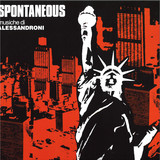
Maybe the best Alessandroni's album ever. A true holy-grail for any collector and worldwide music lover, which we can consider nowadays as the most sought-after record of the whole legendary RCA SP 10000 series, and as the rarest album from the king of Italian libraries.
Jazz, mellow-funk, downtempo breaks, and incredible rock blends, make this record a refined portrait of the 70's American way of life, viewed through the fully Italian lens of Alessandroni's sensitivity.
The magic around Spontaneous is that this album is not only beautiful and astonishing, but is certainly on of those amazing records to which time gives new life and freshness, making it sounds unbelievably contemporary.
After five years of exhausting research, finally Four Flies can give a light to this obscure and fascinating mystery, rescuing it from the darkness. It's not just another piece of Alessandroni's legacy that is finally put back in the right place. This should be considered as the definitive act to re-estabilsh Alessandroni's leadership into the library music scene, and beyond.
Available again from July 19, coming in 180gr black vinyl, housed in a hard tip-on sleeve cover.
Limited Edition 500 copies, don't sleep!
- A1: Dengue Dengue Dengue - Semillero (Nicola Cruz Remix)
- A2: James Stewart - Nolias
- A3: Blood, Wine Or Honey - The Forest Is Expecting You (Hieroglyphic Being Remix)
- B1: Mnanda - Pambana / Shouts (Sam Jones Construct)
- B2: Khalab - Dense (Maghreban Remix)
- B3: Planet Battagon - Lord Battagon's Rhumba Party
- B4: Penya Ft Sarathy Korwar - Why So Angry (Live)
The must have DJ tool is back for a third chapter
Label boss Pete OntheCorner has dipped into his secret stash of firelighters from around the globe.
On the Corner’s backroom and basement workout ‘Versus’ is brimming with heat and is once again the essential tool for discerning DJs.
The very latest productions, new signees, dubs and remixes bring a future taste of the action On the Corner. This uncompromising and unrivalled collection brings the label’s global family together on wax.
Versus III features tracks from Dengue Dengue Dengue, Khalab, Penya, Planet Battagon, Blood, Wine or Honey, James Stewart and the uncompromising street sounds of Mnanda from Dar es Salaam. Flexing their remix might for this 12”: Nicola Cruz, Mahgreban, Hieroglyphic Being and Sarathy Korwar goin’ in live.
There are some familiar faces occupying this tasty wax and some new comers.
Get your atlases out again as OtC criss-crosses the globe introducing you to artists from afar-afield as Dar es Saalam, Chicago, Hong Kong, Lyon, South London, Peru and Rome.
Colombian Techno powerhouse Gotshell unleashes a barrage of his signature, twisted, bone-shaking, analogue techno bombs for 'The Draft EP' on Suara with remixes from label head Coyu and Argentinian producer Flug.
Firstly, the A side houses ‘Pears Cosmic’, a swell of glitches, thunderous kicks and rave stabs at a fever pitch pace and secondly '19 Caracteres’ a sci-fi blitz, comprised of killer drum programming, modular bleeps, zaps and urgent surges.
Flip it over to find Coyu’s reinterpretation of ‘The Draft’, reworking the drums, adding rapid-fire claps into the mix and leaving the trance stabs out for a more heads down approach. Finally, Flug takes on ’19 Caracteres’ focusing his remix around an atmospheric echoing synth line, punctuated and interspersed by the original’s glitchy sounds.
Legitimately available again on vinyl for the first time since its original release in 1983, Outernational Sounds proudly presents a major statement from a crucial figure on the Los Angeles jazz underground – pianist Nate Morgan’s spiritualised deep jazz classic, Journey Into Nigritia.
How many 16 year olds would have the confidence to walk up to a revered bandleader at a gig, and inform him that one day they’d be playing together? As improbable as it sounds, this is how pianist Nate Morgan introduced himself to the great Horace Tapscott, founder of the Pan Afrikan Peoples Arkestra. The teenage Morgan had heard Tapscott’s Flying Dutchman LP The Giant Is Awakened being played by Greg Kufahamu on local Los Angeles radio station KUSC, and Arthur Blythe’s wailing sax had gone ‘straight to the heart. It was a spiritual experience.’ Morgan showed up to all the Arkestra shows he could find. He was already studying with Joe Sample and Hampton Hawes and playing in local bands, but the draw of the Tapscott’s band was too much for the gifted young pianist:
‘I could only take about two or three more concerts before I had to run up on stage. When I first introduced myself to Horace, he tells everybody that I said, “Yeah, I’m Nate Morgan. I’m going to play with you all.” Not that I want to, but that I’m going to.’
Over the next decade and beyond, Morgan would become a central figure in Tapscott’s UGMAA (Union Of God’s Musicians and Artists Ascension’), bringing new figures into the fold (it was Morgan who first hipped Jesse Sharps to Tapscott’s circle; they were lifelong friends), running jam sessions, and eventually being given the task of organising the Arkestra songbook. During the early 1970s he also worked commercially, doing a stint with Rufus and Chaka Khan and appearing on Willie Hutch’s Foxy Brown soundtrack. Into the 1980s and 1990s he remained active, keeping the UGMAA flame alive in late night jams and private sessions, and working tirelessly around LA, including collaborations with Bone Thugs N’ Harmony; he was also part of the early 2000s LA jazz collective Build An Ark. A true musician’s musician, Morgan died in 2013.
Journey Into Nigritia, featuring firebreathing reedsman Dadisi Komolafe, was the first of two LPs Morgan recorded for Tom Albach’s storied Nimbus West imprint. A committed, spiritualised work that showcases Morgan’s heavy composing as well as his McCoy Tyner- influenced and technically flawless playing, Journey features dedications to Coltrane (‘He Left Us A Song’) and Cecil Taylor (‘Study In C.T.’). Surging, modal jazz from the LA undergound, Journey Into Nigritia is a crucial recording by an unsung jazz legend.
“In October 2018 we took several recordings in and around Eddie Prévost’s home village of Matching Tye in Essex, where he has been living for the past fifty years. The majority of the pieces that made it to this LP took place in All Saints Church, High Laver, the burial site of John Locke. This fact was notable in the choice of title for this set of recordings, and it seemed necessary to put forward Eddie’s own take on Locke that he offered in our correspondences:
“Scholars of Locke’s philosophy will be familiar with the idea of mixing labour with materials as a fore-running notion of possessive individualism and basis for private property. Such ‘mixing’ is a persuasive description of a creative act. But the theory is more worthy of a social dimension.” As for the individual titles for each of the studies on the LP, each takes ideas and elements from music past. For example, MaxPlus makes a nod towards bebop pioneering drummer Max Roach who offered an earlier hit-hat study. Eddie utilises such examples, offering further creative insights which can then be woven back into the common wealth of sound. The final track, returning to the bowed cymbal method of the first, was recorded outdoors on a breezy green, and is pictured on the back cover of the sleeve. It was an attempt to capture the playing in its ‘metamusical’ relationship with the untempered sounds of the external environment.
Eddie has written about Metamusic in his book The First Concert (Copula, 2011): invoking childlike ‘protomusical’ behaviour, or the sense of music that a person might possess before the inevitable influences come to play any role in their productive, and appreciative, musical development.
Ross Lambert provided a few words along side his cover drawing entitled ‘The Metamusician’: “The eyes would symbolise for me things like searching, examining, closeness or friendship I think; engagement with the world. Decisions in making the image were completely intuitive, this is just me looking for the meaning, post-analysing, post rationalising.””
- Daniel Kordik & Edward Lucas, March 2019
Gafacci is well known for notable artist collaborations, eclectic edits and his Asokpor productions. On this new four track EP, he steps out of familiar soundscapes, driven by his steady desire to ex-plore a more melodic side of his own production style. This led him to experimenting with the ,Lo-Fi' and infuse it with afrobeats as well as diverse tropical sounds.
Over the past three years, the Accra based producer, DJ and songwriter Gafacci had been circulating around the term ,Low Fidelity' and he dedicates this album to all those across the globe who can relate and support the music.
The Title ,TASH BNM', meaning ,Tash bought new music' is inspired by the notifications of a music connoisseur's weekly purchases on bandcamp.
Noteworthy are also the featured artists, from multi instrumentalist Nii Quaye to Chefbanku, singer Amaarae, Ghana Music's OG Kyekyeku and rappers Tinuke & Lazee, each guest complements to this timeless piece of music in their own unique way.
Wanubalé – nine guys from Berlin, inspired by the city's fresh Jazz scene and distinct club culture. This band sets out to define their own, highly danceable version of Jazz, Neo Soul and Funk.
The Wanubalés are first rate musicians. They tend to take their time writing arrangements, yet they are careful not to overly emphasize their jazz skills. Songwriting is a collaborative affair, everything is developed organically. Just like the band name, which dates back to the days of fooling around in the schoolyard, playing with syllables ("nuba" came first). Sound was crucial. Some say "Wanubalé" means "brother" in Swahili.
Wanubalé's instrumental debut album was recorded by Axel Reinemer in Berlin's Jazzanova Studio in 2018. The musicians don't hide their influences: Snarky Puppy, Fat Freddy's Drop, plus younger acts like Hiatus Kaiyote and Nubiyan Twist. But Wanubalé do their own thing, having produced and arranged the album. Wanubalé: four horns, two drummers, guitar, bass, keyboards. Nine musicians with a knack for funky breaks, might brass sounds and great melodies.
DJ Haram is a producer & DJ who distinctively ties her New Jersey musical history with more recent involvement in the Philadelphia DIY noise scene, whilst paying homage to her Middle Eastern roots. A close affiliate of New York's Discwoman collective, she is also one half of 700 Bliss with rapper & poet Moor Mother, who features on this EP. Haram’s non-traditional understanding of Islam, paired with a nuanced perspective on folk tradition and mythology, underpins the EP, bringing fantasy and colour to this in-between place. On opener ‘No Idol’, a darbuka rhythm pairs with offbeat claps around a dark synth and a contrasting airy flute melody, illustrating the theme of duality running through the music. The melodies of ‘No Idol’ are revisited in the final track remix, sped up with a classic Baltimore club beat and energetic bedsprings samples.‘Interlude’ is a combination of the sounds and patterns from each song. ‘Gemini Rising's synth is reminiscent of John Carpenter, paired with a darbuka rhythm and war drums that transmit a religious sci -fi horror aesthetic. ‘Body Count’ is propelled by Jersey Club kicks with a distorted drum crunch and ticking rim shot in triplets, and an ethereal melody. ‘Grace (K.O.D.)’ has menacing cinematic stabs that feel like acid raining on the scattered percussion. On the 700 Bliss track ‘Candle Light’, Moor Mother's distorted and doubled up vocal chorus evokes a frantic yet solemn energy as she speaks on themes of life and death.‘Grace’ is an EP constructed through deep feeling, transmitting vital dancefloor energy. It’s music is versatile, imbued with a strong will, personality, and colour.
After presenting Detroit Swindle’s sophomore album High Life in 2018, we felt it was the right time to serve you up a tasty selection of remixes from all over the world and all over the sound palette. We’ve got some dub and boogie from Australia and the Netherlands, classic deephouse from Detroit, dark and dreamy deephouse from the UK and some high energy house from Germany. This set of remixes comes from 5 artists we hold in high regard and have made a serious impact on their part of the scene; some recently and some already a long time ago.
We invited Dutch techno -plot twist alert!- legend Steve Rachmad to come up with a re-interpretation of ‘Yes, no, maybe (feat. Tom Misch)’. His Sterac Electronics remix actually has nothing to do with techno but is an uplifting modern boogie version of the already funky original. Glimmering electronics, some added harmonics and a tight 80’s groove is what this version is all about.
The A2 is reserved for Cinthie, who took the high energy afro funk track ‘Call of the wild (feat. Jungle by Night)’ and turned it into a full on house frenzy with solo’s all around and a groove that just keeps on going and going.
The A side is completed with a remix by Jura Soundsystem, who has impressed many of us with his balaeric influenced synth-boogie, and dub on his own label ‘Isle of Jura’. Here, he chose to remix ‘High life (feat. Lorenz Rhode)’ and has done an excellent job in re-imagining the track into a tamed down, dreamy dub.
On the flip, there’s Matt Karmil’s take on one of the album’s beatless tracks ‘Ketama gold’. He goes in deep with some dusty drums and an arrangement that keeps on building and building, keeping the chord sequence from the track’s outro as a main loop and adding subtle FX, toms and acid hits and a final delivery where electronic cowbells up the energy level by a notch or two.
We finish off the compilation with a moody deephouse re-interpretation of ‘Ex machina’ by Detroit legend Gari Romalis. The twisted machine funk of the original is craftfully replaced by a dusty house loop, dreamy pads and smart usage of the original’s drum effects to build momentum.
This remix package brings a lovely new chapter into the story of ‘High Life’ and we hope you’ll enjoy these reworks as much as we do.
Yours Sincerely,
Maarten & Lars.
SAFT is proud to present a re-release of a sought after disco classic from 1979. Carlos Romanos' 1-2-1 is without a doubt one of the highly regarding dancefloor classics from the heydays of the genre. With a length of 5.30 this brass infused stomper is club friendly, positive and drenching with Latin influenced percussion sounds.
As the original version has been available as a 7" as well as a 12" release, the new edition will appear on a 12" record only and includes a hypnotic 'Sotofett' formula dub on the B-side that spans ten minutes and maximises the percussive nature of the original to create a psychedelic voyage that builds and builds whilst generating a threatening atmosphere around the brass, vocals and perc hits of the original.
A roaring guitar gives 1-2-1 a bizarre but signature Sotofett treatment which shouldn't be missing from any adventurous record collection. 1-2-1 including DJ Sotofett's formula dub will be available from all specialised retailers from the summer of 2019.
WRWTFWW Records is blissful to announce the expanded reissue of one of the most fascinating Japanese ambient/environmental albums ever made, NOVA + 4 by Yutaka Hirose. The double LP includes the album known as Soundscape 2: Nova, sourced from its original masters, as well as 50 minutes of never-released-before recordings. It comes in a beautiful gatefold sleeve, packed with liner notes from the artist in English and Japanese. NOVA + 4 is also available on double digipack CD.
Initially released in 1986 as part of the Soundscape series* commissioned by Misawa Home Corporation for use in their prefabricated houses, Yutaka Hirose's NOVA has grown to become a mythical piece of the Japanese minimalist/ambient/environmental scene of the eighties. Initiated around the enchanting landscapes of the two first tracks recorded for the project, "Nova" and "Epilogue", Yutaka Hirose's magnum opus serenely blends vintage synth with nature sounds, exploring soothing palettes and organic backdrops. For "Slow Sky", Hirose explains he "went for a pointillism-like sound, and tried to express a scenery of awakening, where the portal of a heart is opening up", while on "Humming The Sea", he "tried to compose a kind of music that expresses the daily, lazy life of child-like innocence in a summer vacation in some small town."
The bonus LP gathers four long unreleased pieces created around the same period of time for installations, described by Yutaka Hirose as "not music per se but rather sound sculptures", and including the haunting "Shadow Of A Water Droplet" which was recorded for an Ikebana exhibition.
All in all, NOVA + 4 is a transcendent experience of nature in the urban context, an oeuvre which, much like Midori Takada's Through The Looking Glass or Satoshi Ashikawa's Still Way, holds the power to appease the soul in turbulent times. As one inspired YouTube commenter once said when describing Yutaka Hirose's masterstroke: "I can't tell if the birds are singing inside or outside! Thank you!"
*The Soundscape series also includes Hiroshi Yoshimura's Surround album.
The Soulpop Continuum – by Arno Raffeiner
Six songs, one sound signature, one vision. Supreme Beats Series by Drei Farben House is an album
that firmly stands in the tradition of the big records of the disco era: a vinyl disc full of kicks and licks,
just as much as two sides in amazing sound quality can hold.
The album is the latest work of Michael Siegle, the Berlin-based producer and owner of Tenderpark
Records. 13 years after Drei Farben House's first full-length on the acclaimed Force Tracks label, it
features contributions by singer and songwriter Mavin and none other than Robert Owens who's voice
shaped house music forever. The trademark sonic elegance of Drei Farben House blends perfectly
with the timbre of the man behind Fingers Inc.'s Mysteries Of Love. Siegle's work as a producer is not
so much about turning this rich heritage upside down, but about refining it and creating a space within
that realm that's very much his own.
The title of the opening song with Owens states it: I’m Remaining Here. And Supreme Beats Series
invites you to come over and stay there, too, in a refuge of class and funkiness. The record offers
dense layers of rhythm, vintage keyboard sounds, chucking guitar, and vocal samples that indulge in a
many-voiced conversation. Not to forget the prominent, singing rather than walking bass lines
performed by the hands of Michael Siegle himself with his bass guitar.
New Release Information
You could think of Supreme Beats Series as a cross-section in time and space. It allows you to take a
closer look at the here and now of a much bigger picture, both aesthetically and socially. Siegle uses
the vocabulary of house music in a way that transcends its conception as merely a genre and speaks
of the historic evolution and the profound roots of this music as a movement. His record takes
inspiration from 60s Motown hits as well as the blue eyed soul of the 80s, you can discover influences
ranging from Philly's pre-disco craze to new jack swing and on to the heyday when house-pop divas
stormed the charts. By drawing these lines, Siegle deliberately opens up the space of a visionary
Soulpop Continuum.
In the 1950s, the American issue of Vogue magazine had their say about Coco Chanel's work and its
ever-lasting impression on fashion and design. They claimed it was all about “infinite variety within
narrow limits,“ and meant that as a compliment, of course. Michael Siegle likes to think about Drei
Farben House in a similar way. And you should, too.
Info about the artwork:
As far as the cover artwork of 'Supreme Beats Series‘ is concerned, the release of Drei Farben
House’s new album shows the second part of an image series which has been started with TDPR
release # 021 and which revolves around architectural photos taken by Achim Valbracht. Tenderpark
art director Till Sperrle and photographer Achim Valbracht like these pictures of various commercial
buildings erected in Berlin in the 1990s to be seen as a critique of investor-driven architecture which
has been dominating Berlin for several decades now.
The fascination of these pictures lies in their ambivalence of staging a normalised and globally
standardised kind of beauty, but at the same time revealing a strong sense of isolation - noticeable not
only but also in the absence of human beings. This new series of images is to some extent a
continuation of art director Till Sperrle's and label manager Michael Siegle’s interest in architectural
photography. However, at the same time the photo series also embodies a new angle on the subject
since all previous picture series on Tenderpark had been an affirmation of socially progressive
architecture which expressed a longing for socio-cultural utopia.