Long overdue, we are happy to welcome Damiano von Erckert to Cocoon Recordings with his debut single, bringing late summer vibes that were well worth the wait. Damiano's lovely energy shines through in this EP, resulting in music that blends soulful character with his signature house sound.
“Steam (Staub Mix)” lifts your spirits from the very first beat, and the summery vibe of the housey Rhodes piano brings a smile to your face. Yet, the track retains a somewhat wistful and melancholy feel. Skillful intonation gives the break a jazzy feel, it's this friction that makes it special. Von Erckert showcases his skill with this playful arrangement, sure to have dancers' hands reaching skyward. The second track “Das Was Not Around” is a masterclass in purism, where simplicity meets profound emotion. Swirly synth pads unfold to create a dreamy, immersive atmosphere, pulling listeners into its depths. Despite its introspective title, a sense of hopefulness permeates the track, as if reaching for light through the shadows. Damiano’s approach allows every element to shine, making the deep grooves and ethereal sounds feel both intimate and expansive. It’s a journey of reflection yet imbued with a quiet optimism that lingers long after the final beat fades.
The essence of reduced Chicago drumming is brilliantly embodied in “Roh”, channeling a raw, stripped-back rhythm that strikes with precision and purpose. This forms the bedrock of a composition that feels timeless. The track carries an unmistakable grandeur, echoing the majestic hymns of certain legendary French artists. As the beats develop, they evoke a profound sense of reverence and nostalgia, seamlessly blending classic house influences with a modern edge. It's a track that honors the roots while confidently advancing the frontiers of contemporary house music. "Fantazia 93" is a nostalgic dive into a ‘90s House vibe, channeling the essence of that unforgettable era with authenticity. Damiano's signature sounds are front and center, infusing the track with a unique touch that’s fresh while reminiscent of classic house anthems. The track exudes an Ibiza after-hour feeling, transporting listeners to those sun-drenched days where time seems to stand still. It’s a sonic journey that feels like sunbeams warming the skin, bathing the senses in a radiant, feel-good energy that resonates long after.
Cerca:sounds from around
A sense of destiny hangs over Sentir Que No Sabes, Mabe Fratti’s fourth solo-credited album released in a five year span. Her work has always possessed a finely tuned sense of drama capable of expressing a range of emotional states, and across this new album, she conveys the struggle to process various relationships or situations–and the actions that come next. Sentir Que No Sabes is urgent and clear, poppy, generous and approachable, while showcasing a considerable emotional hinterland. It is also, as Fratti is quick to mention, “groovy.”
Written and recorded with her partner, multi-instrumentalist, and co-composer Héctor Tosta (I.La Católica, Titanic), Sentir Que No Sabes is the result of an intense, detail-oriented process. Fueled by a new confidence gained in their collaborative project, Titanic, and its critically acclaimed 2023 LP, Vidrio, the two hunkered down in the familiarity of their studio (aka Tinho Studios) to bash out the initial sonic coordinates of her new record. “We talked and talked, and discussed ways of playing and recording, until things became inevitable,” Fratti explains. “We recorded a bunch of demos at our home studio and that meant we had a lot of time to re-edit and experiment. We really dug in. We were super focused on detail.” Tosta also took up the controls as producer and arranger-in-chief for all additional instruments. The album was later completed at Willem Twee Studios in Den Bosch in the Netherlands, and Pedro y el Lobo Studios and Soy Sauce Studios, in Mexico City.
For the final studio recordings, the pair were joined by drummer Gibran Andrade and trumpetist Jacob Wick to fill out and expand on Tosta’s percussion and brass arrangements. This small group of friends were able to work quickly and openly, and without fear: a testament to the exhaustive groundwork put in at Tinho Studios. This can be heard in three short, intermediary tracks that also manage to be the most aggressive on the record: “Kitana” (a scratch-laden instrumental that acts as a strange prelude for the last track, “Angel nuevo”) and a pair of two-minute instrumental interludes, “Elastica” I and II. None are throwaway mood pieces; rather they act as emotional cue cards, and hint at the way Fratti and Tosta created the overall atmosphere of Sentir Que No Sabes.
A strong sense of rhythm irrigates the sound from the jump, as heard on the glorious opening track, “Kravitz.” Here, the brilliant plucked cello line acts as a bassline and props up the steady thump of the kick drum. The cello’s growl serves as a conduit for a set of slightly paranoid lyrics that tell us “Quizás haya oídos en el techo” (“maybe there are ears in the ceiling”), while the song also introduces another staple of the record: the clever brass stabs, whistles, parps, and other interjections that paint a canvas of traffic in a city. It’s a postmodern, widescreen sound that for some might recall The Blue Nile’s Hats.
Sentir Que No Sabes is a record full to the brim with a modern pop sensibility, invoked by the sort of magpie spirit that ensnares anything it can find, repositioning sounds for the here and now. The keys and melody on the melancholy “Pantalla azul” (“Blue screen error”) transport us back to the glossy mid-1980s. “Oídos” (“Ears”) is a beautiful slice of contemporary, hybrid pop, in which Fratti’s vocal lines delicately spin themselves around the lean structures erected by the brass and drums, and the descending “plink” of a set of piano chords. Then we have a gloriously strong ending with the swell of “Angel nuevo” (“New angel”), another cinematic track full of gentle, instrument-rich swells and eddies that manages to be almost endless in its range–and yet intensely personal, as Fratti’s voice is close, almost whispering in your ear. A much needed lullaby for our fractious times.
The lyrics, for their part, have a stop-start quality to them, and hint at the small, incremental emotional taxes we pay through just living our lives. They circle around the music like birds waiting to swoop. There is something of the spiritual in all of Fratti’s work that expresses itself in a form of yearning: she looks to new horizons while personal dramas find themselves internalized, contextualized, and then dealt with through metaphor. Here, she was keen to mention Tosta’s constant encouragement in her finding a path to best sing or phrase her words to impart their maximum effect. “Hector was super inquisitive about my lyrics and asked me questions about what I meant, which sometimes is something you don't wonder so much about in isolation,” Fratti explains. “Besides, he is a great poet, and you can see that in what he did on the Titanic record. This made me go deeper into my lyric writing and definitely transformed it into something that I feel super happy about now.”
Take “Enfrente” (“In Front”), a track that initially comes across as a languid, glossy number, with plucked cello strings standing in for a bass line and brittle synth parts. Soon we catch on to a brilliant minor chord switch, which mirrors the fear and doubt expressed in the lyrics as someone “trembles up to the podium” in a “search for meaning.” There’s also the startling introduction of a vocoder in “Quieras o no” (“Whether you want it or not”); it comes precisely at the point Fratti sings “Quieras o no es un desastre” (“Whether you want it or not, it's a disaster”). Moments like these leave room for interpretation and, over time, create a strong bond between the listener and the record.
In fact, across Sentir Que No Sabes, each phrase–whether instrumental or vocal–becomes at some level emblematic of acts and moods that impart deep emotional significance. We see this best on “Intento fallido” (“Failed attempt”), which could be the score to feeling trapped in self-doubt, only to suddenly be sprung free by the song’s gloriously upbeat ending. On “Márgen del índice” (“Index margin”), the quicksilver switch between initial disharmony and a beautiful melody is breathtaking, all augmented by evocative arrangements, textured production, and the slightly playful, gnomic lyrics. The track’s emotional ecosystem allows another brilliant ending, which uses the simple repeated phrase, “Cómo lo va a ver?” (“How are you going to see it?”).
So what to make of Sentir Que No Sabes? High gloss Pastoralism? The sound of a city-bound, post-post modern soulscape? No matter the emotions evoked, it's the work of an artist coming into their own, and creating a benchmark record.
Boudica is proud to present their first record of 2024, featuring an artist who holds a special place within the platform - none other than DJ and producer Wallis.
DJ, live-act and former mastering engineer, Wallis speaks for a generation searching for novelty and emotion in the electronic music realm.
Sharp engineering skills coupled with a unique approach to sound design allowed her to develop a trademark sound. Using an array of synthesisers, effects units, and experimental studio techniques, Wallis produces melancholic electronic music rapidly shifting between different patterns and atmospheres.
She tours as a DJ and Live Act around the world, having played large festivals such as DGTL or renowned clubs like Berghain, and will happily play at a large stage one day but at a small intimate sweaty basement the next.
In 2024, she started producing music for fashion shows and debuted that project by creating the music for the entire Natasha Zinko runway show at London Fashion Week February 2024.
The EP's opening track, "Hell is a Girl from Before (Rainy Summer Mix)," introduces a stirring blend of emotions. Starting with an emotional melody, accompanied by synths and a plucked instrument, it swiftly transitions into energetic segments driven by the drums. Vocals emerge, their words almost imperceptible, adding an intimate layer to the experience. The track maintains a steady pace, evoking the ambience of a rainy summer day. This creates a melancholic yet hopeful mood, transporting listeners through a journey of introspection.
As "Protect Me From My Friends" unfolds, it feels like being whisked away to a new dimension, greeted by otherworldly, robotic sounds. The introspective journey of the previous track mutates into raw emotions, driven forward by a relentless bassline. Clear vocals take the forefront, guiding the listener through the sonic landscape, only to be interrupted by the commanding presence of the bassline, which assumes the main character role.
In "Sleeping Pills Are Gone," an atmospheric and gloomy introduction is abruptly interrupted by an acid and hefty bassline that dynamically evolves throughout the track, plunging the listener into an eyes-open dream born of a sleepless night. The vocals echo the track's title, creating a haunting repetition. Wallis strategically grants brief breaks, constructing a powerful crescendo that heightens the experience. These are momentary escapes before immersing the listener once more into the hypnotic trance induced by the solid four-to-the-floor march.
Closing the EP with a striking finale, "Teenage Apocalypse" introduces a clunky melody that encapsulates the signature sound of the record. Characteristic vocals weave throughout, guiding the listener towards the track's crescendo. Driven by a flawless fusion of drums, the song transitions seamlessly into a powerful breakbeat moment, accompanied by yet another impeccable bassline. True to its title, it evokes the intensity of a day of judgment, leaving a lasting impact as the EP draws to a close.
This EP is a testament to Wallis's growth as a producer and her fantastic storytelling ability through sound.
In the artist's words: "Sometimes life takes a weird turn. Angry, confused and dealing with moral: this EP targets the pain and absurdity of attachment and strongly themes Gregg Araki's teenage apocalypse trilogy. The artwork poem plastered on the wall was written by wallis."
Liquid Liquid loom large for many - their classic run of EPs on 99 Records has gotten a second, third, and fourth life thanks to devout fans like the Beastie Boys, LCD Soundsystem's James Murphy, and Domino's Laurence Bell. (This to say nothing of the fact that one of rap's all time classics - Melle Mel's "White Lines" - is based around their song "Cavern.) This new double a-side single from Murphy's own DFA features a torrential version of "Bellhead" he co-produced in 2004 alongside a completely new version of the Liquids classic "Optimo" by Glaswegian party crew Optimo (Espacio).
Theme: collaboration. Or how to remain creative in the modern world. Nanocluster started as a bespoke one off pop up gig that turned into an album series. Built around Colin Newman from acclaimed UK post-punk band Wire and his partner in life and sound Malka Spigel from Minimal Compact with various guests, they define collaboration. Colin met Malka when he produced her band in 1985.The collaboration started there. They became a couple and created their own projects like the instrumental electronic duo Immersion in 1994 and Githead in 2004 - spaces where they both 'feel really comfortable.' Growing out of Immersion, Nanocluster was birthed as a series of one-off gigs at the Rosehill in their new hometown of Brighton in 2017 with an added cast of influential and cutting edge musicians. These were not ad hoc jams. The songs had been written and rehearsed prior to each performance. This adventure led to a debut album, Nanocluster Vol 1, released in 2021 with Stereolab singer/guitarist Laetitia Sadier, German post-rock duo Tarwater, electronic musician Ulrich Schnauss and experimental artist Robin Rimbaud (Scanner). Released again as double 10 inch with each collaboration taking up each disc, the new album Nanocluster Vol 2 has further developed this idea with a stark beauty that sounds like a future pop with sleek lines and unexpected great melodies. Disc one is built around Thor Harris, the charismatic percussion player from Swans and many other projects, who they met and performed with at South By South West in Austin, Texas in 2023. Thor adds ideas, his tuned percussion instruments, clarinet and trumpet to the sessions. Disc two is built around Cubzoa (Jack Wolter from the band Penelope Isles) who brings his musical craft, beguiling voice, guitar and much more. Meanwhile Matt Schulz from Holy Fuck plays drums across both combinations helping the resulting music become a third entity. What results is a true collaboration that, enhanced via Immersion's production, merges its elements to develop a new harmony. Key to the process is Colin and Malka's radio show for Slack City radio, 'Swimming In Sound' with its entertainingly diverse playlist that has widened their horizons. It's also helped build relationships not only with these collaborators but also musicians like ambient country masters SUSS, with whom they plan an extended Nanocluster tour in the USA with in 2025 and Brighton via Falmouth's "jangly pop punk" Holiday Ghosts with whom they will perform the next Nanocluster event in their hometown, as well as many more in the pipeline. Malka: 'Nanocluster is collaboration but in a very specific form. We don't have rules. It's a series of creative snapshots. We start as the gig with our collaborators with tracks that we rehearse because this is not a jam and where it stops is an album.' Colin: 'It's chemistry & music. Malka & I operate as a team and now we've taken it to another level. Malka comes from a band where they would stand in a room together and work out the material. In Wire, I would present the songs, so when Malka and I first started working together, we had to find a third path, and that was the concept behind our collaboration.' Nanocluster Volume 2 is a 21st century collusion of shared ideas, creating a momentary extended musical family. It's about musical and personal relationships and the meeting place in the middle. A temporary band of house guests. The place where Immersion happens.
Kolida Babo is the collaboration between two Greek woodwind musicians from separate regions - Socratis Votskos is from Pella, and Harris P. is from Athens. Their self-titled debut album was recorded in improvised live-take sessions beginning on the night of the “Kolida Babo” folk rituals of music and dance in northern Greece in winter 2013. They explore the ancient music of Armenia and the folk traditions of northern Greece’s Epirus and Thrace regions alongside abstract electronics and free jazz.
Their debut album was released by MIC Records (London) in 2019 to rave reviews. Other notable releases include the Jazzman Records jazz45 series and the soundtrack for the documentary ''Gospel of Michiel'' and "Loxy". Their music was supported by BBC 6Music, BBC Radio 3 - Late Junction, NTS, Soho Radio, WorldWide Fm as well as the Greek National Radio. Last but not least, they have performed in various places around Greece and Europe including festivals like CTM, Archipelago Festival and Vinterjazz Festival.
In their second full-length album Spirits of Mauronoros set to be released in 27/09/2024 by Veego Records, Kolida Babo revisit an old forgotten place in northern Epirus Greece, near the Greek-Albanian borders.
A spiritual music journey dedicated to the old village of Mauronoros (Black Mountain) and its people. This village is one of the many villages in Greece that is totally abandoned as a result of the economic crises and cultural changes that Greece faced in the last century. This profound depopulation of the area left behind ruins that echo its past trials and tribulations. However the traditional sounds of the village keep reappearing in urban centers like ghosts that haunt everyday life. This sonic dialogue between "modern" and "traditional", between "the peaceful countryside" and " turbulent urban centers" sometimes looks irrelevant and outdated but is of great consequence. It transports the listener in an unspecified time and place devoid of any cultural and geopolitical connotations and thus leaves them wondering for a freer and more authentic way of life.
Multi-talented, Ghana-born, UK-based sonic shaman K.O.G (Kweku of Ghana - the professional name of vocalist, composer and visionary Kweku Sackey) presents his third album on Pura Vida, the imprint of respected French label Heavenly Sweetness spearheaded by much-loved French DJ and producer GUTS.
Born and raised in Ghana, but having spent much of his adult life in the UK, for K.O.G this record can be seen as the culmination of a lifetime spent absorbing, combining and refining the diverse influences that have shaped his music and his character.
Kweku explains: This album is a very personal journey. I speak about three things: the soul of my community, where I found my inspiration. The roots, highlife, soul, going to church, being around traditional ceremonial setups. Taking people to the very origin of my voice, my soul, my impulses, my community, my culture.
And the next phase is cross-culture: living half of my life in UK and half of my life in Ghana. Putting myself at this crossroads to see the effect of the sonic consciousness, how awake I am with the music from Ghana, and also how living here, having children and family here has also influenced my music.
And thirdly, it’s mirroring my personal journey. Starting in Ghana, with my band in Ghana, and my roots, then moving up to UK, Going from Zone 6 all the way to Europe. Highlife - the syncopated fusion of local music and jazz which is at the core of Ghanaian music, and which from the 1930s spread like wildfire across anglophone West Africa - is one of the core building blocks of this album. But don’t be fooled by the catchy melodies and bright sonics. K.O.G is using it to speak about some topics that are anything but bright.
Highlife is absolutely dark. Most of the places you hear real highlife music, it’s funerals! And it’s part of the culture. Death is part of life. Seeds die for life to germinate. Art is just an emotive expression, when you can cause an emotion in somebody, and it’s not always happiness.
This theme of self-expression and vulnerability is a consistent one throughout the record. With special guests Pat Thomas, Dizraeli, Fameye, Ogunskele.
Dejan Dex from 005 is back but with Blagoj in their mischievous music duo: Son Kota. From Misla to Termos, Dejan brings forth a new level of artistry with his right hand partner in this sizzling 3 track compilation. Literally sizzling, Termos isn’t shy in sound, waking up the listener with profound, sexy yet soothing beats in a humble, homemade kind of way.
“Our inspirations range from day to day activity. From 80’s pop rock music and good movies to tv shows and live sets from artists that we admire, together we combine all the sounds we hear into one full package.” - Son Kota
Son Kota - A story of two artists meeting halfway, making an alias to expand their music horizons. Focused on finely shaped sounds, and digging deeper as they can into the house music world.
Producing for 13 years running, Son Kota began paving their way around the same time. Coincidence? We think not. Destined to work together, Blagoj and Dejan were passionate pioneers on the Macedonian music scene with their like minded approach to genre identity and track ideation. Officially born in 2017, Son Kota was given its project name meaning “sounds of happiness” in French/Japanese dialect.
The two exude a sense of genuine awe and wonder for minimalism, and the blissful feeling it evokes.
Echoing the 90s once again, Son Kota offers a fresh batch of 3, including a remix by Arapu, each having its own musical idiosyncrasies.
Top of the track list is the dark and moody Vroche: a somewhat psychedelic ensemble of broken beats and synth stabs for the adventurous minimal listener. Up next is Termos, a marvelous piece that embodies classic house qualities peppered with nostalgic melodic elements. Finally, Arapu spins this record further with his own interpretation of Termos, bringing his signature touch to the table. Any Satya fan and production nut will be sure to appreciate his groovy minimal hypnotic flavors.
DJ support: Tim Sweeney, Make A Dance, Parris, Pleasure Voyage, Camillo Miranda
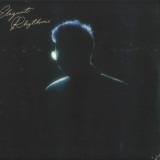
Back yard - Back yard is the first single from the new Teen Daze album, Elegant rhythms, and features singer-songwriter Andy Shauf on drums, and LA jazz staple, Sam Wilkes, on bass. This is a stark change in sound for Teen Daze, who’s last album Interior was an exploration of neon-lit House music. Back yard is a mellow groover, conjuring up images of Laurel Canyon in the 70s, yet still with its flourishes of contemporary sounds.
We’re out of phase again - We’re out of phase again is another vulnerable glimpse into the inner world of Teen Daze, and marks the release of his most personal album to date, Elegant rhythms. In contrast to the synthesized, digital world of his prior album, Interior, here we’ve been brought into a lush, organic arrangement, brought to you in large part to the stunning bass playing by Sam Wilkes. While the verses pulse forward, the chorus slows things down, and evokes the sophisti-pop sounds of The Blue Nile. This track is a stunning showcase of the world of Elegant rhythms.
Nothing’s gonna change my love - Teen Daze returns with his second single of the year, Nothing’s gonna change my love. The stark change in sound, as heard on previous single Back yard, is on display here again: a smouldering, 2 and a half minutes of slow jazz-pop, indebted to the great Sade, or perhaps the feeling of leaving downtown LA at 2 AM. Lyrically, we hear a story of a love, challenged by the unpredictable nature of our lives. This may be Teen Daze’s smoothest song to date.
Neighbourhood - Neighbourhood is the third single from the recently announced LP from Teen Daze, Elegant Rhythms. Along with Andy Shauf on the drums, and Sam Wilkes on the bass, Teen Daze gives us a languid tour of his quiet neighbourhood. The sun has set on the pleasant, tree-lined streets, and a stranger, more surreal environment presents itself. The song plods forward at an extremely comfortable pace, held down by the paradoxically loose-yet-tight rhythm section. Lyrically, we walk around the Neighbourhood at night, and while the chorus reveals a type of sobriety, the vibe of the song makes it easy to feel a little…effected.
Fade away - Fade away sets the tone for Elegant Rhythm’s side B: a deeply personal, though somewhat veiled, confession of loss. How does it feel to grieve something that was never really here? A smouldering, slowly progressing first half erupts in synthetic noise, and then fades into the ether with it’s repeating refrain, “I can feel you / feel you fade away / when there’s nothing / nothing left to say”.
Fall ahead - A sweet piano tune which serves as a quiet break in the record, intended to help the listener reflect and take a moment of pause before we reach the final two songs on the album.
HST underwater - The penultimate track on the record tells a story where the narrator finds themself in an alien, yet oddly familiar place. Arpeggios soaked in crystal blue water flow through the stereo field, while the narrator, vocoded and drenched in autotune, searches for meaning and purpose in a confusing world. This is one of Teen Daze’s most cinematic, emotional songs yet.
In the rain - It’s never really made explicitly clear on this record, but a lot of these songs find Teen Daze wrestling with life as a new father, and this song, the final on the album, expresses the fears of generational trauma. A touching, tender ode to his children, we hear Teen Daze at his most personal and vulnerable. The falling rain surrounds some absolutely breathtaking bass playing from Sam Wilkes, and Teen Daze’s signature ambient keyboard sounds.
Radio Support: Ruf Dug (Soup To Nuts on NTS)
Soela is the DJ and production alias of Elina Shorokhova, a Russia-born Berlin-based experienced pianist and vocalist who has made a hugely impactful transition into electronic music. Having released material on such labels as Kompakt, Dial, Shall Not Fade, Lost Palms, E-Beamz, Red Ember Records, Sushitech, and others, Soela joins the ranks of Scissor & Thread for this exquisite album - Dark Portrait.
The album opens in a typically understated manner with Unsuitable - a melancholic trip-hop adjacent track that sets the tone for the next 8 pieces. As Soela explains, “I was dealing with some very complex feelings, so I came up with this album, which helped me not to despair, to work on myself, to grow internally, and to start listening to myself. It helped me to keep sane when my country invaded Ukraine with a full scale war. It absolutely broke my heart, and music was one of my main salvations.”
This complex mix of emotions plays out across the album with tracks that utilize her beautiful musicality (Through the Windows feat. Francis Harris and Philipp Priebe, Drowning feat. Module One) and ear for details with skittering beats, ambient soundscapes (Spirits, Lost In The Fog) and lose-yourself dancefloor moments such as the collaboration with Lawrence on February Is Not Going To Be Forever. The title track Dark Portrait combines dubby elements with affecting pads and melodic touches, while the lead single Even If I Ask You Stay delves into multiple feelings around escaping toxic situations, and battling depression. It features a powerful vocal from Soela supported by a deeply affecting arrangement. The closing track The Darkest Hour Before Sunrise brings a sense of hope and light, balancing subdued keys and strings with ethereal tones and atmospheres
- A1: Cabo Verde Band - Bo Terra Cabo Verde
- A2: Americo Brito & Djarama - Rapaz Novo E Malandro
- A3: Cabo Verde Show - Terra Longe
- B1: Elisio Vieira - Tchon Di Somada
- B2: Vlu - Rua D'lisboa
- B3: Galaxia 2000 - Coracao Dum Criola
- C1: Mendes & Mendes - Mitamiyo
- C2: Danny Carvalho - Roncanbai
- C3: Mendes & Mendes - Walkman
- D1: Jose Casimiro - La Mamai Ta Bem
- D2: Elisio Vieira - Bem Di Fora
- D3: Zeca & Zeze Di Nha Reinalda - Mocinhos
Arp Frique returns with a brand new release on his imprint Colorful World Records in collaboration with Rush Hour. A compilation of 12 Cape Verdean gems assembled with the help and knowledge of Americo Brito, there is a very special story behind it. Americo Brito, who features on Arp Frique’s original Nos Magia, is a proud and important member of the Cape Verdean community in Rotterdam. His story reveals the historical connections between radio, vinyl, Cabo Verde and Rotterdam’s international music scene in the 70s and 80s. Cape Verdean insiders say “we export all they have to other countries, only to import it back again”. Cape Verdeans have migrated all over the world, mainly to cities with big harbours, like New York, Boston and Rotterdam (Holland). Rotterdam became one of the main destinations (next to Portugal) on the European mainland. When Americo, like many of his friends and relatives moved to Rotterdam, he quickly became infected with the music virus. Surrounded on a daily basis by Cape Verdean music in Portuguese pensions and small hotels, this was where sailors ingested a dose of “sodade” through the interpretations of their beloved music by the local Cape Verdean artists. Americo took to the stage with his band Djarama in the 70s and 80s. The live music scene was buzzing and the Cape Verdean community had their own infrastructure for arranging shows, often in nightclubs where the band had to bring their own soundsystem. Interestingly, Americo didn’t stick to performing and recording music. He found another way to help spread the Cape Verdean magical secret of music across Rotterdam, Holland and beyond: “There was this spot in Rotterdam where all foreign radio stations were housed, all these different nationalities together, Surinam, Cape Verdean, Hindustani…Guy Ramos and some of my other friends made radio in the 80s there. I got involved in their radio activities. Later on I started to work as a technician and eventually as producer and radio DJ for “Radio Voz De Cabo Verde”. Radio became bigger and there were around 4 different Cape Verdean stations active at one point in Rotterdam. instrumental in the development of this was the attic of a Dutch friend, where “Radio Babalu” came to life. Radio has always held a special place in my heart.” Americo’s music collection stems from this era, also aided by his many travels across Europe to cities with Cape Verdean communities. Alongside Rotterdam local, Arp Frique, Americo unveils some of these songs: dancefloor hits and beloved radio gems known in the Cape Verdean scene by younger and older generations alike, and so far undiscovered by a “bigger” audience. The compilation showcases the worldly view of Cape Verdean music, incorporating knowledge from their travels in their compositions. It ranges from the obvious funana and coladeira, to the more unexpected influences of deep disco, new wave, uptempo reggae, jazz-funk and Brazilian pop music; demonstrating just the tip of the iceberg, but what an amazing t(r)ip it is!
Hailing from Denmark, CTRLS takes the steering wheel for KEY042, delivering an EP that embodies techno and raw industrial energy, marking his third appearance on the label.
The A-side begins 'ectomagnetic', a highly rhythmical track building through layers into a dreamy chord progression thats traddles the line between eyes-closed fantasia and full-body pump. In the midst of it all, the bassline drags our attention as its earthy, round essence stands out from the metallic universe created around it. A2 'injection shuffle' is a heavy hitter, characterized by distorted, ringing textures and old-school methodology, boasting menacing drum programming thatsolidifies its status as a peak-time big room monster. Continuingon the B, 'subsumed' offers another mystical journey blending body music with spaced-out melodies, all stamped with CTRLS's unmistakable touch. A sort of sci-fi tension, eerily drawing listeners into its other worldly atmosphere. Closing with 'nanocaust', the EP dives into intense atmospheres led by a broken beat bone and cavernous soundscapes - once again - presenting a general sound which will make you feel a different kind of energy.
Strong package of densely populated sonic environments, all inline with the sound of KEY.
Even as a relatively new face on the scene, Boaksi, isn’t a stranger to longer format releases. The budding Zurich based producer made a splash with his first two releases “Under The Pavilion'' and "I Thought It Was Yesterday” which featured remixes from Soela, Louf and Al Zanders. Now he debuts on Seb Wildblood's all my thoughts label with a 4 track emotionally visceral EP titled Keep Movin’.
The title track, "Keep Movin'," takes a dynamic approach, layering creamy pads and impactful percussion with subtle dub techno influences that create a refreshingly deep groove, propelling a carefully positioned vocal sample into the forefront.
“Didn't I", leads with a beautiful, progressive melody that evokes a sense of yearning, and the ever-relatable Romanticism of the club. Delicately triggered chords dance off the wonderfully unpredictable drum patterns, while Boaksi's minimalist vocals add a touch of human emotion.
"Running Out Of Time" takes a more introspective turn, featuring distant, detuned textures that set the stage for a bed of soft, distorted pads. Stripped-back percussion allows the climbing arpeggios to take centre stage, building to a cleansing break that allows the atmosphereto expand before settling back into a warm, percussive groove.
The EP closes with "Wanna Be With You," another emotionally intelligent piece that showcases Boaksi's
prowess for crafting captivating soundscapes. Elemental drums and breathtaking, climatic chords provide the foundation for a beautifully free-forming synth arpeggio that flutters playfully around an unforgettable vocal hook.
A[13,87 €]
Completing Dsum's latest album, 'Double Distance' emerges as the final quintet of tracks, igniting a celestial voyage for listeners. Opening with the pulsating energy of 'Protons,' the EP traverses the electro/techno spectrum, paying homage to electronic music's nascent era. From introspective ambient tones to pristine explorations of electro soundscapes, each track encapsulates a sonic odyssey of depth and innovation.
Scheduled for release on vinyl and digital platforms in July, 'Double Distance' forms an integral component of the forthcoming album 'Water In The Moon.'
2024 Repress
Mariah was a Japanese outfit in the field of art pop, way back in the very late 70s and early 80s with 5 albums up their score from 1980 to 1983. The album from 1979 entitled as “Mariah” was actually made before the band Mariah was formed, and was released as a solo album by Yasuaki Shimizu. The album at hand is the fifth and for the time being last album in this row, released as a double vinyl back in 1983. Original copies, that are at least in very good condition, are hard to find. The brand new reissue on Everland, unlike the original and the first vinyl reissue from 2015, comes housed in a thick and artfully designed gatefold sleeve with OBI, which finally does justice to the progressive spirit of the music you will find here.
The musical basement of Utakata No Hibi is a fusion of dreamy synthesizer pop and haunting new wave music, that could be found all around the globe back in 1983. In the vein of TEARS FOR FEARS or more adventurous DAVID BOWIE stuff, with a touch of KRAFTWERK or even BRIAN ENO here and there, but all this gets spiced up with an atmosphere of Japanese traditionalism, with a few bits and pieces from the old music from this Far East island, which sounds so magic to us Westeners. The progressive, wacky art pop of this project was led by the popular Japanese composer and musician Yasuaki Shimizu, a relentlessly exploratory saxophonist who even dared to rework Johann Sebastian Bach’s cello suites for saxophone.
As brilliant as this man is, the music on „Utakata No Hibi“ turns out to be. And the master himself approved and much appreciated the brandnew remastering of this album by assisting a highly professional team of sound engineers who dusted off the ancient tape reels. For certain the record sounds and feels 80s through and through, electronic to the very rhythmical bone of each song sugar coated with catchy melodies that resemble Japanese classic and Enka music, which is a kind of folksy pop music. The listener gets directly drawn into a feverish dream of steaming Far Eastern cities and their darkest and most depraved corners where you find everything cheap in sleazy bars and unlighted backyards and alleys. The next moment he strolls through a beautiful Japanese park surrounded by a sea of blossoms. This change in mood and style you will experience in the sparsely instrumented tune „Shisen“, which indeed comes closest to classic Japanese folk tunes without any too catchy and pop oriented melodies. But we certainly find these harmonies allover the album. Some tunes even feel like ancient BEACH BOYS compositions and Brian Wilson creations played by a then contemporary electronic pop act and sung in Japanese.
An amazingly colorful album with songs that are based on solid substance rather than cheap pop structures. This is music for the bold listeners and music lovers and this awesome reissue should quickly find it’s way into the record collections of 80s synth and art pop aficionadoes.
Yasuaki Shimizu did what he wanted with MARIAH, pushed the borders of popular music further than anybody would have thought. Listen to a track like „Shonen“ with a repetitive rhythm pattern that hypnotizes you and somehow silky melodylines by saxophone and synth piano upon which a female voice sings in a very spiritual way. Praising pop or whatever this can be called, it is sheer magic put in music. I wonder if this would have made it into the charts back then, but you never know. It is a piece of musical art that shall be listened to.
We’re glad to be back with the second installment of our new series of DJ and Artist curated 12” mini compilations: Melodies Record Club.
Ben UFO is up next for volume two, following Four Tet’s selection a few months back. Available early October in loud 12” format and digitally. Here we have two tracks which have been staples in Ben’s DJ sets at different times, but neither were originally produced with a club setting in mind, which is why they’ve never been available in this format before.
On one side, we have “Drums” from Laurie Spiegel’s 1980 experimental electronics album “The Expanding Universe”, a collection of tracks produced between 1974 and 1976 using a computer playing the actual sounds by controlling analog synthesis equipment under control of the GROOVE hybrid system developed by Max Matthews and F.R. Moore at Bell Labs. Drums is a percussive seven minute computer generated workout inspired by Laurie’s interest in African and Indian musics, and which brings to mind the most far out kosmiche music of the period to modern day techno. A connection Ben has tried to make explicit by including it in his first BBC essential mix back in 2013.
On the flip we have a track by Olof Dreijer from the Swedish band the Knife who’s work you might also be familiar with under the moniker Oni Ayhun. Back in 2009 his artist friend Adnan Yildiz curated an exhibition called “THERE IS NO AUDIENCE” in Montethermoso, dedicated to public imagination. Adnan commissioned a single piece from Olof called “Echoes from Mamori”, that played on loop during the exhibition and was subsequently released only on CD. A contemporary piece more clearly indebted to house music, Olof built the track around arpeggios generated using sounds of frogs he recorded in the Amazon and birds around Berlin, fed into a sampler.
"Following on from May's "ECHOES Part 1 & 2" this is the second single of three to be released as an introduction to the next album project of Ulrich Troyer - TRANSIT TRIBE - to be released later this year.
This time it's one for the reggae fans and dubheads with contributions from Diggory Kenrick who has been busy over the last few years adding the distinctive sound of his flute to many new reggae productions. He is also an associate of the U.K. reggae label Pressure Sounds that specialises in reviving classic sounds from the roots and dancehall eras of the genre. Also joining the production is Takafumi Noda aka Mystica Tribe, a Japanese producer and musician who has specialised in a new form of dub techno and is known for adding the signature sound of his melodica to productions of dub friends from around the world.
The subject of travel, especially along modern, fast routes has long been subject to fascinate musicians, from the days of Kraftwerk's "Autobahn" and now the whole genre of dub techno seems to be one built for listening on long journeys. The Autostrada Del Brennero / Brennerautobahn is one of the most important motorways in Italy, as it connects the Po Valley with Austria through the Brenner Pass and features many modern bridges and overpasses that are ready built illustrations for the covers of dub techno albums! On this release this major European truck route is celebrated musically by Ulrich Troyer with inputs from Diggory and Taka to create two modern dub classics."
Steve Barker (DJ, Radio Presenter - On the Wire, BBC 1984 – 2023,
now Slack City Radio & reggae/dub columnist and contributor to The Wire)
Credits:
Diggory Kenrick: flute
Taka Noda: melodica
Didi Kern: drums
Ulrich Troyer: analog synthesizers, analog drum-machines, sampler, dub effects
A written by Diggory Kenrick & Ulrich Troyer
B written by Taka Noda & Ulrich Troyer
Recorded by Ulrich Troyer at 4Bit Studio & 4Bit Bungalow, Vienna - except flute recorded by Diggory Kenrick at Holloway Studio, London / melodica recorded by Taka Noda at Mystica Sound Studio, Tokio
Mixed & arranged by Ulrich Troyer at 4Bit Bungalow, Vienna
Produced by Osman Murat Ertel & Ulrich Troyer
Mastering & Lacquer Cut by Kassian Troyer at Dubplates & Mastering, Berlin
Cover Drawing by Ulrich Troyer
Special thanks to Steve Barker, Osman Murat Ertel, Diggory Kenrick, Eva Kelety and Takafumi Noda
Kindly supported by the City of Vienna (MA7 - Kultur), Federal Ministry Republic of Austria (Arts, Culture, Civil Service & Sport), SKE-FONDS (AT) & Amt für Kultur, Bozen (IT)
Having spent the last decade evolving into one of dance music’s most sublimely effective producers, CWPT is delighted to welcome Theo Kottis at the peak of his powers, delivering a further four tracks that demonstrate a playful mastery of widescreen sounds for wide-eyed dancefloors.
Capturing the light still shining from his beloved ‘Lighthouse’, finally released earlier in 2024 via Dekmantel and escalated into notoriety thanks to support from trusted selectors such as Ben UFO, Francesco Del Garda and our own Palms Trax, title track ‘Rain’ retains a similar, blindingly authentic nineties reverence, finding ecstasy in a wash of cascading synths, powerful plunges of sub-bass and layer upon layer of elasticated everything.
The Scottish producer’s positive education in the foundations of club music with real personality makes itself known without indulgence; a belief in the subtle tweaks and imagination of classic tech-house, alongside a welcome flirtation with the over-the-top elements that create something potentially anthemic. In this regard, ‘Benirras’ proves to be pure pleasure for dancers who love to be toyed with, its stripped back opening giving way to slowly-escalating, wobbly-jawed hysteria.
On the flip, ‘Grazie’ proves as cordial as its title, a warm and refined slice of sleek house minimalism, a roller with Alfa Romeo sensibilities. Things take a more aquatic turn on ‘Lowkey’, a logically headsy conclusion that sees Kottis sensually bounce the word ‘electro’ around in that very style, its slower tempo and wider space allowing the impressive intricacies of his productions to float up for fresh air.
Los Angeles-based video artist and producer Laskfar Vortok makes his first appearance in the EVAR catalogue with "Erbsat Esrhosc." An unusual title that reflects the artist's interest in the bizarre, whether he's making music or producing videos and visuals, "Erbsat Esrhosc" bristles with erratic patterns, anarchic atmospheres and glitchy soundscapes. The Mexican-born talent explores ideas based on the hypothetical concept of a planetwide city, otherwise known as an ecumenopolis, weaving such ideas against a cinematic backdrop, nodding to his long-running love for cinema. Across the five-track EP, he also draws inspiration from the heated and hectic energy of L.A, where he's resided most of his life.
Produced in memoriam of Michael Gregory Harrison, aka Bad Timing, and following a period of introspection and creative and personal challenges, Laskfar Vortok began work on "Erbsat Esrhosc" in 2018. The EP honours Michael's brilliance as an artist and a friend;the title being an anagram of a phrase that they shared between them.
"Eclipse" opens the EP on a haunting note. A spidery melody and chilling pads punctuate the witchy soundscape before syncopated sequences collide with snafued textures, signifying a sharp left turn into breakcore. With its nebulous atmosphere, this track offers the first glimpse into the concept of an ecumenopolis. On "Hyperdrive", frenetic percussion dominates while zappy noises and a doomsday melody slink in and out of earshot. Bursts of broken wub exacerbate the uneasy mood while cinematic, almost ethereal chords twinkle in the background.
"Base" offers a moment to recover one's brain cells after the nosedive into the near future. A lugging kickdrum and broken, woody percussions swirl around the troposphere while creepy pads convey a sinister aura. "Mutation" catapults us back into chaos with claustrophobic polyrhythmic structures, smatterings of kickdrums, and a sporadic mad-scientist-type synthline, adding a jittery layer. An unexpectedly orchestral outro completes the bizarre nature of the track.
Closing out on "Send Off", Laskfar Vortok blends freezing-cold chords with snaggy synth notes and a tangle of drum constellations tied up with a gossamer melody and splattered across an eerie terrain.
Using Bitwig Studio, orcλ, TidalCycles and Renoise as his modus operandi, Laskfar Vortok produces a trip that intrigues but disturbs, serving a shimmering yet terrifying squint into a technoid-led utopia. And we're only just getting started.
2024 Repress
SHDW & Obscure Shape are back with their second EP for 2023, following their debut release on their mothership label From Another Mind. The German duo's latest release, 'Basic Instinct', is a collection of five dancefloor anthems that provide the perfect soundtrack for any moment in a set. The EP features their signature die-cut cover and includes a digital bonus track.
'Basic Instinct' is the 12th installment of their Mutual Rytm label and showcases the pair's exceptional production skills and innovative approach to electronic music, with a mix of old and new school flavors, vivid drum programming, organic percussion and captivating melodic elements. The A-side kicks off with their signature track 'Eraser', which blends crisp drums with warm sub-bass and piercing synth stabs.
"Dancer in the Dark" takes a deeper dive into late-night territory, combining lush dub-influenced synths with a rolling acid bassline. "Disturbing Behaviour" closes the A-side and shows why the 303 has become an iconic tool for producers. Despite the sirens dominating around the breakdowns, the simple two-tone acid stab is the defining element of the track, complemented by amen-break leaning drums that hint at a UK rave direction.
The B-side goes in a different direction, with 'Memories of Nobody' taking a filtered and less aggressive approach, as echoing dub pads gather around a growling bassline and kick drum combination, topped off by brushed hats. The EP concludes with 'The Last Seduction', a track that reveals the full organic breadth of the previously hinted at Amen break. The fusion of said amen break with the warmth and familiarity of waxing and waning pads is reminiscent of the golden days of electronic music. With its expertly crafted soundscapes and diverse range of styles, 'Basic Instinct' is yet another stunning release from SHDW & Obscure Shape.