Search:source t 10

Styles
All
Ron Geesin - Sunday Bloody Sunday (Original Soundtrack)

Sublime unreleased soundtrack by Ron Geesin, to one of the most important and controversial films in British cinema history.
Standard black vinyl (750 Copies) with sleeve art taken from the 1971 film poster. Cool as fuck.
Side One is the score for Sunday Bloody Sunday, the controversial 1971 drama directed by John Schlesinger. Starring Peter Finch, Glenda Jackson and Murray Head, it tells the story of an open love triangle between a gay Jewish doctor, a divorced woman and a bisexual young male artist who makes glass fountains. Daniel Day Lewis also makes his uncredited screen debut as a yobbo scratching up posh cars. The films significance at the time of release lay in the depiction of a mature gay man who was both successful, well adjusted and at peace with his sexuality.

The music on Side Two comes from two different sources: tracks one to four are from the 1985 Channel Four documentary about Viv Richards. Simply called “Viv” it was directed by Greg Lanning, with words and narration by Darcus Howe. It was (and still is) a fascinating film recounting Richards’ rise from young talented Antiguan to global cricket superstar. It also explored the long history of West Indian players through the English game. Howe later recalled how seeing Viv Richards walking out to bat at the Oval (just down the road from where Howe lived in Brixton) without a helmet on no matter how fast the bowler was - and wearing his Rasta sweatbands of gold, green and red, was inspirational. The documentary was later re-titled ‘Viv Richards - King Of Cricket’ for the video market, and let’s face it, that’s a more commercial title. I’d strongly recommend trying to track it down to spend an hour or so in the company of Viv and Darcus. As I write this it’s still up on a popular online streaming site for free.

The last six cues of Side Two are from a 1970 BBC Omnibus film ‘Shapes In A Wilderness’. Directed by Tristram Powell this was a documentary about the importance and influence of art therapy in mental hospitals, tracing its origins from a painting hut in a wartime military hospital to its successful and widespread incorporation in institutions. It featured fascinating medical insights, disturbing imagery and Ron’s finely tuned accompaniment. On its original transmission John Schlesinger saw it and was heard to say “I must have that composer for my new film!”. And he got his way.

I could spend another paragraph analysing the music and stuff like that but you can listen and work all that out for yourself. But I will say that all the music just confirms the fact that Ron Geesin is one of the most underrated, inventive and versatile composers (and musicians) we have.

pre-order now30.09.2022

expected to be published on 30.09.2022

19,71
KROGH, RASMUS OPPENHAGEN - WHEREABOUTS LP

Merging the simple with the complex. Whereabouts will be the second release from Danish guitarist/composer Rasmus Oppenhagen Krogh and compared to Krogh's critically acclaimed debut album, Distill, from 2017, this album marks new artistic directions for Krogh, both in terms of exploring the spheric versus the rhythmic dimensions, in the meeting between organic and manipulated sound sources and through its special focus on percussion. Whereabouts explores the intersection between improvisation/composition and simplicity/complexity, the relation between time and space and the sonic qualities of the musicians gathered in unity. The group consists of some of the leading voices of the contemporary Danish jazz scene, who have all worked across genres and borders, and are known for their work with internationally acclaimed bands/artists such as Girls in Airports, Jakob Bro, Paul Motian and IRAH among others. Krogh's debut album Distill was released by Centrifuga/Gateway in 2017 to positive reviews. The album was selected as album of the week by Danish Radio P8 Jazz and was highlighted as one of the ten best Danish jazz releases that year by the acclaimed Danish jazz blog Jazznyt. Besides his work as a composer and as a bandleader, Krogh has worked, as a guitarist, with artists such as Takykardia, Kentaur, Guldimund, Schultz and Forever, Jesper Zeuthen and many more.

pre-order now30.09.2022

expected to be published on 30.09.2022

24,33
Lee Tracy & Isaac Manning - Is it What You Want LP

As the sun sets on a quaint East Nashville house, a young man bares a piece of his soul. Facing the camera, sporting a silky suit jacket/shirt/slacks/fingerless gloves ensemble that announces "singer" before he's even opened his mouth, Lee Tracy Johnson settles onto his stage, the front yard. He sways to the dirge-like drum machine pulse of a synth-soaked slow jam, extends his arms as if gaining his balance, and croons in affecting, fragile earnest, "I need your love… oh baby…"

Dogs in the yard next door begin barking. A mysterious cardboard robot figure, beamed in from galaxies unknown and affixed to a tree, is less vocal. Lee doesn't acknowledge either's presence. He's busy feeling it, arms and hands gesticulating. His voice rises in falsetto over the now-quiet dogs, over the ambient noise from the street that seeps into the handheld camcorder's microphone, over the recording of his own voice played back from a boombox off-camera. After six minutes the single, continuous shot ends. In this intimate creative universe there are no re-takes. There are many more music videos to shoot, and as Lee later puts it, "The first time you do it is actually the best. Because you can never get that again. You expressing yourself from within."

"I Need Your Love" dates from a lost heyday. From some time in the '80s or early '90s, when Lee Tracy (as he was known in performance) and his music partner/producer/manager Isaac Manning committed hours upon hours of their sonic and visual ideas to tape. Embracing drum machines and synthesizers – electronics that made their personal futurism palpable – they recorded exclusively at home, live in a room into a simple cassette deck. Soul, funk, electro and new wave informed their songs, yet Lee and Isaac eschewed the confinement of conventional categories and genres, preferring to let experimentation guide them.

"Anytime somebody put out a new record they had the same instruments or the same sound," explains Isaac. "So I basically wanted to find something that's really gonna stand out away from all of the rest of 'em." Their ethos meant that every idea they came up with was at least worth trying: echoed out half-rapped exhortations over frantic techno-style beats, gospel synth soul, modal electro-funk, oddball pop reinterpretations, emo AOR balladry, nods to Prince and the Fat Boys, or arrangements that might collapse mid-song into a mess of arcade game-ish blips before rallying to reach the finish line. All of it conjoined by consistent tape hiss, and most vitally, Lee's chameleonic voice, which managed to wildly shape shift and still evoke something sincere – whether toggling between falsetto and tenor exalting Jesus's return, or punctuating a melismatic romantic adlib with a succinct, "We all know how it feels to be alone."

"People think we went to a studio," says Isaac derisively. "We never went to no studio. We didn't have the money to go to no studio! We did this stuff at home. I shot videos in my front yard with whatever we could to get things together." Sometimes Isaac would just put on an instrumental record, be it "Planet Rock" or "Don't Cry For Me Argentina" (from Evita), press "record," and let Lee improvise over it, yielding peculiar love songs, would-be patriotic anthems, or Elvis Presley or Marilyn Monroe tributes. Technical limitations and a lack of professional polish never dissuaded them. They believed they were onto something.

"That struggle," Isaac says, "made that sound sound good to me."

In the parlance of modern music criticism Lee and Isaac's dizzying DIY efforts would inevitably be described as "outsider." But "outsider" carries the burden of untold additional layers of meaning if you're Black and from the South, creating on a budget, and trying to get someone, anyone within the country music capital of the world to take your vision seriously. "What category should we put it in?" Isaac asks rhetorically. "I don't know. All I know is feeling. I ain't gonna name it nothing. It's music. If it grabs your soul and touch your heart that's what it basically is supposed to do."

=

Born in 1963, the baby boy of nine siblings, Lee Tracy spent his earliest years living amidst the shotgun houses on Nashville's south side. "We was poor, man!" he says, recalling the outhouse his family used for a bathroom and the blocks of ice they kept in the kitchen to chill perishables. "But I actually don't think I really realized I was in poverty until I got grown and started thinking about it." Lee's mom worked at the Holiday Inn; his dad did whatever he had to do, from selling fruit from a horse drawn cart to bootlegging. "We didn't have much," Lee continues, "but my mother and my father got us the things we needed, the clothes on our back." By the end of the decade with the city's urban renewal programs razing entire neighborhoods to accommodate construction of the Interstate, the family moved to Edgehill Projects. Lee remembers music and art as a constant source of inspiration for he and his brothers and sisters – especially after seeing the Jackson 5 perform on Ed Sullivan. "As a small child I just knew that was what I wanted to do."

His older brother Don began musically mentoring him, introducing Lee to a variety of instruments and sounds. "He would never play one particular type of music, like R&B," says Lee. "I was surrounded by jazz, hard rock and roll, easy listening, gospel, reggae, country music; I mean I was a sponge absorbing all of that." Lee taught himself to play drums by beating on cardboard boxes, gaining a rep around the way for his timekeeping, and his singing voice. Emulating his favorites, Earth Wind & Fire and Cameo, he formed groups with other kids with era-evocative band names like Concept and TNT Connection, and emerged as the leader of disciplined rehearsals. "I made them practice," says Lee. "We practiced and practiced and practiced. Because I wanted that perfection." By high school the most accomplished of these bands would take top prize in a prominent local talent show. It was a big moment for Lee, and he felt ready to take things to the next level. But his band-mates had other ideas.

"I don't know what happened," he says, still miffed at the memory. "It must have blew they mind after we won and people started showing notice, because it's like everybody quit! I was like, where the hell did everybody go?" Lee had always made a point of interrogating prospective musicians about their intentions before joining his groups: were they really serious or just looking for a way to pick up girls? Now he understood even more the importance of finding a collaborator just as committed to the music as he was.

=

Isaac Manning had spent much of his life immersed in music and the arts – singing in the church choir with his family on Nashville's north side, writing, painting, dancing, and working various gigs within the entertainment industry. After serving in the armed forces, in the early '70s he ran The Teenage Place, a music and performance venue that catered to the local youth. But he was forced out of town when word of one of his recreational routines created a stir beyond the safe haven of his bohemian circles.

"I was growing marijuana," Isaac explains. "It wasn't no business, I was smoking it myself… I would put marijuana in scrambled eggs, cornbread and stuff." His weed use originated as a form of self-medication to combat severe tooth pain. But when he began sharing it with some of the other young people he hung out with, some of who just so happened to be the kids of Nashville politicians, the cops came calling. "When I got busted," he remembers, "they were talking about how they were gonna get rid of me because they didn't want me saying nothing about they children because of the politics and stuff. So I got my family, took two raggedy cars, and left Nashville and went to Vegas."

Out in the desert, Isaac happened to meet Chubby Checker of "The Twist" fame while the singer was gigging at The Flamingo. Impressed by Isaac's zeal, Checker invited him to go on the road with him as his tour manager/roadie/valet. The experience gave Isaac a window into a part of the entertainment world he'd never encountered – a glimpse of what a true pop act's audience looked like. "Chubby Checker, none of his shows were played for Black folks," he remembers. "All his gigs were done at high-class white people areas." Returning home after a few years with Chubby, Isaac was properly motivated to make it in Music City. He began writing songs and scouting around Nashville for local talent anywhere he could find it with an expressed goal: "Find someone who can deliver your songs the way you want 'em delivered and make people feel what you want them to feel."

One day while walking through Edgehill Projects Isaac heard someone playing the drums in a way that made him stop and take notice. "The music was so tight, just the drums made me feel like, oh I'm-a find this person," he recalls. "So I circled through the projects until I found who it was.

"That's how I met him – Lee Tracy. When I found him and he started singing and stuff, I said, ohhh, this is somebody different."

=

Theirs was a true complementary partnership: young Lee possessed the raw talent, the older Isaac the belief. "He's really the only one besides my brother and my family that really seen the potential in me," says Lee. "He made me see that I could do it."

Isaac long being a night owl, his house also made for a fertile collaborative environment – a space where there always seemed to be a new piece of his visual art on display: paintings, illustrations, and dolls and figures (including an enigmatic cardboard robot). Lee and Issac would hang out together and talk, listen to music, conjure ideas, and smoke the herb Isaac had resumed growing in his yard. "It got to where I could trust him, he could trust me," Isaac says of their bond. They also worked together for hours on drawings, spreading larges rolls of paper on the walls and sketching faces with abstract patterns and imagery: alien-like beings, tri-horned horse heads, inverted Janus-like characters where one visage blurred into the other.

Soon it became apparent that they didn't need other collaborators; self-sufficiency was the natural way forward. At Isaac's behest Lee, already fed up with dealing with band musicians, began playing around with a poly-sonic Yamaha keyboard at the local music store. "It had everything on it – trumpet, bass, drums, organ," remembers Lee. "And that's when I started recording my own stuff."

The technology afforded Lee the flexibility and independence he craved, setting him on a path other bedroom musicians and producers around the world were simultaneously following through the '80s into the early '90s. Saving up money from day jobs, he eventually supplemented the Yamaha Isaac had gotten him with Roland and Casio drum machines and a Moog. Lee was living in an apartment in Hillside at that point caring for his dad, who'd been partially paralyzed since early in life. In the evenings up in his second floor room, the music put him in a zone where he could tune out everything and lose himself in his ideas.

"Oh I loved it," he recalls. "I would really experiment with the instruments and use a lot of different sound effects. I was looking for something nobody else had. I wanted something totally different. And once I found the sound I was looking for, I would just smoke me a good joint and just let it go, hit the record button." More potent a creative stimulant than even Isaac's weed was the holistic flow and spontaneity of recording. Between sessions at Isaac's place and Lee's apartment, their volume of output quickly ballooned.

"We was always recording," says Lee. "That's why we have so much music. Even when I went to Isaac's and we start creating, I get home, my mind is racing, I gotta start creating, creating, creating. I remember there were times when I took a 90-minute tape from front to back and just filled it up."

"We never practiced," says Isaac. "See, that was just so odd about the whole thing. I could relate to him, and tell him about the songs I had ideas for and everything and stuff. And then he would bring it back or whatever, and we'd get together and put it down." Once the taskmaster hell bent on rehearsing, Lee had flipped a full 180. Perfection was no longer an aspiration, but the enemy of inspiration.

"I seen where practicing and practicing got me," says Lee. "A lot of musicians you get to playing and they gotta stop, they have to analyze the music. But while you analyzing you losing a lot of the greatness of what you creating. Stop analyzing what you play, just play! And it'll all take shape."

=

"I hope you understood the beginning of the record because this was invented from a dream I had today… (You tell me, I'll tell you, we'll figure it out together)" – Lee Tracy and Isaac Manning, "Hope You Understand"

Lee lets loose a maniacal cackle when he acknowledges that the material that he and Isaac recorded was by anyone's estimation pretty out there. It's the same laugh that commences "Hope You Understand" – a chaotic transmission that encapsulates the duality at the heart of their music: a stated desire to reach people and a compulsion to go as leftfield as they saw fit.

"We just did it," says Lee. "We cut the music on and cut loose. I don't sit around and write. I do it by listening, get a feeling, play the music, and the lyrics and stuff just come out of me."

The approach proved adaptable to interpreting other artists' material. While recording a cover of Whitney Houston's pop ballad "Saving All My Love For You," Lee played Whitney's version in his headphones as he laid down his own vocals – partially following the lyrics, partially using them as a departure point. The end result is barely recognizable compared with the original, Lee and Isaac having switched up the time signature and reinvented the melody along the way towards morphing a slick mainstream radio standard into something that sounds solely their own.

"I really used that song to get me started," says Lee. "Then I said, well I need something else, something is missing. Something just came over me. That's when I came up with 'Is It What You Want.'"

The song would become the centerpiece of Lee and Isaac's repertoire. Pushed along by a percolating metronomic Rhythm King style beat somewhere between a military march and a samba, "Is It What You Want" finds Lee pleading the sincerity of his commitment to a potential love interest embellished by vocal tics and hiccups subtlely reminiscent of his childhood hero MJ. Absent chord changes, only synth riffs gliding in and out like apparitions, the song achieves a lingering lo-fi power that leaves you feeling like it's still playing, somewhere, even after the fade out.

"I don't know, it's like a real spiritual song," Lee reflects. "But it's not just spiritual. To me the more I listen to it it's like about everything that you do in your everyday life, period. Is it what you want? Do you want a car or you don't want a car? Do you want Jesus or do you want the Devil? It's basically asking you the question. Can't nobody answer the question but you yourself."

In 1989 Lee won a lawsuit stemming from injuries sustained from a fight he'd gotten into. He took part of the settlement money and with Isaac pressed up "Saving All My Love For You" b/w "Is It What You Want" as a 45 single. Isaac christened the label One Chance Records. "Because that's all we wanted," he says with a laugh, "one chance."

Isaac sent the record out to radio stations and major labels, hoping for it to make enough noise to get picked up nationally. But the response he and Lee were hoping for never materialized. According to Isaac the closest the single got to getting played on the radio is when a disk jock from a local station made a highly unusual announcement on air: "The dude said on the radio, 107.5 – 'We are not gonna play 'Is It What You Want.' We cracked up! Wow, that's deep.

"It was a whole racist thing that was going on," he reflects. "So we just looked over and kept on going. That was it. That was about the way it goes… If you were Black and you were living in Nashville and stuff, that's the way you got treated." Isaac already knew as much from all the times he'd brought he and Lee's tapes (even their cache of country music tunes) over to Music Row to try to drum up interest to no avail.

"Isaac, he really worked his ass off," says Lee. "He probably been to every record place down on Music Row." Nashville's famed recording and music business corridor wasn't but a few blocks from where Lee grew up. Close enough, he remembers, for him to ride his bike along its back alleys and stumble upon the occasional random treasure, like a discarded box of harmonicas. Getting in through the front door, however, still felt a world away.

"I just don't think at the time our music fell into a category for them," he concedes. "It was before its time."

=

Lee stopped making music some time in the latter part of the '90s, around the time his mom passed away and life became increasingly tough to manage. "When my mother died I had a nervous breakdown," he says, "So I shut down for a long time. I was in such a sadness frame of mind. That's why nobody seen me. I had just disappeared off the map." He fell out of touch with Isaac, and in an indication of just how bad things had gotten for him, lost track of all the recordings they'd made together. Music became a distant memory.

Fortunately, Isaac kept the faith. In a self-published collection of his poetry – paeans to some of his favorite entertainment and public figures entitled Friends and Dick Clark – he'd written that he believed "music has a life of its own." But his prescience and presence of mind were truly manifested in the fact that he kept an archive of he and Lee's work. As perfectly imperfect as "Is It What You Want" now sounds in a post-Personal Space world, Lee and Isaac's lone official release was in fact just a taste. The bulk of the Is It What You Want album is culled from the pair's essentially unheard home recordings – complete songs, half-realized experiments, Isaac's blue monologues and pronouncements et al – compiled, mixed and programmed in the loose and impulsive creative spirit of their regular get-togethers from decades ago. The rest of us, it seems, may have finally caught up to them.

On the prospect of at long last reaching a wider audience, Isaac says simply, "I been trying for a long time, it feels good." Ever the survivor, he adds, "The only way I know how to make it to the top is to keep climbing. If one leg break on the ladder, hey, you gotta fix it and keep on going… That's where I be at. I'll kill death to make it out there."

For Lee it all feels akin to a personal resurrection: "It's like I was in a tomb and the tomb was opened and I'm back… Man, it feels so great. I feel like I'm gonna jump out of my skin." Success at this stage of his life, he realizes, probably means something different than what it did back when he was singing and dancing in Isaac's front yard. "What I really mean by 'making it,'" he explains isn't just the music being heard but, "the story being told."

Occasionally Lee will pull up "Is It What You Want" on YouTube on his phone, put on his headphones, and listen. He remembers the first time he heard his recorded voice. How surreal it was, how he thought to himself, "Is that really me?" What would he say to that younger version of himself now?

"I would probably tell myself, hang in there, don't give up. Keep striving for the goal. And everything will work out."

Despite what's printed on the record label, sometimes you do get more than one chance.

out of Stock

Order now and we will order the item for you at our supplier.

23,49

Last In: 3 years ago
Herman Hitson - Let The Gods Sing LP

In the music business, there are certain sidemen — players who back the stars — who play with such prowess that they gain fame of their own. By all rights, Herman Hitson should be one of those people. Over the years, he played with Jimi Hendrix, James Brown, Joe Tex, Bobby Womack, Wilson Pickett, Garnet Mimms, Major Lance, Jackie Wilson, the Drifters, the Shirelles, Hank Ballard & the Midnighters and many others. “I played behind Jackie Wilson and Sam Cooke on the same doggone show,” he said, recalling one night at the Royal Peacock. Along the way, he picked up every style of music that was popular in the early years of his career. Arguably, the original seeds of psychedelic rock were planted after Hitson and Hendrix became running buddies in the early 1960s. Both were playing the Chitlin’ Circuit, tours that would load somewhere between ten and two dozen African American musicians on a bus and tour the South, playing Black nightclubs. The two spent weeks together, Herman says. As the 1970s rolled in, Herman wound up playing funk guitar, recording some tracks with the Ohio Players and releasing some of his own funk singles, including the powerful “Ain’t No Other Way,” a number firmly in the James Brown vein which he reprised on ‘Let The Gods Sing.’ In the mid-1960s, he moved to New York City, where he once again hooked up with Hendrix. Early in 1966, Herman began work on his own psychedelic rock album under the title “Free Spirit.” Hermon sang and played lead guitar, and Hendrix played bass on a few tracks that went unreleased by ATCO at the time. Those recordings wound up being the source of a controversy in the 1980s that brought Hermon’s name into the limelight in a different way. The title song of the album, “Free Spirit,” was released on two albums of music allegedly recorded by Hendrix and then “lost” to history. “That’s my song,” Herman says today. "He Hendrix didn’t never play no lead on nothing of mine. And he didn’t sing on nothing of mine. In fact, back then he thought he couldn’t sing. We had to keep pushing him". Jimi would say, ‘I can’t sing.’ I’d say, ‘Man, you don’t have to be Wilson Pickett. All you got to do is sing like you sing.” Recorded and co-produced by Bruce Watson at his Delta Sounds Studio in Memphis, Hitson’s backed on the new album by guitarist and co-producer Will Sexton and some of Memphis’ best musicians.

pre-order now23.09.2022

expected to be published on 23.09.2022

20,55
Kenny Larkin - Keys, Strings, Tambourines LP 3x12"

From 2008 comes 'Keys, Strings, Tambourines' - Kenny Larkin's fourth full length LP.

Yet another advanced, singular and funked out techno milestone that bears all of Larkin's idiosyncratic stylings and melodic touches. Once more he shows us how it's done, sounding like nothing you've heard from him previously, 'Keys, Strings, Tambourines' is a truly adventurous record that defies categorisation today. Quietly influencing producers and DJs since its release, it points to where techno can go and what it can be and is a truly and criminally overlooked modern Detroit techno classic. This is an essential purchase for all electronic machine-funk aficionados worldwide. This special expanded edition boasts a slightly reshuffled track order and some additional cuts that were only available on singles at the time, now giving the world 3 solid slabs of futurist techno sonics for the believers! Essential music from the motor city.

'Keys, Strings, Tambourines' has been legitimately reissued for 2022 on Kenny’s own Art Of Dance imprint. Remastered from DAT tapes and original sources by Curve Pusher. Artwork redesigned by Atelier Superplus.

out of Stock

Order now and we will order the item for you at our supplier.

32,35

Last In: 3 years ago
Motte - Cold + Liquid

Motte

Cold + Liquid

12inchBING173LP
Ba Da Bing
16.09.2022

Anita Clark’s new Motte album, »Cold + Liquid«, builds glacial atmospheres, frozen moods and isolated impressions. Portraying New Zealand through socio-geological sound, breathing in Christchurch cultures and locales, the album embodies an artistic simulation of the Kiwi environment. Motte borrows from an array of sound sources to create an immense entity, with each piece situated precisely along the path. »Cold + Liquid« offers this rich sensory experience, transporting the listener into a world of Clark’s imagination.

As a master violinist, Clark is a favorite of the NZ music scene. She’s been employed by Nadia Reid, Marlon Williams, Lawrence Arabia and Maryrose Crook of The Renderers for her skills. Currently, she plays with The Phoenix Foundation, Luke Buda and Don McGlashan and The Others. Her skillful reach across genres fuels her popularity both with the rock under and overground, and she has also built a rich CV of film soundtracks and contemporary dance compositions.

With such a powerful musical force behind it, Cold + Liquid germinated as a result of a prolonged silence. Clark was suffering from vocal cord paralysis, leaving her with a culminating sense of frustration which could only be released through songwriting . The album’s early life was purely instrumental. But as she prepared for the studio and was searching old voice memos hoping to find vocal tracks, her voice returned. A fervent week followed, where she reimagined the entire album, now with singing. She aimed to make something colossal, and set about finding the right textures to add. A friend who works at Oamaru Freezing Works gave her field recordings of the temperature control room, a vast cold space of isolated machinery, where ice grows and dissolves in ever-evolving sculptures. Getting her hands on shortwave/longwave radios, she incorporated frequency sweeps. Another friend provided her with the mechanical drones underneath the deck of a cement cargo ship, as it lay docked in Lyttelton Harbor. Still more sources came from Sign of the Bellbird, an historic environmental site in South Christchurch, where Clark and Thomas Lambert recorded bellbirds, rolling boulders, snapping sticks, thrown dirt and the papery sound of the native harakeke plant.

While violin dominates the first Motte album, Clark sought to expand instrumentation. She was gifted a handmade Pūrerehua puoro, a traditional Māori instrument that sounds similar to the whirling and hovering of a moth (which is “motte” in German). A reacquaintance to the guitar occurred after developing an alter ego project entitled 'Sex Den,' with sleazy noir-esque guitar riffs in response to a failed rumour from a local drug-addled dive bar. Guitar and synth allowed for a broader songwriting palette along with a sometimes Dadaist approach to lyric writing. These new tools accent the extreme ambiences of »Cold + Liquid«, while additional work was provided by Ben Woods on synth and bowed guitar.

pre-order now16.09.2022

expected to be published on 16.09.2022

25,50
Yutaka Hirose - TRACE: Sound Design Works 1986-1989 2x12"

WRWTFWW Records couldn't be happier to announce the release of Yutaka Hirose’s never-heard before 11-track collection TRACE: Sound Design Works 1986-1989, available on double LP and double CD, with liner notes from the artist.

TRACE is a collection of 11 unreleased tracks produced by Yutaka Hirose between 1986 and 1989, during the Sound Process Design sessions, right after the release of his classic Soundscape series album Nova. Sound Process Design was Satoshi Ashikawa's label, home of the Wave Notation trilogy (Hiroshi Yoshimura’s Music For Nine Postcards, Satsuki Shibano's Erik Satie 1866-1925 and Satoshi Ashikawa's Still Way). Following Wave Notation, Sound Process Design worked with museums, cafes and bars to create site-specific soundscapes, starting with the sound design of the Kushiro Museum. Yutaka Hirose was called to work on these projects.

Rather than simply providing pre-recorded compositions, Hirose sought to create a "sound scenery". To achieve this, he participated in the conception of the space and paid particular attention to the accidental combination of sounds by placing the speakers, using a multi-sound source, and following the concept of "sculpturing time through sound".

The composer explains: "sculpturing time through sound means that time, the space itself, the sound played in it, and the audience all become one sculpture. It is close to the idea of a Japanese tea ceremony where you use all of your 5 (or 6) senses to taste the tea."

TRACE: Sound Design Works 1986-1989 is divided into two parts. The Reflection segment is based on an ambient soundscape. It narrates "a sleep that starts with the sound of water droplets at dawn and slowly disappears into darkness" and feels like a natural and soothing progression of Nova. It was played in entrance halls, at events, in cafes and bars. The Voice from Past Technology segment expresses the dream world born out of that sleep and is based on what Yukata Hirose calls hardcore ambient, environmental music with a noise approach. It was played in museums and science centers.

All in all, TRACE is a crucial addition to every Japanese environmental music fan’s collection, alongside Midori Takada’s Through The Looking Glass, Hiroshi Yoshimura’s Green, Satoshi Ashikawa’s Still Way, Motohiko Hamase’s Notes of Forestry, Inoyamaland’s Danzindan-Pojidon, and Yutaka Hirose’s very own Nova.

out of Stock

Order now and we will order the item for you at our supplier.

25,17

Last In: 3 years ago
Portable - My Light of Yesterday

Marbled Vinyl
In the wake of Portable’s acclaimed album My Sentient Shadow comes a trio of remixes which expand on his unique slant on techno and synth-pop. Finding three artists who reflect his own experimental
tendencies within dance music, Alan Abraham’s original productions head into unexpected new places while retaining the physical, club-ready energy he manages to instill in his own creations.
A true auteur within techno, DJ Qu brings a sense of poise and drama to ‘The Spacetime Curvature’ as he patiently builds the track into a fierce peak time monster driven by snarling bass and his signature sizzling, shuffled percussion.
Patrice Scott has a reliably smooth, immersive approach to deep Detroit house, and it lends itself beautifully to Abraham’s melancholic vocal on ‘I Feel Stronger Now’.
Leaning in on the jazz dimension of his wide-ranging electronica, Call Super revels in the sweetness of ‘Ripple Effect’ and places delicate piano playing upfront before slipping into a relaxed, sentimental kind of garage and eventually edging towards an uplifting, off-centre strain of house music.
Individual in their own right and yet naturally entwined with the emotional intention of the original versions, this is a set of remixes which pay full credit to the source material while offering something
you won’t expect, like a great remix should do.

out of Stock

Order now and we will order the item for you at our supplier.

11,39

Last In: 2 years ago
SUPERGRASS - SUPERGRASS (REMASTERED)

Supergrass’ hugely successful third album reached #3 in the UK album Charts and #13 US Billboard Heatseekers Chartin 1999 and has amassed over 300,000 sales in the UK alone since its release.

Released as 1LP black heavyweight vinyl, 1LP neon orange vinyl and 2CD.

This 2022 re-issue has been fully remastered from original sources and includes the hit singles ‘Pumping On Your Stereo’ (UK #11), ‘Moving’ (UK #9), ‘Mary’ (UK #36).

The 2CD is a 4 panel digipack with 16 page booklet featuring rare band photos and new sleeve notes.
By acclaimed journalist Charles Shaar Murray

Disc 1: remastered album, Disc 2: rare / demo tracks, alternate, live versions and 4 new track remixes (2 of which done by John Leckie). Includes several previously unreleased tracks and versions. Tracklist compiled by Supergrass..

Album remastered by original producer John Cornfield, with Supergrass bassist Mick Quinn.

Restored original artwork with newly inspired inner bag artwork from original 90s promo singles. Lovingly crafted by Supergrass.

pre-order now16.09.2022

expected to be published on 16.09.2022

27,31
Colorado - Colorado / Para Ti

"Matasuna Records" returns to Mexico for a third time to dig for rare treasures. They got their hands on a special gem - two obscure Latin/Jazzfunk tunes by a band called "Colorado" from "Mexico City". The songs were released in 1976 on the Mexican label Peerless and the super rare original 7inch is virtually unavailable. Fortunately, the release is finally available for the first time as an official reissue in a remastered edition. An unjustly under-the-radar Latin jazzfunk highlight!

The song "Colorado", named after the band, opens the "A-side" of the single. The hypnotic fender rhodes puts the listener in the right mood right from the start, before the drums and percussion set the rhythm. The horns also add depth and melodiousness before the song takes a turn and reveals its funky side with guitars, synths and bass. A nice guitar solo also reveals the affinity for rock music without losing sight of the vibe of the song or tipping it a different direction. Definitely a fabulous song that comes up with a lot of ideas and inspirations, offering an unexpected richness in the under 3-minute running time.

The "B-side" also continues musically energetic in the same way with "Para Ti". Here, too, you can feel and hear the playfulness and experimentation of these extraordinary musicians. Atmospherically dense passages alternate with quieter phases and solo parts, before the tension rises again and literally explodes. As in the song "Colorado", rhodes, brass, guitars & bass offer a great and varied interplay. The secret highlight, however, might be the drum and percussion parts in the middle of the track, which will surely enchant not only the B-Boys and B-Girls.

Artist info:

The internet, a source of almost endless knowledge, offers no information about the band Colorado. All the more fortunate that one of the band's founding members, "Emilio Espinosa Becerra", provides detailed info for the reissue.

In 1968 the three brothers "Luis", "Francisco" and "Emilio Espinosa Becerra" from Mexico City started to rehearse together to play wellknown rock & pop songs at friends or family parties. At first, they played on Japanese guitars and a Teisco bass borrowed from a school friend. They saved up money to then buy guitar & bass amps and a microphone, which they always had to rent until then. However, the budget was only enough for Mexican replicas of the legendary Fender Bassman and the Fender Super Reverb. Original equipment was simply unaffordable.

Shortly thereafter, more members joined the band. Three musicians from the school band "Tepeyac": "Marco Nieto Bermudez" (trumpet), "Raymundo Mier Garza" (tenor saxophone) and "Alfonso Romero" (trombone). Another classmate named "Carlos Mauricio Fernández Ordóñez", who studied piano, also joined the group. His father had a chemical factory in the United States and helped bring equipment (amplifiers and a Farfisa Fast 5 organ) - hidden in the back of a truck - to Mexico. In the time that followed, more instruments were acquired, including bass and guitars (from Gibson, Rickenbacher and Fender) and microphones (from Shure) for vocals and horns.

With a larger band and new equipment, they played many parties in their district of "Lindavista" in "Mexico City" and neighboring areas from 1970 to 1973, as well as gigs at various festivals and school events. The group's band name at the time was "Sound Core Brass". However, more and more often people with turntables and speakers showed up at parties, which were also able to heat up. The so-called "Sonideros", a sound system culture that was emerging in the 1960s, charged less than a multi-piece live band, so the band's performances declined.

During those years, three other "Espinosa Becerra" family members joined the band: "Jorge Rafael" (trombone), "Sergio Alejandro" (tenor saxophone) and "Felipe de Jesus" (drums and percussion).

A brother of the musicians, "Carlos Espinosa Becerra", studied electrical engineering at the University. Together with another fellow student, he designed and built a 10-channel console with a variety of functions and features that far surpassed the devices available at the time. They also went to the US again to buy JBL speakers & tweeters to build their own sound system. On another trip to Los Angeles, they bought Phase Linear amplifiers, which offered enormous power by the standards of the time and had an extremely low distortion factor. With this equipment they could turn up the volume really loud and noise-free.

This was also the time when they stopped playing music from English bands & youth groups and changed their repertoire completely. They played mambos, chachachas, pasodobles and tangos on special occasions in big ballrooms and halls. Also, every now and then they hired a string quartet of well-known Mexican violinists to provide the musical entertainment at dinner events.

During those years, classmate "Pablo Rached Diaz" joined the band, playing tenor saxophone. Pablo was very active and organized many parties. He was also the one who helped the band to record on the Mexican label "Peerless". So in 1975 they were asked by Peerles Records to record their own songs. They had recorded a total of 12 songs - six of these songs were released on three vinyl singles (45rpm). Most of the songs were composed by "Gustavo Ruiz de Chavez Sr.". The band was asked to adopt a more commercial name, and so they had chosen the band name "Colorado". In the course of the releases, the band made some promotional tours and appeared in shows on "Televisa", the most important television station in Mexico in those years.

Later, several members of "Colorado" graduated and began to pursue regular professions. They didn't stop playing at events, but priority was given to more formal duties and the band was no longer as active as it had been in its heyday.

About 8 years ago, the band got back together to play again. The next generation of musicians also joined the band: two sons, a nephew and a brother-in-law of the original band members. Currently, they are back playing at friends' parties and family gatherings in Mexico City.

out of Stock

Order now and we will order the item for you at our supplier.

10,71

Last In: 3 years ago
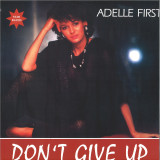
Adelle First - Don't Give Up LP

Adelle First

Don't Give Up LP

12inchKALITA12020
Kalita
08.09.2022

Please see below for the next Kalita 12" - Adelle First - Don't Give Up.
A South African Boogie, dancefloor heater reissued on vinyl for the
first time since the original release in 1986.


Kalita are excited to announce the first ever official reissue of Adelle First’s highly sought-after 1986 12” South African boogie single 'Don’t Give Up'!

Originally privately released on infamous South African label Music Team’s imprint Solid Records, the single features both the shorter vocal version and devastating 9-minute long extended ‘Dub Mix’, a true testament to the genius of producer Tom Mkhize. Having recently rocketed in demand,

fuelled by equal measures of quality and scarcity, and with original copies now selling for over £200 on the second-hand market, Kalita now offer this masterpiece to the world once more, sourced from the original analogue master tapes.

out of Stock

Order now and we will order the item for you at our supplier.

15,34

Last In: 14 months ago
Radka Toneff & Steve Dobrogosz - Fairytales (40th Anniversay Remaster)

The 40th Anniversary Edition of Fairytales is the final of many incarnations of singer Radka Toneff and pianist Steve Dobrogosz’s jewel of a duo album. In the course of the 40 years that have passed since its release – on LP in 1982, CD in 1986 – Fairytales has sold well over 100 000 units, making it the top-selling Norwegian jazz record ever, and was also voted Norway’s best album of all time in a poll of Norwegian musicians in 2011. For four decades the sometimes delicate and sometimes robust melodic intimacy between the singer and the pianist, and the fragile strength with which they imparted their lyrics and music, has cast a spell on listeners from all music scenes. Constantly new generations are enthralled by the 41 auditorily minimalist but eloquently narrative minutes, and this final version, with improved sound quality, brings us closer to the magic of the Toneff/Dobrogosz duo than ever before. Fairytales had a solemn epilogue when Radka died under tragic circumstances a few weeks after the album was released and had begun to go from strength to strength. In retrospect, though, it is not the memory of the loss of an incomparable singer, but rather the content of what Radka accomplished together with her American duo partner that keeps Fairytales alive. “It’s not just the sound itself, but it’s also about how Radka sings, about the sensitivity in her voice,” Steve Dobrogosz has said. The pianist describes Radka as a superb, forthright and genuine interpreter who was “at her best” with Fairytales, and he rejects any implication that she sounds especially lonely or depressed, or that the album can be construed as part of any autobiographical timetable. The sum of singer Radka Toneff was, naturally, more than the parts she was able to display on Fairytales. But when practically all subsequent singers in Norway, from Sidsel Endresen up to the young talents of today, get a warmth in their voices and eyes when they talk about Radka as an artistic ideal and a source of inspiration, it is not least because they heard Fairytales at some point, and were sold. The fact that the album has also been the impetus for an interest in Radka that has produced posthumous records, books, radio documentaries and countless articles only confirms the strong position the album still occupies in the Norwegian music scene, a position that this 40th Anniversary Edition will further reinforce. Terje Mosnes, January 2022 01 The Moon Is A Harsh Mistres (Jimmy Webb) 02 Come Down In Time (Elton John/Bennie Taupin) 03 Lost In The Stars (Kurt Weill/Maxwell Anderson) 04 Mystery Man (Steve Dobrogosz/Fran Landesman) 05 My Funny Valentine (Richard Rodgers/Lorenz Hart) 06 Nature Boy (Eden Ahbez) 07 Long Daddy Green (Blossom Dearie/Dave Frishberg) 08 Wasted (Radka Toneff/Fran Landesman) 09 Before Love Went Out Of Style (Dudley Moore/Fran Landesman) 10 I Read My Sentence (Steve Dobrogosz/Emily Dickinson)

pre-order now08.09.2022

expected to be published on 08.09.2022

25,17
Motorpsycho - Ancient Astronauts

Considering the tight run of albums since the first part of the Gullvåg Trilogy in 2017 – three double and a single album in less than four years – the 16 months wait for “Ancient Astronauts” must feel like an eternity for the fans. Much of the music continue in the manner of the band’s popular long form “N.O.X.” suite from “The All Is One” (2019) album, including “Mona Lisa/Azrael” and “Chariot of The Sun”, the latter clocking in at 22 minutes, being the band´s longest instrumental track to date. Most of ”Ancient Astronauts” was recorded in Amper Tone studio in Oslo during five days in August with old compadre Deathprod at the helm. All four tracks are basically the band playing live in the studio, with the odd keyboards, some guitar and the vocals added afterwards. Some of it is in turns pretty frantic and angular or grandiose and hypnotic and is mined from the same sources as the band’s more explorative music from recent years. Meaning there aren’t many choruses to hang on to here, but plenty of mouthwatering music for the progheads. The album was mixed by Andrew Scheps.1/The Ladder 2/The Flower Of Awareness 3/Mona Lisa/Azrael 4/Chariot Of The Sun – To Phaeton On The Occasion Of Sunrise (Theme From An Imagined Movie)

pre-order now07.09.2022

expected to be published on 07.09.2022

27,10
Various - All Things Considered Vol.2 LP

823 is a multifaceted Perth-based record label, fashion brand, and artistic community, founded by Australian producer and all-around creative, Ta-ku (846k monthly listeners on Spotify). With an ethos of attention to detail and appreciation for the everyday things in life, 823 doesn’t stick to any particular genre. 823’s releases include Cabu’s (800k Monthly Listeners on Spotify) “So Far To Go” EP, Ta-ku and matt mcwaters’s duo project “Black and White,” which featured Masego collaboration “Flight 99” (14 million streams on Spotify), their debut release with Australian producer and instrumentalist Kuzich, and multiple sold out clothing capsules. “All Things Considered Vol. 1” set off a collaborative series of curated compilations, featuring both budding and well-established artists around the world including Idealism, Wun Two, pastels, SwuM, Jinsang, Saltyyyy V, and more. “All Things Considered Vol. 2” sees the continuation of this project, this time in partnership with fellow Perth-based powerhouse, Butter Goods.

Butter Goods is a Perth clothing brand rooted in skating culture and style, but drawing inspiration from hip-hop, jazz, and music at large. Butter Goods has been featured in major publications, including GQ, Complex, and HYPEBEAST. They’ve collaborated on releases with Peanuts and Puma, and have reached international levels of popularity. Butter Goods co-founder Garth Mariano’s deep love for and eclectic tastes in music drive his creativity, and are front and center in his partnership with Ta-ku and 823 on “All Things Considered Vol 2,” where the two team up to curate a wide-ranging compilation.

Arriving on September 2nd, 2022, “All Things Considered Vol. 2” is an exploration of Ta-ku’s and Mariano’s extensive and often overlapping musical palettes in two parts. The record pays homage to the love of instrumental music and hidden gems of new school jazz and funk that act as a source of inspiration and nostalgia for the both of them. The collaboration brings together over a dozen producers and instrumentalists from Sydney to Chicago, including Jadu Jadu, Gnarly, Tenderlonius, silentjay, and more. Side A is curated by Ta-ku and 823. It’s as much a love letter to the past as it is a nod to the future of beat-making. Featuring sample heavy, drum looped beats, sprinkled with the occasional ear candy for the attentive listener, it presents cruisy soundscapes & easy listening. Side B is curated by Garth and Butter Goods. It’s a raw and eclectic companion to Side A, leaning heavily into the texture and grit of multi-layered jazz and funk-driven beats.

As with any 823 release, the project is as visual as it is sonic. The artwork and visualizers are a celebration of Garth’s love of thrift culture and old nature documentaries, fused with 823’s design aesthetic of bringing everyday inspirations to the forefront. CRT style visuals are paired with 90’s spin, slide and fade away transitions. When partnered with the music, each visualizer could easily work as the intro for an episode of a VHS series of nature docos.

1st single, “senzu bean,” arrives on July 7th and kicks off Side A, showcasing Ta-ku’s hip-hop-centric tastes. Sydney producer Jadu Jadu teams up with UK-based TAMBALA, apltn, and Makzo for a vibrant instrumental. From a head-nodding bassline beneath fuzzy synths, to soft horn licks sprinkled over electronic drums, “senzu bean” is sonically rich and multilayered.

2nd single, “Too Much” by UK producer saaaz arrives July 20th. It’s a moody and low-tempo beat that builds itself up over time, complete with cryptic vocal samples and syrupy drums and bass. Also off of 823’s Side A, “Too Much” maintains a laid-back hip-hop theme but with saaaz’s signature and definitive lo-fi twist.

3rd single, “Goodmorning” from Baro Sura and silentjay of Melbourne arrives August 3rd, kicking off Butter Good’s Side B. The track is bright from start to finish and is a sun-filled track perfect for closing out the summer with. Final single, “Fool’s Gold” by Los Angeles producer L.Dre arrives August 17th. The infinitely creative beatmaker layers soft hums and the sounds of crashing waves over crisp drums and an infectious bassline. Together, it makes for a beat that sounds like it was made outside, under the sun, and is best enjoyed in the same way.

Focus track, “Seventh Wonder” by Tenderlonius, comes off of Side B, and is a window into the ideas and palettes on both sides of the compilation. The beat slowly fades in, one sound at a time, until it reaches a full-fledged groove, soaked in synths, bass, and horns, that’s impossible not to move to.

On the whole, “All Things Considered Vol. 2” is a forward-focused, sonic journey into the minds behind two of today’s great creative brands, and is as artistically eclectic and varied as those minds are, and a proud follow-up to its first volume.

LP contains A2 poster on uncoated stock.

out of Stock

Order now and we will order the item for you at our supplier.

20,63

Last In: 3 years ago
Green River - Come On Down

Green River

Come On Down

12inchJPR048LPB
Jackpot Records
02.09.2022

. One of the first Grunge Records ever released. Sourced from the original 1985 Master Tapes. Includes Unreleased Bonus Track. Mark Arm & Steve Turner of Mudhoney, Jeff Ament & Stone Gossard of Pearl Jam. Features Studio Master Tape Box image w/ lyrics. Released in 1985, Green River “Come On Down" was a record existing in its sonic universe out of step with its own time. Was it glam? Was it punk? Was it metal? Was it cool? We now know it was one of the building blocks of what Mark Arm would coin as "grunge" but in 1985 this record was a silent groundbreaker. It was not only the raw, sludgy, slower guitar sound that makes this band important in its place in rock history, but the members of Green River would go on to lead some of the biggest names in the genre: Mudhoney and Mother Love Bone, the latter of which also contained the roots of Pearl Jam. The record includes the iconic original cover artwork, now pressed on black vinyl, and includes a printed inner sleeve with lyrics and photo of the original master tape box, plus an unreleased rare bonus track!

pre-order now02.09.2022

expected to be published on 02.09.2022

33,82
WISHBONE ASH - LIVING PROOF LP (Boxset 10x12")

WISHBONE ASH ANNOUNCE LIVE 10LP BOX SET: ‘LIVING PROOF (LIVE RECORDINGS 1976 - 1980)’

Wishbone Ash achieved considerable success in the 1970s, during which they were among England’s most popular hard rock acts, achieving an incredible eight top 40 albums. Often regarded as one of the premiere UK live acts of the ’70s, they toured considerably throughout this period and into the following decades.

Madfish are proud to present a new 10LP box set containing five concerts recorded between 1976 - 1980. Initially appearing on ’The Vintage Years’ CD box set in 2018, four of the shows will be issued on vinyl for the first time, with a newly sourced and previously unreleased recording from the band’s October 1976 run of shows in Nakano Sunplaza,
Tokyo on the New England tour exclusively available within.

Featuring the second classic Wishbone Ash line up of Andy Powell, Martin Turner, Laurie Wisefield and Steve Upton, these recordings showcase a band at their live best and firing on all cylinders across four different tours. Album notes and ‘making of’ track-by-track interviews by author and Wishbone expert Campbell Devine are on display within a lavish booklet with sleek design and rare live photographs.

Limited to 1,000 copies as a one time pressing, this is a must have for all Wishbone Ash fans.

pre-order now31.08.2022

expected to be published on 31.08.2022

344,54
Items per Page:
N/ABPM
Vinyl