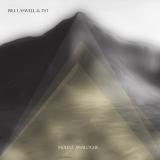
"And what about you? What are you looking for?" - René Daumal
This musical journey pays tribute to René Daumal and his enchanting world of mysteries and magic. The album shares its title with Daumal's novel, Mount Analogue: A Novel of Symbolically Authentic Non-Euclidean Adventures in Mountain Climbing, published posthumously in 1952, eight years after the author's untimely death.
Mount Analogue is a classic allegorical adventure novel. The novel describes an expedition undertaken by a group of mountaineers to travel to and climb the titular Mount Analogue an enormous mountain on a surreal continent, that is invisible and inaccessible to the outside world and can be perceived only by the application of obscure knowledge. The central theme of mountaineering is extensively explored through literary and philosophical lenses. Daumal died before the novel was completed, providing an uncanny one-way quality to the story, which ends abruptly in the middle of a sentence.
The first disc features a fifty-minute composition divided into six chapters: Introduction, Meeting, Supposition, Crossing, Arrival, and Conclusion. This album weavestogether a rich tapestry of diverse instruments, sounds, and voices that collectively tell the story of this conceptual work, loaded with a synesthetic multitude of colors, aromas, meanings, textures, and moods.
Contributors to this musical poem include Bill Laswell (bass), Henry Kaiser (guitar), Anna Clementi (vocals), Percy Howard (voice), Hideo Yamaki (percussion), Graham Haynes (cornet), Dorian Cheah (violin), Nils Petter Molvaer (trumpet), Peter Apfelbaum (keyboard), and P.ST (concept, electronics), who all lend their talents to a series of excerpts from Daumal's text.
A truly global project, the recordings took place across various locations in Europe, North America, and South America, culminating at Orange Music Studio in New York, thanks to the collaborative efforts of Bill Laswell, James Dellatacoma, and Michael Fossenkemper.
The second disc presents five improvisations for solo electric guitar by Henry Kaiser. The first solo, Jodorowsky's Peradam, draws its inspiration from Alejandro Jodorowsky's 1973 film The Holy Mountain, which was inspired by the Daumal novel. Kaiser's initial forty-eight-minute guitar solo serves as a foundational guide for his four subsequent, Rashomon-esque, solo musical interpretations of Mount Analogue, as seen through the psychedelic labyrinth of Jorodrowsky's cinematic masterpiece.
Cerca:south central
"And what about you? What are you looking for?" - René Daumal
This musical journey pays tribute to René Daumal and his enchanting world of mysteries and magic. The album shares its title with Daumal's novel, Mount Analogue: A Novel of Symbolically Authentic Non-Euclidean Adventures in Mountain Climbing, published posthumously in 1952, eight years after the author's untimely death.
Mount Analogue is a classic allegorical adventure novel. The novel describes an expedition undertaken by a group of mountaineers to travel to and climb the titular Mount Analogue an enormous mountain on a surreal continent, that is invisible and inaccessible to the outside world and can be perceived only by the application of obscure knowledge. The central theme of mountaineering is extensively explored through literary and philosophical lenses. Daumal died before the novel was completed, providing an uncanny one-way quality to the story, which ends abruptly in the middle of a sentence.
The first disc features a fifty-minute composition divided into six chapters: Introduction, Meeting, Supposition, Crossing, Arrival, and Conclusion. This album weavestogether a rich tapestry of diverse instruments, sounds, and voices that collectively tell the story of this conceptual work, loaded with a synesthetic multitude of colors, aromas, meanings, textures, and moods.
Contributors to this musical poem include Bill Laswell (bass), Henry Kaiser (guitar), Anna Clementi (vocals), Percy Howard (voice), Hideo Yamaki (percussion), Graham Haynes (cornet), Dorian Cheah (violin), Nils Petter Molvaer (trumpet), Peter Apfelbaum (keyboard), and P.ST (concept, electronics), who all lend their talents to a series of excerpts from Daumal's text.
A truly global project, the recordings took place across various locations in Europe, North America, and South America, culminating at Orange Music Studio in New York, thanks to the collaborative efforts of Bill Laswell, James Dellatacoma, and Michael Fossenkemper.
The second disc presents five improvisations for solo electric guitar by Henry Kaiser. The first solo, Jodorowsky's Peradam, draws its inspiration from Alejandro Jodorowsky's 1973 film The Holy Mountain, which was inspired by the Daumal novel. Kaiser's initial forty-eight-minute guitar solo serves as a foundational guide for his four subsequent, Rashomon-esque, solo musical interpretations of Mount Analogue, as seen through the psychedelic labyrinth of Jorodrowsky's cinematic masterpiece.
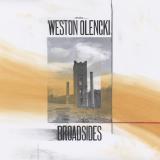
'In 2023, sound artist and composer Weston Olencki toured across the American South. Beginning in their hometown in South Carolina, they snaked a circuitous path from the mountains of West Virginia to the banks of the Mississippi River. As the miles accumulated, so did the initial seeds of new work.
'Instruments and artifacts they acquired hitched a ride in the backseat, while songs and sounds filled their portable recorder: water in its various states, the familiar insectoid buzz of those summer nights, trains cutting through the landscape, the traditional music that lived alongside the communities that kept it. Olencki took it all in, and over time, found ways that these experiences coalesced into a bramble-like perspective of time, where past, present, and future intersect in ways both barbed and beautiful.
'Broadsides, Olencki’s newest solo full-length is the multilayered result of this journey. The album follows their landmark release Old Time Music from 2022, which presented radical interpretations of traditional tunes from Appalachia and throughout the South alongside original compositions that drew significantly on archival recordings. On Broadsides, Olencki rejects delineations between the unmoored avant-garde and the rootedness of one’s cultural heritage, revealing their porous and intertwined nature. “My mother was a quilter. Her mother before that,” they write in the album’s liner notes. “Quilting, like music, is a practice of embedding knowledge and remembrance into the very core of the thing you are making. It’s not just about the materials, but how they’re reassembled, recontextualized, stitched, woven to form new patterns - the minutiae of craft holding significance to those looking to find it. Stories woven from stories, never told the same way twice.”
'Like all great road trips, Broadsides unfolds slowly and continuously, with moments of dramatic reverie punctuating the endless melt of highway in the rearview. We’re immediately confronted by the uncanniness of revisiting old haunts, as Southern storms break through the initial churn of the freight locomotives of Alabama. Olencki’s interpretation of the bluegrass standard “Foggy Mountain Breakdown” captures the euphoria of melancholy in motion. The permutational plucks of banjo are bounced around the frame by a computer, its pitches determined within algorithmic sequences and transcriptions of classic three-finger licks. The tonalities of old-time are smeared and stretched until all that’s audible is the insistence that Heaven might be real.
'In the album’s second half, “Omie Wise,” a murder ballad made famous by Doc Watson, follows an interlude recorded on the river in North Carolina in which the titular character’s body was laid. Ghostly echoes of a dozen other renditions float through the substrata as Tongue Depressor’s Henry Birdsey accompanies them on the pedal steel guitar. The album’s central composition, “all my father’s clocks,” is a profound meditation on entropy and impermanence. The sound of their father’s extensive clock collection ticks away as Olencki pulls a bow across the length of an autoharp sourced from a rural strip mall. The instrument was left as detuned as it was found, the resonance of its deep bass drone and clanging high-end the result of years of neglect and the warping effects of Southern humidity.
'Historically, broadsides were an early form of broadcasting, an often- musicalized telling of current news pasted in the public square. The name was later taken up by Sis Cunningham and Gordon Friesen in the 1960s, whose Broadside magazine published songs and social commentary when American folk music resurfaced as an urgent way of communicating the multifaceted politics of its time.
'Olencki borrows the phrase to recall both this old form of songmaking and that later prominent reexamination of traditional music’s role in modern life, but also to draw attention to the fragmented and machine- mediated way heritage is diffused in this very different, but no less pivotal, moment.
'As a sanitized past is used as justification for current violence and domination, we can turn to these artifacts to better understand the history of ourselves, but only if they are consciously pushed to evolve. Broadsides represents one personal, striking vision of what far-flung futurisms could be respun from = these high, lonesome sounds: a reflection of the unbridled joy and deep sorrow inherent to living together through time, and a desire to push further into the untold and unknown.'
The original album + 6 bonus tracks - limited edition pressing on 180g vinyl
The most talented bossa nova group of the '60s, Tamba Trio perfected a breezy,
swinging version of bossa nova vocal jazz that proved incredibly influential in Brazil
and throughout the world.
Comprising pianist Luiz Eca, bassist Bebeto, and drummer Helcio Milito, the trio not
only played a wide range of instruments but also contributed incredibly close vocal
harmonies. Presented here is their debut album, 'O Barquinho' (Little Boat), which was
a huge hit in Brazil and throughout South and Central America.
One of their later recordings, a rendition Jorge Ben's ' Mas, que nada!' ( But That Is
Nothing!) and included here as a bonus, became their best-known hit, and used most
famously by Nike in a 1998 World Cup television commercial.
Indo Warehouse / Kunal Merchant ft. Raja Kumari
Indo Warehouse presents Bombay Acid (Incl. SYREETA Remix)
Indo Warehouse presents ‘Bombay Acid’ on Crosstown Rebels, featuring Kunal Merchant and Raja Kumari. The hypnotic new single, fusing heritage and future-focused touches, lands with a remix from SYREETA
Making their debut on Crosstown Rebels, New York collective Indo Warehouse unveils ‘Bombay Acid’. The release is a collaboration between co-founder Kunal Merchant and acclaimed vocalist Raja Kumari, capturing the Indo Warehouse ethos: hypnotic grooves, ancestral textures,and underground energy fused into one expansive, ritualistic journey.‘Bombay Acid’ pairs Merchant’s meticulously layered production, melding deep, hypnotic grooves with textures drawn from South Asian musical traditions, with Kumari’s commanding vocals. The track unfolds as both a club-ready cut and an immersive ritual, bridging cultural heritage and contemporary electronic sounds. A Grammy-nominated rapper, singer, and classically trained dancer, Raja Kumari bridges Indian tradition with contemporary global music. She has collaborated with Timbaland, Dr. Dre, Gwen Stefani, John Legend, and Iggy Azalea, and has performed at Coachella, Wireless, and India’s NH7 Festival. Her imprint, Godmother Records, and projects such as ‘The Bridge’ (2023) and ‘Kashi to Kailash’ (2025) explore resilience and spiritual depth, making her one of the most distinctive voices in modern music.
On the flip, SYREETA delivers a striking rework. Authentic and fearless, the UK favourite has shattered glass ceilings while drawing on chunky basslines and energetic grooves from house and techno to craft her own sound and style. Her remix injects ‘Bombay Acid’ with that signature low-end punch, while driving and harnessing the track’s cosmic energy for late-night dancefloors.Kunal Merchant has spent years building a sound that is simultaneously drawn from his South Asian lineage and futuristic. From appearances at Coachella, Hï Ibiza, Fabric London, and Brooklyn Mirage, to releases across the Indo House spectrum, he has become a central figure in shaping the genre and bringing South Asian voices to the global electronic stage. Indo Warehouse, co-founded by Merchant and Kahani in 2022, has evolved from its underground origins in New York into an international movement. Their live shows are immersive experiences, rituals where identity, tradition, and club culture collide, and their releases continue to push the boundaries of house and techno while remaining deeply grounded in their origins. With ‘Bombay Acid’, Merchant and Kumari deliver a production that is both hypnotic and expansive, inviting listeners
into a universe where rhythm, culture, and underground energy meet in unison.
- Southbound To Marion
- M. Daguerre
- Saccharin
- Frida Kahlo
- Seratonin
- Full On Night
- Handwriting
The Rachel's band began when Jason Noble joined forces with Christian Frederickson. Within months of their meeting on a crowded trolley, they had formed a small ensemble to perform original compositions. In the next three years, madness ensued. Christian finished his degree at the Peabody Conserva-tory of Music, traveled to Switzerland to study, returned home, then wound up in NYC to attend the Julliard School. Jason didn't finish his degree, moved back to Louisville, began employment as an artist by day, dishwasher by night, and be-gan working with friends in a band that would become Rodan. This insane, all over the world life-style, led to a barrage of telephone, demo tape, notepaper, sheet music & mail communication. This, combined with sporadic two-week or two-day person-to-person collaborations in whatever city was central enough, became the bizarre process of the music. During this long gestation, Rachel Grimes became involved, first assisting Jason in his brute comprehension of written music, then joining as a pianist & confidant. Soon she was fully entrenched, providing the strange coincidence of possessing the name "Rachel," and an incredible backbone to the project. Several recordings had been finished, some in the studio, hundreds of 8-track cassettes, a few jambox cuts, but the time for a concentrated attempt at an LP seemed far away. Finally, Rachel, Christian, & Jason began assembling musicians who they respected; John, Mark and Barry from the Chicago supergroup The Coctails, Kevin Coul-tas from Rodan, Bob Weston, and several other string players from various walks of life. The result was a group of semi-vagrants, some reading from sheet music, some rambunctious noisemakers, working from an equally improvisational and tight-assed way. The real character comes from the musicians involved, participating in what can only be called a "labor of love." Handwriting, the band's debut album, was originally released by Quarterstick Records in 1995. Jacket custom screen-printed by Jeff Mueller at Dexterity Press.
“Great Doubt” is the third full length LP by Danish composer Astrid Sonne. Throughout her acclaimed discography, Astrid Sonne has been carefully crafting different moods through electronic and acoustic instrumental endeavours. On “Great Doubt” this skill is refined, now with the distinct addition of the composer's own vocal in front. The tone of each track is unmistakably Sonne’s, structured around contrasts through an impeccable sense of timing. Lyrics on the album are sparse, merely highlighting different scenes or emotional states of being, leaving the music to fill in the blanks. Yet they also form a pattern of ambiguity, consolidated through the album title, searching for answers through looking at how and what you are asking, questions for the world, questions of love. The viola, a trusted companion since Astrid Sonne’s youth, appears effortlessly throughout the album, fully integrated into the sonic universe; through a pizzicato driven arrangement in the poignant track “Almost” or along with booms and claps in mutated cinematic stabs during “Give my all”, paraphrasing Mariah Carey's 1997 ballad. Yet the string section also gives way to explorations of woodwinds, counterbalancing the bowed movements with digital brass and airy flutes. Finally, beats and detuned piano are fresh additions to the soundscape, cementing how Sonne’s practice is always evolving into new territories. In fall 2022, Astrid Sonne relocated from Copenhagen with its peers of artists such as ML Buch, Erika de Casier and Smerz, to live in London, where musicians of the South-East London scene like Coby Sey, Lolina, Still House Plants and Mica Levi provide a new inspirational framework. “Great Doubt” bears witness to both of those geographical locations, yet finds itself in its own unique space, in many ways due to the presence of Sonne's voice throughout. A voice that has always been present in her work, but never fully explored as a solo instrument before now. Astrid Sonne elaborates on the wish to work more in depth with the voice: “I come from a tradition of choir singing where I’ve used my voice as a way of creating unity with other voices. I’ve disciplined my voice in a certain way and this album is an exploration of me trying to find my own voice as an instrument, as a communicator, as a new way of being honest.” Questions take up a central role throughout the album. The doubt is both a blessing and a curse, always lying in-between, acting as both what holds back and drives forward. A metamorphosis not going anywhere. The great doubt takes place in a space of courage, chances, love, loss, gifts and surprises. Genre: Electronic / Experimental
- A1: Don't Try To Tell Me - Berna-Dean
- A2: This Mornin' - The Jesse Stone Singers
- A3: All Around The World - Vermettya Royster With James Brown's Band
- A4: What's On Your Mind - The Four Bars
- A5: Don't Look Now - Wilbur "Hi-Fi" White & King Kolax Band
- A6: Money Talks - Kenny Smith
- A7: Hey Little Girl Pt 1 - Roosevelt Lee
- B1: Goin' Away Baby (Round Like An Apple) - Smokey Wilson
- B2: Hey Hey Baby - T-Bone Walker
- B3: I'm A Good Woman - The Afterglows
- B4: You Make Me Mad - Johnny Madara
- B5: Money Talks (Tell Me What I Say) - The Citations
- B6: Tell Me Why - Richard Berry
- B7: Mary Don't You Weep - The Delights
New R&B discoveries continue to emerge and entertain the many followers of the New Breed musical cult; nobody finds more than the Kent connoisseurs.
Berna Dean’s two previously unheard recordings are by far her best. They were laid down at Cosimo Matassa’s New Orleans’ studios by GNP Crescendo but eschewed in favour of two relatively average sides. The great 50s R&B songwriter Jesse Stone provides a rocker for the much-admired Jimmy Breedlove and a super-catchy ‘This Morning’ for an unknown mixed vocal group that has a joyous gospel feel. Jesse also penned ‘Private Eye’, a classic early 60s story-song, for Buddy Wilkins which was issued on Al Sears’ Tri-Ess imprint.
The title track is used twice, on two very different Fraternity recordings. Kenny Smith’s version was issued in 1964 and has many followers, but the equally meritorious Coasters-inspired composition by the Citations is newly discovered. Win Menifee’s ‘I’m Runnin’ Around’ from the same Cincinnati label comes complete with a fascinating back-story.
There are three cover versions. Vermettya Royster’s ‘All Around The World’ is backed by James Brown’s 1961 band, while Roosevelt Lee's 1970 update of the 1947-originated ‘Hey Little Girl’ funks the tune up a la Godfather of Soul. The cover that will make the biggest noise is undoubtedly west coast band the Afterglows’ version of Barbara Lynn’s evergreen dancer ‘I’m A Good Woman’ – this is a future monster.
Golden Crest provides two fabulous male vocal group sides – the swinging ‘What’s On Your Mind’ by Eddie Daye’s Four Bars and the delightful harmonies of the appropriately-named, but unknown Delights ‘Mary Don’t You Weep’.
Blues still thrived into the 70s as Albert Washington’s mean and moody ‘Case Of The Blues’ proves. Smokey Wilson took the music into the late 70s with the storming ‘Goin’ Away Baby (Round Like An Apple)’, which benefits here from a 45-style edit. His Pioneer Club on 88th Street in South Central L A provides the atmospheric photo for this collection.
More early 60s movers come from Wilbur “Hi-Fi” White with ‘Don’t Look Now’, future hit songwriter Johnny Madara’s raucous ‘You Make Me Mad’ and Big Boy Groves ‘Bucket O’ Blood’ which brilliantly describes the kind of club these tracks would fit right into.
The LP version loses a few tracks, but so many collectors have strong preferences we’ve thrown the vinyl junkies a lifeline.
- The Pleasures
- Limerence
- Cardinal
- Mother Monica
- Knee Injury
- 97: %
- Guts
- Live Deliciously
- Dunoon
- Violent Delights
Violent Delights is an anthology of stories that meanders through themes of grief, rage, desire and identity. There are stories of the toxicity of addiction, and growing up around religion; stories of overwhelming obsession, isolating abandonment, and empowering anthems of identity, and stark laments about sexual violence. They are each lived experiences, laid bare, reclaimed with every syllable whether dripping in spite or swagger, anger or anxiety. "Loss is a central theme of the album," explains vocalist Kate Price. "For us, we have our own specific version of what that is in these songs, but for anyone listening, it could be the loss of something else - a loved one, a relationship. But we're never mourning loss. We're celebrating it. Loss is almost universally looked at as a negative, but we're finding the positives in those moments. We had to go through hell to get to heaven. Violent Delights is about looking back with gratitude, and even fondness, the closing of one chapter and beginning of another." Jools - comprised of Kate Price, Mitch Gordon, Chris Johnston and Callum Connachie, Joe Dodd, and Chelsea Wrones - has been a name on the lips of clued-up fans and tastemakers since its collective of musicians found each other in the earliest days of 2023. Quickly gaining a reputation for their cathartic, unpredictable and specular live performances, the band have been consistently championed by BBC Radio One, including two `Tune of the Week' placements on Daniel P Carter's esteemed Rock Show. Violent Delights was recorded across two week-long stints at Southampton's The Ranch studio in August and December of 2024, with Lewis Johns helming production and mixing duties. When pressed, Jools may identify as a punk band - in its truest sense that punk is a mentality, rather than a sound - but Violent Delights equally lends from the worlds of metal, rap, post-hardcore and hip-hop as much as it does the post-punk of its surface layer. Gordon and Price are as likely to point to Turnstile, Mannequin Pussy and Amyl & The Sniffers as influences on the record as they are to Little Simz and The Streets' Mike Skinner. "We don't necessarily look at music in sounds or structures," nods Gordon. "Instead we look for attitudes."
- A1: Mamehy - Je Mitsiko Ro Mokotse (“Those Who Talk Dirty Behind Your Back Tire Themselves Out For Nothing”)
- A2: Drick - Sinjake Panambola (“Dance Of The Rich”)
- A3: Befila - Eka Ndao (“Let's Go”)
- A4: Behaja - Marolinta (Name Of A Village On The South-Western Tip Of Madagascar)
- B1: Mahafaly Mihisa - Fanoigna (“Heated Debate“
- B2: Meny & Ando - Ka Tseriky Iha (“Don't Be Surprised”)
- B3: Rebona - Zana-Konko
- B4: Mirasoa & Mahapoteke - Bleu Bleu (“Blue Blue“)
Wild ecstatic vocals, distorted electric guitars, rocket bass, and the amphetamine beat! // Unlike anything else, this is THE high life music you've always wanted // Ceremonial music played with abandon and extreme intent, honoring the living and dead alike // Recorded on location in SW Madagascar by Maxime Bobo // “Tsapiky music from Southwest Madagascar features wild ecstatic vocals, distorted electric guitars, rocket bass, and the amphetamine beat! Unlike anything else, this is THE high life music you've always wanted - ceremonial music played with abandon and extreme intent, honoring the living and dead alike. In Toliara and its surrounding region, funerals, weddings, circumcisions and other rites of passage have been celebrated for decades in ceremonies called mandriampototse. During these celebrations – which last between three and seven days – cigarettes, beer and toaky gasy (artisanal rum) are passed around while electric orchestras play on the same dirt floor as the dancing crowds and zebus. The music, tsapiky, defies any classification. This compilation showcases the diversity of contemporary tsapiky music. Locally and even nationally renowned bands played their own songs on makeshift instruments, blaring through patched-up amps and horn speakers hung in tamarind trees, projecting the music kilometers away. Lead guitarists and female lead singers are the central figures of tsapiky. Driven as much by their creative impulses as by the need to stand out in a competitive market, the artists distinguish themselves stylistically through their lyrics, rhythms or guitar riffs. They must also master a wide repertoire of current tsapiky hits, which the families that attend inevitably request before parading in front of the orchestra with their offerings. This work, a constant push and pull between distinction and imitation, is nourished by fertile exchanges between various groups: acoustic and electric, rural and urban, coastal or inland. What results during these ceremonies is a music of astonishing intensity and creativity, played by artists carving out their own path, indifferent to the standards of any other music industry: Malagasy, African or global. Recorded live on location by Maxime Bobo, this vinyl LP includes a 4-page full-color insert with detailed liner notes plus photos of the musicians and surroundings.”
Produced by Grammy Nominated producer Leon Michels (El Michels Affair, Clairo). Big Crown Records is proud to present Derya Yıldırım & Grup Şimşek’s latest album Yarın Yoksa. The show stopping intensity of Derya backed by the psychedelic soul of Grup Şimşek with production by Leon Michels has yielded a stand out record that challenges genre with a broad appeal and a powerful message. They refer to themselves as “outernational” over international as they say it suggests a sound that’s more inclusive or “beyond borders.” Derya, who sings and plays the bağlama, is German born to Turkish parents. Drummer Helen Wells is Berlin-based by way of South Africa while keyboard player Graham Mushnik and guitar/bass player Antonin Voyant are both French. The collective influences they bring to Anatolian music make for a completely unique and fresh sound that both pushes the genre forward and champions its rich heritage. Yarın Yoksa which translates to If There Is No Tomorrow delves into deeply personal pain and collective resistance with a central thread of loss, longing, and hope for change running throughout. The lyrics are poetic and rely heavily on symbolic language, metaphors, and storytelling while the music shifts track to track making each tune stand out on its own but work together perfectly as an album. “Cool Hand”, the first single released on Big Crown in September of 2024, is a beautiful juxtaposition of intensity and light-heartedness over a thoroughly infectious groove. The message is poetic and complicated, repeatedly declaring “I love you, I’m crazy about you” but ultimately finding a sense of peace through accepting a broken heart. “Direne Direne” is a protest song that embodies the struggle and tireless pursuit of justice encouraging people to resist oppression. Derya’s lyrics soar over the psych-soul musical backdrop as her story of personal struggle transforms to a universal call for resilience and strength. The slow and weighty vibe of “Yakamoz” lets onto the meaning of the lyrics even to those who don’t understand Turkish. It is a deeply moving song that captures the profound emotions connected to displacement and loss without knowing if you will ever return. The steady groove of the band, along with the anguished vocals paint a vivid picture of the devastation experienced by the protagonist who ultimately realizes that her roots are within her and anywhere she goes is her home. Nine of the tunes on the album are original compositions but they also take on three Anatollian folk songs with their own inimitable approach. The acapella introduction of “Misket”, a folk song from Ankara/Türkiye, will stop you in your tracks. The tune deals with death and how the living cope and continue a relationship with those who have passed away. Another traditional tune from Sivas that they put their signature sound to is “Hop Bico”, a tune about a playful character named Bico who is a symbol of vitality and spirit. The synth intro grabs your ear from the first note and the earworm chorus encouraging Bico to lead the group in celebration and embrace life through dance has the same effect on everyone who hears it. The band has taken a big step forward that you can hear on this record. Derya’s passion and authenticity is front and centre and the music is too moving to deny. Yarın Yoksa is sure to captivate the hearts and minds of all those who hear it, and just wait till you hear them play it live… Upcoming Tour Dates (+More To Be Added): 18th March The Deaf Institute, Manchester / 19th The Jam Jar, Bristol / 20th Scala, London / 21st Norwich Arts Centre.
- 1: Do As I Say, Not As I Do
- 2: Red Giant
- 3: Systemic Decay
- 4: Parasite
- 5: Violence Prevails
- 6: Prey Of Failure
- 7: Chokehold
- 8: Supremacy
- 9: That’s Right, We’re That Spic Band !!!
- 10: 72 Seasons
- 11: Hear Nothing, See Nothing, Say Nothing
With four full length albums and an ep under their belt, CHEMICIDE have become one of the biggest neck breaking thrash metal acts in Latin America selling over 10K+ albums worldwide and have continued to tour around the globe in DIY mode that has helped them grow steadily in the metal community. The band has been on multiple extensive tours around South, Central, North America & Europe, playing with great bands like Toxic Holocaust, Cattle Decapitation, Municipal Waste, Angelus Apatrida, Helloween, Destruction etc… and have been featured in Metal Hammer UK’s top 10 thrash albums of 2022 alongside Megadeth, Kreator & Destruction; it helped the band connect with a bigger audience worldwide and led the band to several European and American festivals, like Pitfest (NL) Into the Grave (NL) In Flammen (DE) and MetalDays (SL), Rock al Parque (CO) and México Metal Fest (MX). CHEMICIDE band leader Frankie comments about their new album 'Violence Prevails' : « Violence Prevails is a reflection of our daily life. America is a beautiful continent but filled with corruption; more specifically Central and South America. I wanted to portray how there's no more dialogue; everything is resolved with violence and unfortunately for us, we see a lot of poverty and class disparities among our people. I also wanted to tell a story that could resonate with more individuals across the planet and see that they are not alone when they see what's happening around them. Violence now is the key to sort out any discrepancies you may have with someone else and we see it on a daily basis with international conflicts around the globe. Production wise We wanted a late 80's-early 90's approach to the sound of this album. Big drums, heavy bass and sharp guitar riffs, all of this mixed with a lot of reverb and a very raw, 'butchery' approach to the sound. Martín Furia (of Bark and Destruction fame who mixed and mastered the album) understood this perfectly and he helped us shape the sound of this album. He took Black Sabbath's "Dehumanizer" as an inspiration for the drum sound and we tried to start from scratch on the guitar, bass and vocal sound.» CHEMICIDE have been perfecting their bombastic frenetic riffwork and drumming savagery during the course of their past four albums, now resulting in their strongest and most punishing new album 'Violence Prevails' .
Tradition shapes your work. For saxophonist and bandleader Shabaka Hutchings, that's something he's long understood. After years spent in the orbit of London's jazz circuit, he examines and reimagines his influences with a dexterity that's unique. Drawing out the vision underlying his new album, he says, I see energy as being a form of wisdom to be passed down through the ages.'
Unpicking the album's title, he continues, "When we study the music, the lives, the words of our master musicians we obtain a glimpse of that artist's essential energy source. This is the core vitality of the individual which leads them to utilise the musical specifics of their chosen genre in a way that mirrors their inner source of power. This is an intuited wisdom that's handed to us from the legacies of our elders.
The album is a document of sessions combining Hutchings with a group of South African jazz musicians he's long admired. His connection to the group was Mandla Mlangeni (bandleader of the Amandla Freedom Ensemble), whom he'd flown there to play with over the past few years. Recorded across just one day, the group drew on their South African lineage - heroes like Zim Ngquwana and Bheki Mseleku - to bring their own slant to the American jazz lineage which is reconfigured in Hutchings' compositions themselves.
Going beyond the jazz greats Hutchings cites, influences are drawn from plenty of other sources: Caribbean calypso, central African song structures and Southern African Nguni music all play a part. Bringing together those ideas with the contributions of his bandmates is, he explains, crucial to what he sees in the role of an album artist. Even though I wrote all the music, for me, the leader of the project isn't the person who writes all the music but the one who has a vision for how certain musical elements will be combined."
A regular sight on stages around London and beyond, playing - and often leading - groups like The Comet Is Coming, Sons of Kemet and Melt Yourself Down, he's part of a generation whose idea of jazz is pointedly unrefined. That's to say, Wisdom of the Elders comes from an artist interested in the indefinable gaps more than fitting into boxes.
- La La La
- Cruz
- Lost Angel
- Taquero
- Dream Suite
- The Mystery Of Miss Mari Jane
- Cha Cha Cha
- Sea Changes
- Cinema Lover
- Die Again, Yesterday
- Hollywood Ten
As Jess Sylvester finished his Hardly Art debut as Marinero in the fall of 2020, he realized it was time for a change. Sylvester grew up in Marin County, on the doorstep of San Francisco. It was a nurturing community for a high-school punk with a pompadour and, later, for a sober songwriter with a proclivity for moody psychedelia. But he wanted to be challenged and inspired by a new setting and scenario around strangers who prompted him to approach his music in unexpected ways. So in September 2020, as the world continued to reel in lockdown, Sylvester headed several hours south to Los Angeles, a city that, despite the relative proximity, the film buff knew largely from classic and cult films situated there. When he arrived, he kept digging into that cinematic past-Robert Altman's The Long Goodbye, with John Williams' classic theme, or classic 90s movies about East LA, many featuring Edward James Olmos. They shaped his understanding of his new town just as it began to open. This is one pillar of the multivalent and endlessly lush La La La, Marinero's new album about sobriety, identity, and fantasy that is playfully named both for the city that helped shape it and the sophisticated pop it contains. Sylvester wrote about characters outside of himself, whether considering the heroine reckoning with her own version of keeping clean or the screenwriters whose work was deemed communist simply as a political convenience. He linked those songs with motivational anthems about self-acceptance and playful numbers about flirting through food, shaping a 12-song set rich with humor, empathy, and encouragement. Sure, La La La is a continuation of the slippery genre play Sylvester started with 2021's Hella Love, 2019's Trópico de Cáncer, or even before that. But it also feels like a fresh beginning for Marinero, as Sylvester realizes how boundless this project can be. He began to think about the music of his childhood, how his mother is from San Francisco with Mexican roots, and how he'd heard so much salsa growing up as an impetuous teenager. So he wrote "Taquero," a red-hot salsa tune that uses tacos and their trappings as a source of endless metaphors for come-ons. And then there was the Ray Barreto or Santana-inspired "Pocha Pachanga," with organ gliding and percussion pulsing beneath his yearning vocals, warped as if by desert winds. In Los Angeles, he found a wealth of players who spoke this music like language itself (including Chicano Batman's Eduardo Arenas), all ready to play with and push these familiar forms. Sylvester has also been sober for 21 years, since a cross-country sojourn to attend college in Boston ended in a chemical haze. Today, he sees friends facing the same decisions he made two decades ago, and he brings bits of that experience to bear in songs that feel like self-help anthems. Recorded with a musical hero (and labelmate) of his, Chris Cohen, "Sea Changes" feels like sunshine breaking through dark clouds, as Sylvester acknowledges the newfound confidence and clarity in a friend who has stepped away from destructive habits. In the past, Sylvester has been intractably linked to his identity as a Mexican-American, born to parents from Mexico and Irish- American descent who settled in San Francisco. That can be limiting, of course, tying him to notions of sound and style that aren't always correct. On La La La, he simultaneously steps into and out of those preconceptions, singing tracks above salsa in joyous Spanish or pondering the dynamics of the Hollywood Ten and blacklists above mysterious lap steel and teasing trumpet. His identity, then, should now be clear: He is a Californian, making music shaped by the diversity of encounters and experiences that are a central part of that state's fabric. Never before has he presented himself so fully and unabashedly on tape as with La La La, an album Sylvester built with new inspirations to deliver new charms.
For the first time in their diverse second act, they allow themselves to be a rock band, freed of adornment and embellishment. As much as Carlson’s guitar has always been the focal point of EARTH’s music, it’s been surrounded by consistently diverse instrumentation. Here the dialog between Carlson and Davies drumming remains pivotal, underpinned by the sympathetic bass of Bill Herzog (Sunn O))), Joel RL Phelps, Jesse Sykes and the Sweet Hereafter) and thickened by additional layers of guitar from Brett Netson (Built To Spill, Caustic Resin) and Jodie Cox (Narrows). Perhaps the largest left turn on Primitive And Deadly, though, is the prominence of guest vocalists Mark Lanegan and Rabia Shaheen Qazi (Rose Windows) who transform the traditionally free ranging meditations of EARTH into something approaching traditional pop structures.
On “Rooks Across the Gates,” a song stylistically the closest to the folk inspired modality of Angels Of Darkness, Carlson stretches out into some of his most lyrical playing to date, creating an almost symbiotic relationship between his performance and the vocals of old friend Mark Lanegan. “From the Zodiacal Light,” meanwhile, takes the late 60s San Franciscan/freaked-out jazz-rock transcendence of The Bees Made Honey In The Lion’s Skull and quickly re-appropriates that sound into a musky torch song for the witching hour.
This contradictive tension between a band pushing itself ever-forward whilst surveying their history is reflected in the albums twin recording locales. The foundation of the record was laid in the mystic desert highlands of Joshua Tree, California where EARTH recorded hour after hour of meditations on each track's central theme at Rancho de la Luna. Upon returning to Seattle these were edited, arranged and expanded upon at Avast with the help of long-term collaborator Randall Dunn (who was previously at the helm for the Hex, The Bees Made Honey In The Lion's Skull and Hibernaculum sessions).
TexiCali, the new album from Grammy winner Dave Alvin and Grammy nominee Jimmie Dale Gilmore, continues to bridge the distance between the two troubadours’ respective home bases of California (Alvin) and Texas (Gilmore). The geographic theme reflects Alvin’s repeated journeys to record in Central Texas with Gilmore and the Austin-based backing band that has toured with the duo for the past few years. As Alvin puts it in the liner notes, those road trips informed the music they made on TexiCali. The 11 songs on this double LP also connect their shared fondness for a broad range of American music forms. Gilmore is primarily known for left-of-center country music, while Alvin’s compass points largely toward old-school blues. But there’s a lot of ground to cover beyond those foundations, and both artists also are well-known for transcending genre limitations. So it’s not surprising that they’ve spiked TexiCali with cosmic folk narratives, deep R&B grooves and even swinging reggae rhythms.
Repress!
This EP is delicately melodic and fluid that even in its short four tracks shows a producer with different bows to their arrow. Intro is a laid back, downtempo affair with vocal samples punctuating the track’s pared down synths and gently propulsive beats.
Contrast that with Engang, which sees Jos Ma chisel all other elements away and put trust in the groove and urgency of its percussive elements. It’s something he echoes in Like Honey, although here the bright stabs of keys provide a welcome interjection - as does the chopped-up vocals that offer a further counterpoint to its kwaito-reminiscent shuffle. It is perhaps here that his respect and love of central and southern Africa’s dance forms is presented at its most bare.
The EP finishes with Mongo’s Dance, so-called after the Cuban Mongo Santamaria and driven forward by a chopped-up pachanga rhythm taken from one of the pioneering percussionist’s tracks. He then adorns it with wavy synths and flutes, each intertwining over the top as though engaged in ritual with one another. It’s a euphoric, slightly delirious end to an EP that puts Jos Ma firmly in Mas O Menos’ “neither here nor there” camp – a producer who simply follows his instincts and revels in the enthrallingly wandering music it throws up.
‘Lead You To Water’ marks a new chapter for Quinn Oulton, built around the foundations of 90s and 2000s RnB, whilst carving room for his unconventional production techniques and distinctive songwriting voice. Sitting somewhere in between Sampha, Mk.gee and Nick Hakim, a central thread to his approach on the project is simplicity – rather than relying overtly on production elements to embellish the sound of the songs, Quinn instead sought to create spacious pieces that stand on their own, stripping the core of his creativity down to voice and acoustic guitar.
Over the past year, the prolific multi-instrumentalist and songwriter has been refining his sound and production style. Collaborating with artists including Linden Jay, Reuben James and Col3trane, and relocating from his London base to LA and Berlin, he’s been on a creative drive, pushing his forward-thinking RnB to new places and amassing millions of streams in the process.
The South London-born and bred multi-instrumentalist, vocalist & producer has always been a musical explorer. With a foundation deeply rooted in jazz, he possesses a profound understanding of complex musical concepts which he translates seamlessly into the more mainstream genres of contemporary RnB and alt-pop. With Quinn’s music, you can expect to hear beautifully constructed, classic-sounding tracks with hidden layers for appreciators of depth and detail.
a A1 - When You're Near [ft. Rich]
Previously Unreleased Recording. Limited to 1200 copies on transparent cherry vinyl. Tip-on jacket, Download code. Insert featuring LP sized original art by Grungie O'Muck. Includes the original recording of Richard Tucker's "Are You Leaving For The Country", later covered by Karen Dalton, and the only song co-written by Karen & Richard, "Sleeping In The Garden". "Richard, Cam & Bert seem to have grasped The Great Harmony. That is, ensemble singing that is at once sweet, precise, funky and a bit sardonic..." -Mike Jahn / New York Times (1970) "For a few years in the late sixties and early seventies Richard Cam & Bert ruled MacDougal St. walking a fine line between the increasingly commercialized demands created by groups like Crosby Stills and Nash and the fierce integrity of earlier folk performers, the generation to which Richard belonged. They managed this with great aplomb, producing original tunes of great integrity and obvious folkloric origins, as well as those which expressed the anarchic omnipresent psychedelia of the moment. They also never abandoned the idea of including some traditional material in their performances. But for the usual random application of luck they could have been very big." - Grungie O'Muck / Artist, Bluesman, Cover artist for their first album and contributor to this one. Richard Tucker, Campbell Bruce, and Bert Lee coalesced as a trio in the spring of 1968, and by the end of that year had become regular performers at fabled Greenwich Village nightspots - The Gaslight, The Bag I'm In, Cafe Feenjon, among others. But mostly they were street singers, busking regularly in Central Park. Their only LP, Limited Edition, was released in 1970, and sold mainly at gigs and on the street. Somewhere in The Stars compiles earlier, previously unreleased recordings, when all three members were signed with Peer-Southern Music publishers as writers and began using their studio to make demos and experiment musically. Beautifully recorded by house engineer Charlie Mack (supervised by Jimmy Ienner), the demos capture a back room casualness and rustic, homespun quality. For me, listening to their songs and harmonies is like entering a world you always hoped existed but had never experienced. Some of the songs were re-recorded the following year for Limited Edition, but many are heard here for the first time. Among them is the original demo for Richard Tucker's song, "Are You Leaving For The Country", which Karen Dalton covered on her seminal 1971 release, In My Own Time. Richard and Karen were husband and wife for much of the 1960s, performing as a duo (initially as a trio with Tim Hardin), and navigating their time on the Village scene while alternating living in a small mining town outside Boulder, Co. before splitting up in 1967. Also making its debut, is the only song Richard and Karen ever wrote together, the haunting "Sleeping In The Garden". Also contains two epic songs by Cam "One Of These First Nights", and "Stockholm") not on their LP, but staples of their live performances, and noted in a gig review by The New York Times, and in a column by future A&R hero, Karin Berg, who was an early champion. Another rarity is the only cover of "Sweet Mama" by Fred Neil we've ever heard. Campell Bruce came to New York in 1967 as lead singer with a band from Washington, DC, The Natty Bumpo. They'd recently signed a record deal with Phillips, but were falling apart. Cam landed in the Village with an acoustic guitar and first started playing and singing in the basket houses, and shortly thereafter at The Gaslight, as the "Cam Bruce Trio" (which included Collin Walcott). After opening for Mose Allison, Cam's hero, the trio went their separate ways, and Cam returned to regular solo gigs at The Flamenco, and the basket houses on Bleecker. Richard and Cam met up on that scene and quickly found a musical kinship as well as becoming best pals. Bert Lee arrived in New York as a runaway the following winter, and began playing and sleeping wherever he could. His sometime accompanist, Ron Price, introduced Bert to Richard and Cam just as Bert's own songs were garnering attention from publishers. According to Bert, "I arrived on the New York scene during a time of great change, and it was the notion of change that influenced me. All around me I saw there were two sorts of songwriters, on the one hand dedicated to the traditions that had inspired them, folk, jazz, the American songbook. On the other hand were songwriters influenced by the wave of experimentation that The Beatles were the perfect example of. Mixing genres, writing lyrics that weren't just about ordinary love and loss. Richard Tucker was a country blues player, with a relaxed and melodic approach to the craft. Cam wrote something more akin to soul songs, with a hint of jazz in the changes. I was writing tunes that sometimes drew on classical structures with a tendency toward what I suppose would be known as prog-rock. But I was rather adamant about not being pinned down stylistically, and so I would write, for example, a song based on some complex classical chord structure, and then go right ahead and write a simple folk song, like Evelyn. Our band was popular locally, and it was this variety that made it distinct." Delmore is excited to present this unearthed treasure, fifteen years in the making. In the words of Richard Tucker, "Tap on your knee, roll on the floor; if you aint free, what's it all for?" "The trio's singing, playing, and writing have all withstood the test of time. Believe me, because I was there. In 1969 R,C&B, myself, Charles John Quarto, David Bromberg, Ron Price, and Keith Sykes were just a few of that year's crop of song-slingers. We were young turks back then, out on the prowl in New York's Greenwich Village for record deals, gigs, and beautiful young women to sleep with and maybe even write a song about. I've lost the names and numbers of those lovelies and I'm not sure what happened to Ron Price, but Richard, Cam, and Bert are back! - Loudon Wainwright lll