These days it seems as if at every turn, week in week out, the Reggae fraternity grieves the loss of another journey man singer, unassuming session musician or foundational sound man.
The power of remembrance, of tribute, of deeply honouring the historical legacy of so many singers & players has been, from its very inception, central to the mission of Ital Counselor Records. The arrival of IC008 carries forth this tradition in the form of an epic tribute to two of our most cherished influences who have recently passed on – The ever-spirited drummer Angus “Drummie Zeb” Gaye of Aswad fame and the indomitable UK sound man, the Mighty Zulu Warrior Jah Shaka.
This release brings together some of the usual Ital Counselor collaborators Chris Lane (AKA the Dub Organiser, Fashion Records), Soothsayer Horns, Inyaki BDF, along with new IC collaborator Gil Cang (Riz Records, Tuff Scout Records).
Collectively known as the IC All Stars, their mission was to rebuild a mythic dubplate made legendary by Shaka in the early 1980s. Known on the scene as Rasta Serenade, this horns driven instrumental dubplate was a never released version of Aswad’s vocal cut “Just a Little Herb” only ever played on Shaka’s sound.
To achieve maximum effect, the Dub Organiser dug back into the Fashion records vaults to unearth an unused loop of ‘Drummie’ marching out a militant beat. Inyaki BDF was recruited to lay down the bassline. Soothsayers horns hit harder still. Chris and Gil put the final guitar, keys, and mix touches to make this 4-cut maxi 12” a sound system killer; a set of big people dubs for the young and old. Meditative and marching; Weighted and spritely IC008 must mash up sound system dance north, south, east and west. Take a listen and you will hear.
Drummie Zeb of the Tribe of Zebulon.
Jah Shaka of the Tribe of Simeon.
This is a tribute. This is a remembrance.
This is also a pushing forward of a tradition
In a new Direction
A movement Forward
Ital Counselor Style.
quête:south central
- A* | Blood (1:08)
- A1: Bullies Of The Block (4:55)
- A2: Everything’s Everything (3:47)
- A3: Shammy’s (4:16)
- A** | Heat Mizer (1:08)
- B1: Six Tray (4:39)
- B2: Danger (3:58)
- B3: Inner City Boundaries (4:39)
- B* | Bomb Zombies (1:06)
- C1: Cornbread (4:21)
- C2: Way Cool (4:22)
- C3: Hot Potato (4:30)
- C4: Mary (3:45)
- C5: Park Bench People (4:59)
- D1: Heavyweights (6:11)
- D* | Tolerate (1:01)
- D2: Respect Due (3:53)
- D3: Pure Thought (3:14)
2024 Repress
Innercity Griots, the second album from Freestyle Fellowship, is perhaps *the* essential West Coast left-field rap album of the early ’90s. Released in 1993 on 4th & Broadway, it’s a towering, progressive hip-hop masterpiece that expanded rap’s boundaries through lyrical elevation and production innovation. Their talent was ahead of everybody else by light years. This is pure b-boy jazz.
The original single vinyl LP is now hideously scarce, and of course the sound suffers from not being officially released as a double. This Be With re-issue fixes both problems, and for completeness also includes “Pure Thought” from the CD version of the album. This incredible display of imaginative hip-hop sounds better than ever.
Freestyle Fellowship were some of the earliest technically dazzling rappers to come out of California. Mikah 9, P.E.A.C.E., Aceyalone and Self Jupiter - along with DJ Kiilu - forged their famed lyrical dexterity in the ultra-competitive crucible of the Good Life Cafe. Founded in Leimert Park, South Central LA in December 1989, this earthy health-food store and cafe was where the city’s finest microphone fiends would gather to showcase their freestyle skills at the Thursday night open-mic.
Innercity Griots has been described as the Rosetta Stone for rap styles. The group’s dense, vibrant wordplay and enviable interplay quickly earned the attention and respect of the city’s hip-hop underground. Frenetically trading acrobatic rhymes with agility and grace, the Fellowship used their voices as instruments like true virtuosos, spraying improvised raps like a Coltrane sax solo.
With the bulk of the album’s production handled by The Earthquake Brothers, and Bambawar, Daddy-O, and Edman taking over for some of the tracks, Innercity Griots dances between organic and programmed music, largely forgoing sampling and instead built around live jazz jams. The likes of Freddie Hubbard’s “Red Clay” and Miles Davis’s “Black Comedy” were used more as templates for house band The Underground Railroad Band to spiral out from. As Pitchfork noted in their recent 9.0 review of this classic album, “Freestyle Fellowship embodied the style and spirit of jazz on a molecular level. They shared the effortless cool and tough countenance of the great bebop players from the ’50s without verging into jazz-rap parody. Their innate jazziness felt tangible and hard-earned”.
The unusual approach to the music was matched by the Fellowship’s lyrics. Eschewing the tired rap tropes of the time, this multifaceted album instead explores their ruminations on greed and homelessness, weed, sex, survival, insecurity and tribalism.
Remastered by Simon Francis for double vinyl and cut by Pete Norman, we hope this long-overdue re-issue of Innercity Griots satisfies the legions of fans that have since been bewitched by the majesty of this record. It should also introduce some new listeners to yet another overlooked classic.
- Borderland
- Southwest Chief
- Broke Down Engine
- Trying To Be Free
- Blind Owl
- Death Of The Last Stripper
- Roll Around
- Betty And Dupree
- Why I'm Walking
- Down The 285
- We're Still Here
Black[42,82 €]
TexiCali, the new album from Grammy winner Dave Alvin and Grammy nominee Jimmie Dale Gilmore, continues to bridge the distance between the two troubadours’ respective home bases of California (Alvin) and Texas (Gilmore). The geographic theme reflects Alvin’s repeated journeys to record in Central Texas with Gilmore and the Austin-based backing band that has toured with the duo for the past few years. As Alvin puts it in the liner notes, those road trips informed the music they made on TexiCali. The 11 songs on this double LP also connect their shared fondness for a broad range of American music forms. Gilmore is primarily known for left-of-center country music, while Alvin’s compass points largely toward old-school blues. But there’s a lot of ground to cover beyond those foundations, and both artists also are well-known for transcending genre limitations. So it’s not surprising that they’ve spiked TexiCali with cosmic folk narratives, deep R&B grooves and even swinging reggae rhythms.
In 1984, Jasper Van’t Hof, a prominent European jazz pianist, propelled to fame with the energetic ‘Pili Pili’ a 15-minute trance collaboration with Guinea's Isaac Tagul Group. Inspired by a fiery red pepperoni, the track sold over 100,000 copies, leading the group to adopt the name Pili Pili, becoming a hit in the club and disco scene.
Pili Pili's musical roots trace back to Van’t Hof's 1982-83 tour in Central Africa, where he discovered a love for African music. The band embraced authenticity by collaborating with diverse African musicians from Mali, Congo, Senegal, and Guinea. In 2000, Van’t Hof initiat-ed a project with the young Zulu choir Phikelela Sakhu-la from Durban, South Africa.
Pili Pili's style, described as experimental fusion, blends intricate African rhythms with jazz, fusion, funk, and dance. Van’t Hof emphasized the importance of groove over complex solos, stating that intellectual approaches are lost in their music.
The band's performances, marked by their energetic fusion of jazz and African rhythms, gained acclaim across Europe. Regular tours and festival appearances, such as the Jazz Festival of Montreux, solidified Pili Pili's reputation as an excellent live band. Reviews praised the band's dynamic and explosive music, turn-ing every performance into a rhythmic and fiery expe-rience.
Advitam Aeternamour, Cléa Vincent's third album, will be released on 29 March 2024 by Midnight Special.
If the 90s gave us “French touch,” then the 2010s ushered in “French pop,” and it was in the midst of this revival that Cléa began her artistic journey. As early as the music video for
“Achète-le-moi” from her debut LP Retiens mon désir (2016), we witness the singer striking selfie-like poses with her French pop comrades (La Femme, Bertrand Burgalat), appearing pell-mell on screen in the form of their vinyl records. Since then, whether singing with Philippe Katerine or co-producing (and composing) Jeanne Balibar's D'ici là tout l'été (2023), Cléa Vincent has effortlessly carved out a niche for herself in the French pop scene. The advantage of being a “jack-of-all-trades” — Cléa is a writer, composer, and producer — is that her music casts a wide net. Both highly acclaimed in the indie circuit and “as seen on TV” (on Quotidien, among others), she has also enjoyed a stint as the host for web-TV show Sooo Pop, for which she regularly interviewed a plethora of French artists. Beyond France, the singer tours extensively. After a run of concerts in Europe, Asia, North and South America, it was her visit to Latin and Central America that inspired Tropi-cléa (2017-2020-2022). The three EPs bathed in a tropicalist glow do more than just dip their toes in the water; they mark a deep desire to escape in a post-lockdown world.
In between these projects emerged Cléa’s LP Nuits sans sommeil (2019). The album quickly became an instant classic and lives up to its name, since Clea never seems to stop — writing, composing, singing, or dancing. Mixed by Stephane ALF Briat, who has lent his magic touch to records by Phoenix, Bonnie Banane, Air, and Flavien Berger, Cléa Vincent's third LP Advitam Aeternamour proves once again that her music is in perpetual renewal. The artist takes risks both in her pursuit for innovative sounds and in the themes she tackles: coming out, incest, grief...and of course, she will always be a true romantic at heart; there’s no need to be ashamed of loving love. Cléa’s songs are full of “explicit lyrics,” but not in the typical sense: rather than ringing harsh and raw, her words are tinged with sweetness and melancholy, at the risk of shocking less sentimental listeners.
Written hand-in-hand with Raphaël Léger, her creative soulmate for the last ten years who also recorded and produced the album, Advitam Aeternamour features lyrics charged with Epinal and equinox imagery. On the poignantly sober title track, sudden flashes of light are padded by tinkling synthesizers swathed in the voices of an angelic choir, as also heard on “Nuit de Yalda.” Cléa offers a modern take on 90s house music (“C'est Ok”) and 2-step garage (“Free Demain”). Particularly influenced by The Beloved, she is not above dipping pop songs into the electronic melting pot to get them through the club door (“État Second,” where we “turn up the BPM”). And whether on “Shut down ma tête,” or “Douce Chavirée,” Cléa pushes the champagne cork down even further so that the party never stops. The bass gets louder, the rhythm intensifies — the melodies of these eternal hits are an invitation onto the dance floor, lit up by her smile.
As depicted in the soothing embrace that appears on the album artwork, the bright psychedelic hues are the perfect complement to her therapeutically inclined synthetic pop. Even if they tackle themes such as breakups, Cléa's songs, which are vitamin-packed and deep on the surface, are intended to heal and repair. “Se laisser partir,” with its light vocoder echoes, emulating the vocal shadow of a loved one, is an optimistic breakup song. Advitam Æternamour gives us life, from birth to grief — and in the middle, wild, beating passion. If her songs resonate with us, it's because Cléa speaks to us in her songs, as heard on the girl power anthem “Free demain,” where she addresses the listener as a friend (“put the pedal to the metal and you’ll take off for the stars”). When she shares the microphone with Jacques on “État Second,” enveloped by the sounds of unidentified musical objects, the complementary nature of the two artists is evident. The album is as much a tribute to the healing virtues of music as it is a self-portrait of Cléa inhabited by her art. Ad vitam æternam and with love.

“Great Doubt” is the third full length LP by Danish composer Astrid Sonne. Throughout her acclaimed discography, Astrid Sonne has been carefully crafting different moods through electronic and acoustic instrumental endeavours. On “Great Doubt” this skill is refined, now with the distinct addition of the composer's own vocal in front. The tone of each track is unmistakably Sonne’s, structured around contrasts through an impeccable sense of timing. Lyrics on the album are sparse, merely highlighting different scenes or emotional states of being, leaving the music to fill in the blanks. Yet they also form a pattern of ambiguity, consolidated through the album title, searching for answers through looking at how and what you are asking, questions for the world, questions of love. The viola, a trusted companion since Astrid Sonne’s youth, appears effortlessly throughout the album, fully integrated into the sonic universe; through a pizzicato driven arrangement in the poignant track “Almost” or along with booms and claps in mutated cinematic stabs during “Give my all”, paraphrasing Mariah Carey's 1997 ballad. Yet the string section also gives way to explorations of woodwinds, counterbalancing the bowed movements with digital brass and airy flutes. Finally, beats and detuned piano are fresh additions to the soundscape, cementing how Sonne’s practice is always evolving into new territories. In fall 2022, Astrid Sonne relocated from Copenhagen with its peers of artists such as ML Buch, Erika de Casier and Smerz, to live in London, where musicians of the South-East London scene like Coby Sey, Lolina, Still House Plants and Mica Levi provide a new inspirational framework. “Great Doubt” bears witness to both of those geographical locations, yet finds itself in its own unique space, in many ways due to the presence of Sonne's voice throughout. A voice that has always been present in her work, but never fully explored as a solo instrument before now. Astrid Sonne elaborates on the wish to work more in depth with the voice: “I come from a tradition of choir singing where I’ve used my voice as a way of creating unity with other voices. I’ve disciplined my voice in a certain way and this album is an exploration of me trying to find my own voice as an instrument, as a communicator, as a new way of being honest.” Questions take up a central role throughout the album. The doubt is both a blessing and a curse, always lying in-between, acting as both what holds back and drives forward. A metamorphosis not going anywhere. The great doubt takes place in a space of courage, chances, love, loss, gifts and surprises. Genre: Electronic / Experimental
Three years on from the desolate beauty of their debut, Quindi Records is proud to present the second album from Dead Bandit. The ghosts of their past endeavours still haunt their guitars, but on Memory Thirteen the duo's delicately dishevelled Southern gothic feels tonally distinct from their prior outing.
Dead Bandit is Ellis Swan and James Schimpl - the former a noted solo singer-songwriter from Chicago with a penchant for eerie, witching hour murder ballads and the latter an accomplished Canadian multi-instrumentalist with a bias towards heartworn, roaming soundscapes. Their instrumental collaboration has an open, lyrical quality which says as much as any spoken line, and on this album they've especially embraced the power of contrast as we're guided between scenes, sometimes within the confines of one track.
'Peel Me An Orange' is especially instructive in this regard, beginning as a blown-out paean to sonic degradation and the acute sense of hopelessness it projects, only to yield to a lilting tape loop of twanging guitar before entirely widening out in an emphatic burst of post-rock optimism.
Post-rock isn't noted for its banal cheeriness as a genre, and Dead Bandit aren't about to lay down feel-good drive-time anthems, but the sense of pulling at extremes of energy and introspection show Swan and Schimpl to be testing the emotional limits of their weatherbeaten sound. The cautiously sentimental mood of 'Blowing Kisses' hints at the hard-won light which can be encountered while pointedly driving into darkness.
Sometimes noise is a subtle device - a looming bed of unease under the forthright pluck of Swan's distinct guitar tone or the cracking round the edges of a beaten up drum machine. On 'Memory Thirteen' the distortion on the bass becomes a central figure in its haggard waltz, while 'Staircase' and 'Perfume' leave the signal wet until the delay feedback becomes the body of the riff. Either way, the sound is never left untouched as Swan and Schimpl grow more comfortable in their exchange, blurring their respective sonic languages as they expand their shared vocabulary to create an album of depth, difference and devoted distortion.
Daniel Land's new album, "Out of Season", is his most ambitious record to date, a series of reflections on history, memory, and post-Brexit Britain, which was inspired by his return to the landscapes of his youth – the rugged, underpopulated west coast of Somerset. The album was written and partly recorded in Daniel’s studio in a static caravan, overlooking the coast, during the period when the UK was tearing itself apart over its relationship to Europe. "I didn't set out to write about Brexit", Daniel says, "I have a kind of horror of political music. But I couldn’t escape the atmosphere of the time – this strange, distorted version of ‘Englishness’ in the national psyche. I’ve always been interested in memory and nostalgia; Brexit illustrates the dangers of taking seductive, possibly false memories at face value”. Songs like “White Chalk”, “Island of Ghosts”, and the album’s title track, represent a series of attempts to reclaim an older, more peculiar idea of England which, Daniel says has been “Lost in the nationalist mythmaking of the past decades” – the island of misfits and outsiders exemplified by the works of Derek Jarman, for example, whom Daniel was rediscovering while working on the album. “I must have read 'Modern Nature' ten times over the years”, Daniel says. “What I love about Jarman is that he had a deep, abiding love for England, but it was a very complicated, critical and a very queer kind of love. That was very much my mood, going into the making of this album”. Like Jarman’s work, "Out of Season" probes national identity whilst also displaying resolutely queer themes throughout. Daniel’s voice – once described by The Guardian as "The spawn of Elizabeth Fraser and Anthony Hegarty” – is less heavily reverbed than before, bringing to the fore his often-confessional lyrics, inspired by the frankness of modern queer poets like Andrew McMillan, Seán Hewitt, and Ocean Vuong. A lyrical highlight is the gorgeous “Southern Soul”, a deceptively straightforward recounting of a decades-old hookup with a closeted guy from his hometown which, Daniel says, “Serves as a metaphor for everything I’m talking about in the album”. And in keeping with the album’s nods to the heroes of gay literature, Daniel’s self-styling of the album as a “Dream Pop Album on National Themes” deliberately references the full title of Tony Kushner’s era-defining play "Angels in America", whose central character is namechecked in the hook-laden “Lemon Boy” – a song which must surely stand as Daniel’s most deliciously pop moment yet. Lauded by Mark Radcliffe, Guy Garvey, Tom Robinson, and many others, Daniel Land makes music that, in the words of BBC Radio 1, "You can't help but think the late John Peel would have loved".
The official new edition from this rare and great Afrobeat & Soukous masterpiece from Nigeria !
"Vibro Success Intercontinental Orchestra was an extraordinary group from the Central African Republic, founded by the sax player Rodolphe 'Beckers' Bekpa, also known as Master Békers, in the late 60's. The band achieved surprising domestic success after Beckers introduced the first drums to the Congolese Rumba rhythm. His innovation proved to be wildly popular so they were hired as the resident band of “ciel d’Afrique au Km5”, a night club in Bangui. The club was renowned as the temple of the Olympic Réal football team's fans and that visibility propelled them into becoming the official national orchestra.
1970 marked beginning of the band's international fame . Their fame spread beyond national borders until they became so popular that invitations began to arrive from nearby countries like Cameroon and Chad, the former of which the band would then tour that same year. The success of their performances prompted a further tour in 1972. According to Rodolphe Bépka, the audience enthusiasm Vibro encountered was bewildering. "We filled the old military stadium in Yaoundé in 1970, in 1972 the new Amadou Haïdjo stadium ... We are running with great success in the cities.” Their popularity was also growing in Chad, where they would tour several times through the early and mid 70's.
Towards the end of 1976, Vibro Success decided to take their music global and introduce Central African music to listeners worldwide. It worked. The turning point came in Nigeria. There the group achieved extraordinary success, with live performances followed by contracts with local labels like Scottie and Ben/Clover resulting in hit releases. Most of their LP's were originally released on this later label, Ben Limited, owned by Ben Okonkwo.
Ben, also known as Clover Sounds, brought a great number of the biggest bands from the country to market, bands like The Apostles, Akwassa,The Doves, Aktion, The Visitors, Mansion, Folk 77 and many others. Nearly all those groups started their recording careers in the label's studios based in the commercial heart of Aba, Abia State, one of Southeastern Nigeria’s largest cities. Aba at that time was a flourishing city, an important crossroads of people and culture with an intensive and active and cutting edge live music and nightlife.
But after that golden era the group began to lose its popularity. In the 1980's they returned to Bangui and resumed their old-time gigs in dance halls there - only to realize that their music didn't have the appeal it used to. Making matters worse, the domestic economic downturn accelerated, forcing the orchestra to slowly end its activities . Vibro Succès Intercontinental Orchestra disappeared at the end of the 80s and most of its members died in the 90s.
We discovered this LP during our first trip to Nigeria in 2016. While traveling in the east to meet up with a musician, we stopped for a night in a village. As often happens in Nigeria, information has a way of traveling fast. The news that a couple of white guys looking for records had arrived in the village the day before spread like light. When we awoke, we found a couple of elderly music lovers in the hall of our hotel with a little pile of records for sale. The nice cover of the “Drunkard” album was right on top!
At first we thought it was just another really good soukous album made by Vibro Success but after we heard “Drunkard” - we knew we had stumbled onto something very special. That was the “easy” part. Soon after, we had the idea of reissuing this LP and that was a bit harder. There were no credits on the cover and not much information about Vibro Succès. We started to ask to our friends to ask around, see if somebody knew them or the producer. That's when sadly we discovered that Ben Okonkwo had passed. So with no leads to follow and seemingly without any possibility of making progress on the matter, we "gave up" and returned to Italy.
A couple years later, in the summer of 2019, we found ourselves again in Aba. This time we had the chance to meet Nnamdi Okonkwo, the eldest son of the late Ben Okonkwo. After Nnamdi's mother and family agreed, he was glad to cooperate with us for the re-release of this special album."
For the past few years we’ve been mesmerized by Elijah Minnelli’s output on his own Breadminster County Council label… a handful of hand-crafted 7”s that live at the foggy intersection of dub, outsider folk, and various strands of Eastern European and South/Central American musics. It now seems inevitable that he would join the ZamZam family.
Firmly rooted in dub through its mammoth bassline, ‘Gradually’ is a shaggy, unhurried tune framed by melancholy, almost grieving squeezebox and gorgeous ensemble percussion that reverently recalls early cumbias. The tune is unique for Elijah in that it features fully-sung vocals. Themes of loss, despair, tragedy and coping circle and loop, ironically held in a musical matrix that spirals in deliberate repetion.
In ‘Gradually Verzion’ the introduction of a minimal melody and long echo trails signal a dramatic shift, going full dubwise steppers without compromising its warm center. Elijah holds back the wheezy melodics, deftly forwarding the percussion in time-honored echo chamber mode.
Red Vinyl
For the first time in their diverse second act, they allow themselves to be a rock band, freed of adornment and embellishment. As much as Carlson’s guitar has always been the focal point of EARTH’s music, it’s been surrounded by consistently diverse instrumentation. Here the dialog between Carlson and Davies drumming remains pivotal, underpinned by the sympathetic bass of Bill Herzog (Sunn O))), Joel RL Phelps, Jesse Sykes and the Sweet Hereafter) and thickened by additional layers of guitar from Brett Netson (Built To Spill, Caustic Resin) and Jodie Cox (Narrows). Perhaps the largest left turn on Primitive And Deadly, though, is the prominence of guest vocalists Mark Lanegan and Rabia Shaheen Qazi (Rose Windows) who transform the traditionally free ranging meditations of EARTH into something approaching traditional pop structures.
On “Rooks Across the Gates,” a song stylistically the closest to the folk inspired modality of Angels Of Darkness, Carlson stretches out into some of his most lyrical playing to date, creating an almost symbiotic relationship between his performance and the vocals of old friend Mark Lanegan. “From the Zodiacal Light,” meanwhile, takes the late 60s San Franciscan/freaked-out jazz-rock transcendence of The Bees Made Honey In The Lion’s Skull and quickly re-appropriates that sound into a musky torch song for the witching hour.
This contradictive tension between a band pushing itself ever-forward whilst surveying their history is reflected in the albums twin recording locales. The foundation of the record was laid in the mystic desert highlands of Joshua Tree, California where EARTH recorded hour after hour of meditations on each track's central theme at Rancho de la Luna. Upon returning to Seattle these were edited, arranged and expanded upon at Avast with the help of long-term collaborator Randall Dunn (who was previously at the helm for the Hex, The Bees Made Honey In The Lion's Skull and Hibernaculum sessions).
'Of No Fixed Abode' gathers fragmented recordings by the Madrid duo of Pablo Mirón and Juan Vacas, the multi-disciplinary artists behind the collective Real No Real (realnoreal.org) and Ediciones Fontenebro label. Working with field recordings, found materials, instruments such as Violin and Harmonica and by manipulating old radios, turntables and reel to reels the pair have been performing across the world of late taking their collage style process with them. 'Of No Fixed Abode' uses cross-continental sound diaries from the 2019-2022 period and has been central to shows at venues and festivals around Europe and South America.
Contributing to the wider field of post-fluxus 'broken music', the duality of natural sound and decaying, processed tape loops along with gentle instrumentation across the record follows in the footsteps of the Dieter Roth school, Anne Gillis, Leyland Kirby or Henry Krutzen yet is anchored in a charming restraint in which each element seems to fall into place perfectly. Miradasvacas have a long history with presenting experimental music through shows on Madrid's Radio Relativa, concerts and gatherings across the city and self-published mixtapes and sound art, though debut here on 12th Isle with their first proper album. Far-flung gallery sonics at their finest.
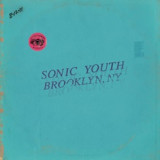
The final U.S. show, a triumphant and blistering bookend to the storied career of one of the most influential bands in rock music, featuring a unique and expansive eighty-five minute set list that spans Sonic Youth’s nearly three decade catalog. Mixed from multitrack by longtime live engineer Aaron Mullan and mastered and cut by Carl Saff. On August 12, 2011 Sonic Youth played their final US show on an outdoor stage overlooking the East River at the Williamsburg Waterfront in Brooklyn. Fitting that their storied career would bookend with a panoramic view of New York City where it all began 30 years before, having left in their wake one of one of the most powerfully influential careers in rock music. Following incredible sets from Kurt Vile and Wild Flag, the band took the stage. As the sun went down over the city, Sonic Youth ripped through a 17 song set that spanned from deep cuts off their first studio album and highlighting many other albums all the way through to their last, like a band with everything to prove. Or as Brooklyn Vegan’s Andrew Sacher said at the time: “While most bands who are thirty years into their career are either fading away or living off of the nostalgia of their older material, Sonic Youth continue to sound and perform as fresh as ever.” Steve Shelley explains the uniquely career spanning set list of Live in Brooklyn 2011 and how it came to be, as well as the importance of outdoor NYC summer shows in Sonic Youth’s legacy: “This show was a culmination of a run of really special outdoor summertime shows in New York City for us, starting in ’92 with Summerstage in Central Park when we played with Sun Ra. For the Williamsburg Waterfront show I wrote out the set list to present to the band and it was a lot of material we hadn’t played in a while, a lot of deep cuts, so I wasn’t sure if everybody would feel like doing it. After worrying about which songs the band might say yes or no to, I threw those concerns out the window and I just made a list of songs that I thought would be a great set. We practiced the week of the show at our space in Hoboken and put the set together. First we’d try and make sure we had a guitar in the song’s tuning, then we’d try to remember the arrangement and try and put it together, sometimes re-learning bar by bar. In the end I think the whole song list made it through. Even as early as ’86 and ’87 we stopped playing ‘Death Valley 69’ and ‘Brave Men Run’ with any regularity. We’d just get excited about new material coming into the set and songs would get ‘retired’ and wouldn’t get played again for years. So on this particular night in Brooklyn a lot of those retired songs and deep cuts got dusted off and played for this show. It turned out to be a pretty special event with a really special song list.” The band would go on to fulfill a contracted festival run in South America a few months later but, by then, the group’s center was severed beyond repair and the festival appearances didn’t hold the same kind of weight. “The stage was facing the East River from the Williamsburg, Brooklyn waterfront, and I recall the sun going down in the west during our set. It was a pretty magical, if kinda weird day. Fitting, somehow, that our ‘last show’ should be in New York City, our home and where it all began…” Lee Ranaldo The Williamsburg Waterfront show would fondly become referred to as ‘The Last Show’ by fans and band alike, equally for its triumphant high energy performance, its unique and expansive set list and locale. Newly remixed and remastered, Live in Brooklyn 2011 is presented for the first time on 2xLP, 2Xcd, August 18, 2023.
Attarazat Addahabia & Faradjallah's album came to us as quite a mystery. Our friends from Radio Martiko got access to the studio archive of the Boussiphone label and a reel labeled “Faradjallah” was among the items they had found there. After listening to the selection of reels they borrowed, Radio Martiko felt it was not a fit for their label and helped us licensing it from Mr. Boussiphone instead. We knew nothing about the band. We just had the reel with the music but very little information. What we knew was that the music was incredible and very unique. Gnawa sounds were combined with funky electronic guitars, very dense layers of percussions and female backing vocals more reminiscent of musical styles further south than Morocco. We started asking around whether anyone knew the band with no immediate success until we asked Tony Day, a musician from Morocco who helped us during our search for Fadoul’s family. His sharp memory came through once again, remembering all the names of the Attarazat Addahabia band members and even how to contact the bands singer and leader Abdelakabir Faradjallah. After visiting him at his home in Casablanca with our Moroccan colleague Sabrina multiple times, he shared his personal story. His father arrived in Casablanca from Aqqa at the age of six and his mother came from Essaouira. Abdelakabir was born in the neighbourhood of Benjdia in 1942. Abdelakabir Faradjallah studied fine arts in Casablanca, graduating in 1962. He also played soccer in the second team of "Jeunesse Societe One". His brother-in-law Ibrahim Sadr worked for one of the biggest football teams of the time in Morocco called "Moroco Sportive Union", which allowed him to travel to France occasionally. While Ibrahim was never part of the band he brought along a few instruments from trips.
Yet the majority of the instruments they could not afford to buy were build by Faradjallah and Abderrazak, Faradjallah's brother who passed away early. For instance they had built a Spanish guitar and a drum made of wood barrel and sheepskin by themselves.During the 1950s Faradjallah was booked as a singer for surprise parties with friends. He started to write his first songs including "L’gnawi" in 1967 and wanted to make people discover Gnawa culture, or maybe rather his take on the culture to be more exact. Faradjallah recalls his first interaction with the genre in the streets of the Dern neighbourhood, where he used to go to elementary school. Gnawa is one of the essential musical genres of Morocco. It combines ritual poetry with traditional dances and music linked with a spiritual foundation. Musically a lot of influences originated from West Africa as well as Sudan. Gnawa is usually played by a selection of specific instruments such as the qaraqab (large iron castanets centrally associated with the music), the hajhouj (a three string lute), guembri loudaâ (a three stringed bass instrument) and the tbel (large drums). People would put shells on their clothes and instruments and use incense at their parties. "Sidi darbo lalla - lala derbo khadem..." came from Gnawa verses Faradjallah used to sing when he was 14. The lyrics tackle a global (im)balance of power and the question of social status in this course. The band Attarazat Addahabia was formed in 1968. The original line-up included 14 members, all from the same family. They played their first small concerts here and there starting in 1969. Later in 1973 they performed bigger shows for instance at the Municipal Theatre followed by the "Al Massira Show" at Velodrome Stadium in downtown Casablanca. Their first album "Al Hadaoui" (the one you are listening to) was recorded at Boussiphone studios in 1972 and was never released before. Nobody seems to remember the exact reason why Boussiphone ended up deciding not to put the album out. The album's title track also served as the basis for Fadoul's "Maktoub Lah", who frequented the same circles as the band for some time.
Their shows sometimes could go as long as 12 hours, starting at 5pm in the afternoon, with an occasional break here and there. In the 1980s the band took a brief break. Faradjallah recalled the reason for that break like this: "Zaki, the bands drummer, had fallen in love with a young girl from Mohammedia. Soon after, he fell very ill. The group members were convinced that the girl had given him ‘s'hor’ (a kind of local Moroccan version of "black magic"). For four years, the whole group stopped playing. It was unthinkable to find another drummer to replace Zaki, even temporarily." So they waited four years for Zaki to "get back on his feet" before going back on stage. Apart from very few gigs here and there Faradjallah stopped playing music in the mid 1990s. Some members from the younger generations formed a new band and still play frequently to this day. Faradjallah runs a television repair shop coupled offerings beverages and snacks in the Belevedere /Ains Sbaa district of Casablanca. While Faradjallah was primarily a musician, he would work for the local cinema and paint their posters for new movies by hand and he designed all artworks and cover posters of the band.
And this eventually led to him participating actively in our first exhibition dealing with Habibi Funk’s work in Dubai 2018. He helped us by creating calligraphic complementations on large photo prints for that show.
*REISSUED ON LIMITED EDITION BLUE VINYL*
London-based electronic songwriter Ryan Lee West aka Rival Consoles to release his most personal work to date in the form of a mini-album titled ‘Night Melody’ through Erased Tapes on 5th August 2016. During the release of his acclaimed full-length album ‘Howl’ and heavy touring in late 2015, Ryan came out of a 13-year long relationship and found himself making music throughout the winter months. The result of his efforts is a 34-minute, 6-track mini album ‘Night Melody’, born out of and shaped by long hours working into the night. It’s nocturnal in sound; mysterious in the way that the early hours so often are.
“I found myself, in a silent home, with the days getting dark very early. I’ve never before in my life been affected by the lack of light so much. I just remember it always being night time. I would either make music into the night, go out drinking with friends, or go to parties and dance into the early hours, every day, week after week, month after month, until eventually the days became brighter again.” The opening statement ‘Pattern of the North’ starts off with a collage of spliced synth melodies, inspired by anxiety that accompanies going home for Christmas. It’s followed by ‘Johannesburg’, an early sketch gradually filled out during his tour in South Africa.
“After playing it around some of the cities, I got a lot of inspiration to bring it to life and push it into something that really moves me. I think this is one of my most colourful pieces of music, with its driving rhythm and almost a homage to Terry Riley’s ‘In C’ towards the end, with a build of very simple, hypnotic parts. I especially love that for over five minutes the piece is tied to just one note. This makes the ending very dramatic, because all of a sudden there is this harmonic change.” ‘Lone’ started life around the time Ryan was working on his ‘Sonne’ EP in 2014. It’s the result of constant adjustments to find the perfect balance of fragility and assurance. As everything on the album, it’s a carefully considered, emotionally mature piece. “I think, as I get older, I need music to represent something and not just sound interesting, though of course the two are connected.” The closing statement ‘What Sorrow’ is a fitting end to the album, building from gentle melancholia to a joyous crescendo. It’s a sensibility that’s central to the record; joy and sorrow both find their counterpoints.
“This record is very personal to me and I hope it offers something for other people, as it helped me to make it and to listen to it. Almost every synth line was recorded intuitively, without perfection but with a lot of intention and expression. I’m not interested in making something sad or making something happy. I want music to be bittersweet, to be more complex, like life – containing moments of vibrant colour and hope, as much as darkness and sadness.” This summer will see Ryan follow on from his recent North American Tour with the appearance at many festivals including Lovebox, Secret Garden Party, La Route Du Rock, Sea Change and Tale of Us-curated Afterlife party at Space, Ibiza.
- A1: Beastie Boys - Posse In Effect
- A2: Method Man - Sub Crazy
- A3: Jayo Felony - Penitentiary Bound
- A4: South Central Cartel - Servin' 'Em Heat
- A5: 3Rd Bass - Green Eggs And Swine
- B1: Flatlinerz - Rivaz Of Red
- B2: Redman - Hardcore
- B3: Empd - It's Going Down
- B4: Boss - 2 To Da Head
- B5: Onyx - Bichasniguz
- C1: Ll Cool J - Eat Em Up L Chill
- C2: Junkyard Band - Sardines
- C3: Nikki D - Monday We'll Be Together
- C4: Davy D - Have You Seen Davy?
- D1: Jazzy Jay - (This) Def Jam
- D2: Nice & Smooth - Let's All Get Down
- D3: The Afros - Afros In The House
- D4: Prime Minister Pete Nice & Daddy Rich - Dust To Dust
- D5: Slick Rick - King
The six letters of Def Jam, like the three of RAL (for Rush Associated Labels), Russell Simmons and Rick Rubin imprinted them indelibly into hip hop mythology. The epicenter is New York, in order to make sure to have in its ranks the best representatives of Boom Bap, Hardcore Funk, Go-Go or Electro. Beastie Boys, EPMD, Onyx, Redman, Method Man, LL Cool J, Junkyard Band, South Central Cartel, 3rd Bass; the list of MC's who left a mark stamped with the Def Jam or RAL logo is a freestyle where catching your breath is difficult. In order to study more closely the footprints left by these behemoths, Uncle O, the man behind the 5 volumes of Shaolin Soul compilations, explored the label's 1985-1995 period. From another age, tucked away behind a photograph of Glen E. Friedman, the man who created the visual history of Def Jam and RAL through iconic covers, they are the work of rap's T-Rex. Dinosaur Beats. Reviews R2, Mojo Blues and Soul, Guardian, Record Collector Ads R2, Mojo.
- A1: Lynyrd Skynyrd – The Seasons (4.09)
- A2: Barefoot Jerry – Smokies (2.14)
- A3: Joe South – Hush (3.47)
- A4: Bobbie Gentry – Papa, Won’t You Let Me Go To Town With You (2.34)
- A5: Area Code 615 – Stone Fox Chase (3.17)
- A6: Cher – I Walk On Guilded Splinters (2.32)
- B1: Cowboy – Please Be With Me (3.48)
- B2: The Allman Brothers – Ain’t Wastin’ Time No More (3.40)
- B3: Link Wray – Be What You Want To (4.29)
- B4: Boz Scaggs – I’ll Be Long Gone (4.08)
- B5: Lynyrd Skynyrd – Comin’ Home (5.29)
- C1: Bobbie Gentry – Seasons Come, Seasons Go (2.52)
- C2: Leon Russell – Out In The Woods (3.37)
- C3: Tony Joe White – Polk Salad Annie (3.42)
- C4: Barefoot Jerry – Come To Me Tonight (4.43)
- C5: Dan Penn – If Love Was Money (3.29)
- C6: Linda Ronstadt – I Won’t Be Hangin’ ‘Round (2.59)
- D1: Waylon Jennings – Big D (2.30)
- D2: Big Star – Thirteen (2.37)
- D3: Bobbie Gentry – Mississippi Delta (3.06)
- D4: Travis Wammack – I Forgot To Remember To Forget (2.54)
- D5: Johnny Cash & June Carter – If I Were A Carpenter (3.01)
- D6: Billy Vera – I’m Leavin’ Here Tomorrow, Mama (4.13)
Black Vinyl[29,62 €]
Long out of print (10 years!), this new edition of Soul Jazz Records' classic Delta Swamp Rock, features a killer all-star line-up of seminal artists who all first blended rock, soul and country together to create a stunning new sound of southern American music in the 1970s.
Featuring the Allman Brothers, Dan Penn, Leon Russell, Tony Joe White, Johnny Cash, Bobbie Gentry, Big Star, Link Wray, Area Code 615 and loads more!
This album comes as a superb limited-edition gold vinyl double vinyl release complete with extensive original sleevenotes, interviews and exclusive photography, all spread over a 12-page full-size magazine and two bespoke inner sleeves. The works!
Delta Swamp Rock is an interstate southern road-trip through the United States of America where country, rock and soul met at the crossroads - an exploration of the musical and cultural links between the cities of Memphis, Muscle Shoals and Nashville in the 1960s and 70s.
At the start of the 1970s, a new type of music emerged out of the southern states of Alabama, Tennessee, Georgia, Mississippi and Florida. Southern rock, the creation of young blue-collar white Americans, blended rock, soul, country and blues music together to present a new vision of the south – a post-civil rights southern identity complete with a celebration of the regions natural landscape and its way of life.
The Allman Brothers and Lynyrd Skynyrd epitomised the definitive southern rock groups – a mixture of blues-rock and country with a southern rebelliousness and attitude. Unfortunately both The Allman Brothers and Lynyrd Skynyrd were to be struck by tragedy, which would affect the movement’s rise and fall.
The backstory to southern rock is the fact that a number of the people involved in its creation had been central to the production of southern soul music in the 1960s mainly in Memphis, Tennessee, and the small town of Muscle Shoals (population around 10,000) deep within the bible-belt, liquor-free, deeply segregated state of Alabama, creating 100s of R&B hits on an almost daily basis.
Here in Muscle Shoals, with its proximity to Memphis and Nashville, an all-white group of in-house musicians, (famously referred to by Lynyrd Skynyrd in the song ‘Sweet Home Alabama’ as the ‘Swampers’), created countless classic soul records for the likes of Aretha Franklin, Wilson Pickett, Etta James, Clarence Carter and more during the 1960s.
This album charts the rise and fall of southern rock from its funky swamp roots in southern soul to its phenomenal success in the first-half of the 1970s, including its influence on Nashville’s ‘outlaw’ country and tracing it right back to the arrival of rock and roll in the 1950s - the first meeting of black and white American music at the crossroads.
Canto A Lo Divino is the unique musical expression of the Chilean peasant world - a conversation with the divine nourished by Biblical and other sacred texts. It is communal music, played in packed rooms throughout the night on the 25-string guitarron, its ancient melodies transmitted through the 10-line decima form originating in Spain and found across the Caribbean, South America, and even into the Mississippi Delta. Rooted in the remote Central Valley of Chile at the skirt of the mountains and following the slopes of the major rivers, the Canto tradition has persisted for centuries in the voices of hundreds of men and women who sing of saints, divine images, and angelitos (very young children who have died). The verses are also centered around daily life in the valley - labor and drought, family, animals, and plants. There are countless entonaciones (melodies) that define this region, its communities, and its unique worldview. Mississippi Records is privileged to work with the Museo Campesino En Movimiento and their archive of hundreds of hours of intimate field recordings of the Canto - music rarely, if ever, heard outside of the region. Artwork is provided by another inhabitant of Chile's Central Valley, a baker called Frederico Lohse, who brought divine visions from the Cantos to life, painted on reused flour bags. Canto A Lo Divino celebrates the complexity and solemn, stunning beauty of this nocturnal, communal form of musical devotion. Double vinyl LP comes housed in deluxe gatefold jacket with 8 pages of lyric translations and liner notes about the Canto tradition by researcher Danilo Petrovich.
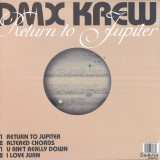
DMX Krew announces his return to Peggy Gou's Gudu Records with a new four-track EP, sharing the dreamy, Detroit-inspired title track, ‘Return to Jupiter’.
The full EP - out 14th April 2023 - will be his second release for the label and Gudu’s first release of 2023, set to be the label’s busiest year yet.
Ed DMX made his debut for Gudu with 2019’s Don’t You Wanna Play? EP, becoming the first artist to release on the label outside Peggy herself. Ed and Gudu have retained a regular working relationship ever since: he mastered Indonesian crate-digger Dea’s ‘Glazer Drum’ release for Gudu, contributed a pair of remixes to the reissue of Riff’s South African electro curio ‘Jacks Jive’, and now returns to the label with Return to Jupiter, a new original four-track EP.
Ed has been one of electronic music’s most respected faces for over 25 years. Debuting in the mid-1990s, he released his first decade of music almost exclusively through Grant Wilson-Claridge and Aphex Twin’s Rephlex label and his own Breakin’ imprint, but recent years have seen him ply his trade across a who’s who of dance music’s most respected underground labels: including Hypercolour, Balkan Vinyl, Central Processing Unit and, of course, Gudu.
Inspired by the futurist funk and vivid synthesiser epics of classic Detroit, ‘Return to Jupiter’ is dripping with richness and colour, driven by the sort of thick analogue basslines and distinctive melodies that have come to define Ed’s catalogue. The EP’s title track sets the tone for what’s to follow, introducing a language of sorts for the record - before ‘Altered Chords’ turns the funk up to 11, ‘U Ain’t Down’ aims its distorted kicks and wiggy, manipulated lead straight at peak time dancefloors, and ‘I Love Juan’ closes the EP on a star-gazing tip.
Founded by Peggy Gou in 2019, Gudu releases music from a global roster of artists, including DMX Krew, Maurice Fulton, Hiver, Dea, Mogwaa, Brain de Palma, Dukwa, JRMS and Peggy herself (including the hits ‘Starry Night’, ‘I Go’ and ‘Nabi’). 2023 will see Gudu’s busiest year to date, with new releases scheduled from the current roster and some exciting new faces.