When one of South Africa's most sought after trumpet players steps forward after a career alongside the very best in the International jazz scene, you know it's going to be a special record.
Dennis Mpale was one of South Africa's heavyweights. You'll find his name springing up on every important South African jazz record and billing since the 1960's. Chris McGregor's iconic Jazz/The African Sound LP, Abdullah Ibrahim's Dollar Brand, Barney Rachabane in the highly influential ensemble Roots, and early work in house bands appearing alongside Nick Moyake in The Soul jazz Men to name just a few. His trumpet playing had character, an extension of the body and amplifier of that great South African sound.
Leaving South Africa during Apartheid as a strong supporter and member of the ANC, Dennis made London his home, joining the newly established SA Jazz scene and standing in solidarity against the oppressions back in Africa.
Moving between London and South Africa during the 70's and 80's It wasn't till the early 1990's when Dennis finally settled again to make his biggest transition to solo artist, redefining his Jazz past and putting a heavy kwaito infused house slammer on the agenda. 1994s 'Paying My Bills' (a title maybe more appropriate now than it ever has been) is a mighty jazz kwaito house effort: From the heavy synth beat and gorgeous floating solo opener of 'Paying My Bills', to the highly infectious vocal phrasing on thumping house anthem 'Take My Time'. Paying My Bills takes the sensibilities of a jazz maestro and pairs it with one of South Africa's biggest producers Peter 'Hitman' Moticoe, creating the perfect recipe for a certified summer slammer.
Having previously only ever been released on CD, this is the first ever vinyl pressing of the album (hazy early test pressings lurk on a small number of lucky shelves). Vinyl mastering is handled by The Carvery's very own Frank Merritt here in London, with the resulting tracks generously split over 2 discs to fully appreciate the swampy heavy dub bass drolls for full dancefloor effect. It's loud and punchy and makes space for those glorious trumpet improvisations while keeping the synth refrains and heavy bass thumping.
Early plays include resident NTS DJ's and a feature on Palms Trax Radio 1 residency with surely more support to follow.
Поиск:south men
Все
The concept behind the debut album by Neapolitan producer Paolo Petrella, (also known for Fratelli Malibu, SuperMegaFuckinMachine, and Nu Genea's live band bass player) is both straightforward and unparalleled. It involves re-imagining Renato Carosone's iconic hits infused with the vibrant essence of Cumbia. An original and fresh perspective of the history of Napoli, re-thinking traditions while blending cultures, like an imaginary colony of South Americans living in Napoli’s fishermen neighborhood of Santa Lucia.
Cumbia Luciana sounds like the manifestation of a dream, as the poem on the liner notes recites:
“It's 3pm in the afternoon, the sea is calm and there are some clouds in the sky from time to time the sounds of mopeds can be heard in the street. A boy is in his bedroom and out of boredom keeps time by tapping his fingers on the bed frame.
He leaves the house for a walk keeping the sea on his side. Rumor has it that ten days ago immigrants arrived from Peru,
the boy walks and listens it's Sunday, day of celebration, it's 3.30pm the boy walks and listens he is interrupted by a whole new sound, never heard before from a window of a ground floor house men are playing, the boy stands under that window for a while”
Moving to England for its second release, Rant & Rave Records presents a proper EP from South Wales-based producer JoeFarr, known for his dancefloor jams on labels such as: 'SLAM', 'Arts', and his most recent success with 2019's epic 12" 'Death Becomes Us'. On the a-side 'In This Anger', which JoeFarr has written with Louisahhh, an anxiously dark, slowly developing atmosphere menaces behind a slow rolling, broken beat for maximum effect. This is punctuated by dark, slightly distorted female vocals with sporadic lyrics subtly encouraging its dance floors to move.. and think. Signature hard and bouncy grooves with infectious in-yer-face techno riffs dominate the rest of the EP with tracks 'Laced Up', 'You Can See Me' and 'You will See Me (Hardcore)', effortlessly weaving in and out of the pulsating groove with an interesting palette of machine sounding synths and heavily processed vocals.
NEW 45 BY DEEP-FUNK PIONEER LUCKY BROWN RECORDED DURING THE NOW LEGENDARY SPACE DREAM SESSIONS!
In around 2001, Joel Ricci, the trumpet player/composer behind his former stage alias, Lucky Brown, went traveling on a worldwide "quest for funk". During that pilgrimage, he went to London England in time to attend Keb Darge's 'Legendary Deep Funk' 6-year anniversary at Madame Jojo's. While in the middle of the dancefloor, he was moved so significantly by this obscure brand of 'deep funk' Mr. Darge was unveiling, he became overcome by a mystical sense of 'coming home'. Additionally, he spent a week at Camden's Jazz Cafe to meet The Poets of Rhythm, The Breakestra, The Sugarman Three, DJ Snowboy, DJ James Trouble, and others. When Joel mentioned the nature of his quest to Neal Sugarman, he warmly invited him to come visit Brooklyn and kick it with members of Antibalas, Binky Griptite & The Mellomatics, and the Dap Kings. But before the trip back to the states, Joel spent some time in Paris playing his trumpet at a club called 'Cithea' where they would host weekly 'rare groove' jam sessions. During the jams, Parisian students of Tony Allen would overtake the stage with their instruments and their full African clothing, chant the word, 'Fela', and begin to play this intense free improvised funk and afrobeat. While traveling by train from Paris to the south of France to visit family, Joel began hearing this inspiring polyrhythm swirling in his inner ear and mixing with the "clack-clacka" of the train moving down the track. As soon as he arrived at his destination, he sat down at a piano and jotted down the polyrhythm, bass line and fundamental horn cluster on a piece of sheet music paper. The simple tune was finally rendered to tape ten years later with Lucky Brown's Crawdad Farmers aka The Funk Revolution on the Magik Carpet at drummer Olli Klomp's Lakeside log cabin in Stanwood, Washington. The tune became the title track to Lucky's first full-length on Tramp Records (Lucky Brown's Space Dream, TRLP-9011).
Space Dream is so titled in part to commemorate a soulfunk masquerade party Joel threw at a temporary all-ages Bellingham Washington music venue called 'The Pickford Dream Space'. This is Joel's stripped-down tape-only remix and re-edit which has never before appeared on 45RPM and commemorates the re-release, remaster and repackaging of upcoming Tramp LPs, "Space Dream" and "Don't Go Away", the fully realised 'director's cut' featuring Ricci's early group funk experiment: "The Funk Revolution."
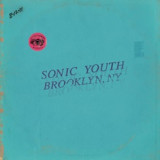
The final U.S. show, a triumphant and blistering bookend to the storied career of one of the most influential bands in rock music, featuring a unique and expansive eighty-five minute set list that spans Sonic Youth’s nearly three decade catalog. Mixed from multitrack by longtime live engineer Aaron Mullan and mastered and cut by Carl Saff. On August 12, 2011 Sonic Youth played their final US show on an outdoor stage overlooking the East River at the Williamsburg Waterfront in Brooklyn. Fitting that their storied career would bookend with a panoramic view of New York City where it all began 30 years before, having left in their wake one of one of the most powerfully influential careers in rock music. Following incredible sets from Kurt Vile and Wild Flag, the band took the stage. As the sun went down over the city, Sonic Youth ripped through a 17 song set that spanned from deep cuts off their first studio album and highlighting many other albums all the way through to their last, like a band with everything to prove. Or as Brooklyn Vegan’s Andrew Sacher said at the time: “While most bands who are thirty years into their career are either fading away or living off of the nostalgia of their older material, Sonic Youth continue to sound and perform as fresh as ever.” Steve Shelley explains the uniquely career spanning set list of Live in Brooklyn 2011 and how it came to be, as well as the importance of outdoor NYC summer shows in Sonic Youth’s legacy: “This show was a culmination of a run of really special outdoor summertime shows in New York City for us, starting in ’92 with Summerstage in Central Park when we played with Sun Ra. For the Williamsburg Waterfront show I wrote out the set list to present to the band and it was a lot of material we hadn’t played in a while, a lot of deep cuts, so I wasn’t sure if everybody would feel like doing it. After worrying about which songs the band might say yes or no to, I threw those concerns out the window and I just made a list of songs that I thought would be a great set. We practiced the week of the show at our space in Hoboken and put the set together. First we’d try and make sure we had a guitar in the song’s tuning, then we’d try to remember the arrangement and try and put it together, sometimes re-learning bar by bar. In the end I think the whole song list made it through. Even as early as ’86 and ’87 we stopped playing ‘Death Valley 69’ and ‘Brave Men Run’ with any regularity. We’d just get excited about new material coming into the set and songs would get ‘retired’ and wouldn’t get played again for years. So on this particular night in Brooklyn a lot of those retired songs and deep cuts got dusted off and played for this show. It turned out to be a pretty special event with a really special song list.” The band would go on to fulfill a contracted festival run in South America a few months later but, by then, the group’s center was severed beyond repair and the festival appearances didn’t hold the same kind of weight. “The stage was facing the East River from the Williamsburg, Brooklyn waterfront, and I recall the sun going down in the west during our set. It was a pretty magical, if kinda weird day. Fitting, somehow, that our ‘last show’ should be in New York City, our home and where it all began…” Lee Ranaldo The Williamsburg Waterfront show would fondly become referred to as ‘The Last Show’ by fans and band alike, equally for its triumphant high energy performance, its unique and expansive set list and locale. Newly remixed and remastered, Live in Brooklyn 2011 is presented for the first time on 2xLP, 2Xcd, August 18, 2023.
Vom kultigen Live-Act in seiner Heimatstadt Kapstadt bis hin zu einem Album, das im Inland die Charts toppt – Jeremy Loops legt mit seinem musikalischen Werdegang eine Bilderbuch-Karriere hin. Als Tour Support von Twenty One Pilots gelang Jeremy Loop sein internationaler Durchbruch. Es folgte eine eigene ausverkaufte Headline-Show mit 30.000 Besuchern, die eine ebenso ausverkaufte Headline-Show in Londons zur Folge hatte. Es ist die Kombination aus verschiedenen Genres, die er stimmig in einanderfließen lässt
– moderne Folklore mit einer urbanen Note, die von sanften, mitreißenden Balladen bis hin zuhymnischen, arenafähigen Knallern reicht. Mit seinen Shows erobert und begeistert Jeremy sein Publikum – denn diese sind absolut nicht Genre-typisch! Statt langsamen und bedachten Shows erschafft er eine einmalige und energiegeladene Atmosphäre, die seine Fans mitreißt.Mit seiner Hit-Single„Down South“ aus seinem Debütalbum „Trading Change“ wurde Jeremy zu einem gefeierten Star in seinem Heimatland Südafrika. Sein zweites Album hingegen schaffte es weit über die Grenzen hinaus und begeisterte auch den Rest der Welt.Durch seine Kollaborationen, darunter mit Will Hicks (Ed Sheeran’s Perfect) und Jake Gosling (The
Libertines, Shawn Mendez), machte er sich einen hervorragenden Namen in der Musikszene. Jeremy Loops hat ein wahrhaftes Händchen für musikalische Meisterwerke.
In Japanese, the word “Guru-Guru” refers to the state of spinning, whirling.?
This state is captured in the work of Japanese artist Hoshina Anniversary, who makes his third appearance on MUSAR with his EP Guru Guru and marks the return of the label after an extended break.
Hoshina’s self-titled brand of ‘Watechno’ has appeared on well-loved dance music labels like ESP Institute, Volvox’s Jack Dept and Young Marco’s Safe Trip, alongside MUSAR where he also appeared as Shifting Gears back in 2022; an electronic-jazz-centered moniker.
His Guru Guru EP captures the latest snapshot of Hoshina’s sound and sees him draw from Japanese language as a through-line.
The title track is the clearest representation of his ‘Watechno’, where he uses Japanese instrumentation on top of a menacing EBM-style march. The track's slowly whirling momentum is the “Guru-Guru”.
On tracks like “Banri”, which means far away in Japanese, we see new shades to Hoshina’s work as he mixes a Japanese Wadaiko drum groove with acidic elements and piano melodies to make a track of contradictions which pairs roughness with elegance. Whereas on “Usagi”, Japanese for rabbit, Hoshina fires up the BPM.
Piano melodies remain here but their effect is more drifting and emotive than on “Banri”.
“Kaga” is named after a place in the southernmost part of Ishikawa Prefecture, between Kanazawa City and Fukui City.
On this track, Hoshina’s love for jazz comes through and even mirrors the work we heard from him under Shifting Gears.
This new album compiles several songs made in the years following Black To Comm's classic "Alphabet 1968" album. Originally released on the seminal Type label in 2009 (and to be reissued on Cellule 75 this year) "Alphabet 1968" combined the sound of vintage shellac and vinyl loops with broken electronics and field recordings, the press release mentioning disparate influences "ranging from Moondog to Basic Channel by way of Bernard Herrmann". In a beautiful one-page review in The Wire magazine (later reprinted in his book Ghosts Of My Life) Mark Fisher compared Richter's music to JF Sebastian’s miniature automata in Blade Runner ("with their bizarre mixture of the clockwork and the computerised, the antique and the ultramodern, the playful and the sinister"), ETA Hoffmann's inventor-magicians and Auguste Villiers de l'Isle-Adam's 1886 tale of Thomas Edison's (fictitious) construction of an artificial human.
Now titled "Coh Bâle" (inspired by a strange dream) these recordings were supposed to become a follow-up to said album but for reasons unknown it never materialized and the album seemed forever lost. At the time Richter started to dive deeper into several strains of (so-called) world music aka the folk music of Southeast Asia and Eastern Europe as well as liturgical and medieval music, the Kraut-Electronica of Harmonia and several certain Mediterranean experimentalists from the 1980's who started to merge their mostly electronic and field recording based compositions with traditional musics from all over the world by way of new sampling technology.
Many of the songs for the album were recorded while travelling and at various residencies around Europe: a detuned piano in a Thessaloniki basement (Richter played at a children's birthday party there), vintage synthesizers in the GRM studios in Paris, decaying acoustic instruments found in an old Black Forest mansion, childrens' voices at a workshop in Karlsruhe's ZKM Institute; then mixed on headphones in the ICE trains running between these places and his hometown Hamburg.
"Coh Bâle" is taking inspirations from old Nonesuch Explorer and Ocora LP's, Crammed Records, 80s Mediterranean Ambient (Nuno Canavarro, Roberto Musci) combined with the DIY spirit of Deux Filles and Flaming Tunes and the playfulness of Asa Chang & Junray. The songs are both mysterious and transparent, intricate and frugal, vibrant and patient. One of the album's unexpected climaxes is a gorgeous (artificial) berimbau version of the Welsh traditional "Iechyd o Gylch".
No two songs feature the same instrumentation and many acoustic sources (pianos, flutes, wood percussion, viola, tablas, autoharp) were disassembled and later coalesced into new configurations or used as virtual instruments; later combined with samples, field recordings, electronics and (on a few tracks) autotuned vocals reminding of recent works by the likes of Claire Rousay or More Eaze.
We had to wait for a worldwide pandemic for Richter to dig deep into the vaults and finally bring these recordings to light. This is the 2nd release from his archives after the "Diode, Triode" LP which presented Musique Concrète/Acousmatic recordings made at INA/GRM and ZKM. Another massive Double-CD (MM∞XX Vol. 1 & 2) was released last year featuring collaborations with 33 artists such as Andrew Pekler, Richard Youngs, Eric Chenaux, Maja Ratkje, Radwan Ghazi Moumneh of Jerusalem In my Heart, GRM boss François Bonnet (Kassel Jaeger), Felix Kubin, Timo van Luijk (In Camera, Af Ursin), Luke Fowler and many others, showing Richter's versatility and his willingness to reinvent himself for every new release.
Marc Richter is widely known under his Black To Comm moniker, having released (at least) 12 albums under this alias in the last 20 years. He is currently signed to the Thrill Jockey label. Richter composes soundtracks for film and has worked with visual artists such as Mike Kelley and Ho Tzu Nyen. He also records as Jemh Circs and Mouchoir Étanche for his own Cellule 75 label (named in tribute to the late Luc Ferrari).
From Alehouse to Playhouse Bjarte Eike and his barnstorming Barokksolistene capture the vital spark of Restoration London’s entertainment scene with a captivating new recording for Rubicon Classics! The Playhouse Sessions will be released on 23 September 2022 to coincide with Barokksolistene’s concert double-bill at London’s Southbank Centre.
‘A smattering of Purcell, dances from Playford’s Dancing Master, shanties, reels and ballads succumb to a nine-piece ensemble drawing on Baroque, jazz and folk styles for a no holds barred hooley of riotous improvisatory give and take,’ (BBC Music Magazine review of The Alehouse Sessions, August 2019)
London’s musicians, pushed in the 1650s, to the margins of society by order of Oliver Cromwell, found room for new forms of entertainment in city-centre taverns and alehouses. They remained there long after the restoration of the monarchy, performing sets of dances, theatre songs and bawdy ballads to audiences glad to be free from Puritan constraints on pleasure.
Norwegian violinist Bjarte Eike and his Barokksolistene have restored the spirit and substance of those long-forgotten performances with their Alehouse Sessions, hailed by The Times as ‘irresistible’ and ‘fabulously unrestrained’ by The Guardian. Five years ago the Norwegian violinist and his band scored a best-selling album with The Alehouse Sessions on Rubicon Classics. They return to the label with another compelling collection of music and words of the kind on offer more than three centuries ago at Henry Purcell’s favourite Westminster watering holes. The Playhouse Sessions, set for release on Rubicon Classics on 23 September 2022, reflects the uplifting energy and engaging emotional contrasts of Barokksolistene’s Alehouse performances.
“The album contains a sort of inner narrative that runs through the recording,” says Bjarte Eike. “It has become like a play in its own right, with each track being a small tale within a larger story.” The recording’s tracklist includes Eike’s beguiling arrangements of music from Purcell’s semi-opera The Fairy Queen and his own original compositions on words from the play on which it is based, Shakespeare’s A Midsummer Night’s Dream; popular songs and ballads such as ‘The Irish Washerwoman’, ‘I often for my Jenny strove’ and ‘The Three Ravens’; tunes from Purcell’s welcome odes and stage shows, Come ye sons of art and Dido and Aeneas among them; the ‘Willow Song’ from Shakespeare’s Othello; Eike’s own voice in Puck’s monologue from Act 5 of A Midsummer Night’s Dream; and John Dowland’s sublime air ‘Can she excuse my wrongs’.
London’s theatres were closed at the start of the English Civil War in 1642 and remained shut until the Restoration. Alehouses offered redundant musicians, actors and dancers a place to scrape a precarious living and soon became their creative refuge. “Although a few surviving theatres reopened in 1660 with the return of Charles II, there was little money around to rebuild those that had been demolished,” observes Bjarte Eike. “And a generation of musicians had already found an audience in places like the Black Horse in Aldersgate Street. So popular were their alehouse sessions that Cromwell tried to abolish them! But they outlived him and became part of Restoration musical life.” The form of a Barokksolistene Alehouse, he adds, is like a creative room. “Within its framework I can frequently refurbish the show with new contents. The Playhouse project is likewise an extension of the ever-evolving Alehouse Sessions. Together they tell the story of music and theatre in London during Cromwell’s time and after the Restoration. Of course there’s an historical context to what we do. But there’s also the practical context – which is even more important to me – of connecting with a contemporary twenty-first century audience. An Alehouse / Playhouse performance is not something for the museum; it's about music made in the present moment, just as it was in the London alehouses of Purcell’s day -- with their playhouses annexed to the rear of the beer-drinking saloons. The encounter of musicians onstage and the audience in the hall is the real magic of it. We have to fuse the audience into the action of our performance!”
The Playhouse Sessions will be launched on Friday 23 September with a late-night concert at the Purcell Room and a post-concert Alehouse Session in the foyer of the Queen Elizabeth Hall. Soprano Mary Bevan is set to join Eike and his Alehouse Boys for the first half of their Southbank Centre double-bill, offering unique interpretations of songs from Purcell shows and other hits from the late seventeenth-century London stage. “The Southbank Centre is a direct descendant of concerts given in the 1650s in the alehouses of London,” notes Eike. “These alehouses after all staged some of the world’s first public concerts. Later, after the Restoration, it became common for promoters to advertise alehouse concerts in the press and offer subscription tickets. Purcell and his fellow musicians were thus just as at home performing there as they were in the chambers of the royal court or in London’s new theatres.”
Bjarte Eike launched his Alehouse Sessions in company with like-minded musicians 15 years ago. The ensemble comprises a core of regular performers, all of whom have committed to memory a huge setlist of up to four hours of music. Typically they meet a day or so before a concert tour to share a meal and make music together; then next day, re-grouping thirty minutes before the show, they discover Eike’s select-menu for the evening. “That ensures that every show is fresh,” he notes. “I make sure we never repeat the same programme twice. It’s therefore essential to work with people who share my outlook and dare to adventure. We’re into a high-risk sport, with lots of traps and places where the unexpected appears - for good or for ill. And so the audience knows we’re vulnerable. But our skill is seen in how we re-act on the hoof to the unpredictable. That’s authenticity and honesty - and above all it’s a performance that’s genuine.”
Armed with a classical training and a background in folk music and improvisation, Bjarte Eike was drawn naturally to Early Music in all its stylistic variety. “I never really felt at home with only one genre,” he recalls. “Early Music allowed me to study profound, complicated compositions, but performing it has also opened up the chance of rebellion and uproar! Early music offers wide, multi-faceted areas of musical exploration for me. You find, for instance, links to different types of music wherever you look in seventeenth-century English repertoire. And I am fascinated by all these connections. They offer a foundation for the Alehouse Sessions and for all Barokksolistene performance more generally. Every member of the group plays, sings, dances and improvises without limitation. We’re all interested in the many different fields of being a stage performer and pushing hard at the ‘normal’ boundaries of what it means to be a classical musician.”
Formed in Mamelodi township near Pretoria, the group started out as Malombo Jazz Men with Julian Bahula on malombo drums, Abbey Cindi on flute and Philip Tabane on guitar Fusing traditional and improvised rhythms with jazz, Malombo became renowned as one of the first South African bands to fully connect jazz with the African traditions. Despite his undoubted genius, Tabane became erratic on tour and Bahula brought in another Mamelodi-based talent, guitarist Lucas “Lucky” Ranku, renaming the band Malombo Jazz Makers. The group played stadiums and festivals and were soon signed to Gallo. Recording at a studio in Pretoria, the trio debuted with the album ‘Malompo Jazz’ in 1966, showcasing the simple, spacious beauty of the Malombo sound and Abbey Cindi’s compositions, with Mahotella Queens’ Hilda Tloubatla on guest vocals. The partner follow-up album ‘Malombo Jazz Makers Vol. 2’ was recorded a year later, continuing the earthy flow of Malombo’s music. The two albums have since been recognised as unique landmarks of South African jazz through popular tracks like ‘Sibathathu’, ‘Jikeleza’ and ‘Emakhaya’. Alongside full original artwork, the albums feature a new interview with Julian Bahula.
Ziegen zu Tode starren! Die psychedelischen Agenten, die von ARSGOATIA aufgespürt wurden, mögen unterschwellig geglaubt haben, sie starrten den Teufel an. Aber der Teufel lebt im Spiegel und versteckt sich immer noch unter den Menschen. Eingeschworen auf den fauligen Samen und die lebensfeindliche Schöpfung, atmen ARSGOATIA 2021 in Salzburg/Österreich ihre Zungen aus, aus dem Gefolge der Funkenfluggesellschaft und den Bewohnern der mystischen Neudegg Alm. ARSGOATIA zelebriert das goldene und heilige Metall des Todes, das sich mit Blutrausch, Antiklerikalismus, Perversion, rasender Gewalt und Grausamkeit schnell nähert!
Dies ist die Kunst der Schöpfung der Ziege. Es ist die Darstellung der Obszönität und ARSGOATIA ermöglicht den Zugang zu ihrer musikalischen Phantasie jenseits dieser Welt. Der erste Ausbruch des kommenden Fluches "Hiding Amongst Humans" trägt den Titel "In The Veins Of The Saints" und bietet eine atemberaubende Färbung voller Heuchelei und Verwünschungen. Eine Täuschung, um andere Menschen auf einen anderen Standard zu bringen, als den, auf den sie sich selbst bringen. Es geht nicht darum, dass man seine Regeln nicht einhält, sondern darum, dass man für andere andere Regeln hat als für sich selbst.
Canto A Lo Divino is the unique musical expression of the Chilean peasant world - a conversation with the divine nourished by Biblical and other sacred texts. It is communal music, played in packed rooms throughout the night on the 25-string guitarron, its ancient melodies transmitted through the 10-line decima form originating in Spain and found across the Caribbean, South America, and even into the Mississippi Delta. Rooted in the remote Central Valley of Chile at the skirt of the mountains and following the slopes of the major rivers, the Canto tradition has persisted for centuries in the voices of hundreds of men and women who sing of saints, divine images, and angelitos (very young children who have died). The verses are also centered around daily life in the valley - labor and drought, family, animals, and plants. There are countless entonaciones (melodies) that define this region, its communities, and its unique worldview. Mississippi Records is privileged to work with the Museo Campesino En Movimiento and their archive of hundreds of hours of intimate field recordings of the Canto - music rarely, if ever, heard outside of the region. Artwork is provided by another inhabitant of Chile's Central Valley, a baker called Frederico Lohse, who brought divine visions from the Cantos to life, painted on reused flour bags. Canto A Lo Divino celebrates the complexity and solemn, stunning beauty of this nocturnal, communal form of musical devotion. Double vinyl LP comes housed in deluxe gatefold jacket with 8 pages of lyric translations and liner notes about the Canto tradition by researcher Danilo Petrovich.
- A1: Erstes Kapitel (Verschliffen)
- A2: Zweites Kapitel (Ruckartig)
- A3: Drittes Kapitel (Ungesagt, Dann Vergessen)
- A4: Viertes Kapitel (Bewusstseinsfrei)
- B1: Fünftes Kapitel (Kreuzweis)
- B2: Sechstes Kapitel (Herausgewunden)
- B3: Siebentes Kapitel (Verflochten)
- B4: Letztes Kapitel (Halb Vermutet, Halb Gesehen)
11th album by the one-of-a-kind collective: psychedelia and free form jazz (not jazz) trigger a sophisticated excursion into weird textures with drastic turns. Dislocated dense music full of secret connections!
Kammerflimmer Kollektief – "Schemen"
Before reason prevails, invoked by those who want everything to remain as it is, Kammerflimmer Kollektief disrupts the established supply chains of sound. It seeks more interesting ways to assemble them. Trusting in this, because of the fact that every sound that still comes out of a guitar, a bass, a harmonium, drums and electronic devices has already been taken into the common mangle of meaning anyway. Enough of all that. Here, nothing is explained. Here we speak in schemes. Polished and jerky.
The images that Kammerflimmer Kollektief conjures up therefore happen not in the focus of consciousness, but rather in its outer realms. In those to which one does not give one's full attention at the moment, but which are nevertheless perceived. For example, when a leaf falls from the ground back up to the tree in the corner of your eye, and for an instant you think this is possible, before you realize it was a small bird flying into the tree; it is in just such irritating moments between perception and realization that the art of the Kollektief also unfolds. On "Schemen", familiar fragments float gently around their core – a Fender Rhodes tone, a bass figure, a guitar motif, a masterful drum shuffle, a moment of icy stasis borrowed from the harmonium playing of Christa 'Nico' Päffgen. Triggering brief associations, they slowly rush off in other directions through free jazz-informed editing work, whereupon such zones can also arise in which perception has a few tricks ready and earlier experience suddenly breaks into the now in a completely different way. Half suspected, half seen.
Half-music like Can from Cologne – also masters of improvised editing – sometimes produced a few decades ago in their in-between moments. The first minutes of "Future Days" for example, which fade in gently, sketch a barely graspable figure emerging from all directions of the room. Kammerflimmer Kollektief also engages in similarly open moments of development. Loosely, it eludes the first formative impressions, keeping itself ready for moments that do not follow any logic of appointment. This looseness in handling makes Kammerflimmer Kollektief so fluidly audible, even when dissonant peaks and free playing arise. What Karlheinz Stockhausen is to Can's understanding of composition, the recordings of The Cocoon are to Kammerflimmer Kollektief. The Cocoon, a meeting of garage psychedelics from the Hannover area with free jazzers from the Galaxie Dream Band, whose album "While The Recording Engineer Sleeps", recorded in 1985 in unguarded moments, operates in a very similar way with decentralized perceptual ambivalences and only appeared more or less secretly four years later on Wilhelm Reich Schallspeicher. Other traces of "Schemen" lead to the debut album of Quicksilver Messenger Service. The guitars of Gary Duncan and John Cipollina, which refer to themselves in an unforced manner, are instructions to let go. They don't want to be traced in every note as a solo, but they give their music a sense that the essential takes place off center, in the mutual and intuitive gift of loving attentions. Consciousness-free.
Loving turns like the little guitar phrase that, like a kind of leitmotif, is repeatedly ghosting more or less unchanged through all of the Kammerflimmer Kollektief albums. A Coricidin induced, very catchy slide idea filtered out of ancient Æther, which – who knows – maybe even centuries ago found its way from somewhere to America – the old, the eerie – and from there wafted on through the ages to southern Germany, to a smoky studio in the Upper Rhine lowlands. A memory of which even the memory no longer knows what it once reminded. Unsaid, then forgotten.
In Kammerflimmer Kollektief you will also find a friend of slowly building, unhurried music, which probably would have been appreciated by the old Franz Mesmer, who 200 years ago, after tranquilizing treatments, sometimes used to play for his patients ambient melodies on the enormous glass harmonica. However, in order not to surrender completely to the flow of one's own life energy, as Mesmer had in mind with his therapies, Kammerflimmer Kollektief occasionally adds hectic tensions, gently embraced by the droning of a sine wave generator, as if a trance could briefly refesh. This old analog sine wave generator is new in the Kammerflimmer assortment of sounds. So, the art of the Kollektief likes to dock occasionally in modern times, yet with the past in mind. Mental states begin to flicker between imagination and certainty, between culture-bound art expression and coincidences: A cawing and scraping can always just be a cawing and scraping with Kammerflimmer Kollektief, the way Andy Warhol's mushroom eater just eats a mushroom.
Heike Aumüller's cover works, which illustrate all the Kammerflimmer Kollektief albums, additionally act as amplifiers of unexplained refractions. Her style consists of eye-corner art that remains so, even when looked at directly. Her shots remain disquieting because they do not jolt themselves into a reassuring order, even in retrospect. Rather than evading the fear that arises when looking at them by trying to impose some irrational rhyme or reason, that fear must simply be endured. This strategy of endurance is equally applicable to the music. The trick is to let parts be parts without compulsively seeking delusional patterns that lull us into a false sense of security and in doing so, possibly delude ourselves. In this context, freedom means not having to anxiously attach a fantasized superior meaning to everything. "Schemen" has an conspiracy disintegrating effect.
b A2 Zweites Kapitel (ruckartig) [feat. Heike Aumüller]
Edition OF 500 copies, Comes with insert and download code.
An album that sounds like The Menahan Street Band playing in a tropical jungle, at dawn, right at the point when the first rays of sunlight penetrate the dark depths of the forest. During the 2022 summer of natural disasters, under an unprecedented heatwave, and haunted by news reports of ancient relics, sunken ships, and hunger stones resurfacing as rivers dried-up all-over Europe, Amsterdam based multi-instrumentalist producer Alex Figueira started to hear uncanny metallic vibrations And eerie melodies of untraceable origins, day and night. He recalls nightmares of winged creatures inside timeless structures of Escherian architectures playing cosmic instruments amidst tropical storms
and acid rains. As the visions came more often, his wife reported that he babbled during his sleep about South American demon Yurupari. Soon, Alex found himself in a sleepless state and decided to cleanse the studio, with hallowed rites and
the intense burning of Palo Santo. After almost burning the studio down, he turned to his neighbourhood’s most experienced psychic, seeking answers. He was told there were “cosmic entities” trying to manifest a message “too complex for us to understand in this dimension” and the only way he could find peace was to deliver those messages in a decipherable form. It was then he decided to transmute his hallucinations into music, an all-or-nothing cathartic solution.
Alex entered a feverish dream, fuelled by the kaleidoscopic motion of the cosmos, ancient meteor showers, and visions of forgotten interstellar South American gods. He remembers very little of the work, but the outcome is this record. Entirely composed, recorded, produced, and mixed in a frenetic nine-day studio stint.
How the experts describe it:
”Just when outernational vinyl vampires thought they had it all sewn up, the metronomic makeshift
magician known as Alex Figueira unravels the entire fabric of your record collection to expose a gaping
hole where PUNKUMBIA and Transplant-Tropicalia should be. Reducing an expansive palette of
influences to a recipe that tastes wildly exotic but comfortably over-familiar, Alex’s roles as both
scavenger and chef, bookend a whole ensemble of other highly adept musical personalities in between.
Discover this record NOW, or wait until all your friends (or enemies) recommend it to you later.”
Andy Votel (Finders Keepers)
“Incendiary, lysergic takes on South American and Caribbean music from one of the scene's truly
authentic and eccentric producers. You can always count on Venezuelan-born, Amsterdam-based,
multi-instrumentalist, music-fanatic Alex Figueira to surprise and innovate, whilst consistently keeping it
true and real. The former Fumaça Preta drummer & front-man's debut solo album does not disappoint!”
Miles Cleret (Soundway)
“The one man band Alex Figueira comes through with some major flavors on this one. Cumbia beats and
psychedelic elements with that Latin touch of soul & Funk!”
Kenny Dope (Masters at Work)
“I really respect Alex Figueira’s DIY ethos. From running his own little funky recordstore to running his
own label and making his own music by playing every instrument himself. I was already a fan of the song
“Aprende” which he released on 7 inch and with“Mentallogenic” he takes it a step further in that same
vibe. From songs like “La Culebra” making use of a vocoder in his typical latin sound to songs like
“Serious” playing with rhythmic changes and topping it off with some synth flavors. A lovely and fun
album”.
Antal (Rush Hour).
In his South London flat, James Howard gestures apologetically at the mess of books, lined A4 paper and stationary at his desk. “I butcher poetry for a living,” he explains, “It isn’t a pretty job, but someone has to do it.” This being 2022, every emerging musician needs a side-hustle to keep the house warm. In the daytime, our host writes study guides to help teachers teach poetry to pupils who would rather be elsewhere. “I make sure the poems are clinically dead by the time they reach the schools.”
An explanation punctuated by a mildly contrite shrug makes you want to lean forward and remind Howard about some of the stuff other people are doing for a living. And, more to the point, aren’t doing. Which brings us to the real matter at hand. For Howard, foregrounding his own songs hasn’t always come naturally. An enthusiastic collaborator, he made two well-received albums with his previous band Blue House and played with the likes of Rozi Plain, Alabaster dePlume and his wife Dana Gavanski, as well as running his own music night with Sam Tyler in London, Incredible Society. It’s important to mention these creative hook-ups because Howard feels that, in one way or another, they all helped to give form and shape to the lilting lunar lullabies that would ultimately comprise his ravishing solo debut Peek-A-Boo.
- A1: Jj's Powerhouse ? Running For The Line
- A2: Storm Queen ? Raising The Roof
- A3: Jameson Raid ? It?S A Crime
- A4: A.r.c. ? Homemade Wine
- A5: Metropolis ? The Raven
- B1: Prowler ? Temporary Insanity
- B2: Christian Steel ? Need Your Love
- B3: Black Rose ? Sidewinder
- B4: Dark Age ? Star Trippin?
- B5: Sorcery - Whales
If you were smart enough to get your grubby paws on the first Scrap Metal compilation, you probably have a pretty good idea of what you’re in for with our second installment. Featuring long-lost gems from ultra-rare 45s and private press singles—plus one previously unreleased banger—Scrap Metal 2 maintains a steady NWOBHM course. Packed with infectious outliers and supremely talented one-and-done metal warriors from the crucial British movement of the late ’70s and early ’80s (and some killer American obscurities inspired by them), this collection delivers all the fist-pumping, riff-mongering and flashy solos of heavy metal’s golden age. As always, every track has been officially licensed and every artist gets paid. As a late entry into the NWOBHM sweepstakes, JJ’s Powerhouse was formed in Merseyside, England, by guitarist Jon “J.J.” Cox with members of his previous band, Quad. Much like the opener to the original Scrap Metal comp, you can hear early Metallica coursing through this legendary ripper. Coincidentally, this ultra-rare 45 was released in ’83, the same year as Kill ’Em All. Taking their name from a 1978 sci-fi novel by Marion Zimmer Bradley, Welsh super troopers Storm Queen reveled in animal-print clothing and flying Vs. The Motörhead-meets-Priest anthem “Raising the Roof” is the flipside to their only single, which the band self-released in 1982. Led by guitarist Dave Morse, Storm Queen’s earliest lineup included bassist Bryn Merrick (RIP), who would go on to join The Damned. Roaring out of Birmingham, England, in 1975, Jameson Raid palled around with fellow Brummies Black Sabbath and named themselves after a failed 19th century attack that helped kick off South Africa’s Second Boer War. Their three-song 1979 debut featured the infectious “It’s a Crime,” which comes across like a deadly hard-glam version of Budgie. Still fronted by vocalist Terry Dark, they’re going strong as of 2022. A.R.C., a punky proto-metal group from the UK, released the boozy single “Home Made Wine” b/w “The Chase” in 1979 and—as far as we know—were never heard from again. They’re not to be confused with a gang of Tolkien enthusiasts also called A.R.C., who released two NWOBHM singles in the early ’80s and actually were heard from again. Nonetheless, the A.R.C. we have here was led by a thirsty lad named Klaus Brunnenkant, who liked to rock n’ roll all night and party every day. Both sides of Metropolis’ sole single bear the legend, “Unauthorized duplication shall result in getting your ass beat.” This San Jose metal squad released their only single in 1986 and dedicated it to Metallica bassist Cliff Burton, who had recently been killed in a bus accident. “The Raven” is the serpentine NWOBHM- and Edgar Allan Poe-influenced flipside to “Time Heals Everything,” and yeah, you can hear the guitars going out of tune on the solo, but that’s part of the charm. Of the two dozen or so metal bands that have called themselves Prowler over the years, we’re pretty sure this particular Prowler is the only one from San Diego. These dudes take a thrashier approach than most of the bands here on Scrap Metal 2: “Temporary Insanity” strikes a deft balance between early Anthrax and early Testament, with just enough hard rock swing to keep it from getting overly staccato. Self-released in ’86 as the band’s only single, the song is the flip to “I Love It.” Not much is known about Christian Steel beyond this: They put out their only single in 1983, which boasted “Need Your Love” as the flip to “I Don’t Want To.” The former, included here, sounds kinda like a dizzy, more metallic version of ’70s Jersey rockers Starz, who famously influenced the likes of Mötley Crüe, Poison and Twisted Sister. Ohio guitarist/vocalist Marty Soski’s career dates back to at least 1969 with the Inside Experience track “Be On My Way,” which we unearthed for our own Brown Acid: The Third Trip. This time, we’ve got a monster Soski cut that he recorded under the name Black Rose. Released in 1982, the absolutely smokin’ “Sidewinder” was the A-side on the band’s sole single. The main riff isn’t far off from Y&T’s major-label banger “Mean Streak,” which was released the following year. When Dark Age titled their 1987 album The Youngest Metal Band in the World, they weren’t even sort of kidding. Legend has it that “Star Trippin’,” which was released as a single a year earlier, was written by guitarist CJ Rininger when he was just 12 years old. His brother Dave, the vocalist, was two years younger. Old photos of the band—complete with pineapple haircuts—seem to bear this story out. Either way, the song is pure flash metal, conjuring Sunset Strip sleaze all the way from Ohio. By now, all you heads know Los Angeles magic men Sorcery from their storied appearance in—and soundtrack for—the death-defying Ozploitation flick Stunt Rock. What we have here in “Whales” is a previously unreleased track from the same 1978 recording sessions. It’s a little bit Zeppelin, a little bit prog, and a whole lotta thundering riffage. Why this languished in the vaults for so long is anyone’s guess. Better late than never!
- A1: Jj's Powerhouse ? Running For The Line
- A2: Storm Queen ? Raising The Roof
- A3: Jameson Raid ? It?S A Crime
- A4: A.r.c. ? Homemade Wine
- A5: Metropolis ? The Raven
- B1: Prowler ? Temporary Insanity
- B2: Christian Steel ? Need Your Love
- B3: Black Rose ? Sidewinder
- B4: Dark Age ? Star Trippin?
- B5: Sorcery - Whales
If you were smart enough to get your grubby paws on the first Scrap Metal compilation, you probably have a pretty good idea of what you’re in for with our second installment. Featuring long-lost gems from ultra-rare 45s and private press singles—plus one previously unreleased banger—Scrap Metal 2 maintains a steady NWOBHM course. Packed with infectious outliers and supremely talented one-and-done metal warriors from the crucial British movement of the late ’70s and early ’80s (and some killer American obscurities inspired by them), this collection delivers all the fist-pumping, riff-mongering and flashy solos of heavy metal’s golden age. As always, every track has been officially licensed and every artist gets paid. As a late entry into the NWOBHM sweepstakes, JJ’s Powerhouse was formed in Merseyside, England, by guitarist Jon “J.J.” Cox with members of his previous band, Quad. Much like the opener to the original Scrap Metal comp, you can hear early Metallica coursing through this legendary ripper. Coincidentally, this ultra-rare 45 was released in ’83, the same year as Kill ’Em All. Taking their name from a 1978 sci-fi novel by Marion Zimmer Bradley, Welsh super troopers Storm Queen reveled in animal-print clothing and flying Vs. The Motörhead-meets-Priest anthem “Raising the Roof” is the flipside to their only single, which the band self-released in 1982. Led by guitarist Dave Morse, Storm Queen’s earliest lineup included bassist Bryn Merrick (RIP), who would go on to join The Damned. Roaring out of Birmingham, England, in 1975, Jameson Raid palled around with fellow Brummies Black Sabbath and named themselves after a failed 19th century attack that helped kick off South Africa’s Second Boer War. Their three-song 1979 debut featured the infectious “It’s a Crime,” which comes across like a deadly hard-glam version of Budgie. Still fronted by vocalist Terry Dark, they’re going strong as of 2022. A.R.C., a punky proto-metal group from the UK, released the boozy single “Home Made Wine” b/w “The Chase” in 1979 and—as far as we know—were never heard from again. They’re not to be confused with a gang of Tolkien enthusiasts also called A.R.C., who released two NWOBHM singles in the early ’80s and actually were heard from again. Nonetheless, the A.R.C. we have here was led by a thirsty lad named Klaus Brunnenkant, who liked to rock n’ roll all night and party every day. Both sides of Metropolis’ sole single bear the legend, “Unauthorized duplication shall result in getting your ass beat.” This San Jose metal squad released their only single in 1986 and dedicated it to Metallica bassist Cliff Burton, who had recently been killed in a bus accident. “The Raven” is the serpentine NWOBHM- and Edgar Allan Poe-influenced flipside to “Time Heals Everything,” and yeah, you can hear the guitars going out of tune on the solo, but that’s part of the charm. Of the two dozen or so metal bands that have called themselves Prowler over the years, we’re pretty sure this particular Prowler is the only one from San Diego. These dudes take a thrashier approach than most of the bands here on Scrap Metal 2: “Temporary Insanity” strikes a deft balance between early Anthrax and early Testament, with just enough hard rock swing to keep it from getting overly staccato. Self-released in ’86 as the band’s only single, the song is the flip to “I Love It.” Not much is known about Christian Steel beyond this: They put out their only single in 1983, which boasted “Need Your Love” as the flip to “I Don’t Want To.” The former, included here, sounds kinda like a dizzy, more metallic version of ’70s Jersey rockers Starz, who famously influenced the likes of Mötley Crüe, Poison and Twisted Sister. Ohio guitarist/vocalist Marty Soski’s career dates back to at least 1969 with the Inside Experience track “Be On My Way,” which we unearthed for our own Brown Acid: The Third Trip. This time, we’ve got a monster Soski cut that he recorded under the name Black Rose. Released in 1982, the absolutely smokin’ “Sidewinder” was the A-side on the band’s sole single. The main riff isn’t far off from Y&T’s major-label banger “Mean Streak,” which was released the following year. When Dark Age titled their 1987 album The Youngest Metal Band in the World, they weren’t even sort of kidding. Legend has it that “Star Trippin’,” which was released as a single a year earlier, was written by guitarist CJ Rininger when he was just 12 years old. His brother Dave, the vocalist, was two years younger. Old photos of the band—complete with pineapple haircuts—seem to bear this story out. Either way, the song is pure flash metal, conjuring Sunset Strip sleaze all the way from Ohio. By now, all you heads know Los Angeles magic men Sorcery from their storied appearance in—and soundtrack for—the death-defying Ozploitation flick Stunt Rock. What we have here in “Whales” is a previously unreleased track from the same 1978 recording sessions. It’s a little bit Zeppelin, a little bit prog, and a whole lotta thundering riffage. Why this languished in the vaults for so long is anyone’s guess. Better late than never!
Animalia's exploration of the lesser known artists of Melbourne continues with the launch of new sublabel, Cirrus, focusing on non-club, downtempo, ambient and otherworldly sounds from local Australian artists. The first release comprises of dreamy, non-linear modular improvised soundscapes from Melbourne/Naarm local The Soulscaper, a sideproject of Eugene Pascal, member of Animalia's electronic trio Menage. The Inside Voices LP offers a sentimental, familiar musical journey, evocative of the distinctive charms of life in Australia's south-eastern hub. All produced in the northern suburbs of Melbourne/ Naarm, the tracks provide an open window into the studios of the city's deeper side. The LP is a poignant follow on from the musical outputs of Animalia, staying true to the label's deep, cinematic and melodic style.
The roots of JuJu started in San Francisco after Plunky had met his musical mentor, Zulu musician Ndikho Xaba, helping to form his band Ndikho and The Natives. Three members of The Natives (Plunky, bassist Ken Shabala and vibes / flute player Lon Moshe) then joined Marvin X’s theatrical production The Resurrection Of The Dead, joining local musicians Al-Hammel Rasul (keyboards), Babatunde Lea (percussion) and Jalango Ngoma (timbales).
When the production ended, the six musicians formed Juju. “We had high-energy rehearsals that lasted for hours and, as a band, we became powerful and began gigging around the Bay Area,” remembers Plunky. Although orientated towards Black Nationalism, the
band fed off the Bay Area’s culturally diverse communities as Plunky shaped an inclusive worldview based on collective political, social and artistic activities. During this time, the Soledad Brothers case and Angela Davis were prominent and the band supported Professor Davis and the cause. Juju’s music matched the fire of their activism. “As a band, we blew, pounded and stroked our instruments like there was no tomorrow, like our life’s work was wrapped up in each session. We approached our performances like religious rites and the music mesmerised, informed and awakened people.” The band’s first album, a Message from Mozambique, was intentionally political. While the anti-war movement focused on Vietnam, Juju looked towards wars being waged in South Africa, Angola and Mozambique over issues of white supremacy and control of natural resources. A second album, ‘Chapter Two: Nia’ would follow before the birth of Oneness Of Juju during the mid-‘70s. This definitive reissue is fully remastered by The Carvery from the original tapes and features original artwork and a new interview with Juju bandleader James “Plunky” Branch.
- A1: Cerebro, Orgasmo, Envidia & Sofía
- A2: Ante La Duda Todo
- A3: Lavapies (Jesus Is My Coach)
- A4: Trivial Polonio
- A5: Chupame La Mente Cable
- A6: El Toscano Del Papa
- B1: Lovin' You
- B2: Vagabundo
- B3: El Evangelio Según Mi Jardinero
- B4: Presiento Que Esta Noche Soy Un Lirio
- B5: Ocelote Alondra
- B6: Viajar Contigo Es Como Escuchar La Vida Secreta De Las Plantas
- B7: Budismo Tropical
- B8: Sin Título
Landmark albums deserve to be released on Glorious Vinyl, and that's why Lovemonk is presenting the first ever vinyl edition of Martín Buscaglia's 2006 corker, El Evangelio Según Mi Jardinero.
"Brain, brain, thanks for being in my head and not in my knee, if not, I wouldn't be able to kneel down to pray or keep that promise I cannot reveal". Those are the first words (translated from Spanish) of 'Cerebro, Orgasmo, Envidia y Sofía', the song that kicks off El Evangelio Según Mi Jardinero, the fourth album by Uruguayan pop genius Martín Buscaglia and his second on Lovemonk.
El Evangelio is a wonderful collection of deliciously cheeky and brutally honest songs composed by a man who was lucky enough to grow up in a home where several of his home country's cultural greats (Eduardo Mateo, Urbano Moraes, Rubén Rada, all three of legendary candombe innovators El Kinto, and Hugo Fattoruso, of Opa) would drop by to chat, write and hang out. They, and other heroes like Marvin Gaye, Tom Waits, Stevie Wonder, and Jorge Ben, have had a lasting influence on Martín's music, and it's no different on El Evangelio. Martín wrote most of the songs and plays all kinds of instruments, conventional and not so conventional (the ravanahatha - an ancient bowed, stringed instrument used in South Asia, different toys such as the Simon device and a carousel), and there are cameos by the likes of Arnaldo Antunes, Nicolás Ibarburu and Juana Molina.
El Evangelio Según Mi Jardinero is a dazzling piece of work that will make you dance your ass of and take you to place you haven't visited since childhood. Even 12 years on, the at times complex songs actually sound deceptively simple and stunningly fresh.
Paul Kelly, who died in South Carolina in 2012, only ever had one genuine 'hit', ”Stealing In The Name Of The Lord” in 1970, despite a recording career that lasted the best part of three decades. He also had the misfortune in later years to be confused with an Australian singer of the same name.
He was, however, a singer and writer of unusual and undeniable talent, and in the first half of the seventies -a time when his songs were in considerable demand- cut two of the greatest of all soul LPs down in Nashville, “Don't Burn Me” and “Hooked, Hogtied & Collared” with long-time mentor and producer Buddy Killen, on which the two self-penned tracks on this single initially appeared.
It is the first time either of them have been featured on a 45. “Tremble” is a lovely relaxed dance side, bathed in shimmering strings, while “Come With Me” flows effortlessly underneath Paul's sublime aching singing. Enjoy!
BASSIST/COMPOSER PETROS KLAMPANIS LOOKS TO PAST AND FUTURE AS HE TRANSFORMS TRADITIONAL GREEK MUSIC WITH TORA COLLECTIVE
Unique instrumentation bridges Greek folkloric and modern jazz worlds, with Klampanis (bass, artistic direction), Areti Ketime (vocals), Thomas Konstantinou (oud, laouto), Giorgos Kotsinis (clarinet), Kristjan Randalu (piano), Ziv Ravitz (drums, electronics, co-production) and more.
Following up his acclaimed recent outings Rooftop Stories and Irrationalities, bassist and composer Petros Klampanis creates one of his most inventive musical settings to date with Tora Collective, his sixth album as a leader. For Klampanis, who grew up in Athens, Greece
surrounded by the confluence of Mediterranean and Balkan folk cultures, making music has always meant navigating cultural crossroads. With Tora Collective (“Tora”=“Now”) he puts traditional Greek music at the centre, even as he presents it from a bold new angle.
In addition to the two new originals “Disoriented” and “South By Southeast,” Klampanis and his compact hybrid jazz/Greek folk ensemble interpret popular Greek songs such as “Xehorismata,” “Sybethera,” “Hariklaki” and “Menexedes ke Zoumboulia.” These songs, Klampanis asserts, are “not just part of Greek cultural heritage or a fragment of the past, but also as part of the future: they live into the present, breathe into the ‘here and now,’ while constantly evolving in a dynamic state and in dialogue with contemporary music.”
“For me it’s a personal thing,” he says. “I want to reflect on what Greek music and culture offer the world. How can music from the Aegean to Epirus and from the Ionian Islands to Crete, meet and speak to the hearts and minds of musicians and audiences from different parts of the world, different traditions and backgrounds?”
To that end, Tora Collective draws on regional characteristics, as Klampanis explains: “Every region has a strong identity. In Epirus the clarinet is more prominent and the music has this slow, groovy, meditative vibe. The islands are lighter sounding, Macedonia is groovier, faster tempos and energetic dances. Music from Asia Minor or Istanbul is more sophisticated. Greeks often refer to Istanbul as ‘Poli,’ from Constantinopoli, so the songs from there are called ‘Politika.’”
There is magic in the clear and consistent voice of Areti Ketime throughout Tora Collective, as can also be said for the supremely voice-like articulation of Giorgos Kotsinis on clarinet. Ziv Ravitz, on drums and electronics, also plays a pivotal role as coproducer: “He added so much in the orchestration,” says Klampanis. “His knowledge of electronics, all these non-acoustic sounds and keyboards, treatments of the acoustic instruments, it’s all because of Ziv. He brought a new perspective on the whole thing.”
The string element in Tora Collective is also strong: in addition to Klampanis’ bass there is Thomas Konstantinou on oud and the traditional Greek laouto, as well as Kristjan Randalu (the pianist in Klampanis’ Irrationalities trio) providing an anchor and bringing Klampanis’ inventive arrangements into harmonic focus. Additional guests appear: Alexandros Arkadopoulos on clarinet for “Disoriented,” Laura Robles on percussion for “South by Southeast” and trumpeters Sebastian Studnitzky and Andreas Polyzogopoulos on “Milo Mou ke Mandarini” and “Hariklaki,” respectively. (“Milo Mou” is slated as a post-release bonus track.)
Using traditional Greek music to discover a common new voice, the project aims to build dialogue, spark creativity, cultivate respect for the past, pave a path forward, discover a new musical storytelling powerful enough to reach and touch audiences in many countries. This is an experiment that bridges worlds: the east and the west, the traditional and the modern, the nostalgic and the forward-looking, using the power of music and improvisation.
Recorded in 1994/95 at PCP Labs. Mixed at Conway Studios. Except "Minus" recorded at G-Son Studios and "Ramshackle" recorded at The Shop, Sunset Sound and Conway Studios and mixed at Conway Studios.
All songs published by Youthless / Kobalt Music Publishing / Dust Brothers Music ASCAP except "Ramshackle", "Lord Only Knows" and "Minus" published by Youthless / Kobalt Music Publishing ASCAP
"Devil's Haircut" contains a sample from "Out Of Sight" (James Brown) published by Fort Knox Music BMI, performed by Them, courtesy of the Decca Record Co.; a sample from "Soul Drums" (Bernard Purdie) published by Tenryk Music BMI, performed by Pretty Purdie, courtesy of Sony Music; and elements from "I Can Only Give You Everything" (Philip Coulter/Thomas Scott) published by Carbert Music ASCAP.
"Hotwax" contains a sample from "Song For Aretha" (Bernard Purdie/Horace Ott/Robert Thiele) published by Tenryk Music/Well Made Music BMI, performed by Pretty Purdie; and a sample from "Up On The Hill" (Monk Higgins/Alexandra Brown) published by Special Agent Co./Tippy Music Publishing ASCAP, performed by Monk Higgins & The Specialties, courtesy of Blue Note Records, a division of Capitol Records, Inc.
"Lord Only Knows" contains elements from "Lookout For Lucy" (Mike Millius/Don Thomas) published by Southern Music Publishing Company, Inc. ASCAP performed by Mike Millius, courtesy of MCA Records, Inc.
"The New Pollution" contains a sample from "Venus" (Brad Baker) published by Sonny Lester Music Publishing Co. ASCAP, performed by Joe Thomas, courtesy of LAC Ltd.
"Jack-ass" contains a sample from "It's All Over Now, Baby Blue" (Bob Dylan) published by Special Rider Music SESAC, performed by Them, courtesy of Decca Record Co.
"Where It's At" contains a sample from "Needle To The Groove" (Embden Toure/Khaleel Kirk) published by Hit And Hold Music, Inc. ASCAP, performed by Mantronix, courtesy of Warlock Records.
"Sissyneck" contains elements from "The Moog And Me" (Dick Hyman) published by Eastlake Music, Inc. ASCAP, performed by Dick Hyman, courtesy of MCA Records, Inc. and elements from "A Part Of Me" (Paris/Taylor) published by Zethus Music, administered by Chappell & Co., Inc. ASCAP. All Rights Reserved. Used by permission.
"Readymade" contains excerpts from "Desafinado" (Antonio Carlos Jobim/Newton Mendonca) published by Bendig Music/Corcovado Corp. BMI, performed by Laurindo Almeida And The Bossa Nova All Stars, courtesy of Blue Note Records, a division of Capitol Records, Inc.
"High 5 (Rock The Catskills)" contains elements from "Mr. Cool" (Vincent Willis) published by Cotillion Music Inc./NAP Publishing Co./ Sylheart Publishing Co., administered by Warner-Tamerlane Publishing Co., Inc. BMI performed by Rasputin's Stash, courtesy of Atlantic Recording Corp., by arrangement with Warner Special Products, Inc.
In 2002, Dong Hyek Lim arrived on the scene at just 18 years old ‘in a blaze of pianistic glory’ (Gramophone) with a debut album championed by his mentor Martha Argerich, which was awarded the prestigious Diapason d’Or in France. The South Korean virtuoso went on to take third prize in the 15th International Chopin Piano Competition, and recorded a remarkable Chopin album in 2004 including the 3rd Piano Sonata and some Mazurkas. In 2008 followed an album of Bach’s Goldberg Variations coupled with the Bach-Busoni Chaconne. The French magazine Le Monde de la Musique awarded it a ‘Choc’, while Gramophone wrote that: “There’s no question that he’s a very impressive pianist … who gives the sense of profound pleasure in the music … And he’s not afraid to experiment with what he can do in this music … An artist to watch.”
Seven years later, in 2015, following studies with Emmanuel Ax at the Juilliard School in New York, Lim’s artistry had matured and deepened for a long-awaited recital of the 24 Preludes and other works by Chopin – a composer who remains especially close to his heart. This album is now made available on vinyl for the first time.
In 2019, Dong Hyek released a Rachmaninov album with the 2nd Piano Concerto, and the Symphonic Dances in the arrangement for 2 pianos version with Martha Argerich. He also recently recorded 2 piano sonatas by Schubert.
On his debut 12" EP, Chicago producer and bike messenger DJ HANK captures the feeling of racing against traffic and, as he puts it, "trying to make it out alive with the chaos of the city going around you."
DJ Hank grew up in North Carolina, Eastern USA. As a teenager, he began making rap beats on pirated music software while also DJing and playing keyboards in experimental punk band Whatever Brains. In 2011, at age 18, Hank moved to Chicago to pursue a career as a bike messenger. In a city dominated by 21+ clubs and venues, Hank gravitated to the famous footwork hub Battlegroundz due to it's all-ages inclusivity and raw energy. DJ Rashad, DJ Spinn and other luminary figures of the footwork community spun weekly, while dancers spanning multiple generations and crews battled it out on the dance floor every Sunday.
Through the underground network of Chicago footwork events, Hank became a close and frequent collaborator with international footwork collective Teklife. He has released music on Teklife's record label but isn't a member of the group itself. In similar fashion, he's loosely affiliated with dance group Take Ova Gang (TOG) founded by DJ Manny. Hank maintains a fluid relationship with the footwork culture from which his sound draws. Beyond collaborating with his friends, Hank has collaborated with Chilean rapper Catana, Berlin-based DJ Paypal, and Floridian DJ Orange Julius.
On "Traffic Control," however, Hank explores a wide range of sounds, from melodic to experimental, influenced by everything from UK Garage and Grime to Ghetto House and Snap music (or Southern Hip hop production in general). Artists like Kode9, MachineDrum, and Sherelle have been supporters of Hank's music, playing his tracks throughout multiple recorded sets. In a live setting, Hank has shared the stage with such influential acts as Loefah, DJ Deeon, Sporting Life, DJ Spinn, Traxman, and pioneering footwork artist Jana Rush, who has been both a friend and mentor to Hank during his formative years in Chicago.
Prolific Japanese producer T5UMUT5UMU has built up a reputation in the last few years for his ability not just to recreate club styles but to flip them into almost unrecognizable dancefloor hybrids. "Asyl" follows a blistering run of Bandcamp releases where T5UMUT5UMU has melted together gqom and techno, deconstructed grime and welded dubstep to traditional music from Japan and India. Here, he's operating completely off the grid, pulling raw materials from across the globe and hammering them into confounding shapes and patterns. On its surface, 'Fireball' sounds like a liquid metal approximation of South African gqom, but move in closer and you can make out dubstep bass squelches, trap hats, and industrial techno jet propulsion filling in the gaps with rubberized mortar. 'Desert' is the EP's most lightheaded cut, a psychedelic percussive spiral that curves micro-tuned mbira clangs around bee sting bass, aerated noise blasts and sub-aqueous kicks. It's a hard track to place, but fits in somewhere between Donato Dozzy, Menzi and 33EMYBW, all shifting rhythms and precision-edited sound design. 'Sea of Trees' retains this momentum, pushing the tempo and interspersing woodblock vibrations with syncopated bass drums and goosebump-inducing synths, while closer 'Bottomless Valley' shifts back into a gqom framework, shuffling the expected pulse with a powerful dembow swing, half step subs and Indian-inspired rattles. "Asyl" is a varied but shockingly coherent statement from an enigmatic producer who refuses to confine himself to a single path, and at a time when "cross-genre" is the norm rather than the exception, it's refreshing to witness a producer who's unafraid to truly make stylistic left-turns, rather than simply mash together top-level aesthetics.
Experimental once-sludge metal duo branch out further with an album influenced by Middle East / North African / Asian pop and traditional music. Nazm sees Jucifer deploy their familiar studio tactic: writing, arranging, producing, engineering, and playing all instruments themselves to create a sprawling concept album. This time, it’s to celebrate their shared love for the Middle East and North Africa (MENA) and central / south / west Asian traditional and pop music cultures with fourteen highly textured, intensely personal and passionately delivered original songs. Fans of the band likely know they can expect surprises with each album, as well as recordings which differ drastically at times from their live sound. In this tradition, Nazm strays far from the brutal excess of a Jucifer show (and of their recent releases Futility and District Of Dystopia) but, as with all Jucifer’s recordings, the point is not to imply any static trait of the band but instead to bring to life a story they’re telling. Track Listing: 1. Return 2. Mood 3. Un Occupied 4. Welcome 5. Sahel 6. Endure 7. Pulverization (Becoming) 8. Displaced 9. Jucifer – Divided 10. Notice (Warning) 11. Water Woman 12. Mitochondria 13. The World Is A Sword 14. To The Lost
- 1: Tiempos De La Miseria
- 2: Me Robaron
- 3: Crudo Soy
- 4: La Madres Lloran
- 5: Eliminación
- 6: Desde Afuera
- 7: Asesinos
- 8: Se Ve En Tu Cara
- 9: Cipayos, Traidores Y Vendidos
- 10: Sin Caras
- 11: No Estoy Convencido
- 12: Curiosidad
- 13: ?Por Qué?
- 14: Tú Lo Enseñaste
- 15: Lucha Para Que Te Escuchen
- 16: Corrido Jodido
- 17: Escaleras
- 18: Llegan Empujando
- 19: Nada Cambia
- 20: Achicados
- 21: En Mi Opinión
- 22: No Te Debo Nada
- 23: Levántate
- 24: La Caída De Latinoamérica
- 25: Nos Quieren Como Siempre
- 26: No Me Vengan A Salvar
- 27: Déjanos En Paz
- 28: Tierra De Libertad
- 29: Victorias Y Ganancias
- 30: Unidad Prohibida
- 31: That's Right We're That Spic Band
- 32: Poco A Poco
- 33: Suéltalo
- 34: Migra Violencia
- 35: Viejos Patéticos
- 36: Del Pasado Al Presente
- 37: Esto No Trae Precio
- 38: A Los Inseguros
- 39: Tomando Los Golpes
- 40: No Existen Palomas Blancas En Mi Barrio
- 41: No Va A Haber Revolución
- 42: ?Quién Es El Pendejo Más Grande?
- 43: ?Qué Pasó Con La Paz?
- 44: Metiendo Sal En La Llaga
- 45: ?Vas A Regresar?
- 46: Hardcoregoismo
- 47: Naciste Con Voz
- 48: Ilegal, ¿Y Qué?
- 50: Identidad Perdida
- 51: Vendedores De Dolor
- 52: 500 Anos
- 53: ?Ahora Quién Se Queja?
- 54: Lengua Armada
- 55: ?Qué Paso Con La Paz? (Alt. Version)
- 56: Peleamos
- 57: Escupiendo En Tu Propia Cara
- 58: Que Te Conviene
- 59: Me Lo Paso Por El Culo
- 60: Cobardes
- 61: Desde El Barrio
- 62: Sin Título
- 63: Somos Peligrosos
- 64: No Se Acabó
- 65: Lo Que Queremos
- 66: ?Qué Me Importa?
- 67: Mediocre
Repress!
European version of the long overdue LOS CRUDOS Discography collection. LOS CRUDOS, formed in Chicago's Pilsen neighbourhood in the early 90's, are a Latino punk band with a strong socio-political message and an extremely militant DIY attitude. During their first incarnation, spanning the years 1991 to 1998 the band self-released their own records, printed their own merch, booked their own shows and toured relentlessly around the world. From South America to Japan including a 3 month European tour in the winter of 1996. They spoke to the freaks the outsiders and the minorities and were not afraid of confronting the white middle class punk who reigned supreme during the terrible 90's. A time which will not be remembered for their hardcore output except for a few exceptions, in which CRUDOS are surely included. Their sound, far from being a copycat of whatever flavour of the month was reigning at the time was heavy rooted in the golden years of European and Latino American ferocious hardcore punk. With bands as IMPACT, WRETCHED, OLHO SECO, TERVEET KADET or MASACRE 68 as obvious influences in a time when the simple mention of any of those bands (or any non English speaking bands really) was usually met with a laugh or a joke. They sang in Spanish, with aggression and conviction and that made their message spread out widely, reaching thousands of Spanish speaking punks both in Latino America and Spain as well as inside USA where third generation Latino kids surely were missing a voice within the punk scene. The band split up in 1998 after a really intense year of touring and reformed in 2008. The band will be undertaking their first ever Scandinavian tour in July/ Agust 2016. This collection, originally released as a benefit for MRR magazine last year, includes all the LOS CRUDOS output plus compilation tracks as well as a couple demo tracks and an unreleased song. The European version comes in a gatefold sleeve and brings a 40 page booklet with flyers and the lyrics of all songs.
Track list: 1. Tiempos De La Miseria 2. Me Robaron 3. Crudo Soy 4. La Madres Lloran 5. Eliminación 6. Desde Afuera 7. Asesinos 8. Se Ve En Tu Cara 9. Cipayos, Traidores y Vendidos 10. Sin Caras 11. No Estoy Convencido 12. Curiosidad 13. ¿Por Qué? 14. Tú Lo Enseñaste 15. Lucha Para Que Te Escuchen 16. Corrido Jodido 17. Escaleras 18. Llegan Empujando 19. Nada Cambia 20. Achicados 21. En Mi Opinión 22. No Te Debo Nada 23. Levántate 24. La Caída De Latinoamérica 25. Nos Quieren Como Siempre 26. No Me Vengan A Salvar 27. Déjanos En Paz 28. Tierra De Libertad 29. Victorias y Ganancias 30. Unidad Prohibida 31. That's Right We're That Spic Band 32. Poco a Poco 33. Suéltalo 34. Migra Violencia 35. Viejos Patéticos 36. Del Pasado Al Presente 37. Esto No Trae Precio 38. A Los Inseguros 39. Tomando Los Golpes 40. No Existen Palomas Blancas En Mi Barrio 41. No Va A Haber Revolución 42. ¿Quién Es El Pendejo Más Grande? 43. ¿Qué Pasó Con La Paz? 44. Metiendo Sal En La Llaga 45. ¿Vas A Regresar? 46. Hardcoregoismo 47. Naciste Con Voz 48. Ilegal, ¿Y Qué? 50. Identidad Perdida 51. Vendedores De Dolor 52. 500 Anos 53. ¿Ahora Quién Se Queja? 54. Lengua Armada 55. ¿Qué Paso Con La Paz? (Alt. Version) 56. Peleamos 57. Escupiendo En Tu Propia Cara 58. Que Te Conviene 59. Me Lo Paso Por El Culo 60. Cobardes 61. Desde El Barrio 62. Sin Título 63. Somos Peligrosos 64. No Se Acabó 65. Lo Que Queremos 66. ¿Qué Me Importa? 67. Mediocre
Baiser Mortel is the soundtrack of a performance commissioned by the Bourse de Commerce - Pinault Collection, performed in Paris in October 2021. PAN presents Baiser Mortel, the original soundtrack to the acclaimed theatrical performance of the same name. Staged at the Bourse de Commerce - Pinault Collection over four days last October, the original production - collaboratively realized by composer and director Low Jack, composer and rapper Lala &ce, choreographer Cecilia Bengolea with costumes designed by Marine Serre and Oriana Bekka as creative director and co- director of the performance - merged ballet and urban folklore; sound art and soap opera. A modern-day danse macabre, Baiser Mortel (trans. "The Kiss of Death") cast Lala &ce in the title role. Unfolding over thirteen songs, the musical narrative follows Death as she navigates the realm of the living, and the encounters - desire, romance, spiritual awakening, and adventure - which validate the human experience. "I brought in people who are close to me personally and musically in order to tell a story that speaks to humanity," Lala &ce says in a video uploaded to Bourse de Commerce - Pinault Collection's YouTube channel. Performers Jäde, Rad Cartier, BabySolo33, and Le Diouck joined Lala &ce on stage and in the booth at La Place - Centre Culturel Hip Hop in Paris, where the official soundtrack was recorded. A sonic representation of the musical's themes, Baiser Mortel the album - produced by Low Jack and written by Lala &ce with artwork by Pierre Debusschere - moves through the distorted strings of its opening track, "Goûter" and gathers sonic and lyrical intensity on each successive song. "Lune," the melancholically autotuned midpoint of the album, marks the beginning of the musical's second act and sets the tone for its tragic resolution. Mechanical sounds mix with sonic influences spanning the Global South throughout the album, honoring both Low Jack and Lala &ce's musical heritage and influences, while developing a new musical lexicon that defies comparison. As a theatrical production, Baiser Mortel represents a departure for both artists. A veteran of Parisian subculture, Low Jack's collaboration with Lala &ce represents a new model of artistic mentorship based not on age but on experience, with each artist leaving a distinct signature on the work.
BODYXVIII delivers his debut release on Southern Lights in the form of the “Fields” EP, straddling the fringes of ambient, experimental and linear techno. The A-side features the pulsating waves of “An Ocean of Signals” and the hypnotic and undulating atmosphere of “Swiss Army Knife in The Wet Grass”. The B-side features “Umbra”, carrying an understated energy and tension and closing with the menacing ambience of “Clearing (Clandestine I)”.
Death Is Not The End launch sub-label 333 with a first-time vinyl reissue for the late Devon Russell's Darker Than Blue LP - put together as a tribute to the great Curtis Mayfield. First issued in 1993 but featuring material originally recorded as far back as 1979, the collection includes a cast of prominent players across it's 10 tracks - featuring musical contributions from Sly Dunbar, Aston "Family Man" Barrett, Earl "Wire" Lindo, Dean Fraser, Bobby Ellis, Leroy "Horsemouth" Wallace, Prince Lincoln Thompson and many others - plus production & arrangment from Earl "Chinna" Smith, Sly Dunbar & King Tubby's Firehouse Crew alongside Russell himself. Limited to 333 copies.
"The concept for Darker Than Blue dates back to 1979. Returning from South Amerrica with my partner (in duo Lloyd & Devon) Lloyd Robinson, we did "Red Bum Ball" which had been a massive hit in the 60's. It was around this time that Earl Chinna Smith (of The Wailers and Soul Syndicate fame) approached me with the idea of re-making some Curtis Mayfield songs. "Darker Than Blue" was the first track we did, followed by "Move On Up" in 1981, both of which received great reviews.
On returning to Jamaica from a UK tour in 1986, my good friend King Tubby had taken on five men from my school of music, from which the Firehouse Crew were born. Within 3 years they had matured to become Jamaica's No.1 instrumental band, winning the Rockers award. Then in the spring of 1990, together we managed to record the album "Money, Sex & Violence", during a tour of the UK & France, on which we did Mayfield's "Give Me Your Love". The track was played to Steve Barrow who suggested we do more Curtis tracks.
Sly Dunbar and I have known each other for as long as I can remember. We grew up in the same hood and used to jam regularly in our youth. I told Sly about the further Mayfield tracks I wanted to do and he agreed that it would be a good idea. So Sly, myself and The Firehouse Crew went to work at the Leggo Studios in Kingston, Jamaica and created the remaining tracks for the Darker Than Blue LP, a tribute to Curtis Mayfield.
We grew up on the sounds of Curtis Mayfield and The Impressions. Everyone in Jamaica loved them. His death was a terrible thing, but while there is life, there is hope."
- Devon Russell, 1994.
333, under license from Prestige Elite Records Ltd.
Formed approximately three years ago, before the world changed (temporarily?), Odd Men Out are something of a garage-psych international super-group, with members originally hailing from Italy, Spain and the UK, brought together in the sprawling megalopolis of London in the sticky heat of summer 2019. Lois (drums) and Alessandro (guitar, organ, vocals) had already been playing together in legendary freakbeat trio The Embrooks since '96 (with a 10-year hiatus between 2005 and '15), while bassman Bruno had served time with moody-psych-turned-spiky-British-Beat exponents The Liquorice Experiment and Looking Glass Alice. The untried 'x' factor in this equation is frontman, guitarist, songwriter Nicolino whose love of moody 12-string folk rock and florid psychedelia shapes the overall sound of the band. Late in 2019, the quartet gathered at North Down Sound Studios in south east Kent to record the material presented here. Engineer and State Records mogul Mole was at the controls, manipulating the analogue 8-track recorder to capture the best and most exciting vibes they could offer, in a swirling sea of reverb and audio compression. Tracked predominantly live with a bare minimum of overdubs, this is classic 60s-inspired garage-psych, with elements of The Lemon Drops, Basement Wall and The Baroques to name but a few, yet the four never let their influences get in the way of producing quality original material. The pandemic caused many cancellations and postponements, but Dirty Water Records and Odd Men Out are finally ready to unleash this almighty beast!
Track list:
1. Summer 2. Magic Fudge 3. Mary B 4. Can’t Get Over 5. Big Worries (Big Troubles) 6. Look At Her 7. No 8. Knock On My Door
Deaf Safari is an audio collage of subjects that interest me and speak of the world I live in. It is an album composed of sampled recordings from the media landscape that has been the soundtrack to my life over the last ten years.
The most important development in my current music and as can be heard on Deaf Safari has been my understanding of the beauty and power of the spoken word. I have experienced severe indifference to contemporary pop and electronic music as a whole over the last many years, as I have felt that social comment of any relevance has been ignored by music in general.
Deaf Safari attempts to bring sociopolitical comment into my music without taking any specific stand.
Sampled outside of musical influence directly from the news; from preacher sermons or from contemporary African documentaries.
I have finally created a story with sound that I feel accurately conveys my personal experience with the African world I live in.
My musical influences on this album lie mostly with local Kwaito house. Deaf Safari is an experiment within certain boundaries of the 4/4 genre, to create my own South African "house" album.
I am proud and inspired about the South African Kwaito house scene.
However, as with my first three albums, "Thin Shoes In June“ (2001) - "4/4 Down The Stairs“ (2002) and "Dark Days Exit“ (2005), I am still interested in making strange and evocative music.
American Roots music from the earlier periods of the 20th century has deeply resonated with me during the making of this album.
The incredible field recordings by Alan Lomax of Negro prison and chain gang work songs, and the
beautiful early recordings of artists such as Leadbelly have had a major influence on Deaf Safari.
I am truly excited to release this album and to start performing in the music world again. It has been ten years since I released "Dark Days Exit , and although I have been purposefully absent from the music world, I have none the less never stopped making music.
I feel that I have finally arrived at a mature and challenging stage in my pursuit of making emotional music of relevance .
Felix Laband 13.02.2015
Quotes about the previous album "Dark Days Exit“:
“Dark Days Exit is an interesting blend of latin, ambient, folk, and lounge flavors. The production and composition is top notch throughout, but check the choppy clicks of "Crooked Breath" or the eerie, melodic "Radio Right Now" for signs of true inspiration. A talent to watch.” XLR8R
“One of South Africa's most gifted electronic artists” Resident Advisor
"It has the dark sparkle of Air`s `Moon Safari`, random trippy flashes of Pink Floyd´s earlier sounds, and if David Lynch had based `Twin Peaks` in Cape Town´s City Bowl, then this would work as the soundtrack." SA Rockdigest
“An insane swirling ambient dub glitch freak show.“ Dazed & Confused Magazine
“Dark Days Exit … will ingrain itself into your psyche until you have no choice but to listen to it over, and over, and over again. Every time, it will be worth hearing.” Pop Matters
“Laband´s superbly-layered, multi-tiered soundscapes are tantalizingly tranquil and intriguingly unique – they amble like ambient and slip into the bloodstream like liquid LSD.“ rage.co.za
"An album that will bewilder due to weird electronic nature, but by the same token has the power to melt the soul. Mindblowing." Jon Freer
“For the younger generation, Felix Laband became a mythical legend.“ Below The Lion
"So gehört hat man das noch nicht - die komplett klischeefreie Deepnesss dieser verzwickt-geschickt gefrickelten Elektronik mit Suchtfaktor zehn ist geradezu beängstigend." INTRO
“Elektronische Musik, die schwerlich nur natürlicher, menschlicher klingen kann. Oder kurz gesagt: ein mehr als ausgezeichnetes Album. Tricky Chillout…“ GROOVE
“Man nimmt “Dark Days Exit” einfach nichts übel, alles scheint hier zu funktionieren.” DE:BUG
- 1: Camera Thief
- 2: Arthur's Song
- 3: The World Might Not Live Through The Night
- 4: Star Shaped Heart
- 5: I Love You Like A Brother
- 6: Southsiders
- 7: Bitter Feat. Prof
- 8: Mrs. Interpret Feat. Kim Manning
- 9: Fortunate
- 10: Kanye West
- 11: We Ain't Gonna Die Today
- 12: My Lady Got Two Men
- 13: Flicker Feat. Kim Manning
- 14: January On Lake Street
- 15: Let Me Know That You Know What You Want Now
Vinyl come packaged in a custom printed plastic casing, gatefold jacket, full color printed sleeves, metallic silver color double vinyl, 8-page LP lyric booklet, and free digital download card. While Southsiders is a celebration of the group's fortitude, it is also a deeply introspective, and sometimes conflicted, work. "It's a natural progression from the last record,The Family Sign, which was about growing my family," says Slug, now a father to three, who finds himself contemplating mortality. "I'm starting to think, 'What is post-family man? What am I supposed to rap about now?' I'm sticking to my roots, rapping about what I'm doing, what I think about. This record is, much like the other ones, a very detailed look at my life."
Pumpin South France sound...
With A collab between Uzi and Keja for the opening, creative drops and mental effects.
Then comes a Jarotek and Trizia Moth versus with a Old School inspiraly sound... And a deep drop. tribe is tribe...
The Flip starts with a Keja long 145 BPM tune. Mental Twirler at a sweet tempo... boostable.
Last tune is a superb ragga jungle banger from Uzi. A master piece... Short but wicked !!
Record comes with an Insert and a sticker.
40TH ANNIVERSARY EDITION.With this album a fuse was lit, leading to
an explosion that spawned a new religion: Bad Religion
How Could Hell Be Any Worse?, their second record and first LP is nothing short
of genius. Shattered-glass guitar riffs, fast, furious drums, and a 16 year old Greg
Graffin's voice for the ages. The coalescence of lyrical intellect and savage music
make for a sound seldom (if ever) heard before. The impact of this record still
resonates to this day. Classic tracks like Fuck Armageddon...This Is Hell,
American Dream, and The Voice Of God Is Government are as crucial and socially
lucid as the day they were created in a southern California garage. When the
greatest punk records of all-time are discussed, How Could Hell Be Any Worse? is
sure to be mentioned.
For most of us, life is a series of human interactions; some good, some bad, some happy, some sad. But what would life be without those peripheral characters who plant themselves into our worlds through the sheer force of their presence? Whether we speak to them or not, those vibrant contrasts to the everyday tide of ordinary people are a magical part of the human experience. Oddballs and misfits, flamboyant instigators or low-key game changers, we all clock them on our own hectic journeys, and they make the day a little brighter. Everyone has their favourite people.
Following the runaway success of their first one-shot single in 2020, Favourite People reconvene for a full-length of blues-tinged cuts stemming from sessions at Selva Studios in Brooklyn. The project’s roots predate the studio, from scattered jams and sweaty nights in New York nightspots to impromptu recordings on cruise ships, but the flashpoint of inspiration that truly set the album in motion was the arrival of a blonde 1960s Fender Telecaster. From there, the motley crew of sharp-shooting string slingers and sticks men set about crafting paeans to those striking souls who make the world a more colourful place.
The emphasis here is on the kind of forward-facing, electrically charged mix you felt (whether you realised it or not) hearing early Sabbath or Priest for the first time. With their undeniable bias towards vintage soul, Favourite People are far from heavy metal, but the same lineage of blues and by extension jazz informs the music, while the tonal crunch of that 70s era guides the sound. Feasting on tasteful overdrive and leaning on the unmistakable flavour of tape for much of the recording, the deal was sealed on this purposeful exercise in vibe thanks to the near-mythical texture of Guy Davie’s EMI Nigeria console at Electric Mastering.
Across the album there are mellow shades and bursts of good-time get-down exuberance, but the lead singles capture the essence of the band in no uncertain terms.
‘Promise Of Nibbles’ brings the Favourite People MO into sharp relief with a low-slung, hard swinging blues confection full of overheating organ and duelling guitars in pursuit of Southern-stewed boogie (im)perfection.
‘We’ll Be Late To The Party’ turns up the tempo and dials in the fuzz, striking an anthemic note which lands somewhere between urgent highway escapism and euphoric communal revelation.
‘Mass and Mustiness’ leans in on the funk dimension of the group’s sound with the sweetest licks and chops on that fabled telecaster backed up by an acutely angled beat and the slinkiest of b-lines.
These are but three of the vibrant vignettes laid down by this quietly unassuming collective of heads down jammers, loose groovers and vintage sound freaks –heavy grooving instrumentals pulled from their own moments of pure musical magic and captured on disc for your listening, dancing, living, loving pleasure.
2+ is the 3rd album of DjeuhDjoah & Lieutenant Nicholson. A new sound stopover in their funky trip since their beginning with T’es qui ? album in 2015. This new building stone prolongs their critically acclaimed album Aimez ces airs released in 2019.
What’s new? 15 tracks , eclectic, soft, deep, and funky, where electro, soul even afro beat touches , or bossa nova live together harmoniously. DjeuhDjoah & Lieutenant Nicholson make praise of slowness (« Pas si vite »), address environmental issues (« Coeur béton »), social statements on (« Police », « Raie publiques », « clic »), childhood on (« Bola Mba ») , the post colonial relation between Africa and the other continents. Love is also really well presented ( « Thé à la menthe «, « Ping Pong ») and why not sailing to Essaouira in Morocco ?
During the summer of 2020 , when the french national radio asked them to perform a live cover , our french funky duo chose the famous « Né quelque part » by Maxime Leforestier released in 1987. Their Suave interpretation, haunting beat and spatial & languid atmosphere give a fantastic tribute to this beautiful melody and strong lyrics. They found a very intimate link with chorus in Zulu, harking back to the strong connection they made with South Africa during their last tour.
It became clear that they needed to put this track on their new album , as their now club remix classic « Bwe Dlo « performed with their friend David Walters.
After their tour in South Africa, they met « Cool Affair », the musician and electro house producer in Johannesburg who made a beautiful remix of « Aimé Césaire » which close perfectly this new opus. Recorded at « Le triangle des Bermudes » the home studio of Lieutenant Nicholson, produced and mixed by him with a electro analog sound dear to them. Horns, live drums, percussions and vocal choir were recorded at Bastille village at the label basement , even during the pandemic… On 2+, we can also hear the swirls of Antoine Berjeaut at the trumpet and bugle, magic keys from Florian Pellissier , two new flagships of the French jazz scene.
Once again, DjeuhDjoah & Lieutenant Nicholson push the boundaries of the traditional « French song « to make the world dance. They want to keep their international audience , from Australia, Japan, Usa, South Africa to name a few the dance floors of the world will ignite with this new album . The French touch will still shine !
- A1: Shadowland
- A2: Nina Simone
- A3: F***Ing Idiots
- A4: Sitting Still
- A5: Olive Hollow
- A6: Sheep Of The Long White Cloud
- B1: The Ballad Of Clayton Looby
- B2: No More Travelling
- B3: Will It Yet Be Thus
- B4: Invisible Things
- B5: Back Room
- B6: Tudor Blues
Fronted by brothers Peter O'Doherty and Reg Mombassa, Dog Trumpet have been playing, writing and recording their
music since the early 90s. Reg and Pete were founding members of iconic Australian band Mental As Anything, who hit
the charts around the world with “Live It Up”. The band made a mark with their left field mix of music, art, video and
humour and leading eventually to ARIA awards and induction into the Hall of Fame in 2009.
• Recorded and produced by Peter at home in his 'South Road' studio, the brothers have created an inventive and original
body of work distinguished by an eccentric and offbeat harmonic warmth and melodic drive propelled by Reg's distinctive
slide guitar and Peter's elegant acoustic guitar and mandolin. Their poetic, yet at times absurdist lyrics are set against a
sonic backdrop that could loosely be described as a meld of rock and roll, psychedelic folk, country and semi-abstract
blues.
• “Shadowland” is the duo’s brand new album, recorded earlier this year, with the guys playing all the instruments
themselves. Amidst a group of songs with all sorts of subject matter (including the sheep of New Zealand, and Nina Simone)
is the very direct “F***ing Idiots”, about the human race and its continuing desire to wage wars.
• The inner sleeve features all the lyrics and wonderful paintings by both Reg and Peter.