South African disco 12” originally released in 1983, the start of the country’s ‘bubblegum’ era. Adaye was a once-off studio project featuring members of Stimela, the SA supergroup formerly known as The Cannibals and at the time also recording under aliases like the Street Kids and Kumasi. As Adaye they roped in singer Al Etto and went into the studio with Heads Music boss Emil Zoghby, who shares songwriting credits with Ray Phiri on the only track they released: ‘Turn It Up’ - an eight-minute slice of guitar funk throbbing to a disco beat. Remastered from the original tapes and reissued on DJ Okapi’s Afrosynth Records.
Search:south street
- A1: Muskrat Ramble (Side 1 Louis Armstrong & His Hot Five (1926-1928))
- A2: Oriental Strut
- A3: Sweet Little Papa
- A4: West End Blues
- A5: Basin Street Blues
- A6: Beau Koo Jack
- A7: St James Infirmary
- B1: (What Did I Do To Be So) Black & Blue? (Side 2 Louis Armstrong & His Orchestra (1929-1938))
- B2: The Peanut Vendor
- B3: I'm In The Mood For Love
- B4: Solitude
- B5: On A Coconut Island
- B6: I'm Confessin
- B7: When The Saints Go Marching In
- C1: Perdido Street Blues (Side 3 Satchmo In The Forties (1939-1950))
- C2: Jeepers Creepers
- C3: You Rascal You
- C4: Do You Know What It Means To Miss New Orleans
- C5: Where The Blues Were Born In New Orleans
- C6: Russian Lullaby
- D1: C'est Si Bon (Side 4 Louis In The Fifties (1950-1968))
- D2: La Vie En Rose
- D3: Kiss Of Fire
- D4: Mack The Knife
- D5: What A Wonderful World
- D6: Hello Dolly
Louis Armstrong is one of the most important jazz musicians. He belongs to those who transformed the local music scene born in the Southern States of the United States - around New Orleans - into an international language.
It was in the 1920's, in Chicago, that he recorded his first records with His Hot Five and His Hot Seven. His personality and his natural enthusiasm, combined with his talent as a trumpet player and singer, helped him pave his way to success.
He traveled the United States with his orchestra throughout the 1930's and the 1940's, and appeared on television sets from all around the world throughout the 1950's and the 1960's. In five decades, Armstrong's music had evolved into jazz music, then known as a familiar universal language, popular on five continents.
The four sides of this double album revive the history of jazz, from "Muskrat Ramble" to "Hello Dolly".
Come Away With "ESG". 35-year anniversary release of the classic genre-busting debut album by the Bronx sisters ESG. The sample-friendly opus that's the inspiration for hip-hop, house and post punk. Music that falls outside of the no wave, new wave and post punk library, it's for the dance floor but it's not funk, there's no horns, no driving organ; it's the opposite of Sly And The Family Stone but no less cool and no less groovy. 'A lasting document of their unique brand of minimal funk that would influence subsequent post-punk, hip-hop, and dance music acts. Stripped down to the most basic of drumbeats and rudimentary bass lines, 'Come Away' confirms the notion that the real rhythm is what happens between the beats. - AllMusic // 'This is dub disco with a punk edge.' Paste // 'Uncut punk-funk straight off the streets of the South Bronx.' Record Collector // 'ESG are that rare thing' Guardian // 'Come Away with ESG sounds so shockingly current.' Paste // 'A musical snapshot of New York City at the beginning of the '80s.' - Allmusic.
As a long-time friend of the Connected label, Le Croque makes his debut with a superb single that comes with a remix from Themba. At the forefront of the ever-growing Greek afro-house scene and part of The Madorasindahouse team, Le Croque has also released on Open Bar Music and King Street, and DJed alongside such legends as Black Coffee, Adam Port and &Me. For this release he teams up with Berlin via Munich vocalist HRRSN who came to electronic music from soul and R&B and has released on such labels as Stil Vor Talent, Suol and Noir Music. This latest partnership leads to a beautiful deep slice of electronic hypnosis on 'Melancholia.' The track has a driving rhythm that is sparse and simple, with lush keyboard refrains and vocals soaring in the drop. It is the sort of majestic and melodic offering that will make for a fantastic high point in any set, while the dub keeps things even deeper for more intimate moments. Remixer Themba has swiftly risen to prominence over the last few years and is at the forefront of the South African house scene. Here he delivers a sharp and striding groove that is joined by stabbing bass, with fading, string-like notes and dubbed vocal refrains taking things to another level as HRRSN comes into the spotlight and delivers a message from the heart. This is a subtle but celebratory house package packed with plenty of emotion.
Yes, we know the soul and funk world of the glory days, big labels, radio shows and bands amid a social context of segregation. A context that starts becoming less important when this music genre enters the mainstream in the late 70’s to eventually fade away at a fast pace in the 80’s until its complete disappearance in the 90’s and beyond. This time though, we dive a bit deeper into the hoods, because the social context of today ain’t no greatly different and it has its very own music, deeply rooted in the sounds of the early days, although more immediate and dense of beats and urban feel.
We are in Chicago, a place where every 2 hours someone is shot, and every 14 hours someone is murdered. It ain’t no Iraq or Afghanistan but one of the biggest and most sophisticated cities in the world. In the city’s west and south sides, which are considered the heart of Black America, gang rivalry is tearing its people apart. It has become so brutal that both police and perpetrators agree that this urban warfare is out of control. I started this release process after Yann sent me an heads up on this song and it took me most part of last year to build some mutual trust with Lay Lemons aka Biggz from North Lawndale, main area in the west side of the city and one of the most dangerous places in the world. When I first contacted him, Lay was having a hard time (and still does) as his daughter Raven was caught innocent in a gang shooting crossfire.
After the following investigation, the FBI (yes, big gangs are federal business) arrested and charged some members of The Four Corners Hustlers, yet Raven’s murder has no responsible and Lay suddenly lost his daughter overnight in the summer of 2017. He simply couldn’t concentrate on music, and the silly requests from a mad Italian with his crooked english were probably sounding to him like aliens speaking from outer space. I’m pretty sure this wouldn’t have been possible without the help of Lay’s cousin, sound engineer and recording studio owner living today in Detroit, so accept my gratitude Mr. Tony Amos.
Lay Lemons has never been involved with gangs nor was Raven, nowhere near that business. They are people of music, family and religion trying to survive in one of worlds toughest places. This song, its vibe, the beats, the voice... Are coming straight out of their hood, written around a fire bin on the side of the street and put together with 3 instruments. It has no chorus, it’s verses all the way through, it is a kind of prayer to the unknown in the hope of salvation through everyday strength.
Lay Lemons I salute you.
Wah Wah 45's are proud to present "Cages", the third album from southern soul boys The Milk. Having released "Favourite Worry", their critically acclaimed sophomore album and first for independent label Wah Wah 45's, in 2015, the band are able to trace the seeds of the latest LP back to their recording sessions with producer Paul Butler (Andrew Bird, Michael Kiwanuka, Nick Waterhouse) almost five years ago, blending elements of soul, funk and rock together to create their own unique sound, inspired by some of their favourite artists such as Bill Withers, Traffic and the Isley Brothers.
"I can't wait to hear you write songs that look outward" - these words from Paul subconsciously had a lasting impression on the band. To atone for more inward-looking sentiments on "Favourite Worry", there had to be a shift in perspective. During the formative stages of the new album The Milk started pursuing a Nichiren Buddhist practice. The values and principles they discovered during this have informed every aspect of the record.
"We wanted to write an album that looked outside of the walls, to people, society and the environment - embracing real freedom in musical expression by utilising more complex rhythmic structures, extended harmony and dissonance to paint an original and authentic-sounding record" explains If their debut, "Tales from the Thames Delta", was inspired by hedonism and "Favourite Worry" by introspection, "Cages" is an impassioned conversation with the world. Racism and division are all on the rise. British society is being pulled apart by forces that seek to divide us and rip the compassion and empathy from our minds and hearts. We have become distracted from the more urgent challenges of boundless consumerism, climate change, and the mental health emergency reeking havoc on our streets.
We are the birds in the cage, tied by cheap thrills and fake news to a limited world vision that is no longer fit for purpose. The good news? We can all choose to challenge this view. "Cages" is equal parts the dark black shadow of how far we've fallen and the blazing sunlight whose rays of hope can still change the world. Four life-long friends, Ricky Nunn (vocals), Mitch Ayling (drums) Luke Ayling (bass) and Dan Le Gresley (guitar) formed their first band when they were still at school in Essex, playing countless working men's clubs, and finally became The Milk.
The band have built up a following of dedicated fans around the UK, which has resulted in them selling out venues such as Scala, Koko and Shepherds Bush Empire. Keen to get back on the road where they feel most at home and where the guys really shine, the band offer up a compelling set of diverse styles, matched with an ability to effortlessly intertwine songs together, gives their music a continuous feel to it. Since signing to Wah Wah 45's, the band released their second album "Favourite Worry", which became one of BBC 6 Music's albums of the year, sold out London's Union Chapel, toured with the Fun Lovin' Criminals and completed a sell-out UK tour climaxing at London's KOKO in Camden town. ... More live dates coming very soon!
Dick Verdult, a.k.a Dick el Demasiado is the Philip K. Dick of multi-disciplinary art, the Moby Dick of “cumbia lunática”, and the Charles Dickens of literature and experimental cinema. He first fell in love with cumbia when he heard his nursemaid singing the classic “La pollera colorá”. From this moment on, he adopted the genre and reinvented it, in a perpetual degeneration called Cumbia Lunática, twisting up the elements of traditional cumbia, the “cumbia of the mucamas”, to create an anarchotropical vertebral rhythm, one which supports every moving part.
Celulitis Illuminati is the powerful debut of the anarchotropical gentleman knight of the abstract, Dick el Demasiado, eight dangerous tracks recorded for the first time on vinyl, songs that, upon listening, will liposuck all that grotesque accumulation of adipose tissue out of buttocks and brain. They interweave an amalgam of South American folklore and the cables of electronic music, the plugged-in Ranqueles indians, as in “Asi Que Los Que Sí” (“So That Those Who Yes”) on Side A, surrealist and lugubrious beats, poetry made song and “the dead man’s drool is good for painting watercolors”, as he sings in “Búho Sin Un Ratón” (“Owl With No Mouse”).Euphony that will abduct you away to a viscous street party with “Son Cosas De Hoy” (“They’re Things For Today”) and to an eclectic and excessive dimension with “pero bien bweno” (“but very proper”).
Side B is pure dynamite: “Mecha flan” (“Pudding Fuse”), “Sábado cultural” (“Cultural Saturday”) and “En la jeta” (“In the face”) represent the perfect blend of Lucho Argain (La Sonora Dinamita) and Muslimgauze (Bryn Jones). On top of this, the album includes an as-yet unheard gem, “Llama Mi Abogado” (“Call My Lawyer”), produced by Dick himself and Manuel Schaller, the telepathic mage of the Theremin. When the Dutchman stepped off the boat and onto the block, as well as offering us the TV set, the sculpture of a deranged English woman who devours islands like they were sandwiches, the synthesizer, the sound effect, the African drum, the maraca, the indigenous whistle, he obtained for us the song and the stanza, he provided us with the language and the poetry, the truthful, the epic of the ugly. Cellulite for mortals, cumbia lunática for the enlightened ones! Alfredo Padilla (Trans. Komurki)
Tape / Cassette
Mark Gergis is a producer, musician and audiovisual archivist known for his radio and video productions, recordings and performances. His work has focused on regional folk-pop music from the Middle East and Southeast Asia, including choubi and dabke from Iraq and Syria. As an archivist, Gergis is currently working on the project Syrian Cassette Archives, for which he aims to restore, preserve, catalogue and share his large collection of Syrian media from what can be called Syria’s ‘cassette era’ (1970s–2010). As an artist, under his name and others (Porest) he has released music on the Sublime Frequencies, Discrepant and Nashazphone to name just a few. It’s a wonder that amongst this hectic schedule he still finds time to present us with a new (old) collection of early century recordings (1999-2013).
Locational recordings, radio and TV intercepts, cassette excerpts, environments and street music all expertly all expertly meshed up into a vivid sound journey from places that were (and might) never be again.
DeForrest Brown Jr. is an outspoken theorist, journalist, curator, visual artist and musician. Raised in the deep South, DeForrest moved to New York a few years ago and has been shaking things up IRL and online ever since.
- He asks difficult questions that make us relook at how we think
about race, class, post-racial ideas, historical events and the social
structures in America.
- His work defies narrow bags and he’s truly a unique cultural polygot
comfortable booking an artist like Felicia Atkinson at Issue Project
Room or shaking up people on the street with his “Make Techno
Black Again” hat line.
- His project Speaker Music was inspired by Rhythmanalysis, a book
of essays by urbanist philosopher Henri Lefebvre as well as
considerations of momentum and the “chronopolitical” from British
cultural theorist Kodwo Eshun. Mobilizing freely improvised
electronic percussion and stereophonic audio recordings, Speaker
Music yearns to caress, engineer and sculpt sentiment into a multi-
textural rhythmic body, quivering moments into a collapsed
“nonpulsed time.”
- His debut for Planet Mu centers around weary sonic portraiture of
sonorous and cybernetic energy music – a music encoded with an
encrypted heat but made “with empathy and without excess.” His
“touching of frequencies” unveils a romantic abstraction of sonic
narratives that recalls previous innovations by musicians such as
Les McCann, Urban Tribe and James Stinson.
DeForrest Brown Jr. will be present at Unsound Festival in October at which he’ll be launching a new publication w/ Primary Information.
He will also present a special event at respected New York art gallery Artist Space on Friday December 13th at which he’ll be launching a book related to the album.
Additional dates will happen between October and next Spring - A Video will also be launched when the album is announced in early October (...).
- A1: Next To Nothing Feat Ego Ella May And Emma-Jean Thackray
- A2: Sonnet 17 Feat Ego Ella May
- A3: Still Here
- A4: Somebody Else Feat Andrew Ashong
- A5: Tape Loop
- A6: Stack Feat Pie Eye Collective
- A7: Before The Sun Feat Ego Ella May
- B1: Step
- B2: Joyfulness Feat Alexa Harley
- B3: Circle
- B4 2: Minute Switch
- B5: Wall Street
- B6: Communication Control
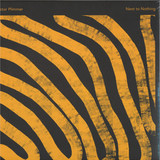
Born and raised in South London, Hector Plimmer is a multi-faceted producer, composer and DJ whose sound is drenched in tribal rhythms and beautifully crafted bass. Influenced by beat-makers like Flying Lotus and Theo Parrish, but with the subtleties of the classic Metalheadz era drum and bass, his second album 'Next To Nothing' is released on 25th October 2019. The album features guests Ego Ella May, Emma-Jean Thackray, Andrew Ashong, Pie Eye Collective and Alexa Harley.
After featuring on Brownswood Bubblers 11, curated by Gilles Peterson, Hector proved his talent when he was selected as a winner of the PRS Steve Reid InNOVAtion award. At a performance at ‘Sounds Of The Universe’ Record store, Hector caught the attention of Albert's Favourites' label heads Adam Scrimshire & Dave Koor. A conversation was started which led to the transfer of almost a whole album's worth of material and resulted in his debut full length record ‘Sunshine’.
'Sunshine' was met with rapturous acclaim. The record went on to be awarded Gilles Peterson’s album of the week on his BBC 6 Music show and was championed by both Lauren Laverne and Tom Ravenscroft on the station as well as Jamie Cullum on BBC Radio 2. Its success on the airwaves transcended to streaming with the inclusion in the top 50 viral US chart on Spotify.
"This album has been a real labour of love. I spent the most part of a year trying to make music I thought would be fitting to follow my last album, whilst not actually knowing what that might sound like. 'Sunshine' had been received way more positively than I had anticipated and although praise is a lovely thing, it was the cause of much anxiety when the time came to start on this record. I put a lot of pressure on myself to produce music and kept going down routes that felt forced or just didn’t click for me, in hindsight I realise this was me making music not for myself, but for what I imagined other people might want to hear. In a way 'Next to Nothing' is my first real album, 'Sunshine' was more like a collection of four to five years worth of music compiled into the shape of one. This is my first dedicated attempt at creating a cohesive project, something that shows who I am right now and what got me here."
- Hector Plimmer
As a DJ Hector has a monthly slot on NTS radio. He has played alongside the likes of Gilles Peterson, Kutmah, Alexander Nut, MNDSGN, Onra, Dego, Kaidi, Max Graef & Glenn Astro; Hector finds himself in the good company of those talented selectors who play genres across the spectrum of Hip-hop, Beats, Funk, Soul, Disco, Afro-beat, House and Jazz.
- A1: Dengue Dengue Dengue - Semillero (Nicola Cruz Remix)
- A2: James Stewart - Nolias
- A3: Blood, Wine Or Honey - The Forest Is Expecting You (Hieroglyphic Being Remix)
- B1: Mnanda - Pambana / Shouts (Sam Jones Construct)
- B2: Khalab - Dense (Maghreban Remix)
- B3: Planet Battagon - Lord Battagon's Rhumba Party
- B4: Penya Ft Sarathy Korwar - Why So Angry (Live)
The must have DJ tool is back for a third chapter
Label boss Pete OntheCorner has dipped into his secret stash of firelighters from around the globe.
On the Corner’s backroom and basement workout ‘Versus’ is brimming with heat and is once again the essential tool for discerning DJs.
The very latest productions, new signees, dubs and remixes bring a future taste of the action On the Corner. This uncompromising and unrivalled collection brings the label’s global family together on wax.
Versus III features tracks from Dengue Dengue Dengue, Khalab, Penya, Planet Battagon, Blood, Wine or Honey, James Stewart and the uncompromising street sounds of Mnanda from Dar es Salaam. Flexing their remix might for this 12”: Nicola Cruz, Mahgreban, Hieroglyphic Being and Sarathy Korwar goin’ in live.
There are some familiar faces occupying this tasty wax and some new comers.
Get your atlases out again as OtC criss-crosses the globe introducing you to artists from afar-afield as Dar es Saalam, Chicago, Hong Kong, Lyon, South London, Peru and Rome.
Remastered 6 song mini LP originally produced in the
mid-80s *very in-demand with funk record collectors and
DJs worldwide. Featuring 6 upbeat synth-driven, boogie
funk dance tracks *first officially licensed vinyl reissue*
Colours of the Rainbow contains the best 6 tracks from two rare South African LPs by recording artist Bibi
the Kid Msomi: 4 tracks from the 1985 album Searching, and 2 tracks from the 1986 LP What Kind of Love
is This?
South African funk music from the 80s has recently gained recognition as some of the best funk
productions in the world; yet so many titles remain virtually unknown outside of South Africa, especially
due to the scarcity of the original pressings (due in part to the destruction of any music perceived as
subversive by South African government censors at the time).
The level of musicianship on these recordings is simply world-class. Even Paul Simon was trying to work
with Bibi Msomi while recording his Graceland album in South Africa (read more about it in this exclusive
interview).
Combining American and South African funk influences, these 6 upbeat dance tracks feature popular
synths and drum machines of the day. The subversive lyrics and infectious grooves on these recordings
address the political turmoil during the peak Apartheid years in a way that was just subtle enough to slip
under the radar of stringent government music censors. Deep messages of freedom and universal
brotherhood are backed by some of South Africa's greatest musical talent, including:
Mac Mathunjwa (Street Kids, Neville Nash), Sello Mphatsoane (Bayete), The Hot Soul Singers, Cisco the
Champ Mokoena, Blackie Sibisi (Step Ahead, Brenda & The Big Dudes), Alistair Coakley (Hotline, Stimela),
Ladysmith Black Mambazo, Jantshi Mayo (Sipho Mabuse), Peter Mokoena (Pure Magic), Solly Ledwaba
(Juluka), Joey Mabe (Mahlathini and the Mahotella Queens), Deborah Fraser (Brenda Fassie), Zamo
Mbutho, Banzi Kubheka (Banjo, CJB), Cyril Mnculwane (CJB), and Stimela vocalists: Marilyn Nokwe, Tu
Nokwe, Hlengiwe Maphumulo, Beaulah Hashe.
Meticulously re-mastered with love for maximum impact on the dancefloor; we hope you enjoy the
songs contained on this spiritual boogie masterpiece.
Born out of a chance encounter in 2012 that led to a lasting friendship, Rhythm Section Int'l & producer, DJ, label boss, radio host, and record store owner Ruf Dug join forces to present 'The Committee'. Sitting somewhere between fictional band and studio collaboration, the record is the first fully in-house production for Rhythm Section, recorded start to finish at their own South East London studio and featuring vocals from label founder Bradley Zero and label mate FYI Chris's Chris Watson.
Right from the studio's initial creation, Ruf Dug felt inspired by the space's unique musical identity, jumping at the opportunity to create a collaborative record there over a two week studio residency. And between his DJ residencies at Pikes, Gottwood and NTS radio the Manchester-via-Ibiza computer game freak and renowned vinyl digger found the time to meld his wide range of influences. Having been a key driving force behind Be With's Holy Grail reissue of Bô'vel's - Check 4 U , Ruffy has more than earned his stripes as a boss level Street Soul collector, pre-empting the resurgent interest in the genre, which began in the mid 80s and is still a popular sound in Manchester today. This new release draws parallels between the DIY attitude of Street Soul labels like TSR, Intrigue, Jam Today & Elite and the modus operandi of the RS studio.
A wholly synergetic work, the project's title 'The Committee' reflects the collaborative nature of this release, as Ruf Dug states: 'Authorship is a strange concept at the best of times but this genuinely is a group effort and I very much enjoyed feeling like just one piece of a larger entity - the complete opposite to my usual production experience of being all alone in my room for days at a time.' The EP also features additional production from Rhythm Section's own Mali Baden-Powell, who DJ's and produces as Z Lovecraft and comes from a background in Street Soul music, his father was also in legendary UK acid jazz collective D'Influence. In addition, the record features a dynamic range of vocalists: sultry deliveries from Natalie Wildgoose and Sienna Mustafa, a rap from her sister Nadina, and the vocal debuts of FYI Chris's Chris Watson and Bradley Zero. 'I had been joking with Bradley that he needed to be on the record somehow and he did appear, playing an egg shaker at one point, but his singing wasn't in the least bit planned... I got back from lunch, and the next thing you know he just starts singing...So I dragged him reluctantly down the corridor to the studio and that's it- now he's a pop star!'
Also playfully melding digidub, soul, chicago house and acid jazz, the release not only marks a new chapter in the development of the Rhythm Section sound, but also catalogues a crucial turning Point in Ruf Dug's musical development. Still oozing with the cheeky DIY approach that won his own label, RUF KUTZ an army of fans, this latest Collab steps things up and opens a whole new realm of possibilities for one of Manchester's favourite sons.
We are very excited to present you this new signing and debut EP by Dampé. A studio and live project from South East London. Since moving to the city, Dampé has been intimately involved in its club culture " from running warehouse spaces and booking venues to DJing and performing in groups across the city and Europe, under a slew of different aliases.
The music is made on a boat on the Thames and is a combination of dusty analogue gear, live instrumentation, and samples. For Dampé, influential parties were "Co-Op, FWD>>" and "You're A Melody" and echoes of those dances can almost be felt in the sound. Across five original tracks, the EP explores weirder and worldlier ends of house music, all with a nod to undeniably UK sounds.
"Peach Shuffle" is a made-for-the-floor, broken beat work-out that has this great warped and chopped Persian vocal sample giving the track a unique and world-wide touch, followed by "St James" Road", a crunchy live Rhodes jam and ode to a favourite street south of the river. "Move Me" is all garage-infused vocal loops and singing bowls and acts as an experiment-come-DJ tool. "Carn" is a super-swung hip hop beat featuring "SMBD" aka "Simbad" providing additional keys. Closing out with "Zongo Junction, At Night", a late night roller with material pieced together from saturated CR 78 samples and field recordings made when Dampé was recording sound for a film about witchcraft and the internet across rural Ghana.
To round up this exciting EP we ask a fellow SE London enthusiast "Nebraska" to make a remix of the title track "Peach Shuffle". Cutting up the vocal of the original, adding some mean bass and pouring a smooth "dance floor" sauce over it. The delicious end result is something we are very proud off and we hope you will enjoy as much as we do!
Sao Paulo's acclaimed 10-piece instrumental collective return for their 4th album. Urban Afro-Brazilian grooves, empowered horn-driven melodicism and massive dance floor inspiration. One of South America's
most exhilarating musical propositions. Available on CD or Double 180gr Heavyweight Vinyl that includes a digital download. Quebra Cabe a is a very memorable set of hummable earworms, from the title
cut that opens up the album and continuing, sinewy and cool and relentless, all the way to the final note of 'Portal.' Throughout though, the heartbeat of everything remains utterly African, refracted through the prism of the band's
home in the Bixiga neighbourhood of Sao Paulo. And Bixiga 70 has always been a reflection of the streets where they live. The result still captures the incendiary excitement of Bixiga 70 live, but the
freedom of the studio brings more shade and subtlety than before. The rhythms are more sinuous than ever, snaking through the funk in way that looks more to Ghana or Nigeria than Memphis or Muscle Shoals, while the horns strut in
powerful harmonies. It's music that forges connections and retraces history while sounding absolutely contemporary. But for Bixiga 70, African will always be the root, and Brazil its beautiful, vibrant flower.
The Strictly Rhythm imprint is legendary and is instantly recognisable by connoisseurs worldwide. It's a label that has contributed time and time again to dance music culture across it's almost 30 year lifespan. Countless classics passed through the NYC offices of Mark Finkelstein and Gladys Pizarro and this brand new 'Strictly Classics' series looks to celebrate this cornerstone dance label and it's immense catalogue by going back to the archives and presenting some double-header action for diehard fans and newcomers alike. That's right, the 'proper' mixes, reissued from source and remastered to the highest spec, each track spread across one side of a 12" for optimal sonic playback.
Number 3 in the series kicks off on a proper old-school tip with CLS' mammoth 'Can You Feel It' from 1991, a collaboration between Todd Terry and Benji Candelerio CLS made a huge and lasting impression with this euphoric and anthemic slab of dancefloor madness. Instantly recognisable from it's ravey riff and funky drum programming, file this one under 'rave classic'! Over on the flip side we have South Street Player's smoothed out '(Who) Keeps Changing Your Mind', a rolling and deep jam from Roland Clark and George Morel that came out in 1993. This one's some lights down, honest to god soulful house music, skipping garage drums and that organ driven groove offer the perfect vehicle for Clark's gorgeous vox to soar over. Yet another set of absolutely essential SR cuts from the archive!
Remastered with love by Optimum mastering, Bristol from original master sources. Made in conjunction with Strictly Rhythm 2018.
One afternoon in 1975, friend and fellow music traveler, Harold Schroeder, showed up at Poo-Bah Record Shop where Tom Recchion worked selling records and experimental music to people, forcing them to buy albums that he swore would change their lives. Harold asked if Tom wanted to share in a studio space close to the shop. After seeing it Tom immediately said "YES!". They moved in and divided the space in half. On Tom's half he made drawings, paintings, performances, video, sculptures, installations, and music. Harold had his all set up for music with his newly acquired Steiner-Parker synth and guitars and things. At the beginning they played under the name The Two Who Do Duets. Soon the late-night jam sessions that took place in the back of Poo-Bah moved over to the fourth floor of 35 South Raymond. It was pretty beat up and derelict, the way one imagines an artist's studio to look. They could make all the noise they wanted. No one else was on their floor. The music heard on this LP has remained unheard since it was recorded and was created just before and right after the inaugural concert by the Los Angeles Free Music Society (LAFMS) groups Le Forte Four, Doo-Doettes, and Ace & Duce. That concert took place in late January 1976. The sessions on this release feature members of the newly formed and expanded Doo-Doettes, which now included Dennis Duck, Juan Gomez, Harold Schroeder, and Tom Recchion, as well as Ju Suk Reet Meate from Smegma and Ace, of Ace & Duce. 35 S. Raymond eventually became a sort of LAFMS headquarters, with Chip Chapman of Le Forte Four, artist and future Extended Organ vocalist/guitarist Paul McCarthy, and soon to become singer for Nervous Gender, punk/folk artist Phranc, who along with many other artists and musicians, moved into the building. 35 S. Raymond allowed for free expression and explorations of all sorts. Some wild parties ensued, not to mention the luxury of endless hours of experimentation. Parking was free and so was the art and music. Ace found the tapes for side one ("Tom's Studio") in his archive and Ju Suk Reet Meate found the tapes for side two ("50 Of Every American Are Machines") and edited them both for this release. No overdubs or remixing was emplo
The music on this EP was conceived in China, between 1989 and 1993. The original tracks were mixed to DAT in real time, in a small neighbour-proof studio inside my apartment in Macau, a 19th floor with a view to the hurricanes. There's a small, unexpected or improbable story behind each track, some little magic fused with the local atmosphere, certainly guaranteeing their lasting authenticity 25 years later.
TAIPEI DISCO
Late 80s Guangzhou was an exotic city where the traditional past coexisted in harmony with the present and even already with the future.
I'd rather spend my weekends in Guangzhou than diving into Hong Kong consumerism - as most ex-pats in Macau did. I took a cab at the border and travelled 150 Km through chaotic roads with family and friends until reaching the hot, humid, mega South China metropolis.
We ate on street joints in the evenings, went on to a karaoke bar and ended up at Taipei Disco, the only proper club in town. All the others were inside hotels and played generic music or they were seedy, sleazy, smoky cabarets.
Taipei Disco used to be a cinema and played cantonese pop music and anglo-saxon pop/rock (that was new). The spacious dance floor was generously lighted, the atmosphere was airy and modern. Boys and girls were in the habit of dancing in pairs, one in front of the other, observing a respectful yet sensual distance. When the girl took a few steps back, the boy went along and vice versa. With legs and feet (more than the upper bodies) synchronized with the music, they never exceeded in extroversion. Cool.
I always carried a MicroComposer and a portable DAT recorder in my travels through China and weekends in Canton. Any spontaneous musical idea was imediately recorded and memorized. The MicroComposer allowed multitrack recording, which was very handy on the road. Based on the emphatic choreography of Taipei Disco's dancers, i started to compose a rhythm track while sitting at a table, with headphones, listening to Cantopop in the background. As if by magic - not a rare occasion in music - everything began fitting together. Odd as it may seem, the track ended up sounding more germanic (Kraftwerkian) than Cantonese pop.
The story ends in a circle: the cantonese DJ at Taipei Disco, whom i used to ask to play certain records, wanted to play my music at the disco when it was basically only just a rhythm track and little else. From a cupboard under his set up he took out a battered keyboard (unrecognizable brand) and invited me to play over the track with the available sounds on the keyboard. The circle was complete, with Cantonese clubbers happily dancing forwards and backwards, as if it were another Cantopop hit.
I didn't get payed but the house offered us free ice cream cups in which little Portuguese flags were sticked.
The track would be finished later, in studio, with vocoder strings ensemble and synth solos.
TAIPEI DISCO (LIVE)
The live version of 'Taipei Disco' was recorded during a live set at the China Pop venue, in Macau, 1993. China Pop was a rock club built in the ample space of an old fishing warehouse, located in the labyrinthic Inner Harbour area. It was decorated with large Mao Zedong and Cultural Revolution posters and memorabilia and had a unique atmosphere, fusing Pop Art with film noir. We began our performance at 1AM, pretty early for Macau's nightlife standards. We were lucky. An audience showed up. And in Macau there were always several friends among the audience, which tranformed a musical performance into a relaxed party.
The atmosphere was particularly surreal on that night. The front row was dominated by French Crazy Horse dancers, a sort of Oriental Moulin Rouge. The girls had finished their last performance of the evening at the Crazy Horse and were still energized from their show. During our performance, right in front of us and perfectly synched, we could hear the famous irreverent screams of can-can dancers. You always had to expect the unexpected in Macau.
RED MAMBO (IMPROMPTU)
I was familiar with the Portuguese-speaking African countries well before having lived in China. I found myself returning several times to one in particular, always attracted by its magic and very distinct, identitary culture and music: Cape Verde.
During the early years of DWART a lot of the inspiration for drum machine rhythms (Roland's TR series) came from African music, especially from new musical trends that gained full autonomy with Cape Verde's independence from Portugal, as was the case with funaná.
I had the privilege of having known and befriended some of the greatest Capeverdian composers, musicians and singers during the 70s and 80s, such as Bana, Luís Morais, Cesária Évora, Paulino Vieira, Chico Serra, Tito Paris, and historical bands such as Bulimundo (ambassadors of funaná) and Os Tubarões (great innovators of morna, coladera and funaná, with the sonic impact of an afro-beat big band).
When Luís Filipe de Barros began playing Os Tubarões for the first time on Portuguese radio, that was the turning point for African music in Portugal. The 'Tabanca' album was so widely heard and talked about that it quickly got a Portuguese release through one of the big labels of the time.
The mystic of this band from the Santiago Island would reach the East. Os Tubarões played to a packed room in Macau in 1992, and after the bombastic gig we arranged a dinner and party at my place.
We ate and drank generously and the moment came for a jam session at the small studio on the 19th floor. Because Os Tubarões didn't all fit in the studio, we recorded an impromptu with only three of the musicians: Tótó Silva (electric guitar), Mário Russo Bettencourt (bass) and Zeca Couto (piano). And there we were improvising without barriers, suddenly detached from cultural roots, labels and constraints, a truly unique moment. The track is now being released exactly as it was recorded, imbued with the real communion between the musicians. And it could only be titled 'Red Mambo'. I wish to dedicate it to the memory of Ildo Lobo and Jaime do Rosário, founders of Os Tubarões, sadly and too soon departed from the land of music.
DJ, producer and Rex Club resident Molly presents the third EP for her RDV Music imprint, drawing on talent from across her native France, featuring fellow Parisian Aleqs Notal (Clek Clek Boom, Sistrum) and 1977, as featured on Syncrophone's For Those Who Know imprint. While each side and artist offer their own distinctive flavour, percussive, classy late-night house music is the main course; ideal for late nights under dim red lights.Aleqs Notal pays tribute to the timeless appeal of spinning analogue wax throughout opening track, 'Sweet Rotation'; a simple hymn to the essence of house music, bubbling gently on bright keys and woozy basslines. 'Hands On' follows, offering a more nocturnal angle on this enduring aesthetic, reducing the energy but enhancing the atmosphere even further, both on-record and across any packed dancefloor.The more Southern sensibility of 1977 brings drumwork to the fore, weaving an exotic, patient tapestry of bubbling, alluring synths and analogue feedback across two confident, percussive jams. While 'Vodoom' indulges in tension and intrigue, EP closer 'Jdlf' is pure, unwinding pleasure, across which each of 1977's influences and instruments are offered freedom to breathe and evolve.With this installment of emminently classy and supremely confident house, RDV Music continues to prove itself as one of the most worthy musical institutions on the contemporary Parisian scene.
- A1: Romeo Delight
- A2: Unchained Drum Solo
- A3: The Full Bug
- A4: Runnin' With The Devil
- A5: Jamie's Cryin
- B1: Little Guitars
- B2: Dance The Night Away
- B3: Somebody Get Me A Doctor/I'm So Glad
- B4: Little Dreamer
- C1: Mean Street
- C2: Secrets
- C3: Everybody Wants Some!!
- C4: Ice Cream Man
- D1: Intruder
- D2: (Oh) Pretty Women
- D3: Eruption
- D4: Ain't Talkin' 'Bout Love
- D5: Bottoms Up!
- D6: You Really Got Me
DELUXE VINYL EDITION !!! By the start of the 1980s, following a string of multi-Platinum albums and electric live performances - due in no small part to the onstage chemistry between guitarist Eddie Van Halen and singer David Lee Roth - Van Halen were an unstoppable force. Their 1982 album Diver Down followed peaking at No. 3 on the Billboard chart and went four times Platinum in the U.S. alone. In support of the album, the group toured worldwide through 1982 and 1983. 1983 would also be the first and only time the group would travel to South America, and it is from this leg of the tour that the show featured on this release originates. Recorded at the first of three dates at Venezuela's 20,000-capacity Poliedro de Caracas, the performance was broadcast simultaneously over FM radio. On top form and playing a rich selection from their current and back catalogue - including '(Oh) Pretty Woman', 'Eruption' and 'Ain't Talkin' 'Bout Love' among numerous other Halen classics - this extraordinary show is now finally available for fans of this enduring collective to add to their collections.