With their name taken from an episode of the radio program The Goon Show, Ned's Atomic Dustbin formed in Stourbridge, UK, in 1987. They're known for using two bass-players in their line-up and creating a tense and highly driven sub-hardcore sound featuring distorted effects-laden guitar and energetic drums.
In 1992 they released their second studio album Are You Normal?. The album features their American hit song “Not Sleeping Around”, which hit the top of Billboard's Modern Rock Tracks chart. The album was produced by Andy Wallace, best known for his work with Slayer, Prince, Nirvana, Sonic Youth, Paul McCartney and so on.
Are You Normal? is available as a limited edition of 1000 individually numbered copies on translucent blue coloured vinyl and includes an insert.
Поиск:sp mc
Все
- 1: The Gloam (Acoustic)
- 2: Bad Sun
- 3: Shadow Boxing
- 4: Listless Blue (Acoustic)
- 5: Alien Blues (Acoustic)
- 6: Time
- 7: Tungs
- 8: Aphasia (Acoustic)
- 9: Idea
- 10: Statue
- 11: Sing Yrself To Sleep
Ten years later, and with ve full-length records out, Vundabar-Hagen, bassist Zack Abramo, and drummer Drew McDonald-are marking their time together with a new 11-track collection called Good Old. Four of the songs are acoustic reinterpretations of previous Vundabar tracks, while the remaining seven were created during recording sessions between the releases of 2015's Gawk and 2018's Smell Smoke. The songs from these sessions are raw, loud, elastic, and energetic, crackling with the banged-up spirits of punk-, art-, pop-, grunge-, and indie-rock-and they've never been heard until now.
- My Darling, My Angel
- Pavement
- Something For Somebody
- Virtue
- Defibrillator
- The Light Streams In And Hits My Face
- Hocus Pocus
- Hideaway
- Love Songs/ Heart Strings
- Ray Of Light
- The Worst Thing I Would Ever Do
- Horses
In Mallrat’s (aka Grace Shaw’s) vision of the world, light is more than photons and electromagnetic radiation hitting the eye — it’s a moment of divine intervention. A bold swerve into the metaphysical, this is the premise of the prized Brisbane-born, LA-based pop songwriter and producer’s 2025 sophomore album: Light hit my face like a straight right. Set against a newly informed backdrop of expressive breakbeats and dance music, its 12 songs explore the intangible and mysterious allure of human connection, held together by curious investigations into light — “the closest thing to a concept this album has,” Mallrat says. She reunited with Butterfly Blue producers Styalz Fuego (Troye Sivan, Tate McRae) and Alice Ivy, while bringing into the mix indie electronic producers Chrome Sparks and Casey MQ. Mallrat serves up highs like “Hideaway,” a song where heart-racing garage clashes with her trademark candor: “I’ll be your lucky charm just let me hang around your neck,” she sings. Sleek and early standout “Pavement” gets a gritty underlayer with chopped up vocals from DJ Zirk’s “Born 2 Lose” and mid-album standout “Hocus Pocus” finds Mallrat singing about being pulled “under the spell” of someone new, borrowing a different part of the same DJ Zirk sample to build its shimmering, dancefloor-ready facade. It’s an endeavor that perhaps reaches a peak on “Horses,” the record’s gentle and organic closer which Shaw herself calls “objectively the best song.” Written after returning home to Brisbane and “feeling like an alien,” it gained new meaning in the wake of her late sister’s passing. For Shaw, it’s the convergence of the song’s minimalism, lyrics, space, and the way her voice cracks on the recording as she sings, “Hey, I’m right here, I look different now.” After years of solidifying herself as a master of well-crafted, timeless pop — fielding recognition from New York Times, NYLON, Teen Vogue, Billboard, The FADER, NPR, and more — Light hit my face like a straight right is a step into the art of world-building, bolstered by her intuitive songwriting and clever, studied production.
Black vinyl / 505mcn paper / 30 x 60 cm Insert with Liner Notes by Tony Higgins printed on 250 mcn Lenza Top Recycling Paper / Condensed interview to Spata Sisters and exclusive pictures.
Personnel:
Enzo Randisi - Musser Percussion Keyboards
Riccardo Randisi - Acoustic Piano, Rhodes, ARP & Korg Keyboards
Marcello Pellitteri - Drums
Giuseppe Costa - Acoustic Bass & Electric Bass Guitar
Mimmo Cafiero - Congas & Percussions
Sandro Palacino - Tenor and Soprano Saxes
Loredana Spada - Vocalist
Cinzia Spata - Vocalist
Mary Lo Giudice - Vocalist
Mariella Gueli - Vocalist
Notes:
Did someone say Summer? Sicily is what Cuba is to the Caribbean, sun, sea, easy and friendly people with lots of troubles! You won't find anything better around that identifies the summer more than this album by Enzo Randisi who at the beginning of the 80s put together a Swing Ensemble as a tribute to that "cheerful" movement of Jazz music. But Enzo and his fellas just couldn't stay on track and put in the best that the alternative Palermo area could offer in that historical period, like the sisters Cinzia and Loredana Spata, who brought the production to a next level in the vocal version of All Blues or in Chic Corea's Spain. But what really struck us was Charles Cables' version of "Quite Fire" (here missspelled as "Quite Fair"), released a few months earlier only in Japan and which would only become famous in the 90s with the Acid Jazz movement, and this tells us a lot about how hungry Enzo and Riccardo were of musical knowle, to be able to find some pearls in a city with basically no record shops and isolated...well...it's on an island! For this re-press we enlisted Tony Higgins, who recently finished a very long commitment and greenlight to delight us with his polished English...Welcome back Tony!
Vinyl Only / Sleeve manufactured with 400 mcn Fedrigoni "Shiro Eco" paper / Original unreleased poster with alternative artwork insert with notes by Tony Higgins printed on schedography peach past color paper / PVC outers / original artwork /
Personnel:
Tete Mbambisa - Piano
Basil Coetzee - Tenor Sax and Flute
Zulu Bidi - Bass
Monty Weber - Drums
Notes:
Mbambisa first gained prominence as a pianist in 1961 as a member of the Jazz Giants, this time with Pukwana as saxophonist, bassist Martin Mgijima and drummer Makaya Mtoshoko, setting the sound and shape of a scene that became known as Cape Jazz. Following an introduction from Chris McGregor, Mbambisa formed a band, The Swinging City Six, with saxophonist Ronnie Beer before going on to play at the end of the 1960s in the groups The Soul Jazzmen and Spirits Rejoice with Duku Makasi. As a member of The Soul Jazzmen, Mbambisa recorded the breakthrough album 'Inhlupenko Distress' in 1969 for the City Special label. After a recording hiatus, Mbambisa returned in 1974 with an octet album, 'Tete's Big Sound' released on a newly formed label, As Shams or The Sun, established by South African record store owner and independent producer Rashid Vally. 'Tet's Big Sound' included tracks like 'Unity' and the 'Black Heroes Lamentation', now considered a classic in the South African jazz underground.
The sound that Mbambisa carved in this period was wholly acoustic, and is a style that now is often loosely labelled spiritual jazz, a sound that alludes to deep African textures and rhythms balanced with clear nods to American hard bop and modal jazz, sometimes edging toward free improvisation in echoes of John Coltrane and Pharaoh Sanders. The music is often centred around a fulcrum of trance like vamps with repeated motifs that allow for extended pieces that create a hypnotic effect. This clearly exemplified on Mbambisa's next album, 'Did You Tell Your Mother', released in 1979, once more for The Sun label. (Tony Higgins)
The hornsman instrumental has a long legacy in the realms of reggae music. Don Drummond, Tommy McCook, Vin Gordon, Rico Rodriguez, Eddie Tan Tan. The list players behind this tradition could go on and on. The notes they played across eras from ska to rock steady to the deepest dubwise steppers bellow through the wind and the wire like a Warrior Charge ….
…It is within this tradition that Ital Counselor’s next weighty contribution to the musical world of QUALITY reggae fits…
…From the very first sonorous note emanating from the mighty Soothsayer’s Horn Section the listener can tell the Dub Organiser means business. That’s right. Once again, the Ital Counselor teams up with Chris Lane of Fashion Records for a cantankerous churning steppers meant to burn out all weak heart sound who try come test.
As evidenced from this 12”s namesake, the humble Soul Dragon Temple of Tone Sound System and IC partners in crime out of Philadelphia, USA, the Soul Dragon Anthem breaths some serious fire. The hard hard rhythm churns relentlessly while the bassline rolls like Dragon’s breath calling all in the dance to spring heel skank straight through all four cuts.
The Dub Organiser stirs a cauldron of dense dub at points conjuring aspects of Lee Perry’s classic Black Ark sound while maintaining his own distinctive spin on the mystical mixing arts. Shards of sound echo and delay. Mr. Lane takes the bassline to aquatic depths as the DRAGON DIVES DEEP……Cut 1…Cut 2…Cut 3…Cut 4…
This one is dedicated to all home town hi-fi’s forwarding reggae and sound system culture outernationally. So without further ado, all soundman and woman worth your salt it is time to DROP the needle on this track. Watch the Dragon FLY and let the Dub Organiser and the Soothsayer Horn’s “Soul Dragon Anthem” BREATH FIRE through your SPEAKER BOX!!!!!!
Originally released and sold on their fall 2009 US tour, Flower-Corsano Duo’s “The Chocolate Cities” stands as one of the group's most spirited releases. Recorded live in Cambridge, England and Geneva, Switzerland these recordings capture the power and energy being harnessed by the duo at a time of frequent touring, just after the release of their monumental double-LP “The Four Aims.” Michael Flower is perhaps best known for his work in Vibracathedral Orchestra, along with a slew of other bands, collaborations, and solo work. Meanwhile, Chris Corsano is well known as one of the premier drummers of modern times, and a frequent collaborator of Joe McPhee, Bill Orcutt, Bill Nace, Paul Flaherty, and many more. As a duo Flower and Corsano present an endlessly shifting and transforming sound, meshing elements of free jazz, drone, and ecstatic psychedelia into something all its own. While Corsano guides with his nimble and dynamic drumming, Flower plays amplified Japan Banjo (also known as a Shahi Baaja) providing melody, lead, and drone, often simultaneously. Gripping even in its quietest passages, thoughtful even in its most unrestrained crescendos, “The Chocolate Cities” documents a duo at the height of their collective prowess. Saved from the obscurity of its original CDr format and presented for the first time on vinyl with stunning new artwork by Chris Corsano, “The Chocolate Cities” stands as testament to the power of two magnificent players even 15 years on.
In Todmorden, the oddly-named market border town in West Yorkshire with a habit for embracing the weird and wonderful, a burst of sunshine is a precious thing. Through the thick of Winter, through every season in fact, the town’s folk are used to the wind and rain, fog and mist. As much a part of the town as the trademark deep valley it sits in, here the lay of the land invites the weather in, just as it does the many musicians, artists, and unique characters that have come to call the place home over the centuries.
Bridget Hayden is one such soul who found a home among these hills. The experimental musician, who invites the ghosts in for the classic folk songs that make up her stunning new album, knows only too well about such weather, how rare and treasured the breaks from it are. Her favourite thing to do in the valley, she says, is “to make the most of every tiny minute of sunshine.”
Such aspirations nearly derailed the recording of Cold Blows the Rain, her new eight-song collection released via the Todmorden- based label Basin Rock. Having hired the town’s Oddfellow’s Hall to record these new songs in the late summer of 2022, Hayden says the weather was so good she ended up basking in every second of it, only moving inside to begin recording when the sun was setting, working deep into the night to make up the time.
There’s a good chance, however, that it had to be this way. The songs that make up Cold Blows the Rain are not made for the sunlight. They come, instead, wrapped in mist and coated with drizzle, those elements shaping the album as much as the voice and the instruments held within, as real but ambiguous as the ghosts that linger in the shadows. The sound of the dark valley floor.
Mostly centred around meditative and experimental improvisation, Bridget’s work to-date has seen her spend more than two decades recording and performing on the underground music scene. She’s also toured internationally both as a solo artist and as part of bands such as Schisms and The Telescopes, while working on various side-projects with the likes of Folklore Tapes.
For all of this sonic exploration, so much of her work has been formed around elements of traditional folk aesthetics and, over time, she began to piece together a collection of reinterpreted traditional songs that she absorbed as a child from her mother: through The Dubliners and Muddy Waters, to Bessie Smith and The Leadbelly Songbook. Harvesting her love for Nina Simone, Karen Dalton, Margaret Barry, and more, Bridget takes these traditional songs and transforms them into something uniquely evocative
"It goes back to the womb,” Bridget says of that connection. “I would not call it a memory as it is so deep within my blood and bones. My mum was the source, she sang all the time, as part of life. So it was a very lulling and natural introduction. It seemed common to hear her singing – unbeknownst to her – in time with a raindrop dripping at the window,” Bridget continues. “I’ve always wanted to do a folk record as I love these songs so much. It comes much more naturally to me to sing other people’s words, especially when they’re as beautiful as these old verses.”
Underpinned by waves of analogue reverb, and led by Bridget’s stirring and weather-beaten voice, the songs on Cold Blows the Rain drift and crawl like low heavy clouds on flat-top hills, shaped by the land. The backdrop is equally as arresting, all subtle gloom cast in shadow, a gentle but pronounced swirling of textures, crafted from harmonium and violin courtesy of The Apparitions (Sam Mcloughlin and Dan Bridgewood-Hill).
“The weather speaks the most eloquently about human loss,” Bridget says, articulating such sentiments. “It’s good to feel enveloped by something so much vaster than ourselves. The rain and the tears all become one.”
- A1: Progetto Tribale - The Sweep
- A2: Onirico - Echo Giomini
- A3: Open Spaces - Artist In Wonderland
- B1: Alex Neri – The Wizard (Hot Funky Version)
- B2: M C.j. Feat. Sima - To Yourself Be Free - Instrumental Mix Energy Prod
- B3: Mato Grosso - Titanic Expande
- C1: Dreamatic - I Can Feel It (Part 1)
- C2: Carol Bailey - Understand Me Free Your Mind (Dream Piano Remix)
- C3: The True Underground Sound Of Rome - Secret Doctrine
- D1: Don Carlos - Boy
- D2: Lazy Bird – Jazzy Doll (Odyssey Dub)
Vol 2[28,99 €]
Volume 1 of this expertly curated project of 90s Italian House - put together by Don Carlos.
If Paradise was half as nice… by Fabio De Luca.
Googling “paradise house”, the first results to pop up are an endless list of European b&b’s with whitewashed lime façades, all of them promising “…an unmatched travel experience a few steps from the sea”. Next, a little further down, are the institutional websites of a few select semi-luxury retirement homes (no photos shown, but lots of stock images of smiling nurses with reassuring looks). To find the “paradise house” we’re after, we have to scroll even further down. Much further down.
It feels like yesterday, and at the same time it seems like a million years ago. The Eighties had just ended, and it was still unclear what to expect from the Nineties. Mobile phones that were not the size of a briefcase and did not cost as much as a car? A frightening economic crisis? The guitar-rock revival?! Certainly, the best place to observe that moment of transition was the dancefloor. Truly epochal transformations were happening there. From America, within a short distance one from the other, two revolutionary new musical styles had arrived: the first one sounded a bit like an “on a budget” version of the best Seventies disco-music – Philly sound made with a set of piano-bar keyboards! – the other was even more sparse, futuristic and extraterrestrial. It was a music with a quite distinct “physical” component, which at the same time, to be fully grasped, seemed to call for the knotty theories of certain French post-modern philosophers: Gilles Deleuze, Félix Guattari, Paul Virilio... Both those genres – we would learn shortly after – were born in the black communities of Chicago and Detroit, although listening to those vinyl 12” (often wrapped in generic white covers, and with little indication in the label) you could not easily guess whether behind them there was a black boy from somewhere in the Usa, or a girl from Berlin, or a pale kid from a Cornish coastal town.
Quickly, similar sounds began to show up from all corners of Europe. A thousand variations of the same intuition: leaner, less lean, happier, slightly less intoxicated, more broken, slower, faster, much faster... Boom! From the dancefloors – the London ones at least, whose chronicles we eagerly read every month in the pages of The Face and i-D – came tales of a new generation of clubbers who had completely stopped “dressing up” to go dancing; of hot tempered hooligans bursting into tears and hugging everyone under the strobe lights as the notes of Strings of Life rose up through the fumes of dry ice (certain “smiling” pills were also involved, sure). At this point, however, we must move on to Switzerland.
In Switzerland, in the quiet and diligent town of Lugano, between the 1980s and 1990s there was a club called “Morandi”. Its hot night was on Wednesdays, when the audience also came from Milan, Como, Varese and Zurich. Legend goes that, one night, none less than Prince and Sheila E were spotted hiding among the sofas, on a day-off of the Italian dates of the Nude Tour… The Wednesday resident and superstar was an Italian dj with an exotic name: Don Carlos. The soundtrack he devised was a mixture of Chicago, Detroit, the most progressive R&B and certain forgotten classics of old disco music: practically, what the Paradise Garage in New York might have sounded like had it not closed in 1987. In between, Don Carlos also managed to squeeze in some tracks he had worked on in his studio on Lago Maggiore. One in particular: a track that was rather slow compared to the BPM in fashion at the time, but which was a perfect bridge between house and R&B. The title was Alone: Don Carlos would explain years later that it had to be intended both in the English meaning of “by itself” and like the Italian word meaning “halo”. That wasn’t the only double entendre about the song, anyway. Its own very deep nature was, indeed, double. On the one hand, Alone was built around an angelic keyboard pattern and a romantic piano riff that took you straight to heaven; on the other, it showcased enough electronic squelches (plus a sax part that sounded like it had been dissolved by acid rain) to pigeonhole the tune into the “junk modernity” section, aka the hallmark of all the most innovative sounds of the time: music that sounded like it was hand-crafted from the scraps of glittering overground pop.
No one knows who was the first to call it “paradise house”, nor when it happened. Alternative definitions on the same topic one happened to hear included “ambient house”, “dream house”, “Mediterranean progressive”… but of course none were as good (and alluring) as “paradise house”. What is certain is that such inclination for sounds that were in equal measure angelic and neurotic, romantic and unaffective, quickly became the trademark of the second generation of Italian house. Music that seemed shyly equidistant from all the rhythmic and electronic revolutions that had happened up to that moment (“Music perfectly adept at going nowhere slowly” as noted by English journalist Craig McLean in a legendary field report for Blah Blah Blah magazine). Music that to a inattentive ear might have sounded as anonymous as a snapshot of a random group of passers-by at 10AM in the centre of any major city, but perfectly described the (slow) awakening in the real world after the universal love binge of the so-called Second Summer of Love.
For a brief but unforgettable season, in Italy “paradise house” was the official soundtrack of interminable weekends spent inside the car, darting from one club to another, cutting the peninsula from North to centre, from East to West coast in pursuit of the latest after-hours disco, trading kilometres per hour with beats per minute: practically, a new New Year’s Eve every Friday and Saturday night. This too was no small transformation, as well as a shock for an adult Italy that was encountering for the first time – thanks to its sons and daughters – the wild side of industrial modernity. The clubbers of the so-called “fuoriorario” scene were the balls gone mad in the pinball machine most feared by newspapers, magazines and TV pundits. What they did each and every weekend, apart from going crazy to the sound of the current white labels, was linking distant geographical points and non-places (thank you Marc Augé!) – old dance halls, farmhouses and business centres – transformed for one night into house music heaven. As Marco D’Eramo wrote in his 1995 essay on Chicago, Il maiale e il grattacielo: “Four-wheeled capitalism distorts our age-old image of the city, it allows the suburbs to be connected to each other, whereas before they were connected only by the centre (…) It makes possible a metropolitan area without a metropolis, without a city centre, without downtown. The periphery is no longer a periphery of any centre, but is self-centred”.
“Paradise house” perfectly understood all of this and turned it into a sort of cyber-blues that didn’t even need words, and unexpectedly brought back a drop of melancholic (post?)-humanity within a world that by then – as we would wholly realise in the decades to come – was fully inhuman and heartless. A world where we were all alone, and surrounded by a sinister yellowish halo, like a neon at the end of its life cycle. But, for one night at least, happy.
2024 was a big year for Regulate Recordings and their sister club night “Shake Your Rump”. DJ Deviant’s “The Rhythm” & “Make Em Bounce” burned up dance floors in spring, “Summer Jam” saw Atomphunk & Deviant team up with Seattle MCs Mugs and Pockets to devastating effect. “Summer Jam” lit up the second half of the year with support from the Allergies, Boca45 and 6 Music and was included in Craig Charles’s “Funkiest Tracks of 2024”.
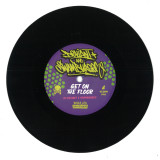
Regulate move into the new year by setting off two certified bangers. Master of the decks DJ Deviant is back on production duties; lead track “Get On The Floor” sees him once again collaborating with Swamburger (Mugs and Pockets) for a full force party starter. The production pulls influences from the earliest days when hip hop and disco were joined at the hip, with nods to The Sugar Hill Gang and The Furious Five, as well as the Golden Age and artists like Chubb Rock and Big Daddy Kane. Swamburger’s machine gun delivery and Deviant’s sharp cuts pull the track right into 2025 for maximum impact.
Flip side “Where’s The Party Clap” is a big trunk of cut and paste funk with a popping bass line, horns, claps, cuts and a groove that just doesn’t quit.
Efficient Space honours the memory of producer and MC Ali Omar with Hashish Hits, a posthumous selection from the dub rebel’s self-released discography.
One of ten children in working-class Liverpool, Omar drew deep influence from his father's Arabic heritage—a thread central to his identity and sample origins. After art school and a spell clubbing during Manchester's halcyon days, he relocated to Sydney, where he cofounded the blunted downbeat duo Atone with fellow British expatriate Andy Fitzgerald. As an MC, he infiltrated the city’s house, dub, jungle, and bass circuits, becoming a regular fixture at the Bentley Bar, where he commanded the mic with his versatile, rumbling baritone and charisma.
Freakishly talented in the studio, Omar was a pioneer of the Akai sampler and Atari, deftly recording live sessions straight to DAT. Drawing on industry insights from his sister, Merseybeat firebrand Beryl Marsden—who supported The Beatles on their final UK tour and was signed to Decca and Columbia—the non-conformist sought to build a self-sufficient business model. Between 1998 and 2004, he independently issued four albums on CD through his Hashish Studios imprint, hustling copies directly to local record stores and live shows for instant returns, even hand-sewing screen-printed hessian sleeves for his final release.
Uncompromising in his principles and refusing to suffer fools or charlatans, Omar relished the opportunity to collaborate with those who embodied the same spirit. Hashish Hits offers a snapshot of his inner sanctum—Fitzgerald on the opening track's billowing smoke stacks, the serpentine vocals of Gina Mitchell and the magic hands of mixer Louis Mitchell on 'On Release,' and Wicked Beat Sound System’s Kye on 'Poor Man Beggar Man Thief'. Meanwhile, 'Suicide Bomber' smoulders with the tension of a lost Muslimgauze relic, as the instructional 'Roll Up' and 'The Last Straw' spiral deeper into Omar’s signature production vortex— where space stretches in slow motion and walls reverberate with ricocheting delay.
A true icon of Sydney’s underground scene, the larger-than-life Omar passed away on 23 June 2009 after a valiant battle with cancer. He is remembered for his assertive spirit, larrikin humour, wild anarchic personality, and enduring mantra: “Love and live your life”.1
- A1: Pink Lady
- A2: Pray Like A Fool
- A3: Wise Guy
- B1: Racist Man - Remix
- B2: Isolation
- B3: Pennywise (Hologram Cowboy Remix)
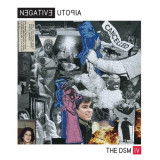
After releasing their accomplished debut album “NEW AGE PARANOIA” in 2023, THE DSM IV are following up with this limited edition, vinyl only EP “NEGATIVE UTOPIA”. Formed by Guy McKnight of the critically acclaimed and cult favourite The Eighties Matchbox B-Line Disaster, THE DSM IV has a dark sound that blends hypnotic noise-rock with synth-pop industrial aesthetics. “NEGATIVE UTOPIA” features six more synth-pop-acid-house-goth-rock-new-wave bangers. The A-Side consists of three new songs by the band. Meanwhile on the B-Side there are remixes of two tracks from “NEW AGE PARANOIA” (‘Racist Man’ and ‘Pennywise’) plus a cover of Joy Division’s iconic ‘Isolation’. Shimmering synth lines meet heavy guitar riffs in a kaleidoscopic sonic sound space where McKnight’s shamanic vocal acts as a guiding force. This EP, like their debut album, demonstrates that THE DSM IV are a band with a social conscience and are unafraid to speak truth to power on matters of injustice. Their music is a reflection of the what is around them, it grapples with the consequences of a cruel and unjust planet with an optimism and belief that a better world is possible.
- A1: Spirit Of Cyrus (Ft. Snoop Dogg)
- A2: The Force
- A3: Saturday Night Special (Ft. Rick Ross, Fat Joe)
- A4: Black Code Suite
- A5: Passion
- A6: Proclivitie (Ft. Saweetie)
- A7: Post Modern
- B1: 30 Decembers
- B2: Runnit Back
- B3: Huey In The Chair (Ft. Busta Rhymes)
- B4: Basquiat Energy
- B5: Praise Him (Ft. Nas)
- B6: Murdergram Deux (Ft. Eminem)
- B7: The Vow (Ft. Mad Squablz, J-S.a.n.d., Don Pablito)
Rock & Roll Hall of Fame inductee, two-time Grammy® Award-winning Hip-Hop icon, Kennedy Center Honoree, actor, author, NAACP Image Award winner, entrepreneur, philanthropist, and founder/CEO of Rock The Bells, LL COOL J continues his trailblazing career with upcoming album 'The FORCE'.
LL’s highly anticipated 14th studio album The FORCE (Frequencies of Real Creative Energy) set for release September 6th follows over a decade long hiatus. The record was executive produced by Hip-Hop innovator and Rock & Roll Hall of Fame inductee Q-Tip, of A Tribe Called Quest. With this album, LL will help celebrate the 40th anniversary of the creation of Def Jam Recordings. As LL was the label’s first release, there is no better way to represent the legacy of Def Jam Recordings on its 40th year
Rock & Roll Hall of Fame inductee, two-time Grammy® Award-winning Hip-Hop icon, Kennedy Center Honoree, actor, author, NAACP Image Award winner, entrepreneur, philanthropist, and founder and CEO of Rock The Bells, LL COOL J has created one of the most multifaceted careers and brands in entertainment and continues to display his wide range of talents with every project.
Four decades after he first burst onto the scene, LL COOL J continues his vibrant, trailblazing career. LL COOL J helped elevate the burgeoning rap and Hip-Hop scene of the 80’s, which developed into the musical and cultural phenomenon that is Hip-Hop as we know it today. Of LL’s many contributions to the culture, he also is credited with the creation of the acronym “G.O.A.T.” - short for “Greatest of All Time.”
First introduced to the world in 1984 as a Def Jam Recordings’ flagship artist, LL is the first rap artist to amass ten consecutive platinum-plus selling albums, including his critically-acclaimed debut album, RADIO, and the international, timeless anthem and album of the same name, MAMA SAID KNOCK YOU OUT. LL’s hit singles include “Going Back to Cali,” “Doin’ It,” “Around the Way Girl,” “Loungin’”, “Headsprung,” and Hip-Hop’s first rap ballad “I Need Love.”
Up next, this fall LL is back to make his latest artistic contribution and continue to elevate Hip-Hop culture after over a decade long hiatus with the release of his highly anticipated new album, The FORCE (Frequencies of Real Creative Energy), executive produced by Hip-Hop innovator and Rock & Roll Hall of Fame inductee Q-Tip, of A Tribe Called Quest. With this album, LL will help celebrate the 40th anniversary of the creation of Def Jam Recordings.
In December 2017, LL became the first rapper to earn the prestigious Kennedy Center Honor, which is America’s highest achievement for any performer. In addition, he received his star on the world-renowned Hollywood Walk of Fame on January 21, 2016.
In March 2018, LL launched his own SiriusXM timeless Hip-Hop channel entitled “LL COOL J's Rock The Bells Radio,” garnering millions of daily listeners. The channel features a wide range of innovative and timeless Hip-Hop content, music, interviews, and in-depth retrospectives curated, programmed, and presented by the award-winning artist himself. Since founding the radio station, Rock The Bells has developed into a global platform that has become the preeminent voice for timeless Hip-Hop. Rock The Bells focuses on content, commerce and experiences that honor the CULTURE and the core elements of Hip-Hop – MCs, DJs, Breakers, Graffiti Artists – and more. Rock The Bells hosted its inaugural eponymous music festival in Queens, New York in August 2022, which sold out back-to-back years in 2022 and 2023, where LL headlined both festivals.
LL COOL J was inducted into the Rock & Roll Hall of Fame on October 30, 2021, in Cleveland, Ohio for the 36th annual induction ceremony. Considered by most as the crowning achievement for one’s musical career, the ceremony was a celebration of LL’s lasting impact on Hip-Hop and the music industry.
In Summer 2023, LL COOL J, Rock The Bells, and Live Nation Urban kicked off his first arena tour in 30 years across North America called The F.O.R.C.E. Tour, inspired by the name of LL’s forthcoming album. Living up to the acronym for Frequencies of Real Creative Energy, the lineup for this tour was personally curated by LL COOL J. Building off their amazing performance together on the GRAMMY® Awards earlier that year celebrating the 50th Anniversary of Hip-Hop, all dates featured collaborative live performances with preeminent Award-winning Hip-Hop band The Roots, the legendary DJ Jazzy Jeff, and DJ Z-Trip.
LL hosted the GRAMMY® Awards for an unprecedented five years in a row from 2012-2016, for which he earned rave reviews. In addition, he hosted and produced the GRAMMY® Nominations Concert Live Special for seven years and has also been a presenter at the Emmy®, Golden Globe® and SAG Awards. Most recently, at the end of 2023, LL helped produce CBS’ live concert special A GRAMMY Salute To 50 Years Of Hip-Hop, which celebrated the 50th anniversary of Hip-Hop and was nominated for an NAACP Image Award.
LL has always been an avid philanthropist involved in numerous causes, including literacy for kids as well as music and arts programs in schools. Founded in 2005, LL’s charity “Jump & Ball” – which takes place every August in his hometown of Queens, New York – aims to give back to his local community by offering an athletic and team building program dedicated to bringing wholesome fun to young people.
Between being a musician, actor, philanthropist and entrepreneur, LL COOL J is the ultimate multi-hyphenate whose career continues to expand and where he remains one of the most beloved and innovative brands in entertainment. He currently resides in both New York and Los Angeles.
- A1: Street Level Entrance (1:52)
- A2: Get At Me (4:08)
- A3: Diggin’ U Out (4:48)
- A4: Safe + Sound (4:49)
- B1: Somethin’ 4 Tha Mood (5:55)
- B2: Don’t You Eat It! (1:08)
- B3: Can I Eat It? (4:59)
- B4: It’z Your Fantasy (4:23)
- C1: Tha Ho In You (4:45)
- C2: Dollaz + Sense (5:53)
- C3: Let You Havit (3:40)
- C4: Summer Breeze (4:34)
- D1: Quik’s Groove Iii (2:37)
- D2: Sucka Free (2:11)
- D3: Keep Tha “P” In It (5:25)
- D4: Hooray 4 Tha Funk (2:11)
- D5: Tanqueray (4:19)
2025 Repress
DJ Quik is a giant of West Coast hip-hop. With 1995’s Safe + Sound, he scaled new levels of musical magnificence with his signature new age P-Funk/laconic G-Funk. A quintessential, sun-scorched LA album, this is pretty much essential. Typical for mid-90s albums the original vinyl copies are now rare so here’s the Be With re-issue, complete with “Tanqueray”, the hidden track from the original CD release.
A preternaturally gifted producer/rapper, DJ Quik has produced scores of LA gangsta rap classics. He’s released platinum and gold records of his own, as well as helped craft them for the likes of Tupac, Snoop Dogg, and Dr Dre. Quik has always been quirkier and more interesting than his gangsta rap peers, both musically and lyrically. An old-school funk producer at heart, he’s also incredibly nice on the mic. His raps often deal in boasts, jokes and good times but also cover his beefs, his trials and his trauma. Partying and pain, all mixed up. DJing and producing hype beat tapes from age 14, Quik’s tracks blended the languid funk and rubbery synths of Zapp and George Clinton with a gangsta aesthetic, creating a more danceable foil to Compton’s more typical nihilistic hedonism. Ultimately, his records sound custom engineered to drift out over sun-soaked barbecues.
By the time of his third album DJ Quik was a household name on the West Coast - California’s premier rapper/producer not named Andre Young. Released on Profile in 1995, Safe + Sound was certified gold. Less reliant on samples and more focused on live instruments, it elevated him from producer to fully-fledged composer. This sound — the quick, winding basslines, tinny high hats, smooth instrumental solos, soulful pipes, and Roger Troutman’s talkbox — defined him. This is an album of full-blown masterpieces. Rich soundscapes and masterfully arranged orchestrations with dense layers of sounds, intricate rhythms, and well-balanced songwriting.
The first track proper, “Get At Me” samples Cameo whilst Quik takes aim at the Judases in his life, the horn-laced chorus providing a triumphant feel. On the horizontal “Diggin’ U Out”, the soulful electric piano of Warryn Campbell lays a relaxed groove for Quik to talk over about one of his favourite topics: sex. Title track “Safe + Sound” chronicles Quik’s formative years over a slick instrumental. The moody bass locks a laidback infectious groove, the hook is catchy and Quik’s delivery is in fine form. On the uber-chilled “Somethin’ 4 Tha Mood”, Quik cooks up a breezy, feel good track of sparkly keyboards, syncopated claps, shuffling hi-hats, woozy synths and a floating two-minute flute solo courtesy of Robert “Fonksta” Bacon. Analysing the highs and lows of an average day in the hood, it echoes Cube’s “It Was a Good Day”.
“It’z Your Fantasy” is a silky smooth soundtrack to Quik’s detailed retelling of a sexcapade with a young lady and whilst “Tha Ho In You” is musically perfect for that midsummer family BBQ, its lyrical content is unsurprisingly decidedly less family-friendly. A real highlight, the infamous “Dollaz + Sense” is one of the most ruthless diss tracks of all time. The brutal lyrics ride a laidback West Coast beat, flipping a sample from Young & Company’s “I Like (What You’re Doing To Me)” as Quik fires lyrical shots at his arch Compton nemesis, MC Eiht. On the loping, hazy “Let You Havit”, Quik is again in gangsta mode, with more bars of barbs aimed at Eiht, rhyming over sun-kissed synthy-rollerskate funk.
Some of the finest tracks on Safe + Sound are those designed to de-stress. The evocative “Summer Breeze” is a classic warm-weather jam, anchored by a twangy funk guitar, breezy string arrangement, and a soulful hook delivered by Dionne Knighton. Quik’s nostalgic lyrics are not far from DJ Jazzy Jeff & The Fresh Prince’s “Summertime”, reminiscing over barbecues at the park, young love, and the brevity of halcyon youth. The relaxed and jazzy “Quik’s Groove III” is another highlight, as bass, guitar, piano and flute combine to create a smooth, soulful instrumental.
The swaggering “Shack Up”-sampling “Sucka Free” features a cameo from Playa Hamm, all funky braggadocio and over much too quikly (pun thoroughly intended). The jazz-flavoured “Keep Tha ‘P’ In It”, again featuring Playa Hamm but this time extending the cameo invitations to Hi-C, 2nd II None and Kam, is pure laidback P-Funk. The deep bass and industrial drums make sure the groove hits hard.
“Tanqueray” was originally a hidden track on the CD version of the album, but it’s too good to hide. This wild party samples Brass Construction’s gigantic “Get Up To Get Down” and soars in its drunk-ebullience. An apt way to close this party-driven set.
This 2022 Be With double LP re-issue has been mastered for vinyl by Simon Francis, cut by Pete Norman and pressed at Record Industry. Unusual for the time, Safe + Sound was originally pressed as a double, so all that was missing was the CD’s hidden bonus track “Tanqueray”, so we’ve fixed that. The original vinyl release never got a picture sleeve, so we’ve recreated the original’s promo-style silver-sticker and plain black jacket. A subtle cover for a wonderfully unsubtle record.
- A1: Giving Up
- A2: A Song For You
- B1: Little Girl
- B2: He Ain't Heavy, He's My Brother
- C1: Magnificent Sanctuary Band
- C2: She Is My Lady
- D1: I Believe In Magic
- D2: Take A Love Song
- D3: Put Your Hand In The Hand
Speakers Corner[42,82 €]
Pressed at Quality Record Pressings. Tip-on old style gatefold double pocket jacket by Stoughton Printing
Donny Hathaway's second album, released in April 1971, can be considered the antithesis of a "sophomore slump." The collection of cover songs found the artist not only spotlighting his talent, but his tastes. Among the songs he chose to cover on the LP was Leon Russell's "A Song for You," taken from Russell's debut album which was barely a year old at the time. Hathaway's impassioned version is so strong that many listeners are still shocked to discover that the song is indeed a cover.
With songs by Billy Preston ("Little Girl"), Mac Davis ("I Believe in Music") and Van McCoy (Gladys Knight and the Pips' 1964 hit, "Giving Up"), the record didn't exactly ignite the charts, peaking at No. 73 for the week of July 24, 1971 (the No. 1 album in America that week: Carole King's Tapestry). Hathaway's second LP is so much more than its chart performance.
Atlantic producer Jerry Wexler took over most of the production duties, with Hathaway producing one track, the self-penned "Take a Love Song." One of just three solo studio albums Hathaway recorded before his tragic death in 1979, Donny Hathaway is a truly timeless classic that will never go out of style.
Pressed on 180-gram vinyl at Quality Record Pressings, and housed in a tip-on old style gatefold double pocket jacket by Stoughton Printing.
Pressed at Quality Record Pressings. Tip-on old style gatefold double pocket jacket by Stoughton Printing
Donny Hathaway's second album, released in April 1971, can be considered the antithesis of a "sophomore slump." The collection of cover songs found the artist not only spotlighting his talent, but his tastes. Among the songs he chose to cover on the LP was Leon Russell's "A Song for You," taken from Russell's debut album which was barely a year old at the time. Hathaway's impassioned version is so strong that many listeners are still shocked to discover that the song is indeed a cover.
With songs by Billy Preston ("Little Girl"), Mac Davis ("I Believe in Music") and Van McCoy (Gladys Knight and the Pips' 1964 hit, "Giving Up"), the record didn't exactly ignite the charts, peaking at No. 73 for the week of July 24, 1971 (the No. 1 album in America that week: Carole King's Tapestry). Hathaway's second LP is so much more than its chart performance.
Atlantic producer Jerry Wexler took over most of the production duties, with Hathaway producing one track, the self-penned "Take a Love Song." One of just three solo studio albums Hathaway recorded before his tragic death in 1979, Donny Hathaway is a truly timeless classic that will never go out of style.
Pressed on 180-gram vinyl at Quality Record Pressings, and housed in a tip-on old style gatefold double pocket jacket by Stoughton Printing.
- A1: Gypsy Hill
- A2: Morning Call
- A3: Darling
- A4: Catch The Door
- A5: A Messenger
- A6: As I Listen
- B1: Open Eyes
- B2: Anything Like Love
- B3: What I Used To Do
- B4: Confiarme
- B5: Show Me
Liza Lo creates her own intimate and poetic musical world. Lo is a singer-songwriter, producer and musician based in London. Drawing inspiration from the likes of Daughter, Maro and Billie Marten, she carries you into a place of reflection and calm with her raw vocal and honest songwriting. Her new album 'Familiar' was recorded by Jon Kelly (Paul McCartney, Kate Bush) with the band and her in Studio 13 in West London.
Maintaining the intimacy of the messages of the songs is executed by gently supporting the lyrics and structure with a laid back, open band feel and delicate string arrangements, leaving you with a gentle hug for early mornings of reflection. Lo blends her upbringing in Spain and the Netherlands freely in her newly found sound. Her latest EP 'flourish' was featured on Spotify's New Music Friday UK, NL and BE as well as in 'the most beautiful songs in the world' playlist.
- A1: Original
- B1: Version
To celebrate its 20th anniversary, Freedom Cry Sound presents its first realease with Freddie McGregor. The legendary artist sings “Behind the Wall”, a song produced by Genius T and Freedom Cry that is now available as an exclusive 7” vinyl limited edition, published and distributed by Rebelmadiaq Records. “Behind The Wall” is a projectile of roots reggae, a dazzling song where the roots are very much alive, living in harmony with the spirit of modernity.” David Vilches, musical chronicler.
The Catalan musician and producer Genís Trani is responsible for the musical production as well as the mixing of the riddim. The musicians who have participated are: David Goldfine on bass, Pau Dangla on keys, Lamont ‘Monty’ Savory on guitar, Josep Blanes on trombone, Oriol Escolano on trumpet, Pol Prats on sax, Roberto Sánchez on backing vocals and the same Genís Trani programming the drums. The Jamaican singer, songwriter and producer Freddie McGregor is a legend and a great reference in the genre, with a professional career full of musical successes that have become immortal treasures.
- A1: El Baül De La Iaia 04:40
- A2: Bonsai Sequoia 03:47
- A3: Spaghetti Western 03:40
- B1: Rodalies Gospel 03:44
- B2: L’ombra De Carafa 04:09
- B3: Origami 04:31
- B4: Extraño Weys, Akua Naru - Say It Extraño 03:09
- B5: El Gordo Del Puru - Jade 04:13
Say It Loud Records has the honor of presenting the reissue of the Catalan monkfish masterpiece Variacions en fu-remoll de la 5ª simfonia inèdita de Roger Linn. Extraño Weys it has been the most elusive group on the scene. But the hit on the table that they made 6 years ago in an exclusive 10” and that has become a collector’s item is back in the form of a reissue!
An elegant 12” vinyl with two bonus tracks never before released on plastic, the delicious “Jade” by the crazy Gordo del Puru and “Say it Extraño” with the North American MC Akua Naru. A title that is a tribute to the creator of the first MPCs, the key piece on which the productions of the album are built by Viktor Pizza. It is precisely these productions that show the solidity of the project. With an exquisite work of the sampler and an infinite number of references on vinyl, VP has built a storyline that modulates atmospheres and moods over 6 tracks where the two main mc’s, Sir JKLZ1 and Patxi Vazili, draw their obsessions.
- A1: Matte Glaze 4 17
- A2: Funmi 5 40
- A3: Motion (Feat June Mcdoom) 2 43
- A4: Everything (Feat Esi Sumbry & Ganavya) 2 43
- B1: Air (Interlude) 0 35
- B2: Dark Eyes Smile (Feat Ecile Mclorin Salvant) 6 01
- B3: Apparition 6 37
- C1: Assembly (Interlude) 0 42
- C2: Afterlife Residence Time 8 39
- C3: Moshpit 3 01
- D1: Set! (Interlude) 0 31
- D2: If That Blood Runs East (Feat Yaw Agyeman, Chris Dave) 2 51
- D3: Your Memory (Interlude) 0 47
- D4: Blues Blood
Der vielleicht spannendste von Blue Notes ”jungen Löwen”, Altsaxofonist Immanuel Wilkins, Gewinner des
Deutschen Jazzpreis 2024 in der Kategorie „Live Act des Jahres International“, meldet sich mit seinem
dritten Album für Blue Note Records zurück.
Schon sein Blue-Note-Debüt ”Omega“, das von der New York Times zum #1 Jazz-Album des Jahres 2020
gekürt wurde, brachte ihm weltweite Beachtung und Anerkennung für sein Spiel und seine ungewöhnlich
vielschichtigen Kompositionen ein. Sein neues Werk „Blues Blood“ bezeichnet er als von seiner Kindheit
in der Gegend von Philadelphia inspiriert.
Co-produziert wurde es von Meshell Ndegeocello, mit Micah Thomas am Klavier, Rick Rosato am Bass,
Kweku Sumbry am Schlagzeug und den Sängern Ganavya, June McDoom und Yaw Agyeman, sowie Gastauftritten von Sängerin Cécile McLorin Salvant, Gitarrist Marvin Sewell und Schlagzeuger Chris Dave.
„Blues Blood“ ist Wilkins‘ bislang ambitioniertestes Album und gleichzeitig ein zugängliches, spirituelles
Werk über Erinnerungen, das Erbe unserer Vorfahren und die Blutlinien, die Menschen verbinden