Repress!
Second Phase (aka Joey Beltram and Mundo Muzique) are 2 legendary producers whose output shaped an entire generation of ravers, DJs and producers minds.
'Mentasm / Mind To Mind' is one such influential release, literally creating new styles, new directions and impacting on dance music for decades to come. Unique programming and fresh sounds made their records stand out head and shoulders above everyone else's output. 'Mentasm' particularly broke ground with it's now infamous 'hoover sound', influencing house, techno and trance music to come and even spilling over into the nascent hardcore, jungle and D&B scenes where it was often imitated or sampled by producers who wanted that ruff, visceral feel for their own tracks, but didn't know how to create it themselves. A new energy was born and it emanated from this milestone 12". 'Mind To Mind' on the flipside is equally as deadly, but in a deeper, more spaced out realm it maneuvers and pulls into a trippy early morning space, the yin to 'Mentasm's yang. This is a quintessential techno record, a glimpse of innovation from back in the day. File under 'classic'.
This special 2021 edition is reissued by R&S Records from original master sources, remastered by Curve Pusher.
Cerca:spa
Métron Records announces Mycorrhizal Music, the forthcoming album from composer and multi instrumentalist Ess Whiteley. Currently a PhD candidate in Composition at the University of California-San Diego, Whiteley’s practice spans recordings, installations, performances, and scores, a body of work as diverse as the fungal webs that inspire it.
Across seven tracks, Whiteley explores interconnected sound worlds shaped by mycelium networks, rhizomatic structures, and other unseen systems that sustain life. Rooted in experimental electronics, minimalism, ambient and IDM, the record imagines sound as ephemeral connective tissue capable of reshaping how a listener might experience time, memory, and futurity.
At the core of Whiteley’s work is an excavation of what lies beneath perception, the felt but unspoken currents of emotionality and subtle experiences that dwell in the unconscious.
Mycorrhizal Music channels these hidden threads into a speculative ecosystem of kinship and exchange, where joy, play, and spirituality interlace like branching hyphae beneath the soil. Mycorrhizal Music has been conceived as kinetic ambient music, designed to move with the listener while walking, riding trains, driving, cooking, where everyday rhythms align with shifting sonic textures, reminding them of hidden, interconnected, mycelial webs of spiritual vitality beneath the surfaces of daily activity.
Guided by a vision of speculative ecology and interspecies resonance, it thrives in contrasts: tracks like Rhizomatic Harpists and Whispered Messages in Tapestried Fields of Fluid Motion pulse with fluid momentum, while Kaleidoscopic Patterns of Emptiness Dancing drifts into fragile stillness.
With artwork by Kenta Senekt and mastering by Brandon Hocura, Mycorrhizal Music extends Métron Records’ ethos of cultivating subtle, interconnected sound worlds.
Original Gravity Records announces a deadly new 7" from Boss Foundation, the fresh alias of producer and multi-instrumentalist Neil Anderson. Previously known as Woodfield Rd Allstars for his vintage Jamaican (predominantly instrumental) output, Anderson now moves forward under the sharper, more genre-focused name Boss Foundation—a banner that reflects the heavy, stripped-down, late-’60s Boss Reggae style at the core of his sound.
Side A: The Henchman
A tough, propulsive Boss Reggae instrumental driven by a fierce groove, The Henchman comes armed with vintage-style pistol-shot effects and a pair of unmistakable Dennis Alcapone vocal drops, giving the cut the swagger and tension of a lost 1969 sound-system special. Heavy, atmospheric, and tailor-made for selectors who favour harder-edged instrumentals.
Side B: Pressure Version
An organ-led version built on the riddim Anderson created for The Pioneers’ 2025 recording of “I Feel So Bad” (the Jackie Edwards classic). Featuring Abramo Riti on Hammond organ, Pressure Version offers a warm, melodic excursion that highlights the depth and movement of the rhythm—spacious, soulful, and crafted with the sensibilities of a classic late-’60s version cut.
Pressed in a strictly limited edition, this double-sided killer marks the official debut of Boss Foundation, signalling a powerful new chapter in Original Gravity’s ongoing commitment to era-authentic Jamaican sounds.
- A1: Rage
- A2: More Real
- A3: Like No Other
- A4: Driving & Talking At The Same Time
- A5: Aeiou
- A6: Sahara
- B1: Europe
- B2: State-Of-The-Art
- B3: The Finish Line
- B4: Detroit Tonight
- B5: On The Run
- B6: Paceways
- C1: Law & Order
- C2: I Feel Tension
- C3: I Do
- C4: Dancing Out Of Time
- C5: Runaway Child (Minors Beware)
- C6: Detroit Tonight
- C7: Snake Dancing
- D1: Working
- D2: Back To You
- D3: My Baby's Explosive
- D4: Born Yesterday
- D5: Paceways
- D6: Big Sky
- E1: The Dark Side Of Me
- E2: Tachito In The White Meredes Benz
- E3: New Strangers In Town
- E4: Skylife
- E5: The Dancing Girls Of Windsor
- E6: My First Idea
- F1: 3Rd Generation
- F2: The Exterminator
- F3: A Detective Story
- F4: Jerry Leaves The Small Town
- F5: Mona Lisa On My Arm
- F6: The World Is Loud
“The group has no niche, it doesn’t fit in anywhere,” explains Necessaries drummer Jesse Chamberlain in a 1980 Melody Maker interview. “We just state the facts about life in America, like The Clash did about England, but we’re not so heavy about it.” The Necessaries rose from the ashes of Harry Toledo & The Rockets, a little-known New York art-rock band playing gigs at Max’s Kansas City during glam’s metamorphosis into punk. —From the liner notes by Michael IQ Jones The Necessaries came together in 1978 and in the too-brief lifespan of the band counted among their members, Ed Tomney (Rage To Live, Luka Bloom), Jesse Chamberlain (Red Crayola), Ernie Brooks (Modern Lovers), Arthur Russell (The Flying Hearts), Randy Gun (Love Of Life Orchestra). First championed by John Cale on the strength of Tomney’s songs, Cale produced their first single for Spy Records (under the I.R.S. umbrella) which was released in 1979. With the forward momentum brought about by the single, the band set about tracking demos intended for Warner Bros., but The Necessaries ultimately would sign to Seymour Stein’s Sire Records. These rough demo basic tracks lacked overdubs, mixes and any finishing touches that would have made them viable for commercial release, but due to tour commitments, the band had to put the sessions on hold to hit the road. While on tour, the band was shocked to discover that Sire had issued the unfinished tracks as their debut album Big Sky (issued in 1981). The band had Big Sky withdrawn and replaced with Event Horizon (issued in 1982) which included half the original tracks from Big Sky and continued to record throughout 1982 aiming for a follow-up. It was not to be and their final studio sessions remained unissued until now. Completely Necessary (Anthology 1978–1982) is the first authorized collection of recordings by The Necessaries and includes 37 tracks, 28 of which are previously unissued. Completely Necessary represents the most accurate musical history of the band laid out across three albums. Disc one is the band-approved first album Event Horizon, followed by Pilots Facing North, a disc collecting studio recordings spanning 1978–1981 and disc three finally sees the release of their final sessions, Songs From The Blue Colony. Album notes by Michael IQ Jones trace the history of the band for this compilation produced by The Necessaries’ Ed Tomney and Cheryl Pawelski (Omnivore Recordings). The audio has been restored and mastered by Michael Graves at Osiris Studio, and both the 3-LP and 2-CD sets feature previously unseen photos across the package. Finally, an essential missing piece of the late ’70s/early ’80s New York scene that was just slightly ahead of the college alt-rock soon to come, is finally available to rediscover—this time it’s authorized and absolutely necessary. BUY! HERE’S WHY! • The first authorized and comprehensive anthology by The Necessaries. • Mid-’70s/early ’80s New York rock/punk/art scene band included members: Ed Tomney, Ernier Brooks, Arthur Russell, Jesse Chamberlain, and Randy Gun. • 37 tracks, 28 previously unissued. • Liner notes by Michael IQ Jones, plus unseen photos.
- A1: Jonathan Kaspar – Her
- B1: Robag Wruhme – Ratibor Numida
- B2: Ja Ck - Neverland
- A1: Butch – Straight Tripping
- B1: Josh Wink – Self Acceptance
- B2: Raxon – Believe In Mi
- A1: Dino Lenny – Sayonara Chicago
- B1: Extrawelt – Mindwear
- B2: Frank Sonic & Dist_42 – Silberschwein
- A1: Guy J – Alive Again
- B1: Riccardo De Polo – Melancholia
- B2: Johannes Volk – Vaporized Memories
- A1: Harvey Mckay – Tears In Rain
- B1: Damiano Von Erckert - Mad Man (I Told You What I Know)
- B2: Fedele - Zommerfest 25
Vol.2[89,03 €]
For its 25th anniversary, Cocoon Recordings returns to its roots with an elaborate vinyl LP box set, marking the first part of a two-volume anniversary project. 25 Years Cocoon Recordings – Volume
One brings together exclusive contributions from international artists who have defined the sound and diversity of the label over the past two decades, complemented by fresh talents who are helping to shape its future.
Over the span of 25 years, Cocoon Recordings has created a catalog that now comprises hundreds of releases, 12-inches, albums, mix CDs, and iconic compilation box sets, always bridging past, present, and future. While firmly rooted in techno and house, the label has also provided space for electronica,
ambient, and other evolving genres.
25 Years Cocoon Recordings – Volume One is more than just a compilation. It is both a homage to the label’s history and a glimpse into what lies ahead. With exclusive tracks that embody the Cocoon sound in all its depth and complexity, this release marks a milestone in the legacy of one of electronic
music’s most influential labels, arguably the strongest compilation in Cocoon’s history. To mark this special occasion, Sven Väth’s label presents the first of two carefully curated volumes, uniting 15 exclusive tracks from international artists in celebration of nearly three decades of Cocoon
Recordings. The luxurious 5x12" box set features a spectral-reflective foil finish and includes contributions from renowned names such as Butch, Robag Wruhme, Josh Wink, Guy J, and Dino Lenny, alongside longtime companions of the label including Extrawelt, Harvey McKay, Johannes
Volk, and Raxon. New discoveries of recent years, Jonathan Kaspar and Riccardo De Polo, enrich the release in their own distinctive ways. The compilation is completed by the unmistakable talents of Damiano von Erckert, Fedele, and ja:ck, who provide the perfect conclusion to the first of two parts.
This release sets the stage for what's next: a daring diptych where musical voices emerge, shining with originality and passion, carrying the spirit forward. The story is just beginning. Something special is on the horizon. One can only wonder which artists will shine on the second chapter.
- A1: Wasting Your Facelift
- A2: Die Infektion
- A3: Knebelfreunde (Feat. Das Kinn)
- B1: Free Cigarettes
- B2: Going In Circles (Ft. Rosaceae)
- B3: Totengräber (Ft. Felix Kubin)
- C1: Beiss Mich! (Ft. Rosaceae)
- C2: Leaves Casting Shadows
- C3: Hell Was Boring
- D1: Ironsight
- D2: Deutschland Verreist (Ft. Konstantin Unwohl)
- D3: Second Thoughts (Ft. Children Of Leir)
Between 2023 and 2025, L.F.T. split his time between Hamburg and Berlin, slowly piecing together what would become his most ambitious work to date. The result is Hell Was Boring - a double album that plays like a fever dream, unfolding as a dark, mythical tale about life, death, and the strange spaces in between.
L.F.T. - the alias of German producer and multi-instrumentalist Johannes Haas - has always thrived on tension: between punk urgency and electronic precision, between raw emotion and mechanical repetition. On Hell Was Boring, those tensions are amplified. Drawing on the spectral drama of Bauhaus, the melancholic minimalism of Linear Movement, the futuristic romanticism of Gary Numan, and even the sly swagger of Falco, the album feels at once deeply personal and part of a much older musical lineage.
The sound is stripped down to its bones: drums snap and rattle from a Roland TR-808, TR-707 and Korg KR-55; basslines growl from a Roland SH-101 and Korg MS-20; shards of guitar cut through clouds of tape hiss. Everything was tracked to a Teac Tascam 80-8 reel-to-reel, giving each track a lived-in, imperfect warmth. Nothing is overpolished - L.F.T. wanted the listener to hear the edges, the grit, the moments when the music almost comes apart.
Along the way, he invited friends and long-time collaborators into the fold - Das Kinn, Rosaceae, Felix Kubin, Children Of Leir, and Konstantin Unwohl - each leaving their own fingerprints on the record’s world of shadows and static.
Hell Was Boring isn’t a mere collection of songs; it’s a narrative that drags you into its orbit and doesn’t quite let go. It’s music for the late hours when reality feels porous, and for those moments when you’re not sure if you’re waking up or still dreaming.
- A1: Design - Premonition
- A2: Vision - Lucifer’s Friend
- A3: Richard Bone - Alien Girl
- A4: John Howard - I Tune Into You
- A5: Ian North - We’re Not Lonely
- A6: Selwin Image - The Unknown
- B1: Harry Kakoulli - I’m On A Rocket
- B2: Rich Wilde - The Lady Wants To Be Alone
- B3: Billy London - Woman
- B4: Alan Burnham - Science Fiction
- B5: The Microbes - Computer
- B6: The Goo-Q - I’m A Computer
- C1: Gerry & The Holograms - Gerry & The Holograms
- C2: The Warlord - The Ultimate Warlord
- C3: Die Marinas - Fred From Jupiter
- C4: Dee Jay Bert & Eagle - I Am Your Master
- C5: Peta Lily & Michael Process - I Am A Time Bomb
- C6: Sole Sister - It’s Not What You Are But How
- D1: Alasdair Riddell - Do You Read Me?
- D2: Karel Fialka - Armband (The Mystery Song)
- D3: John Springate - My Life
- D4: Idncandescent Luminaire - Famous Names
- D5: Disco Volante - No Motion
- D6: Dream Unit - A Drop In The Ocean
2025 REPRESS ON TRANSPARENT GREEN VINYL
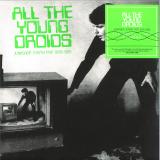
Compiled by Philip King “And then came the rise of synth pop : blokes with dodgy haircuts hunched over keyboard-operated machines stuffed with wires and do-it-yourself tone oscillators making sounds like a brood of geese passing gas in a wind tunnel. Whoopee! This is the way the ‘70s ended : not with a blood-curdling bang bang but with a cheap, synthesized, emasculating whimper.” NICK KENT, NME. All The Young Droids: Junkshop Synth Pop 1978-1985 is a new compilation that charts the underbelly of the epoch-defining sound of the synthesiser in 80s popular music. Compiled by Philip King (previously seen compiling All The Young Droogs, Glitterbest and Boobs - The Junkshop Glam Discotheque), the music here connects the dots between DIY synth enthusiasts grappling with new, cheap synthesisers at the tail-end of punk and wannabe, jobbing songwriters enthral to the new music pioneered by Gary Numan, Depeche Mode and Daniel Miller’s Mute Records. Featuring rare tracks of auto-didactic progressive pop music, proto-techno punk, shoot-for-the-stars-land-in-the-gutter chart flops and heralded, underground synth classics, School Daze paints a picture of beautiful failure. Complete with extensive sleeve notes written by King and never before seen imagery, all 24 tracks were remastered by RPM in-house engineer Simon Murphy, many from vinyl copies due to lost master tapes. The story told on All The Young Droids is one of the dawning opportunity presented by both the emergence to the market of cheaper analog synthesisers and the distribution networks plus indie labels that exploded with the advent of punk music in 1976. While the music that sprouted out all over the globe in the wake of these factors was decried as fake, plastic, a refutation of punk’s guitar-led revolution, it’s telling that much of the music on All The Young Droids.. was created in bedrooms, ramshackle studios and home-made set ups with often borrowed equipment. In the era of record labels jumping to capitalise on the success of The Sex Pistols, The Clash (both on major labels, of course) these artists struggled to stand out from a new gold-rush with next to no budget or PR team. With radio and labels desperate for the new Yazoo, what resulted was a testament to necessity being the mother of invention. At the time, the synthesiser was the music of the future, a shiny new machine that could paint like an orchestra with a single finger and a 4-track. In the hands of Manchester avant-pranksters Gerry & The Holograms it’s a pulsing, sardonic weapon.. the only instrument on the Messthetics classic lampooning of New Wave fashion. In Hamburg, a 16 year old Andreas Dorau used it to write and record (with his female classmates on vocals) a global smash in Fred Vom Jupiter (later licensed to Mute Records). The hard-to-find English version (Fred From Jupiter, natch) is included here. Many artists with alreadystoried careers caught the bug and recorded synthesiser-fuelled peons to space, computers, the future and, of course, love-interests. Harry Kakoulli, late of Squeeze, recorded a solo album in 1979 that included the incredible power-synth-pop smash-that-never-smashed I’m On A Rocket. Similarly, Ian North of Neo and American Power Pop stalwarts Milk ’n’ Cookies bought a Korg MS20 and used a tape machine to record We’re Not Lonely, an absolute lost-classic of minimal synth pop. We’re Not Lonely also features on the Junkshop Synth Pop sampler 7” twinned with John Howard unreleased track You Will See, released April 12th 2025. There are plenty of compilation debuts in evidence. Sole Sister were a mysterious trio who were featured on the Scaling Triangles compilation of female-fronted, queer-adjacent post-punk / underground music that also featured The Petticoats. Selwin Image were from San Francisco and featured members of the recently defunct power pop/punk group The Pushups. Their stupidly catchy The Unknown fizzes with New Wave energy - think XTC to Sparks but remains unreleased until now. Dream Unit’s A Drop In The Ocean is an early synth wave cut, positively teaming with Joy Division instrumentation, previously only released on a long-forgotten and super rare, self-released EP. Incandescent Luminaire’s Famous Names belies an archetypal struggle of a small-town trying to make it in a cruel industry but is a thrilling New Romantic-Synth Wave cross over with a OMD gloominess that’s a joy to hear. Feminist Minimal Wave track I Am A Time Bomb by performance artist Peta Lilly and Michael Chance is a revelation destined for new found cult status. It was released on 7” and lost until now. The flipside to the subterranean, never-made-it synth pop mentioned above are the ambitious, even fruity attempts at success that have a perennial elegance to their confidence. New Jersey-ite Billy London (real name Ed Barth) tried to cash in on the synth boom with Woman, released by a major label, a lurching new wave track built on the Louie Louie rhythm and a wonderfully camp Lou Reedstyle sleazy vocal before exploding in the synthesised chorus. The song bombed but with a chorus like this, you have to wonder why? Ex-Glitter Band member John Springate’s My Life is truly epic, with doomed chord progressions and massive sounding drums turning into at least 3 different songs in the course of the track. Before you wonder what’s going on the song resolves with a glorious return to the main refrain. The dry-ice-dressed dance floor is well catered for too. Design’s Premonition and Vision’s Lucifer’s Friend are stone-cold minimal synth bangers, well loved but given a new lease of life here. The Warlord’s The Ultimate Warlord was released in 1978, a homespun proto Hi NRG banger that was later re-recorded by The Immortals in Canada who had a club hit with it. One-man- band Disco Volante’s No Motion was re-issued by Synth wave label Medical in 2012 but makes its first vinyl compilation appearance here. Close your eyes and you can imagine what Lawrence of Felt would have sounded like with some cheap Korgs a little earlier in his career. Gibraltar-based trio The Microbes imagined a computer programming people to dance - how prescient - and ended up with a propulsive, robo-funk track with splendid rubbery bass playing over a tectonic drum machine. Previously picked up by Belgian label Stroom TV, Dee Jay Bert & Eagle’s heavily Euro-accented I Am Your Master demands the listener to “come to paradise!” In a frankly terrifying manner. All The Young Droids is the first compilation to peel away from the narrative that dour, Minimal Synth and Cold Wave were the only musical children of the first rush of synth pop. Philip King and School Daze Records describe a much more complicated world: along with the austere, Brutalist children of Daniel Miller (who produced Alan Burnham’s Bowie-Low-influenced Science Fiction here) was a plethora of desperate cash-ins, accidental mainstream hits, ambitious pop dramas and major label punts that went nowhere. Crucially, the compilation blurs the line between junk and treasure. What if the two things are interchangeable. What if it’s all science fiction?
Summer might be over in a literal sense, but there is no finer way to keep its vibes alive than with another scorching drop from Scruniversal, especially when it is focused on Brazilian sounds. This latest comes from a trip of talents and first up is 'Inspetores De Umidade,' a lithe and funky break that rolls on fat drums with organic percussion and Portuguese raps turning up the sunshine. On the flipside is 'Acido Brasil', another ass-wiggling delight with big horns, wiggly 303 details and a funk to spare. Pure heat on a very tasty 7".
Imagine it’s 1987.
The neon is glowing, the lasers are cutting through the smoke, and space synth is ruling the dancefloors. Laserdance just dropped their groundbreaking album “Future Generation.” Tracks like “Power Run” and “Humanoid Invasion” are setting clubs on fire, and every bedroom producer dreams of reaching that cosmic perfection.
And in this athmosphere Spacehawk appears shining like an alien spaceship.
Behind the name Spacehawk stands Swedish producer Anton Eriksson, a modern-day craftsman of analog dreams. In his vast studio, packed with vintage synths and drum machines, Anton creates electronic masterpieces so authentic, so rich in melody and power, that even Michiel van der Kuy himself, the godfather of the genre, decided to collaborate with him.
The result? “Space Patrol” – a landmark single that bridges generations of synth lovers.
On the A-side, you’ll find Anton’s stunning original version, pulsating, melodic, and bursting with energy. Flip it over, and you get a remix by Michiel van der Kuy that feels like a time warp straight back to the golden age of Italo-space glory.
“Space Patrol” has it all: soaring melodies, driving basslines, hypnotic rhythm, and that unmistakable intergalactic energy that makes you feel like you’re racing through the stars.
Fans of Laserdance, Rygar, Koto, Syntech, and all things van der Kuy will instantly recognize the DNA of true space synth excellence here.
To top it all off the single comes on a bright yellow vinyl, housed in a stunning retro-futuristic sleeve that looks like it beamed in straight from 1980s sci-fi.
It’s not just a release. It’s a revival.
And if space synth runs through your veins, this is one you simply can’t ignore.
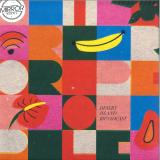
Desert Island Broadcast, the new album from Mirror People—the project of Portuguese musician and producer Rui Maia—is out September 26 on vinyl and across all digital platforms. The release is accompanied by the single Any Color U Like, following the earlier teaser track Million Questions, unveiled on May 9.
Described by Maia as “a radio transmission from a desert island—an imaginary space where different styles and references meet and coexist,” the record completes a trilogy begun with Voyager (2015) and Heartbeats Etc. (2022). “I wanted to create an album that felt both familiar and unexpected, like a lost signal reaching the right listener at the right time. It’s a celebration of music as companionship, even in isolated places,” says Maia.
Written between 2022 and 2025, Desert Island Broadcast features longtime collaborators and special guests, including vocalist Rö (Maria do Rosário), percussionist Ryoko Imai, saxophonist João Cabrita, and backing vocalists Ana Vieira and Isa Gomes.
With a career that has resonated both in Portugal and abroad, Mirror People continues to assert its relevance in the independent scene, delivering captivating songwriting and meticulous production.
Mirror People is the alter ego of musician, producer, and DJ Rui Maia, also known as the keyboardist of X-Wife. Conceived as a collaborative project with artists from diverse cultural backgrounds, Mirror People explores the intersections of disco, funk, and electronic music.
Back when the first white labels started floating through the hands of German, British, American and Canadian DJs in late ’84, nobody was ready for what was coming. The official drop hit in early ’85 and the scene was never the same again. This was the moment Mike Mareen broke through the static. Yeah, he’d been working with Chris Evans-Ironside since the ’70s but nothing hinted that together they’d channel something this futuristic. “Dancing In The Dark” sounded like it had slipped through a wormhole: melancholic, hypnotic vocals wrapped in vocoder haze, riding an arrangement so razor-sharp it made most releases of the era feel prehistoric. It didn’t need the pop charts… It owned the clubs. And the clubs listened.
London. Berlin. Madrid. Rome. Paris. Lisbon. Amsterdam. Athens. Toronto. NYC. Tokyo. Mexico City.
One drop of that electro bassline and DJs were hooked. Crowds were hooked. The whole underground was hooked. Soon Europe’s radio charts caved under its pressure, and the track crossed borders on mixtapes, becoming a cult anthem behind the Iron Curtain. It was everywhere, even where it technically wasn’t allowed to be.
Fast-forward four decades and the spell hasn’t faded. “Dancing In The Dark” still shows up in indie dance, italo wave, house and deep house sets. Producers keep re-editing it like it’s sacred material. It’s one of those tracks that DJs treasure, a timeless weapon, one of the top three defining singles of Mareen’s entire career.
And now for the 40th anniversary of its official release, Vintage Pleasure Boutique and Night’n Day Records drop the vinyl every collector and selector has been waiting for: a special reissue loaded with four brand-new remixes spanning the full spectrum of today’s underground indie/disco/italo/house energy.
Tallac – the American Berlin dweller – dives deep into the hypnotic soul of the original, pulling out its buried deep-house DNA and carving out a spacious, emotional roller.
Luksek, Italian producer & DJ, goes raw and dirty: loop-driven, gritty, underground, hypnotic, the kind of edit that eats dancefloors alive.
Flemming Dalum, the Danish Italo grandmaster, finally gets to remix the track he’d always dreamed of touching and of course it’s pure Flemingish electro-italo magic.
And the Polish sparkle: A.P. Mono delivers a shimmering mix of italo disco, glitterbox groove, disco glamour and synthwave glow, all while keeping the spirit of Mareen’s original heartbeat intact.
The wax also features two historical heavy-hitters: the 1985 Jens Lissat’s team remix and Luis Rodriguez’s original arrangement, essential cuts in the Mareen universe.
This release isn’t nostalgia. It’s a resurrection. A celebration. A reminder. “Dancing In The Dark” didn’t survive 40 years by accident, it survived because it still moves bodies, breaks hearts and lights up floors in ways modern tracks can only wish for.
If you’re an indie, italo, wave, house or disco DJ… This record isn’t just worth owning… It’s mandatory.
Paperbark is the ambient project of Jon Mulville, who has been shaping rhythmic and textural soundscapes since 2016. His music is rooted in memory, as a way to process emotional fragments. Guided by time spent in nature and created in response to a culture that often feels lacking empathy, his work aims to create space for reflection.
He has released eight albums, primarily on Seil Records, as well as Constellation Tatsu. 'Light Behind Me' marks his first CD release and only his second appearance on vinyl.
Inspired by Sam Kidel’s ›mimetic hacking‹ concept, Berlin-based composer Jasminev Guffond pipes opiated brass and woodwind motifs into a reverb chamber modelled on an Amazon fulfilment centre.
»Muzak for the Encouragement of Unproductivity« is a poetic inversion of Muzak’s traditional role in stimulating seamless productivity in the workplace. Beginning as a pre-radio music distribution network (1934, U.S.), Muzak was transmitted along electrical wires with the intention of being at once ubiquitous and indiscernible, always present yet easily ignorable. As a pseudo-science the aim was to capitalize on the potential of music to have a psychological effect on listeners, and with the goal of maximum productivity, was employed as a sonic disciplinary force in the work place.
Previously installed for Dystopia Sound Art Biennial (2024), at the Amazon Packing Station located before HAUNT-Frontviews in Berlin, Muzak for the Encouragement of Unproductivity sonically addresses utopic notions of seamless, efficient productivity, inherent to capitalist cultures, and their very real dystopic effects from labour exploitation to the impacts of over-production on the environment. This poetic inversion, further developed as an album, is not meant as a kind of melodic control but rather a reflective space in which to consider the benefits personally, globally and environmentally, of slowing down.
Reverb, essential to the Muzak aesthetic, is programmed (using convolution reverb) with the dimensions of the Berlin Amazon fulfillment centre, DBE2. Amazon fulfillment centers are global contemporary factories, promising a consumer utopia of next day delivery of almost any product imaginable. Inspired by Sam Kidel’s concept of »mimetic hacking«(1), the reverberation characteristics of the DBE2 facility perform a symbolic sonic break-in to the guarded Amazon fulfillment center, a trespass to the flow of production.
Guffond’s ambient Muzak with its drifting horn, clarinet and synth-like modulations is just too down-tempo for upbeat spending. If this is Muzak it is possibly Muzak for the end of the world, thoughtfully seeking transcendence through implied questioning after all avenues for shopping have been exhausted.
For SIDE B's fourth release, an EP by Portugal's own DJ Dextro is in line. Ultra efficient, fine tuned techno is put under a microscope by the international mainstay for this record. Using high pressure in the low-end and creative textures to decorate the tracks, Dextro solidifies his place as a mainstay with a biting performance on home turf. Balancing his uncompromising sound with mystical synth work, Dextro opens 'Lost Frame' with the title track. In this A1, he rolls straight into a tunnel with flashing percussion and lurking melodies far out in the stereo field. Dancefloor focused but with a hint of mysticism, 'Lost Frame' creates a captivating ambiance to introduce the project with promises of earworm groove. Quick to follow up, 'Disclosure Of Who We Are' sees more space between the elements, creating a whipping effect in the rhythm and rich in sound design. Synth stabs cut through a booming kick, creating urgency in an EP that was lacking none to begin with.
This spirit is maintained on the record's flip to the B side - this time with an added bit of funk and shuffle. 'Liberdade' throws a vicious synth sequence forward for peaktime use and sees Dextro define his space with concentrated transitions and booming percussive hits. Swinging along with the occasional vocal sample to emphasize the obscurity, the producer maintains his delivery of razor sharp focus in all of his elements. To conclude, 'Panoplia Abstracta' settles things with an ambient, even meditative fourth track. Staying insistent with his kick, Dextro lets go of the wheel to drift his record from the body to the mind with progressive arrangement and soothing textures to see off a whirlwind of an EP for SIDE B records. Words by Noah Hocker
Mala, returns on DEEP MEDi MUSIK with "the pidgin rap don" Magugu with a release that has been circulating as a mystery dub in different spaces around the world, for at least a year: whether Mala himself at Houghton, Skream in Ibiza, Sir Spyro shelling down club spaces or Four Tet laying bass weight on 80,000 ravers at HARD Fest in Hollywood.
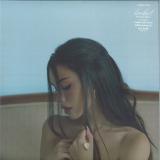
»locket« ist das mit Spannung erwartete vierte Studioalbum der zweifach GRAMMY®- nominierten und mehrfach mit Platin ausgezeichneten Künstlerin Madison Beer. Mit dem mitreißenden Dance-Track »yes baby« und der empowernden Trennungshymne »bittersweet« erzählt das neue Album eine nachvollziehbare Geschichte: sich zu verlieben, zu erkennen, dass die Beziehung ungesund ist, sie zu beenden, sich selbst wiederzufinden und letztlich zu sich selbst zurückzukehren. Als wahre kreative Kraft singt, schreibt, produziert, inszeniert und gestaltet Madison mit kompromissloser Authentizität. »locket« festigt ihren Status als eine der einflussreichsten Stimmen ihrer Generation.
2026 Repress
P.E.A.R.L.'s Falling Ethics imprint reaches release number 25. For this special occasion he invites personal favourite and good friend, icon of the Spanish techno scene, Oscar Mulero. After a first appearance on the label back in 2019 it was long overdue to present their follow up split EP. Both producers are known for their forward-thinking, optimized techno pressure and on 'Above Us Today' they show nothing less. Four perfectly shaped, effective techno hitters in their own iconic style. Mulero with his twisted hypno swing and P.E.A.R.L. working his impeccable high-energy grooves make this an essential techno pack.
Drummer-composer Tom Skinner announces Kaleidoscopic Visions, his second solo album, out 26th September 2025 via Brownswood Recordings and International Anthem
Kaleidoscopic Visions unfolds across two distinct sonic landscapes. Side A presents entirely instrumental compositions performed by Skinner's live Bishara band—bassist Tom Herbert, cellist Kareem Dayes, and Robert Stillman and Chelsea Carmichael on various woodwinds and reeds—with electric guitar on two tracks courtesy of Portishead's Adrian Utley. A drummer-composer bringing his wealth of experience to bear on the role of bandleader, Skinner composed primarily on guitar, embracing the freedom that came with writing on his secondary instrument.
These compositions include "Auster," dedicated to late novelist Paul Auster, and "Margaret Anne," which honours Skinner's mother Anne Shasby, a former classical concert pianist prodigy who abandoned her own promising career in the face of systemic misogyny, only to impart on her son what Skinner calls "the gift of music."
Skinner’s musical world opens further on Side B, where a collection of poised vocal collaborations stretch out from jazz and improvisation towards a more dream-like, soulful sound. The centerpiece is "The Maxim," a ten-minute collaboration with Grammy Award-winning Meshell Ndegeocello, a dubby, spacious meditation on life and death, delivered with a free-spirited grace. For Skinner, working with Ndegeocello—whom he first saw at Glastonbury as a teenager in 1994—represents a full-circle moment, indicative of the indirect paths and inspirational detours that have shaped his life.
The album goes on to feature South Carolina-based singer Contour (Khari Lucas) who appears on the low-lit soul ballad ‘Logue’, and closes with ‘See How They Run’, featuring London keyboardist-vocalist Yaffra (Jonathan Geyevu). It is the album’s most overtly lyrical track, an articulate exposition of jazz-inflected spoken word that speaks not only to the genre-fluid nature of the music but the breadth of Skinner’s palette.
This should come as no surprise. On Kaleidoscopic Visions, one of London’s most vital musical figures gives us a sparkling glimpse of the multi-coloured lens through which his unique sound is now refracting.