Some 30 years after they first met in the DJ booth of Tokyo’s Spacelab Yellow nightclub, close friends François Kevorkian and Dimitri From Paris have finally joined forces in the studio. The result is The Nassau Excursion, a dazzlingly good three-track EP inspired by their joint love of disco and boogie-era dance records made at Island Records’ Compass Point Studio in the Bahamas.
Across three essential tracks, François and Dimitri explore and celebrate this distinctive Caribbean post-disco sound – one where weighty basslines and heavy drum machine beats rub shoulders with early ‘80s synths, dub-style production, heady hand percussion patterns and arrangements drenched in space echo and tape delay.
Suche:spac
The roots of Studio Music lie in a special encounter between sound artist Jan D’Haene and visual artist Mark Manders. Recorded in Manders’ studio, where sounds resonated among the artworks, the music unfolded in dialogue with the imposing space. As the concluding part of a diptych, following the EP Études, this album evolves more slowly and with greater layers. It forms a dialogue with D’Haene’s introspective passages and invites a moment of pause and stillness. In doing so, the music embodies the tension between vulnerability and strength, between the individual and the universal.
For its inaugural vinyl release, Saudi-based imprint Gabu steps boldly into the analog era with The Night We Had, a landmark record from Jerome (of Foehn & Jerome) in collaboration with Sonya Zlo. Heralding the start of the label’s physical catalogue, this first pressing introduces Gabu’s deep, groove-led ethos through an evocative vision of deep that balances emotional depth with dancefloor intuition.
Named after the Arabic word for basement, Gabu represents a space where sound is felt as much as it is heard, intimate, grounded, and conceived from the roots upward. The Night We Had embodies this spirit in full, capturing the essence of late hours, close rooms, and music that thrives in the underground
Splatter Vinyl[20,97 €]
Fifteen years after it first surfaced on the short-lived Lithuanian netlabel Dumblys, Sraunus – Out Of The City returns remastered, recontextualized, and ready for a new wave of deep listeners. What once felt like a hidden gem now reads as a quiet cornerstone, a record whose significance only grew clearer with time.
Behind Sraunus is Paulius Markutis, one of Lithuanias earliest deep-dub explorers. His moniker translates to “flowing” or “fluid,” and that spirit runs through the entire album: the music breathes, circulates, and drifts with calm inevitability, revealing fresh details on every pass. Rooted in the classic Berlin-born dub tradition yet unmistakably shaped by Markutis own sense of space, mood, and narrative, the result feels beautifully suspended in time, warm in its chords, patient in its arrangements, and guided by a subtle emotional current. This is dub techno at its most enduring: fluid, deep, and endlessly replayable.
The reissue, part of Greyscales Archive Series, arrives on superbly pressed double vinyl, with artwork chosen with intent: Marija Marcelionytė-Paliukės “High Tide and Low Tide,” an image of perpetual motion that perfectly mirrors the albums flowing spirit.
Placid aka Paul Wise is the operator in chief at ‘We’re Going Deep’ – an online community and record label born out of a lifelong love affair with the many shades of electronic rhythm, and an obsession for collecting records since 1988. With a mission to share and release new music via his We’re Going Deep and We’re Going Back imprints, you’ll find only the best in underground Acid, Electro, IDM, Techno and House for the dance floor and your listening pleasure.
Up next in the label series, We’re Going Deep is excited to welcome 4 tracks of fresh material from pivotal electronic music maker Gerard Hanson, under his much prized E.R.P. alias. Renown for keeping his profile below the radar and letting the machines do all the talking for him. Hanson’s work as a producer has been much coveted since his debut back in the mid 90s as Convextion. Hailing from Dallas, Texas, he has become something of a hero in the underground Electro community. His work as E.R.P. has left a huge impression on labels such as Frustrated Funk, Bleep43 and Semantica over the years. Renown for his distinctive shimmering machine funk aesthetic, he ably summons the outer reaches of deep space listening thanks to his innate mastery of brooding, sci-fi soundscapes that few can equal.
Following releases for Apnea and Synchrophone, Hanson lifts off with a heartfelt tribute to our recently departed friend James Baker on ‘One4ReKab’. Ascending with the pulse of a steady kick drum, precision snares take hold as whispered vocals seep in and out of consciousness. Underpinned by trademark angular bass tones, soaring strings inject a deep sense of foreboding as all the parts fuse with a fierce glow. Stepping things a notch back as the sonic trajectory levels out, ‘Onward’ takes a more contemplative stance in a fusion of hypnotic drum programming that leads the fray whilst subtle arpeggios flow, all whilst wistful melodies wind you in.
Over on the flipside, Hanson revisits his 2008 composition “Multipole Vector” to launch yet another interstellar cruise by mission in the shape of “Multipole Vector II”. Leading with the simplest of bass progressions and metronomic beat programming, twinkling synth elements reach across the void as chords sweep to and fro to powerful effect. Ending out on the uplifting yet almost IDM inflected tones of “Self Unemployed”, this low tempo air rounds the EP off on an equally captivating note filled with playful charm, that makes this collection of music all the more pleasing.
Siren Selector presents the first voyage of Remy Solar, as the producer takes a break from composing sound system exclusive dubs to expand his horizons with this by-turns lush, textured, menacing and plaintive album.
‘Heavy Terrain’ emerges from the depths of a lifetime inside the dub fraternity: reared on a potent diet of Lee Scratch Perry and Augustus Pablo, The Disciples and Digital Mystikz, it’s an album which stuck its head in a bass bin in an abandoned bingo hall in north London before striking out on a musical road-trip to imbibe sounds and rhythms from further afield.
The album opens with the militant drums and ethereal pads of 'Sound in the East' before being bookended by two mixes of 'Star Trail', where unformed musical space and time cross uncharted distances to coalesce into the beginning of direction and rhythm. The lush deep house chords and drilling synths of 'Lila #3' summon ghostly presences, while in its counterpart 'Lila #7' layers of melody rise and hang like mist before dissipating in percussive heat. 'Dakhla's’ swelling and retreating drones fade into swirls of drums. In the eponymous 'Heavy Terrain', off-beat keyboard chops respond to each other from uncertain depths while electronic horns pulse across miles of open space. 'Empty City 'sees walls of sound coalesce and fragment, falling into bursts of white noise.
Remy Solar explores a deliberately constrained hardware set-up to create the primordial conditions of trance, locking down a rhythmic foundation while semi-improvised excursions form and reform above it. It’s an album that takes the listener on a journey between order and chaos, past and future, all the while underlaid by a counterpoint of cavernous bass lines and echoing percussion, yang and yin, shade and light.
A mutant beat manifesto from Miami luminaries Jonathan Trujillo (Jonny from Space) and Pablo Arrangoiz (El Gusano, DJ Fitness, Baüzer Vep), Crespi Drum Syndicate’s Colada Talk follows the duo’s debut on Sonido Isla with a freshly freaked collection of percussive oddities. Rooted in foundational clave rhythms and avant-garde experimentation, Crespi Drum Syndicate emerges from the amphibious underbelly of Miami’s Latin-infused club scene with their singular electro-acoustic vision.
Extensive live recording sessions, free improvisation, and a ritualistic studio practice
— countless hours spent twisting and rearranging sounds from found objects and Buchla modular systems — coalesce into new rhythmic forms. Atonal saxophone, bass clarinet, and slide whistle further expand upon Trujillo and Arrangoiz’s ever-evolving sonic palette, while NYC’s AceMo lends a hand on the heavily syncopated “Siu,” and closer “Boubow” might be the duo’s most hook-driven production to date with its mangled pop vocal and lewd drum-line bounce.
Landing somewhere between Steve Reich’s polyrhythmic “Six Marimbas,” Moebius & Plank’s industrial Krautrock sessions, and Ricardo Villalobos’ hypnotic techno minimalism, Colada Talk delivers on a world of subtropical rhythmic futurism and experimental body music that’s as heady as it is culo-shaking.
- Phonè
- Turenas
- Stria
- Sabelithe
Dr. John Chowning (b. 1934) is a pioneering computer musician, composer and professor who, in 1967, discovered the FM synthesis algorithm. This breakthrough in electronic music allowed for simple, yet rich timbres described as sounding "real." With this discovery, Chowning composed singular, dramatic electronic music and changed the timbre of music forever.
Chowning utilized the potential of computers to synthesize sounds according to programmed instructions. The composer's use of his own FM algorithms, digital synthesis with computers and the new compositional concepts offered by a programmable musical structure combine to create some of the most original and unique electronic music ever created.
The compositions on this LP were realized between 1966 and 1981 and the music on this LP, with the exception of Stria, was originally released on CD in Germany (Wergo, 1988). The version of Stria included here contains a section not included on the Wergo CD. Thus, this version of Stria is complete. This is the first time these purely digital recordings have been released on an analog medium. The original dynamics of these groundbreaking compositions have been preserved on this LP. As a result, listeners are advised to increase volume with caution.
In 1975, John Chowning founded the CCRMA - Center For Computer Research In Music and Acoustics at Stanford University. Through Stanford, Chowning licensed his groundbreaking algorithms to Yamaha resulting in numerous new instruments including the iconic DX series of keyboards. In 1972, his composition Tureens which is included on this LP, was the first to create the illusion of continuous 360-degree space using four speakers.
Technical Notes:
All pieces on this LP are originally quadrophonic. The illusion of moving sound sources is thus projected from the surrounding environment given by four loud-speakers on the stereo-basis.
STRIA was composed using Chowning’s own program to compile the musical structure into note-lists and MUSIC 10 (by D. Poole/Tovar) to generate the sounds in software-synthesis. The original quadrophonic version utilized 12 bits, two different sampling rates being used to accommodate the enormous amount of data on the magnetic disc-packs available at that time. The original sound-data was processed by sampling-rate conversion and digital mixes to achieve the stereo version presented on this LP.
SABELITH and TURENAS were synthesized originally using Smiths’ SCORE and MUSIC 10. However, their format was changed from direct sound-samples to a command stream for a special purpose computer, the System Concepts Digital Synthesizer, designed by Peter Samson, one of the first large-scale digital synthesizers for real-time sound processing - one was designed for CCRMA in the late seventies. For this recording the sounds were recorded directly from the synthesizer computing the samples in real-time.
PHONÈ was realized with the System Concepts Digital Synthesizer using again Chowning’s own program to create the note list.
The master tape of this LP was made directly from the computer system at CCRMA which generated and stored the sound data in digital format. No analog recording was involved at any stage of the production and editing process.
- A1: First Movement ~From Ys~ Feena / First Step Towards Wars / Palace
- A2: Second Movement ~From Ys~ Palace Of Destruction / Beat Of The Terror / The Morning Grow
- B1: Third Movement ~From Ys Ii~ Too Full With Love / Palace Of Salmon
- B2: Fourth Movement ~From Ys Ii~ To Make The End Of Battle / Subterranean Canal / Lilia / Ice Ridge Of Noltia
Relive the legend of Ys I and Ys II with this sublime symphonic version on vinyl!
The epic arrangements by Kentarô Haneda (known for his compositions on Space Adventure Cobra and Sherlock Hound) reveal the full splendour of the original melodies and pay tribute to the two legendary titles from Nihon Falcom.
The four movements are performed by the King Symphonic Orchestra.
Discover this symphonic suite in a beautiful gold vinyl edition!
The new album by Mecánica Clásica, Una Teoría del Ritmo, unfolds across nine tracks as an intimate and organic rhythmic landscape. Rhythm is not something to be counted or measured, it's an odd power that shapes life and nature. Embracing rhythm is a wild experience rather than a technical concept.
The album emphasizes its strong subjectivity: rhythm exists deep within the self and at the core of perceived phenomena and listening itself transforms that kaleidoscopic perception.
Moving against cold conceptualism, Una Teoría del Ritmo embraces a truly warm and intense space, seeking a path where listeners can feel a special energy through hypnotic, melodic and percussive sound waves in a cosmic and naturalistic way.
Diagonale des Yeux is the new band formed by two of France’s admired and adventurous artists. Laurène Exposito, we know as EYE, our longest regular contributor to the label — and friend Théo Delaunay, member and producer of Parasite Jazz, panoptique, De Klok & Violent Quand On Aime.
In Knekelhuis we have a particular fondness for artistic outputs that resist easy categorisation, and Diagonale des Yeux inhabits precisely that kind of territory.
Every aspect of the project is DIY/homemade. Their world drifts along the fringes of cabaret, strange 1980s French underground pop music to contemporary lo-fi scene — evoking the spirit of Nini Raviolette and The Residents — while delivering beautifully written songs that lodge themselves in your head almost immediately like a Cindy Lee ballad.
The tracks on Madeleine squeak and creak, wobbling on fragile hinges before suddenly opening onto moments of pure beauty.
Drums and guitars follow up synths and electronic percussions captured on tape between living rooms, studios and a concert space.
The band has a kink for choirs and playfully uses diverse languages. Their lyrics emerge through a homemade, patented four-hands cadavre exquis (Exquisite Corpse) process, where chance and dialogue shape meaning as much as intention.
Diagonale des Yeux is a singular project — equally strange and irresistibly pop-leaning. Music like weeds pushing through pavement cracks and, against all odds, turning into flowers.
Luciano Cilio was born in Naples, Italy, in 1950. He studied music and architecture and, in the late '60s, collaborated with local artist Alan Sorrenti, American expat Shawn Phillips and various avant-garde theater groups. A virtuoso guitarist and self-taught composer, Cilio released only one LP before his untimely death at the age of 33.
Dialoghi Del Presente (1977) is a work like no other, one that sounds both ancient and ahead of its time. Produced by Renato Marengo, it features a series of muted tableaux for strings, woodwinds, guitar, chorus, piano and percussion. Cilio carves out a space where subtle, repetitive phrases yield – almost imperceptibly – to breathtaking silence.
As Jim O'Rourke writes, "These recordings sound as if they were to please no one but himself; they feel self-contained, introspective, and determined ... You can feel in the music a sort of necessity that can be rarely found, like in This Heat's debut or Nick Drake's Pink Moon."
While each subsequent "quadro" grows slightly more abstract, Cilio draws the listener into an expansive, pastoral soundscape. The closing piece, "Interludio," begins with a plaintive guitar, which is joined by haunting strings and woodwinds before concluding, poignantly, as the album began, with Cilio and his guitar, alone once more.
Superior Viaduct's edition reproduces the original sleeve design. Recommended for fans of Johann Johannsson, Talk Talk's Spirit of Eden, Arvo Part and Popol Vuh.
- Newfound Respect
- Shamanic Echoes
- Woodsman
- Cut Your Teeth
- Rot To Ruin
- Carry The Weight
- Dripback
- Law Unto Myself
- Twelve Seasons
GOLD VINYL[24,58 €]
With their latest body of work, Desert Storm carve out a sound that is as primal as it is progressive-melding sludge, doom, and heavy metal weight with moments of softness, space, and surprising vulnerability. Across these tracks, the band summon the wilderness, ceremony, and chaos of the human condition, pushing their sound into new territories while staying true to their instinct for heaviness.
Gold Nugget vinyl, limited to 400 copies. With their latest body of work, Desert Storm carve out a sound that is as primal as it is progressive-melding sludge, doom, and heavy metal weight with moments of softness, space, and surprising vulnerability. Across these tracks, the band summon the wilderness, ceremony, and chaos of the human condition, pushing their sound into new territories while staying true to their instinct for heaviness.
- 1: Baptized In Gold
- 2: Paralyze
- 3: Love You Want
- 4: Next To You
- 5: All The (Lines)
- 6: Only One I Know
- 7: Perfect World
- 8: It Comes In Waves
- 9: Can't Come Down
- 10: Blind / Enabilizer
Enabilizer is the second full-length album from The Albinos. It’s a focused and emotionally direct record that examines the space between belief and doubt—what it means to hold on to ideals in a world that often doesn’t reflect them. The songs explore themes of connection, disillusionment, and the fragile narratives people use to make sense of things. Sonically, the album moves fluidly between stripped-down garage rock and layered psychedelic arrangements. Built on live, organic instrumentation and a minimal production approach, the sound is raw but intentional—combining driving rhythms, textured guitars, and unpolished vocal performances to create something that feels both grounded and expansive. Formed in Houston, The Albinos have spent the past few years refining their sound, drawing on psych and garage traditions while keeping their songwriting emotionally grounded. Enabilizer marks a step forward for the band—more confident, more cohesive, and more willing to lean into discomfort in search of something honest.
- 1: Tinkerbell
- 2: Lights On, Nobody Home
- 3: Coping
- 4: Astro Boy/Ochanomizu
- 5: Duuude
- 6: Friends Of Fire
- 7: A Chance Of A Lifetime
- 8: Turn Of Luck
Turquoise/Black Smoke Vinyl[24,33 €]
KALEIDOBOLT’s fifth album is pungent to the ears – KARAKUCHI out in March Karakuchi is one record you can judge by its cover. The first time Kaleidobolt’s faces have adorned an LP, they have been fused into a torpedoing biomechanical vehicle. Echoing The Birthday Party’s Junkyard or Motörhead’s Orgasmatron (…on acid?!), the illustration epitomises perfectly Kaleidobolt’s agenda of “hyperkinetic rock”. Their feverish, psych-prog sound is full of motion. It jerks around at different speeds, threatening to spin out of control and crash into flames at any given moment. What’s more, it isn’t taken too seriously. This is heavy and intricate music, yes. But as bassist and co-singer Marco Menestrina puts it, the Kaleidobolt attitude is “an ugly smirk more than an angry face with a fist.” On their fifth album since forming in 2014, the Helsinki-based outfit lean into their strengths as a formidable power trio. With their previous two records, 2019’s Bitter and 2022’s This One Simple Trick, they had thrown everything at their disposal into the recording with no expense spared on overdubs, effects and kitchen sinks. Produced again by Niko Lehdontie (Oranssi Pazuzu), Karakuchi comes from tightly rehearsed, live-in-the-studio takes. Kaleidobolt realise that greater sparsity can be a strength, and they’ve allowed their instruments extra space to breathe. It makes for their earthiest, purest and perhaps most authentic record to date. Karakuchi’s exuberant style emerges from the individual members’ contrasting listening habits. These span classic prog, Japanese city pop, noise rock, post-hardcore and historical podcasts. One record they can all agree is a masterpiece, the centre of the Venn diagram where all three members meet, is King Crimson’s Red. As for their new album’s title, that’s as suitable as the cover art. “Karakuchi” is the slogan of the Japanese beer brand Asahi Super Dry. Translated literally, this means “pungent to the mouth”. As drinkers of that product, Kaleidobolt acknowledge its parallels to their songs. “It’s very intense, right at the front, like at the first bite,” explains Menestrina. “And then it leaves your mouth feeling refreshed. The flavour doesn’t linger in your mouth, basically. It has a quick, hard finish. With a bit of a stretch, we thought that that could also be said of our music.” Karakuchi is Kaleidobolt at their hardest, fastest, tightest and super-driest. Pungent to the ears. -JR Moores, November 2025

- 1: Tinkerbell
- 2: Lights On, Nobody Home
- 3: Coping
- 4: Astro Boy/Ochanomizu
- 5: Duuude
- 6: Friends Of Fire
- 7: A Chance Of A Lifetime
- 8: Turn Of Luck
Black Vinyl[23,49 €]
KALEIDOBOLT’s fifth album is pungent to the ears – KARAKUCHI out in March Karakuchi is one record you can judge by its cover. The first time Kaleidobolt’s faces have adorned an LP, they have been fused into a torpedoing biomechanical vehicle. Echoing The Birthday Party’s Junkyard or Motörhead’s Orgasmatron (…on acid?!), the illustration epitomises perfectly Kaleidobolt’s agenda of “hyperkinetic rock”. Their feverish, psych-prog sound is full of motion. It jerks around at different speeds, threatening to spin out of control and crash into flames at any given moment. What’s more, it isn’t taken too seriously. This is heavy and intricate music, yes. But as bassist and co-singer Marco Menestrina puts it, the Kaleidobolt attitude is “an ugly smirk more than an angry face with a fist.” On their fifth album since forming in 2014, the Helsinki-based outfit lean into their strengths as a formidable power trio. With their previous two records, 2019’s Bitter and 2022’s This One Simple Trick, they had thrown everything at their disposal into the recording with no expense spared on overdubs, effects and kitchen sinks. Produced again by Niko Lehdontie (Oranssi Pazuzu), Karakuchi comes from tightly rehearsed, live-in-the-studio takes. Kaleidobolt realise that greater sparsity can be a strength, and they’ve allowed their instruments extra space to breathe. It makes for their earthiest, purest and perhaps most authentic record to date. Karakuchi’s exuberant style emerges from the individual members’ contrasting listening habits. These span classic prog, Japanese city pop, noise rock, post-hardcore and historical podcasts. One record they can all agree is a masterpiece, the centre of the Venn diagram where all three members meet, is King Crimson’s Red. As for their new album’s title, that’s as suitable as the cover art. “Karakuchi” is the slogan of the Japanese beer brand Asahi Super Dry. Translated literally, this means “pungent to the mouth”. As drinkers of that product, Kaleidobolt acknowledge its parallels to their songs. “It’s very intense, right at the front, like at the first bite,” explains Menestrina. “And then it leaves your mouth feeling refreshed. The flavour doesn’t linger in your mouth, basically. It has a quick, hard finish. With a bit of a stretch, we thought that that could also be said of our music.” Karakuchi is Kaleidobolt at their hardest, fastest, tightest and super-driest. Pungent to the ears. -JR Moores, November 2025
- Wenn Der Südwind Weht
- Veilchenwurzeln
- Mein Freund Farouk
- Mutee
- Freudentanz
- Goldregen
- Auf Leisen Sohlen
- Saumpfad
- Sonnengeflecht
- Felix Austria
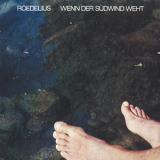
"Wo nimmt der Roedelius nur die vielen schönen Töne her?", fragt Asmus Tietchens in den Linernotes zu dieser Reissue. Eine berechtigte Frage. Hans-Joachim Roedelius, Pionier der Ambientmusik, des Krautrock, des Synthiepops, Mitglied in solch wegweisenden Bands wie Cluster und Harmonia, schwelgt auf seiner siebten Soloplatte aus dem Jahr 1981 in fremden Welten. Dies ist "Musik zum Leisehören", schreibt Roedelius auf der Plattenhülle. Und tatsächlich: Sie leise abzuspielen verstärkt den Eindruck des Außerweltlichen. Dabei ist hier nichts, was auch nur annähernd spacig oder psychedelisch wäre. Die einzelnen Stücke sind kurz, sie kommen und gehen, wie an einer Perlenschnur aufgereiht. Die Musik klingt immer ein wenig wie in Watte gepackt. Roedelius erlaubt sich beim Spielen auf seiner Elektroorgel kleine Ungenauigkeiten, lässt elektrische Störgeräusche zu. Das unterscheidet die Musik ganz grundsätzlich von der präzisen und perfekten Minimal Music. Roedelius" Musik lebt von der Improvisation, ihre Ehrlichkeit treibt einem fast die Tränen in die Augen.
- 01: Just Because You Don&Apos;T Believe That I Want To Dance, Don&Apos;T Mean That I Don&Apos;T Want To
- 02: Psalm 68 (22-35)
- 03: Cyber Feminism Index
- 04: Faithful And True
- 05: Crimes Of The Future
- 06: Rider On The White Horse
- 07: The Royal Arch
- 08: Best Served Cold
- 09: Op1 Dead
- 10: Ai Futurr
XDCVR_ unveils 'I HATE THAT SHIT, I HATE ALL THAT SHIT' a blistering sonic manifesto on the 'performativity of decay'.
In a world saturated with digital perfection, the album emerges as a vital, hand-made act of electronic rebellion.
Framed as a "soundtrack for the end stretch" the record explores the notion that societal decay is not a passive process, but an active performance—a machine chugging along long after its wheels have fallen off.
This is cyborg music for a bifurcated reality: carbon-fiber toughness shielding a core of systemic rot. The sound palette is intentionally raw and imperfect, a direct challenge to the sterile, automated order of what the artist calls the "techno-fascist oligarchy."
Tracks eschew conventional temporality, mirroring the feeling of existing in two concurrent timelines—one hyper-aware of the collapse, the other numbly consuming it.
Drawing a line from the Cold War anxieties of the past to the data-farming dystopia of the present, 'I HATE THAT SHIT…' posits art as the last authentic incubator for societal change. It is, in the artist's words, "a deliberate 'fuck you' to the oppressive order of the status quo. This is not easy listening; it is a contested space, a lit fuse, and a necessary noise for our complicated times."