"While playing for Phil Lesh, I became friends with his son, Grahame, and we started booking shows called Dead Blues, a Phil and Friends offshoot that used the traditional blues and folk songs from the Dead catalog as a vehicle to bring new musicians from the blues and rock scene into Phil’s orbit. For example, we brought Phil together for the first time with the Blind Boys of Alabama, Charlie Musselwhite, G Love, JD Simo and many others new to Phil’s community.
Dead Blues was a great concept for live shows but I never considered making an album until I met singer Datrian Johnson, one of the most moving singers I’ve ever worked with. John Medeski brought Datrian into the community and we instantly became friends and collaborators and began recording the songs on Dead Blues Volume 1, reinterpreting the American classics.
The tracks feature North Mississippi Alumni Cody Dickinson and Rayfield “Ray Ray” Hollowman, as well as old friends from Memphis, Paul Taylor/New Memphis Colorways also on drums, bass and guitars and Steve Selvidge on Space Funk guitar. I found that writing the music on bass (then adding keys and guitar) led the music down a funky, jazzy avenue and Datrian worked his magic, reinterpreting the classic blues lyrics and melodies with his soulful vocals."
quête:spac
- Tokyo 1
- Osaka
- Nagoya
- Matsumoto (Beginning)
- Matsumoto (Ending)
- Hokkaido
- Tokyo 2
- Each Story
Black Vinyl[22,27 €]
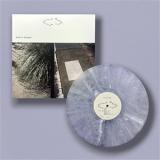
Emily A. Sprague's Cloud Time traces an audio-spiritual journey through time and place, recorded across a long-awaited debut tour of Japan in the fall of 2024. Compiled from environmental improvisations captured in and for the moment, material at once welcoming, responsive, and inimitable, the album distills a voyage guided by psychic wayfaring, unbound presence, and activating performance for a reciprocal exchange with space, listener, and each fully engaged instant. The Japanese tour documented on Cloud Time held an almost mythic significance for Sprague, taking on properties of her own sonic white whale. After many near-departures and dropped plans to play in the country, "the empty spaces of cancelled trips and forgotten music turned into strange little misty spirits that I felt followed by," she says. "When I began preparing for the tour, I couldn't shake a sense that the invitation to Japan was more about opening myself up to this new place instead of bringing something into it tightly under my control. Improvisation has always been such a pillar in my music practice, and I really wanted to meet the country, spaces and people through that process." To amplify these intuitive whispers on-stage, Sprague reimagined her time-tested live rig, designed to be as free from error as possible, as a looser, more flexible set up that would allow her to interface with what was essentially a blank sonic canvas every night. Each performance became a collaboration between environment and instinct, Sprague processing the events, energies, and emotions informing the evening through her new sound ecosystem, and projecting an entirely present and unique version of herself to each open-eared and hearted crowd. "It was very much more than just an act of playing for me, but a total experience of time and place," she says. The seven long-form pieces that plot the course of Cloud Time, excerpted from over eight hours of recordings archived on the artist's on-stage recorder and generously shared on the album with no additional mixing and only minimal editing, invite listeners to become still in these deep-rooted moments of presence as the album moves from city to city, venue to venue. Cloud Time chronicles material recorded at each tour stop, Sprague selecting and sequencing the album around mood-based storytelling more so than linear chronology. "I tried to make the whole album flow in the way that any one of the complete live performances did," she explains, "while also keeping the spirit of the whole thing as a journey." The result is equal parts travelog, love letter, and impressionistic collage channeled from the potent ferment of a now encased in the glowing amber of memory. Intrinsically inspired by kankyo ongaku, an environmental music philosophy, known both in and widely outside of Japan that tunes into the similarly expansive ethos as Pauline Oliveros' deep listening practice and posits the listener as composer, Cloud Time is ambient music that seems to be listening right back, grounded in heartfelt synthesized frequencies that abundantly hold and heal. Pieces like "Nagoya," "Tokyo 1," and the ten minute "Matsumoto" in particular hum with the atomic resonance of gently tended landscapes, offering space for tuning way in and dropping far out from perspectives that stifle and bind. Cloud Time is an invitation to embrace each moment as both fleeting and eternal, floating by with nothing to grasp onto and absolutely everything to gain. The exercise in acceptance and letting go that Sprague practiced throughout the tour deeply impacted her understanding of self as both a guest and venerable performer. "The process of loving wherever I am, being present and focusing on a clear channel of communication for mind and emotion, rooted so deeply in respect for the space, those within it, and myself, ended up being profoundly healing," she says. "My vision and hope is that this album can be released as a gift back to anyone who either was or wasn't there. A cloud time of life passing by."
STANDFIRST Titanic, the project spearheaded by Mabe Fratti and Hector Tosta (aka I. la Católica), return with a sumptuous and life-affirming new album.
In her sensational 1929 biography Tiger Woman, dancer and socialite Betty May claimed her ‘coster’s eye’ meant she liked to wear as many colours as possible. “Colours to me are like children to a loving mother. Each is my favourite, yet I can never bring myself to deny the others by preferring one.” May’s bold and inclusive strategy is one that manages to transfer itself, almost a century later, to Hagen, the new record by Titanic.
Many will know Titanic as the Mexico City-based brainchild of cellist and singer Mabe Fratti and multiinstrumentalist Hector Tosta who is now operating under the pseudonym, I. la Católica, (taken, rather unusually, from the name of the street the pair live on). With Hagen, and their previous release, Vidrio, (2023), the pair are creating a distinctive signature sound in modern alternative pop music. Nobody else sounds quite like them. Both records have an open hearted nature and simple, winning melodies that play off against a taste for drama, spectacular orchestration and a feeling of otherworldly mystery. Hagen is the more ambitious, sometimes more mystical effort. From the opening handclaps of ‘Lágrima del Sol’, (a wonderfully uptempo playground chant translating as a tear from the sun but, surely, not referencing the brand of pineapple wine?), the record dances its way through various mid-to-late-eighties inspirations, lush and widescreen passages of melancholy and vertiginous contrasts.
Mystery is often found in the simple but slightly odd song titles. English translations of various track titles give, ‘you swallowed the gum’, ‘leak’, ‘a tear from the sun’, ‘raising the trophy’ ‘digging dimensions’, ‘the owner’, ‘the decapitated hen’ and ‘the trap is exposed’. All denote striking images, metaphysical hints and emotional cues or simple, even childlike actions. Though Fratti and Tosta don’t reveal its provenance, the album’s title could even be a crafty play on words: the listener would be forgiven in thinking the moments of brash contrast and eyebrow raising theatricalism in the music constitute a musical nod to German punk chanteuse, Nina Hagen.
On Hagen, singer and cellist Mabe Fratti once again displays her brilliant knack of speaking to us directly. There is never the suspicion of her playing to the gallery, and the directness of many of the lyrics don’t allow it. Parallel to this, Fratti has an almost magical ability to give Hector Tosta’s melodies, and her and Tosta’s lyrics ones imbued with an insight and meaning that feels otherworldly. Tosta admitted it was “pretty wild to hear Mabe take the interpretations to a different place” and the listener can pick up on the delight Fratti takes in (literally) adding a voice to the many narratives.
Two examples can be shown here: ‘Gotera’ (Leak) uses harsh slashes of cello and tough, gunfire-like guitars and drums and multiple vocal lines that could be acting as a Greek chorus. They play off brilliantly against Fratti’s soft, slightly baleful vocal take that delivers lyrics such as: ‘nobody knows where the leak is / but I know where it is / they fight in front of the door and / nobody can go in’. With ‘La Gallina Degollada’ the somewhat blithe melody melody line, sung with what could be sarcastic brio by Fratti, plays against an itchting rhythm and rasping guitar part. The punch comes when you see that the song is about a chicken that has been decapitated and read lyrics such as: ‘I already saw it, it moved, the decapitated chicken’ / ‘could it be that I'm broken’ and ‘Two people hurt each other by thinking that they no longer agree’/ ‘Hours pass and the chicken represents what scares me’.
There may be death and fights to deal with, but there is also a quality of chirpy self-reliance about Hagen that is a key part of its nature. Like Betty May and her colourful outfits, Hagen’s sound often revels in its own sense of richness. Throughout, the record delivers vaulting string sections or glutinous guitar squeals that could, like the powerful, driving ‘Escarbo Dimensiones’ (Digging Dimensions) have come directly from a glossy 1980s TV series. Fratti sees this “glam sound” developed by Tosta on the aforementioned track and ‘Te Tragaste el Chicle’ (You Swallowed The Gum), as moments that were truly “revealing” for the album as a whole during its making.
What else? The thud and thump of ‘La Trampa Sale’ (The Trap is Exposed), and its sudden change of tempo and mood betrays a monstrously ambitious piece of music, the players almost greedily creating the sounds. Other moments are heart wrenching: ‘Libra’ ends on a poppy chord switch that cleverly ramps up the emotion inherent in the music’s notation. You could almost imagine a teenager in a bedroom forty years ago, rewinding the track over and over on a small, cheap cassette player, unable to get enough of that sugarsweet switch. Elsewhere, Oneohtrix Point Never adds stardust and an unearthly sense of space on the changeable, slightly moody meditation, ‘Pájaro de Fuego’ (Firebird). The record ends with ‘Alzando el Trofeo’ (Lifting the Trophy), a track that could soundtrack a state wedding, what with its beautiful cascading piano parts, a sugary vocal and short triumphal guitar riffs that add a rich patina to the overall sound. Fratti: “When I doubled those vocals on ‘Alzando el Trofeo’ I felt there was an epiphany happening, right at that moment.”
Making a good record is a team game. Tosta and Fratti recall seeing Randall from Circular Ruin Studios in NYC “tweak the drums in ‘Libra’ to make that amazing effect of the gated reverb”, or the shaping of ‘Gotera’, “when (recording engineer) Nate Salon added some synths to the track.” Drummer Eli Keszler, “an amazing and versatile player” had the songs down pat in a couple of days” and, according to Tosta, Oneohtrix Point Never “just came to one of the sessions and we hung out, and after all the recordings he and Nate were together in some studio and out of nowhere they sent us some beautiful tracks for ‘Pájaro de Fuego’! Fratti concurs. “He decided that he wanted to record because he was listening to the record (Nate works closely with him) and he really liked it! It was a total honour, indeed!”
Bedazzled by the playing, the skyscraping ambition in the arrangements and the giddy moments of contrast thrown up by Hagen, we could allow ourselves a brief moment of flippancy and state that Titanic’s new record is Yacht Rock meets Aeschylus, full-on. It’s also worth speculating that, in this hyper-sensitive, intemperate age, Titanic’s music has the power, however fleetingly, to heal hurts. Hagen is a brilliant showcase for a fresh and enriching form of pop music: displaying a magpie eye for what glints and plundering what has gone before.
Like Vidrio, Hagen was partially and additionally recorded at Fratti and Tosta’s house, aka Tinho Studios in Mexico City, as well as Golden Girl Studios & Circular Ruin Studios in New York City. Mixing was done by Santiago Parra in Pedro y el Lobo Studios, Mexico City and mastered by Rafael Anton Irisarri at Black Knoll Studios, New York City. The recording engineer was Nate Salon.
Hagen featured Mabe Fratti on cello, vocals & backing vocals, I. la Católica on guitar, keyboards, prepared piano, bass & backing vocals, drums by Eli Keszler and synths in ‘Pájaro de Fuego’ from Daniel Lopatin and Nate Salon.
All compositions on Hagen are written by I. la Católica, except ‘Escarbo Dimensiones’ & ‘Pájaro de Fuego’, which were composed by I. la Católica and Mabe Fratti. The record was produced by I. la Católica and co-produced by Nate Salon & Mabe Fratti. And all lyrics are by I. la Católica except ‘Escarbo Dimensiones’, ‘Gotera’, ‘Gallina degollada’ & ‘Pájaro de Fuego’, which were written by I. la Católica & Mabe Fratti.
STANDFIRST Titanic, the project spearheaded by Mabe Fratti and Hector Tosta (aka I. la Católica), return with a sumptuous and life-affirming new album.
In her sensational 1929 biography Tiger Woman, dancer and socialite Betty May claimed her ‘coster’s eye’ meant she liked to wear as many colours as possible. “Colours to me are like children to a loving mother. Each is my favourite, yet I can never bring myself to deny the others by preferring one.” May’s bold and inclusive strategy is one that manages to transfer itself, almost a century later, to Hagen, the new record by Titanic.
Many will know Titanic as the Mexico City-based brainchild of cellist and singer Mabe Fratti and multiinstrumentalist Hector Tosta who is now operating under the pseudonym, I. la Católica, (taken, rather unusually, from the name of the street the pair live on). With Hagen, and their previous release, Vidrio, (2023), the pair are creating a distinctive signature sound in modern alternative pop music. Nobody else sounds quite like them. Both records have an open hearted nature and simple, winning melodies that play off against a taste for drama, spectacular orchestration and a feeling of otherworldly mystery. Hagen is the more ambitious, sometimes more mystical effort. From the opening handclaps of ‘Lágrima del Sol’, (a wonderfully uptempo playground chant translating as a tear from the sun but, surely, not referencing the brand of pineapple wine?), the record dances its way through various mid-to-late-eighties inspirations, lush and widescreen passages of melancholy and vertiginous contrasts.
Mystery is often found in the simple but slightly odd song titles. English translations of various track titles give, ‘you swallowed the gum’, ‘leak’, ‘a tear from the sun’, ‘raising the trophy’ ‘digging dimensions’, ‘the owner’, ‘the decapitated hen’ and ‘the trap is exposed’. All denote striking images, metaphysical hints and emotional cues or simple, even childlike actions. Though Fratti and Tosta don’t reveal its provenance, the album’s title could even be a crafty play on words: the listener would be forgiven in thinking the moments of brash contrast and eyebrow raising theatricalism in the music constitute a musical nod to German punk chanteuse, Nina Hagen.
On Hagen, singer and cellist Mabe Fratti once again displays her brilliant knack of speaking to us directly. There is never the suspicion of her playing to the gallery, and the directness of many of the lyrics don’t allow it. Parallel to this, Fratti has an almost magical ability to give Hector Tosta’s melodies, and her and Tosta’s lyrics ones imbued with an insight and meaning that feels otherworldly. Tosta admitted it was “pretty wild to hear Mabe take the interpretations to a different place” and the listener can pick up on the delight Fratti takes in (literally) adding a voice to the many narratives.
Two examples can be shown here: ‘Gotera’ (Leak) uses harsh slashes of cello and tough, gunfire-like guitars and drums and multiple vocal lines that could be acting as a Greek chorus. They play off brilliantly against Fratti’s soft, slightly baleful vocal take that delivers lyrics such as: ‘nobody knows where the leak is / but I know where it is / they fight in front of the door and / nobody can go in’. With ‘La Gallina Degollada’ the somewhat blithe melody melody line, sung with what could be sarcastic brio by Fratti, plays against an itchting rhythm and rasping guitar part. The punch comes when you see that the song is about a chicken that has been decapitated and read lyrics such as: ‘I already saw it, it moved, the decapitated chicken’ / ‘could it be that I'm broken’ and ‘Two people hurt each other by thinking that they no longer agree’/ ‘Hours pass and the chicken represents what scares me’.
There may be death and fights to deal with, but there is also a quality of chirpy self-reliance about Hagen that is a key part of its nature. Like Betty May and her colourful outfits, Hagen’s sound often revels in its own sense of richness. Throughout, the record delivers vaulting string sections or glutinous guitar squeals that could, like the powerful, driving ‘Escarbo Dimensiones’ (Digging Dimensions) have come directly from a glossy 1980s TV series. Fratti sees this “glam sound” developed by Tosta on the aforementioned track and ‘Te Tragaste el Chicle’ (You Swallowed The Gum), as moments that were truly “revealing” for the album as a whole during its making.
What else? The thud and thump of ‘La Trampa Sale’ (The Trap is Exposed), and its sudden change of tempo and mood betrays a monstrously ambitious piece of music, the players almost greedily creating the sounds. Other moments are heart wrenching: ‘Libra’ ends on a poppy chord switch that cleverly ramps up the emotion inherent in the music’s notation. You could almost imagine a teenager in a bedroom forty years ago, rewinding the track over and over on a small, cheap cassette player, unable to get enough of that sugarsweet switch. Elsewhere, Oneohtrix Point Never adds stardust and an unearthly sense of space on the changeable, slightly moody meditation, ‘Pájaro de Fuego’ (Firebird). The record ends with ‘Alzando el Trofeo’ (Lifting the Trophy), a track that could soundtrack a state wedding, what with its beautiful cascading piano parts, a sugary vocal and short triumphal guitar riffs that add a rich patina to the overall sound. Fratti: “When I doubled those vocals on ‘Alzando el Trofeo’ I felt there was an epiphany happening, right at that moment.”
Making a good record is a team game. Tosta and Fratti recall seeing Randall from Circular Ruin Studios in NYC “tweak the drums in ‘Libra’ to make that amazing effect of the gated reverb”, or the shaping of ‘Gotera’, “when (recording engineer) Nate Salon added some synths to the track.” Drummer Eli Keszler, “an amazing and versatile player” had the songs down pat in a couple of days” and, according to Tosta, Oneohtrix Point Never “just came to one of the sessions and we hung out, and after all the recordings he and Nate were together in some studio and out of nowhere they sent us some beautiful tracks for ‘Pájaro de Fuego’! Fratti concurs. “He decided that he wanted to record because he was listening to the record (Nate works closely with him) and he really liked it! It was a total honour, indeed!”
Bedazzled by the playing, the skyscraping ambition in the arrangements and the giddy moments of contrast thrown up by Hagen, we could allow ourselves a brief moment of flippancy and state that Titanic’s new record is Yacht Rock meets Aeschylus, full-on. It’s also worth speculating that, in this hyper-sensitive, intemperate age, Titanic’s music has the power, however fleetingly, to heal hurts. Hagen is a brilliant showcase for a fresh and enriching form of pop music: displaying a magpie eye for what glints and plundering what has gone before.
Like Vidrio, Hagen was partially and additionally recorded at Fratti and Tosta’s house, aka Tinho Studios in Mexico City, as well as Golden Girl Studios & Circular Ruin Studios in New York City. Mixing was done by Santiago Parra in Pedro y el Lobo Studios, Mexico City and mastered by Rafael Anton Irisarri at Black Knoll Studios, New York City. The recording engineer was Nate Salon.
Hagen featured Mabe Fratti on cello, vocals & backing vocals, I. la Católica on guitar, keyboards, prepared piano, bass & backing vocals, drums by Eli Keszler and synths in ‘Pájaro de Fuego’ from Daniel Lopatin and Nate Salon.
All compositions on Hagen are written by I. la Católica, except ‘Escarbo Dimensiones’ & ‘Pájaro de Fuego’, which were composed by I. la Católica and Mabe Fratti. The record was produced by I. la Católica and co-produced by Nate Salon & Mabe Fratti. And all lyrics are by I. la Católica except ‘Escarbo Dimensiones’, ‘Gotera’, ‘Gallina degollada’ & ‘Pájaro de Fuego’, which were written by I. la Católica & Mabe Fratti.
cv313 and Federsen join forces again for the ‘Altering Dimensions Part One’ release, the initial drop in a series of collaborations which will later form together as one long player project.
Detroit-based dub techno pioneer cv313 (Stephen Hitchell of Echospace fame) and Federsen join forces on the forthcoming collaborative EP Altering Dimensions via Federsen’s own Alt Dub imprint. cv313, known for landmark releases such as Seconds to Forever and the deeply influential Dimensional Space LP, has been central to shaping the modern dub techno sound, blending immersive atmospheres with hypnotic rhythms. Federsen, celebrated for releases on Echospace Detroit, Grayscale, Synchrophone, Lempayung, Avant Roots and others. has also established himself as one of the genre’s most forward-thinking producers, bringing a meticulous, analogue driven warmth to his productions. Altering Dimensions marks a meeting of two highly respected producers in contemporary dub techno, bridging Detroit’s timeless legacy with Federsen’s cutting-edge sonic explorations.
The release comprises four alternate interpretations of the title-cut and leading the way is the original mix of ‘Altering Dimensions’, a seven-and-a-half-minute excursion through weighty low-end pulsations, spiralling atmospherics and ever unfolding nuance throughout. The ‘Redesign’ follows and shifts gears into a more robust deep techno realm as cavernous reverberations and shifting echoes ebb and flow alongside murky bass and sturdy drums.
The ’Dub’ mix follows on the flip-side, as the name would suggest laying focus on a more classic dub techno style with crisp percussion, billowing spaced out delays and vacillating subs before the ‘Reduction’ mix concludes the project, as the name would suggest stripping things down to the composition core atmospherics elements alongside oscillating percussive elements and fluctuating pads.
"The Happening by Tomorrow Comes The Harvest is the least case, a provocative confrontation. It's a challenge or dare to the idea that music can be useful if we are able to experience it. I would imagine that to many, music having an objective beyond the listener doesn't make sense because the general thought is that Music is made for us to consume, to make us remember, to influence us and to make us feel something. The Happening does all those things but much more. What it does is expand the scope from us to "it". Creating and constructing music for the subject of existence is a tall order.
The concept of The Happening is about the beginning and the end of Time and Space; the initial point of when reality starts and its conclusional apex. In the beginning, there is a great light. And from this light, comes life. Life is lived until it isn't.
This is what The Happening implies. It speaks about a 9-minute frame in reality, used to emphasize something that happened a very long time ago, something that happened in its creation and what will eventually happen far in the future.
The Happening was of an accidental birth. The love child of three musicians (Jeff Mills, Prabhu Edouard and Jean-Phillippe Dary) who was just asked to play "something" so that the camera crew could have extra b-roll for all the previous footages of the band while they were working in the recording studio in the North of Paris for their album Forbidden Planet. There was no discussion of what they'll do, no plan, no direction other than to use music to reach a level of consciousness.
Somehow within these transformative 9 minutes, something was felt by each of them, explored to its furthest point, which lead to this extraordinary creation. The Happening refers to the life and death of everything living thing. Infinity."
Jeff Mills
Manchester based trio, Sonnenspot have unashamedly taken their favourite records from the Kosmische Musik landscape and fused these to inform their own spontaneous sonic constructions. Motorik drums, pulsating flutes, wah guitar and almost excessive use of space echo make this a dense and dreamy listen, with a hint of the rainy pensiveness of their home town.
Notable inspiration from Neu!, Manuel Gottsching, Sonic Youth and Yo La Tengo is all clearly audible in the various recordings on this album and minimal effort was made to shy away from this. The longest track 'Motorway' is an epic homage to the space rock art form and 'Madrugada' takes both John Martyn's 'Small Hours' and Gottsching's 'Inventions' as a starting point. Others include the tobacco lovers art-rock-ear-worm ('Liquorice Paper'), a dub laden celestial synth jam ('Slow Blinker') and the album opens with the first thing the band ever recorded, as a meaningless improvisation to tune their synths up to ('Figurescene'). Turned out it had a killer bass line and drum part.
Initial sessions were mostly just an excuse for the three long standing friends to get together musically for the first time, and after knowing each other for many full moons, it was long overdue.
They all bring some peripheral musical heritage to the table. Ian Smith was the guitarist in Alfie and the The Beep Seals and played on Badly Drawn Boy's 'The Hour of Bewilderbeast'. Pete Philipson played in Jane Weaver's band for ten years and has made his own ambient guitar albums. Dan Hope plays in the jazz folk band Mother Sky and promotes events around the city under the Rainy Heart banner.
They were joined by another long term musical friend Sam Kynaston who added heavenly flute to much of the album.
A Walking Contradiction resurfaces with a new release by their friend & collaborator Katatonic Silentio, channeling a collection of tracks submerged in echoes and pressure-shaped pulses. AWC011 traces fluid architectures built from delay, decay, and deep resonance--each composition unfolding like sediment in motion. Sounds sway with tidal pull, suspended in chambers where space thickens and time refracts. Basslines emerge like sonar beneath shifting layers, while percussive elements flicker at the edges, softened by current and drag. Elastic and disorientated, these underwater constructions are tuned to the language of depth and dissolution.
Returning with its final instalments, Die Schachtel's Decay Music series extends its explorations of inspired contemporary experimental efforts of the ambient, ethereal, and emotively abstract with Luigi Turra and Elio Martusciello’s “Liminale” and Sergio Armaroli and David Toop’s “And I Entered Into Sleep”, two astounding electroacoustic gestures of blurred space and time, plumbing complexity of meaning bound to sonority. Creatively groundbreaking and inspired, radically rethinking the terms of what ambient music can be perceived to be, they stand among the most striking efforts to appear within the series to date.
An aural bridge between two distinct generations of Italian experimental musicians, “Liminale” is the debut collaborative outing from the creative partnership of Luigi Turra and Elio Martusciello. Active within the context for roughly two decades, Turra (b. 1975) is a reductionist/electroacoustic composer, noted from his tense deployment of concrete and acoustic sources — particularly small sounds and noises — whose work threads the balance between silence, tactile auditory perception, and aleatoric music. Martusciello (b. 1959), on the other hand, is a musician and composer working across the fields of acousmatic and electroacoustic composition, sound installation, multi-media and audiovisual art, and computer music improvisation, who is widely celebrated for both his solo efforts and his collaborations with Eugene Chadbourne, Mike Cooper, Alvin Curran, Chris Cutler, Rhodri Davies, Iancu Dumitrescu, Michel Godard, Tim Hodgkinson, Lawrence D. "Butch" Morris, Jérôme Noetinger, Tony Oxley, Evan Parker, Z'EV, and others.
A single, nearly 40 minute work, extending across the two sides of the LP, “Liminale” — as its title eludes — is an exploration of the liminal through sonic means: “places that exist on the threshold, transitional spaces suspended between a before and an after, between the real and the evanescent” conceiving the soundscape as “a liminal place, a space to be inhabited without the certainty of where it leads.” Unfurling like a labyrinth navigated in darkness, the piece’s first half is marked by sparseness and restraint, as slow-paced guitar tones and harmonics thread silences and resonant ambience within a sprawling sense of space, delicately populated by tiny sounds, fleeting punctuations drawn from undeterminable sources, vocal utterances, and the unexpected appearance of intoxicating piano tones.
As “Liminale” progresses into its second half, Turra and Martusciello enter a more densely populated notion of the in between. No less defined by the presence of space and mystery, discreet textures rustle and writhe within passages of pure concrete abstraction and a fragmented, stretched sense of musicality: long-tones, metallic pulses, minimal vibrations, processed vocalizations, guitar harmonics, and deconstructed piano melodies, buried in spectral, gauzy hazes drifting from beyond arm’s reach within an imagistic and immersive landscape of profoundly meditative scope, where each sonic element flirts the line between emergence and disappearance.
Intimate, fragile, and achingly beautiful, “Liminale”, Luigi Turra and Elio Martusciello’s debut collaboration, is a masterstroke in sound-craft and composition, revealing the potency of meaning locked within transitional spaces and the undefined, and imbuing silence with monumental gravity and weight. Mastered for vinyl by Giuseppe Ielasi, and taking electroacoustic minimalism to an etherial extreme, “Liminale” is issued as the ninth entry in Die Schachtel’s Decay Music series, highlighting inspired contemporary experimental efforts of the ambient, ethereal, and emotively abstract.
- Tokyo 1
- Osaka
- Nagoya
- Matsumoto (Beginning)
- Matsumoto (Ending)
- Hokkaido
- Tokyo 2
- Each Story
Cloudy White Vinyl[31,89 €]
Emily A. Sprague's Cloud Time traces an audio-spiritual journey through time and place, recorded across a long-awaited debut tour of Japan in the fall of 2024. Compiled from environmental improvisations captured in and for the moment, material at once welcoming, responsive, and inimitable, the album distills a voyage guided by psychic wayfaring, unbound presence, and activating performance for a reciprocal exchange with space, listener, and each fully engaged instant. The Japanese tour documented on Cloud Time held an almost mythic significance for Sprague, taking on properties of her own sonic white whale. After many near-departures and dropped plans to play in the country, "the empty spaces of cancelled trips and forgotten music turned into strange little misty spirits that I felt followed by," she says. "When I began preparing for the tour, I couldn't shake a sense that the invitation to Japan was more about opening myself up to this new place instead of bringing something into it tightly under my control. Improvisation has always been such a pillar in my music practice, and I really wanted to meet the country, spaces and people through that process." To amplify these intuitive whispers on-stage, Sprague reimagined her time-tested live rig, designed to be as free from error as possible, as a looser, more flexible set up that would allow her to interface with what was essentially a blank sonic canvas every night. Each performance became a collaboration between environment and instinct, Sprague processing the events, energies, and emotions informing the evening through her new sound ecosystem, and projecting an entirely present and unique version of herself to each open-eared and hearted crowd. "It was very much more than just an act of playing for me, but a total experience of time and place," she says. The seven long-form pieces that plot the course of Cloud Time, excerpted from over eight hours of recordings archived on the artist's on-stage recorder and generously shared on the album with no additional mixing and only minimal editing, invite listeners to become still in these deep-rooted moments of presence as the album moves from city to city, venue to venue. Cloud Time chronicles material recorded at each tour stop, Sprague selecting and sequencing the album around mood-based storytelling more so than linear chronology. "I tried to make the whole album flow in the way that any one of the complete live performances did," she explains, "while also keeping the spirit of the whole thing as a journey." The result is equal parts travelog, love letter, and impressionistic collage channeled from the potent ferment of a now encased in the glowing amber of memory. Intrinsically inspired by kankyo ongaku, an environmental music philosophy, known both in and widely outside of Japan that tunes into the similarly expansive ethos as Pauline Oliveros' deep listening practice and posits the listener as composer, Cloud Time is ambient music that seems to be listening right back, grounded in heartfelt synthesized frequencies that abundantly hold and heal. Pieces like "Nagoya," "Tokyo 1," and the ten minute "Matsumoto" in particular hum with the atomic resonance of gently tended landscapes, offering space for tuning way in and dropping far out from perspectives that stifle and bind. Cloud Time is an invitation to embrace each moment as both fleeting and eternal, floating by with nothing to grasp onto and absolutely everything to gain. The exercise in acceptance and letting go that Sprague practiced throughout the tour deeply impacted her understanding of self as both a guest and venerable performer. "The process of loving wherever I am, being present and focusing on a clear channel of communication for mind and emotion, rooted so deeply in respect for the space, those within it, and myself, ended up being profoundly healing," she says. "My vision and hope is that this album can be released as a gift back to anyone who either was or wasn't there. A cloud time of life passing by." Emily A. Sprague's Cloud Time will be released Friday, October 10th in vinyl, Japanese import CD (via Plancha), and digital editions.
After his 2024 album The Spirit Continues, Tilman returns with Altered Spaces, a tightly focused four-track EP that distills his signature sound into a concise, club-ready format.
Opening track Make My Body Move sets the tone with soulful vocals, warm piano stabs, a rolling bassline and a breezy Balearic vibe. The Last Resort deepens the mood, layering pads, organ hits and shimmering strings over a steady, driving groove. Rounding out the EP are two reimagined cuts from The Spirit Continues. Dance Department (Spirit Mix) smooths out the rougher edges of the original, adding organ stabs and a more melodic sensibility.
Need It (Dance Dub) transforms the track into a softer, dub-tinged version - hypnotic, restrained and full of subtle movement. Altered Spaces is classic Tilman: warm, understated house music that's rich in detail and groove - made for dancers and deep listeners alike.
- Skyfall (Reg+Fast)
- Sk Web Web Sk Feat Nofuturesk
- Disheveled
- Pleading
- Goin Pro
- Txts Red On Imessage (Reg+Fast)
- Crochet - I Swear Feat Tnotsobad
- Offwrld
- Playboy (Reg+Fast)
- Enough
- Is That Watchu See In Mysele (Reg+Slowed)
- Vip (Reg+Slowed)
- Otr Feat Tnotsobad
- Fantasize (Reg+Fast)
- Crazy Keepyaclose (Fast+Reg)
- Whattitdo
- 007: (Reg+Slowed)
- Yw Sa
- Phone
In syrupy slow pursuit of a strong 2023 debut, Yungwebster's somnolent sequel is bolstered by pitch-perfect production from Space Afrika and Nathan Melja, who vaporise the rapper's auto-tuned post-Future drawl with euphoric orchestral drones, brittle micro-trap beats and weightless pads.
Over a decade ago at this point, Future released 'Codeine Crazy', the decelerated finale of 'Monster', one of his best-loved mixtapes. The track neatly summarised themes the Atlanta rapper had been circling for years at that point, layering his slurred, lean-dizzy rhymes over producer TM88's rubbery, melancholy synths. "Take all my problems and drink out the bottle," he moaned robotically, using the track's minor key bounce to represent the crushing delirium that followed fame and its tasting menu of intoxicants. It's still Future's high water mark creatively, and its traces can be observed in a full spectrum of contemporary sounds, from 6LACK's downtrodden, self-aware R&B to Lil Uzi Vert's feverish trap. But it's Yungwebster who's taken the haze to its logical conclusion, reimagining the Magic City-sculpted bumps as hypnagogic Actavis- 'n Xanax-hued ambient music. You could argue it was bound to happen - the more you sip, the slower it gets - and plays as a cracked mirror to cloud rap's long-smoked hybrid of Southern psychedelia and post-OutKast eccentricity.
Webster's opiated POV is clearer than ever before on 'II'. Just peep the cracks in his voice on the Space Afrika-produced opener 'Skyfall' as he coughs and splutters over watery samples, booming subs and SA's patented collage of soundtrack-ready strings and sirens. Presented at regular speed and in chipmunked form, it sets the pace for an album that, like its predecessor, constantly fucks with the timeline, pitching the whole master into doubletime or slowing it down to a crawl to present a curved, inebriated narrative rather than a straight line. Even without the tempo switches, Webster singles out beats that accent his warbled rhymes that sound as if they'll fall apart at any moment. French DJ and producer Nathan Melja backs 'Disheveled' with Black Ark-styled oscillations and airlock'd echoes, filtering the bassline until it almost disappears entirely; with room to breathe, Webster's able to take the lead - you might not be able to pick out the words, not entirely at least, but you get the message.
In fact it's Webster's voice that's the revelation on 'II' - with a coherent mix from producer tnotsobad, the nuances and fluttering tonalities emerge more vividly than they have before. It makes the flip between the regular speed and fast on 'Txts Red on iMessage' a textural decision, the different pace shifting the warbled cadences so Webster's voice becomes far more important than the additional elements. And on the album's Space Afrika-produced eight-minute centerpiece 'Crochet / I Swear', Webster's mumbled bio-mechanical whines create a much-needed foil for the decelerated boom-clack and suspended save room ambience. We get to encounter a personality here, not just an aesthetic, so as the album moves into its twilit fourth side, the beatless, voice-led somniferousness of 'YA SA' and ululating 'Phone' come off like a descent into tranquillised sedation. Rap has rarely sounded so chimeric.
DJ H0TLINE lands on his own imprint CALL 808 with an eclectic four-track EP – now on vinyl for the very first time! „Mars 96“ launches you right into martian orbit with wicked Jungle and playful Techno. On the flipside you forget about time and space with a deep Dubstep cut and finally touch down with floating Ambient.
Named after a failed Russian space mission in 1996 the record comes with an insert with more information – and even the hand stamped label matches the rust-red surface of Mars.
CALL 808 is more than a Cologne-based label, it’s a music hotline that pays artists up to 1000x more per listener than the average streaming service. Try it out & support local artists: 0900 3 808 303 (only 1,50€/min. Available in Germany.).
Product info: 12'' hand-stamped black vinyl + insert. + download
Small first pressing – limited copies available!
DJ H0TLINE landet auf seinem eigenen Label CALL 808 – mit einer abwechslungsreichen Vier-Track-EP, jetzt zum allerersten Mal auf Vinyl!
„Mars 96“ schickt dich direkt in den Orbit, mit wildem Oldschool-Jungle und verspieltem Techno. Verlier dich auf der B-Seite in Raum und Zeit mit einem deepen Dubstep-Track und schwebe mit Ambient in die Stratosphäre hinab.
Benannt nach der gescheiterten russischen Weltraummission von 1996, kommt die Platte mit einem Insert mit Infos und handgestempeltem Label – rostrot wie der Mars.
CALL 808 ist mehr als ein Kölner Label, es ist eine echte Musik-Hotline, die ihren Künstler:innen bis zu 1000× mehr pro Hörer:in auszahlt als Streamingdienste. Ruf an und hör selbst: 09003 808 303 (nur 1,50 €/Min.).
Produktinfo: 12'' schwarzes Vinyl (Hand-gestempelt) + Insert + Download
Kleine erste Pressung – wenige Exemplare verfügbar.
Zelienople frontman Matt Christensen returns to Miasmah with Constant Green - a record of reverberant country inspired songs that puts the weight somewhere between Johnny Cash and Slowdive. Matt pours out his soul through flashes of life - small and large. His voice roaming over the guitars in a way which feels like a floating poetic deluge.
Appearing fresh from last years Zelienople album Hold You Up, Matt has made a very personal record that arrives as perfectly as it could be. It is full of beautiful sparse moments that capture the feeling of time standing still while simultaneously flashing in front of your eyes. As a child of the 70ies, growing up with country influenced AM rock on the radio, riding around in cars without seatbelts, Matt creates this nostalgic feeling of free riding through the city streets at dusk : a dream world where one can see green as a symbol for humanity and optimism. Not to say the album doesn't have it's share of darkness. Christensen always lingers deep in melancholy, driving his fears and anxieties out through music.
Visions of being able to move anywhere, picking his mother up from jail, family matters, change, the small things in life - all outtakes from what he sings about. Although it's hard to pick up on unless you really listen, as his ramblings can at one moment be fully clear while in the next drowned or muffled - becoming a mere meditative element to the music. Steady collaborators Brian Harding and Eric Eleazer from Zelienople accompanies on pedal steel and keys to further fill the sound into a warm dream, following in the footsteps of Matt ́s previous Miasmah album Honeymoons (2016). That said, while Honeymoons used drum machines and vast open spaces, Constant Green is another step closer towards the classic singer-songwriter folklore. Timeless gold from an artist that never stops creating.
Furthering the passionate exploration of cinema that has guided her two previous LPs - 2017’s ‘Fassbinder Wunderkammer’ and 2020’s ‘I Should Have Been a Gardener’ - the Milanese guitarist/composer, Alessandra Novaga, returns to Die Schachtel with ‘The Artistic Image Is Always a Miracle’, two sides off shimmering, tense compositions – culminating as one of her most creatively ambitious and conceptually rich outings to date – freely inspired by the life and work of the Russian director Andrej Tarkovsky and the music of Johann Sebastian Bach.
Classically trained at the Musik Akademie in Basel, Switzerland, over the last decade Alessandra Novaga has emerged as one of the leading figures within northern Italy’s thriving new, experimental, and improvised music scene, rendering striking solo efforts, in addition to collaborations with Loren Connors, Stefano Pilia, Elliott Sharp, Nicola Ratti, Paula Matthusen, Sandro Mussida, Kid Millions, Travis Just, Francesco Gagliardi, and others. Remarkably ambitious and forward thinking, her approach to the guitar embarks upon a relentless deconstruction and rethinking of her instrument’s unique properties through distinct applications of structure, resonance, space, and tone, creating in a deeply personal and emotive music, seeking narrative and meaning within the abstractions of sound.
In 2017, with the LP, ‘Fassbinder Wunderkammer’, issued by Setola Di Maiale, Novaga embarked upon the exploration of her love of film. Having begun with Rainer Werner Fassbinder, this was followed in 2020 by Die Schachtel’s release of ‘I Should Have Been a Gardener’, a deeply intimate mediation on the life and work of Derek Jarman. Rather than focusing on a fixed point of inspiration or a single film to work from, these pieces achieve a form of abstract portraiture, distilling elements drawn from these filmmaker’s life and work into ambient networks of texture and tonality. ‘The Artistic Image Is Always a Miracle”’ freely inspired by the Russian director Andrej Tarkovsky and the music of Johann Sebastian Bach, finds Novaga radically expanding her sonic palette within this approach.
The seeds of ‘The Artistic Image Is Always a Miracle’ can be traced to a conversation that Novaga had with Alan Licht (contained in the highly regarded Common Tones: Selected interviews with artists and musicians 1995–2020, Blank Forms, 2021), relating to the connections between music and cinema, which led her to consider Andrej Tarkovsky’s use of Bach's music within a symbiotic framework: how the music illuminates the imagism of the films, and the film illuminates new dimensions of the music. Slowly developing over the subsequent years, the resulting album comprises six individual works, some of which draw directly upon pieces of Bach’s music that Tarkovsky used in his films – specifically 'Erbarme dich, Mein Gott', 'Das alte Jahr vergangen ist', and 'Ich ruf zu dir, Herr Jesu Christ' - while others draw upon the sensibilities and moods evoked in the imagination by the director’s films.
As a point of departure and illumination into the process and spirit that underscored the creation of the album, Novaga points toward a passage in Tarkovsky’s "Sculpting in Time”:
“Art is born and takes hold wherever there is a timeless and insatiable longing for the spiritual, for the ideal: that longing which draws people to art. Modern art has taken a wrong turn in abandoning the search for the meaning of existence in order to affirm the value of the individual for its own sake. What purports to be art begins to look like an eccentric occupation for suspect characters who maintain that any personalized action is of intrinsic value simply as a display of self-will. But in artistic creation the personality does not assert itself, it serves another, higher and communal idea.”
‘The Artistic Image Is Always a Miracle’ can be understood as a realisation of the collectivism of which Tarkovsky speaks, in the service of something far beyond the expression of self. Encountering Novaga moving into fairly uncharted waters, three of the album’s pieces incorporate the human voice we encounter the voices of others: that of the poet Arsenij Tarkovsky, the director’s father; a singer from Bach’s ‘Erbarme dich, Mein Gott’, capturing a broadcast in an underground parking lot, and Novaga’s own, rendering the melody from Bach’s “Ich ruf zu dir, Herr Jesu Christ”. Roughly alternating between solo excursions on guitar and bristling electroacoustic pieces, over the course of the album’s two sides Novaga weaves one of her most abstract and ambitious bodies of recordings to date, shifting between the complex tonal mediations generated by the six strings of her instrument, and phycological densities activated by the expanded pallet of sonority made possible by the tactics and approaches of musique concrète.
An immersive, deeply engaging meeting of beauty and melancholy within a labyrinth of voices and ideas, ‘The Artistic Image Is Always a Miracle’ transfigures the life and work of Andrej Tarkovski – one of the greatest auteurs in the history of cinema – into a singular, experimental statement of collective truth. Belonging to recent, ambitious stream of contemporary new music releases on Die Schachtel that’s already included Novaga’s ‘I Should Have Been a Gardener’, Stefano Pilia’s ‘Spiralis Aurea’, Jim O'Rourke & Giovanni Di Domenico’ ‘Immanent In Nervous Activity’, Claudio Rocchetti’s ‘Labirinto Verticale’, and Damāvand’s ‘As Long As You Come To My Garden’, among others, ‘The Artistic Image Is Always a Miracle’ is available on as a limited edition of 300 dark turquoise vinyl LPs released on June 21, 2024. The LP, designed by Bruno Stucchi / dinamomilano, comes with an 8-pages insert illuminated by Alessandra’s text as well as the lovely and intense photographs of Matilde Piazzi.
- A1: Cadux Plectere I
- A2: Lacinia Off Axis
- A3: Maris Stella Plectere Ii
- A4: Ere
- B1: Arborea Plectere Iii
- B2: Eve
- B3: Sidereus Plectere Iv
- B4: Lacinia In Axis
- C1: Veris Plectere V
- C2: Nova Pt I
- C3: Eve For String Orchestra
- C4: Nova Pt Ii
- D1: Matrix Plectere Vi
- D2: Maris Stella Plectere Vii
- D3: Lacinia Off Axis
- D4: Cycle Plectere Viii
Returning to Die Schachtel with his fourth full-length with the label, the Genoa born, Bologna based, guitarist and electroacoustic composer, Stefano Pilia, delivers “Lacinia”, a new, immersive cycle of compositions, delving deeper into the realm of metaphysical, spiritual, and divine meaning, weaving astounding arrangements of sonority from a palette of synths, strings, brass, organ, various electroacoustic instruments, and percussion. Resting at a refined intersection of the acoustic and electroacoustic, drone, and chamber music - overwhelmingly beautiful, delicate, and bold, - “Lacinia” stands as a high-water mark in Pilia’s already remarkable and forward-looking career.
Since its founding in Milan during the early years of the new millennium, Die Schachtel has occupied a singular place in the landscape of experimental music, issuing a carefully curated body of reissues and archival releases by historically significant figures and projects like Christina Kubisch, Luciano Cilio, Marino Zuccheri, Prima Materia, Claudio Rocchi, Lino Capra Vaccina, Gruppo di Improvvisazione Nuova Consonanza, Roland Kayn, and numerous others, balanced against bristling contemporary counterparts by the likes of Jim O'Rourke, Giovanni Di Domenico, Nicola Ratti, Luigi ArchettI, Valerio Tricoli, etc. Running like a spine through the label’s output is a deep dedication to the work of the Italian guitarist and electroacoustic composer Stefano Pilia. Now Die Schachtel returns with “Lacinia”, Pilia’s forth full-length with the label and their first release of 2024. Building on the ground of deeply personal engagement with metaphysical, spiritual, and divine meaning, explored within his previous LP with Die Schachtel, 2022’s “Spiralis Aurea”, “Lacinia” encounters the composer working in close calibration with various ensembles, including the Bologna based Ensemble Concordanze and Comunale di Bologna String Orchestra, weaving synths, strings, brass, organ, various electroacoustic instruments, and percussion into an astounding reconfiguration of immersive, contemporary minimalism that stands among Pilia’s most noteworthy releases to date. Issued by Die Schachtel in two special double vinyl editions and a CD edition, “Lacinia” features artwork by Bruno Stucchi/Dinamomilano, and is an absolute marvel that draws you in and doesn’t let go.
First emerging during the early 2000s, over the past two decades – via solo releases and numerous collations with artists like Oren Ambarchi, Valerio Tricoli, Alessandra Novaga, Z'EV, Andrea Belfi, David Grubbs, and numerous others - the Genoa born, Bologna based, guitarist and electroacoustic composer, Stefano Pilia has presented a singular voice within Italian experimental music, harnessing visceral energy and hands-on immediacy within delicately woven tapestries of sonority, each investigating the sculptural properties of sound and illuminating its relationship to space, memory, and the suspension of time. “Lacinia”, Pilia’s forth solo venture with Die Schachtel, encounters the composer reentering his longstanding practice of collaboration with various ensemble forms, including the Bologna based Ensemble Concordanze, for the albums central piece, “Lacinia Off Axis”, spinning stunning string confirmations by Pietro David Carami and Elena Maury on violin, Alessandro Savio on viola, and Mattia Cipolli on cello.
A new, important cycle of compositions by Pilia, “Lacinia” (meaning "lace" in Latin) builds upon the exploration of the metaphysical, spiritual, and divine dimensions through numbers, geometry, and the creation of tonal forms explored by 2022’s “Spiralis Aurea”, mirroring archetypal, immutable forms at the juncture of the abstract realm of mathematics and architectural structures in the physical world, expands the poetics and compositional ideas featured in its predecessor. Regraded by Pilia as both a series of individual compositions and a single work, “Lacinia” was conceived to “define a circular path (a sort of "rhizomatic lace") where the beginning and end touch, suggesting the concept of time not only as linear but also cyclical and ritualistic—an eternal return, a process of transformation where matter changes, its state changes, but without altering the invisible internal principle of mutation”, embarking upon a a series of “steps, degrees, and energetic quanta in a progression of archetypal whole numbers and transcendent creation.”
The resulting 16 tracks unfold as a series of complex sonic meditations. While deeply resonant with the minimalism of composers like Arvo Pärt, LaMonte Young, Pauline Oliveros, and Eliane Radigue, Pilia digs deep and moves far beyond the predictable tonal relationships and structures of that idiom, echoing the ancient liturgical and devotional music of composers like Gesualdo da Venosa, Monteverdi, and John Dowland, at a refined intersection of the acoustic and electroacoustic, drone, and chamber music.
Fascinatingly structured as a whole to include a number of motif returns, across which we encounter works like “Lacinia Off Axis” appearing in slightly different rendering, states, or evolutions three times, and compositions like “Eve” appearing twice in subtly different forms and arrangements - first for four oscillators, guitar and voice and then for string orchestra - as well “Maris Stella”, which similarly makes two appearances, first for horn trio, organ and percussion, and then for string orchestra, with “Lacinia” Pilia delves further into the world of chamber music than ever before, creating a deeply inward, mediative body of work the totality of which, guided by its rich string arrangements of arching, sorrowful tone, feels almost like a mass for some unproclaimed loss; simultaneously locked in the nuances of a moment, while managing to suspend time.
Perhaps most remarkable is Pilia's ability to create a remarkable sense of sonic cohesion while using such a varied number of ensembles and instrumentation. From the sprawling string arrangements delivered by Comunale di Bologna String Orchestra, under the direction of Paolo Mancini, and Ensemble Concordanze, and a flute trio (Cadux / Plectere) brilliantly played by Manuel Zurria, to pieces for sax, organ and percussion, violin duo and percussion, organ and percussion, Pilia manages to create a sense of singular, encompassing world that flows forward like a shifting stream.
Overwhelmingly beautiful, delicate, and bold, “Lacinia” is unquestionably a high-water mark in Stefano Pilia’s already remarkable, forward-looking career. Nothing short of a marvel of contemporary Minimalism that, through its shifting arrangements of harmonics, tonality, and texture draws flickering images of ancient forms of music into the present day, “Lacinia” is Issued by Die Schachtel in two special editions on double vinyl and a CD edition, featuring artwork by Bruno Stucchi/Dinamomilano. This is an immersive all-consuming listen that can’t be missed.

Returning with its final instalments, Die Schachtel's Decay Music series extends its explorations of inspired contemporary experimental efforts of the ambient, ethereal, and emotively abstract with Luigi Turra and Elio Martusciello’s “Liminale” and Sergio Armaroli and David Toop’s “And I Entered Into Sleep”, two astounding electroacoustic gestures of blurred space and time, plumbing complexity of meaning bound to sonority. Creatively groundbreaking and inspired, radically rethinking the terms of what ambient music can be perceived to be, they stand among the most striking efforts to appear within the series to date.
Reconfiguring the notion of bridge building on a multitude of terms, it feels fitting that the tenth and final installment of Die Schachtel’s Decay Music series, Sergio Armaroli and David Toop’s “And I Entered Into Sleep”, was co-created by an artist whose work featured in the first suite of LPs issued by Brian Eno’s Obscure Records in 1975, the groundwork toward which Decay Music’s own efforts nod. Since that auspicious debut, “New and Rediscovered Musical Instruments” — his split with Max Eastley — David Toop has been regarded as a pioneer in British experimental and improvised music: a sonic voyager who has continuously challenged the sources and materiality of sound through rigorously thoughtful performances, a vast catalog of recordings, and a steady flow of highly influential texts. Be it as a member of Alterations, his group breaking group with Peter Cusack, Terry Day, and Steve Beresford that ran between 1977 to 1986, or through is noteworthy work with artists like Rie Nakajima, Thurston Moore, Paul Burwell, Rhodri Davies, Lee Patterson, Ryuichi Sakamoto, Akio Suzuki, Elaine Mitchener, and numerous others, collaboration has always played a central role within Toop’s singular practice, but few can claim the sprawling sense of beauty and intimacy that’s achieved by “And I Entered Into Sleep”, his first recorded outing with Sergio Armaroli.
A composer, percussionist, vibraphonist, and multidisciplinary artist, Armaroli has been issuing radical and forward-thinking musical gestures for decades, working as one of Italy’s most noteworthy interpreters of composer’s like Giacinto Scelsi, John Cage, Franco Evangelisti, Giancarlo Schiaffini, and Walter Branchi, as both a solo performer and member of the highly regarded Rib Trio, as well as forging a singular practice as a composer, intertwining his efforts as a painter, concrete percussionist, fragmentary poet and sound artist, within a total art, rooted “within the language of jazz and improvisation” as an “extension of the concept of art”. Like Toop, Armaroli’s career has been populated by many collaborators, notably with Riccardo Sinigaglia, Alvin Curran, and Walter Prati, among others, setting the stage for a remarkable meeting between the pair.
Featuring Armaroli on vibraphone and prepared vibraphone and Toop on electronics, “And I Entered Into Sleep” is “a sonic journey, a Proustian suggestion à la Recherche, into the unconscious between electronic and acoustic sounds”. Using a bell that sounds at the beginning of Proust’s “À la Recherché du Temps Perdu”, which reappears more than 3,000 pages later — signaling a transition of phases, as well an auditory trigger of memory — as a departure point, as an association to the percussive vibraphone pulses that thread the album’s two sides, the pair weave a striking interior world of immersive psychological depth. Feeling almost subaquatic at times, like captured glimpses of rumbling, shadowy ecosystems lost within murky ambiences, before washing ashore in a series of pointillistic, highly detailed alien landscapes of the mind, each artist’s markedly different sound-sources, and treatment of the subsequent material elements, dance in abstract grace, incorporating subtle nods to minimalism, free jazz, and musique concrète within its seamless total form of sparse texture and tone.
Easily one of the most striking and memorable releases by either artist to appear in recent years, Sergio Armaroli and David Toop’s “And I Entered Into Sleep” traverses uncharted realms at the borders of literary reference, sound art, ambience and abstraction through delicately musical sounds, revealing new depths at every turn. Issued as the tenth and final album in Die Schachtel’s Decay Music series, highlighting inspired contemporary experimental efforts of the ambient, ethereal, and emotively abstract.
- A1: You Can Never Tell
- A.your Imagination
- A3: Puzzled Into Pieces
- A4: Lattershed
- A5: When Things Come Falling
- B1: In Between And After
- B2: False From Above
- B3: Snowflake Eye
- B4: Emergency Turn Off
- B5: Paradigm Somehow
★Japanese obi-strip
★First time reissued on vinyl
Turning Into Small, the second album by shoegaze band All Natural Lemon & Lime Flavors from New Jersey, originally released in 1998 on local label Gern Blandsten,
is now being reissued on both CD and vinyl.
Formed in the mid-90s, All Natural Lemon & Lime Flavors were deeply influenced by UK shoegaze and alternative rock—most notably My Bloody Valentine—while
pursuing a uniquely experimental sound within the US emo and indie scenes. Their innovative spirit reached full bloom on Turning Into Small, which remains their
final album to date.
One of the standout tracks is the nearly eight-minute-long “Your Imagination,” a spacious sonic landscape that draws listeners into deep immersion.
It has become a signature song for the band, heralding a new wave of shoegaze that emerged in the late '90s and beyond. Even more noteworthy, however, are
tracks like “Puzzled Into Pieces” and “In Between And After,” which showcase the band's layered, synth-driven electronic textures, dynamic collage-like structures,
and occasionally buoyant melodies. These elements come together to create a strange and otherworldly sense of weightlessness—something rarely found even
within the shoegaze genre.
While resonating with the likes of My Bloody Valentine, Stereolab, and The Flaming Lips, the band's mutant-like blend of styles also draws parallels with acts like
Swirlies, Serena-Maneesh, and contemporary shoegaze innovators such as They Are Gutting a Body of Water.
This is a groundbreaking album in US shoegaze—one that still feels fresh and vital thanks to its timeless experimental spirit and originality. Now is the perfect time
to (re)discover it.
“Warning! Night Time Listening Advised!”
In early spring 2023, with the end of COVID-19 in China, MK helped produce this album for Rubey. Focusing on the piano atmosphere and framework of the Night Piano Project, MK added some flowing sounds and textures to Rubey’s original tracks using a guitar, delay effects, and a synthesizer. At the same time, Ding Mao, another member of the band Hualun, contributed on two tracks. Of course, all production processes were completed at night; capturing the quiet atmosphere of traditional Eastern natural landscapes and transforming them with indoor amorous feelings. These melodies and notes wander and travel through different times and spaces, and ultimately converge in different rooms.
“In Different Rooms” is the second solo album by Rubey, a keyboardist from the band Hualun. It is also Rubey’s second album release since producing the soundtrack for the movie “Virgin Blue” in 2022. It includes 8 works created between 2020 and 2023. Rubey and MK are located in Beijing and Shenzhen respectively. Just like many of Hualun’s works, the original idea for “In Different Rooms” came from Rubey’s daily piano improvisation practice. Named the “Night Piano Project”, Rubey would spend his nights playing his YAMAHA electric piano.