In addition to the now classic digital release 'Sacred Love' will see the light of day in 7" vinyl format (45 rpm) in two versions.
An Afro-American track with a Tony Allen-esque super afrobeat rhythm opens side A (Logo Side) in a hypnotic jazz
version performed by singer Giulia La Rosa, who also wrote the lyrics, vaguely reminiscent of Nina Simone's "See-Line
Woman".
The B side (This Side) is a 'Clapping Version' without drums which will certainly give free rein to DJs of the genre who want
to mix different grooves.
"Sacred Love" is also Galathea's new album due in January 2024. Massimo Napoli's new project once again sees the
collaboration of his friend producer and bass player Salvo Dub, as well as a combo of respectable musicians: singer Kadi
Koulibaly - originally from Burkina Faso - already featured on the first album, pianist Mario Pappalardo, percussionist
Sergio Spitaleri, drummer Luciano Cantone.
Buscar:spac
Behind the alias GO.SOUL.MAP. hides Salvo 'Dub', one of the most authentic and purest talents with a marked sensitivity,
not only artistic, of the current music scene in Catania, of which, under other guises and names, he has been an indispensable pillar for over a decade.
The debut album of this project is anticipated by two preview tracks that will be released not only digitally, but also in physical format on 7" / 45 rpm.
The launch single is 'Pushing', an explosive track in a Nu-disco key, modern but firmly rooted in the past, with a production that enhances the sound of the keyboards; full of 70s/80s Funk and Soul, it also has a Disco-Pop vein that makes it perfect for radio. The track is excellently performed by Derane Obika of Living Sounds. A Londoner of Nigerian origin, as well as an exceptional singer, Derane is also the author of the song's melodic lines and lyrics, which can be interpreted as a dialogue between an imaginary interlocutor and his spiritual guide journeying through the maze of life.
The 'Pushing' 45 will feature as a B-side an exclusive instrumental version (the one sung by Reiwa Pia will be included on the full-length) of 'Back In The Underwater', a track that combines a Hip-Pop groove with cinematic atmospheres.
GO.SOUL.MAP.'s debut album is titled 'Peaceful Sound for Broken Minds' and is scheduled for release February 28th 2024, a little gem in which pop and soul intersect and the clichés between mainstream and underground leap. A SpaceNu-Disco, Soul and R&B journey in which Derane Obika's fundamental contribution to the lyrics and melodies of no less than nine tracks out of twelve stands out! - This is a greatly anticipated album made for the ears of music lovers performed and produced by musicians with same love for the art of music.
Dont miss it!!!!!!
Two leading lights of UK house join forces for a special collaboration which delivers every bit as much as you would expect from anything with the Jimpster & Crackazat stamp on. Having been introduced to Crackazat’s vocal and lyric writing on his acclaimed Evergreen LP from last year Jimpster was keen to team up to bring some of that flavour to his own sound. Born out of a desire to stretch outside of their comfort zones, and with a mutual respect for each others productions, the Natural Child EP brings us two original vocal tracks and two dub versions covering a spectrum of moods from classic soulful to deep, atmospheric, contemporary house.
Opening track Natural Child leads the charge with Crackazat’s trademark jazz-influenced piano part, swirling moog lines and vocal being complimented with Jimpster’s punchy drums and warm, rounded bassline. The result is a spacious and deceptively simple track which will wrap you up in its warm confines.
Next up we have a completely different take on Natural Child which ups the BPM and adds a more live, percussive and rolling vibe which will no doubt get the house dancers throwing down.
My Harmony comes next with its slick and soulful sound which draws inspiration from golden era NYC sounds of Blaze and Louie Vega while Nick Cohen’s live bass brings a bounce to the chunky, shuffling house beats.
Closing out the EP we have a dub version of My Harmony which loops up the Rhodes part, strips back the groove and adds layers of FX and arpeggiating synths resulting in a heads-down deep and soulful track to warm up the dance floor.
- A1: Future Testaments (4 13)
- A2: Resting Point (2 16)
- A3: A Desolate Stretch Of Night Road (5 50)
- A4: Where All Is Ending (4 37)
- A5: Overwrite (4 11)
- A6: I'm Eating Here (4 01)
- B1: Echos Of Inherent Sense (1 21)
- B2: A Space In The Subsequent Familiar (4 23)
- B3: Drift Incline (4 52)
- B4: Trichome (4 19)
- B5: Absence Of Solution (4 23)
- B6: Kwaahu (5 02)
FSOL present the final instalment in the Environments Trilogy. “7.003” goes deeper and darker than the previous two albums, the flavour here harping back with memories of the group’s 90’s sounding pre “Dead Cities” album. On this release we have swamp laden electronics dripping from cavernous breakbeats weaving in and out of otherworldly chords and strings firmly back in the driving seat.
FSOL deliver not only the final piece of the jigsaw but a clever jaw-droppingly sensorium.
Spencer Moralesfeat.Phebe Edwards/Tasha Larae
What Cha Gonna Do With My Lovin / You Gonna Make Me Love...
Next up on DJ Spen’s Quantize Recordings, the main man himself teams up with all time production and remix legend John Morales under the moniker Spencer Morales to deliver a seriously spellbinding set of tracks.
Featuring Phebe Edwards on vocals they have delivered a sublime rendition of Stephanie Mills’ 1979 soul classic, ‘What Cha Gonna Do with My Lovin’ on the A side, with a heavenly cover of The Jones Girls’ ‘You Gonna Make Me Love Somebody Else’ featuring Tasha LaRae on the flip.
When it comes to disco house, it really doesn’t get much better than this. A masterclass of modern production, both crisp and powerful, brimming with instrumentation yet with every element given the space it deserves. What else would you expect when you’ve got DJ Spen and John Morales in the hot seat.
Grand River and Sofie Birch are set to unveil their collaborative EP, titled “Our Circadian,” on November 24, through Melantónia.
The two-track release follows Grand River’s final release under the now-discontinued Editions Mego label earlier this year, and Sofie Birch’s two solo albums from 2022. Our Circadian represents the second collaborative release on Melantónia, a platform founded by Hanna Maria & Mattia Onori in 2021, dedicated to music for non-dance environments, featuring early contributions from artists like Polygonia, Plants Army Revolver, and Melantónia co-founders Hanna Maria & Mattia Onori themselves, amongst others.
“Our Circadian” was conceived remotely in 2021 during the lockdown, with the aim of encapsulating two distinct moments of those days – early morning and late afternoon – along with their subtle emotional nuances. The first track of the release – 7PM – conveys dreamy atmospheres that flow into colorful rhythms, recalling the electroacoustic nature of the label’s melancholic sounds. The gloomier 3AM, on the other side of a 7“ record, offers a timeless introspection of a gently intensifying synth sound’s fling.
Grand River, a composer and sound designer, brings her background in linguistics to her work. She draws inspiration from minimalism and ambient music, resulting in atmospheric and rhythmically intricate compositions. Her artistic pursuits traverse the realms of art and electronic music, exploring forms of communication that transcend language, often influenced by nature, scale, and movement. Grand River’s impressive portfolio includes sound installations at 4DSOUND/Monom and Terraforma’s Il Pianeta, as well as performances at prestigious venues like Barbican, Rewire, MUTEK, Le Guess Who?, CTM, Draaimolen, and Atonal’s Kraftwerk. She has also worked on remixes for notable acts like Tangerine Dream. Since 2016, she has curated the label One Instrument, offering a unique creative challenge to artists: creating music using only a single instrument.
Sofie Birch, a celebrated sound artist and producer, is known for her lush ambient releases, art installations, live performances, DJ sets, and her NTS show “Ambient Abracadabra.” Her sonic creations can manipulate space, infuse it with a profound sense of calm, and invite listeners to engage in meditation and introspection through the healing qualities of sound and vibrations. Her music acts as a conduit for understanding the complexities of the mind and body through artistic expression, characterized by a distinct emphasis on stillness, suspension, and sustain. Sofie’s soundscapes open gateways to dream-like states of perception and heightened presence, providing a transcendental journey into an alchemical biosphere. Her extensive repertoire includes performances at renowned events such as Barbican, Roskilde Festival, MUTEK, Unsound, CTM, Rewire, Monom, and Terraforma, as well as award-winning compositions for VR experiences and animated films, in collaboration with artists like Baum & Leahy and animation director Pernille Kjaer.
As Our Circadian takes its final form, it promises a narrative of resilience, creativity, and the indomitable human spirit guided by the artistic mastery of Grand River and Sofie Birch.
The first album on ohne kommerziellen Wert comes from label co-founder Stute. After several appearances with hard-hitting club material on the OHNE EP series, Stute’s debute LP “Petra” demonstrates a beyond-genre approach that shows a different and more introverted side of the Hamburg-based producer. Far from being a collection of stand-alone gems that have accumulated over the years, the 12 stages of “Petra” sound like they were formed in a single cast. It is a personal and intimate journey through a unique man-machine mindset that has been manifested in music and sound.
Stute isn’t new to the game, but he has been producing under the radar for far too long. He started DJing and producing more than 20 years ago and found himself progressively drawn to different genres like Hip Hop, Breakbeat, Drum & Bass and Techno. And all of those experiences culminate in “Petra”, where Stute maneuvers his production skills through a wide range of styles and tempi somewhere between leftfield and rave. Urgent techno coldness, promising downtempo dystopia, restless acid dreams, floating breakbeat pleasure or hopeful leftfield romance – every track represents a different phase of a long-time companionship with music and making music, resulting in “Petra” being filled with conflict and drama as well as bliss and belonging.
Like all of Stute’s releases, his first LP is shaped by a very high level of production paired with a rare sensitivity for harmonies and arrangements. Every sound is made from scratch with analogue equipment – heavy dragging beats surrounded by glistening synths and bleeps built on a pure love for music and hardware. “Petra” sounds unlikely complete: nothing is missing, nothing is overdone. Nevertheless… or maybe because of that, the 12 arrangements offer you enough space to conjure up images of distant worlds or let you turn inwards to dive deep into your inner self.
‘A Concrete Pasture’ by Coen Oscar Polack is the follow-up to ‘Haarlemmerhout’ (2020), an album named after a park close to his home in Haarlem in the Netherlands. ‘A Concrete Pasture’ brings Polack’s interest in exploring the larger world around him back into his music. Polack is a magician in combining field recordings from all over the world, be it a temple in Bangkok, the Dutch Wadden Islands or a the percussive Gamelan instruments, and electronic processing of these recordings. With all these ingredients he creates a vivid, nostalgic, futuristic but familiar world of sounds and emotions.
At first, the colors of the recordings seem scattered, the sounds unrelated, but there is a deeper train of thought running through the music. It is the persistent impression of a travelogue; of places, family and friends, helping Polack in co-creating his music. In ‘Cuore Nero’, nostalgic powerchords are composed into tapestries of ambient-noise, ‘Unseen Shores’ uses a recomposed recording of Polack’s children on the Dutch island of Schiermonnikoog and develops into visceral, almost spiritual music, and a field recording of Wat Po in Bangkok in ‘Phra Buddhasaiyas’ becomes a luminous homage that the incorporated guitar sound burns into your skull.
While listening, it becomes evident that Polack is being reflective in auditive images and memory, giving a meaning to a music that is liberated of its formalities and charged with a poignant imagery by transformation, one that is bright and lucid and respects the process from recording until ornamentation.
The longest piece of the album ‘Kraaiennest’, starts with the recording of a Hong Kong traffic light, later to be cut up and transformed into a technoid Musique Concrète piece, with a slow progression into a warm crescendo-decrescendo themed electroacoustic piece, which takes on a life on its own. The finale is Polack on this tenor saxophone putting a stamp on the completion of his work, a performance reminiscing of the raw expressiveness of Albert Ayler.
‘A Concrete Pasture’ points to a landscape, or to a person’s current situation in life. Coen Oscar Polack did himself justice by writing an elegant, vibrant album, a tribute to his reflection of reality, his aesthetics, and with raw authenticity and skill, leaving a great space for the audience’s imagination.
Repress!
Redolent with the spirit of such high priests of effects and delay as Loop, Spaceman 3, and My Bloody Valentine, not to mention a fair dollop of the Jesus and Mary Chain . Methodrone clearly is the sum of its influences. Thankfully BJM does a very solid job with them throughout the album's course of over 70 minutes.
Cycles is a concept which is deeply intertwined with everyday life, both on a micro and macro level. They manifest in various natural, biological and societal processes, influencing our daily routines, behaviours and the world around us. Unconventional rhythms and time signatures, complex patterns, evolving modulations and shifting textures were created and used to present it (Cycles) as an integral part of our existence, shaping how we navigate to the world, make decisions and experience the passage of time..." Kostas Giazlas (Onepointwo). Kostas hails from Thessaloniki, Greece, and describes himself as a keen record collector, who is "always trying to emulate a musical journey into space, time, memories and frequencies". With Influences ranging from late 50s electronic experimental sounds, motorik krautrock bands, lush shoegaze melodies and modern electronica, Onepointwo seeks to crystallise this musical backdrop via judicious use of minimal arrangements, abstract and distorted shortwave radio signals, dystopian soundscapes made up of both digital and analogue sources, all punctuated with heavily affected percussive sounds. The listener is drawn in by the psychedelic impact achieved through repetition. Onepointwo's previous discography ably demonstrates his consummate skill in this field. Keene (Poeta Negra) / SANS (Lotus RecordShop Editions), plus various appearances / remixes in domestic label compilations. He has also clocked up an number of releases on UK labels, including Miracle Pond, Woodford Halse, Werra Foxma and Subexotic Records across various formats; plus several live performances/dj sets and a host of rave reviews including Electronic Sound Magazine.
- A1: Celloloop / More That Connects Us
- A2: Rain Gutter
- A3: Fourth Floor
- A4: Nairobi Traffic Light
- A5: Possibility / Kardio Loop (A)
- A6: Stonerella
- A7: Don't Kill It By Naming It
- A8: Insanely Alive
- A9: El Condor Pasa
- A10: Kardio Loop (B)
- B1: Can't Escape Into Space
- B2: Kardio Loop (C)
- B2: Celloloop / Stronger Than This
- B4: Im Treppenhaus (A)
- B5: Late For The Webinar
- B6: Kardio Loop (D)
- B7: Kantine
- B8: Ocean Walk
- B9: Give Me A Shadow
2023 Repress
Moon in Earthlight describes the phenomenon one can see in the first few days after a New Moon, when the slim crescent of the moon is completed into a full circle by a faint light that is not lit by sunlight but by the light reflected from Earth. It is also the apt title for the first album from an artist whose first love was astronomy. After 6 EPs over the course of 5 years, Wolfgang Tillmans now releases his first album, Moon in Earthlight, a singularly plural 53-minute piece comprised of 19 tracks.
Opening with more that connects us than divides us, 'Celloloop / More That Connects Us', a looped cello sets out a discursive path for a bright keyed melody to flirt with while the sounds of the organ and synthesizer build their supporting roles, all along a bouncing four-to-the-floor beat punctuated with bright electronic chimes and the rhythmic tempo of a shaker. The invitation is hard to resist as a yearning voice opens up to let us know he's left his "place in security." And, "you're shining … All the way down to this glittering place … you're shining." Where voices and laughter are then overheard in the background of another field recording sounding water dripping from a 'Rain Gutter' later caught by the soft, warm rhythmic bounce between two synth notes on 'Fourth Floor' where chime-like and percussive timbres resonate from the metal tine keys of the kalimba creating a meditative acuity, which Tillmans peppers with arpeggiated synth riffs.
A composition of multiplicities, Tillmans' album debut is a collage of sounds, field recordings, words, studio jam sessions and live recordings, voice, soundscapes, and instrumentation scored with audible space to breathe along the way. Keeping pace, the first 'Kardio Loop' is a vocal callisthenics contemplating 'the possibility of a happy life' and/or the propositional properties of its semantic constructions backed by the recording of a heartbeat from a cardiogram. This movement is gradually accompanied by a set of orchestral synth pads that build to a crescendo before the soft, twirling melody of 'Stonerella' carries us along a carousel-like melodic, pop, instrumental timed in the percussive clapping of pebbles.
Not knowing where one leaves off and the other begins is part of this album's enigma, as we move in and out of these aural spaces choreographed with the slightest, open hand, where we can float through 'Don't Kill It by Naming It' before dancing along 'Insanely Alive' all the while contemplating the inherent, fragile complexities of language and being.
This enigma also stems from the raw vulnerability of Tillmans' voice. Whether lyrically playful or introspective, it is always giving: intimately unfolding as in the surprising take on Simon & Garfunkel's 'El Condor Pasa' or shapeshifting in 'Can't Escape into Space' or fully naked as raw material expression in 'Kantine' and 'Ocean Walk'.
Whether it's Tillmans voice or voices overheard, a field recording or a pop synth melody, these sounds defy track listings, audibly held together as one of many in an aural space that becomes a reflective cycle that develops over the course of the album. The accumulative effect of which (reminiscent of the artist's installations), drives the singularity of each of the album's elements into a complete, unconsolidated whole. Like a phenomenon that marks time, Moon in Earthlight is the shadow and the reflection, fifty-three minutes in time.
Clear Marbled Vinyl[23,74 €]
To celebrate the 10th Anniversary of Major Arcana, Speedy Ortiz will release a remastered edition, on Carpark Records.
On their debut full-length, Western Massachusetts' Speedy Ortiz manages a bit of magic by conjuring the spirits of classic American indie rock, while twisting those ghosts into new shapes. It's easy to hear the influences of Helium, Jawbox, and Chavez on this album, as well as nods to their contemporaries including Grass is Green, Pile, and Roomrunner. Sweet vocal harmonies run up against gnarly distortion, aided by basic, chunky bass parts and heavy, fill-laden drums.
The album was recorded in a few days in November at Justin Pizzoferrato's (Dinosaur Jr., Chelsea Light Moving) studio, Sonelab, a huge space in an old factory in Easthampton, Mass. The sessions went from very early in the day until very late at night, with the band taking its time to experiment. Pizzoferrato's collection of old distortion pedals were utilized on both the record's guitars and vocals.
The theme of the occult and the supernatural runs deep through Major Arcana, inspired by singer-guitarist Sadie Dupuis' reading on black magic. Dupuis' sometimes knotty and abstract lyrics bring to mind fellow wordsmith Stephen Malkmus, while referencing horror film tropes, chemistry, and neuroscience. Major Arcana's literal translation is 'major mysteries,' a phrase from tarot cards. 'I don't write in a narrative way and am more concerned with use of language than meaning,' Dupuis says, 'so I like the open-endedness of the title and the way it invites interpretation.'
After too much time freelance writing and watching re-runs in a windowless Brooklyn basement, guitarist and songwriter Sadie Dupuis left New York City for the wilds of Northampton, MA in order to pursue a master's degree in poetry. In doing so, she began Speedy Ortiz, a self-recorded lo-fi project named after a minor character from the Love and Rockets comic series. Speedy Ortiz soon became something else entirely as bassist Darl Ferm, guitarist Matt Robidoux, and drummer Mike Falcone teamed up to form a full band, balancing abrasive noise with infectious earworms. The newly minted Speedy Ortiz quickly found an audience in the Boston DIY scene, playing frequently with their friends Pile, Grass is Green, Fat History Month, Sneeze, Krill, and Arvid Noe.
Almost immediately, the band recorded a two-song single, 'Taylor Swift' and 'Swim Fan,' with Paul Q. Kolderie (Pixies, Hole) and Justin Pizzoferrato (Chelsea Light Moving, Dinosaur Jr.), and self-released it in March of 2012. Shortly thereafter they spent a few weekends at the dingy yet atmospheric Sex Dungeon Studios in Philadelphia recording the Sports EP, a five-track, loosely conceptual 10' released that June on Exploding in Sound Records.
The creation of Major Arcana, their full-length debut, marks the evolution of Speedy Ortiz into a wholly collaborative effort. Darl leans toward basic, chunky parts, while Mike, a talented songwriter in his own right, helped arrange while also providing aggressive, boisterous drums. And Matt is a classically trained guitarist, but his experience in noise and experimental music comes through in his anti-melodic guitar solos, which counterbalance Sadie's angular, scalar guitar riffs and poppy vocals.
The end result is a band able to distill their influences and creative impulses into something at once dissonant and melodic, noisy yet undeniably pop.
- A1: Chaos Magic
- A2: Drifting Away
- A3: Dino’s Deo
- B1: Hell & Heaven (W/ Faux Real)
- B2: Night Walk
- B3: Palace In My Head (W/ Alma Jodorowsky)
- B4: I Forget
- C1: The Chamber Of Love
- C2: Cyborg (W/ John Moods)
- C3: L’horizon (W/ Alma Jodorowsky)
- C4: Galactic Romance (W/ Yu-Ching Huang)
- D1: Trouble Man
- D2: Let’s See How Things Go
Chaos Magic ist ein aufregender Streifzug durch das Jaakko-Universum mit kosmischem Jazz, Dub-Reggae, Neon-Synthie-Pop, zarte Balladen und Space-Rock-Nirvana. Features auf dem Album kommen von der französischen Schauspielerin und Sängerin Alma Jodorowsky, Jimi Tenor, Faux Real, Yu-Ching Huang und dem deutsch-polnischen Sänger John Moods.
- A1: Five Seconds (Feat. Odd Nosdam)
- A2: Mojo (Feat. Rahzel & Dan The Automator)
- A3: Don't Even Trip (Feat. Amon Tobin)
- A4: Getaway (Feat. Kool Keith)
- A5: Your Neighborhood Spaceman (Feat. Jel & Odd Nosdam)
- A6: Kill The Dj (Feat. Massive Attack)
- B1: Caipirinha (Feat. Bebel Gilberto)
- B2: Celebrity Death Match (Feat. Kid Koala)
- B3: How U Feelin? (Feat. Doseone)
- B4: Sucker (Feat. Norah Jones)
- B5: We're Not Alone - Remix (Feat. Dub Trio)
tan color LP[29,62 €]
Nach über einem Jahrzehnt ist das erste und einzige PEEPING TOM-Album - eines der gefragtesten Alben von Mike Patton (Faith No More, Mr. Bungle) überhaupt - nun endlich wieder erhältlich. Unter den mitwirkenden Gästen so namhafte Musiker wie u.a. Norah Jones, Massive Attack, Kool Keith und viele mehr.
In Anlehnung an den psychologischen Horrorfilm aus dem Jahr 1960, der Patton zu dem Namen inspirierte, entstand PEEPING TOM in einem Modus Operandi ohne physische Nähe. Patton schrieb Songs mit einer Wunschliste von theoretischen Kollaborateuren im Kopf und hoffte dann auf eine Antwort in Form eines fertigen Tracks.
Das Album enthält auch Beiträge von Amon Tobin, Bebel Gilberto, DubTrio, Kid Koala, Dale Crover, Rahzel und einigen von Pattons Freunden aus der Bay Area, wie Dan 'the Automator' Nakamura und Jel, Odd Nosdam und Dose One vom Hip-Hop-Kollektiv anticon. Das Endergebnis ist ganz und gar einzigartig und weicht doch deutlich von Pattons jüngstem lauten Output ab. Eine Pop-Platte vielleicht. Jedoch eine die aus Mike Pattons Feder stammt.
After a 3-year hiatus, Noerk is back with a spacey acidic three tracker plus a rolling peaktime remix from our good friend and really talented producer Lee Burton. Untitled_02 is an electrified, deep yet funky tribute to Vangelis (as we perceive it) with lush synthesizers and grooving 303s. Pending forties is reminding us of the 90s era when sample based breakbeat and acid realised they were made for each other like peanut butter and jelly. It's Over (original mix), on the other hand, follows a more straightforward 4 on the floor loop and lets the jazzy chords and the intergalactic melodies do all the work. Lee Burton's remix wraps up the EP nicely offering us a certified banger with 90s house elements that can destroy any dancefloor. We have entered the wormhole. Time and space are no longer relevant. Only feelings.
Nachdem The National den Soundcheck für ihren Auftritt in Vancouver am 5. Juni 2023 beendet hatten, spielte die Band einfach weiter. Etwas braute sich zusammen: Die prägnanten Gitarrenparts von Aaron und Bryce Dessner trafen auf den Signature-Drumbeat von Bryan Devendorf. Als der Bassist Scott Devendorf loslegte, fing Matt Berninger an, einige Zeilen zu singen, die schon seit ein paar Jahren in ihm reiften. " Smoke detector, smoke detector / All you need to do is protect her", intonierte er. Ihr Tontechniker ließ die Aufnahme laufen und plötzlich war es ein 12 Minuten-Jam. Sie wussten, dass sie etwas Besonderes hatten, und nahmen die Live-Aufnahme bald darauf in Aarons Studio mit. Sie haben ein paar Minuten gekürzt, aber ansonsten das beibehalten, was auf der Bühne in Vancouver passiert ist. Dieser Song, "Smoke Detector", ist der krönende Abschluss von "Laugh Track", die überraschende zweite Hälfte eines Doppelalbums, das im April mit "First Two Pages of Frankenstein" begann. Es erwies sich als das letzte Kapitel eines Werks, das ansonsten neben dem Schwesteralbum geschrieben wurde - der Schlussakt einer Katharsis, die zeigt, was The National in den letzten drei Jahren durchgemacht haben. Vor zwei Jahren war die "Smoke Detector"-Zeile einer der wenigen Fetzen, die Matt während einer lähmenden Depression schreiben konnte und das zu einer Zeit, in der sich die Band fragte, ob sie jemals wieder ein Album machen würde. Nach der Pandemie belebte ihr neuer Glaube aneinander die kreativen Fähigkeiten wieder. "Weird Goodbyes", das bereits im August 2022 erschien, war ihr erster Durchbruch und der erste Vorgeschmack auf diese neue Ära. "Wir haben es wirklich schnell veröffentlicht, weil es wie ein Baby war, das in der Dunkelheit geboren wurde, oder so", lacht Matt. "Wir mussten es den Menschen zeigen". Aber als sie schließlich mit diesem umfangreichen Werk vorankamen, entschieden sie sich, "Weird Goodbyes" nicht auf das Frankenstein-Album zu nehmen. "Es fühlte sich an, als ob die Geschichte bereits erzählt worden wäre. Es war eine eigene Sache", sagt Aaron. "Aber es fühlte sich auch so an, als hätte es einen Bezug zu dem, was wir taten. Das war ein Teil der Logik für die Aufnahme einer weiteren Platte - wir wollten "Weird Goodbyes" ein eigenes Zuhause geben." "Laugh Track" ist das vielleicht musikalisch bedingungsloseste Album, welches die Band seit Jahren gemacht hat. Es ist aufmüpfig und dennoch leichtfüßig, doch es enthält ebenso viel seltene, ungebremste Schönheit wie Trostlosigkeit. Thematisch gibt es keine absichtliche Trennung zwischen "Frankenstein" und "Laugh Track". Während Matt auf "Frankenstein" eher auf der Suche nach einem Zufluchtsort war, hat er hier eine neue, klare Sicht auf das, was zählt. Sein dringendes Bedürfnis nach Intimität wird durch eine immer größere Angst vor der Unwirklichkeit des modernen Lebens noch verstärkt. Die Charaktere auf diesem Album (keine Vornamen, abgesehen von einer Tourmanagerin namens Alice - nur "ich" und "du") decken einander, träumen füreinander und helfen, den Schein zu wahren - und lösen damit das Versprechen von der gegenseitigen Fürsorge ein, das Matt auf dem Frankenstein-Schlusslied "Send for Me" gegeben hat. Wenn "Frankenstein" ein Zeichen für die Wiederherstellung des Vertrauens zwischen den einzelnen Bandelementen war, so ist das lebendige und neugierige "Laugh Track" das selbstbewusste Produkt dieses Prozesses und eine Absichtserklärung für jetzt und die Zukunft.
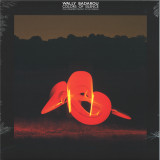
Synth pioneer and musical polymath, Wally Badarou is a genius. But you know that already. A vinyl version of his majestic Colors Of Silence has been craved by the Balearic cognoscenti ever since its low-key 2001 release. Indeed, when we first started work on Be With, we asked some pals with exquisite taste what their dream release would be. We asked Balearic legend Moonboots and, without hesitation, he said Colors Of Silence by Wally Badarou. We didn't know Wally had made this album. And most still don't. But that's about to change.
Colors Of Silence is ostensibly a new age album. As ever though, Wally's sophisticated synth textures and expressive keyboard runs are so full of character, so full of life, that this work of art transcends any easy genre categorisation. It's simply stunning, throughout. It sounds like A.r.t. Wilson or Suzanne Kraft, with traces of CFCF and Jonny Nash. But it was made a good decade earlier than the work of these modern giants. Sometimes, it doesn't seem far from some Larry Heard albums.
Island Records founder Chris Blackwell's friend Nathalie Delon asked Wally to provide music for the yoga DVD she was to release. Lack of time on both sides made them agree on using "quality demos" Wally had in his ideas bank. It's understandable why Colors Of Silence remains somewhat of a lost gem. As Wally explains: "Total lack of promotion made it an 'intimate' release, which was exactly what I was looking for: just a buzz-maker and time-buyer that would allow me to concentrate on the real thing as soon as I'd have time, which could also turn into a rare collecting item later, once the final versions made their way to success. You never know."
Over the years, Colors Of Silence has become a true cult record for the ambient/Balearic heads.
The beguiling but brief "Dance In The Dust" is the shuffling, hyper-percussive, hypnotic opener. It gives way to the deep serenity of "Amber Whispers". It's a gliding, divine, mini melodic masterpiece. It'll make you swoon in its extreme beauty. The bright and breezy "Where Were We" follows, a tropical, reggae-tinged bounce through the islands.
The uptempo groove is maintained on the keys-drizzled soca-funk of "The Lights Of Kinshasa" before Side A is rounded out with "Pictures Of You". It starts with stately, melancholic, unadorned piano and this alone would make for a beautiful song. But Wally always gives us that bit extra and he effortlessly introduces warm, dreamy pads and minimal, slo-mo percussion to augment a frankly stunning piece of work.
Ushering in Side B, Wally's mesmeric piano playing is to the fore again, in the intro to uber-chilled "Serendipity For Two". The playing becomes more mellifluous as the track progresses and adds warmth through exotic percussion, woodwind, sweeping synths and digi-drums. It has echoes of, er, Echoes. It segues seamlessly into the more propulsive, wavy "Smiles By The Millions". If you're not nodding and grinning along widely to the gently throbbing bassline underpinning this, we can't help you. The meditative "Higher Still" follows, cinematic in feel and ever so slightly sinister with the strings. It sounds particularly Badalamenti-esque, if you ask us.
That unmistakable, almost peculiar Badarou funk - so lyrical, so texturally rich and so rhythmically spacious - is all over "Oriental". Next up, "Days To Wonder" brings the serenity back, insistent yet melodic keys, as if played in a place of worship, coupled with birdsong, conjure a kind of instant nostalgia for halcyon days of youth. The contemplative "Dawn Of Europa" is a sombre, beatless, ambient journey whilst the glorious, too-brief "Crystal Falls" features soft percussion and sparkle before fully glistening with some gentle head-nod beats. Wally brings this incredible collection to a mellow, tender close with the graceful "Purple Lines".
There can be few artists more under-appreciated given their vast influence than Wally Badarou. His solo work practically defined the sound of the Balearic DJs of the 1980s, and thus the more sophisticated sound of dance culture thereafter. A synth specialist, Badarou was the long-time associate of Level 42. He was one of the Compass Point All Stars (with Sly and Robbie, Barry Reynolds, Mikey Chung and Uziah "Sticky" Thompson), the in-house recording team of Compass Point Studios responsible for a series of albums in the 1980s recorded by Grace Jones, Tom Tom Club, Mick Jagger, Black Uhuru, Gwen Guthrie, Jimmy Cliff and Gregory Isaacs. Badarou's keyboard playing could also be heard on albums by Robert Palmer, Marianne Faithfull, Herbie Hancock, M (Pop Muzik), Talking Heads, Manu Dibango and Miriam Makeba. He also produced Fela Kuti. Phew!
Meticulously remastered and cut by both Simon Francis and Cicely Balston respectively, it has been pressed to the highest possibly quality at Record Industry in Holland. Special thanks must go to Apiento from Test Pressing who first introduced us to Wally and facilitated all those early zoom meetings. It couldn't have happened without his help. Not least on pulling the art together, too, which features striking original photography by Mads Perch. Benji Roebuck of Roebuck Press did his thing brilliantly in art working the whole package to completion. All in all: essential.
- Derived From The Trout Mask In A Tentative Manner 04:55
- The Dissolution Of Time 08:57
- Abdication 05:02
- The Alphabet Of Steps 06:23
- Les Cycles Extatiques 06:52
- The Geometry Of Rhythmics 05:26
- At The Margin Of Moments 06:37
- Through The Deserts Of Postmodernity 09:36
- Stereometry Of Moving Bodies 06:27
- Suspecting Metaphysical Symbols 07:28
After two years, Carl and Andreas present their second album, and once again, it opens up a wide associative space for us. What strikes us initially is the uncommon instrumentation: a church organ, harpsichord, glass tubes, and more. Like their first album (The Aporias of Futurism), it is mysterious and dark. But it also carries a strong touch of rebellion and adrenaline, sometimes quite pointedly. The pieces are now shorter and feature intricate yet irresistible rhythms. The impact is immediate, yet it maintains a sense of solemnity and ceremony. The Apollonian complexity of the rhythms and subtle melodic interweavings is transformed into a Dionysian, ecstatic, hypnotic, and at times tribal context. "Music for Unknown Rituals" oscillates between primitive instincts and avant-garde intrigues.
The process began in Döblitz, a small village on the Saale river in Germany, inside an old church that houses an organ built in 1886 by Johann Adolph Ibach. Carl and Andreas gained access and secluded themselves there for a few days, accompanied by the organ, an instrument made of glass tubes, and a set of modular synthesizers. After recording the basic tracks in Döblitz, the work continued in Munich and Berlin. Carl played electric guitars, harpsichord, bass, metallophone, xylophone, Indian harmonium, and various percussive instruments. Andreas added layers of electronic sounds, noises, and atmospheric drones. He also created percussive structures extracted and derived from recorded material of technical and industrial noises, which contrasted with the acoustic drums played by Carl. The antithetical approach continues with the dichotomous arrangement of the instruments, often panned hard left and right in the stereo field, creating an antiphonic communication. Some parts, especially the use of the electric guitar, evoke memories of the psychedelic sixties. However, this is anything but a nostalgic album—these musical references are merely remnants, set pieces, and fragments used from a contemporary, post-modern, post-youth-cultural, and post-romantic perspective.
Although Andreas and Carl continue on their chosen path of composing music with an almost literary narrative structure, this album is conceptually and formally completely different from their first effort. If “The Aporias of Futurism” was a revolutionary manifesto (in a pataphysical sense), "Music for Unknown Rituals" is more like the implementation in action; it is the practical application of the previous statement. To put it another way, if "The Aporias of Futurism” was the conceptual manifesto of a dark utopia of modernity, "Music for Unknown Rituals" is the staging of free will surrendering to the myths and catharsis of a Greek tragedy. And in response to this, the artwork features a leitmotif of histrionics with hands, the hands being the first and intuitive part of the body to express something: a ritual, a prayer, a defeat...
— Andreas Gerth is one half of Driftmachine, and Carl Osterhelt is part of F.S.K and collaborates with Hans-Joachim Irmler of Faust. Both became connected through their participation in the Tied & Tickled Trio.
In the corner of your vision, there’s a daydream on a mission” says Russell Edling in the beginning of “Park (Rye)”. Humming vibrations crescendo around the words floating inthe air and a listener may visualize a flower growing in fast motion, or a dog running backwards, lava flowing, children jumping rope in the evening sun. Suddenly these visions plumet and new frenetic images appear as drums, percussion, and full accompaniment burst into space. The band has arrived, a theme recurrent in Golden Apples’ new record, Bananasugarfire.
A listener might hear echoes of the Velvet Underground, Stereolab, Stone Roses, Yo La Tengo, but there is more going on than just a studied homage to indie rock’s progenitors. The themes of doubt and bewilderment found on previous albums are still present, but they are thrown into a kaleidoscope with beams of positivity, hope, and optimism.
Manuel Tur & Adrian Hoffmann return to their alter ego Class Compliance for the second time, having introduced it on last year's Future Sound of Jazz compilation on Compost. The "Plug & Play EP" features three quirky and slightly offbeat tracks that won't be everyone's cup of tea, but will find fans among those interested in unquantized synths and polymetric rhythm layers. Early support from Kornel Kovacz, Âme & Ingo Sänger.