Brian Harden is one of the many talented Chicago house producers out there who sit just below the top talent in terms of global reputation. But he shouldn't - his sound is as musical and timeless as any from the Windy City. He's been grafting since the 90s and now taps into that long career with a new collection of rare cuts and unreleased gems on this Instinctive Meditation album for French label D3 Elements. There is textbook heavy drum work and spaced-out synths on 'Zion' before warmer, deeper basement cuts like 'Nomadic Jazz'. 'Yeah' is a party starter with clattering percussion softened by more jazzy chord work and 'Motionless' allows you a moment to catch your breath on some cosmic ambiance. The rest of the record takes in deeper techno, samba-tinged deep house shufflers and star-gazing beauties for 4AM. Proof if you needed it that Harden is a boss.
Suche:spac
Le Motel and Bruce Wijn met at school, during a school art trip to Munich. They went separate ways for a long time.
Hailing from Brussels, Le Motel's world is a vortex of sight and sound that takes in the many and varied corners of the planet. As a music producer and film composer his versatility has taken him to festivals and clubs in every direction as naturally as he has ventured out to the less accessible areas of the globe as a field recordist. It's somewhere in between these spaces that Le Motel operates, gathering unique experiences and sounds to channel through his studio.
Bruce Wijn is a Brussels-based guitarist who played in several postrock kind projects such as Sound Film, 52 Commercial Road, or more shoegaze Lazy Sin. These collaborations gave him the opportunity to perform in various locations in Belgium, France, England, and the USA. As a musician, his focus has always been attracted by progressively built rhythmic melodies, which would eventually turn into long reverberated or distorted swells, or the otherway round.
All these experiences brought them both to the idea of scoring movies with different yet similar approaches.
That's how their first collaboration happened as Le Motel was working on the soundtrack of the movie Binti, and invited Bruce Wijn for the track Exode, in 2018. Since then, they've been working on other scoring projects, such as the feature film 'Aller Retour' more recently.
Alongside the movie scoring activities another audiovisual live project was born, in collaboration with Antoine de Schuyter and his mesmerizing images.
This one is more focusing on tape textures, field recordings and glitchy effects in order to build atmospheric tracks that they decided to bring together in a first E.P. 'MAAR'.
'MAAR' is elaborated as a soundtrack for an imaginary journey between cold seas and volcanoes explorations.
From the first echoing sounds of playing kids on the shoreside in the opening track 'La Perche' Le Motel & Bruce Wijn let you slide in a technicolor dreamworld, reverbing slowly innocent childhood memories into a chilled, out of range, future.
'MAAR' dives deep into a kaleidoscopic microcosmos watching Nautilus playing hide and seek with 'Captain Ahab' floating on sonic breaking waves, while seagulls gently spread their wings flying through the breezy and misty clouds of Blankenberge.
Lava vulcanica slowly melts in the sad euphorica of the cold North Sea, crystallizing sounds only Le Motel and Bruce Wijn can deliver.
Andrea opened this sophomore album Due In Color mostly during 2020 and 2021. You may reverb that those times were slightly crazy due to the small matter of a pandemic which is what lead the artists to explore a world of more hazy and experimental jazz sounds. That in turn inspired him to use more acoustic sounds in his music and so this is a record that turns its back on dark and booming club spaces and heads instead towards blooming fields of expansive downtempo, textured ambient and dreamy soundscapes.
Voice Notes 002 – and this time , in time honoured memorial of our sister label London housing Trust (that we finished a few years ago after 10 releases ) . we present a 5 track Various Artist ep – featuring 5 artists – and introducing Dance , Rodney Bennet and Pyramids of Space to the label .
The A side begins with a track from label boss Toby / Alphonse – called Rujac – a deep bleepy( Roland Juno 60 for the nerds ) breakbeat trip that had a very early outing from Truly Madly in his Dimensions mix and picked up a few ID requests… followed by another Voice Notes behind the scenes facilitator… Rodney Bennet – with some straight up - old fashioned deep house goodness – rolling bass and just wait for that floating hook .
On the B side a track we ve been sitting on a long time finally sees the light of day – from Toby Tobias – Streets of Gold – with an Alphonse remix – a looping , hypnotic breakbeat acid builder with a huge bass line and a pleasant surprise at the end – this track features a hand from former LHT man Façade as well …
Next up is Pyramids of Space first outing on the label , watch out for much more of them on the next release , some early ambient techno pioneers from Cornwall – if you are one of the holders of the rare Green Tape then lucky you – also might know them from Mordant Music – anyway I digress – this track Quantis perfectly sums them up – deep and dark , soothing techno to transport you to another place .This unreleased gem comes from 1999, but a future version of 1999…
And finally friend of the label – head man of Blank Mind records and all round DON – Dance ( Sam Purcell ) –we managed to prise a favourite from his sick Blowing up the Workshop mix .. and gave it a slight extension – a wonderful way to finish off the ep , slow bassline orientated ambient house of the highest order .
Check your Voice Notes …
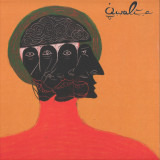
New London based quartet Qwalia, led by drummer Yusuf Ahmed, offer a plethora of influences whilst remaining resolutely itself. Assembled from musicians who play with David Byrne, Joy Crookes, Nubiyan Twist, Frank Ocean, Jordan Rakei, Sampha, Cat Stevens and more; Yusuf is joined by Tal Janes on guitars and vocals, Ben Reed on bass and keyboardist Joseph Costi. Qwalia’s debut album ‘Sound And Reason’ is set for release by Alberts Favourites on 24th March 2023.
The name Qwalia stems from the same sounding word Qualia, a philosophy of mind with the property of being an ineffable experience. Qwalia’s music is an instinctive aural expression of how things seemed in the moment of creation.
In April ‘21, Qwalia spent two days recording completely improvised music at the Fish Factory in North West London. There was no plan or preconceived idea of what the music should sound like or what was going to happen.
“We set up altogether in one room, dimmed the lights, pressed record and just played,” says Yusuf. “We came away with over 13 hours of music, which was consolidated into three albums worth of material. The final record is mainly a result of pulling faders up or down to create space and structure out of what was already there from the live recording. The production process felt akin to a sculptor chipping away excess stone to reveal a statue that was already there, and occasionally putting some makeup on it!”
The band members are Pakistani, Italian, Venezuelan, Jewish and English. A reflection of the fact that cultural categories are infinite; Qwalia’s music unconsciously explores identity, exposing what this can mean. Or perhaps that it doesn’t mean anything at all.
Early support from Mary Anne Hobbs and Gilles Peterson, support to come from Huey Morgan, Cerys Matthews.
Official reissue of Civilistjävel!'s first, self-titled archival LP in sky-blue embossed sleeve, 500 copies.
A minor masterpiece of high-lonesome, ultra-spacey existential electronics, recorded in the ‘90s and early 2000s, the music on this album had never been heard outside the Swedish artist’s private tape/CD-R trading networks until 2018 - when London’s Low Company presented it in a hand-assembled vinyl edition of 250 with scant context or biographical info. Some people understandably thought the project might be a ruse - was it really plausible that material this accomplished and affecting had fallen under the radar for 20-odd years? Implausible, perhaps, but true nonetheless. Five years on we know that Civilistjävel is indeed the real deal: the alter ego of a discreet but by no means reclusive solo artist based in Uppsala who has for decades been quietly honing his craft without worrying about who's listening. Since 2019 he has become more visible: performing live several times in and around Europe, and last year releasing a brand new studio album, Järnnätter, on Felt Records. Meanwhile Low Company has put out four subsequent, vinyl-only volumes of archival material. These have increasingly tended towards the more rhythmic/techno-oriented impulse in Civilistjävel, so it’s interesting to return now to Volume 1: comprised of the most introspective and isolationist of his works, tapping into deep wells of northern European melancholy. It’s a music made with no audience in mind, but simply to suit itself: cold-world kosmische, intimate minimal synth etudes, bowled percussion clusters and impossibly yearning, 30-days-of-night ambient dronescapes. Created mostly using a Juno60 and Korg MS20, and home-recorded to DAT (crackles and surface-noise preserved intact), you can hear in these seven expansive instrumentals unconscious echoes of Serge Bulot and Anna SjalveTreje’s crepuscular dream-sequences, Scandinavian black metal's mist-cloaked forest-fantasies, the austere dub-techno of Thomas Köner and Basic Channel, and the gristly, consumptive concrète of Nurse With Wound and Asmus Tietchens.
Right Diagonal' kicks off with the title track which presents a potent wall of sound that undulates across a pensive current. Distant vocals, frazzled signals and stuttering drum patterns work together to build a fantastically unheimlich vibe. The Crosser version then projects sound into a spacious, chilly warehouse as reverberated flashes of sound depict futuristic machines at work.
'Conjugated In Boring Crimes' then follows up with a dense, shuddering recording. Growls and whispers swell beneath more dystopian sonics before 'Safe Resist' rolls out as a jagged Techno experiment. A steady kick propels a rich, metallic sound palette before 'One Man Clearing' renders another scene of murky futurism.
'Farewell Seesaw' then follows up with a subtle Electro track peppered with hypnotic vocals and a distant, snappy snare. The 'Clubmix' version then delivers what it promises as urgent drums whip up a menacing, heady dance floor vibe.
'Night Voodoo' then brings things to a close as cinematic sweeps suffuse a sawtooth sequence and thick, bubbling bass tones. Frazzled hats bleed through in giving the track a certain live feeling which brings the record to a close.
Xenochrony is a various, literally everything : artists, styles, spaces and times. It consists of four new tunes deftly produced between 1999 and today, and you’ll definitely find your cup of tee among.
The opening cut “ Juno ” says it all, a classy House beat rich of riffs and Fx from the good old 106. Following, “ Lost In Schiller, its percussions sit over a hammering bass line making it feel like the early Minimal. We then flip the side to enjoy “ UFO” , what a progressive Techno beauty ! The Ep is closed by the delicious “ Annaeric ”, an emotional standard D&B, containing all that Nostalgia and bringing back the past.
- A1: Diamond Door Feat. Princess Shaw
- A2: I’m The Best Rapper In The World
- A3: Choosy Choosy (Feat. Yunoka Berry)
- A4: My Favorite Ghost (Phantom Pains) (Feat. Anjelika “Jelly” Joseph And Nigel Hall)
- B1: Bang Bang Bang
- B2: Who’s The Best? (Dear Young Lb)
- B3: Go Ape Shit (Feat. L-Deez & Cut Chemist)
- B4: Alligator Boots (Feat. Say Sway)
- B5: Greatness On Repeat (Go Me!) (Feat. D Sharp)
“This is me at my most imaginative, freakiest, and yet still most grounded and introspective,” says Japanese American rapper/actor Lyrics Born not only about his new album Vision Board, but also his “self” and his existence. “I feel like a new man! I’m healthier physically, spiritually, mentally, and emotionally.” The lead single and video “Diamond Door” is a pop/rap banger that lands you with an infectious barb and keeps you hooked for days, and is a thinly-veiled tribute to a particular style of female appreciation, but it can also be taken as a welcome mat to the new era of Lyrics Born. The accompanying video which shows Lyrics Born in his current physical form - svelte, stylish and with a confident swagger - reinforces this next chapter in his life. 60 pounds lighter, he lost the weight during the pandemic when he knew he needed to make a change. “Touring was becoming harder, and I was having all these weird health problems, but nothing that anybody could put their finger on,” he explains “My anxiety was high. I was not sleeping well. I was on the verge of really bad health.” And this improvement brought more confidence which shows in his new album. Vision Board is a focused affair that found him stretching his creativity farther and challenging himself to write in a way he’s never written before. Recorded primarily in New Orleans and produced by Rob Mercurio of Galactic (who also produced 2015’s Real People and 2018’s Quite a Life), it posited him in a new environment that helped his creative juices flow even more fluidly. “There’s nothing like recording in the Crescent City. It just gets in your blood, and the results are always funky and wild.” “This is about as psychedelic as I’ve ever been,” LB says. “I’m so proud of this album. I’m in a different space. The world is in a different space, and I wanted to celebrate that, loosen up and really create some imagery and share some emotion that I never have. I was listening to a lot of Shuggie Otis; a lot of obscure psychedelic soul and later Temptations,” he explained. “This is like if Alice in Wonderland was Japanese.” Vision Board was also inspired by another Bay Area rap luminary, although one who’s no longer with us - Gift of Gab. The dexterous Blackalicious MC and fellow Quannum Projects alum had a profound effect on Lyrics Born’s life, both creatively and philosophically. “I asked myself on some of these songs: ‘How would Gab approach them?’” he said. “I’d play with certain cadences, certain styles; I tried to stretch stylistically, lyrically and vocally on every single song. None of the patterns are the same.” Lyrics Born’s vulnerability shines through on the nine-track effort, something he’s not ashamed to admit (nor should he be). At one point during the pandemic, he was losing one friend, peer or family member every other week - from Zumbi of Zion I to Gift of Gab to Digital Underground’s Shock G. While many of the songs are deeply introspective, he had to “write some fun shit,” too. Celebratory horns, uptempo rhythms and fiery bars pepper the project from start to finish, and truly encapsulate Lyrics Born’s evolution of not just a groundbreaking Asian-American MC but also a human being. As the only Asian-American MC to release 10 studio albums, the first Asian-American to play major music festivals like Coachella and Lollapalooza and the first Asian-American to release a greatest hits compilation, Lyrics Born has been breaking barriers his entire life - and he’s not going to stop anytime soon. From the bombastic and tribal “I’m the Best Rapper in the World” with its self-winking boastfulness to the playful scat of “Bang Bang Bang” that slinks like an outtake from West Side Story, to the smooth and seductive “Who's The Best? (Dear Young LB)," to the psychedelic and swoony ”Alligator Boots” with it dreamy “Walk on the Wildside”-esque reverby sway, Vision Board sees Lyrics Born tackling different tones, textures and genres without fear and making them completely his own. It's an eclectic body of work that boasts more synths, more psychedelia and is generally more abstract.
Less of Everything was released on April 3rd 2020 on Upset The Rhythm and sold out quickly. This limited repress on sun-yellow vinyl sees the album finally available on vinyl again, around the release of the group's new EP and upcoming tour plans.
Less of Everything. The title of Es’ first full length LP could be interpreted as a manifesto pledge, an outright demand or a purely literal sonic descriptor of the London quartet’s glacial form of punk rock music. This tension between intent and interpretation has been a fundamental element of the group’s output from their formation.
Es is Maria Cecilia Tedemalm (vocals), Katy Cotterell (bass), Tamsin M. Leach (drums) and Flora Watters (keyboards). Their 2016 debut EP, Object Relations, released on influential London punk label La Vida Es Un Mus, was described as “mutant synth-punk for our dystopian present” (Jess Skolnik, Bandcamp, Pitchfork). The band has since become a vital presence in London’s underground DIY music scene, as well as having toured the UK with the Thurston Moore Group in 2017.
After a period with members split between Glasgow and London, Es recorded Less of Everything with Lindsay Corstorphine (Sauna Youth, Primitive Parts) in Tottenham in 2019. As in Object Relations, the dynamic between Cotterell’s bass and Watters’ keyboard is at the heart of Less of Everything’s sound: intertwining sub-zero melodies, gothic anarcho-punk influences (think KUKL, MALARIA, X-MAL DEUTSCHLAND) and some kind of entirely unlocatable aquatic component. When combined with Murray Leach’s precise drumming, the outcome is original and immediately recognisable. Es are a group who know how to leave space, how to strive for minimalism without sacrificing aggression or dynamism. This dynamic provides the perfect backdrop for Tedemalm’s relentless, pointed vocal style. While comparable ‘cold’ sounding groups might affect an impersonal, safer mode of lyrical or vocal detachment, Tedemalm’s strategy is to “push the lyrics as far as I can thematically until they become absurd … overly dramatic ... while still being sincere in the feeling they’re trying to invoke. I try to apply as much emotion as I can.” The result is something intense but nuanced, confrontational but complex. Owen Williams, 2020
The MYTHOS rocks! Neptune Kings are presenting a magnificent follow-up to their 2019 debut album "TRITON" in long-play format on vinyl.
"The Neptune Kings play intelligent fusion, which clearly has its roots in 70's music, as performed by bands and musicians such as Return To Forever, Spyro Gyra, The Crusaders, Lee Ritenour and celebrated by many others.", jazzandrock March 26th, 2019)
After their debut, which was equally celebrated by electrified fans and the euphoric press, the four guys from Germany are even upping the ante with their second album. Its title "MYTHOS" can be taken literally. Sophisticated compositions, spherical sounds and energetic songwriting take the listener into a fabulous world of sound, in which the imagination is tickled for 37 minutes and everyone can experience their very own MYTHOS!
Catchy melodies, which come alternately from Nicolas Kozuschek's keys, Daniel Hinte's guitar or Calvin Lennig's bass, run as a central theme through the 7 tracks. Collaborating their dynamic arrangements, in which Dennis Schendzielorz creates a great arc of suspense encompassing his usual energetic drumming, it never gets boring.
As a bonus, every vinyl comes with the CD of the album free of charge.
Ware began as an experimental electronic duo back in the 1980s, when you had to know what you were doing. Comprising Sacha Galvagna, who went on to play with acts as diverse as Rosa Mota, Horsepower, Charles Atlas, Crown Estate, The Last King of England and Carta, and Andrew Wilson a producers’ producer, noise machine maker and DJ, who found underground acclaim for his Crossed Wires output, the band reconnected earlier this decade when they found themselves with some unexpected time on their hands. From across continents the pair took advantage of 21st century technology to resurrect a sketchpad of aural experimentation that would become the foundation of Star Catalogue, Ware’s long overdue long player set for release through Absent Music.
Setting out with the spectral cha-cha of title track Star Catalogue, Ware chart their passage through diaphanous arrangements that veer off mid-song into unexpected new spaces, melting into liminal vibrations that render large parts of the album as continuous pieces inherently connected by overtones and sentiment. Threading its gossamer sounds into a surprisingly unyielding whole, the album takes in the phantasmal glam of Nerve Agency, Sable Bay’s prismatic ache, the infinitesimal disquiet of Eigen State, and the nylon strung desire of New Model. As the pair impart the unhurried entreaties of The Splintered Woods, which gives way to the cabin fever of My Life as a Ghost and its switch up into ebullient arousal, the unexpected focus-pull of Frame, the shadowy elegy of Nepenthe, and the apparitional house of The Apprentice Pillar, Ware artfully draw the listener into a heady intimacy that is a striking contrast to the cookie cutter soul-bearing histrionics of modern pop music.
In an era in which the thrill of anticipation has been extinguished by the attention-free instant gratification of streaming’s ‘what you want when you want it’ model, Ware have delivered a piece of work that is greater than the sum of its exemplary parts. Painted in exquisitely fragile figures that lead inexorably onward through its 11 tracks, Star Catalogue won’t be so vulgar as to demand your attention, but it unquestionably deserves it.
„Forever Forever“ ist das neue Album von Genevieve Artadi, der in L.A. lebenden Singer-Songwriterin, Produzentin, Bogenschützin und Dr. Mario-Liebhaberin. Artadi ist ein kreativer Tornado und bekannt für ihre Mitwirkung bei KNOWER, Expensive Magnets und ihrer früheren Band Pollyn. 2020 unterzeichnete sie bei Brainfeeder, um ihr Soloalbum, „Dizzy Strange Summer“, mitten in der Corona-Pandemie zu veröffentlichen. Im darauffolgenden Jahr arbeitete sie mit Thundercat, Raedio und Louis Cole an ihrem Track, „Satellite Space Age Edition“, für den Soundtrack der fünften Staffel von „Insecure“ (HBO). „Forever Forever“ umfasst eine wahrhaft kaleidoskopische Bandbreite an Einflüssen, die eine stilistische Eingrenzung unmöglich macht. Verwurzelt im Jazz, aber auch im alternativen Rock oder Avant-Pop, stehen sie in der Tradition der legendären Grenzgänger:innens Stereolab und Talking Heads. Artadi gehört zur unverschämt talentierten Crew, zu der auch Louis Cole, Pedro Martins, Sam Gendel, Sam Wilkes, Jacob Mann und Chiquita Magic gehören, die ein ähnliches Fundament aus klassischen und Jazz-Traditionen mit einer gesunden Punk-Attitüde und einer Leidenschaft für musikalische Hybridität und Fusion mitbringen. Sie gibt zu, dass es sie selbst motiviert, wenn sie von diesen talentierten Menschen umgeben ist, etwas zu schaffen. Die Hälfte der Songs für „Forever Forever“ wurde ursprünglich für eine Big Band geschrieben, da Artadi in Kontakt gekommen war mit der Grammy-nominierten Norrbotten Big Band aus Schweden, mit der sie als ‚Composer in Residence‘ tätig war und viele Male live aufgetreten ist. Auf der Suche nach einem „kreativen Funken“, so sagt sie, hörte sie Duke Ellington und Gil Evans mit Miles Davis. „Der Rest ist, glaube ich, einfach alles aus meiner Vergangenheit, was in meinem Unterbewusstsein ist.“, sagt sie. „Zufällige Inspirationsblitze von Chopin, Bach (ich habe während des Lockdowns einige zweistimmige Inventionen gelernt), Debussy, Nancy Wilson, Björk, Ryan Power, Nobukazu Takemura, den Beatles, Dionne Warwick…”
A year and a half ago, THE MFA returned to the fore once more, when we released their "Oranges and Lemons EP".
Their new album, “Lights Out”, which could be described as a long time coming, is definitely THE MFA’s most ambitious work to date.
As they put it in their own words: “The album is very special to us. It’s a long ambition brought to fruition. It’s an album that is at home on the dancefloor or at home. We’ve always been influenced by 90s rave culture and the club scene of that era and the explosion of creative freedom through electronic music that happened back then.”
The album sums up what THE MFA stands for; their love of electronic music intertwined their love of songs and melody, sometimes banging, sometimes pensive, sometimes longing, occasionally up-beat and happy. Melodic techno-pop-rave then.
The album opener "My Desire" pins down the essence of the album, showing some pop sensibility and a healthy dose of that early 90s spirit with longing vocals by Rhys Evans. The track shows from many angles of the intensity of what club culture was about. The track has, for sure, that pop quality which sets it apart - it is a very complete and rounded and in the true sense, a hit.
"Identify This" kicks off with blissed-out sci-fi sounds but commences with 90s rave chords that gets under your skin and creates a fantastic kaleidoscopic picture of moody UK rave with these spurts of emotional uplifting moments which are worth every penny.
"Bear Likes To Rave" takes us back to the warehouse days and reminds us of the acid warehouse parties with fanned stroboscope beams and dry ice cannons. It’s like looking down on a rave party happening from above, from a bird's eye view, which is in full swing where the euphoria spills over into the audience. "Girl Ahead" is a vocal track exclusively on the digital version of the album, again with Rhys Evans on vocal duties. Here they ponder all the possibilities of the future and the mistakes of the past. Features space toms and grand piano rave chords to evoke a housy feel within.
With "Freedom24" a Hi-NRG melody meets nightcrawler sounds ala "Klang De Familie". This is a soundtrack for the night.
"Lammas Day" has the chilling exotic quality of 808 State "Pacific State" if you grant us this comparison, paired with some phantastic Dr Who sensibilities! This track is quite a voyage!
"Warehouse"... Make Some F-...ing Noise... A TV presenter speaks about Acid house...... This is a wild mash up of impressions which nicely go together due to the melodic string composition and the 303 sequences.
"The Snapping Branch" starts with a mash up of sounds and then dives into an episodic snapshot of "happiness" when the serotonin shoots in (just before it drops). Experiencing a perfect flow that does not want to end. Every clubber knows that feeling.
"You Make Me Smile" is the third vocal track on the album featuring Rhys Evans on vocals. It has fantastic radical stark mood changes and blatant shifts, therefore throws the listener from one corner to the other. Just like the contrast of day and night. Bits here and there might conjure a Radiohead spirit, but really this is all MFA.
"Lights Out” certainly puts across the feeling you get at the end of the night - the club has closed; you are walking home. These are the sounds and feelings in your memories as you chase the vibe that is dwindling as the club becomes ever further away.
Sacramento, CA duo Blank Gloss’s third album, Cornered, is an exquisite statement of pop ambient starkness, an album that oscillates between lush beauty and spare melancholy. It follows from their 2021 debut for Kompakt, Melt, an album that saw Morgan Fox (piano, synths) and Patrick Hills (guitar) aligned, loosely, with the cosmic pastorale of the ‘ambient Americana’ movement. Cornered feels like a significant step forward, though – by peeling back the layers of their music, they’ve revealed both its restful core and its solemn gravitas. It is unendingly lovely, but with something disquieting at its centre.
Cornered was recorded quickly, over two days in December 2020. There’s nothing rushed or haphazard about the album, though; everything has its place, with each sonic element contributing profoundly to these nine miniature dioramas. It signals change, quietly but perceptibly, through the way the duo sculpts their material, building out of loose improvisations that morphed into songs. While there was no plan in mind when Blank Gloss settled into the studio, Fox recalls that “right away we realised that things were sounding and feeling a bit different than any of the sessions we had previously.”
That difference can be heard in the increased amount of space Blank Gloss gift to their sound sources. Some of the most moving moments on Cornered come when Fox and Hills strip everything back – see, for example, “Crossing”, which sets pensive piano across a shyly humming drone and quiet arcs of guitar, recalling the driftworks of Roger Eno. Curiously, the album’s distinctive shape and mood develops, at least in part, from a change in instrumentation, with Hills using a MIDI pick-up on his guitar. “This resulted in making things happen a lot quicker,” Fox says. “It also helped create what I think is a bit more sombre, dark feeling to some of the songs.”
Elsewhere, on songs like “Salt”, the piano tussles with flecks of guitar, single tones sent out to mingle with the stars, like Morricone at 16 RPM, while Cornered’s centrepiece, the eleven-minute “No Appetite”, lets long arcs of electronic texture breathe and sigh, tangling together in a cat’s cradle of bliss. Throughout, it feels as though the music is blossoming as you hear it, like watching time-lapse footage of flora in bloom. But perhaps the most seductive thing about Cornered is the sense you get, listening, that the music was something unexpected, a visitation. “It almost felt like we weren’t dictating where the music went and how it sounded,” Fox agrees. “We were just there in a room together in December and these sounds were happening, and we were lucky enough to be recording the process.”
Cornered, das dritte Album des kalifornischen Duos Blank Gloss aus Sacramento, ist ein exquisites Statement von pop ambienter Krassheit, ein Album, das zwischen üppiger Schönheit und sparsamer Melancholie oszilliert. Es folgt ihrem 2021er Debüt für Kompakt, Melt, einem Album, auf dem sich Morgan Fox (Klavier, Synthesizer) und Patrick Hills (Gitarre) locker an der kosmischen Pastorale der „Ambient Americana“-Bewegung ausrichteten. Cornered fühlt sich jedoch wie ein bedeutender Schritt nach vorne an – indem sie die Schichten ihrer Musik abschälen, haben sie sowohl ihren ruhigen Kern als auch ihre feierliche Schwere offenbart. Es ist unendlich schön, aber mit etwas Beunruhigendem in seiner Mitte.
Cornered wurde relativ schnell aufgenommen, über zwei Tage im Dezember 2020. Es klingt jedoch nichts überstürzt oder willkürlich an diesem Album; alles hat seinen Platz, wobei jedes Klangelement einen wesentlichen Beitrag zu diesen neun Miniaturdioramen leistet. Es signalisiert Veränderung, leise, aber wahrnehmbar, durch die Art und Weise, wie das Duo sein Material formt und aus losen Improvisationen aufbaut, die sich in Songs verwandeln. Als Blank Gloss sich im Studio niederließen, gab es zwar keinen Plan, aber Fox erinnert sich: „Uns war sofort klar, dass sich die Dinge etwas anders anhörten und anfühlten als bei allen vorherigen Sessions.“
Dieser Unterschied ist in der größeren Menge an Raum zu hören, die Blank Gloss ihren Klangquellen bietet. Einige der bewegendsten Momente auf Cornered kommen, wenn Fox und Hills alles zurücknehmen – siehe zum Beispiel „Crossing“, wo ein nachdenkliches Klavier über einen schüchtern summenden Drone und leise Gitarrenloops setzt und an die Driftworks von Roger Eno erinnert. Seltsamerweise entwickelt sich die unverwechselbare Form und Stimmung des Albums zumindest teilweise aus einer Änderung der Instrumentierung, bei der Hills einen MIDI-Tonabnehmer an seiner Gitarre verwendet. „Dies führte dazu, dass die Dinge viel schneller abliefen“, sagt Fox. „Es hat auch dazu beigetragen, einigen der Songs ein etwas düstereres, dunkleres Gefühl zu verleihen.“ An anderer Stelle, bei Songs wie „Salt“, spielt das Klavier mit Gitarrenfetzen, einzelne Töne werden ausgesandt, um sich mit den Sternen zu vermischen, wie Morricone bei 16 U/min, während Cornereds Herzstück, das elfminütige „No Appetite“, lange Bögen schlägt, elektronische Texturen atmet und seufzt, um sich in einem Katzenkörbchen der Glückseligkeit zu verheddern. Während des Hörens fühlt es sich an, als ob die Musik blüht, als würde man sich Zeitrafferaufnahmen von blühenden Pflanzen ansehen. Aber das Verführerischste an Cornered ist vielleicht das Gefühl, das man beim Zuhören bekommt, dass die Musik etwas Unerwartetes war, eine Heimsuchung. „Es fühlte sich fast so an, als hätten WIR nicht diktiert, wohin die Musik geht und wie sie klingt“, stimmt Fox zu. „Wir waren just im Dezember zusammen in einem Raum, als diese Geräusche passierten, und wir hatten das Glück, dass die Aufnahme mitlief.”
Created between Palm Springs, California and Hilo, Hawai'i, V is the first double album from the Hawaiian-New Zealand singer-songwriter, multi-instrumentalist and producer Ruban Nielson's Unknown Mortal Orchestra band. Designed to play as one continuous movement and road-tested on dry California freeways, V is the definitive Unknown Mortal Orchestra car record. It's also the fifth full-length album Ruban has released in twelve years. Across fourteen sunbleached songs - written solo or with his brother Kody - Ruban draws from the rich traditions of West Coast AOR, yacht rock, weirdo pop and Hawaiian Hapa-haole music. Over a laidback blend of singalong anthems and cinematic instrumentals, he evokes blue skies, afternoons spent lounging by hotel swimming pools and the alluring darkness that lurks below perfect, pristine surfaces. It's a duality expressed in the dilapidated sunset blues and the saltcorroded soul Ruban explores through tracks like `Layla' and `Nadja. ' During the pandemic's early days, Ruban reunited with Kody at a cousin's wedding in Hawai'i. With assistance from their father, Chris Nielson (saxophone/flute) and longstanding Unknown Mortal Orchestra member Jake Portrait, they brought everything Ruban had been thinking about together. The result was V, due for release on March 3, 2023, through Jagjaguwar. When they talked about records that moved them in that spine-shivering manner, Ruban started thinking about the 70s AM radio rock and 80s pop songs that had lurked on the edge of his subconscious mind for most of his life. He wanted to write his version of records like that, leading to the two glorious uptempo singles Unknown Mortal Orchestra released in 2021, `Weekend Run' and `That Life'. However, the golden good times never last forever. Not long after, health issues began to plague his extended family.Putting his recordings aside, he helped his mother and his uncle move home from New Zealand and Portland to Hawai'i, and began dividing his time between Hawai'i and Palm Springs. During this period he reconnected with his relatives, reassessed his past, and started to look at things with fresh eyes. Hawai'i brought back memories of the darker side of his parents' lifestyle as entertainers. On those trips, he heard those classic AM radio rock records everywhere. They were inextricably intertwined with the palm trees, swimming pools, and glamorized hedonism he'd internalized from his childhood. There's a type of music in Hawai'i called Hapa-haole (Half white). You can hear it expressed in signature Unknown Mortal Orchestra style through the humid guitar-led atmosphere of V's penultimate song, `I Killed Captain Cook'. Although the songs are presented in a traditional Hawaiian manner, they're mostly sung in English. Having been influenced by Hawaiian music since Unknown Mortal Orchestra's first album, Ruban saw a space for himself within the tradition. When he reflected on his success, he realised he had the responsibility and platform to represent Hapa-haole music on the global stage.
Yellow Vinyl
Created between Palm Springs, California and Hilo, Hawai'i, V is the first double album from the Hawaiian-New Zealand singer-songwriter, multi-instrumentalist and producer Ruban Nielson's Unknown Mortal Orchestra band. Designed to play as one continuous movement and road-tested on dry California freeways, V is the definitive Unknown Mortal Orchestra car record. It's also the fifth full-length album Ruban has released in twelve years. Across fourteen sunbleached songs - written solo or with his brother Kody - Ruban draws from the rich traditions of West Coast AOR, yacht rock, weirdo pop and Hawaiian Hapa-haole music. Over a laidback blend of singalong anthems and cinematic instrumentals, he evokes blue skies, afternoons spent lounging by hotel swimming pools and the alluring darkness that lurks below perfect, pristine surfaces. It's a duality expressed in the dilapidated sunset blues and the saltcorroded soul Ruban explores through tracks like `Layla' and `Nadja. ' During the pandemic's early days, Ruban reunited with Kody at a cousin's wedding in Hawai'i. With assistance from their father, Chris Nielson (saxophone/flute) and longstanding Unknown Mortal Orchestra member Jake Portrait, they brought everything Ruban had been thinking about together. The result was V, due for release on March 3, 2023, through Jagjaguwar. When they talked about records that moved them in that spine-shivering manner, Ruban started thinking about the 70s AM radio rock and 80s pop songs that had lurked on the edge of his subconscious mind for most of his life. He wanted to write his version of records like that, leading to the two glorious uptempo singles Unknown Mortal Orchestra released in 2021, `Weekend Run' and `That Life'. However, the golden good times never last forever. Not long after, health issues began to plague his extended family.Putting his recordings aside, he helped his mother and his uncle move home from New Zealand and Portland to Hawai'i, and began dividing his time between Hawai'i and Palm Springs. During this period he reconnected with his relatives, reassessed his past, and started to look at things with fresh eyes. Hawai'i brought back memories of the darker side of his parents' lifestyle as entertainers. On those trips, he heard those classic AM radio rock records everywhere. They were inextricably intertwined with the palm trees, swimming pools, and glamorized hedonism he'd internalized from his childhood. There's a type of music in Hawai'i called Hapa-haole (Half white). You can hear it expressed in signature Unknown Mortal Orchestra style through the humid guitar-led atmosphere of V's penultimate song, `I Killed Captain Cook'. Although the songs are presented in a traditional Hawaiian manner, they're mostly sung in English. Having been influenced by Hawaiian music since Unknown Mortal Orchestra's first album, Ruban saw a space for himself within the tradition. When he reflected on his success, he realised he had the responsibility and platform to represent Hapa-haole music on the global stage.
Avid Habibi Funk listeners may be familiar with Libyan composer / producer Najib Alhoush, who’s track “Ya Aen Daly” - the Bee Gee’s “Stayin Alive” cover - was included in our second compilation. While the original track never excited us, Najib’s version managed to strip it from its pop approach that had taken over disco during the genre`s peak. At that time, disco tracks mostly were aiming to appeal to the widest audience possible. Najib had turned the original track into something different and very unique. Upon further research we found that Najib was actually the singer and founder of The Free Music band alongside Fakhreddin, Salim Jibreel, Abdulrazzak ‘Kit-Kat’, Mukhtar Wanis and Mohameed Al Rakibi.
Initially, we only licensed Najib Alhoush’s “Ya Aen Daly” from Yousef Alhoush, Najib’s son, who was pleased to hear that there was interest in his father’s music form someone abroad. In the process of exchanging and learning about Najib’s music and career, our understanding was that The Free Music only recorded the one album. This couldn’t be further from the truth, in fact, there were ten albums produced by the group, all impressively coherent with a clear influence from disco, soul, funk and reggae.
The Free Music album was probably the longest it ever took us to gather information, photos and musical source material in a good enough quality to be reissued. This is largely due to the complicated political situation in Libya, compounded by the fact that Libya is still largely cut off from international payment systems, so getting an advance payment to the right person can be a process that takes weeks. The same goes for getting master tapes to a studio abroad and afterwards back to Libya.
When we look for music that works under the umbrella of Habibi Funk, we often come across albums where bands experimented with influences from Soul, Jazz, Funk, Disco and more, usually on a single track or two but then they often go down to a different path for the rest of the album. This was not the case for The Free Music. All their albums are fully dedicated to their unique blend of Disco, Reggae and Funk and it feels that when we made the selection for this album, we could have chosen a completely different number of tracks and the album would be been equally strong.
The lead-off single is the stupendously groovy “Ana Qalbi Ehtar” out February 3rd along with LP pre-order to capitalize on Bandcamp Friday. From the outset, the rhythmic strumming of the funkified guitars give way to the galloping drums and bass, opening up to anthemic vocals and rounding out with a blistering guitar solo, a certified disco-funk classic through-andthrough.
Second single, out February 17th is the disco slammer “Hawelt Nensa Ghalaak.” Guitars, harmonized horns, synths and bouncing bass and drums collide w/ spaced out vox to make the track a dancefloor sureshot for any party.
Third single is “Mathasebnish,” out March 3rd, a pure disco-funk slammer if there ever was one – with stabbing horns, funky bass riffs, a riding rhythm guitar and anthemic vocals, rounded out with stunning flute and guitar solos – the track will surely be on repeat along with the arrival of warmer weather.
Album focus track “Men Awel Marra” is another standout disco-infused tune, showcasing the immense creativity out of Najib and The Free Music. This past summer we finally had the opportunity to get together with Yousef face-to-face at a coffee shop in Istanbul’s central Istiklal road together with our friend Anas El Horani. Yousef told us the whole story of how his father got into music, the start of the band and his father’s continued conflicts with the Gaddafi regime that probably kept his career from becoming even bigger. As always, both vinyl and CD come with an extensive booklet featuring background on The Free Music and Najib Alhoush, including words from Najib’s son, Yousef, as well as unseen photos, cassettes and more.
- A1: Fight Test
- A2: Can't Get You Out Of My Head (Kexp Version)
- A3: The Golden Age (Cd101 Version)
- A4: Knives Out (Kcrw Version)
- B1: Do You Realize?? (Scott Hardkiss Floating In Space Version)
- B2: The Strange Design Of Conscience
- B3: Thank You Jack White (For The Fiber-Optic Jesus That You Gave Me) (For The Fiber-Optic Jesus That You Gave Me)
Diese limitierte Auflage ist auf rubinrotem Vinyl gepresst.
"Fight Test" war die dritte Singleauskopplung aus dem
äußerst populären und erfolgreichen Album Yoshimi
Battles the Pink Robots von The Flaming Lips. Die im
Juni 2003 veröffentlichte Single stieg in die US Billboard
Top 100 ein und erreichte Platz 28 in den britischen
Single-Charts. Die 7-Track-EP war Teil des
6-CD-Box-Sets Yoshimi Battles the Pink Robots 20th
Anniversary, das im November 2022 veröffentlicht wurde,
und wird nun zum ersten Mal auf Vinyl veröffentlicht.
Neben dem Titeltrack enthält sie einen Remix von "Do
You Realize?", "Thank You Jack White" und drei
Coverversionen, darunter eine Live-Version des Kyle
Minogue-Hits "Can't Get You Out Of My Head" und
Radioheads "Knives Out".