Neil Feather has spent decades creating a musical world of his own through dozens of one-of-a-kind instruments he invented and built himself. His work as an instrument inventor, improviser, musical iconoclast, and stalwart of the idiosyncratic Baltimore experimental scene culminated in the late 2010s when filmmaker Skizz Cyzyk shot hours of footage of Feather taking stock of his workshop and his collaborations with musicians from Baltimore and beyond as he prepared to relocate permanently to New Zealand. That period produced Sound Mechanic, Skizz’s 2022 feature-length documentary about Feather’s work and music. It also produced an album-length collection of recordings of Feather’s music from the film that captures the spectrum of his unique sonic vision. Uninterested in the traditional rules and roles of music from his early years, Feather began constructing noisemakers out of what was around him—pieces of metal, spare parts from bikes and other gadgets, discarded traditional instruments, various electronics, ball bearings, and so on. By the time he moved to Baltimore in 1985, his work had become more codified into a practice of instruments and families of instruments, such as the Nondo, the Vibrawheel, and the Former Guitars. At the same time, he became a mainstay of the burgeoning experimental / improvised music scene that erupted from the Red Room and the internationally renowned High Zero Festival.
Cerca:space around the world
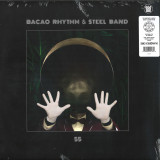
Shrouded in mystery, hailing from Hamburg, Germany, Bacao Rhythm & Steel Band (BRSB) releases their long awaited debut “55” on Brooklyn’s own Big Crown Records. Long time multi-instrumentalist and band leader Bjorn Wagner spent a few months in Trinidad & Tobago where he became fascinated with Steel Drums. His initial intrigue with local steel pan music culture led him to learning the instrument both through help of local players and on his own. After he became proficient on the pans Bjorn had his own instrument built from a used oil barrel by legendary pan man Louis C. Smith. Upon returning home to Germany, Bjorn set out to blend the Tropical Steel into his already sharply honed Funk, Soul, and Hip-Hop sensibilities. The outcome is an updated take on a classic format, a truly unique sound. Their first two recordings were covers of The Meters “Look A-Py-Py” & “Ease Back” which they self-released on a 45. Looking back on these two sides you can tell they were just getting their chops up for what was to come next. This is evidenced by how all hell broke loose when they went on to cover 50 Cent’s hit PIMP taking the DJ and vinyl collecting communities by storm. Many people thought the recording was the original sample and probably still do to this day when it is played. The original Mocambo pressing sold out quickly and is now a collector’s item fetching heavy prices when it changes hands. It was this tune that made the introduction between Bjorn and Danny Akalepse of Big Crown. They immediately hit it off and started making plans to do a full length project with the band. Keeping in the tradition of Steel Drum records, 55 is a journey through re-interpolations and covers with an updated approach, pushing Steel Pan music to uncharted territory. Flawlessly bringing previously untouched genres into the steel pan cannon ranging from Underground Hip Hop tunes to staple Funk tracks and some of all that falls in between. BRSB’s 55 is reinvigorating tunes both well-known and helping to shed some light on tunes still largely undiscovered. However, some of the strongest tunes on the album are original compositions, from spaced out Disco vibes on “Beetham Highway Ride” and “Port Of Spain Hustle” to the ugly face inspiring drums of “Laventille Road March”. Recorded to analog 8 track tape at The Mocambo Studios in Hamburg, 55 is a gritty, punchy journey in sound drawing on music from around the world, using production aesthetics from across both eras and genres, all coming together seamlessly. If the 45s that have already come out on Mocambo, Plane Jane, and Truth & Soul are an indication, this full length is going to be a staple to both casual listeners and Disc Jockeys alik
To experience Justin R. Cruz Gallego's pulverizing Sub Pop debut is to get burned down to ashes and burst forth, born anew. Grim Iconic...(Sadistic Mantra), the Tacoma-based artist's second album, is driven by opposing forces: noisy abstractions and tightly structured beats, anguish and dissolution at the outside world and empowerment within, apathy and catharsis. Grim Iconic...(Sadistic Mantra) weds scouring electronics to hooky songs and Gallego's powerful drumming in a way that feels visceral and new. It's his most personal statement to date, at once playful and intent, driven and combustible, total fucking chaos mixed into glints of broken-glass beauty. Born in Tucson, Arizona, Gallego experienced culture shock as a child after relocating to the frigid climes of the Pacific Northwest. He found solace in the Seattle punk scene centered around Iron Lung Records and has since remained a fixture in the underground community. "I see this record as first and foremost a musical statement," Gallego says. "I grew up in punk and DIY subcultures, but before that I had Latin music playing in the background through my childhood and every phase of adolescence. It was surprisingly natural to incorporate. I realized I wanted to go deeper into these rhythms. I wanted to make a record that felt as experimental as much as it felt from the perspective of a Latino. When I got a glimmer of that possibility, it felt exciting." Lead single "Dogear" is a face-melting party starter that sounds like someone forced Talking Heads and Rudimentary Peni to share a practice space. "I wanted a song that felt playful in the way it attempted to be dissonant without taking itself too seriously," Gallego says. "Cholla Beat" is even more ambitious, an anthemic mix of WAR and Wire led by unruly synthesizers spiraling down a labyrinth of production. Gallego's influences for the album are vast, ranging from British documentary filmmaker Adam Curtis to electric Miles Davis to audio miscreants like Demdike Stare and Oneohtrix Point Never. But it's Gallego's assured sonic vision that resounds the loudest. And, while J.R.C.G. is a solo project, conceived and executed primarily in Gallego's home studio, he found strength in opening the project to others, starting with Seth Manchester as co-producer. Manchester's penchant for bone-rattling frequencies, as seen in his production work with The Body, Battles, and Mdou Moctar, made him a natural fit for Gallego. Together, they retained the intimacy of Gallego's home recordings while taking advantage of the hi-fi stylings of his Machines With Magnets Studio in Rhode Island. The closing song, "World i," offers a glimpse into the live experience of Grim Iconic...(Sadistic Mantra), with upwards of seven band members blasting off. The album features a fascinating mix of supporting players, many of whom cycle through J.R.C.G.'s live lineup: Morgan Henderson (The Blood Brothers, Fleet Foxes), Jason Clackley (Dreamdecay, The Exquisites), Jon Scheid (Dreamdecay, U Sco), Erica Miller (Casual Hex, Big Bite), Veronica Dye (Terminator) Phil Cleary (U Sco), and Alex Gaziano (Dreamdecay, Kidcrash, Science Amplification). Taken as a whole, G.I.S.M. is a whirlwind of sound, pummeling, and cleansing. It's a sweaty, thrilling aural adventure and, like a great basement show, it'll leave you breathless, exhausted, and wanting to repeat it all over again. As any good mantra should.
Freefall Blue Vinyl[26,26 €]
Crack Cloud has always been something beyond a rock band: both profound and grand, vaporous and elusive. The first iteration of Crack Cloud was formed nearly a decade ago as a proxy-rehab outlet on the fringes of Calgary. Over time, two EPs and accompanying visual pieces were produced out of the residence known as Red Mile. By 2017, several members had relocated to Vancouver, working out of harm reduction centers and low-barrier shelters. Sobriety, self-reformation and the idealism of their work further formed an ethos for Crack Cloud. It was during these years that the band produced their astounding 2020 album Pain Olympics. At once, their vision became expansive, cinematic. Now, Red Mile is a bit of a homecoming. Members have returned to Calgary. But Calgary/home has become a liminal space, a place of flux. After a decade of personal and collective growth, what does home even mean? Red Mile is, for them, something like samsara: a return and a rebirth. Red Mile's sound breathes expansive energy into the circuitous, street bound sonics of Crack Cloud's prior material. Fizzling synths intertwine with chiming pianos. Songs layer like Russian nesting dolls; one may find a Ramones chorus set within a desolate Western prog soundtrack only to watch it erupt into a joyous anthem. Real-ass guitars _ alternately lilting, scuzzy and soaring _ ring out across wide sun-bleached spaces. In 2024, the cumulative effect is (in rock instrumentation terms) naturalistic. Any whiff of embalmed nostalgia is absent. Even the close of the album - a winding, almost Jerry Garcia guitar noodle that leads us out of Red Mile - is delivered without sentimentality. Principal songwriter Zach Choy's lyrics are cutting but merciful, with a sharp self-awareness that never slides into self-satisfaction. Crack Cloud as artists are critical _ and ultimately as forgiving _ of themselves as they are the melting world around them. The songs balance an easy charm and cathartic power: affirming life without denying death. Recorded predominantly between the outskirts of Joshua Tree California, and Calgary, Alberta, this record is informed by a bittersweet mélange of old and new. The sprawling, novelistic structures of their previous albums are condensed and sharpened, while maintaining their refusal to delve into superficiality. Through playful melodies and elliptical guitar soliloquy, they deliver a final product of exceptional depth and distinctly unprecious warmth. Crack Cloud have produced a mature, vital work that interrogates the platitudes of the rock-n-roll lifestyle, but ultimately exalts its sacredness. Red Mile's de facto thesis statement "The Medium" is itself a rock song meditation: an ode to the form and its practitioners. This genre that _ typical, repeatable, corporatized as it can be _ somehow still has the power to help us live through life. We see the dusty sentiment of "I love rock and roll" exhumed, taken apart, and stitched back together. It's a song guided by faith _ if the medium helps us proclaim our love today, it's worth protecting from derision tomorrow. We live in an era where music seems to love hitting its head against the wall. Crack Cloud's Red Mile is the sound _ the feeling! _ of the bricks giving way.
Black Vinyl[23,95 €]
Crack Cloud has always been something beyond a rock band: both profound and grand, vaporous and elusive. The first iteration of Crack Cloud was formed nearly a decade ago as a proxy-rehab outlet on the fringes of Calgary. Over time, two EPs and accompanying visual pieces were produced out of the residence known as Red Mile. By 2017, several members had relocated to Vancouver, working out of harm reduction centers and low-barrier shelters. Sobriety, self-reformation and the idealism of their work further formed an ethos for Crack Cloud. It was during these years that the band produced their astounding 2020 album Pain Olympics. At once, their vision became expansive, cinematic. Now, Red Mile is a bit of a homecoming. Members have returned to Calgary. But Calgary/home has become a liminal space, a place of flux. After a decade of personal and collective growth, what does home even mean? Red Mile is, for them, something like samsara: a return and a rebirth. Red Mile's sound breathes expansive energy into the circuitous, street bound sonics of Crack Cloud's prior material. Fizzling synths intertwine with chiming pianos. Songs layer like Russian nesting dolls; one may find a Ramones chorus set within a desolate Western prog soundtrack only to watch it erupt into a joyous anthem. Real-ass guitars _ alternately lilting, scuzzy and soaring _ ring out across wide sun-bleached spaces. In 2024, the cumulative effect is (in rock instrumentation terms) naturalistic. Any whiff of embalmed nostalgia is absent. Even the close of the album - a winding, almost Jerry Garcia guitar noodle that leads us out of Red Mile - is delivered without sentimentality. Principal songwriter Zach Choy's lyrics are cutting but merciful, with a sharp self-awareness that never slides into self-satisfaction. Crack Cloud as artists are critical _ and ultimately as forgiving _ of themselves as they are the melting world around them. The songs balance an easy charm and cathartic power: affirming life without denying death. Recorded predominantly between the outskirts of Joshua Tree California, and Calgary, Alberta, this record is informed by a bittersweet mélange of old and new. The sprawling, novelistic structures of their previous albums are condensed and sharpened, while maintaining their refusal to delve into superficiality. Through playful melodies and elliptical guitar soliloquy, they deliver a final product of exceptional depth and distinctly unprecious warmth. Crack Cloud have produced a mature, vital work that interrogates the platitudes of the rock-n-roll lifestyle, but ultimately exalts its sacredness. Red Mile's de facto thesis statement "The Medium" is itself a rock song meditation: an ode to the form and its practitioners. This genre that _ typical, repeatable, corporatized as it can be _ somehow still has the power to help us live through life. We see the dusty sentiment of "I love rock and roll" exhumed, taken apart, and stitched back together. It's a song guided by faith _ if the medium helps us proclaim our love today, it's worth protecting from derision tomorrow. We live in an era where music seems to love hitting its head against the wall. Crack Cloud's Red Mile is the sound _ the feeling! _ of the bricks giving way.
- A1: Eric Burdon & War - Spill The Wine
- A2: Eric Burdon & War - Tobacco Road
- A3: All Day Music
- A4: Get Down
- A5: Slippin' Into Darkness
- B1: The World Is A Ghetto
- B2: The Cisco Kid
- B3: Gypsy Man
- B4: Me & Baby Brother
- B5: Why Can't We Be Friends?
- C1: Low Rider
- C2: So
- C3: Don't Let No One Get You Down
- C4: Smile Happy
- C5: Summer
- D1: La Sunshine
- D2: Galaxy
- D3: Cinco De Mayo
- D4: You Got The Power
- D5: Outlaw
Black[47,86 €]
WAR’s head-nodding mix of music and message started a revolution 50 years ago that continues to win over the hearts and hips of fans around the world. “Greatest Hits 2.0” will be available 29th October and is a new, career-spanning collection that expands on WAR’s platinum-certified 1976 greatest hits album, featuring the legendary songs “Spill The Wine,” “Low Rider,” “Galaxy,” and “Why Can’t We Be Friends?”
WAR’s “Greatest Hits 2.0” 2LP contains 20 tracks, 2CD contains 24 tracks recorded between 1970 and 1994, including the gold-certified singles “Slipping Into Darkness,” “The World Is A Ghetto,” “The Cisco Kid,” and “Summer.” Another gold single, “Why Can’t We Be Friends?” stayed on the charts for 31 weeks and became the soundtrack to the US-Soviet space mission where astronauts and cosmonauts linked up in the spirit of friendship. In the modern era, it has been streamed more than 100 million times. Also included is the #1 R&B smash “Low Rider,” which was inducted into the Grammy Hall of Fame in 2014.
In the collection’s liner notes, Los Angeles Times columnist Gustavo Arellano says GREATEST HITS 2.0 does more than capture WAR at its creative and commercial peaks. He writes: “All the big hits are here, of course, in chronological order from the Eric Burdon days up through cuts from 1982’s underrated Outlaw…But what I love about this collection is that it’s a symphonic suite for a perfect Southern California Sunday afternoon, the kind the rest of the world wants to experience but can only dream about. You can envision it by playing these albums from start to finish.”
''Sulla Rotta Dei Venti'' (On the Route of the Winds) is the brand-new album of Italian ska-jazz maestros North East Ska*Jazz Orchestra (NESJO). A collection of eleven own-penned original tracks, written and composed between 2020 and 2023, that frames a new chapter in the ten-year career of the band. In this record, NESJO bravely explores other worlds through music, which, as we know, is always also an inner quest. It is at the same time an effort to place their own music at the centre of the time and space in which they live, even at the cost of going beyond the stylistic limits linked to the band's chosen musical genre. Although, these new 11 cuts are built around rhythms that are undeniably of Jamaican origin, melodies are tainted with music from other traditions and sometimes also feature pop elements. Somehow, in this new album, NESJO has chosen to let the jazz big-band out of the orchestra pit and to mix with the popular sound of the street. Through the tracks of the record, NESJO creates mixed ensembles with the use of instruments such as strings, accordion, flute, clarinet, horn, tuba… together with the band's regular branding of sax, trumpets and trombones. Another novelty of this work is that the non-instrumental tracks are sung in Italian by the three singers Freddy Frenzy, Michela Grena and Rosa Mussin. And the musical journey takes us to exotic but at the same time very close sounds in 21st century Europe: Balkan (“Piazza Della Liberta”, “CiganSka #1”), Arabic (“Petrolio”), African (“Nimi Muzima”), Italian (“Roma Tokyo Paris”), and ska (“Donna Di Chi”) and a sophisticated ska-jazz suite (“Sulla Rotta Dei Venti”). The opening words of the first track of the album give us a glimpse of the feeling of vindication, brotherhood and hope contained in this set of songs: "Where is the empathy for those in difficulty / in the streets of Trieste that shout with vitality / indifference hearts of stone / dense black Balkan agony".
Uun returns to his imprint Ego Death for its 7th release. The vinyl version is pressed onto a special marble red and black color variation created specifically for this release. The artwork is printed on a partially translucent mylar lithograph.
“The more things change, the more things stay the same. The progression of the digital space from a place where like minded individuals can get together over shared interests has gone the way of everything else in the modern world. There is money to be made after all, and data is worth more than gold. All around us are rent-seekers, hucksters, and those who seek to profit from what was never theirs.
Platform Decay is the beginning of the end result. Everything that is unique and interesting is being flattened for maximum palatability and consumption. It is what the advocates like to call content. We have given all of ourselves away, so that we can be advertised to. All to chase the algorithm; the black box where art, culture, and creativity enter and only an amalgamation of disparate nothing exits.
Atrahasis is the genesis, the original story, the prime instance of human creativity and storytelling. We sell ourselves sight unseen for the simulation of a social experience. You try to walk the tightrope between physical and digital but soon realize you can’t have both. However your engagement is up which is the upside of losing everything. Reaching into the past you finally realize the meaning of the lamassu, the double aspect. Only to be forgotten again as you are consumed by the ouroboros.
The project is made whole by the evocative artwork of Ryote, who brings the themes together in a unique visual style. The beautifully printed vinyl insert lithograph print represents the digital tomb of social media, with the label art depicting the mythological double aspect.”
Transcendental outernational funk and psychedelic jazz from mystery L.A.- based collective Sun Atlas
2nd edition with alternative sleeve and label design.
Little is known about Sun Atlas. The group members are hidden behind masks and costumes to keep their identities secret and to put the focus entirely on the music and oneness. A sense of community and universal spirit as an alternative to idolization and individualism is heavily reflected in their eclectic musical style.
The sound of Sun Atlas is mystical and cosmopolitan, combining afrobeat, cinematic soul, spiritual & ethio jazz with space sounds, hiphop-breaks and a garage funk vibe.
Their cryptic first 45 single "The Mystic Parade" b/w "Grand Theft" sold out immediately after release and has often been mistaken for either "lost" hiphop samples, 70s habibi funk or another project in disguise from the inner circles of the Mocambo, Big Crown or Daptonefamilies (which it is not).
Return To The Spirit picks up where Sun Atlas' first single leftoff, with everyone wondering where the journey might lead. With the door to a colourful universe opened, the full-length format gives time & space for further exploration.
Old Saw, the enigmatic New England collective led by Henry Birdsey (Tongue Depressor), return with their third long-playing record, Dissection Maps. It is not enough to trace the fields. The choreo-cartographic demands the casting of stone, a grassfire, a carnival; something with which to rupture the horizontality of existence and imagine the vertical. Earth is the eighth morning, folded against the week's work. The field is a line drawing of oblivion. The house is a forest in the shape of a womb. America is a quarry in the image of god. (Aidan Patrick Welby – 2024) “The band captures the American stretch, the spaces in-between and the hollowness that haunts us along those routes…fades the radio to static to let the nothingness linger among the soul.” (Raven Sings the Blues) “evokes an ambience of prayer-like solemnity that celebrates something decidedly terrestrial, what the label describes as “a rusted and granular shadow world where the dive bar meets the divine.” It recalls one of those junkyard shrines built by some sincere eccentric, improbably wonderful forms of weathered stone and scrap metal standing like totems to an unrecognised religion rooted in the earth around us.” (Various Small Flames)
It’s fair to say Wallace is one of those rare producers that has already amassed quite the reputable back catalog in a very short space of time. Let alone in 2023 having already released two albums and a handful of Eps with labels such as Rhythm Section, Mule Musiq and CWPT, he’s become a go-to producer for many DJs. To some it may seem like he’s at the beginning of his career but Wallace has been producing for over 10 years refining his sound.
On Loop label boss Moxie has been an early supporter of his, not only championing him in her DJ sets but also having him feature heavily on her NTS show. The pair are thrilled to be finally putting this release out into the world, showcasing why Wallace really is, the real deal.
The whole EP is filled with tons of percussion and rhythm, pulling the listener in. Tanzanite & M’bira in particular are undeniable groovers. Red Velvet on the other hand is something you might expect to hear played at 5am Fabric room 1, whilst Violet is a treat only for the vinyl heads and shows off how versatile Wallace really is as a producer, offering something on a slower tip.
Speaking of the release, Wallace says:
The A-side of Tanzanite is inspired by time spent in Africa when I was young. My dad used to make animal programmes & one time I tagged along for his jaunt around South Africa and Namibia. The 'M'bira' track uses the instrument of the same name which he picked up, when out there & the title track is inspired by a gem stone park we visited in Cape Town. The B-side takes inspiration from recent clubbing experiences. In this way, the EP is juxtaposed from the joyous, open air, playfulness of the A to the moodier, darker feel of the B.
*Early support coming in from Liv Wutang, Yu Su, Erol Alkan, Dr Banana, Kamma, Bradley Zero, Richard Sen, Axel Boman, Tom Ravenscoft, Dar Disku & more..
Missing out on that super-chill, uber-jittery minimal groove thing? Let"s get real, real Ghosted again. Oren Ambarchi has been collaborating with the Fire! trio (Mats Gustafsson, Johan Berthling and Andreas Werliin) for over a decade - and both Johan and Andreas played on Oren"s Live Hubris as well. Oren and Johan began music-making together back in the early aughts - but it wasn"t until 2021 that the three of them got together to record music. That became the first Ghosted album. When they were done, it was clear they had founded a new group. A music of sustained tension and deep atmosphere marked by subtle, shifting dynamics, Ghosted was released in May of 2022 to psyched response everywhere; the trio embarked upon an ongoing series of concert bookings around Europe, with loads of other people in the world still hoping to have the chance to be in the room at the next show. Two years on, Ghosted has gone through several represses, now it"s time for the "dreaded follow up album"! Rather than go back to the well, the guys decided to tear everything down and start all over again, reimagining themselves from scratch. Just kidding! As we"ve noted, Oren, Johan and Andreas have been playing together for years and years, developing an essential telepathy within their shared space. They get each other and feed each other"s music processes on an elemental level. Why change that? What made the most sense was to go back to Daneil Bengtsson at Studio Rymden in Stockholm for a couple days, then have Oren and Joe Talia mix and Joe master it at Good Mixture in Melbourne again, then get Pål Dybwik to do some well-distinctive cover art, and once more, call it a record. That"s just what they did - and it should be no surprise at all that the new Ambarchi/ Berthling/Werliin album looks and sounds as engrossing as their debut, if not more so! Ghosted II has a definitively fresh quality radiating throughout. The mutual feeling among the three players goes deep, allowing for lots more to say every time they get together - a further recombination of elements, a new expedition through alternative angles... there"s always more, and incredibly, it"s all improvised, with next-to-nothing prepared going in and minimal overdubs after they"ve laid things down. References are shared in shorthand, with just a single word, like "Santana," or "Police" acting as working titles for certain pieces on this record (have a guess!). It"s a disservice to call them jams: above and beyond the innate feel of the songs, there"s a strong sense of structure, informed by the band"s communal aesthetic, and edified immeasurably by their time spent in concert the last couple years. As noted at the top, these guys balance their music improbably between a relaxed feel and a nervy resolve, as each member holds down their corner in an open sound field. Making Ghosted II, the band found that there"s a different kind of tension making something for an established project rather than the kind one feels making something for the first time - and they used this new variety, as before, as a kind of fuel - driving their terse minimalism fruit-fully through the process of succumbing to and then transcending guilty pleasures. Finding fresh territory in funk sketches, jazzy heads, ambient pastorals and droning soundtrack pieces, Ambarchi, Berthling and Werliin compellingly haunt a mad variety of spaces, leaving us wanting to get Ghosted II.
Having plied his trade around the world for more than three decades, German guitarist, bandleader and musical explorer Jan Whitefield has always instilled in his craft a natural aesthetic of authenticity, a key component which has seen him amass a sizeable and varied catalogue of material which has remained timeless where some of his contemporaries have faded away.
In the early 90s, as various UK bands were signed up by sizeable labels and enjoyed even mainstream chart success in the Acid Jazz and rare groove boom, Jan and his brother Max formed the Poets Of Rhythm, self-releasing their own uncompromisingly hard-edged take on 70s street funk on the then completely unfashionable 7" single format, forerunning the Deep Funk scene by almost a decade. 30 years on, in spite of a legion of retro-focused bands having followed in their wake, few have yet to come close to matching the energy and spirit of those early Poets 45s.
Since then, Jan has applied himself to all manner of new incarnations and innovative side-projects, releasing further funk surveys as the Whitefield Brothers before leading his own band under the pseudonym Karl Hector, with releases on labels such as Stones Throw, Daptone, Ninja Tune, Mo'Wax, Strut and more. An avid music lover, explorer and record collector extraordinaire, Whitefield's music has effortlessly absorbed his expanding interests along the way, particularly drawing influence from Ethiopian Jazz and West African funk and highlife, as well as Kraut-rock and ambient via his Rodinia alter-ego.
More recently, Whitefield has begun to venture into the astral planes of what's now commonly referred to as 'spiritual jazz', and this is very much where we find him manifesting on 'The Infinity Of Nothingness'. A set of mature, delicate and meditative orchestrations, like much of Whitefield's best work the album is studiously true to its key influences - and in this instance the twin figureheads of Sun Ra and Pharoah Sanders are particularly preeminent - but also completely avoids falling into a trap of mere tribute or facsimile. With subtle yet diverse accents of Hip Hop, Library and the Avant Garde appearing wholly unobtrusively, the album is unified by a marked trance-like feel, beginning with the sparse, processional opener 'Nothingness' through to the 3 part 'Infinity Suite' of 'Time', 'Space' and 'Energy'.
As he did as a schoolboy with the Poets of Rhythm, with 'The Infinity Of Nothingness' Whitefield achieves that exceptionally rare feat of creating music that is not only worthy of sitting alongside that of his overarching influences, but will also stand up with it against the tests of time.
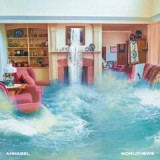
"On “We Are Where We Are,” a glimmering mid-tempo highlight from Annabel’s new album, Ben Hendricks sings of “a modern way to fill the empty space.” Worldviews, the band’s fourth LP and first in nine years finds the band reconciling with the ways the world has changed in the decade since they’ve been away. His protagonists are trying to determine the boundaries between what’s real and imagined, navigating their worldviews and the dominant ones around them, fighting for an escape or at least a distraction, wondering where the time goes, “going through the motions, running in a circle.” That could’ve been Annabel’s fate, too. But the core of the Ohio band is brothers Ben and Andy Hendricks, and as long as they’ve got each other, we’ve still got Annabel. In a world that feels so uncertain and so disconnected, where else is there to turn but back to Annabel? Think of Worldviews less like a comeback and more as the product of years spent gestating.
Hendricks spends the chorus of “All Time” promising to “make up for all the lost time,” and Annabel makes good on that promise for the next half hour. Worldviews is the most locked in the band has ever sounded, perfecting and building on their indie-emo sound. The title track and “Dog” are classic Annabel, sprightly and jangly midwestern rock songs, while “Defense Mechanism” is a rougher-edged update; when they go in the opposite direction, it results in some of their best work: “Every Home Needs a Ghost” is spartan and spectral, worthy of its title, and the beautiful “Small Victories” dabbles in downtempo electronics. They don’t sound like a band returning after nearly a decade; they sound at the same time hungry and lively like scrappy upstarts and wizened and seasoned like they never left."
Announcing the debut album from one of London’s most electrifying acts, New Regency Orchestra. An 18-piece Afro-Cuban big band, inspired by the musical melting pot of NYC in the 1950s, but with the punch and power of a whole host of London’s best Latin and jazz musicians. Blowing new life into these compositions, the album is a reimagining of some of the finest music from that golden era. From early 1950s René Hernandez and Tito Puente, through to the 1970s salsa of Rafael Labasta and Orlando Marin, produced and performed with fresh fire.
NRO is the brainchild of its artistic director, and the man behind Total Refreshment Centre and Church of Sound, Lex Blondin. Through a long-held passion for jazz, Lex discovered the explosive Afro-Cuban rhythms of mid-1940s NYC via the godfather of Afro-Cuban jazz, Mario Bauzá. A time when two musical worlds collided in a fusion of creativity and energy, jazz luminaries like Dizzy Gillespie and Charlie Parker joining forces with Cuban greats like Machito and Chano Pozo. This vibrant sound was music to dance to and found a home at The New York Palladium, a formative space of freedom and expression that was key to the scene’s development.
Although dance-focussed in their makeup, those early recordings are not often heard in modern club environments and Lex dreamt of retelling their story with a contemporary dynamism. A slice of serendipity followed, as a slot at a new festival opened up and Lex jumped at the chance to make this idea a reality, an 18-piece big band breathing new life into these beloved songs.
Enlisting the expertise of some of the capital’s finest talent, Lex and co-captain Andy Wood, of Como No fame, put together a world-class line-up of talent. Bringing in Eliane Correa as musical director and bandleader, a fluid and interchanging 18-piece band was formed.
The album itself is a hand-picked selection of timeless Afro-Cuban jazz classics, reimagined with NRO’s unbridled energy. It contains ten incredible instrumental tracks including 'Pregon' with its anthemic horn stabs and the addictive head nod bounce of 'Mambo Rama', alongside two scorching vocal numbers in 'Papa Boco' and 'Labasta Llego'. Coupling a heavyweight rhythm section with a wall of horns, they provide a fresh spin on songs from Tito Puente and Chico O'Farrill, René Hernandez through to Rafael Labasta.
“Some of the tunes like Tito Puente’s ‘Mambo Rama’ and ‘Scarlet Mambo’ might sound like they went to a gym as extra drums and bass synth were added to them whilst the tune ‘Sahib & Tito’ is a mix of Tito’s ‘Mambo Buda’ and Sahib Shihab’s ‘Nus’. Our intention is to be both respectful to the innovators and inventors of this incredible music and to pay our dues, but also to add something special from London where the city’s new jazz scene connects with its Latin American musicians and the musical influences around us.”
This pure collective joy, shared experience and music you can’t help but move to.
As the winds of music blow, a wise heart navigates the spiral, finding wisdom in each of its twists and turns.
As the releases of DUBBLACK’s catalogue pile up, the novelty and exploration for new music keeps on thriving.
A brand-new record is approaching, as always available both on a 12” vinyl – limited to 300 copies – and in digital format, featuring the presence of two Masters from the Electronic Music scene: A2 Abd El Monim and Tocchitek.
The two-track EP baptised “Dark Side” includes the gems “Euriale” and “Steno”; two expansive compositions that, also due to their length, masterly observe the task of narrating two complementary stories, each with its distinct moments, yet marked by a strong rhythmic temper. Both tracks are planned to share similar sonic elements: a pulsating 160 bpm kick drum, ghostly pads serving as an inevitable backdrop, and indispensable rhythmic details enriching the whole structure and arrangement.
A2 Abd El Monim, born Alan Abd El Monim, is an Italian-Egyptian artist/composer. He expresses himself through the creation of music ranging from electronic to purely instrumental, and through the interaction between the arts. His poetics opens in a “dark” dimension that considers and interprets the facts through the notion of shadows and darkness but also through penombre. His “dark” vision stands as a filter through which he reads the world and its interactions, therefore using also the notion of light. His music has been performed in Festivals including Musica d’arte (Riccione – Italy), Luci d’Artista (Salerno – Italy), GAMO (Firenze – Italy), Spazio Musica (Cagliari – Italy), On Air – On site (Den Haag -Netherlands), Sound Spaces (Malmö – Sweden), etc.
He composed songs for the solo exhibition “La pelle degli oggetti” and for works Lui&Lei by the artist Giovanni Oberti. In 2020 he undertook a collaboration with the poet Milo De Angelis , putting to music the lyric “A volte , sull’orlo della notte, si rimane sospesi”. He wrote music for several theatre performances by director Emily Tartamelli and has written music for several directors films including Reto Gelshorn, Enea Francia, Paola Piscitelli and Fabio Corbellini. He collaborated with the London based fashion brand B DODI and was invited as an artist to participate in the collective exhibition “Instructions to Light-Keepers” (Milano – Italy). In March 2023, “Periodo Nero”, its interactive and generative installation music and video, was selected for the tribute to Picasso in the city of Florence, will be presented at the Certosa of Florence in September of the same year. In 2017 he won the International Competition of Composizione Silenzio Musica, in 2020 the diploma from President and Artistic Director of Winterreise International Composition Competition Moscow, in 2021 the Call For Scores banned by the Cultural Association Esecutori di Metallo su Carta. A2 Abd El Monim is signed to international label F.M.T Records and Dubblack Records, with which he regularly publishes his electronic music.
Tocchitek is an underground Tekno producer and performer born in Milan, Italy. He started playing live in 2007 as part of the “Approdo Caronte” sound system based in Milan. His first significant appearance as a live performer was at a “Mayday Parade” in 2008 in Milan. In 2009, he joined the “R909 Records” chapters crew based in Milan, bringing his live set to many local club dance floors. Meanwhile, he collaborated and played with many crews around Europe, spreading his music in the free Underground Tekno movement. In 2021, in Milan, he launched “F.M.T Records”.
Simplicity is often the hardest thing to achieve when producing this type of music, primarily designed for uncompromising dance-floors, but the duo successfully channels their message with purity and truthfulness.
The visual aspects of layout and design are once again entrusted to Vittorio Valigi, who puts a greyscale spiral at the center of the cover. A spiral within which one an eye can be glimpsed – the eye of the musical soul of DUBBLACK harmoniously fused with that of A2 Abd El Monim and Tocchitek, who become worthy ambassadors of the Dubblack’s sonic mission.
“Home” is not always a literal place. Sometimes, “home” represents inner peace and simply learning to hold space for yourself. This is where Vacations lead singer and guitarist Campbell Burns has arrived as he and bandmates Jake Johnson, Nate Delizzotti, and Joseph Van Lier release their third LP, No Place Like Home. “I had this loose concept of No Place Like Home being an Americana-influenced album,” Campbell says of the album’s sonic inspirations. “I wanted to incorporate more pianos, acoustic guitars, Nashville tuning, and country-inspired lap steel, but then also bringing in drum machines and synths and finding a mix between the two.” Produced by Campbell and John Velasquez (Zella Day, Broods), No Place Like Home comprises 10 shimmering tracks brimming with indie-pop hooks and just a touch of bittersweet sensitivity. The new project follows an intense period of transformation for Campbell, who was forced to cancel all touring commitments due to COVID restrictions and subsequently came down with a severe bout of writer’s block. After seeking therapy, he was eventually diagnosed with Pure OCD, a subtype of Obsessive Compulsive Disorder. “Pure OCD is more mental compulsions rather than physical compulsions,” Campbell explains. “If I have an intrusive thought, I'm giving that thought belief and power over myself.” As the world began to open up, so did Campbell’s vibrant creative spirit. Vacations hit the road for the first time in two years, selling out The Fonda in LA and playing Austin City Limits Festival in Austin, experiences that partially inform No Place Like Home. First single and album opener “Next Exit” sparkles with danceable synth riffs and Campbell’s aching falsetto, all while setting the overall tone for what’s to come. “‘Next Exit’ is about living in this monotonous cycle,” Campbell reveals. “You realize that you need an out. You need to — metaphorically and literally — take the next exit out in order to break out of that cycle.” The singer mines his Pure OCD diagnosis on the pondering “Over You,” which thematically picks up where “Next Exit” drops off. Campbell remarks on how “it almost has this ownership over my thoughts and actions to the point where I'm stuck in these loops and rituals that are a direct result of having OCD.” On the Americana-inspired “Midwest,” which seamlessly blends pop electronics, drum machine, and ‘80s synth with poignant lap steel tones, the song remarks on the comedic nature of repeatedly entering into romantic relationships prior to going on tour — only to have them fizzle out upon returning. As the band releases No Place Like Home, Campbell is ironically just fine with not putting down physical roots just yet having recently made the move to LA for exploration, expanding “I needed to get overseas if I wanted to keep progressing — from a career standpoint, but also on a personal level.” The greater priority lies within building that sense of comfort within himself. In the meantime, millions of fans around the world are making a permanent home with Vacations.
Limited White VInyl Version
Solo Paraiso will be available on vinyl for the first time in 10 years and Digitally for the first time.
Solo Paraiso is Molly Nilsson’s mini-album from 2014 recorded during a 6 month residency in Buenos Aires, Argentina.
For it’s 10th Anniversary, Night School and Dark Skies Association is making the most sought after long player in Molly Nilsson’s catalogue available again on a new format with new artwork designed by Molly Nilsson and Jonas Raam.
Pop music rarely comes as honest and heartfelt as when delivered by Molly Nilsson. Having traveled around the world singing to the romantic and the doomed, Nilsson found herself in the Summer of 2014 in Buenos Aires. Inspired by the crumbling urban landscape and the heavy hearts that populate it, Sólo Paraíso is not only an ode to a specific time and space but a musical novella that meditates on youth, idealism and belonging. The soundtrack to a summer you thought you had when looking over bleached out old photo albums.
Sólo Paraíso has the feel of a bridge between the more lo fi, first phase of Nilsson’s career and the expanded sonic scope she has employed in the last decade. Recorded quickly, with instinct and feeling of paramount importance over rectitude or perfection, amongst the eight tracks of this mini LP are some of the biggest fan favourites of her career. As with all Molly Nilsson songs, each of these tracks is bursting with perfect moments. Opener Summer Cats sails over sun-kissed piano chords, chasing the sun eternally as it dips over the horizon, while show-stealer Blue Dollar draws parallels between the doomed Argentine economy and the failure of a love affair. It’s the most feel-good, romantic peon to an economic downturn you’ll ever hear. As Molly says “why is it so damn easy to break all the things that are so damn difficult to make?”
Using cracked synths, shimmering piano, heat-stroked drum machines and above all her direct, from-the-heart vocal delivery, Nilsson’s songs have never been so precise and on-point. For fellow doomed romantics, Sólo Paraíso is the perfect sound for an imperfect Summer.
Solo Paraiso will be available on vinyl for the first time in 10 years and Digitally for the first time.
Solo Paraiso is Molly Nilsson’s mini-album from 2014 recorded during a 6 month residency in Buenos Aires, Argentina.
For it’s 10th Anniversary, Night School and Dark Skies Association is making the most sought after long player in Molly Nilsson’s catalogue available again on a new format with new artwork designed by Molly Nilsson and Jonas Raam.
Pop music rarely comes as honest and heartfelt as when delivered by Molly Nilsson. Having traveled around the world singing to the romantic and the doomed, Nilsson found herself in the Summer of 2014 in Buenos Aires. Inspired by the crumbling urban landscape and the heavy hearts that populate it, Sólo Paraíso is not only an ode to a specific time and space but a musical novella that meditates on youth, idealism and belonging. The soundtrack to a summer you thought you had when looking over bleached out old photo albums.
Sólo Paraíso has the feel of a bridge between the more lo fi, first phase of Nilsson’s career and the expanded sonic scope she has employed in the last decade. Recorded quickly, with instinct and feeling of paramount importance over rectitude or perfection, amongst the eight tracks of this mini LP are some of the biggest fan favourites of her career. As with all Molly Nilsson songs, each of these tracks is bursting with perfect moments. Opener Summer Cats sails over sun-kissed piano chords, chasing the sun eternally as it dips over the horizon, while show-stealer Blue Dollar draws parallels between the doomed Argentine economy and the failure of a love affair. It’s the most feel-good, romantic peon to an economic downturn you’ll ever hear. As Molly says “why is it so damn easy to break all the things that are so damn difficult to make?”
Using cracked synths, shimmering piano, heat-stroked drum machines and above all her direct, from-the-heart vocal delivery, Nilsson’s songs have never been so precise and on-point. For fellow doomed romantics, Sólo Paraíso is the perfect sound for an imperfect Summer.
red LP[26,85 €]
The Dream Of Delphi is an ode to motherhood created in LA, Natasha’s second home, during the Covid-19 pandemic. It’s a sonic archive of a time when Natasha birthed her daughter Delphi earth side. The record weaves together ten song poems, documenting the polarity of navigating both an exterior world that was seemingly turning upside down, whilst also experiencing theprofoundly personal and transformational early moments of mothering Delphi, named after the Greek Oracle, the ancient future teller. The music became Natasha’s sanctuary, born out of stolen trips to the studio, where each track was improvised and completed in a few hours and chronologises her diary like offerings over a period of two years; from “The Midwives Have Left”; to writing a “Letter To My Daughter”; and all the way through to “Waking up”, as well as a cover of her daughter’s favourite song, “Home”.While the storytelling behind Bat For Lashes’ previous albums have traditionally used otherworldly narratives and female lead characters (e.g. ‘Laura’, ‘Daniel’ and ‘The Bride’), for the first ti me, The Dream Of Delphi is about Natasha’s personal experience of the magical and sometimes melancholy intimacy of early motherhood. This record creates a more private form of mythology around the music than her previous work. The Dream Of Delphi touches on more of an instrumental “Bat For Lashes” world, and shows Natasha to be both a confident composer and craftswoman of intimate landscapes. While the music creates a more womb-like, ambient space for the listener, it still leaves ample room for her signature dream pop songwriting to vibrate through. Natasha has worked with Brad Oberhofer, Mary Lattimore and Jack Falby on this record.