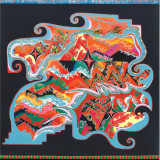
After four years, De Lichting is back with a new double album: Drie Nul Drie!
This fresh addition to the infamous compilation series revolves around a central theme: The 303 Acid Bassline.
The double LP format has always been the weapon of choice for the crew when it comes to implementing diversity in their musical story.
Despite the 303 being a rather limited concept, everyone within the collective finds a unique way to approach this classic element that has been rinsed for decades.
From the typical techno bomb of “MJM002” to the sneaky after hours tech gem “5421”, or the Detroit influenced chill-out cut “Tool”, the album bursts with playfulness and creativity, while coming together logically sound wise.
Search:space bass
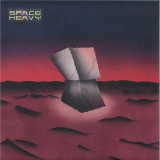
Nachdem seine intime Underplay-Show-Tour „SHHH“ im März binnen Sekunden ausverkauft war, kündigt Archy Marshall sein mittlerweile viertes Studioalbum „Space Heavy“ als King Krule an. Erscheinen wird es am 9. Juni bei XL Recordings. Zehn Jahre nach der Veröffentlichung seines umjubelten Debütalbums „6 Feet Beneath the Moon“ zeigen die 15 neuen Songs den britischen Songwriter auf der Höhe seines Schaffens.
Entstanden ist das Album zwischen 2020 und 2022, als Archy Marshall sowohl London als auch Liverpool seine Heimat nannte und viel Zeit auf den Reisen von einem zum anderen Ort verbrachte. Während diesen Trips entstand seine Faszination für „the space between“, wie er es nennt: die Orte, die von Träumen voller Liebe verfolgt werden, während sich Archy in seinen Texten mit persönlichen Verlusten befasst. Nachdem die Texte fertig waren, entstand die Musik gemeinsam mit dem Produzenten Dilip Harris sowie seiner langjährigen Band, bestehend aus Ignacio Salvadores (Saxophone), George Bass (Schlagzeug), James Wilson (Bass) und Jack Towell (Gitarre).
In den 15 Songs von „Space Heavy“ verbinden sich viele Elemente seiner bisherigen Karriere mit dem klanglichen Kosmos, der ihm das Attribut als eine der Stimmen seiner Generation einbrachte. Die dichten Lyrics seines Debüts, die Verschiebung seines Sounds bei „The OOZ“ (2017), die Ursprünglichkeit von „Man Alive!“ und die rohe Verletzlichkeit, die er auf „You Heat Me Up, You Cool Me Down“ zeigte, fließen in den Sound seines neuen Albums ein.
Mit der Albumankündigung erscheint die erste Single „Seaforth“ mitsamt Video, bei dem seine regelmäßige Kollaborateurin und Visual Artist Jocelyn Anquetil Regie geführt hat.
PSSSH 003x enlists a diverse range of producers to reimagine the labels third offering. DJ Plead, Huerta and Aubrey all turn in stellar remixes along with 2 new remixes from Dauwd himself.
DJ Plead kicks things off with his signature bass heavy sound on his version of The Yuzer, setting a high bar for what’s to come. Accompanying him on the A-side are a couple of cuts from label founder Dauwd.
The first, “Electronic Live Mix” of SpaceSamba is inspired by Dauwd’s live performance at Mutek 2022 while his Deep Dub Mix of The Yuzer could be some of his best work to date on the imprint. On the flip Huerta houses up SpaceSamba which an excellent dance floor ready remix and Aubrey rounds things off with a solid groove interpretation of The Yuzer.
- A1: The Giant Meteorite Draws Near
- A2: Main Title
- A3: The Ruins Of The Ayutthaya Dynasty
- A4: The Golden Statue Of Buddha
- A5: The Temple Collapses
- A6: The Iceberg Disaster
- A7: Infant Island
- A8: The Suspension Bridge Falls
- A9: Midori's Letter
- A10: The Mural In The Cave
- A11: Discovery Of The Giant Egg
- A12: The Legend Of The Cosmos
- A13: The Larval Battra Appears
- A14: The Giant Egg In Tow
- A15: Battra Attacks Nagoya
- A16: Battra Vs. The Self-Defense Forces
- B1: Godzilla Appears
- B2: The Larval Mothra's Birth
- B3: The Hotel In Manila
- B4: Mothra Crosses The Sea
- B5: Mothra's Landing
- B6: Mothra And The Cosmos
- B7: The Cocoon On The National Diet Building
- B8: Godzilla From The Fuji Volcano
- C2: Godzilla Vs. The Self-Defense Forces
- C3: The Luminous Fairies
- C4: Mothra Vs. Godzilla
- C5: The Ocean Halo
- C6: Mothra Heads Into Outer Space
- C7: Rolling Title – Ending
- D - Etched
- B9: The Appearance Of Imago Mothra
- C1: Imago Battra Emerges
The Big G is back, but has Godzilla bitten off more than it can chew? 1992's GODZILLA VS MOTHRA is a triple threat treasure, with Godzilla battling the legendary Mothra and its dark doppelganger Battra, unleashed by a meteorite and is intent on destroying Mothra and, subsequently, the world. Throw in a rogue archaeologist, his ex-wife, and a multinational company exploiting the minute Mothra Cosmos twins, and you have a thrilling kaiju adventure with a stunning score by the original Godzilla composer, the brilliant Akira Ifukube. GODZILLA VS MOTHRA is undoubtedly one of Ifukube's most outstanding scores, bringing together the traditional booming brass and bass that accompanies Godzilla and Battra with a more ethereal sensibility for Mothra and her mission to save the Earth. Godzilla's theme is stomping in the foreground, and Battra gets similar material with a gigantic doom-laden motif for his destructive power. But the "Sacred Springs" theme for Mothra is a match for any of them, with Ifukube using it in minor and major modes, with a gorgeous rendition with a female chorus at the climax of the score, illustrating once again that when it comes to the music of Godzilla, Akira Ifukube is the master.
The next chapter of the Natural Information Society is here. Since Time Is Gravity, credited to Natural Information Society Community Ensemble with Ari Brown, presents a newly expanded manifestation of acclaimed composer & multi-instrumentalist Joshua Abrams nearly 15 year, 7 albums &-counting flagship ensemble. Joining the core NIS of Abrams (guimbri & bass), Lisa Alvarado (harmonium) Mikel Patrick Avery (drums) & Jason Stein (bass clarinet) are Hamid Drake (percussion), Josh Berman & Ben Lamar Gay (cornets), Nick Mazzarella & Mai Sugimoto (alto saxophones & flute), Kara Bershad (harp) & Chicago living legend of the tenor saxophone Ari Brown. Recorded live to tape at Electrical Audio & The Graham Foundation, cover painting Vibratory Cartography: Nepantla, by Lisa Alvarado. 2xLP on Eremite USA, 2xLP & CD on Aguirre/Eremite Europe. Out 14-04.
Since first developing Natural Information Society in 2010, Joshua Abrams has been gradually expanding the group’s conceptual underpinnings, its musical references & the sheer number of the group’s members. Its music is, in a sense, an expansive form of minimalism, based in repeated & overlaid rhythmic patterns, ostinatos & modality. Its roots, its scale & its meaning become clearer in time. If time is gravity, it also allows us to carry more. Having begun as fundamentally a rhythm section with Abrams’ guimbri at its core, the version here can stretch to a tentet, including six horns.
Abrams has been expanding his minimalism gradually, but he has long understood a key to minimalism’s potential: the breadth of its roots in the late 1950s & early 1960s, ranging from the dissatisfaction of young European-stream composers with the limitations of serialism to the simultaneous dissatisfaction of jazz musicians with the dense harmonic vocabulary of bop & hard bop. The former began exploring rhythmic complexity & narrow tonal palates in place of harmonic abstraction (Steve Reich’s Drumming, Philip Glass’ Music with Changing Parts; perhaps above all Terry Riley’s In C & his late ‘60s all-night organ & loop concerts); the later reduced dense chord changes to scales (signally with Miles Davis' Kind of Blue, but rapidly expanding with John Coltrane’s vast project). In the 1950s the LP record opened the world with documentation of Asian & African musics, key influences on both minimalists & jazz musicians. If John Coltrane’s soprano saxophone suggested the keening shehnai of Bismillah Khan, the instrument was rapidly taken up by two key minimalists, LaMonte Young & Riley, similarly appreciative of its flexible intonation, the same thing that kept it out of big bands.
If the guimbri, the North African hide-covered lute that Abrams plays with NIS, involves a rich tradition of hypnotic healing music associated with the Gnawa people, Abrams’ music also touches on other musics as well — other depths, memories & healings, different drones, rhythms & modes. As the group expands on Since Time Is Gravity, he has made certain jazz traditions in the same stream more explicit as well. If there is a mystical & elastic quality involved in the experience of time, both in direction & duration, you will catch it here. The parts for the choir of winds expand on the roles of Abrams’ guimbri, Mikel Patrick Avery & Hamid Drake’s percussion & Lisa Alvarado’s harmonium: at times, the winds are almost looping in the tentet version, each hitting a repeating note in turn, at once drone & distinct inflection on temporal sequence. The brilliance of the work resides in Abrams’ compositions, the NIS’ intuitive execution & in Ari Brown’s singular embodiment of the great tenor saxophone tradition, including the oracular genius of Eddie “Lockjaw” Davis, & Yusef Lateef. The three pieces by the expanded NIS featuring Brown —the opening “Moontide Chorus” & “Is” & the ultimate “Gravity”— have an immediate impact, & togther might be considered a kind of concerto for tenor saxophone. Here Brown presses almost indistinguishably from composed melody to improvised speech, getting so close to language that he might have a text. Everything here is a sign. Note the tap of the Rhythm Ace that links “Moontide Chorus” to “Is”, the attentive heart always present, even when signed by a machine. There’s a link here to the methodologies & meanings of dub music & the linear & vertical collage of beats, textures & tongues: treated with reverence, a sample of a beat-box can be as soulful, as hypnotic, as a mbira or a tamboura. If those pieces with Brown are heard as a suspended concerto, the three embrace & enfold the other works, like the sepals of a flower. That placement will also touch on the mysteries of our perception of time.
Particularly in “Is”, but elsewhere as well, a phenomenon of transcendence arises in which time appears to be tripartite, at once moving backwards & forwards & standing still. This is an act of technical brilliance certainly, but also an illumination of music’s ability to represent temporal consciousness through polymetrics. This particular listener has only heard it before in a few places, including the horn shouts & bowed basses of Coltrane’s Africa, in moments of Charles Mingus’ The Black Saint & the Sinner Lady, in certain pieces where tapes were literally running backwards, & earlier still in Dizzy Gillespie’s Cubana Be, Cubana Bop, in which the composer George Russell & conguero Chano Pozo found a music that spoke at once in the voices of Stravinsky’s Rite of Spring & the vestigial rites, rhythms & songs of the Yoruba language & Santeria religion of inland Cuba.
In Joshua Abrams’ compositions & the realization of them by the NIS, in the time of one’s close listening & memory thereof, distinctions between the “natural” & the “social”, the “quotidian” & the “transcendent” are erased, suspended or perhaps irrelevant. Consider two of the ensemble pieces, one named for nature, the other social science. In “Murmuration” the repeated wind figures of flute & alto saxophone combine with the interlocking patterns of harp, guimbri & frame drum (tar) to create a perfect moving stillness, not an imitation but a witness to the miracle of the starlings’ astonishing collective art, a surfeit of beauty that might be the ultimate defense tactic.
“Stigmergy” takes its name & concept from the Occupy movement’s Heather Marsh, who proposes a social system based on a cooperative rather than competitive models, one in which ideas are freely contributed & developed as ideas rather than an individual’s property. In its form, Abrams’ “Stigmergy” is the closes thing to traditional jazz, a series of accompanied solos by each of the wind players. However, the composed accompaniment is a radically collectivist notion: a repeated rhythmic figure, call it ostinato or riff, in which the different winds each play only a note or two of the figure, a concept both more collectivist & individualistic in its conception than any typical unison figure. It suggests another of the underlying recognitions that propel the Natural Information Society, the group as social organism, the teleology of hypnotic anarchy, all parts in place, functioning systematically, evolving & expressing itself, its nature & society, as a transformative organism.
George Lewis has described music as “a space for reflection on the human condition”. This suggests that, rather than a “distraction”, at least some music might serve as a distraction from distraction. It’s a focus, a clarity, a awareness, an external invitation to interiority, as if music itself is a model for form & contemplation, an organism contemplating for us or as us. If that is a possibility, & I am sure I have heard such musics, than this music is among them. How many of our rhythms, melodies & harmonies (cultural, historical, biological, psychic) might such music carry, translate & transform in the particulate ecstasy of our own murmuration? (Stuart Broomer, April 2022)
Following on from the Bergisch-Brandenburgisches Quartett’s anarchic Live ’82 (BT095), Black Truffle continues its deep dive into the archives of legendary drummer/accordionist/photographer/composer/conceptual prankster Sven-Åke Johansson with Scheisse ’71. Recorded in November 1971 during the Berliner Jazztage at a heavy-hitting concert that also included the Spontaneous Music Ensemble and groups led by Peter Brötzmann, Manfred Schoof, and Masahiko Sato, Scheisse ’71 is the only document of a wild, otherwise unrecorded quintet featuring Johansson on drums, accordion and oboe d’amore, legendary free jazz vocalist Jeanne Lee, her husband Gunter Hampel on vibes, flute and bass clarinet, live electronics pioneer Michael Waisvisz on modified Putney (VCS 3) synthesizer, and the unknown Freddy Gosseye on electric bass. Part of a festival centred on giants of jazz like Duke Ellignton and Dizzy Gillespie, the radical performance shocked its audience, who can be heard heckling and yelling abuse at points, including the titular exclamation of ‘Scheiße!’ Clocking at just over half an hour and recorded in raw but detailed stereo by Johansson himself, the music burns with intensity while also making room for spacious passages and frequent dynamic movement. Beginning with Lee’s voice, Hampel on flute and Johansson on oboe d’amore in a bird-like game of call and response, the unexpected entry of Waisvisz’s tortured, squelching synth bursts prompts the first of many changes in energy and instrumentation, as Gosseye’s busy, roving bass enters and Johansson moves to the kit, his swinging cymbal work and juddering toms extending the approach of Sunny Murray or early Milford Graves. The presence of synthesizer, electric bass, and Lee’s highly amplified voice moves the quintet away from conventional free jazz textures, at times pushing into zones of abstract free sound reminiscent of what groups like MEV, AMM or Johansson’s MND were exploring in the same years. But the energy and joyful melodicism of the music keep it rooted in the tradition of American fire music and its European inheritors. Capable of changing gears in an instant from ferocious blow outs to fragile tapestries of chiming vibes and fizzing synth, the music finds space for Lee’s post-bop free scat (which integrates shrieks and howls just as a post-Ayler saxophonist might), Gosseye’s virtuosic bass runs (a rare attempt to apply the classic free jazz style of players like Alan Silva or Henry Grimes to the electric instrument), Johansson’s folkish accordion interjections, and even a sustained passage of unison bass clarinet and electric bass riffing in its second half. Special mention should be made of Waisvisz’s Putney performance, one of the earliest documents of this under-recorded instrument inventor and player, here playing a major role in giving the music its wildly exploratory, primordial air, his buzzing glissandi and bubbling filter sweeps at times howling like a distressed monkey. Arriving in an austerely stylish sleeve with beautiful black and white photographs by Johansson, Scheisse ’71 is an essential recording that adds yet another layer to our appreciation of this golden era of radical free music.
Timo Kaukolampi, frontman for Finnish electronic rock group K-X-P and tireless sonic wanderer, is releasing his second solo album, this time on Optimo Music. Exquisitely rendered, shadowy, curiously claustrophobic and even occasionally paranoid, Inside The Sphere is an album wholly deserving of its name.
A sense of paranoia is one of the threads through this glittering, winking electronic maze. Kaukolampi says “I came up with this metaphysical concept of the “sphere”. When you are manipulated you are ‘Inside The Sphere’. It’s like this dome of ‘undue influence’ that you don’t know exists around you. It’s a bit like the inside of a cult.”
Indeed, it’s amazing the effects achieved with a few sparse electronic textures, the odd smattering of studio trickery, and two or three well-placed synthesizer parts. Though the result might sound ostensibly simplistic, Inside The Sphere is an album of reduction rather than addition. The rhythmic and textural scaffolding is based around what’s not there, rather than what is. Take ‘VCS3’. At first listen, it seems forged from a few synth lines and a simple percussion part – so far, so simple. But listen closer, enter the sphere, look behind the mask – notice the slightly detuned drones, the chattering percussive textures, that distant swell of bass, the way the central fugue shifts and mutates somehow statically, like a barber’s pole.
Might we be listening to an album within an album, a more complex song cycle hiding within the folds of an ambient electronic album? This ties in with another of Kaukolampi’s thematic frameworks – that of the mask. He references Oscar Wilde’s quotation that “Man is least himself when he talks in his own person. Give him a mask, and he will tell you the truth.”
Inside The Sphere is not a one-note album. For every moment where a clammy ambient space enters, a buttery analogue bassline is there to fill it. This clash seems to be the album’s engine room, its power supply.
Timo references devotional and choir music as an influence on this album. The paranoia and foreboding is tempered by these headier aspects. Kaukolampi mentions “empty and hollow spaces” in relation to several of the songs. Perhaps this is the very space behind the mask, where outward disguise merges with inner reality. Perhaps inside the sphere is not always such a bad place to be.
Fredfades is finally ready with his second album as a solo artist. The producer and DJ and has remained active as a musician ever since his debut single in 2008. Since he released his debut solo album 'Warmth' six years ago he's ben diving into a bunch of different genres and cross-ing musical landscapes such as ambient, hip-hop and house, which has led to releases and productions across labels like his own Mutual Inten-tions imprint, as well as bigger labels like Stones Throw, Fresh Selects and Jakarta Records. This sonic voyage has resulted in ‘Caviar’ - an album that tells the story of a producer who's ready to let go of his youthful love and indulge himself to electronic music.
Fredfades name is more often seen on foreign club posters than back home in Norway. This has colored the musical expression of the Oslo-born multi-artist, and on ‘Caviar’ he is gathering inspiration from every corner of the world where he has traveled. You can clearly hear the inspi-rations from the sounds of Rome, Manchester, South-Africa, Detroit, New York, Berlin, Paris and the Balearic ocean, which are all well repre-sented throughout the album's eight tracks. If you close your eyes and put your ears close to the speakers you will hear loons, running water, African percussion instruments, roaring saxophones, bit-crushed samples, moaning women, TB 303’s, bottom-heavy basslines and recordings of whales communicating at the bottom of the ocean. Everything seamlessly put together for Fredfades’ own sonic world view. The album features a bunch of talented friends of Fred, such as Telephones or the vocalists MoRuf and Kristian Hamilton.
Despite being known as more of a progressive and edgy DJ that haunts down a lot of indie and private press electronic music, Fredfades has cultivated a more elegant and controversial output in his own music. His progressions often consist of dwelling jazz chords from electric pianos or mellow sub-filtered synth patches that creates space where he can unleash rowdy basslines, rhythm sections and leads just as confident and captivating as the man himself. On the jazzy ‘Tenerife 1994’ you can hear a tribute to one of Fred’s greatest heroes in music: Pharoah Sanders, while on ‘My Heart Is On The Edge’ and ‘Summer of Love’ the energy and euphoria is boiling over and directs your mind towards the summer raves which Fredfades is known to throw down in Oslo.
On the LP covers backside Fredfades is posing with a Korg Wavestation in front of the block where he grew up in the suburbs outside Oslo, while the front cover is showing an airbrushed illustration of Caviar from sturgeon - ‘From block to Beluga’. The black vinyl contains magic grooves created by an electronic musical convertite, with the power to transport the listener from a perpetual winter to the 90s warm dance floors and the 'Second Summer of Love’.
A recognize artist from the mouth to mouth is presenting this Ep on his own Label, Monotale Records, a part of Monotale's Instruments.
First track "Number 9" Begins with a barely intelligibly male vocal, that goes and comes in all kinds of glitchy processed ways, always surrounded by bass lines that comes from a non specific source or direction accompanied by pads who sustain the groove .
All of this mixed in a harsh rhythm that remains a classic techno house track.
Next track "If I was you..." is a lovely and capricious ambient passage with some blinks to pop songs inside, a very deep chords on synths that moves the track to another time/space.
The B sides opens with a energy, crazy, resonant and ever changing groove called "Creepy Little Heart", is a kind of track more close to breaks than techno and with some IDM remains of how is developed, cut it in the middle by a female vocal and morphing pads, it is the perfect balance between craziness and dance floor scenarios.
Second B side, "Manifest 9" closes the idea from the artist around the number 9. Is an unclassified style, maybe we can call it as a avant-garde propose, where there is no recognizable or obvious groove. The track is leading again by a male voice put it inside a glitch group of instruments and non standard mixing technics with thru all it is possible to hear a real manifest about music.
Nachdem seine intime Underplay-Show-Tour „SHHH“ im März binnen Sekunden ausverkauft war, kündigt Archy Marshall sein mittlerweile viertes Studioalbum „Space Heavy“ als King Krule an. Erscheinen wird es am 9. Juni bei XL Recordings. Zehn Jahre nach der Veröffentlichung seines umjubelten Debütalbums „6 Feet Beneath the Moon“ zeigen die 15 neuen Songs den britischen Songwriter auf der Höhe seines Schaffens.
Entstanden ist das Album zwischen 2020 und 2022, als Archy Marshall sowohl London als auch Liverpool seine Heimat nannte und viel Zeit auf den Reisen von einem zum anderen Ort verbrachte. Während diesen Trips entstand seine Faszination für „the space between“, wie er es nennt: die Orte, die von Träumen voller Liebe verfolgt werden, während sich Archy in seinen Texten mit persönlichen Verlusten befasst. Nachdem die Texte fertig waren, entstand die Musik gemeinsam mit dem Produzenten Dilip Harris sowie seiner langjährigen Band, bestehend aus Ignacio Salvadores (Saxophone), George Bass (Schlagzeug), James Wilson (Bass) und Jack Towell (Gitarre).
In den 15 Songs von „Space Heavy“ verbinden sich viele Elemente seiner bisherigen Karriere mit dem klanglichen Kosmos, der ihm das Attribut als eine der Stimmen seiner Generation einbrachte. Die dichten Lyrics seines Debüts, die Verschiebung seines Sounds bei „The OOZ“ (2017), die Ursprünglichkeit von „Man Alive!“ und die rohe Verletzlichkeit, die er auf „You Heat Me Up, You Cool Me Down“ zeigte, fließen in den Sound seines neuen Albums ein.
Mit der Albumankündigung erscheint die erste Single „Seaforth“ mitsamt Video, bei dem seine regelmäßige Kollaborateurin und Visual Artist Jocelyn Anquetil Regie geführt hat.
Wait, what? A new Quince? Call the newspapers! It has been YEARS since the Dutch techno producer from Utrecht found the peace of mind to actually release something.
In fact, the Anthology of Interest EP on the illustrious NOWHERE series is his first proper record in eight years. His daytime job as a medic kept him rather occupied. You might remember those times when there was a pandemic around? We missed Quince, even though his sound is rather timeless.
Fluid Detroit infused techno with pulsating rhythms, alluring keyboard stabs and sultry basslines, like on Ghost In The Machine and the extremely funky The Butterjunk Effect.
Opening track Meanwhile has that hazy peak time feel you love so much while dancing with your eyes closed. But the winner of this very versatile EP may just be Space Pilot 3000. A futuristic and jumpy electro-track where the worlds of Drexciya and Juan Atkins collide in a blinding orange supernova. Can someone call a doctor!
A pivotal record for contemporary times; bright, free, adamant, optimistic. Brain Worms is RVG's fullest, most pristine album yet. All throughout Brain Worms, it's apparent that this is a band in very fine form. Album opener 'Common Ground' sets the tone for what's to come; a shiny, thrilling, punch of an album, with all the beloved RVG hallmarks. Vager's voice is unfiltered and commanding as ever when delivering her clever, not-quite-ironic lyrics. Here, though, those lyrics feel so much less resigned to yearning, and so much more defiant and joyous. 'Tambourine' is the only Covid song Vager wrote when "trying not to write Covid songs", and it's a painfully honest portrait of grieving mid-isolation. 'Brain Worms' tells the all-too-familiar story of a person falling down the internet rabbit hole and finding comfort in conspiracies. 'Nothing Really Changes' is a keys-heavy new wave-ish thing, while closer 'Tropic of Cancer' sparkles with Vager's self-assured new manifesto: I know what I'm like, and I know how I get. If you think I'm strange, you ain't seen nothin' yet. Bloxham, Nolte, and Wallace are flawlessly adept in bringing Vager's songwriting to life. Recorded in London at Snap Studios with James Trevascus (Nick Cave & Warren Ellis, PJ Harvey), all ten tracks surge with lush sounds and clear intentions and the magic of an acoustic guitar once owned by Kate Bush, given to her by Tears for Fears (who, legend has it, wrote 'Everybody Wants to Rule the World' on it). Between the four bandmates lead singer and guitarist Vager, guitarist Reuben Bloxham, drummer Marc Nolte and bassist Isabele Wallace this is the most confident they've ever felt in RVG. They've moved past their influences, pushed themselves, and tried new things. And they have made a record they can, by all accounts, call their best. "Brain Worms feels like the antithesis to what a post-pandemic record could easily be. For a band who were already writing music about being reclusive "we were depressed and not going outside on our first two albums" the enforced isolation and time to think gave Vager space to write about anything she wanted. And, it turned out, she was ready to write about acceptance. "If we could only make one more album, it would be this one," says Vager. "Easily one of the most vital bands on the Aussie scene today" Rolling Stone "A calling card for outsiders... dynamic and vital post-punk" The Guardian
Such Ferocious Beauty is vintage Cowboy Junkies and another dimension from the lo-fi Canadian band comprised of, well, family. A tangle of sonic textures, Beauty is a rumination on aging, losing parents, facing mortality and creating space for one"s life in the midst of the ruin that comes from merely living. "Mike has never shied away from the darker, harder and sometimes uglier realities of our human condition," Margo Timmins explains of the band"s singular focus, "nor has he shied from its beauty. Thankfully, with one comes the other." Cowboy Junkies are an alternative country and folk rock band formed in Toronto, Ontario, Canada in 1985 by Alan Anton (bassist), Michael Timmins (songwriter, guitarist), Peter Timmins (drummer) and Margo Timmins (vocalist). The band gained wide recognition with their second studio album, The Trinity Session (1988), recorded in 1987 at Toronto"s Church of the Holy Trinity. Their sound, again using the ambisonic microphone, and their mix of blues, country, folk, rock and jazz earned them both critical attention and a strong fan base. Cowboy Junkies have gone on to record 16 studio albums and five live albums.
Returning after three years, the husband and wife duo of Alexi Erenkov and Alison Alderdiceaka. The Saxophones have announced the arrival of their third album, To Be A Cloud, for 2nd June 2023. Out today is the first single to be taken from it, Desert Flower, featuring a video directed by Rainbow Tunnel. "Alison wants me to try therapy, "says Alexi. “She’s a therapist herself, but I’ve never been to one. The idea of going makes me very uncomfortable. I don’t like being vulnerable in front of strangers. So, instead of confronting my discomfort, I look for an easier path. It’s never easier and it’s always unsatisfying or destructive. “Desert Flower” is about avoidance and fear impeding personal growth and the deepening of relationships. The album itself was recorded at Phil Elverum’s (The Microphones, Mount Eerie) Unknown Studio in Anacortes, WA last autumn. A former Catholic church where the pair lived during 24/7 recording sessions, time was no object as they experimented and developed the sound of the record. Its magical setting and ample space provided natural acoustics for Alexi’s arresting vocals which were recorded live to 24-track tape, suspending them in an ambiguous historical and chronological context between analogue and digital. Enhanced by Alison’s percussion alongside the bass and keys of Richard Laws, together they made the most of the studio’s many instruments which fill out and bookend their exploration of the billions of years of evolution that have led to this moment in time.
FINALLY BACK IN STOCK ON LP!!! Ozma was recorded soon after Melvins made the move from Washington to San Francisco, and was their first release to include the diminutive yet mighty Lorax (Lori Temple Black) on bass. In fact, the first sound one hears at the album’s opening is Lori standing on her tiptoes to switch on her amp, thereby warning the listener of the onslaught to come. Distorted, down-tuned doom riffs start, stop, lurch sideways with no warning, and seem to end before they start. Buzz Osborne adds extraneous guitar static and vocal squeals. Drummer Dale Crover plays as if he’s inside a barrel going over Niagara Falls; the long, slow fall allows the space between beats to grow and grow until he crashes into the water with the vessel blasting apart in an explosion of drum rolls. The classic Melvins heavy grind is set up and broken up by assorted odd sidetracks: “Revulsion / We Reach” flows forward slower and slower until it eventually melts into a gooey feedback drone. “Raise a Paw” is a superball paddled against one’s head by a grinning village idiot. “Love Thing” enlists in the Kiss Army before getting dishonorably discharged.
Sky Blue Coloured LP Vinyl. 'Warchild' charity release - Miles Davis’ On The Corner recently turned 50 and with each decade, its space age funk has only become more influential to generations of jazz, electronic, post-punk and especially hip hop fans and artists. The new vinyl release Turnaround cherry picks four stellar cuts from the celebrated expanded project The Complete On The Corner Sessions released in 2007 that collected key recordings captured before and after that release. The tracks featured his new band including Michael Henderson on bass, Al Foster on drums and Mtume on percussion plus rotating appearances by the likes of Herbie Hancock, Dave Liebman and Bennie Maupin. Featuring an adaptation of the celebrated Corky McCoy cover of cartoon characters in pink, complemented by the limited edition sky blue vinyl, this marks the first time this material will be widely available on vinyl.
repress !
After Space Ghost’s first album Endless Light took to international airwaves and echoed out of cities from London to Los Angeles, his forthcoming release Aquarium Nightclub brings back his signature lo-fi aesthetics with a fresh hit of inspiration from the natural world.
Melding irresistible vintage synths with a meditative groove, Aquarium Nightclub is a journey of sorts. Taking listeners on a tropical tour through 80s house drums, lush synth landscapes, and deep bass melodies, the thirteen-track LP is as adventurous as it is restrained.
Growing up in a small town a few hours from California’s East Bay area, Space Ghost (Sudi Wachspress) moved to Oakland ten years ago to study at the California College of the Arts. In a city known for its vibrant cultural fabric and its experimental music scene, Space Ghost represents a new generation of young artists. His DJ collective Late Feelings, launched in 2013, has allowed him to find his own groove amongst monthly all-vinyl dance parties, where he plucks influences from various corners of the world.
More complex than last year’s release, Aquarium Nightclub shows off Space Ghost’s artistic hunger and unique sonic signature.
Kicking off with “Sea Snake Island,” a track that is best described as late 80s house melancholia is a beautiful dance of shimmering keys, drum machines, and sounds of the jungle. The single “Sim City” ft. Morgan is a classic Chicago house beast; dark but uplifting with heavy bass undertones, fuzzy drum pulse, and plenty of mysterious synth melodies. Other tracks like “Ocean Odyssey,” “Night Dive” and “Aquarium Nightclub” plunge into an ambient world of slow 80s funk, though always rooted in the Bay Area sound.
A product of record-collecting and dance party hosting, Aquarium Nightclub is a glittering postcard from Atlantis. Profound yet undeniably groovy, its mesmerizing tropical undertones promise a safe journey back to the endless days of summer.
LOCUS returns with its latest VA ‘LOCUS Trax Vol. 3’, welcoming label debuts from Jamahr, Mehlor, Project89, Manuel De Lorenzi and Giacomo Silvestri.
Now established as a standalone label in its own right, FUSE’s sister imprint LOCUS continues to prove itself as a go-to stop for forward-thinking and fresh house music with minimal-leaning influences from both established and emerging talent. Returning with the third instalment of its VA series ‘LOCUS Trax’, April brings five new names to the label as Captea boss Jamahr, Leeds-based DJ/producer Mehlor, and Dutch talent Project89 serve up fresh singles alongside a slick collaboration from Italian pairing Manuel De Lorenzi and Giacomo Silvestri.
Jamahr opens the package with an impactful combination of slick drums, resonant vocals and warped basslines across ‘Night Tales’, while Mehlor’s ‘BSOD’ offers up off-kilter electronics, skippy percussion and woozy low-ends. On the flip, Project89’s ‘What’s Going On’ delivers a peppy groove accented by atmospheric pads and spaced-out aesthetics, before closing via the tight, rolling grooves of Manuel De Lorenzi and Giacomo Silvestri’s ‘Sit Down’ as the two unveil a heads-down, hands-up terrance anthem.
LOCUS Trax Volume 3 drops on 26th May 2023 via digital and physical formats.
‘Before the Odysee, there was the Iliad; a tale of the golden age of heroes and warriors.'
The idea behind the new Iliads series is to return to the sound of the golden age of Jungle/Drum & Bass, and more specifically the original ‘heroes’ of the Odysee label.
This first in the series pays homage to the style of music heard in the Oblivion releases that Source Direct delivered through Bassment Phil’s Street Beats imprint between 1995 & 1996.
Forbidden Affections is a classic Deep Amen track, made with tracks like Sands Of Time and Secret Liaison very much in mind. Right from the onset where the pads are given plenty of time and space to draw you in, it is completely faithful to that mid-90’s SD style. All the trademark break switches and deep 909 sub lines are present, and the palette of sounds are all drawn from those same sources that first inspired the SD sound (as such it is Atmospheric Jungle with a strong Techno persuasion). The finishing touches come from the achingly gorgeous female vocal ad-libs that were also such a trademark of the early, more atmospheric SD tracks.
Hidden Rooms is perhaps even more authentically SD, especially with its focus on arrangement, and the way it uses the selection of samples that are once more drawn from those same Deep Techno sources. The interaction between the rolling curls and cuts of the Apache at the start, and the crisp injection of the Think breaks at the drop comes straight out of the early SD portfolio. The bass drops down super deep underneath the drum work, punctuated by exposed electro hits and well-chosen samples. It is the haunting keys nearly 4 minutes in however that give this track the authentic SD twist more than anything, calling tracks like Fabric Of Space and Made Up Sound very much to mind.
Drifting Through is the final track of the E.P. with its beautifully sharp rolling Hotpants/Worm combination. This track leaves plenty of space; dubbed out to just breaks and bass for much of the duration, with the occasional injection of an obscure electronic sample, or the sweet vocal ad- libs to hold the tune together. Further down the track there is a touch of the Jazz influence as the Rhodes chords add an extra level of harmonic warmth.
Look out for Volume II where we will be returning to the distinctive flavours of the original Mirage releases on Odysee!
After his first appearance on Specimen Records as a part of the, SPECTRO-017 with his track “React”, Arsonist Recorder now comes with a first solo-EP on the label, Arsonist Recorder now comes with a first solo-EP on the label, in which the producer reaches back into some deeper, almost trippy states of mind, accompanied by some ultimately addictive electro grooves.
The first track, “Vaxxer”, which also titles the EP, puts up a warehouse-worthy beat, handing out bass-punches as it moves along. A rude hi-hat pattern shuffles the groove, and once the rhythm has you hooked, some lush eerie synth patterns start to emerge transporting the listener to the rooftop of a skyscraper in a dystopian city.
Next up is “Oxidant”, which was written with a close friend in mind who was going through some difficult times. The strong determination of the pulsating bass, overlayed by a very emotional melodic element leads you from the contrast to unity, refecting, pushing forward.
“Multiverse” comes in with a thunderous boom, reminiscent of a huge spaceship landing, which could be a metaphor for events that land on top of our heads, which we have no control over and have to deal with. The track introduces an infectious 808-groove, building up, and some chilling synths warp their way straight into your mind to de-program all the viruses in there and set you free from any mind-control.
Finally, finishing off is “Shiffty”. It lands straight away with a heart-pounding beat, with bass-bots bouncing, adding an ultra-funky bassline that will keep your feet moving. Waves of synthy-bliss wash over as this groove connects all your individual elements together.